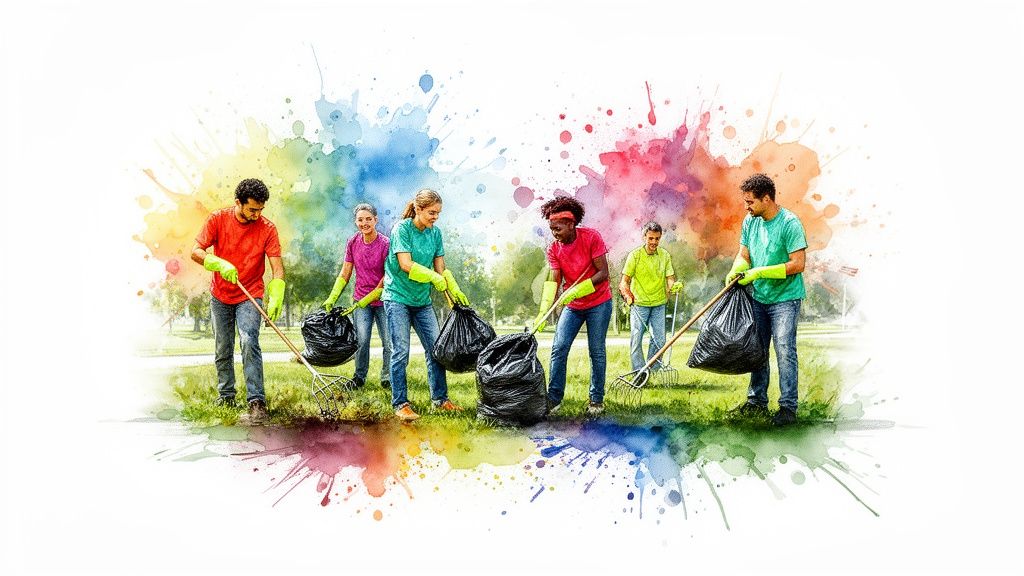

So, what is civic engagement, really? I think of it as the simple, powerful choice to show up for your neighborhood. You decide you're more than just a resident—you're an active player in your community’s story. It's about turning that fuzzy idea of 'community' into real-world actions that make our shared home better for everyone.
Beyond The Textbook Definition
I used to think my own messes were impossible to clean up. Every cluttered corner of my apartment was like a physical reminder of a past I couldn't move on from. The weight of it all was crushing, heavy enough that I could barely function. It felt like trying to move a 500-pound weight just to throw away an old jar of jam.
Then I discovered something strange: cleaning up someone else's mess is a lot easier. Picking up trash in a local park? That felt different. Lighter. It was a problem I could actually solve.
This, I realized, is the heart of civic engagement. It's not some academic term you read in a textbook or a chore you have to do.
It’s about stepping outside of your own head, your own problems, and connecting with something bigger. It’s the feeling of joining a team where the goal is simply to make your shared home a little better, one small piece at a time. For me, it all started with a single piece of litter.
From Small Actions To Big Movements
You don’t have to run for office or lead a massive protest to be civically engaged. It starts with individual and collective actions designed to spot and solve problems that affect everyone. The core idea is simple: you see a problem, and you decide to be part of the solution.
"Civic knowledge is important because it’s the basis of advocating for yourself, your family, and most importantly your community."
This idea is beautifully simple. It means your actions, no matter how small they seem, ripple outward.
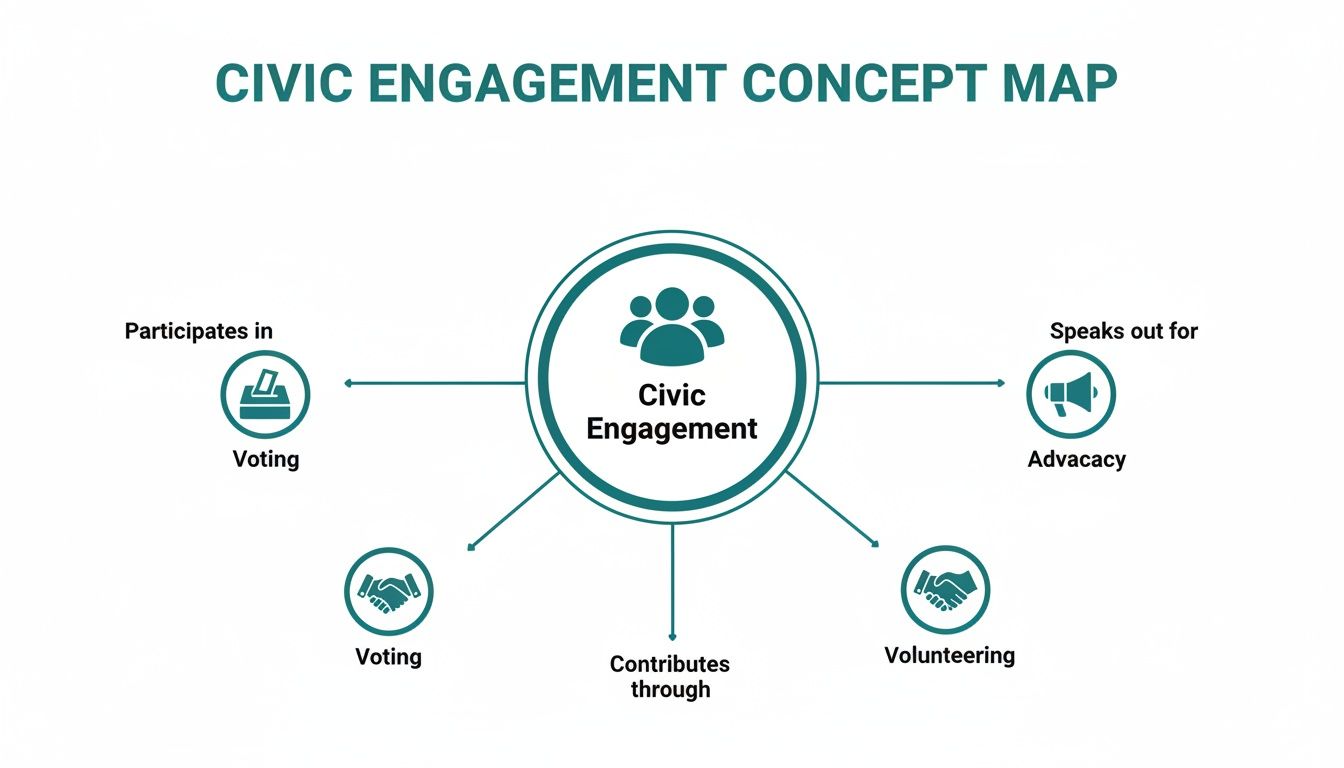
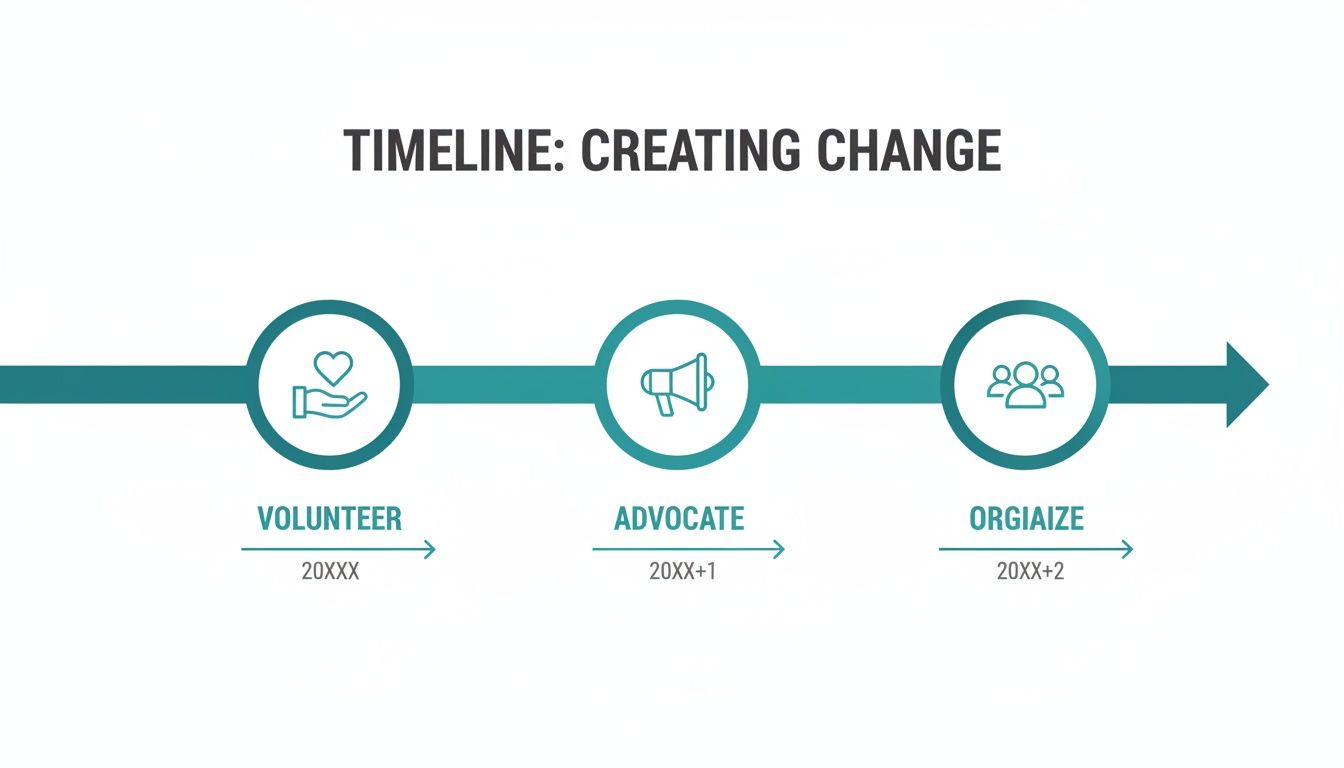
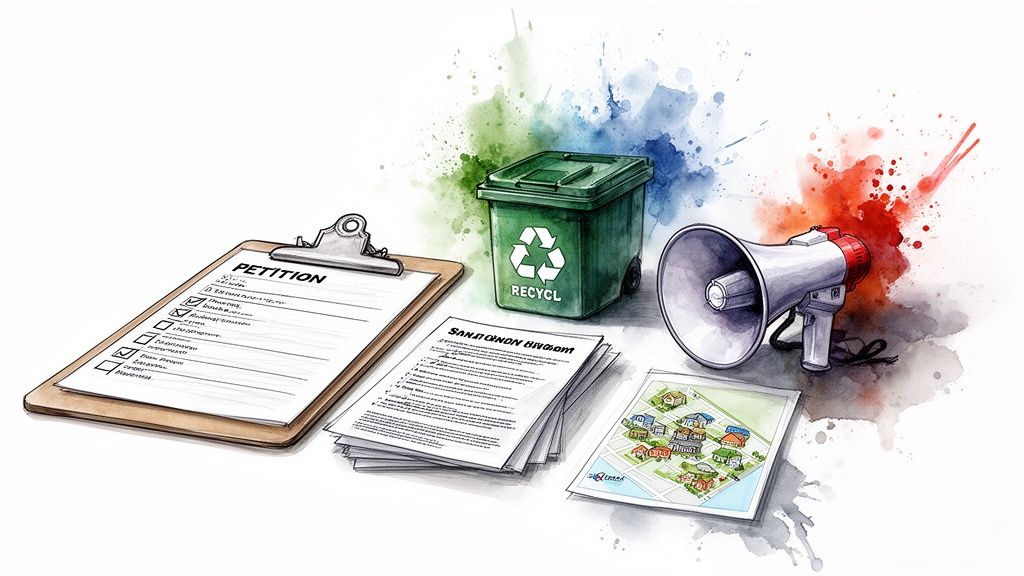
As you can see, civic engagement branches out from one central idea into distinct but connected actions. It all comes down to four core pillars.
The Four Pillars of Civic Engagement
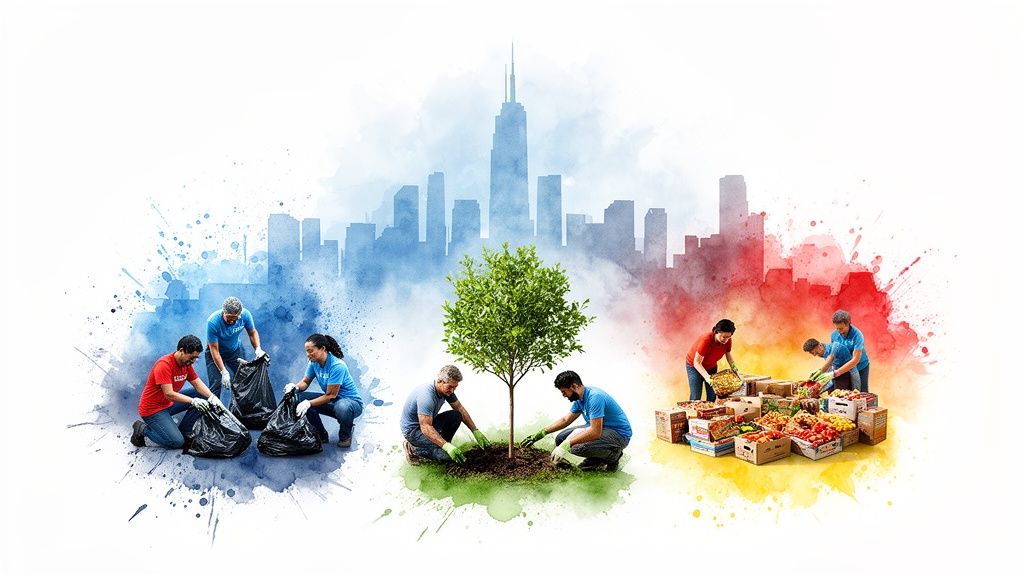
Civic engagement takes many forms, but I find most actions fall into one of four key categories. This table breaks down the core ways you can get involved, from individual actions to group efforts.
| Type of Engagement | What It Looks Like | Your Potential Impact |
|---|---|---|
| Volunteering | Cleaning up a park, serving food at a shelter, mentoring a student. | You directly improve the quality of life in your community and support essential services. |
| Voting & Political Participation | Casting your ballot in local, state, and federal elections; attending town halls. | You shape policies, elect representatives who reflect your values, and hold leaders accountable. |
| Advocacy | Signing petitions, contacting elected officials about an issue you care about, raising awareness on social media. | You influence decision-making and bring attention to important causes that might otherwise be ignored. |
| Community Organizing | Joining with neighbors to start a community garden, forming a tenants' union, or launching a group like Litter Caterpillars. | You build collective power to address systemic issues and create lasting, resident-led change. |
These pillars—from the voting booth to the neighborhood cleanup—are how we collectively shape the world around us. And when you get a group of people focused on these pillars, you start to create real, unstoppable momentum.
If you're interested in that last one, we've got a whole guide on what is community organizing and how it builds this kind of power from the ground up.
The Unexpected Joy of Showing Up
Do you ever feel like your own problems are just too heavy to move? I get it. To me, every piece of trash in my apartment felt like a 500-pound weight of past mistakes. It was completely paralyzing.
But then I stumbled onto something strange, almost backward: cleaning up someone else's mess is a thousand times easier. This is the secret magic of getting involved in your community. It isn't just about 'doing good'; it's about what doing good does for you.
This is where the real change begins—the moment you step outside your own head to serve others. Your focus shifts from what’s broken inside to what you can actually fix outside.
Advancing The Plot of Your Life
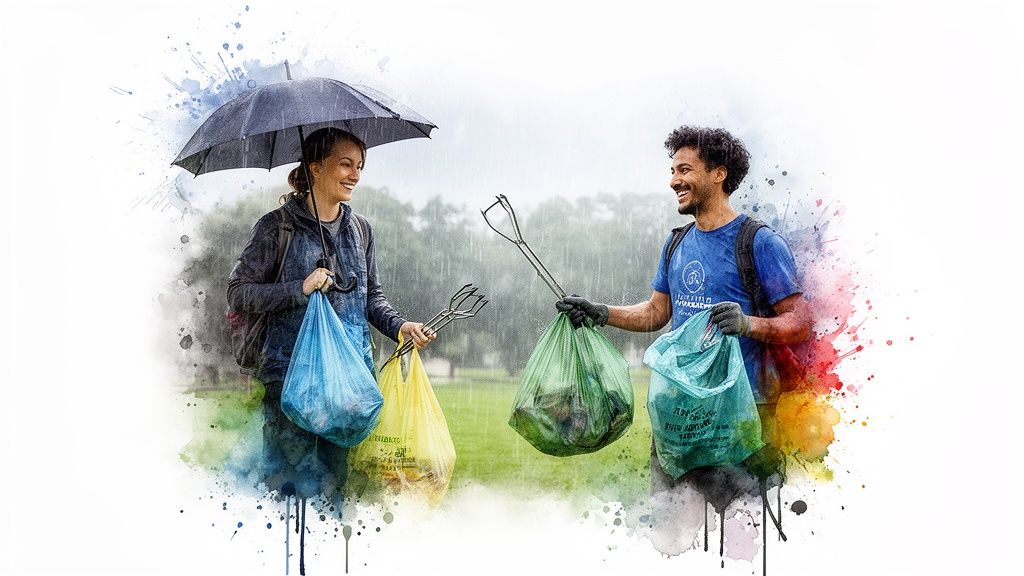
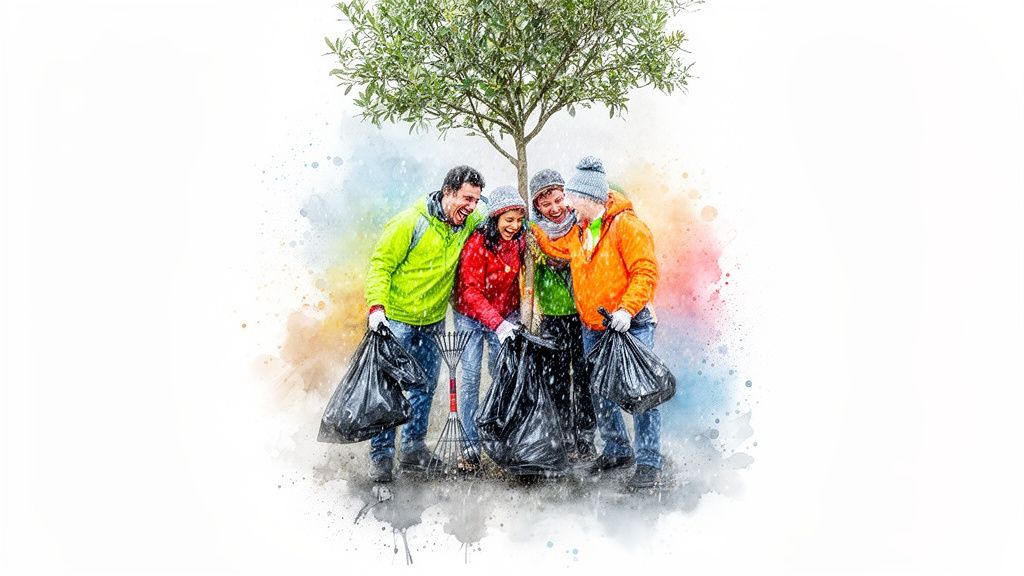
I'll never forget the first Litter Caterpillars cleanup. Only three of us showed up, and we got absolutely soaked in a freezing Chicago hailstorm—one of those wild spring storms that erupts from nowhere.
We were shivering under a tree, watching Ubers cancel on us one by one. But then something weird happened. Huddled together, getting pelted by stinging hail, we just started laughing.
In that shared struggle, we found a bizarre kind of fun. That ridiculous, freezing moment became a story we’d tell forever. It "advanced the plot" of our lives.
This is what civic engagement offers you. It’s not a duty or a chore. It’s an invitation to make your life’s story more interesting, more meaningful, and filled with better characters.
It yanks you out of your routine and throws you into the real, unscripted world. That’s where you really grow.
Building Resilience And Finding Your People
Every single time you show up, you build a little more resilience. Tackling a trashed-out park makes your own messy room seem totally manageable. Facing down a blizzard to pick up litter makes other life challenges feel a little less impossible.
You're not just cleaning a street; you're forging inner strength. And you’re not doing it alone. You find friendships built on shared effort, a connection that goes way deeper than just grabbing a drink.
- You discover a shared purpose: Working alongside others for a common goal creates a powerful, unspoken bond.
- You build a real support system: These are the people who will show up for you, because you all showed up together for the community.
- You find where you belong: In a world that can feel isolating, this kind of work roots you in a place and a people.
This isn't just some local Chicago thing, either. While global democracy faces huge challenges, I see active participation in community groups as a powerful antidote. A survey by the Trust for Civic Life found that 82% of people in civic organizations felt they were actively addressing community issues. Even better, an incredible 76% saw themselves as leaders—a huge jump from the national average.
These engaged people report stronger community ties and a greater sense of their own power, which helps explain why volunteer groups are so strong in places like Sweden and Australia. You can dig into more of these global trends at interactive.idea.int.
The simple act of showing up rewires how you see yourself and your place in the world. You stop being a passive observer and become an active character in the story. You start to feel a sense of pride you never knew you were missing—a pride that comes not from what you have, but from what you give.
From Empty Lots to Community Parks
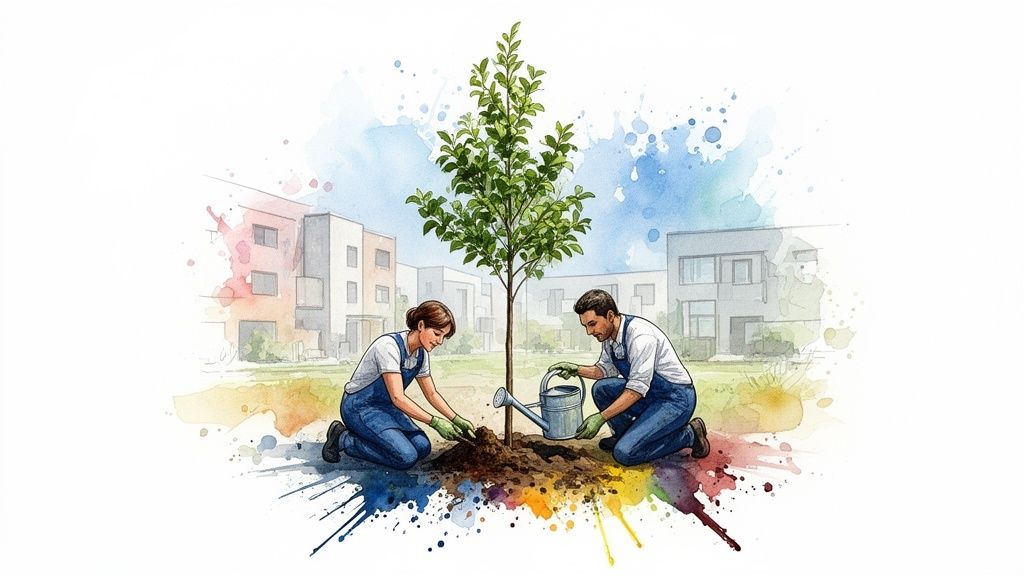
So far, I’ve talked about how showing up for your community changes you. But what about the world outside your window? This isn't just an inner journey; it’s about how we can physically reshape our environment, turning forgotten spaces into places that actually spark joy.
What happens when a group of determined people decides to act? You can literally move mountains of trash, plant gardens where there was only broken glass, and build parks on land that everyone else wrote off.
This is the story of how that happens. It’s our story—how we at Litter Caterpillars took a leap of faith and started transforming a forgotten piece of land into something beautiful.
From Idea To Action
In Chicago, the city auctions off empty lots. We spotted one in the Englewood neighborhood. To most people, it was just a patch of dirt and weeds, another neglected corner in a city full of them. But we saw something different. We saw a future park.
So, we did something that felt a little crazy at the time. We pooled our resources and won that empty lot at auction.
Suddenly, what is civic engagement wasn't an abstract question anymore. It was a deed in our hands. It was the responsibility to turn that vision into a reality for the entire neighborhood.
The Ripple Effect of a Single Action
Our project, which we’re calling Caterpillar Park, is more than just a feel-good story. It’s a real-world blueprint for how getting involved creates tangible, lasting change. It shows how different forms of engagement have to come together to make something amazing happen.
It’s about so much more than just picking up litter. It’s a combination of:
- Community Organizing: Rallying volunteers and neighbors around a shared vision for the space.
- Advocacy: Figuring out city processes and speaking up for the resources needed to build and maintain the park.
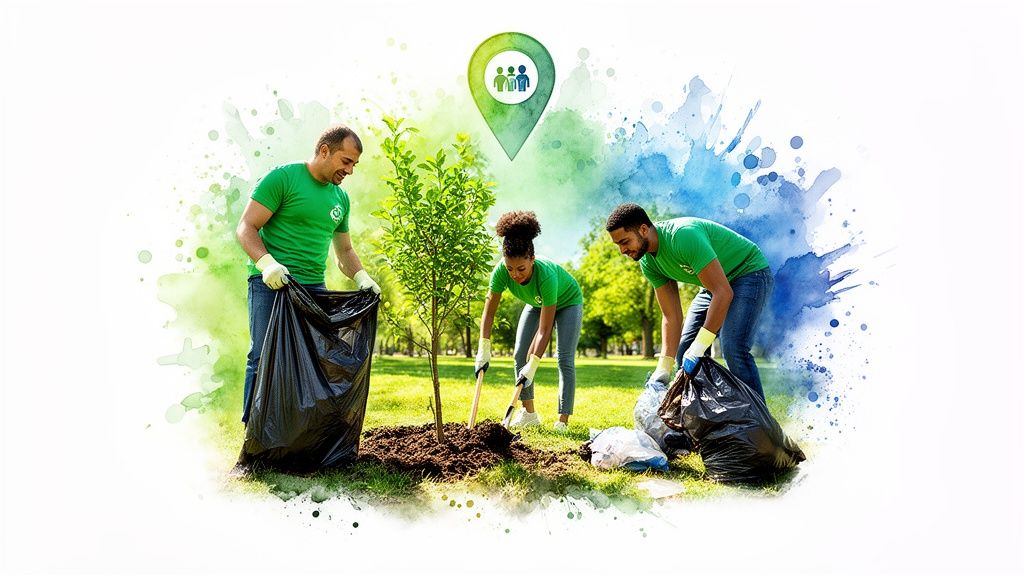
- Volunteering: The pure, hands-on work of clearing the land, planting seeds, and building benches.
A project like this becomes a magnet for positivity. Each action you take, from pulling a single weed to helping design a playground, ripples outward. It’s the physical proof that you and your neighbors care.
This isn’t just a Chicago thing, either. It’s part of a powerful global trend. I saw a recent analysis that found between 1979 and 2023, public authorities tracked 716 cases of citizen-led processes involving over 80,000 people. What’s fascinating is that 70% of these efforts happened at the local city or regional level.
Why? Because local action delivers results you can actually see and touch—cleaner streets, better parks, more responsive services. It builds trust, just like how our cleanups are transforming an empty lot into a community park. You can read more about how local efforts are driving global change on oecd.org.
The Real Return on Investment
When a neglected corner of your city starts to blossom because you and your neighbors cared enough to make it happen, that’s the real payoff. You see safety improve as more people use the space. You see local pride swell as residents point to the park and say, "We did that."
This is the ultimate payoff of civic engagement: you don’t just watch your community change for the better. You become the reason it changes.
It inspires others who were sitting on the sidelines to join in, creating a cycle of positive action that can reshape an entire neighborhood. It's proof that a small group of people with a big heart and a willingness to get their hands dirty can truly change the world, one empty lot at a time.
For a deeper look into the methods behind this kind of work, check out our guide on proven community engagement strategies.
Overcoming the Hurdles That Hold You Back
If getting involved is so great, why isn't everyone doing it? Let’s be real for a moment. I've been talking about the joy and the real-world impact, but I know it's not always that simple. You might be reading this and thinking, "That sounds amazing, but…"
That "but" is the hurdle. It’s that little voice in your head whispering all the reasons you can’t possibly get involved. Trust me, I’ve heard them all because I’ve felt them all.
Maybe you think you're just too swamped. Or perhaps you feel like you don’t know enough to actually make a difference. The idea of showing up alone to meet a bunch of strangers might be downright terrifying. I completely get it.
The Big Three Barriers
The truth is, most of these holdups boil down to a few common fears. These are the mental roadblocks that stop good people from doing great things. I call them the "big three" barriers that keep us stuck on the sidelines.
- The "I'm Not an Expert" Fear: This is the one where you feel like you need some special skill or deep knowledge to contribute. You worry you won’t know what to do, or worse, that you’ll somehow mess things up.
- The "My Contribution is Too Small" Doubt: You look at a massive problem like city-wide litter and think, "What difference can one person picking up a few bags of trash really make?" This feeling of being just a drop in the bucket can be paralyzing.
- The "I Won't Fit In" Anxiety: This one is huge. Showing up to a new group can feel like the first day of high school all over again. You wonder if people will be friendly or if you’ll just be standing there awkwardly by yourself.
These feelings are completely normal. They’re the friction that kills momentum. But what if I told you that we could design our way around them? What if we could build an experience where these fears just… melt away?
This is where intentional design comes in. At Litter Caterpillars, we're not just organizing cleanups; we're building a system from the ground up to be welcoming, low-pressure, and genuinely fun. We've thought about every single one of these hurdles.
How We Make It Easy to Take the First Step
When I started this group, I knew we had to tackle these barriers head-on. We had to build a community where the hardest part is just deciding to show up. Everything after that needed to feel easy and natural.
So, we made a few simple but powerful choices. We decided to meet on weekend mornings. This wasn't an accident. I find it helps filter for people who are genuinely there to give back, not just party, which creates a warm and focused vibe from the start.
We also made a core promise: we will never, ever ask our volunteers for money. Your time and your energy are the most valuable gifts you can give, and we honor that above everything else. This gets rid of any weird pressure or transactional feeling.
And most importantly, we focus on what really matters: building real friendships. We’re not just a group of people picking up trash. We’re a team. A community. We suffer through hailstorms together, we laugh together, and we celebrate our victories together. The work is just the excuse we use to find our people.
You don’t need to be an expert to pick up a piece of litter. Your small contribution, when added to everyone else's, transforms an entire block. And when you show up, you’ll find a group of people who are just as nervous and excited as you are, ready to welcome you with a trash grabber and a smile.
How to Find Your People and Get Started
Alright, you feel that spark. You're ready to jump in. So… what now? This is where we move from the inspiring ‘why’ to the practical ‘how.’ I’m going to walk you through the exact steps to find a crew that genuinely lights you up, whether it’s with us or somewhere else entirely.
Think of it like finding a new hobby. You don't just magically become a great gardener; first, you have to find the right seeds, the right patch of sun, and maybe a few friendly folks who can show you how to keep the weeds out. Your journey into civic engagement is the same—it starts with finding your patch of sun.
Where to Look for Your Tribe
Finding the right group can feel like searching for a needle in a haystack, but you’d be surprised how many are hiding in plain sight. You just need to know where to look. Your community is buzzing with people who care, and a few clicks can get you connected.
It turns out, meeting people where they are is key. While some big initiatives wait for problems to happen, I see real trust is built by proactive people who just show up. This lines up perfectly with how younger generations operate. A survey of over 1,002 young people showed that 90% care deeply about their communities and are organizing everything from group chats to grassroots movements. With 90% of Gen Z basically living on their phones, platforms like Meetup and Instagram aren't just for fun—they're essential tools for what is civic engagement today. You can get more insights on how technology is shaping modern engagement on granicus.com.
Here are the best places I recommend you start your search:
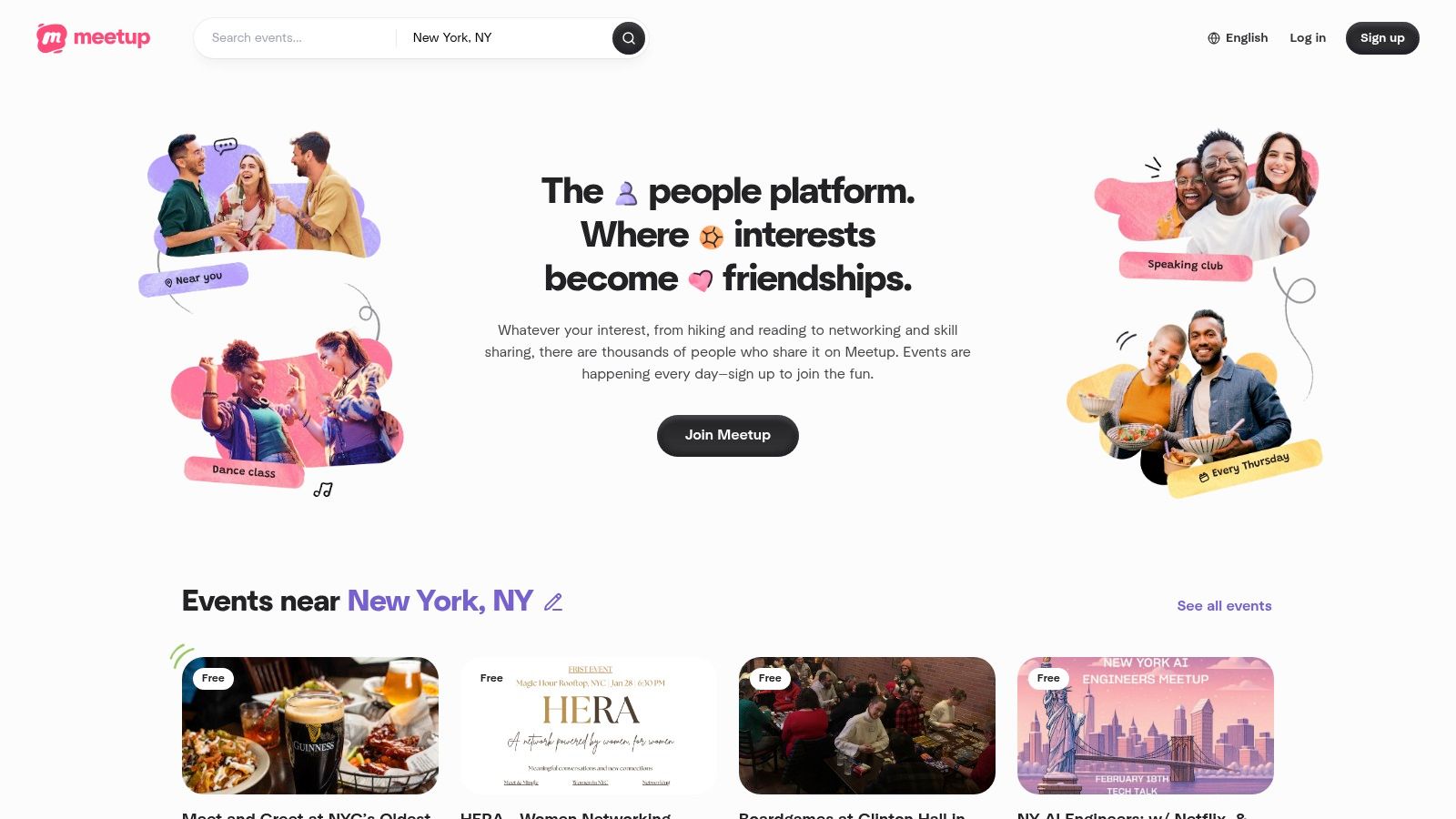
- Meetup: This is our platform of choice for a reason. You can search for "volunteering," "community service," or specific causes like "environmental cleanup" in your area. It’s literally designed to connect strangers around a shared interest.
- Social Media: Look up local community groups on Facebook or follow hashtags like #ChicagoVolunteers or #CommunityCleanup on Instagram. This is where you’ll find the real-time pulse of what’s happening on the ground.
- Local Community Boards: Don't sleep on the old-school methods. Check out bulletin boards at your local library, coffee shop, or community center for flyers and announcements.
What to Look for in a Group
Once you’ve found a few options, how do you pick the right one? Not all volunteer groups are created equal. You’re looking for a place that doesn’t just do good work but also feels good to be a part of.
Think of it like choosing a team to join. The best teams aren't just about winning; they're about the camaraderie, the shared struggle, and the feeling that you have each other's backs. That's the vibe you're looking for.
We built Litter Caterpillars on three core values: kindness, bravery, and unity. We believe these aren't just nice words; they are the essential ingredients for a group that can go the distance and make volunteering a joyful, sustainable part of your life.
Here's a simple checklist you can use when you're vetting a potential group:
- Is it welcoming? Check out their photos and event descriptions. Do people look happy? Does the language feel inclusive and low-pressure?
- Is it consistent? A group that meets regularly shows commitment. It’s a sign that they’ve built a sustainable habit of showing up.
- Is it volunteer-first? Look for groups that celebrate their volunteers. I'd be wary of any organization that immediately pressures you for money. Your time and heart are the real currency.
Finding the right fit is everything. For a more detailed guide, we have an article that breaks down exactly how to find volunteer work that aligns with your passions.
Your Invitation to Join Us in Chicago
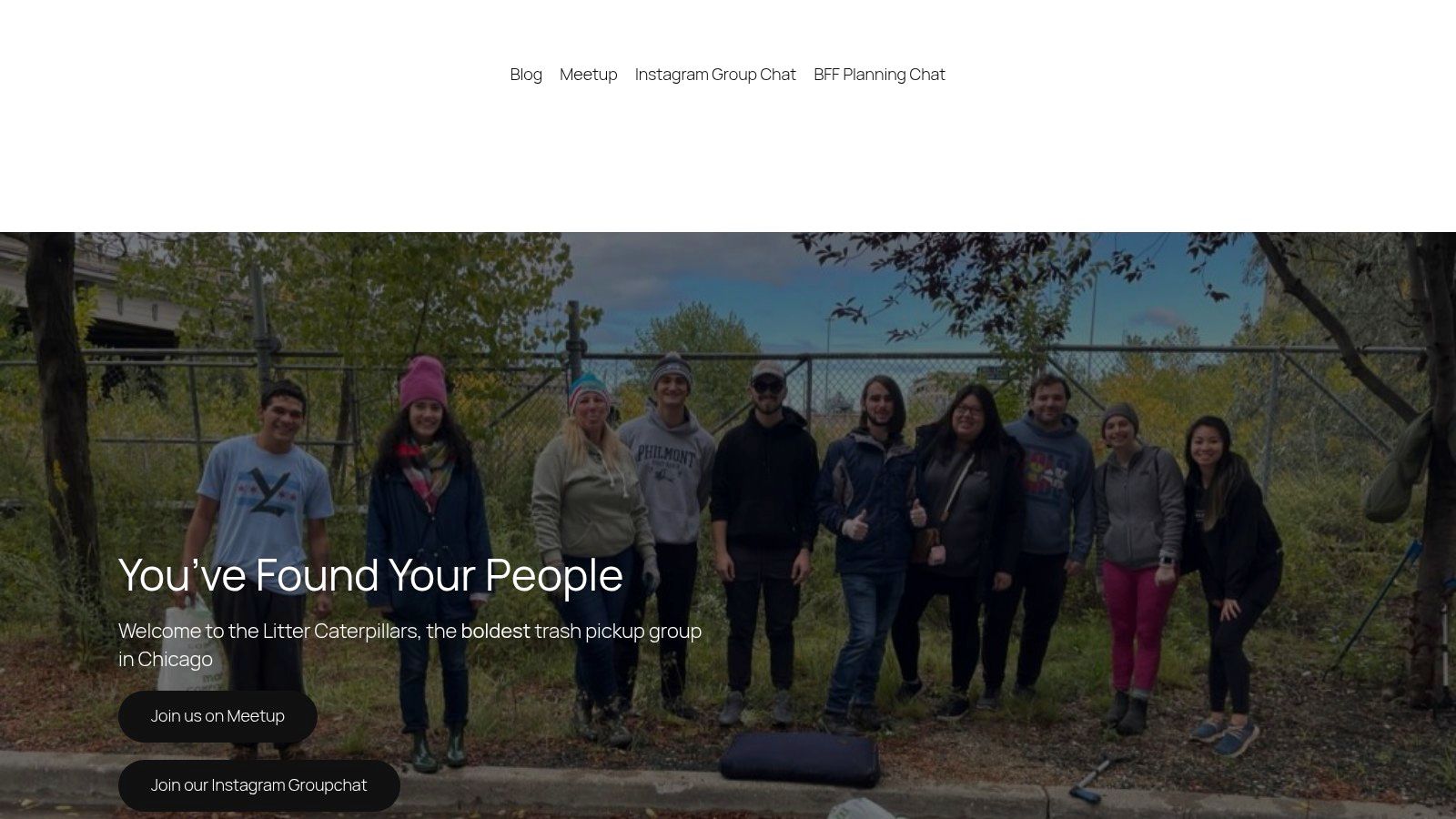
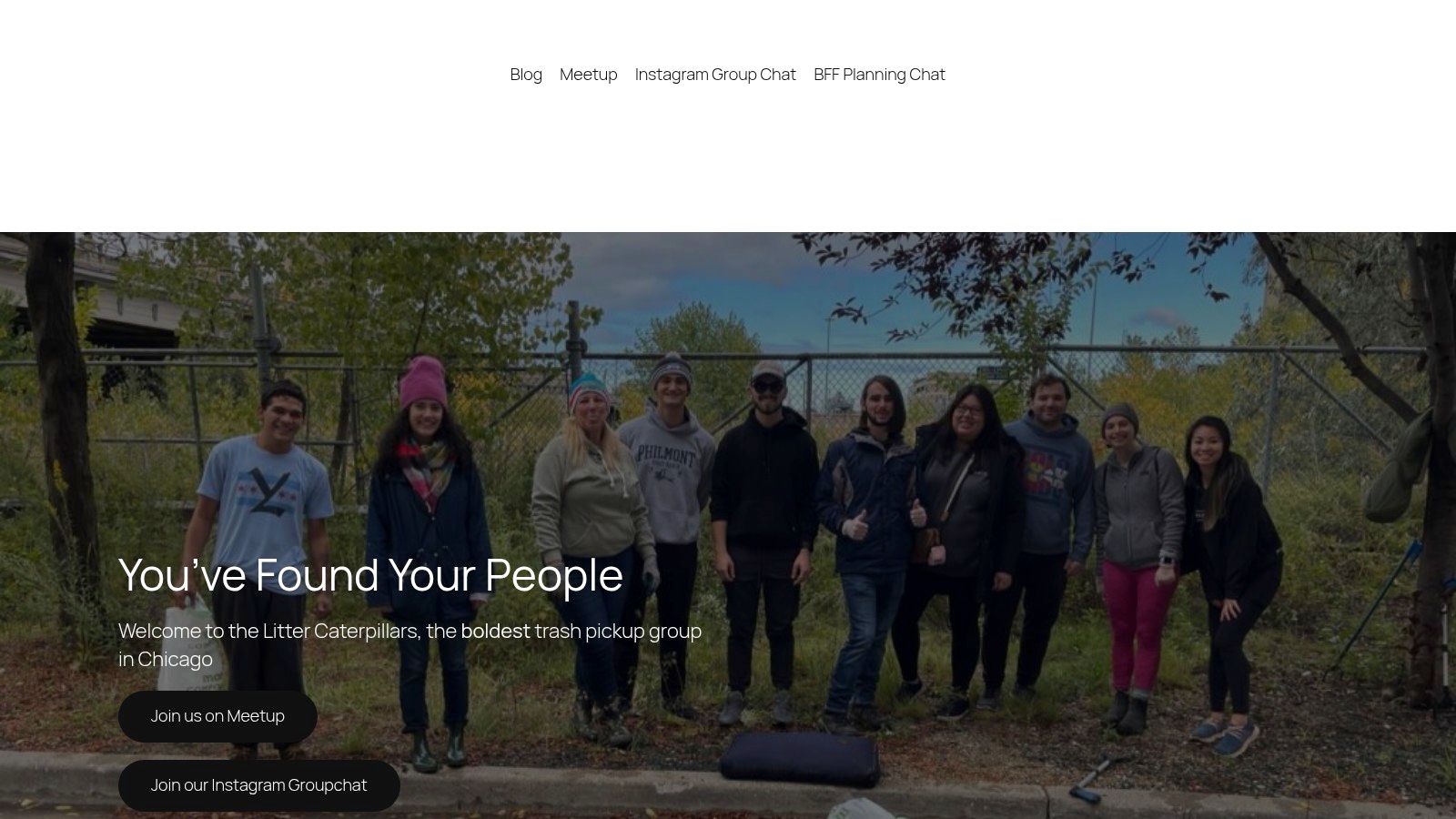
If you’re in Chicago and this message is hitting home, then this is your direct invitation. Come join us at Litter Caterpillars.
Showing up is easy. We post all our events on Meetup and Instagram.
Just sign up, show up, and we'll hand you a trash grabber. That’s it. No experience necessary. You’ll find a group of people ready to welcome you with open arms. This is your roadmap to plugging in, making friends, and creating visible change, block by block.
Why Your First Step Is Everything
We’ve covered a lot of ground in this guide. We started with the personal struggles that light a fire in your belly and followed that spark all the way to the city-wide changes that happen when people just decide to show up. We’ve defined what is civic engagement not as some textbook term or boring chore, but as a wild adventure in making your world—and yourself—better.
If you remember only one thing from all this, make it this: you don’t have to be perfect to start. You just have to be willing.
Your Invitation to the Story
I always think back to that story about Tom Sawyer. He got punished and was forced to paint a fence. He could have complained and sulked. But instead, he convinced all his friends that painting that fence was an incredible honor, a rare privilege. He totally reframed the struggle.
We live by that same power of perspective. The challenges you’ll face—the bad weather, the hard work, even that little fear of meeting new people—aren't bugs in the system. They’re features. They are what make the story interesting.
The struggle is what leads to growth. It’s what forges the friendships. It’s the part of the story you’ll tell for years to come, long after you’ve forgotten the easy, comfortable days.
Your whole journey into civic engagement starts with one simple choice: show up. No grand plan or lifetime vow is required. Just one step.
Your Turn to Advance the Plot
So, whether you pick up one piece of litter with us here in Chicago or you find some other cause that sets your heart on fire, that first step is everything.
It’s the moment the story stops being about "them" and starts being about "us." It’s when you quit being a spectator on the sidelines and become a main character in the grand adventure of your community.
It’s your turn to advance the plot.
Your Questions Answered
If you've got questions buzzing around, good! That’s completely normal. Stepping into something new always feels a little uncertain. Let me tackle some of the most common questions I hear to clear things up so you can feel ready to jump in.
Do I Need Any Special Skills to Volunteer?
This is the number one question I get, and the answer is a huge, resounding NO. Honestly. For the kind of work we do, the only real skill you need is the willingness to show up.
Think of it this way: you don't need to be a professional chef to chop vegetables at a soup kitchen. Same idea here. We’ll show you how to use a trash grabber or sort recycling. Your heart is way more important than your resume.
What if I Can Only Commit a Few Hours a Month?
That’s totally fine! One of the biggest myths about what is civic engagement is that you have to give up all your free time. It's just not true. Even an hour or two on a Saturday can make a massive difference.
Imagine a single leaky faucet. One drop at a time doesn't seem like much, but let it go for a month, and you've got a flood. Your couple of hours is like one of those drops. When you add it to everyone else's, we fill a bucket. We’d much rather have you for two hours with a full heart than not at all. It's all about consistency, not intensity.
Is It Safe to Volunteer in Different Neighborhoods?
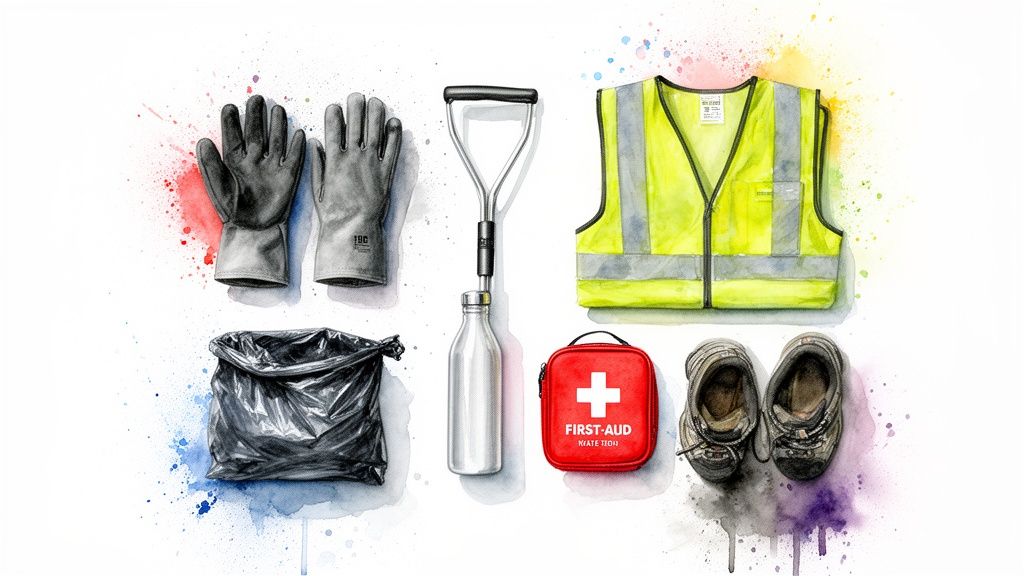
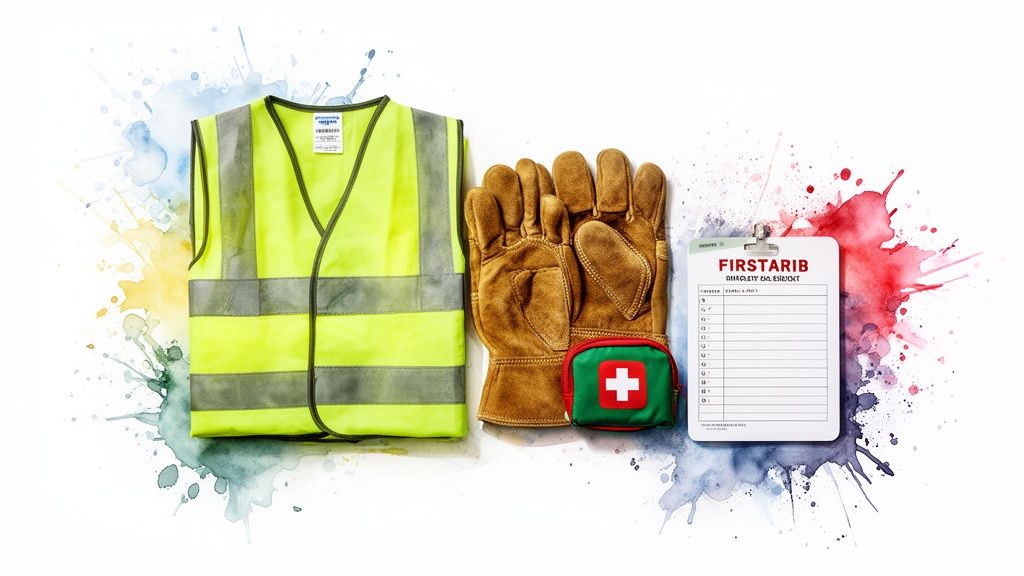
Great question. Your safety is our absolute top priority. We always, always put our volunteers first. That means we scout locations beforehand, bring safety gear like gloves and high-vis vests, and we never work alone. We’re a team.
We believe bravery and safety go hand-in-hand. Pushing your comfort zone shouldn’t mean ignoring common sense. A well-organized group will always prioritize your safety so you can focus on the work and the friendship.
We stick to daylight hours in public spaces, and there's always a group leader you can go to if you ever feel uncomfortable. Exploring new parts of Chicago is part of the adventure, and we make sure it’s a safe one. The goal is to build community, and that starts by making sure every single person feels secure.
Ready to turn these answers into action? At Litter Caterpillars, we've built a community designed to make your first step easy and joyful. Come see for yourself how a few hours can change your neighborhood and maybe even change you. Find an upcoming event and join us.