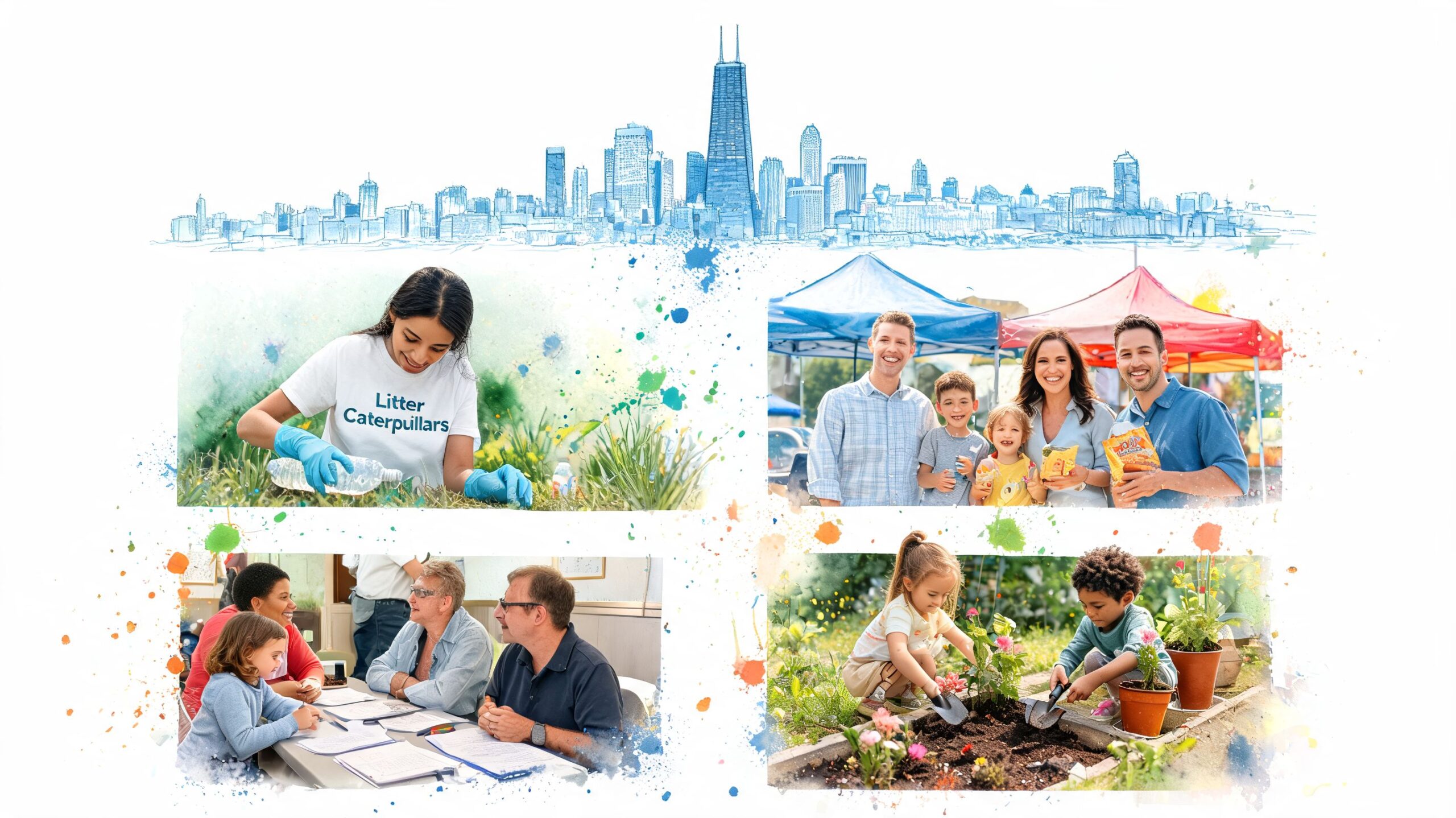
I remember moving to Chicago and feeling lonely in a way that surprised me. I could ride the train with a hundred people, walk past a street festival, grab food on a packed block, and still feel like I was watching someone else's city. The place was huge. I was tiny inside it.
Then I learned something simple. Chicago doesn't become yours because you consume it. It becomes yours when you help build it with other people. That's when strangers turn into your crew, and a Saturday turns into a story you want to keep living.
If you're searching for chicago community events, I want to save you time. This isn't just a pile of calendars. It's a list of tools and groups that can help you find your people, get outside, and become part of the city instead of circling around it.
1. Litter Caterpillars
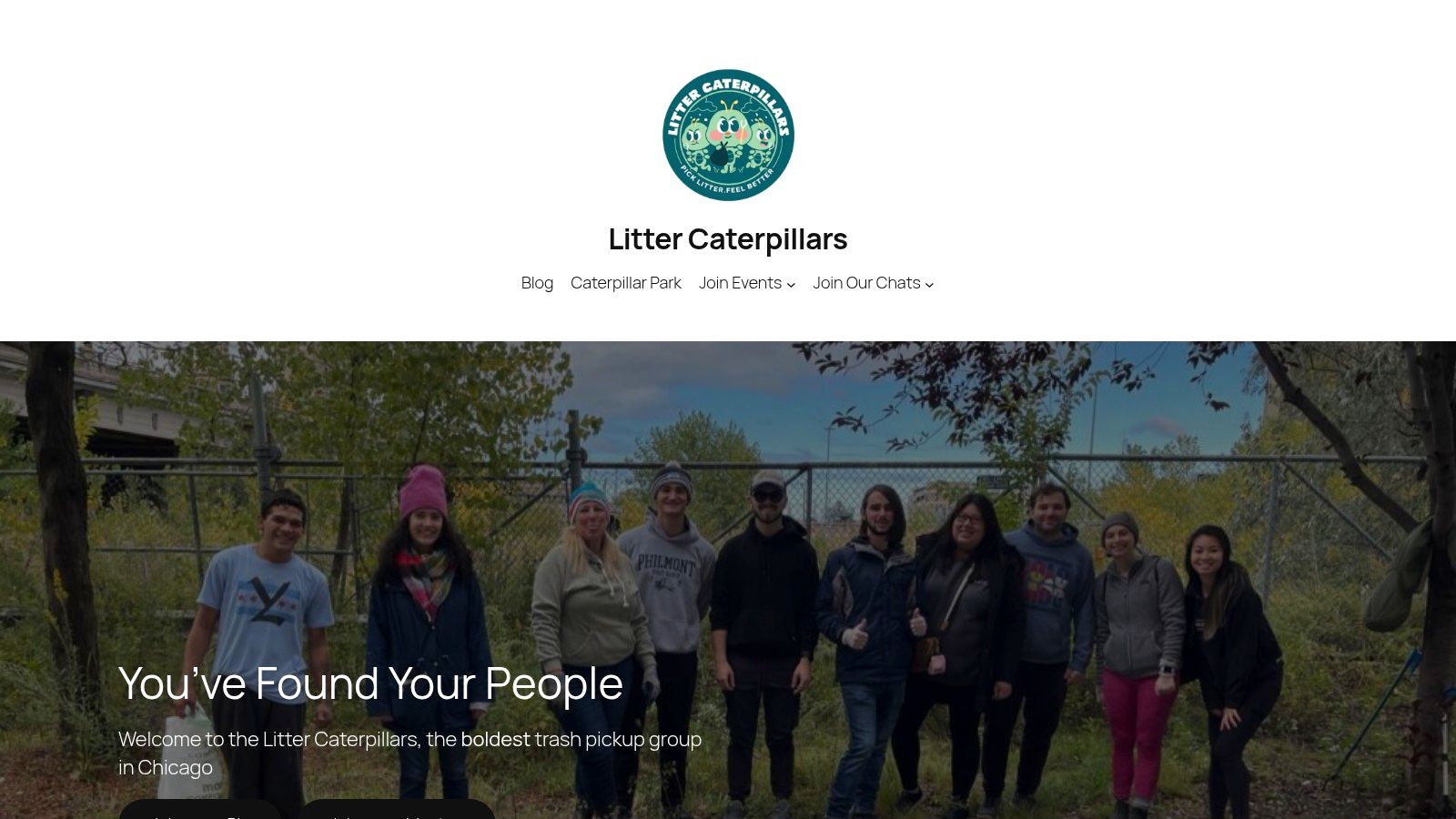
One Saturday morning, I watched a few strangers turn into a crew over a pile of trash bags and coffee. Someone cracked a joke. Someone handed over gloves. An alley that looked ignored started looking cared for. That is why I start with Litter Caterpillars. It shows what a community event can do when it gives people a job, a rhythm, and a reason to come back.
The group meets on weekend mornings and cleans Chicago block by block. The work is simple, physical, and public. You feel the city under your shoes, and by the end of the cleanup, you can point to a corner and say, we changed that together.
What stays with me is the deeper shift. Founder Kevin Tao has spoken openly about struggle, consistency, and how small acts of care can change a life from the inside out. That spirit gives the group its pull. You arrive to pick up litter. You leave with names, faces, and the feeling that you belong somewhere.
If you want a practical place to start, their guide to volunteer opportunities in Chicago gives you a feel for the kind of action-first community they've built.
Practical rule: Belonging grows faster in groups that meet often enough for people to recognize you.
Litter Caterpillars also has a real identity. There are flags, badges, recurring rituals, and enough humor to help shy people relax. That matters. A lot of event roundups focus on what is happening. I care just as much about whether anyone will notice if you come back next week. Here, they probably will.
- Best for belonging: Familiar faces show up again, which makes friendship easier.
- Best for visible impact: The result is right in front of you. Cleaner sidewalks, fuller bags, better blocks.
- Best for people who want action: You are not standing around making small talk for an hour before anything happens.
It is not for everyone. Weekend mornings are real. Weather is real. The work can be messy. If you want polished programming and lots of structure, another option on this list may fit you better. But if you want service with grit, repetition, and heart, Litter Caterpillars is a strong first example of what chicago community events can become. They can help you find your people while you help rebuild a place.
2. Choose Chicago Citywide Events Calendar
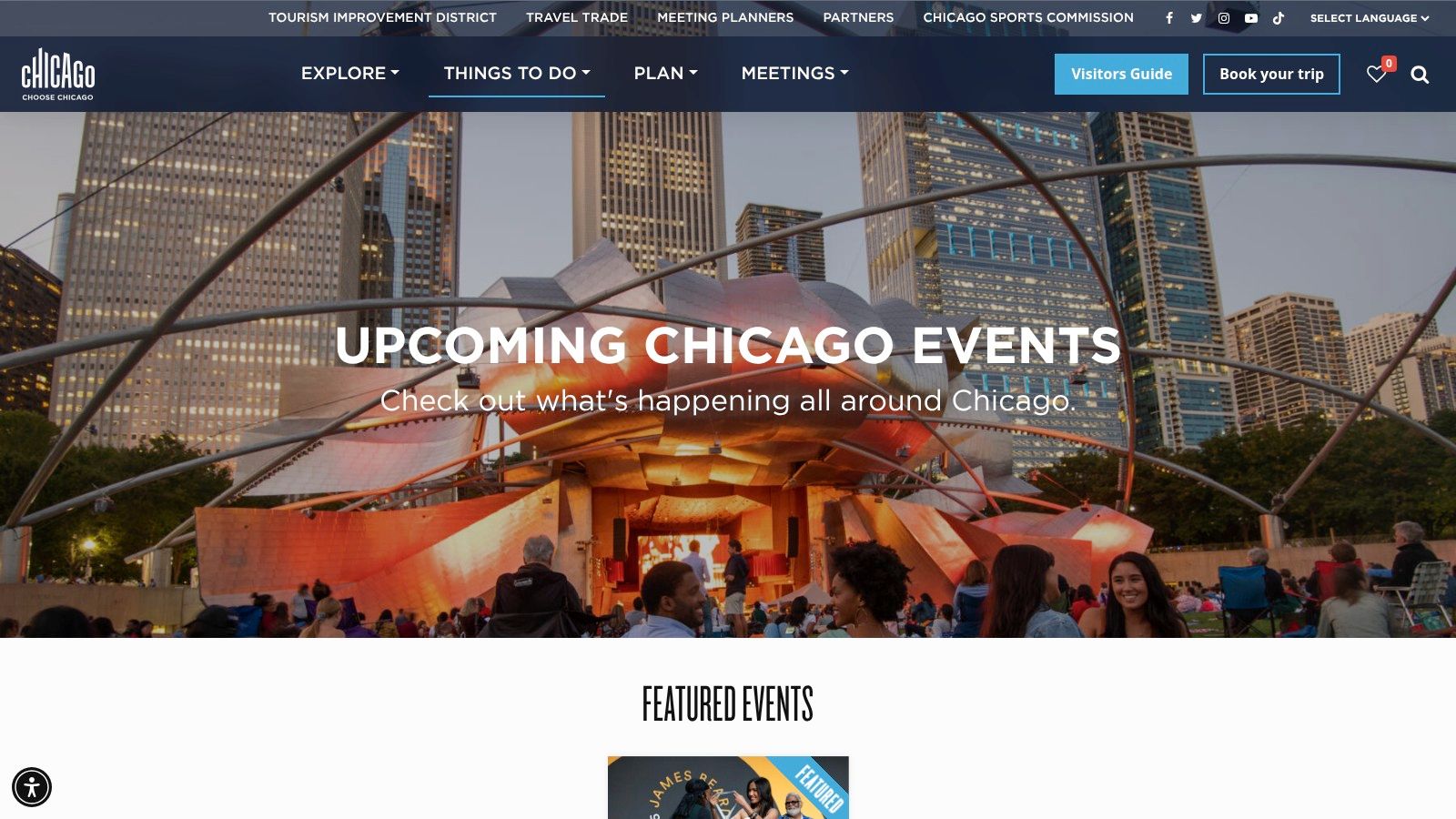
Sometimes you don't need a deep philosophy. You need to know what's happening this weekend and where to start. That's where the Choose Chicago events calendar helps.
I think of it as the wide-angle lens. If Litter Caterpillars is the friend who texts, “Come help us clean this block at 9 a.m.,” Choose Chicago is the giant city bulletin board. It's good for scanning neighborhood festivals, parades, cultural events, and recurring public happenings without hopping between a dozen sites.
When I'd use it
Use this one when you're in exploration mode. Maybe you just moved here. Maybe your family is visiting. Maybe you want chicago community events that feel public, easy to join, and spread across the city.
Chicago's Department of Cultural Affairs and Special Events said it served all 77 neighborhoods in 2023, awarded more than $23.5 million in grants, and distributed 749 grants, which was the most in the department's history, according to the DCASE annual report. When I browse citywide calendars, I keep that scale in mind. Chicago has real neighborhood reach. You can feel it in how many different corners of the city keep generating public events.
- Best for broad discovery: Great for seeing a lot quickly.
- Best for newcomers: You can scan by neighborhood and get your bearings.
- Watch for one gap: Smaller volunteer meetups and hyperlocal cleanups won't always appear.
If you like the bigger public calendar but want a more hands-on service angle, I'd pair it with this guide to volunteer opportunities in Chicago. That combination works well. One tool helps you scan the city. The other helps you step into it.
3. Chicago Park District Event Finder
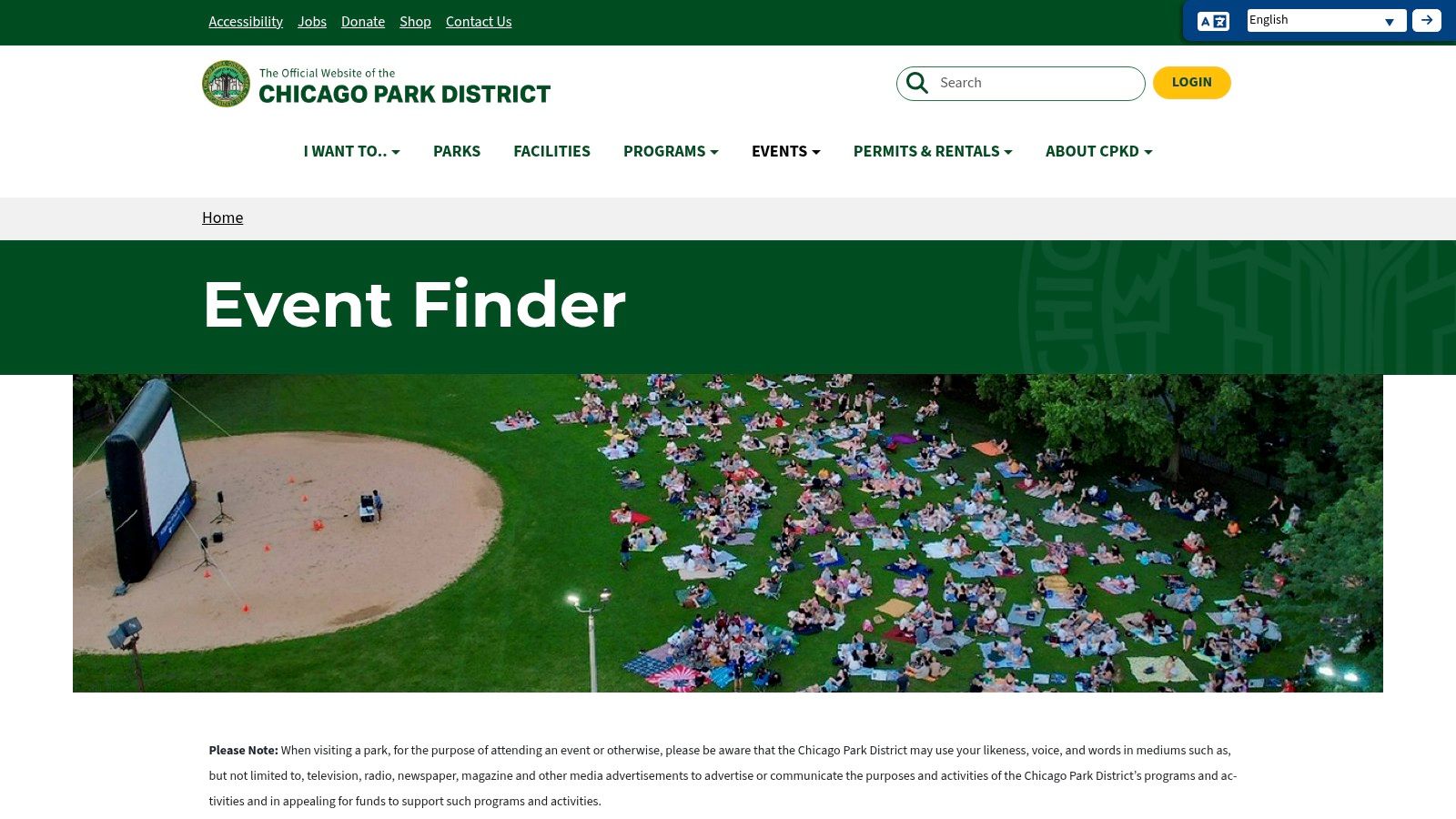
I've learned that parks are where a city relaxes enough to tell the truth about itself. You see parents with snacks, teens pretending not to have fun, aunties in folding chairs, pickup games, summer movie nights, and volunteers trying to keep a corner of the world in decent shape.
That's why the Chicago Park District event finder is one of my favorite tools for chicago community events. It pulls you away from giant downtown gravity and into neighborhood life.
Why parks work so well
This calendar has date, location, and category filters. You can search for park-centered programs, family activities, local gatherings, and seasonal events. I like it because park events feel less performative. People often arrive in a more open mood.
The interface is plain, and that's fine. I'm not asking a community calendar to charm me. I'm asking it to tell me where the people are.
If you want community fast, start where people already bring their kids, chairs, and snacks.
The Park District is also useful if you're trying to connect cleanup work with longer-term neighborhood life. A litter pickup, garden day, or outdoor program can pull you into the same local ecosystem. If that's your lane, this piece on community gardens in Chicago, IL is a strong companion read.
One limitation is detail. Some event pages tell a fuller story than others. And if you want a volunteer-only filter, you may need extra clicking. Still, when I want something grounded, local, and outdoors, this is the place I look.
4. Chicago Public Library Citywide Events Calendar
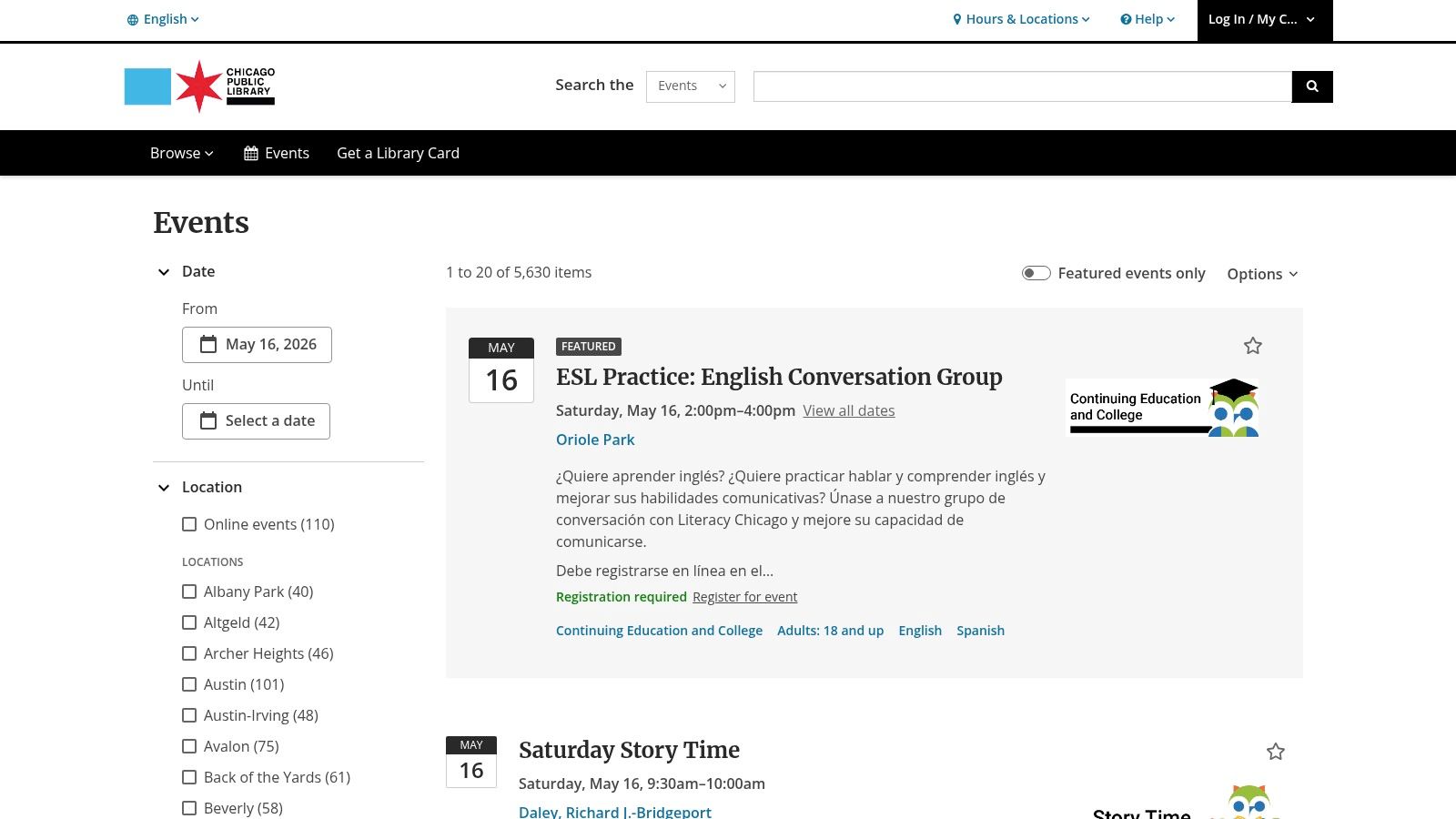
Libraries are one of the few places left where you can walk in without being asked to buy something. That alone makes the Chicago Public Library events calendar worth your time.
If parks are where the city exhales, libraries are where it gathers itself. You'll find workshops, clubs, talks, resource fairs, practical help, and neighborhood programs across branches all over the city. It's a good pick if you want chicago community events that are quieter, more welcoming for first-timers, and often free.
For people who want low-pressure entry
I recommend this one to people who feel nervous about jumping into a loud festival or a physically demanding volunteer shift. A library event gives you an easy on-ramp. You can sit, listen, join a conversation, or attend something useful without needing to “perform community” on day one.
That matters because resident input has shaped Chicago's arts and public programming for a long time. The report The Arts in Chicago A Report to the Community described a process where members of the cultural community spoke for themselves through focus groups and named recurring concerns like financial support, audience growth, cultural diversity, management training, and freedom of expression. I love library calendars partly because they still feel close to that spirit. They feel like places where people can speak, ask, and return.
- Best for free access: Great if cost is a concern.
- Best for inclusive programming: Useful filters by age group, date, and branch.
- Less ideal for outdoor action: You won't get the same volume of cleanup or festival listings.
If your first step into community needs to be calm and human-sized, the library is a strong choice.
5. My Block My Hood My City
My Block My Hood My City feels like the friend who wants you to care about Chicago on purpose. Their events and programs center neighborhood connection, service, and getting people to cross lines they usually don't cross.
I like this platform when I'm tired of browsing giant directories. Instead of drowning you in random listings, it points you toward a tighter set of mission-driven opportunities. That can be a relief.
Good for people who want direction
My Block My Hood My City has a live events area and recognizable initiatives tied to neighborhood improvement, youth experiences, seniors, and city connection. If your brain shuts down when it sees too many options, this one is easier to act on. You can look at what's coming up and decide, “Yes, I'm doing that.”
There's also something healthy about joining a group with a clear point of view. You're not just attending. You're stepping into work that already has a heartbeat.
You don't always need more options. Sometimes you need one clear invitation.
The tradeoff is volume. You won't get the same giant stream of listings you'd get from an aggregator. Events are tied to the organization's own initiatives, and some programs fit certain audiences more than others. Still, if you want purpose and neighborhood connection in the same room, this is a strong bet.
6. Meetup Chicago Community and Social Categories
Meetup is messy. I mean that kindly. It's messy the way a neighborhood bulletin board is messy. Some flyers are gold. Some are weird. Some lead nowhere. But if you know what you're looking for, Meetup in Chicago can help you find your people fast.
I especially like it for recurring groups. One cleanup is nice. A repeating event with the same rough time, same organizer, and same cluster of regulars is where friendship starts.
Best for recurring connection
Meetup has built-in RSVPs, group organization, recurring events, and neighborhood discovery. If you're searching chicago community events with a grassroots feel, it has real range. Volunteer crews, social circles, civic groups, outdoor folks, hobby weirdos. They're all in there.
That said, you need judgment. Quality depends on the organizer. Safety practices differ. Some groups say “community” when they really mean “let's drink somewhere loud.”
Chicago also has a giant event culture behind all this. In a localized Arts Alliance Illinois study, 466 nonprofit arts and cultural organizations reported 36.3 million aggregate attendances in 2015, and surveyed attendees spent an average of $50.56 per person per event, with event-related spending totaling $1.84 billion in the city, according to the Arts Alliance Illinois customized report. I don't read that and think, “Wow, big market.” I read it and think, “No wonder discovery feels crowded.” In a city with that much activity, Meetup helps smaller recurring groups stay visible.
- Best for hyperlocal groups: Strong for neighborhood-based connection.
- Best for repeat attendance: Recurring schedules help people bond.
- Use filters carefully: Service and social often sit side by side.
If you want ideas for gatherings that create real connection, this guide to community building activities for adults pairs well with Meetup.
7. Eventbrite Chicago Community Category
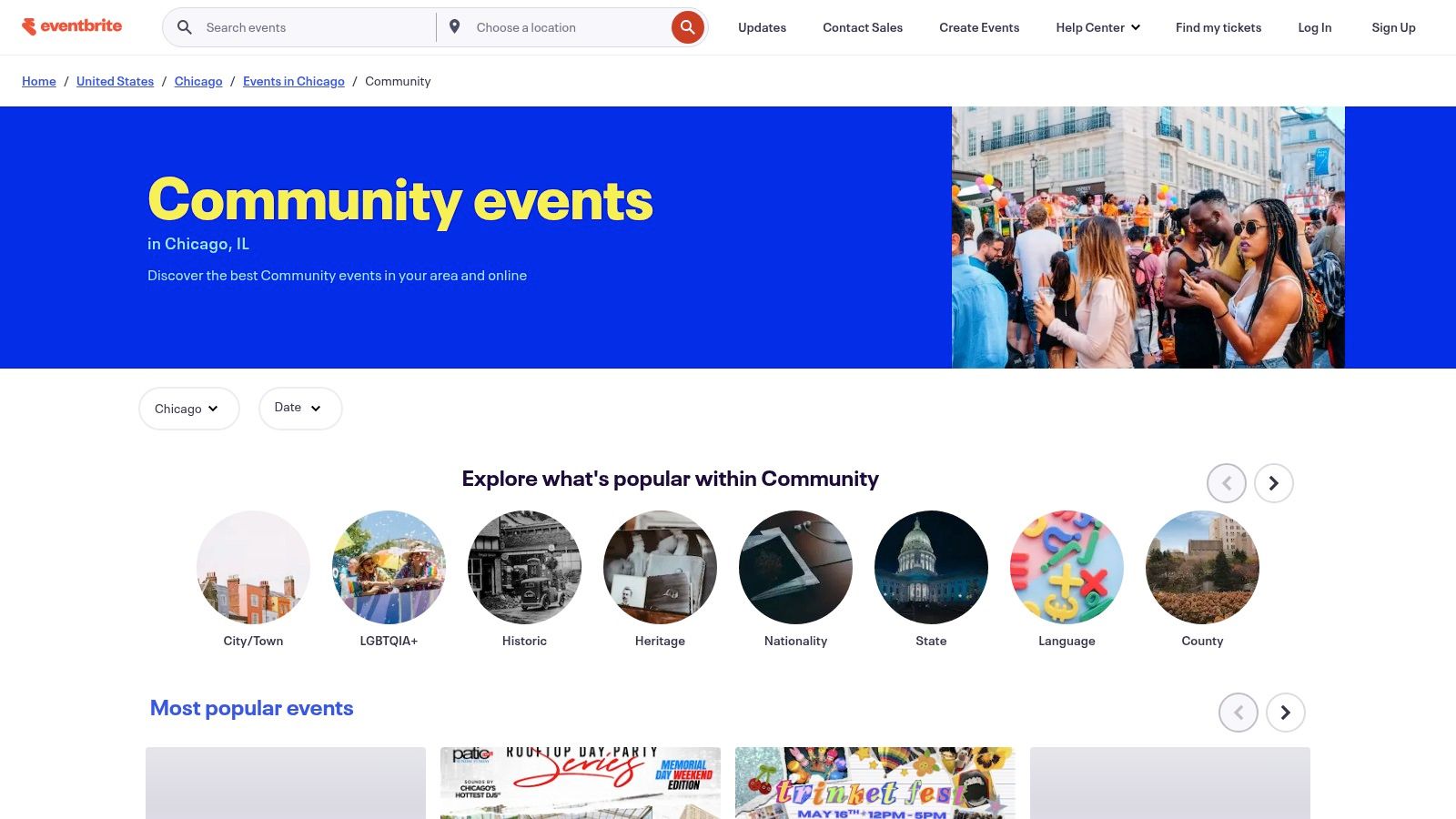
Eventbrite is where I go when I want momentum. I don't want to think too hard. I want to filter by date, neighborhood, and price, then pick something before I talk myself out of leaving the house. The Eventbrite Chicago community category is good for that.
It has a mixed-bag energy. You'll see volunteer listings, resource fairs, local gatherings, and community-oriented events next to stuff that's more commercial or niche. That's not a flaw if you use the filters with intention.
Good for last-minute action
This is one of the easiest places to answer a practical weekend question. What's happening soon? Is it free? Is it nearby? Can I reserve a spot now?
That matters because event discovery in Chicago is fragmented. The search results themselves show the problem. Broad directories and organization-specific calendars often leave people doing extra sorting in their heads. The Eventbrite community-engagement search in Chicago makes that gap obvious. People aren't always asking for more events. They're asking for better curation.
CMAP's Community Data Snapshots can also help if you're organizing rather than browsing. The tool gives neighborhood-level context across demographics, employment, transportation, housing, land use, revenue, and water indicators. I like that because turnout is practical. Transit access matters. Density matters. If you want people to show up, you need to think about where they live and how they move.
Better event discovery starts with a simple question. What fits my actual Saturday?
Eventbrite's weakness is uneven quality control. Read listings carefully. Still, for fast discovery and easy sign-up, it does the job.
Chicago Community Events: 7-Source Comparison
The first time I watched a Litter Caterpillars cleanup roll down a block, it changed how I judge a community event. I did not see a calendar listing. I saw neighbors waving from porches, kids grabbing gloves, and strangers finishing the morning with inside jokes and plans to come back. That is the bar for this table. Which source helps you find people, not just fill time?
| Item | What it feels like in real life | What it asks from you | What you're likely to get back | Best fit | Why it stands out |
|---|---|---|---|---|---|
| Litter Caterpillars | A cleanup that turns a stretch of sidewalk into common ground | Show up, work with your hands, talk to people | Visible change, repeat faces, a reason to return | Anyone who wants belonging through action | Volunteer-led, neighborhood-based, easy to join |
| Choose Chicago – Citywide Events Calendar | Big city energy, polished listings, lots of options | Sort for what matches your neighborhood and mood | Broad awareness of festivals, parades, and public happenings | Visitors, explorers, people planning around major events | Official citywide coverage and dependable updates |
| Chicago Park District – Event Finder | Programs tied to real places where families already gather | Search by park, date, or activity | Steady neighborhood events with a familiar local feel | Parents, regulars, residents who want something close to home | Year-round reach across the city's parks |
| Chicago Public Library – BiblioCommons | Rooms where people learn together without pressure to spend money | Pick a branch or topic and walk in | Free workshops, civic programs, and welcoming public space | Anyone easing into community life | Inclusive programming and strong branch-level variety |
| My Block My Hood My City (MBMHMC) | Service with a clear mission and visible neighborhood care | Join organized efforts and follow the nonprofit's lead | Shared purpose, volunteer momentum, local impact | People who want structured service opportunities | Strong community trust and partnership-driven work |
| Meetup – Chicago Community & Social | Small groups built around recurring connection | Try a group, then decide if the vibe fits | New friendships, regular meetups, mixed quality by organizer | People looking for “my people” energy | Easy RSVPs and recurring grassroots gatherings |
| Eventbrite – Chicago Community Category | Fast browsing for what is happening soon | Filter carefully and read listings closely | Quick sign-up options and broad event discovery | Last-minute planners and larger public events | Useful registration tools and wide visibility |
What I like about this comparison is how clearly the tradeoff shows up. Some sources are better at breadth. Some are better at trust. A few can change your week because they put you shoulder to shoulder with people who care about the same block you do.
If your real goal is transformation, not entertainment, start with the places that ask something from you. A cleanup, a service day, a branch workshop, a recurring neighborhood group. We become part of a city by contributing to it.
That is why Litter Caterpillars stays with me. It is a simple idea carried out in public, with other people, on a schedule you can return to. If you want one place to begin, start there: Litter Caterpillars
Your Turn to Paint the Fence
I keep thinking about Tom Sawyer and the fence. He got handed a chore and turned it into a story people wanted to join. That's what good community work feels like to me. You arrive expecting effort, and you leave with a memory, a new friend, dirt on your gloves, and a reason to come back next week.
That's why I care about chicago community events in the first place. I'm not chasing a packed calendar for the sake of being busy. I'm chasing that moment when the city stops feeling like a backdrop and starts feeling like a shared project. A cleanup can do that. A library workshop can do that. A park event can do that. A neighborhood volunteer day can do that too.
And people want more than a random listing now. They want to know what kind of event this is, who it's for, and whether anything real comes from it. That hunger for visible, local change is part of why service-based events hit so hard. The Center for Community Health Equity events page points to ongoing community healing and support work, and I think that gets at something important. People want participation that means something in their own block, their own weekend, their own life.
You don't need to solve Chicago. You just need to show up somewhere small and real.
Pick one thing from this list. Go to the cleanup. Join the park event. Sit in the library room. RSVP to the Meetup. Walk into the thing that feels slightly outside your comfort zone. That feeling is often the doorway.
Your people probably aren't going to appear because you stayed home and kept scrolling. They're waiting in a park fieldhouse, on a library calendar, at a volunteer check-in table, or on a windy sidewalk with a trash picker in hand.
Go meet them.
If you want the fastest path from “I should get involved” to “I know these people now,” join Litter Caterpillars. Show up on a weekend morning, do something useful with your hands, and let the city change you while you help change a block.
Leave a Reply