
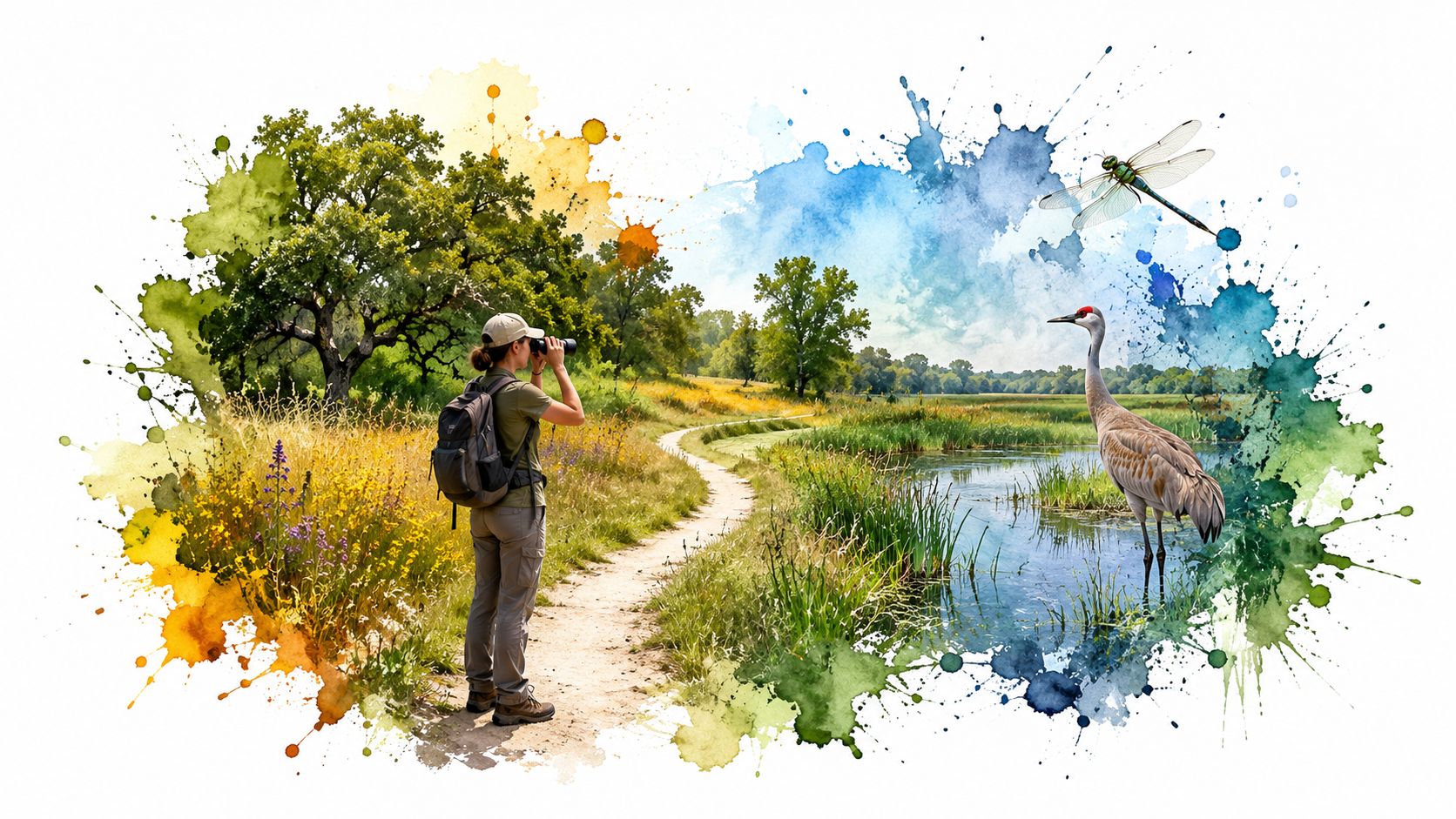
I still remember the first time the road noise dropped away and I could hear grass moving before I saw it. A few turns later, I was standing at the edge of Hackmatack, breathing like I'd been holding it all week.
Finding a Wild Place Near Home
Most of us think a real escape has to be far away. We picture a cabin, a mountain town, a long weekend with too much planning. Then you find a place like Hackmatack National Wildlife Refuge, and that idea starts to loosen.
I came to it the way I come to a lot of places that matter. Tired, a little overstimulated, and wanting something honest. Not polished. Not crowded. Just somewhere I could walk until my thoughts quit buzzing. Hackmatack gave me that feeling almost at once.
What struck me first wasn't a single trail or lookout. It was the fact that this wild patchwork sits between the Chicago and Milwaukee metro areas, in a heavily developed region, and still feels like a place where both wildlife and people can breathe again, as described on the Hackmatack National Wildlife Refuge overview.
That matters if you live near pavement, traffic lights, parking lots, and schedules. It means you don't need a grand expedition to feel the ground steady you again. You can take a short drive, get out of the car, and hear wind instead of your phone.
Why this kind of place hits differently
A neighborhood park can help. A forest preserve can help too. If you want another nearby reset button, I also like browsing places like this guide to a forest preserve in Illinois. But Hackmatack feels different to me because it still has that slightly rough edge. It asks you to pay attention.
You don't visit a place like this to check a box. You go because some part of you wants quiet that hasn't been manufactured.
When I walked there the first time, I didn't need a big moment. I just needed to notice my shoulders drop. That was enough. Sometimes that's what a wild place near home can do. It gives you your own mind back for an hour.
A Refuge Pieced Together Over Time
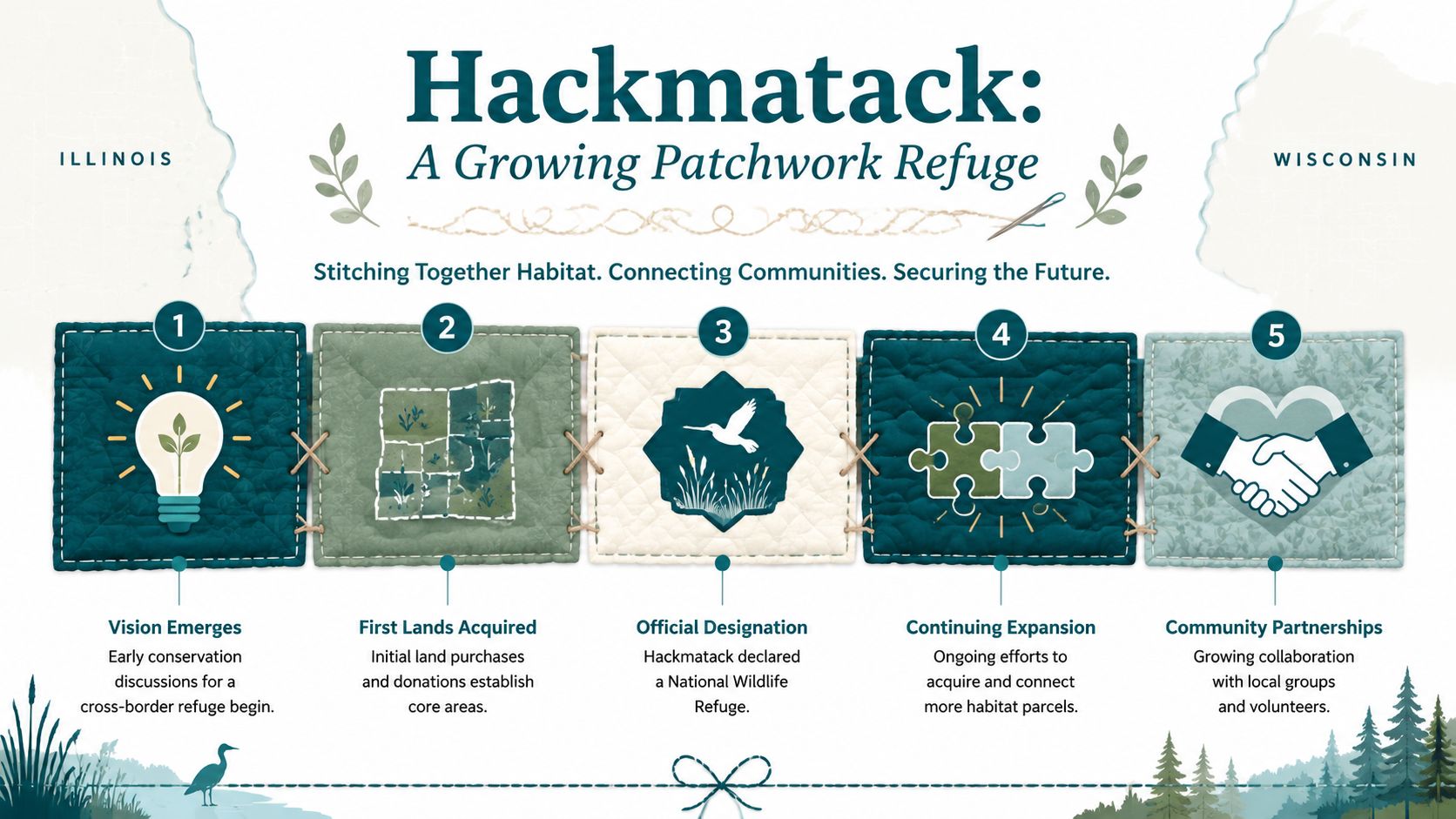
Hackmatack doesn't feel like a neat rectangle on a map because it isn't one. It feels more like a quilt someone is still sewing together, one square at a time, across the Illinois and Wisconsin border.
That shape changes how you experience it. You don't arrive expecting one giant gate and one central parking lot and one obvious route. You arrive with a little curiosity. You start to understand that this refuge grew through patience, partnerships, and a willingness to protect the pieces that still mattered.
A place that took time to become visitable
Hackmatack was officially established in 2012 as a bi-state, noncontiguous refuge across the Illinois-Wisconsin border. The first restored lands didn't open to the public until 2018, which gave the whole story a human pace. First came the idea, then the hard work, then the chance for you and me to walk into it.
I like that. So much of modern life trains us to expect instant access. Click, book, arrive. Hackmatack has a slower story. You can feel it in the way the place doesn't pretend to be finished.
Why the patchwork feel is part of the experience
When I first learned Hackmatack was noncontiguous, it clicked for me. Of course it feels scattered in an interesting way. The refuge was built around separate parcels rather than one clean block of land.
That sounds technical until you picture it. Think of old fragments of prairie, wetlands, and woods that survived while roads and subdivisions closed in around them. Then think of people trying to reconnect those fragments over time so wildlife can move and habitats can recover.
Here's how I'd explain the shape to a first-time visitor:
- It feels exploratory: you're not entering one giant park. You're stepping into a network.
- It rewards patience: some visits are about one short walk, one overlooked trailhead, one quiet opening in the trees.
- It changes your mindset: you stop asking, “Where's the main attraction?” and start asking, “What can I notice here?”
Practical rule: Go to Hackmatack expecting discovery, not polish. You'll enjoy it more.
There's something almost comforting about that unfinished quality. It reminds me of community work in general. Cities get cleaned block by block. Habitats come back parcel by parcel. People recover that way too.
So when you stand on a trail at Hackmatack, you aren't standing in a frozen, complete thing. You're standing in a place that took years to become walkable and is still being stitched together. I find that strangely hopeful. It makes every footpath feel earned.
What You Will See in Hackmatack's Landscapes
I remember one turn in the trail where everything shifted at once. The breeze that had been pushing hard across open grass suddenly softened. The light changed. My footsteps went from dry ground to softer earth, and somewhere ahead, a bird called from water I still could not see.
That is Hackmatack for me. You do not get one single view or mood. You get a series of small arrivals, each one asking you to pay attention in a different way.
Hackmatack protects a mix of tallgrass prairie, wetlands, and oak savanna, as noted earlier. On paper, that can sound like habitat jargon. On a walk, it feels personal. One area opens your chest. Another sharpens your hearing. Another makes you want to stay quiet for a while and just breathe.
Tallgrass prairie
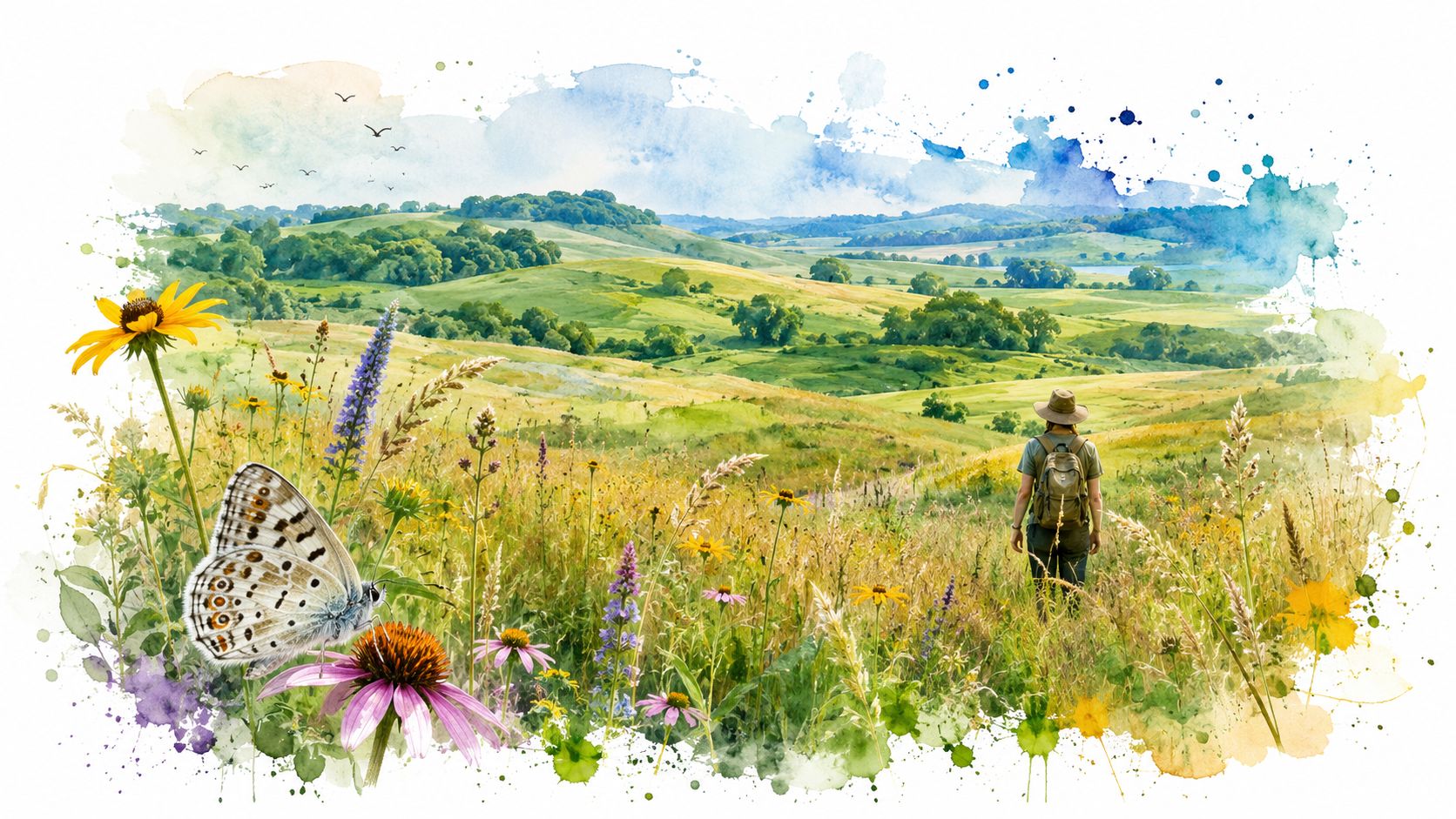
The prairie is where many first-time visitors feel the refuge open up around them. Sky takes over. Wind becomes part of the experience. You start seeing motion everywhere, grass bending in long waves, seed heads flickering, birds rising and dropping back out of sight.
On my first good prairie walk, I caught myself slowing down without meaning to. There was nothing flashy in front of me. That was the point. The openness cleared out the usual mental noise, and for a little while I stopped thinking in errands and screens and started thinking in weather, distance, and light.
If you want to notice more at the edges of these open areas, it helps to know the trees that anchor them. A guide to the native trees of Illinois can make the transition zones feel richer and easier to read.
Wetlands
Wet ground changes your pace immediately.
You hear it before you fully see it. Frogs, insects, red-winged blackbirds, the rustle of reeds, the faint movement of water under cover. Wetlands can look still from a distance, but up close they feel full of small jobs and hidden traffic.
This is the part of Hackmatack that makes me most alert. I watch where I place my feet. I stop more often. I listen harder. That kind of attention feels restorative in a way that is hard to explain until you try it yourself. Caring for a place with your eyes and ears, even for an hour, can pull you back into your own life with a steadier mind.
Here's the quick version I'd tell a friend before their first visit:
| Habitat | What it feels like | What I notice first |
|---|---|---|
| Prairie | Open, windy, exposed | Sky and motion |
| Wetland | Soft-edged, alive, alert | Sound and water |
| Oak savanna | Shaded, spacious, grounded | Trunks, light, calm |
Oak savanna
Oak savanna may be the setting that stays with you longest. It has room to breathe. The trees are present but not crowded together, so light reaches the ground in shifting patches and the whole place feels settled.
I have sat under oaks in spots like this and felt my body finally catch up with the day. No dramatic overlook. No big reveal. Just filtered sun, rough bark, and enough quiet to notice that I had been carrying tension I did not need.
That, to me, is part of what Hackmatack can do for you. It is not only a refuge for wildlife. It can become a refuge for attention, for patience, for the part of you that wants to be useful and present. Visiting a place like this, then caring whether it survives, has the same spirit as community cleanup work. You leave a little more connected than you arrived.
Later, if you want a moving glimpse of the refuge's feel, this clip helps set the mood.
Some places wake you up with spectacle. Others settle you down by giving your senses just enough to do.
That is what these places did for me. The prairie opened me up. The wetlands sharpened my hearing. The oak savanna steadied me. Walk slowly enough, and Hackmatack starts introducing itself in ways that feel less like sightseeing and more like coming back to yourself.
Your Guide to Activities at Hackmatack
The first time I went to Hackmatack, I had one of those slightly restless moods where a normal walk would not have been enough. I needed something that would pull me out of my head and give me a job to do. So I gave myself a tiny assignment. Find one bird, follow one sound, notice one thing I would have missed if I hurried.
That ended up being the whole day.
Hackmatack is known for the U.S. Fish and Wildlife Service's Big Six outdoor activities: hunting, fishing, wildlife observation, photography, environmental education, and interpretation. On paper, that can read like a checklist. Out there, it feels more personal. Each one offers a different way to settle down, focus, and come home a little clearer than you arrived.
If you want a quiet first visit
Start with wildlife observation or photography.
Those are the easiest ways in, especially if you are visiting with no grand plan. You do not need fancy gear. Binoculars help. A camera helps. Patience helps most.
I like to begin by doing less than I think I should. Walk slowly. Stop before the trail tells you to stop. Let the place reveal itself on its own timing. A red-winged blackbird flicking between reeds, a turtle sliding off a log, a sudden hush that makes you realize something larger might be nearby. That kind of moment changes the pace of your whole visit.
If you bring a camera, resist the urge to shoot right away. Spend the first stretch watching where light hits the grass, where shadows collect, where movement repeats. You start seeing patterns instead of snapshots.
A simple rhythm works well:
- Start slower than feels natural.
- Pause often and stay still for a minute longer than you want to.
- Look behind you now and then. The return view can feel like a different trail.
If you want a purpose-driven outing
Fishing and hunting give the day a different kind of focus.
They ask more of you. You need to know the rules, the seasons, the access points, and what kind of conditions you are walking into. That preparation is part of the appeal. The visit begins before you arrive, and that sense of intention can be grounding in its own way.
Interpretation belongs here too, even if it sounds more academic than active. Really, it is just the habit of paying closer attention. You notice that one patch holds water longer. You notice where the grasses change height. You begin to understand why birds gather in one area and skip another.
That shift matters. You stop consuming a place and start reading it.
Here is who these activities tend to fit best:
- Fishing: good for people who like repetition, quiet, and the calm that comes from doing one thing well
- Hunting: good for people who prepare carefully and respect boundaries, timing, and habitat
- Interpretation: good for curious walkers who want each visit to make the next one richer
A good first day at Hackmatack can be small. One careful walk. One unexpected sighting. One moment where your mind finally stops racing.
If you are bringing kids or friends
Environmental education does not need a ranger talk or a clipboard.
Some of the best versions of it are simple and a little playful. Give everyone a mission. Ask a kid to listen for three different bird calls. Ask a friend to photograph three textures, bark, water, and grass. Ask the group to name the exact moment the day started to feel different.
That kind of outing stays with people because it gives them a way in. You are not just passing through a refuge. You are forming a relationship with it.
I love Hackmatack for mixed groups for that reason. One person can be watching birds. Another can be taking photos. Someone else can be trying to identify trees or track changes in the ground underfoot. You all get to share the same place without needing the same agenda.
And that may be the best part of this refuge. It gives you room to choose your own kind of attention. In a week full of noise, that can feel like service to yourself. When that quiet turns into care for the land, it starts to feel like service to a larger community too.
How to Plan Your Trip to the Refuge
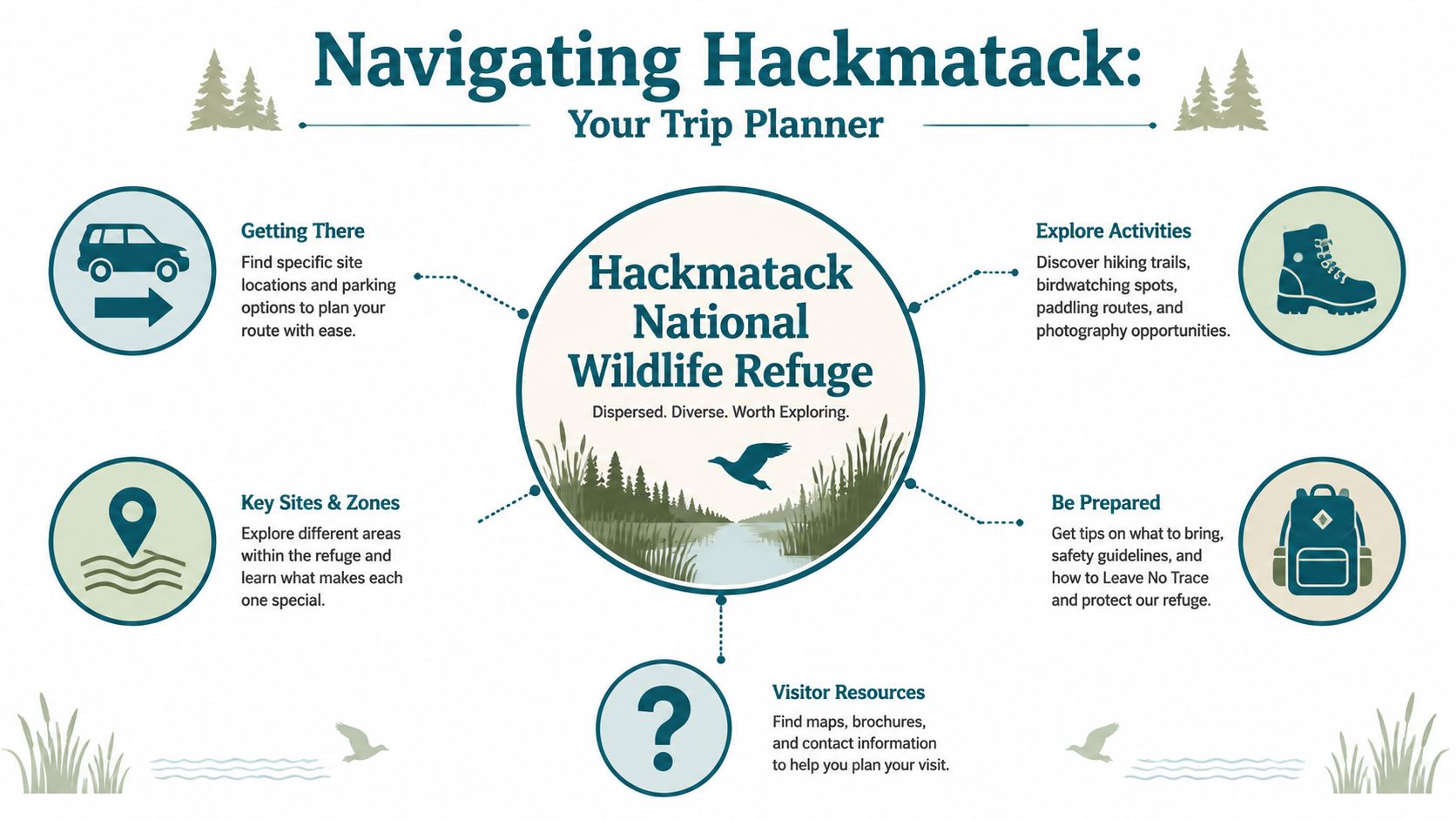
Planning a trip to Hackmatack gets easier once you stop expecting one central entrance. This place works better if you think in terms of sites, not one big front door.
That sounds less convenient than a standard park setup, but I think it makes the day more personal. You choose the kind of outing you want, then pick the access point that fits it.
Pick your day before you pick your trail
Ask yourself one question first. What kind of visit do you want?
- Short reset: choose a simple walk and keep your gear light.
- Longer wander: bring water, snacks, and time to stop often.
- Birding or photography day: start early or go later when the light softens.
- Reflective solo trip: pick a quieter window and leave room for slowness.
I've found that Hackmatack rewards a looser schedule. If you stack the day too tightly, you'll rush past what makes it good.
Pack for a place that feels a little rough around the edges
Because the refuge is a collection of spaces, I never assume every site will have the same comforts. I pack like I'm going somewhere simple and honest.
My basic checklist looks like this:
- Water and a snack: even for a short outing.
- Shoes you trust: trails and ground conditions can vary.
- Binoculars or camera: if you like giving your attention a job.
- Bug spray and weather layers: the day can change fast.
- A paper map or saved directions: useful when a place feels dispersed.
A first-timer usually feels better with modest expectations. Think trail, parking area, open air, and fewer built extras than a busy recreation spot.
Field note: If a place feels less packaged, that's often part of why it feels real.
How I'd choose a first visit
If you're going alone, I'd keep the first trip short. Arrive, walk, stop often, then leave while you still want more. That's better than overcommitting and turning the day into logistics.
If you're going with a friend, decide your shared goal before you leave the house. Do you want pictures, birds, conversation, or quiet? A lot of outdoor frustration comes from two people wanting different days and not saying so.
Here's a simple decision guide:
| If you want… | Then plan for… |
|---|---|
| A quick recharge | A shorter walk and light gear |
| A deeper look | Extra time for stopping and observing |
| Photos | Better light and slower pacing |
| Solitude | Fewer plans, fewer expectations, more patience |
Hackmatack isn't hard to visit. It just asks you to plan with intention. Once you do, the whole place feels more welcoming. You stop trying to force it into the shape of a standard park and start enjoying it for what it is.
Helping Grow and Protect Hackmatack
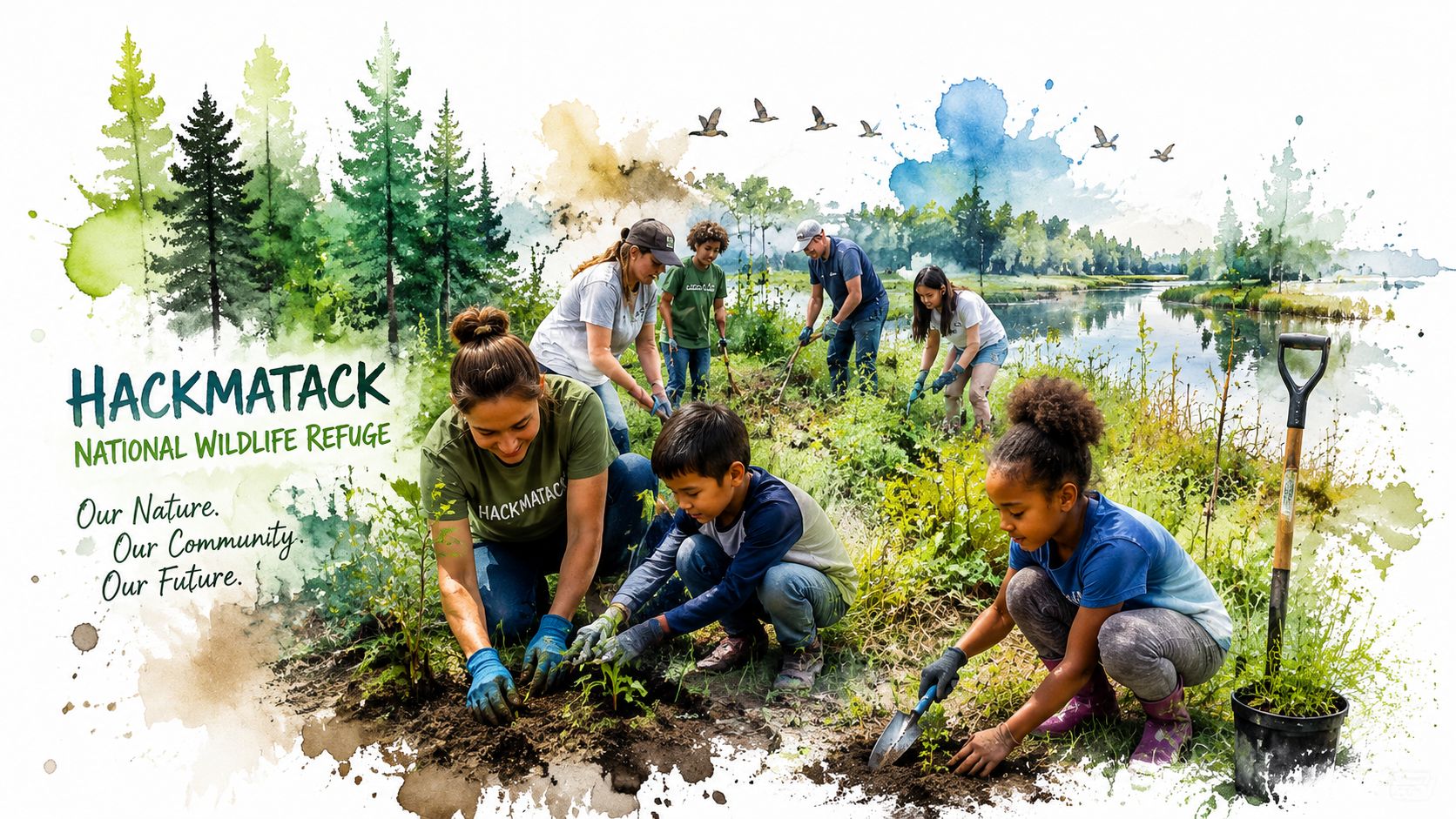
The first time I joined a restoration workday at a place like this, I spent an hour yanking invasive plants with dirt under my nails and sweat running down my back. It was ordinary, repetitive work. Then I looked up and realized the afternoon had gone quiet in the best way. My brain had stopped racing. I was tired, useful, and more attached to the place than I'd been an hour earlier.
That's what can happen at Hackmatack. A visit gives you the spark. Helping gives that feeling somewhere to go.
Hackmatack exists as a patchwork that conservation partners have been trying to connect over time, as noted earlier. That matters on the ground. Better connected habitat gives birds, pollinators, and other wildlife more room to move, feed, and nest. It also gives people something rarer than another nice outing. It gives you a chance to return to the same living place and help it become healthier year by year.
A lot of visitors start small. They come for a walk, spot a crane or hear frogs in a wet stretch, and leave with that stubborn thought: I want this to still be here in ten years.
That instinct is worth trusting.
You do not need special training to become part of the story. You need a little time and a willingness to care in public. For some people, that means showing up for restoration days and doing tangible work like pulling invasives or planting natives. For others, it means joining bird counts, helping partner groups, donating, or bringing back a friend who might fall for the place too.
If service is part of how you reconnect with yourself, the ideas behind environmental stewardship programs that turn care into community action will feel familiar. The same principle applies here. When you help a place heal, you usually leave steadier than you arrived.
A morning of stewardship changes the rest of your visits. You notice more. You step around fragile ground without being told. You pay attention to water levels, bird calls, seed heads, and the work it takes to keep a wild place from being loved to death.
That shift matters. It turns a refuge from scenery into relationship.
And in a week filled with screens, errands, and half-finished thoughts, that relationship can feel like its own kind of self-care. You give your attention to something rooted and real. You leave with sore legs, dirty hands, and the quiet satisfaction of knowing you added a little good to the world instead of just passing through it.
Your Invitation to a Different Kind of Wild
Hackmatack stayed with me because it didn't try too hard. It wasn't polished into entertainment. It gave me open sky, shifting ground, pockets of shade, and the strange relief of being somewhere that didn't need anything from me except attention.
That's why I keep thinking of it as a personal invitation. Go find your quiet patch. Walk until your breathing changes. Stand still long enough to hear the place instead of your own mental noise. If you're lucky, you'll spot something that jolts you awake a little. A sudden wingbeat. A shape moving through grass. A call from deeper in the trees.
You don't have to earn a day like that. You just have to go.
Hackmatack National Wildlife Refuge is a good reminder that wildness doesn't always live at the end of a flight or a giant road trip. Sometimes it waits between familiar metro areas, in a patchwork of prairie, wetland, and oak savanna, ready to meet you halfway.
So take the trip. Keep it simple. Bring water, decent shoes, and enough patience to let the place unfold. Then, if the refuge gets under your skin a little, let it. That's often how care begins.
And if you find yourself wanting to give something back, trust that feeling too.
If this kind of outdoor service speaks to you, take a look at Litter Caterpillars. They bring people together through hands-on care for the environment, and that same spirit of showing up, getting your hands dirty, and leaving a place better than you found it can change a weekend, a neighborhood, and sometimes your whole sense of yourself.
Leave a Reply