
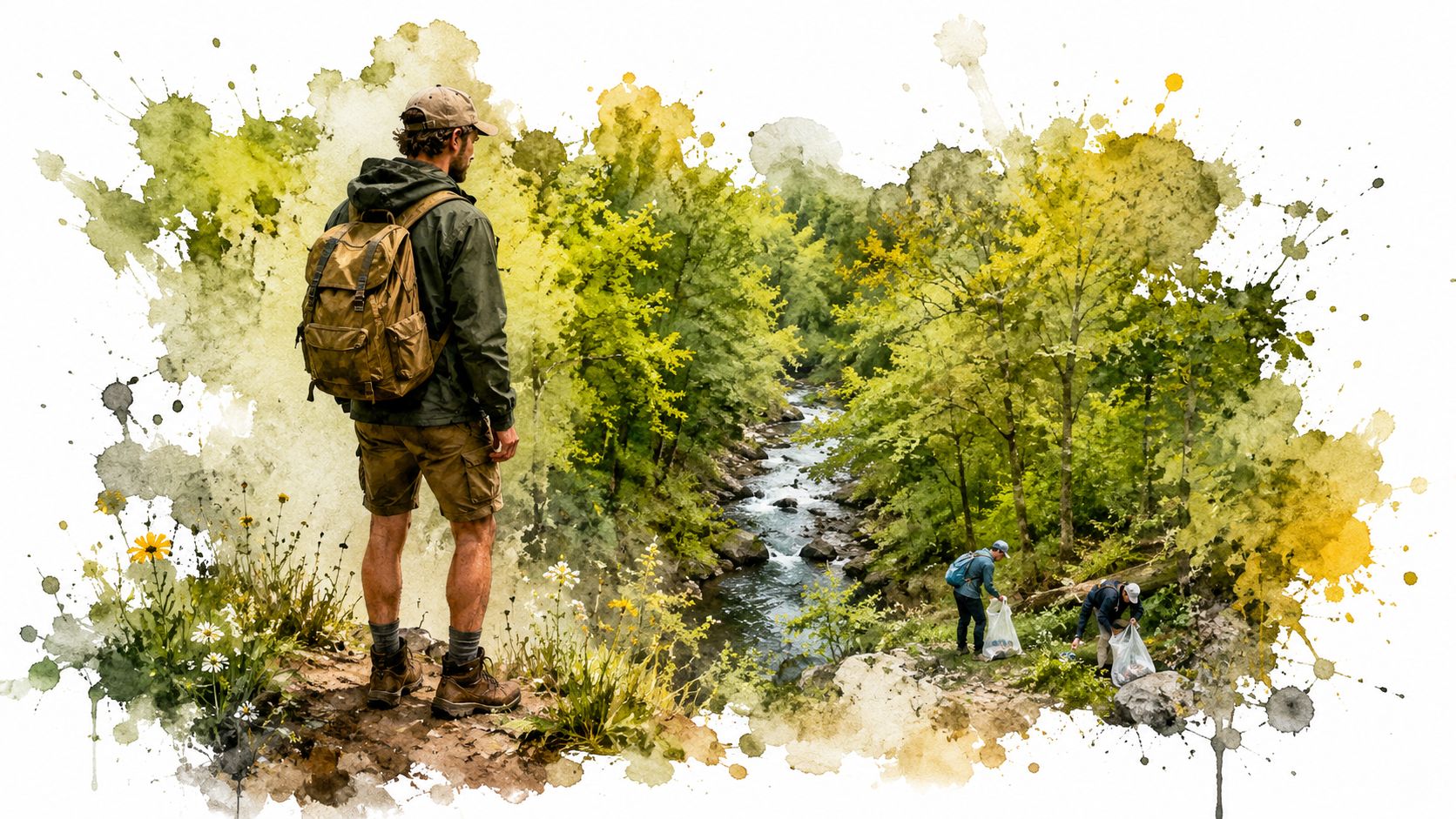
I still remember the first time I dropped into Black Partridge Woods. One minute I was carrying city-brain with me, all noise and errands and tabs-open-in-my-head energy. The next minute I was standing at the edge of a bluff, looking down into a ravine that felt older, rougher, and more real than anything I expected to find so close to home.
Finding Adventure Close to Home
Some places ease you in. Black Partridge Woods doesn't really do that.
You arrive thinking you're heading to a simple forest preserve walk, then the ground starts falling away under the trees. The bluff edge gives you that good kind of jolt, the kind that makes you stand up straighter and pay attention. You look down and see the folds of the ravine, the way the woods dip and curl, and suddenly your quick little outing feels more like a real outing.
Why this place feels different
I like a flat path as much as anybody, but Black Partridge Woods has texture. It has drop-offs, cool low spots, and those little shifts in air and sound that make you feel like you crossed a threshold instead of just parked your car and started walking.
This is an 80-acre forest preserve in Cook County, Illinois, set on river bluffs above the Des Plaines River with ravine forests and spring-fed streams. It was designated an Illinois Nature Preserve in 1965, and it was the second site in Illinois to receive that distinction, according to the Forest Preserves of Cook County page for Black Partridge Woods.
That fact matters because it helps explain the feeling. You're not wandering through a random leftover patch of green. You're walking into a place people recognized early as worth protecting.
Practical rule: If you need a reset but don't have time for a big trip, pick a place with terrain. A ravine does more for your brain than another lap around a flat path.
A small place with real character
I've always loved the kind of adventure that fits into half a day. Grab water, throw on shoes you don't mind dirtying, maybe bring a bag in case you spot litter, and go. Black Partridge Woods fits that perfectly.
If you usually think of Illinois preserves as broad, easy, and open, this place will change your picture a bit. It feels compact in the way a good bookstore feels compact. Small footprint, lots going on.
If you want more ideas for this kind of local escape, I like this guide to a forest preserve in Illinois because it helps frame the simple truth that the good stuff is often closer than we think.
Here's the part I keep coming back to. You don't need a plane ticket, a cabin reservation, or a grand plan. Sometimes adventure is just you, a bluff, a ravine, and the decision to go outside on purpose.
The Stories Written in the Land
The first time I learned where the name came from, the woods changed for me.
Before that, “Black Partridge” sounded dramatic and a little mysterious, like the title of an old story. Then I found out the name comes from a major Potawatomi chief tied to the Chicago region around the 1812 Battle of Fort Dearborn. That turned the preserve from a nice place to walk into a place with memory in it.
The name under your feet
I think names matter because they tell you how to listen.
When you walk through Black Partridge Woods with that history in mind, the place stops feeling like blank scenery. The roads nearby, the suburbs, the traffic, all of that starts to feel recent. The name pulls your attention backward and reminds you that people knew this region long before we chopped it into commute routes and parking lots.
An account about Black Partridge describes him as active during 1795–1816 and notes that the woods were named in his honor, linking the preserve to Indigenous history in the Chicago area. That same account also notes one milestone in 1964 and the formal Illinois Nature Preserve designation in 1965. You can read that background in this history of Black Partridge.
Water wrote the map
Then there's the story the land tells without using words.
Water carved this place. You can feel that the second you move from higher ground into the ravine system. It's like reading a sentence cut into the earth. The slope, the coolness, the stream, the way the trail bends with the contours. None of it feels accidental.
According to the Illinois Department of Natural Resources, Black Partridge Woods is an 80-acre Illinois Nature Preserve with river bluffs, ravine forests, and spring-fed streams. Its cold, highly oxygenated waters support uncommon species like the mottled sculpin, and its mesic forests are dominated by sugar maple, basswood, red oak, and white oak. I love how much that tells you in one shot. Clean cold water. Mature hardwood forest. A place where the conditions still line up. Here's the Illinois Nature Preserves Commission page on Black Partridge Woods.
When I know a stream can support a fish that needs cold, oxygen-rich water, I stop seeing “just a creek.” I start seeing a whole chain of things going right.
If you want to get better at reading the canopy and understory when you're out there, this quick guide to trees in Illinois helps a lot.
How I read the woods now
Now when I walk there, I don't just see “trees.”
I notice the hardwoods as a kind of neighborhood. I notice how the ravine holds moisture. I notice that a stream like that isn't only pretty. It has standards. If the water gets too warm or too poor in oxygen, life disappears from it.
That changes your posture as a visitor. You stop treating the place like a backdrop. You start treating it like a living system that can be helped or harmed by small choices.
Your Guide to the Trails
The best way I can describe the trail at Black Partridge Woods is this. It feels a little like walking through a folded piece of paper. Up, down, crease, flatten out, then up again.
That's part of the fun.
Getting started without overthinking it
When I go to a new preserve, I try to keep the first visit simple. I'm not there to conquer it. I'm there to learn its rhythm.
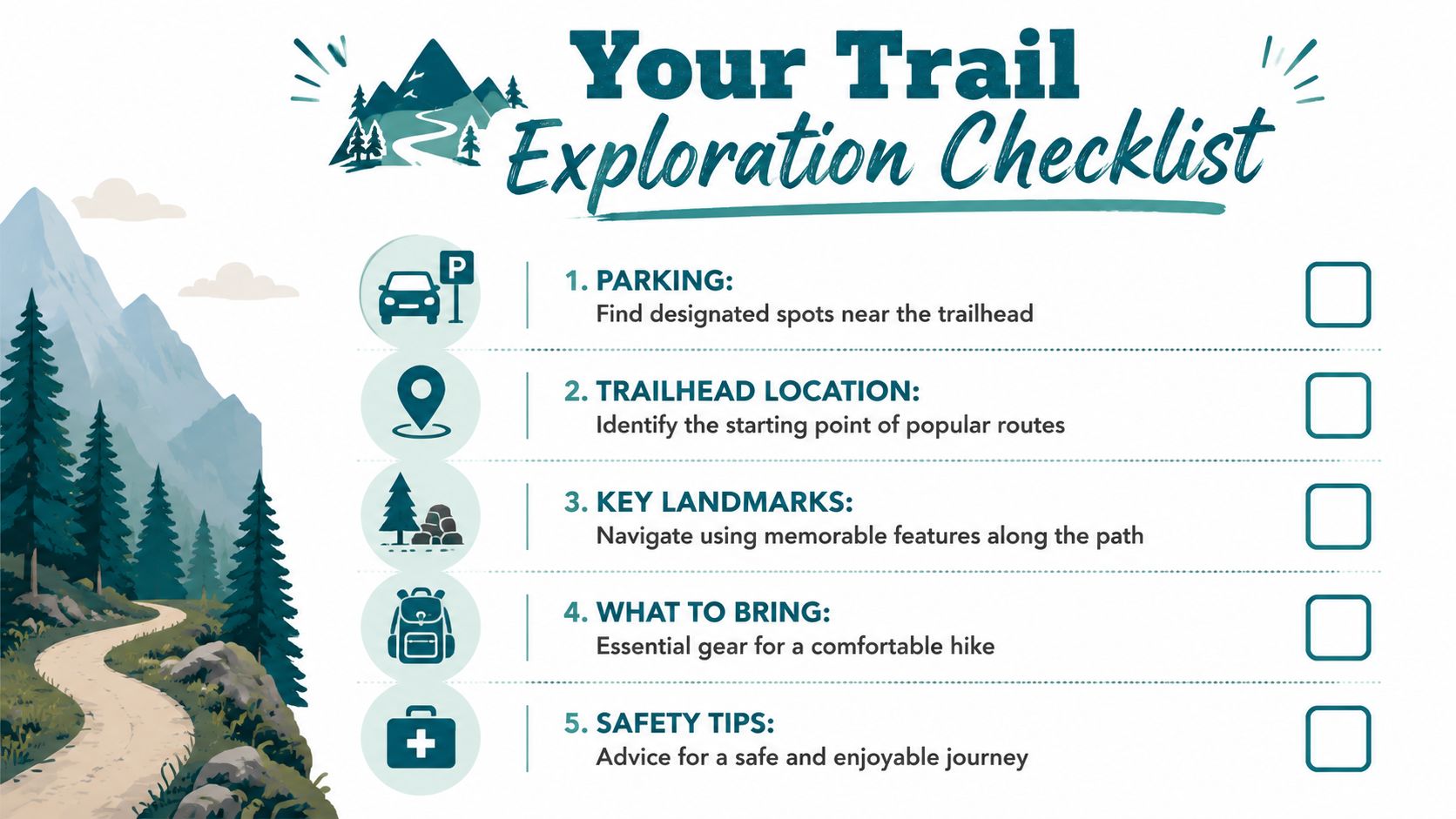
Look for designated parking near the preserve entrance, get your bearings, and give yourself a minute before you start walking. Listen. Check where the trail leaves the parking area. If something seems tucked away or less obvious than you expected, that's normal for wooded preserves.
A good first lap is less about mileage and more about landmarks. I remember stairs, stream crossings, bluff views, and places where the air suddenly turns cooler.
The shape of the walk
Here's how I'd talk you through it if we were hiking together:
- Start easy: Begin on the clearer, more obvious section and let your eyes adjust. Woodland trails can feel visually busy at first.
- Watch for the stairs: Once you start descending, everything changes. The woods feel closer. The ravine walls hold sound in a different way.
- Follow the water: Flat stretches near the stream usually feel calmer and cooler. That's your exhale section.
- Respect the climb out: Going back up isn't brutal, but it will wake your legs up if you've been casually strolling.
- Pause at openings: Any gap in the trees near the bluff is worth a stop. Even a short view can reset your whole mood.
You don't need to move fast here. This is a place that gets better when you slow down enough to notice the temperature shifts.
A short video can help you get the feel of it before you go:
What to bring and how to move
I don't like carrying a ton of gear for a short woods trip. But I also don't like being dumb about it.
| What matters | Why I bring it |
|---|---|
| Water | Ravine walks feel cooler, but climbs still sneak up on you |
| Good shoes | Dirt, roots, and uneven footing are part of the experience |
| Gloves and a spare bag | Handy if you spot litter and feel like doing a tiny cleanup |
| Phone with charge | For maps, photos, and basic safety |
| Layers | Bluff tops and ravines can feel different on the same day |
The trail mindset I recommend
Don't go there trying to optimize every minute. Go there trying to notice things.
Notice how a stair descent changes your body from commuter mode to trail mode. Notice how the ravine floor feels like a different room than the bluff top. Notice how much more attached you feel to a place when you look at it instead of marching through it.
That's the whole trick. Once you stop treating the walk like a task, the place opens up.
The Woods Through the Year
One visit gives you an introduction. Coming back in a different season gives you a relationship.
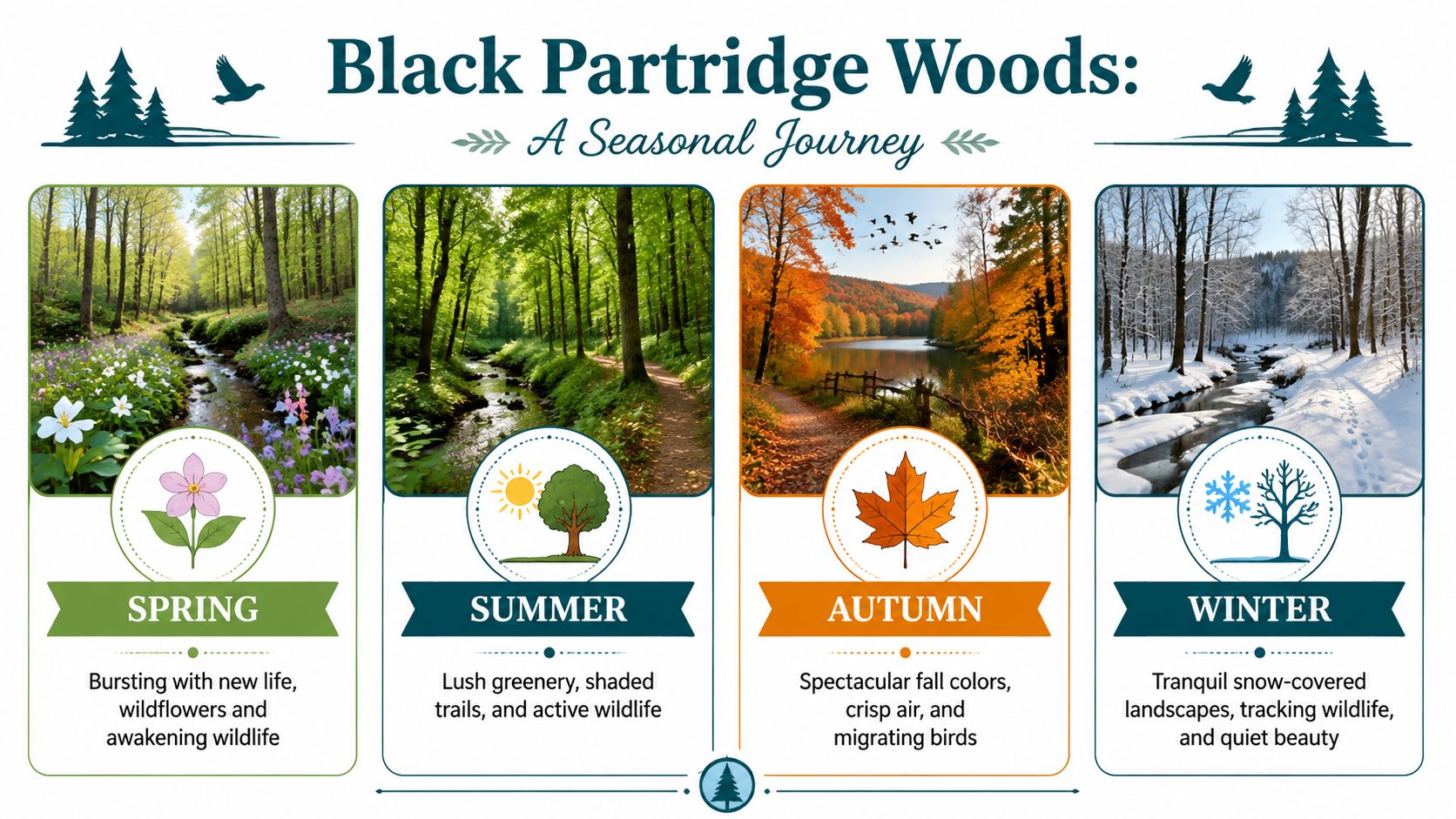
Black Partridge Woods changes clothes all year, and I don't mean that in some fancy poetic way. I mean the same trail can feel like four different places.
Spring and summer
Spring is when I get nosy. I'm looking low, not far.
The forest floor wakes up first. Fresh green pushes through old leaves, wet ground smells alive, and the whole place feels like it's inhaling. Spring-fed areas feel especially vivid because water is part of the story everywhere you turn.
Summer flips the script. Now I'm grateful for shade. The ravine becomes a natural shelter, and even on a warm day the woods can feel like a cooler pocket tucked away from everything hard and bright.
- In spring: Watch the ground near damp areas, check the bluffs, and take your time on the first half-mile.
- In summer: Go earlier if you can, enjoy the denser canopy, and spend extra time near the lower trail sections.
Fall and winter
Fall is when the hardwood character really shows itself. You can feel those maples and oaks in the color and texture of the woods, even if you're not naming every tree as you go. Dry leaves underfoot, sharper air, and more open sightlines make the place feel lively in a totally different way.
Winter strips everything down to structure. Ravines look steeper. The bluffs look bolder. Animal tracks become little headlines on the trail.
Winter is the season that lets you see the bones of a place.
My favorite way to revisit
I like returning with one small mission each season.
- Spring mission: Find the dampest, greenest part of the walk.
- Summer mission: Follow shade and listen for water.
- Fall mission: Stop looking at your feet so much and look up into the canopy.
- Winter mission: Study the shape of the terrain.
That keeps the place fresh. It also keeps me honest. I'm not “done” with a woods after one visit any more than I'm done knowing a person after one conversation.
Become a Steward of the Woods
Walking through a place is good. Caring for it changes you.
I learned that in the simplest way possible. You see a bottle off the trail. You see a snack wrapper snagged in brush. You pick it up. Nothing dramatic happens. No orchestra swells. But the place feels more like yours after that, and you feel more responsible in a way that is weirdly calming.
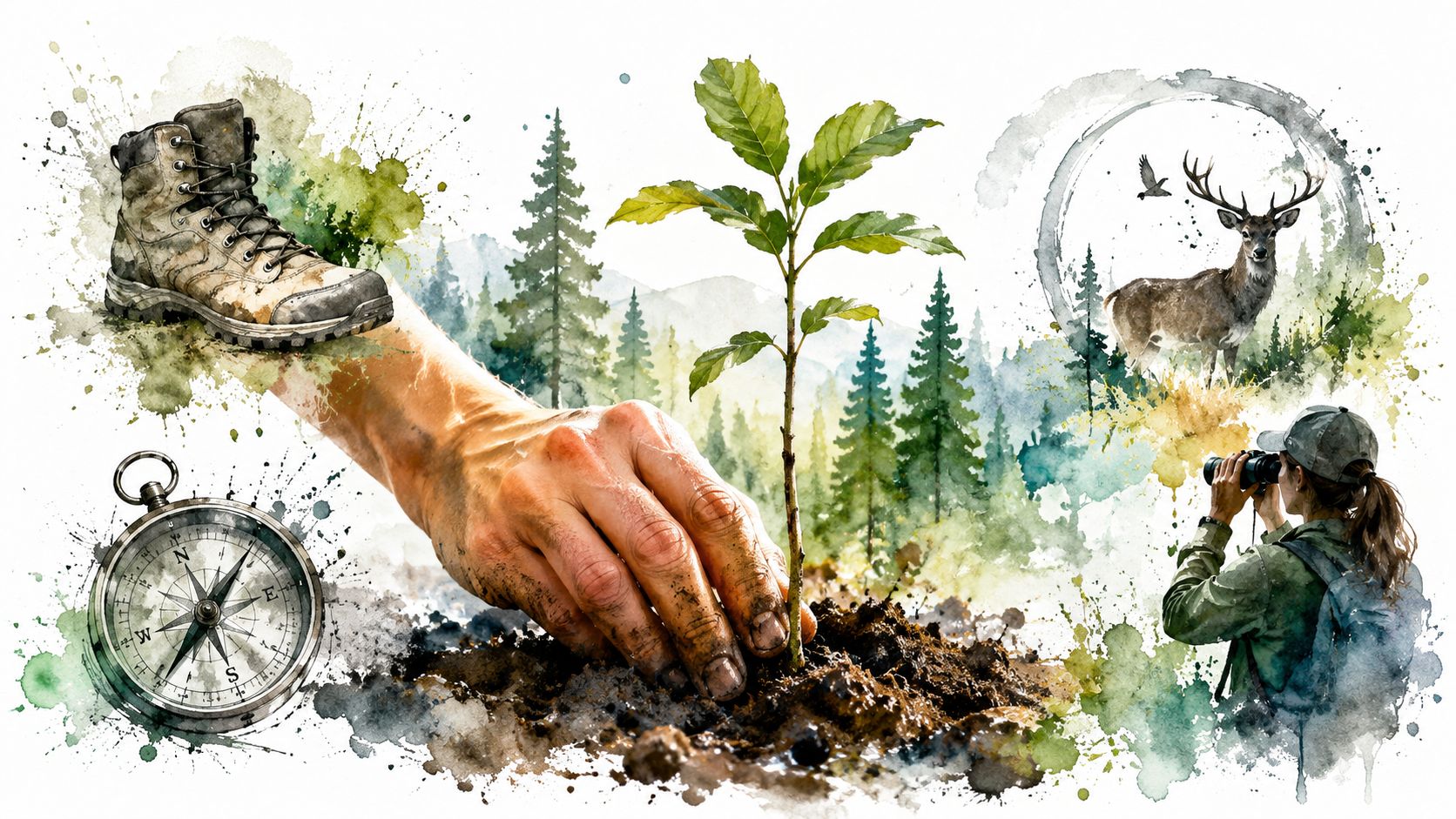
Start with simple trail manners
Before cleanup talk, I always come back to basic respect.
Stay on the path where appropriate. Don't yank plants, don't mess with streams, and don't treat the woods like your personal event venue. A preserve like this has delicate parts even when it looks rugged.
The easiest stewardship habits are boring on paper and powerful in real life:
- Pack your own stuff out: Every bottle cap and tissue matters.
- Keep your eyes open: A small piece of litter now becomes a bigger mess later.
- Move carefully near water: Stream edges and ravine bottoms are easy to impact.
- Leave living things alone: Looking is enough.
A tiny cleanup is plenty
You do not need a permit, a branded shirt, or a giant group chat to do a small good thing.
Take gloves. Bring one bag. Pick up what you can safely handle during your walk. If you're with two friends, that's even better. One person spots, one person bags, one person keeps an eye on footing and trail flow.
I like this rough cleanup rhythm:
- Start the hike normally. Let yourself enjoy the place first.
- Choose one stretch. A parking edge, a trail entrance, or a streamside section with visible trash.
- Keep it short. Even a brief cleanup changes the feel of an area.
- Stop before you get sloppy. Safety first. Ravines aren't the place for reckless reaching.
- Leave with pride, not perfectionism. You helped. That counts.
Don't wait for a big organized day. If you have gloves and a bag, you can practice stewardship right now.
Why this changes the experience
There's a difference between consuming a place and caring for it.
When I only visit, I enjoy it. When I leave it cleaner, I remember it differently. I feel connected to it. I feel less like a customer and more like a participant.
If that idea clicks for you, this page on what environmental stewardship is is a solid next read. It puts words to something many of us already feel when we help a place without being asked.
And that's really it. Stewardship doesn't have to be grand. It can be one bag, one hour, one better-than-before ending to your walk.
Wait Is This the Park in Metamora
This mix-up happens a lot, so let me save you the wrong drive.
Black Partridge Woods is the place in Cook County near Lemont. That's the one this guide is about. The bluff-and-ravine preserve, the spring-fed streams, the local adventure.
There is also Black Partridge Park Woods in Metamora. That is a different place entirely.
The quick difference
The Metamora site is much larger. It is a 287-acre reserve with rolling, complex topography, steep ravines, and well-incised waterways, according to the Illinois Nature Preserves Commission page for Black Partridge Park Woods. That same source says it supports a breeding bird community with 17 area-sensitive species.
That sounds like a great trip. It just isn't this trip.
| Place | What you need to know |
|---|---|
| Black Partridge Woods | Cook County preserve near Lemont. This guide is about this one |
| Black Partridge Park Woods | Metamora site. Larger reserve, different destination |
My rule for avoiding the mix-up
Double-check the county before you leave home.
If you're planning a quick morning or afternoon nature reset from the Chicago area, you want the Cook County preserve. If you aim for Metamora by mistake, your “small local adventure” turns into a very different day.
That's not the end of the world. But it is annoying, and I'd rather save you the trouble.
If this kind of outing speaks to you, Litter Caterpillars is worth a look. It's a Chicago volunteer group built around a simple idea I love: go outside, do some good, make friends, and leave places better than you found them.