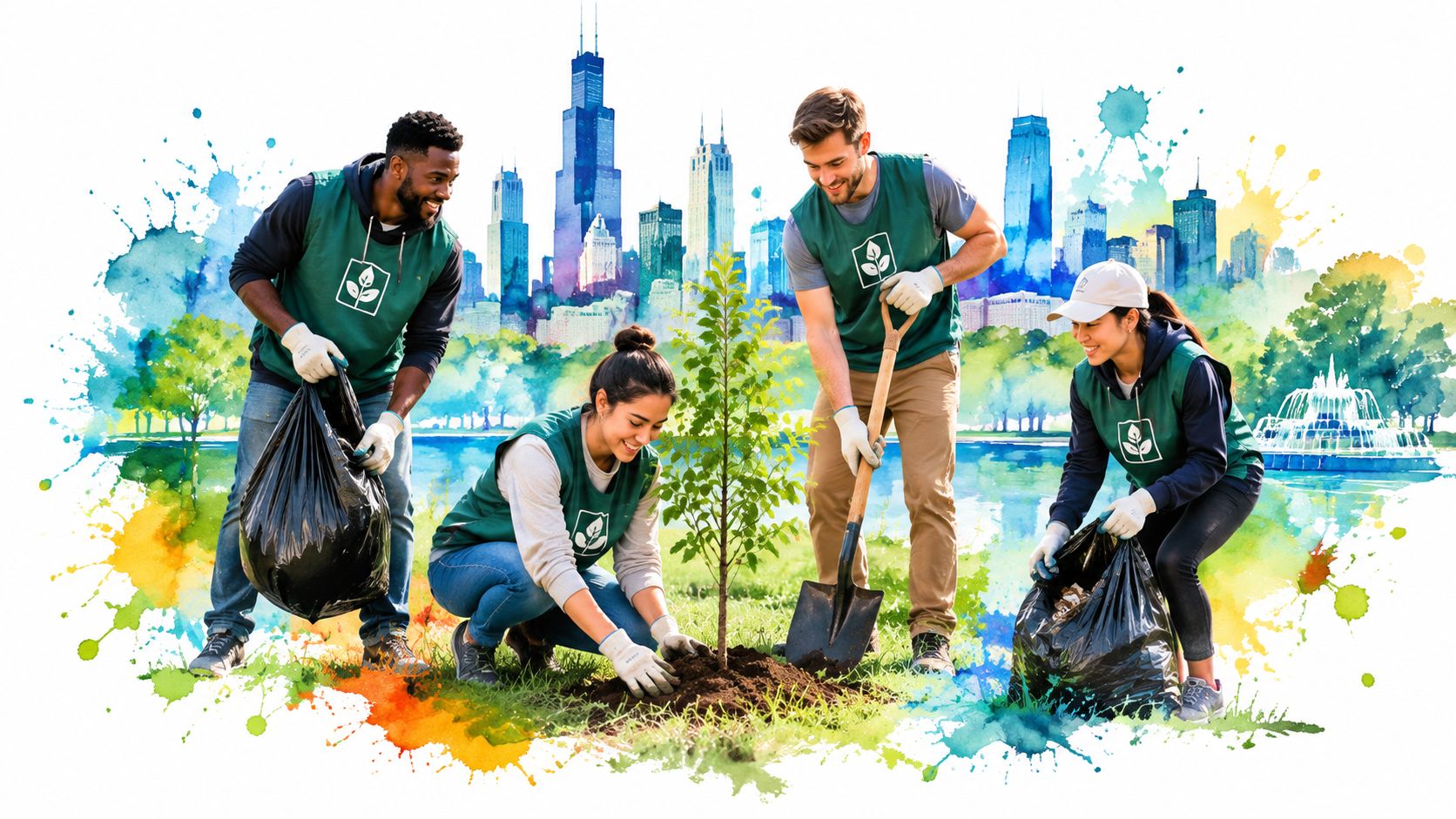
Three of us crouched beneath a Chicago tree while hail struck the pavement and every Uber canceled. We had set out to pick up litter, yet that soaked, miserable morning gave us something better than a clean block. It gave us a shared task, a story, and a reason to return.
That's the thread running through these team bonding activities. Service becomes the activity, and friendship becomes the bond. If you're organizing Chicago volunteers, I'll help you think through group size, supplies, safety, access, scheduling, identity, and simple ways to track results. Litter Caterpillars offers one local example, with weekend-morning cleanups, volunteer-first care, and visible block-by-block work across the city.
You won't need an elaborate retreat or a forced game. A team can build trust while sorting gloves, carrying bags, checking a map, or laughing beside a pile of leaves. The right project gives people a reason to talk while their hands stay busy. It lets friendship grow without demanding a performance.
1. Themed Service Days with Group Identity
A purple flag snaps above the sidewalk. Someone starts a song. A new volunteer receives a small badge after finishing the cleanup. Suddenly, the group feels less like a collection of strangers and more like a crew with a story.
I've seen how a shared identity changes the way people enter a difficult morning. Sports teams use jersey colors and songs to create loyalty. Military units use insignia and shared symbols to build recognition. A cleanup team can use the same simple language without turning service into theater.
Litter Caterpillars connects its identity to that first hailstorm, when three people huddled under a tree and watched rides disappear from the app. The logo carries that messy beginning. Flags, theme songs, and badges give volunteers a way to remember what they did together.

Build the symbol from a real memory
Start with an event your group already remembers. Maybe your first cleanup ended beside a flooded alley, or your team rescued a park entrance before a neighborhood festival. Let volunteers help design the badge, choose the color, or suggest a song. People accept an identity more readily when they help shape it.
Use the same symbol in your group chat, sign-up posts, shirts, and event photos. When a new person earns a badge, say what it means. A small ritual can give a cold morning some warmth.
Practical rule: Let the identity grow from shared work. Don't force a slogan onto people who haven't created a memory together.
For clothing ideas, compare this tournament-ready team apparel with a practical t shirts and hoodies guide. Keep the design comfortable, visible, and easy to recognize from across a Chicago block. You can also borrow ideas from Litter Caterpillars' theme songs for teams when you want the group to carry its identity beyond the cleanup.
2. Consistent Weekend Morning Scheduling
Saturday morning arrives. The coffee shop has just opened, the sidewalks still look damp, and the same people begin appearing with gloves and reusable water bottles. One person brings a friend. Another remembers someone's name from the previous week. That's how a service group starts to feel dependable.
I prefer a fixed weekend-morning schedule because it makes attendance easier to understand. People who choose that time often want a regular service habit. The schedule also gives friendships a natural rhythm. You don't need to invent a separate reason to see one another when everyone already knows where to meet.
Litter Caterpillars describes a weekly weekend-morning cleanup practice that has continued for about three years, including rain, snow, and heat. That kind of repetition turns a volunteer day into a standing appointment. The work matters, yet the expectation of seeing familiar faces matters too.
Protect the appointment
Publish the time and meeting place clearly on every channel. Keep the routine steady when turnout feels small. A quiet morning can still give two people enough time to talk, learn the route, and build trust.
The Saturday volunteer work guide from Litter Caterpillars gives this schedule a practical shape. You can copy the habit without copying every detail. Choose a public meeting point, explain the route, name the finish time, and tell people what to bring.
- Keep the calendar predictable: Let volunteers plan around the cleanup instead of waiting for a new announcement.
- Recognize rough-weather attendance: Thank people who arrive prepared, while never shaming anyone who stays home for safety.
- Use the walk to build friendship: Pair newcomers with regulars so conversation happens before the first bag fills.
“The work gets easier when people know they'll see one another again.”
A 2023 survey study found a significant relationship between how often employees joined team-building activities and both engagement and satisfaction. The same research reported that participants preferred recurring events over one-off gatherings, with 36.5% favoring monthly activities and 31.4% favoring quarterly activities in the study's cited survey data. For a Chicago cleanup crew, a monthly or quarterly fallback can help people stay connected when weekly attendance isn't realistic.
3. Volunteer-First Fundraising and No-Pressure Donations
A volunteer arrives ready to lift bags. Before the first introduction, someone asks for a donation. The volunteer's shoulders tighten. The morning now feels like a sales funnel.
I'd rather protect the reason people came. A volunteer-first group tells participants that their time and energy matter more than their wallets. Litter Caterpillars follows that approach by avoiding pressure on volunteers to donate. Support can come from local businesses, foundations, grants, and people who want to give without joining a cleanup.
That separation keeps the relationship clean. You show up to serve. Someone else may provide money, equipment, food, or printing. Nobody needs to prove their commitment with a payment.
Make the funding story easy to understand
Transparency still matters. Tell volunteers how the group pays for bags, gloves, grabbers, water, storage, transportation, and first-aid supplies. If a local business supplies equipment, thank it openly. If a supporter gives money, accept the gift without turning every volunteer into a prospect.
Community gardens often use grants and in-kind support while keeping volunteer work separate from financial giving. Faith communities can do the same by separating service opportunities from donation appeals. The model works because people know where they stand.
- Explain support without pressure: Share the basic funding picture during orientation or in the event description.
- Invite practical contributions: Let people bring supplies if they want, but keep participation open to those who arrive with only themselves.
- Thank ambassadors: Volunteers who enjoy the work may tell friends about it because they feel respected, not recruited.
A field experiment on workplace bonding found stronger collegiality, better workplace friendships, and improved office-level performance after structured social connection interventions. It also reported a 40% reduction in short-run turnover, while finding no statistically significant improvement in individual productivity according to the study's findings. That distinction helps you judge a volunteer team fairly. Look for return visits, introductions, and group connection instead of demanding that each person work faster.
4. Shared Adversity and Challenge-Based Activities
The first Chicago hailstorm changed my view of discomfort. Three people stood under a tree, cold and annoyed, while rides canceled one after another. We could have called the cleanup a failure. Instead, the weather gave us a story nobody had to manufacture.
Hard conditions can make people pay attention to one another. Someone checks whether you need dry gloves. Someone shares a poncho. Someone spots a dangerous piece of glass before you reach for it. Those small acts create a record of mutual care.
Litter Caterpillars describes returning through blizzards, negative wind chills, rain, and scorching heat. You shouldn't treat dangerous weather as a badge of honor, though. Challenge works when volunteers can choose their limits and organizers take responsibility for the conditions.

Make difficulty hard, safe, and achievable
Tell the group why the day may feel demanding. Then provide water, rest periods, weather alerts, reflective gear, gloves, and a clear stopping plan. Match the route to the group's ability. A short cleanup in cold rain can create a shared memory. A reckless route can break trust.
Military training, wilderness expeditions, and sports teams all use shared challenge to create connection, yet volunteer organizers don't need to imitate their harshest methods. Your purpose is service and friendship, not punishment.
After a difficult cleanup, sit down for a short debrief. Ask what surprised people, where they helped one another, and what the group should change next time. Give volunteers room to laugh about the soaked cardboard and the runaway bags. The story belongs to them.
Safety boundary: A difficult morning should leave people proud and tired. It shouldn't leave anyone injured, stranded, or ashamed for turning back.
5. Cross-Neighborhood Exploration and Presence
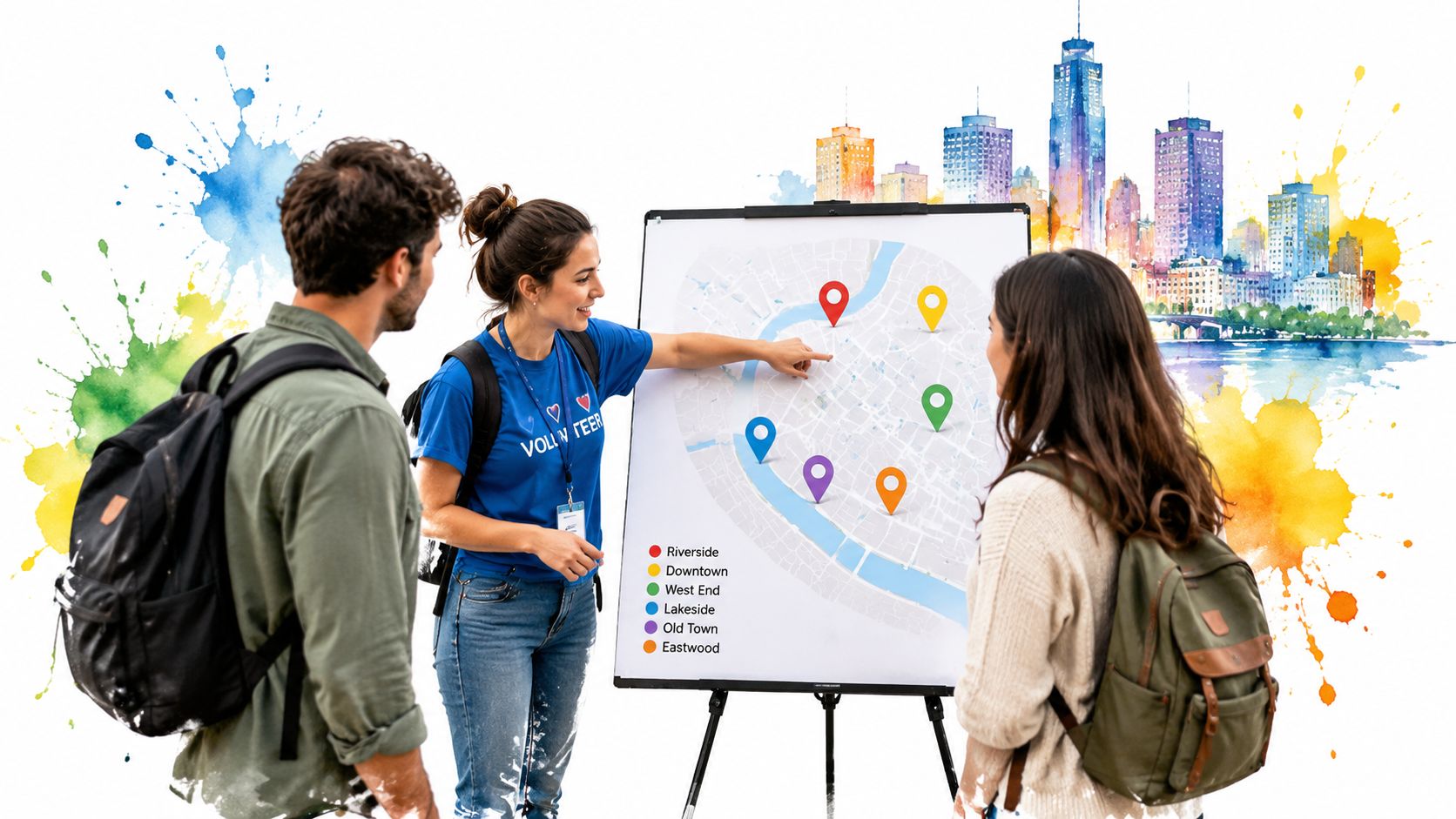
A cleanup can begin with a map spread across a folding table. Volunteers lean over it, trace a route, and realize they've never walked that part of Chicago. By the end of the morning, they've learned a street name, met a neighbor, and left a visible change behind.
Litter Caterpillars has committed to cleaning across all 50 Chicago wards, according to the group's own account. That kind of citywide route gives regular volunteers a shared expedition. Each weekend can bring a new corner, while repeated visits can help the team learn which local partners and safety conditions matter.
The map also gives people something to discuss while they work. One person knows the nearest train stop. Another recognizes a community garden. A third notices that the same alley needs a different approach after rain.
Give every route a human context
Don't choose neighborhoods randomly and treat them like points on a game board. Contact local groups when possible. Ask about blocked sidewalks, upcoming events, disposal rules, and places where volunteers should avoid working alone. A neighborhood partner can give your team better information than a map can.
Create a simple coverage map. Mark completed areas, recurring routes, and future stops. Take before-and-after photos from consistent angles, while respecting residents' privacy.
- Rotate with purpose: Mix familiar routes, where relationships can grow, with new routes, where curiosity keeps the work fresh.
- Record the story: Note what the group learned about the block, not only how many bags it filled.
- Invite local knowledge: Let residents suggest problem areas and tell you what would help.
The social connection evidence brief reports that conversation usually remains stable at about four participants, because larger groups face cognitive limits and become less efficient in its 2024 evidence summary. Split a large cleanup into small route teams, then bring everyone together for a short closing circle.
6. Friendship-Building as the Primary Goal
At the end of a cleanup, the bags sit by the disposal point. The volunteers stay. Someone asks about a new job. Someone else mentions a birthday. Two people compare coffee orders and make plans for the following Saturday.
That scene tells me whether a service group has built connection. The litter gives people a reason to meet, yet friendship gives them a reason to return. Running clubs often work the same way. People arrive for the run and stay for the conversations afterward.
You can design for that outcome without making the morning feel artificial. Ask volunteers about their lives, remember what they tell you, and make introductions that have a real basis. If someone just moved to Chicago, connect them with a person who knows the neighborhood. If two people share a hobby, let them discover it naturally.
Leave room for the conversation
Schedule coffee, a picnic, or a short social period after the cleanup. Keep it optional and accessible. Nobody should need to buy an expensive meal to belong. A thermos, a park bench, or a potluck can give people enough space to continue talking.
- Pair newcomers thoughtfully: Match a first-time volunteer with someone who can explain the route and introduce them to others.
- Remember personal details: Ask about the interview, class, race, move, or family event someone mentioned.
- Celebrate life outside service: A new job or birthday can receive the same warmth as a completed cleanup area.
- Create shared references: A funny sign, stubborn shopping cart, or muddy shortcut can become part of the group's language.
Employee engagement research found a significant relationship between recurring team-building activity frequency, engagement, and satisfaction. In a related preference survey, 36.5% chose monthly activities and 31.4% chose quarterly activities in the reported findings. Use that as a planning signal, not a command. Choose a cadence your volunteers can sustain.
7. Skill-Building and Personal Transformation Focus
I started cleaning because I struggled with clutter, consistency, and bravery. A small piece of trash could feel heavier than it looked. Picking up someone else's mess became a way to practice moving through tasks that once stopped me.
That story gives service another layer. A volunteer learns how to use a grabber, sort a route, speak with a neighbor, or lead a safety briefing. They also practice returning after a hard week. The physical task stays concrete, while the personal change happens through repetition.
Litter Caterpillars uses the caterpillar as an image for that process. Volunteers don't need to arrive polished or fearless. They can arrive unsure, make mistakes, and learn alongside other people.
Turn reflection into part of the activity
Give the group a few minutes after cleanup to name one thing they learned. Keep the questions simple. What felt difficult? Who helped you? What would you try next time? A volunteer may mention a new skill, a brave conversation, or the moment they finally picked up an object they usually would have ignored.
The volunteer mentor programs from Litter Caterpillars can inspire a buddy structure for people who want more responsibility. Pair an experienced volunteer with someone new, then let the new person take the lead when they feel ready.
- Share your own story: Tell people why you began, without presenting yourself as finished.
- Name small growth: Notice a first route briefing, a first return visit, or a first conversation with a resident.
- Connect action to values: Use words like bravery, kindness, unity, and consistency.
- Keep a reflection record: Invite volunteers to write a sentence after each event or share one thought in the group chat.
A 2021 randomized study of team-building through video games found measurable gains in coordinated task performance. One task showed average improvement of 49.6% for teams receiving the team-building treatment, compared with 20.3% for control teams, a difference of 29.3 percentage points, with statistical significance reported at p<.001 in the study. The setting differs from a Chicago cleanup, yet the lesson fits: repeated shared objectives can give social connection a practical outlet.
8. Safety-First Culture with Volunteer Happiness as Priority Two
Before anyone reaches for a bag, I want the group to know the order: safety first, volunteer happiness second, task completion third. That order changes the morning. People feel more comfortable saying they need a break, avoiding broken glass, or leaving when weather turns dangerous.
A cleanup leader should know the forecast, inspect the route, identify disposal points, and explain what volunteers shouldn't touch. You need a simple emergency plan. You also need a culture where nobody treats caution as weakness.
Professional sports teams, climbing groups, and outdoor education programs build their activities around safety systems. A volunteer cleanup can use the same habit at a simpler scale. Start with a short briefing. Check in during the route. End with a headcount and a question about how people feel.
Make safety visible
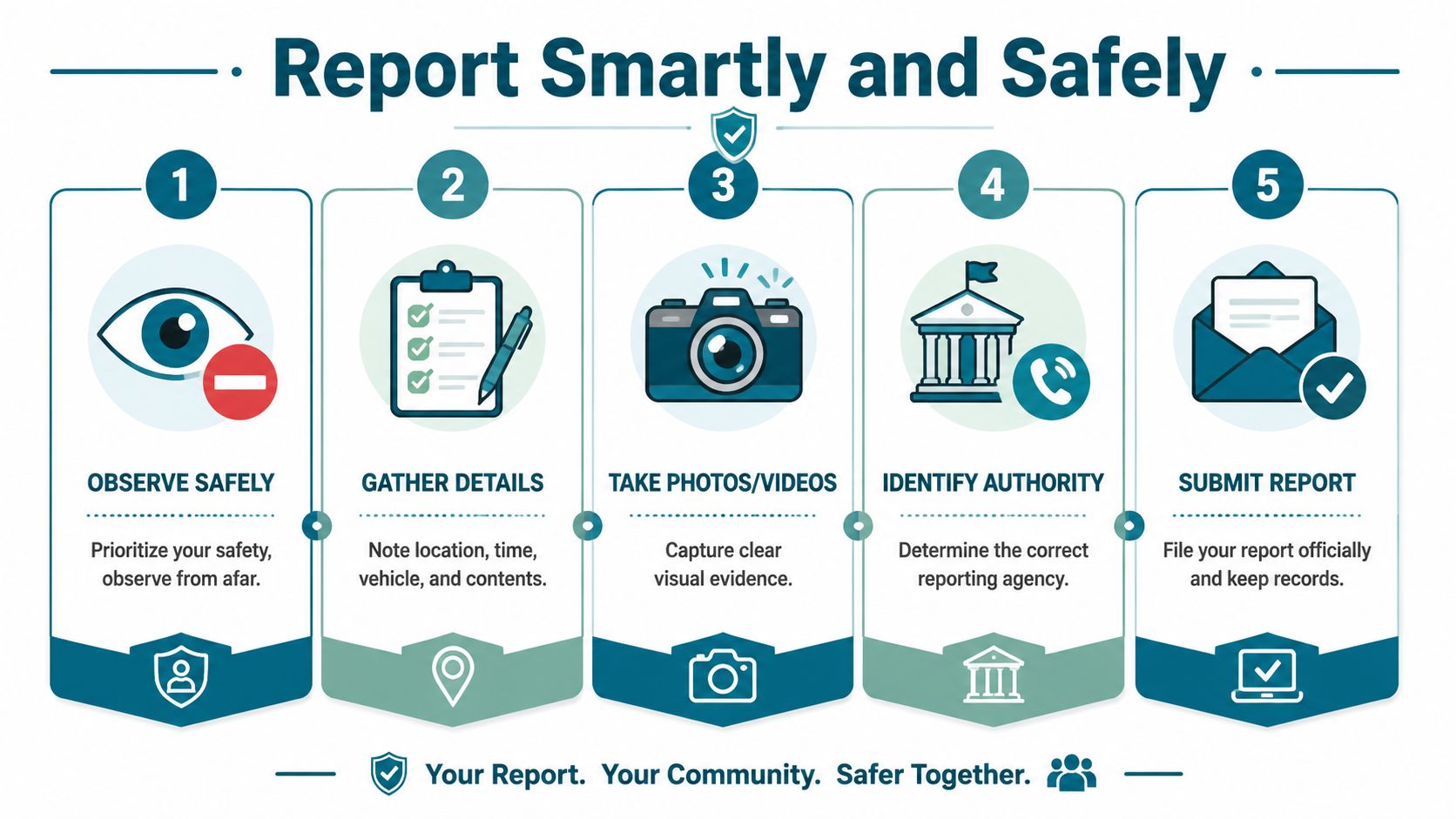
Give every volunteer gloves, bags, and clear instructions. Add grabbers when the route includes sharp or unpleasant objects. Bring water, first-aid supplies, weather protection, and a way to communicate if the group splits.
- Check the conditions: Adjust or cancel the route when heat, lightning, flooding, ice, or poor visibility creates an unsafe setting.
- Name the hazards: Explain how to handle glass, needles, chemicals, heavy objects, and traffic-adjacent areas.
- Invite people to stop: Tell volunteers they can tap out without explaining or apologizing.
- Review the day: Ask what felt unsafe and change the plan before the next event.
A 2021 randomized study found that structured team-building through video games improved performance on one controlled task, yet that result doesn't replace safety judgment in outdoor service as reported in the study. Your best outcome is a group that finishes safely and wants to come back.
Here's a short visual reminder to place before the next planning meeting:
9. Multi-Channel Accessibility and Low-Barrier Entry
One person finds your cleanup on Meetup. Another sees an Instagram post. A neighbor hears about it in a group chat. Someone else arrives because a friend mentioned the corner while buying coffee.
That mix matters because people don't all enter community life through the same door. Litter Caterpillars uses Meetup, Instagram, and open group chats so newcomers can find information in familiar places. A low barrier says, “You can join before you know everyone.”
Make the practical details impossible to miss. State the date, time, meeting point, route, transit options, expected conditions, and supplies. Tell people whether they need to RSVP. If they can show up, say so.
Remove the small frictions
You don't need an application, a special title, or a perfect volunteer history. You need a clear welcome and a person ready to answer questions. A newcomer orientation can take a few minutes. Explain where to stand, how to use the equipment, what not to pick up, and who to ask for help.
- Keep every channel current: Update Meetup, Instagram, and group chats when the location or weather plan changes.
- Use welcoming language: Assume people want to help, even if they don't know the local vocabulary.
- Answer quickly: A short reply can turn uncertainty into attendance.
- Share real-time updates: Use the group chat for transit changes, route notes, and friendly introductions.
- Skip unnecessary gatekeeping: Encourage RSVPs when they help with supplies, but don't make them a condition of belonging.
Recent hybrid-work coverage describes structured virtual social events, asynchronous recognition, and virtual watercooler channels as low-cost ways to maintain connection. It also describes smaller wellbeing-oriented formats, including yoga, sound baths, and mindful workshops, for teams dealing with burnout in its discussion of remote and hybrid bonding. For a Chicago volunteer group, the same principle can mean a group chat check-in for people who can't attend every cleanup.
9-Point Comparison of Team Bonding Activities
| Item | 🔄 Implementation Complexity | ⚡ Resource Requirements | 📊 Expected Outcomes | ⭐ Key Advantages | 💡 Ideal Use Cases / Tips |
|---|---|---|---|---|---|
| Themed Service Days with Group Identity | Medium, requires brand design and rollout | Moderate, merchandise, design time, production costs | Greater cohesion, higher visibility, social sharing | Builds belonging and recognition; attracts recruits | Best for established groups; co-design with volunteers; base on origin story |
| Consistent Weekend Morning Scheduling | Low, set and maintain routine | Low, scheduling discipline and communication | Reliable turnout, habit formation, self-selection | Filters committed volunteers; builds trust and predictability | Stick to schedule; communicate clearly; celebrate dedication |
| Volunteer-First Fundraising and No-Pressure Donations | Medium, requires alternative funding strategy | Moderate, time to cultivate grants/partners, donor relations | Deep volunteer trust; volunteers become authentic ambassadors | Protects volunteer energy; inclusive participation | Be transparent about funding; pursue external partners; accept non-volunteer gifts |
| Shared Adversity and Challenge-Based Activities | Medium–High, needs planning and risk management | Moderate, safety gear, training, contingency planning | Strong bonds, resilience, memorable narratives | Creates deep camaraderie; attracts purpose-driven people | Frame challenges as growth; enforce safety; debrief after events |
| Cross-Neighborhood Exploration and Presence | Medium, logistics and rotation planning | Moderate–High, transport, coordination, mapping tools | Broad impact, novelty, stronger citywide relationships | Demonstrates commitment across areas; builds diverse connections | Map coverage; partner locally; document before/after |
| Friendship-Building as the Primary Goal | Medium, cultural shift and ongoing attention | Low–Moderate, time for social moments and communications | High retention, loyalty, organic recruitment | Sustainable engagement; reduces turnover and burnout | Schedule social time; pair newcomers with veterans; celebrate milestones |
| Skill-Building and Personal Transformation Focus | Medium, requires curriculum and reflection practices | Moderate, mentors, facilitation time, materials | Personal growth, increased commitment, self-efficacy | Gives deeper meaning; attracts growth-seeking volunteers | Share transformation stories; create reflection windows; track progress |
| Safety-First Culture with Volunteer Happiness as Priority Two | Medium, establish protocols and training | Moderate–High, first aid kits, training, management time | Increased trust, fewer incidents, psychological safety | Signals care; lowers liability; enables authentic participation | Start with safety briefings; use buddy systems; have clear weather policies |
| Multi-Channel Accessibility and Low-Barrier Entry | Medium, maintain multiple platforms consistently | Low–Moderate, time to update channels and manage messages | Wider reach, diverse participants, spontaneous engagement | Low friction onboarding; flexible engagement options | Keep info identical across channels; simplify join steps; respond promptly |
Turn One Cleanup Into a Team Habit
Choose one activity, one Chicago location, one weekend morning, and one identity element. That's enough for a first event. You might clean a park entrance, meet near a transit stop, wear matching green shirts, and give every participant a simple route badge. Don't wait until you have a perfect logo, a large turnout, or a full year of dates.
Start with a public place where your team can work without blocking pedestrians. Check the route before inviting people. Ask whether a neighborhood organization already knows about the area. Decide where full bags will go, how volunteers will get home, and what weather would change the plan.
Bring the basics:
- Gloves and bags: Give each volunteer equipment that fits the task.
- Grabbers: Use them for objects that could cut, stain, or strain someone.
- Water and weather protection: Prepare for Chicago sun, rain, cold, and sudden changes.
- First-aid supplies: Keep them visible and assign someone to carry them.
- Clear communication: Share the meeting point, route, safety rules, finish time, and cancellation plan.
Open with a two-minute welcome. Tell people why you chose the block. Introduce newcomers to regulars. Explain what the team will do and what it won't do. Then send small groups onto the route so people can talk while they work.
Afterward, measure the parts that tell you whether friendship and service are growing together. Record volunteer attendance, return rate, bags or areas completed, new introductions, and quick safety and happiness check-ins. Ask one simple question before people leave: “Would you want to do this again?” Track the answers over time instead of chasing a dramatic result from one morning.
A historical review describes three phases in the development of team building: 1900 to 1950, when organizations recognized the value of workplace teams, 1950 to 1969, when social interaction received more attention, and 1970 to 1989, when team building became a stand-alone educational process in the review. Your volunteer day doesn't need corporate language. It can still use the same basic lesson: people work better together when they have repeated chances to communicate and trust one another.
Research on team-building interventions in sports found that researchers needed an intervention period of at least two weeks before they observed measurable changes in group cohesion in the study. Treat that as a reason to schedule a short run of cleanups rather than judging the group after one awkward introduction. Return to the same place, then explore another route when the team has found its rhythm.
Keep the focus where it belongs. You're not gathering people to complete a perfect performance. You're inviting them to serve safely, learn one another's names, and leave with a story worth retelling. Litter Caterpillars gives Chicago residents a local way to find that rhythm through its website, Meetup, Instagram, and open group chats. Show up with supplies, listen to your volunteers, and make the next invitation easy to accept.
Litter Caterpillars brings Chicago volunteers together for recurring, weekend-morning trash pickups that build friendship through hands-on service. Visit Litter Caterpillars to find an upcoming cleanup, join the group through its open channels, and take part in a safe team habit that helps your block.