Tag: chicago community service

  • Weekend Community Service in Chicago: Six Groups to Join

    Weekend Community Service in Chicago: Six Groups to Join

    Saturday morning starts the same way for a lot of us. You hold a hot cup of coffee, stare at your free day, and think you should do something useful for Chicago before the weekend slips away. I've done that walk to my first cleanup with zero clue what to expect, and it felt like a first day at a new job where everyone wears gloves and nobody has a name tag yet. If you want weekend community service that fits a Saturday morning, I'd start with Litter Caterpillars, Chicago Cares, Greater Chicago Food Depository, Habitat for Humanity Chicago, The Mission Continues through Travis Manion Foundation, Friends of the Chicago River, and Alliance for the Great Lakes. Each one fits a different kind of weekend, and each one answers the essentials first: sign-up, safety, what to bring, who you'll meet, and how to find local Chicago meetups. See more of this kind of practical roundup in SleekPost's latest posts.

    1. Litter Caterpillars

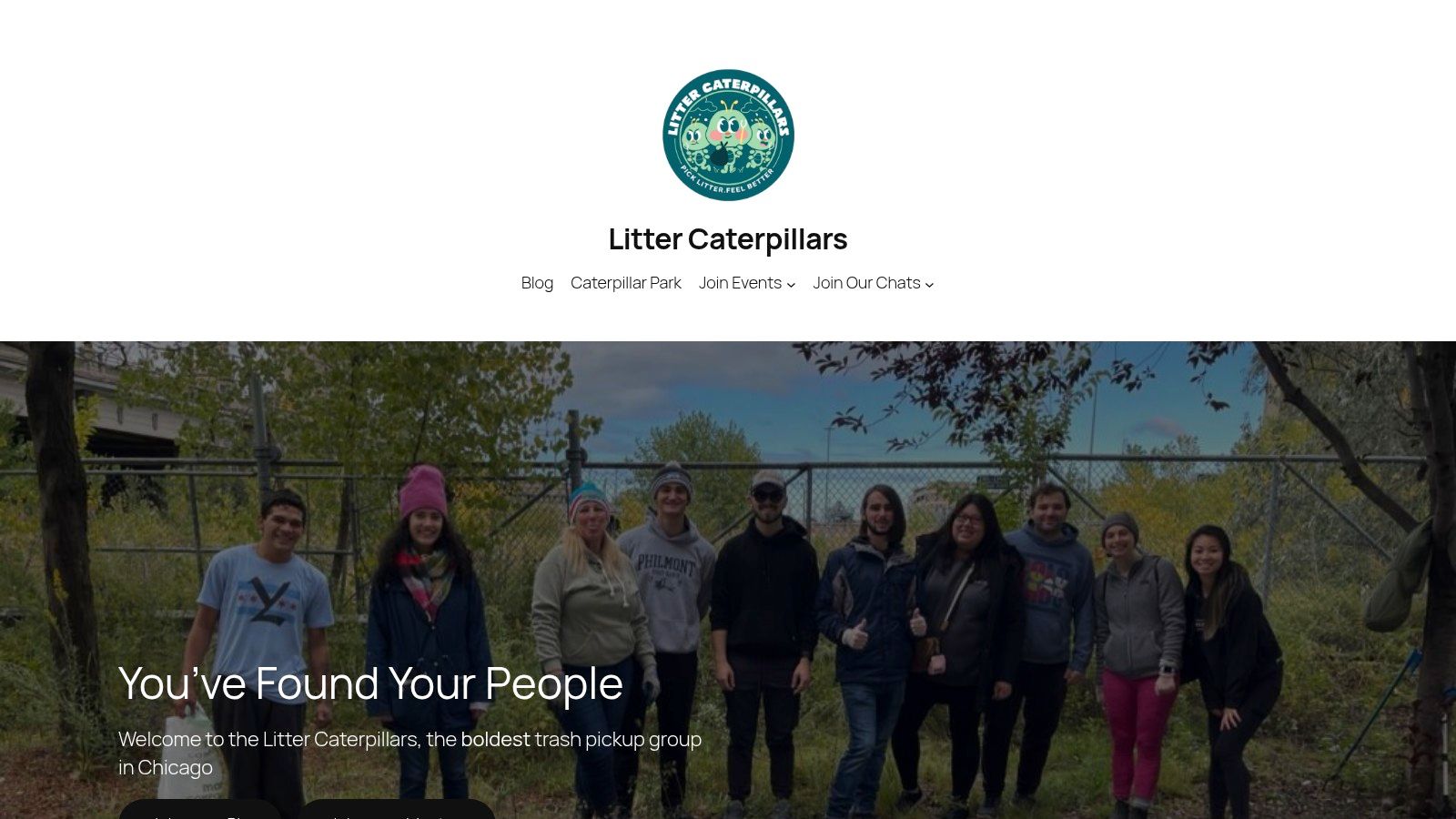
    Litter Caterpillars feels like the group I wish I had found on my first cold morning. You sign up through its main site, then you can jump in through Meetup, Instagram, or the open group chats the group lists on its own pages. No one makes you feel like you need to be a perfect volunteer before you arrive.
    Litter Caterpillars

    What the first shift feels like

    I've watched first-timers relax fast here because the morning has a rhythm. You grab gloves, pick up bags, and move block by block with people who want to talk as much as they want to clean. The pace is steady, and that matters on a Saturday morning when you want clear instructions and a job you can finish. Pair the cleanup habit with waste saving ideas from PureHQ Inc. if you want the work to spill past the shift and into the rest of your week.

    Practical rule: show up ready to walk, bend, laugh a little, and keep going even if the weather feels rude.

    The group's own story shapes the tone. It grew from a personal fight with clutter into a volunteer-first culture built around bravery, kindness, and unity. That means safety comes first, happiness comes next, and nobody gets pressured for donations.

    Why I'd put this at the top of the list

    Litter Caterpillars is the one I'd point to if you want weekend community service that feels social, scrappy, and local. The group cleans across Chicago, even in places other crews avoid, and it has turned that routine into badges, flags, a theme song, and a shared identity that brings people back. I like that on a first-timer Saturday, you can show up, meet a few regulars, and leave with dirt on your gloves and names in your phone.

    A short look at the upside and the tradeoff:

    • Easy entry: you can plug in through Meetup, Instagram, or group chats without a heavy onboarding process.
    • Strong social pull: the weekend format makes it easier to meet people who show up again.
    • Physical demand: you'll be outside, moving, bending, and carrying bags.
    • Less formal structure: it runs as a grassroots volunteer group, so it won't feel like a big institution.

    For a first Saturday, that mix works. You get clear action, a simple path in, and a morning that starts with gloves on and ends with a cleaner block.

    2. Chicago Cares

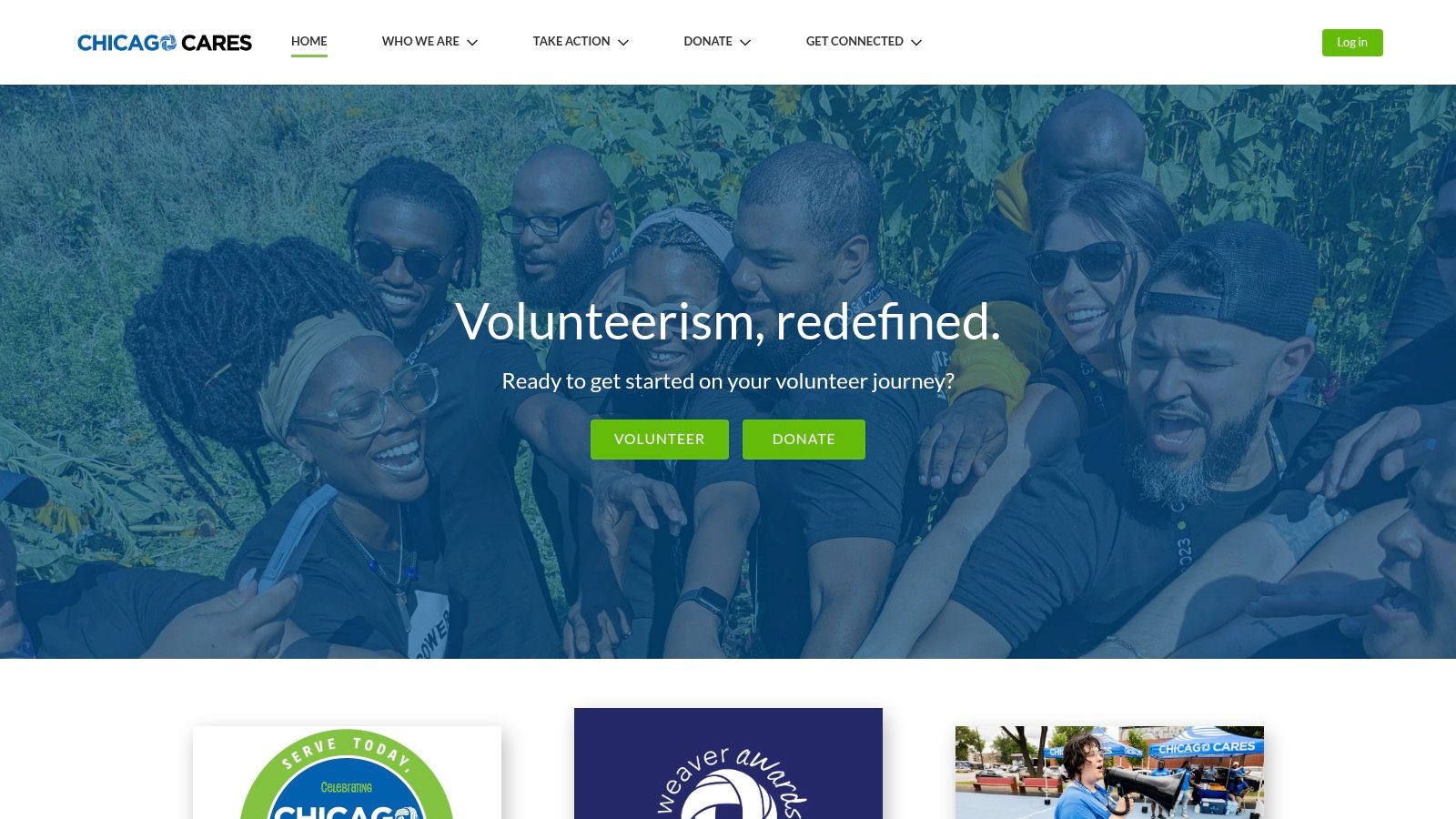
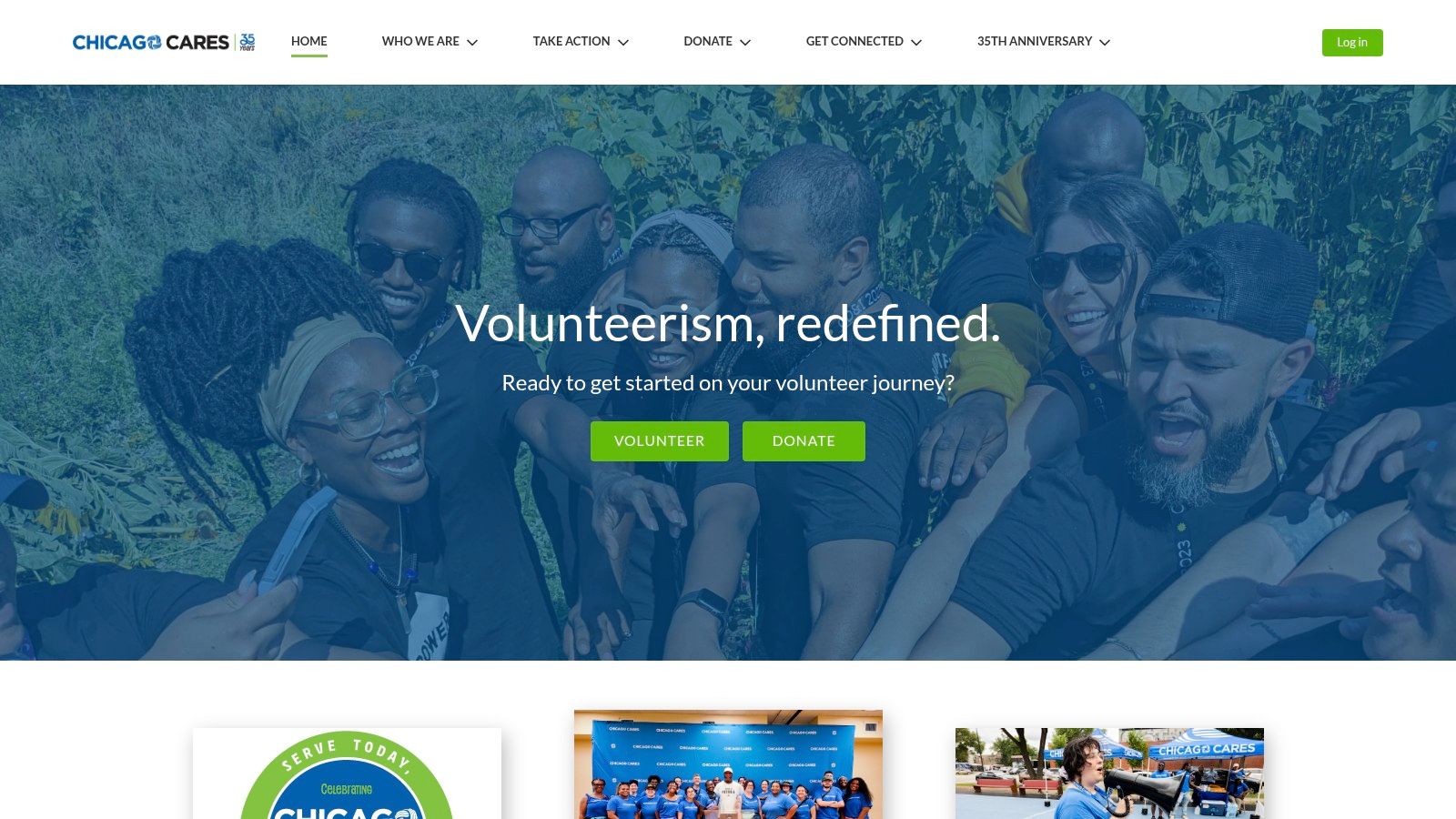
    Chicago Cares is the easiest choice when you want variety and a clean sign-up path. I like it for the same reason I like a good farmers market, you can show up with a plan or wander until something fits. Its website has a large calendar with drop-in and recurring projects, and many land on weekends across the city.
    Chicago Cares

    Good for a first-timer who wants options

    If you're not sure whether you want to sort food, help with neighborhood beautification, or do something around education or seniors, Chicago Cares gives you room to test the water. It keeps the weekend volunteer hunt from turning into a scavenger hunt across ten different sites. You can pick a shift, read the waiver, and move on.

    The setup also helps if you're bringing friends or a small team. I've seen that groups like one place where everyone can land together, even if they split into different tasks once they get there. Chicago Cares gives you that kind of flexibility.

    This roundup on the Litter Caterpillars site points readers to Chicago options in one place, which makes weekend planning feel a lot less messy.

    What you should expect on Saturday morning

    You'll usually get a clear time, a clear role, and a simple code of conduct. Some projects ask you to work with a partner organization, so you may need one extra sign-up step. That's the only part that can slow you down.

    If you want weekend community service without locking yourself into one cause, Chicago Cares is a smart middle ground. It's the place I'd send a friend who says, “I want to help, but I don't know what kind of help fits me yet.”

    3. Greater Chicago Food Depository

    The Greater Chicago Food Depository feels organized before you even leave home. I like that on a Saturday morning because I do not want to guess the dress code or the meeting spot while I am still half awake. Its main site posts volunteer sessions Tuesday through Saturday, with Family Day every Saturday afternoon, and the calendar looks two months ahead.
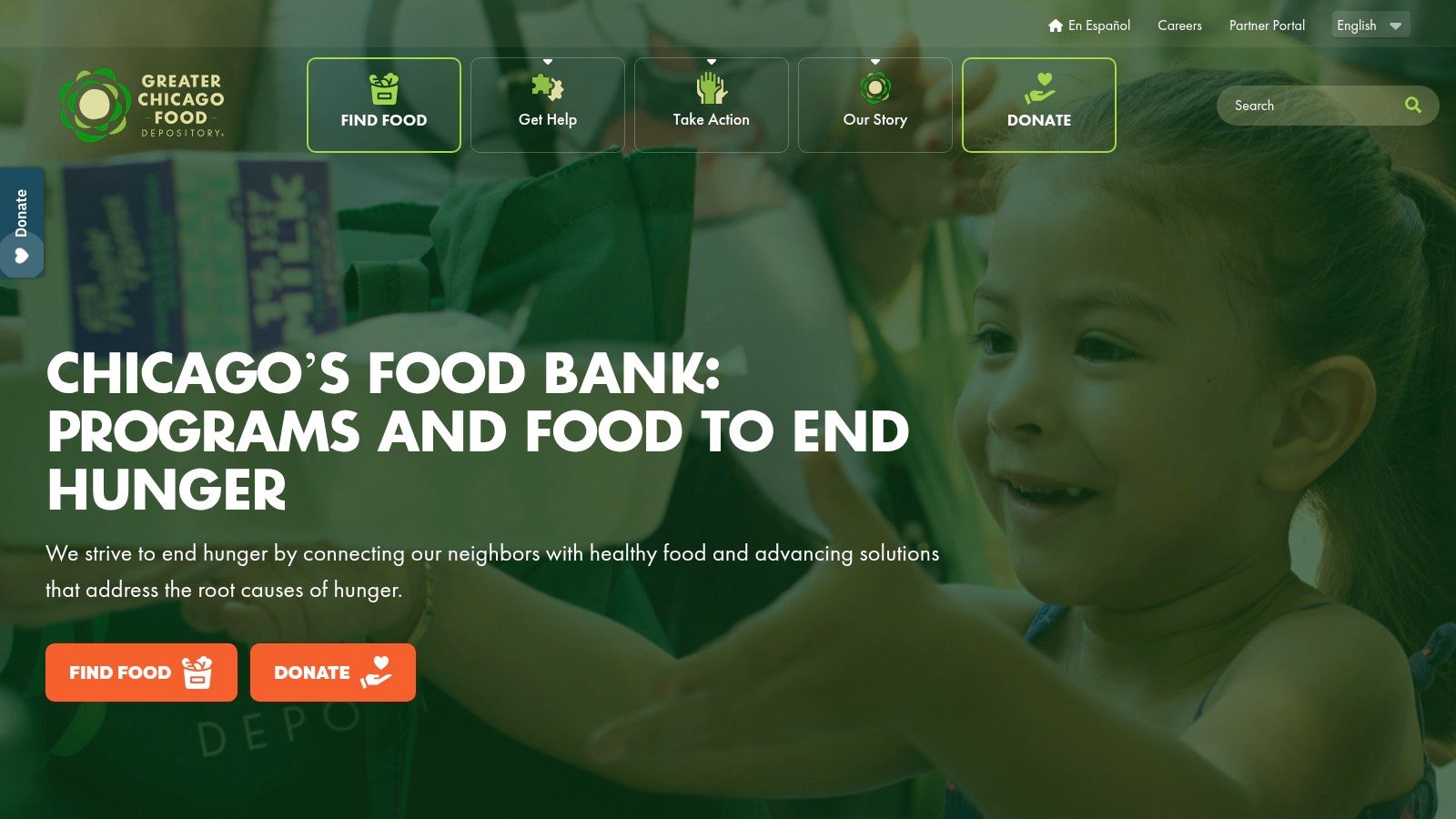
    Greater Chicago Food Depository (GCFD)

    The shift feels orderly, and that helps

    You usually know your job before you arrive. Repack shifts, distributions, clear dress guidance, and age rules keep the morning steady. If you bring family or a group, that structure matters, because nobody wants a messy volunteer line on a weekend.

    The line moves at a set pace, the supervisor calls out the next pallet, and your only job is to keep up.

    The main site is typically closed on Sundays, so Saturday is the cleaner bet if you want a weekend slot. Some partner pantries may also have Sunday options, but I would treat those as separate plans and check each one before you go.

    Best for teams and people who like clear rules

    This group works well when you want a Saturday that feels productive right away. The tasks are concrete, the directions are clear, and the morning moves fast. If your idea of service is packing, sorting, and seeing food move where it needs to go, this one fits.

    For a deeper look at food-bank shifts, see this guide to Chicago food bank volunteering.

    Here is the part I would tell a friend before they sign up:

    • Book early: the online calendar is there for a reason.
    • Wear the right clothes: follow the dress guidance instead of guessing.
    • Bring your group if you want: team shifts are part of the setup.
    • Check Sunday separately: the main facility usually closes that day.

    If you want a service morning that feels structured instead of improvised, this is one of the stronger weekend community service picks in Chicago.

    4. Habitat for Humanity Chicago

    Habitat for Humanity Chicago is the one I point to when someone wants to build something with their own hands. It has the energy of a long Saturday where your body is tired in a good way by the end. Its website has team build days from Thursday to Saturday, plus ReStore shifts most weekends.
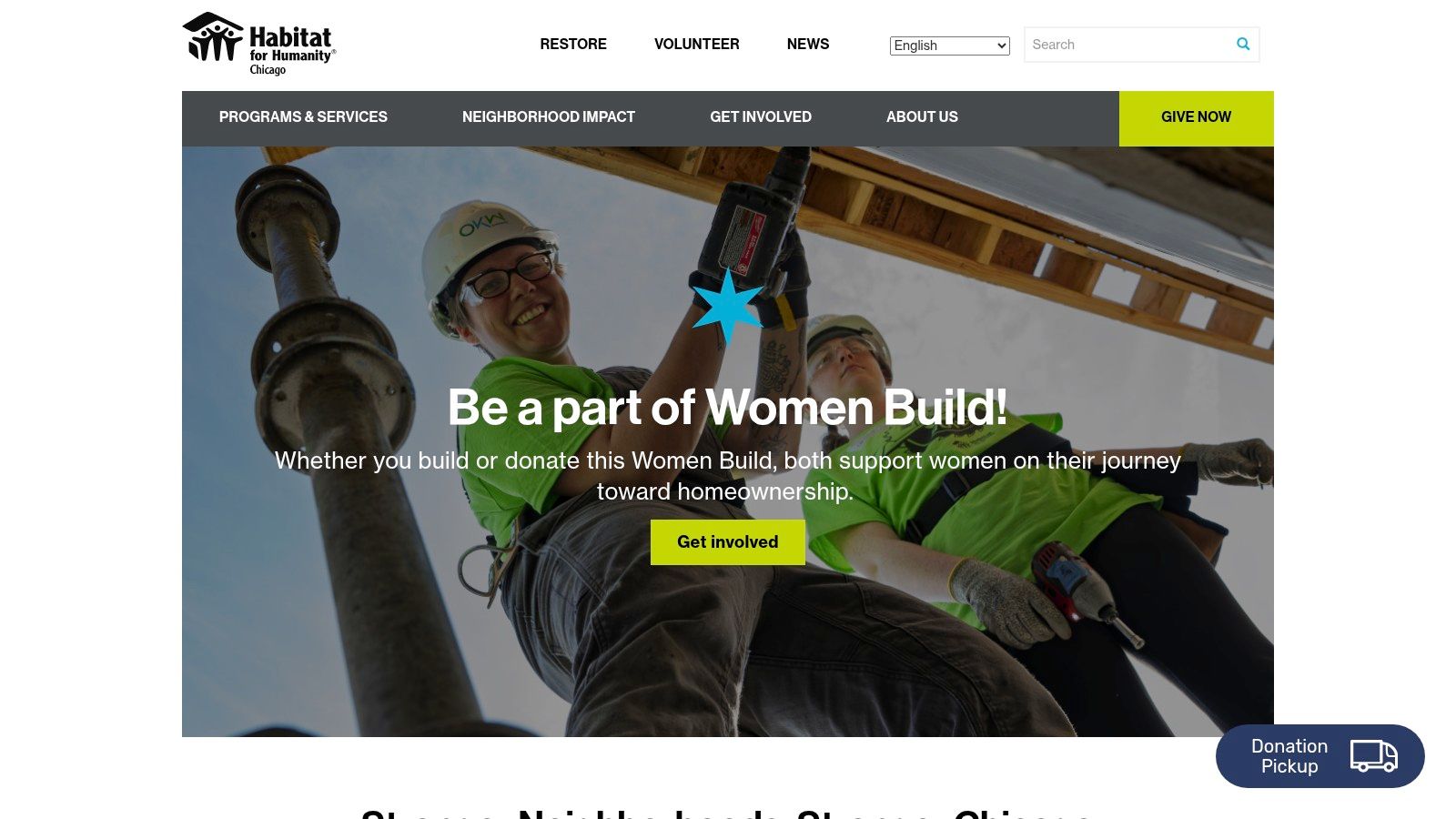
    Habitat for Humanity Chicago

    Why it feels different from a cleanup

    A cleanup gives you quick visible change. Habitat gives you a slower kind of change, the kind that lets you see a wall, a shelf, or a repair job take shape over a full day. If you like physical work with a clear start and finish, this is a strong Saturday choice.

    No construction experience is needed. Staff train you, supervise you, and break the work into pieces that make sense for volunteers. That takes a lot of the nerves out of the first shift.

    I've always thought of a Habitat day like a group puzzle where every piece is heavy and useful. You don't need to know everything. You just need to carry your part and listen.

    Who should pick this one

    Choose Habitat if you want a longer weekend block, a clearer project, and a team atmosphere. It works well for companies, friend groups, and people who want a full-day service plan instead of a shorter morning. ReStore shifts also give you a different flavor if construction isn't your thing and you still want to help.

    Popular build dates can book out, so I'd register early. That matters more here than at a drop-in cleanup, because the better dates go fast.

    5. The Mission Continues through Travis Manion Foundation

    This one feels right when you want service with a strong team tone. The Mission Continues now runs through Travis Manion Foundation chapters and platoons in Chicago, and the projects often land on weekends. Its website points you toward recurring service work, national campaigns, and local leadership paths.
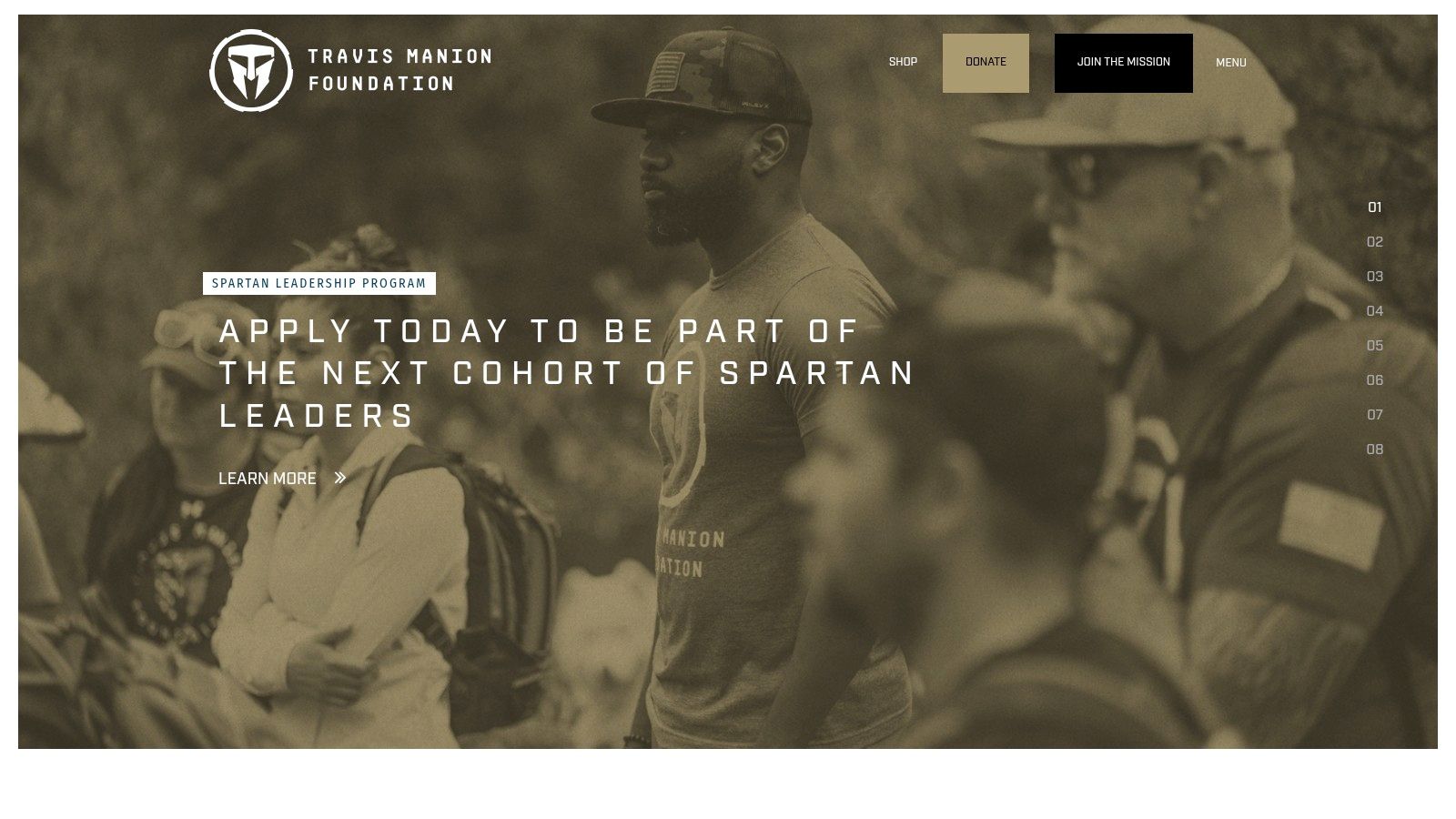
    The Mission Continues (now integrated with Travis Manion Foundation), Chicago

    The first-time experience feels team-based

    You're not walking into a loose crowd. You're stepping into a service platoon with a shared mission, and that changes the mood fast. I'd compare it to joining a pickup game where people care about the score and the handshake after it.

    Civilians can serve alongside veterans, which makes the group open to a wide range of people. The projects can include school makeovers, garden builds, and park work, so you're not stuck in one format every time.

    One thing I like here: repeat volunteers can grow into more responsibility without needing to become a full-time organizer.

    Good if you want purpose plus structure

    This is a good fit if you want weekend community service that has a strong identity but still leaves room for regular people to join. The schedule often works for Saturday service, and the national campaigns give you more chances to plug in through the year. During the integration, you may need to check both Mission Continues and TMF pages, so give yourself a few extra minutes before you sign up.

    If you want a group where the morning feels organized, the crew feels steady, and the work has a team-first tone, this is a solid pick.

    6. Friends of the Chicago River

    Friends of the Chicago River is for the person who wants water, wind, and a reason to get outside early. Its website lists recurring stewardship days, and many run on weekend mornings across the Chicago-Calumet system. If you like trail work, shoreline cleanup, habitat restoration, or invasive species removal, this one gives you a real outdoor shift.

    It feels like a field trip with gloves on

    The first time I joined an outdoor stewardship day, I kept looking at the water and forgetting I was there to work. That's the feel here, part service, part walk, part lesson in what the river needs. Trained staff and partner agencies help guide the day, so you're not left guessing.

    The group also runs some kid-friendly events, which makes it easier if you want to bring family along. Seasonal timing matters, though, because weather can change the plan fast. I'd check before you leave home and expect the morning to shift if conditions turn rough.

    The Chicago River cleanup guide on Litter Caterpillars is a useful companion if you want another angle on river service in the city.

    Best for people who want movement and open air

    Pick this if you'd rather spend your Saturday by the water than inside a warehouse or on a neighborhood block. The work changes by site, and that keeps the morning from feeling stale. You may clear trash one weekend and pull invasives the next.

    I like groups like this because the city feels different when you work near the river. You see Chicago from ground level, with mud on your shoes and a task in your hands.

    7. Alliance for the Great Lakes Adopt-a-Beach

    Adopt-a-Beach is the move when you want a cleanup that also collects data. Its volunteer page has a public cleanup calendar and team-leader resources, so a group can host its own Saturday or Sunday beach event during the spring to fall season. That makes it one of the easiest Chicago-area weekend community service options if you like planning ahead.

    The shift feels simple, then purposeful

    You meet at a lakefront spot, get your gear, and spend the morning picking up trash along the beach. The extra step is data collection, which gives the cleanup a second purpose without turning it into a classroom. I like that balance because you still get your hands dirty, but you also leave with a record of what you found.

    It works well for small teams that want to host their own event. If you like being the person who texts the group, picks the time, and keeps people moving, the team-leader resources help a lot.

    Good to know: weather can change beach plans fast, so I'd check the event before you head out.

    Who should choose it

    Choose this if you want a lakefront morning, a clear cleanup task, and a format that can repeat through the warmer months. It's seasonal, so winter options are limited, but that also makes each weekend feel more intentional. If you're the type who likes a beach walk with purpose, this one fits cleanly into a Saturday.

    Weekend Community Service, 7-Group Comparison

    Organization 🔄 Implementation complexity ⚡ Resource requirements 📊 Expected outcomes (⭐) 💡 Ideal use cases ⭐ Key advantages
    Litter Caterpillars Low–Moderate, grassroots coordination, weekend cadence Low, basic supplies, physical time commitment on weekends ⚡ High visible neighborhood cleanup; ⭐⭐⭐, tangible local impact Social, recurring weekend service; newcomers wanting friends Community-first culture; bold coverage of neglected areas; consistent weekly events
    Chicago Cares Low, centralized scheduling and partner coordination 🔄 Low–Moderate, partner-hosted supplies; minimal onboarding ⚡ Broad cross-issue impact; ⭐⭐⭐, wide reach across causes First-timers, groups, volunteers seeking variety and drop-in slots Large curated calendar; easy sign-up; strong partner network
    Greater Chicago Food Depository Moderate, structured shifts, registration and safety protocols 🔄 Moderate, on-site training, age/safety rules, team capacity ⚡ High, measurable food-distribution impact; ⭐⭐⭐⭐ Family-friendly teams, groups, regular hunger-relief volunteers Highly organized operations; consistent weekend availability; scalable team roles
    Habitat for Humanity Chicago Moderate–High, construction logistics, safety training 🔄 High, full-day commitments, tools/safety gear and orientation ⚡ Tangible housing outcomes; ⭐⭐⭐⭐, visible long-term impact Groups seeking full-day builds; volunteers wanting hands-on construction Structured builds with training; clear safety procedures; group booking support
    The Mission Continues (TMF) Moderate, platoon leadership and recurring project structure 🔄 Moderate, leadership roles, repeat volunteer commitments ⚡ Community revitalization + leadership growth; ⭐⭐⭐ Purpose-driven volunteers, repeat participants, team-oriented service Veteran-led teams; strong camaraderie; leadership pathway for repeat volunteers
    Friends of the Chicago River Low–Moderate, staff-led stewardship with partners 🔄 Moderate, seasonal gear, some training, partner logistics ⚡ Ecological and habitat restoration impact; ⭐⭐⭐ Outdoor conservation, family-friendly morning events, habitat work Conservation-focused projects; trained staff and partner support; varied field work
    Alliance for the Great Lakes, Adopt-a-Beach Low, turnkey events and team-leader resources 🔄 Low–Moderate, supplies provided; seasonal limitations ⚡ Visible beach cleanups + citizen-science data; ⭐⭐⭐ Group beach cleanups, citizen-science teams, recurring seasonal events Combines cleanup with data for advocacy; team leader toolkits; easy group hosting

    Pick One Saturday and Show Up

    Pick one group that fits your energy level and your schedule, then register early. That matters because some sites need advance sign-up, and popular weekend build dates can fill before the week is over. If you want the easiest start, keep your plan simple. Wear closed-toe shoes, bring layers for changing weather, pack water, bring work gloves if the group doesn't supply them, and have a rain plan in your back pocket.

    I'd also use the group's own channels to find the next meetup. Meetup, open group chats, and the public calendars each organization posts online are the fastest ways to find local Chicago service mornings. Chicago Cares, the food depository, Habitat, Friends of the Chicago River, and Adopt-a-Beach all make it easy to check dates, while Litter Caterpillars keeps the weekend rhythm visible through its own channels and local posts.

    Before you leave home, check the weather and the event page again. River and beach sessions can change when conditions turn bad, and I've learned that one quick look can save you a wasted trip across town. If you want a smoother first day, start with a group that matches your comfort level, then return the second week. That second shift is where faces turn into names, and names turn into people who expect you back.

    Take the first step today. Pick one Saturday, sign up, and put the shoes by the door tonight.


    If you want weekend community service that feels social, local, and easy to join, Litter Caterpillars is a strong place to start. It gives you a real Saturday morning shift, gloves, bags, and a crew that wants you to come back. Visit Litter Caterpillars and choose the next cleanup that fits your weekend.
  • 7 Incredible Charities in Chicago You Can Get Behind in 2026

    7 Incredible Charities in Chicago You Can Get Behind in 2026

    I'll tell you a story. For years, my apartment was a perfect mirror of my life: cluttered, chaotic, a fortress built of memories I couldn't part with. Every jam jar, every half-eaten bag of almonds, felt like a 500-pound anchor chaining me to the past. It was a physical manifestation of feeling stuck, a mess so tangled I couldn’t even imagine where to begin.

    My life shattered after a breakup. I knew I needed a change. I craved something simple, something consistent, something that felt… brave. So I started picking up trash. Sounds absurd, right? But out there, on the streets, cleaning up someone else’s mess, I found a strange liberation. It's a peculiar kind of fun, especially when you're huddled with strangers under a tree during a freak Chicago hailstorm, realizing that a little shared suffering adds an incredible flavor to the story.

    This article isn't just another list. Think of it as an invitation. It's for you, if you’re looking to get unstuck, to meet people who actually give a damn, and to find the right charities in Chicago to pour your soul into. This is my guide to making a real, tangible dent in the world, one small, courageous act at a time. I'll walk you through the best platforms and local groups to find your tribe, from city-wide databases like Charity Navigator to the get-your-hands-dirty crew at Litter Caterpillars. I’ll give you the links and the roadmap you need to start right now.

    1. Litter Caterpillars

    When you start digging into charities in Chicago, you'll find a sea of incredible organizations. But if you’re looking for something you can feel, something you can do this weekend, something that gets you on the ground exploring the city’s heart while leaving it better than you found it, let me introduce you to Litter Caterpillars. This isn't your average nonprofit. It’s a volunteer-powered force of nature, a community, and a living testament to what joyful, relentless action can build.

    I remember first hearing about them and thinking, "A trash pickup group? Cool, but how different can it be?" The answer: profoundly different. Kevin Tao founded Litter Caterpillars from the ashes of his own life, rebuilding it one small, steady step at a time. That’s the engine of the group: show up, clean a block, meet someone new, and do it again next week. Rain. Shine. Blizzard. They are out there. That relentless consistency is what sets them apart from everyone else.

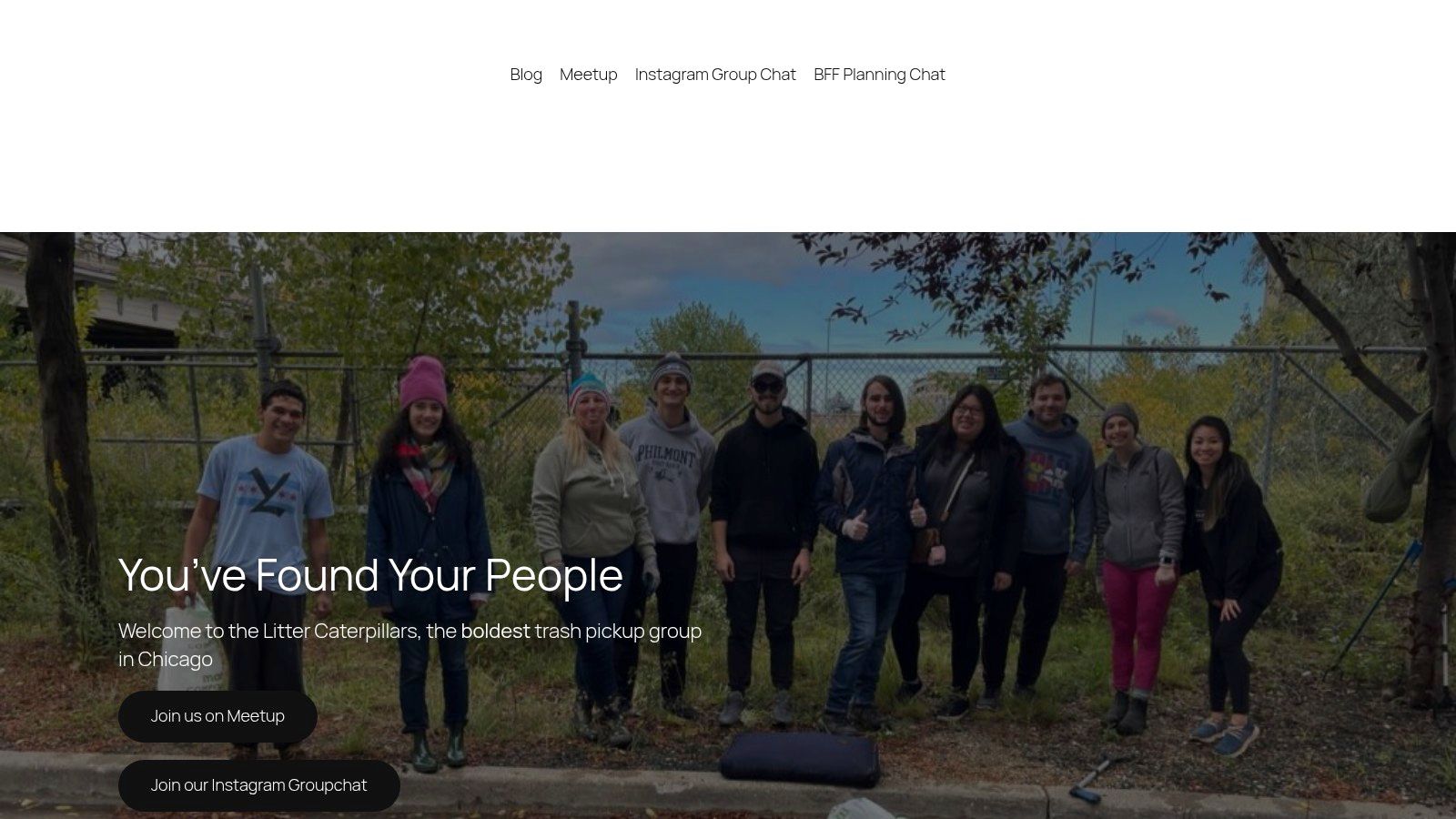
    A group of Litter Caterpillars volunteers in Chicago, smiling and holding trash grabbers and bags, with the city skyline in the background.

    This isn't just about picking up litter. It’s a bold, disciplined adventure. This crew has cleaned every single one of Chicago's 50 wards—a feat that speaks volumes about their city-wide commitment. They've tackled audacious projects, like cleaning a highway during a bike event shutdown. Their biggest triumph? Winning an empty lot at a city auction to build "Caterpillar Park" in Englewood, turning a symbol of neglect into a beacon of community hope.

    Why It's a Standout Choice

    What makes Litter Caterpillars so special is its volunteer-first culture. The entire experience is designed around you.

    • Zero Financial Pressure: I promise you, you will never be asked for a donation. The focus is purely on your time, your energy, your happiness. This creates an environment free of obligation, where you show up because you want to be there.
    • Built for Community: From the custom theme song and team flags to the achievement badges and buzzing group chats, every element is engineered to forge connection. You’re not just a volunteer; you're part of a team.
    • Safety and Positivity: The leaders prioritize a safe, welcoming, and uplifting atmosphere. It feels less like a chore and more like a block party with a purpose.

    It's one thing for an organization to say it builds community; it's another thing to see it in action. People join to clean a neighborhood and end up making lifelong friends, exploring corners of Chicago they've never seen, and feeling a genuine surge of accomplishment. The energy is electric. You can feel it just by scrolling through the comments on their social media.

    How to Get Involved

    Getting started is as simple as it gets. Every event is free. You don’t need any experience. Just bring a good attitude.

    1. Find an Event: Head over to their website or check their Meetup and Instagram pages for the weekly schedule. They post crystal-clear details on where and when to meet.
    2. Just Show Up: They provide everything you need: grabbers, bags, gloves, and hand sanitizer.
    3. Make an Impact: Spend a couple of hours cleaning, chatting, and watching the immediate results of your work unfold before your eyes.

    My Take: If you're tired of abstract charity work and crave seeing your effort translate directly into a cleaner block, a new park, and a stronger community, Litter Caterpillars is an unparalleled choice. It's a powerful reminder that changing the world can start with one piece of trash and one new friend.

    Sure, the work can be tough, and you'll be out in every flavor of Chicago weather, but the payoff is immense. This is a grassroots organization running on pure passion, offering a uniquely authentic and impactful way for you to give back. You can dive deeper into their mission and see how their volunteer trash pickup events work on their website.

    Website: https://www.littercaterpillars.com

    2. Charity Navigator

    Imagine you've got a few bucks to give and a heart full of hope for your city, but you're paralyzed. Which of the thousands of incredible charities in Chicago will use your donation to actually move the needle? How can you be sure your gift will do more than just keep the lights on? That's the exact problem Charity Navigator solves for you. Think of it as your personal, data-driven guide to giving with confidence. It's like having a wise, experienced friend who has already done all the meticulous, painstaking research for you.

    Instead of just feeding you a charity's mission statement, Charity Navigator cracks open the books. It dives deep into the numbers and practices that truly matter. It rates organizations on a four-star scale, but what’s truly revolutionary is how it arrives at that rating. It’s moved beyond outdated, simplistic metrics like overhead costs and now paints a much richer, more holistic picture of a nonprofit's health and its real-world impact.

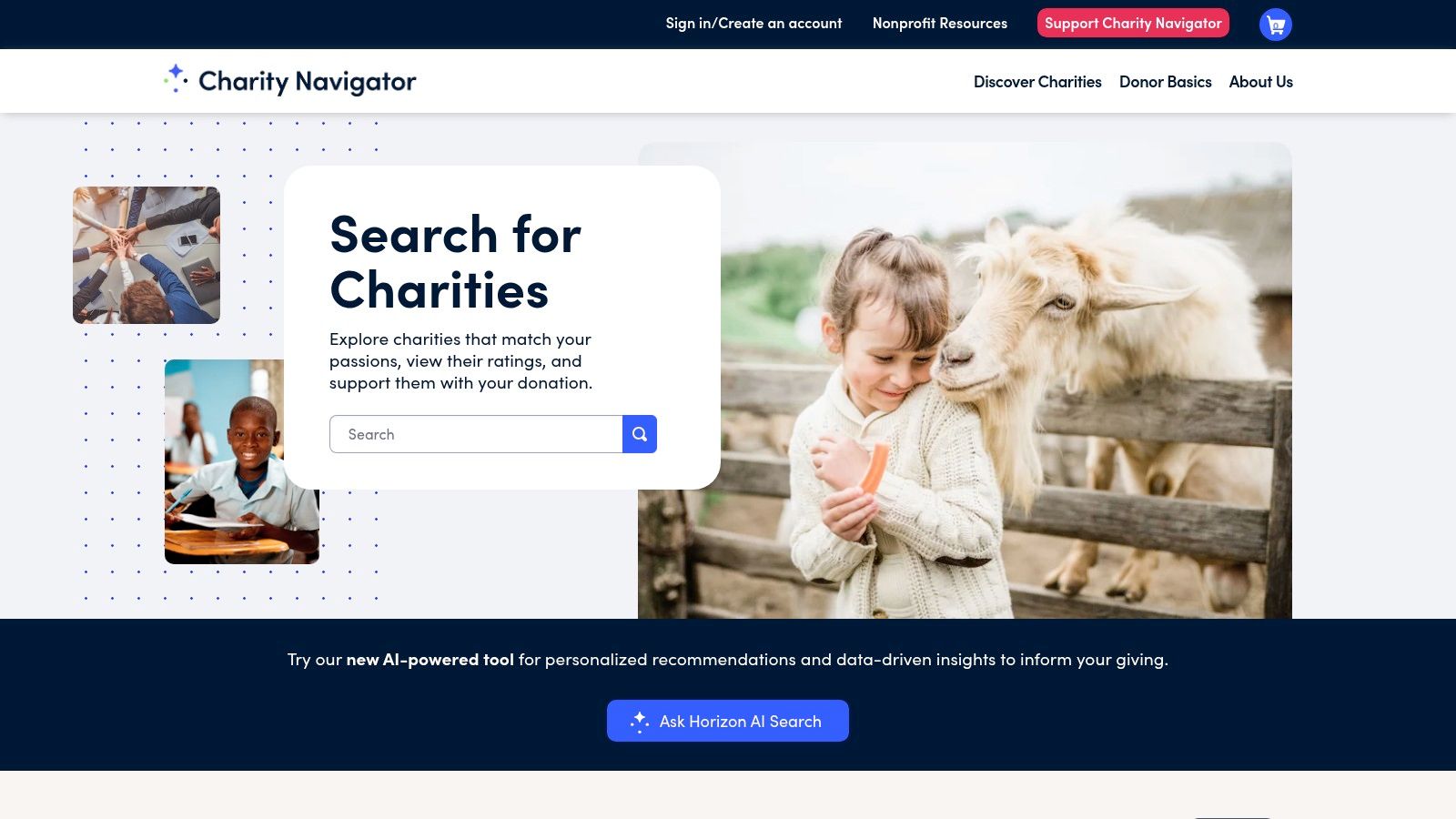
    A screenshot of the Charity Navigator website showing the search bar where users can find charities in Chicago.

    Making Informed Decisions with Powerful Tools

    When you land on the site, you can immediately search for "Chicago" and filter by the causes that set your soul on fire, whether it's animal welfare, housing and homelessness, or arts and culture. Each charity profile gives you a clear, digestible breakdown of its performance.

    • Financial Health: How efficiently do they use their funds?
    • Accountability & Transparency: Do they follow best practices for governance? Are they open about their operations?
    • Leadership & Adaptability: This new "Encompass" rating assesses strategic planning and their ability to pivot in a changing world.
    • Impact & Results: Where available, this score looks at the actual outcomes a charity achieves.

    This multi-faceted approach empowers you to find organizations that are not just well-intentioned but also incredibly well-run.

    How to Use Charity Navigator Effectively

    To get the most out of the platform, I suggest you think like an investigator. Use the search filters to create a shortlist of 3-5 Chicago-based charities working on the same issue. Compare their star ratings and, more importantly, click into their profiles to see why they got those scores. A four-star rating in "Accountability & Transparency" tells you a hell of a lot about an organization's integrity.

    One feature I love is the Giving Basket. You can add multiple charities to your basket and donate to all of them in a single, secure transaction, making it incredibly easy to support a portfolio of causes you believe in. While some people, including me, often prefer donating directly on a charity's site, the Giving Basket is a fantastic tool for streamlined, diversified giving. The platform is completely free for you to use, putting powerful philanthropic tools right at your fingertips.

    Website: https://www.charitynavigator.org

    3. Candid (GuideStar + Foundation Directory)

    If you're the kind of person who likes to lift the hood and see exactly how the engine works before you commit, then Candid is the platform for you. Think of it as the ultimate research library for the nonprofit world. Where other sites give you a great summary, Candid hands you the original blueprints, the raw data, and the forensic tools to conduct a truly deep dive into the charities in Chicago you’re considering. It’s for the donor who wants to move beyond ratings and understand the "why" behind an organization's every move.

    Candid was born from the merger of GuideStar and the Foundation Center, creating an absolute powerhouse of nonprofit information. It offers an unparalleled, comprehensive look into more than 1.9 million organizations. I'm not talking about a surface-level directory; this is a treasure trove of financial data, official IRS filings, and detailed program information that lets you vet potential partners with incredible precision.

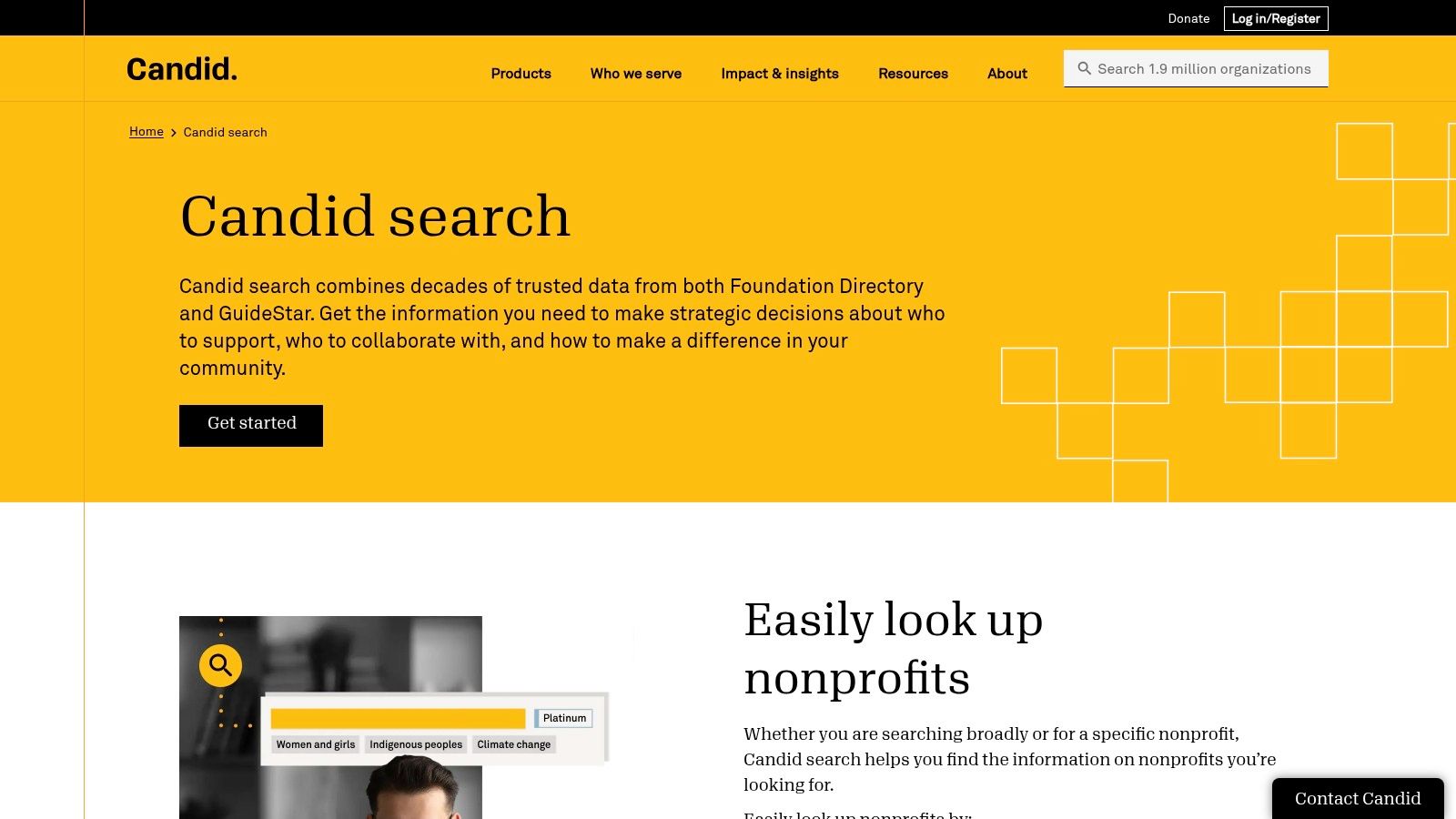
    A screenshot of the Candid website showing the search filters available to find charities in Chicago.

    Unlocking In-Depth Due Diligence

    When you search for charities on Candid, you’re not just browsing a list; you're accessing a database that goes light-years beyond a simple mission statement. The platform is designed for serious due diligence, whether you're a major donor, a corporate partner, or simply a citizen like me who wants to be absolutely certain of your impact.

    • Financial Deep Dive: You get direct access to an organization's IRS Form 990, the detailed annual report that tax-exempt organizations file. This gives you a direct look at their revenue, expenses, and even leadership compensation.
    • Seals of Transparency: Nonprofits can earn Bronze, Silver, Gold, and Platinum Seals by sharing more information about their operations, leadership, and results. A Platinum Seal means they're an open book.
    • Powerful Filters: You can zero in on what matters to you. Filter Chicago-based organizations not just by cause but by the specific populations they serve, their budget size, and more.
    • Leadership and Mission: You can review key personnel, board members, and the exact language of their stated mission and programs, ensuring their values truly align with yours.

    This level of detail empowers you to make giving decisions with the same rigor you'd apply to a major financial investment.

    How to Use Candid Effectively

    I'd suggest you start with the free version, which just requires a quick registration. Use the "Nonprofit Profiles" search to look up specific charities in Chicago or browse by cause. A great strategy is to use the Seals of Transparency as your first filter; organizations that have earned Gold or Platinum seals are actively committed to being open about their work.

    Don't let the Form 990 intimidate you. I focus on a few key areas: check the "Program Service Revenue" to see how much of their income is directly related to their mission, and review the "Statement of Functional Expenses" to understand how they allocate their money. While the full feature set is geared toward professionals and costs money, the free access gives you more than enough data to make a highly informed choice.

    Website: https://candid.org/candid-search

    4. United Way of Metro Chicago

    What happens when you want to help, but the sheer number of charities in Chicago feels like a tidal wave? You see the need everywhere—food insecurity in one neighborhood, a lack of after-school programs in another. How can you make the biggest splash without spending weeks researching hundreds of organizations? This is where I find the United Way of Metro Chicago so valuable. Think of it as a powerful, central hub for community impact, a lens that focuses your generosity into a coordinated, region-wide force for good.

    For over 90 years, they have been weaving together a vast network of community partners, donors, and volunteers to tackle Chicago's toughest challenges. Instead of focusing on a single issue, United Way takes a holistic approach. They get that strong neighborhoods are the bedrock of a thriving city. They do the vetting for you, directing your resources to where they are needed most.

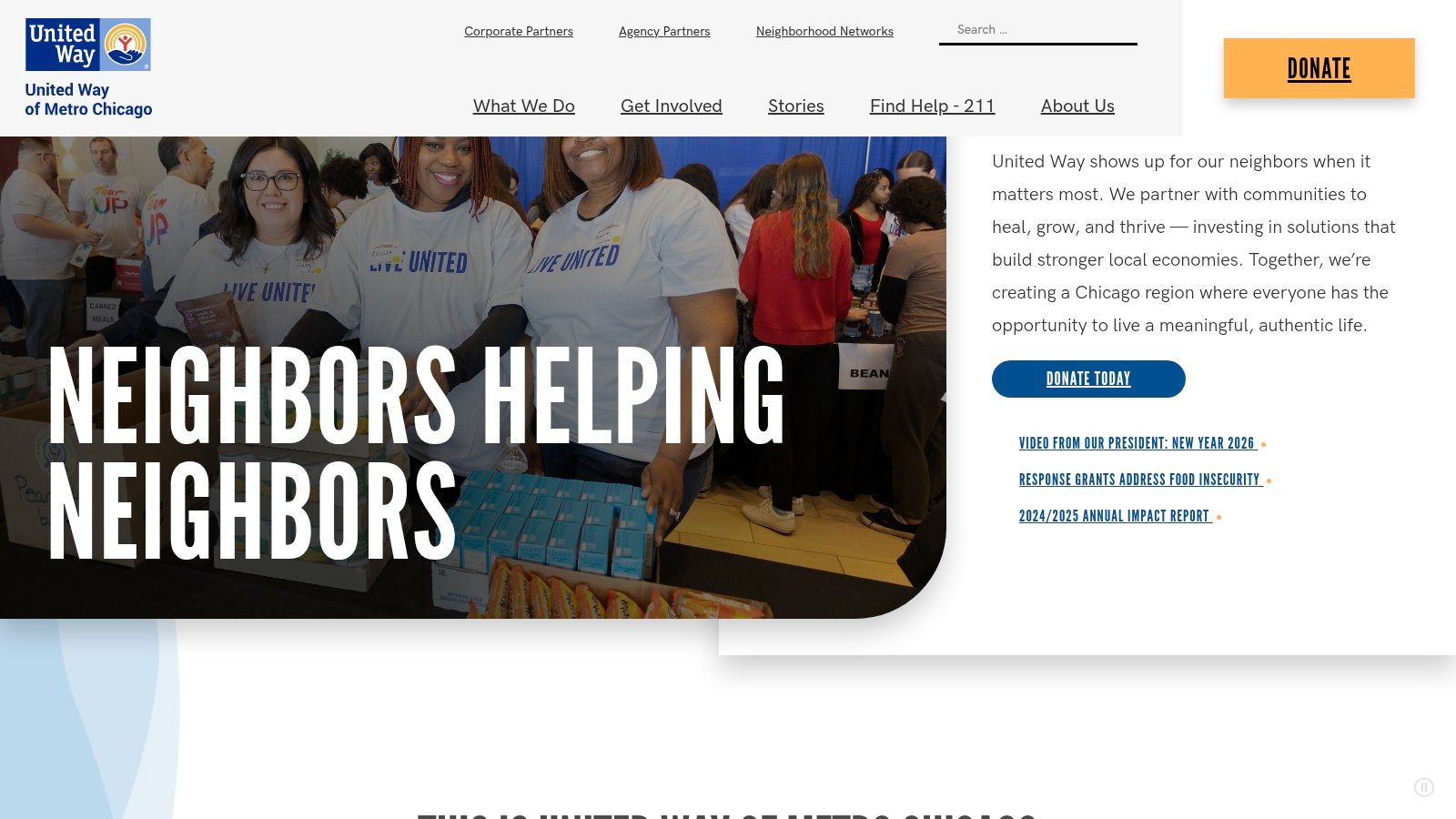
    A group of volunteers in blue shirts from United Way of Metro Chicago working together on a community project.

    Uniting for Neighborhood-Level Impact

    When you explore their website, you’ll see their strategy isn't just about funding programs; it's about investing in entire communities. They partner with local leaders and residents through their 17 Neighborhood Networks, ensuring that solutions are born from the community itself and built to last. This model recognizes that the people living in a neighborhood know best what they need to succeed.

    • Pooled Giving: Your donation joins thousands of others in a community fund, tackling systemic issues like economic stability and access to healthcare across the entire region.
    • Designated Giving: If you have a specific partner agency in their network that you’re passionate about, you have the option to direct your funds straight to them.
    • Corporate & Group Volunteering: United Way are masters of logistics, organizing large-scale volunteer projects perfect for companies, friends, or community groups looking to make a hands-on difference together.
    • Impact Reports: They provide clear, accessible reports showing you exactly how your contributions are being used to create measurable change in communities throughout Chicagoland.

    This structure allows you to support a broad, proven strategy for community improvement, trusting that your contribution is part of a much larger, coordinated plan. It’s a powerful way for organizations to keep their helpers engaged, a key component of effective volunteer retention strategies.

    How to Use United Way Effectively

    The easiest way for you to get started is by using the "Donate" or "Volunteer" portals on their website. If you're looking for a simple, fire-and-forget way to support the entire Chicago region, I think donating to their Impact Fund is an excellent choice. It’s a high-trust model where you let their experts allocate the funds based on real-time community needs.

    For those of you who want a bit more control, you can explore their list of over 140 agency partners and designate your gift. The platform offers multiple ways to give, including credit card, stock transfers, and DAFs, making it flexible for any philanthropic style. While you might give up the granular control of donating directly to a small, specific charity, you gain the immense power and strategic oversight of a long-standing community institution. The platform is free to access and explore, offering you a direct path to becoming part of a united force for good in Chicago.

    Website: https://liveunitedchicago.org

    5. 211 Metro Chicago

    Imagine this: someone in your neighborhood is facing eviction. A family is struggling to find their next meal. A senior needs help with their utility bills. These aren't abstract problems; they are urgent, immediate crises happening every single day. But how do you, as a potential donor or volunteer, find the frontline organizations tackling these specific, real-time fires? You use 211 Metro Chicago. It's the city's official information and referral lifeline, which doubles as an incredible, living map to the most pressing needs in our community.

    Think of it as the central nervous system for social services in Chicago. It’s not a donation platform itself. Instead, it’s a powerful directory and referral service that connects people in desperate need with the exact charities in Chicago equipped to help them. For you and me, this provides an unparalleled, ground-level view of where our support can have the most immediate impact. It answers the question, "Who is doing the real work, right here, right now?"

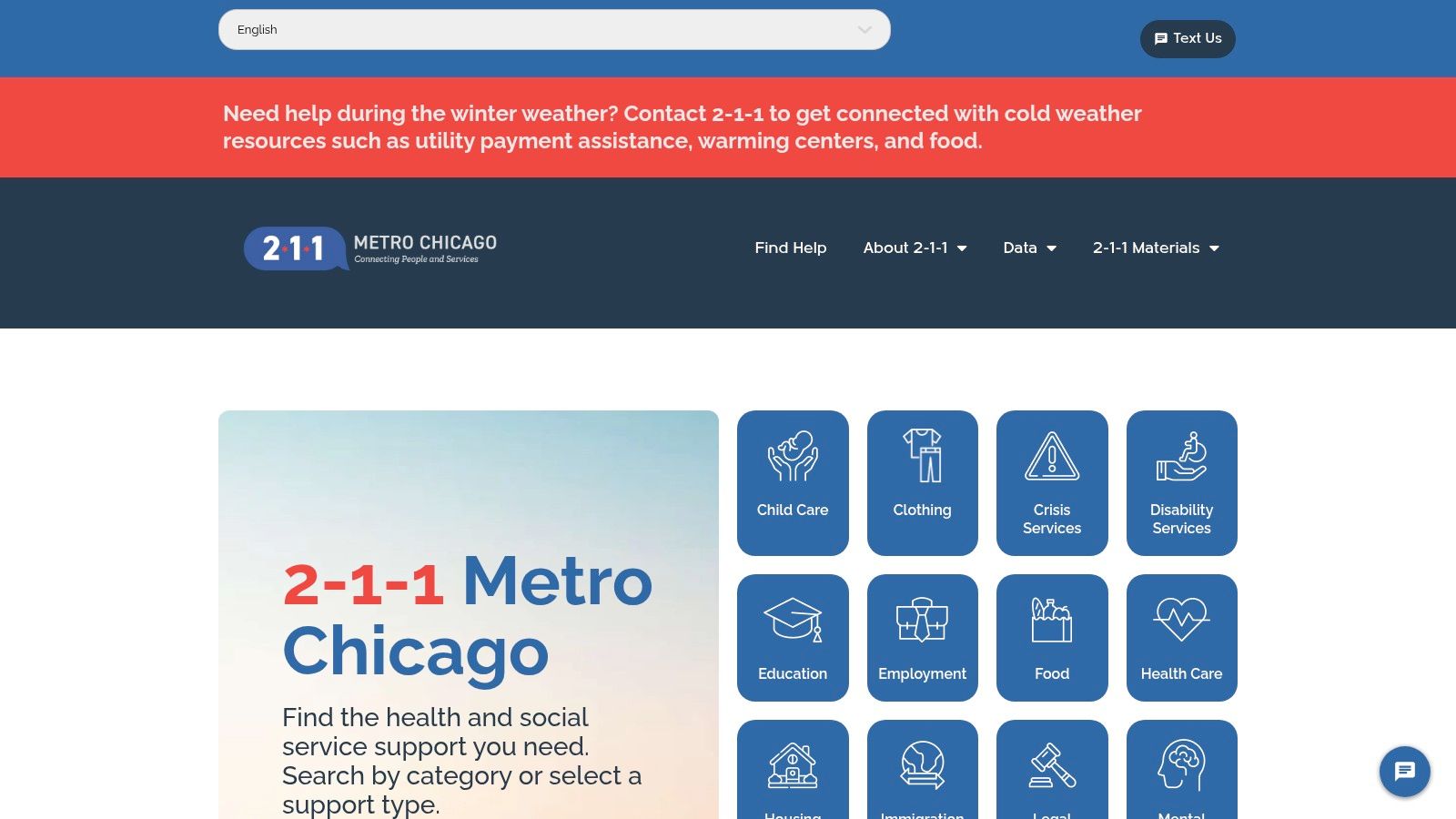
    A screenshot of the 211 Metro Chicago website showing the search function for finding local social services.

    Uncovering Community Needs to Guide Your Giving

    While platforms like Charity Navigator help you vet an organization's financial health, 211 Metro Chicago helps you understand the demand for their services. By exploring their comprehensive online directory, you can see which organizations are on the front lines of specific issues in particular neighborhoods. This is a complete game-changer for strategic giving.

    • Massive Service Directory: You can search for thousands of vetted local health and human service programs covering everything from food pantries and mental health counseling to legal aid and housing assistance.
    • 24/7 Live Support: Trained specialists are available around the clock via phone (by dialing 2-1-1), text, or online chat to guide people to resources. This gives them a real-time pulse on community needs.
    • Hyper-Local Focus: The platform is laser-focused on Chicago and suburban Cook County, ensuring the information is relevant, current, and specific to our local ecosystem.

    This direct line to community challenges allows you to move beyond generalized giving and target your support with surgical precision.

    How to Use 211 Metro Chicago for Philanthropy

    Instead of just searching for charities, I want you to think like a community researcher. Start by exploring a category you care about, like "Food" or "Housing," and filter by your zip code or a neighborhood you want to support. You'll get a list of the specific organizations providing those services on the ground. These are the groups that 211 operators are referring your neighbors to every single day.

    From there, you can visit the websites of these frontline charities to donate or find volunteer opportunities. While 211 Metro Chicago is primarily a service-finder, its greatest strength for donors like you and me is its authenticity. It’s not a curated list; it's a living, breathing database reflecting the real, day-to-day work of making Chicago a better place for everyone. The service is completely free to use, offering you a priceless window into the heart of our city.

    Website: https://211metrochicago.org

    6. VolunteerMatch (Chicago)

    You feel it, don't you? That powerful pull to do more than just write a check. You want to roll up your sleeves, meet people who think like you, and see the impact of your effort with your own two eyes. But where do you even start? Scouring the websites of individual charities in Chicago is exhausting. This is where VolunteerMatch comes in. I think of it as a bustling, vibrant marketplace for your time and talent. It’s less of a research library and more of a community bulletin board, connecting your desire to help directly with the organizations that need you most.

    VolunteerMatch bridges the chasm between good intentions and real-world action. Instead of evaluating financial health, its sole purpose is to show you a massive, searchable database of hands-on opportunities happening right now, in your neighborhood. It's the digital equivalent of walking into a community center and seeing flyers for every park cleanup, food pantry shift, and tutoring session available, all organized perfectly for you.

    Finding Your Perfect Hands-On Role

    The power of VolunteerMatch lies in its incredibly robust search and filtering capabilities. You can instantly search for "Chicago" or your specific zip code and then narrow the results to find the perfect fit for your schedule, your interests, and your skills. Whether you have a Saturday morning free or you want a regular weekly commitment, the platform makes it simple for you.

    • Cause Areas: Filter by what you're passionate about, from animals and the environment to education and literacy.
    • Skills & Interests: Are you a great photographer, a marketing whiz, or just love being outdoors? You can find roles that use your specific talents.
    • Flexibility: Easily find opportunities that are in-person, virtual, great for groups, or suitable for different age groups.

    This personalized approach removes all the friction from finding your next service project, connecting you directly with nonprofits that are actively looking for your help.

    How to Use VolunteerMatch Effectively

    I recommend you think of VolunteerMatch as your starting point. Use the filters to create a list of 3-5 intriguing opportunities. When you find one, click the "I Want to Help!" button, which zips your information directly to the nonprofit coordinator. Because it's a marketplace, not a vetting site, I think it's wise to do a little extra homework. If you find a new-to-you organization, you might cross-reference it on a site like Charity Navigator to make sure it’s a good fit.

    The platform is completely free for you as a volunteer and serves as a fantastic discovery tool. It shines by showcasing the sheer volume and variety of ways you can get involved, from one-off events to ongoing roles. If you're looking for a comprehensive list of service projects, you can explore some of the best volunteer opportunities in Chicago to see what's out there. The key is for you to be proactive; once you express interest, be ready to follow up directly with the organization to get started.

    Website: https://www.volunteermatch.org/city/Chicago

    7. Chicago Cares

    You feel that pull. That urge to do something real, to get your hands dirty and see the immediate impact of your effort right here in your own city. But where do you even start? Finding the right volunteer opportunity can feel like searching for a needle in a haystack. This is where Chicago Cares steps in. I see them as a master connector, a powerful force for good, linking your desire to help with the real, on-the-ground needs of our communities. It's more than a website; it's a bridge between your compassion and Chicago’s heartbeat.

    Chicago Cares specializes in creating and leading structured volunteer projects with a vast network of partner nonprofits and schools. Instead of just listing opportunities, they design experiences. They make them meaningful, accessible, and often group-friendly, making it incredibly easy for you to jump in and make a difference. They handle the logistics so you can focus on the service.

    Volunteers with Chicago Cares working together on a community project.

    Mobilizing a City of Volunteers

    The platform is your central hub for civic engagement. You create an account, browse projects by cause or neighborhood, and sign up with just a few clicks. The variety is immense. You could be revitalizing a community garden in Pilsen or helping students with their reading skills in Englewood. It’s a beautifully simple way for you to explore different charities in Chicago through direct action.

    • Citywide Programs: They design their own signature programs that address pressing needs like food insecurity and educational equity.
    • Partner Projects: They work directly with smaller nonprofits that need volunteers but may not have the resources to recruit and manage them.
    • Corporate Engagement: Chicago Cares is a leader in organizing large-scale service days for companies, turning teams into forces for community good.
    • Staff-Led Events: Many projects are led by a trained Chicago Cares staff member or volunteer leader, ensuring the experience is organized and impactful for everyone.

    This curated approach removes the guesswork. It makes it perfect for you if you're a first-time volunteer or just looking for a well-structured way to give back.

    How to Use Chicago Cares Effectively

    To get started, I suggest you create a profile and explore the project calendar. Don’t be afraid to try something new; you might discover a passion for a cause you never even considered. A great strategy is to sign up for a "New Volunteer Information Session" to get a full overview of how they operate and what you can expect.

    One of the platform’s biggest strengths is its focus on group and team-based volunteering. If you want to organize a service day with friends or coworkers, this is the place I'd start. While project availability can fluctuate and some large-scale signature events might request a registration fee to cover costs, the vast majority of opportunities are free. It’s a powerful tool designed not just to fill volunteer slots, but to build a more connected and caring Chicago, one project at a time.

    Website: https://www.chicagocares.org

    7-Point Comparison of Chicago Charities

    Item 🔄 Complexity ⚡ Resource requirements 📊 Expected outcomes 💡 Ideal use cases ⭐ Key advantages
    Litter Caterpillars Low organizational complexity; high physical demand 🔄 Low funding, high volunteer time & coordination ⚡ Visible neighborhood cleanup and community-built assets 📊 Hands-on cleanups, community building, recurring volunteer commitment 💡 Grassroots, consistent weekly impact; strong volunteer culture ⭐
    Charity Navigator Low user complexity; structured rating process 🔄 Platform-level data aggregation; minimal user time ⚡ Quick, comparable charity ratings to inform donations 📊 Donor due diligence and fast charity comparisons 💡 Clear, componentized ratings and Giving Basket for multiple donations ⭐
    Candid (GuideStar + FD) Moderate to high complexity for deep research 🔄 Extensive data access; paid features for full use ⚡ Comprehensive vetting (financials, Form 990s) for informed funding decisions 📊 Funders, grantseekers, and detailed nonprofit research 💡 Deep, updated nonprofit data and side-by-side comparisons ⭐
    United Way of Metro Chicago Moderate complexity (centralized programs) 🔄 Established admin, pooled funds, partner network ⚡ Broad regional impact and coordinated volunteer projects 📊 Corporate giving, pooled impact, group volunteer projects 💡 Large partner network and multiple giving methods; regional reports ⭐
    211 Metro Chicago Low user complexity; live referral service 🔄 Staffed 24/7 helpline and searchable directory ⚡ Real-time needs mapping and direct service referrals 📊 Residents seeking services; donors mapping frontline needs 💡 Comprehensive, up-to-date local referral hub tied to county systems ⭐
    VolunteerMatch (Chicago) Low complexity to use; variable listing quality 🔄 Platform access; volunteer time; org responsiveness ⚡ Broad discovery of hands-on volunteer opportunities 📊 Individuals/groups seeking specific skills, dates, or locations 💡 High volume of local listings and robust filters for matching ⭐
    Chicago Cares Low volunteer friction; staff-run projects 🔄 Staff coordination, partner sites, occasional fees ⚡ Structured group service and large-scale days of service 📊 Corporate teams, first-time volunteers, organized service days 💡 Chicago-focused, staff-designed projects with citywide reach ⭐

    Your Turn to Paint the Fence

    Do you remember that old story about Tom Sawyer? He was handed a punishment, a chore: paint a massive, boring fence. But Tom, he didn't see a burden. He saw an opportunity. He reframed the whole thing. He acted like painting that fence was the greatest, most exclusive privilege in the entire world. Soon enough, his friends weren't just helping him; they were paying him for the chance to take a turn with the brush.

    That’s the secret, isn't it? Giving back isn't a chore. It's not an obligation you have to dutifully check off some list. It's a mindset. It’s about discovering the joy in the work, the pride in a tangible result, and the profound connection you build with the people standing right beside you, brushes in hand. This entire guide I've laid out for you has been about showing you all the different "fences" across our city and the tools you can use to start painting.

    From Digital Tools to Dirty Hands

    You and I, we’ve covered a lot of ground together, exploring the incredible landscape of charities in Chicago. You've seen how powerful, data-driven platforms can give you the confidence to donate wisely, and how hyper-local networks can connect you with an opportunity just around the corner from your home.

    Let’s quickly revisit the tools in your new toolkit:

    • For the Researcher: You have Charity Navigator and Candid to peel back the layers, inspect the financial health, and ensure your dollars make a real, measurable impact. This is your due diligence, your way of investing smartly in Chicago's future.
    • For the Connector: You have United Way of Metro Chicago and 211 Metro Chicago as your broad-spectrum guides. They paint a picture of the city’s most pressing needs and can direct you to the organizations on the front lines, addressing systemic issues from housing to education.
    • For the Action-Taker: You have VolunteerMatch and Chicago Cares as your personalized search engines for service. I use them to match my specific skills, passions, and availability with the perfect role, whether it’s a one-day event or a long-term commitment.
    • For the Community Builder: And, of course, you have Litter Caterpillars. This isn't just about picking up trash; it's about reclaiming our shared spaces, one block at a time. It's the most direct, hands-on way for you to see your effort transform a street corner right before your eyes.

    How to Pick Up Your Brush

    So, what now? The options can feel overwhelming, but I promise the choice is simpler than you think. It's not about finding the "perfect" charity. It's about finding the one that’s perfect for you, right now.

    I want you to think about what truly energizes you. Is it seeing immediate, visible change? Then grabbing a picker with a group like Litter Caterpillars might be your calling. Are you a planner, a strategist who wants to ensure your contribution has the maximum possible leverage? Then spending an evening diving into reports on Charity Navigator is your first step. Do you crave human connection and want to meet new people from different walks of life? Chicago Cares is waiting for you.

    You don't have to be a superhero. You don't need a grand plan or a massive donation. You just have to show up. Find your crew. Find your cause. Pick up a brush and start painting. You will be absolutely astonished by how much fun you have, how much you learn, and how a simple act of service can make this huge, sprawling city feel like home.


    Ready to make an immediate, visible impact while exploring Chicago's diverse neighborhoods? I invite you to join a cleanup event with Litter Caterpillars and see how a few hours of teamwork can transform our community spaces. Find your next adventure in service and sign up at Litter Caterpillars.