
You've got a free Saturday morning, but it isn't wide open. Maybe you can spare two hours before work. Maybe your club wants a structured indoor shift. Maybe you're ready for a full-day project that teaches you something practical. You search student volunteer opportunities near me, then face a wall of listings that all sound alike.
The right choice depends on more than the cause. Your age, neighborhood, transit route, physical comfort, weather tolerance, waiver requirements, and preferred social setting all matter. A cleanup crew can give you fresh air and new friends. A food bank can give you an organized indoor shift. A build site can give you teamwork and hands-on skills.
This Chicago guide organizes seven options by the kind of service day you can fit into your schedule. You'll find weekend cleanups, beach work, river restoration, park stewardship, food support, neighborhood projects, and Habitat for Humanity Chicago roles. You'll also get practical notes on sign-up steps, transportation, safety, accessibility, service-hour records, and bringing a friend.
If you're curious about safety skills for outdoor work, you can also compare local wilderness first aid training near me. For now, start with the option that matches the Saturday you really have, not the ideal schedule you wish you had.
1. Litter Caterpillars
A student can finish a weekend cleanup before the rest of Saturday begins. Arrive with gloves and sturdy shoes, meet the group at a marked corner, then follow volunteers along a block as they pull bottles from weeds, lift bags from sidewalks, and clear litter from places people have stopped noticing. By the end, the route looks easier to walk.
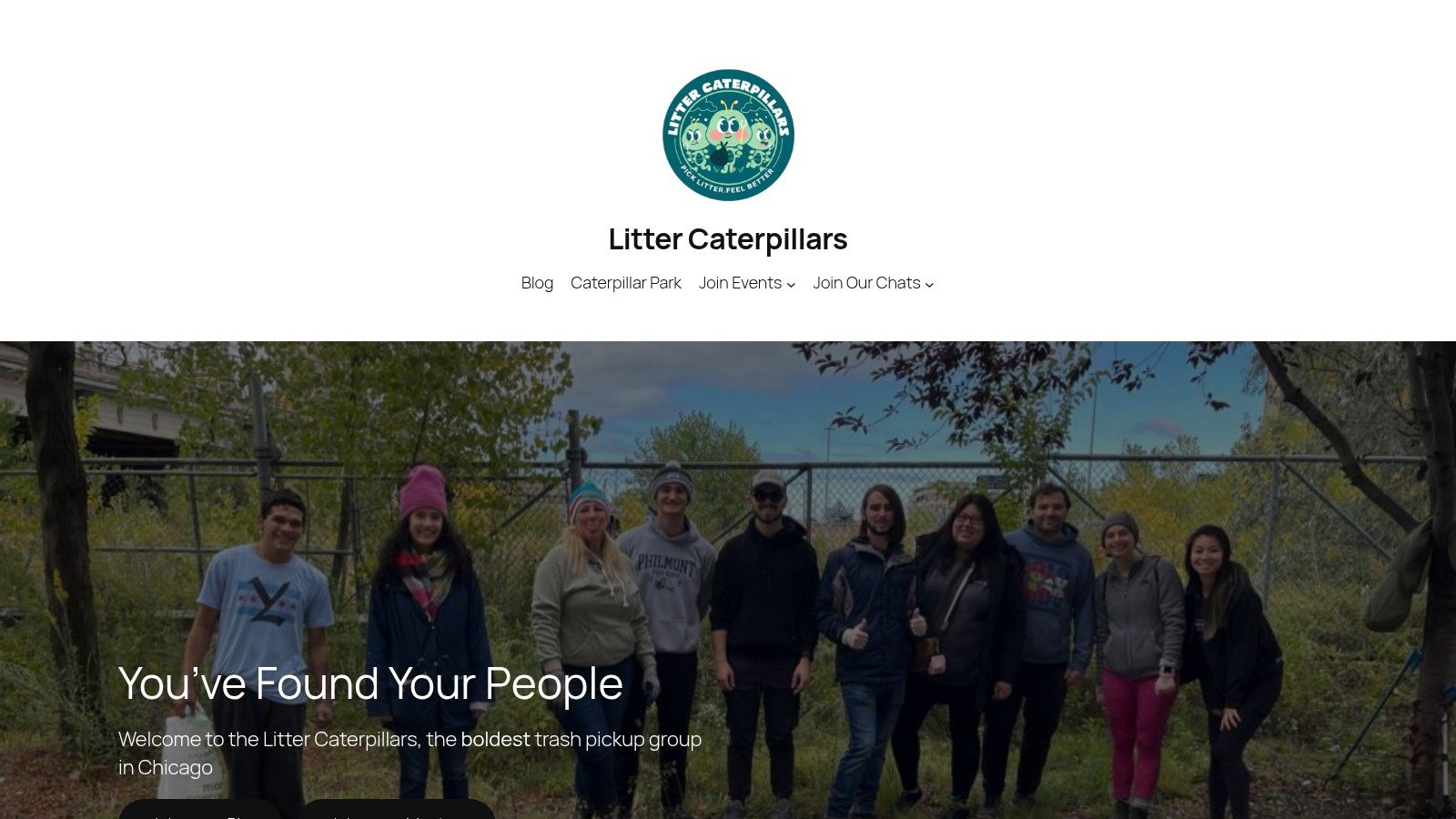
That is the Litter Caterpillars experience. Founded by Kevin Tao, this Chicago volunteer group organizes recurring trash pickups across the city, including areas other groups may avoid. The group has cleaned all 50 wards and won an empty lot at auction to create Caterpillar Park in Englewood, according to its official story and mission.
Joining takes only a few checks. Find an upcoming event through Litter Caterpillars on Meetup or follow Litter Caterpillars on Instagram. Read the meeting point, time, and task details, then arrive ready for outdoor work. Open group chats keep volunteers connected between cleanups. Flags, badges, and a theme song give the morning a shared rhythm. You pick up bottles from weeds while swapping stories and learning names, a surprisingly social morning.
A good fit for a short social morning
Weekend mornings suit students balancing classes, jobs, commutes, and club obligations. You can test one shift before committing to a regular schedule, notice how your body handles the work, and return with a friend if the format fits.
Outdoor labor brings real tradeoffs. Rain, cold, snow, heat, uneven ground, sharp objects, and heavy bags may shape the day. Wear clothes you can move in, protect your hands, and bring water. Ask organizers about the meeting point, expected tasks, restroom access, walking distance, and any accommodation you may need before attending.
Practical rule: Choose Litter Caterpillars when you want hands-on work, a friendly group, and a service routine that begins with one manageable weekend morning.
The volunteer-first approach keeps participation free and avoids pressure to donate. For a student building a service record, save the event details and ask an organizer how to confirm your hours. A quick note after the shift can also help you remember the date, location, tasks, and skills you practiced.
Weekend cleanup is physical and sometimes messy. It is also a clear way to meet people, improve a familiar block, and see the result before you leave. Check the next listing on Meetup or Instagram, confirm what to bring, and choose a route you can reach safely by transit or with a friend.
2. Alliance for the Great Lakes Adopt-a-Beach
A beach cleanup gives you a clear before-and-after task. You walk a section of Lake Michigan shoreline, collect litter, sort what you find, and record the results. The lake supplies the scenery, but the work stays concrete. A wrapper caught in beach grass becomes a piece of evidence you can log instead of leaving behind.
The Alliance for the Great Lakes runs Adopt-a-Beach cleanups on Lake Michigan and throughout the Great Lakes. You can join a public cleanup or register a team through the Adopt-a-Beach volunteer page. Students can also connect the work to school projects through the free K–12 Great Lakes in My World curriculum.
This option works especially well for a class, environmental club, or group of friends that wants a shared assignment. The litter audit gives everyone a job. One person collects, another records, and another helps sort or carry supplies. You leave with a cleaner shoreline and organized observations that advocates and agencies can use in regional work.
Plan around the shoreline
Most activity takes place in the warmer parts of the year, and weather can change the experience quickly. Wind, sun, damp sand, and uneven ground may challenge students with mobility limitations or health concerns. Contact the event leader before registering if you need a specific surface, restroom access, seating, shorter walking distance, or another accommodation.
You can join an existing event for a simpler first experience. If you lead a team, you'll need to create an online account, collect waivers, and follow the organizer guidance. That extra setup makes sense for a school group, but it can feel like too much for a student looking for a spontaneous Saturday shift.
- Best for a club: Use the team format when you want shared transportation and a clear group task.
- Best for a solo student: Pick a public cleanup with a meeting point near your train or bus route.
- Best for a class project: Pair the litter audit with the Great Lakes curriculum and a short reflection.
The Alliance for the Great Lakes gives students a way to connect outdoor service with observation and civic action. Choose it when you want a lakeshore morning, can handle weather exposure, and prefer a cleanup with a defined recording process.
3. Friends of the Chicago River Cleanups and Habitat Restoration
A student with one free Saturday might start by filling trash bags along a riverbank. On a different shift, the same student could pull invasive plants, work with soil, or care for a natural area beside the water. Friends of the Chicago River offers both litter removal and habitat restoration, giving students a choice based on the kind of service day they can handle.
The organization runs the large Chicago River Day and recurring site-based workdays throughout the watershed. Its volunteer information covers event logistics, what to bring, age policies, and family-friendly rules for major events. Many sites suit school groups, and several are reachable by public transit.
Students looking for environmental work that goes beyond collecting litter will find both litter removal and habitat restoration on different shifts. Litter removal gives you a clear, visible result. Habitat work may require careful movement around plants, soil, and river-edge areas. Ask about the assignment before registering if you have a physical limitation, dislike bending or kneeling, or need a lower-impact role.
Choose the event, then check the details
Chicago River Day can bring a large volunteer turnout. Other workdays vary by site and date. A major event may feel lively and easy to join with friends, while a smaller site day can offer closer guidance from the site leader.
Before you sign up, confirm:
- Age rules: Some restoration tasks may limit participation by age or require extra safety steps.
- Meeting point: River sites are spread across the city, so map the route before event morning.
- Supplies: Check what the organizer provides and what you should bring.
- Accessibility: Ask about paths, terrain, restrooms, and the distance from transit.
For another Chicago cleanup perspective, read this guide to Chicago River cleanup work from Litter Caterpillars. The guide can help you compare a scheduled river event with a grassroots trash-pickup morning, including the practical demands of weekend cleanup work.
Friends of the Chicago River fits students who can adjust to changing dates and assignments. Choose a shift that matches your route, mobility needs, and available time, then invite a classmate or club member to make the morning more social. Each completed shift also gives you a specific service example to describe on a resume.
4. Chicago Park District Community Stewardship and One-Day Park Cleanups
You check your neighborhood park, find a Saturday shift, and show up without needing prior experience. By the end of the morning, you may have removed litter, pulled invasive plants, cared for a natural area, or helped prepare a shared outdoor space for its next visitors.
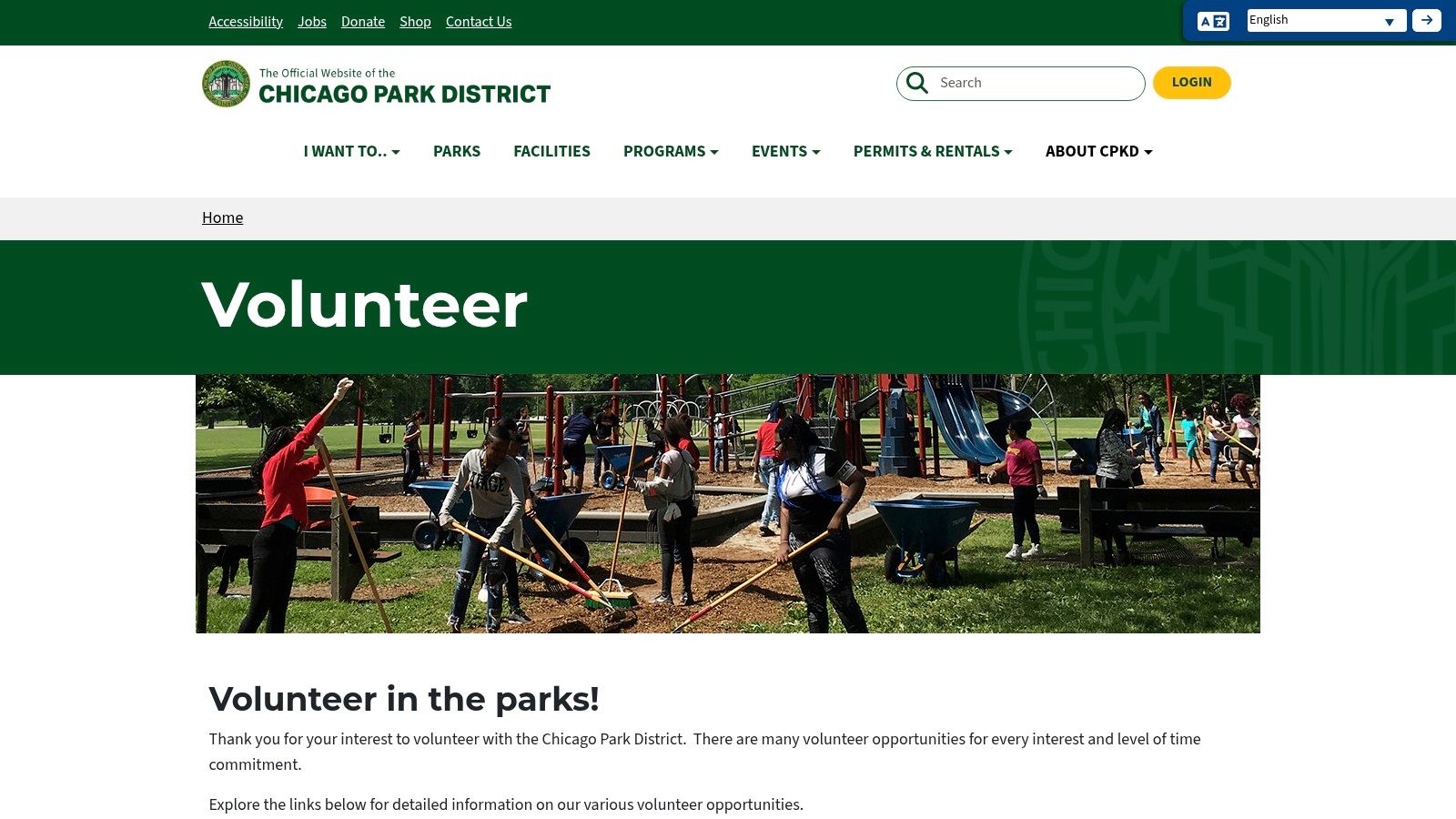
The Chicago Park District runs public stewardship days and one-day cleanups across city neighborhoods. Its volunteer page lists opportunities connected to parks and natural areas, along with citywide events including Earth Day and It's Your Park Day. Students, families, clubs, and school groups can find a practical entry point because the program supports many locations and group sign-ups.
Location is the main advantage. A nearby park can turn volunteering into a realistic habit instead of a rare event that consumes half your day in transit. Search by park, compare the start time with your class or work schedule, and ask a club leader to register the group if you want to attend together.
Start simple, then consider ongoing roles
Public stewardship days can suit a first-time volunteer because you don't need specialized experience. Ongoing or indoor positions may involve applications or background checks, so read the role description before assuming every shift works as a drop-in activity.
Weather also shapes the day. Wear layers, bring water, and check whether the event will continue in rain or extreme temperatures. If you use a wheelchair, cane, or other mobility aid, ask about the trail surface, grass conditions, slope, restroom access, and the distance between the transit stop and the work area.
A short park cleanup can also help you build a service record. Ask the event leader how the organization verifies hours, then save confirmation emails and record the date, location, and task in your own notes.
If you want to compare park work with a grassroots crew, read Litter Caterpillars' Chicago park cleanup guide. The Park District is a practical choice when proximity matters most and you want many neighborhood dates to choose from.
5. Greater Chicago Food Depository Warehouse and Community Food Support
A student arrives after class, steps into a warehouse, and takes a place beside a table of food supplies. A supervisor explains the station, teammates sort items, and packed boxes begin stacking nearby. For students who prefer indoor work, this setting offers a clear task and visible progress.
The Greater Chicago Food Depository provides sorting, repacking, and community distribution roles. Its volunteer information explains age pathways for family shifts, supervised youth participation, and independent volunteers who meet the listed requirements. Structured shifts can suit classes, clubs, and student groups, provided everyone meets the stated conditions.
A food bank shift follows a different rhythm from a cleanup. You might stand at a station, move items, inspect packaging, fill boxes, or prepare food for distribution. Repetition gives the group a steady pace. You know what to do, questions have a natural place, and the finished packages beside you show what the team completed.
Match the shift to your group
Read the age rules before inviting younger students. The Depository outlines separate pathways for families, youth, and independent volunteers, while individual shifts may add their own conditions. A teacher, parent, or club leader should confirm supervision and waivers before the group travels.
Transit can shape the choice. Depending on where you live, the trip may involve a long bus or train ride, transfers, delays, and a walk from the stop. Build that travel time into the plan. If you need seated work, lower lifting demands, or another accommodation, contact the volunteer team before registering.
- For a class: Ask about group availability and choose a shift everyone can reach.
- For a first-timer: Select a structured role with clear instructions.
- For service hours: Confirm how attendance and hours are recorded.
Weekend work may leave students tired, especially after standing or lifting, so check the task description and plan clothing and transportation accordingly. The shift can still give classmates a simple way to work side by side and start a conversation with people outside their usual circle.
Read Litter Caterpillars' Chicago food bank volunteer guide to compare warehouse service with outdoor cleanup work. Choose the Greater Chicago Food Depository for a predictable indoor setting and hands-on support for food distribution in the Chicago area.
6. My Block, My Hood, My City
A student group meets near an alley or vacant lot on Chicago's South or West Side. The work starts with gloves, bags, and a short explanation of the block's needs. The group clears litter, improves the space, and leaves knowing exactly which neighborhood received the effort.
My Block, My Hood, My City connects volunteers with neighborhood cleanups, seasonal projects, supply distributions, and youth-focused community events. The organization coordinates with 100+ block clubs, according to its official volunteer and community information. Current opportunities appear through the website and Linktree, so you should check the latest listing before making plans.
This option fits students who want place-based service. You aren't choosing an abstract project. You're working in a specific area with resident-led partners and a local task. That can make a short shift feel direct and easy to explain to a club, teacher, or family member.
Confirm the details before you travel
Some events appear on short notice, and age rules vary by task. Minors may need a parent or guardian, a waiver, or additional supervision. Read the event listing carefully, then contact the organizer if the wording leaves room for doubt.
Transit planning matters here because the best opportunity may sit outside your own neighborhood. Share the meeting point with your group, plan a return route, and use a buddy system. Ask about restroom access, terrain, lifting, and the expected walking distance if you need accommodations.
The organization suits students who want a short, energetic service day with a clear neighborhood connection. It can also work well for a student club that wants to choose a project together rather than assign everyone to separate roles. Check the current event posts, confirm the requirements, and bring enough water for the expected outdoor work.
7. Habitat for Humanity Chicago Build Sites and ReStore Volunteering
A supervisor walks you through tool safety, your team splits into stations, and by noon you may already have helped raise a wall frame. The work shows how many coordinated tasks turn an unfinished site into a home.
Habitat for Humanity Chicago offers two service paths. Build-site roles center on construction and supervised hands-on work. ReStore shifts involve retail tasks, warehouse organization, and sorting donated materials. Review current openings on Habitat for Humanity Chicago's individual volunteer page.
Build sites suit students who want teamwork, practical skills, and visible neighborhood work. They usually require more time and physical energy than a short cleanup. The plan notes identify construction roles as commonly limited to people 18 and older, while minors often find opportunities through ReStore. Check the current age rule on the specific role page before signing up.
Pick the right Habitat path
ReStore may fit younger students, indoor-work preferences, or schedules that cannot accommodate a full construction day. Most build-site roles provide on-site training and supervision, but you still need to be comfortable lifting, kneeling, standing for several hours, and working around tools or unfinished surfaces. Closed-toe shoes are required, and some shifts take place outdoors.
Before choosing a shift, ask:
- Age and supervision: Does the role accept your age group, and must an adult attend?
- Schedule: Can you remain for the complete shift?
- Physical demands: Will you lift, climb, kneel, stand, or work outdoors?
- Service records: How will Habitat confirm your attendance and hours?
A student sorting donated materials at ReStore can describe a different skill set than someone assisting with supervised site preparation. Keep that distinction in your service log and resume. Use precise wording such as “sorted donated materials” or “assisted with supervised site preparation,” and record the hours Habitat confirms. That detail gives a teacher, club adviser, or future employer a clear picture of your contribution.
7 Local Student Volunteer Opportunities: Quick Comparison
| Organization | 🔄 Complexity | ⚡ Resource Requirements | ⭐📊 Expected Outcomes | 💡 Ideal Use Cases | ⭐ Key Advantages |
|---|---|---|---|---|---|
| Litter Caterpillars | 🔄🔄 Volunteer-led weekly coordination; low formal admin | ⚡ Low, volunteers, basic supplies, strong branding | ⭐⭐⭐⭐ Visible, citywide litter removal; community-building (50 wards, park) | Neighborhood cleanups; social, recurring volunteerism in Chicago | Strong identity/pride; consistent action; free to join |
| Alliance for the Great Lakes – Adopt-a‑Beach | 🔄🔄 Event registration + standardized data collection | ⚡ Moderate, seasonal teams, curriculum, audit tools | ⭐⭐⭐ Data-driven litter audits feeding regional advocacy | K–12 classes; service-learning; lake/beach cleanups | Standardized data; free K–12 curriculum; advocacy link |
| Friends of the Chicago River | 🔄🔄 Site coordination + large event logistics | ⚡ Moderate, tools for restoration, many accessible sites | ⭐⭐⭐ Mix of litter removal and habitat restoration; large annual mobilization | School groups; family-friendly river work; ecological projects | Transit-friendly sites; restoration exposure; clear FAQs |
| Chicago Park District | 🔄 Low, frequent public stewardship days, simple sign-up | ⚡ Low–Moderate, many sites, basic park tools provided | ⭐⭐⭐ Regular park care and stewardship; intro to urban ecology | Students, families, weekend group shifts across neighborhoods | High availability; group sign-up support; citywide events |
| Greater Chicago Food Depository | 🔄 Low–Moderate, scheduled, structured shifts | ⚡ Moderate, indoor facility, staffing; possible travel | ⭐⭐⭐⭐ Tangible food sorting/distribution output; predictable shifts | Students seeking structured, indoor volunteer hours | Reliable operations; clear age pathways; measurable impact |
| My Block, My Hood, My City (MBMHMC) | 🔄 Low, event-based, community-coordinated | ⚡ Low, local volunteers, short-term supplies | ⭐⭐⭐ Hyperlocal beautification and youth enrichment | Place-based student service; short, high-impact shifts | Strong resident partnerships; youth focus; easy opportunity discovery |
| Habitat for Humanity Chicago | 🔄🔄🔄 High for build sites; moderate for ReStore roles | ⚡ High, trained supervision, tools, full-day commitment | ⭐⭐⭐⭐ Skill-building and visible housing impact; recognized service hours | Students needing service hours; those seeking construction skills | On-site training; multiple entry points; team skill development |
Turn One Volunteer Shift Into a Habit
The best choice usually starts with your next available block of time. If you have a weekend morning and want outdoor work with a social group, try Litter Caterpillars. If you want a lakeshore cleanup, choose Alliance for the Great Lakes. If river ecology interests you, check Friends of the Chicago River. A nearby Chicago Park District shift can remove the transit problem. The Greater Chicago Food Depository fits students who prefer structured indoor work. My Block, My Hood, My City fits place-based neighborhood service. Habitat for Humanity Chicago works well when you want training, teamwork, and a longer project day.
Before you register, open the current event page. Dates, locations, age rules, waivers, supplies, and accessibility details can change. Treat the listing like a route map, not a promise that every event fits every student.
Age requirements deserve special attention. New York Cares says children ages 5-13 can volunteer only with a parent or legal guardian on projects marked Family Friendly, while teens ages 14-17 can volunteer solo or with a parent or guardian on Teen Friendly projects. Teens in that age group also need volunteer orientation before joining, according to New York Cares' youth guidance. The American Red Cross says high school and college students can join or start a Red Cross Club, and current college students can apply for internships connected to their studies and professional skills, as described by the American Red Cross student opportunities page.
Requirements can go beyond a simple age check. A University of Arizona community volunteer listing for teens describes programs that may require a 16-year-old minimum and several intake steps, including an application, tour, orientation training, fingerprint clearance, and a pre-employment physical, according to the teen volunteer listing. Meals on Wheels of Central Maryland lists age-specific requirements for teen roles. Meal packing can accept ages 14-17 with an adult or liability waiver, while grocery shopping can require an adult, orientation, a background check, and a 9-12 month commitment. One school program for rising 9th-12th graders requires volunteer and TAP applications plus a signed parent or guardian waiver, as listed by Meals on Wheels of Central Maryland.
That range of rules explains why a quick event page check matters. A two-hour cleanup and a recurring service placement may both appear under “volunteering,” yet they ask for different preparation.
Your pre-shift checklist
- Weather: Check the forecast and dress for heat, cold, rain, wind, or muddy ground.
- Water and food: Bring water and a snack if the organizer allows them.
- Gloves and supplies: Confirm whether the group provides gloves, bags, tools, or protective equipment.
- Transit time: Plan the full route, including transfers, walking, delays, and the trip home.
- Accessibility: Ask about terrain, stairs, restrooms, seating, lifting, and alternate tasks.
- Emergency details: Share the meeting point and an emergency contact with someone you trust.
- Service records: Record the date, organization, location, task, supervisor, and completed hours.
Your resume can benefit from precision. Write what you did, how you worked with others, and what tools or procedures you learned. “Participated in cleanup” says little. “Collected and sorted litter with a neighborhood volunteer team” gives a future employer or school a clearer picture.
Friendship can make returning easier. Tell one person in your class, residence hall, workplace, or student club about the event. Pick a meeting point together. Share the route. After the shift, decide whether you'll return to the same group or try another option. Students already volunteer at a substantial scale in the United States. Between 2013 and 2015, nearly 2.8 million high school students ages 15 and older volunteered about 237 million hours each year, while nearly 3.1 million college students volunteered close to 331 million hours annually. Participation rates reached 28.5% for high school students and 26.1% for college students during that period, according to the Do Good Institute's student volunteering analysis. The same source notes that rates remained below the higher peak recorded in the years after 9/11.
You don't need to copy an old pattern or commit to every weekend immediately. Start with a shift you can reach, complete, and remember positively. Student volunteers also report strong experiences when programs create a good social and practical fit. One university study found that 95.4% of student volunteers rated the experience positively and would recommend it. Another survey found an average of 14.5 volunteer events during college and 5.4 in the past academic year, with mean satisfaction at 5.03 on a 7-point scale, according to the published university study.
A short, peer-friendly event can lower the pressure of starting. A 2025 Gallup survey summarized in 2026 reporting found that about 80% of U.S. youth ages 12-25 prefer short-term, peer-led volunteering, while time limits and lack of awareness remain barriers, according to the survey summary. That preference makes weekend-only and two-hour searches practical filters, especially for students balancing school, jobs, and commuting.
Choose one option today. Open the event page, confirm the rules, plan the route, and invite a friend. If you want your first Chicago service day to include fresh air, visible cleanup work, and a welcoming group, try Litter Caterpillars through Meetup or Instagram. A weekend morning may involve cold hands, full trash bags, jokes with people you just met, and the satisfying walk back past a cleaner block. One manageable shift can become a steady routine.
Litter Caterpillars gives Chicago students free, weekend-morning trash pickups with a grassroots crew that uses Meetup, Instagram, group chats, flags, badges, and shared energy to make service social. Visit Litter Caterpillars, find an upcoming cleanup, and bring a friend for your first shift.