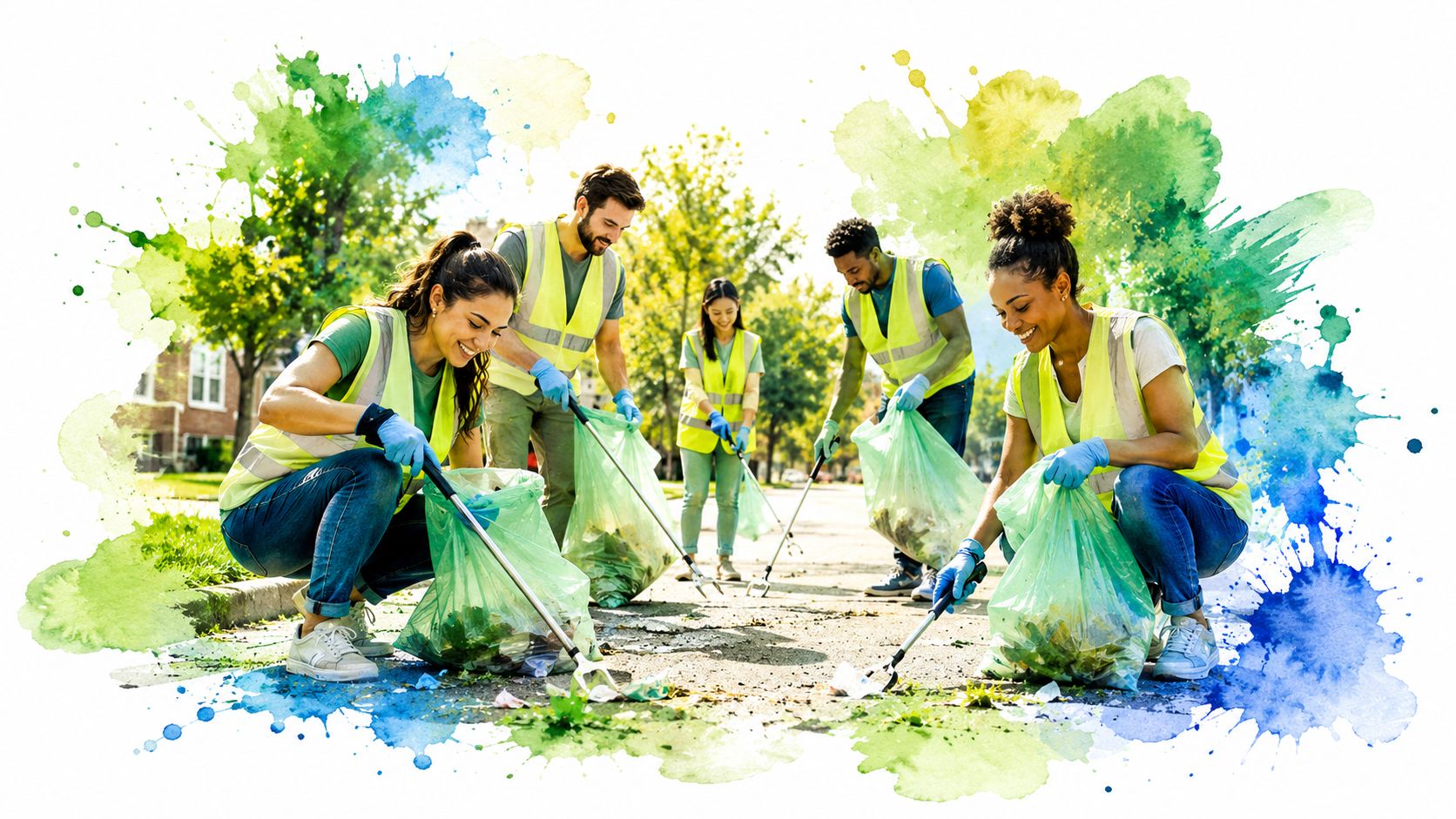
I remember standing on a sidewalk with two trash bags, frozen fingers, and no idea if anyone else would come back next week. By the end of that morning, the block looked better, but the stranger thing was this. I did too.
The Mess That Started It All
I didn't start cleaning streets because I had my life together. I started because I didn't.
My apartment was a disaster. Not movie-disaster. Real disaster. The kind where every object had a little emotional hook in it. An old jar of blueberry jam in the back of the fridge from a trip years ago. A stale bag of almonds from the month I tried to become a healthy person. A shirt on the chair that belonged to some version of me I didn't even like anymore.

Why someone else's trash feels lighter
Here's the weird part. I could barely throw out my own junk, but I could pick up a stranger's burger wrapper all day.
That wrapper didn't come with memory. It didn't come with guilt. It didn't whisper, “Remember who you were when you bought me?” It was just trash. Easy. Clean decision. In the same way cleaning an old fridge at home can feel like opening a time capsule of your own mistakes, cleaning a sidewalk feels like mercy. You see the problem, you remove it, you move on.
That's why I tell people this isn't really about trash. Trash is just the handle.
A cleanup gives you a simple win when the rest of life feels tangled. You bend down. You pick something up. The block changes. You change a little with it.
Cleaning a public space can feel easier than cleaning your own room because the emotional weight is different. You're not sorting your past. You're practicing action.
I learned that during a rough stretch after a chaotic relationship ended. I looked around and realized I had let too many selfish patterns into my life. Mess in my home. Mess in my habits. Mess in my relationships. So I made a stubborn decision. I'd start building a life around cleanliness, consistency, and brave acts.
A neighborhood cleanup is perfect for that. It asks for your body before it asks for your biography. You don't need a polished origin story. You need gloves, a bag, and the willingness to show up.
The real reason to start a cleanup group
If you're learning how to organize a neighborhood cleanup, start with the part most guides skip. Ask yourself why you want this.
Maybe you're angry that your block gets ignored. Maybe you want to meet people who keep their word. Maybe you need a ritual that gets you out of the apartment and back into your body. All of those reasons are good.
I've found that cleanup groups become a filter. The people who show up to do hard, unglamorous work on a weekend morning tend to bring a certain energy. They're usually generous. They're usually game. They know how to laugh while carrying gross things to a pile.
That's the weird magic. The bags matter. The friendships matter more.
- A cleanup gives you motion: When life feels stuck, physical work breaks the spell.
- A cleanup reveals character: You find out fast who complains, who helps, and who sticks around.
- A cleanup builds trust: People believe what they can see. A cleaner block is visible proof.
It's akin to clearing a path through overgrowth. You start by removing litter from a curb. Then you notice you're also removing excuses, stale habits, and a few people who never planned to grow with you anyway.
Your First Four Weeks The Cleanup Playbook
The first cleanup I ever ran taught me this fast. Good intentions are cheap. Saturday at 9 a.m. is where the truth lives.
I had a volunteer named Denise show up early with coffee and work gloves from her garage. I had another guy text me at 8:47 asking if we were still on because it looked “a little cloudy.” By 11, Denise had recruited two neighbors on the spot, and Cloudy Guy never appeared. That morning gave me a better blueprint than any tidy checklist ever could. A cleanup group lasts when you build for real humans, real weather, and real follow-through.
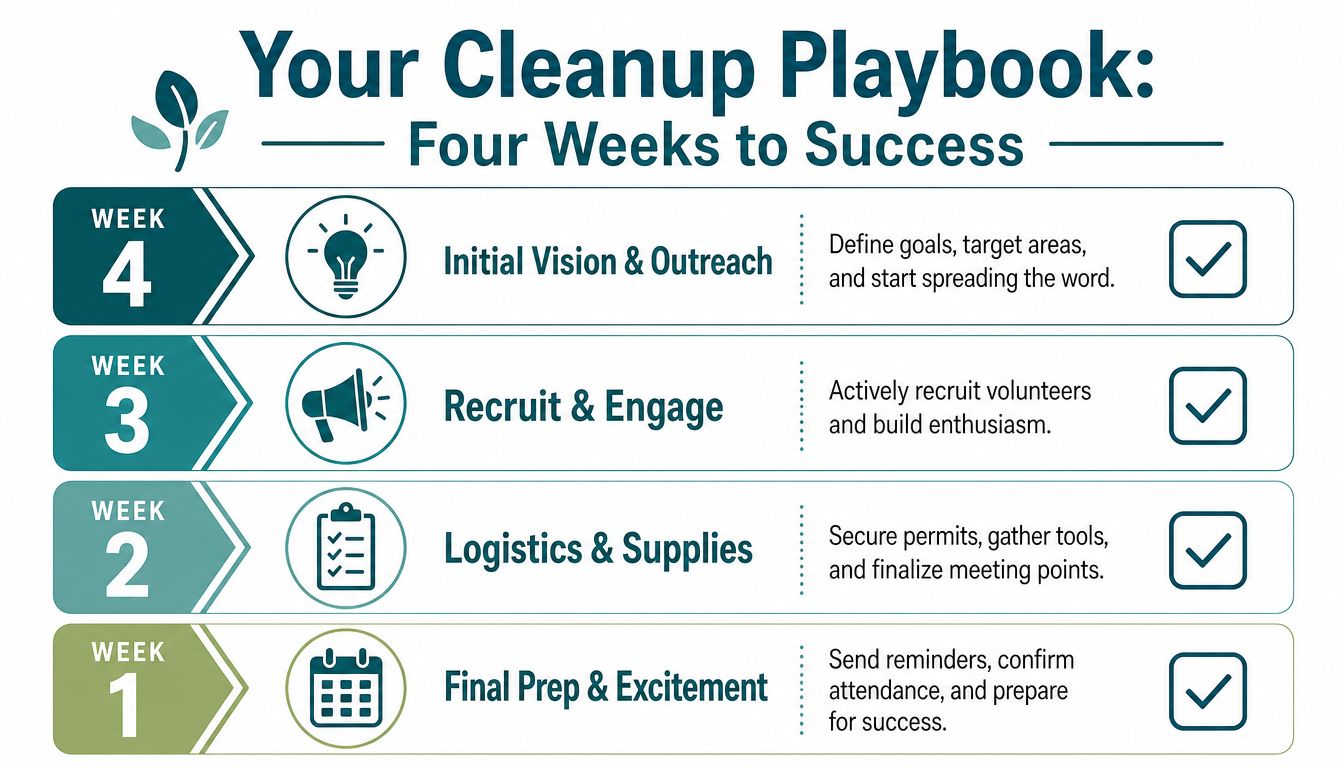
Week four, walk the ground until the block starts talking
Do not plan your route from a couch.
Walk the area at the same time of day you want to clean it. A block can look calm on Tuesday afternoon and turn into a traffic mess on Saturday morning. I learned that after choosing a “perfect” meetup corner that became a parking circus the minute a youth game let out nearby.
Bring your phone, take notes, and get specific. “The park is dirty” is useless. “South fence line has bottles and chip bags, alley behind the deli has dumped furniture, bus stop has broken glass” gives you something you can act on.
I break the route into plain chunks:
- Corner one: cups, wrappers, loose paper
- Alley stretch: dumped bags, bulky trash
- Fence line: cans, bottles, food containers
- Busy curb: experienced volunteers only, bright clothing only
That walk does more than help you estimate supplies. It starts a relationship with the place. You stop seeing “the neighborhood” as an abstract cause and start seeing Mrs. Alvarez's stoop, the corner kids' snack wrappers, the lot everybody complains about but nobody claims. That shift matters. People return for places they feel connected to.
Week three, make the city useful and make your plan smaller
This is phone call week.
Call sanitation. Call the council office. Call the neighborhood association. Call whoever answers and ask for one clear thing. Bag pickup. Trash collection. A dumpster. Extra gloves. You are giving them a chance to say yes to something concrete, not sending a vague plea into the void.
Keep your message simple. Date. Rain date. Target area. Estimated turnout. What you need. Then write down the name of the person you spoke with, because nothing tests your patience like hearing, “We never got that request.”
Also pick your meetup point now, not three days before. Choose a spot people can find without twenty text messages. If there's shade, parking, or a bathroom nearby, even better. Small comforts change the mood. A confused volunteer drifts. A grounded volunteer stays and helps stack bags at the end.
Week two, gather gear that earns its place
People get seduced by nonsense.
You do not need custom banners before you have enough gloves. You do not need branded merch before you have water. A cleanup group gets stronger when people trust that the basics will be there every time.
Bring what gets the job done:
| Item | Worth bringing | Why |
|---|---|---|
| Trash bags | Yes | You always need more than you guessed |
| Gloves | Yes | New people forget, or bring the wrong kind |
| Grabbers | Yes | They help with sharp or gross litter |
| Folding table | Yes | Check-in feels calmer and more organized |
| Fancy branded gear | No | Basics beat aesthetics every time |
Assign a few simple roles before the day arrives. One person handles check-in. One person carries backup supplies. One person tracks full bags and bulky items. One person takes photos if you want them. Order lowers stress, and lower stress makes people kinder to each other.
If you need a practical guide for finding reliable cleanup volunteers, use it here, before you start sending frantic messages the night before.
Week one, invite people into a ritual, not just an event
This week is about tone.
A flat post that says “community cleanup this Saturday, all welcome” gets casual interest. A better message tells people who this is for and why it matters. I've had stronger turnout from a plain text message that said, “We're cleaning the three blocks around the elementary school because kids deserve better than broken glass on the walk in,” than from polished graphics that looked like they came from a marketing team.
Put the date, time, rain date, meetup point, and what to bring in every message. Then repeat yourself. Send a reminder a few days before. Send one the night before. Confirm your key helpers directly, one by one. People are busy. Good groups survive because somebody cared enough to follow up.
By this point, the cleanup is already bigger than trash bags and grabbers. You are building a tiny culture. People are learning whether this group is flaky or steady, warm or cold, all talk or all hands. Four good weeks set that tone. Then Saturday shows you who's ready to build something real.
Finding Your People Who Shows Up on a Saturday Morning
A cleanup can get bodies pretty easily. A free Saturday event, a few nice graphics, some feel-good copy, and people click “interested.”
That's not enough.
You don't need a crowd that vanishes after one sweaty hour. You need people who like giving more than performing. I'm picky about that now. I'd rather have eight steady volunteers than thirty tourists collecting content for their stories.
Why Saturday morning works
There's a reason I like weekend mornings. They act like a filter.
The NYLCVEF community cleanup guide says the most effective volunteer recruitment strategy is scheduling events on weekend mornings, which yields 45 to 50% higher turnout than other time slots. The same guide says social media with before-and-after photos can boost repeat participation by about 38%.
That matches real life. Morning volunteers arrive clearer, kinder, and more ready to work. The event starts before the day gets crowded with excuses. You also get the tiny secret reward of being done by lunch, which makes people feel weirdly heroic.
Recruit for identity, not attendance
Most volunteer posts read like dentist reminders.
“Join us this Saturday to beautify the neighborhood.” Fine. Dead. Nobody feels anything.
Instead, write like you're inviting people into a crew. People return when they feel they belong to something. If you want more ideas on that side of outreach, I like this guide on how to find volunteers who actually stick.
Here are two templates I'd use.
Instagram caption
- Opening line: Saturday morning. Gloves on. We're cleaning this block because someone should, and that someone is us.
- Details: Meet at 9:00 AM. Wear closed-toe shoes. We'll bring bags and gloves.
- Tone: Come if you're tired of complaining and ready to help.
- Closer: Bring a friend who likes doing hard things with kind people.
Meetup description
- First sentence: This is for people who want a cleaner neighborhood and better friends.
- Middle: We'll split into teams, clean a defined route, and take before-and-after photos.
- Expectation: Show up on time, ready to work, and ready to talk to strangers.
- Finish: Rain date is listed. If the weather turns, we adapt.
You're not recruiting “volunteers.” You're recruiting future regulars, future captains, future friends.
How to ask local businesses for help
Ask like a partner, not a charity case.
Walk into the coffee shop, hardware store, or corner market and say: “We're organizing a neighborhood cleanup nearby. We're bringing people to this block. Would you be up for donating water, gloves, or a meetup space?”
Keep the ask narrow. One business might give bottled water. Another might let you post a flyer. Another might chip in contractor bags. Make it easy to say yes.
Three things matter here:
- Specific ask: “Can you donate cases of water for Saturday morning?”
- Visible connection: “We're cleaning the blocks around your business.”
- Low drama: “No long sponsorship deck. Just direct neighborhood help.”
The right people will respond to that. And those right people are the whole game.
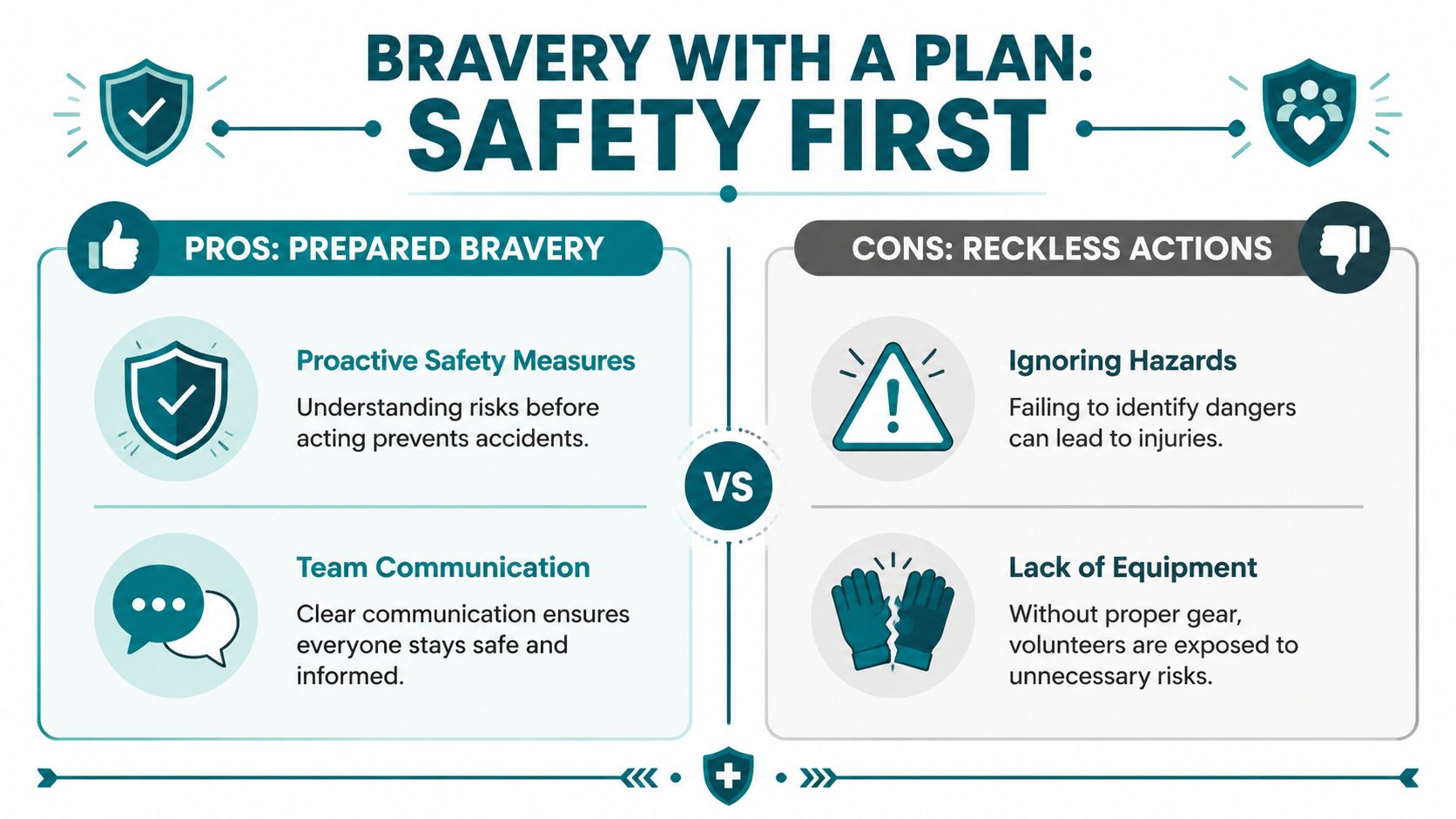
Bravery with a Plan Safety and Handling the Unexpected
The day I learned this for real, one of our volunteers held up a trash bag with one hand and pointed at a syringe with the other. Nobody panicked. Nobody tried to play hero. We backed the group up, marked the spot, texted the safety lead, and kept moving on the rest of the block. Ten minutes later, people were laughing again and hauling out bottles from the weeds.
That is what good safety feels like. Calm, clear, a little boring. Boring keeps your group coming back.
That matters most on the rougher sites. Busy roads. Dumped lots. Broken glass in the grass where kids cut through after school. Those places can pull people into proving something. I'd rather build a crew that knows when to stop, ask for help, and protect each other.
Scout first, assign second
The strongest safety decision happens before anybody puts on gloves.
I walk the route ahead of time and make notes like a slightly paranoid neighbor. Where does traffic move fast. Which alley has illegal dumping. Which corner floods. Which lot has thorny brush, busted furniture, or the kind of debris that needs city pickup instead of volunteer enthusiasm.
Analysts cited on Litter Caterpillars found volunteer injuries rise when organizers skip hazard scouting and clear team assignments. That matches what I've seen on the ground. If people arrive to a vague plan, they start making their own. That is when somebody wanders too close to traffic or grabs something they should have left alone.
So I sort the route before the event. General litter goes to newer volunteers. Road edges go to trusted people in high-visibility gear. Dump sites get a separate plan, or they wait for the city if the risk is wrong for our crew.
If you want the insurance side spelled out in plain English, this guide on volunteer liability insurance is worth reading before your first big event.
The small command center
A cleanup does better with a tiny core team than with a crowd of half-leaders.
The Community Tool Box guidance on neighborhood cleanup programs recommends clear coordination roles, and I'm with them. On our best days, three people hold the whole thing steady. One person owns route changes and city calls. One person handles safety questions. One person floats, bringing supplies, helping late arrivals, and solving the weird little problems that pop up every hour.
Three calm people can settle fifty excited ones.
If a volunteer has to guess what to do with a hazard, the organizer failed them.
What volunteers should never touch
Some finds are trash. Some are a report.
You need that line clear before the day starts. Needles, suspicious containers, heavy debris, unstable piles, dead animals, and anything that could cut, poke, leak, or trap somebody stays where it is until the right service handles it. I have watched good-hearted people drift toward bad decisions because they wanted to be useful. That instinct needs guardrails.
Our field rule is short and easy to remember:
- Mark the spot.
- Take a photo if it helps.
- Contact the safety lead.
- Keep everybody back.
- Report it to the city, property owner, or sanitation contact.
A group lasts when people feel safe enough to return next month. That is the deeper win here. Cleaning the block matters. Building trust matters more. Every time you protect a volunteer from a dumb injury or an avoidable scare, you are teaching the group something bigger than litter pickup. You are teaching them that this community takes care of its own.
Running the Big Day From Chaos to Clean
At our third cleanup, a guy named Marcus showed up in church shoes, holding a gas station coffee and asking, “So what exactly do I do?”
Ten minutes later he was tying full bags like he'd done it for years, joking with a teenager from two blocks over, and pointing newcomers toward the right team before I could even open my mouth. That is how these mornings usually go. They start scattered. Then, if you run them well, the whole thing clicks and the block starts feeling like a crew instead of a crowd.
The job on cleanup day is not to control every person. The job is to create enough structure that people can relax, work, and surprise you.
Check-in should feel like a welcome, not a clipboard ambush
Your sign-in table sets the tone fast.
If people walk up and nobody looks at them, they turn into free-floating confusion. If somebody greets them by name, hands them gloves, and says, “Glad you made it, you're with the alley team,” they settle down right away. They stop feeling like extras in somebody else's project.
I keep the setup plain and easy:
- Sign-in sheet: name, phone, email
- Team sheet: captain name and cleanup zone
- Supply spot: gloves, bags, grabbers, vests
- One warm human: the person who answers the obvious questions without making anybody feel stupid
That last part matters more than organizers admit. A lot of people arrive alone. They are wondering whether they belong there. Your check-in table answers that question before the cleanup even starts.
Give a tight briefing, then get people moving
Nobody came for a lecture at 9:15 on a Saturday.
I gather everyone in a half-circle, thank them for showing up, point to the team captains, explain where the full bags go, and remind them what gets reported instead of picked up. Then I send them out while the energy is still high.
My version usually sounds like this:
Good morning. We're cleaning this stretch, these alleys, and the park edge. Stay with your team. If you find something sharp, leaking, heavy, or sketchy, call your captain and leave it alone. Full bags go to the pickup point by the table. Take photos if you see a wild before shot. We'll meet back here at the end for the count and a group picture.
That is enough.
People remember short instructions. They forget the fancy stuff the second somebody cracks a joke or spots the first tire in the bushes.
Give each team a piece of the map and a clear win
A cleanup falls apart when everybody drifts toward the same visible corner and nobody touches the awkward spots.
Split the area before the start. Put one team on the commercial strip, one on the fence line, one in the alley cluster, one in the park edges. I like captains to have their zone written down on paper or in a text thread, because spoken directions evaporate fast in a parking lot.
You also need a home base that people can find without thinking. Extra bags, water, first aid, and the growing mountain of filled trash should all land in one obvious place. If someone has to wander three blocks for supplies, you lose momentum and people start peeling off early.
A simple run sheet keeps the whole morning steady:
| Time | What happens |
|---|---|
| 8:30 AM | Setup table, supplies, signs |
| 9:00 AM | Volunteer check-in |
| 9:15 AM | Briefing and team launch |
| Mid-event | Captain check-in by phone or in person |
| End | Bag count, group photo, final sweep |
Keep the story of the day, not just the trash count
I learned this the hard way. If you forget the before photos, people clean half the block and later swear it “wasn't even that bad.”
Take the photos early, from the exact spots you can return to later. Count the bags. Snap the funny moments too. The kid holding a grabber like a knight's sword. The neighbor who came out “just to say hi” and ended up filling two bags. The retired guy who suddenly becomes your unofficial tire expert.
Those details do real work for you. They help with future recruiting, they give the city or property owner a clear record, and they remind volunteers that they changed something visible. If your crew pulls recyclable material aside, make sure it goes to the right place. If people ask where they can keep that habit going after the event, send them to local options like these Chicago recycling centers for drop-off and reuse.
End with a strong finish, not a slow fade
The last half hour matters more than organizers think.
This is when people get tired, routes blur, and half-full bags start appearing in random places. I bring captains back in, confirm each zone got covered, stack bags in the pickup area, and do one final pass for the weird leftovers. Then we count what came out of the neighborhood and get the group photo before people disappear.
A good ending gives the morning a shape. People leave seeing the pile they conquered, the street they changed, and the faces of the strangers who did it with them.
That is how chaos turns clean. More important, it is how a cleanup starts turning into a community people want to come back to.
After the Cleanup. Building a Lasting Crew
Two hours after one of our early cleanups, my phone buzzed with a photo from a volunteer named Marcus. He had dragged an old chair frame out of an alley that morning, laughed about it with three strangers, then gone home and started a group text with them. A week later, they were back out together with coffee, gloves, and one extra friend each.
That is the part people miss.
The bags matter. The cleaner block matters. But if everyone heads home with nothing except sore backs and a nice photo, the energy leaks out by Monday. What keeps a cleanup alive is the follow-up, the small rituals, and the feeling that people just joined something bigger than a trash pickup.
Send proof before the spell breaks
I send a message the same day, while people still have dirty shoes by the door.
It is simple. Thank everybody by name if you can. Share the before-and-after shots. Show the pile of bags. Toss in the candid photo where somebody is grinning like they just won a prize fight. People want to see that their morning changed something they can point to.
Then give them one next move. One. Too many options and the whole thing goes soft. Invite them to the next cleanup, a post-event coffee, or point them toward practical ways to keep going between meetups, like these Chicago recycling centers for drop-off and reuse.
Give the group a pulse
I learned this the slow way.
At first, I thought good organizing meant clipboards, routes, and enough grabbers for everybody. That stuff matters, sure. It just does not make people come back. People return because they remember who teased them for finding a traffic cone in a bush, who handed them water at the right moment, who cheered when the worst corner on the block finally looked human again.
So build that on purpose.
- Name the crew: even if it is a little ridiculous
- Repeat a few rituals: same photo pose, same snack stop, same victory shout
- Notice people out loud: who hauled the strangest item, who brought a nervous friend, who kept the mood up when everyone got tired
- Make introductions normal: help the shy person meet someone before they drift out
The cleanup is the excuse. The community is the thing you're building.
Turn turnout into habit
The best sign that your group is working has nothing to do with bag counts.
It is when somebody starts shaping their week around showing up. They go to bed earlier on Friday. They text a neighbor to come with them. They start recognizing the guy from three buildings down and the teenager who always finds bottle caps under parked cars. A public space gets cleaner, yes. A person gets steadier too.
That is how a Saturday event becomes part of the neighborhood's rhythm.
So close the loop. Send the photos. Tell the stories. Keep the jokes alive. Give people a reason to return that goes deeper than civic duty. A clean street feels good for a day. A crew that keeps showing up for one another can change a block for years.