
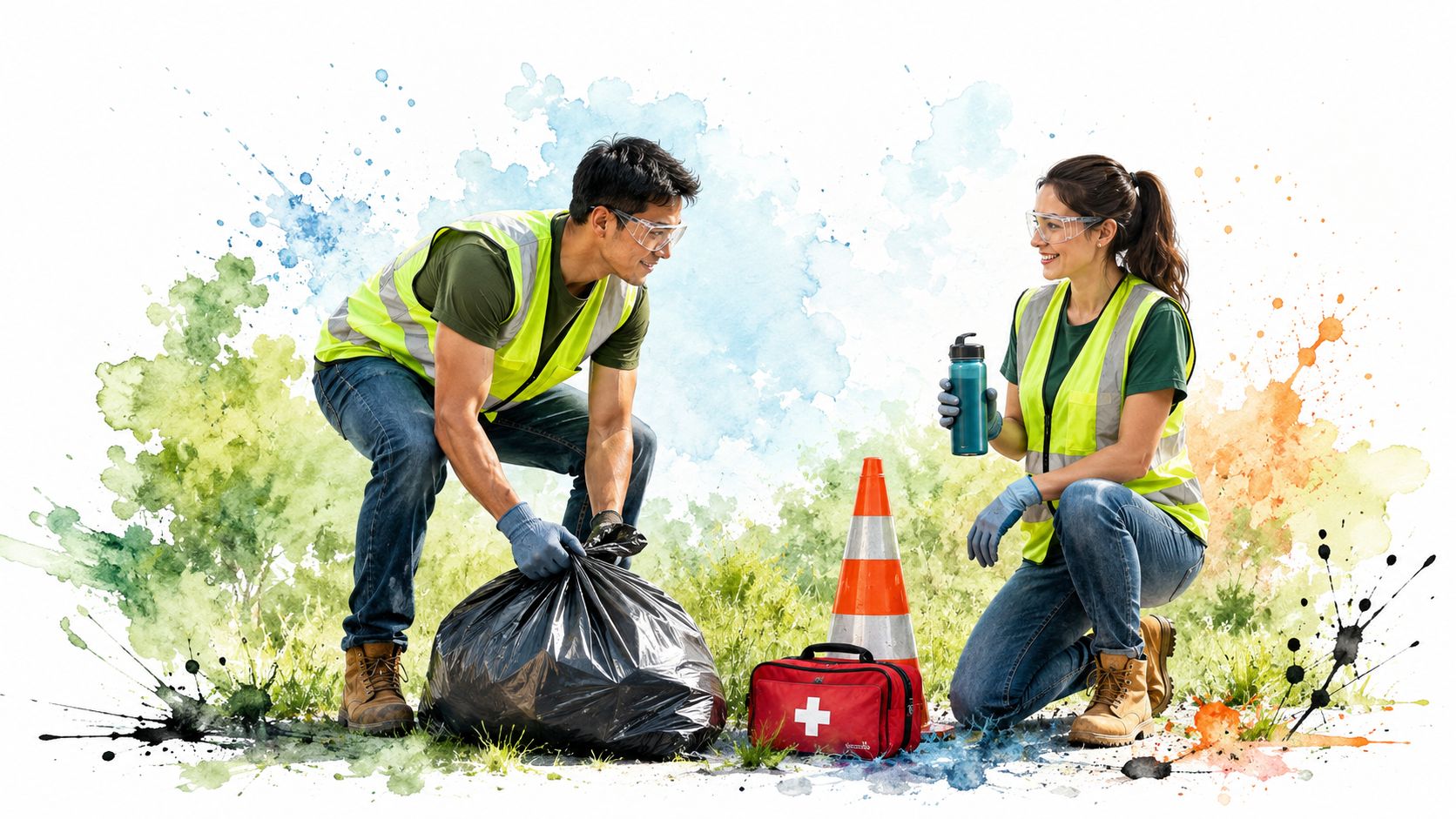
You're standing beside a bus lane on a cold Saturday morning, one hand on a grabber and the other wrapped around a trash bag that's already too full. A tire fragment slides under your boot. Someone reaches for a shiny piece of metal near the curb. Traffic moves closer than expected. Cleanup work can turn from friendly service into an emergency in a few seconds.
I've spent three years at weekly Chicago cleanups in rain, heat, snow, and sudden hail. The crews that stay safe don't rely on luck or a loud “watch out.” They plan the site, match equipment to hazards, watch the weather, and give volunteers permission to stop before a small problem becomes a serious injury. These injury prevention strategies belong in the plan before the first bag opens.
Why Injury Prevention Belongs at Every Cleanup
One Saturday, a volunteer lunged toward a slippery tire chunk beside a bus lane. Her boot lost traction, and she went down hard. The crew lead caught her arm before her shoulder hit the pavement, but the near miss exposed several gaps. Nobody had assigned a traffic watcher. The tire sat in a slick patch. The morning briefing had covered litter zones, yet nobody had discussed unstable debris near moving vehicles.
That moment stayed with me because the volunteer hadn't acted recklessly. She saw something the crew wanted removed and tried to help. Good intentions can still put a person in danger when the plan leaves hazards unassigned.
Injuries follow people home
A sprained ankle can mean missed work shifts, canceled family plans, and weeks away from the cleanup group. A cut from a hidden shard can keep a regular volunteer off the street while the wound heals. The organizer carries another burden, too. If someone ignores a known hazard or sends people into an unsafe area without controls, the group may face liability and a damaged relationship with its volunteers.
The World Health Organization reports that injuries and violence caused 4.4 million deaths in 2019, equal to 8% of deaths worldwide. Unintentional injuries caused about 3.16 million of those deaths, while violence-related injuries caused about 1.25 million. Low- and middle-income countries carried roughly 90% of injury-related deaths, according to the World Health Organization's injuries and violence fact sheet.
Cleanup crews usually deal with smaller hazards, but the planning lesson still applies. Injury prevention covers traffic, falls, cuts, weather exposure, lifting, and sudden medical problems. Volunteers show up expecting care. They shouldn't have to prove toughness to earn it.
Practical rule: If a hazard can be predicted, assign a control before the event starts.
Start the plan the night before
Check the forecast, inspect the route, charge phones, stage first aid supplies, and decide who can stop work. Use engineering and environmental controls whenever you can. A safer route, a moved sign-in table, a blocked-off hole, or a traffic buffer does more than repeated reminders about attention.
WHO lists measures including seat belts, child car seats, smoke detectors, flame-resistant clothing, designated drivers, and fencing around water as proven injury controls. Its prevention model follows four actions, measure the problem, identify causes, design and apply interventions, then evaluate the results. The same approach works on a Chicago cleanup route. Record the hazards, change the setup, and learn from what happened.
Personal Protective Equipment That Actually Fits the Job
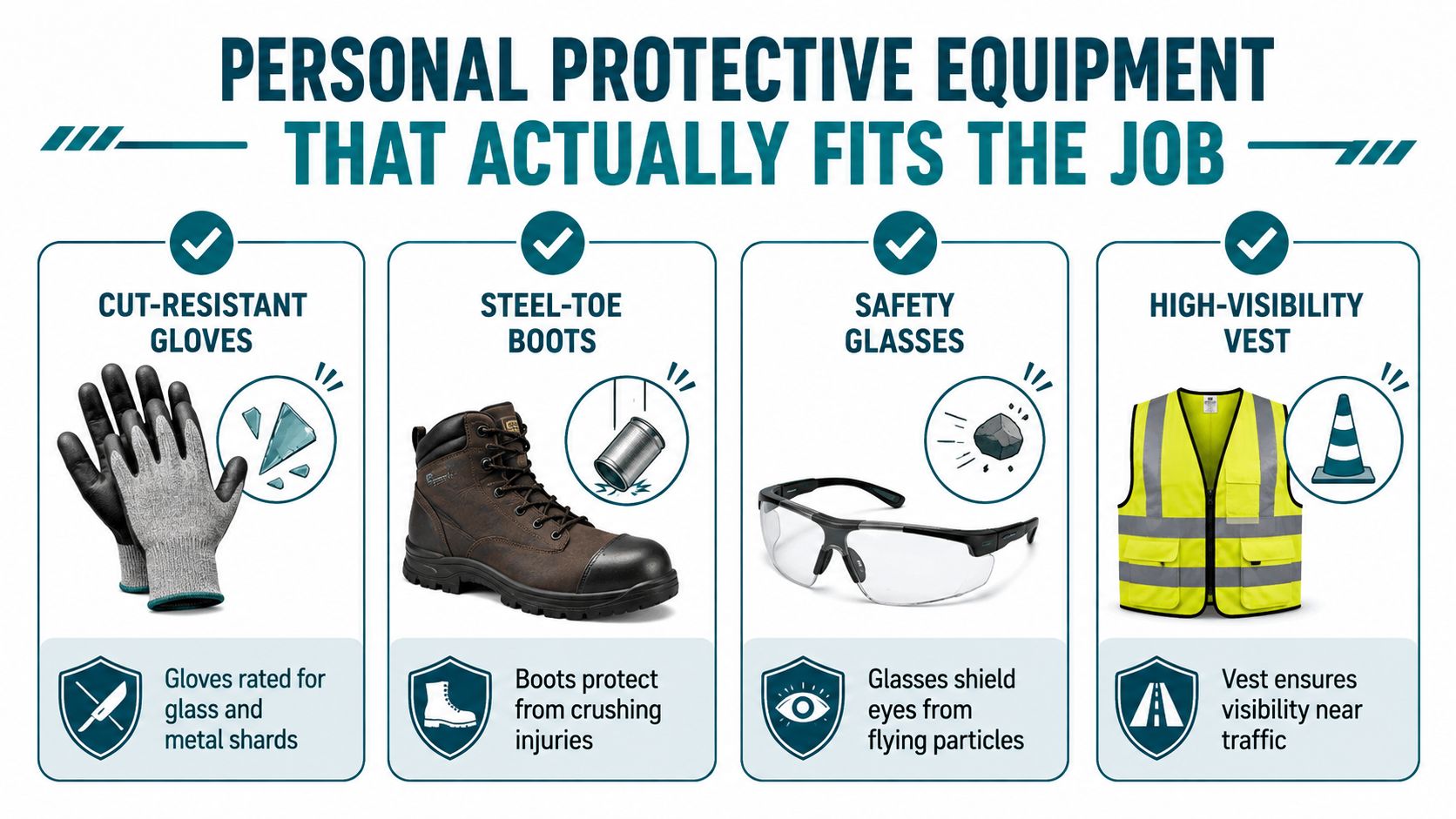
PPE should answer a specific question: what can hurt this volunteer at this site? A pair of thin gardening gloves might feel comfortable, yet sharp cans, broken glass, and metal scraps can shred them quickly. Choose cut-resistant gloves rated for glass and metal, then check that each volunteer can grip a grabber without losing control.
Learn more about volunteer trash pickup practices before you build your gear station. The right equipment supports the work, but it doesn't replace a site walk or a clear rule about suspicious objects.
Match each item to the hazard
- Cut-resistant gloves: Use them for glass, wire, cans, and metal fragments. Volunteers should use a grabber for sharp or sketchy items rather than testing an object with a gloved hand.
- Closed-toe boots: Sneakers leave feet exposed to broken glass, uneven pavement, and dropped objects. Boots with ankle support help on rubble, curbs, and sloped alleys. Steel-toe protection can make sense where crushing hazards exist.
- Safety glasses: Glasses should stay in place while volunteers bend, reach, and shake out debris. They protect eyes from dust, fragments, and particles kicked up by another person.
- Long sleeves: A breathable long-sleeve shirt limits scrapes from brush, fencing, and rough concrete. On warm days, choose light fabric and add shade and water instead of sending people out in heavy layers.
- High-visibility vests: Street-adjacent work needs a clear visual boundary. A vest helps drivers and cyclists see the crew, especially near intersections, bus lanes, and driveway exits. For teams that need coordinated colors or printed names, find safety vests custom options can help.
- Knee pads: Ground-level work punishes knees on concrete and gravel. Knee pads make it easier to keep a stable position while sorting low debris, which reduces rushed reaches.
Volunteers often forget sun hats, extra socks, and a personal water bottle. Those items look minor until a wet sock creates a blister or direct sun leaves someone tired and careless.
Make sign-in a gear checkpoint
At sign-in, ask each person to show gloves, boots, eye protection, and a visible vest when traffic is nearby. Keep spare gloves, glasses, socks, hats, and water available. If someone lacks the right equipment, move that person to a lower-risk task or pause the assignment until you can fix the gap.
Lifting, Bending, and Carrying Without Paying for It Tomorrow
A full trash bag looks manageable until it swings into a knee. A long stick seems light until it catches on a fence and twists your shoulder. I've watched both mistakes appear during weekend pickups, usually because someone wants to work faster than the load allows.
Set your feet about shoulder-width apart. Keep your back flat, bring the object close, and use your legs to drive upward. The cue I use is “nose over toes.” It reminds you to bring your body over the load instead of reaching away from it.
Use a partner before the load wins
For heavy debris, ask for help early. Two volunteers should stand at similar heights, agree on the route, and count the lift out loud. The count gives both people a shared start and prevents one person from jerking upward while the other still adjusts their grip.
Tires, long scrap wood, and awkward furniture need a team carry. One person steers while the other watches foot placement and obstacles. Keep the load close, walk slowly, and stop before a curb or turn instead of trying to pivot under pressure.
Fix the two habits that cause trouble
An overfilled bag can drag across the ground, split open, or swing into someone's leg. Use smaller bags, tie them before they become heavy, and place them at a collection point instead of carrying an unstable load across the site.
A drag-along trash stick twists the shoulder when it catches on pavement, roots, or fencing. Break it into shorter pieces if you can do so safely, or carry it with a partner. Never yank against resistance. Stop, reset your feet, and change the route.
“Nose over toes” works because it gives volunteers a movement they can check while they're working.
If a volunteer reports back pain, dizziness, or a sudden sharp sensation, stop the task. A cleanup can wait. A person shouldn't gamble with an injury to finish one more bag.
Weather, Hydration, and the Two-Hour Check-In
Chicago weather can change the job faster than the trash volume does. Heat drains judgment, cold stiffens hands, and lightning turns an open cleanup area into a place where nobody should work.
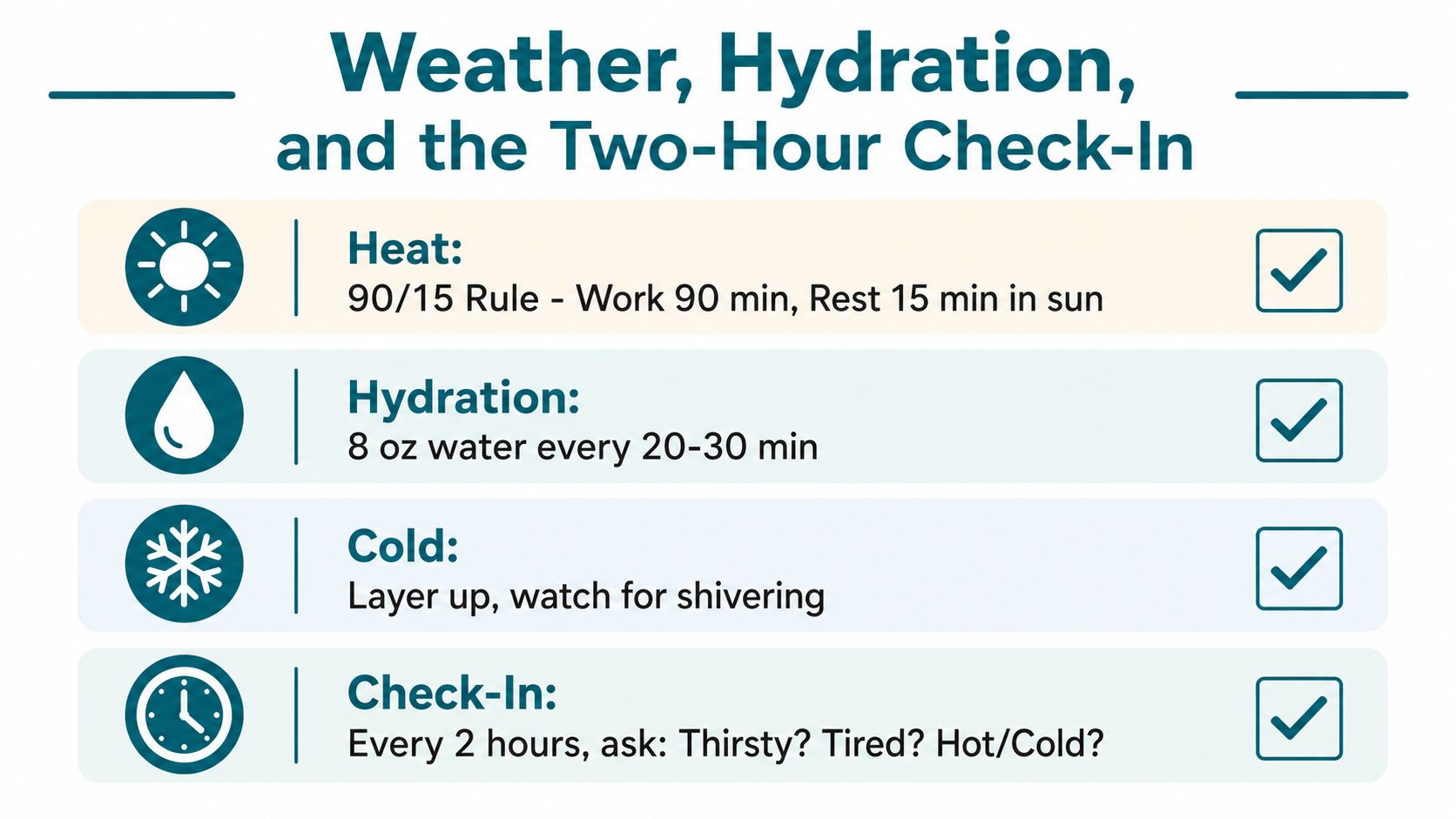
For hot days above 85°F, use a 90/15 work-rest split. Work for 90 minutes, then take 15 minutes in shade or another cool location. Aim for 8 ounces of water every 20 minutes. Put water where volunteers can reach it without crossing traffic or walking back to the meeting point.
Notice the quiet signs
Crews often miss clammy skin, irritability, and skipped water breaks because the person still appears to function. A volunteer who snaps at a teammate or stops drinking may need shade, water, and a check from the safety lead. Use the heat exhaustion prevention tips as a planning reference, then give the group a simple response everyone understands.
On mornings below 50°F, ask volunteers to layer clothing and bring gloves and a hat. Keep extra layers in the supply vehicle. Wet clothing and wind can make a mild morning feel much harsher, so watch for shivering, numb fingers, slow speech, and clumsy movement.
Stop for thunder
Stop work when thunder arrives within 30 seconds of a lightning flash. Move volunteers into a suitable shelter or vehicle, and wait 30 minutes after the last lightning strike before restarting. Don't leave this decision to the loudest person in the group. Name one safety lead who can end the shift.
Use a named check-in pair
Every two hours, a named pair should walk the group and ask three questions:
- Are you thirsty?
- Are you tired?
- Are you hot or cold?
Log the answers and act on them. Rotate tasks, add a rest period, move someone into shelter, or end the assignment. A short conversation can catch a cramp before it becomes a hospital trip.
Walking the Site Before Anyone Picks Up a Single Piece
A five-minute site walk can rewrite the whole morning. I don't mean a casual glance from the parked car. Walk the actual route, look down, watch traffic, and ask questions that force the plan to meet the ground.
The World Health Organization's prevention model begins with measuring the problem and identifying causes. A site walk does exactly that at street level. You're finding the conditions that a group briefing cannot reveal from a map.
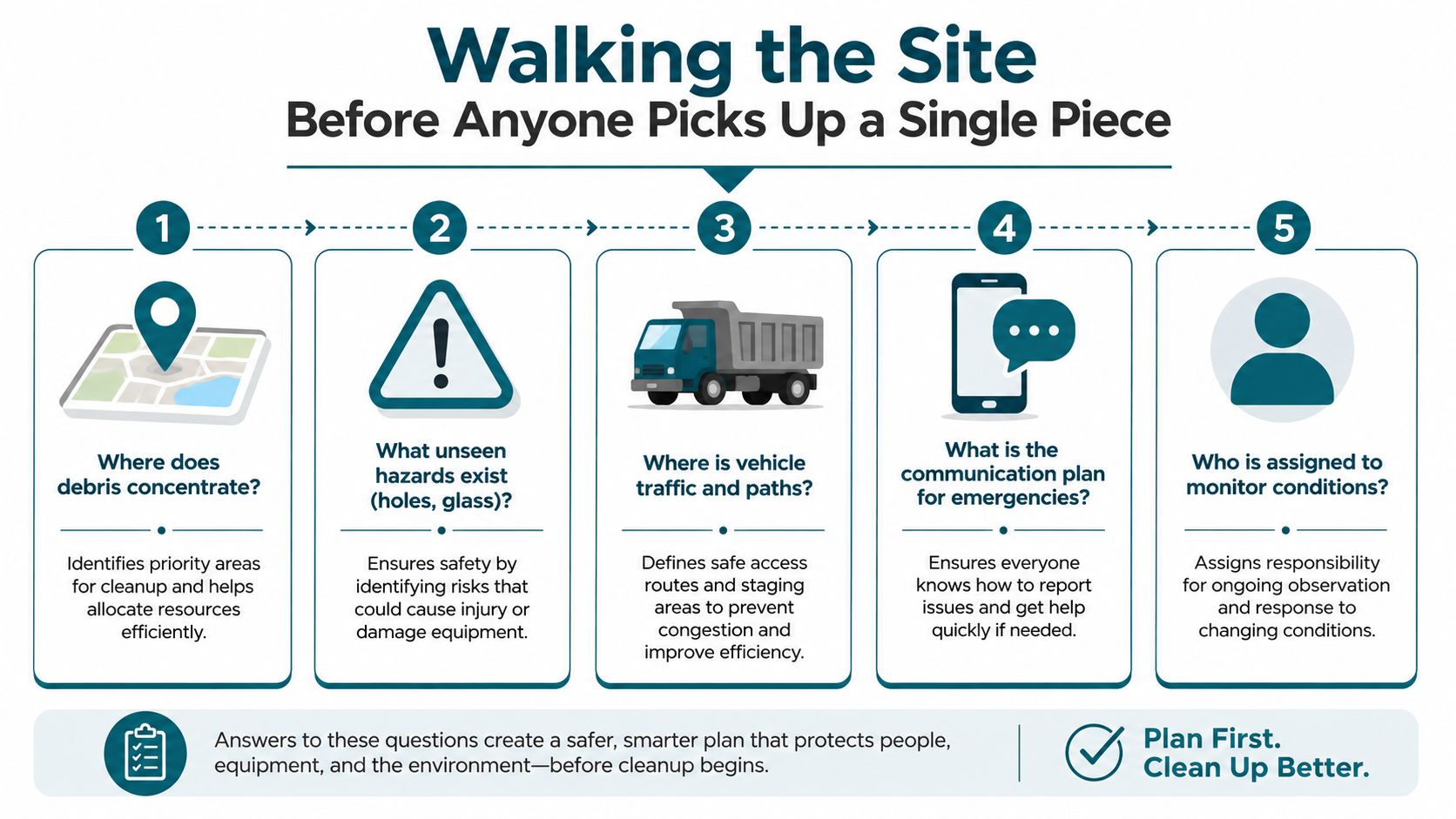
Ask five field questions
- Where does traffic enter and exit? If cars cut through the cleanup zone, move sign-in away from the blind alley, assign a traffic watcher, or reroute volunteers.
- What is underfoot? Look for holes, broken pavement, glass, mud, roots, and steep curb cuts. Mark the hazard, block the area, or give that stretch to a trained lead with the right equipment.
- Where is water nearest? A distant water source creates skipped breaks. Put a hydration station where volunteers can reach it without crossing a roadway.
- Where is shade or shelter? Identify the indoor partner site, warming vehicle, covered entrance, or shaded wall before people arrive.
- What surprised me last time? Review the previous event. Was there a dumped mattress, unleashed dog, flooded alley, construction barrier, or pile that attracted unsafe attention?
Turn observations into assignments
Each answer needs an owner. A traffic problem needs a watcher. A glass-heavy patch needs a grabber and a controlled sweep. A weather concern needs a stop-work decision and a place to go.
Take photos of hazards after the event, without exposing private information or identifying people. Add those images to the debrief so the next crew inherits a smarter map rather than the same surprise.
First Aid Kits and Incident Reporting When Things Go Wrong
A first aid kit should travel with the group, not sit locked in an organizer's car several blocks away. Stock nitrile gloves, gauze, trauma shears, cold packs, saline, a tourniquet, and a CPR face shield. Check the kit before volunteers arrive and replace anything used during the last event.
Put gloves on before blood reaches your hands. If a wound looks serious, the person feels faint, or bleeding won't stop with direct pressure, call 911. Keep volunteers away from the scene so the responder has room to work.
Follow four actions
- Assess the scene. Look for traffic, exposed glass, electricity, chemicals, or another danger before you approach.
- Clear the area. Move bystanders and stop nearby cleanup work.
- Treat or call 911. Give basic care within your training, and don't delay emergency help when the injury needs it.
- Send a runner. Assign someone to meet EMS at the nearest corner and guide responders through blocked streets or alleys.
Organizers should also review practical guidance on common first aid mistakes at work. The point isn't to turn volunteers into medics. It's to prevent hesitation, confusion, and unsafe improvisation.
Write the report while details remain clear
A volunteer captain should complete the incident form within an hour. Record:
- Time and weather: Include the work period, temperature conditions, rain, snow, hail, or wind.
- Exact location: Name the block, alley, intersection, or cleanup zone.
- What happened: Describe the action and hazard in plain language.
- Witness names: Get names and contact details from people who saw the event.
- Response: Note first aid, the 911 call, transport, or a decision to stop work.
- Photos: Photograph the hazard and surrounding area when it's safe and appropriate.
- Follow-up: Assign someone to contact the volunteer and someone to change the plan.
A hidden shard once sliced a volunteer during a pickup. The injury report showed that the crew had skipped a glass sweep near the collection point. We changed the routine and added a pre-event hazard walk. The form did more than document pain. It showed us where our process had failed.
The Volunteer-First Safety Checklist
Print the checklist. Put a pen beside it. Assign every line to a person who can answer “done” before the group starts. A checklist that belongs to everyone often belongs to nobody.
Pre-event
- Site walk completed: Check traffic, footing, debris concentration, shelter, shade, water, and surprises from the last visit.
- PPE stocked: Set out cut-resistant gloves, closed-toe boots guidance, eye protection, long sleeves, high-visibility vests, knee pads, hats, and spare socks.
- Weather call made: Decide whether to proceed, shorten the route, add shelter, or cancel.
- First aid staged: Place the kit where the safety lead can reach it quickly.
- Contacts printed: Keep waivers, emergency contacts, the route map, and partner-site details together.
On-site
- Sign-in complete: Record arrivals and confirm basic gear.
- Buddy assigned: Pair volunteers, especially in alleys, near traffic, and on unfamiliar routes.
- Safety briefing delivered: Cover “nose over toes,” partner lifts, heat and cold rules, lightning, sharps, and the traffic plan.
- Hydration station live: Put water where people can reach it.
- Two-hour check-in scheduled: Name the pair and set an alarm.
During cleanup
- Gloves and high-visibility gear on: Check before volunteers leave the meeting point.
- Three-foot debris pile rule active: Keep collected material in a controlled pile with room around it.
- No lone workers in alleys: Keep buddies within sight or voice range.
- Sharps protocol followed: Use a grabber and stop when an item looks dangerous or unknown.
- Flaggers assigned: Place watchers at intersections, driveway exits, and street crossings.
Post-event
- Incident log reviewed: Discuss injuries and near misses before everyone leaves.
- Near misses recorded: A fall that didn't happen still tells you something.
- Kit restocked: Replace gauze, gloves, saline, cold packs, or any other used supply.
- Debrief sent within 48 hours: Share route changes, weather lessons, hazard photos, and assigned fixes.
A lakefront pickup once took a hard turn when hail arrived mid-shift. The organizer had printed the checklist, so tarps were already staged. The designated safety lead stopped the work, a buddy moved shivering volunteers toward the warming van, and one volunteer noticed the weather app change and called it out. The group rotated people indoors and completed a 15-minute handoff to the indoor partner site instead of leaving confused volunteers scattered along the route.
The checklist worked because three real people owned the lines. A safety lead made the call. A buddy stayed with the affected volunteers. Another volunteer watched the forecast and spoke up. For more ideas on assigning repeatable operational tasks, review this facilities management checklists example, then adapt the format to your route.
For organizers who want more support before the next event, volunteer coordinator training can help turn these written rules into a briefing people remember.
Litter Caterpillars organizes Chicago cleanup events with safety briefings, grabber guidance, buddy awareness, and a volunteer-first approach. Visit Litter Caterpillars to join an upcoming cleanup, learn how the group prepares crews, and help make safer service a regular Saturday habit.