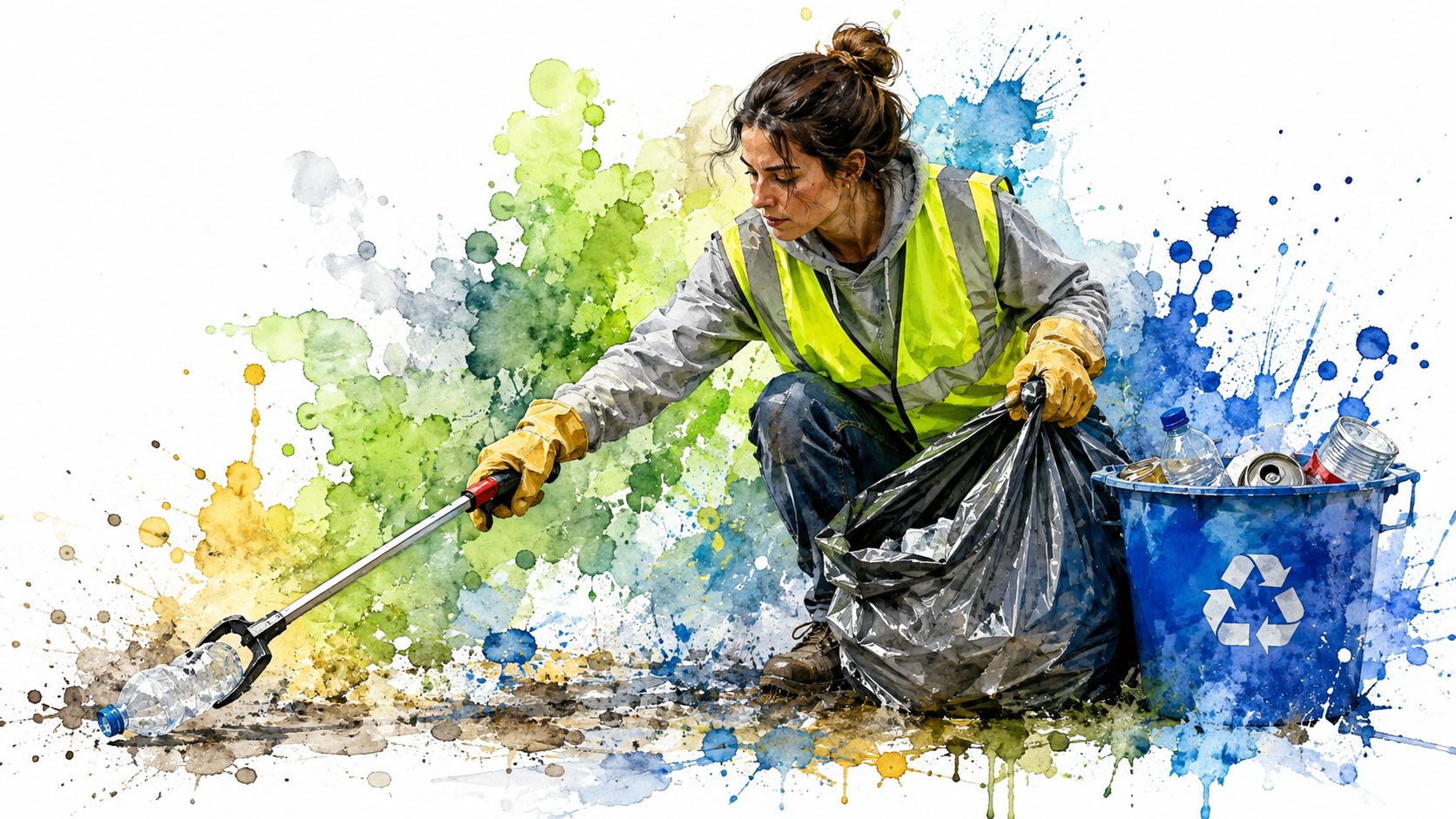
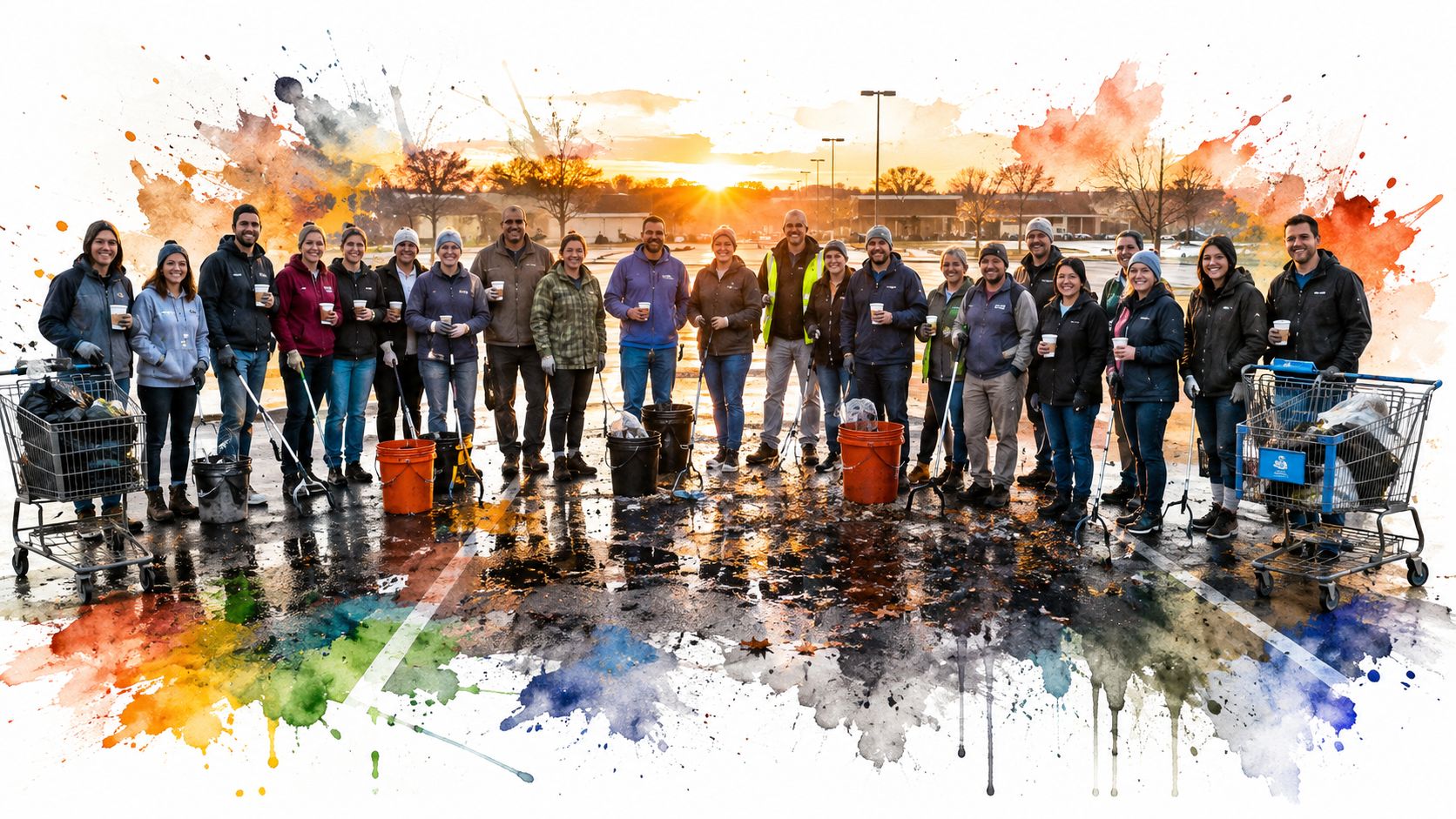
We met before sunrise in a parking lot off a busy street, twenty of us with coffee in one hand and buckets in the other. The ground smelled like wet leaves, and every time someone dragged a grabber across the asphalt, it made a hard scrape that woke everybody up fast.
The first bag filled with a broken umbrella, three cups, and a shopping cart wheel. By the time we reached the curb, the shiny version of cleanup work was already gone, replaced by the actual task: bend, grab, stand, sort, repeat.
What Picking Up Trash Really Looks Like Out There
The morning after the photo
People like the clean group shot. I get it. It looks tidy. Everyone's smiling. The buckets are lined up. Then the hour starts, and the roadside turns into a game of fetch with bad prizes.
I've picked up trash in cold wind that bit through gloves and in heat that turned the blacktop into a griddle. The same pattern shows up every time. You see a plastic bag snagged in a fence, a coffee cup stuck in grass, a half-buried bottle by a drain, and then the little stuff, cigarette ends, bottle caps, fast-food wrappers, stray receipts. The work is repetitive. That's the point. How to pick up trash well is mostly about staying steady when the first rush fades.
I tell new volunteers the truth early. If you rush, you miss sharp stuff. If you bend badly, your back complains by lunch. If you treat one Saturday like a heroic event instead of a repeatable habit, you burn out before you learn the route.
Practical rule: the best cleanup is the one people can do again next week.
That's why I care about the method before the bag fills. Gear matters. Body position matters. The way you sort, walk, and hand off bags matters. Even the tote you bring matters if you want something that can handle wet gloves and muddy corners, so I keep an eye on practical guides like tips for choosing eco-friendly totes when I'm packing the crew kit.
What I watch before anyone bends down
I do a quick scan first. I look for glass, needles, rusty metal, and weird spills. I look for where the curb drops off and where people will crowd if the group starts drifting.
The volunteers who last are the ones who work like they're going to do this again. Clean lines. Short reach. No drama. That's the job.
The Gear That Keeps You Going
I hand gear out like I'm loading a tailgate. First gloves. Then a grabber. Then the rest. If you forget the order, you usually forget the things that save your hands.
Start with your hands and feet
Wear thick gloves. I like nitrile-coated work gloves because they grip well when a bag is wet and they shrug off mud better than thin, flimsy pairs. I still tell people to keep both hands visible and away from anything sharp, because a glove is a buffer, not a promise.
Put on closed-toe shoes with a real sole. Long pants help when you brush through weeds or kneel near broken debris. A hat and sunscreen matter more than people admit, even on cloudy mornings, because one long cleanup can leave you fried by noon.
Don't dress for a nice walk. Dress for a field job with bad surprises.
Carry the tools that create distance
A grabber changes the whole morning. I prefer a long reacher with rubber tips and a wrist strap, because it lets you pull bottles, cans, and wrappers without crouching on every single item. Use tongs or pliers when the object is too grimy for a bare grabber head.
A five-gallon bucket is my favorite sorting buddy. It keeps your hands free, it travels well, and it gives you a place to stash small finds before they rip a bag open. Bring heavy-duty contractor bags for the rough stuff. Thin bags split fast once you hit metal edges or wet cardboard.
A few more things go in the pile every time:
- Water, because people get sloppy when they're dehydrated.
- First-aid kit, because scraped knuckles happen.
- Sharpie markers, because bags need labels when you sort by type.
- Hi-vis vest, because drivers need to see you and your group needs to find each other.
- Pickup pole, because some items are too gross or awkward to grab by hand.
I also keep one extra pair of gloves in my bag and hand them to the person who forgot theirs. That tiny swap saves a lot of whining.
For crews that want a ready-made reference on safe event gear and cleanup flow, I sometimes point people to the Litter Caterpillars volunteer event guide. It keeps the focus on simple preparation instead of overthinking the morning.
Body Mechanics and the Do-Not-Touch Rule
The volunteers who stay loose at hour three know one trick. They move like lifters, not like people pecking at crumbs. Bad form turns a simple cleanup into a sore-back parade.
The pickup motion that saves your back
Set your feet about shoulder-width apart. Bend your knees. Keep your back flat. Pull the item in close, then stand with your legs. I say this out loud when I see people folding at the waist like a lawn chair.
On uneven ground, take small shuffle steps. Don't lunge across a ditch or twist hard while you're reaching. Turn with your hips instead of torquing your spine. If the item sits under a bush, step around it. Don't lean like you're trying to win a contest.
Move slow enough that your body stays square to the ground. That's how you keep control.
If you use a grabber, keep a two-handed grip when you can. One hand guides, the other steadies. That's especially useful near curb edges where the grabber can skid.
The rule that keeps people out of trouble
I teach one hard line. Do not touch anything that looks dangerous, contaminated, or weird enough to make you pause. That includes needles, broken glass, used condoms, animal carcasses, gas cans, propane tanks, ammunition, and anything leaking unknown chemicals.
Use the tool. Use the bag. Keep your skin out of it.
That matches the same practical safety logic you'll find in the Litter Caterpillars injury prevention notes, and I like that mindset because it keeps the crew from improvising around sharp stuff. A used needle gets treated like a live fishhook. You don't grab the barb. You guide the sharp end away from you and leave the clean-up to trained handling.
Bag handling without wrecking your shoulders
Don't let a bag get so full that it drags. Switch it early. Leave a little space at the top so the seam doesn't split when you twist it shut. Carry it by the top, not by a limp corner. And never hurl bags into dumpsters like you're scoring points. That's how handles snap and trash bursts open.
Short shifts help here. So does pairing a stronger volunteer with someone new. The body stays fresher, and the pace stays sane.
Sorting, Bagging, and Getting Rid of the Haul
The bag is only half the job. The other half is where it goes after the scoop. I've seen new volunteers stack a neat row of bags on the curb, then realize nobody set up a place for the trash to land.
Sort before the pile gets messy
I sort at the bag level. One bag for landfill trash. One for recyclables. One separate container for hazardous finds, handled by trained volunteers.
Clean PET bottles, aluminum cans, and cardboard that has not gone soggy can usually be set aside for recycling. Everything else gets a hard look. Syringes go straight into a sharps container if trained handling is in place. E-waste stays untouched and gets logged. Paint cans, propane cylinders, and other oddball items go to the proper municipal drop point. For the recycling side, I keep a guide to proper recycling drop-offs handy so nobody has to guess after the bags start filling up.
A lot of crews lose time here because they sort by mood instead of by category. I don't. I want each bag to have one job, and I want the person loading the truck to know what they are holding.
Pack the bags like you mean it
I do not let a bag get huge. Heavy bags split, drag, and hurt backs. Leave a little room at the top so the plastic can twist shut without fighting sharp corners. Carry it from the top, not by a loose side that can tear in your hand.
When the load is rough, I layer the bags and group them at one pickup point. That keeps the truck moving and keeps the crew from wandering around with full bags looking for a place to drop them.
| What I found | Where it goes |
|---|---|
| Landfill trash | Main trash bags |
| Clean bottles and cans | Recycling bag |
| Syringes or sharps | Sharps container handled by trained volunteers |
| Paint, propane, e-waste | Municipal depot or special drop-off |
I also have the person on the last bag mark it with a Sharpie if the route had broken glass or contaminated debris. That note helps whoever is handling receipts, handoff, or disposal paperwork. If the haul includes electronics, I send people to the cleanup and recycling guide from Beyond Surplus only after the route is over, when we are checking where the special items should go.
Count it before the photo
The photo comes last. First I want a rough count of what came out, who carried it, and where it went. Some crews track weight. I usually keep it simpler. I write down the haul, the drop point, and the names of the people who handled the handoff.
That record saves headaches later. When the sanitation partner, recycler, and bookkeeping contact all know their piece, the cleanup ends cleanly instead of turning into a curbside pileup.
Planning Routes and Running the Group
A calm cleanup morning feels boring in the best way. Nobody wanders off. Nobody asks where the water went. Nobody has to guess where the bags belong.
Build the route before the first person arrives
I scout with maps first, then I walk the ground. Bus stops, fast-food borders, drain outflows, and overpasses usually carry the worst scatter. I slice the area into small sectors so each team gets a clear stretch instead of a vague “go that way” instruction.
Base camp needs a visible cross-street, some shade if I can get it, vehicle access, and one drop point for bags, first-aid, water, and spare gloves. If the crew can see where to return, they won't drift all morning.
For route planning and turnout logistics, I keep a copy of the volunteer event planning notes from Litter Caterpillars in my pocket folder. It matches the way I like to work, small zones, clear arrival, no guessing.
Keep the brief short and sharp
I keep the morning talk under ten minutes. People want to move, not sit in a lecture circle.
- Sector assignment: Each team gets one stretch and one return point.
- Sharps protocol: Anything sharp or suspicious stays put and gets flagged.
- Buddy rule: Nobody works alone.
- Hydration and breaks: Water is part of the job, not a reward.
- Dog warning: Everyone watches for pets on long leads and loose corners.
- Return time: I set one exact time so people don't vanish for hours.
I also split the crew by pace. The fastest volunteers outrun the bag haul if I let them sprint. The slowest volunteers get overloaded if I don't pair them right. So I put one steady walker with one eager mover, and the whole line holds together.
Practical rule: route speed should match bag speed, or you create mess behind the crew.
Use signals people remember
A text thread works for the whole group. A whistle helps when traffic noise eats your voice. Color-coded vests make sweepers and bag-runners easy to spot. I put one person in charge of the final corner check, because drains and bushes always hide one more cup.
Then we end with a quick headcount, a few photos, and a fifteen-minute debrief. People like knowing the morning is finished cleanly.
Making It Social So People Come Back
Trash pickup survives on people coming back. Gear helps. Route maps help. The hangout after the work is what usually seals the deal.
Build the habit around the after-work spot
Volunteers leave for coffee, snacks, or a warm drink, not for a speech. So I make the post-cleanup stop part of the event. Same café. Same sidewalk. Same group photo at the same landmark. That little repeat gives the day a shape.
I also give the crew a name and claim a stretch of city as ours. People like belonging to a place they've worked on before. It changes the way they talk about the block. It changes the way they notice it on their own time.
Make recognition easy and a little funny
I keep the motivators low effort. Weirdest find. Longest glove streak. Most cigarette butts counted. Best “I can't believe that was in the shrub” story. The person who brings the good attitude gets shouted out as fast as the person who hauls the heavy bag.
Rotating roles helps too. Don't let one volunteer become the permanent trash hauler. Swap who leads, who bags, who watches the corner, and who takes photos. People stay more engaged when they're not locked into one job forever.
For recruiting flyers that people read, I've pointed friends to proven flyer designs for nonprofits. Clear design beats vague inspiration every time.
Make the crew feel safe enough to return
Accessible routes matter. Beginner-friendly gear matters. Parent volunteers need a track that doesn't force them into risky spots. Late people and early leavers need a no-shaming rule, because shame kills repeat turnout faster than rain does.
I've watched crews grow around inside jokes about one stubborn storm drain or one busted shopping cart that kept reappearing. That sounds small. It is small. It's also what keeps people showing up in February rain and August heat.
The photo archive matters too. When people see the same corner cleaned again and again, they know the work happened.
Your First Cleanup Weekend, Start to Finish
Friday night, I scout the route, pack the gloves, grabbers, bags, water, and first-aid kit, then send one group text with the meet time and return time. I keep the message plain. Where to meet. What to wear. What to bring. No fluff.
Saturday morning, I hand out gear, do the safety talk, and split eight to ten people into small zones. I like a 60 to 90 minute work window for the first run, because new volunteers need a win, not a marathon. I keep the group tight, one helper for one strong walker if I can, and I keep the pace easy enough that nobody feels chased.
Then we pick up trash the way we practiced. One-by-one with tools. No bare hands. No hero moves. If someone finds a syringe, broken glass, or a mystery spill, we leave it alone and flag it. If a bag starts to sag, we swap it before it rips.
Mid-morning, we regroup. Water. Quick count. New bag tags. A few jokes. Then back out for the last pass.
At the end, I weigh or log the bags, sort recyclables, take the after photo, and send the totals to the group chat. We finish at the same coffee shop every time so the stop becomes part of the habit. That matters more than people think.
Your first cleanup won't feel perfect. You'll miss a corner. You'll forget one glove. Somebody will ask a question you didn't plan for. That's normal. The biggest win is the second one, because that's when the work stops feeling like an event and starts feeling like your crew.
If you want a crew that keeps trash pickup simple, safe, and repeatable, visit Litter Caterpillars and borrow the rhythm we use on real weekends in Chicago. We build events for people who want a clear plan, good company, and a route that gets finished.