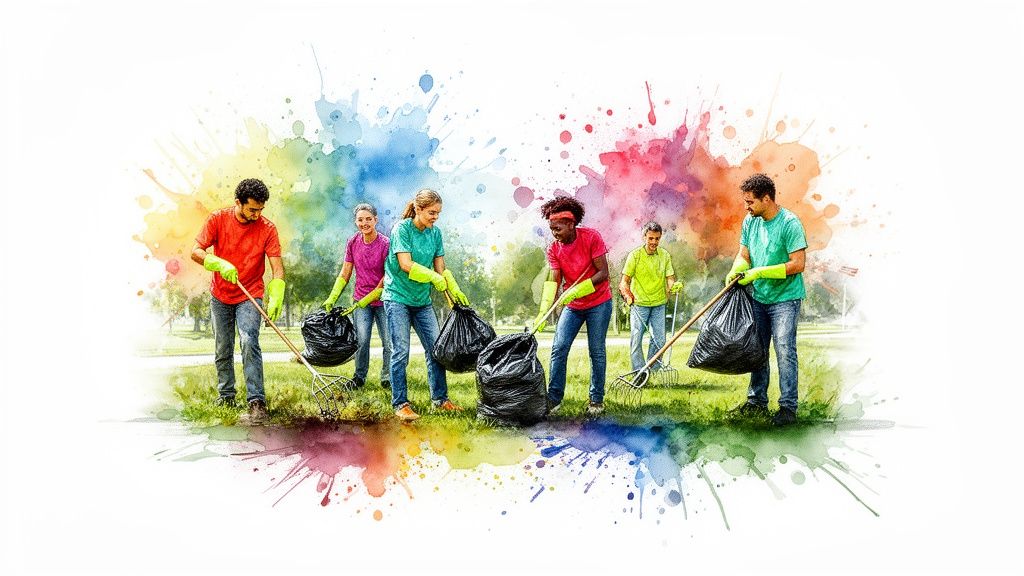
Let me tell you a story. It starts with a messy apartment and a chaotic breakup. My life felt like the back of my fridge, full of old things I couldn't bring myself to throw away. Each piece of trash, each forgotten jam jar, was a weight. It wasn't until I faced a different kind of mess, the litter on Chicago's streets, that I found a way forward.
Huddled under a tree during a freak hailstorm with two other volunteers, shivering and laughing, I realized something profound: cleaning up someone else's mess can actually help you clean up your own. This journey isn't just about making our city sparkle. It's about personal transformation, about forging unbreakable bonds through shared challenges. We, the Litter Caterpillars, believe that the best volunteer team building activities aren't about trust falls or corporate icebreakers; they're about showing up, together, when it's hard.
These activities are the bedrock of our movement, turning a simple chore into an epic quest and a group of strangers into a chosen family. You'll discover how to create a team that's resilient, deeply connected, and powered by a shared mission. If you're ready to build a volunteer team that feels more like a legendary crew, a group that finds joy and purpose in every collected bottle cap and windswept wrapper, you've come to the right place. This guide is your blueprint for building something that truly matters.
1. Themed Cleanup Challenges with Pride & Identity
Ever notice how wearing a team jersey makes you feel part of something bigger? You can bring that same electric energy to your cleanups. Instead of just picking up litter, you’re creating a tribe, a shared mission with its own unique culture. This is one of the most powerful volunteer team building activities because it transforms a chore into a celebrated ritual, building deep bonds and a fierce sense of belonging.
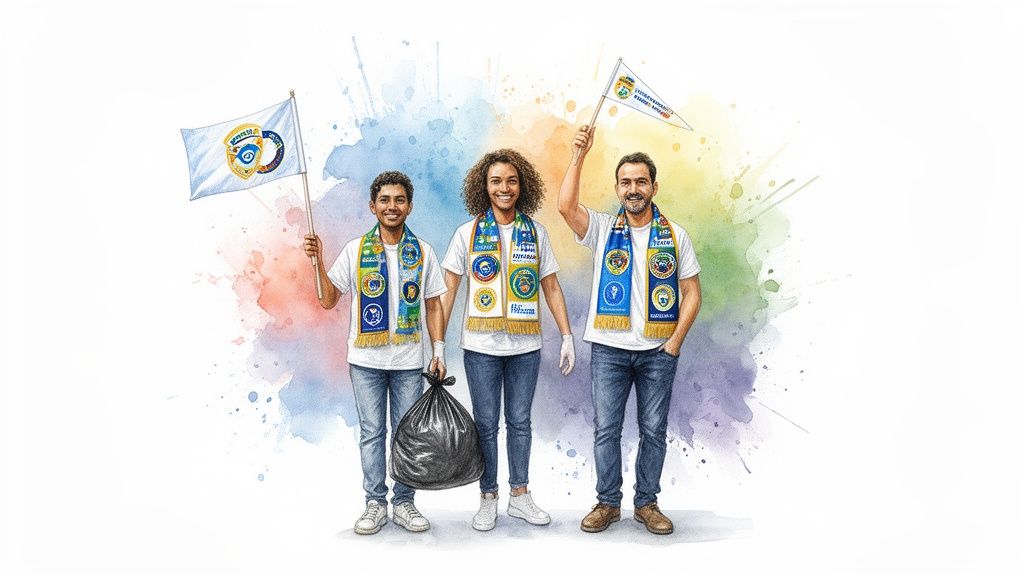
I believe this approach is about creating an identity that volunteers are proud to wear. Think of it like a local sports team for neighborhood good. It’s not just about the work; it’s about the symbols, the stories, and the shared victories. My goal is to make every volunteer feel like a hero in an ongoing saga of community improvement.
How to Bring It to Life
The key is to build a universe around your cleanup efforts. You can start small and let your volunteers co-create the identity with you.
- Create Your Team Identity: Brainstorm a team name, colors, and a simple logo. Maybe you're the "Wicker Park Warriors" or the "Lincoln Park Litter Legends." I suggest getting t-shirts printed or simply providing colored bandanas.
- Develop Rituals and Symbols: Design a team flag to plant at your meeting spot. You can create a simple team chant or song to kick off and close each event. These small rituals build powerful muscle memory for team spirit.
- Implement a Badge System: Recognize achievements with tangible rewards. The Litter Caterpillars, a Chicago-based group I'm a part of, mastered this by creating a series of collectible badges for milestones like "First Cleanup," "Recycling Rockstar," or "Rainy Day Hero." You can learn more from their detailed guide on community engagement best practices. Awarding these badges in a small ceremony makes each volunteer's contribution feel seen and valued.
This strategy works because it taps into a fundamental human need: to belong and be recognized. By turning cleanups into themed missions, you’re not just cleaning a street; you’re building a community legend, one piece of litter at a time.
2. Neighborhood Rotation & Ward-by-Ward Coverage
Imagine your volunteer group as explorers, charting a map of your entire city, not with ink, but with acts of care. Instead of sticking to the same familiar blocks, you embark on a systematic journey, ensuring no neighborhood is left behind. This is one of the most expansive volunteer team building activities because it breaks down invisible city barriers, fosters a deeper sense of civic unity, and shows every community that they matter.
I see this model as a tool for equitable impact and shared discovery. By systematically rotating through different wards or districts, your team gains a comprehensive understanding of the city's diverse challenges and charms. It transforms your group from a localized crew into a city-wide force for good, building bonds not just with each other, but with the very fabric of the metropolis.
How to Bring It to Life
The key is to create a clear, visible, and exciting schedule that turns your coverage plan into an adventure for everyone.
- Create a Visible Rotation Map: I recommend you design a large map of your city and color in each neighborhood or ward as you clean it. Post this online and bring it to events. This visual progress tracker builds anticipation and a powerful sense of collective accomplishment.
- Partner with Local Insiders: Before you visit a new neighborhood, connect with a local community organization, library, or residents' association. They can provide crucial context on problem spots and help you invite local residents to join, making your efforts a true collaboration.
- Celebrate Each Neighborhood's Story: Use your social media to spotlight the unique character of each area you visit. I’d share before-and-after photos, but also highlight a local landmark, a great coffee shop, or a story you learned from a resident. Frame each cleanup as a chapter in your city-wide exploration. The Litter Caterpillars, for example, are on a mission to cover all 50 of Chicago's wards, using our journey to help volunteers discover the entire city.
This strategy works because it broadens horizons and demonstrates a profound commitment to fairness. By exploring and serving every corner of your city, you’re not just picking up trash; you're weaving a stronger, more connected community, one neighborhood at a time.
3. Weather-Defiant Consistency (Rain, Snow, Heat Protocol)
What separates a casual hobby from a true commitment? I think it’s showing up when it’s hard. By establishing a protocol to serve in almost any weather, you’re not just cleaning up; you’re forging an unbreakable team identity. This is one of the most profound volunteer team building activities because it turns an obstacle into a legendary origin story, attracting the most dedicated and passionate individuals.

This approach transforms adverse weather from a deterrent into a badge of honor. You communicate a powerful message: our mission is more important than our comfort. The stories born from these challenging days, like the Litter Caterpillars' infamous first cleanup in a hailstorm that I mentioned, become the folklore that binds your group together and inspires new members to join a team that means business.
How to Bring It to Life
Your goal should be to frame weather challenges as character-building flavor, not as punishment. Safety and preparation are everything.
- Establish Clear Safety Thresholds: Your commitment is inspiring, but safety comes first. You must define non-negotiable limits for wind speed, extreme temperatures, or lightning. Communicate these clearly so everyone knows you’re prepared, not reckless.
- Provide Weather-Appropriate Gear: I suggest building a small "weather library" of extra gloves, rain ponchos, hand warmers, or cooling towels. This simple act shows you care and removes a barrier for volunteers who might not have the right equipment.
- Celebrate the Survivors: Create a "Weather Warrior" award or a "Legend Board" to publicly recognize those who show up on the toughest days. You can document these moments on social media; a photo of smiling volunteers in the snow is far more powerful than a sunny day shot.
- Adapt the Mission: Don’t just cancel. You can shorten the event during a heatwave or shift focus to a covered area during rain. For truly severe weather, have a cozy indoor alternative planned, like sorting recyclables or planning the next event at a local coffee shop.
This strategy works because shared hardship creates the strongest bonds. When your team looks back and says, "Remember that time we cleaned up in a blizzard?" they’re not just recalling an event; they’re celebrating their collective resilience and unwavering dedication to the cause.
4. Open-Access Digital Community Building (Meetup, Social Media, Group Chats)
The magic of a great cleanup doesn't have to end when the last bag of litter is tied. Think of your volunteer group like a garden. The cleanup events are when you plant the seeds, but the real growth happens between gatherings. This is where accessible digital tools come in, turning one-time helpers into a vibrant, year-round family. These platforms are powerful volunteer team building activities because they keep the fire of connection burning long after the work is done.
I believe this strategy is about meeting people where they are: online. By creating low-barrier entry points like a free Meetup group, an engaging Instagram profile, and a casual group chat, you build an ecosystem of connection. You ensure no one feels left out and empower volunteers to build genuine friendships, share their stories, and stay motivated. The goal is to make your volunteer group feel less like an event and more like a social hub with a shared purpose.
How to Bring It to Life
Building a digital home for your community is about consistency and authenticity. Let your platforms reflect the warm, welcoming spirit of your in-person events.
- Be a Beacon on Meetup: This is your front door. I advise you to post your cleanup events at a consistent day and time, like every Saturday morning. This predictability helps volunteers build a routine. Make your event descriptions warm and inviting, emphasizing the social aspect as much as the cleanup itself.
- Tell Your Story on Instagram: This is your highlight reel. You should post photos that feature your volunteers' smiling faces, not just bags of trash. Share their stories in the captions. Use Instagram Stories during events for real-time updates and Reels to create compelling before-and-after transformation videos.
- Foster Friendship in Group Chats: This is your living room. Create a space on a platform like WhatsApp or Discord for casual conversation. Sure, you can post logistics, but also encourage members to share photos of their pets, ask for local recommendations, or organize informal social meetups. I always try to keep it personal and fun, not corporate.
This approach works because it nurtures the human connections that are the true foundation of any volunteer movement. Groups like the Litter Caterpillars have used this model to grow a thriving community, proving that by making it easy to join and stay connected online, you build a resilient, passionate team that shows up offline.
5. Skill-Building Through Service (Resilience, Consistency, Courage)
What if volunteering wasn't just about giving back, but also about building yourself up? Imagine framing every cleanup as a workout for your character, a gym for your soul. This approach transforms service from a simple act of charity into a powerful journey of personal development, making it one of the most profound volunteer team building activities you can facilitate.
The idea is to explicitly connect the physical act of cleaning with the internal growth of virtues like resilience, consistency, and courage. When I see a volunteer show up on a cold, drizzly morning, they aren't just picking up trash; they're practicing resilience. When they attend their tenth event in a row, they are building the muscle of consistency. This reframe makes every action meaningful on multiple levels.
How to Bring It to Life
You can intentionally weave personal growth into the fabric of your volunteer program. It starts with being transparent about this dual mission: we’re here to clean our community and to become better versions of ourselves.
- Define Your Core Skills: Be explicit about the virtues you want to cultivate. The Litter Caterpillars, for example, built our entire mission around developing "bravery, kindness, and unity." You should choose skills that resonate with your group's purpose.
- Share Transformation Stories: Authenticity is key. I share my own story of how leading or participating has changed me. You can feature volunteer spotlights on social media that go beyond their cleanup efforts and touch on how they've grown personally.
- Create Growth-Oriented Rituals: Start a "consistency club" with special recognition or badges for attendance streaks. You can end events with a brief reflection circle, asking questions like, "What felt brave for you today?" or "Where did you have to be resilient?"
- Connect Service to Personal Goals: Help volunteers see the link between showing up for a cleanup and achieving their own dreams. I have found this powerful connection is a cornerstone of effective volunteer retention strategies.
This strategy works because it offers a dual reward. Volunteers see a tangible impact on their neighborhood and feel a profound, internal shift in themselves. You’re not just creating a cleaner city; you’re building stronger, more courageous citizens.
6. Weekend Morning Scheduling to Attract 'Givers' and Filter Values Alignment
Think about the most dedicated communities you know. Military units doing PT at dawn, religious groups gathering for morning services, or committed athletes training before the world wakes up. What do they have in common? I believe they show up when it’s not always easy. This same principle can transform your volunteer group into a tight-knit force for good.
Strategic scheduling is one of the most underrated volunteer team building activities because it’s a silent filter. By hosting events on weekend mornings, you naturally attract people whose primary motivation is service, not a social alternative to a night out. This isn't about exclusion; it's about building a culture of dedication and shared values from the moment people decide to show up. It sends a clear message: we are here to make a real difference, together.
How to Bring It to Life
The magic is in the consistency and the framing. You’re not just asking people to wake up early; you’re inviting them to start their weekend with purpose and a sense of accomplishment that lasts.
- Communicate Your "Why": Be transparent about your scheduling philosophy in your recruitment materials. You can frame it as a positive: "We meet on Saturday mornings to start our weekend with positive action and a clear mind." This turns the timing into a feature, not a bug.
- Create Morning Rituals: Make the morning special. I recommend you start with a quick team huddle, a shared coffee, or a simple theme song. These rituals become anchors that make the early start a cherished part of the experience.
- Share Transformation Stories: Feature volunteers who initially struggled with the timing but now love it. A simple social media post like, "I used to sleep in, but now I can't imagine my Saturday without this team!" is incredibly powerful.
- Stay Welcoming and Flexible: Emphasize that early rising is part of the culture, not a strict requirement. You must be incredibly kind and welcoming to those who can only make it occasionally. You can also offer a few special weekday evening events a year to include everyone.
This approach works because it builds a team around a shared sense of discipline and commitment. When people choose to give their weekend morning, they're making a statement about their values, forging powerful bonds with others who made the same choice. You're not just cleaning a park; you're building a culture of givers.
7. Volunteer-First Fundraising (No Pressure Donations, Partner Sponsorships)
Nothing drains the energy from a passion project faster than the constant pressure to ask for money. When you start asking your volunteers to open their wallets, you risk changing the entire dynamic. This is why a volunteer-first fundraising model is one of the most powerful, trust-building volunteer team building activities you can adopt. It protects the core mission by ensuring your volunteers’ time and energy are the most valued currency, not their cash.
This approach reframes your financial strategy to be about community partnership, not participant obligation. It makes your group accessible to everyone, regardless of their financial situation, and keeps the focus purely on the collective action of cleaning up. My goal is to build a sustainable organization where volunteers feel appreciated for their work, not sized up for their donation potential.
How to Bring It to Life
Shifting your focus to external support builds incredible goodwill and keeps your internal culture pure. You’re building a movement, and you want everyone to feel they belong.
- Proactively Seek Partnerships: Instead of asking volunteers for five dollars, I would ask a local coffee shop to sponsor a cleanup. You can approach real estate agents, hardware stores, and local restaurants who benefit directly from cleaner, more beautiful streets. Frame it as a partnership in community improvement.
- Create Graceful Donation Channels: Have a donation link on your website, but never push it during events. You should frame it for those who want to give financially but may not have the time to volunteer. This respects both forms of contribution equally.
- Maintain Radical Transparency: One of the best ways I have found to build trust is to show exactly where the money goes. The Litter Caterpillars, for example, maintain a public ledger of all our expenses. When people see that funds are used for essentials like trash bags, gloves, and community grants, they are more inspired to support the mission without ever being asked.
- Celebrate All Contributions: When you thank your community, always lead by thanking your volunteers for their time and effort. You should acknowledge your financial sponsors and donors separately but equally. This reinforces the core value that time is just as precious as money.
This strategy works because it removes a major barrier to participation and eliminates the awkwardness of mixing passion with financial asks. By focusing on partnerships, you’re not just funding your activities; you’re weaving your organization into the very fabric of the local economy and community.
8. Friendship-First Community Building (Social Connection Over Task Completion)
What if the primary goal of your cleanup wasn't cleaning up? Imagine framing your events so the litter collected is simply the byproduct of a more important mission: building genuine friendships. This approach flips the script, positioning your group as a community hub first and a cleanup crew second. It's one of the most fulfilling volunteer team building activities because it tackles loneliness head-on, creating a support system that lasts long after the trash bags are full.
This philosophy is about intentionally designing your events for human connection. The cleanup itself becomes the perfect, low-pressure backdrop for conversation and shared experience. You're not just picking up trash side-by-side; you're sharing stories, discovering common interests, and building the foundation of real relationships that make a neighborhood feel like home.
How to Bring It to Life
The key is to create dedicated, structured time for socializing and to celebrate the relationships being built. It’s about being explicit that friendship is the real prize.
- Schedule Social Time: I recommend you formally block out 20-30 minutes before or after every cleanup for coffee, snacks, and unstructured conversation. Don't make it optional; frame it as a core part of the event itself.
- Pair People Up: Use a buddy system, intentionally pairing newcomers with veteran members. This simple act removes the anxiety of joining a new group and immediately gives someone a friendly face to connect with.
- Host Social-Only Events: Organize monthly potlucks, game nights, or park hangouts that have nothing to do with cleaning. This reinforces that the group's value lies in its people, not just its work. You can discover more ideas for fostering these connections in this guide to community building activities for adults.
- Celebrate Friendships Publicly: When you share photos on social media, don't just post pictures of the work. I would post pictures of volunteers laughing together and write captions that celebrate the friendships being formed.
This strategy works because it addresses a deep human need for connection. By making friendship the mission, you create a powerful, self-sustaining community where people show up for each other first and the cause second, ensuring long-term passion and participation.
9. Safety-First Protocol & Volunteer Wellbeing as Primary Priority
Imagine an adventure guide who puts your safety above reaching the summit. That’s the mindset that transforms a good volunteer group into a truly great one. By making volunteer safety and wellbeing the absolute top priority, you build a foundation of trust that is unshakable. This isn't just about avoiding accidents; it’s one of the most profound volunteer team building activities because it communicates a powerful message: "You are more important than the mission."
This approach establishes a culture where every single person feels secure, respected, and genuinely cared for. When volunteers know you have their back, they can fully invest their energy and spirit into the work and each other. My goal is to create an environment of psychological and physical safety so strong that it becomes the team’s defining characteristic.
How to Bring It to Life
Building a safety-first culture requires deliberate, consistent action. It’s about embedding care into every part of your process.
- Launch with a Safety Huddle: Start every single event with a brief, mandatory safety huddle. This isn't a long lecture; it's a quick, engaging check-in. You should cover the day's potential hazards, review hand signals, and remind everyone that their comfort comes first.
- Arm Your Team with Knowledge & Gear: Don't just hand out gloves; explain why they're important. I suggest you provide a full kit: thick gloves, hand sanitizer, and bright vests if near traffic. Create and distribute a one-page safety guide before their first event so everyone arrives prepared.
- Prioritize People Over Goals: Make it a public mantra. Groups like the Litter Caterpillars state it plainly: "Safety of the volunteers always takes first priority. Happiness takes second." I explicitly tell my team that no bag of trash is worth an injury or even just feeling uncomfortable. Empower them to stop, rest, or skip an area if they feel unsure.
- Train Your Leaders: Equip your team leaders with basic first-aid training and mental health awareness. This prepares them to handle everything from a small cut to noticing if someone seems overwhelmed, ensuring they can provide immediate and compassionate support.
This strategy works because true community is built on mutual care. When you prioritize the wellbeing of your volunteers above all else, you’re not just managing a cleanup; you’re nurturing a family that looks out for one another.
10. Transformation Narrative & Storytelling (Origin Story, Volunteer Journeys, Community Impact)
Facts and figures can show impact, but a story is what truly moves people to action. What’s the spark that started your group? Why does that one volunteer show up every single weekend, rain or shine? These narratives are the emotional core of your mission, transforming abstract goals into deeply human experiences. This is one of the most profound volunteer team building activities because it connects the simple act of picking up litter to a much larger, more inspiring journey of personal and community change.
I believe this approach is about weaving a compelling tapestry of stories that volunteers can see themselves in. You're not just a group that cleans; you're a collection of individuals who found purpose, friendship, and a way to heal their corner of the world. My goal is to make every volunteer feel like a vital character in an unfolding story of positive transformation, inspiring both current and future members.
How to Bring It to Life
The key is to actively find, shape, and share the powerful stories happening within your group. Make storytelling a conscious and consistent part of your culture.
- Share Your Origin Story: Be vulnerable and authentic about what started it all. Was it a moment of frustration, a personal turning point, or a sudden inspiration? My own Litter Caterpillars origin story, for example, is rooted in a personal crisis that led to a powerful realization about taking control of one's environment. Sharing this creates an immediate, relatable connection.
- Create a "Volunteer Spotlight" Series: Once a month, you should interview a volunteer. Ask them what brought them here, what they've learned, and how this work has impacted their life. Share their story through your newsletter or social media. This celebrates individual journeys and shows the diverse motivations within your team.
- Document Neighborhood Transformations: Go beyond simple before-and-after photos. I recommend capturing quotes from residents about how a cleaner park or street has changed their daily experience. Did kids start playing in the park again? Did a local business see more foot traffic? These testimonials connect your work to tangible community benefits.
- Invite Shared Storytelling: At the end of an event, you can create a space for volunteers to share a small victory or a meaningful moment from the day. It could be a strange item they found or a positive interaction with a neighbor. This builds a shared history and reinforces the value of each person's contribution.
This strategy works because it taps into our innate desire for meaning and connection. By framing your work through the lens of transformation, you're not just tidying up a neighborhood; you’re co-authoring a powerful story of hope, one volunteer at a time.
Volunteer Team-Building Activities — 10-Item Comparison
| Item | 🔄 Implementation Complexity | ⚡ Resource & Operational Efficiency | 📊 Expected Outcomes & ⭐ Effectiveness | 💡 Ideal Use Cases & Quick Tips |
|---|---|---|---|---|
| Themed Cleanup Challenges with Pride & Identity | Medium–High: design, branding, creative leadership required | Moderate: upfront cost for flags/badges; efficient for retention over time | High engagement & retention; strong identity formation — ⭐⭐⭐⭐ | Community-building, social media growth — involve volunteers in design; rotate themes |
| Neighborhood Rotation & Ward-by-Ward Coverage | High: detailed scheduling and logistics across areas | Moderate–High: travel/time costs; needs tracking systems | Broad city impact and equity; builds diverse networks — ⭐⭐⭐⭐ | Ideal for citywide equity campaigns — publish rotation map; partner with local orgs |
| Weather-Defiant Consistency (Rain/Snow/Heat) | Medium: clear policies and safety protocols needed | Moderate: weather gear, emergency planning; operationally demanding in extremes | Filters for committed volunteers; creates memorable stories — ⭐⭐⭐ | Use to strengthen commitment culture — set safety thresholds; offer indoor alternatives |
| Open-Access Digital Community Building (Meetup, Social) | Low: platform setup simple, but needs ongoing moderation | Low cost monetarily; time cost for content + moderation | High discoverability and entry rates; builds ongoing connection — ⭐⭐⭐ | Best for onboarding newcomers — post consistently; moderate chats; feature volunteer stories |
| Skill-Building Through Service (Resilience, Consistency) | Medium: integrate reflection, tracking and leader coaching | Low–Moderate: materials and facilitator time | Strong personal development and intrinsic motivation — ⭐⭐⭐⭐ | Targets growth-minded volunteers — use badges, reflection prompts, share transformations |
| Weekend Morning Scheduling to Attract 'Givers' | Low: scheduling policy and consistent messaging | Low: minimal resource burden; simple logistics | Cultivates values-aligned, consistent cohort — ⭐⭐⭐ | Use as cultural filter — explain philosophy; offer occasional alternatives for inclusivity |
| Volunteer-First Fundraising (No-Pressure) | Medium: establish sponsor pipelines and transparent budgets | Moderate: time to secure sponsors/grants; reduces volunteer fundraising burden | Preserves morale and accessibility; builds authentic partnerships — ⭐⭐⭐ | For sustaining events without pressuring volunteers — publish budget; thank sponsors publicly |
| Friendship-First Community Building | Medium: requires skilled facilitation and social planning | Low–Moderate: social events/time investment | Very high retention and volunteer satisfaction — ⭐⭐⭐⭐ | Ideal for friendship-driven recruitment — schedule post-cleanup social time; use buddy system |
| Safety-First Protocol & Volunteer Wellbeing | High: comprehensive training, policies, and leader accountability | High: PPE, training, incident processes; ongoing review needed | High trust, inclusivity, and reduced liability — ⭐⭐⭐⭐ | Essential where safety risks exist — mandatory safety huddles; provide PPE; collect feedback |
| Transformation Narrative & Storytelling | Low–Medium: consistent content creation and authentic sharing | Low: time for interviews and documentation; minimal cost | Strong emotional engagement and recruitment; brand identity boost — ⭐⭐⭐⭐ | Use to inspire and recruit — share founder/volunteer stories; document before/after results |
Your Turn to Paint the Fence
Remember Tom Sawyer? He was handed the dreaded chore of whitewashing a long, boring fence. Punishment. But with a little bit of flair and a shift in perspective, he transformed that tedious task into the most desirable, exclusive activity in town. Friends were practically begging him for a chance to paint a few planks.
That’s the exact magic we’ve been exploring together. The ten strategies we've walked through aren't just about picking up litter. They are about turning the "chore" of community service into a profound adventure, a source of deep friendship, and a catalyst for your own personal transformation. Each idea is a brushstroke you can use to paint a more vibrant, connected, and meaningful life for yourself and your neighbors.
Recapping Your Toolkit for Transformation
You now have a complete blueprint. I've shown you how to build a powerful community from the ground up, one that thrives not on obligation, but on genuine connection and shared purpose.
- Identity and Pride: We covered how themed cleanups, team flags, and neighborhood rotations aren't just logistics; they are rituals that build a powerful sense of belonging. You’re not just a random person with a trash bag; you’re part of a tribe, on a mission.
- Resilience and Consistency: My discussions on weather-defiant scheduling and weekend morning meetups weren't just about timing. They were about building personal resilience and creating a community of people who show up, for the cause and for each other, no matter what. That consistency is where the real change happens.
- Connection and Safety: We emphasized a "friendship-first" and "safety-first" philosophy. This ensures your group is a haven, a place where people feel seen, valued, and protected. It shifts the focus from the task (cleaning) to the people, which is the secret ingredient that makes volunteers return week after week.
- Storytelling and Impact: Finally, I talked about the power of narrative. Sharing your origin story, celebrating volunteer journeys, and tracking your impact isn't about vanity metrics. It’s about making the intangible, tangible. It’s about showing everyone, including yourself, that your small, consistent actions are adding up to create a massive, beautiful wave of change.
You don’t need a massive budget. You don’t need a perfectly polished five-year plan. You don’t need permission from anyone to start making a difference.
All you need to do is pick one thing.
Maybe it’s creating a simple, hand-drawn logo for your local crew. Perhaps it’s committing to one specific street corner every Saturday morning, rain or shine, and seeing who joins you. Or maybe it’s just starting a group chat to share photos of your progress and celebrate the small wins.
The goal was never to have a perfectly clean city overnight. The real prize is in the bonds you forge and the person you become while trying. These volunteer team building activities are a powerful vehicle for discovering your own strength, courage, and capacity for leadership. You are not just cleaning a street; you are building a legacy of connection and rewriting your own story, one piece of litter at a time.
You have the map. You have the tools. Go be a Caterpillar. Go transform.
Ready to stop thinking and start doing? At Litter Caterpillars, we put all these principles into practice every weekend, creating a fun, safe, and inspiring community for people just like you. Join a cleanup this weekend and see for yourself how powerful these volunteer team building activities can be at Litter Caterpillars.