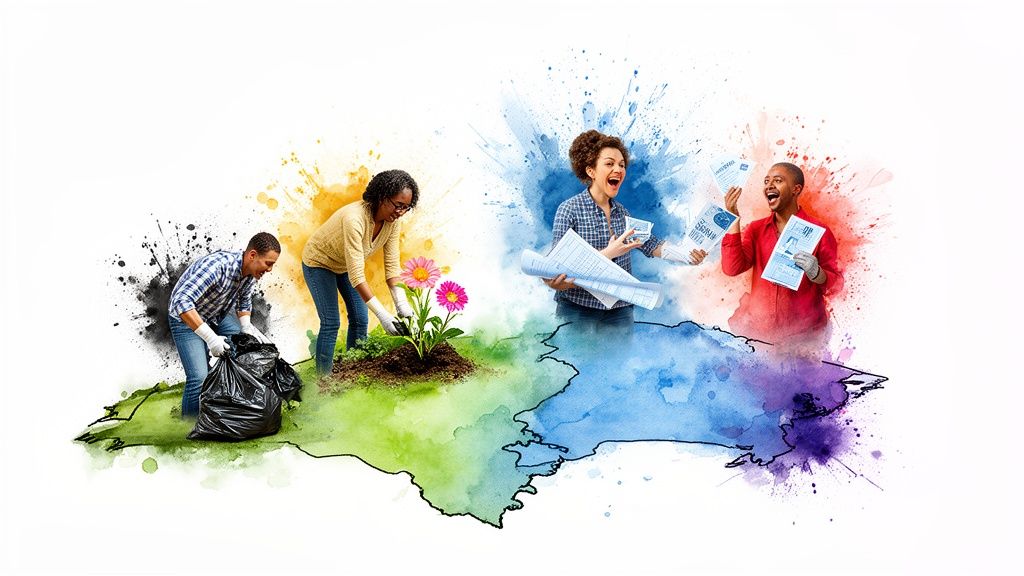
I used to think cleaning up my own life was impossible. Every old jar, every dusty bag, it all felt like it weighed 500 pounds. My apartment was a mess, and so was my life. Then, a funny thing happened during a freak Chicago hailstorm with two friends. Huddled under a tree, freezing and trying to pick up trash, I realized something profound: cleaning up someone else’s mess is way easier than cleaning our own.
And suffering together? It's not just bearable; it’s fun. It advances the plot.
That moment of clarity, cold and soaking wet, is the real heart of this article. This isn't a list of generic tips. It’s a battle plan born from that storm, built for people who are tired of waiting for permission to make a difference. We’re going to share 10 powerful community engagement strategies that turn fear into fuel, strangers into friends, and neglected spaces into something beautiful and cared for. These are the exact methods we used to build Litter Caterpillars from a wild idea into a city-wide movement.
This guide is for anyone who believes, deep down, that making an impact should be an adventure. Forget what you’ve been told about how hard it is to change things. It's time to be brave, get a little weird, and prove that real change is easier and more joyful than you ever imagined.
1. Volunteer-First Community Mobilization
Imagine you're building a fire. You could spend all day looking for a fancy lighter and a pile of perfect, dry logs. Or, you could find two good sticks and a spark. A Volunteer-First strategy is about finding that spark—the raw human energy that starts every great movement. It flips the old model on its head. Instead of chasing grants and donors, you obsess over creating an incredible, empowering, and fun experience for your people.
This isn't about money; it’s about connection. An hour of someone's time is a far more precious gift than a few dollars. When people see their own sweat and smiles transforming a space, they become its fiercest protectors. They become the fire itself. The focus shifts from financial transactions to human relationships, which fosters deep ownership and pride.
When to Use This Strategy
This is the brave way to begin. If you have more heart than cash, this is your blueprint. It’s perfect for initiatives that thrive on hands-on participation, like a weekly cleanup or a community garden. You're not building an institution; you're building a tribe.
Key Insight: Protecting your volunteers' energy is your most sacred duty. This means learning to say 'no' to opportunities that might bring in money but would burn out your people. A happy, motivated volunteer base is your greatest asset.
How to Implement It
- Create Zero-Pressure Participation: Make it clear that your time is the only donation you'll ever ask for. At Litter Caterpillars, we say, "Your presence is the only present we need."
- Build a Simple Rhythm: Pick a time and stick to it, like "every Saturday at 10 AM." This removes the guesswork and makes showing up a joyful habit.
- Celebrate the Humans: Take a group photo. Give a shout-out. Acknowledge the effort. Make people feel seen and cherished.
- Let Leaders Emerge: Encourage experienced volunteers to welcome newcomers. This builds a self-sustaining culture of kindness.
This is one of the most powerful community engagement strategies because it’s built on trust, not transactions. It creates a movement that can weather any storm. Ready to see it in action? You can find volunteer work that fits your passion and feel the difference.
2. Scheduled Weekend Morning Events for Values Alignment
What if your schedule could be a secret handshake? A quiet signal that calls out to your kind of people? Scheduling events on weekend mornings is one of the most powerful, unspoken community engagement strategies for building a dedicated team. It’s a filter for the soul.
Think about it. Who shows up at 10 AM on a Saturday? Not the person nursing a hangover. It's the person who finds joy in starting their day with purpose, who would rather build community than sleep in. It’s a magnet for the givers, the doers, and the believers. This isn't about excluding anyone; it's about intentionally creating a culture of brave, kind people who show up.
When to Use This Strategy
This is for organizers who value deep engagement over sheer numbers. If you want to build a reliable core crew—the kind of people who show up even when it rains—this is your method. It’s how Litter Caterpillars built its unwavering Saturday and Sunday morning rhythm.
Key Insight: Your schedule is a statement of your values. By claiming weekend mornings for community action, you are saying, "We prioritize building a better world together, and we start our day with that purpose."
How to Implement It
- Make the Schedule Sacred: Cement your weekend morning slot. Consistency turns an event into a community ritual.
- Embrace the Weather: Get ponchos. Get sunscreen. Showing up in "bad" weather becomes a badge of honor. It’s part of the adventure.
- Create a Post-Event Ritual: Grab coffee. Go for brunch. Turn a morning of service into a full-fledged social connection.
- Frame the Commitment with Pride: Use language like, "While others sleep in, we're building the neighborhood we want to see." This reinforces a shared identity.
This strategy is one of the most effective community engagement strategies because it builds your foundation with people who are already on your wavelength. It's not just scheduling an event; it's curating a community of the willing.
3. Identity and Pride Building Through Symbols
Humans are wired for belonging. We rally behind flags and wear team colors with passion. This strategy taps into that deep need by creating a visual identity for your tribe. It’s the difference between showing up for a workout and putting on the jersey for game day. It turns the simple act of volunteering into a role, a membership, and a source of personal pride.
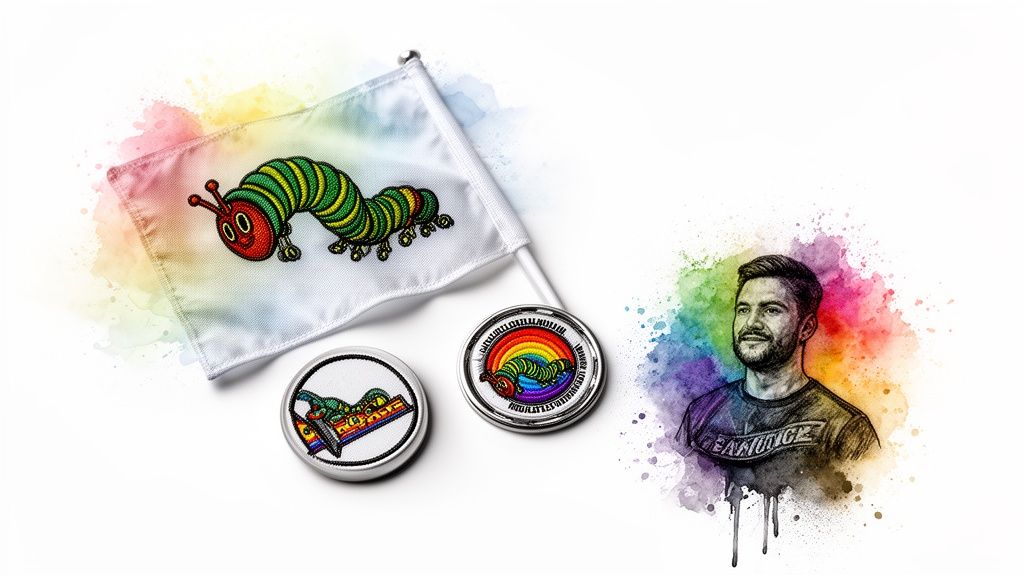
A logo, a pin, or a flag gives your people a shared language and a tangible piece of the mission. When someone wears a Litter Caterpillars pin, they aren't just a person who picks up trash; they are a visible ambassador for a cleaner, kinder city. The symbol holds the story of every laugh, every rainstorm, every bag of trash collected together.
When to Use This Strategy
Use this once your group has a beating heart—a consistent core of people. It’s time to give that heart a face. This is how you shift from a loose collection of individuals to a cohesive, motivated team that feels like they are a part of something bigger than themselves.
Key Insight: A symbol isn't just a design; it's a container for every shared memory, laugh, and moment of triumph your group has ever had. It becomes more powerful with every story it represents.
How to Implement It
- Create it Together: Involve your core volunteers in designing the logo or flag. When they have a hand in creating the symbol, their sense of ownership deepens immensely.
- Tell the Story: Every symbol needs a story. Explain why you chose a caterpillar, what the colors on your flag mean. This transforms a simple image into a meaningful emblem.
- Make it Real: Print it on flags. Create enamel pins. Make stickers. Tangible things people can see, hold, and wear make the identity feel real.
- Celebrate with Ceremony: Make a little moment out of earning a badge or receiving a pin for the first time. This public recognition reinforces the value of showing up.
By building a strong symbolic identity, you are implementing one of the most profound community engagement strategies available. You give people something to belong to, turning their service into a story they are proud to tell and wear.
4. All-Neighborhood Equity and Geographic Saturation
True community care doesn't play favorites. It doesn't just clean the "nice" streets. This strategy is a bold promise to show up for everyone, everywhere. It’s like drawing a map of your entire city and promising to color it in, one cleanup at a time. It ensures that no community is overlooked, especially those that other organizations might ignore.
This method turns volunteering into an urban expedition of empathy. By intentionally going to unfamiliar areas, volunteers break down invisible barriers and witness the shared humanity connecting every corner of the city. This strategy proves that when we say we care about our city, we mean all of it.
When to Use This Strategy
This is for established groups ready to scale their mission beyond their own backyard. If your goal is to make a city-wide statement about equity, this is your path. It’s perfect for organizations like Litter Caterpillars, which is committed to hosting cleanups in all 50 of Chicago's wards.
Key Insight: Bravery isn’t the absence of fear; it's showing up with kindness where it's needed most. Tackling a "difficult" neighborhood isn't a burden, it's an honor and a powerful act of solidarity.
How to Implement It
- Create a Public Rota: Develop and share a schedule that shows when you'll be in each neighborhood. This builds anticipation and shows a transparent commitment to fairness.
- Find Local Allies: Partner with local leaders, block clubs, or passionate residents. Their insight is gold for building trust and being truly helpful.
- Celebrate Every Community: Frame every cleanup as a victory. Use stories and photos to highlight the beauty and resilience you find in every corner of the city.
- Address Safety with Honesty: Acknowledge any concerns transparently. Provide clear guidelines and work with local contacts to ensure a positive experience.
- Don't Be a Tourist: Plan to return. Don't make your visit a one-time event. Build trust and show long-term commitment.
This is one of the most profound community engagement strategies because it actively dismantles inequality. When you commit to every map dot, you inspire volunteers to see the city not as separate parts, but as one shared, beautiful home.
5. Digital Hub Integration (Multi-Platform Accessibility)
Your community doesn't live in one place; it lives across a dozen different apps. A Digital Hub strategy meets people where they already are. Some people discover events on Instagram, others live on Meetup, and many build friendships in a group chat. This approach makes it incredibly easy for anyone to find you and take that first brave step to join in.
Think of it like building several bridges to the same beautiful island. Each platform has a job: Instagram tells the emotional, visual story; Meetup handles the official schedule; and a group chat fosters the inside jokes that turn strangers into friends. By weaving them together, you create a seamless and welcoming experience that feels effortless.
When to Use This Strategy
This is a powerful growth strategy when you're ready to expand beyond your immediate circle. If you want to attract different kinds of people, creating a multi-platform presence is your next move. It's especially effective for groups like Litter Caterpillars that thrive on a steady stream of new friends.
Key Insight: Don’t try to make every platform do everything. Assign a clear 'job' to each channel. This clarity prevents confusion for your members and burnout for you. One platform is for logistics, another is for inspiration, and a third is for community chatter.
How to Implement It
- Establish a 'Source of Truth': Designate one platform, like Meetup, as the official hub for all event details. All other platforms should point back to this central source.
- Use Channels for Their Strengths: Use Instagram for telling brave stories. Use a group chat for informal updates and community building. Use Facebook Groups for hyperlocal outreach.
- Create One-Click Pathways: A post on Instagram should have a direct, easy link to sign up. Make it so simple a person can't say no.
- Be a Broken Record: Post your weekly schedule and reminders across all channels. Repetition builds habit and ensures no one misses out.
By implementing these community engagement strategies, you lower the barrier to entry so significantly that joining becomes an easy and exciting decision. You show people you respect their time, making your movement accessible to all.
6. Reframing Hardship and Challenge as Growth Opportunity
True community isn't forged in comfort; it's welded in the fire of shared struggle. This strategy is about deliberately embracing the hard stuff—the rain, the heat, the overwhelming mess—and reframing it as an opportunity for adventure, courage, and bonding.
Think of your favorite movie. The hero doesn't become a hero when everything is easy. They become a hero when they face the storm. When a group endures a challenge together, they don't just clean a street; they build a shared story of triumph. The hardship becomes a badge of honor. This is how you transform a casual gathering into a legendary crew.
When to Use This Strategy
This mindset is essential for any group that operates in the real world, where things get messy. It’s perfect for organizations like Litter Caterpillars that pride themselves on consistency, rain or shine. Use this to cultivate a culture of grit, attracting members who are seeking a genuine adventure.
Key Insight: The story you tell about the struggle is more important than the struggle itself. Frame every challenge not as a setback, but as the next chapter in your community's epic saga of courage and impact.
How to Implement It
- Lead with a Smile: As a leader, your enthusiasm in the pouring rain sets the tone. Show up with joy, demonstrating that the mission is bigger than your comfort.
- Tell the Story: Celebrate the "worst" days. Our origin story is literally a hailstorm. We talk about it constantly because it reminds us that we can handle anything together.
- Prepare, Don't Prevent: Offer ponchos, hand warmers, or extra water. The goal isn't to eliminate hardship, but to equip your team to face it bravely.
- Use the Language of Courage: Talk about bravery, resilience, and strength. Frame showing up in tough conditions as a heroic act, because it is.
- Make It Optional but Celebrated: Always stress that showing up in extreme weather is not required, but give extra love to those who do.
Reframing hardship is one of the most potent community engagement strategies because it builds an unbreakable culture. You create a team that doesn't just show up when it's convenient; they show up for each other, no matter what.
7. Environmental Intervention and Visible Impact Creation
Picking up litter is where the journey begins, but it doesn't have to end there. This strategy is about graduating from maintenance to creation. It’s about looking at a trash-filled vacant lot and seeing a future park. It’s about turning your community’s sweat equity into a lasting legacy.
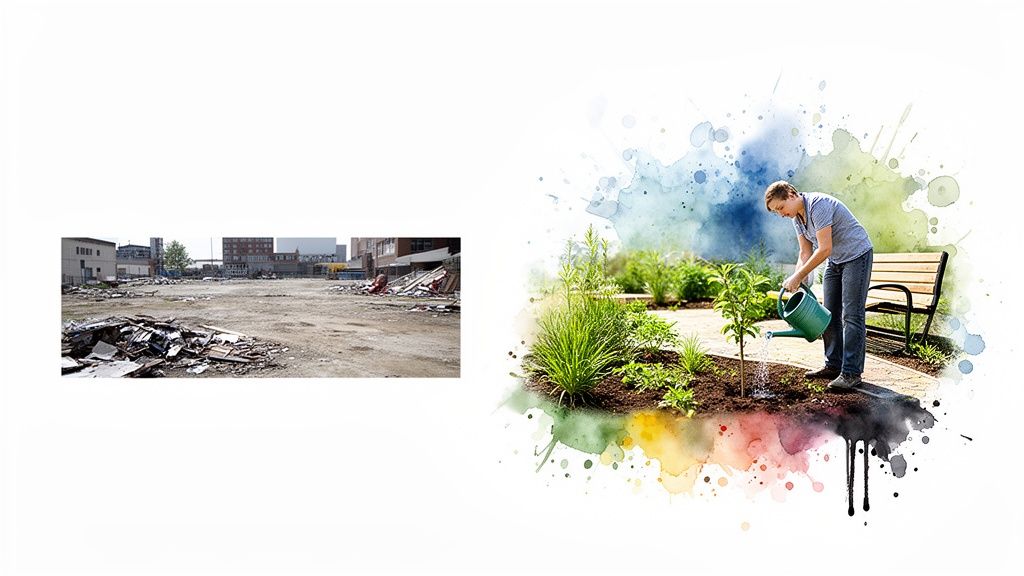
This approach transforms your group from a cleanup crew into neighborhood builders. It's one thing to say you cleaned a street; it's another to stand in a beautiful garden and say, "We built this." This creates a profound sense of ownership and pride that inspires even deeper commitment from everyone. It's undeniable proof that you have the power to make real, lasting change.
When to Use This Strategy
This is for established groups ready to take a brave leap. Once you have a consistent crew, you can channel that energy into a bigger project. It’s perfect when you’ve identified a specific eyesore and have the community support to dream bigger. You're shifting from reacting to problems to proactively building solutions.
Key Insight: The story of transformation is your most powerful recruitment tool. Documenting the journey from a desolate space to a vibrant community hub proves that real change is possible and inspires others to join the cause.
How to Implement It
- Start Small, Win Big: Begin with a manageable project, like installing a few planters, to build confidence before tackling a full park.
- Document Everything: Take "before" photos. Film the process. Interview your people. This visual story becomes a cornerstone of your outreach.
- Build with the Community: Involve neighbors in the design. This ensures the project truly serves their needs and fosters deep ownership.
- Make Friends at City Hall: Start conversations with city officials early. Understand the process for permits and land use to avoid roadblocks. Our own Caterpillar Park in Englewood started this way.
- Throw a Party: Host a grand opening when the project is done. This rewards your volunteers and signals a new chapter for the entire neighborhood.
This is one of the most rewarding community engagement strategies because it leaves a physical legacy of your group's love. If you’re ready to move from cleaning up to building up, you can learn more about the impact of targeted cleaning projects and start planning your transformation.
8. Friendship and Relationship Building as Primary Outcome
What if the amount of trash you collect is just the excuse? This strategy redefines success by treating friendships as the main goal, not just a happy accident. We aren’t just cleaning a street; we are building a family. The real magic happens when people stop showing up for the cause and start showing up for each other.
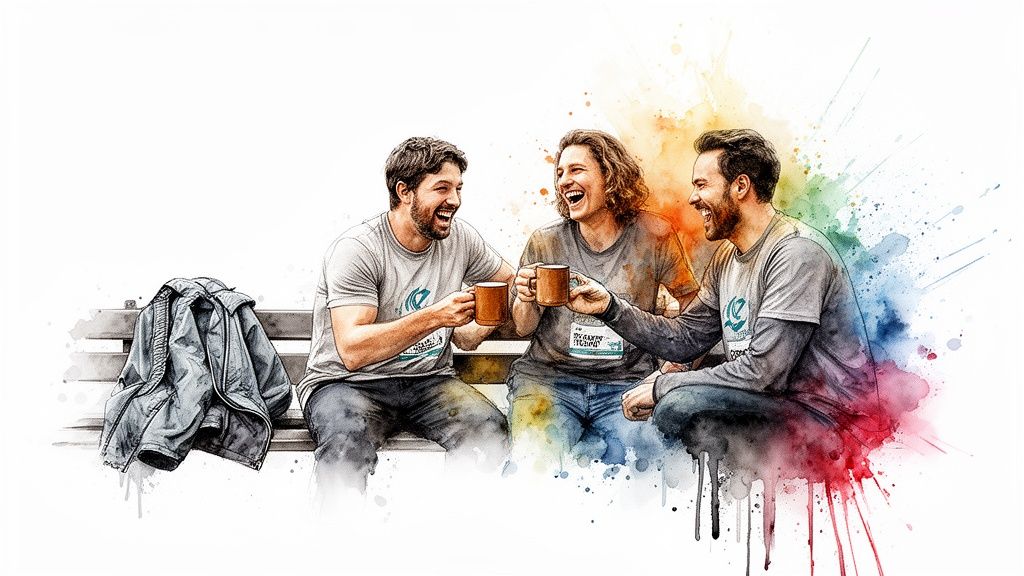
This approach recognizes a fundamental human truth: people stay where they feel they belong. When your group becomes a source of genuine social connection, participation becomes sustainable and deeply meaningful. The work of cleaning up becomes the joyful reason for the community to gather, creating a resilient movement powered by authentic human bonds.
When to Use This Strategy
This is one of the most vital community engagement strategies for long-term survival. If you want to build a lasting presence rather than just hosting one-off events, this is your guiding star. It’s about creating a culture where people feel seen, valued, and connected beyond the task at hand.
Key Insight: The strongest communities are not built on shared tasks, but on shared lives. When you create a space where people can bring their whole selves, celebrate milestones, and support each other, the work becomes secondary to the relationships.
How to Implement It
- Design for Social Time: Intentionally schedule time for non-work socializing. A pre-cleanup coffee circle or a post-event gathering at a local cafe works wonders.
- Create Post-Event Rituals: Establish a fun, optional tradition after every event, like grabbing breakfast together. This is where friendships deepen.
- Bridge the Gaps: Use a group chat to maintain connections between events. Share photos, celebrate personal wins, and keep the conversation flowing.
- Make Warm Introductions: When a new person joins, don't just point them to the supplies. Introduce them warmly to a few regulars by name.
- Celebrate the People: Acknowledge birthdays and new jobs. This shows you care about your members as whole people, not just as volunteers.
9. Values-Driven Recruitment and Participant Selection
A strong community isn't just a random collection of people; it's a tapestry woven together by shared beliefs. This strategy is about being so clear and loud about your values—like bravery and kindness—that the right people feel an undeniable pull to join. It isn't about exclusion; it's about creating a powerful gravity field around your mission.
When your group is filled with people who embody bravery and kindness, those values become the air you breathe. Newcomers either thrive in that environment or realize it's not for them. This approach prioritizes the health of your culture over sheer numbers, knowing that a small, committed group is infinitely more powerful than a large, disconnected crowd.
When to Use This Strategy
This is essential when how you do the work matters as much as what you do. If you're building a long-term movement founded on trust, this is non-negotiable. It's how groups like Litter Caterpillars ensure the experience of cleaning together is always positive and supportive.
Key Insight: Your community's culture is your most precious creation. Protecting it means being unapologetically clear about who you are and what you stand for. The people meant for your mission will find you.
How to Implement It
- Broadcast Your Values Boldly: Weave your core values (bravery, kindness, unity) into every piece of communication. Don't just list them; tell stories that show them in action.
- Let Your Structure Do the Filtering: Our Saturday morning cleanups and volunteer-only model aren't accidental. They naturally select for people who are committed and generous.
- Celebrate Value-Aligned Behavior: When you see a volunteer help a newcomer or tackle a tough spot with a smile, celebrate it publicly. This reinforces what your community cherishes.
- Share Your "Why": When a new person joins, tell them your origin story. Talk about the heart behind the work. This connects them to the mission from day one.
Building a team based on shared beliefs is one of the most sustainable community engagement strategies you can employ. If you're looking for practical ways to attract the right people, our guide on how to find volunteers offers deeper insights.
10. Personal Transformation Narrative and Self-Development Positioning
Sometimes, picking up a piece of trash isn't just about cleaning a street. It’s about picking up a piece of yourself. This strategy reframes community service not just as giving back, but as a brave journey of personal growth. It positions showing up as a way to build discipline, self-trust, and resilience.
This approach connects the external work of improving a neighborhood with the internal work of becoming a stronger version of oneself. It taps into a deep human desire for meaning. When people see that showing up for their community is also a way to show up for themselves, their motivation becomes incredibly powerful. This is one of the most resonant community engagement strategies because it honors the whole person, not just their helping hands.
When to Use This Strategy
This is perfect for leaders with an authentic story rooted in personal change. If your group's "why" is tied to overcoming your own struggles, this approach will feel true. It’s also highly effective for attracting individuals who are seeking meaning, connection, and a way to believe in themselves again.
Key Insight: Your story of struggle is your superpower. Being open about your own journey-the doubts, the fears, the small wins-gives others permission to be on their own journey without shame. Transformation isn’t about perfection; it's about progress.
How to Implement It
- Share Your Origin Story Authentically: Tell the real story of why your group started. My own journey with Litter Caterpillars began as a way to find discipline when I felt lost. This truth connects with others on a human level.
- Use Transformational Language: We call ourselves "Litter Caterpillars" for a reason. Frame participation as a metamorphosis. Use words that evoke growth and becoming.
- Connect Service to Inner Strength: Explicitly link showing up consistently to building personal discipline. Frame cleaning a neglected space as an act of forgiveness—for the community and for oneself.
- Create Space for Reflection: End your events with a brief moment for volunteers to share what the experience meant to them. This helps cement the connection between the outer work and their inner world.
- Celebrate Personal Journeys: Invite volunteers to share their own stories of transformation, creating a culture where personal growth is seen and honored.
10-Point Community Engagement Strategies Comparison
| Approach | 🔄 Implementation Complexity | ⚡ Resource Requirements | 📊 Expected Outcomes | 💡 Ideal Use Cases | ⭐ Key Advantages |
|---|---|---|---|---|---|
| Volunteer-First Community Mobilization | 🔄 Medium — decentralized coordination; volunteer care systems | ⚡ Low $; high volunteer-management time | 📊 Deep trust & sustained participation; slower scale | 💡 Grassroots cleanups; community-led programs | ⭐ High retention, authentic engagement, low overhead |
| Scheduled Weekend Morning Events for Values Alignment | 🔄 Low — fixed schedule, simple logistics | ⚡ Low–Moderate; consistent volunteer commitment | 📊 Reliable, aligned volunteer base; habit formation | 💡 Values-filtering recruitment; family-friendly events | ⭐ Consistency, reduced flakiness, ritual culture |
| Identity and Pride Building Through Symbols | 🔄 Medium — design + ongoing reinforcement | ⚡ Moderate $ for creative resources & merch | 📊 Increased pride, visibility, and social sharing | 💡 Brand-building; retention-focused groups | ⭐ Strong belonging and shareable identity |
| All-Neighborhood Equity and Geographic Saturation | 🔄 High — complex routing, safety & partnerships | ⚡ High time/travel costs; liaison roles required | 📊 Citywide visible impact; equitable coverage | 💡 Citywide programs; equity-driven missions | ⭐ Broad reach, prevents service gaps, builds city unity |
| Digital Hub Integration (Multi-Platform Accessibility) | 🔄 Medium — multi-channel upkeep & consistency | ⚡ Moderate time for content; low platform costs | 📊 Greater discovery, multiple engagement touchpoints | 💡 Outreach to diverse digital audiences; scalable signups | ⭐ Low barrier entry; flexible, real-time communication |
| Reframing Hardship as Growth Opportunity | 🔄 Medium — cultural framing plus safety protocols | ⚡ Low–Moderate; training and protective gear | 📊 Strong bonding; attracts resilient, growth-minded volunteers | 💡 Challenge-oriented communities; resilience-building | ⭐ Deep cohesion and memorable experiences |
| Environmental Intervention and Visible Impact Creation | 🔄 High — permits, project management, partnerships | ⚡ High $ and diverse skills; long timelines | 📊 Lasting, tangible legacy; media and public recognition | 💡 Long-term transformation projects; fundraising goals | ⭐ Tangible legacy, increased pride, recruitment draw |
| Friendship & Relationship Building as Primary Outcome | 🔄 Medium — intentional facilitation and social design | ⚡ Low $; time for social programming and follow-up | 📊 High retention; resilient social networks beyond events | 💡 Community cohesion; mental-health and social support | ⭐ Sustained engagement through friendships and belonging |
| Values-Driven Recruitment and Participant Selection | 🔄 Medium — messaging, modeling, and onboarding | ⚡ Low–Moderate; leadership time for consistent messaging | 📊 Cohesive culture; self-selecting, mission-aligned participants | 💡 Mission-focused groups seeking cultural alignment | ⭐ Reduced conflict; clearer decision-making and culture fit |
| Personal Transformation Narrative & Self-Development | 🔄 Medium — storytelling, reflection practices | ⚡ Low–Moderate; needs programmatic reflection time | 📊 Attracts growth-minded volunteers; deeper meaning & retention | 💡 Personal-development seekers; retention strategy | ⭐ Deep intrinsic motivation and long-term commitment |
Your Turn to Advance the Plot
You’ve just been handed a toolkit full of community engagement strategies. But a toolkit is useless until you pick up a tool and start building. The real secret isn't mastering all ten of these at once. It’s understanding the simple, brave truth that connects them all: turning work into play, and turning strangers into friends.
The Tom Sawyer Secret
Remember Tom Sawyer, stuck with the dreadful chore of whitewashing a fence? He didn't complain. He reframed it. With a spark of genius, he convinced his friends that painting a fence wasn't work at all—it was a rare and exclusive privilege. Soon, they were trading their treasures just for a chance to help.
This is the secret sauce. The best community engagement strategies don’t delegate tasks; they invite people into an adventure. They turn the "hard stuff"—the challenges we’d normally avoid—into the very thing that makes the story worth telling. The hardship isn’t the obstacle; it’s the plot twist. It’s what makes the experience meaningful.
From Strategy to Action
Looking back at these strategies, you can see this principle everywhere:
- Volunteer-First Mobilization and Friendship as the Primary Outcome are about building a crew for your adventure.
- Identity Building Through Symbols and Values-Driven Recruitment create the feeling of being part of an exclusive club, just like Tom’s fence-painting crew.
- Reframing Hardship as Growth is the ultimate Tom Sawyer move. It takes the "chore" and turns it into a powerful opportunity for personal transformation.
You don't need a perfectly polished plan or a 501(c)(3) to begin. You don’t need permission. All you need is the courage to show up, the kindness to welcome others, and the willingness to face a little discomfort. We are all caterpillars, a little messy and imperfect, inching our way forward. But through simple acts of service and friendship, we build the cocoon for our collective transformation.
So, here is your call to adventure. Don’t get overwhelmed. Just pick one.
Which strategy sparked something in you? Was it creating a symbol for your neighborhood? Or the simple act of scheduling a consistent weekend event? Whatever it is, choose that one thing.
Commit to trying it this weekend. Send that text. Make that social media post. Show up at the park with a trash bag and a smile. You’ll be amazed at how quickly others join when they see someone leading with bravery and kindness. Because if you want to go fast, you can go alone. But if you want to go far, we must go together.
Let’s go far.
Here in Chicago, Litter Caterpillars puts these community engagement strategies into practice every single weekend, transforming neighborhood cleanups into joyful adventures in friendship and self-discovery. If you’re ready to see these ideas in action and advance your own plot, we invite you to join us. Find your next cleanup and see for yourself at Litter Caterpillars.