
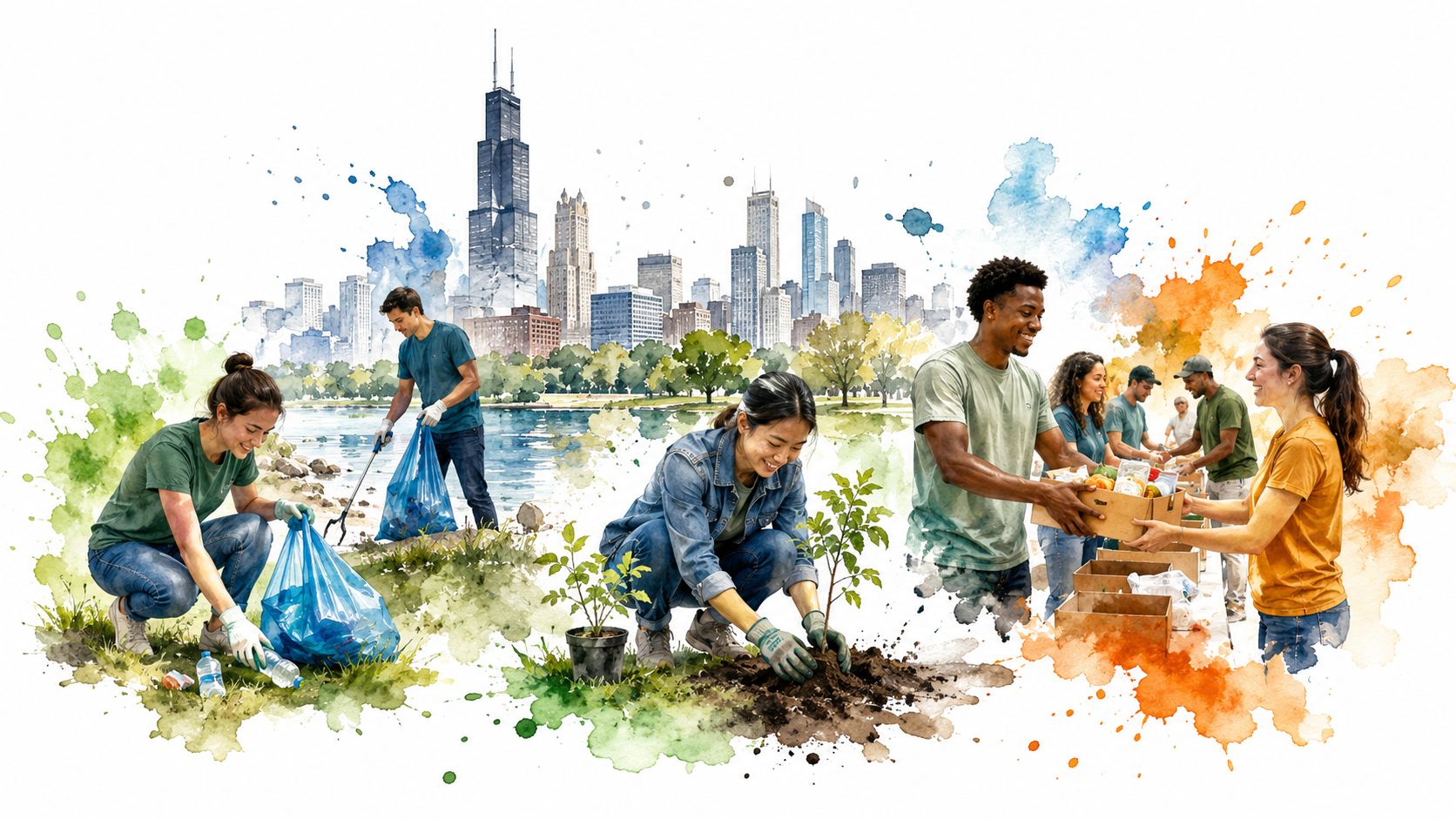
I bend down for one bottle, then spot a wrapper under a parked car. A minute later, someone beside me fills a bag, and the work feels lighter because we're moving together. Chicago has community service opportunities for a one-hour neighborhood cleanup, a park partnership, a school project, a vacant-lot garden, and plenty between them. Meetup, local nonprofits, schools, neighborhood groups, and open chats can help you find a starting point. Weekend mornings make a practical first try. Choose a place you can reach, a pace your body can keep, and a group that makes returning feel realistic. Litter Caterpillars gives Chicago volunteers one example of that approach, with regular trash pickups built around showing up together.
1. Weekly Neighborhood Cleanup Groups
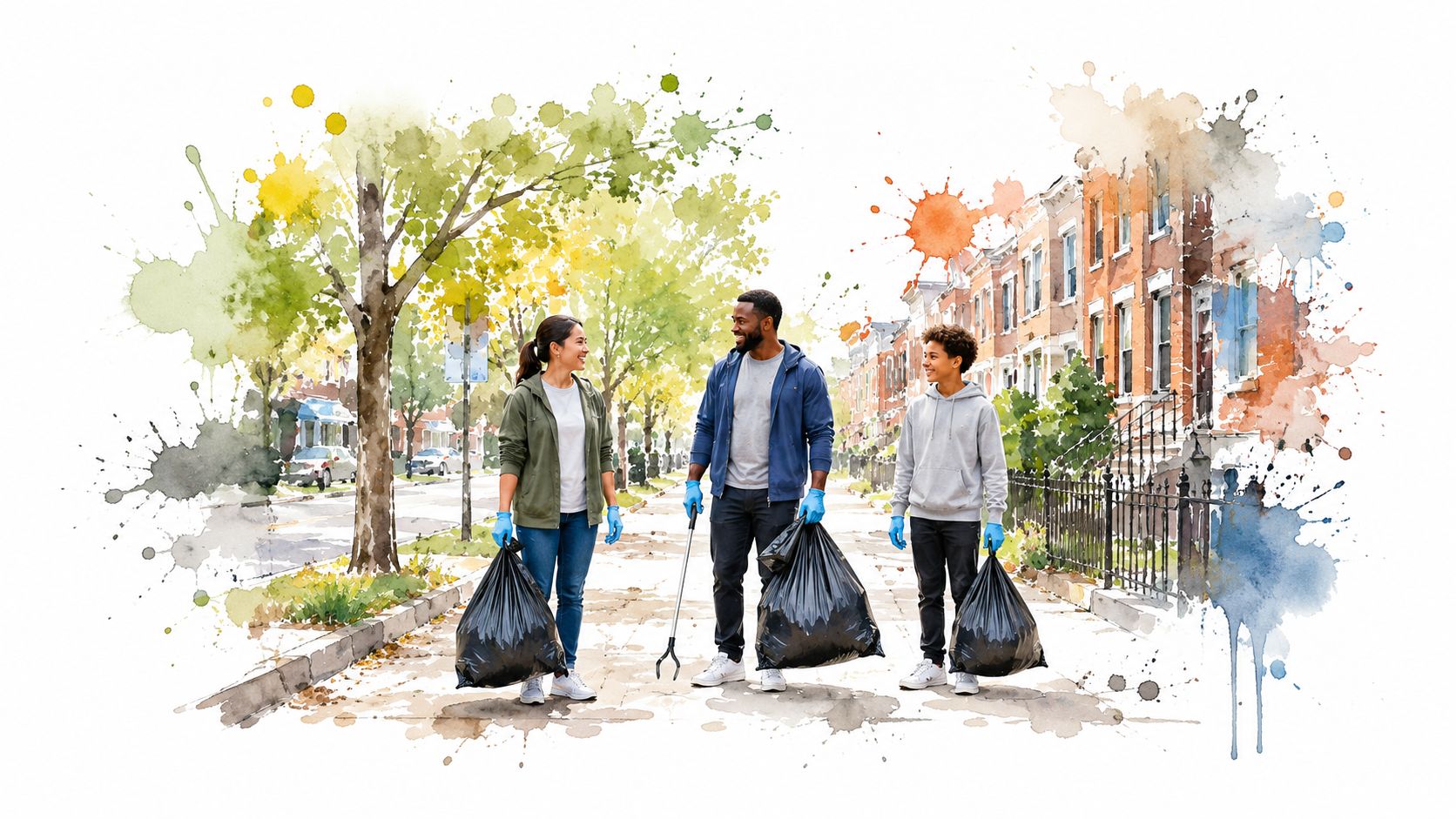
A weekly cleanup gives service a dependable shape. You meet at a familiar time, pick up a bag and gloves, and learn the rhythm of the street. The first visit may feel like a small errand. After a few visits, you start noticing which corner collects cups, which alley needs attention, and which neighbors wave as you pass.
Litter Caterpillars runs weekly pickups across all 50 Chicago wards, according to the group's publisher information, while neighborhood associations organize cleanups in specific areas. Lincoln Park groups often focus on lakefront paths and park zones. You can also search Meetup for an event that fits your Saturday instead of building a project from scratch.
Make repetition easy
Organizers can schedule events at 9 AM or earlier when they want a steady weekend routine. A simple RSVP page removes needless steps. Group shirts, flags, badges, or another shared marker can help strangers recognize one another quickly, while before-and-after photos give the team a small record of each morning.
Rotate neighborhoods when you can. A cleanup in Lincoln Park feels different from one in Englewood or on the South Side, and moving around Chicago helps volunteers meet more people.
Practical rule: Choose a recurring time before you choose a grand mission. A routine you can keep beats an ambitious plan you abandon.
If you're organizing your own crew, use this guide to organize a neighborhood cleanup. The best group may be the one that makes a bag, a meeting point, and a friendly hello feel enough to begin.
2. Adopt-a-Highway and Major Corridor Programs
A major road changes the experience of picking up litter. Cars move quickly, the shoulder can feel exposed, and a loose team needs clear boundaries before anyone lifts a bag. In return, volunteers take responsibility for a defined stretch instead of treating cleanup as a one-off walk.
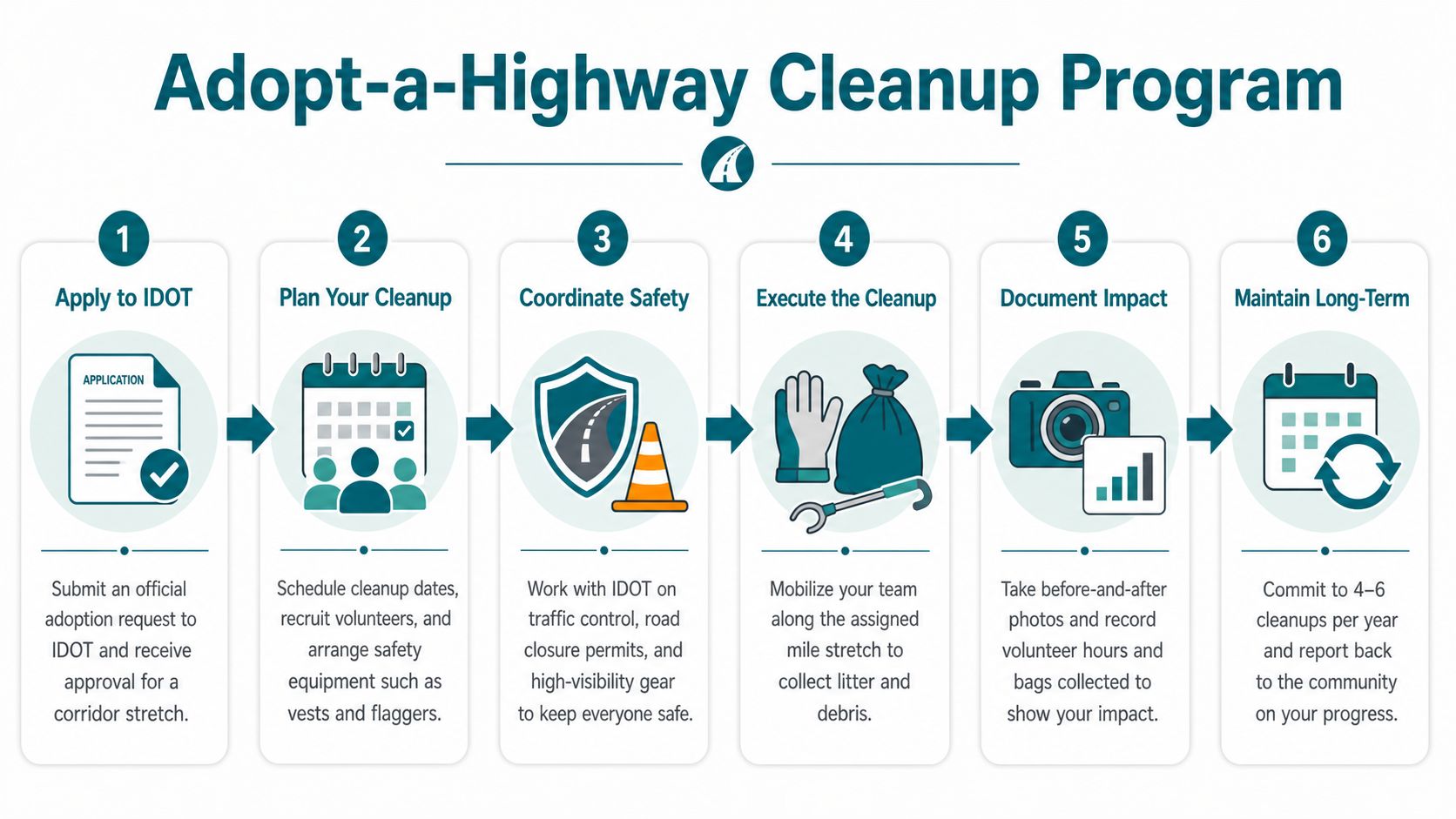
Chicago groups can work with IDOT on safety equipment and road-closure coordination. Litter Caterpillars cleaned a highway during the shutdown for the Bike the Drive event, and corporate teams can adopt sections of Lake Shore Drive. Community groups may also maintain portions of Ashland Avenue or Western Avenue.
Treat the corridor like a worksite
Schedule service after a large event or a season that leaves extra litter behind. Ask nearby businesses to help with water, bags, gloves, and volunteer recruitment. Give every participant a clear job, such as bag collection, supply support, route observation, or communication with the lead.
High-visibility vests and trained flaggers belong in the plan. Volunteers should never improvise around moving traffic. Take photos from safe locations, record what the team completed, and use those records in community updates or partnership conversations.
A corridor project needs more than enthusiasm. It needs a route map, a meeting point, a weather decision, and an exit plan.
For prevention work beyond pickup, explore ways to prevent illegal dumping. Removing waste helps today. Learning why people dump materials, where repeat problems appear, and whom to contact can shape the next response.
3. Vacant Lot Transformation and Urban Gardening
A vacant lot asks for patience. You may begin with broken glass, tangled weeds, old furniture, and soil that needs professional attention. The first cleanup clears the view. Later, neighbors can decide whether the space should become a garden, a gathering place, a play area, or another useful community resource.
Caterpillar Park in Englewood grew from Litter Caterpillars' work, while Growing Home in Englewood transforms lots into urban farms. The Local Initiatives Support Corporation, or LISC, supports vacant-lot projects across Chicago. Each example points to the same practical truth, a lot needs a plan for its next life before people invite the public in.
Build the next phase early
Start with one property. Get the owner's agreement before volunteers invest time, and work with a nonprofit that understands land management, soil questions, permits, and maintenance. Ask neighbors what they want to see, then create a schedule for watering, mowing, repairs, trash removal, and winter care before opening the space.
- Choose a manageable footprint: A smaller project lets people learn the site before expanding.
- Invite local design voices: Neighbors should help decide paths, planting, seating, and use.
- Plan funding carefully: Environmental and community-development funders may support eligible work.
The transformation takes shape in stages. First, people remove hazards. Then they create a place that asks for regular care.
See Chicago community gardens for a place-based route into this kind of service. The video below gives the project a more tangible feel.
4. School and Youth Organization Volunteer Partnerships
A school cleanup can start with a short walk, a few pairs of gloves, and a teacher who knows how to keep the group moving. Chicago Public Schools can partner with environmental nonprofits for cleanup days. Boys and Girls Clubs can place service inside summer programming, and Kenwood Academy students have taken part in lakefront cleanups.
Young volunteers need jobs they can understand. One student can track supplies, another can collect safe litter, and another can photograph the work with permission. Give older participants a chance to lead a briefing or welcome new members. A service habit grows more naturally when students can see their own progress.

Connect service to school life
Start with an environmental coordinator, service coordinator, teacher, or youth-program director. A cleanup can support lessons about waste, water, wildlife, civic life, or local geography. Libraries and schools can also run low-barrier projects such as making cards for veterans, decorating materials for care homes, or creating bookmarks for young readers, based on examples described by the American Library Association's school-library blog.
Ontario students who need a comparison for school service requirements can look to Ontario's graduation guidance, which requires 40 hours of unpaid community involvement for the Ontario Secondary School Diploma. Students can begin recording hours in July before Grade 9, and the guidance suggests aiming for about 10 hours per year. Ontario school guidance provides those details.
Keep the activity hands-on, recognize participation with certificates or a thank-you, and give students a route from helper to team leader.
5. Corporate Team Building and Volunteer Days
A company volunteer day works best when nobody has to guess what happens next. Employees arrive at a neighborhood or park, receive a short briefing, split into defined roles, and leave with a clear picture of the site they helped. The day can feel social without turning service into a forced office exercise.
Chicago environmental groups can work with technology, finance, law, consulting, and other companies. Google and Salesforce organize employee volunteer days, and local nonprofits partner with firms that want a practical group project. Organizers can package the experience around a site, a meeting time, supplies, safety guidance, and a simple follow-up.
Give the team a story and a job
Before the event, explain why the neighborhood needs the work without reducing the community to a problem. Show the route, name the local partner, and tell employees what to bring. On site, assign a company lead and a service lead so questions have a clear home.
Afterward, send before-and-after photos and a concise account of what the team completed. Ask what felt easy, what felt confusing, and whether anyone wants to join a recurring cleanup.
Small details can make the day feel shared. A group flag, a team photo, or a playful sign can help participants remember the morning. If a project uses branded site markers, organizers can review guidance on designing effective hole signs for ideas about readable, visible messaging, even outside a golf setting.
The trade-off is simple. A company day can bring many hands at once, while a recurring group builds deeper continuity. A thoughtful organizer can invite both.
6. Environmental Education and Workshops
Some volunteers want to understand the route from a discarded cup to a clogged drain or polluted waterway. A cleanup followed by a workshop gives them that connection. You can talk about what litter does in waterways, how materials break down, and which daily choices prevent waste from reaching the street.
Chicago Public Schools can use environmental lessons about waste and litter. Lincoln Park Zoo can connect wildlife education with plastic concerns, and the League of Women Voters Chicago hosts workshops about environmental sustainability. Schools, libraries, and community centers already have rooms and audiences, so a local partnership can make the first session easier to arrange.
Teach with objects people can see
Avoid leading with shame. Put a storm-drain image beside a bag of collected items. Show a clean sorting station, a composting example, or a sealed container that demonstrates how litter can travel through water. Ask participants to name one change they can make that day.
- Use a local route: Walk from the meeting point to a drain, park edge, or shoreline.
- Let young people speak: Students can create messages for classmates and neighbors.
- End with action: Give people a simple next step, such as joining a cleanup or checking local recycling guidance.
A workshop should leave people with something to do, not only something to worry about. Pair the lesson with a short service activity so the idea becomes physical.
You can also create remote participation for people who can't attend outdoors. A student might design a litter-prevention poster, a volunteer might help organize event information, and a community member might share a workshop invitation through a local group chat.
7. Parks and Lakefront Stewardship Programs
A park volunteer notices more than a bottle. You may spot a damaged bench, a broken sign, a bare planting bed, or a path that needs attention. Stewardship gives you a way to report those problems while you pick up litter and care for the place over time.
Friends of the Parks organizations run volunteer stewardship programs. The Lakefront Cleanup Initiative coordinates beach and shoreline work, and the Lincoln Park Conservancy works on park improvements and maintenance. A group can adopt one section, establish a recurring schedule, and keep a simple record of what needs follow-up.

Care for the place between events
Build a working relationship with the Chicago Park District or the relevant park partner before assigning tasks. Decide how volunteers should report maintenance issues, where filled bags go, and which work requires staff or trained professionals. Monthly or twice-monthly gatherings can keep the site familiar without making every volunteer promise a permanent obligation.
Families can join when the activity suits different ages. One person may collect litter, another may photograph conditions, and children may help with safe, supervised tasks. Document the park across seasons so returning volunteers can see changes without relying on memory.
A beach cleanup also needs a weather plan, sturdy footwear, water, gloves, and a way to avoid sharp or unknown objects. Volunteers should report unsafe conditions, accidents, and injuries immediately, and they should know where first-aid supplies and evacuation routes are located, as described in this volunteer safety training checklist.
8. Neighborhood Association and Block Club Integration
A block club already knows who lives on the street, which alley creates frustration, and when neighbors gather. That knowledge can save an organizer from starting with a blank page. Instead of asking people to join a new institution, you can add a cleanup to a communication channel they already use.
Pilsen neighborhood groups coordinate environmental work. The Lincoln Square Chamber of Commerce can partner on street and alley cleanups, while Rogers Park community organizations organize block cleanups. Each group may have different priorities, so listen before you propose a route.
Earn trust before asking for turnout
Attend an association meeting or contact a leader with a short plan. Explain how the cleanup supports the group's existing goals, then offer to handle logistics such as supplies, reminders, route planning, and waste disposal. Schedule around a neighborhood event, a seasonal change, or a day when residents already expect activity outside.
- Ask about the problem first: Residents may prefer an alley, vacant edge, school route, or business strip.
- Bring a finished plan: Include a meeting point, time, supply list, and safety contact.
- Return with updates: Share photos, thank participants, and report what still needs work.
You can connect cleanup with neighborhood pride without making promises about property values. People usually respond better when they can see a specific place, a reasonable task, and a group that will return.
This route also works for newcomers. A block club can turn a new city into a set of familiar faces, one street at a time.
9. Faith-Based Organization Service Programs
A church, synagogue, mosque, or temple often has a service calendar, a gathering place, and people who already know the surrounding blocks. A cleanup can fit that rhythm when organizers approach the community with respect instead of treating it as a list of available volunteers.
Trinity United Church of Christ in Chicago runs community service initiatives. The Jewish Federation of Chicago coordinates volunteer projects, and interfaith groups have worked on environmental stewardship in Chicago's South and West sides. These partnerships can bring together people who care about service for different reasons.
Start with relationship, not recruitment
Meet with a clergy member or community-service coordinator first. Explain the work, listen to the organization's priorities, and ask where a cleanup might fit. Respect major religious observances and the group's calendar. Bring a plan that includes supplies, safety, accessibility, transportation questions, and a clear end time.
Invite faith leaders to share why service matters to their community, but don't ask them to promote a project they haven't reviewed. Offer to facilitate the cleanup and manage the details. Afterward, send thanks and a short update about the work.
- Keep the invitation open: Make room for people who can contribute time, planning, hospitality, or translation.
- Protect the group's culture: Follow local expectations around food, clothing, prayer, and photographs.
- Build a return path: Invite interested participants to a recurring cleanup or another service day.
Groups can use congregation-focused tools such as Taja AI for faith-based communities when they need help communicating with members. The human conversation still comes first.
10. Social Media and Community Mobilization Networks
A volunteer may discover Saturday's cleanup while scrolling in bed, then decide to attend because the post gives a time, a place, and a short list of what to bring. That small amount of information can remove the uncertainty that keeps people home. Instagram, Meetup, Facebook groups, and open chats can work as doors into in-person service.
Litter Caterpillars uses Instagram storytelling and Meetup for events. Chicago Loves Its Parks uses Facebook for volunteer coordination, and environmental groups use branded hashtags to help participants recognize related activities. A clean event post should answer the practical questions before anyone has to send a message.
Make the post do useful work
Share photos with clear lighting and framing, then tell a short volunteer story about why that person returns. Before-and-after images give the audience a visible record. Post regularly, respond quickly, and use stories for weather changes, route updates, or last-minute reminders.
- Write the basics first: Include the time, location, meeting point, duration, and what to bring.
- Use a consistent identity: A hashtag, flag, shirt, or badge can help people find the same group again.
- Thank people directly: Public appreciation can make a first-time volunteer feel seen.
- Keep RSVP simple: Use Meetup or an open chat when a long application would add needless friction.
You can also draw ideas from this guide for artists on community platforms, especially when you need to make a group feel welcoming online. Digital mobilization works best when it leads to a real meeting, a real task, and a clear way to return.
Community Service Opportunities: 10-Item Comparison
| Activity | 🔄 Implementation Complexity | ⚡ Resource Requirements | 📊 Expected Outcomes & Ideal Use Cases | ⭐ Key Advantages | 💡 Tips |
|---|---|---|---|---|---|
| Weekly Neighborhood Cleanup Groups | 🔄 Low, recurring coordination and simple logistics | ⚡ Low, bags, gloves, grabbers, volunteer time | Gradual visible neighborhood improvement; ideal for local blocks/wards | ⭐⭐⭐ Strong community-building; low barrier to entry | 💡 Schedule mornings; document before/after; create group identity |
| Adopt-a-Highway and Major Corridor Programs | 🔄 Medium–High, permits, safety planning, agency coordination | ⚡ Medium, safety gear, larger crews, formal reporting | High-visibility corridor improvements; ideal for long-term adopters and corporate sponsors | ⭐⭐⭐ Official recognition; high visibility; sponsor appeal | 💡 Coordinate with IDOT; use vests/flaggers; schedule after busy events |
| Vacant Lot Transformation and Urban Gardening | 🔄 High, land access, remediation, permitting, design | ⚡ High, heavy removal, soil testing, funding, skilled partners | Lasting beautification and community space; ideal for long-term investment projects | ⭐⭐⭐⭐ Creates permanent change; attracts funding and deep ownership | 💡 Start small; secure owner buy-in; plan maintenance & funding early |
| School and Youth Organization Volunteer Partnerships | 🔄 Medium, schedule alignment, supervision, curriculum links | ⚡ Low–Medium, adult supervisors, basic supplies, educational materials | Builds service habits and environmental literacy; ideal for schools and youth programs | ⭐⭐⭐ Reliable volunteer base; educational & leadership benefits | 💡 Tie activities to curriculum; provide recognition and leadership roles |
| Corporate Team Building and Volunteer Days | 🔄 Medium, packaged logistics, single-day coordination | ⚡ Medium, supplies, staffing, possible sponsorships | Rapid, high-output events; ideal for companies seeking team bonding and PR | ⭐⭐⭐ Large short-term impact; potential funding and partnerships | 💡 Offer turnkey packages; assign clear roles; follow up with impact metrics |
| Environmental Education and Workshops | 🔄 Medium, content development and skilled facilitation | ⚡ Low–Medium, presenters, materials, demo supplies | Behavior change and advocacy; ideal for classrooms, libraries, community centers | ⭐⭐⭐ Addresses root causes; builds advocates | 💡 Lead with stories and data; include hands-on demos and immediate takeaways |
| Parks and Lakefront Stewardship Programs | 🔄 Medium, coordinate with Parks Dept and monitoring systems | ⚡ Medium, tools, reporting system, regular volunteer schedule | Maintained public recreation spaces; ideal for families and intergenerational groups | ⭐⭐⭐ City support; visible community benefit | 💡 Establish formal Parks relationship; schedule regular stewardship; report issues |
| Neighborhood Association and Block Club Integration | 🔄 Low–Medium, navigate local governance and meetings | ⚡ Low, access to lists, modest supplies, volunteer coordination | Efficient recruitment and sustained campaigns; ideal where associations exist | ⭐⭐⭐ Trusted channels; potential small grants | 💡 Attend meetings first; offer to manage logistics; align with priorities |
| Faith-Based Organization Service Programs | 🔄 Low–Medium, schedule and cultural coordination with congregations | ⚡ Low, volunteer pools, meeting space, occasional meals/supplies | Values-driven sustained volunteering; ideal for faith communities and neighborhood outreach | ⭐⭐⭐ Deep commitment; strong volunteer base | 💡 Meet with clergy; align with calendars; explain mission alignment |
| Social Media and Community Mobilization Networks | 🔄 Medium, sustained content, moderation, and event management | ⚡ Low, platform accounts, time for posts, RSVP tools | Rapid recruitment, visibility, and ad-hoc turnout; ideal for outreach and youth engagement | ⭐⭐⭐ Low barrier to entry; visual storytelling boosts participation | 💡 Post 2–3x/week; use before/after photos; create branded hashtags and quick logistics |
Turn One Cleanup Into Your Regular Thing
Chicago gives you many ways to begin. You can join a weekend-morning event on Meetup, contact a local nonprofit or school, ask a block club about a service day, or speak with a faith group that already organizes community work. You can explore Litter Caterpillars at littercaterpillars.com and see whether its weekly Chicago pickups fit your routine.
Before you RSVP, run a quick fit check. How long will travel take from your home, school, or workplace? Can you manage the walking, bending, heat, cold, or uneven ground? Does the organizer explain safety plans, supplies, meeting points, and what happens if weather changes? Do people greet newcomers, answer questions, and respect different abilities? Can you keep the schedule without turning service into another source of stress?
People volunteer through formal organizations and through direct help in their communities. Updated United Nations Volunteerism reporting estimates that about 2.1 billion people worldwide, or 34.5% of the working-age population, volunteer each month. The same reporting places monthly direct helping at 25.0% and organizational volunteering at 11.7%, showing why a neighborhood group or informal cleanup can be a genuine entry point, not a lesser version of service. Read the United Nations Volunteerism monthly volunteering estimates for the measurement details.
If you need community service for a housing requirement, check your local housing authority before choosing an event. HUD guidance says many public housing residents in the United States must complete 8 hours per month of community service or an economic self-sufficiency program, with a combined total of 8 hours per month allowed. Residents may bank fewer hours in a month, but they must reach 96 hours before the next annual reexamination, according to this HUD community service and self-sufficiency guide.
Safety deserves the same attention as scheduling. Wear the clothing the organizer requests, bring water, and ask before handling sharp, heavy, or unknown items. If you have COVID-19 symptoms, stay home. California volunteer guidance also advises keeping 6 feet of distance, washing hands before, during, and after a project, disinfecting surfaces, and covering coughs and sneezes with a tissue or elbow. See California Volunteers' safety guidance before joining a group that uses shared tools or works closely together.
Make your first test small. RSVP, bring the requested supplies, introduce yourself to one volunteer, and return once before deciding whether the group fits. One morning can show you whether the route, people, pace, and purpose feel right.
Litter Caterpillars hosts scheduled trash pickups across Chicago, with weekend-morning events, Meetup listings, Instagram updates, and open group chats that help volunteers join without a complicated process. Visit Litter Caterpillars to find an upcoming cleanup, meet people who care about their neighborhoods, and choose a service routine you can keep.