Tag: environmental volunteering

  • 7 Student Volunteer Opportunities Near Me in Chicago

    7 Student Volunteer Opportunities Near Me in Chicago

    You've got a free Saturday morning, but it isn't wide open. Maybe you can spare two hours before work. Maybe your club wants a structured indoor shift. Maybe you're ready for a full-day project that teaches you something practical. You search student volunteer opportunities near me, then face a wall of listings that all sound alike.

    The right choice depends on more than the cause. Your age, neighborhood, transit route, physical comfort, weather tolerance, waiver requirements, and preferred social setting all matter. A cleanup crew can give you fresh air and new friends. A food bank can give you an organized indoor shift. A build site can give you teamwork and hands-on skills.

    This Chicago guide organizes seven options by the kind of service day you can fit into your schedule. You'll find weekend cleanups, beach work, river restoration, park stewardship, food support, neighborhood projects, and Habitat for Humanity Chicago roles. You'll also get practical notes on sign-up steps, transportation, safety, accessibility, service-hour records, and bringing a friend.

    If you're curious about safety skills for outdoor work, you can also compare local wilderness first aid training near me. For now, start with the option that matches the Saturday you really have, not the ideal schedule you wish you had.

    1. Litter Caterpillars

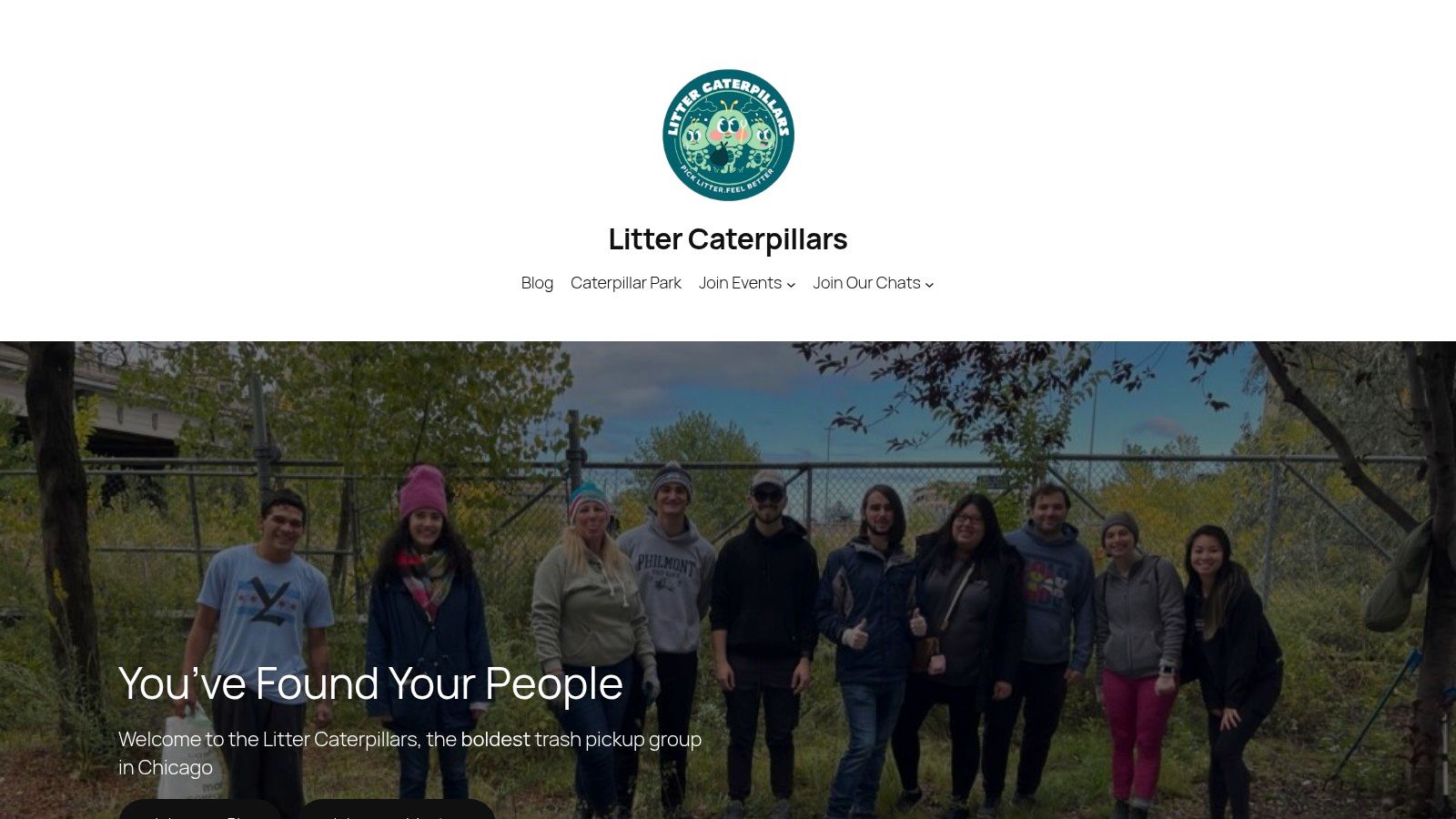
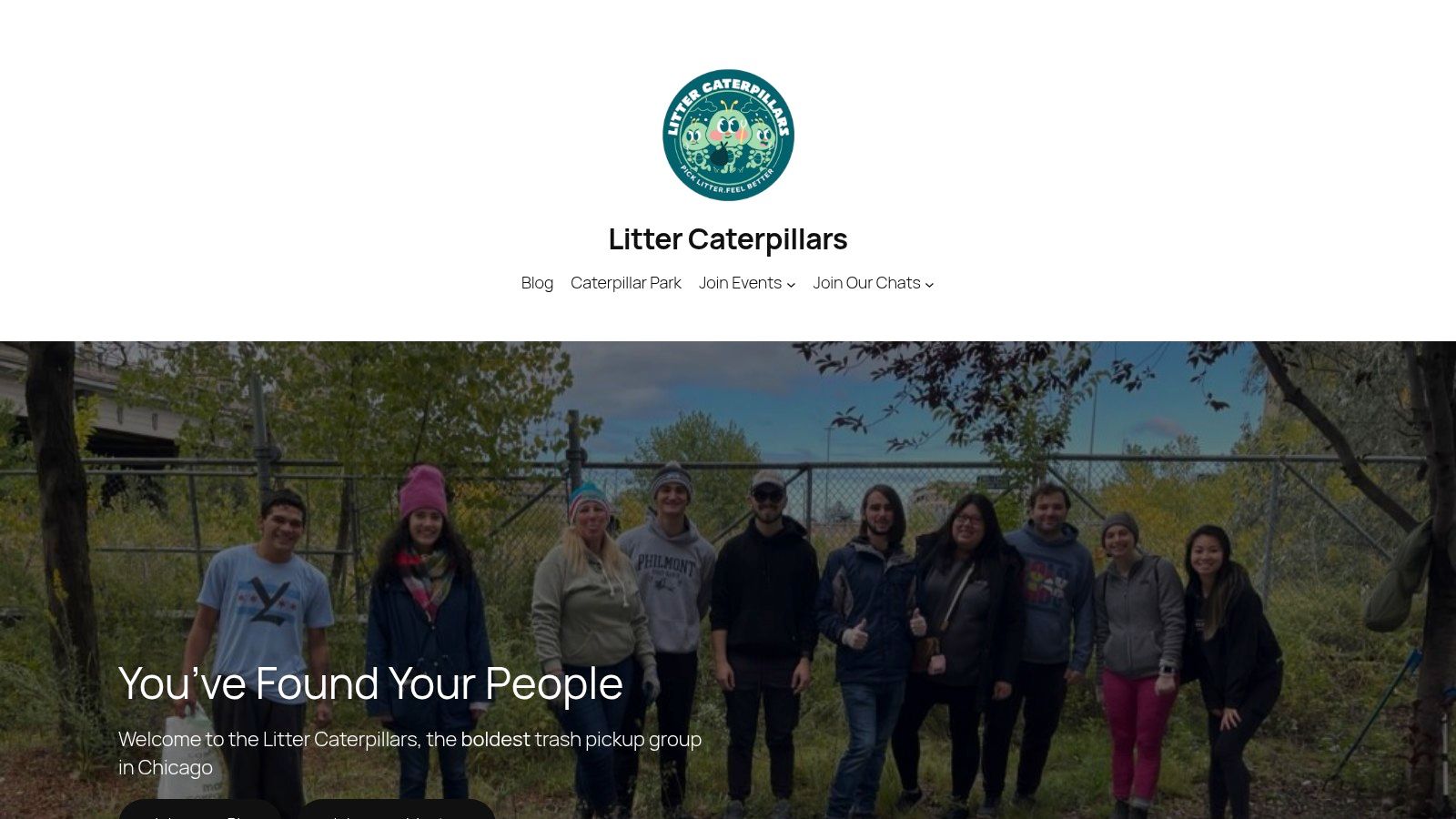
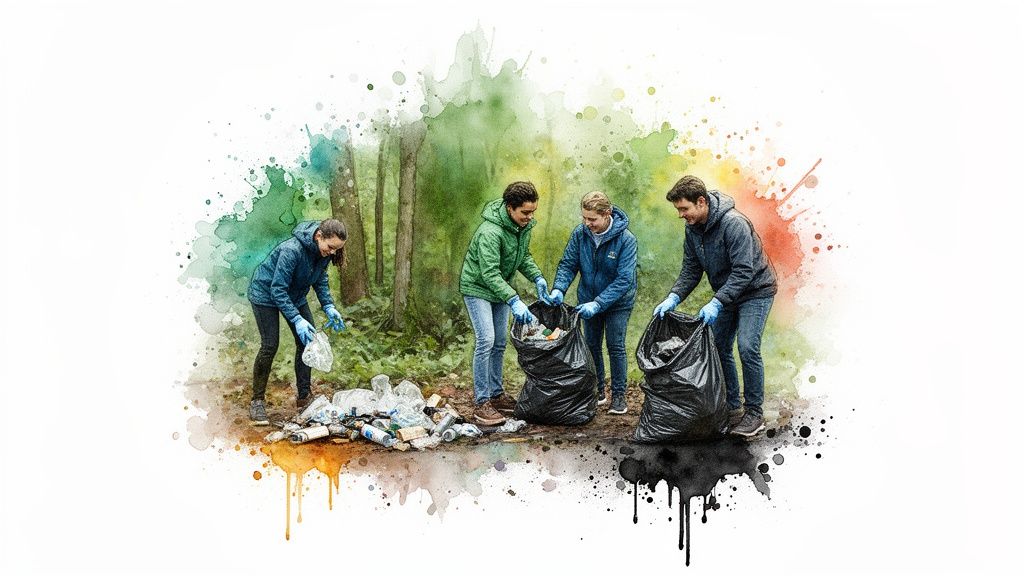
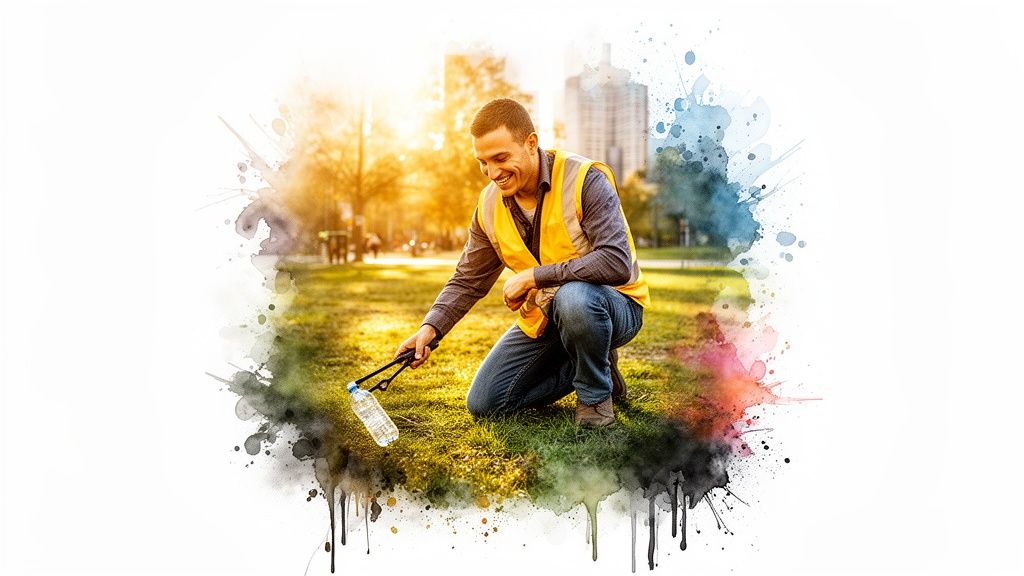
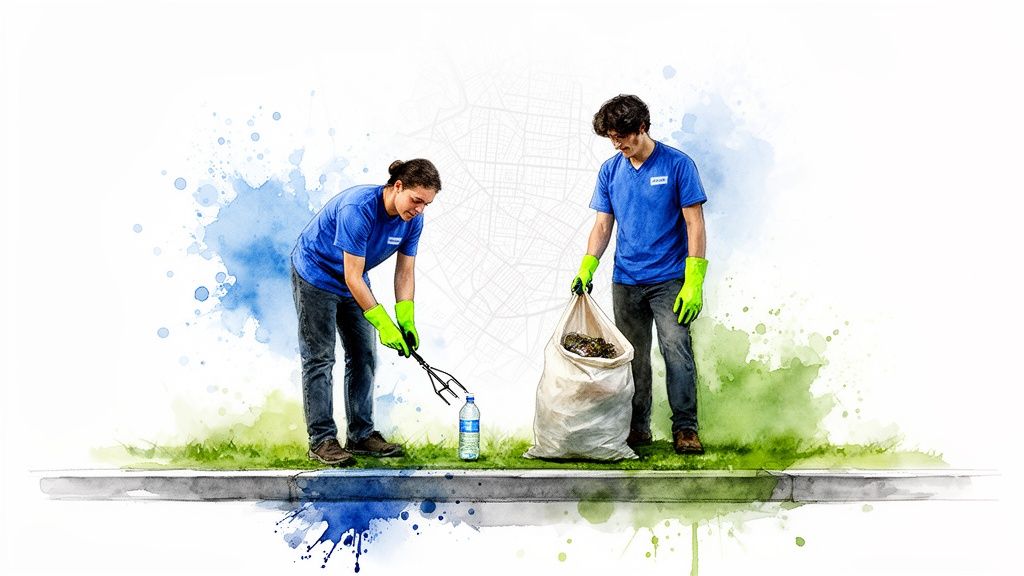
    A student can finish a weekend cleanup before the rest of Saturday begins. Arrive with gloves and sturdy shoes, meet the group at a marked corner, then follow volunteers along a block as they pull bottles from weeds, lift bags from sidewalks, and clear litter from places people have stopped noticing. By the end, the route looks easier to walk.

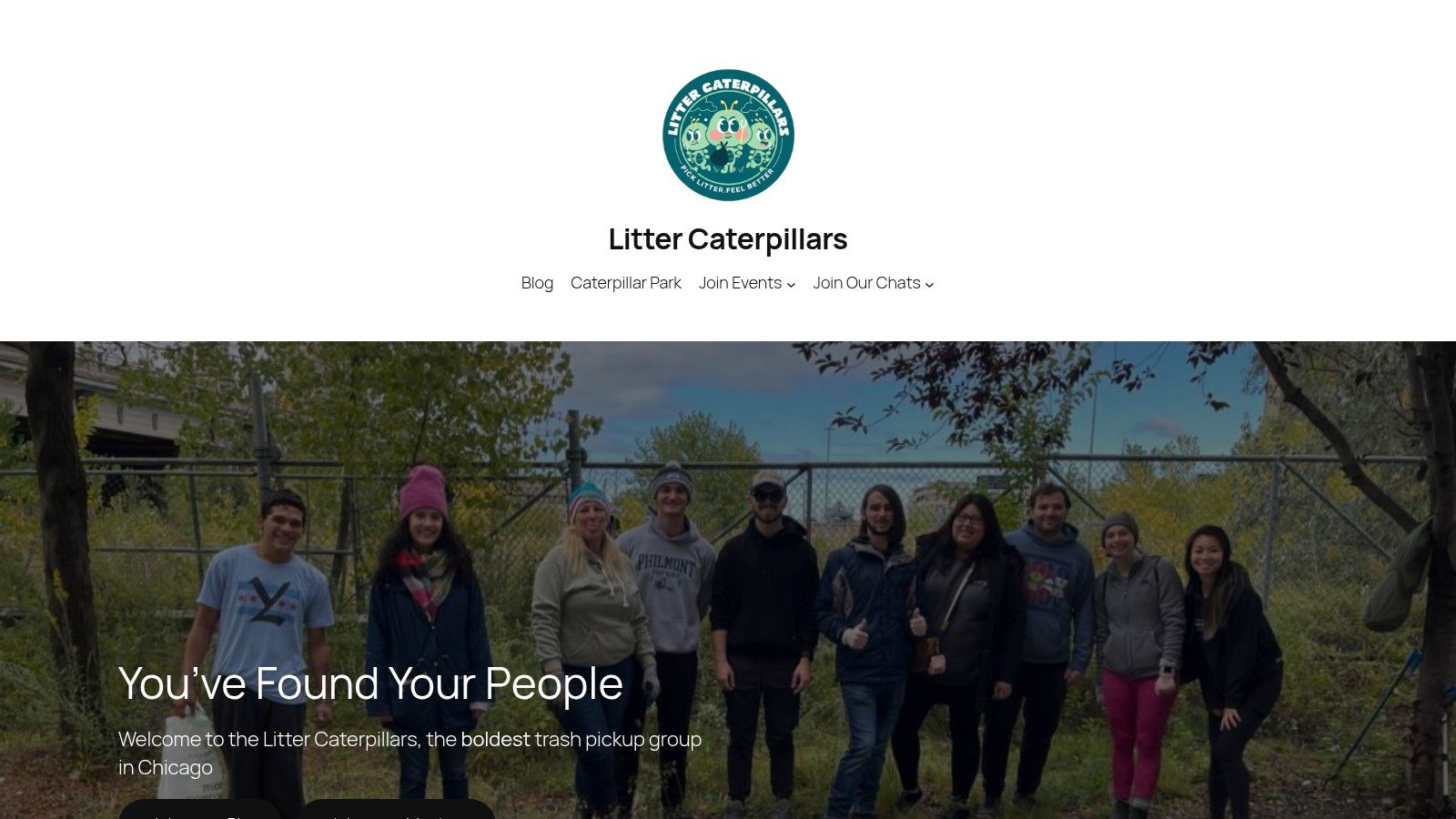
    That is the Litter Caterpillars experience. Founded by Kevin Tao, this Chicago volunteer group organizes recurring trash pickups across the city, including areas other groups may avoid. The group has cleaned all 50 wards and won an empty lot at auction to create Caterpillar Park in Englewood, according to its official story and mission.

    Joining takes only a few checks. Find an upcoming event through Litter Caterpillars on Meetup or follow Litter Caterpillars on Instagram. Read the meeting point, time, and task details, then arrive ready for outdoor work. Open group chats keep volunteers connected between cleanups. Flags, badges, and a theme song give the morning a shared rhythm. You pick up bottles from weeds while swapping stories and learning names, a surprisingly social morning.
    Litter Caterpillars

    A good fit for a short social morning

    Weekend mornings suit students balancing classes, jobs, commutes, and club obligations. You can test one shift before committing to a regular schedule, notice how your body handles the work, and return with a friend if the format fits.

    Outdoor labor brings real tradeoffs. Rain, cold, snow, heat, uneven ground, sharp objects, and heavy bags may shape the day. Wear clothes you can move in, protect your hands, and bring water. Ask organizers about the meeting point, expected tasks, restroom access, walking distance, and any accommodation you may need before attending.

    Practical rule: Choose Litter Caterpillars when you want hands-on work, a friendly group, and a service routine that begins with one manageable weekend morning.

    The volunteer-first approach keeps participation free and avoids pressure to donate. For a student building a service record, save the event details and ask an organizer how to confirm your hours. A quick note after the shift can also help you remember the date, location, tasks, and skills you practiced.

    Weekend cleanup is physical and sometimes messy. It is also a clear way to meet people, improve a familiar block, and see the result before you leave. Check the next listing on Meetup or Instagram, confirm what to bring, and choose a route you can reach safely by transit or with a friend.

    2. Alliance for the Great Lakes Adopt-a-Beach

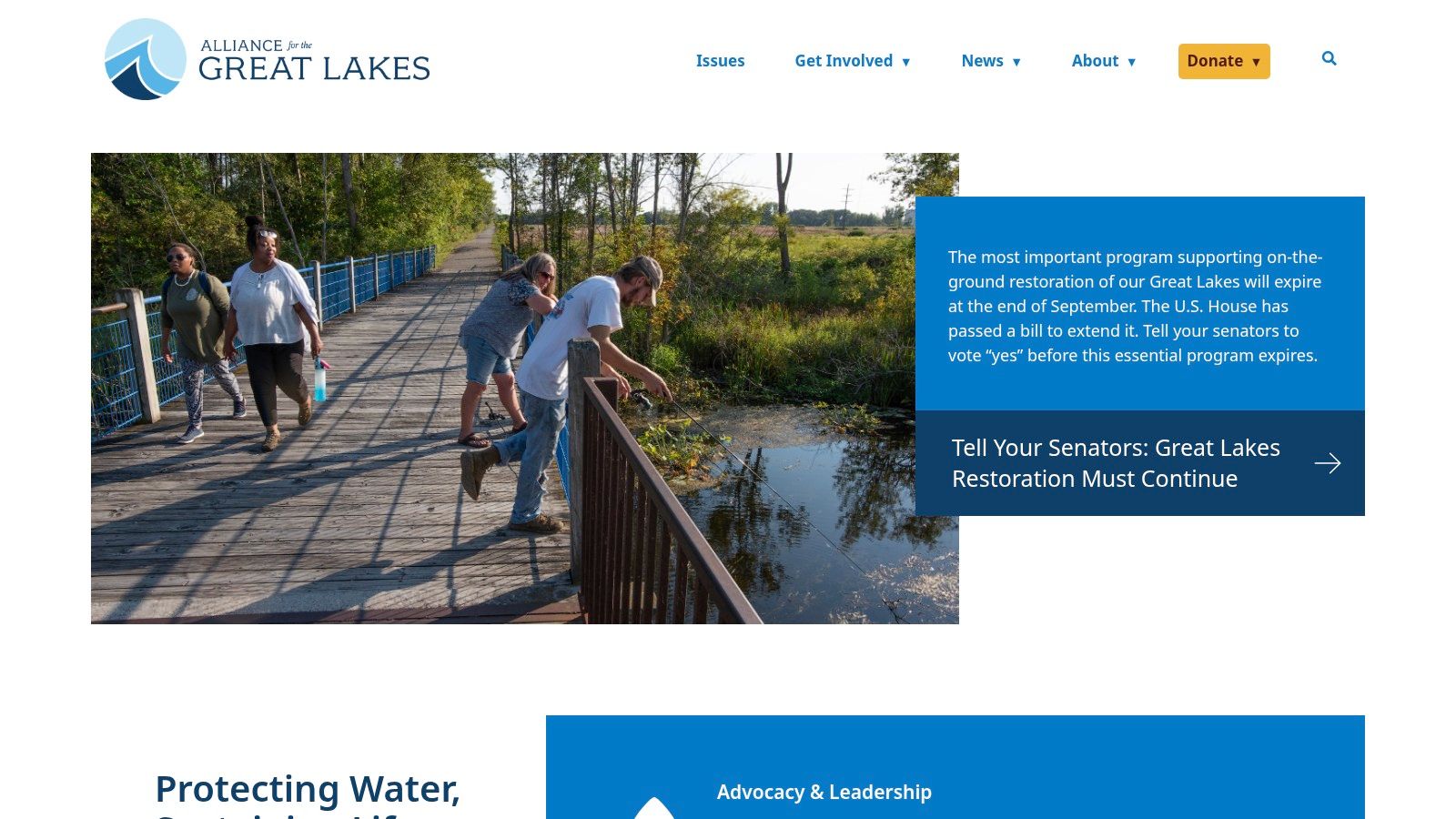
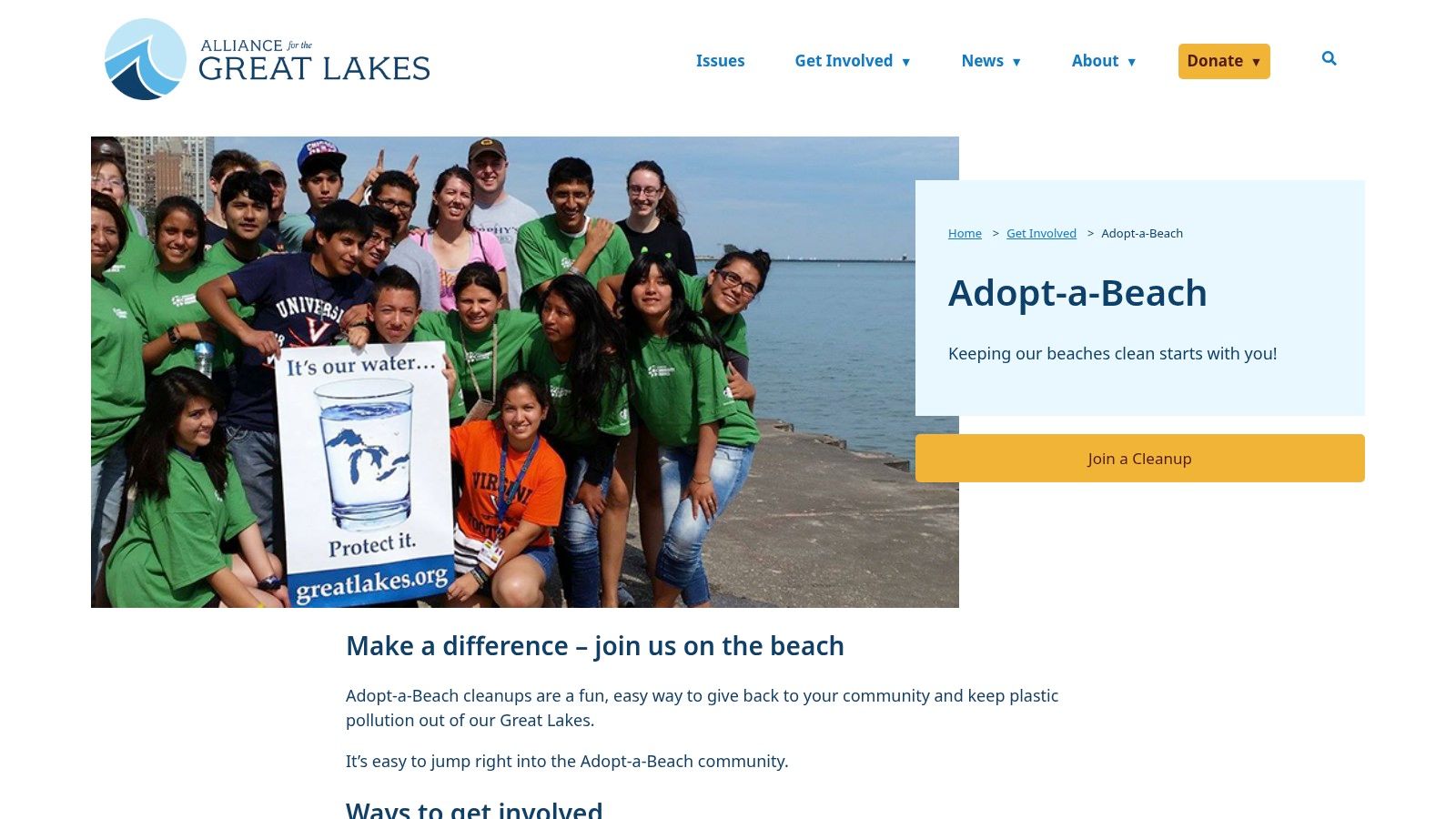
    A beach cleanup gives you a clear before-and-after task. You walk a section of Lake Michigan shoreline, collect litter, sort what you find, and record the results. The lake supplies the scenery, but the work stays concrete. A wrapper caught in beach grass becomes a piece of evidence you can log instead of leaving behind.

    The Alliance for the Great Lakes runs Adopt-a-Beach cleanups on Lake Michigan and throughout the Great Lakes. You can join a public cleanup or register a team through the Adopt-a-Beach volunteer page. Students can also connect the work to school projects through the free K–12 Great Lakes in My World curriculum.

    This option works especially well for a class, environmental club, or group of friends that wants a shared assignment. The litter audit gives everyone a job. One person collects, another records, and another helps sort or carry supplies. You leave with a cleaner shoreline and organized observations that advocates and agencies can use in regional work.

    Plan around the shoreline

    Most activity takes place in the warmer parts of the year, and weather can change the experience quickly. Wind, sun, damp sand, and uneven ground may challenge students with mobility limitations or health concerns. Contact the event leader before registering if you need a specific surface, restroom access, seating, shorter walking distance, or another accommodation.

    You can join an existing event for a simpler first experience. If you lead a team, you'll need to create an online account, collect waivers, and follow the organizer guidance. That extra setup makes sense for a school group, but it can feel like too much for a student looking for a spontaneous Saturday shift.

    • Best for a club: Use the team format when you want shared transportation and a clear group task.
    • Best for a solo student: Pick a public cleanup with a meeting point near your train or bus route.
    • Best for a class project: Pair the litter audit with the Great Lakes curriculum and a short reflection.

    The Alliance for the Great Lakes gives students a way to connect outdoor service with observation and civic action. Choose it when you want a lakeshore morning, can handle weather exposure, and prefer a cleanup with a defined recording process.

    3. Friends of the Chicago River Cleanups and Habitat Restoration

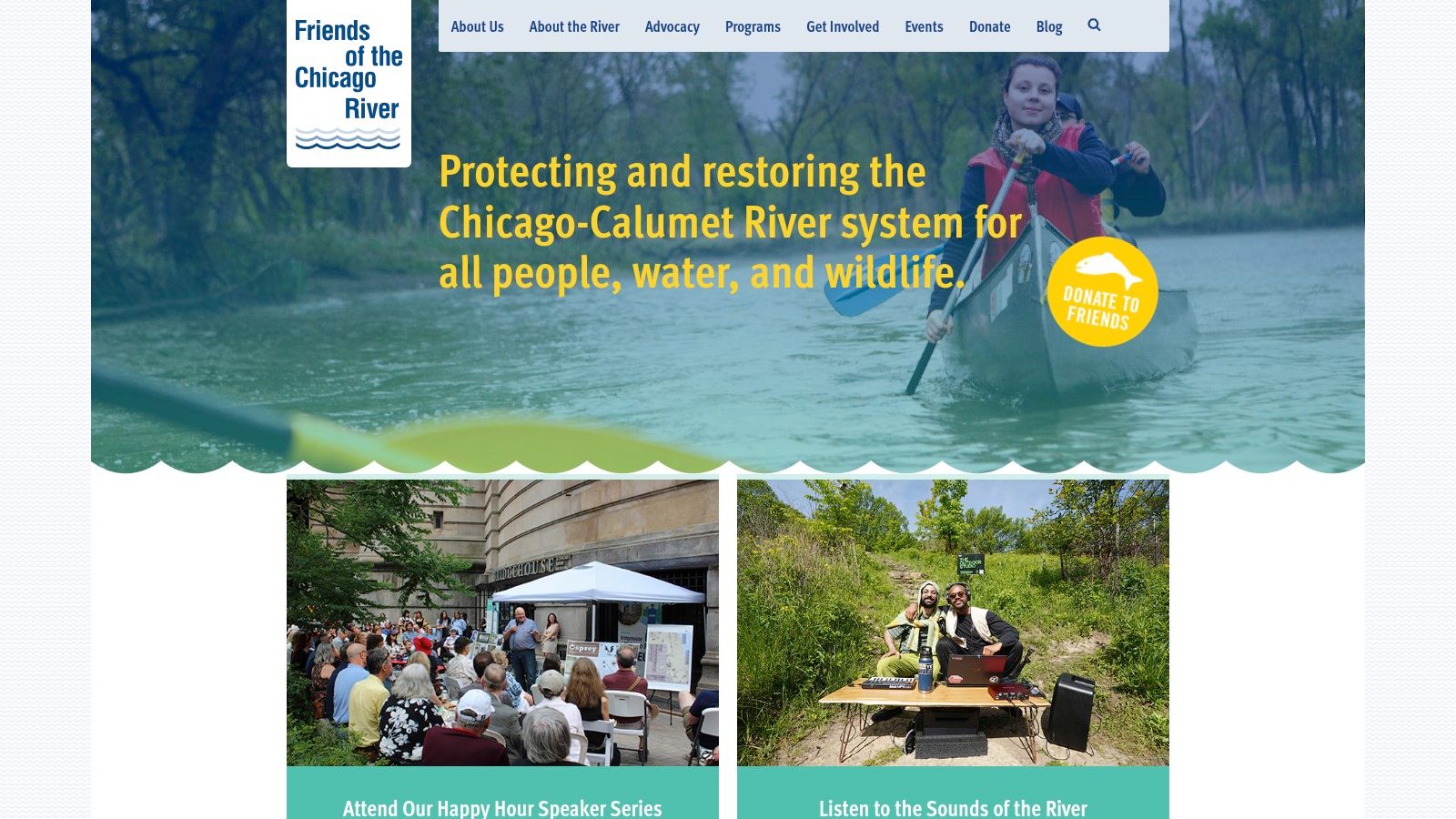
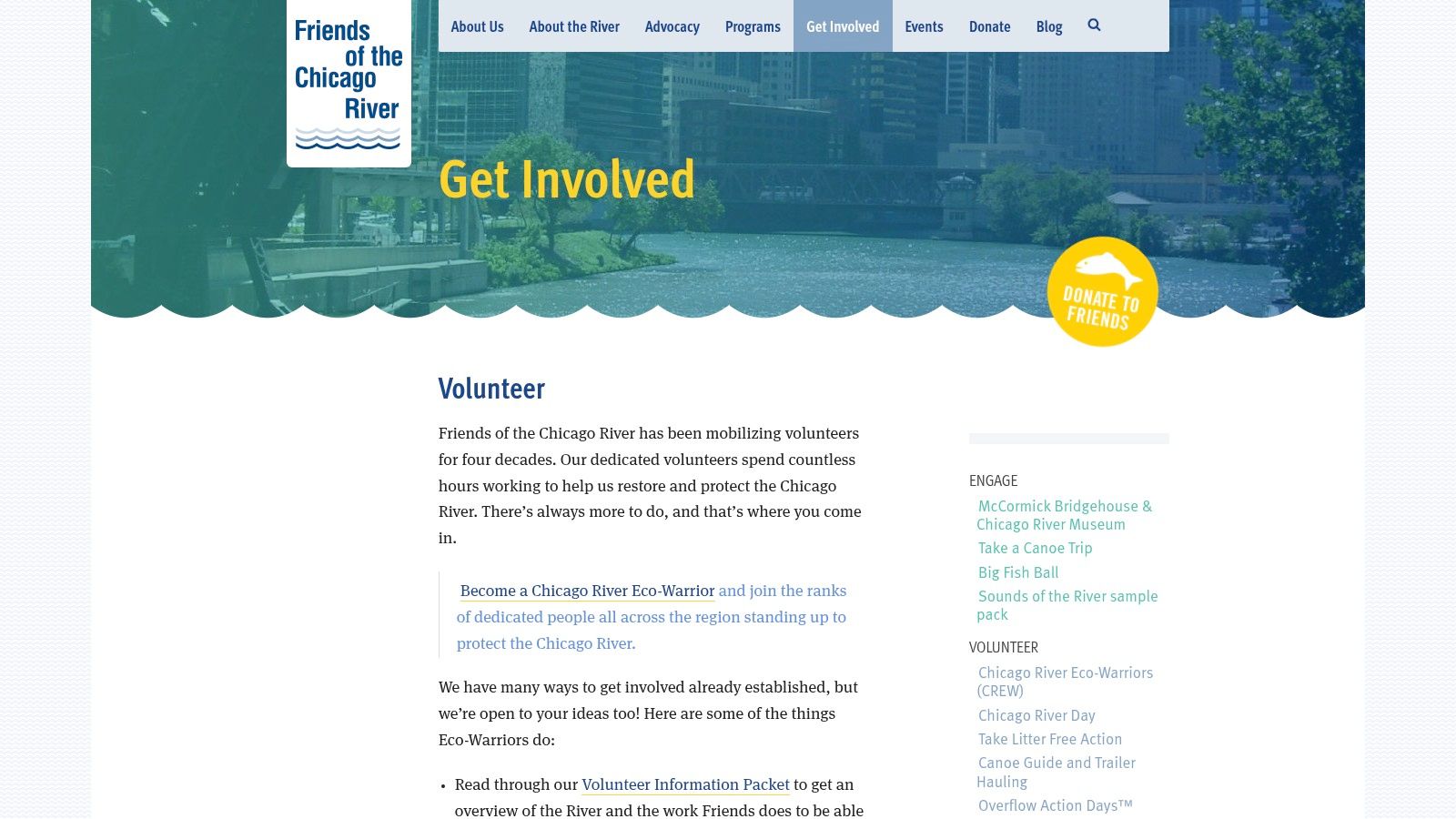
    A student with one free Saturday might start by filling trash bags along a riverbank. On a different shift, the same student could pull invasive plants, work with soil, or care for a natural area beside the water. Friends of the Chicago River offers both litter removal and habitat restoration, giving students a choice based on the kind of service day they can handle.

    The organization runs the large Chicago River Day and recurring site-based workdays throughout the watershed. Its volunteer information covers event logistics, what to bring, age policies, and family-friendly rules for major events. Many sites suit school groups, and several are reachable by public transit.

    Students looking for environmental work that goes beyond collecting litter will find both litter removal and habitat restoration on different shifts. Litter removal gives you a clear, visible result. Habitat work may require careful movement around plants, soil, and river-edge areas. Ask about the assignment before registering if you have a physical limitation, dislike bending or kneeling, or need a lower-impact role.

    Choose the event, then check the details

    Chicago River Day can bring a large volunteer turnout. Other workdays vary by site and date. A major event may feel lively and easy to join with friends, while a smaller site day can offer closer guidance from the site leader.

    Before you sign up, confirm:

    • Age rules: Some restoration tasks may limit participation by age or require extra safety steps.
    • Meeting point: River sites are spread across the city, so map the route before event morning.
    • Supplies: Check what the organizer provides and what you should bring.
    • Accessibility: Ask about paths, terrain, restrooms, and the distance from transit.

    For another Chicago cleanup perspective, read this guide to Chicago River cleanup work from Litter Caterpillars. The guide can help you compare a scheduled river event with a grassroots trash-pickup morning, including the practical demands of weekend cleanup work.

    Friends of the Chicago River fits students who can adjust to changing dates and assignments. Choose a shift that matches your route, mobility needs, and available time, then invite a classmate or club member to make the morning more social. Each completed shift also gives you a specific service example to describe on a resume.

    4. Chicago Park District Community Stewardship and One-Day Park Cleanups

    You check your neighborhood park, find a Saturday shift, and show up without needing prior experience. By the end of the morning, you may have removed litter, pulled invasive plants, cared for a natural area, or helped prepare a shared outdoor space for its next visitors.

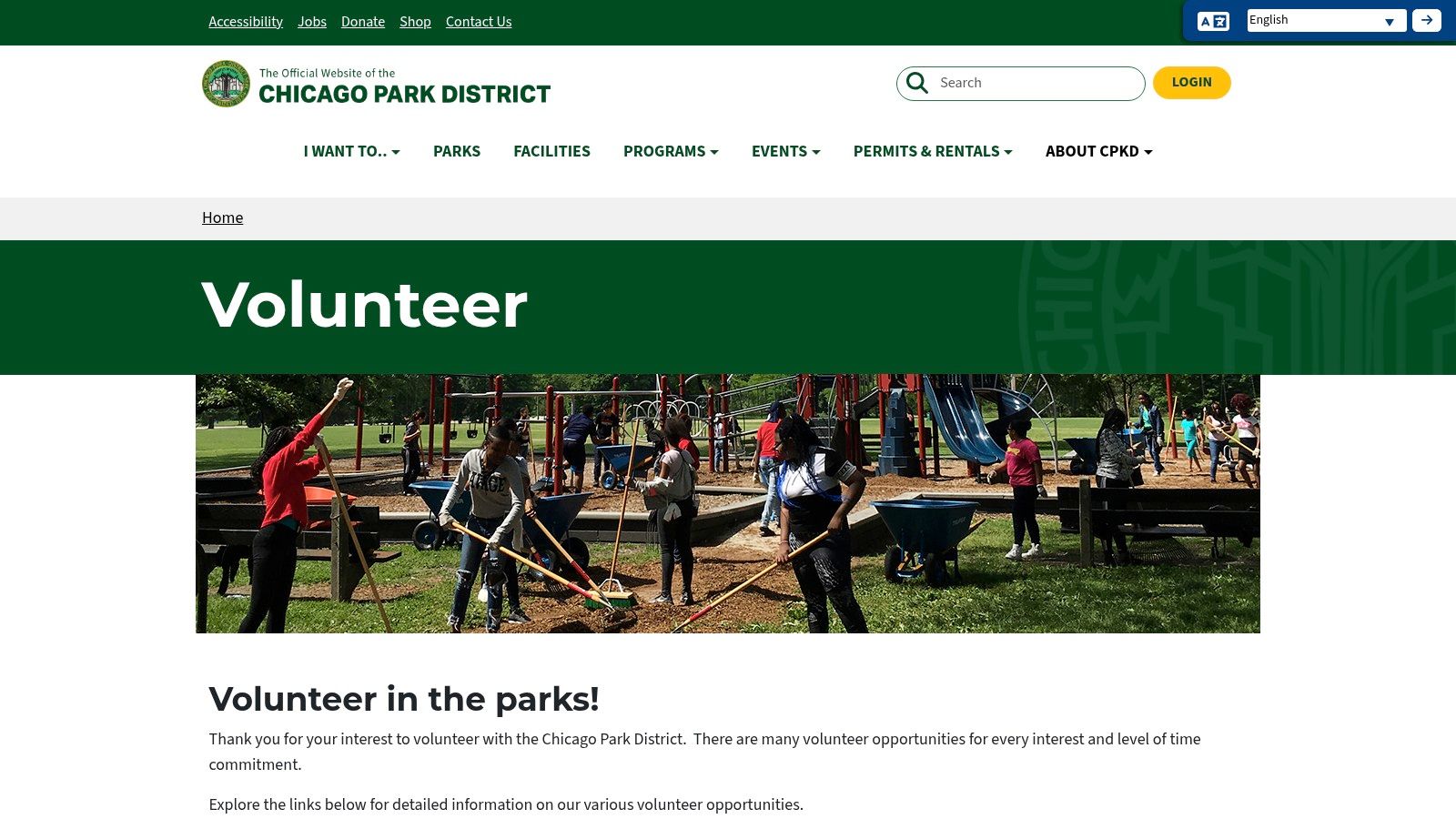
    The Chicago Park District runs public stewardship days and one-day cleanups across city neighborhoods. Its volunteer page lists opportunities connected to parks and natural areas, along with citywide events including Earth Day and It's Your Park Day. Students, families, clubs, and school groups can find a practical entry point because the program supports many locations and group sign-ups.

    Location is the main advantage. A nearby park can turn volunteering into a realistic habit instead of a rare event that consumes half your day in transit. Search by park, compare the start time with your class or work schedule, and ask a club leader to register the group if you want to attend together.
    Chicago Park District Community Stewardship and One-Day Park Cleanups

    Start simple, then consider ongoing roles

    Public stewardship days can suit a first-time volunteer because you don't need specialized experience. Ongoing or indoor positions may involve applications or background checks, so read the role description before assuming every shift works as a drop-in activity.

    Weather also shapes the day. Wear layers, bring water, and check whether the event will continue in rain or extreme temperatures. If you use a wheelchair, cane, or other mobility aid, ask about the trail surface, grass conditions, slope, restroom access, and the distance between the transit stop and the work area.

    A short park cleanup can also help you build a service record. Ask the event leader how the organization verifies hours, then save confirmation emails and record the date, location, and task in your own notes.

    If you want to compare park work with a grassroots crew, read Litter Caterpillars' Chicago park cleanup guide. The Park District is a practical choice when proximity matters most and you want many neighborhood dates to choose from.

    5. Greater Chicago Food Depository Warehouse and Community Food Support

    A student arrives after class, steps into a warehouse, and takes a place beside a table of food supplies. A supervisor explains the station, teammates sort items, and packed boxes begin stacking nearby. For students who prefer indoor work, this setting offers a clear task and visible progress.

    The Greater Chicago Food Depository provides sorting, repacking, and community distribution roles. Its volunteer information explains age pathways for family shifts, supervised youth participation, and independent volunteers who meet the listed requirements. Structured shifts can suit classes, clubs, and student groups, provided everyone meets the stated conditions.

    A food bank shift follows a different rhythm from a cleanup. You might stand at a station, move items, inspect packaging, fill boxes, or prepare food for distribution. Repetition gives the group a steady pace. You know what to do, questions have a natural place, and the finished packages beside you show what the team completed.

    Match the shift to your group

    Read the age rules before inviting younger students. The Depository outlines separate pathways for families, youth, and independent volunteers, while individual shifts may add their own conditions. A teacher, parent, or club leader should confirm supervision and waivers before the group travels.

    Transit can shape the choice. Depending on where you live, the trip may involve a long bus or train ride, transfers, delays, and a walk from the stop. Build that travel time into the plan. If you need seated work, lower lifting demands, or another accommodation, contact the volunteer team before registering.

    • For a class: Ask about group availability and choose a shift everyone can reach.
    • For a first-timer: Select a structured role with clear instructions.
    • For service hours: Confirm how attendance and hours are recorded.

    Weekend work may leave students tired, especially after standing or lifting, so check the task description and plan clothing and transportation accordingly. The shift can still give classmates a simple way to work side by side and start a conversation with people outside their usual circle.

    Read Litter Caterpillars' Chicago food bank volunteer guide to compare warehouse service with outdoor cleanup work. Choose the Greater Chicago Food Depository for a predictable indoor setting and hands-on support for food distribution in the Chicago area.

    6. My Block, My Hood, My City

    A student group meets near an alley or vacant lot on Chicago's South or West Side. The work starts with gloves, bags, and a short explanation of the block's needs. The group clears litter, improves the space, and leaves knowing exactly which neighborhood received the effort.

    My Block, My Hood, My City connects volunteers with neighborhood cleanups, seasonal projects, supply distributions, and youth-focused community events. The organization coordinates with 100+ block clubs, according to its official volunteer and community information. Current opportunities appear through the website and Linktree, so you should check the latest listing before making plans.

    This option fits students who want place-based service. You aren't choosing an abstract project. You're working in a specific area with resident-led partners and a local task. That can make a short shift feel direct and easy to explain to a club, teacher, or family member.

    Confirm the details before you travel

    Some events appear on short notice, and age rules vary by task. Minors may need a parent or guardian, a waiver, or additional supervision. Read the event listing carefully, then contact the organizer if the wording leaves room for doubt.

    Transit planning matters here because the best opportunity may sit outside your own neighborhood. Share the meeting point with your group, plan a return route, and use a buddy system. Ask about restroom access, terrain, lifting, and the expected walking distance if you need accommodations.

    The organization suits students who want a short, energetic service day with a clear neighborhood connection. It can also work well for a student club that wants to choose a project together rather than assign everyone to separate roles. Check the current event posts, confirm the requirements, and bring enough water for the expected outdoor work.

    7. Habitat for Humanity Chicago Build Sites and ReStore Volunteering

    A supervisor walks you through tool safety, your team splits into stations, and by noon you may already have helped raise a wall frame. The work shows how many coordinated tasks turn an unfinished site into a home.

    Habitat for Humanity Chicago offers two service paths. Build-site roles center on construction and supervised hands-on work. ReStore shifts involve retail tasks, warehouse organization, and sorting donated materials. Review current openings on Habitat for Humanity Chicago's individual volunteer page.

    Build sites suit students who want teamwork, practical skills, and visible neighborhood work. They usually require more time and physical energy than a short cleanup. The plan notes identify construction roles as commonly limited to people 18 and older, while minors often find opportunities through ReStore. Check the current age rule on the specific role page before signing up.

    Pick the right Habitat path

    ReStore may fit younger students, indoor-work preferences, or schedules that cannot accommodate a full construction day. Most build-site roles provide on-site training and supervision, but you still need to be comfortable lifting, kneeling, standing for several hours, and working around tools or unfinished surfaces. Closed-toe shoes are required, and some shifts take place outdoors.

    Before choosing a shift, ask:

    • Age and supervision: Does the role accept your age group, and must an adult attend?
    • Schedule: Can you remain for the complete shift?
    • Physical demands: Will you lift, climb, kneel, stand, or work outdoors?
    • Service records: How will Habitat confirm your attendance and hours?

    A student sorting donated materials at ReStore can describe a different skill set than someone assisting with supervised site preparation. Keep that distinction in your service log and resume. Use precise wording such as “sorted donated materials” or “assisted with supervised site preparation,” and record the hours Habitat confirms. That detail gives a teacher, club adviser, or future employer a clear picture of your contribution.

    7 Local Student Volunteer Opportunities: Quick Comparison

    Organization 🔄 Complexity ⚡ Resource Requirements ⭐📊 Expected Outcomes 💡 Ideal Use Cases ⭐ Key Advantages
    Litter Caterpillars 🔄🔄 Volunteer-led weekly coordination; low formal admin ⚡ Low, volunteers, basic supplies, strong branding ⭐⭐⭐⭐ Visible, citywide litter removal; community-building (50 wards, park) Neighborhood cleanups; social, recurring volunteerism in Chicago Strong identity/pride; consistent action; free to join
    Alliance for the Great Lakes – Adopt-a‑Beach 🔄🔄 Event registration + standardized data collection ⚡ Moderate, seasonal teams, curriculum, audit tools ⭐⭐⭐ Data-driven litter audits feeding regional advocacy K–12 classes; service-learning; lake/beach cleanups Standardized data; free K–12 curriculum; advocacy link
    Friends of the Chicago River 🔄🔄 Site coordination + large event logistics ⚡ Moderate, tools for restoration, many accessible sites ⭐⭐⭐ Mix of litter removal and habitat restoration; large annual mobilization School groups; family-friendly river work; ecological projects Transit-friendly sites; restoration exposure; clear FAQs
    Chicago Park District 🔄 Low, frequent public stewardship days, simple sign-up ⚡ Low–Moderate, many sites, basic park tools provided ⭐⭐⭐ Regular park care and stewardship; intro to urban ecology Students, families, weekend group shifts across neighborhoods High availability; group sign-up support; citywide events
    Greater Chicago Food Depository 🔄 Low–Moderate, scheduled, structured shifts ⚡ Moderate, indoor facility, staffing; possible travel ⭐⭐⭐⭐ Tangible food sorting/distribution output; predictable shifts Students seeking structured, indoor volunteer hours Reliable operations; clear age pathways; measurable impact
    My Block, My Hood, My City (MBMHMC) 🔄 Low, event-based, community-coordinated ⚡ Low, local volunteers, short-term supplies ⭐⭐⭐ Hyperlocal beautification and youth enrichment Place-based student service; short, high-impact shifts Strong resident partnerships; youth focus; easy opportunity discovery
    Habitat for Humanity Chicago 🔄🔄🔄 High for build sites; moderate for ReStore roles ⚡ High, trained supervision, tools, full-day commitment ⭐⭐⭐⭐ Skill-building and visible housing impact; recognized service hours Students needing service hours; those seeking construction skills On-site training; multiple entry points; team skill development

    Turn One Volunteer Shift Into a Habit

    The best choice usually starts with your next available block of time. If you have a weekend morning and want outdoor work with a social group, try Litter Caterpillars. If you want a lakeshore cleanup, choose Alliance for the Great Lakes. If river ecology interests you, check Friends of the Chicago River. A nearby Chicago Park District shift can remove the transit problem. The Greater Chicago Food Depository fits students who prefer structured indoor work. My Block, My Hood, My City fits place-based neighborhood service. Habitat for Humanity Chicago works well when you want training, teamwork, and a longer project day.

    Before you register, open the current event page. Dates, locations, age rules, waivers, supplies, and accessibility details can change. Treat the listing like a route map, not a promise that every event fits every student.

    Age requirements deserve special attention. New York Cares says children ages 5-13 can volunteer only with a parent or legal guardian on projects marked Family Friendly, while teens ages 14-17 can volunteer solo or with a parent or guardian on Teen Friendly projects. Teens in that age group also need volunteer orientation before joining, according to New York Cares' youth guidance. The American Red Cross says high school and college students can join or start a Red Cross Club, and current college students can apply for internships connected to their studies and professional skills, as described by the American Red Cross student opportunities page.

    Requirements can go beyond a simple age check. A University of Arizona community volunteer listing for teens describes programs that may require a 16-year-old minimum and several intake steps, including an application, tour, orientation training, fingerprint clearance, and a pre-employment physical, according to the teen volunteer listing. Meals on Wheels of Central Maryland lists age-specific requirements for teen roles. Meal packing can accept ages 14-17 with an adult or liability waiver, while grocery shopping can require an adult, orientation, a background check, and a 9-12 month commitment. One school program for rising 9th-12th graders requires volunteer and TAP applications plus a signed parent or guardian waiver, as listed by Meals on Wheels of Central Maryland.

    That range of rules explains why a quick event page check matters. A two-hour cleanup and a recurring service placement may both appear under “volunteering,” yet they ask for different preparation.

    Your pre-shift checklist

    • Weather: Check the forecast and dress for heat, cold, rain, wind, or muddy ground.
    • Water and food: Bring water and a snack if the organizer allows them.
    • Gloves and supplies: Confirm whether the group provides gloves, bags, tools, or protective equipment.
    • Transit time: Plan the full route, including transfers, walking, delays, and the trip home.
    • Accessibility: Ask about terrain, stairs, restrooms, seating, lifting, and alternate tasks.
    • Emergency details: Share the meeting point and an emergency contact with someone you trust.
    • Service records: Record the date, organization, location, task, supervisor, and completed hours.

    Your resume can benefit from precision. Write what you did, how you worked with others, and what tools or procedures you learned. “Participated in cleanup” says little. “Collected and sorted litter with a neighborhood volunteer team” gives a future employer or school a clearer picture.

    Friendship can make returning easier. Tell one person in your class, residence hall, workplace, or student club about the event. Pick a meeting point together. Share the route. After the shift, decide whether you'll return to the same group or try another option. Students already volunteer at a substantial scale in the United States. Between 2013 and 2015, nearly 2.8 million high school students ages 15 and older volunteered about 237 million hours each year, while nearly 3.1 million college students volunteered close to 331 million hours annually. Participation rates reached 28.5% for high school students and 26.1% for college students during that period, according to the Do Good Institute's student volunteering analysis. The same source notes that rates remained below the higher peak recorded in the years after 9/11.

    You don't need to copy an old pattern or commit to every weekend immediately. Start with a shift you can reach, complete, and remember positively. Student volunteers also report strong experiences when programs create a good social and practical fit. One university study found that 95.4% of student volunteers rated the experience positively and would recommend it. Another survey found an average of 14.5 volunteer events during college and 5.4 in the past academic year, with mean satisfaction at 5.03 on a 7-point scale, according to the published university study.

    A short, peer-friendly event can lower the pressure of starting. A 2025 Gallup survey summarized in 2026 reporting found that about 80% of U.S. youth ages 12-25 prefer short-term, peer-led volunteering, while time limits and lack of awareness remain barriers, according to the survey summary. That preference makes weekend-only and two-hour searches practical filters, especially for students balancing school, jobs, and commuting.

    Choose one option today. Open the event page, confirm the rules, plan the route, and invite a friend. If you want your first Chicago service day to include fresh air, visible cleanup work, and a welcoming group, try Litter Caterpillars through Meetup or Instagram. A weekend morning may involve cold hands, full trash bags, jokes with people you just met, and the satisfying walk back past a cleaner block. One manageable shift can become a steady routine.


    Litter Caterpillars gives Chicago students free, weekend-morning trash pickups with a grassroots crew that uses Meetup, Instagram, group chats, flags, badges, and shared energy to make service social. Visit Litter Caterpillars, find an upcoming cleanup, and bring a friend for your first shift.
  • 10 Outdoor Volunteer Opportunities to Change Your Life

    10 Outdoor Volunteer Opportunities to Change Your Life

    Old jam in the fridge, a dead houseplant on the windowsill, a pile of unopened mail. I know what it feels like when your own space starts looking like a warning label. Then I found out that hauling trash out of a park, a riverbank, or a vacant lot can feel easier than fixing your own mess, and sometimes that's exactly the first honest step.

    The best outdoor volunteer opportunities don't ask you to become a saint. They ask you to show up, wear gloves, and keep moving. You sweep leaves off a path, pull weeds from a garden bed, or drag bags of litter to a truck, and somewhere in that simple work you start rebuilding your nerve. You meet people who also chose to leave the couch, the spiral, and the excuses behind.

    A lot of people think volunteering outdoors means one thing. It doesn't. You can spend an hour on a neighborhood cleanup, spend a season restoring prairie, or spend a Saturday morning helping a park group that knows every cracked sidewalk in the area. The point isn't to perform goodness. The point is to get outside, do useful work, and come home a little harder to shake.

    1. Find Your Crew on VolunteerMatch and Meetup

    The easiest first move is often the one people skip. Open a platform, search your area, and stop waiting for a perfect invitation that may never come. If you want a weekend beach cleanup, a garden workday, or a trail crew that meets before brunch, you can usually find it by searching the word you already care about and then reading the event details like you mean it.

    That matters because the fit matters. The National Environmental Education Foundation says volunteers should identify their skills, decide how often they can give time, and get the details before they commit, because outdoor work ranges from light cleanup to harder land work NEEF guidance on finding outdoor volunteer opportunities. If you want a low-risk, low-pressure start, look for a short cleanup in a city park or a community garden shift.
    I'd start with a narrow search and then get picky about the vibe. A group that sounds casual on paper can still be organized, friendly, and serious about showing up. If you want one concrete place to start looking for volunteer work, this guide can help you sort the options fast, how to find volunteer work.

    Practical rule: send the organizer a short message before you go. Ask what to wear, how long the work lasts, and whether the group welcomes first-timers.

    • Search by task, not just location: Try “cleanup,” “trail,” “garden,” or “park” in your area.
    • Check the commitment level: One-time events work well if you're nervous. Recurring groups work better if you want routine.
    • Read the description for tone: You can tell a lot from how a group talks about safety, tools, and new volunteers.

    2. Join a Hyper-Local Group Like Litter Caterpillars

    I learned fast that one block can change you. You carry one bag of trash, you meet the same people again and again, and the street starts to feel like yours in a way it never did before. Hyper-local groups do that. They turn a random Saturday into a place where you can prove something to yourself.
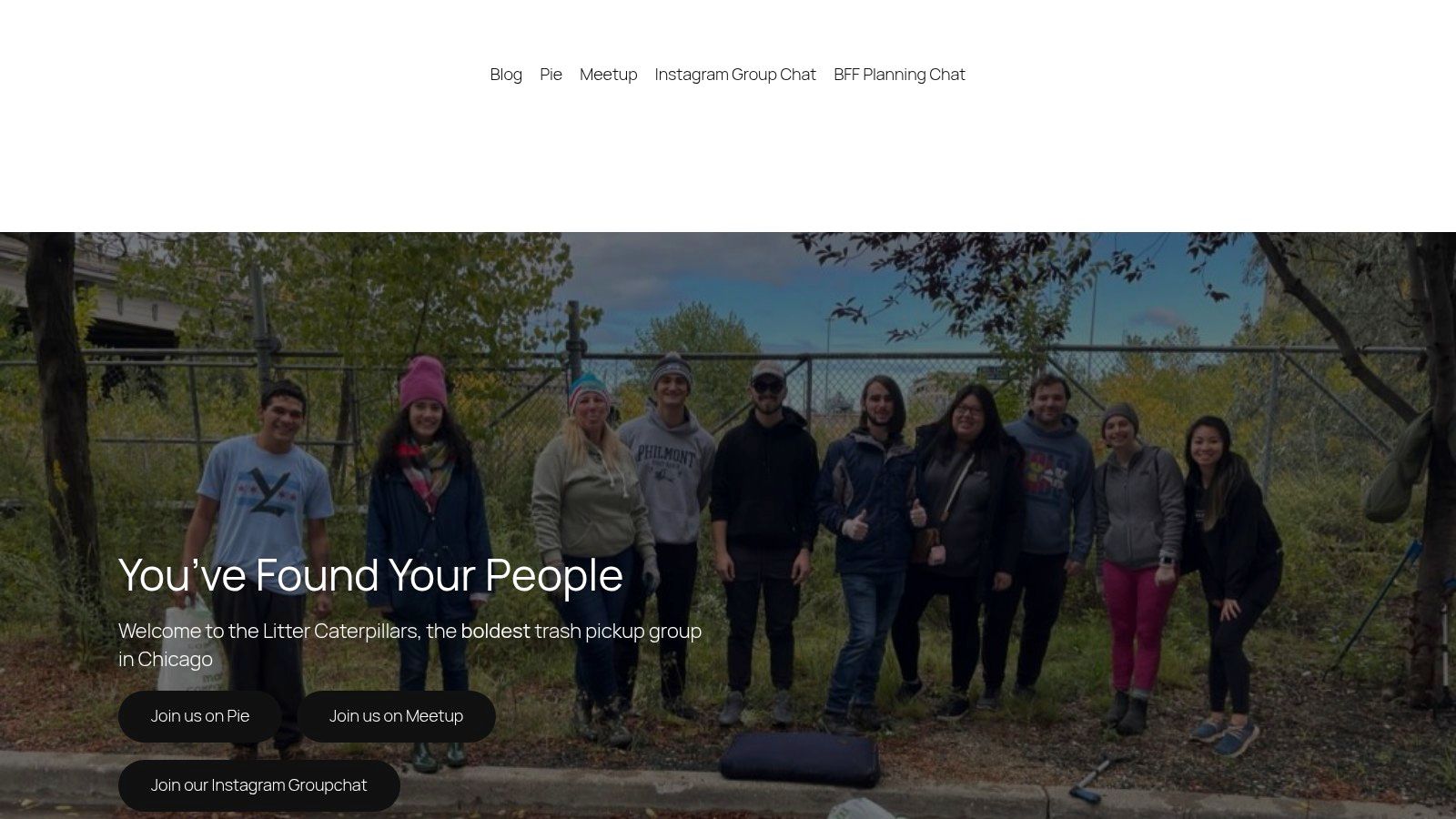

    I started Litter Caterpillars because my own life felt scattered, and I wanted a place to practice consistency, cleanliness, and bravery without pretending I already had them. We show up every week, rain or shine, and that repeat rhythm matters. Cold wind, wet snow, summer heat, all of it becomes part of the deal. After a while, you stop using discomfort as an excuse.

    That's the point. You are not just picking up what other people left behind. You are building the habit of staying present when the work is dull, muddy, or embarrassing. A local cleanup group can do that faster than a polished volunteer program because the feedback is immediate. You can see the curb, the lot, or the sidewalk change right in front of you.

    One of the strongest parts of a hyper-local crew is the pride it creates. In Chicago, volunteers have cleaned a highway during a bike-event shutdown, and Litter Caterpillars won an empty lot at auction to build Caterpillar Park in Englewood. Those moves did not start with a huge plan. They started with people who looked at one neglected place and decided it deserved care.

    Suffering together in the hail makes for a great story, and a better crew.

    • Look for weekend-morning events: They are easier to keep showing up for when you want a steady habit.
    • Start small if needed: Grab a bag, text a friend, and go once.
    • Stay with one group long enough to matter: Familiar people make hard work feel less awkward and more human.

    3. American Rivers

    A river cleanup changes the way you read a city. I've watched people arrive thinking they're signing up for a simple trash pickup, then notice how bottles, wrappers, and broken plastic travel with current, rain, and runoff. After that, the river stops feeling like scenery. It feels like a system, and your own habits start to look different too.

    American Rivers runs cleanup work along waterways, and the job is clear the moment you arrive. You pick up debris, sort what can be handled safely, and pay attention to where litter collects after storms and high water. For a local example of that kind of work, this page gives a direct entry point, cleaning up a river.

    What I'd bring to a river day

    • Waterproof boots: Mud and wet ground show up fast.
    • Extra gloves: Wet gloves turn a good shift into a miserable one.
    • A strong trash bag mindset: You'll see a lot of odd junk, and you need to keep moving.

    Chicago-area volunteers have removed debris from the Chicago River and its tributaries, and spring restoration season can bring multi-day events. I like river work because it teaches patience without asking for perfect strength. You learn to step carefully, work steadily, and trust your hands.

    4. The Trust for Public Land

    A vacant lot can feel like a sentence. Then a crew arrives, clears the weeds, lays out beds, and turns the place into something kids want to cross on the way home. I like that kind of work because it makes change visible before lunch.

    The Trust for Public Land builds parks in neighborhoods that need them, and volunteers help make that happen by clearing land, planting, and shaping spaces people can use. You might spend one weekend hauling brush, then return later to help set raised beds or prep a community garden opening. If you want a model of that kind of park work, start here, clean up a park.

    The work feels physical because it is physical. You drag, lift, sort, and plant. Then you step back and see the space breathe again. That moment can hit hard if you've spent a long time feeling stuck in your own life.

    Simple test: if you want a project that shows results in the same season, choose one site and keep going back.

    Chicago-area lot cleanups that became community gardens show how much a piece of land can change when neighbors keep returning. That repeat presence matters. You don't just help build a park. You become one of the people who knows how it got there.

    5. Illinois Department of Natural Resources Volunteer Programs

    State land work feels different from a one-off cleanup. You're not just collecting trash. You're walking into forests, prairies, wetlands, and other places that need hands, eyes, and patience. If you live in the city, that can feel like stepping into another state without leaving Illinois.

    The Illinois Department of Natural Resources connects volunteers to that work across the state. One day you might help with prairie restoration at Midewin National Tallgrass Prairie. Another day you might tackle trail building, trail maintenance, or invasive garlic mustard removal in spring. Over time, you start to understand why one patch of ground looks healthy and another doesn't.

    The best part is that newcomers can learn alongside people who already know the land. You don't need to walk in pretending to be a naturalist. You need layers, sturdy shoes, and enough humility to ask what the tool is called before you use it.

    A few ways to make your first field day easier

    • Wear layers: Field temperatures swing more than city sidewalks.
    • Ask about tools first: Every site has its own gear and habits.
    • Bring a friend: New volunteers relax faster when they know one person.

    There's something brave about stepping into wild space when your usual world is concrete and routine. You stop being a visitor to the city's edge and start learning how the land works.

    6. Openlands

    Openlands asks volunteers to protect green space in the Chicago region with real hands-on work. That can mean restoring oak savannas, pulling buckthorn, or helping habitat recover around rare plants. You won't just be tidying a space. You'll be helping it breathe again.

    I like this kind of work because it rewards attention. Once you've spent a morning dragging buckthorn out of a preserved area, you start noticing how invasive plants crowd out native growth. You also start seeing the region as a set of living places rather than a list of neighborhoods.

    A small field note before you go

    Wear pants and closed-toe shoes. Thorns don't care how optimistic you feel.

    Openlands work can take you across the collar counties and into nearby natural areas, which means you get to know the region through actual ground under your boots. Volunteers often return season after season, and that repetition helps you see recovery in real time. A patch that looked rough in spring can look steadier later, and your own habits can start to follow that same pattern.

    There's another benefit too. You begin to talk like someone who knows the land. You learn what buckthorn is, why native wildflowers matter, and how one site connects to another. That kind of knowledge can pull you out of your head fast.

    7. Chicago Park District Community Service Programs

    A neighborhood park tells the truth. If the grass is cut, the trash is gone, and the beds are cared for, people feel it the second they walk in. If the place is ignored, people feel that too. Chicago Park District community service events let you put your hands on that truth.

    The work is straightforward, and that's why it works. You pick up trash, remove graffiti, help with landscaping, or clean up garden beds in parks your neighbors use. If you want a park day that feels local from the first minute, it usually helps to focus on one place and return to it again and again.

    I like the repetition because it turns strangers into familiar faces. You start to know the regular walkers, the kids who cut across the grass, and the other volunteers who keep coming back. A park stops feeling anonymous, and that changes the way you treat it.

    There's also a practical side. Bring your own gloves and bags if the event asks for them, and check in with park staff before you begin. That tiny bit of coordination saves time and keeps the day moving. It also shows that you're there to help, not to improvise your own show.

    The park you work on becomes part of your routine. That's when you stop visiting and start belonging.

    8. Habitat for Humanity Chicago Volunteer Build Days

    Build days hit a different nerve than cleanup days. You're not only clearing space, you're helping create a home. That changes the mood from “I helped” to “I helped make this possible,” and I think people feel that difference in their chest.

    At Habitat for Humanity Chicago volunteer build days, you might paint, do carpentry, handle landscaping, or help with demolition and rehab work. The job can get messy, but the result has a longer shadow. You watch a house move from rough to ready, and you know that every measured cut and painted wall matters to a family waiting to move in.

    You should arrive early, listen closely, and ask questions. Mistakes on a build site can slow people down and create extra work, so humility helps more than swagger. Heavy shoes and work clothes matter too, because this is the kind of volunteer day that asks you to respect the space.

    Chicago build days also tend to pull in groups, which changes the energy. You meet people who came for a church group, a company outing, or a weekend with friends. Then you all spend the day learning how to move wood, paint straight lines, or clear debris without getting in each other's way.

    When you leave, your body will know it did real work. That feeling is honest, and I trust it.

    9. Chicago Audubon Society Habitat Restoration and Bird Monitoring

    Bird work pulls your attention upward. You start with your hands in dirt, then you catch yourself watching a warbler move through a tree line or listening for a call you can't name yet. That small shift can change the whole day.

    Chicago Audubon Society projects often involve native plant restoration, bird monitoring, and invasive species removal in places like parks and forest preserves. If you help restore the right plants, birds come back through the space with more reason to stop. That's the kind of outdoor service that makes you slower in a good way, because you have to look, wait, and listen.

    Why this work hooks people

    • You learn a real skill: Bird identification gets easier with repetition.
    • You see seasonal change: The same place looks and sounds different as birds move through.
    • You work with purpose: Every cut vine and planted native gives wildlife more room.

    I've known volunteers who began as casual helpers and ended up paying attention to migration patterns, nesting habits, and the difference between a quick glance and a real sighting. That kind of learning feels rewarding because it starts in the body, not in a textbook. Show up early if you can. Birds move early, and people who care about birds usually do too.

    10. Active Transportation Alliance Chicago Greenway and Street Cleanup Projects

    If you've ever walked a dirty bike lane or pushed a stroller through debris, you already know why street and greenway work matters. This kind of volunteer day doesn't stay in the park. It reaches the paths people use to move through the city.

    Active Transportation Alliance projects can include litter cleanup, debris removal, bike lane cleanup, and small improvements on greenways and pedestrian routes. You might help clear the Lakefront Trail, handle winter debris in the Chicago Pedway, or clean up a neighborhood route that gets ignored until someone decides it shouldn't be. That directness is part of the appeal.

    I like this work because it has a commuter's honesty. You see how people travel, where the trash piles up, and which corners need attention before someone gets hurt or frustrated. It also puts you near active streets, so bright clothing and extra gloves make sense.

    The first time you help with a route cleanup, you may think you're only picking up cans and wrappers. Then you realize you've made a lane easier to use for a parent, a rider, or a person walking home after dark. That's a good feeling, but I don't want you to romanticize it. It's work, and the work matters because it changes what people meet on their way through the city.

    Keep your eyes open. The clean line you leave behind is part of somebody else's daily life.

    Top 10 Outdoor Volunteer Opportunities Comparison

    Option Core features Experience & Impact ★ Value & access 💰 Target audience 👥 Unique selling points ✨
    Find Your Crew on VolunteerMatch & Meetup Search filters, RSVPs, organizer contact, mobile apps ★★★☆☆, wide variety; quality varies 💰 Free to join; trial-friendly 👥 Casual starters, flexible schedules ✨ Discover hyper-local groups; easy to try different causes
    🏆 Litter Caterpillars Weekly rain‑or‑shine cleanups; volunteer‑first; flags, songs, badges ★★★★★, consistent neighborhood transformation 💰 Free; no donation pressure; high social payoff 👥 Service‑minded locals building friendship & resilience ✨ Builds bravery, pride, lasting habits; grassroots park projects
    American Rivers River/stream cleanups, watershed training, tools provided ★★★★☆, visible water quality + education 💰 Free; training adds long‑term value 👥 Waterway stewards, eco‑learners ✨ Watershed science training; regional chapter network
    The Trust for Public Land Park creation, design workshops, long‑term stewardship ★★★★☆, tangible park and lot transformations 💰 Free; requires seasonal commitment 👥 Community builders, planners, long‑term volunteers ✨ Turn vacant lots into parks; influence design
    Illinois DNR Volunteer Programs Trail maintenance, invasive removal, habitat restoration, training ★★★★☆, structured ecological stewardship 💰 Free; some travel/time required 👥 Nature volunteers, learners seeking structure ✨ Work in state parks; hands‑on ecosystem training
    Openlands Ecological restoration, habitat monitoring, invasive control ★★★★☆, science‑driven conservation outcomes 💰 Free; high educational benefit 👥 Conservation‑focused volunteers, serious stewards ✨ Oak savanna & prairie restoration; ecologist collaboration
    Chicago Park District Community Service Park cleanups, graffiti removal, landscaping, facility support ★★★☆☆, immediate visible neighborhood impact 💰 Free; easy for organized groups 👥 Neighborhood teams, families, local groups ✨ Work across 50 wards; direct local park improvements
    Habitat for Humanity Chicago Build Days Home construction/renovation, skill workshops, homeowner engagement ★★★★★, permanent impact on families 💰 Free; higher time/skill commitment 👥 Skilled volunteers, team builders, trades learners ✨ Build homes, meet residents, learn construction skills
    Chicago Audubon Society Bird habitat restoration, nesting monitoring, education ★★★★☆, seasonal wildlife benefits; educational 💰 Free; niche appeal for birders 👥 Birders, native‑plant enthusiasts, monitors ✨ Combine habitat work with birdwatching & monitoring
    Active Transportation Alliance Greenway/street cleanups, bike/ped path work, advocacy training ★★★★☆, improves mobility and safety 💰 Free; civic engagement opportunities 👥 Cyclists, urban advocates, community organizers ✨ Pair cleanup with advocacy to reshape city infrastructure

    Your First Day

    You've seen the options. Now go do the awkward part. Fear is normal. So is feeling clumsy the first time you show up. I still think Tom Sawyer got something right when he made painting look like fun, because attitude changes everything once the work starts.

    Before you go, keep this simple.

    Safety first. Know where you're going. Tell someone your plan. Wear bright clothing near roads. Don't pick up anything that feels unsafe.

    Gear up. Sturdy, closed-toe shoes matter. Gloves matter. A reusable water bottle matters. Dress in layers because weather changes fast.

    Be social. Say your name. Ask questions. Offer to help carry something. The people beside you are part of the point.

    Make it stick. Go more than once if you can. A few steady weekends can do more for your confidence than one perfect afternoon ever will.

    If you want a group that meets weekly in Chicago and keeps the work simple, direct, and social, Litter Caterpillars is one option to try. I'd love for you to test that first brave step and see what changes when you trade a free afternoon for a bag, some gloves, and a street that needs you.


    If you want a place to start in Chicago, Litter Caterpillars runs weekly trash pickup events and keeps the focus on showing up, meeting people, and making visible change block by block. Visit the site, pick a morning, and come see how outdoor service can turn a rough week into your next strong habit.

  • Local Environmental Groups: Chicago Impact 2026

    Local Environmental Groups: Chicago Impact 2026

    I used to stare at trash in my own apartment like it was haunted. A jar of blueberry jam from a trip years ago. A bag of nuts from the week I swore I'd become healthy and then didn't. I couldn't throw them out. They felt heavier than they were, like every wrapper and expired thing had a memory glued to it.

    Then I ended a bad relationship and got honest with myself. I wanted to build a life around givers, not takers. I wanted to train the parts of me that were weak: cleanliness, consistency, and bravery. So I started with something strange but simple. I picked up trash outside.

    I learned fast that cleaning up someone else's mess is easier than cleaning up your own. It can even be fun. I showed up for a neighborhood cleanup to challenge myself, and I walked away with new friends, a lighter mind, and a reason to get out of bed on a weekend morning. If you've felt that pull too, this is for you. These local environmental groups can help you find a mission, but more than that, they can help you find your people.

    1. Litter Caterpillars

    Litter Caterpillars

    One cold weekend morning, a few people in gloves filled bag after bag while the rest of the block stayed quiet. By the end, the sidewalk looked different, but so did the group. Strangers were teasing each other, comparing the weirdest things they had found, and making plans for the next cleanup. That is why I keep coming back to Litter Caterpillars in my head. It is not only about trash. It is about what happens to you when you keep showing up.

    Litter Caterpillars is the group I would point you toward if you want action fast and you do better with movement than meetings. They gather on weekend mornings, head out in rough weather, and make it easy to join. You do not need a background in activism. You need shoes you can get dirty and enough curiosity to try one morning outside with other people who care.

    Their style is simple. Show up, clean a block, talk to the people beside you, come back next time. For some personalities, that rhythm works better than formal committees or polished events. If you have been lonely, stuck, or tired of living too much in your head, this kind of work can reset you.

    Why this group stays with people

    Litter Caterpillars has cleaned in all 50 wards of Chicago, including places volunteers are often told to avoid, according to the group's Meetup page for Litter Caterpillars. That says a lot about their character. They do not chase easy wins or pretty backdrops. They go where the mess is real and keep coming back.

    One of the clearest examples is Caterpillar Park in Englewood. The group won a vacant lot at public auction, turned it into a community space, and still has to fight illegal dumping there, as reported in the Chicago Tribune's story on Caterpillar Park. I find that weirdly comforting. The work repeats. You clean a place, life happens, and you return. If you are trying to build resilience in your own life, that lesson lands hard.

    Practical rule: Join this group if you want to see a result before lunch. Carrying a full trash bag back to the meeting point changes your mood more than another hour of scrolling.

    I also like how openly they treat cleanup as community, not just service hours. The flags, badges, songs, group chats, and inside jokes might sound small. They are not. They give shy people a way in. They help new volunteers feel known. They turn a hard, dirty task into something closer to belonging.

    If river work interests you too, their guide to cleaning up rivers in Chicago gives a good sense of how street litter and water pollution connect.

    • Best for grit: A good fit if you like physical work, repetition, and neighborhoods that feel lived in.
    • Best for friendship: A strong choice if you want a group with personality and rituals that help people connect.
    • Best for new habits: Weekend cleanup can anchor your week and make consistency feel natural.

    The tradeoff

    Litter Caterpillars feels hands-on, improvised, and human. If you want a more formal nonprofit structure, another group on this list may suit you better.

    But if you are looking for a place where service can change your city and also change you, this one has a strong pull. You come for the cleanup. You stay because you start to recognize faces, trust yourself more, and feel a little less alone.

    2. Friends of the Chicago River

    Friends of the Chicago River

    If street litter makes you angry, river litter hits differently. It feels like the city's bloodstream is clogged. Friends of the Chicago River is a good fit when you want your volunteer time tied to water, habitat, and a long-running civic rhythm.

    Their home base is the Friends of the Chicago River website, and they run recurring stewardship work tied to the Chicago-Calumet River system. If you're curious how river cleanups connect to broader trash work, I also like this piece on cleaning up rivers in Chicago.

    Who I think should join

    This is the group for people who like structure. You sign up, get clear guidance, and plug into a larger machine. If Litter Caterpillars feels like a scrappy pickup basketball game, Friends of the Chicago River feels more like joining a league with refs and a schedule.

    I also think it's good for students, companies, and neighborhood groups that want a shared project with a clear setting. Water gives people a focal point. When you're standing by the river with gloves on, it's easier to feel what you're protecting.

    The river gives your effort a shape. You can point to a bank, a path, a canoe launch, and say, "I helped right there."

    Where it fits in your life

    The work can be seasonal and weather-sensitive, so you may need to plan ahead. Popular volunteer dates can fill quickly. But if you want logistics, recurring stewardship, and a mission that feels bigger than one block, this is a solid place to start.

    I wouldn't choose this one because it's trendy. I'd choose it if your brain likes order and your heart likes water.

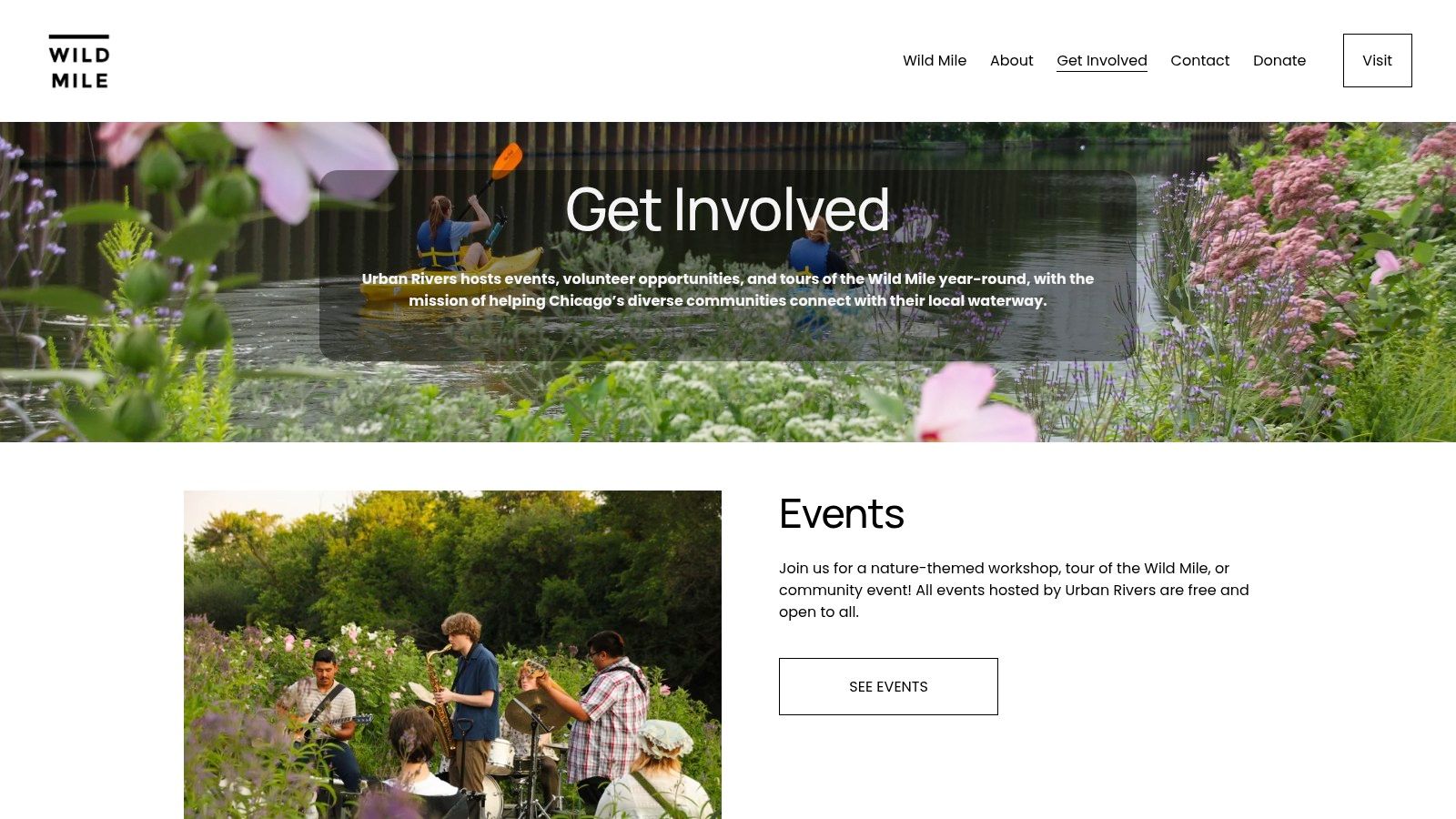
    3. Urban Rivers (The Wild Mile)

    Urban Rivers (The Wild Mile)

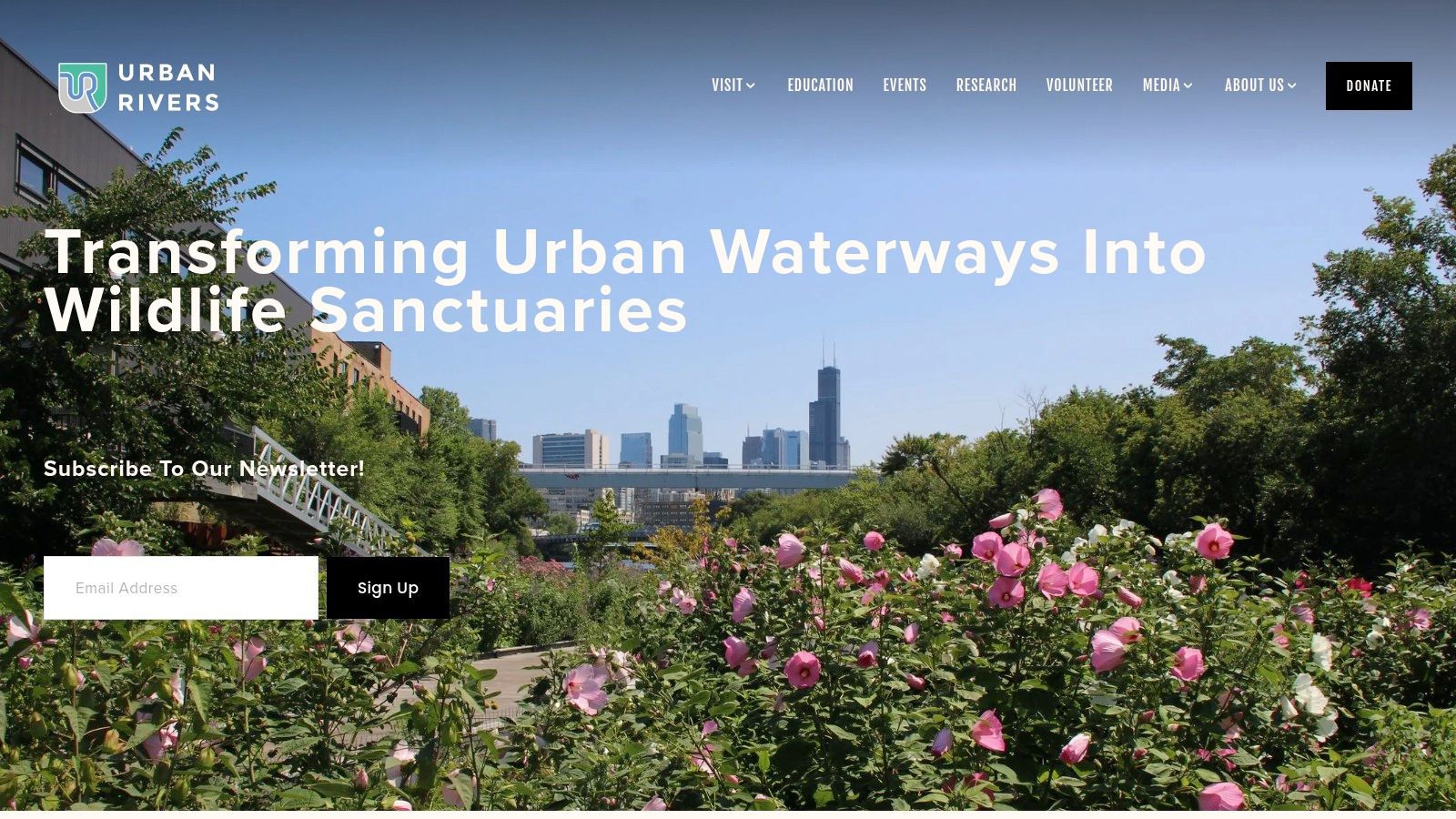
    Urban Rivers is for the person who wants an environmental group that feels a little weird in the best way. Floating wetlands. Kayaks. Habitat work in the middle of the city. The whole thing feels like a science project built by people who refused to accept that an urban river has to stay dead-looking.

    You can browse projects and volunteer options on the Urban Rivers website. The Wild Mile is the sort of place that makes a skeptic stop walking and ask questions.

    Why this one feels different

    Some local environmental groups ask you to clean. Urban Rivers lets you clean and build. That mix changes the experience. You aren't only removing damage. You're helping put something living back into place.

    Their River Ranger training also makes this a nice fit for people who want to learn while they volunteer. If your personality leans curious, if you like being taught how systems work, this one can scratch that itch.

    • Best for visual thinkers: You can see the floating habitat and understand the idea fast.
    • Best for hands-on learners: Training adds depth that simple litter pickup sometimes doesn't.
    • Best for people who want a story to tell: Friends will ask what you did, and you'll have an answer better than "I stood around at a fundraiser."

    What to know before you go

    Some roles need planning, training, and comfort on the water. That can be a plus or a barrier, depending on who you are. If you want a fast drop-in volunteer option, another group may be easier.

    Still, I love that Urban Rivers makes environmental work feel inventive. It reminds me that some people heal themselves by restoring order, and some heal themselves by helping build something new.

    4. Alliance for the Great Lakes (Adopt-a-Beach)

    Alliance for the Great Lakes (Adopt‑a‑Beach)

    The first time I joined a beach cleanup, I thought it would feel like a prettier version of picking up trash on a sidewalk. It did not. I filled one bag, looked up, and saw the lake stretching out like it had all the time in the world. The work felt small and big at once. Small in my hands. Big in my chest.

    That is the mood of the Alliance for the Great Lakes. Their Alliance for the Great Lakes site is where you can find the Adopt-a-Beach program and sign-up options for shoreline cleanups. If you end up liking this kind of work, this guide to cleaning up a Chicago park or public green space can help you keep the habit going closer to home too.

    Why some people click with beach cleanups fast

    This one suits people who like patterns. You are not only picking up cups, wrappers, and bottle caps. You are noticing where trash collects, what keeps washing back, and how a place that looks peaceful can still carry a steady stream of human mess.

    That rhythm changes the experience. A beach cleanup can feel less like a chore and more like paying close attention. If you are the kind of person who likes sorting, spotting, and seeing what other people miss, you may feel useful here right away.

    It is also one of the easier groups to bring someone into. A sibling. A date. Your kids. A coworker who says they want to help but never knows where to start. The lakefront does part of the social work for you because people already want to be there.

    What I tell first-timers: If you want your first volunteer day to feel open, calm, and easy to share with other people, start at the beach.

    The honest tradeoff

    This is a seasonal fit for a lot of volunteers. Chicago weather decides a lot for you, and shoreline work is not always the thing you will want in January.

    Still, some personalities need that horizon. They need wind, water, and a task simple enough to quiet the noise in their head for two hours. If that sounds like you, Adopt-a-Beach is more than civic duty. It is a way to find your people while you clear space in yourself too.

    5. Friends of the Parks

    Friends of the Parks

    Some people don't want the edge of alley cleanup or the planning of habitat work. They want a park. Trees, fieldhouses, paths, playgrounds, and a task they can explain to a friend in one sentence. Friends of the Parks is good for that.

    Their Friends of the Parks website is a good place to find citywide park stewardship and major volunteer days. If you're already thinking in neighborhood-park terms, this page on how to clean up a park in Chicago pairs well with it.

    Why parks are emotionally easier

    A park is where city life softens. Kids play there. Grandparents sit there. Dogs drag people there before sunrise. When you clean a park, you get immediate emotional feedback because you can picture who uses it.

    That makes this a great first step for shy people. You're still doing public work, but the setting feels familiar. It doesn't demand a new identity from you on day one.

    • Best for first-timers: Parks are accessible and easy to understand.
    • Best for neighborhood pride: You can return later and see the same bench, path, or ballfield.
    • Best for people who want broad coverage: Citywide park networks give you lots of entry points.

    One honest downside

    The biggest mobilizations cluster around annual events, so if you're chasing frequent large-scale action, you may need to combine this with another group. Still, I think Friends of the Parks is one of the easiest ramps into local environmental groups because the mission feels close to daily life.

    6. Friends of the Forest Preserves (Cook County)

    Friends of the Forest Preserves (Cook County)

    If the city noise is frying your nerves, go farther out. Friends of the Forest Preserves gives you a different kind of volunteer day. Less concrete. More brush, trails, invasive removal, and work that feels slower and deeper.

    You can check current programs and stewardship options on the Friends of the Forest Preserves website. I think this group works well for people who want environmental service to double as recovery time.

    When this is the right fit

    Some local environmental groups meet your need for action. This one can meet your need for quiet. You still sweat, carry, cut, and clear, but the mood is different. It feels less like battling the city and more like caring for a place that can still surprise you.

    I also like this path for people who want to build practical outdoor skills over time. Brush work, stewardship habits, and guided workdays can teach patience. You're not just grabbing obvious trash. You're learning to notice what doesn't belong and what needs room to grow.

    Sometimes the best volunteer choice isn't the loudest one. It's the one that calms you down enough to come back next week.

    What might frustrate you

    Some preserve sites take more travel. If you live in a dense neighborhood and don't drive, getting there can be harder than joining a local block cleanup. And on certain days, the work leans more toward habitat care than simple litter pickup.

    That said, I think this is one of the best options for people who want service without constant urban intensity.

    7. Cleanup Club Chicago (Chicago Environmentalists)

    Cleanup Club Chicago (Chicago Environmentalists)

    A lot of people want to help their city. Fewer people know what kind of group will keep them coming back.

    Cleanup Club Chicago feels like the answer for the person who does better with a text thread than a formal orientation. You show up, grab gloves and a bag, and spend a morning doing something clear and useful with other people who also wanted a reason to get outside. That low-pressure setup matters more than it sounds. For some volunteers, this is the kind of group that turns good intentions into an actual habit.

    You can find them through Cleanup Club Chicago at Chicago Environmentalists. I like this option for people who want environmental service to fit into real life instead of taking it over.

    The kind of person who thrives here

    This group makes sense if your energy comes in waves. Maybe one week you want a scheduled cleanup with other people. Maybe the next week you want to do your own pickup close to home and still feel connected to something bigger. Cleanup Club Chicago leaves room for both.

    It also works well if you are looking for community first and a perfect volunteer identity second. That is part of what made Litter Caterpillars stand out earlier in this article too. Sometimes you do not find your purpose and then join a group. Sometimes you join a group, pick up one bag of trash, meet two good people, and realize your life feels a little less stuck.

    The work itself is simple, which is part of the appeal. You are not trying to learn a complicated system before you can help. You are cleaning a street, a park edge, a sidewalk, or a problem corner that everybody has walked past. That simplicity gives you room to talk, joke, and build friendships while your hands stay busy.

    • Best for flexibility: Easy to join and easy to fit around a changing schedule.
    • Best for social motivation: Good for people who stay committed when service also helps them meet people.
    • Best for straightforward impact: You can see the difference by the end of the cleanup.

    The limitation

    The same loose, grassroots energy that makes this group inviting can also make it less predictable. Some weeks will feel bigger than others. Some cleanup days will depend on who shows up and what the weather does.

    If you want a highly structured program with formal training and a fixed path, another group may fit you better. If you want a welcoming entry point, visible results, and a community that can grow with you, Cleanup Club Chicago is a strong choice.

    Comparison of 7 Local Environmental Groups

    Organization 🔄 Implementation complexity ⚡ Resource requirements 📊 Expected outcomes Ideal use cases ⭐ Key advantages / 💡 Tips
    Litter Caterpillars Low, volunteer‑first, recurring weekly meetups Low, volunteer time, basic tools; limited centralized funding High local visibility and steady neighborhood litter removal Low‑barrier volunteer engagement, neighborhood/lot cleanups, regular weekend volunteers ⭐ Strong community bonds and relentlessness; 💡 Expect physical outdoor work and minimal formal infrastructure
    Friends of the Chicago River Medium, structured nonprofit programs and event coordination Moderate, staff, logistics, water‑safety gear Reliable multi‑site river cleanups and advocacy outcomes Waterway stewardship, corporate/team days, media‑friendly events ⭐ Established reputation and logistics; 💡 Seasonal work, register early
    Urban Rivers (The Wild Mile) Medium‑High, specialized habitat projects and training High, kayaks, floating wetland materials, trained staff High‑visibility habitat restoration and biodiversity monitoring Innovative habitat restoration, storytelling events, trained volunteer roles ⭐ Distinctive site and skills development; 💡 Requires training and water comfort
    Alliance for the Great Lakes (Adopt‑a‑Beach) Medium, standardized shoreline program with protocols Moderate, volunteers, data collection tools, beach supplies Consistent shoreline cleanup with standardized data for advocacy Beach/adopt‑a‑beach programs, corporate beach days, citizen‑science events ⭐ Credible data and family‑friendly events; 💡 Best spring–fall, weather‑dependent
    Friends of the Parks Medium, large annual mobilizations plus year‑round support Variable, major event logistics and steady volunteer base Large‑scale park cleanups and broad community engagement Earth Day mass cleanups, neighborhood park stewardship, volunteer onboarding ⭐ Broad geographic reach and clear logistics; 💡 Peak activity in spring, site work may depend on PACs
    Friends of the Forest Preserves Medium, hands‑on land management with trained leaders Moderate, tools, trained leaders; may require travel to preserves Strong habitat restoration and volunteer skill building Preserve stewardship, teams wanting hands‑on conservation skills ⭐ Strong safety/training culture; 💡 Sites often require driving and can be physically demanding
    Cleanup Club Chicago (Chicago Environmentalists) Low, grassroots, flexible pop‑up cleanups Low, minimal supplies and social media coordination Frequent neighborhood cleanups and campaign amplification DIY pop‑ups, quick partner activations, neighborhood street/park cleanups ⭐ Flexible and fast to mobilize; 💡 Less formal training, best for straightforward litter work

    The Work Is Never Done. That Is the Good Part.

    One Saturday, you fill a trash bag and head home tired, a little sore, and oddly lighter. The next week, there is a fresh fast-food cup in the curb, two bottles by the bus stop, and a torn bag caught in the fence again. For a second, it can feel pointless. Then you realize the ultimate win was never a perfectly clean block. It was becoming the kind of person who comes back.

    That is what Litter Caterpillars made clear earlier in this piece. The bags matter. The cleaner sidewalk matters. But the deeper change happens in repetition. You keep showing up, and somewhere along the way, your weekends gain shape, your body gets stronger, and a few familiar faces turn into friends.

    This field is bigger than any one cleanup crew. Cause IQ's directory of U.S. environmental organizations lists 33,649 environmental organizations employing 154,254 people, generating over $32 billion in annual revenue, and holding $96 billion in assets. Still, almost nobody joins because they studied the numbers first. People join because they are restless, grieving, angry, lonely, or ready to stop scrolling and do something with their hands.

    And people stay for reasons that surprise them.

    A Saturday morning by the river can clear your head better than sleeping in. A park cleanup can introduce you to the neighbor whose name you should have learned three years ago. A beach pickup can give a teenager their first taste of being counted on. Service changes the city a little. It changes the volunteer, too.

    The environmental world also has real blind spots. The American Sociological Association article "Race, Diversity, and Transparency in Environmental Organizations" reports that a 2015 analysis of 324 organizations found people of color made up about 16% of the workforce, while 31.4% of organizations collected diversity data internally and only 4.5% reported it publicly. That matters on the ground. If you join a group, notice who gets welcomed, who makes decisions, and whether the room reflects the neighborhood it wants to serve.

    Trust matters just as much as good intentions. Duke University's Nicholas Institute report, "Understanding Rural Attitudes Toward the Environment and Conservation in America," found that some rural communities trust farmers, ranchers, and scientists more than environmental advocacy groups. City volunteers can learn from that. Listen before proposing fixes. Ask what people need. Help without performing expertise.

    So choose the group that fits your temperament and your season of life. If you like grit, early mornings, and visible results, start where the trash is. If water calms you, go to the river. If you need a gentler entry point, try a park day with families and regulars.

    You do not need to save everything.

    You just need to find your people, pick a corner of the city, and return often enough that the work starts building you back.

  • 7 Outdoor Volunteer Opportunities Near Me to Try in 2026

    7 Outdoor Volunteer Opportunities Near Me to Try in 2026

    I still remember staring at a half-frozen coffee cup on the curb and feeling weirdly relieved. Picking that up was easier than dealing with the mess in my own life. That's why outdoor volunteer opportunities near me stopped feeling like a search term and started feeling like a rope.

    “More Than Just Picking Up Trash”
    I get it. Sometimes life feels like a room that's just too messy to clean. Every little thing feels heavy. You want to make a change, but you don't know where to start. I've been there. The secret I found was that cleaning up someone else's mess is way easier than cleaning up my own. Getting outside, moving my body, and working with other people started a change in me. This isn't just about making a park look nice. It's about finding your strength, your people, and your own story of transformation, one piece of litter or one planted tree at a time.

    Making your search for outdoor volunteer opportunities simple, here are seven Chicago-area options I'd recommend to a friend, and each one gives you a different kind of day, a different kind of dirt under your nails, and a different story to take home.

    1. Litter Caterpillars

    Litter Caterpillars

    The first time I heard about Litter Caterpillars, what got me wasn't the cleanup itself. It was the honesty. A guy was struggling, started picking up trash, and found that one small act gave him something solid to hold onto. I know how real that is. Sometimes you don't need a grand plan. You need gloves, a bag, and a reason to get out the door.

    Litter Caterpillars turns that feeling into a weekly habit. You show up on a Chicago morning, meet strangers who are oddly cheerful about cold weather and dirty work, and head into blocks that have been ignored for too long. Then you watch the place change in your own hands. A sidewalk looks cared for again. An alley stops feeling abandoned. You go home tired, a little gross, and more alive than when you arrived.

    That's why this group sticks with people.

    Founded by Kevin Tao and powered by volunteers, Litter Caterpillars meets week after week, rain or shine, across Chicago. The group has worked in every ward, including corners of the city that rarely get the polished version of civic love. If you want the clearest explanation of why this kind of work matters, their piece on environmental stewardship in everyday language puts it well.

    Why it stays with you

    There's a weird magic in the group's rituals. Flags. Songs. Badges. On paper, it sounds playful. Out on a freezing morning, it gives people courage. Shared rituals turn a cleanup into a crew, and a crew makes it easier to do hard things.

    Kevin's story is a big part of the pull. He started by cleaning up outside because the inside of life felt harder to face. That hit me in the chest when I first learned it. Volunteering can start as service, but sometimes it becomes recovery, confidence, and proof that you can still change something.

    “Suffering and freezing makes things interesting.”

    I love that line because it refuses to dress this up. Some days are uncomfortable. Some sites are messy. You may be hauling bags through wind, heat, or slush. Then someone cracks a joke, you clear a stretch of street that looked hopeless an hour earlier, and suddenly the whole thing feels less like a chore and more like the kind of adventure that changes your posture.

    What you'll probably love, and what might test you

    • Best part: The impact is immediate. You can point to a block, lot, or alley and say, “I helped change that.”
    • Culture: Volunteers come first. Safety matters. The vibe is welcoming, informal, and built for people who want to help instead of perform helping.
    • Community: It's easy to return and get to know people, which matters more than you think when you're trying to build a better life, not just fill a Saturday.
    • Challenge: The work can be physical, and Chicago weather has zero interest in your comfort.
    • Less ideal for: Anyone looking for a polished, corporate-style volunteer program centered on fundraising.

    The stories that come out of this group are part of the appeal too. People don't just pick up litter and disappear. They end up cleaning unusual sites, showing up for neighborhoods that deserve better, and helping create projects big enough to retell later. If you want outdoor volunteer opportunities near me to mean more than a list of places to sign up, start here. Litter Caterpillars makes service feel like the first brave thing you do before the rest of your life catches up.

    2. Chicago Park District Natural Areas Community Stewardship Days

    Chicago Park District – Natural Areas Community Stewardship Days

    Maybe you don't want a big identity shift on day one. Maybe you want to start close to home, in a park you already pass on your dog walk or your commute. That's where Chicago Park District volunteer opportunities make sense.

    These stewardship days focus on natural areas across the city. The work can include beach and dune care, prairie and woodland restoration, trail work, and seasonal cleanups. I like this option for people who want to test the waters without overcomplicating the search for outdoor volunteer opportunities near me.

    Start where you already are

    There's something powerful about helping in a place that already belongs to your weekly life. You stop seeing “the park” as background. You start noticing paths, weeds, shorelines, and the small signs that a place is either cared for or left to slide.

    If you want a better feel for the idea behind this kind of work, I'd read this plain-English take on environmental stewardship. It puts words to the instinct a lot of us already have when we pick up litter or pull invasive growth from a trail edge.

    Practical rule: Pick the site with the easiest commute first. Convenience is underrated. A short trip makes it easier to come back.

    Why you might choose it

    • Near-home access: It's easier to find neighborhood-based service.
    • Flexible rhythm: You can join once or come back regularly.
    • Good for groups: Families, friends, and coworkers can sign up together.
    • Tradeoff: Event timing changes by site, and some tasks depend on the season or the weather.

    This one feels like learning to cook with simple ingredients. Nothing flashy. Just repeated, local action until your hands know what to do.

    3. Friends of the Chicago River Volunteer Stewardship and Chicago River Day

    Friends of the Chicago River – Volunteer Stewardship & Chicago River Day

    The river has a way of making human neglect visible. Trash catches in reeds. Plastic snags against stone. You can't unsee it once you notice. That's why Friends of the Chicago River volunteer programs feel so direct.

    Their stewardship work includes habitat restoration, litter removal, and invasive species work along the Chicago-Calumet river system. If your brain likes the idea of cleaning a place where water, wildlife, and the city all crash into each other, this is a strong choice.

    River work feels immediate

    A river cleanup has a different emotional texture than a park cleanup. Water carries things. It also reveals things. You start thinking about what washes downstream and what gets stuck right where kids walk, birds feed, or plants try to grow.

    If that part of the work pulls you in, this piece on cleaning up a river is worth a read before your first event. It gives you a better sense of why river edges get messy so fast and why regular effort matters.

    One specific route into this world is the Chicago River Eco-Warriors Crew. Their Wildlife Monitor role lets volunteers monitor osprey nesting poles and submit fillable observation sheets monthly to [email protected], according to the CREW Wildlife Monitors page.

    Some days you haul trash. Some days you watch for life returning. Both feel good.

    Good fit for you if

    • You want water-focused work: Riverbanks make impact easy to see.
    • You like options: There are smaller stewardship days and the larger Chicago River Day event.
    • You appreciate guidance: Training and tools are provided on site.
    • You should know: Some sites may be farther from your neighborhood, and popular annual events can fill fast.

    I'd send first-timers here if they want a day that feels earthy and civic at the same time.

    4. Alliance for the Great Lakes Adopt-a-Beach

    The first time I joined a beach cleanup, a kid a few yards away held up a plastic fork like he'd found evidence at a crime scene. He looked at the water, looked at the fork, and just said, “Why is this here?”

    That question stays with you.

    A beach has a way of making the problem feel personal. You're standing where people come to breathe, to swim, to bring their families, and the trash is right there at your feet. That's why Alliance for the Great Lakes volunteer opportunities hit differently for me. The work is simple to understand, and the impact shows up fast.

    Adopt-a-Beach gives you two ways in. You can join a cleanup that already exists, or you can lead one yourself. I love that setup because it meets you where you are. Some people need a low-pressure first step. Some people are ready to text three friends, pick a date, and become the reason a stretch of shoreline looks better by noon.

    That second path matters more than it sounds. A lot of us are waiting to feel qualified before we lead anything. Beach cleanups are a good place to get over that. You show up, learn the system, collect the trash, log what you found, and suddenly you're not just helping. You're becoming the kind of person who starts things.

    For people who want proof their morning mattered

    This program doesn't stop at filling bags. Volunteers also collect standardized litter data, which gives the cleanup a second life after you leave the sand. Your hands do the work. The record of what you found helps show patterns over time.

    The software side of volunteer work has grown with that need. The global volunteer management platforms market was valued at about USD 1.3 billion back in 2024 and is projected to reach USD 3.1 billion by 2033, according to DataHorizzon Research on volunteer management platforms. That makes sense to me. Groups need practical ways to organize people, track events, and keep volunteers coming back.

    Why this one sticks

    • Easy entry point: You can join a local cleanup without taking on a big commitment.
    • Room to grow: If you want more ownership, captain roles let you organize your own site.
    • Clear visual payoff: A dirty beach can look dramatically better in one morning.
    • A little more responsibility: Captaining means handling coordination and reporting, and the busiest months can fill up fast.

    If the Litter Caterpillars story speaks to you, this is one of those places where that spark can turn into courage. You don't have to arrive as an organizer. You can become one by starting here.

    5. Shedd Aquarium Action Days

    Sometimes you want a volunteer day that has a little more scaffolding. You want staff. You want orientation. You want somebody to tell you where the gloves are, what the plan is, and why this patch of shoreline matters. Shedd Aquarium volunteer programs are great for that.

    Action Days include beach and shoreline cleanups, habitat restoration, and citizen-science activities around the Great Lakes. For first-timers, that mix can feel reassuring. You get the outdoor work, but you also get a learning layer that helps the day stick in your mind.

    A good first chapter

    I often think of this option as hiking with a guide your first time on a new trail. Could you stumble through alone? Maybe. But a good guide changes your confidence. They name things. They answer the awkward questions. They make the whole experience less intimidating.

    That's what Shedd does well. If you're nervous about showing up alone, unsure what to wear, or worried you'll do something wrong, this kind of organized day smooths out the fear.

    Small truth: A lot of people don't need more motivation. They need a calmer first experience.

    Best for

    • Beginners: Staff-led events lower the friction.
    • Groups: Classes and companies usually like organized logistics.
    • Curious people: The educational part gives context to the physical work.
    • Limitation: Dates can be limited, events can fill, and some activities may have age requirements.

    I'd also point parents, teachers, and team leaders here. When you're bringing other people, order helps.

    6. Friends of the Forest Preserves Habitat Restoration Workdays

    Friends of the Forest Preserves – Habitat Restoration Workdays (Cook County)

    If city volunteering feels like the shallow end of the pool, Friends of the Forest Preserves volunteer workdays offer an opportunity to swim farther out. These workdays place you in prairies, savannas, wetlands, and woodlands across Cook County. The tasks can include brush cutting, seed collection, trail maintenance, and litter removal.

    I like this option for people who want a routine. Forest work has a rhythm to it. You return to a site and start to recognize what changed since last time, what grew back, what got cleared, what still needs your hands.

    The routine is the point

    A lot of volunteer content treats service like a one-off date. Show up once, smile for a photo, go home. But regular work changes you differently. According to National Environmental Education Foundation guidance on finding outdoor volunteer opportunities, 78% of outdoor volunteers join single-day events, while only 12% take part in weekly recurring programs. That gap is real, and I think it matters.

    Weekly or recurring service gets under your skin in a good way. It becomes less like attending an event and more like becoming the sort of person who shows up.

    If you want language for the bigger project behind this work, this introduction to environmental restoration is useful without getting too academic.

    Why people stick with it

    • Year-round schedule: You can build a habit instead of chasing random dates.
    • Skill growth: Stewardship leaders provide training and tools.
    • Community: You start seeing familiar faces, which changes everything.
    • Tradeoff: Some sites take more travel, and weather exposure is part of the deal.

    This one is for the people who secretly want a harder thing because they know harder things wake them up.

    7. Urban Rivers Wild Mile Chicago Floating Park Volunteers

    Urban Rivers – Wild Mile Chicago (Floating Park) Volunteers

    If you want your volunteer day to feel a little strange in the best way, look at Urban Rivers and the Wild Mile volunteer page. This is floating-park work on the North Branch Canal. You may help maintain floating wetlands, care for shoreline and native plants, remove trash by foot or kayak, or support eco-tours and public events.

    I love that this one feels a little futuristic and handmade at the same time. It's a city project, but it doesn't feel corporate. It feels like a group of people looked at a hard urban edge and said, “We can make this weirder, greener, and more alive.”

    For people who want a memorable first story

    Some volunteer gigs are useful. This one is useful and cinematic. You can end the day having planted on floating habitat or worked beside the water in a place that doesn't look like the Chicago many envision initially.

    There are entry-level roles and leadership paths like Event Facilitator and River Rangers. That range matters if you want to start small and grow into more responsibility later.

    The Forest Preserves of Cook County also has broad outdoor options, including opportunities at nature centers and wooded areas, and even ways to volunteer with a friend instead of alone, according to the Forest Preserves volunteer page. I mention that because some people need a buddy system before they try a more unusual setting like on-water work.

    The Nature Conservancy in Illinois also has outdoor roles that include removing invasive species, collecting native plant seeds, monitoring birds, and tending community gardens, with a zip-code search to find nearby options, according to The Nature Conservancy in Illinois volunteer page. Garfield Park Conservatory has volunteer roles in beekeeping, gardening, composting, and family programs, and notes that most positions have a minimum time commitment while staying flexible for busy adults, according to the Garfield Park Conservatory volunteer page.

    Keep in mind

    • Cool factor: On-water and floating-park work is memorable.
    • Growth path: You can move into leadership if you want more.
    • Good fit: Great for people who like unusual urban nature projects.
    • Watchout: Some roles need comfort near water, and weather can change plans.

    7 Local Outdoor Volunteer Opportunities Comparison

    Program 🔄 Implementation Complexity ⚡ Resource Requirements 📊 Expected Outcomes 💡 Ideal Use Cases ⭐ Key Advantages
    Litter Caterpillars Low coordination overhead; volunteer-led weekly meets Basic cleanup gear; minimal travel; volunteer time Visible neighborhood cleanup; community projects (e.g., park) Residents, students, young professionals seeking social, hands-on work ⭐⭐⭐ Bold identity; strong volunteer retention; easy to join
    Chicago Park District – Natural Areas Stewardship Days Moderate: partner-run schedules vary by site Tools & on-site guidance provided; local travel Native habitat restoration across many parks Hyper-local volunteers, families, recurring stewards ⭐⭐ Neighborhood-scale impact; family/group-friendly
    Friends of the Chicago River – Stewardship & River Day Moderate: site coordination + annual large event Training and tools provided; possible travel to river sites Waterway cleanup, habitat restoration; watershed mobilization Volunteers focused on aquatic ecosystems or large events ⭐⭐⭐ Clear waterway impact; mix of small and large events
    Alliance for the Great Lakes – Adopt-a-Beach Moderate: captain-led or join-a-team options Cleanup supplies; optional data collection/reporting Shoreline litter removal + standardized data for advocacy Flexible volunteers; groups wanting policy-linked data ⭐⭐ Regional reach; data-driven advocacy; flexible scheduling
    Shedd Aquarium – Action Days Higher complexity: staff-led logistics and education Staff supervision, materials, possible age limits Educational restoration and citizen science outcomes First-time volunteers, school groups, corporate teams ⭐⭐ Strong orientation and safety; educational value
    Friends of the Forest Preserves – Habitat Workdays Moderate: recurring calendar with steward leadership Tools, training provided; may require driving Prairie/woodland restoration; year-round opportunities Regular volunteers wanting skills and routine ⭐⭐ Robust schedule; strong restoration community
    Urban Rivers – Wild Mile (Floating Park) Higher: project-based, some on-water coordination Specialized on-water gear; kayak comfort; training High‑visibility urban habitat creation; maintenance of floating wetlands Volunteers seeking unique, skills-building on-water work ⭐⭐⭐ Signature project impact; memorable skill-building experiences

    Your Adventure Starts Now

    The first time I showed up to something like this, I almost bailed. It was early, my shoes were wrong, and part of me still thought volunteering was the kind of thing good people did while the rest of us kept making excuses. Then I spent a morning outside with strangers, picking up trash and talking about life between handfuls of broken glass and coffee cups. I went home tired, muddy, and steadier than I'd felt in months.

    That's the part nobody says clearly enough. These outdoor volunteer opportunities near me gave me more than a cleaner trail or riverbank. They gave me a place to put my restlessness. They gave me proof that I could show up, do something hard, and leave a place better than I found it. For me, that was the start of becoming braver.

    A lot of people already help in informal ways, while fewer connect with organized groups. The same U.S. Census Bureau civic engagement summary notes both that gap and the estimated value of a volunteer hour. I don't bring that up to make kindness sound like bookkeeping. I bring it up because your time matters in both human and practical terms. A few hours on a cold Saturday can clean a shoreline, restore habitat, and change the story you tell yourself about who you are.

    Pick the one that feels alive to you.

    Maybe that's the quick, gritty satisfaction of a neighborhood cleanup. Maybe it's a Park District stewardship day close to home, where you can learn the ropes without feeling overwhelmed. Maybe the river pulls at you, or the lake, or the preserves, or that strange beautiful floating park that makes the city feel new again. Each one gives you a different way in. None of them ask you to arrive as some finished, flawless version of yourself.

    You just have to show up.

    That's why this list matters. It isn't a directory you skim and forget. It's a trailhead. The Litter Caterpillars story carries that spirit. One small act, repeated with other people, can grow into a habit, a community, even a new identity. You start by grabbing a picker or pulling invasive plants. Then one day you notice you've become the person who says yes to hard mornings, fresh air, and work that leaves something real behind.

    If your life feels cramped right now, go outside and help somewhere real. Let the weather be annoying. Let your legs ache. Let your phone stay in your pocket for a few hours.

    You may come home with dirty shoes and a clearer head. You may come home trusting yourself more. Sometimes that's where the whole adventure begins.

  • Launch Powerful Environmental Education Programs: Your 2026

    Launch Powerful Environmental Education Programs: Your 2026

    Three of us stood under a tree in Chicago, getting pelted by spring hail with trash grabbers in our hands and no ride home. Every Uber canceled. I was freezing, miserable, and weirdly happy, because for the first time in a long time, I was doing something that made my life feel cleaner.

    Your Mess Is Your Message

    For years, my room looked like a losing fight.

    An old jar in the fridge. A ripped bag in the corner. Random objects I kept because each one came with a memory I couldn't let go of. If you've ever stared at your own mess and felt your chest tighten, you know what I mean. The stuff isn't heavy in your hands. It's heavy in your mind.

    I hit a point where I knew I had to change something. I had just gotten out of a chaotic relationship. My routines were shot. My space looked like proof that I couldn't get it together. I kept trying to fix my own life head-on, and I kept stalling.

    Then I learned a strange trick. It was easier to clean up someone else's mess than my own.

    That sounds backward, but it's true. When I bent down to pick up a bottle on the sidewalk, there was no sentimental story attached to it. No guilt. No old identity. It was just trash. I could act. I could move. I could finish one small thing.

    Cleaning one block gave me a kind of courage that cleaning my room never gave me.

    That was the doorway into environmental education programs for me. Not the polished version with clipboards and matching shirts. The rough version. The one where you show up on a cold morning with gloves, bags, and a little shame, and somehow leave with pride.

    Why public mess can wake you up

    Street trash is honest. It doesn't pretend.

    A block tells you what people ignore. An alley tells you what systems miss. A vacant lot tells you where care has gone missing for a long time. When you clean those places, you learn fast. You learn where water pools. You learn which businesses sweep and which don't. You learn where people dump because they think nobody's watching.

    You also learn about yourself.

    I started seeing that bravery isn't a personality trait. It's a habit. You build it by doing slightly uncomfortable things on purpose. Going outside early. Meeting strangers. Picking up gross stuff. Coming back next week.

    A different kind of self-help

    A lot of self-improvement advice tells you to fix your inner life first. I think service can lead.

    When you spend a morning making a street better, your mind gets quieter. You stop circling your own problems for a while. Your body moves. You get sun. You talk to people. You do one clear, useful thing. That matters.

    If your life feels cluttered, start there. Don't wait until you feel organized enough, confident enough, or qualified enough. Your mess might be the very thing that makes you good at this. You know what overwhelm feels like. That means you'll recognize it in a neighborhood too.

    What These Programs Are Really About

    The first time a teenager at one of our cleanups stopped mid-grab and asked, "Why is all the trash stuck on this side of the fence?" I knew we had the right kind of program.

    Nobody had handed him a worksheet. Nobody had opened with definitions. He had spent twenty minutes pulling plastic cups out of wet grass, noticed a pattern, and gotten curious. That is the heartbeat of environmental education. Repeated action that trains people to see what they used to walk past.

    A diagram explaining environmental education through theoretical knowledge, practical application, skill development, and community engagement.

    Action gives the lesson weight

    The strongest programs I have seen start with a job that matters to a real place. Pick up litter along a storm drain. Test creek water after rain. Pull invasive vines off a trail sign. Walk an alley and mark where illegal dumping keeps returning. Plant a tree, then come back in August and see what survived the heat.

    People learn faster when their hands are busy.

    A volunteer who spends an hour clearing bottles from a curb starts noticing slope, wind, foot traffic, and which businesses keep their sidewalks clean. A parent helping a child water seedlings starts asking better questions about soil, shade, and neglect. The lesson has weight because it is attached to effort.

    I learned my city that way. Bent over, gloves dirty, eyes open. One block taught me how wrappers collect where the curb dips. Another taught me that a bus stop without a trash can becomes a dumping zone by Friday. You remember what your body had to work for.

    Questions rise out of the work

    Good programs do not force curiosity. They give it something solid to grab onto.

    Once people have done the task, the questions come on their own. Why does this corner flood every time it rains? Why do cigarette butts collect outside one storefront and not the next? Why did the tomatoes in the school garden fail on one side of the bed? Why does one street get care and the next one get excuses?

    That is the kind of learning that sticks. It belongs to a place. It has a smell, a texture, and usually a little frustration in it too.

    The programs that keep people coming back usually include three parts:

    • A real task people can finish and feel in their shoulders afterward
    • A useful explanation tied to what they just saw
    • A group experience that makes the work feel shared, not lonely

    You do not need a fancy curriculum to create that. Litter Caterpillars grew because we kept putting people in front of honest work, then talking about what the work revealed.

    Community changes people too

    One wet cleanup taught me more about program design than a stack of planning notes ever did. Half the volunteers showed up late because the weather looked miserable. The ones who came stayed longer than usual. By the end, a retired neighbor was trading stories with a college student, and a kid who barely spoke at the start was calling out every recyclables mistake the adults made.

    Shared effort speeds up trust.

    Cold hands, heavy bags, muddy shoes. Those things strip away performance fast. People stop worrying about sounding smart and start helping each other. That is part of the education too. Environmental care becomes a lived experience instead of an opinion.

    Practical rule: If your program feels forgettable, add more real work and cut some talking.

    A strong cleanup, garden shift, or creek walk teaches more than facts about waste or habitat. It teaches attention. It teaches follow-through. It teaches people that they can face a worn-down place and leave it better than they found it.

    That is what these programs are really about. They help ordinary people practice care until care becomes part of who they are.

    Four Paths You Can Take

    When people hear environmental education programs, they often imagine one model. A teacher in front of a room. A nature center trail. A workshop with a handout. Those are real paths, but they aren't the only ones.

    I think of this work like four roads that all head toward the same town.

    A diagram illustrating four different approaches to environmental education, including schools, community programs, outdoor centers, and advocacy.

    A quick look side by side

    Path What it feels like Best for Hard part
    School curricula Structured and repeatable Reaching students consistently Slow approvals
    Community workshops Flexible and local Adults, families, neighbors Attendance can swing
    Outdoor centers and field experiences Immersive and memorable Deep place-based learning Access and transport
    Stewardship cleanups Direct and visible Starting fast with little money Weather, morale, consistency

    School and workshop paths

    School-based work has reach. It can put environmental ideas into a student's week again and again. Community workshops have a different energy. They're looser, more conversational, and often easier to tailor to one neighborhood problem.

    I respect both. There's real institutional support behind this field too. Since 1992, the EPA has awarded 3,960 environmental education grants nationwide for a cumulative $95,104,287, according to EPA environmental education grant statistics. That tells you organized programs have had backing for a long time.

    But a lot of people reading this don't need a grant history lesson. You need a path you can start before your courage cools off.

    Outdoor centers and advocacy

    Outdoor education centers can change a person fast because they remove people from routine. Trails, farms, rivers, and forests have a way of making lessons stick. Advocacy and policy work matter too. Some people are built for public comment, coalition building, and pushing systems to change.

    If that's you, go there.

    But if you want the fastest route from intention to impact, I still come back to stewardship.

    Why I love the stewardship path

    Stewardship is simple. You see a mess. You bring people. You clean it.

    I spent the most time there because it gives beginners a clean starting line. You don't need a formal curriculum on day one. The curb is the curriculum. The alley is the lesson plan. The conversation happens while you work.

    With a volunteer-first cleanup, people learn by contact. They handle the problem. They notice patterns. They talk to residents. They see before and after with their own eyes. That visible change matters. It keeps people from drifting into abstract guilt.

    If you want a program that teaches fast, start with a place where the result is visible by noon.

    That's why our group kept returning to this path. Bags, gloves, grabbers, a meeting spot, and a brave mood. That's enough to begin. You can always layer in workshops, youth training, or advocacy later. First, give people a win they can carry home.

    The Core Ingredients of Your Program

    One Saturday, a new volunteer showed up in clean white sneakers. By the end of the morning, they were muddy, scuffed, and streaked with something from the gutter none of us could identify. She looked down, laughed, and said, "I get it now."

    That sentence has stayed with me. A good program gives people a moment like that. Something shifts. The work stops being a nice idea and becomes part of their body.

    I learned to build around three questions. Who are you calling in. What change are you trying to grow. What will people practice together. Get those right, and your program can survive bad weather, low turnout, and the thousand small problems that kill fragile projects.

    Ingredient one is your audience

    I do not mean a tidy profile in a grant application. I mean the actual people who will stand with you on a curb at 9 a.m.

    For us, the time of day did a lot of the sorting. Weekend mornings brought people who wanted structure, service, and a reason to get out of bed. That shaped everything. The pace was steadier. Parents brought kids for an hour. Students came looking for purpose. Neighbors came because they were tired of seeing the same corner trashed every week.

    Choose with that level of honesty.

    • Families need short wins, clear boundaries, and a rhythm children can follow.
    • Students often want a role they can grow into, not just a bag to hold.
    • Neighbors usually care about one place they pass every day.
    • Hardy volunteers will come back for rough weather, awkward jobs, and repeat effort.

    The wrong audience fit can wear a group out fast. I learned that the hard way. If people arrive wanting a festival and you built a work crew, everyone leaves a little disappointed.

    Ingredient two is your goal

    Trash bags are not a goal. They are evidence.

    The central question is what kind of person your program is helping to form. In our case, I cared about courage, reliability, and fellowship. I wanted people to become the sort of neighbors who do useful things without being begged, praised, or paid.

    That changed how I led. A rainy cleanup was no longer a failed sunny event. It was training. A shy volunteer giving the welcome talk was no longer filler. It was growth happening in public.

    Aim wider than facts. A cleanup can teach attention. A garden can teach patience. A creek walk can teach reverence. If all people take home is information, they may nod and forget it. If they leave with a stronger spine, they come back different.

    Ingredient three is your curriculum

    The word scares people because it sounds expensive. Ours was built from habits.

    We greeted each person by name. We started on time. We noticed what kept showing up on the ground. We compared one street to the next. We let different volunteers speak. We ended with a short circle so people could say what surprised them. Over time, those repeated actions became a culture people could feel.

    That people side matters as much as the litter side. If you want a practical model for running a steady crew, these volunteer management best practices are useful.

    A small-budget curriculum can include:

    • Observation practice by asking what people notice first and what they missed at the start
    • Pattern reading by comparing litter hotspots, foot traffic, and neglect from block to block
    • Leadership reps by rotating the welcome, safety talk, or photo check-in
    • Reflection through one closing question that helps people connect the work to their own lives

    Keep it plain. Keep it repeatable. The best programs are built from actions volunteers can do again next week.

    How to Start When You Have Nothing

    We started with almost nothing.

    No office. No fancy setup. No giant budget. Just three people, a rough patch of weather, and enough stubbornness to go outside anyway.

    Screenshot from https://www.littercaterpillars.com

    That first cleanup still lives in my body. I remember the sting of the hail. I remember us huddling under a tree. I remember thinking, this is ridiculous, and then realizing I wanted to do it again. There was a sharp kind of joy in it. We were doing something useful, and the hard conditions made the story better.

    If you're waiting for perfect conditions, you'll wait forever.

    Pick one place and one time

    Don't launch with a citywide vision. Launch with one block.

    Choose a place that bothers you. Maybe it's the bus stop with bottles in the weeds. Maybe it's the dead-end street everyone ignores. Maybe it's the edge of a park where the wrappers collect after every weekend. The place should create an emotional reaction in you. That's what will get you out of bed.

    Then choose a time that fits the kind of culture you want. I like weekend mornings because they pull in steady people. Early hours create a certain seriousness.

    Start with this short checklist:

    1. Choose a compact zone you can improve in one session.
    2. Set a simple meeting point like a corner, gate, or storefront.
    3. Bring basic gear such as gloves, bags, and grabbers if you have them.
    4. Tell people how long you'll stay so the event feels manageable.
    5. End on time so volunteers trust you.

    Go where the need is obvious

    A lot of new organizers think they should begin in the most polished, visible place. I don't.

    I think there's power in starting where care has gone thin. Research on access to informal learning found 48 U.S. counties with no informal learning institutions at all, leaving more than 327,000 people without adequate access, according to Colorado State University reporting on underserved communities and STEM access. I read that as a practical challenge. Don't only build programs where people already have easy options.

    The same principle works at the block level. Go where people assume nobody will bother.

    That choice tells volunteers something. It says this isn't about performing goodness in a pretty place. It's about showing up where help is thin.

    Make your first event easy to join

    Your early problem isn't scale. It's friction.

    People need a clear invitation. Tell them what to wear. Tell them whether you'll supply bags. Tell them whether they can arrive late. Tell them what kind of work they'll do. Ambiguity scares people more than hard labor.

    A simple format works best:

    • Short welcome
    • Safety note
    • Work in pairs or trios
    • Quick group photo if people want it
    • Close with thanks and a casual hangout option

    If you want a real example of a hands-on local model, the Green City Project shows how a place-based cleanup effort can be framed around visible neighborhood care.

    Here is a glimpse of the kind of energy that keeps a volunteer cleanup alive over time.

    Protect the mood at all costs

    People come back because of how the event feels.

    That doesn't mean fake cheerfulness. It means you take volunteer energy seriously. Keep people safe. Don't guilt them. Don't spring surprise obligations on them. Thank them like you mean it. If someone only stays a short time, treat that as a win.

    A volunteer who leaves feeling proud is more useful than a volunteer who leaves exhausted and resentful.

    That's one reason I care so much about culture. A trash bag is cheap. A good volunteer is not. If your group creates friendship, courage, and a little bit of adventure, people will start inviting other people.

    And then your tiny thing isn't tiny anymore.

    Knowing if You Are Making a Difference

    A lot of people measure success by the bag count. I get it. Bags are visible. You can stack them up, take a photo, and feel that the morning meant something.

    But if that's your only scorecard, you'll miss half the story.

    What I look for first

    I watch for human signs.

    Do people come back in bad weather? Do they start bringing friends? Do they talk more easily with strangers by the end of the event than at the start? Does someone who looked nervous begin leading a small group a month later? Those are serious indicators. They tell you the program is changing behavior and identity, not just removing debris.

    One simple way to track that is with a notebook or shared sheet after each event. Write down who came, who returned, who took initiative, what conversations kept coming up, and whether the group energy rose or sagged.

    On-the-ground test: If people start acting like caretakers between events, your program is working.

    If you want cleaner data

    You don't need a giant evaluation system, but you do need honesty.

    Penn State Extension recommends collecting data from at least half of participants when the total population is under 500, notes that a 50% sample rate is often estimated to yield a 95% confidence interval with a 5% margin of error, and advises at least 30 observations for each key subgroup so your claims aren't skewed toward the easiest volunteers to reach, according to Penn State Extension guidance on measuring impact in environmental education and outreach.

    That's useful because grassroots groups often overread a few enthusiastic voices. If you want to say your program changed people, ask enough people, and ask consistently.

    A simple post-event form can ask:

    • What did you notice about the site today
    • What did you learn that you didn't know before
    • Would you return and why
    • Do you feel more confident doing this work again

    Tangible change still matters

    I also believe in physical proof.

    An empty lot can become a community space. A neglected corner can become a spot people respect again. Those bigger wins usually grow out of boring consistency. One cleanup, then another, then another. People start trusting that you're serious. The neighborhood notices. Doors open.

    That kind of change is easier to believe when you've already seen small victories stack up.

    And don't ignore wellbeing. A study of nature-based environmental education with low-income Black and Hispanic youth found significantly higher scores in health-related quality-of-life and STEM capacity after the intervention, as reported by Children and Nature Network's research summary. I think that's a big clue. Sometimes the deepest impact is that people feel better, stronger, and more capable after spending time outdoors doing purposeful work.

    If you want a grounded way to think about those outcomes in service settings, this page on community service impact is worth reading.

    The World Is Changed by Your Example

    I don't think individuals need more guilt. I think they need a first brave act.

    That's why I care about environmental education programs that start with service. You don't have to wait until you're polished. You don't have to become an expert first. You can grab a bag, walk outside, and let the work teach you who you are.

    I've seen what happens when people do that. They become steadier. They laugh more. They trust themselves more. A street gets cleaner, yes, but a person also gets less afraid of effort, weather, awkwardness, and failure.

    That's a good trade.

    Start smaller than your fear

    You do not need to save the whole city.

    Clean one block. Invite one friend. Show up one morning when you'd rather stay in bed. If the event is messy, good. If only a few people come, good. If it rains, that might become the part of the story you remember most.

    Your example gives other people permission to begin before they feel ready.

    I like the caterpillar idea because it keeps me humble. We aren't finished creatures. We are trying. We are changing through repeated acts of service, sunlight, and friendship. That's enough.

    If you feel the pull to begin, trust it. Don't wait for a grant, a logo, a committee, or the perfect plan. Start with a place that hurts your heart a little. Clean it. Come back. Teach by doing.

    The world changes that way. Subtly at first. Then all at once, because people saw you go first.


    If you want a real-world example of a volunteer-first cleanup group in motion, take a look at Litter Caterpillars. You can use their model to study how consistent neighborhood service, simple rituals, and low-budget organizing turn ordinary weekend mornings into environmental education in action.

  • Your Guide to MacArthur Woods Forest Preserve

    Your Guide to MacArthur Woods Forest Preserve

    Have you ever felt so tangled up in your own head that you can't see the way out? That was me. City life, deadlines, the constant noise—it all just becomes a mess. Then I found MacArthur Woods Forest Preserve.

    This place isn't some manicured park with a playground. It's wild. It's real. And I think it's the perfect place for you to untangle your life, one step at a time.

    A Wild Escape for the Brave and Kind

    I want to show you this place. Not just as a guide, but as someone who found a piece of myself on these trails. Imagine a sanctuary where you can finally hear yourself think. It’s a place that asks you to be brave enough to get a little lost, and kind enough to leave it better than you found it.

    The first time I came here, I was just looking to escape. What I found was a place that puts everything in perspective. The sheer size of the trees, the profound quiet—it’s like the forest doesn't care about your problems, and in a weird way, that’s exactly what you need to hear. It forces you to just be.

    Step Into a Living Piece of History

    This isn't just a patch of woods. It’s a genuine window, a portal, into what Illinois looked like centuries ago. I discovered that MacArthur Woods is a massive 491-acre remnant of the original forests that grew along the Des Plaines River Valley. It was officially dedicated as a state nature preserve way back in July 1981 because it’s just that special. You can dig into the specifics of its unique ecology on the state's official profile, which details its special status and biodiversity.

    What makes it so incredible is the mix of different forest communities, each with its own vibe:

    • Dry-Mesic Upland Forests: Here, you find the old guard. Think ancient, sturdy white oaks and a more open canopy letting sunlight splash on the ground.
    • Mesic Floodplain Forests: Closer to the river, things get lush with silver maples and bur oaks. You can feel the life in the damp air.
    • Northern Flatwoods: Swamp white oaks rule these unique, wet patches of forest, creating a world all their own.

    This variety is why MacArthur Woods is a hotspot for wildlife, especially for forest birds that need deep, unbroken woods to breed. You should keep your eyes peeled for the elusive brown creeper, the powerful red-shouldered hawk, or even hear the crazy, echoing call of a pileated woodpecker.

    This Isn't Just a Walk

    Coming here is a chance for you to practice paying attention. To notice the little things—the way the sun cuts through the leaves like a spotlight, a chipmunk scrambling over a log, the feel of bark on a tree that's older than your great-grandparents. It pulls you out of your head and into the real world.

    I see the preserve as a partner in an adventure. It provides the rugged, stunning backdrop. You bring your curiosity and a promise to be respectful. It’s a place to feel small, but in the best way possible; humbled by something so old and resilient. Let's dig in and see what makes this place a refuge for both rare animals and anyone like you or me just needing to get away.

    Navigating the Trails of MacArthur Woods

    So, you're ready to hit the trails? Good. Getting your boots muddy is the first step. The paths at MacArthur Woods aren't just dirt tracks; they're more like a ‘choose your own adventure’ book, and I’ve found that every choice leads to a different kind of magic.

    I’ll never forget one crisp autumn day, I took a path I'd never noticed before, just following the late afternoon sun. The air was sharp, and the ground was a thick carpet of gold and orange leaves. It led me to this tiny, hidden clearing, a perfect circle of silence where the only thing I could hear was my own breath. That’s this place. You find what you need, even when you aren't looking for it.

    Your Path, Your Journey

    Picking a trail here isn't about getting from Point A to Point B. It’s about what you’re looking for today. Do you need a quiet walk to clear your head? Or are you itching to push deeper into the wild and get your heart pumping?

    This isn't a map, it's a guide to help you find the experience you're craving.

    A flowchart presenting the MacArthur Woods Exploration Guide, outlining paths for quiet mind and wild discovery.

    Think of it as a way to match your mood to the woods. It’s all about you deciding if you’re out for a moment of peace or a day of discovery.

    A Quick Guide to the Trails

    To help you choose, here's a quick look at the main loops you'll find at MacArthur Woods.

    Trail Name/Loop Approx. Length (Miles) Difficulty What You'll See
    River Overlook Trail 1.0 Easy Gentle path on the bluff, peeks of the Des Plaines River
    Upland Forest Loop 1.5 Moderate Rugged trail, ancient white oaks, gentle inclines
    Floodplain Path Varies Easy-Moderate Soft, damp ground, silver maples, deer and songbirds

    These are just starting points. The real fun for you begins when you start combining them to make your own adventure.

    The Main Loops: A Hiker's Primer

    Forget perfectly paved sidewalks. The trails here are the real deal—unpaved, natural paths that wind through the preserve. You’ll find uneven ground, exposed tree roots, and some mud after a good rain. It’s what makes it feel like a true escape for you.

    The best part is that the main loops are all interconnected. You can easily create a hike that’s as short or as long as you want.

    Here’s a breakdown of what you can expect from my favorite spots:

    • The River Overlook Trail: This is my go-to for a quick hike that still feels like a full dose of nature. The path is pretty gentle and follows the bluffs over the Des Plaines River. You get these incredible, stark views of the water through the trees, especially in fall and winter when the leaves are gone.
    • The Upland Forest Loop: If you want to feel small next to something ancient and powerful, this is your trail. It takes you right through the heart of the upland forest, where you’ll walk among towering white oaks that have been here for hundreds of years. The path gets a little more rugged, with some hills that will definitely get your blood moving.
    • The Floodplain Path: For a totally different feel, you can follow the trails that dip down into the floodplain. The air gets cooler and damper, and the ground feels softer under your feet. It's a great spot for spotting deer and just listening to the songbirds calling from the dense silver maples.

    Walking these trails is like learning the forest’s language. You start to recognize the drumming of a woodpecker, the rustle of a squirrel in the leaves, the smell of damp earth after a rain. It's a conversation that connects you right to the land.

    The way the paths weave together at MacArthur Woods reminds me a lot of Waterfall Glen, another incredible place where the trails offer so much diversity. If you love exploring different kinds of terrain, you should check out our guide to the best trails at Waterfall Glen Forest Preserve for your next trip.

    Honestly, the best advice I can give you is to just start walking and let your curiosity take over. You can’t really get lost here—you can only discover something new.

    Get to Know the Living History of the Preserve

    Walking into MacArthur Woods is like time-traveling. Seriously. You're not just stepping into another forest; you're entering a living, breathing timeline of what Illinois was long before we were here. I want to introduce you to the old-timers, the ones who hold the real history of this land in their roots and feathers.

    Watercolor illustration of a vibrant tree with a red-headed woodpecker and colorful splashes at the base.

    This place isn't just a bunch of trees—it's a community with its own stories. If you learn to shut up and listen for a minute, it’ll tell you everything.

    The Silent Witnesses

    The first thing that always gets me are the white oaks. These aren’t just trees; they’re silent giants who have witnessed centuries of change. Some of them were already ancient when the first European settlers showed up.

    Putting your hand on the deep, grooved bark of one of these guys is something else. It feels like you’re shaking hands with history itself. I find myself just standing there, feeling the resilience these trees give off. They’ve survived everything—brutal storms, droughts, and a changing world—and they're still here. I think they teach you a thing or two about strength without saying a word.

    This deep sense of history is why the place is protected. Back in July 1981, MacArthur Woods was officially named a dedicated nature preserve. It’s a 491-acre slice of the nearly-vanished forests of the Northeastern Morainal Natural Division. It's raw, it's real, and it’s a mix of different worlds like dry uplands, green floodplains, and boggy flatwoods. You can dig into its conservation story and the mission to protect these habitats on the Forest Preserves of Cook County website.

    Learning the Language of the Forest

    Beyond the old trees, there's a whole world of wildlife living out their own dramas. I’ve found that learning to spot them is like picking up a new language—one that connects you right to the pulse of the land.

    I’ve spent a ton of time trying to get fluent in it. At first, I only saw the obvious stuff, like a deer peeking through the brush at dawn, its ears twitching at my every move. But then I started to notice the smaller stories.

    It's in the flash of a white tail as a rabbit bolts, the frantic scratching of a chipmunk hiding nuts, or the nearly invisible spiderweb catching the morning dew. Each one is a character playing its part.

    The real kick for me, though, was when I started to listen. The forest has its own soundtrack. If you can quiet the noise in your own head, you’ll hear it. It’s the sharp, piercing scream of a hawk circling overhead, a sound that puts the whole woods on alert. It’s a language of survival.

    The Punk-Rock Birds and Winged Hunters

    My absolute favorites here are the pileated woodpeckers. These birds are the punk rockers of the forest—they’re huge, have these fiery red crests, and make a call that sounds almost like a crazy laugh. The first time I saw one, I couldn't believe it was real.

    It was just hammering away at a dead tree, sending massive chips of wood flying everywhere. The sound was this deep, echoing thump-thump-thump. Seeing one feels like a real reward for being patient and paying attention.

    This isn't an accident. The preserve is a refuge for sensitive species that just can't make it in places chopped up by human activity. That makes it a goldmine for you if you're a birdwatcher looking for rare warblers or the awesome red-shouldered hawk.

    • Pileated Woodpeckers: Listen for that loud drumming and look for big, rectangular holes in dead trees. They're hard to miss.
    • Red-Shouldered Hawks: You’ll often hear their sharp "kee-yar" call before you spot them soaring over the treetops.
    • White-Tailed Deer: Your best chance to see them is early in the morning or around dusk at the edge of clearings.
    • Rare Warblers: These little guys are flashes of color that pass through during spring and fall migration, zipping through the lower branches.

    This kind of wild experience reminds me of other amazing preserves nearby. If you dig the untamed vibe of MacArthur Woods, you should check out our guide to the diverse ecosystems at Blackwell Forest Preserve. It's another fantastic place to get lost in nature's stories. I believe every visit to MacArthur Woods is a chance for you to add a new page to your own story, one tied to a history way bigger than any of us.

    The Nitty-Gritty: Parking, Amenities, and What You Need to Know

    Look, before you can get lost in the beauty of the woods, you have to actually get there. So let’s cover the practical stuff first. I’ve learned that getting the boring details right means you can spend your time worrying about which trail to take, not where to park.

    The first thing you need to know is that MacArthur Woods Forest Preserve is beautifully secluded. It's in Mettawa, Illinois, just off St. Mary's Road, but it feels a hundred miles away from any suburb. That quiet is exactly why I love it, but it also means you can’t just stumble upon it. You have to know where you’re going.

    Finding the Trailhead

    The main entrance is your mission control. It’s where you’ll park and where the trails begin. But it's not a giant, sprawling lot. It’s small. On a perfect fall Saturday, it will fill up, and it will fill up fast. My advice? Get there early. Beat the crowds and get the woods all to yourself for a little while. It's a totally different, more peaceful experience.

    This map shows you the only public parking lot, right on St. Mary's Road. This is your way in.

    As you can see, the lot drops you right at the trailhead. No long walks to get to the good stuff. You park, you step out of your car, and you’re immediately in it.

    What to Expect (and What NOT to Expect)

    Let’s be real about the amenities here. This is a true nature preserve, not a city park with manicured lawns and snack bars. The whole point is to keep it wild and untouched. So here’s the honest truth for you:

    • Parking: One simple gravel lot. It does the job, but it’s basic.
    • Restrooms: There's a portable toilet at the trailhead. It’s there if you need it, but don't expect a fancy restroom building. You should plan ahead.
    • Accessibility: The trails are dirt, roots, and sometimes mud. They're amazing for a good hike, but they're not built for wheelchairs or most strollers.

    Here's the deal: The preserve offers you an escape into raw nature, not a list of conveniences. You’re trading a paved path for a real one. It’s a trade I’ll make every single time.

    This stripped-down, "nature-first" approach is exactly what makes this place special. It forces you to be a little more self-reliant. You’re not just visiting; you're exploring.

    Because of this, I never show up empty-handed. I bring a small "go-kit" and you should too. At a minimum, pack plenty of water, a few snacks, your phone (with a full battery), and maybe a little first-aid kit. A little preparation goes a long way to making sure your day is about the adventure, not about what you forgot.

    Become a Guardian of the Woods

    If this place makes you feel something, I get it. And if you're looking to do more than just walk through it, you've found the right people. This is where my personal mission, a group I started called Litter Caterpillars, finds its purpose in a place like MacArthur Woods Forest Preserve.

    Four smiling volunteers are cleaning up plastic bottles and waste in a forest.

    I started this group because cleaning up messes—my own, mostly—felt impossible. Imagine trying to lift something that weighs 500 pounds. A single piece of trash could feel like that, bolted to the ground by some story or failure I couldn't let go of. But I found a secret: cleaning up other people's messes, for a place we all love, changes everything.

    The work stops being a chore. It becomes something that builds you, connects you, and, weirdly enough, is actually a lot of fun.

    A Mission of Brave Kindness

    At Litter Caterpillars, we believe service is an act of bravery and kindness. Showing up to clean MacArthur Woods isn't just about bagging up soggy chip bags and forgotten plastic bottles. It’s about you choosing to be a giver, to face a problem without flinching, and building real friendships while you do it.

    It’s about deciding to be the kind of person who shows up. You're building a community of people who look out for each other and the world around them.

    And this hands-on work really, truly matters. I've learned that it directly supports the massive restoration efforts happening across Lake County. In a recent two-year period, crews planted 204 trees and 326 shrubs at sites like Fort Sheridan. In fall 2022 alone, they got 831 trees and 1,723 shrubs into the ground. Our small acts of cleaning up make it possible for this new life to thrive.

    What to Expect at Your First Cleanup

    Joining us is simple. No complicated sign-ups, no fees. We bring the gloves, bags, and trash grabbers. You just bring yourself.

    At Litter Caterpillars, our mindset is volunteer-first. Your safety and happiness are the top priority. This isn't about pressure. It's about positive action and connection.

    Here’s the basic flow of our mornings:

    1. The Welcome: We circle up for quick intros, a safety chat, and the plan for the day. You won't be a stranger here for long.
    2. The Gear-Up: We hand out all the supplies. All you need is a can-do attitude (and maybe a water bottle).
    3. The Cleanup: We spread out and get to work. It’s surprisingly peaceful. You can chat with new friends or just pop in headphones and find your focus.
    4. The Wrap-Up: We gather the bags, take a group photo to admire our work, and appreciate the visible difference we just made together.

    I started this group over three years ago with just three of us shivering under a tree in a freak hailstorm. That wild day taught me that getting through a challenge together builds some serious resilience and friendship. Now, MacArthur Woods is calling for new guardians—for brave people like you, ready to filter out the world's selfishness and build something good.

    This is a direct path to growing as a person while connecting with others. You can see how we apply these ideas across all our projects by checking out our environmental stewardship programs. It’s a journey of transforming ourselves right alongside the places we care for.

    Your Questions Answered

    Got a question about MacArthur Woods? Or maybe you’re curious about joining a cleanup? Good. Curiosity leads to growth. Here are the things I get asked all the time.

    Can I Bring My Dog?

    Yes, you can bring your furry friend. But—and this is a big but—you have to keep them on a leash, and it can’t be longer than 10 feet. No exceptions.

    This isn’t just some random rule. It's about protecting what makes this place special. Lots of birds build their nests right on the forest floor, and even the friendliest dog can accidentally cause a ton of harm. I see it as your act of service to the wildlife. Oh, and you must always, always clean up after them.

    When’s the Best Time for Wildflowers?

    You want to see the real magic? You should come in the spring. It’s like the forest floor decides to throw a wild, colorful party before the big trees get all the attention.

    That sweet spot, usually from late April through May, is when the sunlight still hits the ground. It triggers an explosion of spring beauties, trout lilies, and trilliums. It’s a show that doesn't last long, but man, it is absolutely worth it for you to see.

    Do I Need Experience to Volunteer with Litter Caterpillars?

    Absolutely not! In fact, having no experience is perfect. I want you to know that every single one of us started exactly where you are. I started this group because my own life was a mess, and I found that cleaning up someone else's mess was way easier.

    We bring all the gear—gloves, bags, and those fun grabber-claw things. We start every event with a quick safety chat and a chance to connect. This isn't about being a perfect volunteer; it's about showing up and trying. It's about bravery. You just need to bring yourself.

    Are the Trails Any Good in the Winter?

    Winter is my secret favorite season here. The trails are unpaved, which means they get snowy and icy. And honestly? That's what makes it an adventure.

    Get yourself a good pair of boots with traction, maybe some microspikes, and you'll see a whole different side of the woods. The snow makes everything quiet, and you can see all the animal tracks you miss in the summer. It's peaceful and raw. I think it teaches you something.


    Ready to stop thinking and start doing? I hope you’ll join us at Litter Caterpillars and help us protect beautiful places like MacArthur Woods. You can find out about our next cleanup and become part of the story at https://www.littercaterpillars.com.

  • What Is Environmental Restoration and How Can You Be a Part of It

    What Is Environmental Restoration and How Can You Be a Part of It

    So, what exactly is environmental restoration? I find the textbook answer a bit dry: assisting the recovery of an ecosystem that has been degraded, damaged, or destroyed.

    That definition misses the soul of it. A better way I think about it is giving nature a helping hand, like a friend, so it can start to heal itself. It's an act of hope.

    What Is Environmental Restoration Anyway?

    Have you ever felt like your own life was a total mess? I know I have. There were times my apartment got so cluttered, old food piling up in the fridge, that every single object felt like it weighed 500 pounds, loaded down with stories I just couldn't let go of. My life felt just as disorganized as my living space.

    This personal struggle I faced is the perfect analogy for understanding environmental restoration. Imagine a vacant city lot. It's choked with weeds. It's covered in trash and broken glass. This is a space that's been neglected, damaged, and forgotten. You can't just leave it alone and hope for the best; the damage is already done.

    That’s where you and I come in. Environmental restoration is our act of stepping into that lot, clearing out all the junk, and actively working to bring it back to life. I want you to see that it’s not just about cleaning up—it’s about rebuilding from the ground up, with purpose.

    More Than Just a Cleanup Job

    Honestly, the real reason I started Litter Caterpillars was to clean up my own life. I discovered something strange: cleaning up someone else’s mess—the city's mess—was way easier and more empowering. This is the exact same idea in restoration. We aren't just tidying up a space; we are creating the right conditions for life to come roaring back.

    This process involves a few key, deliberate steps I've learned to take:

    • Removing Harm: This means you get rid of the bad stuff first. Think pollutants, invasive weeds, or all the physical trash that’s stopping the ecosystem from working properly.
    • Reintroducing Life: Once the junk is gone, we bring back the good stuff. You can plant native flowers, trees, and grasses that actually belong in that specific place.
    • Rebuilding Structure: Sometimes you have to rebuild the foundation itself, like restoring the natural bends in a stream or rebuilding the soil health so new plants can actually take root.

    Essentially, we’re giving that little piece of land the tools it needs to start its own healing journey. I see it as a true partnership with nature.

    It helps me to see how restoration stacks up against other environmental actions people talk about. They're all important, but you'll see they are not the same thing.

    Restoration vs Other Green Actions

    Understanding the key differences between common environmental terms.

    Action What It Means Real-World Analogy
    Restoration Actively rebuilding a damaged ecosystem to its former state. Performing surgery and physical therapy after a serious injury.
    Conservation Protecting existing healthy ecosystems from future harm. Eating healthy and exercising to prevent future health problems.
    Remediation Focusing specifically on cleaning up pollutants from soil or water. Detoxing the body by removing a specific harmful substance.
    Rehabilitation Improving a degraded ecosystem without aiming for its original state. Helping someone walk again with a prosthetic leg—it's functional, but not the original.

    Each of these plays a role, but restoration is unique because it's about actively turning back the clock on damage.

    A Journey of Transformation

    My own transformation started the moment I decided to face the things that were hardest for me: cleanliness, consistency, and bravery. I started a trash pickup group to intentionally build my social circle with givers and to prove to myself I could actually show up, week after week.

    This act of service became a mirror for my own restoration. By cleaning up our city, I was cleaning up my own internal landscape. We are all caterpillars, trying to transform ourselves. Helping our environment is a powerful way for you to begin.

    This is the core of what environmental restoration feels like. It’s an active, hopeful process. It’s about taking a broken piece of the world and, with our own two hands, helping it become whole again.

    For anyone curious about how this connects to a broader sense of responsibility, you might be interested in our guide on environmental stewardship. It's a powerful framework for understanding our role in protecting and healing the planet.

    From Your Block to the Entire Planet

    Have you ever picked up a single plastic bottle and wondered, does this even matter? I’m here to tell you: it’s everything. That one small act connects you to a massive, global movement of healing. Each piece of trash you bag, each native seed you plant, creates a ripple that travels far beyond your block.

    I’ll never forget our first Litter Caterpillars outing. A wild story. There were only three of us, and in classic Chicago fashion, a beautiful spring day turned on us and unleashed a freak hailstorm. We huddled under a tree, shivering, watching every single Uber cancel on us one by one. And in that moment, I had a strange thought: this is actually fun. The suffering added a kind of flavor to it.

    Cold and miserable, that's where our identity was forged. We learned that cleaning up other people's messes is incredibly empowering. I realized it takes a certain kind of bravery to serve your community, especially when it’s uncomfortable.

    The Power in a Single Action

    That spirit of "bravery in service," born in a hailstorm, is the exact same energy that fuels enormous international restoration projects. Your effort on a Saturday morning isn't some isolated good deed; you are part of something huge. The core of what is environmental restoration is simply taking action, no matter how small it feels.

    The decision to show up for your patch of earth—your park, your block, your riverbank—is the first and most important step. It’s a vote of confidence in the future, a declaration that you believe things can get better.

    This is what we're talking about. Restoration isn't some fuzzy concept; it's about real work.

    Diagram explaining environmental restoration through healing ecosystems, assisting nature, and rebuilding habitats with icons.

    It boils down to healing what's broken, giving nature a helping hand to recover, and actively rebuilding habitats that have been lost. It’s a powerful mix of hands-on help and letting nature do what it does best.

    A Global Ripple Effect

    Those small, local actions you take? They add up to a tremendous global force. Our planet is facing huge challenges from deforestation, unchecked city growth, and a climate that’s spinning out of control. But people everywhere are responding. They're creating not just ecological change but massive economic momentum, too.

    The push to restore degraded lands is now a booming industry. In 2023, the global ecological restoration market was valued at an incredible USD 14.25 billion. It’s projected to surge to USD 24.65 billion by 2033, growing at a steady 5.63% each year. This isn't just about planting trees; it’s about creating jobs, building resilient communities, and investing in a healthier planet. You can see the explosive growth for yourself in recent market reports.

    This growth proves that governments and big industries are finally catching on to what volunteers like you have known all along: healing our environment is one of the best investments we can possibly make. It's proof that the work you do matters on a scale you might not even be able to see.

    You Are Part of the Wave

    When we started Litter Caterpillars, we weren’t thinking about global markets. I was thinking about the trash on our streets in Chicago. But the truth is, the two are directly connected.

    Community-led projects like ours create waves. They inspire others, they build local skills, and they show what's possible when people work together. This local momentum often pushes for bigger, system-wide changes.

    • You build community resilience: Cleaning a park with your neighbors isn't just about picking up litter. You're building relationships and a shared sense of ownership.
    • You create a proof of concept: A small, successful project can attract more resources for bigger efforts down the line. It shows the world what works.
    • You inspire a culture of stewardship: Your actions show others that they can make a difference, too, creating a cycle of positive change.

    So, the next time you’re out there, know that your hands are part of a global force for good. That one bottle you grab is one less piece of plastic in the ocean. That one invasive weed you pull gives a native plant a fighting chance. You are part of the answer.

    The Different Ways We Heal Our World

    Environmental restoration isn’t some magic wand you can wave over a trashed-out landscape. It’s more like a doctor's bag, but for the Earth. You wouldn't put a band-aid on a broken bone, right? Same idea here. You can’t use the same technique for a forest after a wildfire as you would for a polluted river snaking through a city.

    Every single place has its own story of what went wrong. Our job is to listen to that story—really listen—and then pick the right tools to help it start healing. The real skill behind what is environmental restoration is knowing what to do and when. It’s creative, it’s hands-on, and it’s happening all around you.

    From Forests to Floodplains

    When most people I talk to think of restoration, they probably picture planting trees. And yeah, reforestation is a huge one. After a fire torches a mountainside, I see replanting as giving it a fresh start. It stops the soil from washing away and brings back a home for all the critters that lost theirs.

    Then you have wetland restoration. I think of this as unclogging our planet's kidneys. Wetlands are supposed to be these incredible natural filters that clean our water and soak up floods. But for centuries, we've just been draining them to build stuff. Bringing them back means restoring that natural sponge, which is one of our best defenses against pollution and crazy weather.

    And of course, you've got coastal restoration. This is all about rebuilding sand dunes, replanting marshes, and even restoring oyster reefs to protect our shorelines. These living barriers honestly work better than concrete seawalls, and they’re usually cheaper too.

    This isn't just some niche hobby for nature lovers anymore; it's becoming a massive global movement. The market for this kind of work is projected to be worth $5 billion in 2025 and is expected to shoot up to $9 billion by 2033. That growth is happening because we’re finally getting serious about biodiversity loss and climate change, and people are realizing nature has the best solutions. You can read more about these exciting market trends to see how healing nature is becoming big business.

    Urban Restoration: A Special Kind of Healing

    My passion, and the work we do every single week at Litter Caterpillars, is a special category: urban restoration. Here in Chicago, we see firsthand how even the most forgotten, junk-filled corners of a city can be brought back to life. We’re turning trashed-out lots into vibrant green spaces that actually serve the community.

    Urban restoration is different because it’s not just about healing the land; it’s about healing people and neighborhoods, too. When we turn an empty lot into a little park, we're not just planting flowers. We’re creating a place for neighbors to meet, for kids to play safely.

    There are some amazing techniques we can use right here in the city:

    • The Miyawaki Method: This is an incredible approach where you plant a super-dense, diverse mix of native plants in a small area. Because they have to compete for sunlight, they grow insanely fast—up to 10 times faster than normal. You can basically create a tiny, self-sufficient forest in just a few years.
    • Soil Bioremediation: Sometimes the ground itself is sick, contaminated with all sorts of nasty stuff. We can actually use special plants and microbes to "supercharge" the soil, helping it break down those toxins and become healthy enough to support life again.
    • Green Infrastructure: This just means using nature to solve city problems. Think rain gardens that soak up stormwater so our sewers don't overflow, or green roofs that cool down buildings and cut energy bills.

    At its heart, urban restoration is an act of hope. It’s a declaration that no space is too small or too damaged to be healed. It’s about seeing the potential for life in a patch of dirt and having the bravery to help bring it forth.

    From a massive coastline to a small park down your street, the idea is the same. We figure out what’s wrong, pick the right remedy, and give nature the support it needs to come roaring back. You have the power to be a part of this healing, right where you are.

    Stories of Transformation: Real Restoration in Action

    A man plants a young tree in a field of vibrant wildflowers with a spade.

    It’s easy for me to talk about restoration methods, but seeing a place change with your own eyes? That’s something else entirely. The real power is in the stories. They show that behind all the science, there are people—full of hope and bravery—making a real difference.

    Let me tell you one of those stories. It’s one that’s still being written, and it’s one that I and the Litter Caterpillars are incredibly proud to be a part of. It’s the story of Caterpillar Park.

    From Abandoned Lot to Community Asset

    In the heart of Englewood, on Chicago’s South Side, there was an empty lot. Like a lot of them, it was just a forgotten space, collecting trash and telling a story of neglect. But we looked at it and saw something totally different. We saw potential.

    So we did something that felt a little nuts at the time: we entered a city auction and bought it. Just like that, this abandoned piece of land was ours. This wasn't just a purchase; it was a commitment. It was us putting our values of bravery, kindness, and unity into action.

    Our dream for this lot is to turn it from a forgotten space into a living, breathing part of the community. This is what environmental restoration is all about on the ground floor. It’s about taking ownership, getting your hands dirty, and believing you can bring life back to a place that desperately needs it. Caterpillar Park is our living experiment in urban restoration.

    This project is more than just planting flowers. It's about planting roots in a community and showing that with a little courage and a lot of teamwork, we can create pockets of beauty and hope right where we live.

    The Big Picture: A Global Goal

    Our work in Englewood is just one tiny piece of a huge puzzle. While we’re focused on a single lot in Chicago, it’s inspiring to know we’re not alone. People all over the world are working toward the exact same goal, but on a massive scale.

    In fact, the world has set some incredibly ambitious targets. One of the boldest is a global agreement to get at least 30% of the world’s degraded lands and seas under effective restoration by 2030. This isn't some vague promise; it's a real, measurable target that countries are working on right now under the Kunming-Montreal Global Biodiversity Framework. Starting in 2026, nations will report their progress, turning these big ideas into real action. If you're curious, you can learn more about countries advancing their restoration monitoring.

    It just goes to show that from a small group of volunteers in one city to a coordinated global effort, the mission is exactly the same: to heal our planet, piece by piece.

    Inspiring Projects Near and Far

    This spirit of restoration is catching fire everywhere, with incredible stories popping up all over. These projects, big and small, show the amazing creativity and dedication people bring to healing their own local environments.

    Here are a few that I find really inspiring:

    • Oyster Reef Restoration: On Long Island Sound, I see groups rebuilding oyster reefs. This isn't just about seafood; these reefs are natural walls that protect coastlines from erosion and act as powerful water filters, cleaning the entire area.
    • Indigenous-Led Learning: A project in Connecticut is building a center that mixes modern green design with traditional Tribal knowledge. I find this a beautiful example of how respecting cultural heritage can lead to stronger, more sustainable communities.
    • From Soil to Sound: A college in New York is showing urban agriculture students how soil health directly impacts the health of nearby waterways. They’re learning firsthand how to use green infrastructure to fight city pollution.

    These stories, from our own Caterpillar Park to the shores of the Atlantic, are all part of the same powerful movement. They prove that restoration is happening everywhere, driven by people who believe in a better future. The problems we face, like waste and pollution, are everywhere, which is why actions even far from the coast matter. For a closer look at that connection, you can read also about the impact of littering on our beaches. Every piece of land is connected to our water.

    Why This Is So Much Bigger Than a Clean Park

    The benefits of environmental restoration go way beyond just having a cleaner-looking neighborhood. When we get our hands dirty, we’re not just picking up litter; we’re transforming ourselves and our communities from the inside out. I see it happen every single week.

    This work sparks change on three different levels all at once: for nature, for us as people, and even for our wallets. It's an investment that pays you back in ways you’d never expect.

    The Big Win for Nature

    First, let's talk about the ecological win. When we restore a piece of land, we’re doing a lot more than just making it look nice. We’re bringing back biodiversity. A healthy ecosystem isn't some neat, tidy lawn; it’s a chaotic, beautiful symphony of different plants, insects, and animals all working together.

    Think of a restored area as a stronger, more resilient community. I've seen how a single native garden can support hundreds of species of bees and butterflies. A mowed lawn? It supports almost nothing. By bringing back what's supposed to be there, we’re creating a much tougher, more adaptable environment.

    It's like building an immune system for our planet. A diverse ecosystem can handle shocks like droughts or floods, just like a healthy body can fight off a cold. Restoration makes our shared home stronger.

    This resilience is everything. I've read about how a healthy floodplain can soak up massive amounts of rainwater, protecting homes from getting destroyed. Restored coastal marshes become natural shields against storm surges. We're not just planting flowers; we're rebuilding nature's own defense system.

    The Big Win for People

    This is the part that gets me the most fired up. When I first started Litter Caterpillars, I had a secret mission: I wanted to engineer my social circle with givers. I was sick of selfishness and wanted to surround myself with people who show up. It worked better than I ever could have imagined.

    Our weekend morning meetups do exactly that. They build real, solid friendships. When you work side-by-side with someone—sweating, laughing, and getting dirty for a cause you both believe in—you build a kind of trust you just can't get anywhere else.

    • Building Real Community: These projects become magnets for people who actually care. You meet your neighbors, you hear their stories, and you build a shared pride in the place you all call home.
    • Fixing Your Headspace: Being outside, working with your hands, and seeing the direct impact of your effort is unbelievably good for the soul. I find it fights that feeling of helplessness and gives you a powerful sense of purpose.
    • Learning to Trust Yourself: This has been a huge one for me personally. The simple act of service—of just showing up, again and again—helps you learn to trust and forgive yourself. It’s not just about the trash; it’s about personal growth, unity, and the redemption that comes from serving something bigger than yourself.

    The Big Win for Your Wallet

    Okay, let's talk about the money. It might sound weird to connect volunteer work with economic benefits, but the link is there and it's crystal clear. Environmental restoration is actually an economic engine.

    It all starts with jobs. I see ecologists, landscape architects, equipment operators, and nursery workers—all these people are needed for bigger projects. This creates stable, green jobs that put money directly back into local communities.

    But the benefits don't stop there. Study after study shows that green spaces jack up property values. A clean, beautiful park makes a neighborhood a place where people want to live. That empty lot we turned into a garden? It just made the whole block more valuable.

    So, the next time you see a group of volunteers out on a Saturday morning, remember what’s really going on. They aren’t just cleaning a park. They’re rebuilding an ecosystem, forging a stronger community, and creating real economic value—all at the same time. This is the profound, layered impact of what we do.

    How You Can Step Up and Join Us

    Watercolor art of cleaning tools, a trash bag, and a smartphone with a 'Cleanup 10AM' reminder.

    Okay, so you feel it, right? That little fire starting inside you. The voice that says, "I can do that. I want to do that." Good. That's exactly how this whole thing starts. The best part is, you don’t need a special degree or a bunch of free time to make a real, visible impact.

    I get it, though. It can feel like a big leap. But joining a group like ours, the Litter Caterpillars, is about as simple as it gets. We post all our cleanups on Meetup and Instagram. There are never any strings attached. We put the happiness and safety of our volunteers above all else—it’s our core belief. Just show up, and we'll put everything you need right in your hands.

    Find Your Crew (Or Build It)

    If you're in Chicago, finding us is easy. But what if you're not? The spirit of environmental restoration isn't confined to one city. You can bring this energy right to your own hometown. Remember Tom Sawyer? He was stuck with a boring chore—painting a fence—but he convinced all his friends it was the most fun thing they could possibly do.

    You can create that exact same magic. Here's a simple way I'd start:

    • Find Your Spot: Is there a park, a street corner, or a local trail that’s been bugging you? That’s it. That’s your ground zero.
    • Rally a Couple of Friends: Just send a text. "Hey, I'm going to clean up this spot on Saturday at 10 AM. Want to join for an hour?" Keep it simple.
    • Embrace the Adventure: Bring some gloves, bags, and just begin. I promise, the first five minutes might feel a little awkward, but that feeling will melt away fast. You might even get hailed on, and you’ll walk away with an amazing story to tell.

    This is your chance to step into your power, make new friends, and become a part of your city's transformation story. It’s not just about picking up trash; it’s about choosing to be a giver.

    It All Starts With One Small Step

    The most critical part is simply starting. The journey from a trashed-out lot to a beautiful community garden begins with one person deciding to pick up one piece of litter. Every single restoration project, no matter how big, starts with that one small act of bravery.

    You have that bravery in you. You have the power to organize a small group and carve out a pocket of beauty and hope in your own neighborhood. We’ve put together some practical advice if you'd like to learn more about how to start a volunteer trash pickup. I think you'll find it's a lot simpler than you imagine.

    Your community is waiting for someone just like you to take that first step. Will it be you?

    Your Questions, Answered

    Whenever I share our story, people get fired up. I love it. But then the questions start bubbling up—the "buts" and "what ifs" that can stop you from taking that first step. I get it. I’ve been there. Let's tackle some of the big ones.

    "But I Don't Have Any Skills… Or a Grabber."

    You don't need them. Seriously. The only thing you need to bring is yourself.

    Your willingness to show up on a chilly Saturday morning is the only skill that matters. At Litter Caterpillars, we handle the rest—gloves, bags, the plan. My job is to make sure you're safe and that you connect with someone new. A positive attitude is the only tool we require. Just show up.

    "How Do I Know It's Not Just a Waste of Time?"

    This is a real question. You want to know that your sweat and effort are actually changing things, not just a feel-good moment. I respect that. Look for the groups who are obsessed with the "after" picture.

    The best projects are the ones that are in it for the long haul. They use native plants, they bring in local experts, and they build a community that keeps coming back. If a group is tracking things—like counting the birds that return or testing the water to see if it’s getting cleaner—that’s a huge sign they’re serious about real, lasting change.

    "Isn't This Just Conservation?"

    Ah, yes. The classic. They sound the same, but they're worlds apart. Let me break it down the way I see it:

    • Conservation is about protecting what's already perfect. It's building a fortress around a pristine, untouched forest to keep it safe. It’s important, but it's a defensive game.
    • Restoration is about healing what's broken. It's active. It's like being a surgeon for the land, stitching wounds and helping that struggling patch of earth grow back stronger than before.

    One prevents the wound; the other heals it. Both are crucial, but restoration is where we get our hands dirty. It’s where we get to bring life back to the places our cities forgot.


    Ready to stop asking questions and start making a difference? Litter Caterpillars is your crew. We make it simple to find a cleanup, meet other givers, and become part of your city's comeback story. Check out our upcoming events and join us!

  • A Giver’s Guide to the Trees in Illinois

    A Giver’s Guide to the Trees in Illinois

    Illinois is home to an incredible world of trees. You've got the mighty Bur Oak—our state tree—the tough-as-nails Shagbark Hickory, and countless others just trying to make it in the city. The best trees in Illinois really just depend on where you’re standing. Are you in one of our sprawling oak-hickory forests, or are you navigating the concrete jungle of Chicago where only the strong survive?

    This guide is my personal introduction to all of them.

    Our Story Begins Under a Chicago Tree

    Happy people under umbrellas in a rainy watercolor cityscape with a large tree.

    Let me tell you how this all started. It wasn’t in some stuffy meeting room with slide decks and goals. No. It was me, a few friends, and some strangers who’d soon become family, all huddled together under a single tree during a wild Chicago hailstorm. You know the kind. The sky just opens up, throwing marbles at you from above.

    We were all freezing, maybe a little scared, but we were safe. That single, sprawling tree was our shelter. In that moment, it wasn't just wood and leaves; it was our guardian. It was a silent protector in a city that can feel so harsh.

    Finding Connection in Our Urban Forest

    Something clicked for me then. That tree taught me a lesson I’ll never forget: our connection to the world around us is real. It's powerful. It's personal. It’s a bond you feel deep in your bones, a primal sense of belonging that you can't just read about in a book.

    This guide is my invitation for you to find that same connection. I want you to see the trees in Illinois not as green background noise, but as living, breathing partners in our mission. They are our allies in building a better, kinder, and tougher city.

    This is your field guide to becoming an ally for our urban and wild forests. It's inspired by the simple, powerful act of showing up for your community and for the nature that protects it.

    From the ancient, gnarled oaks that have stood for centuries to the tiny, hopeful saplings we plant in forgotten city lots, these trees are symbols of resilience. They’re beacons of hope that remind me that growth is always possible. We see it firsthand in our work, like our efforts to bring more green life to communities like Garfield Park.

    This guide is more than just tree ID. I want to help you understand the stories these silent giants tell and learn how we can become part of their story, too. Let’s explore the magnificent trees that make Illinois our home.

    The Incredible Comeback Story of Illinois Forests

    Watercolor illustration of young trees, old stumps, and birds in a field at sunset.

    It’s hard to picture now, driving past endless miles of corn and soybeans, but Illinois was once almost entirely wrapped in a blanket of forest. Can you imagine it? A near-unbroken canopy of oaks, hickories, and maples stretching from the Wisconsin border clear down to the Ohio River. An ocean of green.

    Then, we showed up. For a century, from 1820 to 1920, the constant sound was the ring of axes and the grind of saws. In what felt like the blink of an eye, we cleared the land with brutal efficiency to build our farms and our cities.

    The loss was staggering. We wiped out nearly all of our original, ancient forests. It’s a loss so big it’s hard to even wrap my head around. It’s like tearing down a cathedral to build a parking lot. But that’s not where the story ends. It’s where the real work begins.

    The Quiet, Powerful Return

    This is the story of resilience that inspires everything I do. Since the middle of the 20th century, the trees in Illinois have been staging a quiet, powerful comeback. It wasn’t a single grand plan, but millions of small, stubborn acts of regrowth. Life finds a way.

    This isn't just a history lesson. It's living proof that recovery is possible. It’s a testament that even after we’ve made a huge mess, new life can take root, find the light, and flourish again.

    The numbers tell an amazing story. After hitting rock bottom in the early 1900s, our forests have bounced back to cover nearly 5 million acres. That’s a gain of around 2 million acres—an area bigger than the entire state of Delaware—reclaimed by nature. You can explore the full story of this remarkable forest recovery and what it means for the future.

    And it wasn't just about the number of trees, but the type of trees. Between 1962 and 1985 alone, the number of maples exploded, increasing by an almost unbelievable 41-fold. The forest was changing its own identity. It was adapting.

    From Wasteland to Woodland

    So how did this happen? It’s a story of changing priorities and a lot of dedicated people. As old farm fields were abandoned, pioneer trees like cottonwoods and silver maples were the first ones to rush in, their seeds carried on the wind and water to reclaim the bare soil.

    They were the first responders, preparing the ground for the slower, more patient species. Oaks and hickories started to follow, their acorns planted by squirrels who’d long forgotten their winter stashes. Slowly, decade by decade, the deep woods started to breathe again.

    This comeback story is the exact reason we do what we do as Litter Caterpillars. I look at a trashed-out lot—a forgotten space choked with weeds and garbage—and I see the potential for life. I see the ground where a new tree could grow.

    Every piece of litter we pick up is like clearing the way for a sapling. Each bag we fill is an act of faith in the future. We’re proving, block by block, that transformation is possible and that even the most damaged places can become vibrant and full of life again. The trees themselves showed us how.

    Meet the Real Stars of Our Neighborhoods

    Forget the skyscrapers for a second. It's time for you to meet the real, living landmarks of our local ecosystem. Think of this as my personal introduction to the most important native trees you'll find all across Illinois, from the wild riverbanks to your own city block.

    Getting to know these trees is like learning the names of the old-timers in your neighborhood. It changes how you see the place. A simple walk becomes a conversation, connecting you to the natural world in a way that feels like coming home after being away for too long.

    The Wise Old Guardian: Bur Oak

    Let's start with the undisputed king of the prairie, our official state tree: the Bur Oak (Quercus macrocarpa). When you stand next to a mature Bur Oak, you feel it. This isn't just wood and leaves; it's an ancient being. Its bark is so thick and deeply furrowed it looks like the wise, wrinkled face of a grandparent who has seen it all.

    That thick, corky bark isn't just for looks. It's fire-resistant armor. For centuries, as natural fires tore across the Illinois prairies, these oaks just stood their ground, their tough exteriors protecting the life inside. They are true survivors. Finding one is like shaking hands with history itself.

    You’ll know a Bur Oak by its acorns, too. They have a unique, fuzzy look, wearing a fringed, shaggy cap that covers more than half the nut. It’s unmistakable.

    The Rugged Individualist: Shagbark Hickory

    Next up is a tree with a personality you can't ignore: the Shagbark Hickory (Carya ovata). If the Bur Oak is a stoic king, the Shagbark is a rugged frontiersman. You’ll recognize it instantly by its bark, which peels away from the trunk in long, curving strips. It looks like it’s wearing a shaggy coat it refuses to take off.

    This isn't just a fashion statement. Those peeling strips of bark create tiny, sheltered apartments, perfect for small bats and insects. It’s a living high-rise for some of our state's most important tiny creatures.

    The Shagbark Hickory reminds me that sometimes, our weirdest features—the things that make us look a little rough around the edges—are the very things that provide shelter and value to others. It’s a powerful lesson in finding strength in what makes you different.

    In the fall, squirrels go crazy for their nuts. If you're lucky enough to find some, they have a sweet, rich flavor that’s a true taste of the Illinois woods.

    The Sky-Reaching White Pine

    We think of Illinois as a land of hardwoods, but we have our own magnificent native evergreen: the Eastern White Pine (Pinus strobus). These trees absolutely tower over the landscape, especially in places like Starved Rock State Park. Their feathery needles create a soft, hushing sound in the wind. It's a sound that stills your soul.

    Here’s a simple trick I use to identify a White Pine. Just count the letters in the word "W-H-I-T-E"—there are five. Now, look at the pine needles; they grow in bundles of five. It's a handy trick that never fails.

    These pines bring a different kind of beauty, especially in winter. Their green branches are a bold promise of life against the stark white snow. Their presence offers a sense of permanence and peace, a vertical reach for the sky that inspires you to stand a little taller yourself.

    Learning to Speak Tree

    Getting to know the trees around you is a journey, not a pop quiz. You don’t need to memorize Latin names or become a botanist overnight. Just start small. Start paying attention.

    • Look at the bark: Is it smooth like a Beech, shaggy like a Hickory, or deeply ridged and tough-looking like an Oak?
    • Check out the leaves: Are they shaped like an open hand, like a Maple? Are they simple and oval, or are they complex, made up of many smaller leaflets?
    • Notice the shape: Does it stand tall and straight like a Tulip Tree, or does it have wide, muscular branches like an old Oak?

    Each of these details is a clue, a piece of a story. By learning to read them, you start to understand the language of the forest. You’ll begin to notice the subtle shifts—the first buds on a Redbud, the insane fall color of a Sugar Maple, the stark and beautiful silhouette of a Sycamore against a winter sky. These are the unsung heroes of Illinois, and they have so much to tell us if we just take a moment to stop and listen.

    Planting the Right Tree in the Right Place

    Planting a tree is an act of hope. I get it. I see it as a promise to the future, a gift you’re giving to a neighborhood you might not even live in 30 years from now. But in a city like Chicago, it’s not just about digging a hole and walking away. You have to be a matchmaker.

    You’ve got to pair the right tree with the right spot. It’s like building a team—you wouldn’t put your toughest member on an easy job and expect them to feel useful. I’ve learned this the hard way, by seeing what thrives and what dies on our city streets. This is my playbook, learned from getting my hands dirty.

    The Street Fighters

    Let's start with the toughest job: the parkway. That little strip of hell between the sidewalk and the street. It’s a battleground. The soil is packed down like concrete, it gets blasted with road salt all winter, and it bakes in the summer heat reflecting off the asphalt. Only the strong survive here.

    These are the trees I call the ‘street fighters.’ They’re built for the front lines.

    • Ginkgo (Ginkgo biloba): These trees are basically living fossils, and they act like it—they’re almost indestructible. They take pollution, salt, and tight spaces without a fuss. Their fan-shaped leaves turn a crazy, brilliant yellow in the fall. Just one crucial tip: you must plant a male tree. The females drop fruit that smells famously awful. Trust me.

    • Honeylocust (Gleditsia triacanthos inermis): You see this tree everywhere in Chicago, and for good reason. It’s a workhorse. Its fern-like leaves create a nice dappled shade that doesn’t plunge your street into darkness, and it’s tough as nails. The ‘inermis’ part is key—it means you’re getting a thornless variety!

    • London Planetree (Platanus x acerifolia): A hybrid cousin of our native Sycamore, this tree is an absolute champion of city life. Its best feature is its peeling, camouflage-patterned bark. It sheds in patches to show off layers of cream, olive, and brown. It's a true piece of living art you can enjoy all year.

    Small Yards, Big Impact

    Got a small backyard? You don’t need a giant space to make a huge difference. For the smaller spots, you need a tree that delivers a big show without taking over the whole yard. You’re looking for a specialist, not a giant.

    My absolute go-to for this is the Serviceberry (Amelanchier). In spring, it’s covered in delicate white flowers, a critical first meal for waking bees. By summer, you get delicious berries you can share with the local robins (if you're fast enough). Then in fall, its leaves erupt in shades of orange and red. It’s a perfect, four-season performer that gives back constantly.

    Choosing the right tree isn't just a gardening decision; it's a community one. A well-placed tree becomes a shared asset—giving shade, beauty, and a home for wildlife that benefits everyone on your block for generations.

    A great first step on this whole journey is just learning to see the trees already around you. This flowchart is a simple starting point. I use it to help people figure out what they’re looking at by focusing on two of the biggest clues: the bark and the leaves.

    A tree identification guide flowchart illustrating steps to determine tree type based on bark texture and leaf characteristics.

    By just looking—really looking—at a couple of key features, you start to unlock the identities of the silent giants that make up Chicago's urban forest.

    For a quick reference, think of choosing a tree like picking a teammate for a specific challenge. Here’s a breakdown I put together for some common Chicago situations.

    Choosing Your Chicago Tree Teammate

    Situation Top Tree Choices Why It Works
    The Parkway "Hellstrip" Ginkgo (male), Honeylocust, London Planetree Ultra-tough. Handles salt, pollution, and compacted soil.
    Small City Backyard Serviceberry, Redbud, Pagoda Dogwood Four-season interest without getting huge. Great for wildlife.
    Need for Fast Shade Freeman Maple, Northern Catalpa Grows quickly to provide canopy, but be mindful of placement.
    Under Power Lines Crabapple, Hawthorn, Serviceberry Stays short and won't interfere with utility lines.

    This isn't an exhaustive list, but it's a solid start for finding a tree that won't just survive, but actually thrive, where you plant it.

    Trees to Think Twice About

    Just as important as knowing what to plant is knowing what not to plant. Some trees are just a headache waiting to happen in a city. The Silver Maple (Acer saccharinum) is a perfect example. Sure, it’s beautiful and grows incredibly fast, but its wood is weak and branches snap off in storms. Its aggressive, shallow roots are notorious for cracking sidewalks and busting into sewer lines.

    I love a Weeping Willow as much as the next person, but its water-hungry roots make it a huge risk near any kind of plumbing. Being a good tree matchmaker means thinking about the long game. It means you’re planting a legacy, not a liability.

    Why Every Single Tree Is a Community Treasure

    So why do I do this? Why do we haul ourselves out of bed on a Saturday morning to plant saplings or pick nasty, soggy trash from the base of a tree? Why are we so obsessed with the trees in Illinois?

    I'll tell you why. Because I’ve learned that every single tree is a quiet, tireless fighter.

    It's easy to walk past one and just see, well, a tree. Shade and leaves. But you're not just walking past a plant; you're walking past a living, breathing piece of infrastructure that’s working its branches off for you, 24/7.

    The Invisible Economics of Our Urban Forest

    Let's talk about money. Yeah, money. Because that leafy canopy over your street? That’s not just pretty. It’s an economic powerhouse. It's literally money growing on trees.

    It's a hard fact, not some fuzzy feeling. Those trees are boosting property values and slashing our insane summer energy bills by being the best natural air conditioners on the market.

    When you add up all the trees lining our streets across the state, the numbers get wild. Illinois has an estimated 6.5 million street trees, and their combined value is over $3 billion. They aren't just decorations; they're an asset, a public investment paying us back every single day. If you don't believe me, just read more Illinois forest facts and see how crucial these green giants are.

    An Ecological Goldmine in Our Backyard

    Okay, the money is cool. But that’s just the tip of the iceberg. The real magic is what these trees do for the living world all around us. They are the foundation of everything.

    Think of our forests as sprawling, chaotic, vibrant cities for wildlife. They're the apartments, the grocery stores, and the nurseries for a staggering number of creatures. You take away the trees, and the whole symphony of life in Illinois just stops.

    A single oak tree can support over 500 species of caterpillars. Those caterpillars then become the baby food that keeps our bird populations alive. When you plant one native tree, you’re not just planting a tree—you’re opening a five-star, all-you-can-eat buffet for the entire local food web.

    These giants are also our planet’s lungs, and we get to breathe the fresh air they pump out for free. They're constantly scrubbing the filth from our cars and factories out of the air we breathe. They suck up the carbon dioxide warming our planet and trade it for the clean oxygen we need to exist.

    Just look at the workload they carry:

    • Air Purifiers: They trap dust, ash, and all sorts of nasty junk floating in the air.
    • Water Managers: Their roots are like a massive sponge, soaking up stormwater runoff that would otherwise flood our streets and basements.
    • Wildlife Sanctuaries: They are the backbone of the habitats that support 75% of our state’s native wildlife.

    Every single tree is a champion, fighting for a healthier, wealthier, and more alive Illinois. That’s why we show up. That’s why we fight for every sapling and protect every old giant. We’re not just picking up litter; we’re defending our community’s most valuable treasures.

    So, You Want to Help? Here's How You Can Actually Do It.

    A diverse group of people planting a young tree, one person watering it.

    You feel that little nudge, right? That feeling after reading all this that you should do something. Good. Hold onto that. Inspiration is the easy part. The hard part—the part that matters—is turning that feeling into action.

    This is my personal invitation to you. This is where you stop just reading and start doing. I'm going to show you exactly how to get your hands dirty with us, the Litter Caterpillars.

    From Feeling Good to Doing Good

    Our mission is simple. We show up. Every single week, we’re out there cleaning up our city, and a huge part of that is protecting the trees in Illinois. When we haul bags of garbage away from the base of a tree, we're doing more than just making the street look pretty.

    It's a rescue mission.

    That trash isn't just ugly; it’s poison. It leaches chemicals and microplastics into the soil, contaminating the water and nutrients a tree desperately needs. It literally suffocates the roots, blocking out the air and rain they need to breathe. Our cleanups are the first line of defense for these silent giants.

    It’s about taking that good feeling you have right now and turning it into good work. It’s about building a real legacy of growth and kindness that you can point to and say, "I helped make that happen."

    Just look at Caterpillar Park in Englewood. We won that forgotten, trash-covered lot at a city auction. Now, we're transforming it from a wasteland into a living, breathing park, one cleanup and one tree at a time. This is the story we’re writing, proving no place is a lost cause if someone is willing to show up.

    Your Hands Can Build the Future

    Joining us is step one. You’re not just picking up somebody else's mess. You are reclaiming land for the community and for nature. You are becoming a guardian for the trees that give us shade, clean air, and life.

    The history here shows you just how big the stakes are. Illinois went through one of the most insane deforestation events in American history, losing an estimated 13.8 million acres of forest between 1820 and 1920. That history shows how fast things can be destroyed, but it also sets the stage for the comeback story that groups like ours are fighting for. You can read more about this historical shift to see why our work is so damn important.

    We’re just one part of a bigger movement. If you want to do even more, I want you to check out these other incredible organizations:

    • Openlands: These guys do amazing work planting trees all over Chicago and pushing for huge green spaces. Their community tree planting events are a perfect way to make a direct impact.
    • The Morton Arboretum: It’s a bit outside the city, but they have tons of volunteer opportunities. You can help with big forest restoration projects or care for their world-famous tree collections.
    • Chicago Parks District: They’re always looking for people to help with park cleanups, gardening, and stewardship days in local parks across all neighborhoods.

    This is all about becoming a guardian of your own environment. If you want to dig deeper into what that means, you might want to check out our guide to environmental stewardship.

    We are so much stronger together. That feeling you have right now? That's the beginning of something real. Let’s get to work.

    Answering Your Questions About Illinois Trees

    Out on the streets, picking up trash or digging a hole for a new sapling, I get asked a lot of questions. I love it. Questions mean you're starting to look closer. You're seeing the trees in Illinois not just as green background noise, but as living, breathing parts of our community.

    You're not the only one asking. Every question is a sign that you’re ready to become a real guardian for our city's forest. Here are the real answers to the things people ask me most often.

    What Is the Most Common Tree in Illinois?

    That’s like asking what the most common food is in Chicago—it really depends on where you are. If you head out into what's left of our wild spaces, you'll find yourself in oak-hickory country. Trees like the massive White Oak, the Red Oak, and the rugged Shagbark Hickory are the undisputed kings, the true backbone of our state's natural heritage.

    But here in the city? It’s a totally different ballgame. Life on a Chicago street is brutal. We depend on the tough guys: Honeylocusts, different kinds of Maples, and Lindens. I've seen these trees planted time and again because they have the grit to survive compacted soil, road salt, and everything else we throw at them.

    Can I Plant a Tree on My Parkway in Chicago?

    Yes, but you absolutely have to play by the city's rules. That little strip of grass between the sidewalk and the street—the parkway—isn't yours. It belongs to the city, so you can't just start digging.

    The best and easiest way is to request a free tree directly from Chicago's Bureau of Forestry. You can also sometimes get a permit to plant one yourself, but it has to be a species from their approved list. This isn't just red tape; I've seen it firsthand, it’s to keep you from planting something that will eventually destroy a sewer line or get tangled in power lines. Your first move is always to call 311 or search for the "Street Trees" program on the city's website.

    Think of it like this: cleaning up litter is a health check for our urban trees. When you join one of our cleanups, you're not just making a park look better—you're giving our trees a fighting chance to actually breathe and grow.

    How Does Cleaning Up Litter Actually Help Trees?

    It helps more than you can imagine. Picture a tree’s roots like its mouth. When trash sits on the ground, every rainfall washes a nasty cocktail of chemicals, oil, and microplastics from that junk straight into the soil. You're literally poisoning the tree's dinner.

    Worse, a thick mat of litter acts like a plastic bag over the soil. It smothers it, blocking water and oxygen from getting to the roots. It's like forcing the tree to drink through a clogged straw. Even holiday cheer can turn into trash; I always tell people to learn how to recycle Christmas trees in Chicago to help cut down on waste.


    Your journey to becoming a steward for Illinois's trees starts with one small action. Join Litter Caterpillars at our next event. We’ll supply the gloves, the bags, and the community. You just bring your willingness to do the work. Find your event at https://www.littercaterpillars.com.

  • Volunteer Picking Up Trash: How to Start, Join a Crew, and Actually Make a Difference

    Volunteer Picking Up Trash: How to Start, Join a Crew, and Actually Make a Difference

    Let's be real. The idea of picking up someone else's garbage? It doesn't exactly sound like a good time. But what if I told you it’s one of the most powerful things you can possibly do for your own head? When you volunteer picking up trash, you're not just cleaning a street—you're decluttering your life. A weird, beautiful alchemy happens out there.

    The Unexpected Joy of Picking Up Trash

    My name is Kevin, and I started Litter Caterpillars because my own life felt like a total mess. Every piece of junk I owned felt like it weighed a ton. A physical reminder of a past I just couldn't shake. I was completely stuck, paralyzed in a world of my own making.

    A smiling man in a yellow vest kneels on grass, picking up a plastic bottle with a trash grabber.

    Then I stumbled on a simple truth that changed everything.

    A Way to Heal Yourself

    Cleaning up someone else’s mess is a thousand times easier than cleaning up your own. I mean it. Have you ever tried to untangle a friend's necklace? It’s just a simple little puzzle. But when it's your own, it’s a frustrating, impossible disaster. This one simple act of service started untangling knots inside of me I didn't even know were there.

    It forces you out of your own head. Back into the world.

    • You feel the sun on your skin.
    • You meet your neighbors—actual people who care.
    • You find a part of yourself that’s ready to grow again.

    I'm sharing everything our group has learned from three years of weekly cleanups here in Chicago. We’ve been out there in blizzards. In heatwaves. Even hailstorms. The weather, the work, the friendship—it all becomes part of the adventure. It adds what I like to call "flavor."

    This isn't just about cleaning a city; it's about transforming ourselves, one piece of litter at a time. It’s about finding clarity in the chaos and building something beautiful from what others have discarded.

    When you join a cleanup, you’re not just a volunteer picking up trash. You're making a statement. You're choosing action over apathy. Community over being alone. You become part of a story of renewal, both for the neighborhood and for yourself. It’s a strange and wonderful kind of fun, trust me.

    Gearing Up For Your First Community Cleanup

    Let’s get one thing straight: you don’t need a bunch of expensive, complicated gear to start picking up trash. Not at all. Getting ready for your first cleanup is way simpler than you think. In fact, our first-ever Litter Caterpillars event taught me exactly what you really need, and it was not what I expected.

    Hands in blue gloves using a grabber tool to pick up trash into a black bag, beside a water bottle and jacket.

    There were only three of us. The sky looked innocent enough. Then, out of nowhere—a freak Chicago hailstorm in the middle of spring. We were soaked, freezing, huddled under a tree as Ubers kept canceling on us. It was miserable. But it was also a strange kind of fun.

    That day taught us what truly matters. It isn't having the perfect gear. It's having the right gear to stay safe and keep going.

    The Absolute Must-Haves

    Look, you're not gearing up for a Mount Everest expedition. This is a small adventure. In your own neighborhood. My goal is to get you out the door feeling prepared, not paralyzed by a massive checklist. There are only a few things I consider non-negotiable.

    • Good Gloves: This is your #1 priority. You have no idea what you’re picking up, and your hands are your most important tools. A sturdy pair of work gloves, the kind you’d use for gardening, will protect you from sharp objects, grime, and anything you’d just rather not touch.
    • A Trash Grabber: I call this the back-saver. Constantly bending over gets old fast. A simple grabber tool lets you pick things up without straining yourself, making the whole experience much more enjoyable. Trust me on this one. You'll last longer and have more fun.
    • The Right Bags: Don’t just grab a flimsy kitchen bag. It’ll rip the second you toss in a glass bottle. You need durable, heavy-duty contractor bags. We usually bring a few extra, because you'll almost always collect more than you think. You will.

    Forget perfection. The best gear is the gear that gets you out the door. You're not just grabbing tools; you're equipping yourself to make a real, visible difference. That’s the entire point.

    Dressing For The Adventure

    That hailstorm story? It’s a perfect example of why dressing for the elements is so critical. Here in Chicago, we deal with brutal wind chills and scorching summer humidity. Your comfort, your safety, it all depends on what you wear.

    Think in layers. It's like being a smart onion. A t-shirt, a fleece, and a waterproof or windproof outer shell will prepare you for almost anything. You can always take a layer off. And please, please, wear closed-toe shoes! You’ll be walking over uneven ground and who knows what else. Boots or sturdy sneakers are a must.

    Here's a quick rundown of what we recommend so you can show up ready to go.

    Your Essential Cleanup Gear

    Item Why It's Essential Our Pro Tip
    Sturdy Footwear Protects your feet from glass, nails, and uneven terrain. Hiking boots are great, but any solid, closed-toe shoe works.
    Layered Clothing Allows you to adapt to changing weather conditions. A light, waterproof jacket is a game-changer, even on cloudy days.
    Sun Protection Prevents sunburn and heat exhaustion. A hat, sunglasses, and sunscreen are your best friends. Seriously.
    Water Bottle Staying hydrated is crucial, especially in the summer. Bring more water than you think you’ll need. You can always share.

    Being prepared makes the act of volunteering to pick up trash feel less like a chore and more like a mission. When you're comfortable, you can focus on the real work and the connections you're making with your fellow volunteers.

    If you're interested in learning more about what to expect on the ground, check out our guide to picking up trash as a volunteer. It’s all about showing up ready to make an impact.

    How to Find Your Crew or Start Your Own

    Going it alone is great. I get it. Sometimes you just need to pop in your headphones and have a moment with yourself, the sunshine, and a bag of trash. But doing this work with other people? That’s how you change the world. It is.

    There's an old saying: "If you want to go fast, go alone. If you want to go far, go together." When I started Litter Caterpillars, it was just me and two friends, shivering under a tree in a freak hailstorm. Now, we’re a weekly force for good all across Chicago.

    Building a crew isn’t about being some slick event planner. It’s about creating a gravitational pull around a good cause. It’s like starting a campfire on a cold night—at first, it's just a tiny spark, but soon, its warmth draws people in. It's a magnetic thing.

    Starting With Your Inner Circle

    You don't need a megaphone to start a movement. You just need to send a text. That's how we began. I shot a message to a few friends with a simple idea: "Hey, want to go pick up some trash with me this Saturday?"

    • Keep it casual. Think of it as inviting them to a low-key hangout that just happens to make the world a little better, not a demand for their time.
    • Pick a familiar spot. A local park or a street you all know feels way more approachable than some random, far-flung location.
    • Set a clear, short timeframe. Nobody wants to sign away their entire Saturday. An hour or two is perfect—enough time to make an impact without feeling like a huge commitment.

    The first people who show up are your foundation. They're the ones who believe in you and the idea before it even has a name. Cherish them. Their energy is the fuel for everything that comes next.

    Expanding Your Reach Beyond Friends

    Once you’ve got a small, solid group showing up, it’s time to open the doors. This is where simple tools can make a massive difference. For us, Meetup and Instagram were game-changers. We didn't run any paid ads; we just shared our story.

    We posted photos of our smiling faces and the mountains of trash bags we collected. We told stories about the weird junk we found. The great conversations we had. People weren't just seeing a chore; they were seeing community, joy, and purpose.

    We created a vibe where people showed up for the mission and stayed for the friendships. That’s the secret sauce. This isn’t about building a nonprofit; it’s about building a family.

    Your little group doesn’t have to be some massive organization to be part of something huge. Just the act of volunteering to pick up trash plugs you into a global current of positive change. Think about the International Coastal Cleanup, which has ballooned into a movement mobilizing millions. One recent campaign saw volunteers collect over 17.8 million items of trash worldwide, and the next year, more than 18 million volunteers participated. These efforts, from Chicago to Greece, prove that ordinary people are creating a worldwide shift toward grassroots action. You can learn more about the incredible scale of these global cleanup initiatives.

    Protecting Your Most Valuable Resource

    This is the most important lesson I’ve learned: your volunteers' energy is the most precious resource you have. It's the engine that powers everything. You have to protect it fiercely.

    We call this our "volunteer-first" philosophy. What does that actually mean?

    • Safety is everything. We never, ever put anyone in a risky situation. No amount of trash is worth someone’s well-being.
    • Happiness is the goal. We keep things light and fun. We play music, we celebrate our victories (even the small ones!), and we make sure everyone feels seen and appreciated.
    • Friendship is the reward. We intentionally create space for people to connect. The work is the excuse; the community is the reason people keep coming back.

    Building a crew is less about logistics and more about heart. It's about being brave enough to ask for help and kind enough to make people feel welcome when they show up. If you're looking to find a great group near you, our guide to finding volunteer trash pickup events in your area can help you get started.

    Planning a Safe and Successful Cleanup Event

    A great cleanup is a safe cleanup. A simple idea, but it's the absolute foundation of everything we do. This isn't just about showing up with a bag and good intentions; it's about having a real game plan that keeps everyone safe and makes the biggest dent in the mess.

    I think of it like being a scout for a hiking trip. You wouldn't just send a group of friends into the woods without walking the trail first, right? Of course not. You’d want to know where the sketchy spots are, where it gets muddy, where the cool views are. Planning a cleanup is exactly the same.

    Scout Your Cleanup Location

    Before every single event, I go out and scout the location myself. This isn't just about finding a spot with a lot of trash. It's about seeing the area through a safety lens. Looking for hidden dangers. For things that could make our day a logistical nightmare.

    I always keep an eye out for a few key things:

    • Traffic Patterns: How fast are the cars flying by? Is there a safe shoulder to work on? We once cleaned a highway on-ramp, but only because it was completely shut down for a bike event. Never, ever put your crew near active, high-speed traffic.
    • Hidden Hazards: I'm looking for the nasty stuff—broken glass, sharp metal, or areas with dense, thorny bushes that could trip someone up. Knowing where these things are in advance helps us prepare and warn everyone before we start.
    • Accessibility: Can everyone in the group actually get to the area? Is there a safe, obvious spot for us to meet up before we start?

    This little bit of prep work makes a huge difference. It turns what could be a chaotic day into a smooth, successful mission where everyone feels secure and can just focus on the fun part.

    The journey from one person picking up trash to a full-blown community movement isn't as complicated as it sounds. It grows organically.

    A three-step infographic showing how to start a volunteer group: individual, then friends, then community.

    This shows you don't need a huge following to get started. You just need to start, grab a friend, and then open it up to the neighborhood.

    The Five-Minute Safety Talk

    Before we pick up a single piece of trash, we huddle up for a quick safety talk. This is non-negotiable. It sets the tone for the day. It reminds us all to look out for each other.

    I keep it short and sweet. Here’s the rundown:

    1. Glove Up: Never touch anything with your bare hands. Ever.
    2. Grabber is King: Use your grabber for anything sharp, sketchy, or just plain gross.
    3. Team Up: Work in pairs or small groups. Nobody wanders off alone.
    4. Hydrate: Drink water, even if you don't feel thirsty yet. Especially in the summer.
    5. Listen to Your Body: Take breaks when you need them. This isn't a race; it's a marathon.

    This simple huddle makes sure every new person knows we’re serious about their well-being. It’s all about building trust.

    The most valuable thing at any cleanup isn't the trash you collect; it's the energy and well-being of the volunteers. Protect that above all else. When people feel safe and cared for, they come back.

    Tackling The Big Trash Question

    Okay, you’ve collected a mountain of garbage bags. Amazing! Now what? This is the final, crucial piece of the puzzle. You can't just leave dozens of bags sitting on a street corner and call it a day.

    We've developed a system that works pretty well for us here in Chicago. The first thing we do is try to coordinate directly with city services. A quick call or email to the local sanitation department can often solve the problem—they'll tell you the best spot to pile the bags for a scheduled pickup.

    If that's not an option, we get creative. We've had awesome volunteers with pickup trucks help us haul bags to a proper disposal facility. The key is to have a plan before you start. Knowing how you’ll handle the waste is a critical step for any successful litter clean up.

    Planning isn't the most glamorous part of the job, I get it. But it’s what allows the real magic to happen. It’s how you turn good intentions into real, lasting change.

    Building a Movement People Want to Join

    Why do sports teams have flags, colors, and booming theme songs? Because pride is one of the most powerful motivators on the planet. For too long, kind, service-minded people have shied away from that power. It’s time we claimed it.

    This is about turning your volunteer group into something people feel in their bones. Think about Tom Sawyer, who took a punishment—painting a fence—and made it look so fun that his friends paid him for the privilege of doing the work. That’s the energy we’re channeling here.

    At Litter Caterpillars, we believe service should feel fun. Important. Like something you can be deeply proud of.

    Creating an Identity People Can Rally Behind

    When we first started, we were just a few friends picking up trash. We needed something more. We needed an identity. This isn't about corporate branding; it's about creating a symbol that stands for who you are and what you believe in.

    For us, it started with a flag. We carry it to every single cleanup. When you see that flag flying, you know you’re with your people. It’s a beacon.

    Then came the badges—small tokens of accomplishment that people collect and display with pride. And yeah, we even have our own theme song. It sounds a little silly, but when you hear it, it makes you smile. It reminds you that what we’re doing together is a joyful act, not a grim chore.

    Pride isn’t about ego. It’s about a profound sense of self-respect that comes from doing good, hard things. It’s the feeling that says, "I am part of something that matters, and I am proud of it."

    These symbols give people a sense of belonging. When someone asks a volunteer what they're doing, they're not just a person picking up trash. They're a Litter Caterpillar, part of a city-wide crew making a real, visible difference.

    The Power of Storytelling

    You’re not just asking people to pick up trash. You are inviting them into a story. And the story you tell determines who shows up and why they keep coming back.

    Your story is built from every small, authentic moment.

    • Share the weird finds. Post a picture of that single, lonely high-heel or the ancient-looking video game cartridge you pulled from a bush. It’s hilarious and relatable.
    • Celebrate the small victories. Did you completely clear one block? Snap a before-and-after photo and celebrate it! It shows tangible progress.
    • Highlight your people. Your volunteers are the heroes of this story. Share their smiles, their reasons for showing up, and the friendships they’re building along the way.

    One of our core values is bravery. And part of being brave is being loud and proud about the good you're doing. Your story gives others a reason to feel brave, too. It shows them that cleaning up their community is an act of joy and profound respect for themselves and their neighbors.

    You Are Part of a Global Wave

    It's easy to feel like you're just one person with one bag of trash. You have to remember: you are part of a massive, global movement. The desire to clean our shared home is a powerful, universal human instinct.

    The International Coastal Cleanup (ICC), for example, has grown into a monumental force over nearly four decades. Since it began, almost 19 million volunteers have removed over 400 million pounds of trash from the world's beaches and waterways.

    This sustained effort shows how individual groups, like yours and mine, contribute to a staggering worldwide impact. You can discover more insights about the global impact of local cleanup volunteers.

    Your local effort isn’t a drop in the ocean; it's the ocean itself, made of millions of dedicated drops just like you.

    When you create a movement, you build a culture of consistency. People don't just show up once. They come back week after week because they belong to something bigger than themselves. That is how you transform a neighborhood, a city, and maybe even a little piece of the world.

    Answering Your Cleanup Volunteering Questions

    Thinking about coming out to your first cleanup? I get it. You've got questions bouncing around in your head. It’s new territory! Let's get right into it and tackle those worries with some real talk from years of doing this.

    What If I Show Up and Don't Know Anyone?

    This is the big one, isn't it? That feeling of walking into a room full of strangers. It’s totally normal. But let me tell you why our events are different.

    First off, just think about who shows up to volunteer picking up trash on a weekend morning. These are givers. They are, by nature, kind and helpful people who are there to make a difference. You're walking into a group of people who are already on your team, even if you haven't met them yet.

    We always kick things off with a quick round of intros so you can put some names to faces. But the real connection happens when we get to work. There's something about working side-by-side, tackling a real, visible problem together, that just breaks down all the awkwardness.

    This isn’t some stuffy networking event where you’re forced to make small talk. It's real. I've seen it happen hundreds of times: someone arrives looking a little nervous and leaves two hours later making plans for brunch with their new friends. Just take that first step and show up. I promise, we’ll take it from there.

    Is It Actually Safe to Pick Up Trash?

    Safety is everything. Full stop. I see volunteer energy as this precious, fragile flame, and my number one job is to protect it. We do that by being smart. Prepared.

    We always scout our locations beforehand to spot any potential hazards. We work in groups, we look out for each other, and every single cleanup starts with a safety briefing. We go over the non-negotiables: you must wear gloves, you must use your grabber for anything sharp or sketchy, and you must stay aware of your surroundings.

    Your well-being is way more important than any piece of trash. We've held hundreds of events in all 50 Chicago wards and have a perfect safety record because we don’t take chances. We’re a team, and we have each other's backs.

    You’re never out there alone. I've got you.

    I'm Not Very Physically Fit. Can I Still Help?

    Yes! Absolutely, 100% yes. Get the idea out of your head that this is some kind of extreme sport. It's not. There's a vital role for every single person, and we value every bit of help.

    Everyone just goes at their own pace. We've got all types:

    • Some people are "runners"—they love to cover a lot of ground and fill up bags fast.
    • Others are "nesters," who prefer to zero in on one really messy spot and make it pristine.
    • You could also be the crew’s MVP by holding bags open, handing out water, or snapping photos to show off our hard work.

    The most important thing you bring is your good attitude and your willingness to pitch in. We have volunteers of all ages and abilities, from little kids to seniors. Just listen to your body, take breaks when you need to, and know that whatever you do, it matters.

    Does Picking Up Trash Even Make a Difference?

    I hear this a lot, usually with a hint of doubt. The world's a big place. Can one person with one bag really change anything? The answer is a loud, definite YES. It makes a difference in ways you can see right away, and in ways that ripple out into the ether.

    First, there's the instant gratification. You look back at the block you just cleaned, and it's transformed. Seeing that clean sidewalk or park and knowing you did that? It’s one of the best feelings in the world.

    Second, you inspire people without saying a word. When neighbors see you out there caring for your community, it flips a switch in their minds. It's a silent signal that someone gives a damn, and it makes them think twice about littering. It creates a ripple effect of community pride.

    And finally, you're doing more than just picking up trash. You're building something. You’re taking a stand against neglect and saying, "This is our home, and we care about it." Every can, every wrapper, every cigarette butt you pick up is a small act of defiance. It's a vote for a better world. It all adds up. And it all starts with you.


    Ready to see the difference for yourself? Litter Caterpillars is your crew. Come find us and help transform Chicago, one block at a time. https://www.littercaterpillars.com

  • 7 Ways to Find a Volunteer Trash Pickup Near Me in 2026

    7 Ways to Find a Volunteer Trash Pickup Near Me in 2026

    You see it. That rogue plastic bag tangled in a tree branch. That faded fast-food cup just sitting there, silent, in the gutter. It’s an eyesore. A little papercut on the face of your neighborhood. I used to look at it and think, 'Someone should really get that.' My life changed when I decided 'someone' was me. It all started in my own messy apartment. Every old jam jar and bag of stale nuts felt like it weighed 500 pounds. My own life felt impossible to clean. But someone else's mess? That was different. It was… easy. It felt good. It was like I flipped a switch inside my head.

    Suddenly, I wasn’t just looking at a problem anymore. I was doing something about it. If you’re here, searching for a volunteer trash pickup near me, you’ve already felt that same little tug. You’re ready to stop waiting and start doing. I promise you, this isn’t just about picking up trash. This is about taking back a little piece of control. It's about meeting other people who also decided to be 'someone.'

    This guide is your map. It’s the straightest line I can draw for you to find them. I've gathered the best local crews, city programs, and online platforms that connect you with cleanups happening right where you are, focusing on my hometown of Chicago. For each one, I’ll tell you exactly what they offer, how you can join, and give you the direct links to get started right now. Let me show you how to find your people.

    1. Litter Caterpillars

    If you're in Chicago and your search for a volunteer trash pickup near me is about finding something that feels less like a chore and more like a heroic quest, then you need to know about Litter Caterpillars. This is your definitive choice. This isn’t just about picking up litter. It’s a full-blown movement. A movement built on guts, on community, and on the truly radical idea that a small group of people can absolutely transform a city, one block at a time. I see it as a weekly invitation to become part of something so much bigger than yourself, creating change you can literally point to and say, "I helped build that."

    Litter Caterpillars

    Kevin Tao, the founder, runs Litter Caterpillars with a bold, volunteer-first heart. I mean it. They meet every single weekend. No matter what the weather decides to do. They tackle neighborhoods across all 50 city wards. This relentless, almost stubborn consistency has led to some amazing stories, like the time they cleaned an entire highway during a bike event. Or, even more incredible, when they won an empty lot at auction and built the vibrant Caterpillar Park in Englewood from the ground up.

    What Makes Litter Caterpillars a Standout Choice?

    What really makes this group different is its culture. It’s so intentional. You’re not just a volunteer; you're a Caterpillar. When you're new, they welcome you with open arms, hand you a picker and a bag, and boom—you’re part of the team. The group has its own flags, its own badges, even its own theme song. They turn every cleanup into a celebration of doing something that matters, together.

    The whole thing is designed to protect your energy. Your spirit. There are no mandatory fees or pressures to donate. The focus is purely on the work and the friendships you build while you’re doing it. This creates this incredibly authentic, no-pressure space where people just connect. Communication is a dream, with active communities on Meetup, Instagram, and private group chats that keep everyone in the loop.

    How to Get Involved

    Getting started is so simple it's almost funny. All you have to do is show up.

    • Find an Event: Check their Meetup page or their Instagram to see where the next weekend cleanup is happening.
    • Just Arrive: They usually meet on weekend mornings, a time chosen to bring out people who are really dedicated to service.
    • Gear Up: They provide everything you need. Trash pickers, bags, gloves. You just bring yourself.

    Our Take: If you’re looking for a high-impact, deeply social way to make a real difference in Chicago, I don't think you can find anything like Litter Caterpillars. It’s a chance to build your own resilience, explore every corner of this city, and make genuine friends while you create a cleaner, more beautiful community for everyone.

    Feature Analysis Litter Caterpillars' Approach
    Accessibility Excellent. No fees, no sign-up barriers. Just show up.
    Community Exceptional. A strong, identity-driven culture with social events and active communication channels.
    Impact High and Visible. Completed cleanups in all 50 wards and built a community park.
    Schedule Consistent but Specific. Reliable weekend morning events may not fit all schedules.

    Website: littercaterpillars.com

    2. Idealist (includes VolunteerMatch)

    I want you to think of Idealist as the Grand Central Station for doing good. After it absorbed VolunteerMatch, it became this absolute powerhouse directory, connecting passionate people like you with organizations that desperately need your help. It’s not just some boring list. It’s a launchpad for your next big act of kindness. When you’re hunting for a volunteer trash pickup near me, this should be one of the first doors you knock on.

    Its sheer size is inspiring to me. You’re tapping into a massive network of change with over 100,000 opportunities listed all over the country. You're not just looking for an event here; you're feeling the very heartbeat of community service right in your own area.

    How to Find Your Perfect Cleanup

    Using the platform is like a walk in the park. You just type in your location and a few keywords. Let me give you some pro tips to help you find what you’re looking for faster:

    • Be Specific with Keywords: Try searching for things like "litter cleanup," "park beautification," "river cleanup," or even "environmental stewardship." The more specific you are, the better your results.
    • Use the Filters: The real magic is in the filters. You can sort by date, which is perfect for finding something to do this weekend. My favorite is the "Good for Groups" filter. It’s a lifesaver when I’m trying to organize a service day with my friends or coworkers.
    • Set Up Alerts: If you don't find the perfect thing right away, don't sweat it. You can set up alerts, and they’ll send you an email whenever a new trash pickup opportunity gets posted in your area.

    The platform is totally free to use, and you'll find listings from all kinds of groups, from tiny neighborhood associations to big city-run park districts. While some places might have fewer listings than others, its national reach means you can almost always find something happening year-round. It's a tool that really empowers you, putting the chance to make a difference right at your fingertips. And hey, if you feel inspired to take the next step and organize your own event, I’ve got some great advice on how to start your own volunteer trash pickup.

    Find your next opportunity at: www.idealist.org/volunteermatch

    3. Keep America Beautiful (KAB) Volunteer Portal

    Keep America Beautiful (KAB) is like the nationwide conductor for an orchestra of neighborhood pride. This legendary organization runs the Great American Cleanup and supports a huge network of over 600 local affiliates. When you search for a volunteer trash pickup near me, their portal connects you directly to the action, to the real boots-on-the-ground work in your community.

    I love that KAB empowers these local "Keep [Your City] Beautiful" chapters. It feels like you aren't just signing up for some random event. You're joining a dedicated, local team that often gives you the tools, coordinates the trash disposal, and really understands your neighborhood’s specific problems. It’s like joining a movement that has these deep, strong roots.

    How to Find Your Perfect Cleanup

    The KAB volunteer portal is built to get you involved fast. You put in your zip code, and it brings up a map and a calendar with nearby opportunities. Here are some of my tips to make the most of it:

    • Look for Affiliate Pages: Don't just look at the main calendar. Find your local "Keep [City/County] Beautiful" affiliate. They often have their own websites with more detailed event schedules, special projects, and contact info.
    • Time Your Search: This portal is just buzzing with activity during the Great American Cleanup (which is usually March to May). If you’re looking for a big, high-energy event, that's the absolute best time to get involved.
    • Register in Advance: Many KAB events will ask you to pre-register. This just helps the organizers plan for supplies like gloves, bags, and grabbers, making sure there's enough gear for everyone who shows up.

    The portal is totally free for you as a volunteer, and the resources you get from local affiliates are priceless. While the number of events can change depending on how active your city's affiliate is, the sheer scale of their national network means there's almost always a way for you to contribute. It’s an amazing resource that not only helps you find an event but also plugs you into the ongoing story of community care in your own hometown. For more tips on what to expect, you should check out my guide on what happens when you're cleaning up trash.

    Find your next opportunity at: https://volunteer.kab.org

    4. Eventbrite

    If you think Eventbrite is just for concerts and food festivals, you are missing out on a hidden treasure for community action. I see it as a bustling town square. A place where anyone, from a city parks department to a tiny group of passionate neighbors, can post their call to arms. It’s an incredibly direct and easy way to find a volunteer trash pickup near me, especially for those one-off or pop-up events that just appear.

    I love how immediate it feels. You're not just signing up for a mailing list; you're grabbing a "ticket" (usually a free one) to a specific event on a specific day. It makes your commitment feel real, almost exciting. It turns a simple cleanup into something you can really look forward to.

    A screenshot showing Eventbrite's event discovery page for volunteer trash pickups, highlighting search filters and event listings.

    How to Find Your Perfect Cleanup

    Finding your way around Eventbrite is as easy as searching for a movie. You just type in your city and what you're looking for, and the opportunities magically appear. Here’s how you can make your search even better:

    • Cast a Wide Net with Keywords: Start with broad words like "cleanup," "beautification," or "volunteer day." Then you can try more specific phrases like "beach cleanup" or "park cleanup" to see what comes up.
    • Filter by Date and Price: The "Today," "This Weekend," and "Free" filters are your best friends. I use them constantly to find a last-minute chance to get outside and do some good without any hassle.
    • Read the Event Details Carefully: Each event page is like a mini-guidebook. The organizers often list exactly what you should bring (like water or sunscreen) and, most importantly, whether they provide supplies like gloves, bags, and grabbers. This little detail can save you from showing up unprepared.

    The platform is totally free for you to use, and the mobile app is fantastic for getting reminders and having your ticket ready. While the number of events can really vary depending on how active the local organizers are in your city, the quality of listings from groups like Keep America Beautiful affiliates is often top-notch. It’s a dynamic and straightforward way to find and commit to making a difference, one event at a time.

    Find your next opportunity at: https://www.eventbrite.com

    5. Meetup

    Meetup is where community action really springs to life. It's not just a directory. It's a platform built for creating and keeping local groups going. It’s less about finding a one-time thing and more about finding your tribe. Your tribe of like-minded neighbors who are committed to making a difference, week after week. If you're looking for a volunteer trash pickup near me that feels like you're joining a team, Meetup is where you need to go.

    I love Meetup because it’s so grassroots. It's real. These aren't just listings; they are personal invitations from passionate local organizers who are out there every single month, rain or shine. You're not just picking up litter; you're building friendships and changing your own neighborhood, one cleanup at a time.

    A screenshot of the Meetup homepage showing various groups and events, highlighting its community-focused interface.

    How to Find Your Perfect Cleanup

    The whole platform is designed around groups, so your first step is to find your local crew. It's incredibly simple to get started and connect with people who are already making an impact right where you live.

    • Search for Groups, Not Just Events: Use terms like "litter picking," "environmental cleanup," "neighborhood cleanup," or "community service" to find groups that are dedicated to this cause. When you join a group, you get notifications for all their future events.
    • Check the Event Details: Organizers on Meetup are usually great at giving you the specifics. They’ll often tell you if they provide bags, gloves, and pickers. My favorite part is that many groups will schedule a social hour at a local coffee shop or pub afterward. It's perfect for connecting with new people.
    • Don't See a Group? Start One! This is what makes Meetup truly special. If your neighborhood doesn't have a cleanup crew, the platform gives you the power to become the organizer. It gives you the tools to schedule events and rally your neighbors.

    Meetup is free for you to join groups and attend events. While coverage can be a little spotty in smaller towns, major cities often have several active groups. The real strength of Meetup is in its consistency; many of these groups meet every week or every month, which helps you build a positive, powerful habit. If you want to take the initiative and become a local hero, I have some great resources on how to start your own volunteer trash pickup.

    Find your next opportunity at: https://www.meetup.com

    6. National Park Service – Volunteers-In-Parks

    There’s something truly special about protecting our nation’s treasures. It just feels different. The National Park Service (NPS) offers you a chance to do exactly that through its Volunteers-In-Parks program. This isn't just about picking up trash; it's about becoming a temporary guardian of America's most beautiful and historic places. When your search for a volunteer trash pickup near me leads you to a national park, I promise you're in for an inspiring day.

    I love that this connects your local action to this grand, national mission. You might be cleaning a trail you hike every weekend or a shoreline you love, all while supporting a system that preserves these amazing spaces for generations to come. It transforms a simple cleanup into an act of national service.

    National Park Service – Volunteers-In-Parks

    How to Find Your Perfect Cleanup

    Getting around the NPS site is pretty easy. You can search by state or by park to find opportunities right in your backyard, whether it’s an urban historical site or a vast wilderness area. Here are a few tips to help you get started:

    • Go Directly to Your Park's Website: The best way to do it is to find the website for the national park closest to you. Look for a "Get Involved" or "Volunteer" section, which will list their current needs and any upcoming events.
    • Search for Key Events: Look for specific event titles like "National Public Lands Day," "Earth Day Cleanup," or "River Cleanup Day." Parks often organize huge volunteer drives on these dates.
    • Plan a Group Event: The NPS is fantastic for groups. I find that parks are often really welcoming for schools, scout troops, or corporate volunteer days. Their volunteer coordinators can help you set up a structured and impactful project, and they often provide all the tools and safety briefings you need.

    The opportunities are completely free, but some might need you to register in advance because they are so popular and well-structured. While the events are tied to the park's schedules, the experience of contributing to a national landmark is something you will never forget. You’re not just cleaning a space; you’re preserving a piece of America’s story.

    Find your next opportunity at: www.nps.gov/getinvolved/volunteer.htm

    7. Alliance for the Great Lakes – Adopt-a-Beach

    For those of us who live near the stunning shores of the Great Lakes, this platform is a total game-changer. The Alliance for the Great Lakes’ Adopt-a-Beach program isn't just a cleanup initiative. It's a massive, coordinated effort to protect one of the world's most vital freshwater resources. It connects you directly with the coastline, turning your simple search for a volunteer trash pickup near me into a mission to save a natural wonder.

    I see it as becoming a guardian for our waters. Every single cleanup is more than just picking up litter; it's an act of collecting data. The information you gather helps scientists and policymakers understand where the pollution is coming from and fight for stronger protections. You're not just cleaning; you're contributing to real, lasting change.

    Alliance for the Great Lakes – Adopt-a-Beach

    How to Find Your Perfect Cleanup

    Navigating their site is incredibly easy; it gets you right where you need to be. It’s built for action. Here’s how you can dive in and make a difference:

    • Use the “Find a Cleanup” Map: This is where you start. The interactive map shows you all the upcoming cleanups along the lakeshores. You can easily find an event near you and register in just a few clicks.
    • Become a Team Leader: Feeling inspired? The program provides excellent training and resources for you to lead your own cleanup. They give you the tools, the safety guidelines, and the support to host a successful event.
    • Focus on the Data: Remember that your work contributes to a huge regional database. After your cleanup, you'll enter the data you collected, which directly informs conservation efforts. It adds this powerful layer of purpose to your work.

    Joining a cleanup is free, though you'll need to create a quick account to register for an event or to lead one. While its strength is its laser focus on the Great Lakes region, that also means it won’t be the right tool if you live somewhere else. But for anyone in the area, it's an unparalleled chance to protect the incredible coastlines that define our region, especially those precious spots like the public beaches along Lake Michigan.

    Find your next opportunity at: https://greatlakes.org/get-involved/adopt-a-beach/

    Volunteer Trash Pickup Near Me — 7-Platform Comparison

    Item 🔄 Implementation complexity ⚡ Resource requirements 📊 Expected outcomes 💡 Ideal use cases ⭐ Key advantages
    Litter Caterpillars 🔄 Low — volunteer-led, simple weekend logistics ⚡ Low — volunteers + basic tools; no membership fees 📊⭐ High — visible neighborhood transformation; citywide coverage (50 wards) 💡 Neighborhood-building, regular weekend cleanups, high-visibility actions ⭐ Strong volunteer culture, consistency, local ownership
    Idealist (includes VolunteerMatch) 🔄 Low — search/listing platform; dependent on org postings ⚡ Minimal — web access and time to search 📊 Variable — many opportunities nationally but depends on local listings 💡 Finding one-off or recurring cleanups across regions ⭐ Large national directory with robust filters
    Keep America Beautiful (KAB) Volunteer Portal 🔄 Moderate — affiliate coordination and seasonal campaigns ⚡ Moderate — affiliates may supply kits and logistics 📊 Good — strong participation during Great American Cleanup 💡 Seasonal, affiliate-run community cleanups ⭐ Wide U.S. affiliate network and local support
    Eventbrite 🔄 Low — event discovery and RSVP platform ⚡ Low for volunteers; organizer-dependent supplies 📊 Variable — quick discovery for pop-ups; impact varies by organizer 💡 Pop-up or scheduled community cleanups requiring RSVPs ⭐ Easy discovery, ticketing, and reminders
    Meetup 🔄 Low–Moderate — group-centric event organization ⚡ Low — community-driven; organizers often provide basics 📊 High for community-building — consistent turnout and habits 💡 Regular neighborhood meetups and recurring crews ⭐ Builds habits, friendships, and repeat volunteers
    National Park Service – Volunteers-In-Parks 🔄 Moderate — park coordination, safety briefings, occasional permits ⚡ Moderate — NPS often provides supplies and structure 📊 Reliable — well-organized events suitable for service hours 💡 Structured group service (schools, scouts, companies) in parks ⭐ Safety-focused, organized, nationwide park access
    Alliance for the Great Lakes – Adopt-a-Beach 🔄 Moderate — registration, team-leader tools, data submission ⚡ Moderate — training, materials, and account required 📊 Regionally strong — shoreline cleanup impact + data for research 💡 Great Lakes shoreline events and data-driven cleanups ⭐ Regional expertise, data portal, strong host support

    Your Neighborhood Is Waiting For You

    It's easy to scroll through a list like this one, seeing all the different groups and platforms, and feel a little overwhelmed. So many choices. So many ways to start. But I want you to forget about all the options for a second and just focus on one simple, powerful idea: just show up. Once.

    I remember my very first cleanup. There were only three of us. We were standing on a street corner, and a freak Chicago hailstorm just rolled in out of nowhere. We were shivering under this flimsy little tree, getting pelted with ice, and I had this crazy thought: "This suffering is actually kind of interesting. It's making a story." That moment taught me that bravery isn't about being fearless; it's about doing the thing anyway, even when you're uncomfortable or scared.

    Turning Inspiration into Action

    That's what this is all about. Each piece of litter you pick up is a small act of bravery. It's a vote for the kind of neighborhood you want to live in. You're not just cleaning a street; you are transforming your relationship with your city and with yourself. You are proving, piece by piece, that you have the power to create visible, tangible change.

    So, let's make this simple. Look back at the tools I showed you:

    • For the social butterfly: If you want to meet new people and build friendships, Meetup and Eventbrite are your best bet. They are built around community and shared interests.
    • For the big-picture thinker: If you want to plug into a national movement, you should check out the Keep America Beautiful portal or the Alliance for the Great Lakes Adopt-a-Beach program. You’ll be part of a much larger, coordinated effort.
    • For the nature lover: If you feel most alive when you're surrounded by trees and water, the National Park Service volunteer opportunities will put you right where you want to be.
    • For the dedicated local: If you’re ready to dive deep into a passionate, neighborhood-focused community right here in Chicago, Litter Caterpillars is where you will find your people.

    Your First Step is the Hardest and Most Important

    Pick one. Just one. Don't overthink it. Go to their website, find an event that fits your schedule, and sign up. I promise you, that's the hardest part. The moment you click that button, you’ve already won.

    Then, you show up. You’ll feel the sun (or maybe the hail!) on your face. You'll meet people who just get it, who share your desire to make things a little better. You will see, with your own two eyes, the immediate impact of your work. The world doesn't need a handful of perfect environmentalists. It needs millions of us, imperfectly trying our best. You are the 'someone' your neighborhood has been waiting for. You are the change.


    Ready to join a group that combines community, impact, and a whole lot of Chicago pride? Check out Litter Caterpillars to find a "volunteer trash pickup near me" event and meet your new cleanup crew. Let’s make our neighborhoods beautiful, together.