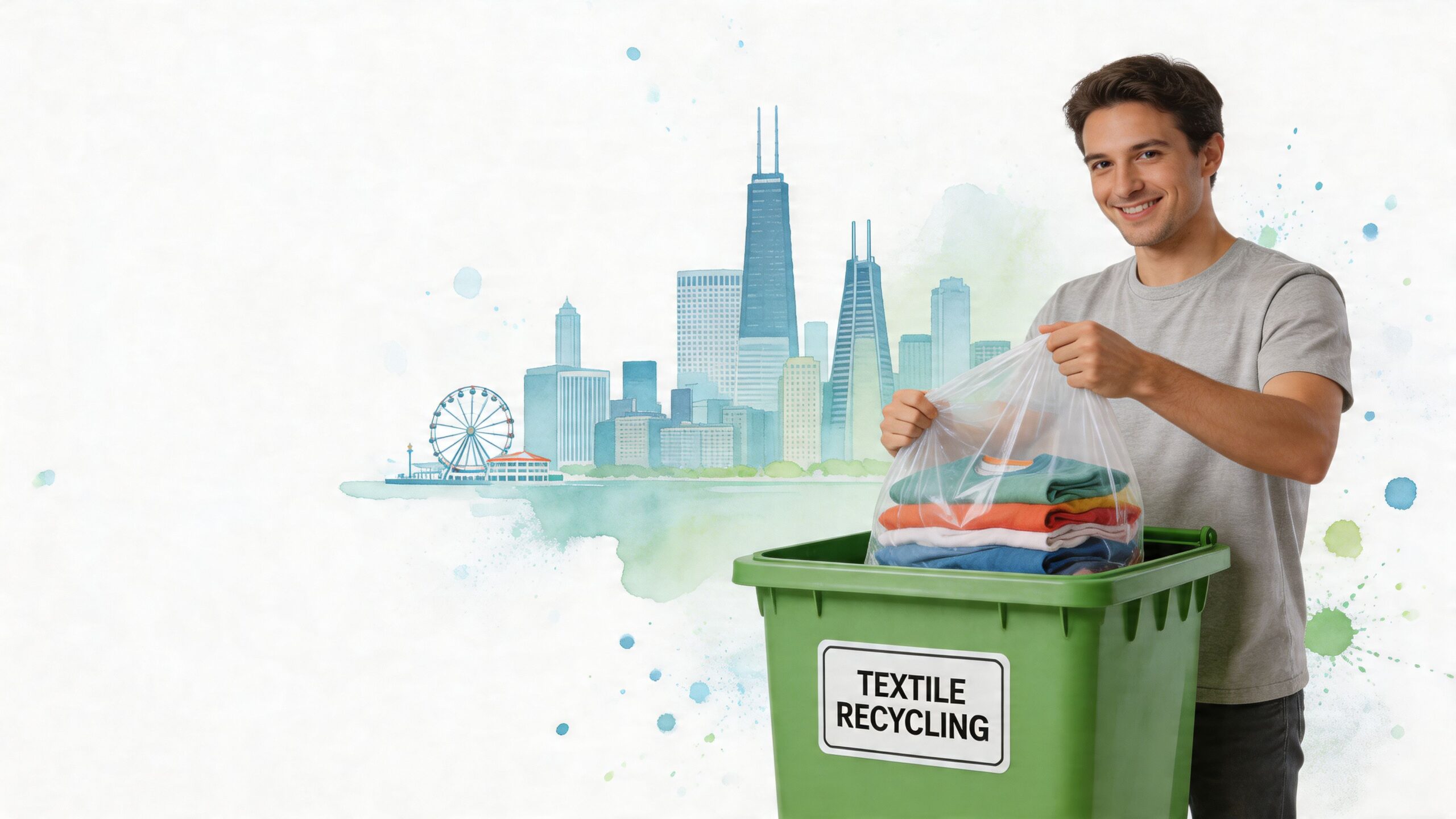
That old T-shirt really can feel heavy.
I know that sounds dramatic, but I’ve felt it. You open a closet to grab one sweater, and suddenly you’re staring at a pile of old versions of yourself. Concert shirts. Work polos. Jeans from a phase you swore you’d get back to. Baby clothes you kept because letting go felt rude, or sad, or somehow permanent. They don’t just fill a shelf. They fill your head.
That’s part of why I feel a very strong connection to chicago textile recycling. It isn’t just about fabric. It’s about movement. It’s about finally picking something up that sat there for months, maybe years, and saying, “You’re not going to run my life anymore.”
I started Litter Caterpillars because I know what it’s like to feel buried under mess. Not just visible mess. Emotional mess. Every object had a story attached to it, and every story made the object harder to move. An old jar in the fridge felt like a chapter I hadn’t finished. An old shirt felt like guilt with sleeves. Then I started picking up trash outdoors, in Chicago weather that can make you question all your choices, and I learned something fast. Cleaning up someone else’s mess is weirdly easier than cleaning up your own.
That’s why this matters so much to me.
Once you carry a bag of litter down an alley in the cold, you start to understand that action changes your mind faster than thinking does. The same thing happens when you finally sort that mountain of clothes. You don’t just clear space. You prove to yourself that you can act. You can let go. You can serve somebody beyond your apartment walls.
Chicago needs that spirit. In 2020, the city generated 4.13 million tons of refuse, recycling, and yard waste, while recycling stayed under 9%. That’s a city-sized reminder that small acts still matter, especially when enough of us do them.
So let’s make this practical. Here are 10 real options for chicago textile recycling, each with a different personality, a different rhythm, and a different kind of fit for your life.
1. Chicago Textile Recycling (CTR) and Wipeco
The first time I filled a bag with old clothes I had not worn in years, I stood there longer than I want to admit. One sweatshirt reminded me of a job I had outgrown. One stained T-shirt carried the guilt of being "useful someday." Getting rid of them felt less like cleaning and more like telling the truth.
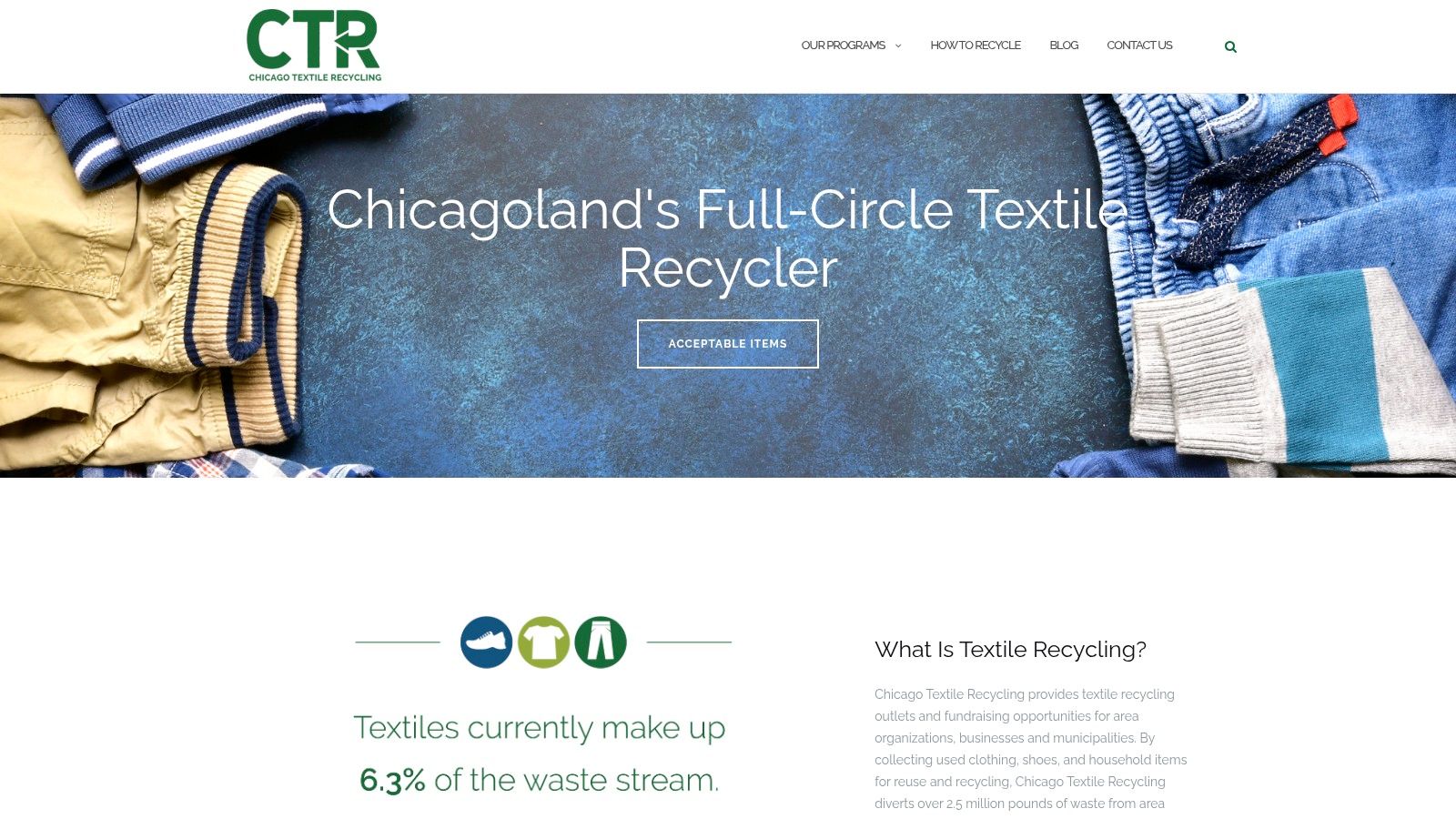
That is why Chicago Textile Recycling stands out to me. It feels concrete. Local. Built for the messy reality of textiles, not the fantasy that every donation is a perfect blouse heading straight to a grateful new owner.
CTR and its parent company, Wipeco, handle textiles at real working scale. Clothes, shoes, linens, uniforms, and other fabric items move through an actual system with collection, sorting, baling, and reuse or recycling pathways. I trust that kind of setup more than a mystery bin with no clear story after drop-off.
And I like the honesty.
Some items get reused as clothing. Some become wiping cloths. Some are recycled into other material streams. That might sound unglamorous, but it mirrors what letting go often looks like in real life. Your old things do not need a dramatic redemption arc to still do some good. They just need a next use.
Why CTR feels different
CTR makes the most sense for people who are doing more than a one-bag closet cleanout. Schools, apartment buildings, offices, property managers, and community organizers can use hosted bins, pickup options, and even secure destruction for branded apparel or uniforms.
That matters in Chicago. A neighborhood drive can turn one person’s hard decision into a block-wide habit.
Here’s where CTR fits best:
- Best for community collections: Great for schools, nonprofits, buildings, and organized drives.
- Best for tricky textile loads: Worn items, household textiles, and non-boutique pieces may still have value here if they meet acceptance guidelines.
- Best for people who want a visible process: CTR feels like a working local operation, not a vague handoff.
Practical rule: Donate textiles clean and dry. Wet or dirty fabric can spoil an entire batch and reduce what can be reused.
The trade-off is convenience. If you are one tired person with a single bag in the trunk, this may take more planning than a retail drop box or a bin you pass on your usual route.
Still, this is one of the strongest options for chicago textile recycling if you want your closet cleanout to mean something beyond getting stuff out of sight. CTR turns letting go into local work. And sometimes that is exactly how personal change starts.
2. USAgain
Sometimes you don’t need a grand plan. You just need a bin on the way home.
That’s where USAgain has an edge. If your version of success is finally loading two bags into your trunk and dropping them off without overthinking it, this kind of network can save you from your own excuses.
I’ve learned that convenience isn’t laziness. Convenience is often what turns good intentions into action.
Why it works for real life
USAgain runs outdoor drop bins around the region. That matters because closet cleanouts rarely happen at perfect times. They happen when you’re already tired, already behind, and one more errand feels annoying. A visible bin can be the difference between “I handled it today” and “this bag sits by the door for another month.”
Its model is reuse first, then recycling for non-wearables. That’s a good fit for mixed bags, especially if your pile includes both presentable items and things that have clearly lived a full life.
Here's how I see it:
- Choose USAgain if you want speed: Drop-off is the whole point.
- Choose USAgain if you like habit stacking: Grocery run, gym stop, donation. Same trip.
- Choose something else if you need detailed downstream reporting: Bin networks are convenient, but they can feel less personal.
The tradeoff is that bin quality and maintenance can vary by location. You should use your eyes. If a site looks overstuffed or neglected, don’t force it. A bad bin feels like trying to pour your life back into a closet that’s already collapsed.
If the drop point looks chaotic, keep driving. Responsible donation starts with choosing a site that looks responsibly managed.
For chicago textile recycling, USAgain is the sturdy everyday shoe. Not fancy. Not intimate. Just useful, accessible, and easy to repeat.
3. WasteNot Compost textile collection
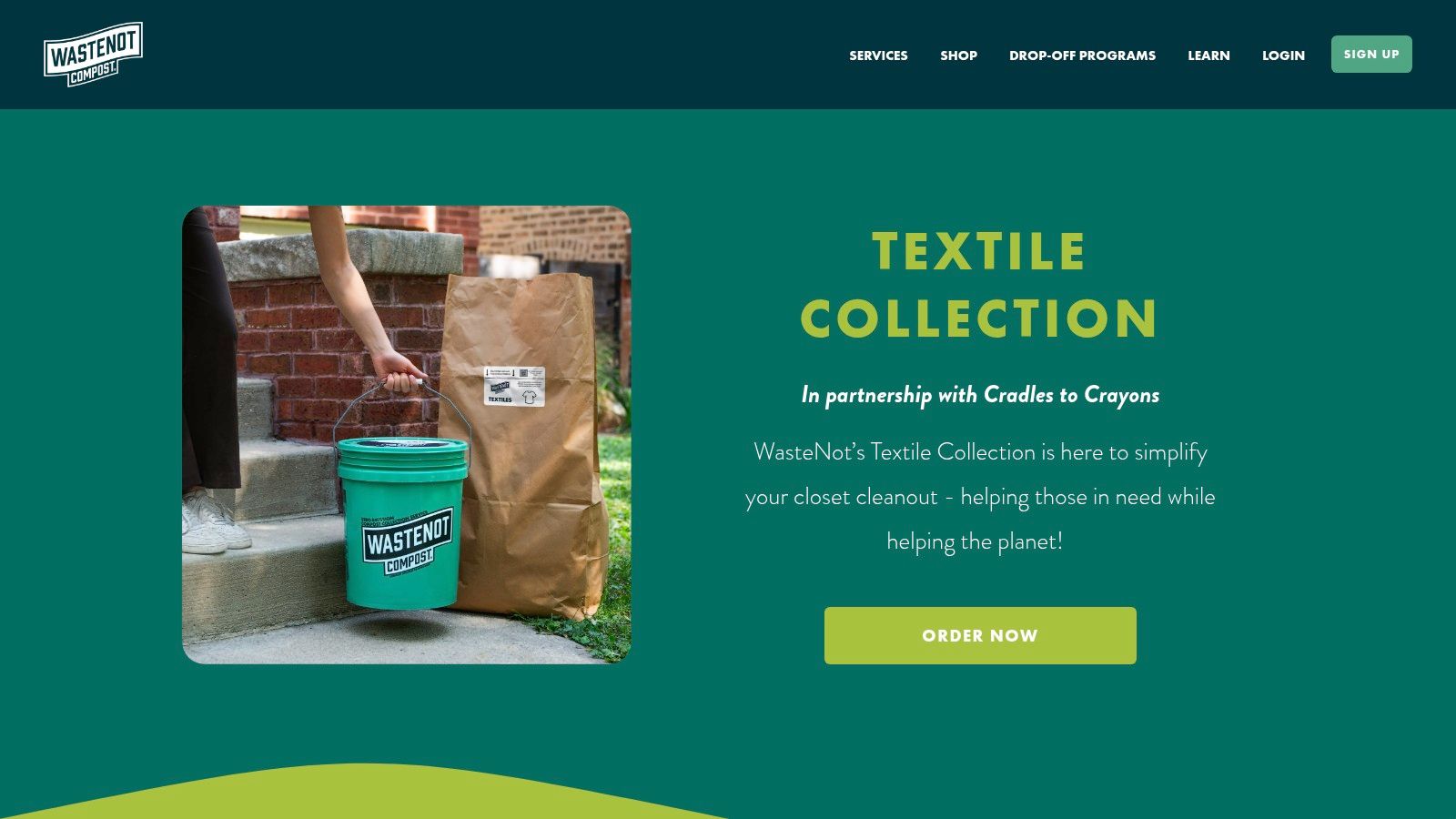
I love services that reduce the number of decisions I have to make. That’s why WasteNot’s textile collection is appealing if you already use them.
You clean out the fridge. You compost the scraps. You clean out the closet. You set out a textile bag. That rhythm makes sense to me because clutter rarely lives in only one category. When my place gets messy, it’s never just shirts. It’s food waste, paper piles, random bags, and all the little postponed choices stacking into one heavy mood.
One pickup rhythm, two kinds of relief
WasteNot accepts clean clothing, shoes, and textiles from its members. Qualifying items go through Cradles to Crayons, and items that don’t meet quality standards still get recycled rather than being removed from the process.
That’s a powerful emotional design. You don’t need to create a perfect pile. You just need to make a sincere one.
If you already care about organics, this pairing feels natural. I’d read it alongside composting in Chicago because the mindset is similar. You stop treating “waste” as one final category and start sorting life into better next steps.
- Best for existing members: This shines if WasteNot is already part of your weekly routine.
- Best for clean, sorted home cleanouts: The service expects preparation, not a chaotic curb pile.
- Best for people who want one trusted flow: Fewer vendors, fewer mental tabs left open.
The limitation is obvious. If you’re not already a WasteNot customer, this isn’t your easiest entry point. It’s a service add-on, not a public walk-up option.
Still, I respect tools that reward consistency. WasteNot doesn’t feel like a dramatic reset. It feels like a healthy habit. And most personal transformation happens that way. Repeatedly. With a bag by the door and a better choice on a Tuesday morning.
4. Cradles to Crayons Chicago
A friend once handed me a bag of toddler clothes and started crying halfway through the handoff. Not because the clothes were in bad shape. Because they were good. Too good. They still held the shape of a life her family had just outgrown.
That moment taught me something about decluttering. We are rarely sorting fabric alone. We are sorting memory, identity, and the quiet fear that letting go means losing the season that made us.
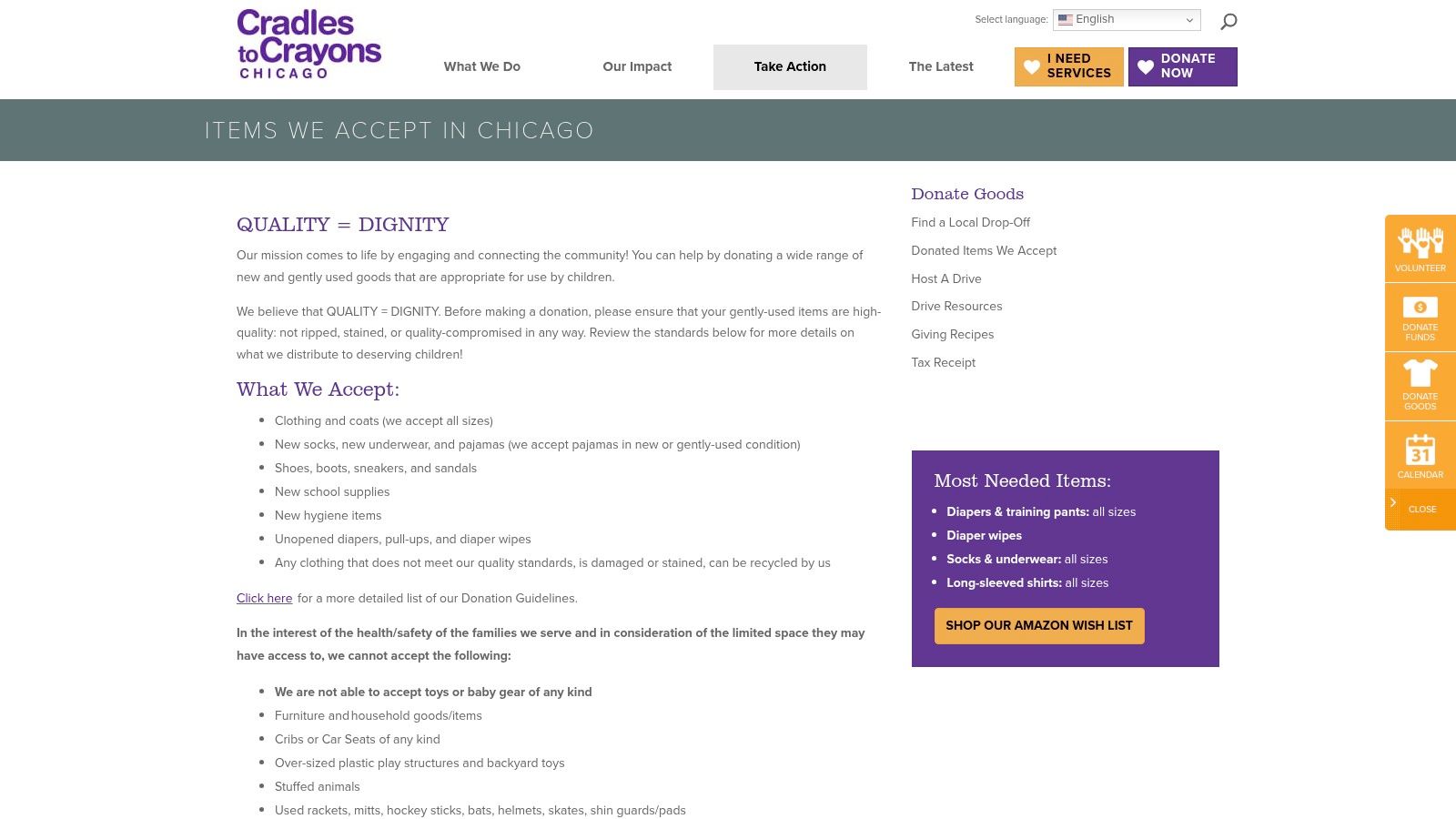
Cradles to Crayons Chicago is one of the strongest options in the city for children’s clothing, shoes, coats, and other kid-focused essentials that still have real use left in them. The mission feels personal because it is personal. Your child’s outgrown jacket does not disappear into a vague system. It heads toward another child who needs it.
That clarity matters on hard cleanout days.
Cradles to Crayons works especially well for parents who want a local, purposeful home for the pieces that carry emotional weight. I also respect that items outside their acceptance standards may still be directed through recycling partners. That lowers the pressure to build a perfect donation bag before you act.
If you are already planning errands, it helps to map your stop alongside other recycling centers in Chicago so one trip clears more mental clutter at once. A small route can become a real reset.
What stands out here:
- Best for children’s clothing and essentials: This program has a clear lane and a clear recipient.
- Best for parents processing a life transition: Outgrown sizes often carry more emotion than adult closet cleanouts.
- Best for people who want giving to feel concrete: The community impact is easy to picture.
- Limited for adult items: Your own jeans, workwear, and old sweaters need another outlet.
I keep coming back to the Litter Caterpillars idea that cleaning up the outside world changes your inside world too. A bag of baby clothes by the door can feel small, but sometimes it is the first honest sign that you are ready for the next version of your life. Passing those items on does not erase the chapter. It honors it, then lets it keep serving someone else.
5. Simple Recycling
If you live in a participating suburb, Simple Recycling is the kind of service that removes friction so well it almost feels like cheating.
And I’m for that.
Some weeks, bravery looks like marching into a blizzard with a trash picker. Other weeks, bravery looks like finally scheduling a pickup instead of pretending the donation bags in your trunk are a personality trait. Home pickup can be the nudge that gets a stuck project moving.
The convenience play
Simple Recycling works best for households in participating municipalities rather than Chicago proper. If your suburb offers it, you get on-demand curbside pickup for textiles and other small household items.
That matters because your cleanout probably isn’t neatly separated. You might have linens, old shoes, a lamp, and a bag of clothes that should’ve left your house two seasons ago. A home service matches real clutter better than a narrow one-item pipeline.
What I like about this option:
- You don’t need a special outing: That saves energy.
- Scheduling creates commitment: Once it’s on the calendar, the pile has a deadline.
- It suits large cleanouts: Moves, garage resets, and seasonal purges fit well here.
The catch is geography. If you’re inside Chicago city limits, you may not have access. And if you care a great deal about where each item ends up, you may want a more specialized or local-first route.
Still, when I think about personal growth, I think about reducing the distance between intention and action. Simple Recycling does that. It shortens the gap. It helps you act before nostalgia talks you into keeping the broken sweater for “paint projects” you never do.
6. H&M garment collecting
I’ve had days when the only realistic plan was this. I’m already downtown. I’m already out. I already have the bag in my hand. Just let me finish the job.
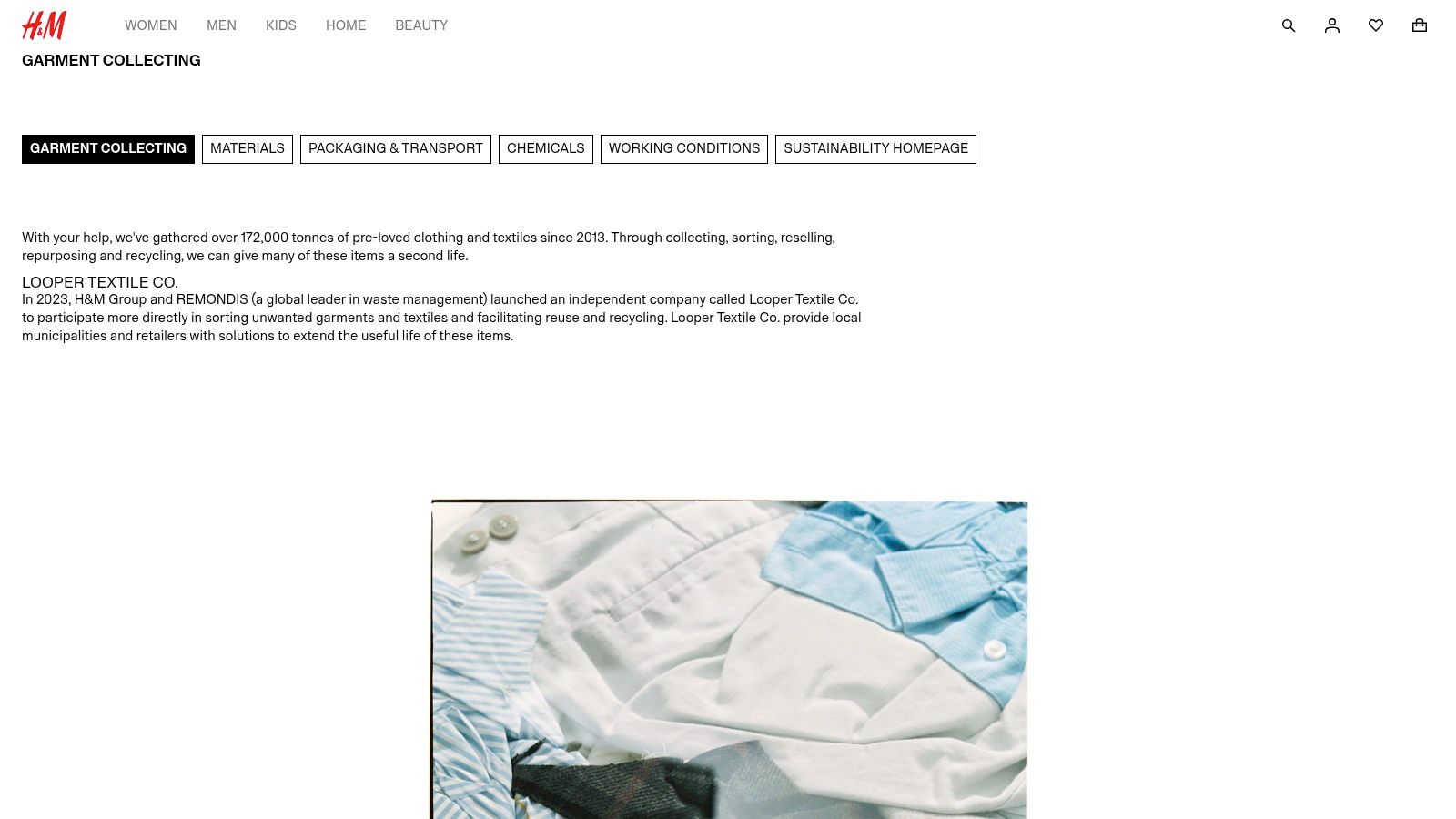
That’s where H&M’s garment collecting program can help. It accepts garments and home textiles from any brand and in any condition through in-store collection boxes.
Good for imperfect piles
This is one of the easier chicago textile recycling options for people who don’t have a perfectly curated donation stack. Maybe you’ve got a torn T-shirt, a stretched-out hoodie, and some worn pillowcases. You don’t need the pile to look pretty for this to work.
I also like retail drop-offs for one simple reason. They meet people where they already are. If someone starts recycling textiles because it fits between errands, I’m not going to sneer at that. I’m going to cheer.
If you’re building a broader routine around neighborhood reuse habits, you can tie this into your own plan to recycle in Chicago.
- Best for quick walk-in drops: Especially useful if you work or shop near a store.
- Best for mixed-condition garments: The acceptance range is broad.
- Less ideal for tax-minded donors or bulk loads: This is a store collection program, not a full-service logistics partner.
A small caution. Retail programs depend on store hours, staffing, and in-person flow. If you’re hauling a massive purge, this can feel awkward.
Bring a manageable bag, not your entire emotional history in six contractor sacks.
Used well, H&M is the low-barrier option that gets clothes moving instead of marinating in guilt.
7. Zara clothes collection program
Zara’s clothes collection program feels made for the person who wants to drop something off while living their normal city life. You’re near the store anyway. You’ve got a bag anyway. You hand it off and keep walking.
That ease matters more than people admit.
When I’m trying to change a habit, I look for the path with the fewest chances to bail. A downtown worker, a student, or a weekend shopper can use Zara that way. It fits into movement rather than demanding a separate mission.
A clean fit for casual drop-offs
Zara hosts on-site collection containers in stores, and the program sorts items for reuse or recycling. It also connects to the brand’s wider circular efforts, which gives the drop-off a bigger ecosystem than a random bin with no context.
I’d place Zara in the “urban convenience” category. It’s not for giant volumes. It’s not for a school drive. It’s not for building-wide pickups. It’s for the tote bag full of clothes you finally decided to stop storing.
Here’s the honest read:
- Strong fit for downtown routines: Commute, shopping trip, quick handoff.
- Strong fit for any-brand clothing donations: You don’t have to sort by label.
- Weak fit for bulky household cleanouts: This isn’t the right tool for a move-out mountain.
I also think these in-store programs do something subtle but useful. They normalize textile recycling. They put the act in plain sight. That can shift your brain. Once dropping off old clothing feels normal, you’re more likely to keep doing it.
Zara won’t solve every textile problem in your home. But it can absolutely solve the small pile that keeps staring at you from a chair in the bedroom.
8. Ridwell Threads
Ridwell makes sense to me for one specific kind of person. The person who knows clutter comes in waves and wants a recurring system, not a heroic once-a-year purge.
That person might be you.
Ridwell has a Threads category for clothes, shoes, and textiles. Depending on where you live, pickup availability can vary, and there’s also a mail-in option. It’s a paid membership model, so this is less “free neighborhood bin” and more “I’m building a repeatable home system.”
Why subscriptions help some people
I used to think paying for structure meant weakness. I don’t think that anymore. Sometimes paying for structure means you finally respect your own patterns. If you know items pile up, and you know you avoid specialty recycling errands, a recurring service can interrupt that cycle before it hardens into another closet landslide.
Ridwell also appeals to people who want clearer guidance on accepted materials across categories. It isn’t only about textiles. It’s about reducing the number of weird, hard-to-recycle items that end up lingering in your home because they don’t fit ordinary disposal.
- Best for recurring declutterers: Parents, busy professionals, chronic pilers.
- Best for multi-material households: If clothes are only one part of your waste puzzle.
- Worst for one-off budget-minded users: Membership won’t make sense for everyone.
I wouldn’t recommend Ridwell to somebody who just wants the cheapest way to unload one bag of shirts. But if your real battle is consistency, systems beat motivation almost every time.
That’s true in volunteering too. The reason Litter Caterpillars works is not because every Saturday feels easy. It works because the rhythm carries us when motivation doesn’t.
9. Planet Aid
Planet Aid belongs in the conversation because yellow bins are familiar for a reason. Planet Aid offers another bin-based route for clothing and shoes across the broader region, including parts of Illinois.
I’m a fan of familiar when familiar helps you act.
One thing I’ve learned doing community cleanup is that infrastructure matters. If people don’t see an obvious path, they default to the easiest path, and the easiest path is often the trash. Visible bins fight that tendency.
Bin-based and simple
Planet Aid follows a reuse-first approach, with recycling for non-wearables. That makes it a practical option for standard wardrobe cleanouts where the main goal is to move usable items out of your home responsibly.
I’d compare it loosely to other donation-bin networks. The value is access. The risk is that neighborhood coverage changes, and not every location feels equally convenient.
Use it when you want:
- A free drop-off option
- A neighborhood bin alternative
- A straightforward routine without appointments
Skip it when you need highly specific processing details for each item or when you’re dealing with very contaminated textiles that likely need tighter handling.
There’s something emotionally helpful about dropping a bag into a bin and hearing it land. It’s a tiny sound, but it marks a decision. Done. Gone. Moved.
And a lot of healing starts with small completed decisions.
10. Unique Thrift and Savers donation centers
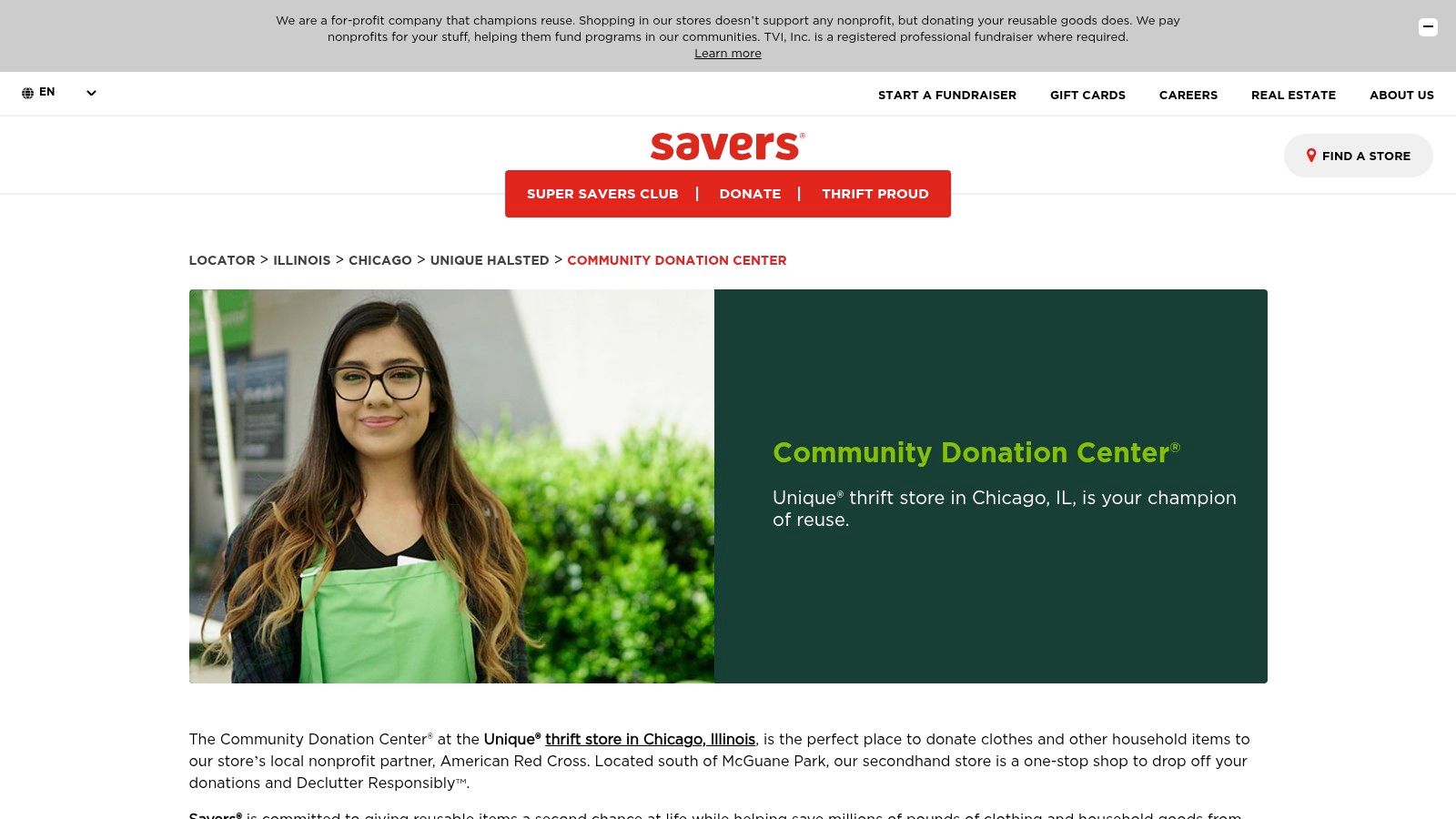
Some cleanouts are not delicate. They are not aesthetic. They are not a cute little basket of neutral-toned capsule wardrobe pieces. They are huge, messy, and overdue.
For those days, Unique Thrift’s Community Donation Center has a clear advantage. It’s built for volume.
When you need speed and throughput
Drive-up donation lanes matter. If you’re unloading multiple bags and you want the relief of seeing them leave your car in one shot, a high-volume thrift donation center can feel amazing.
I’ve had moments where I knew that if I brought the bags back upstairs, I’d lose another month to indecision. Some tasks need gentleness. Others need momentum.
Unique Thrift works well for broad ranges of clothing and soft goods, with resale up front and downstream recycling routes for unsellable textiles when possible. That makes it practical, especially for people doing a serious apartment reset.
The honest pros and cons look like this:
- Great for large drop-offs during store hours
- Great for donors who want an easy car-based unload
- Less ideal for people who want total clarity on each recycling partner or pathway
I’d use this option when your real enemy is backlog. Not philosophy. Not perfection. Backlog.
Chicago Textile Recycling, Top 10 Comparison
| Program | Core Offerings ✨ | Convenience / Quality ★ | Cost / Value 💰 | Best For 👥 | Standout 🏆 |
|---|---|---|---|---|---|
| Chicago Textile Recycling (CTR) – Wipeco | Local collection bins & org pickups; secure destruction; wiper/fiber processing ✨ | ★★★★, tailored service for orgs (not curbside) | 💰 Org/pricing; pickup fees possible | 👥 Schools, property managers, events | 🏆 Local closed‑loop + certified destruction |
| USAgain | Wide outdoor bin network; reuse-first; warehouse logistics ✨ | ★★★★★, 24/7 drop-off footprint | 💰 Free drop-off | 👥 Residents after cleanups; bin hosts | 🏆 Very convenient network for high volumes |
| WasteNot Compost (textile) | Textile stream + composting; partnership with Cradles to Crayons ✨ | ★★★★, bundled with WasteNot service | 💰 Bundled with subscription (customers) | 👥 WasteNot subscribers; eco-conscious households | 🏆 Combines compost & textile diversion |
| Cradles to Crayons Chicago | Children’s clothing redistribution; many drop sites & pickups ✨ | ★★★★, many local drop-offs; selective pickups | 💰 Free donations | 👥 Donors of kids’ items; families in need | 🏆 Direct local impact for children |
| Simple Recycling | Free curbside textile pickup in participating suburbs ✨ | ★★★★★, home pickup & scheduling | 💰 Free for participating households | 👥 Suburban residents with service | 🏆 Maximizes diversion via curbside pickup |
| H&M Garment Collecting | In-store drop boxes; accepts any brand/condition ✨ | ★★★★, walk-in convenience at stores | 💰 Free drop-off | 👥 Shoppers; downtown workers | 🏆 Accepts damaged textiles many programs refuse |
| Zara – Clothes Collection Program | In-store donation containers; ties to repair/resale ✨ | ★★★★, convenient retail drop-offs | 💰 Free drop-off | 👥 Shoppers and downtown donors | 🏆 Integrated with brand circular programs |
| Ridwell (Threads) | Subscription mail-in/local pickup; clear acceptance guidance ✨ | ★★★★, reliable for subscribers | 💰 Paid subscription (recurring) | 👥 Recurring users wanting clarity | 🏆 Transparent partners & multi-material service |
| Planet Aid | Yellow donation bins; reuse-first with recycling fallback ✨ | ★★★, neighborhood bins; coverage varies | 💰 Free drop-off | 👥 Local neighborhood donors | 🏆 Nonprofit operator with regular reporting |
| Unique Thrift (Savers / CDC) | Drive‑up donation centers; resale + recycler pathways ✨ | ★★★★, fast drops during store hours | 💰 Free drop-off; supports nonprofits | 👥 Donors with bulk/textile lots | 🏆 High-volume processing & nonprofit partnerships |
From Clutter to Clarity Your City is Waiting
Last winter, I pulled a coat from the back of my closet that I had not worn in years. The pockets still held a train receipt, a grocery list, and a tiny knot in my chest. I kept telling myself I would wear it again, fix the button, become the version of me that still matched that coat. Instead, it sat there taking up space, asking for a decision every time I reached past it.
So I made one.
I filled a bag with that coat, two stretched-out sweaters, a lonely sock collection, and a stack of T-shirts from old jobs. Then I carried the bag out the door on a cold Chicago morning. The bag was not especially heavy. My shoulders felt lighter anyway.
I know that feeling from cleanup days with Litter Caterpillars. You show up to a block that looks tired. Plastic in the weeds. Fast-food cups in the gutter. A shirt twisted around a chain-link fence. You pick up one thing, then another, and the whole street starts looking possible again. The mess loses its power the minute somebody touches it with purpose.
Closets do that too.
Choosing a chicago textile recycling option is a practical errand, but it is also a vote for the person you want to be next. You stop treating the past like storage. You use what can still serve someone. You release what cannot stay. You prove to yourself that stuck is not permanent.
As noted earlier, a huge amount of clothing gets tossed each year even though much of it can be reused or recycled when it is clean and dry. That citywide problem starts in tiny, private places. One bedroom floor. One overstuffed hall closet. One bag finally tied shut and carried downstairs.
I like that textile recycling does not demand a perfect ending. Some pieces get worn again by someone who needs them. Some get cut into wiping cloths. Some get broken down into fiber and turned into something less glamorous but still useful. That honest second life matters. Personal growth often looks like that too. Not dramatic. Not cinematic. Just useful, real, and better than letting things decay in the dark.
You do not need a perfect cleanout to make a meaningful one.
If you are frozen, go smaller. Start with old socks. One shelf. One laundry basket. Give yourself twenty minutes and one clear rule. If you would not choose it today, let it go today.
That is the deeper lesson in the Litter Caterpillars story, and it is why this work hits harder than people expect. Service changes the person doing it. You head out to help your block, and your own mind settles down a little. You clear an alley, and suddenly answering emails at home feels less impossible. You drop off clothes that have been weighing on you for months, and the room in front of you starts to match the room you wanted in your head.
Chicago is full of places to begin. A neighborhood bin. A store drop-off. A pickup service. A nonprofit that can pass along children’s items to families who need them. The method matters less than the moment you stop postponing it.
You started. That counts.
You moved something out of your home and back into circulation. You made space in your closet, in your mind, and in your city. If this stirred something in you, come put that energy to work with Litter Caterpillars. We’re a volunteer-driven Chicago cleanup group built on bravery, kindness, consistency, and friendship. Join us for a weekend pickup and see what happens when you clean a block, meet good people, and remember that change usually begins with one bag in your hand.