
Last winter, I watched a woman steady an older man's grocery bags on a slushy corner while another neighbor held the door. Nobody made a speech. They just saw a need and moved.
A Story of Neighbors in Our City
That's the feeling I associate with Lakeview Pantry Chicago. They're often looking for an address, hours, or a way to volunteer. What they're really circling is something more basic. They want to know where people in this city still show up for each other.
Lakeview Pantry, now called Nourishing Hope, began in 1970 and in 2025 it served 50,000 neighbors and distributed more than 6 million pounds of food, according to Nourishing Hope's official site. I don't read that like a cold number. I read it like thousands of grocery bags lifted, carts rolled, doors opened, and kitchen tables made less stressful for one more week.
If you've ever joined a cleanup, you know how this works. One person picks up one bottle. Another grabs a bag. Then a whole block starts to change. A pantry works in that same rhythm. One volunteer sorts food. One staff member greets a guest. One family gets enough groceries to breathe a little easier. By the end of the day, what started small feels like a city moving together.
What the name still carries
A lot of Chicagoans still call it Lakeview Pantry, and that makes sense. Names stick when they're tied to memory. Maybe you donated there years ago. Maybe a friend told you about it. Maybe you passed the building and wondered what happened inside.
Now the name is Nourishing Hope, but the heartbeat is still local and neighborly. The work has grown wider.
Chicago runs on these everyday exchanges. A hand on the door. A bag passed over. A stranger who decides not to stay a stranger.
For people looking for other ways neighbors support neighbors across the city, this roundup of charities in Chicago is a good place to keep reading.
Why people keep coming back
Some people come because they need food. Some come because they need a place to help. Some come because they've been on both sides of that line in different years of their lives.
That's what makes this place easy to understand. It isn't a machine. It's a habit of care.
More Than a Meal What Nourishing Hope Means
Food gets you through tonight. Stability helps you get through next month.
That's the cleanest way I can explain the change from Lakeview Pantry to Nourishing Hope. If your car breaks down, a sandwich helps if you're hungry, but you still need the engine fixed, a ride to work, and someone who knows which shop to call. Hunger works like that too. A bag of groceries matters right away. But a lot of people also need help with stress, housing, work, and the tangle of problems that pile up around an empty fridge.
The shift to Nourishing Hope points to that wider mission. The organization says the rebrand includes mental health counseling, job assistance, and housing support through its broader social service model, as noted by the Lakeview Roscoe Village Chamber listing for Nourishing Hope.
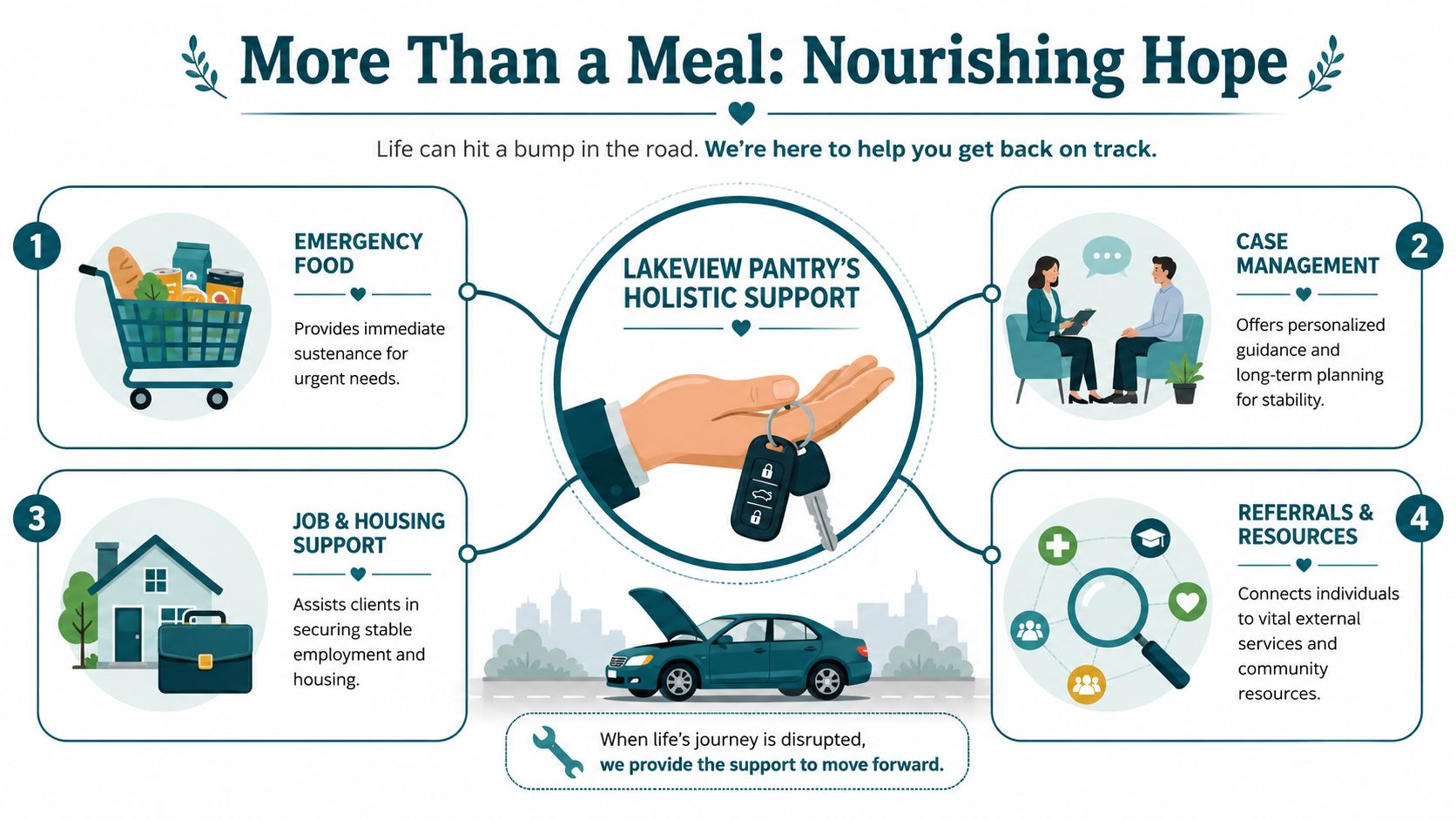
Food is one tool in the toolbox
I like to think of Nourishing Hope as a workbench instead of a shelf. On that bench, food is one tool. It's the first one you reach for. It solves the immediate problem. Then you look around and see other tools nearby.
- Emergency food helps when the cabinet is bare and payday is still far off.
- Case management gives people a real conversation and a plan, not just a quick handoff.
- Job and housing help gets at the pressure points that make food insecurity keep coming back.
- Referrals and outside resources connect people to support that one organization alone can't cover.
That changes the experience. You don't walk away with only groceries. You walk away with more options.
What that feels like in real life
Say your rent jumps, your hours get cut, and the stress starts crawling into your sleep. Food help keeps the week from falling apart. A conversation about work or housing can keep the next few months from doing the same. If the strain has gotten heavy, mental health counseling matters too.
Practical rule: When a pantry also helps with the problems around hunger, asking for food can become the first step instead of the last resort.
That's why the name change matters in a practical way. It tells you the door opens to more than one kind of help.
How to Get Help A Friendly Walkthrough
Asking for help can feel awkward the first time. Individuals typically don't want to explain their situation to a room full of strangers. They want to walk in, get oriented, and leave with dignity intact.
From what I've seen, Nourishing Hope tries to make that first step less tense. The building itself was designed with that in mind. Its permanent home, designed by Wheeler Kearns Architects, includes a dedicated entrance desk so every guest is greeted by a volunteer, which helps create a more welcoming arrival, according to the Chicago Neighborhood Development Awards project page.
What to expect when you arrive
Think of your first visit like walking into a well-run library instead of a chaotic giveaway line. You're not supposed to guess what happens next. Somebody is there to orient you.
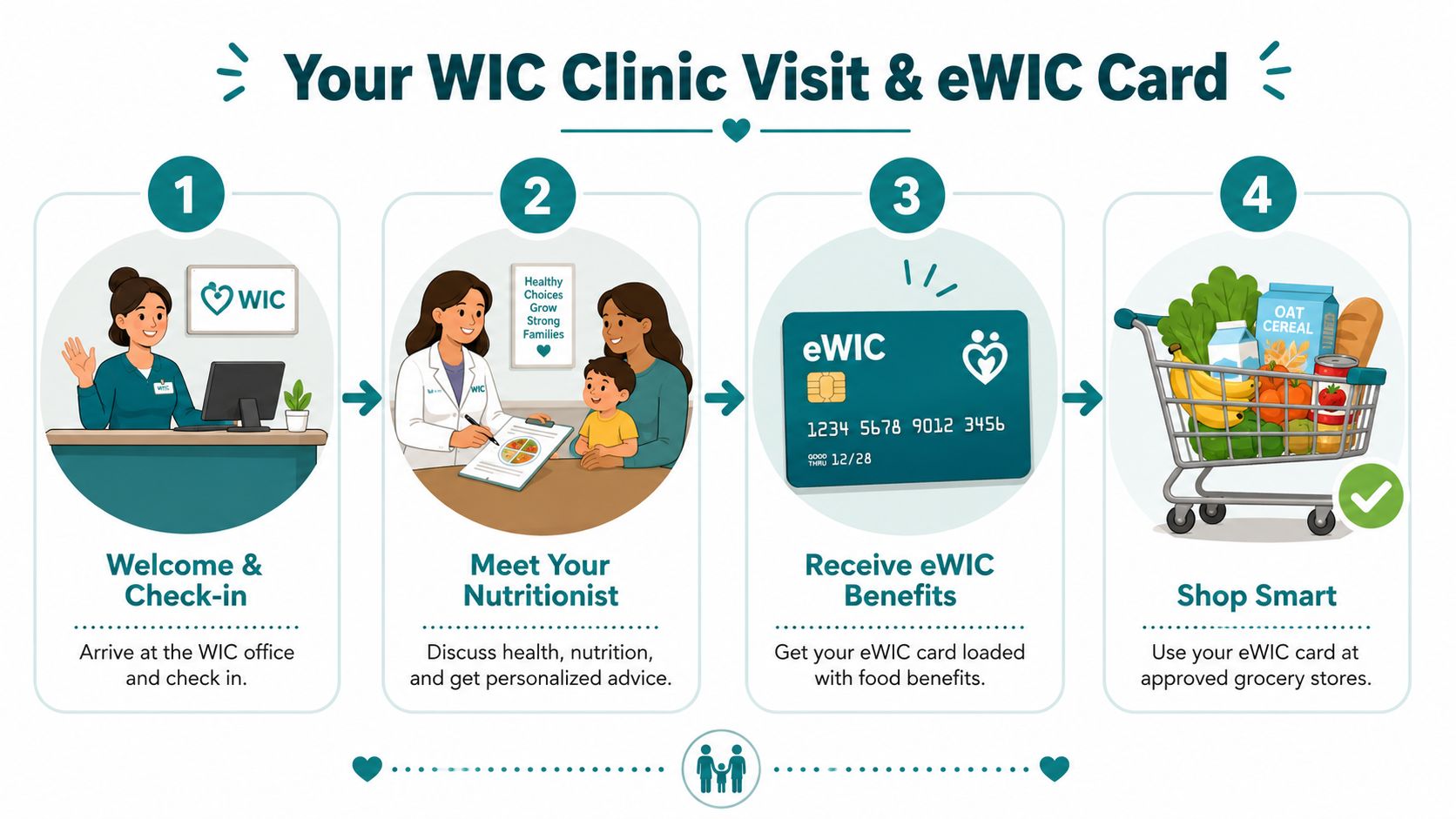
A friendly walkthrough usually looks like this:
- Start with the website or a phone call if you can. Check current details before heading over.
- Look at location options so you know which site makes the most sense for your trip.
- Prepare for a brief intake or check-in. Keep it simple. Bring what the organization asks for.
- Expect a greeting at the door. That part matters more than people realize.
- Ask about other support if food isn't the only issue on your mind.
Some people need one visit. Others need a steadier rhythm for a while. Either way, it helps to know that the space was built to feel human.
A few things I'd tell a friend
If you're going for the first time, give yourself a little extra time and don't rush in flustered if you can avoid it. If English isn't your first language, or if forms make you nervous, bring a calm friend if the organization allows that kind of support.
And if you want another example of how neighborhood food support works in Chicago, this piece on Casa Catalina Food Pantry in Chicago, IL gives a useful local comparison.
Walk in like you belong there, because you do if you need the help.
Questions worth asking on site
A first visit gets easier when you ask direct questions.
| Question | Why it helps |
|---|---|
| What do I need for my next visit? | You leave with a clear plan. |
| How does scheduling work? | You avoid confusion later. |
| Can someone tell me about social services? | You learn whether more support fits your situation. |
| What if I have trouble with online steps? | You find out what help is available before it becomes a barrier. |
That last question matters a lot right now, and I'll come back to it in a minute.
Join the Crew How You Can Help
Volunteering here feels a lot like any good group project in Chicago. People show up half-awake, grab a task, joke a little, then lock in. Before long, the room has a rhythm. Boxes move. Lists shrink. Somebody learns a name they didn't know an hour ago.
Nourishing Hope has more than 5,000 volunteers, including adults, children, and families, supporting work like on-site distribution and home delivery, according to Lakeview Pantry's volunteer page.
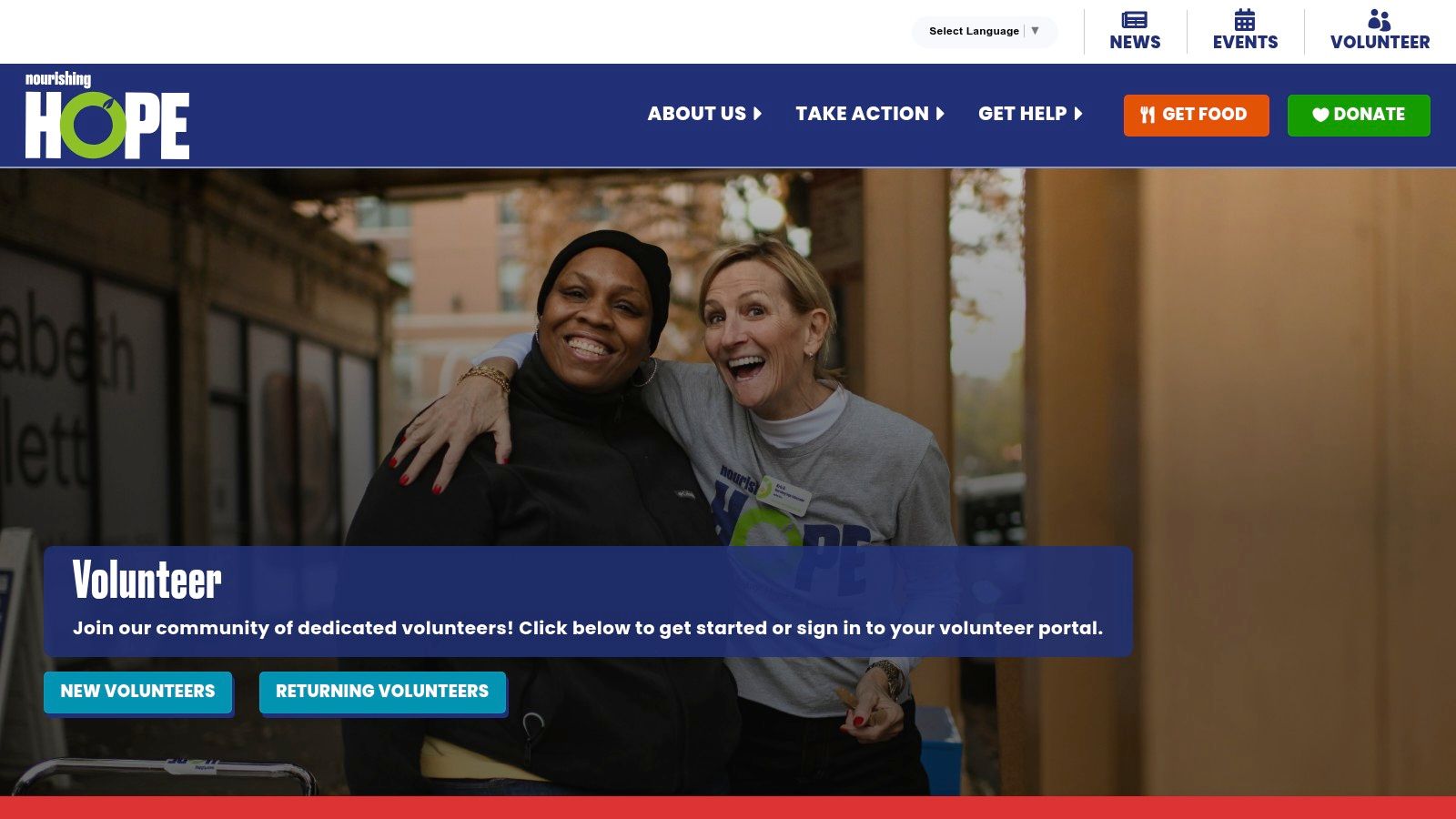
That number tells me something simple. You do not need to be a superhero to join in. Plenty of regular people already have.
What helping can look like
Some folks like direct contact. They want to greet guests, pack groceries, or make deliveries. Others prefer behind-the-scenes tasks that keep the day from wobbling.
Here are a few ways people usually plug in:
- Hands-on pantry work means sorting, packing, stocking, and keeping food moving where it needs to go.
- Guest-facing support fits people who are warm, patient, and good at making others feel at ease.
- Home delivery help works well for volunteers who like a clear route and a clear purpose.
- Material or financial donations help when your schedule is packed but you still want to contribute.
None of those roles are glamorous. That's part of the beauty of it. Real care often looks ordinary up close.
Why volunteering changes the volunteer too
A lot of us sign up thinking we're only going to help someone else. Then we leave steadier ourselves. We meet people outside our routine. We remember our city is full of generosity that rarely makes noise.
If you want another route into food-focused service, this guide to Chicago food bank volunteer opportunities can help you compare options and find the right fit.
A short look at the volunteer side helps make it real:
Some people donate because they have money. Some volunteer because they have time. Many do both in different seasons of life.
If you're on the fence
Go once. That's my advice.
You don't need a lifelong plan. You need one morning, one shift, one honest try. Places like this run because enough people keep saying yes to one doable act at a time.
Tips for Your First Visit or Partnership
The hardest part is often the tiny practical stuff. Which door do I use. What should I bring. Do I need to book online. What if my neighbor doesn't use a smartphone. Those details decide whether help feels easy or far away.
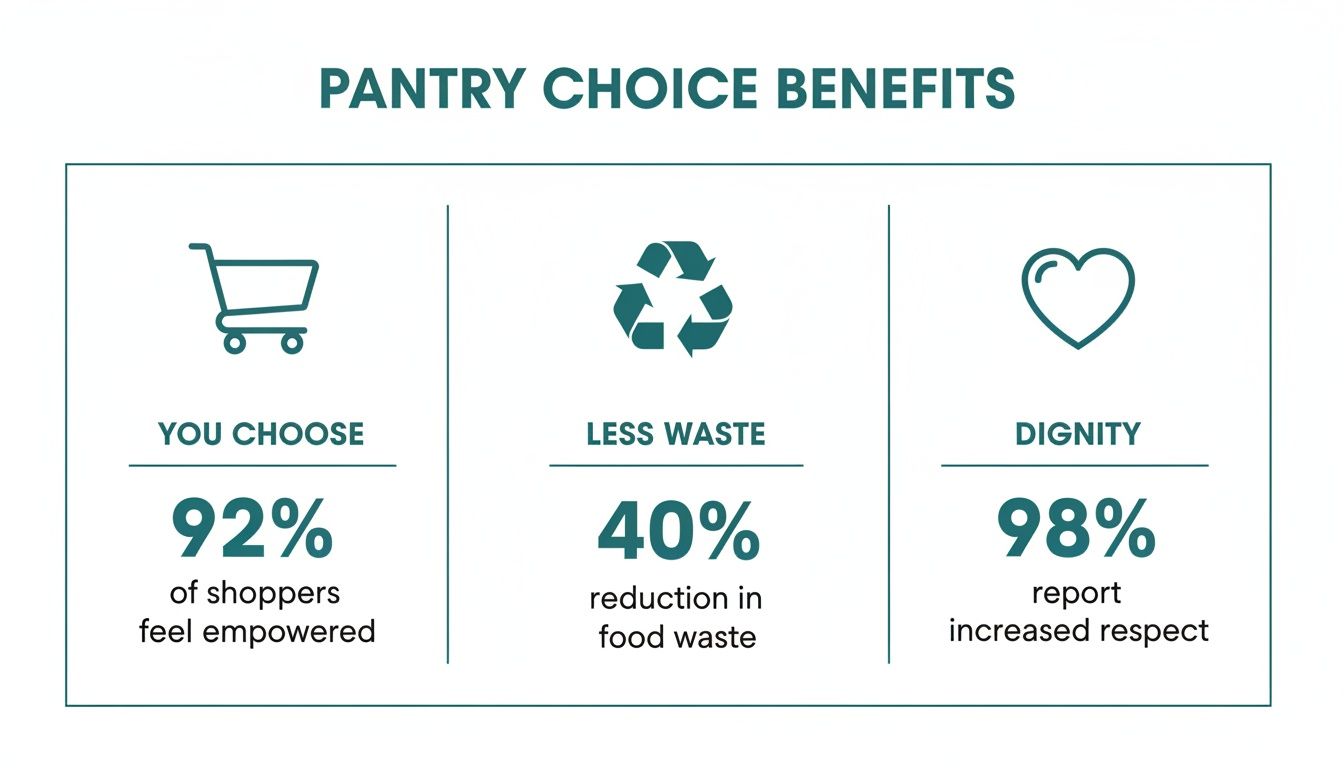
One issue deserves plain language. Nourishing Hope's system now leans heavily on online bookings, and there is a real access gap for the 40% of food pantry users in the area who do not use smartphones, especially seniors and disabled neighbors. That means convenience for one person can become a wall for another.
If you're visiting for help
Start simple and stay organized.
- Check booking steps early if you use a phone or computer comfortably. Don't wait until the last minute.
- Write down details on paper if that feels safer than keeping everything on a screen.
- Bring a support person when possible if technology, forms, or travel feel stressful.
- Ask staff what the backup plan is if you miss an online step or can't complete it at home.
If you're helping an older neighbor, don't just send them a link and hope for the best. Sit down with them. Make the appointment together. Write the time clearly. Ask if they need a ride or a reminder call.
If you're a community group
Partnership starts with one practical question. What problem can your group reliably solve?
Maybe your team can help people use digital booking. Maybe you can organize a volunteer day. Maybe you can collect items the pantry needs most. The best partnerships aren't flashy. They remove friction.
A good first outreach note usually includes:
| What to include | Why it matters |
|---|---|
| Who you are | Staff can place your group quickly |
| What kind of help you can repeat | Reliability beats a one-time burst |
| How many people may join | It helps with planning |
| What dates or times work | It moves the conversation forward |
Keep the human part in view
When systems move online, some neighbors fall quiet. They don't complain. They just disappear from the process. That's why I think the best support people in Chicago do one extra thing. They notice who isn't in the room.
If you're comfortable online, use that comfort for somebody else too.
From a Pantry to a Partnership
When I think about Lakeview Pantry Chicago, I don't think first about a building or a brand name. I think about motion. A volunteer greeting someone at the desk. A delivery heading out. A person walking in tense and walking out with a little more steadiness.
That's why this story feels familiar to anyone who has ever done local service. You pick up what someone else couldn't carry alone. Sometimes that's a grocery bag. Sometimes it's a hard week.
Chicago gets better when more of us treat care like participation instead of applause. If you need help, step toward it. If you can give help, step toward that too. Both acts belong to the same city.
If you want one more way to put that spirit into motion, join Litter Caterpillars. We clean blocks, build friendships, and practice the same simple habit that keeps pantries, parks, and neighborhoods going. Show up, do one useful thing, and let that small act pull you into a bigger community.