
A few years ago, I stared at a rotten jar in my fridge like it was a boulder. It barely weighed anything, but I couldn't move it. That same feeling shows up when you need help with food and don't know where to begin.
That First Brave Step Towards Getting Help
I started doing service work because I was bad at cleaning my own life.
This is how it was: My room got cluttered. My fridge got weird. Old receipts, half-finished snacks, things tied to memories I didn't want to touch. Every object felt heavier than it was. A bag of nuts wasn't a bag of nuts. It was the story of the week I tried to get healthy and gave up. A jar of jam wasn't trash. It was a trip, a person, a version of me that felt far away.
When life gets crowded like that, asking for help can feel the same way. You know the next step is small. Make a call. Set an appointment. Walk through a door. But in your body, it feels like lifting concrete.
That's why I care about places like the schaumburg food bank. A good pantry doesn't just hand out food. It gives you a way to breathe again. It gives structure to a hard week. It turns a private panic into something you can act on.
Sometimes courage is quiet. It's a phone call. It's saying, "I need a little help right now."
If you've never gone to a pantry before, I want you to hear this plainly. Needing food help doesn't mean you've failed. It means you're human, and circumstances like bills, schedules, family needs, and bad luck can stack up fast.
I've seen the same thing in neighborhood cleanup. One block gets ignored long enough, and litter starts to feel normal. One family gets stretched long enough, and hunger starts to hide behind closed doors. Both situations improve when people decide they won't look away anymore.
If you've looked at other pantry guides before, like this one on the Niles Township food pantry, you already know that the hardest part is often the first move. After that, things usually get simpler.
The Schaumburg Township pantry is built around that first move. It's a community place inside the Township offices at 1 Illinois Boulevard in Hoffman Estates, and it's there for local residents who need support, with a system meant to help people get through the door and get fed.
Later in this article, I'll walk you through what that looks like in real life.
A short overview helps too:
How to Get Food at the Schaumburg Food Bank
A neighbor once told me the hardest part was not the drive to the Township building. It was dialing the number and admitting, out loud, that groceries had become a problem. I understood that. In cleanup work, I have watched people hesitate to ask for help with a trash-filled alley for the same reason. They do not want to feel like they are failing at holding their world together.
Here is the plain path.
If you need food from this pantry, you must live in Schaumburg Township. The Township reported serving 15,696 households in fiscal year 2026 and a 6.19% increase in households served from the prior year, according to the Township's 2026 annual meeting report. That means the system is local, and it also means many of your neighbors have stood where you are standing now.
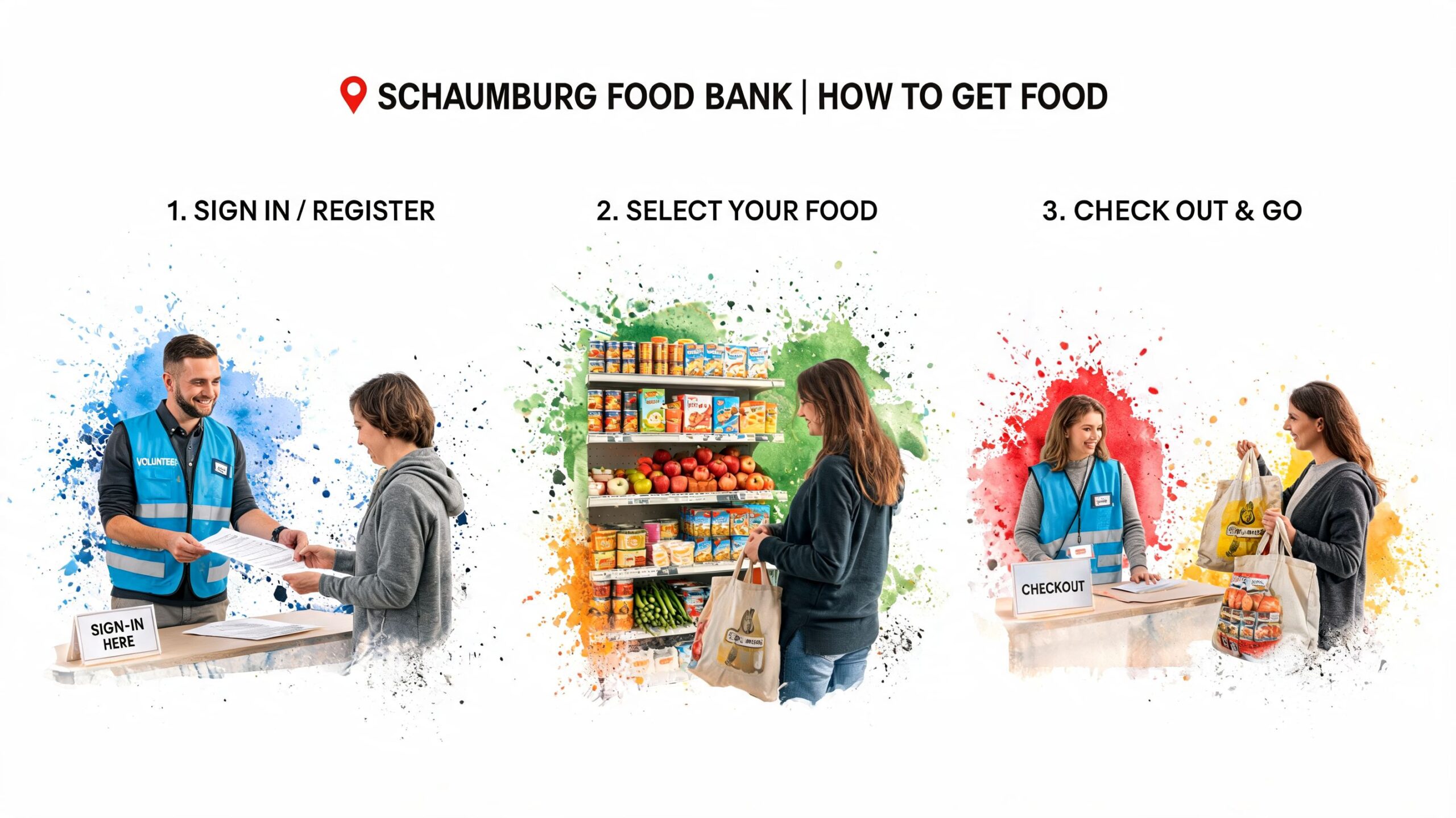
Start with one phone call
Call 847-285-4503 and say you want to ask about food pantry assistance.
Short is fine. "Hi, I live in Schaumburg Township and I'd like to make a pantry appointment." That is enough to begin.
I like practical scripts because stress can make simple tasks feel heavy. Name where you live. Say you need food help. Ask what you should bring.
Know where to go
The pantry is inside the Township offices at 1 Illinois Boulevard in Hoffman Estates. It operates year-round on weekdays, generally during business hours, so it functions less like a one-day giveaway and more like part of the neighborhood's everyday support system.
That difference matters.
A healthy community needs systems people can count on. Trash pickup keeps a block livable. A food pantry keeps a family steady through a hard month. Both are forms of maintenance. Both help stop small problems from turning into bigger ones.
What to have ready
The Township's public pantry page says the pantry serves Schaumburg Township residents, but it does not list every document on that page. The safest move is to ask on the phone what proof of residency they want for your appointment.
Keep it simple:
- Confirm that you live in Schaumburg Township.
- Call 847-285-4503 to schedule an appointment.
- Ask what documents to bring.
- Go to 1 Illinois Boulevard at your scheduled time.
If getting there is the hard part, say that when you call. The Township can explain what options may be available for residents dealing with transportation barriers.
What to Expect When You Visit the Pantry
A lot of people hear "food pantry" and picture a line, a box, and no choices.
That's not how this one works.
The Schaumburg Township pantry uses a client-choice model. In plain English, that means you get some say in what comes home with you. I like that because dignity often lives in small decisions. If your kid eats tomato soup but won't touch beans, that matters. If someone in your home needs paper goods or hygiene items as badly as pasta, that matters too.
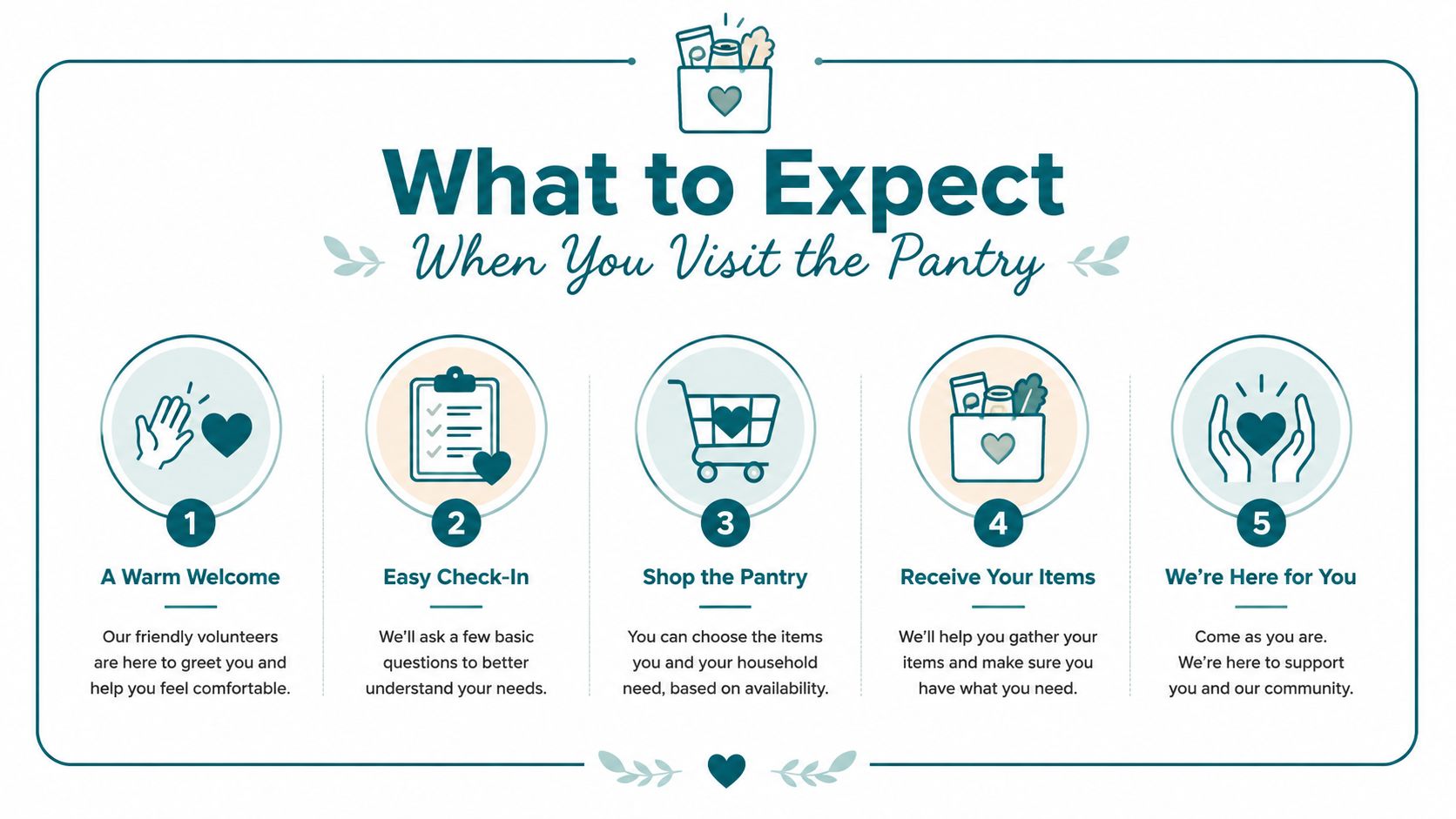
It feels more like shopping than receiving a handout
When I explain a client-choice pantry to a friend, I describe it like a small practical grocery trip. You aren't there to prove your suffering. You're there to pick food your household can use.
The inventory depends on donations, so what's on hand can change. The Township and its partners point people toward high-demand goods like canned meats, soups, juices, snacks, tomato products, baking goods, paper goods, and hygiene items. That tells you something important about the shelves. This is food for real kitchens and real routines, plus the household basics that often disappear first.
Expect people who are used to helping
If you've been carrying stress for a while, even a normal interaction can feel loaded. You might worry you'll say the wrong thing, or that you'll look out of place. Most of that fear starts shrinking once you're inside.
The pantry is part of a working support system. It takes appointments. It has regular hours. It has donations coming in from local drives and community giving. People there are used to helping neighbors sort through a hard stretch.
You don't have to perform gratitude perfectly. You just have to show up and let people help you.
That matters more than people think. A clean, calm place with choices in it can lower your stress fast. The body relaxes when a problem becomes concrete. Food for this week. Snacks for the kids. Soup for a cold night. Paper goods you don't have to buy on the next store run.
How You Can Help Build a Stronger Community
The first time I brought supplies to a local pantry, I carried in one small bag and felt a little embarrassed by how little it seemed. A volunteer took it with the same seriousness she would have given a full cart. Soup. Tuna. Toilet paper. Soap. She knew exactly where each item would go, and exactly how quickly someone would need it.
That stayed with me.
Community support works the same way street cleanup works. A better block is built from specific acts repeated over time. A pantry runs on that same kind of steady care. Food on shelves. Paper goods in storage. Volunteers who show up on a Tuesday morning because families will show up later that day.
What to donate
The most useful donations are usually the least glamorous. They solve ordinary problems fast.
- Canned meats help turn pasta, rice, or bread into a meal.
- Soups and juices help on weeks when time, energy, or groceries are thin.
- Paper goods keep a household functioning without forcing one more hard tradeoff.
- Hygiene products support school, work, and daily dignity.
Money helps too. The Greater Chicago Food Depository says that every dollar donated can help provide about $8 worth of groceries for a neighbor in need (source). That matters because a pantry can buy and distribute food through supply networks that stretch each dollar further than a single shopper usually can.
I have seen people hesitate because they could only give five or ten dollars. In a working food system, small gifts stack up fast.
Time helps too
A food bank is part kindness, part logistics. Someone has to sort cans, check dates, move boxes, direct traffic, answer questions, and keep the space calm. The public part of service is only half the job. The rest is steady behind-the-scenes work that lets neighbors get what they need without chaos.
If you want a wider view of where your time could fit, this guide to Chicago food bank volunteer opportunities is a good place to start.
A simple way to choose your role:
| Way to help | What it looks like |
|---|---|
| Give food | Bring the items households use right away and run out of often |
| Give money | Help the pantry buy and distribute food efficiently through its network |
| Give time | Take on the sorting, stocking, and support work that keeps the system usable |
Regular care changes a neighborhood. One monthly donation, one volunteer shift, one filled bag at a time.
Why Clean Streets and Full Pantries Go Together
When I see a block covered in litter, I don't just see trash. I see strain.
I see a place where people might feel alone with problems that are getting harder to hide. I see what happens when care breaks down in public. Hunger is different because it often stays indoors, but it comes from some of the same pressure. Money gets tight. Schedules get chaotic. Energy runs out. Things slip.
That's why I don't separate neighborhood cleanup from food support in my head.
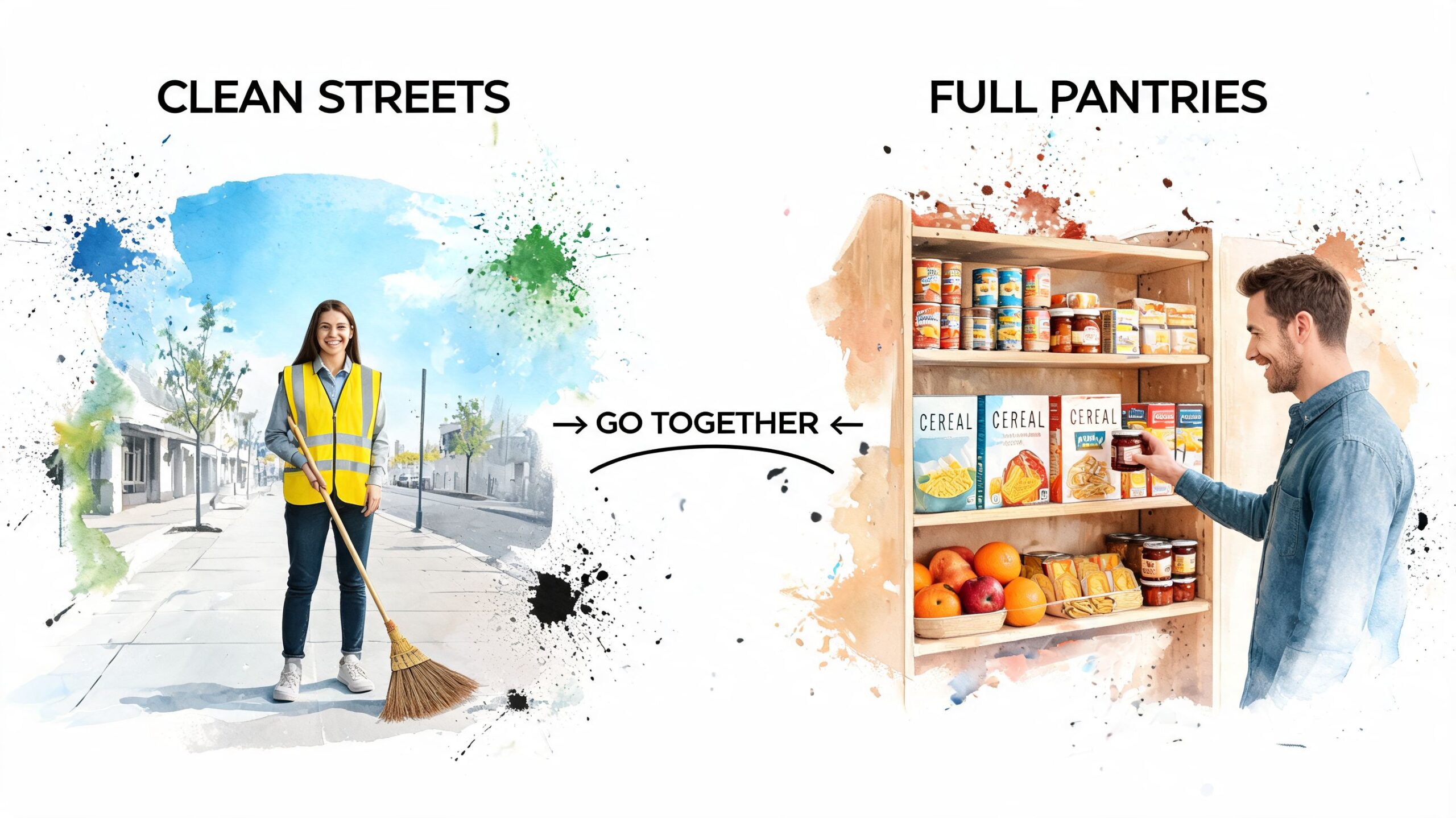
The same neighborhood can carry both burdens
Across the greater Chicagoland area, one in four people face food insecurity, affecting 1.4 million households, according to the 2025 Greater Chicagoland Hunger Report.
I come back to that fact because it changes how you walk through a neighborhood. The person passing you on the sidewalk might be worrying about groceries. The family in the apartment above the corner store might be making impossible choices this week. The mess you can see and the stress you can't see often live close together.
Service has one root
Picking up a bottle from the curb and donating soup to a pantry can look unrelated from far away. Up close, they come from the same instinct. You refuse to leave your neighbor inside a problem alone.
If you're interested in that wider idea of care in action, this piece on cleaning up trash in Chicago neighborhoods gets at the same muscle. You notice what's broken. You touch the problem with your own hands. You make the next hour better than the one before it.
A healthy neighborhood is easier to feel than to define. The street looks cared for. The home has food in it. People can breathe.
That's why the schaumburg food bank matters to me. It is part of the same basic work. You help make a place livable.
Finding Your Next Step
If you live in Schaumburg Township and need food, call the pantry and ask for an appointment. Keep it short. Keep moving.
If you don't live in Schaumburg Township, don't let that stop you. The Greater Chicago Food Depository website can help you look for a pantry near you through its network pages, and local township offices often know nearby options too. If calling one place feels hard, write down two or three places and try them one at a time.
If you want to help, choose the easiest useful thing you can repeat. Drop off canned goods. Give a small amount of money. Ask about volunteering. Keep it simple enough that you'll do it.
I learned this the slow way. Big emotional speeches rarely changed my life. Small brave actions did. One call. One bag. One Saturday morning. That's usually how things start getting better.
If you want another way to care for your neighborhood with your own hands, join Litter Caterpillars. We pick up trash across Chicago, make friends, and practice the same kind of steady service that helps communities stay clean, connected, and cared for.