
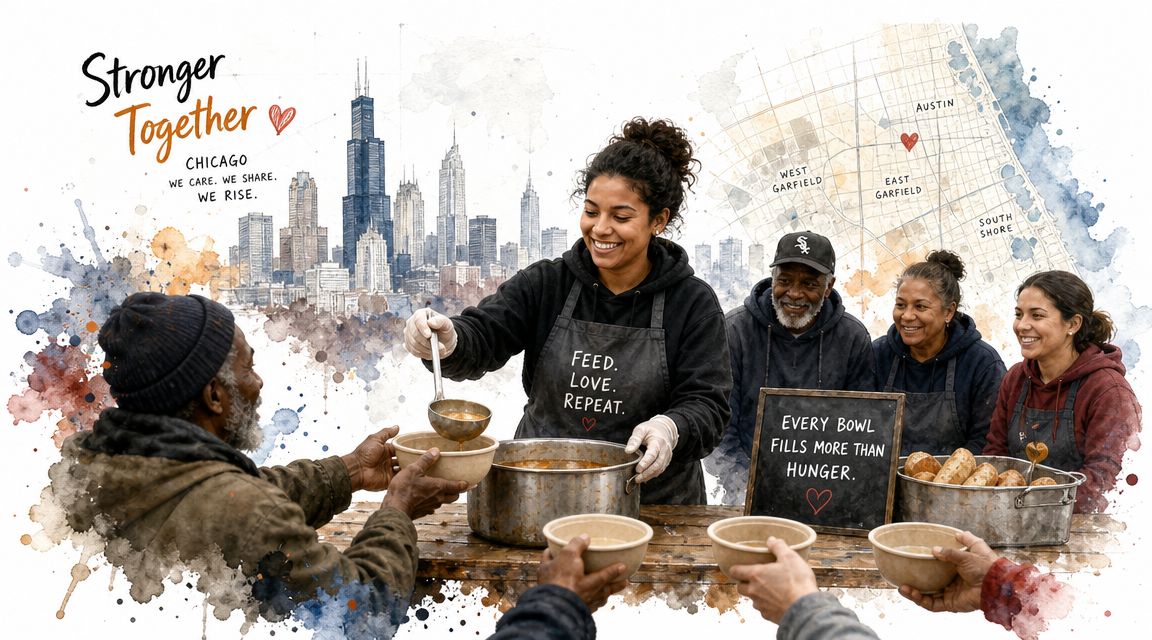
More Than Just a Meal: Why Service Heals
I used to think cleaning my own room was the hardest thing in the world. An old jar in the fridge, a shirt on the floor, some broken little thing in a drawer. None of it looked heavy, but every object carried a memory, and every memory pinned me down.
Then I started cleaning other people's messes with Litter Caterpillars on the streets of Chicago. Somehow, that felt lighter. I could bend down, grab a bottle out of the weeds, laugh with strangers in gloves, and go home feeling more put together than when I left.
That's why this guide to a soup kitchen in Chicago, IL means something to me.
When you hand someone a tray, pour coffee, sort canned food, or walk into a dining room because you need help, you're doing more than handling hunger for one moment. You're letting another human being say, “Come in. Sit down. You matter today.” I've learned that cleaning the city and feeding the city come from the same place. You take one small patch of pain, and you make it easier to carry.
Chicago has a huge emergency food network. The Greater Chicago Food Depository works with more than 700 food pantries, soup kitchens, shelters, and programs across the region. That tells me something simple. If you need a meal, you are not alone. If you want to help, there is room for your hands.
1. Pacific Garden Mission
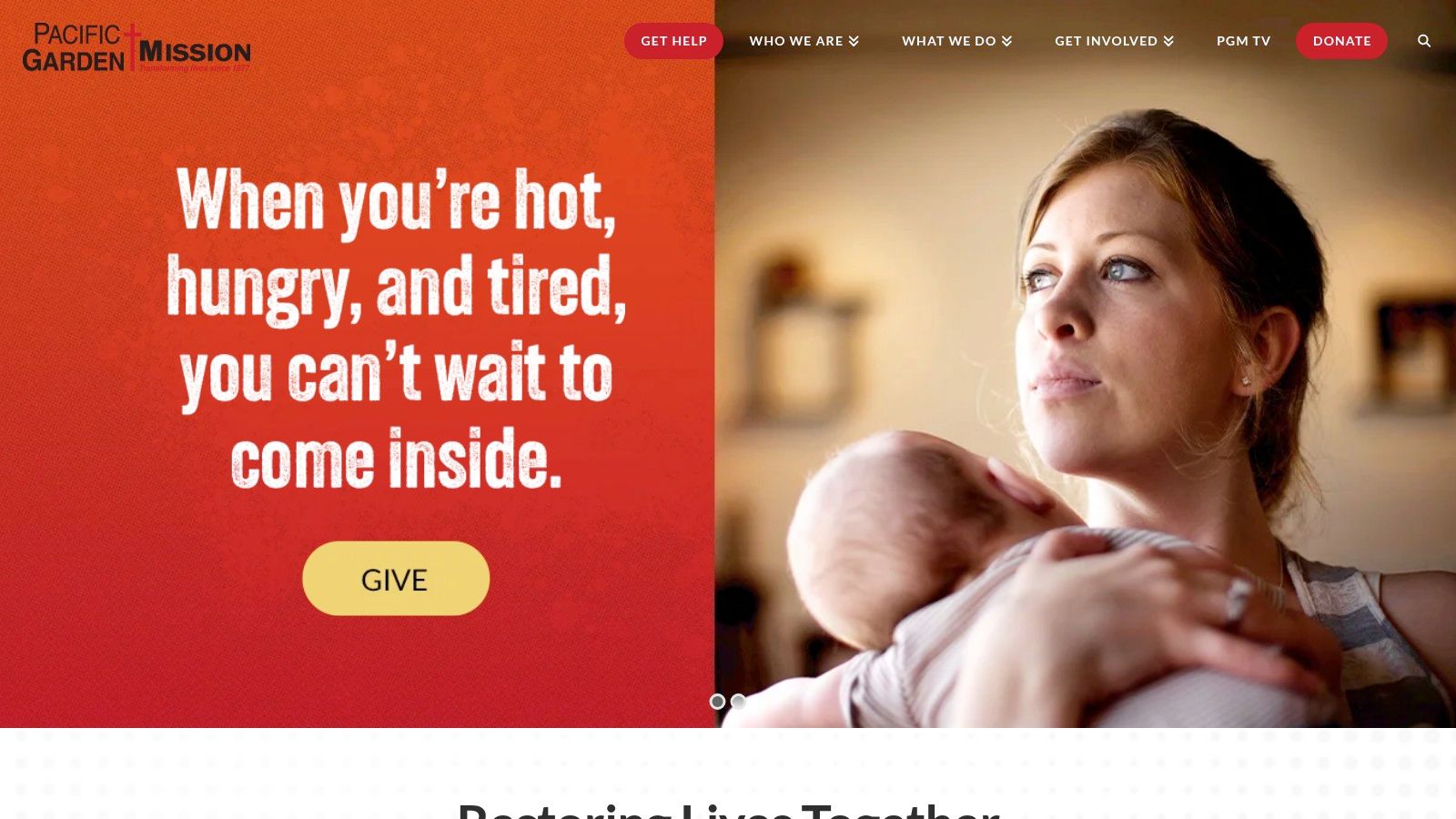
Pacific Garden Mission is the place I think of when someone says, “I need somewhere steady.” Some spots are best for one night a week. Some are best for pantry pickup. PGM is for the days when you need a place that keeps showing up.
It has free meals every day, and it's built for people who need more than food. If you're trying to find a soup kitchen in Chicago, IL where meals connect with shelter, showers, clothing, and recovery support, PGM is one of the clearest options.
What it feels like on the ground
A place like this reminds me of our trash pickups after rough weather. You don't need poetry when the sidewalk is covered in broken glass. You need gloves, a bag, and somebody who's already there. Pacific Garden Mission has that same practical feeling.
You walk in knowing the system is already moving. Meals are regular. Volunteers have a path. Donations have a path. People who need help aren't left guessing what happens next.
- Best for consistency: You can count on breakfast, lunch, and dinner year-round.
- Best for layered help: Food is only one part of what's available on-site.
- Best for volunteers who like structure: The organization has clear ways to give time or resources.
Practical rule: If you're referring someone who is exhausted and overwhelmed, predictable hours matter more than fancy wording.
There is one thing to know before you send someone there or go yourself. PGM is faith-based, and gospel service may come before meals. For some people, that feels comforting. For others, it may not be the right fit.
Why I'd point people here first
I've met volunteers who want to help but freeze because there are too many choices. My advice is always the same. Pick the place with the clearest routine and start there. Pacific Garden Mission is a strong first step because it reduces uncertainty.
If you're also looking at pantry-style help, I'd pair this with our guide to Casa Catalina Food Pantry in Chicago, IL. Sometimes the right answer is a hot meal today and groceries for tomorrow.
Visit Pacific Garden Mission.
2. Franciscan Outreach
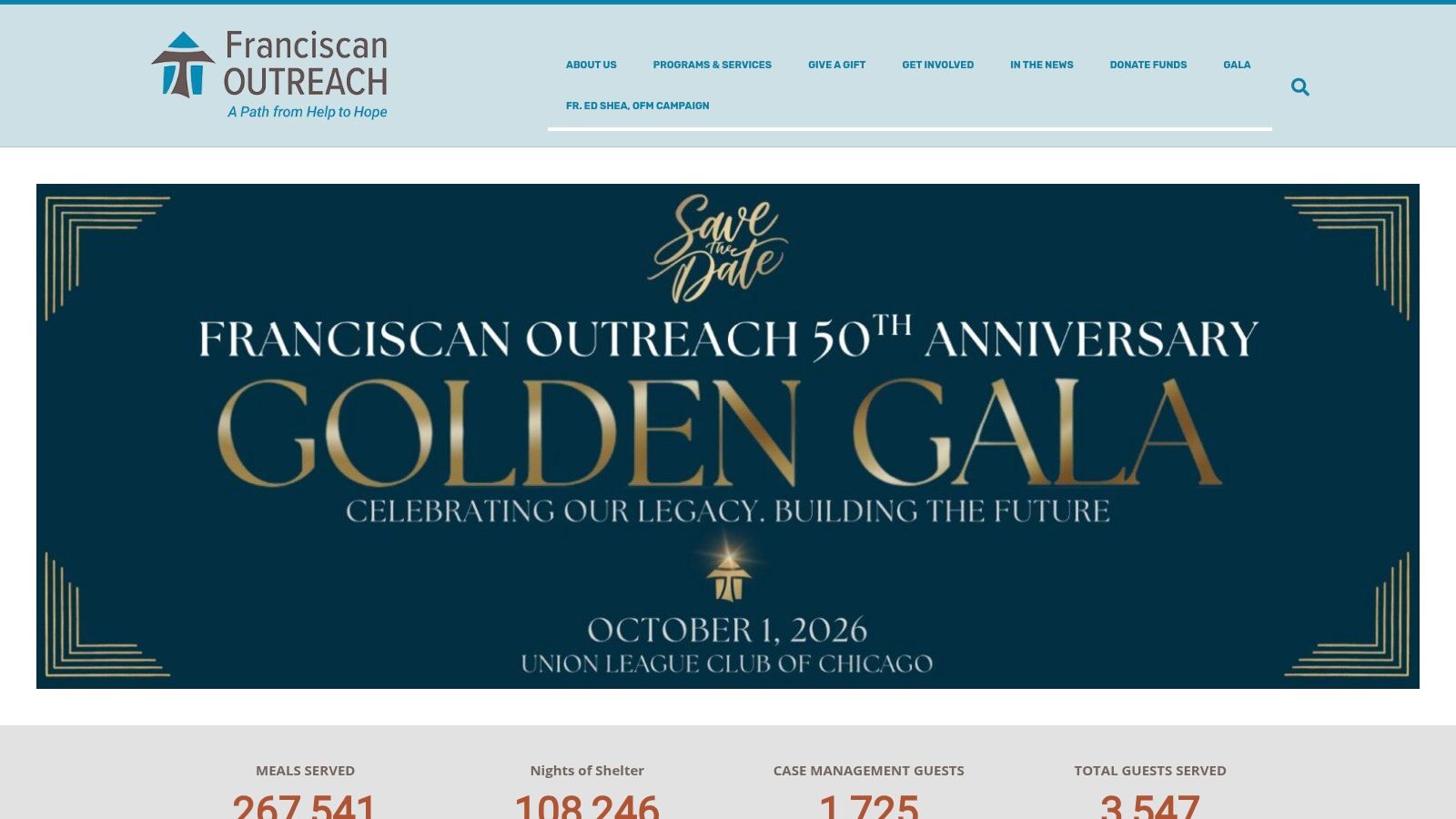
Franciscan Outreach feels like the kind of place you discreetly suggest to a friend who's been sleeping badly for too many nights. It has shelter-based meal service, and that changes the mood. Food is part of the day's rhythm, not a random stroke of luck.
I respect that. When life is unstable, rhythm is medicine.
A meal inside a bigger reset
At one of our Litter Caterpillars cleanups, we worked an area where everything looked temporary. Tents, carts, soaked blankets, plastic bags tied to fencing. You could tell that what people needed wasn't one good hour. They needed a chain of decent hours, one after another.
That's why Franciscan Outreach matters. Meals connect with shelter and case management, and that can help someone move from pure survival toward something more stable.
- Good for shelter referrals: Meals are woven into shelter life.
- Good for evening volunteers: Nightly dinner service can be a practical way to help after work.
- Good for people who need a handoff: Partner networks can matter when one organization alone isn't enough.
There's a tradeoff. Many meals are focused on shelter residents first, so community access may be narrower than a fully open dining room. Visitors and volunteers may also need to deal with intake or sign-in steps.
Some people need the wide-open front door. Some people need a front door with a plan behind it.
Where this fits in your own giving life
If you're the sort of person who likes direct service but wants a path into deeper volunteer work, Franciscan Outreach is worth your attention. You can show up for dinner service and still feel connected to a larger effort.
I'd also keep our Chicago food bank volunteer guide open in another tab. Feeding people in Chicago isn't one lane. It's a relay race, and sometimes your best move is learning where your energy fits.
Visit Franciscan Outreach.
3. A Just Harvest
A Just Harvest has the kind of name that could sound abstract until you picture the actual lunch in someone's hand. Then it gets real fast. This Rogers Park organization is one of those places where neighborhood energy meets practical food help.
I like it because it feels local in the best way. You can imagine learning people's names there.
Why North Side referrals often land here
If someone on the North Side asks me where they should look for a meal, I don't always send them downtown first. Travel takes energy. Bus fare takes energy. Uncertainty takes energy. A Just Harvest is a useful option when staying closer to home matters.
Its meal service has included a daily grab-and-go lunch, and it also has pantry distribution plus community programs. That mix matters because many people searching “soup kitchen Chicago IL” are really trying to solve a whole week, not just one lunch.
- Useful for neighborhood access: Strong fit for North Side referrals.
- Useful for volunteers who want repeated contact: Community-based work can feel more personal over time.
- Useful for people balancing food needs: A pantry connection can stretch help beyond one meal.
The human scale matters
I've learned this from litter cleanup too. A giant city can make you feel small, but one block can make you feel capable. A Just Harvest has that one-block feeling. You can step in and understand what's happening.
The only caution is practical. Service format and menus can shift, so check current details before you send someone over. A place can still be dependable even when the exact setup changes from dine-in to grab-and-go.
If you want a neighborhood-centered option with meals, pantry access, and a volunteer-friendly vibe, visit A Just Harvest.
4. Fourth Presbyterian Church Meals Ministry
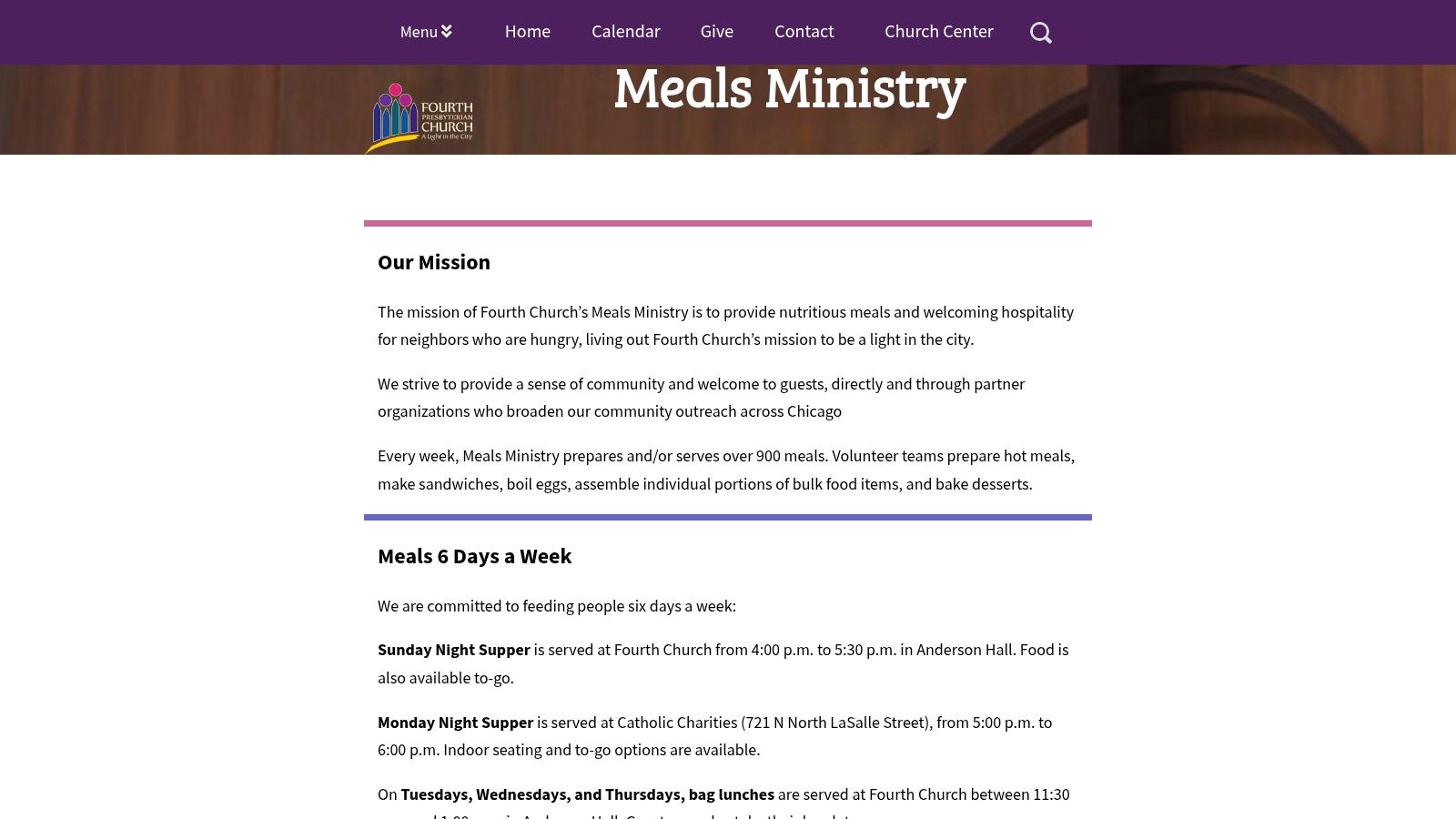
There's something different about a sit-down supper downtown. Not because downtown is magic. It isn't. It's loud, fast, and often lonely. That's exactly why a meal in a calm room can hit so hard.
Fourth Presbyterian Church's Meals Ministry has Sunday and Monday evening suppers, plus bag lunches during the week. I'd point people here when they want a central location and a more formal dining-room feel.
A place where the chair matters
I once spent a windy morning picking litter near a busy commercial strip. Every person moved like they had somewhere to be, and nobody looked at each other. Later that day I got coffee with another volunteer, sat down, and felt my shoulders drop. A chair can do that. A table can do that.
Fourth Presbyterian understands that. A sit-down meal changes the emotional texture of receiving help. You're not just grabbing calories and leaving. You're being invited to stay for a minute.
- Best for downtown access: Good if location near the Near North side matters.
- Best for a dining-room setting: Some guests feel more comfortable in a seated meal environment.
- Best for volunteer groups: Churches and partner networks often create easy entry points for service.
The limitation is simple. This isn't a daily meal site. Timing matters, and so does capacity. If someone is counting on it, tell them to check the current schedule and arrive with a little cushion.
A good referral isn't only the nearest place. It's the place a person can actually use on that day, at that hour, in that part of the city.
Visit Fourth Presbyterian Church Meals Ministry.
5. The Chicago Help Initiative
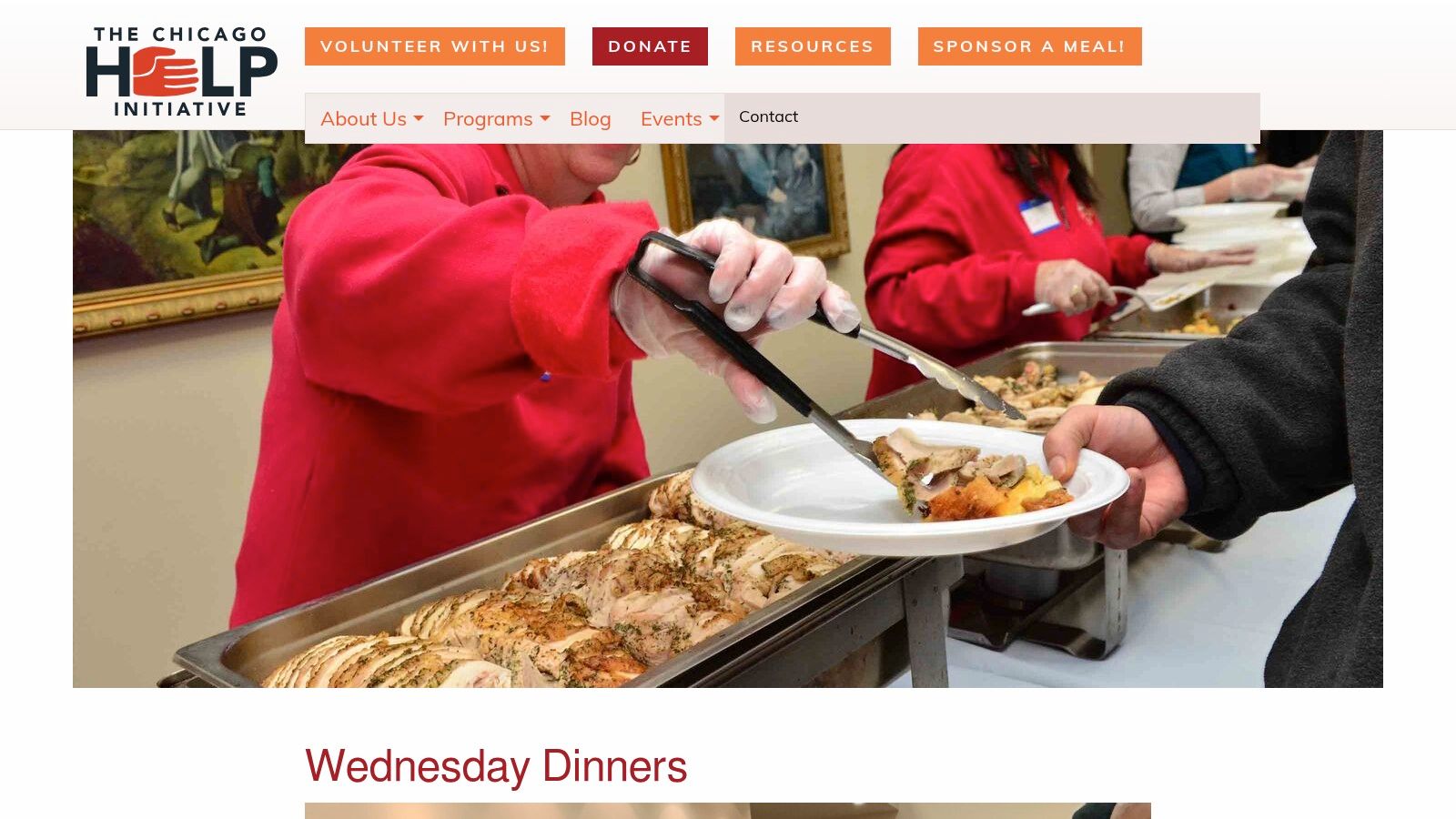
Wednesday can be a hard day. Monday still has momentum. Friday has hope. Wednesday is where a lot of people sag a little. I think that's one reason I'm drawn to the Chicago Help Initiative's dinner service.
It runs a sit-down Wednesday dinner at Catholic Charities' dining room on LaSalle. Meals come through restaurant and hotel partners, and there are resource tables on-site too.
Midweek help with some dignity built in
I love practical beauty. Not expensive beauty. Practical beauty. A clean park after a pickup. A tray carried carefully. A meal plated like somebody tried.
That's what this program brings to mind. It has a welcoming dinner format that can feel more like hospitality than emergency response, and that difference matters when someone's had a rough week or rough year.
- Good for central-city access: Helpful for people already near downtown.
- Good for volunteers who like events with energy: Group sponsorships and dinner service create a shared rhythm.
- Good for guests who need referrals too: Resource tables can help people ask the next question after dinner.
The biggest downside is obvious. It's Wednesday only, and people may line up early because capacity isn't endless. So I'd treat this as a great targeted option, not the only plan.
Why I keep this one in the mix
Some organizations are best because they're broad. Some are best because they're specific. The Chicago Help Initiative is specific, and I mean that as praise. If you know someone who needs a midweek evening meal downtown, this is the kind of referral that can stick.
Visit The Chicago Help Initiative Wednesday Dinners.
6. Catholic Charities Evening Meal and Supper Programs
A few winters ago, one of our Litter Caterpillars volunteers finished a cleanup with hands still stiff from the cold and asked me a simple question: “Where do people go tonight if they miss the usual spot?” That question stayed with me, because street service teaches you fast that need rarely lines up with one church basement, one block, or one hour on the clock.
That is why Catholic Charities keeps earning a place in this guide. Its evening meal and supper programs reach across multiple locations, which gives people more than one shot at finding a meal that fits where they are and what they can reach.
A wider net helps when life gets messy
Some nights, the problem is not hunger alone. It is distance. A bus fare. A missed train. A family trying to piece together dinner and the next morning at the same time. A networked provider can help in those moments because the answer is not tied to one dining room.
I like this option for the same reason I like a neighborhood cleanup crew that works in more than one corridor. If one alley is blocked, you do not quit on the whole block. You find another way in. Catholic Charities brings that kind of practical flexibility to food support.
- Best for people comparing locations: Multiple sites can make it easier to find a workable evening option.
- Best for referrals that need more than a meal: Many programs connect food with case management or other support.
- Best for households with different needs: The broader network can serve older adults, families, and individuals in different settings.
The drawback is straightforward. Hours, eligibility, and meal formats can differ by site, so you need to confirm the details before you send someone across town.
If you want to pair food support with other ways of serving the city, our guide to Chicago charities doing hands-on community work is a useful next read.
Visit Catholic Charities.
7. The Salvation Army Freedom Center and Harbor Light
Some help waits in a building. Some help gets in a vehicle and goes looking. I have a soft spot for the second kind.
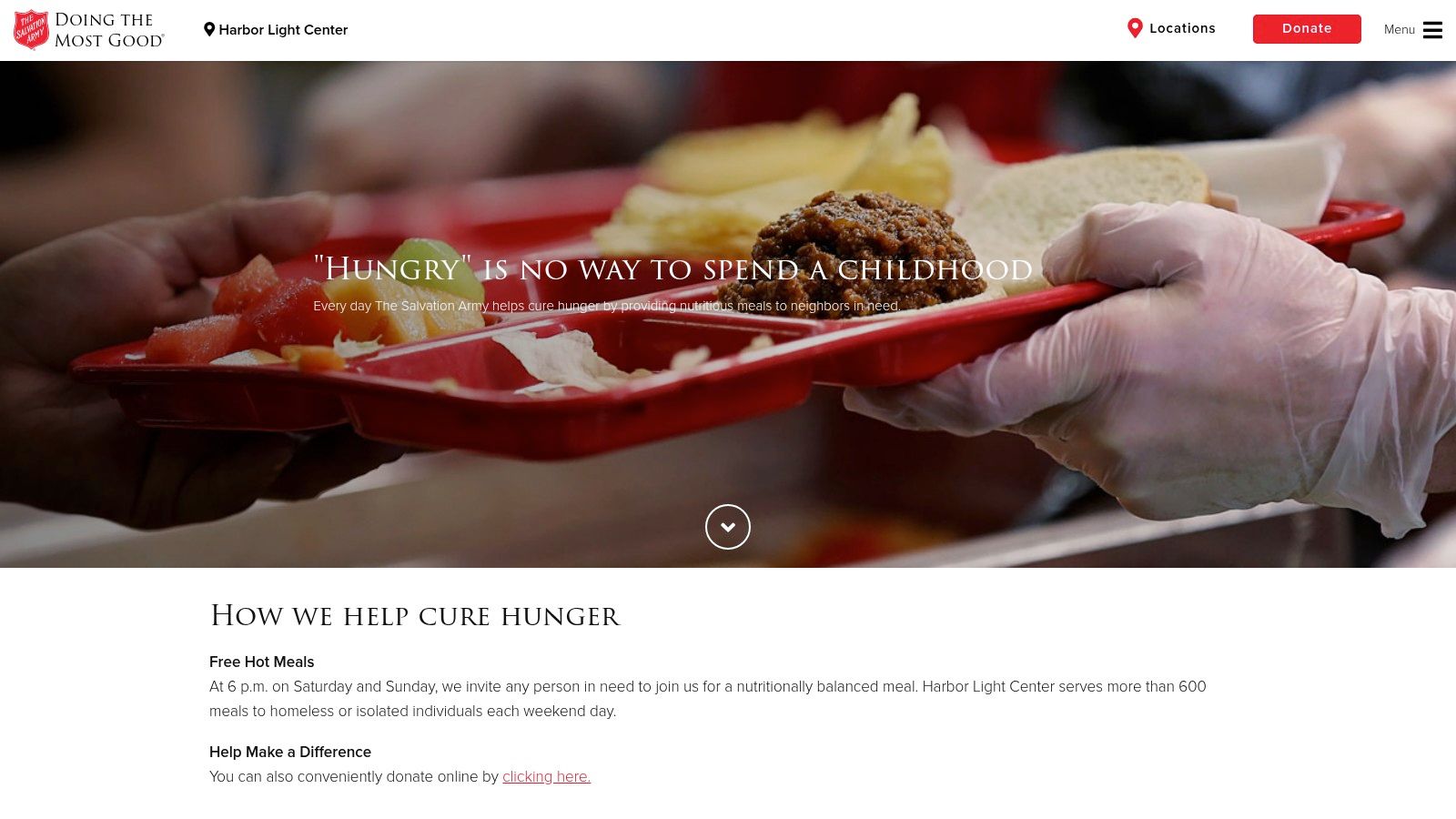
The Salvation Army's Freedom Center and Harbor Light combine on-site meal service with mobile feeding outreach. That mix matters when a person can't easily get to a fixed location, or won't.
The meal that moves toward people
At Litter Caterpillars, we don't only clean pretty blocks. We go where trash piles up because people stopped believing anyone would come. Mobile meal outreach carries that same spirit. Instead of asking someone in crisis to contend with transit, timing, weather, and fear, a team drives closer to where they already are.
That's the strongest case for Harbor Light's approach. Weekend hot dinners are one thing. A nightly mobile feeding unit that meets people across the city is something else.
- Best for unsheltered outreach: Food reaches people where they are.
- Best for immediate handoffs: Mobile teams can connect people with shelter or treatment pathways.
- Best for weekend fixed-site meals: Harbor Light gives another option when weekday programs aren't in play.
The weakness is the same thing that makes it useful. Routes and stops can change, so you have to confirm the current schedule. And if someone wants a dining room every day, this isn't that.
Visit The Salvation Army Harbor Light hunger relief page.
8. The Night Ministry
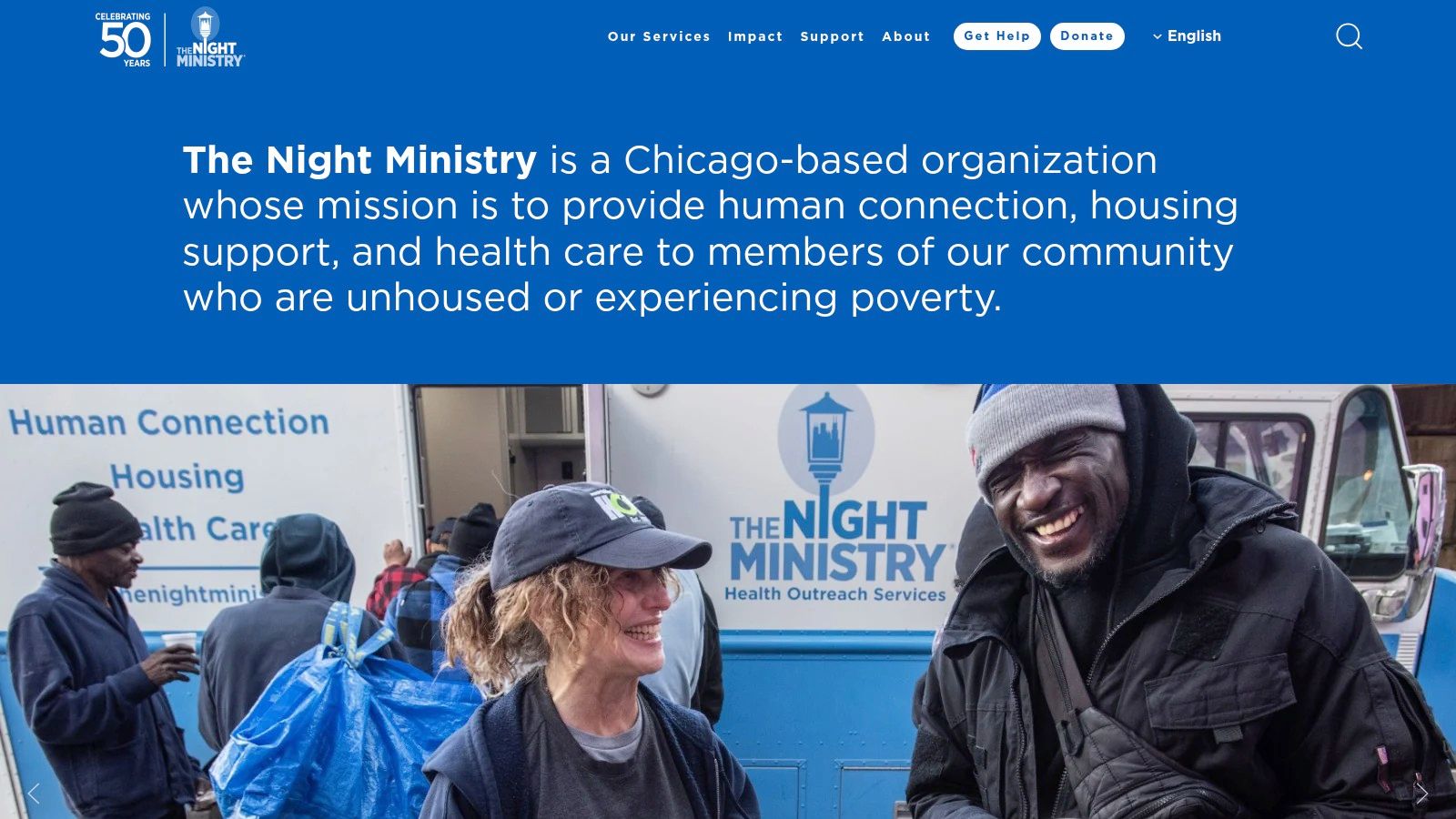
The Night Ministry reaches people the way many systems should, but often don't. It goes out. It keeps a schedule. It mixes food with basic healthcare and street outreach. If you've ever watched someone try to solve three emergencies at once, you'll understand why that combination matters.
This isn't a classic dining hall. It's more flexible and more street-level than that.
Food plus care can change the whole interaction
One of the most useful things I learned from local food assistance research is that “soup kitchen” can be too narrow a phrase. Some Chicago groups are doing much more than serving a bowl of food. Nourishing Hope describes its work as groceries, mental health counseling, and social services, and Friendship Center volunteer roles can include sorting, bagging, distribution, and client intake. That tells me a search for a soup kitchen in Chicago, IL can miss the true extent of assistance.
The Night Ministry fits that bigger picture. Food, coffee, hygiene items, and basic health support can all meet a person at the same stop.
If someone is hungry, cold, and sick, separating those problems into different buildings doesn't feel smart. It feels exhausting.
Who this is best for
I'd think of The Night Ministry for unsheltered neighbors, street outreach referrals, and situations where trust has to be built slowly. A bus stop or scheduled outreach location can feel less intimidating than a formal intake desk.
- Good for low-barrier contact: People can connect without committing to a full program right away.
- Good for outreach workers and neighbors making referrals: A regular schedule creates some predictability.
- Good for human reality: Food and health needs often show up together.
Since this is mobile outreach, supplies can run out and each stop has a time window. Still, if your instinct says someone needs care that comes to them, not the other way around, visit The Night Ministry.
9. Dignity Diner
I love the name Dignity Diner because it doesn't pretend food is only about fuel. Most of us know that already. We feel it when someone cooks for us after a bad day. The plate says one thing. The care says another.
Dignity Diner leans into that feeling with a restaurant-style Tuesday dinner and indoor seating, plus extra to-go meals.
Respect has a texture
You can feel respect in small things. The way someone hands you utensils instead of tossing them. The way they make eye contact. The way a room is set up so you don't feel processed.
Dignity Diner seems built around that texture. It's a strong pick for guests who'd rather sit down to a plated meal and for volunteers who want a warmer, more intimate service setting.
- Best for a calmer dinner environment: Restaurant-style service changes the experience.
- Best for small volunteer groups: The setup is approachable.
- Best for Tuesday planning: If someone needs one dependable evening in the week, this can fit nicely.
The limit is obvious. It's one night, and seating is first come, first served. But I'd still keep it on any serious list of soup kitchen Chicago IL options because dignity isn't some extra garnish. It's part of the meal.
Visit Dignity Diner.
10. Care for Friends
One Saturday, our Litter Caterpillars crew finished a cleanup with sore backs, dirty gloves, and that familiar mix of pride and heartbreak. We had cleared bottles, fast-food bags, and broken glass from a stretch of sidewalk where people were also trying to get through the day hungry. A few hours later, I was thinking about how strange that is. You can make a block look better and still know someone nearby needs lunch more than they need a cleaner curb.
That's why Care for Friends stays with me.
Care for Friends offers hot lunch at multiple Chicago locations, and that simple fact matters more than it sounds like it should. Hunger hits in the middle of the day. So does exhaustion. So does the moment when someone decides whether to keep going or give up on finding help.
Lunch can change the shape of a day
I've seen how a small act at the right hour can steady somebody. After a cleanup, I've been the sweaty, drained volunteer who suddenly feels human again because somebody passed me a warm plate and looked me in the eye. Service does that twice. You give something, then realize you needed part of it too.
Care for Friends fits that middle-of-the-day need well. Multiple locations make it easier for guests to find a site that works. The welcoming tone helps too, especially for people who are already carrying enough stress before they ever get in line.
- Best for midday support: Hot lunch fills the gap before evening meal programs begin.
- Best for people traveling across the city: Multiple locations give guests more than one possible stop.
- Best for low-pressure access: The friendly, straightforward approach can make showing up feel easier.
I also like what this program represents in a city like ours. At Litter Caterpillars, we talk a lot about what happens when care becomes visible. A clean corner tells your neighbor they matter. A hot lunch tells them the same thing in a deeper way.
Visit Care for Friends.
Top 10 Chicago Soup Kitchens Comparison
| Program | Service Model (core features) | Schedule & Access (UX) | Cost & Volunteer Fit (value) | Target Audience 👥 | Unique Strengths 🏆/✨ |
|---|---|---|---|---|---|
| Pacific Garden Mission (PGM) | Three free meals/day, shelter, showers, clothing, on‑site case management ✨ | Open 365 days; high capacity but lines & faith component can be a barrier | 💰 Free · Structured volunteer/donation paths · ★★★★ | Unsheltered, recovery seekers | 🏆 One‑stop wraparound services |
| Franciscan Outreach | Daily shelter meals, nightly volunteer dinner service, partner network | Daily cadence; strong encampment→shelter transition; sign‑in protocols | 💰 Free · Nightly volunteer roles · ★★★★ | People transitioning from encampments, shelter residents | 🏆 24‑hr transition support & coordinated partners |
| A Just Harvest | Daily grab‑and‑go lunch (currently), weekly pantry, community programs | Consistent local North Side service; format may change, check schedule | 💰 Free · Volunteer‑friendly · ★★★☆ | North Side residents, community volunteers | 🏆 Community organizing & urban agriculture |
| Fourth Presbyterian, Meals Ministry | Weekly sit‑down suppers + midweek bag lunches; dignified dining room | Predictable Sun/Mon suppers; central downtown site; limited seating | 💰 Free · Good for volunteer groups · ★★★★ | Downtown guests, referral clients, volunteer groups | 🏆 Dignified sit‑down experience near Michigan Ave |
| Chicago Help Initiative (Wed Dinners) | Weekly restaurant‑quality sit‑down dinner; partner‑donated meals & resources | Wednesdays only; high‑quality food; on‑site resource tables | 💰 Free · Group sponsorship/volunteer friendly · ★★★★ | Mid‑week central‑city guests, referral clients | 🏆 Restaurant‑quality meals + resource linkage |
| Catholic Charities, Evening Programs | Multiple meal sites, pantries, downtown dining hall, senior/family nutrition | Citywide reach; schedules vary by site, verify before referring | 💰 Free · Wide volunteer options · ★★★★ | Seniors, families, citywide referrals | 🏆 Large network & varied program types |
| Salvation Army Freedom Center / Harbor Light | Weekend on‑site dinners + nightly Mobile Feeding Unit with caseworkers | Weekend hot dinners; nightly mobile stops (rotating), confirm schedule | 💰 Free · Strong outreach volunteer roles · ★★★★ | Unsheltered, weekend diners, outreach clients | 🏆 Mobile feeding + on‑the‑spot referrals/transport |
| The Night Ministry | Mobile health/outreach bus: food, hygiene, sack suppers, street medicine | Set weekly bus routes across North/West/South; limited time per stop | 💰 Free · Outreach/medical volunteer roles · ★★★★ | Unsheltered neighbors needing food & health care | 🏆 Integrated street medicine + low‑barrier service ✨ |
| Dignity Diner | Weekly three‑course, restaurant‑style dinner + to‑go meals (Tuesdays) | Tuesdays only; indoor seating (~85) with extra to‑go capacity | 💰 Free · Excellent for small volunteer groups · ★★★★ | Local guests preferring dignified meals, volunteers | 🏆 Warm, restaurant‑style service since 1992 |
| Care for Friends | Hot lunches multiple days/week at several Chicago locations; clothing/health some days | Daytime sit‑down meals across locations; schedules vary by site | 💰 Free · Multiple volunteer sign‑ups · ★★★☆ | Diverse citywide clients, daytime guests | 🏆 Multiple locations & no‑questions‑asked policy |
Your First Step to Giving Back
You've seen the list. Now I want to say the part that matters most to me. The hardest thing usually isn't finding a place. It's crossing the threshold.
That's true if you need help. It's also true if you want to give it.
I know that feeling well. The first Litter Caterpillars cleanup had only three of us, and Chicago hit us with one of its weird spring tantrums. Hail. Wind. Cold fingers. Ubers canceling while we hid under a tree. We could've called it a bad idea and gone home annoyed. Instead, somewhere in the middle of that nonsense, I realized I felt more alive than I had in months.
I was cleaning up trash, yes. But I was also cleaning up some private wreckage inside myself.
That's why I think this matters, whether you're searching for a soup kitchen in Chicago, IL because you need a meal, or because you want to serve one. Helping doesn't always begin with confidence. A lot of the time it begins with embarrassment, hesitation, grief, hunger, or plain old awkwardness. You show up anyway.
And then something shifts.
Maybe you volunteer once at Pacific Garden Mission and realize routine is good for you. Maybe you help at a Wednesday dinner and remember that strangers can still laugh together. Maybe you bring a friend to a lunch service and stop feeling so stuck in your own head. Maybe you walk into a dining room because you need food, and that simple act of accepting help breaks a loneliness you haven't been able to name.
I've seen the same pattern in cleanup work over and over. People think service is only about sacrifice. Sometimes it is. Sometimes you're cold, wet, tired, and wondering why you signed up. But often, service gives back almost immediately. It gives you structure. It gives you movement. It gives you a reason to get out of bed and put your phone down. It gives you contact with reality.
Chicago has plenty of reality.
It has sidewalks with broken bottles, train stops with tired faces, church basements with coffee urns, mission dining rooms with long lines, and volunteers who came in nervous but stayed because something inside them loosened up. I trust those places. I trust people who keep showing up in them. And I trust the strange, quiet medicine of doing a useful thing with your hands.
So don't overthink this.
Pick one organization from this list. If you need help, call or visit and ask the simplest question you can ask. “What time should I come?” If you want to volunteer, do the same thing. “What do you need me to do?” You do not need a perfect plan. You need one honest action.
That's how most good stories start. Not with certainty. With motion.
If cleaning the city is your first doorway into service, come join us. If feeding the city is your doorway, walk through it. Either way, you're moving toward people instead of away from them. In my experience, that's where healing begins.
If this guide stirred something in you, come meet Litter Caterpillars. We pick up trash across Chicago, make friends, laugh through bad weather, and practice the kind of service that changes you while you're busy changing a block. If you want a first step that's brave, simple, and real, we'd love to have you with us.