I still remember staring at a trash bag in my apartment like it had a biography. The old jar, the takeout container, the paper bag from a better week. When I started cleaning up my own life, I learned that every piece of trash had a story, and if I could organize my room, I could start organizing my head too.
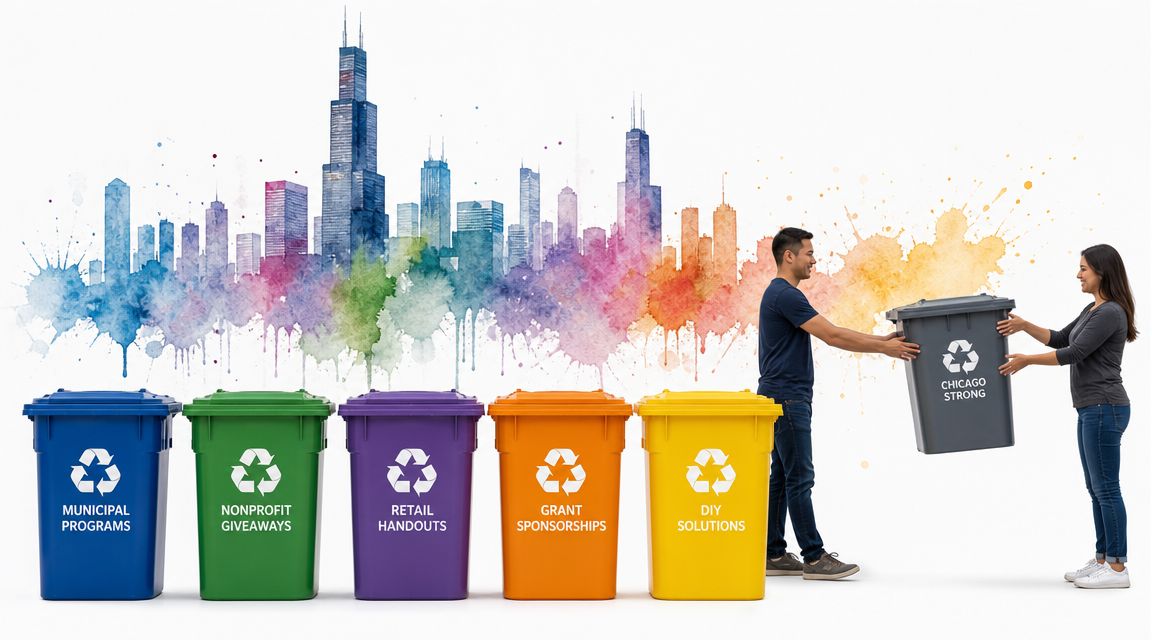
That same lesson followed me onto the sidewalk when we started Litter Caterpillars. A recycling bin looks simple, but in real life it changes how people act. It gives your hands somewhere to put the bottle you just picked up. It gives volunteers a clear target. It tells a neighbor, “someone expects this block to do better.” Getting free recycle bins for your home, cleanup, school, or event can feel bigger than it is. I've spent enough mornings making those calls, dragging carts, and explaining labels to volunteers that I can save you some time.
1. City of Chicago Blue Cart
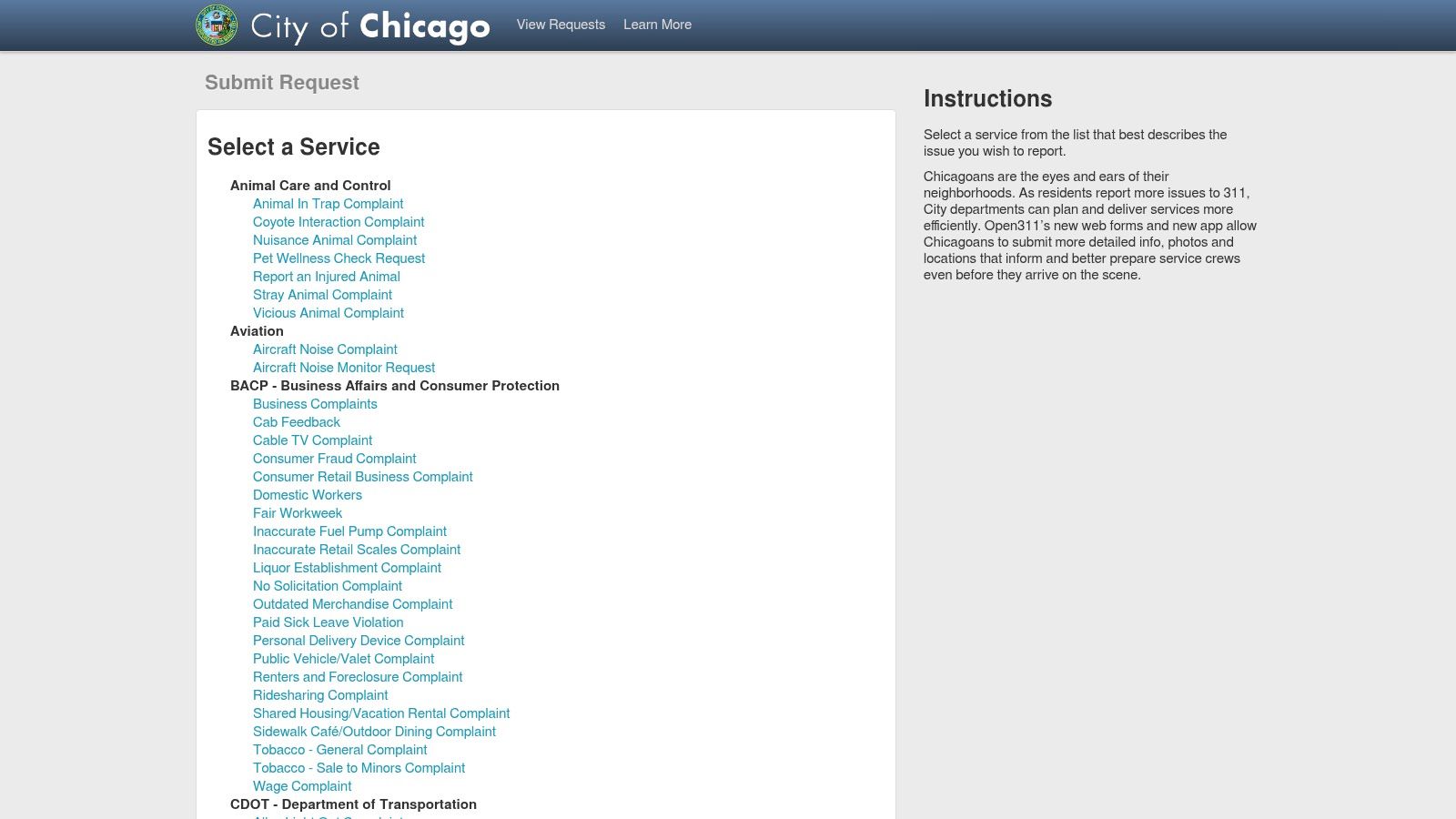
If you live in Chicago, this is the first place I'd check. I've had neighbors assume they need to buy a bin, hunt Facebook Marketplace, or ask their alderman, when the answer was sitting in the City system the whole time.
The City of Chicago 311 service portal is where eligible residents can request a Blue Cart or deal with a damaged or missing one. For a cleanup organizer like me, this matters because home recycling works better when people already have the cart before you start preaching good habits on the block.
What I like about it
Chicago's Blue Cart setup is straightforward for the homes that qualify. Single-family houses and small buildings have a clear lane, and that makes it easier to recruit people into neighborhood cleanup work because they already have a place to bring the material after the event.
- Best fit for houses and small buildings: It works for eligible one-to-four-unit homes served by the City.
- Good replacement path: If a cart gets damaged or disappears, 311 gives you a clean way to ask for another one.
- Useful for block-level organizing: When I help people recycle in Chicago, I always start with what they can get through their own address.
Practical rule: Before you ask where to get free recycle bins, ask whether your address is eligible for the City service. That one question saves a lot of dead-end searching.
The catch is simple. Bigger buildings have to look elsewhere, and bi-weekly pickup can feel slow if your household flies through cardboard. Still, for eligible Chicago homes, this is the cleanest free option I know.
2. Recycle By City Chicago
A bin with bad instructions is like a toolbox with no labels. People guess. Then they guess wrong.
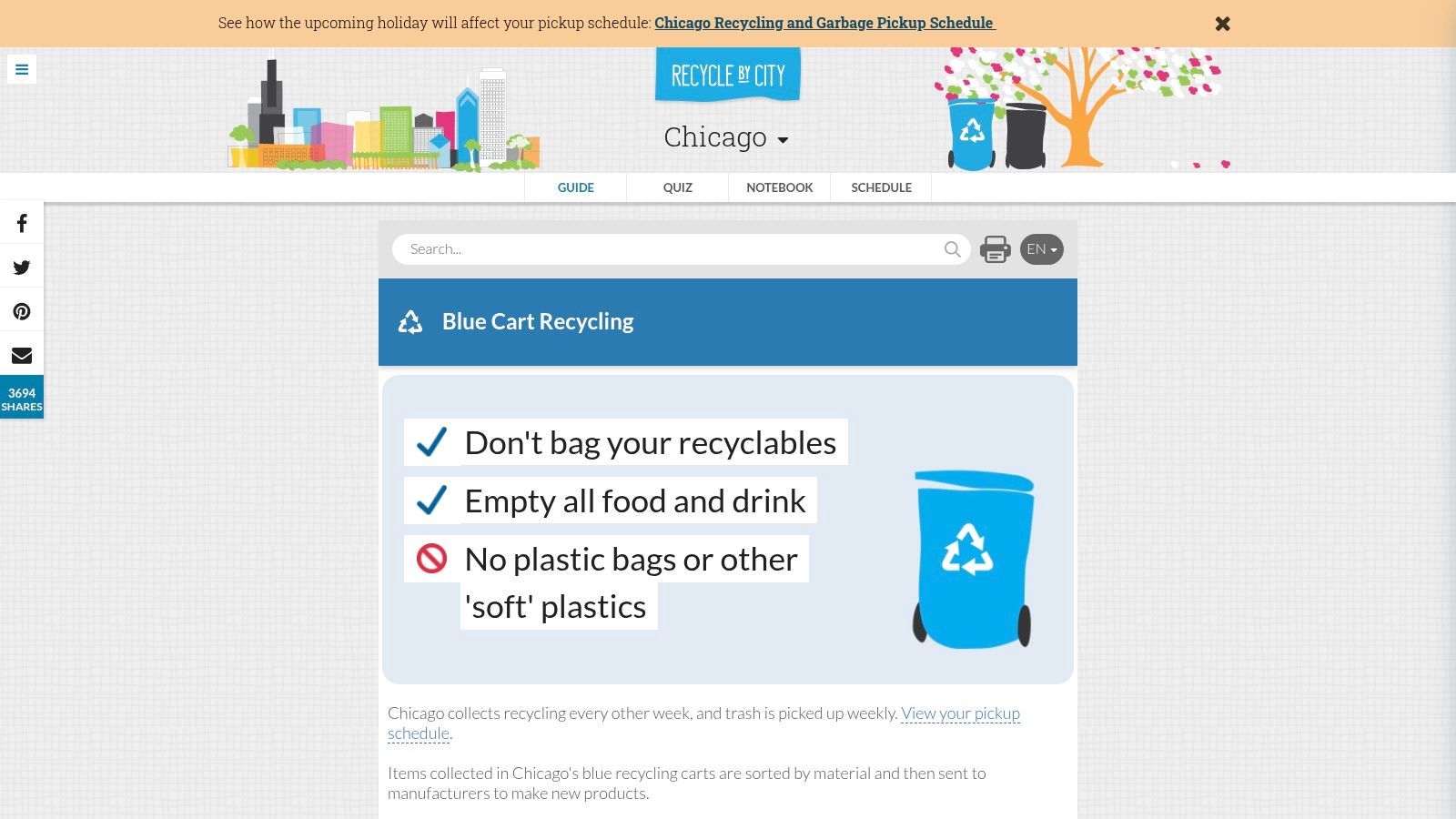
That's why I keep Recycle By City Chicago bookmarked. It doesn't hand you a cart itself, but it does something I care about just as much during a cleanup. It tells people what belongs in the cart.
Why I send volunteers here
When I'm running a cleanup, I don't need twenty speeches about sustainability. I need one person to stop putting random trash into the recycling stream. This guide helps with that because it gives a clear visual “what goes in” reference and points people toward the right City request forms.
I've learned that free recycle bins don't fix confusion by themselves. In a controlled recycling study, moving bins closer to where people used bottles pushed recycling rates to 64%, 47%, and 71% in three buildings, while adding more bins to common areas led to 40%, 12%, and 33% in those same settings, and the researchers found people placed more than twice as many plastic bottles in recycling receptacles when bins were closer to the point of consumption (controlled recycling bin placement study). That matches what I see in the field. Close bin, clear label, better result.
- Best use: Train new volunteers before an event.
- Big win: Cut down contamination arguments on the spot.
- Limitation: You still need the City or a hauler to provide the actual cart.
I treat this site like the map and the Blue Cart like the vehicle. You need both.
3. Lakeshore Recycling Systems
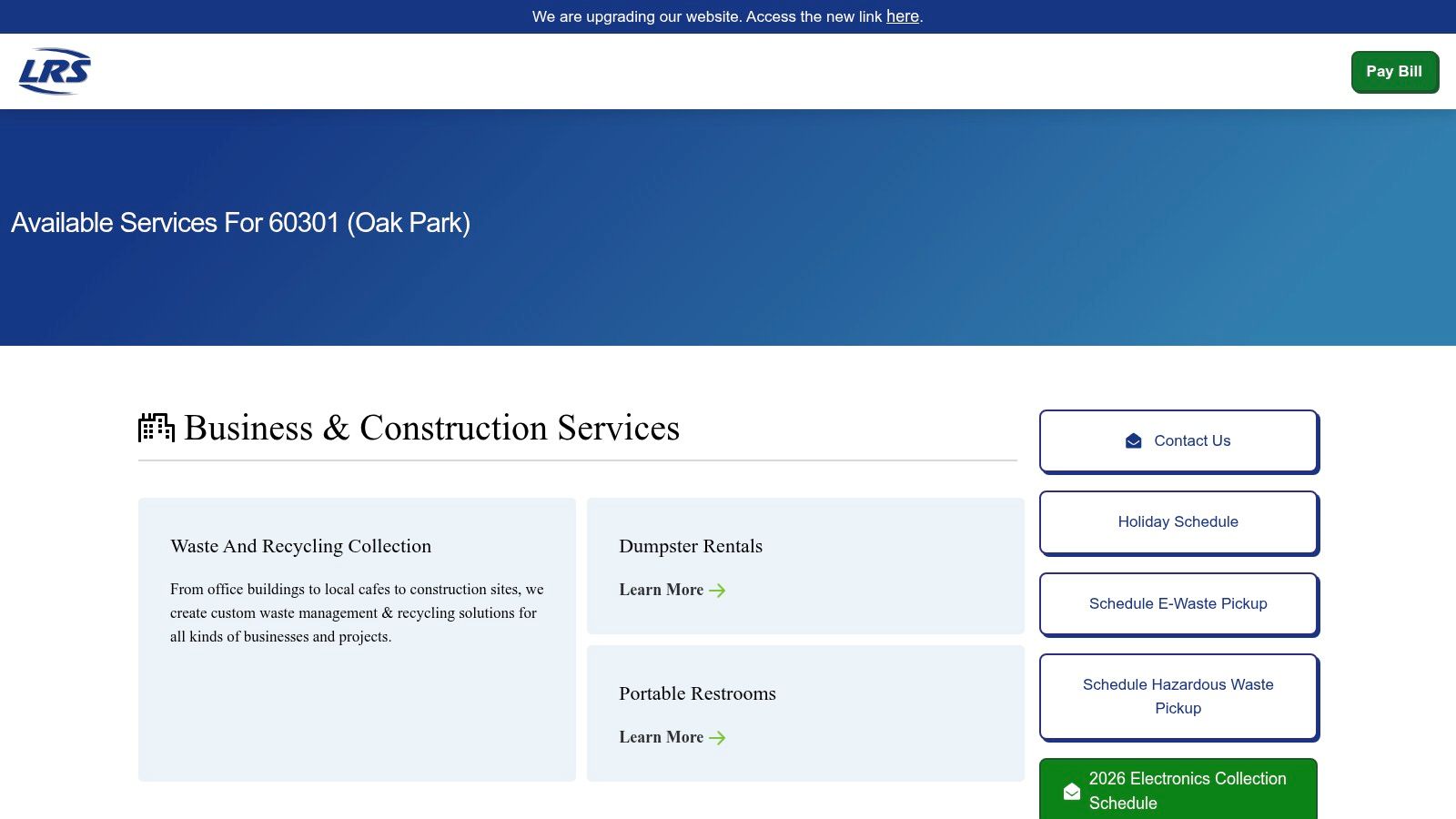
I've had this conversation a lot in Chicago. Someone says, “The City won't give us a Blue Cart.” Then I ask one question. “How many units are in your building?” That's usually when we find out they were aiming at the wrong door.
Lakeshore Recycling Systems is the kind of option I think about for buildings that sit outside the City Blue Cart lane. If your property is in an LRS-served town or under an LRS contract, the recycling cart is often folded into the service itself.
Where LRS makes sense
For cleanup work, LRS matters because neighborhood action doesn't stop at single-family homes. We pick up trash around apartment corridors, courtyards, alleys, and condo blocks too. If those residents can't use the City system, they still need a practical path.
Here's my no-nonsense read:
- Strong fit for multi-unit properties: For such properties, City-run home programs often stop helping.
- Direct replacement path: If service crews damage a cart, the hauler usually handles the fix.
- Less useful for random one-off seekers: If you're not in an LRS service area or contract, this won't feel free.
What I like is the scale. LRS thinks in terms of routes, buildings, and municipal systems, which is exactly how cleanup organizers have to think when one block has three kinds of housing on it. It's not a universal free recycle bin source. It's a service-based one. That distinction matters.
4. Republic Services
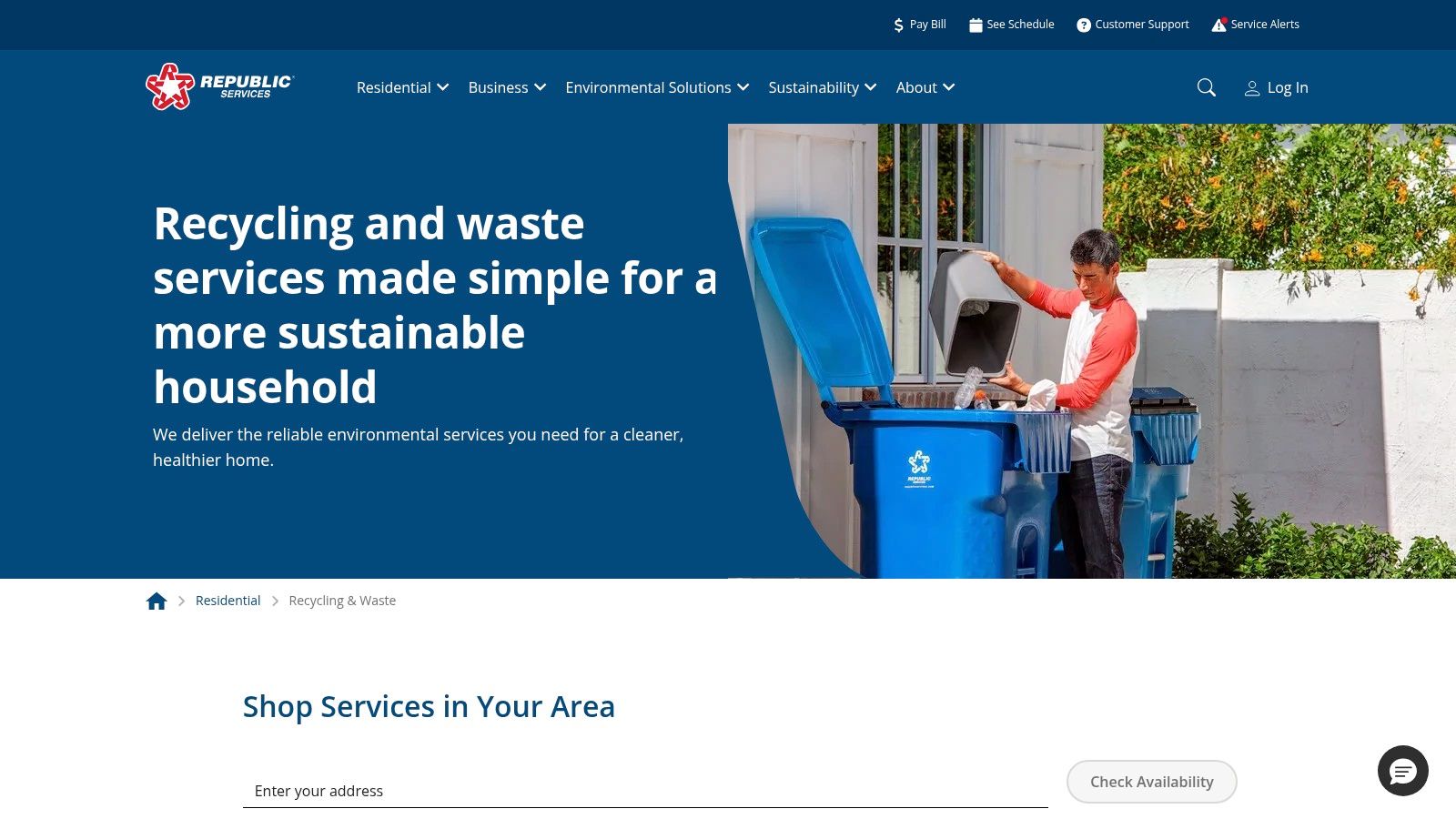
Republic is the option I put in the “check your account before you buy anything” category. I've seen people spend money on spare bins because they assumed the hauler wouldn't help, when the answer was already inside their service setup.
If Republic serves your area, the Republic Services recycling page is the place to start. For many customers, the cart comes with the residential service package, and account tools make it easier to request or manage carts.
My field note on Republic
This one is less romantic than a nonprofit grant. It's more practical. If you already pay for service, or your town does through a contract, then the “free” part often means no separate line item for the cart itself.
I like Republic for a few reasons:
- Standardized carts: That helps curbside pickup run smoothly.
- Online account tools: Good when you're helping a resident solve the problem fast.
- Broad reach: Handy if your cleanup crew has volunteers outside Chicago asking for advice.
Put the house number, service address, and account status together before you call the hauler. Most delays happen because people start with “I need a bin” instead of “I'm at this address and already in your service area.”
The weakness is local variation. One town handles extras one way, another town handles them another way. So I don't treat Republic as a universal source of free recycle bins. I treat it like a utility. First check whether you're already in the system.
5. Waste Management
Waste Management is another one people forget to check because the trucks become background scenery. You see the brand so often that you stop thinking of it as a place to solve a specific problem.
The WM residential recycling page is useful if WM handles service where you live. In many communities, the cart comes with residential service, and some local contracts allow extra recycling capacity or handle replacements through customer service.
How I use WM in real conversations
When someone from outside Chicago asks me where to get free recycle bins, I usually ask three things. Who picks up your trash? Are you in a house or a larger building? Did you already ask your hauler for the base cart or a replacement?
WM often makes sense in that sequence because its footprint is broad and the process is legible. The details still depend on the local contract, but at least you know where to start. And if you're sorting more than you can fit at home, it helps to pair the curbside answer with a bigger picture on where you can recycle near you.
- Best for: Residents already under WM service.
- Good backup question: Ask whether your municipality allows an additional recycling cart.
- Chicago note: For single-family City recycling, Chicago runs its own setup, so don't assume WM is your path if your address is under the City program.
I think of WM like a hardware store clerk. It may not solve every problem, but it usually tells you which aisle to walk down next.
6. The Recycling Partnership Cart Grants
This one isn't for the person who wants one bin by Friday. It's for the person who's tired of seeing an entire city limp along with weak recycling access.
The Residential Curbside Recycling Cart Grant program from The Recycling Partnership is where I'd look if I were pushing change through a municipality, county, or public partner. I care about this kind of program because local cleanup work teaches you fast that people can't recycle what their system never captures.
The Partnership reported that only 21% of residential recyclables were recycled in the United States, and 76% of recyclables were lost to trash in homes. The same report said seven out of ten cardboard boxes, three out of four milk jugs, and four out of five steel cans were still discarded instead of captured for recycling (The Recycling Partnership report on residential recyclables capture).
Why I respect this route
Those numbers line up with what a cleanup organizer sees on the ground. People don't need more lectures. They need a system that gives them the cart, the outreach, and the follow-through.
- Best fit: Cities, counties, and public partners.
- Big strength: It pairs cart funding with education support.
- Big weakness: Individuals can't just apply and get a household bin.
If you're a resident, this won't feel immediate. If you're an organizer with a city contact, it can be the lever that moves the whole block instead of one porch.
7. Can'd Aid Crush It Crusade
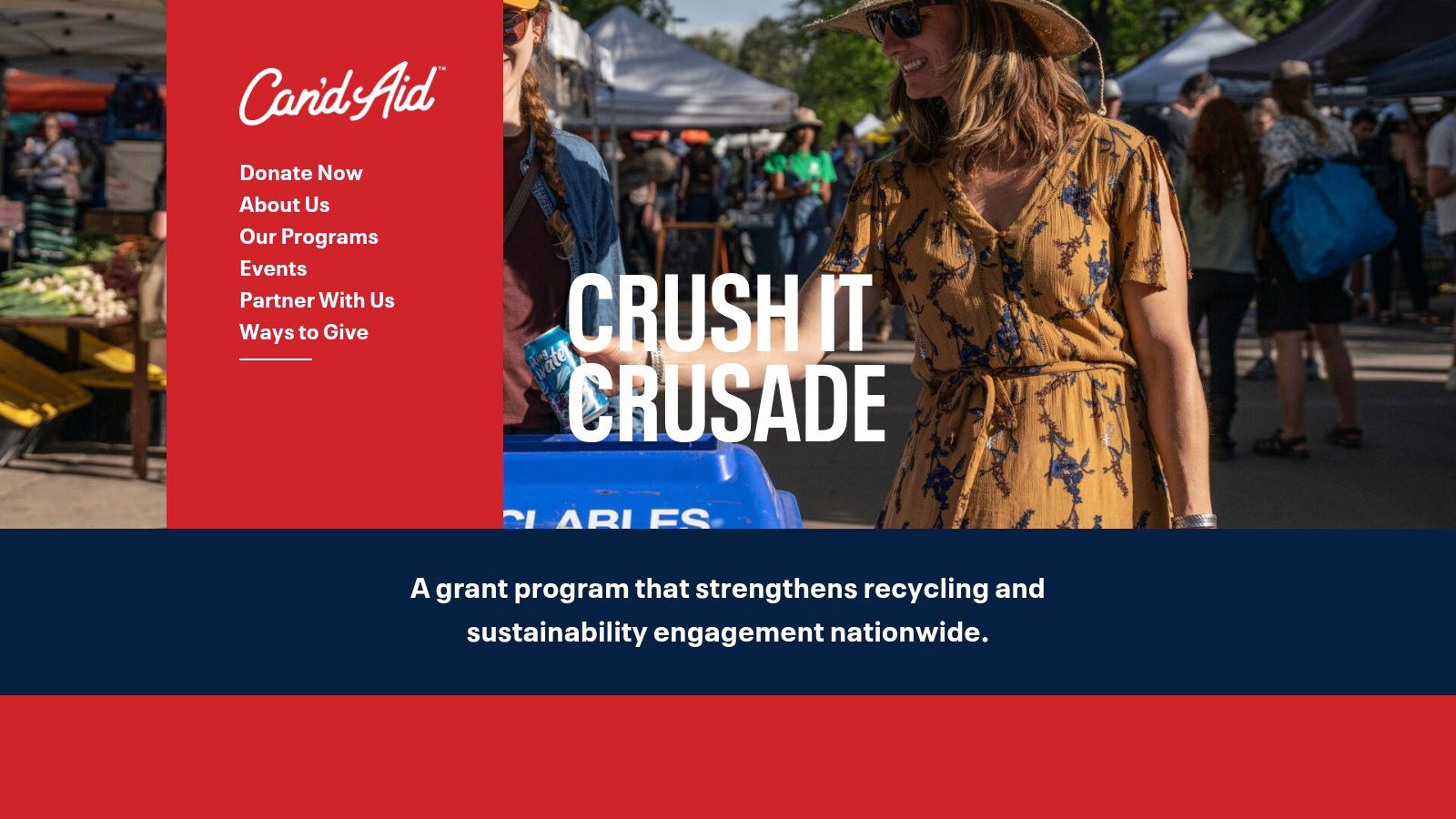
I like this one because it thinks like an event organizer. A lot of programs assume you want a household cart. Sometimes you don't. Sometimes you're trying to stop a park cleanup or summer festival from becoming a sea of crushed cans and sticky cups.
Can'd Aid's Crush It Crusade is built for community groups, nonprofits, and public events that want visible collection bins and a simple beverage-container program. That's much closer to the way I work on the ground.
Why it clicks for cleanup groups
When we run a cleanup, volunteers don't need a graduate seminar in waste policy. They need clear stations and a short script. Can'd Aid leans into that. Bins, support, training, and a narrow material focus make life easier.
That narrow focus is also the tradeoff. If you want one program that handles every messy material stream, this isn't it. If you want to collect cans at a cleanup, concert, or community day without reinventing the wheel, it's a smart route.
A focused bin stream usually beats an “everything goes here” setup. Volunteers make fewer mistakes when the target is obvious.
I'd use Can'd Aid when I want quick, visible wins in public spaces. It's the recycling version of setting out a basketball hoop instead of asking people to build a gym.
8. Keep America Beautiful Public Space Grants
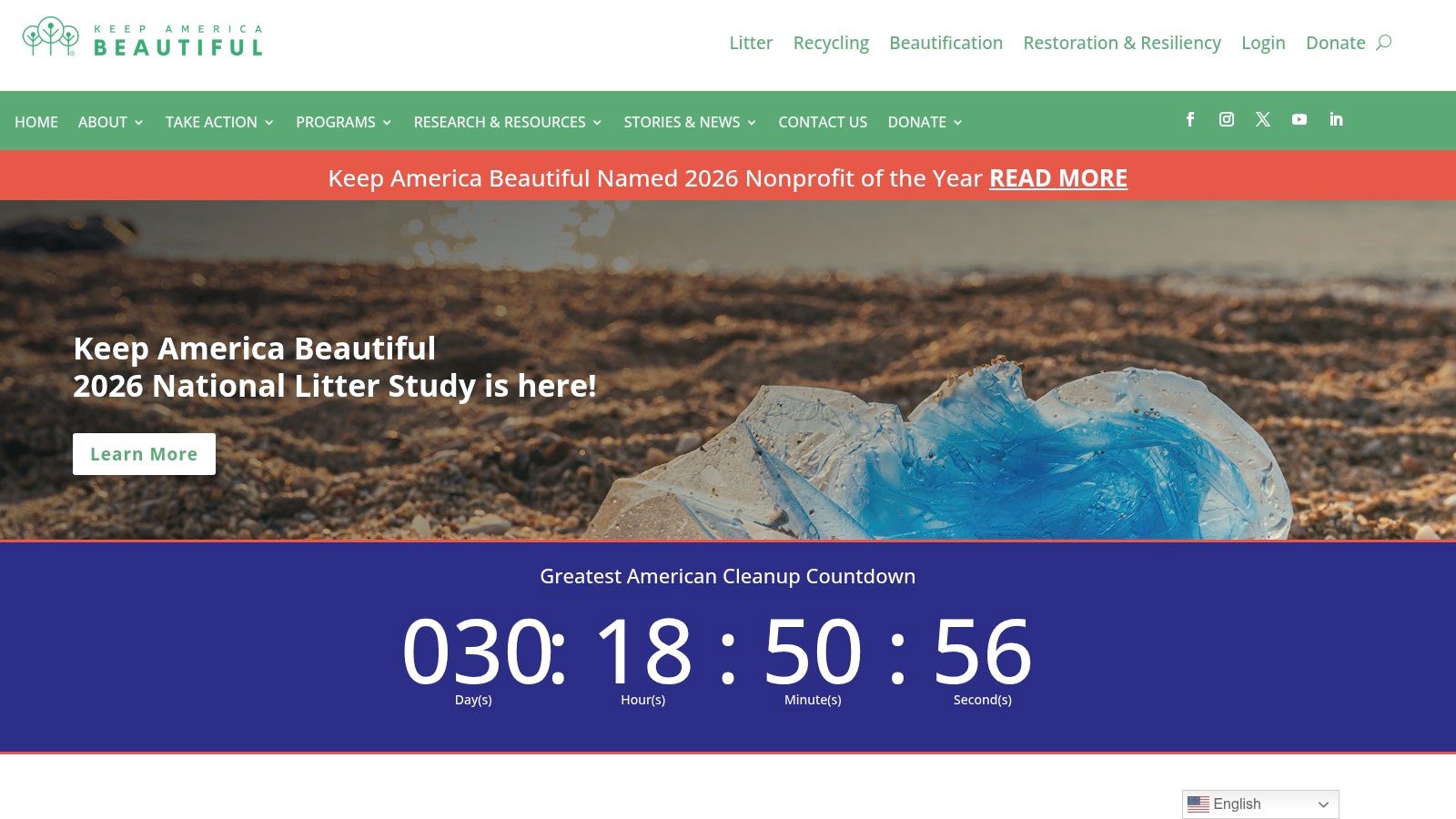
Some bins are for the kitchen. Some are for the curb. Some are for the place where everyone drops the bottle because there's nowhere else to put it.
That last problem is where Keep America Beautiful has often been useful. Its public-space recycling grants have historically helped place outdoor bins in parks, campuses, and downtown areas, depending on funding rounds and partners.
When public-space bins are the right answer
I've cleaned enough sidewalks to know that a resident can do everything right at home and still walk into a trash-only public space the second they leave the house. That's why I don't treat free recycle bins as just a household issue.
This route works best when you have a shared place with constant foot traffic and a group ready to maintain it. A public bin nobody empties is just a future headache.
- Good fit: Nonprofits, municipalities, schools, campuses.
- What I like: Outdoor-oriented infrastructure for places people already gather.
- Watch out for: Grant timing. Some rounds open, some don't, and competition is real.
If your neighborhood has a park fieldhouse, plaza, or event strip that always ends up littered after busy weekends, this is the kind of lead I'd chase.
9. SWACO Recycling Cart Grants
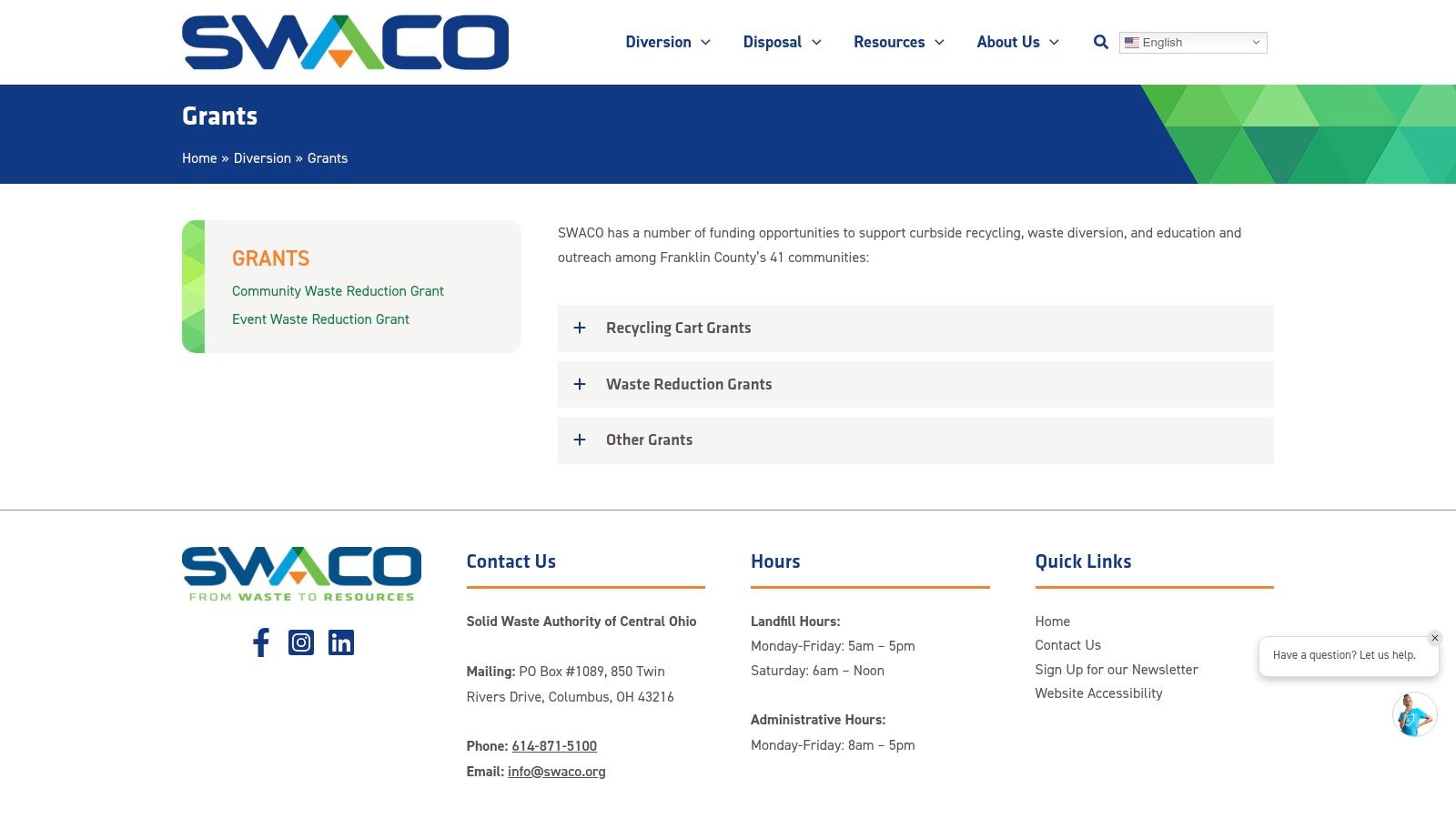
I'm based in Chicago, but I pay attention to programs in other places because good ideas travel. SWACO is one of those examples I keep in my back pocket when someone asks, “Could our county build something like this?”
The SWACO grants page shows a regional model where public support helps communities roll out carts and education. I don't recommend it because every reader can use it directly. I recommend it because it gives local advocates a real template.
Why a model matters
If you're trying to convince a town, ward office, or county board to think bigger, examples help. They give your pitch some bones. You can point to a live program and say, “This is the kind of structure I mean.”
The market backdrop also tells me these systems aren't niche anymore. The global recycling bins market was valued at USD 1.9 billion in 2023 and is projected to reach about USD 3.8 billion by 2033, with a projected 7.3% CAGR from 2024 to 2033 (global recycling bins market projection). I read that less as trivia and more as proof that procurement and replacement are ongoing, normal parts of public systems.
For a resident, SWACO may be too far away to matter directly. For an organizer pushing policy or local funding, it's a useful example of how free-to-resident carts can happen through municipal backing.
10. Community Reuse Platforms
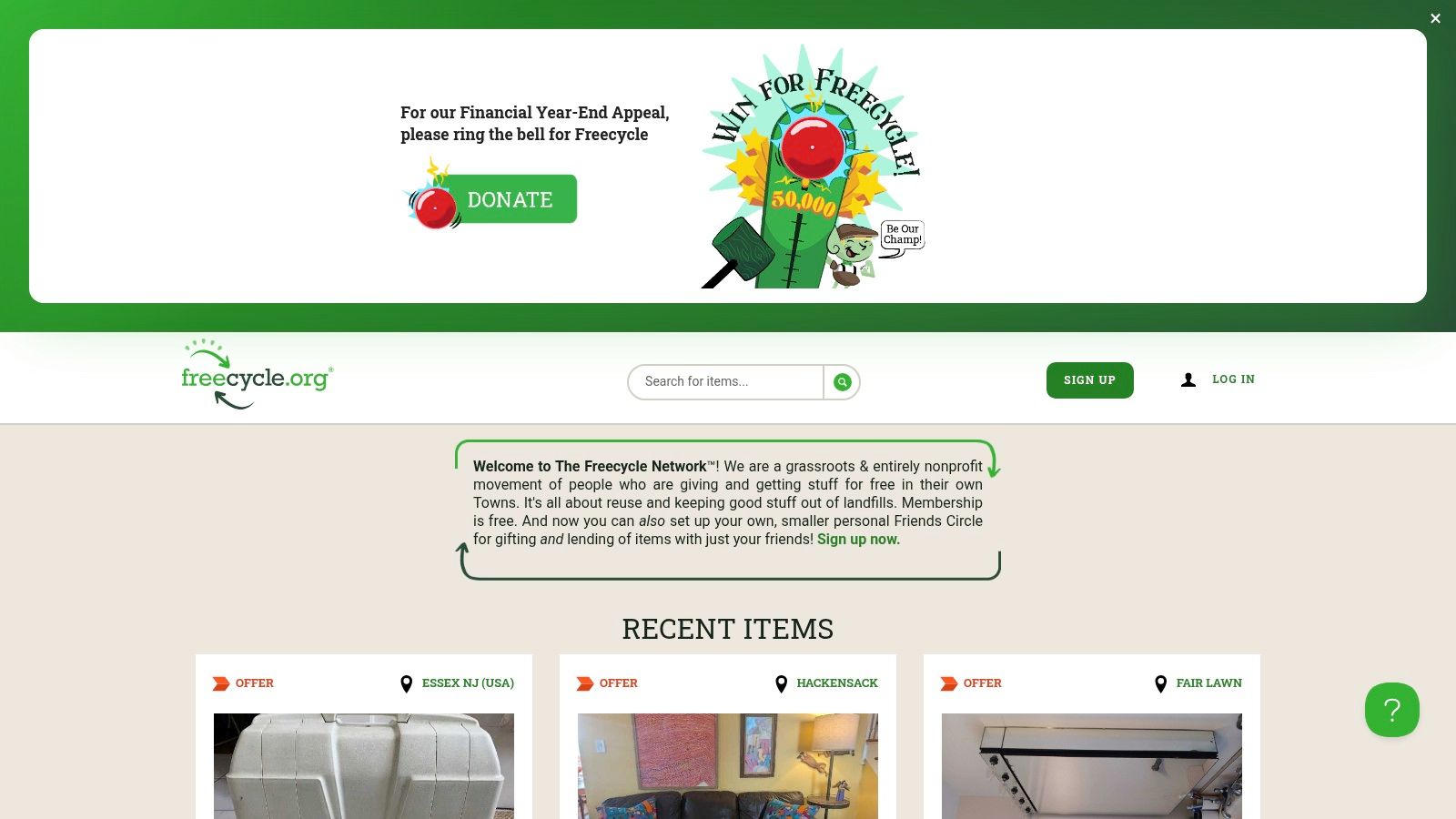
Sometimes the best free recycle bins are sitting in a garage five blocks away.
I've found extra bins, office containers, and weirdly sturdy event tubs through neighbor-to-neighbor channels long before a formal program came through. That's why I still check Freecycle and similar local reuse spaces when I need fast backup.
My scrappy method
This route is messier than a city portal. You have to watch listings, message people, and move quickly. But for a cleanup crew, that can be fine. We're used to improvising.
Here's how I do it:
- Search with multiple terms: Try “recycle bin,” “recycling cart,” “blue bin,” and “office recycling bin.”
- Ask about condition early: Cracked lids and broken wheels matter more than faded paint.
- Think in event terms: Small office bins are great for volunteer stations, pop-ups, and sorting tables.
I also like that this keeps material in use. If you're trying to build cleaner habits, reuse should stay in the conversation, and don't trash it if someone nearby can still use it.
One warning. A free bin from a neighbor won't change weak local service. Washington County, Utah leans hard on 24/7 “binnie” drop-off access across more than 20 locations, and Nevada's recycling guidance shows that some communities have curbside service, some have drop-off, and some have only limited access or material acceptance (Washington County recycling access page). I've learned the same lesson over and over. The container matters, but the collection system matters too.
Top 10 Free Recycling Bin Resources
| Provider | Core offering ✨ | Accessibility & cost 💰 | Best for 👥 | Reliability & impact ★🏆 |
|---|---|---|---|---|
| City of Chicago Blue Cart (311) | Free blue recycling cart + bi‑weekly curbside pickup; 311 requests | 💰 Free for eligible 1–4 unit homes; 5+ units ineligible | 👥 Single‑family & small multi‑unit residents, neighborhood cleanups in eligible wards | ★★★★ Municipal service with published schedules; reliable within eligibility |
| Recycle By City Chicago | "What goes in" visual guide + direct 311 links and schedules | 💰 Free resource (no bins provided) | 👥 Volunteers, residents & educators reducing contamination | ★★★★ Strong education tool; lowers rejected loads |
| Lakeshore Recycling Systems (LRS) | Hauler‑provided carts via municipal contracts; local replacements by crews | 💰 Included with service/contract; not free for non‑customers | 👥 Multi‑unit buildings & neighborhoods served by LRS | ★★★★ Local responsiveness; scalable for buildings |
| Republic Services | Standardized curbside carts; online account/cart requests | 💰 Part of paid service or municipal contract; policies vary | 👥 Residents in Republic territories; property managers | ★★★★ Convenient online tools; consistent bin standards |
| Waste Management (WM) | Carts with residential service; customer service replacements; extra cart options in some areas | 💰 Contract‑based; city specifics determine cost/availability | 👥 Communities with WM contracts; advocates for extra capacity | ★★★★ Wide footprint; local terms drive outcomes |
| The Recycling Partnership (Grants) | Grants & technical assistance to fund citywide carts + education | 💰 Grant‑funded (no resident cost) but requires municipal applicant | 👥 Municipalities, counties, nonprofit partners pursuing large rollouts | ★★★★★ High‑impact city programs when awarded 🏆 |
| Can'd Aid – Crush It Crusade | Donated bins, event equipment & training focused on aluminum containers | 💰 Free to selected nonprofits; competitive application | 👥 Community clean‑up groups & event organizers collecting cans | ★★★★ Rapid event setup; excellent for beverage‑container streams |
| Keep America Beautiful (Public Space Grants) | Grants for outdoor‑rated public bins + best‑practice guidance | 💰 Competitive grants; awarded bin infrastructure at no cost to recipients | 👥 Nonprofits, municipalities, campuses seeking public‑space bins | ★★★★ Durable public infrastructure; raises program visibility |
| SWACO (Model Grants) | Discounted/free carts + TA as a municipal model for rollouts | 💰 Grant/discount model for member communities; requires municipal buy‑in | 👥 Municipal planners & advocates seeking funding templates | ★★★★ Proven scalable approach; geographic limits to model |
| Community Reuse Platforms (Freecycle, Buy Nothing) | Hyperlocal free listings for used carts & office/event bins; pickup coordination | 💰 Free but availability is hit‑or‑miss | 👥 Grassroots organizers, volunteers needing spare/event bins quickly | ★★★ Variable condition & supply; great free option when available ✨ |
Now, Go Make a Difference
Getting a bin is the easy part. Using it well is where the story starts.
That's true in my apartment, and it's true on a Chicago sidewalk at eight in the morning when the wind is rude and half the group is still waking up. Back when we started Litter Caterpillars, we got caught in a spring hailstorm and huddled under a tree while rides kept canceling. We were cold, annoyed, and laughing anyway. That day taught me something I still believe. Cleaning up a mess, even in bad conditions, changes you.
A free recycle bin won't save a neighborhood by itself. It won't fix bad pickup schedules. It won't solve confusion about what goes where. It won't magically make people care. But it gives caring people a tool they can use, and that matters.
I've also learned that “free” is slippery. Sometimes it means your address qualifies. Sometimes it means your building doesn't. Sometimes it means the bin costs nothing but the service rules themselves are the obstacle. Los Angeles County says its free bins go to County departments based on availability and funds, with different request paths for facilities, businesses, and schools in unincorporated areas, and that's the kind of detail people usually find out too late (Los Angeles County department bins information). The same thing happens all over. Eligibility decides a lot.
Service quality decides a lot too. The commercial recycling bins market is estimated at USD 1.5 billion in 2025 and projected to reach USD 2.7 billion by 2035 at a 5.9% CAGR, with growth tied to mandatory waste segregation rules and newer deployments using RFID monitoring and sensor-based fill-level alerts (commercial recycling bins market outlook). That tells me systems are getting smarter, but smarter equipment still has to meet real people where they live, walk, and throw things away.
So start small, but start. Request the Blue Cart. Ask your hauler. Apply for a grant. Borrow office bins for a cleanup. Pull a used bin off a neighborhood reuse platform. Put one at your block party. Put one at your church picnic. Put one where the bottles always pile up after the game.
You don't need a perfect plan. You need one next move.
If you want more than a bin, come join Litter Caterpillars. We clean Chicago block by block, make friends while doing it, and prove to ourselves that service can change a day, a street, and sometimes a whole season of your life.