
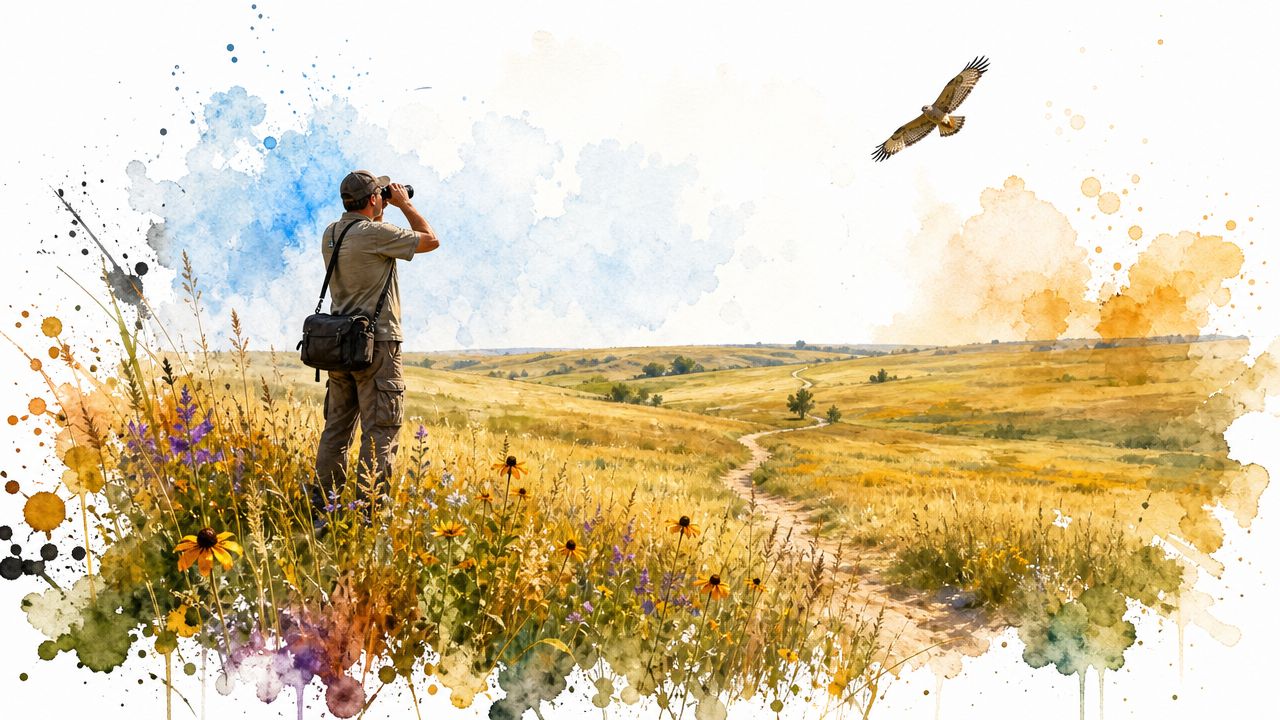
I once finished a trash pickup on a windburned Chicago morning and drove out to Goose Lake Prairie with dirty boots still in the trunk. By the time I stepped onto the trail, the city noise had drained out of me, and all that was left was sky, grass, and the uncomfortable feeling that I had no more excuses.
An Escape You Have to Earn
Some places let you stay half-asleep. Goose Lake Prairie State Natural Area doesn't feel like that.
You don't stroll into a prairie the way you drift through a farmer's market or wander into a coffee shop. You go there because something in you is crowded. Your head is loud. Your phone has trained you to twitch every few minutes. You need a bigger room, and sometimes the only room big enough is outside.
When the city gets too tight
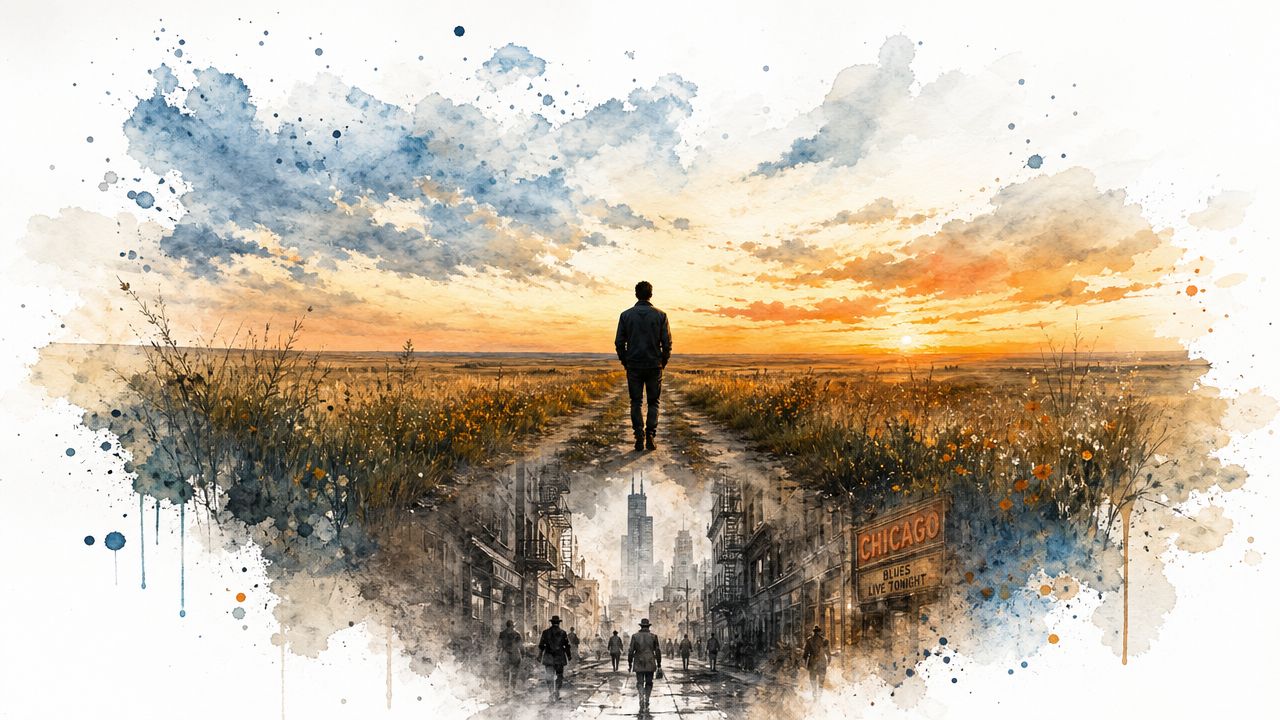
I've had mornings where Chicago felt like a fist. Traffic. Sirens. Fast food wrappers in the gutter. That strange exhaustion you get when you've talked to too many people and still haven't said anything real. Then you drive out and the horizon opens up so wide it almost insults you.
The prairie doesn't flatter you. It doesn't entertain you. It strips things down.
A forgotten alley teaches a similar lesson. When you're standing there with a grabber in one hand and a bag in the other, there isn't much room for self-deception. You either pick up the trash or you don't. At Goose Lake, you either walk into the openness or you retreat to the car.
You don't come to a prairie to be distracted. You come to see what still rattles around inside you when the noise is gone.
A different kind of challenge
A lot of people hear "state natural area" and think easy day trip. Maybe a pleasant little walk. Maybe a few photos. That's not wrong, but it misses the point.
This place asks for more than attendance. It asks for attention.
If you've ever done something hard on purpose, you'll recognize the feeling. The first cold minute. The first muddy patch. The first stretch where there isn't shade and you're alone with your breathing. That's the good part. That's where you stop acting like your life is happening to you and start meeting it head-on.
Here is what I mean:
- You leave the easy script: no store windows, no quick exit into a restaurant, no scrolling while pretending to look around.
- You feel small in a healthy way: big sky does that. It cuts ego down to size.
- You remember your body: your legs work, your lungs work, your senses wake up.
If you're thinking about visiting Goose Lake Prairie State Natural Area, go with the right frame of mind. Don't go looking for a polished attraction. Go because you want something real. Go because routine has made you soft and scattered. Go because a little discomfort can clean a person out better than comfort ever will.
What Exactly Is This Place
Before you walk it, it helps to know what you're standing in.
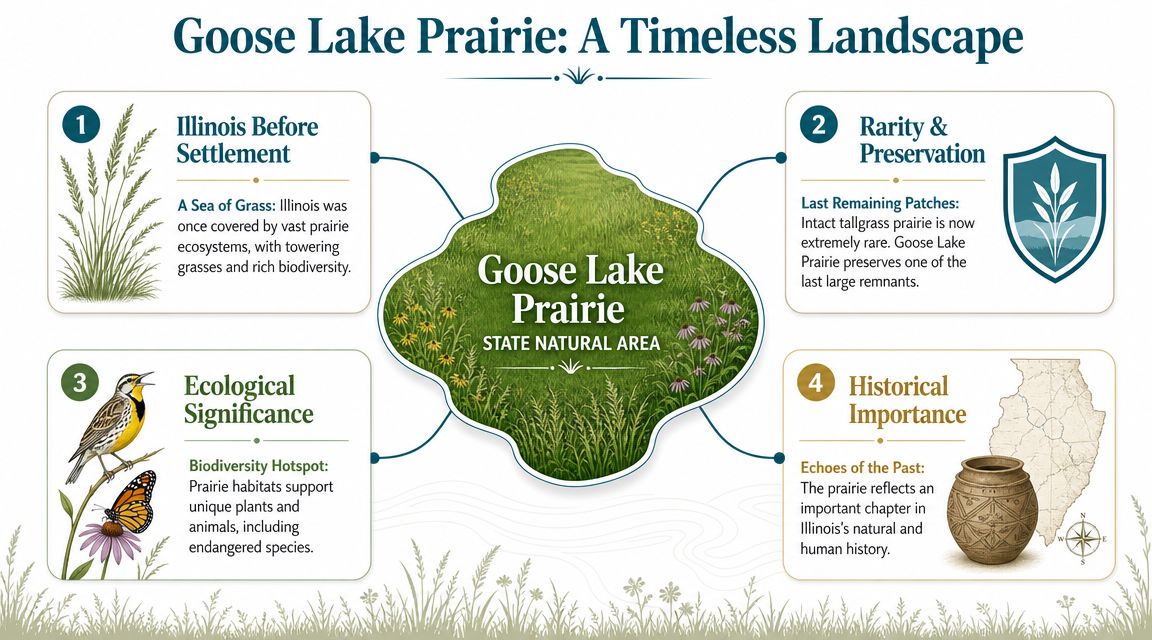
Goose Lake Prairie State Natural Area is a 2,537-acre state park in Grundy County, Illinois, and more than half of it is protected as a tallgrass prairie nature preserve. It's about 50 miles southwest of Chicago, and it's one of the rare large remnants of the world that once covered nearly 60% of Illinois, as described in the Goose Lake Prairie State Natural Area entry.
The original Illinois
If you've lived around Chicago long enough, it's easy to think Illinois was always roads, subdivisions, parking lots, cornfields, and industrial strips. It wasn't. A huge amount of it was prairie. Grassland. Wind and root and fire and birds.
It is an ocean, its waves formed by stems instead of water.
Tallgrass prairie sounds simple, but it hits hard when you actually see it. You aren't looking at lawn grass. You aren't looking at a manicured park. You're looking at a living system built by plants that rise over your head and anchor deep into the ground. It feels old in a way that cities never do.
Why it feels like lost property
The reason Goose Lake hits people so hard is that it doesn't feel decorative. It feels like inheritance. Like something your state used to have in abundance and then mostly traded away.
That changes how you walk.
You stop asking, "What's the attraction?" and start asking, "How much of this is left?" That question gives the place weight without needing any hype. You can feel it in your chest when the wind moves through the grass and there isn't a building in the frame.
Practical rule: If a place feels ancient and fragile at the same time, walk slower and pay better attention.
What to notice first
When you arrive, don't rush to identify every plant or bird. Start simpler than that.
Try this short mental checklist:
Look at the scale
Let your eyes adjust to distance. Prairie doesn't give you the same visual clutter as the city. It gives you room.Notice the height
Some native grasses here can tower over a person. That changes how the whole place feels.Feel the exposure
You're not tucked into dense woods. The openness is part of the experience.
Goose Lake Prairie State Natural Area makes more sense when you stop treating it like a park built for you and start treating it like a surviving piece of a much older Illinois.
Your Guide to Getting There
The drive is part of the reset.
Goose Lake Prairie State Natural Area sits far enough from Chicago that you feel the city loosen its grip, but close enough that you can still make it a day trip. If you want a broader shortlist before you commit, this guide to a state park in Illinois near Chicago helps you compare options.
Mission briefing before you leave
Keep this simple. You don't need a heroic plan. You need a clean one.
- Pick your window early: Morning is better if you want cooler air, softer light, and a quieter start.
- Dress for exposure: Prairie sun and wind hit differently because you don't get the same shelter you'd get on a wooded trail.
- Bring water and keep it honest: Even a short outing feels longer when you're in open country and fully present.
I also like to leave my phone on silent once I get close. Not because silence is sacred, but because most of us are too reachable. The drive out is your chance to stop reacting.
What the route feels like
The best part of driving to Goose Lake isn't some dramatic final turn. It's the gradual stripping away. The streets get less packed. The visual noise drops. The billboards start losing to open space.
That transition matters. It gives your mind time to catch up to your body.
If you've spent weeks boxed in by the same train lines, office ceilings, apartment walls, and corner stores, a prairie trip can feel oddly serious. You don't need to make it mystical. Just notice that you are leaving one rhythm and entering another.
When you pull in
Once you're there, pause before you move. Sit for a minute in the parked car with the engine off. Let the stillness reach you before you start planning your route.
A few practical habits make the visit better:
| What to do | Why it helps |
|---|---|
| Check the conditions around you | Wind, mud, and sun shape the day more than people expect |
| Choose a trail before walking | Wandering without a plan can turn into rushed backtracking |
| Keep your gear light | Less fiddling means more attention on the prairie |
If you want the prairie to clear your head, don't bring your entire indoor life with you in a backpack.
That first step out of the car is where the visit really starts. You've already done the hard part by leaving your routine.
Choose Your Path on the Trails
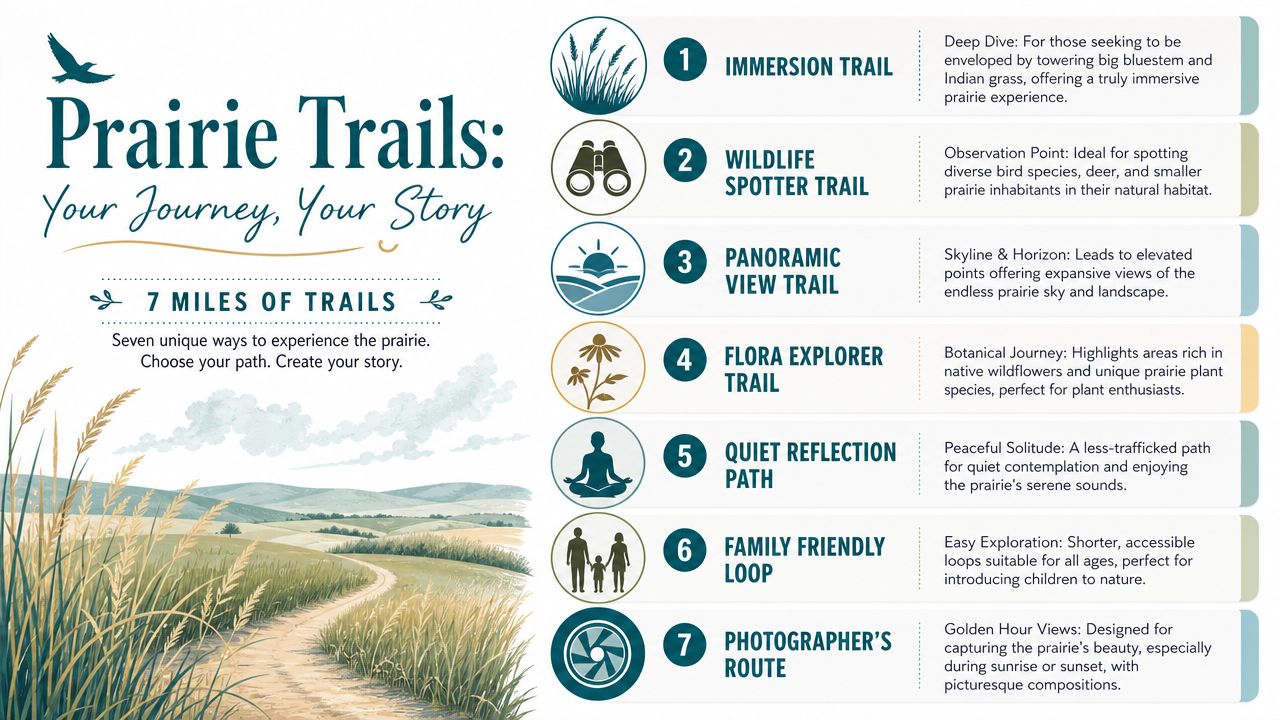
Goose Lake Prairie State Natural Area has 7 miles of hiking trails, including the Tall Grass Nature Trail and the Prairie View Trail, according to the Illinois Department of Natural Resources trail page. The Tall Grass route puts you close to native grasses like big bluestem and Indian grass, which can grow to 8 feet tall. Prairie View reaches the highest point at Goose Lake and looks over reclaimed mine areas. The Sagashka Trail crosses a mix of nature preserve, restoration areas, and marshy habitat.
The trail that swallows you whole
The first time you get close to those tall grasses, it changes your posture. You stop moving like you're in a casual urban park. You start moving like you're inside something.
That is why I like the Tall Grass Nature Trail for people who need a reset fast. It gets physical and psychological at the same time. The grasses don't just look tall in photos. They can grow to 8 feet, and when you're near them, the prairie stops being a postcard and starts being an environment.
If your life has felt shallow lately, this trail helps. It pulls you into the texture of the place.
The trail for bigger views
Prairie View Trail is where I send the person who wants a longer breath and a wider horizon. The route goes to the highest point in the park and gives you views over reclaimed mine areas. That matters because you can see different chapters of land use and repair in one outing.
Here is the feeling of it. You walk, the ground rolls, the sky keeps opening, and suddenly your normal worries look tiny and repetitive.
To get a visual sense of the place before you go, this clip helps:
The trail for comparison
Sagashka Trail is for the person who likes seeing contrast. It moves through nature preserve, restoration areas, and marshy habitat. That gives you a compact lesson in paying attention. One stretch feels dense. Another feels open. Another feels soft underfoot and alive in a different way.
Try choosing your route by mood:
- You want immersion: go where the grasses crowd your senses.
- You want perspective: take the path that gets you elevation and long views.
- You want to study change: walk where habitats shift and compare what you see.
There isn't one correct trail at Goose Lake Prairie State Natural Area. The right trail is the one that meets the version of you who showed up that day. Tired. Restless. Brave. Uncertain. It can handle all of that.
How to Experience the Prairie All Year
A prairie in summer is easy to love. The harder seasons tell you more.
Public-facing descriptions of Goose Lake Prairie mention hiking, winter cross-country skiing, and bird habitat, but they don't always give much season-by-season guidance. The Enjoy Illinois page for Goose Lake Prairie makes one thing clear: more than half the area is a dedicated nature preserve protecting species including the Henslow's sparrow and the upland sandpiper, so responsible visitation changes with the season.
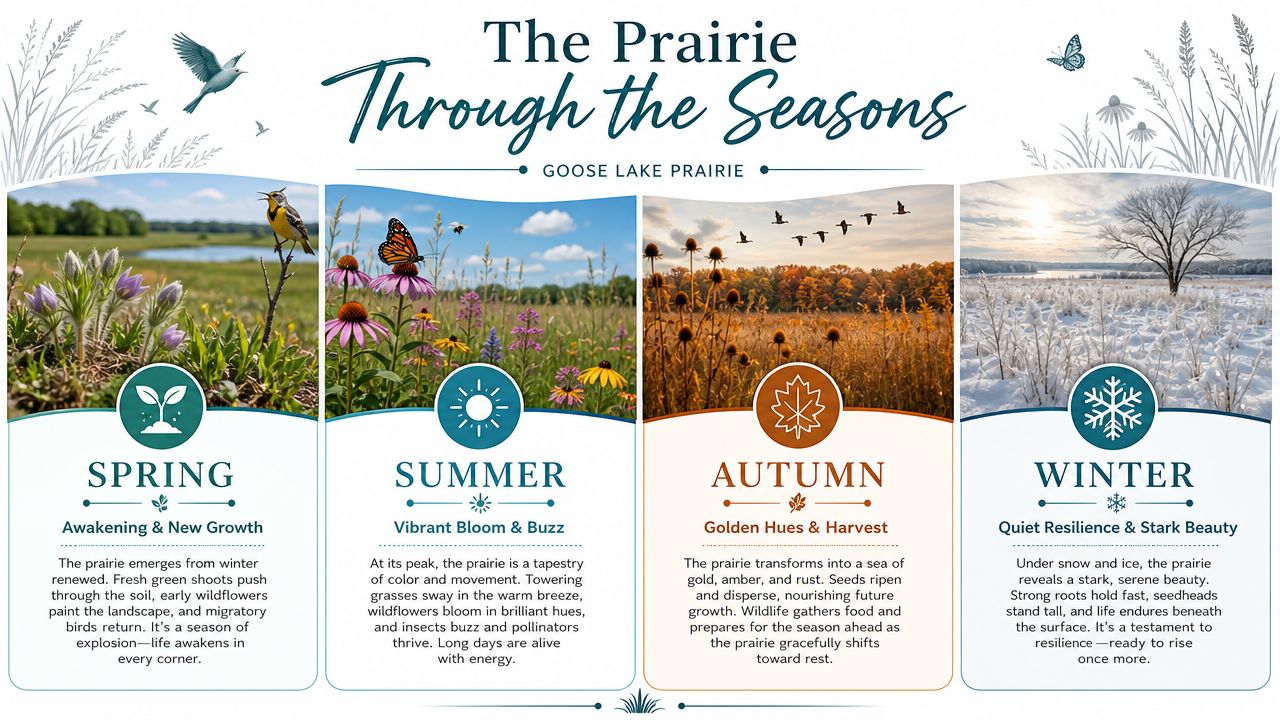
Spring and summer
Spring is messy. That's part of its honesty.
Trails can feel muddy, the air can flip from warm to sharp in a hurry, and the ground has that half-awake look where life is pushing up but hasn't settled yet. I like spring for people who don't need perfection. You hear more, smell more earth, and remember that rebirth is usually awkward before it's pretty.
Summer is the season that overwhelms people in a good way. The grasses rise, insects buzz, and the prairie starts feeling almost architectural. It can also feel exposed and hot. That's the trade. You get fullness, but you need to respect the weather and your limits.
Fall and winter
Fall has a calmer authority. The colors turn drier and warmer. Seed heads and stems catch the light in a way that makes the whole prairie feel stripped down and finished at once.
Winter is for the people who want the cleanest line. No lush distraction. No softness. Just form, distance, wind, and whatever grit you brought with you. The openness gets even more intense when the year is bare.
In winter, a prairie can feel bigger because there's less asking for your attention.
A simple seasonal code
The most useful way to think about the year at Goose Lake isn't by calendar labels. Think in terms of pressure and care.
- During wet periods: expect softer ground and slower walking.
- During bird-sensitive times: keep your distance, stay on marked routes, and don't chase a better photo.
- During harsh weather: treat the prairie like a real outdoor environment, not a casual errand.
If you're after comfort, pick your day carefully. If you're after clarity, almost any season can give it to you.
Beyond the Hike What Else to Do
Walking is only half the experience. The other half is learning how to notice.
The park's 7 miles of trails, including the 3.5-mile Prairie View Trail, give you room for recreation and for watching how restoration supports biodiversity, according to the Illinois DNR park page for Goose Lake Prairie. That means a visit can be active without being rushed. It can also be quiet without being empty.
Birding and photography without acting like you own the place
The people who get the most out of Goose Lake Prairie usually aren't the ones sprinting for maximum trail mileage. They're the ones who stop. They look longer. They let the place reveal itself at its own pace.
If you bring binoculars, use them as an excuse to slow down. If you bring a camera, don't turn the whole visit into a hunt for content. The prairie is better when you let it stay bigger than your feed.
A few habits help:
- Stay patient: birds and small movements often show up after you've been still for a while.
- Work with distance: the openness can make everything look closer than it is.
- Shoot the scale: wide views, changing light, and weather often tell the story better than a tight close-up.
Read the ground
What I like most about places like this is that observation becomes a form of work. You're learning to read signs. Where the plants change. Where the habitat shifts. Where the reclaimed areas and restored areas create a different feel.
That same mindset helps in other prairie spaces too. If you're curious how another Illinois prairie visit can feel more grounded and less rushed, this look at Springbrook Prairie Pavilion is worth your time.
Field note: The best outdoor skill isn't speed. It's restraint.
Be the kind of visitor you'd want after you
Goose Lake Prairie State Natural Area doesn't need you to improve it during your visit. It needs you not to cheapen it.
That means staying on trails, leaving plants where they are, giving wildlife space, and carrying out every scrap you brought in. The standard is simple. Leave no little mess for somebody else to deal with later.
If the place moves you, let that change your behavior after the trip too. Pick up litter in your neighborhood. Learn your local preserves. Return with more patience than you had the first time. Service doesn't always begin with a trash bag. Sometimes it begins with finally paying attention.
Find Your Own Prairie
I think a lot of us are starved for difficulty that benefits us.
We get plenty of fake difficulty. Endless messages. Petty drama. Digital noise. The constant friction of modern life. Very little of that makes us better. It just wears us down. Goose Lake Prairie State Natural Area is different because the challenge is clean. Walk the trail. Face the weather. Stay present. Respect what's alive around you.
Why this kind of place changes people
A prairie doesn't flatter your ego. It gives you scale. That can sting a little at first.
When you're standing in open country, you can't pretend your whole life is your inbox, your apartment, your job title, or the story you've been repeating about why you're stuck. The place interrupts that loop. It reminds you that attention is a choice.
That is why I think people should go, especially when they feel off. Not because the prairie is magic. Because showing up somewhere real has consequences. You breathe differently. You walk differently. You start asking harder questions.
Go before you feel ready
You do not need to become an outdoors person first. You do not need the perfect gear, the perfect friend group, or the perfect free weekend.
You need enough willingness to break pattern.
If Goose Lake stirs something in you, keep the thread going. Visit another prairie. Learn another trail. Try a place with different ground and water and history, like the Des Plaines Dolomite Prairies Land and Water Reserve. Build a life that has more real weather in it.
Go when you're tired. Go when you've been hiding indoors too long. Go when your thoughts have started to smell stale.
The prairie won't solve your life. That's too much to ask from any place. But it can do something better. It can return you to yourself for a few hours. Sometimes that's enough to start cleaning up the rest.
If this piece lit a fire in you, take the next step with Litter Caterpillars. Show up for a cleanup, meet good people, and do one real thing with your hands. That's where clarity starts.