

The truck was due at nine, the bags were wet, and two longtime volunteers were shouting beside a pile of leaves that smelled like cold mud. One wanted the debris stacked by the street so the driver could load it quickly. The other wanted it hidden behind the fence because an alderman planned to take photos. Nobody had come to fight. They'd come with work gloves, a rake, and a few hours to give away.
That's how conflict starts in volunteer crews. A small task carries a private meaning. One person hears “move the bags” and thinks efficiency. Another hears it and thinks respect for the neighborhood. Add fatigue, a borrowed trailer, unclear authority, and the fear that disagreement makes someone look selfish. Suddenly, a cleanup has a dispute that needs handling before the next bag hits the pavement.
The conflict resolution strategies below come from that kind of morning. They're made for low-structure groups where you may be the organizer, the person holding the first-aid kit, and one of the people being corrected.
Why Volunteer Groups Clash More Than You Expect
The argument by the fence lasted less than ten minutes, but it gathered fuel quickly. The rake handle leaned against a trash grabber. A box of nitrile gloves sat open on the truck bed. Someone dragged a black bag through wet leaves, and the plastic made that sharp scraping sound that makes everyone feel behind schedule.
Neither volunteer had a silly point. The street-side stack made pickup easier. The hidden stack looked cleaner for the camera. The trouble came from the fact that nobody had said who owned the decision. The organizer had handed out tools and locations, then stepped into the work. Once the disagreement arrived, everyone acted like the organizer and nobody acted like the organizer.
Volunteer crews carry built-in friction:
- No paycheck: People bring personal standards because money doesn't create a shared job description.
- No hiring filter: A retired teacher, a college student, a contractor, and a first-time volunteer may work beside each other with different ideas about pace and politeness.
- Blurry authority: The person who made the flyer may not know who can stop unsafe work or settle a deadlock.
- Shared tools: One missing shovel or overloaded trailer can turn a practical delay into a personal accusation.
- Mixed histories: Longtime members remember old slights. New people don't know which subjects already carry heat.
- Moral pressure: Volunteers often believe everyone in the group is trying to be a good person. A disagreement can then feel like betrayal instead of coordination.
A workplace dispute can also linger because people avoid formal routes. In Great Britain, 45% of workers said they handled workplace conflict by talking to a manager, while 30% spoke directly to the other person. Only 9% filed a formal grievance, and fewer than 0.5% went to tribunal, according to workplace conflict data from the UKMJ report. Informal talks matter, but the same report says 31% of conflicts remained mainly or completely unresolved.
Practical rule: Conflict isn't proof that your crew is broken. It's what happens when people share work without a clear map for decisions.
You need a map. The rest of these strategies give you words, roles, and a simple path for moving from heat to action.
Active Listening When the Heat Is On
When two volunteers argue beside a trailer, you don't need a speech. You need three moves that slow the exchange enough for each person to hear the room again.
Pause before you fix
Take one breath. Put down the tool if you're holding one. Say, “Give me a second. I want to understand what happened before we decide what to do.”
That pause buys you control over your own voice. You can't ask people to calm down while you point, interrupt, or speak faster than they can answer.
Then mirror the speaker. Use their words without adding your theory.
“So you're saying you felt responsible for the gear and nobody checked with you.”
Don't add, “because you always have to control everything.” Don't turn a mirror into a verdict. You're showing that you heard the complaint as the speaker means it.
Name what sits underneath
After the mirror, name the feeling you hear. If a volunteer discovered that someone left the trailer hitch unsecured, try this:
“It sounds like that scared you.”
The volunteer may say, “Yes, because the equipment could've gone into traffic.” Or they may correct you: “I wasn't scared. I was angry.” Either answer helps. You now have a real feeling to discuss instead of a loop of blame.
Use I language when you describe your own part: “I felt worried when I saw the hitch open, so I want us to check it together.” Avoid “You always leave things loose.” The first sentence describes an event and your response. The second attacks a person and invites them to build a defense.
For more practice with calm, direct group conversations, these tips for church team communication can help organizers build listening habits that transfer well to weekend service crews.
Practice the missing feeling
Tonight, replay last week's argument in your head. Write down the feeling word nobody said out loud. Was it embarrassed, ignored, afraid, rushed, or untrusted? The word may not solve the dispute, but it can tell you which question to ask next.
Scripts for the Three Conflicts You Will Face
A script won't make a hard conversation painless. It keeps you from reaching for the first sharp sentence that comes to mind.
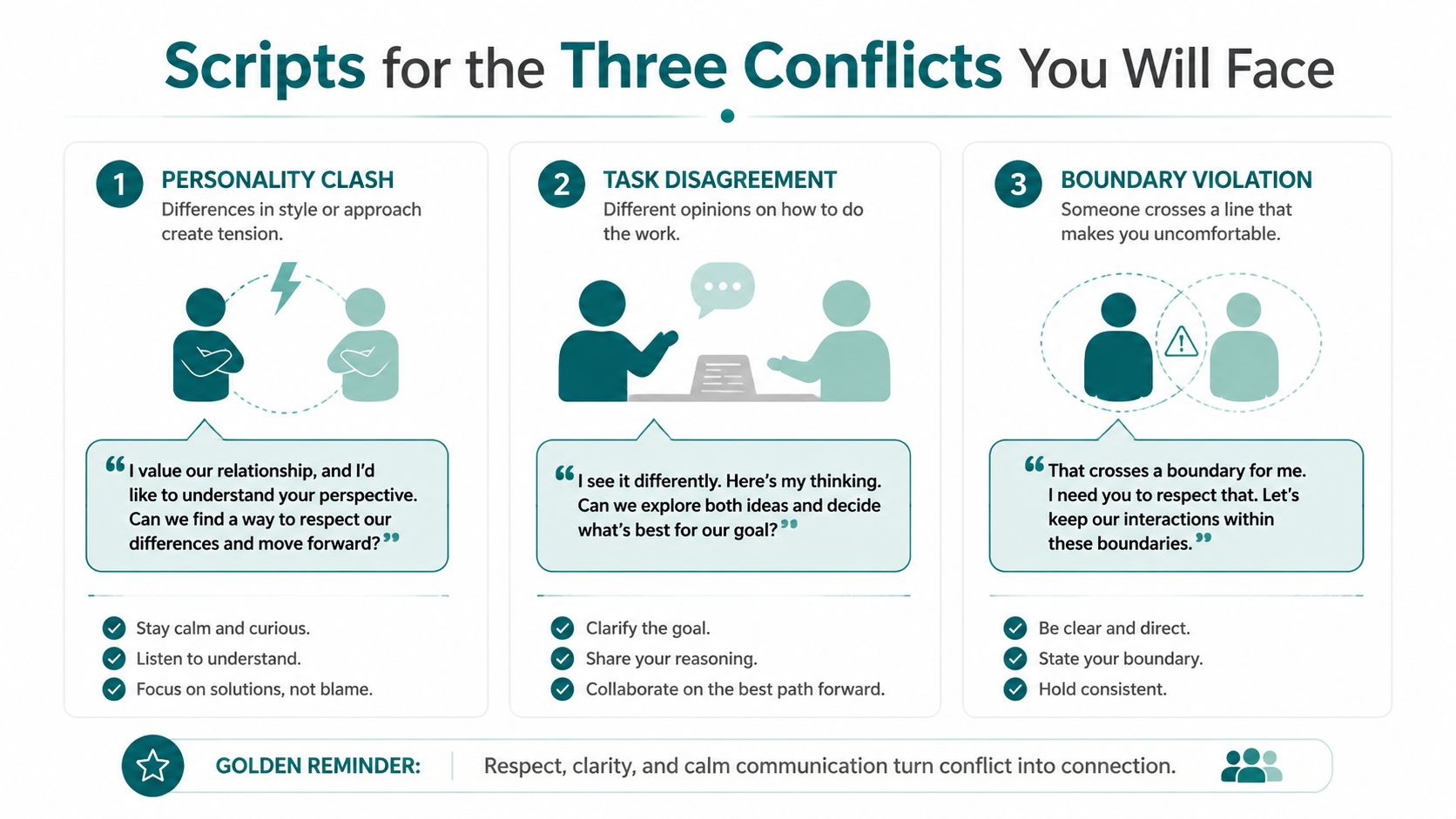
The personality clash
Two strong volunteers may circle each other every cleanup. One corrects every sorting decision. The other rolls their eyes, takes over the cart, and complains to anyone within reach. Don't force a public showdown beside the bags.
Give them a shared side-by-side task for one shift, such as checking the grabbers and sorting glass from general waste. Then say:
“I want both of you here, so help me see what's getting in the way.”
Let each person answer while the other listens. Ask, “What do you need from this task?” Finish with one observable agreement: “You'll decide the sorting rule together before the next section, and neither of you will correct the other in front of the full crew.”
The safety disagreement
A volunteer refuses gloves or a harness and says they've done this work for years. Lead with concern, not command:
“I'd hate for you to go home hurt and miss next week.”
Then point to the written rule. “Our safety policy requires gloves for this area. This isn't my opinion versus yours. It's the condition for joining this task. You can switch to the bag-counting table, or you can use the gloves and stay with the crew.”
If the person still refuses, stop the task for that volunteer. A safety boundary needs a consequence people can understand before they test it.
The person sitting on the curb
Pull the volunteer aside. Keep the conversation private and specific:
“I noticed you've been sitting by the curb while the rest of the crew hauls the bags. That leaves fewer people on the heavy work. What's going on?”
Listen before you label them lazy. They may have a bad knee, feel lost, or have misunderstood the assignment. Offer a smaller role, such as sorting, directing the truck, or recording filled bags.
“Would you take the lighter route with me for the next section?”
If they refuse every role, explain the limit plainly: “You're welcome to return when you can take an assigned task. Today, I need you to step out of the work area.”
Some conflicts reach beyond a volunteer crew's skill. Personal patterns may need therapy for relationship issues when the dispute involves an ongoing intimate relationship rather than a single cleanup decision.
The scripts only work if you keep your own temper in check. If your jaw tightens, ask another organizer to stand beside you while you speak.
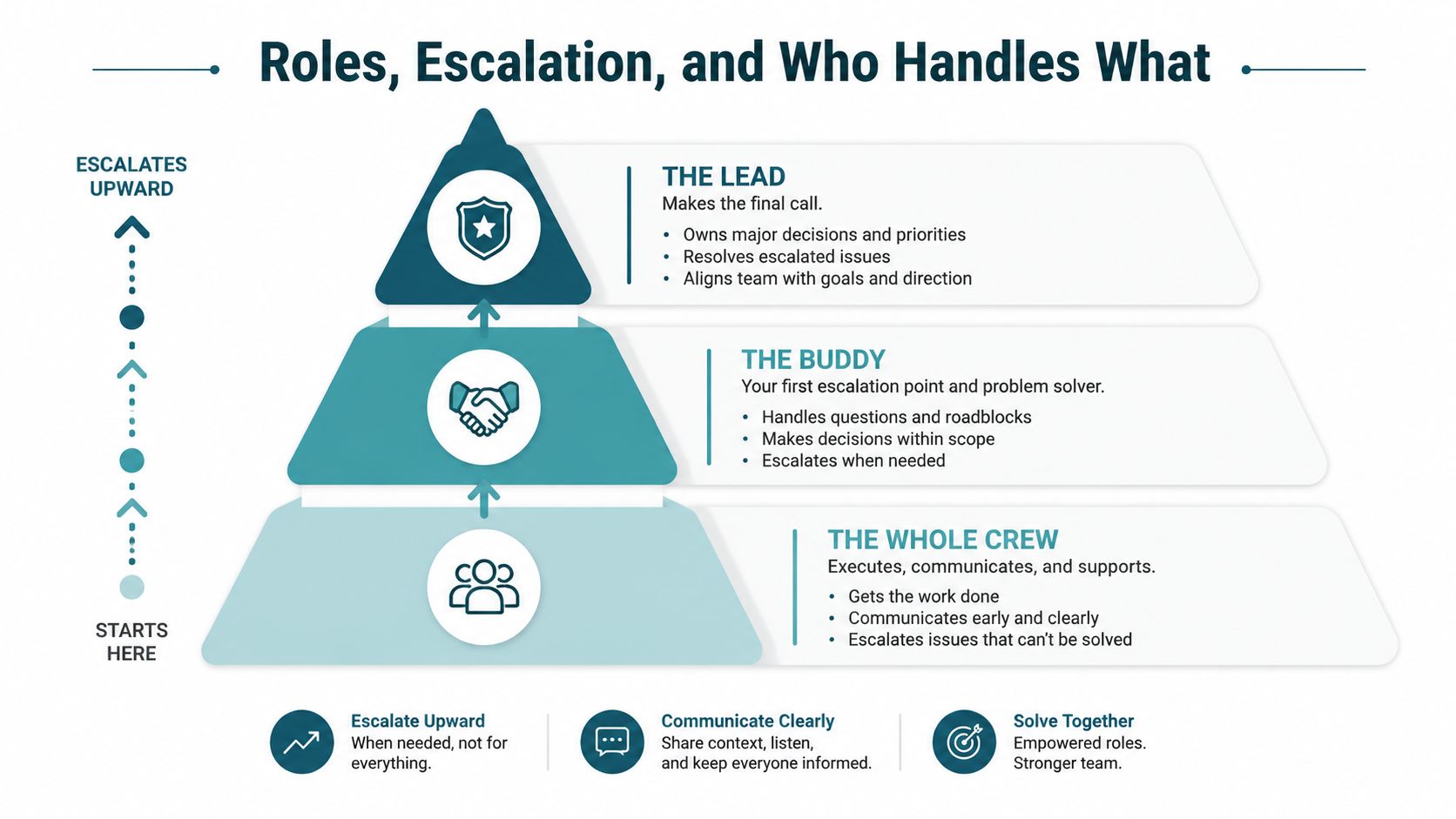
Roles, Escalation, and Who Handles What
A crew can handle disagreement quickly when people know who can decide. Assign the roles before anyone grabs a rake.
The three standing roles
The Lead decides the plan for the day and breaks deadlocks. The Lead can say, “We're stacking by the street today,” then explain the reason in one sentence.
The Buddy pairs with each new volunteer for their first three events. The Buddy answers small questions before confusion turns into embarrassment.
The Safety Person has sole authority to stop unsafe work. They don't need a group vote before asking someone to put on gloves, leave a traffic edge, or switch tasks.
At the opening huddle, say:
“I'm the Lead today. Maya is the Buddy for new volunteers. Devon is the Safety Person, and Devon can stop any task without debate. If you disagree with a decision, bring it to me after we move away from traffic.”
You can use volunteer management best practices to build this kind of simple operating plan before an event.
The four-step ladder
- Direct conversation: The two people speak privately, with a calm request and a specific example.
- Lead check-in: The Lead joins if the first conversation stalls.
- Neutral mediation: A neutral organizer meets with both people and helps them define the issue, separate interests from positions, generate options, and test each option against practical limits. This workflow appears in reviews of mediation programs, which report settlement rates commonly in the 50% to 85% range, including one study of 449 cases with a 78% settlement rate across court-referred and voluntary cases. The British Columbia mediation review also warns that signed settlements, partial agreements, and participant satisfaction measure different outcomes.
- Written warning and removal: If someone keeps violating safety or conduct rules, document the behavior and remove them from the group chat or event roster.
Use this wording when moving up a step: “I'm not deciding who's right. The first conversation didn't settle the issue, so I'm bringing in the Lead to help us choose a workable next step.”
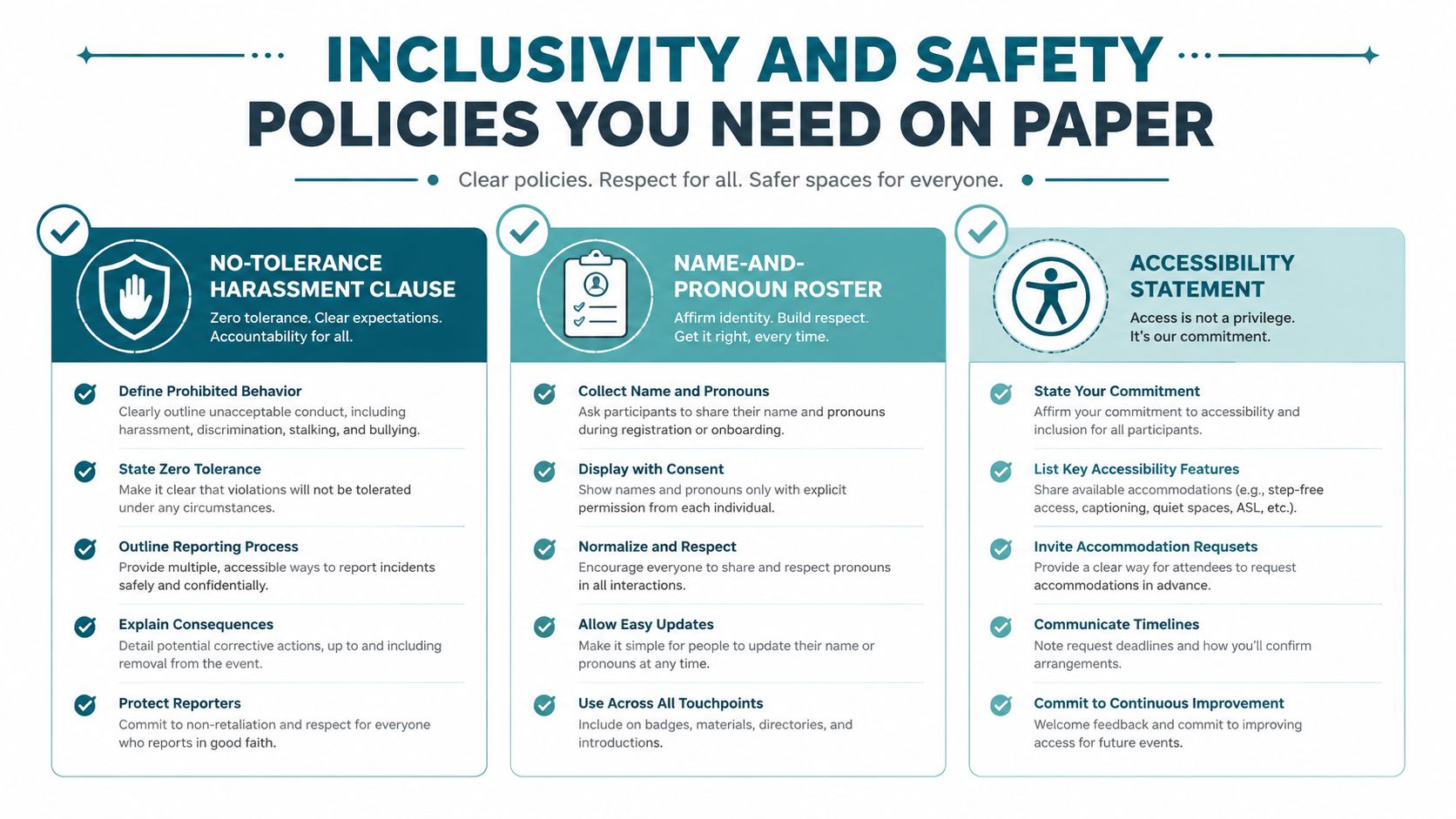
Inclusivity and Safety Policies You Need on Paper
Verbal norms disappear when the morning gets cold and everyone wants to finish. A short written policy stays available when memory gets selective.
Start with a plain harassment rule:
“We don't tolerate harassment, threats, sexual comments, unwanted contact, slurs, or repeated disrespect. Tell the Lead or Safety Person. We'll separate people while we review what happened, protect the person who reports, and decide whether someone can return.”
That language gives volunteers a route to use. It doesn't promise legal perfection. It tells them what behavior crosses the line and whom to approach.
Write down the details people shouldn't have to guess
Keep a name-and-pronoun roster at check-in, and ask every volunteer to update it at each event. If someone gets misgendered all morning because nobody asked, the group has created avoidable work for that volunteer. A roster lets the organizer correct the mistake without making the person repeatedly teach the crew.
Add an accessibility statement that covers:
- Physical tasks: Tell people which sites involve hills, lifting, stairs, or long walks.
- Communication: Provide a written version of the spoken briefing and a clear contact method.
- Childcare and timing: State whether children can attend and what supervision the group can or cannot provide.
A volunteer with a bad knee shouldn't learn about a steep hill after arriving. Offer sorting, route mapping, supply checks, or check-in work before the assignment begins.
Use two-person contact
Create a two-person rule for one-on-one interactions between organizers and new volunteers. Meet in an open area or bring another organizer along. A flirtatious organizer cornering a recruit near the truck may claim they were joking, but the recruit experiences the power difference first.
Give volunteers a short acknowledgment to sign at their third event:
“I have read the group's conduct and safety rules. I know who handles concerns. I will respect names, pronouns, physical boundaries, and task limits. I understand that the Lead or Safety Person can pause my participation when a rule or safety condition requires it.”
Keep the page with your event materials. For questions about protecting the organization, review volunteer liability insurance, then ask a qualified adviser what fits your group.
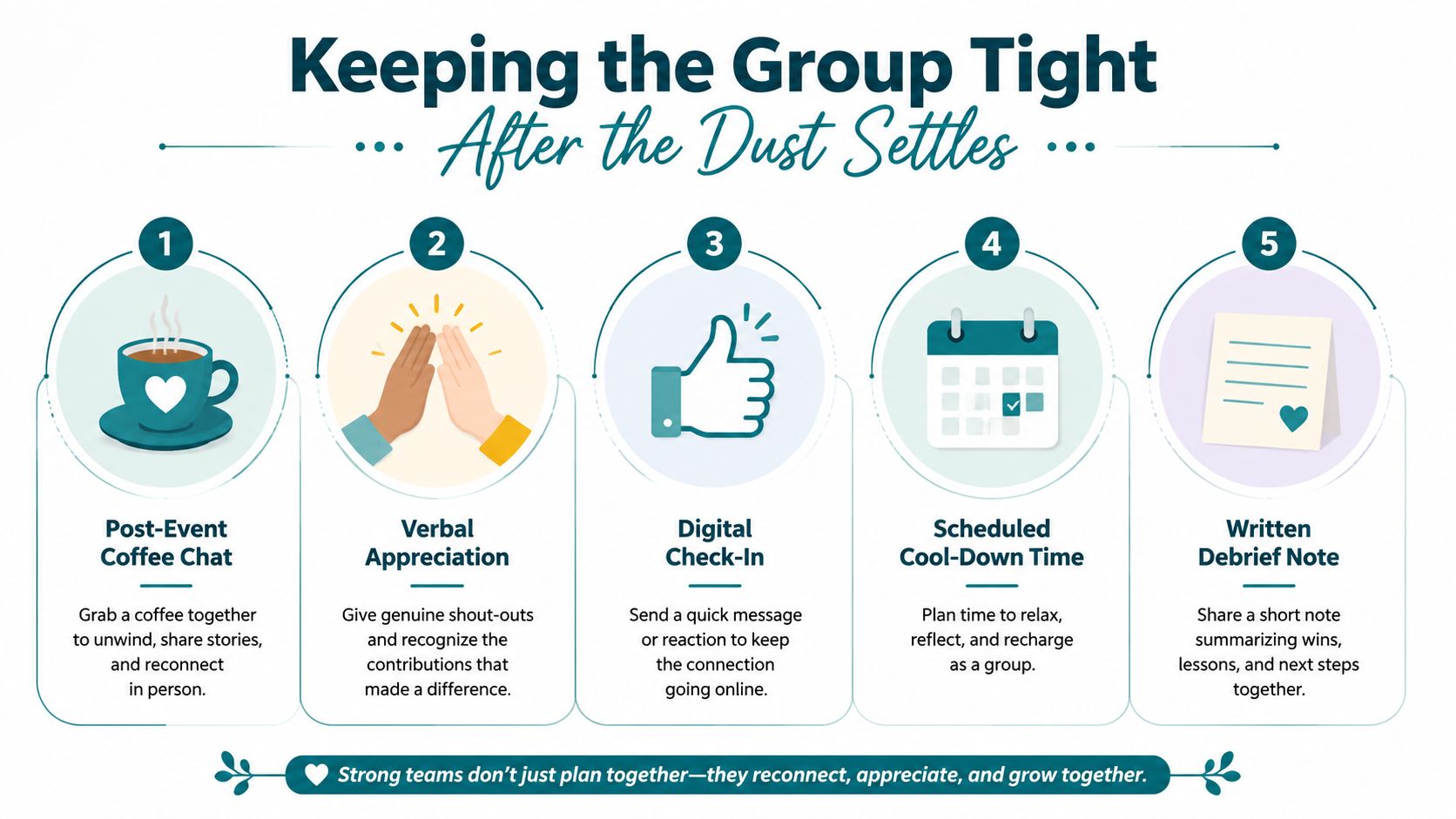
Keeping the Group Tight After the Dust Settles
A resolved argument can leave a strange silence. People finish the route, load the truck, and go home, but they still wonder who will speak first next Saturday.
I've found that small rituals work better than forcing everyone into a feelings circle. After cold lakefront mornings and hot August cleanups, these habits gave people shared memories they could return to:
- Fifteen-minute debrief: Ask what helped, what caused friction, and what one change would make the next event easier.
- Rotating group-chat shoutout: Name one concrete act, such as carrying the awkward metal sign or checking the trailer latch.
- Monthly shared meal: Keep work talk off the table for the first hour. Let people meet as neighbors, not task assignments.
- Buddy text after tension: Two days after a rough event, send, “How are you feeling about Saturday? Anything you want me to know?”
- Annual spring review: Rewrite the rules together. Keep what people used, remove what they ignored, and add what the last season taught you.
A debrief might sound like this:
“Where did we lose time?”
“Did anyone feel unsafe or left out?”
“What should we change before the next route?”
Those questions create a record without turning the group into a committee. A shared meal creates another kind of record. Someone who argued over the trailer may later remember that the same person saved them a seat and passed the hot coffee.
You can find more ideas for organizational culture building when you want to turn these habits into a regular rhythm.
The smallest habit still matters most. Greet every volunteer by name at the start of every event, with no exceptions. People handle correction better when they know they belong in the room.
Your First Move This Week
Stop hoping your crew will escape conflict. Design for the morning when two people disagree beside a full truck, a locked gate, or a pile of broken glass.
You only need two completed actions this week.
Write the one-page response sheet
Use one page, not a binder. Put these lines on it:
- Who leads the conversation: Name the person who can gather the people involved and decide the next step.
- Where you meet: Choose a visible but private place away from the work area and the audience.
- Which scripts you use: Add the lines for the personality clash, the safety refusal, and the person who isn't pulling weight.
- Who can stop work: Name the Safety Person and state that safety decisions don't wait for a vote.
- What happens next: List direct conversation, Lead check-in, neutral mediation, then written warning and removal.
Read the page at the opening huddle. Volunteers can't follow a path they've never heard about.
Schedule the debrief now
Choose one upcoming shift and reserve fifteen minutes at the end. Ask three questions:
- “Where did communication break down?”
- “Did anyone feel unsafe, ignored, or overloaded?”
- “What one change should we make before the next event?”
Write down the answers. Within a week, act on the loudest friction point. If people complain about unclear tools, label the bins. If new volunteers feel lost, assign Buddies. If one person keeps taking over, set the task boundary before the next route.
Conflict readiness separates a volunteer group that survives its second year from one that falls apart by autumn. Pick the date for your debrief before you close this page, then send the invitation to the crew.
Litter Caterpillars gives Chicago volunteers a practical place to build service habits, friendships, and calmer cleanup routines through regular weekend events. Visit Litter Caterpillars to join a crew, meet the organizers, and put these conflict resolution strategies to work on your next cleanup.