

The first time three of us picked up trash together, a Chicago hailstorm trapped us under a tree while every Uber canceled. We were cold, annoyed, and laughing anyway. Three years later, we still meet every weekend, because I learned that staying committed has less to do with feeling motivated and more to do with designing a life where showing up feels possible.
The Hailstorm That Changed Everything
The hail hit hard enough to sting my face. We had planned a simple cleanup, yet the weather turned the morning into a small survival story. Three of us crouched under a tree, watching canceled ride requests pile up on our phones, while trash waited along the street.
I had started Litter Caterpillars because I struggled to clean and organize my own life. A piece of litter felt strangely heavy, even when it weighed almost nothing. Cleaning someone else's mess felt easier. Doing it with friends felt unexpectedly fun. The hail added a little flavor, the kind that makes an ordinary morning memorable.
That morning changed my idea of commitment. I used to think I needed motivation first, followed by action. The order works the other way around. I took action, shared the discomfort with other people, and built a story I wanted to keep living.
My rule: Make the next showing-up decision easier than the quitting decision.
For three years, our group has picked up trash every week through rain, snow, bitter wind, and hot days. We meet on weekend mornings because the time filters out many distractions and attracts people who want to give their time. We use group chats, social meetups, flags, badges, and a theme song to make service feel social and recognizable.
That doesn't mean I always feel ready. Some mornings, I want to stay in bed. Sometimes I look at the forecast and wonder why I'm doing this. Then I remember that bravery doesn't require comfort. It requires a small action that matches the person I want to become.
You can apply the same idea to almost anything. If you want to write, prepare the desk before you need it. If you want to exercise, choose a place and time that remove decisions. If you want to volunteer, find a group with a regular schedule and a culture that respects your limits. You can read more about the service mindset behind our work in Care for Real.
Commitment grows when your surroundings support it. Give yourself a cue, a place, a person, and a reason to return.
Why Habits Take Longer Than You Think
Two weeks into a new routine, the excitement has usually faded. The shoes remain by the door, the notebook stays open, or the volunteer reminder appears on your phone, yet showing up still feels like a decision. Commitment grows through a designed experience that makes returning familiar and manageable.
The popular 21-day habit idea makes early difficulty feel like failure. Research offers a slower, more forgiving timeline. Phillippa Lally and colleagues reported in a 2010 study that a new daily behavior took 66 days on average to reach peak automaticity, while individual participants ranged from 18 to 254 days. The University of Surrey's explanation of the 66-day habit research provides background on those findings.
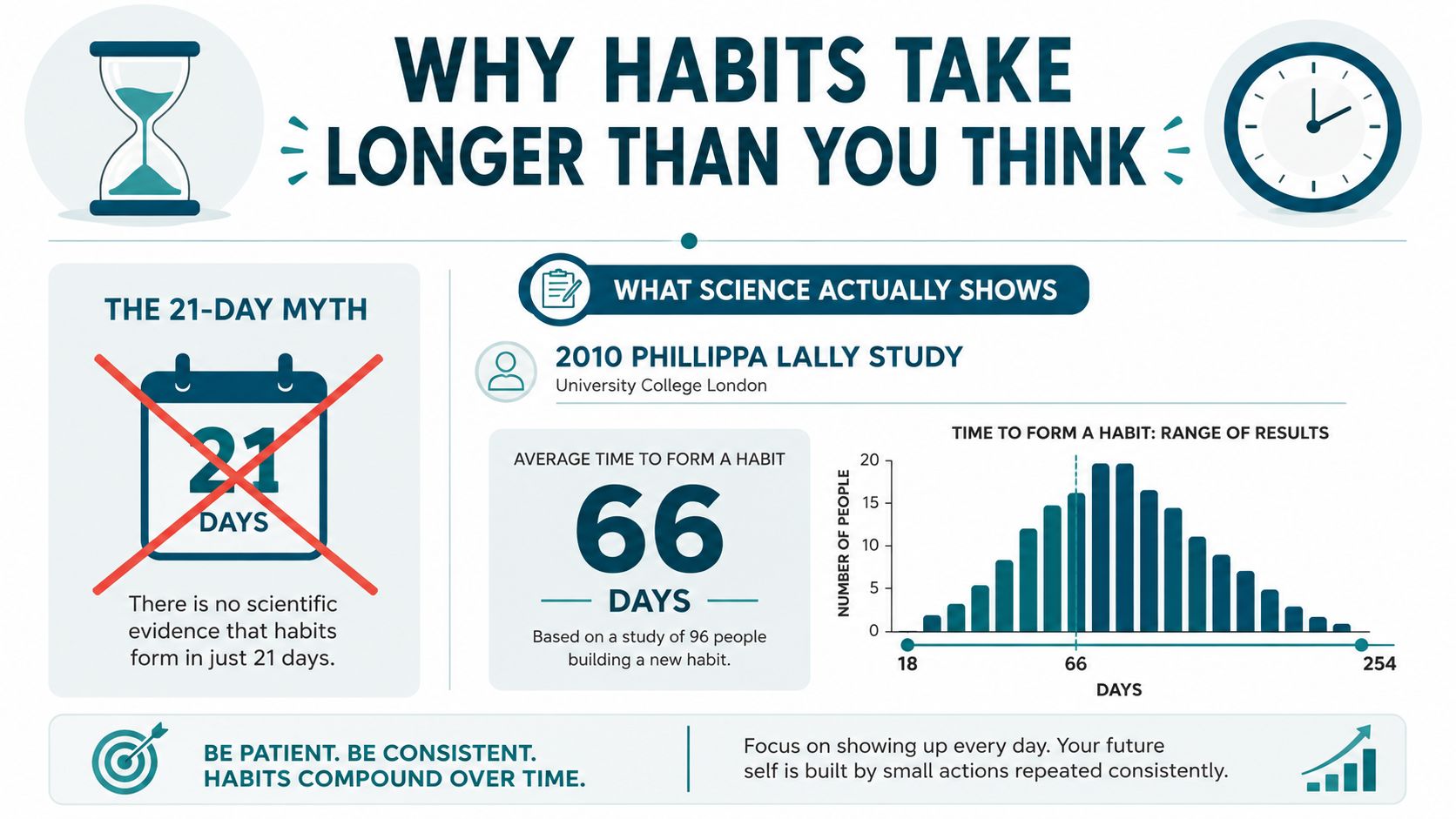
A 2024 systematic review and meta-analysis examined 20 studies with 2,601 participants. It found median habit-formation times between 59 and 66 days, while mean times ranged from 106 to 154 days, with some behaviors taking as long as 335 days. A routine can need months before it feels nearly automatic.
A slower timeline gives you room
Those findings point toward repeated practice, not passive waiting. Two difficult weeks often mark the beginning of the learning period. The routine still requires attention because the cue, action, and reward have not settled into place.
Saturday cleanups benefit from a recognizable setting. A weekend-morning schedule, meeting point, bags, gloves, group chat, and identity badges reduce fresh decisions each time. The same activity returns in the same social context, and the visible result, a cleaner block, gives the effort a clear reward.
Give repetition a place on your calendar
Reserve a stable block for the behavior before the week fills up. Using blocks of time for focus can turn an intention into a calendar appointment rather than a choice controlled by your mood.
For a first cycle, choose a manageable 6-8 week block and measure attendance instead of performance. Repeat the smallest useful version, then let your identity catch up with your actions. A regular cue and setting can support intrinsic motivation, giving you an internal reason to return when enthusiasm is absent.
Building Your If-Then Commitment Protocol
At 7:45 on a rainy Saturday, I have stood by the park entrance wondering whether anyone else would show up. A promise like “I'll volunteer more” offers no answer about the morning's decisions. The problem with vague promises is that they leave when, where, and how open at the moment you most need a plan.
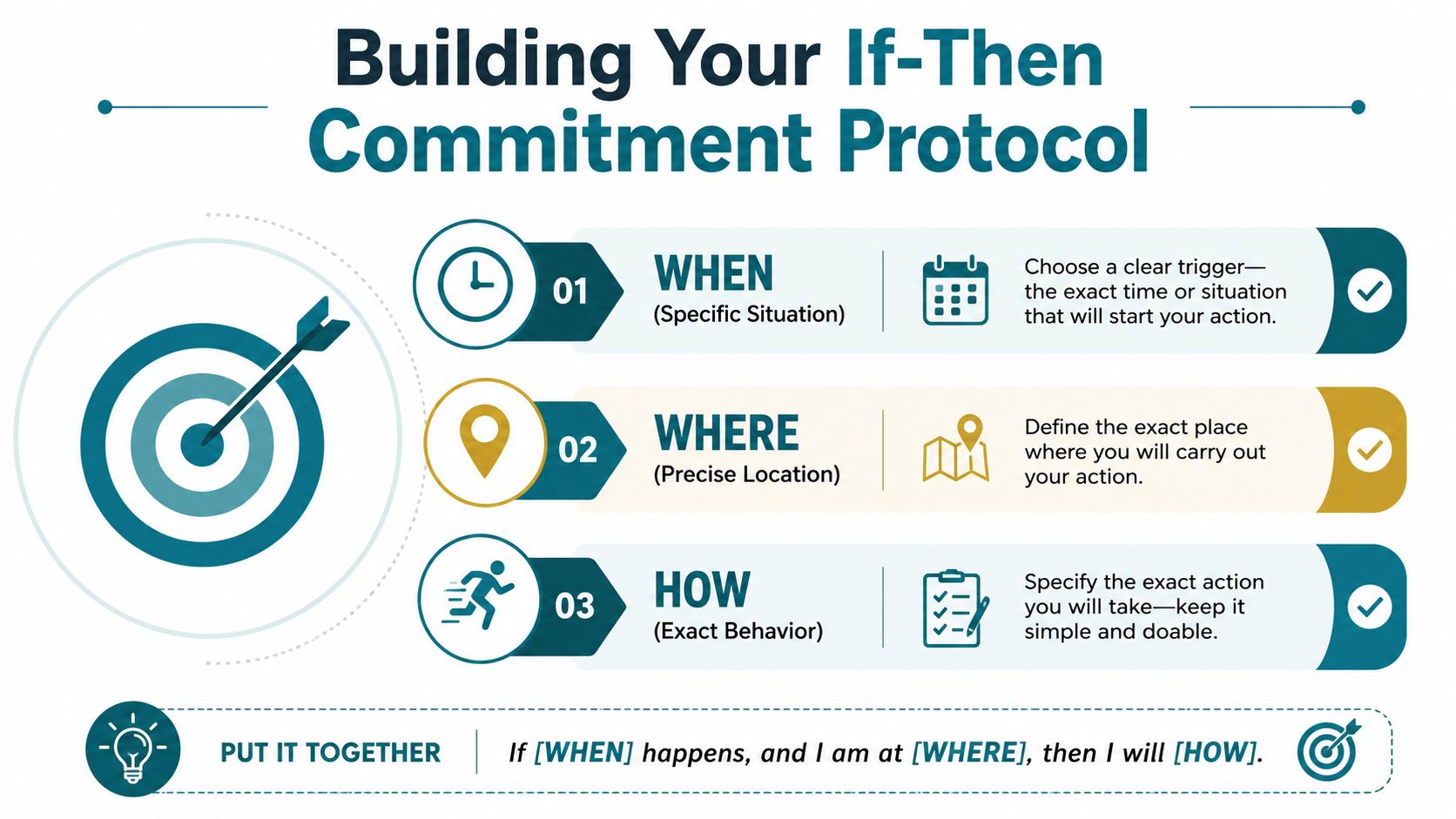
An if-then rule closes those gaps. You name the situation, then pair it with an exact response. Research on 94 independent tests found a medium-to-large effect on goal attainment, d = 0.65, including starting tasks, resisting distractions, and leaving plans that no longer work. The research on implementation intentions explains how an anticipated cue can prompt a prepared action with less internal debate.
Write the three parts
Use a specific cue, place, and action:
- When: Name the situation. “If it's Saturday at 8 a.m.”
- Where: Identify the location. “At the park entrance.”
- How: State the behavior. “I'll put on my cleanup gloves and join the group for the first task.”
My version reads: If it's Saturday at 8 a.m., then I'll meet my group at the park entrance, put on my gloves, and start with one bag of litter.
The same structure works beyond volunteering:
- Writing: If I finish breakfast, then I'll sit at my desk and write one paragraph.
- Fitness: If I leave work, then I'll go directly to the gym and change before checking my phone.
- Study: If I sit on the train, then I'll open my course notes and review one section.
Specificity does the work. “Later” cannot start a routine. A named time and place can point you toward the first action.
Write the rule before the difficult moment arrives.
Put it on the fridge, in your calendar, or in a phone reminder. Then decide what happens when the plan meets resistance. If heavy rain cancels the cleanup, choose in advance whether you will reschedule, complete a smaller indoor task, or return the following week without guilt.
An if-then plan cannot prevent every problem. It removes the argument that usually delays the first step.
Designing Your Commitment System
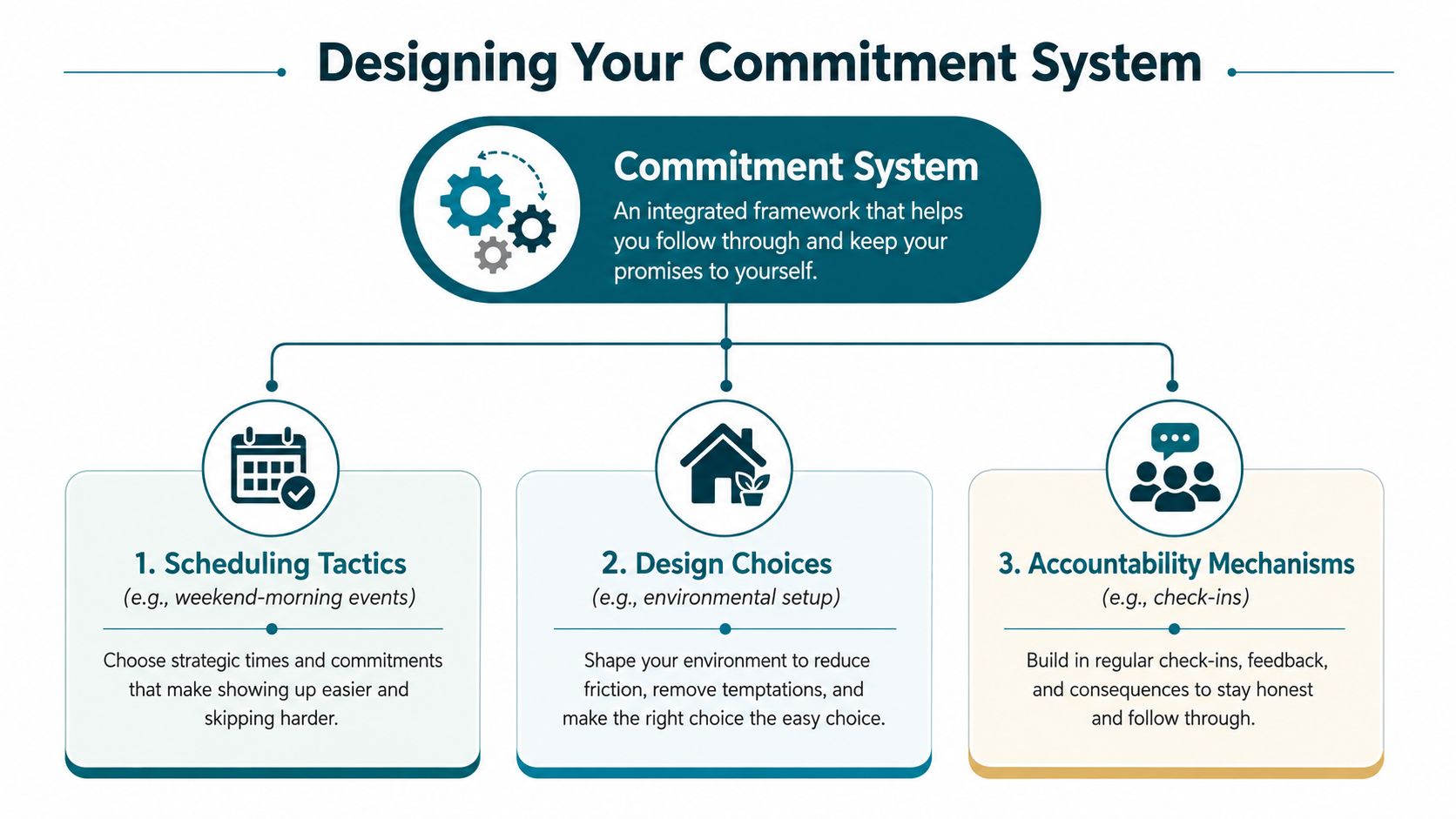
Three years of weekend cleanups taught me a humbling lesson. On rainy mornings, after poor sleep, or during a stressful week, I have wanted to stay home. The group still met because we designed the experience to carry us through those moods. Our system rests on three parts: a dependable schedule, a welcoming environment, and visible signs of belonging.
Start with the calendar
We chose a weekend-morning slot, before errands and family plans crowded the day. New volunteers could see exactly when to find us, without waiting for a special campaign or a burst of enthusiasm. After three years, that recurring appointment still does much of the remembering for us.
Pick a time that fits your actual life. Put it on the calendar, prepare equipment early, and make the first version manageable on a difficult day. A six-to-eight-week block can also make the commitment feel defined. You are agreeing to a clear stretch of sessions, rather than making an indefinite promise.
Add people who notice your absence
Our group chat handles practical details, from questions about meeting points to plans for the next cleanup. It also gives someone permission to ask, “Are you still coming?” A partner can provide the same support for a personal goal. The useful response is curiosity and honesty, not shame.
A short weekly check-in creates room to adjust. We name what worked, identify the source of friction, and change the setup before frustration becomes disappearance.
Give the behavior a visible identity
Flags, badges, and a theme song turned attendance into something people could recognize and share. A badge on a backpack, a marked calendar, or a shared playlist makes the habit part of daily life. It reminds us that we belong to a group with a real practice, even on mornings when motivation is thin.
Our volunteer-first approach protects that experience. Safety comes before output, and enjoyment comes before pressure. People are more willing to return when they feel respected, effective, connected, and able to manage the time involved. NCVO's volunteer-retention research discusses these conditions, including enjoyment, belonging, trust, feeling effective, and manageable time demands, in its findings on volunteer retention.
Build the same structure around your goal. Schedule the action, prepare the setting, invite accountability, and choose one identity marker. Familiarity, social contact, and a clear time limit can make consistency easier to repeat.
What to Do When You Fall Off Track
You will miss a week. You may miss two. That lapse doesn't erase the work you already did, and it doesn't require a dramatic return.
Volunteer retention research gives a more practical explanation for absence. People stop when their circumstances change, their health interferes, or they feel they've already done enough. Those reasons call for pacing and re-entry, not a lecture about willpower.
Build the return before you need it
Create a re-entry rule while things are going well:
- After a missed session: Return at the next regular meeting instead of inventing a perfect restart date.
- During a difficult week: Attend for a shorter period or take a lighter task.
- After illness or injury: Ask what safe participation looks like, and wait when participation isn't safe.
- When interest fades: Talk with a partner about changing the task, location, or social format.
A fixed cue helps you find your way back. Research on habit formation describes repetition in the same context as a central part of building automatic behavior. A regular time and place keep the cue familiar, even when a gap interrupts the routine. A field experiment on recycling found improvement during the first two weeks, and the behavior remained consistent at a two-month follow-up. The recycling field experiment gives you a useful model for early practice followed by continued repetition.
Treat a lapse as information
Ask what blocked you. Did the time conflict with family needs? Did the task feel too hard? Did you lack a ride, equipment, or a person expecting you? The answer points toward a design change.
You can also use a practical guide to overcoming procrastination when delay becomes the pattern. Come back without making an apology tour. The next action can be small, ordinary, and scheduled.
A missed session is a data point. Your return is the practice.
Commitment means binding yourself to future behavior, yet a binding can include humane terms. Leave room for health, changing responsibilities, and honest reassessment. A plan that lets you step back can keep you from walking away permanently.
Your 12-Week Commitment Plan
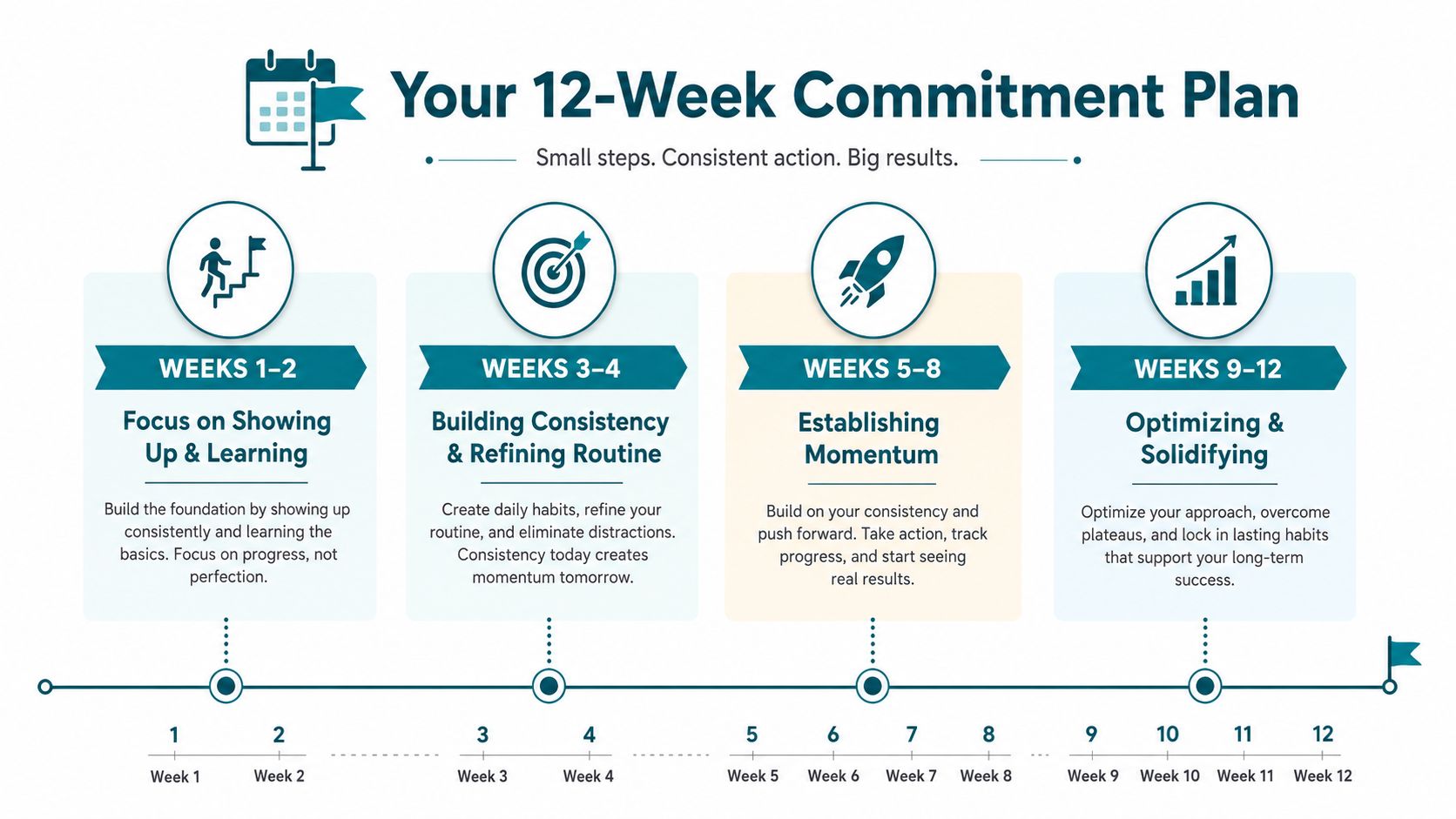
I use a 12-week plan because it gives a new routine enough room to pass through excitement, boredom, friction, and adjustment. Real-world habit-building data found 6 to 8 week commitments, weekly reporting to an external referee, and monetary stakes among the most successful structures examined in that research on habit-building commitments. You don't need money to use the same structure. You can use a friend, group chat, or volunteer coordinator as your referee.
Weeks 1 and 2, learn the route
Show up and learn the routine. Don't measure yourself by bags collected, pages written, miles run, or any other performance result. Your milestone is simple: you know where to go, what to bring, and how to begin.
Ask yourself, “What made starting easier, and what created friction?” Write the answer after each attempt. Change one practical detail, such as packing supplies the night before or placing your shoes beside the door.
Weeks 3 and 4, add a witness
Choose one accountability person. Send a short weekly message with three details: whether you showed up, what got in the way, and what you'll do next.
Refine your if-then rule from the evidence you gathered. If your original cue fails, replace it with a cue you encounter reliably. Your milestone is a plan that describes the actual version of your week, not the imaginary version.
Weeks 5 through 8, protect the middle
Novelty fades. Keep the task small enough to survive a difficult morning, and let your group carry some of the social energy. Celebrate concrete wins, like arriving on time, completing one manageable task, or returning after a missed week.
Ask, “What can I reduce without abandoning the goal?” Shorten the session, simplify the equipment, or choose a lighter role. Keep the appointment alive while you adjust the workload.
Weeks 9 through 12, decide with evidence
Look at your notes. Do you feel connected to the activity? Does the schedule fit? Does the group or setting help you feel effective? Are the costs to your health, time, or relationships reasonable?
Your final milestone isn't automatic perfection. It's an honest decision to continue, change the format, or stop and choose a better goal. If you continue, renew the next block before the current one ends. If you pivot, carry the lessons into the next commitment rather than treating the experiment as wasted effort.
Print the plan. Put the first appointment on your calendar. Then tell one person exactly when and where you'll begin.
Litter Caterpillars meets on weekend mornings for volunteer trash pickups, with group chats and social meetups that help people find the routine and meet neighbors. Visit Litter Caterpillars to choose a cleanup, write your if-then rule, and take the first small step toward a commitment you can repeat.