
Let's be real. It's easy to feel like your living space, and your life, is a mess. I know I did. My fridge was a museum of old jam and failed health kicks. The old blueberry jam in the back of my fridge I got 4 years ago from that one trip to Michigan. The bag of nuts from that time I tried to eat healthy but failed. Each piece of trash felt like it weighed 500 pounds, a tiny monument to something I couldn't move past. My life was stuck.
Then, I ended a long and chaotic relationship and decided to tackle the hardest things I could think of: consistency, cleanliness, and bravery. I started picking up trash. Not my trash, but everyone's. And a funny thing happened. It was easier than cleaning my own mess. It was fun.
Even when three of us got caught in a Chicago spring hailstorm, huddled under a tree as Ubers canceled on us, we weren't miserable. We were in a story. We were advancing the plot. That's how the Litter Caterpillars were born. We believe service transforms you. It's not about being perfect; it's about trying, together.
This list isn't just a directory; it's an invitation to find your own "hailstorm moment" and discover that making an impact is simpler and more rewarding than you've ever been told. Here are the best environmental volunteer opportunities Chicago has to offer, from recurring cleanups to habitat restoration, all with direct links and details to get you started. This guide solves the problem of not knowing where to begin by putting the city's most effective and inspiring programs right at your fingertips. Let’s find your crew.
1. Litter Caterpillars
WARNING: We're not your Grandpa's trash pickup group!
Are you tough enough? We're the toughest trash pickup group in Chicago—we pick up trash rain or shine, in the coldest days of winter and the hottest days of summer! We're the first and only trash pickup group to clean up all 50 wards of Chicago, including the ones you've been told to stay away from! And we're the first and only trash pickup group that has won an empty lot at auction to build a park. Help us build Caterpillar Park in Englewood!
The Litter Caterpillars were born from a personal breaking point. My own living space was a mess, and so was my life. After ending a chaotic relationship, I resolved to engineer my social circle to filter out selfish people and to tackle the things that have always been difficult for me: cleanliness, consistency, and bravery. Our logo represents our very first cleanup. There were only three of us, and we got caught in a springtime hailstorm. Huddled under a tree, shivering, I realized something: cleaning other people's messes is WAY easier than cleaning our own. And suffering in the hail actually makes things interesting. It adds "flavor." It advances the plot.
Why It's a Top Choice for Environmental Volunteering in Chicago
For three years, every single week, we’ve picked up trash. Our central vision is the redeeming and transforming power of service, outdoors, sunlight, and friendship. That’s why we are Caterpillars. We are not perfect, but we are all trying to transform! We believe in two core values: Bravery and Kindness. Bravery means embracing fear and failure as tools for growth. Kindness means building unity and putting our volunteers first—their energy, safety, and happiness are what matter most.
This group is a standout choice for anyone looking for consistent, high-impact environmental volunteer opportunities in Chicago where you can forge genuine connections and see the difference you're making.
"Fear is good. Failure is good. Suffering is good. It’s what leads to growth. When Tom Sawyer was punished by his aunt and was forced to paint a fence, he could have wallowed and complained. Instead he convinced his friends that painting the fence was actually extremely fun."
How to Get Involved
Joining is designed to be effortless. We intentionally avoid bureaucracy to focus on direct action and community. We meet on weekend mornings to filter for givers. We'll never pump our volunteers for money. The only requirement is your willingness to show up.
-
Join our Group Chats: Get real-time updates on Instagram (https://www.instagram.com/j/Abb64oCtsQ4sNVLV/) and Geneva (https://links.geneva.com/invite/56afdce3-7115-41ac-97b1-fbcd59db22e6).
-
Find an Event: Check our schedule on Meetup.
-
Just Show Up: We provide the supplies (grabbers, bags, gloves). You just need to bring your energy.
This structure makes it incredibly accessible for students, young professionals, and anyone new to Chicago looking to make friends while making a difference.
The Details
-
Cost: Free. All events are volunteer-organized and supplies are provided.
-
Schedule: Every weekend morning, year-round, in various locations across Chicago's 50 wards.
-
Vibe: Brave, kind, unified, and tough. A welcoming community built on shared effort and mutual respect.
-
Website: littercaterpillars.com
2. Idealist (includes VolunteerMatch)
Think of Idealist as the Grand Central Station for Chicago’s entire volunteer world. It’s not just one organization; it's a massive, searchable hub where hundreds of nonprofits post their needs. Following its merger with VolunteerMatch, it has become the single largest, most comprehensive platform for finding ways to give back, making it an essential first stop for anyone looking to find environmental volunteer opportunities in Chicago.
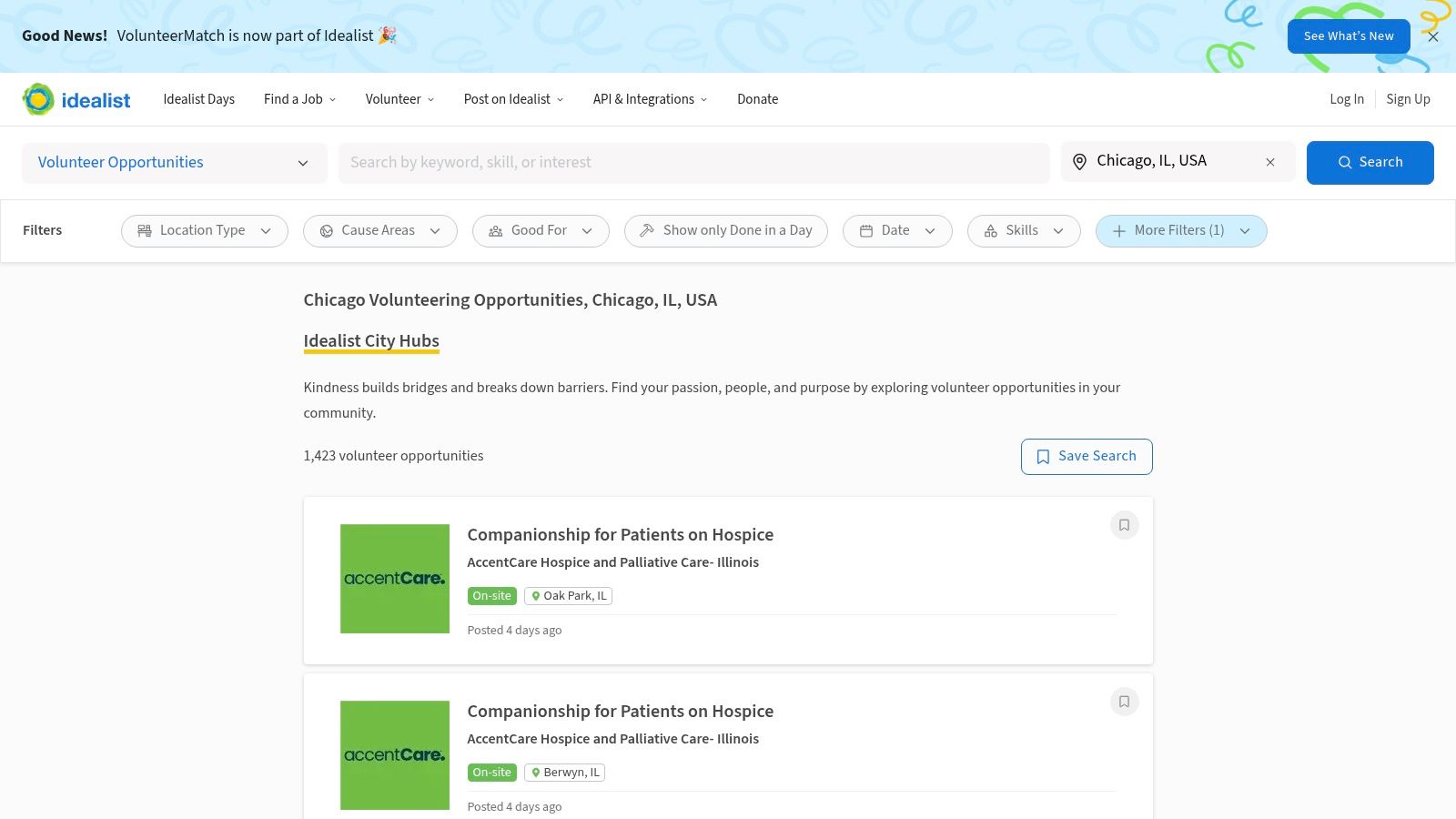
This platform isn't about one specific mission. It’s about choice and access. Whether you want to plant trees with Openlands, restore a prairie with the Chicago Park District, or help an advocacy group with data entry from your couch, you’ll find it here. The sheer volume can feel overwhelming, but its power lies in its detailed filters. You can instantly narrow your search to find the perfect fit for your schedule, location, and passion.
How to Find Your Perfect Environmental Role
Navigating the site is straightforward. You create a free account, which allows you to save opportunities and receive updates when new roles that match your interests are posted.
Here’s a simple strategy to get started:
-
Go to the Chicago volunteer page.
-
Use the search bar and filters immediately. Type in keywords like "environment," "sustainability," "gardening," or "conservation."
-
Filter by "Environment & Sustainability" under the "Cause Area" to see only relevant listings.
-
Adjust the location radius. You can search for opportunities within a specific distance of your home or work.
-
Sort by "Most Recent" to see the newest postings, as popular events can fill up quickly.
Pro-Tip: Don't just look for "cleanups." Broaden your search with terms like "stewardship," "habitat," or "advocacy." You might discover unique roles like monitoring local wildlife populations or helping organize a sustainability fair.
Why Idealist Stands Out
The biggest advantage is efficiency. Instead of visiting dozens of individual nonprofit websites, you get a bird's-eye view of what’s happening across the city. The merger with VolunteerMatch has only amplified this, creating an unparalleled marketplace of opportunities. This makes it an invaluable tool for exploring the diverse landscape of Chicago-based volunteering.
Pros:
-
Massive Selection: The single largest database of volunteer roles, covering everything from hands-on restoration to administrative support.
-
Powerful Filters: Easily narrow down options by cause, location, date, and whether the role is on-site or virtual.
-
User-Friendly: Simple to sign up, search, and apply directly through the platform or linked organizational sites.
Cons:
-
Variable Quality: As an aggregator, the detail and quality of each listing depend on the organization that posted it.
-
Time-Sensitive: Many listings are for one-time events, so you need to check back frequently for new opportunities.
Website: https://www.idealist.org/en/volunteer-in-chicago
3. Chicago Park District — Natural Areas Community Stewardship Days
If you want to feel the earth in your hands and see the direct results of your work on Chicago’s beautiful natural landscapes, this is where you start. The Chicago Park District’s Community Stewardship program is your ticket to becoming a hands-on guardian of the city’s precious prairies, dunes, wetlands, and woodlands. This isn't just about picking up trash; it's about deep ecological healing, one workday at a time.
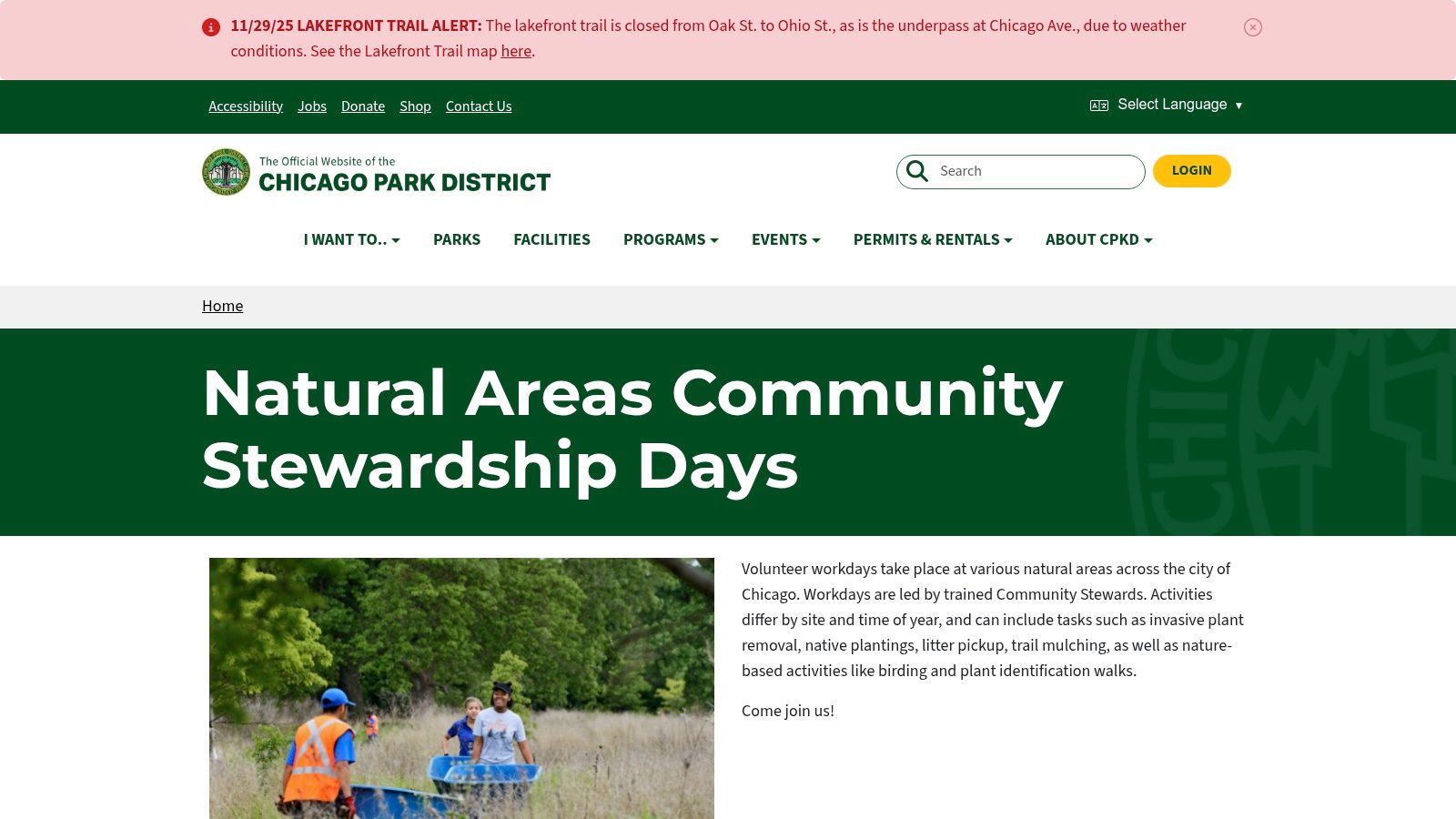
The program is incredibly well-run and offers a tangible way to connect with the nature right in your neighborhood. Volunteers get involved in essential restoration tasks like removing invasive plant species, planting native wildflowers and grasses, collecting seeds, and mulching trails. It’s a powerful way to learn about local ecosystems while making a visible, lasting impact. I've personally volunteered with this program and can vouch for how rewarding and well-organized it is.
How to Find Your Perfect Environmental Role
Getting started is simple, as the Park District provides a clear calendar and all the necessary support for newcomers. They want you to succeed and feel welcome.
Here’s a simple strategy to get started:
-
Visit the Stewardship Days calendar page. This is your main hub for all upcoming events.
-
Browse by location or date. You can find a workday at a park near you, whether it’s a lakefront dune or a riverbank woodland.
-
Find an event and RSVP. Each listing includes the site steward’s contact information. A quick email is usually all that’s needed to confirm your spot.
-
Complete the online waiver before you go to save time.
-
Show up ready to work! Tools and guidance are always provided, so no prior experience is necessary.
Pro-Tip: Don't be shy about asking questions! The site stewards are passionate experts who love sharing their knowledge about local ecology. This is one of the best environmental volunteer opportunities in Chicago to learn about native plants and restoration techniques.
Why The Park District Program Stands Out
The biggest advantage here is authenticity and direct impact. You are working on land owned and managed for the public good, contributing to a legacy of conservation. You can return to the same spot months or years later and see the native garden you planted now thriving. The program also offers a clear path for growth, from a one-day helper to a certified Lead Steward, for those who want a deeper commitment. For a deeper dive into their offerings, learn more about the Chicago Park District — Natural Areas Community Stewardship Days.
Pros:
-
Direct Ecological Impact: Your work directly restores and protects vital local habitats.
-
Accessible to All: Frequent events across the city make it easy to find an opportunity near you. It’s perfect for beginners, families, and groups.
-
All Tools Provided: No need to bring anything but yourself, water, and weather-appropriate clothes.
Cons:
-
Weather-Dependent: Events can be canceled due to extreme weather, so always check before you go.
-
Amenities Vary: Some natural areas are more rustic than others and may have limited access to restrooms or water fountains.
Website: https://www.chicagoparkdistrict.com/get-involved/volunteer/natural-areas-community-stewardship-days
4. Friends of the Chicago River
If you’ve ever admired the Chicago River and felt a pull to protect it, Friends of the Chicago River is your direct connection to its restoration. This organization is laser-focused on the health and vitality of the Chicago-Calumet River system. They don’t just advocate for the river; they get their hands dirty improving it, offering some of the most impactful and unique environmental volunteer opportunities Chicago has to offer.
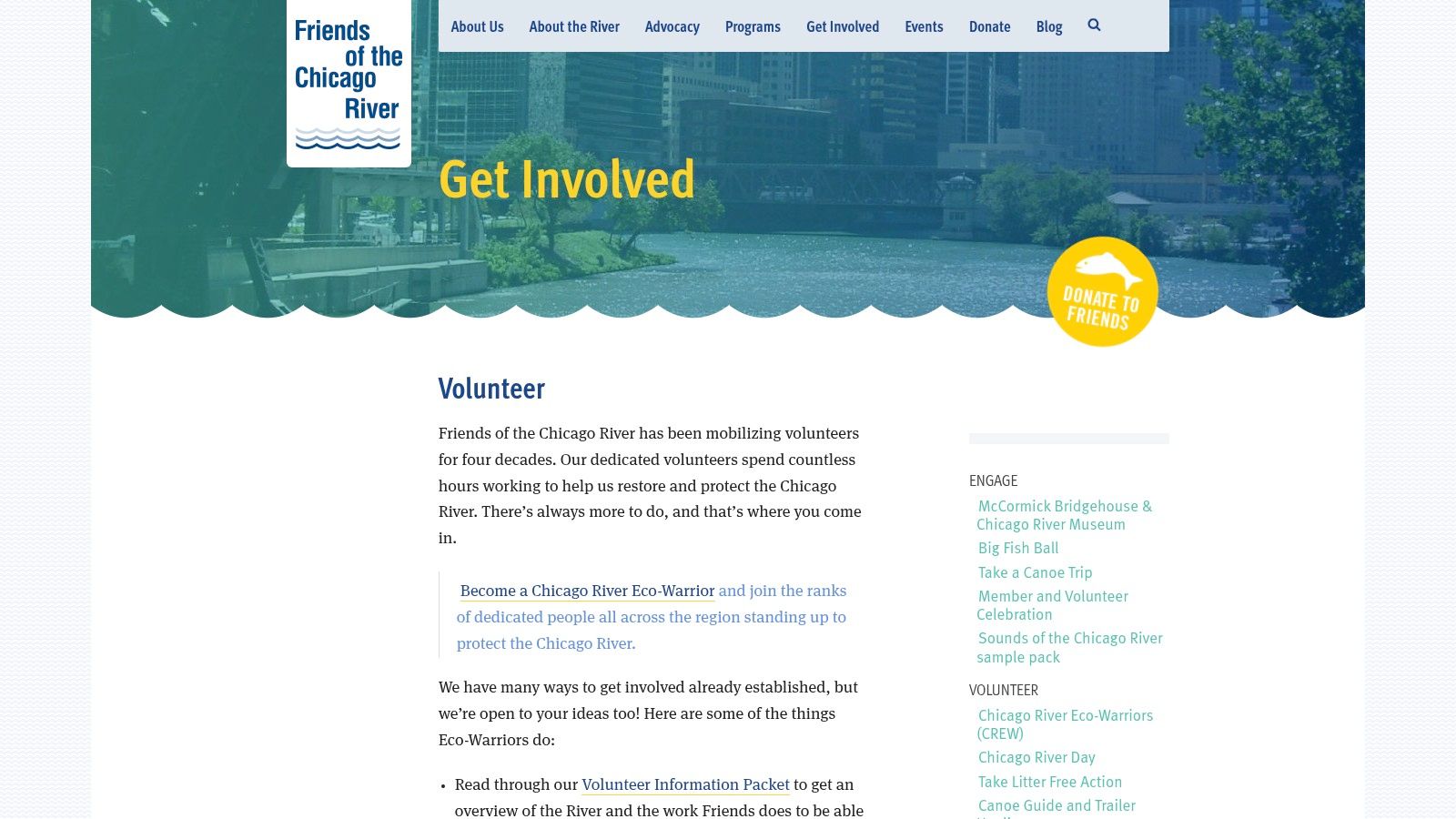
This is where passion for our city's iconic waterway transforms into action. Opportunities range from clearing invasive species along the riverbanks to planting native vegetation from a canoe. Their flagship event, Chicago River Day, is a massive city-wide cleanup that personally inspired the creation of the Litter Caterpillars. We owe our first trash grabber claws to Brian Pesta and the incredible team at Friends of the Chicago River.
How to Find Your Perfect Environmental Role
The website’s event calendar is the central hub for finding and signing up for activities. It’s organized, up-to-date, and makes getting involved straightforward.
Here’s a simple strategy to get started:
-
Visit the volunteer page. This is your starting point for all opportunities.
-
Sign up to be a “Chicago River Eco-Warrior.” This gets you on their monthly CREW email list, which delivers tailored opportunities directly to your inbox.
-
Browse the Events Calendar. This is where you’ll find one-time events like Chicago River Day and recurring stewardship workdays.
-
Look for Specialized Training. Keep an eye out for unique roles like Volunteer Canoe Guides, which require training but offer an incredible way to experience the river.
-
Follow the signup instructions for your chosen event, which are clearly listed for each posting.
Pro-Tip: Don’t be intimidated by specialized roles like becoming a canoe guide. Friends of the Chicago River provides all the necessary training. It’s a fantastic way to develop new skills, deepen your knowledge, and become a leader in the river’s restoration movement.
Why Friends of the Chicago River Stands Out
The biggest advantage is the direct, tangible impact on a single, vital ecosystem. While other platforms offer broad choices, this organization provides a deep dive into watershed health. You aren't just cleaning a park; you're restoring a living river system that is central to Chicago's identity. This focused mission creates a strong sense of purpose and community among its volunteers.
Pros:
-
Mission-Focused: Every activity directly contributes to the health of the Chicago River, with clear ecological goals.
-
Variety of Roles: Offers a mix of hands-on fieldwork, educational outreach, and major events to fit different skills and interests.
-
Skill-Building Opportunities: Provides specialized training for unique roles like canoe guides and habitat restoration leaders.
Cons:
-
Seasonal Limitations: Many on-the-water and planting activities are concentrated in the spring, summer, and fall.
-
Potential for Weather Cancellations: River-edge work is dependent on safe weather and water level conditions.
Website: https://www.chicagoriver.org/get_involved/volunteer/
5. Forest Preserves of Cook County (FPDCC)
If you're ready to get your hands dirty and truly connect with the wild heart of Chicagoland, the Forest Preserves of Cook County (FPDCC) is your destination. Managing a breathtaking 69,000 acres of prairies, woodlands, and wetlands, this is where you can step out of the urban grind and into the essential work of habitat restoration. The FPDCC offers some of the most impactful and structured environmental volunteer opportunities in Chicago and its surrounding suburbs.
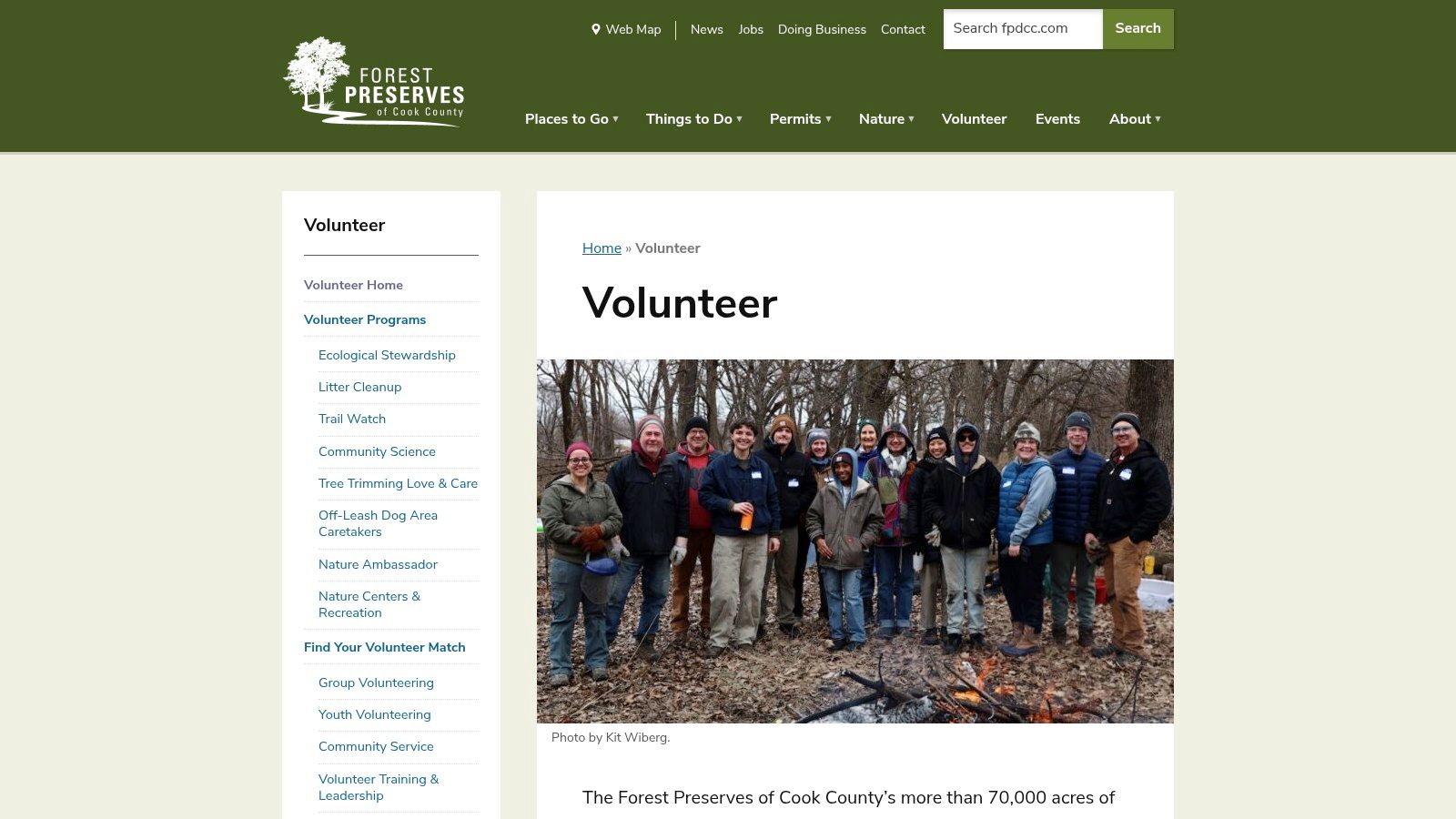
Volunteering here is about more than just picking up litter; it’s about becoming a steward of the land. You could be clearing invasive buckthorn to let native oaks breathe, collecting precious prairie seeds for future growth, or maintaining trails that allow thousands to enjoy these natural treasures. The FPDCC provides the tools, training, and guidance, making it accessible for everyone from seasoned ecologists to first-time volunteers.
How to Find Your Perfect Environmental Role
The FPDCC's volunteer portal is organized to help you find an opportunity that matches your commitment level and interests. They offer multiple pathways to get involved, from one-day events to ongoing leadership roles.
Here’s a simple strategy to get started:
-
Explore the Volunteer Portal. Visit the main volunteer page to see the different programs available.
-
Check the Public Workday Calendar. This is the fastest way to join a scheduled event. You can find stewardship days focused on specific tasks like brush removal or seed harvesting.
-
Consider a Program. Look into structured opportunities like becoming a Trail Watch monitor, joining the Master Naturalist program, or leading an "Adopt-A-Site" cleanup group.
-
Sign Up for an Event. Most public workdays require a simple online registration and waiver, which helps the organizers plan for tools and supervision.
Pro-Tip: Don’t be intimidated by terms like “brush pile burns” or “invasive removal.” These activities are supervised by trained staff and are incredibly satisfying. It’s a powerful feeling to physically remove a threat to the ecosystem and see the immediate positive impact.
Why FPDCC Stands Out
The sheer scale and diversity of the Forest Preserves make it a unique and vital resource. Volunteering here connects you to a county-wide conservation effort, providing a deep sense of purpose and a direct link to the region's ecological health. The organization's commitment to training and safety also makes it an excellent environment for learning new skills and for group volunteering.
Pros:
-
High Availability: A packed calendar of restoration days and events runs year-round across a huge diversity of habitats.
-
Structured Support: The county provides excellent coordination, safety protocols, tools, and training, making it ideal for groups and new volunteers.
-
Meaningful Impact: The work directly contributes to the long-term health of local ecosystems, from prairies to wetlands.
Cons:
-
Travel Required: Many of the preserves are located in the suburbs, so access may require a car or significant public transit time.
-
Registration Needed: Some roles and all public workdays require advance registration and waivers, and leadership positions involve dedicated training.
Website: https://fpdcc.com/volunteer/
6. Openlands — TreeKeepers
If you’ve ever walked through a Chicago neighborhood and admired its leafy canopy, you have organizations like Openlands to thank. This isn’t just about scattering seeds; it's about building a living, breathing urban forest. The TreeKeepers program is their flagship initiative that transforms passionate residents into certified, skilled stewards of Chicago’s most vital green infrastructure: our trees.
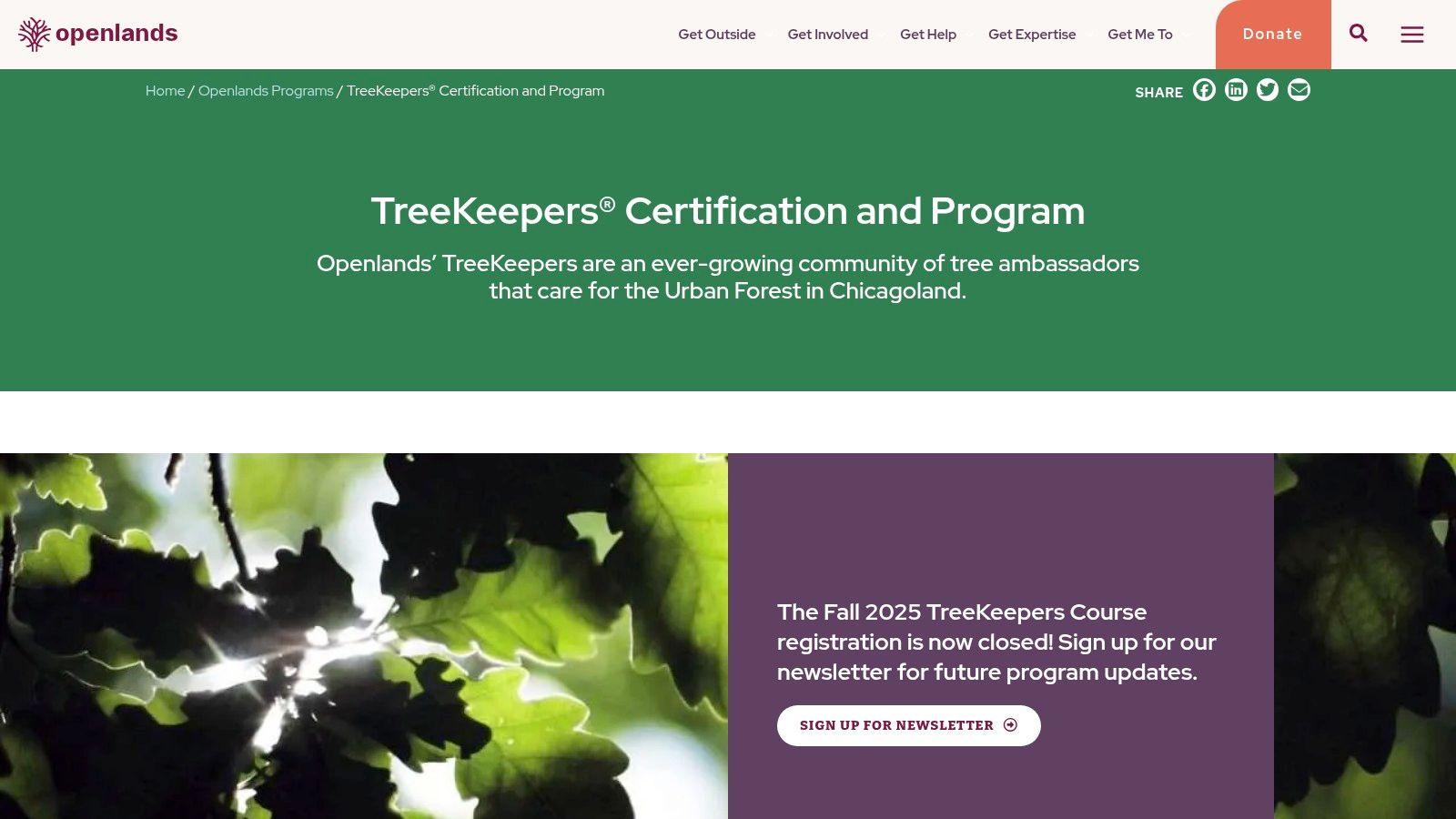
This program offers a deeper level of engagement than a typical one-day event. It’s an immersive educational course that teaches you everything from tree identification and biology to proper planting, pruning, and care. I have personally volunteered with Openlands' tree planting opportunities and can attest to the amazing work they do. Once certified, you join a dedicated network of alumni who lead and participate in tree-planting and care events across the region, making a tangible, long-lasting impact on our city’s health and beauty.
How to Find Your Perfect Environmental Role
Becoming a TreeKeeper involves a structured certification course, but once you're in, a world of specialized volunteer events opens up. The training itself is one of the most rewarding environmental volunteer opportunities in Chicago.
Here’s a simple strategy to get started:
-
Visit the TreeKeepers Program Page. Start here to learn about the course curriculum, schedules, and registration details.
-
Enroll in the Certification Course. The English course typically costs around $150 (scholarships are often available), and a Spanish-language version is offered for free when available.
-
Complete Your Training. The course involves both classroom learning and hands-on fieldwork, taught by forestry experts.
-
Join the Alumni Network. After certification, you’ll gain access to the volunteer events calendar.
-
Sign Up for Workdays. Browse opportunities for planting, pruning, and tree-care events and sign up for those that fit your schedule.
Pro-Tip: Even if you can't commit to the full course right away, check the main Openlands volunteer page. They sometimes have general planting days that are open to the public and don't require certification, giving you a taste of the great work they do.
Why Openlands Stands Out
Openlands provides an unparalleled depth of knowledge. You don't just plant a tree; you learn why you're planting it there, how it will thrive, and what it needs to live for generations. This focus on education and skill-building empowers volunteers to become true community leaders and advocates for the urban canopy. The program’s impact is visible in thousands of healthy trees that cool our streets, clean our air, and beautify our neighborhoods. You can learn more about other impactful environmental volunteering opportunities that build a greener Chicago.
Pros:
-
High-Quality Training: Gain expert-level skills in urban forestry, a valuable and empowering experience.
-
Significant Impact: Well-organized events directly contribute to increasing the city's tree canopy and improving neighborhood health.
-
Strong Community: The alumni network provides a sense of camaraderie and ongoing opportunities for leadership.
Cons:
-
Time and Cost Commitment: The certification course requires a fee and a significant time investment.
-
Niche Focus: Opportunities are almost exclusively centered on tree planting and care, offering less variety than aggregator sites.
Website: https://openlands.org/programs/treekeepers-certification-and-program/
7. More Awesome Chicago Environmental Groups
The spirit of service in Chicago is huge! Here are some other incredible organizations that I've either personally volunteered with or highly recommend. They all offer fantastic ways to get involved and make a difference.
-
Wild Mile Chicago: This is my favorite place in Chicago. Help build and maintain the amazing floating gardens on the Chicago River. A huge shoutout to Nick Wesley and the whole team there. You can even kayak for free!
-
Cleanup Club Chicago & Garbage Gals: Two more fantastic, grassroots cleanup groups making a visible impact on our city's streets. I haven't volunteered with them yet, but they are highly recommended.
-
Urban Gardening: Get your hands in the soil with groups like Cedillos in Englewood or Just Roots Chicago (https://justrootschicago.org/get-involved/).
-
Westlawn Conservation Club: A great local group focused on conservation efforts on the Southwest Side.
-
Alliance for the Great Lakes: Join their Adopt-a-Beach™ program to lead or join cleanups along our beautiful lakefront (https://adopt.greatlakes.org/s/find-a-cleanup).
-
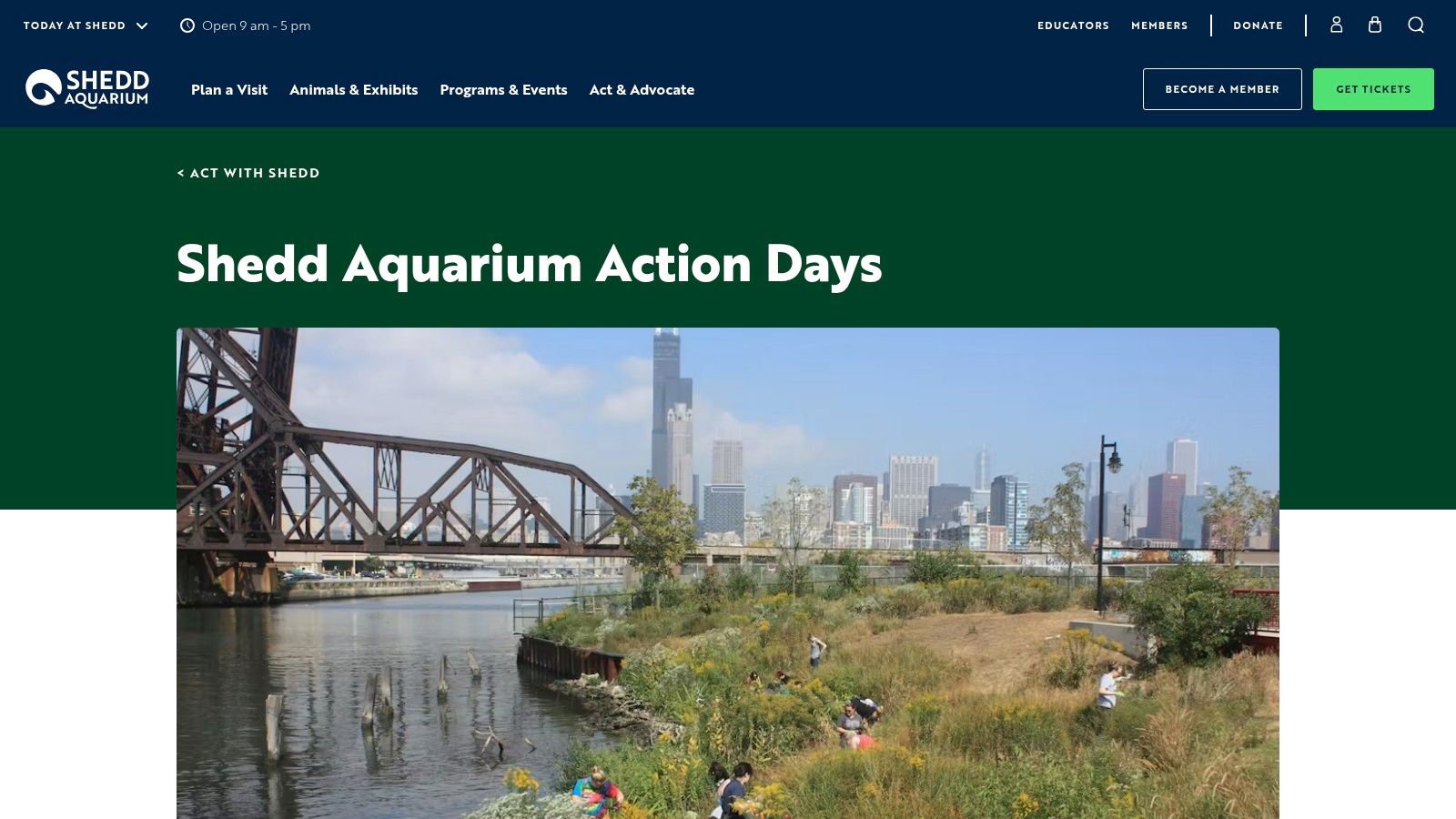
Shedd Aquarium Action Days: Join Shedd Aquarium staff for science-led restoration and cleanup events along the lakefront and river.
Stop Thinking, Start Doing: Your Next Chapter Awaits
You’ve reached the end of this guide, but you’re standing at the beginning of something much more exciting: your own story of impact. We’ve journeyed through a landscape rich with environmental volunteer opportunities in Chicago, from the quiet dedication of the Chicago Park District’s stewardship days to the ambitious habitat restoration projects of the Forest Preserves of Cook County. Each path offers a different kind of adventure.
Maybe you felt a pull towards the methodical, rewarding work of planting a forest of tomorrow with Openlands, or the innovative spirit of building floating gardens with the team at Wild Mile. Perhaps the idea of becoming a guardian of our city's vital waterway with the Friends of the Chicago River, the very group that inspired our own beginnings, sparked something in you.
Each opportunity is more than just a task; it's a doorway. It's a chance to step outside your routine, to meet people who share your values, and to see your city not just as a place you live, but as a place you help shape.
Finding Your "Tom Sawyer" Moment
Remember the story of Tom Sawyer? He was given a punishment, a chore to paint a fence. He could have complained. He could have seen it as a burden. Instead, he reframed it as the most exciting, exclusive activity in town. Soon, his friends were literally paying him with an apple for the privilege of helping.
That’s the secret we’ve discovered. The hard work, the challenges, even the discomfort, they aren't obstacles. They are the “flavor” of the experience. They are what makes the story interesting. When we started Litter Caterpillars, we got caught in a freak hailstorm on our very first cleanup. Huddled under a tree, shivering, we realized that suffering together wasn't suffering at all, it was an adventure. It advanced the plot.
Every organization on this list offers you a chance to find your own "Tom Sawyer" moment. It’s the moment you stop seeing service as a chore and start seeing it as a powerful, transformative, and genuinely fun part of your life.
Which Path is Yours? Your Action Plan.
Don't let analysis paralysis stop you. The best way to choose is to simply choose. Here’s how to take that first brave step:
-
If you crave consistency and community: Find a recurring event. The Park District stewardship days, a regular meetup with Garbage Gals, or our weekly Litter Caterpillars cleanups offer a chance to build real friendships while making a visible difference.
-
If you want to learn a specific skill: Look into the Openlands TreeKeepers program to become a certified tree expert or join a Shedd Aquarium Action Day to learn about coastal habitat restoration.
-
If you have just one day to give: Mark your calendar for a big annual event like Chicago River Day. It's an incredible introduction to the city's environmental community and a powerful way to make an immediate impact.
-
If you feel a bit lost and overwhelmed: Start where I did. My life was a mess, and cleaning up someone else’s mess was strangely easier than facing my own. It gave me the strength to tackle the bigger things. Just show up to one event. That’s it.
The most important takeaway is this: you are more powerful than you think. Your hands can plant a tree that will provide shade for generations. Your time can help restore a riverbank, making it a home for wildlife once more. Your presence can turn a neglected lot into a vibrant community park, just as we are doing with Caterpillar Park in Englewood.
You don't need to be perfect. You just need to be willing. We are the Caterpillars, after all. We aren’t butterflies yet, but we are all committed to the transformation. It’s time to stop thinking and start doing. Your next chapter is waiting for you to write it.
Ready to find your strength, your community, and your next adventure? Join the Litter Caterpillars as we transform ourselves and our city, one piece of trash at a time. Visit the official Litter Caterpillars website to find our next event and become part of the story. 🌿🐛