
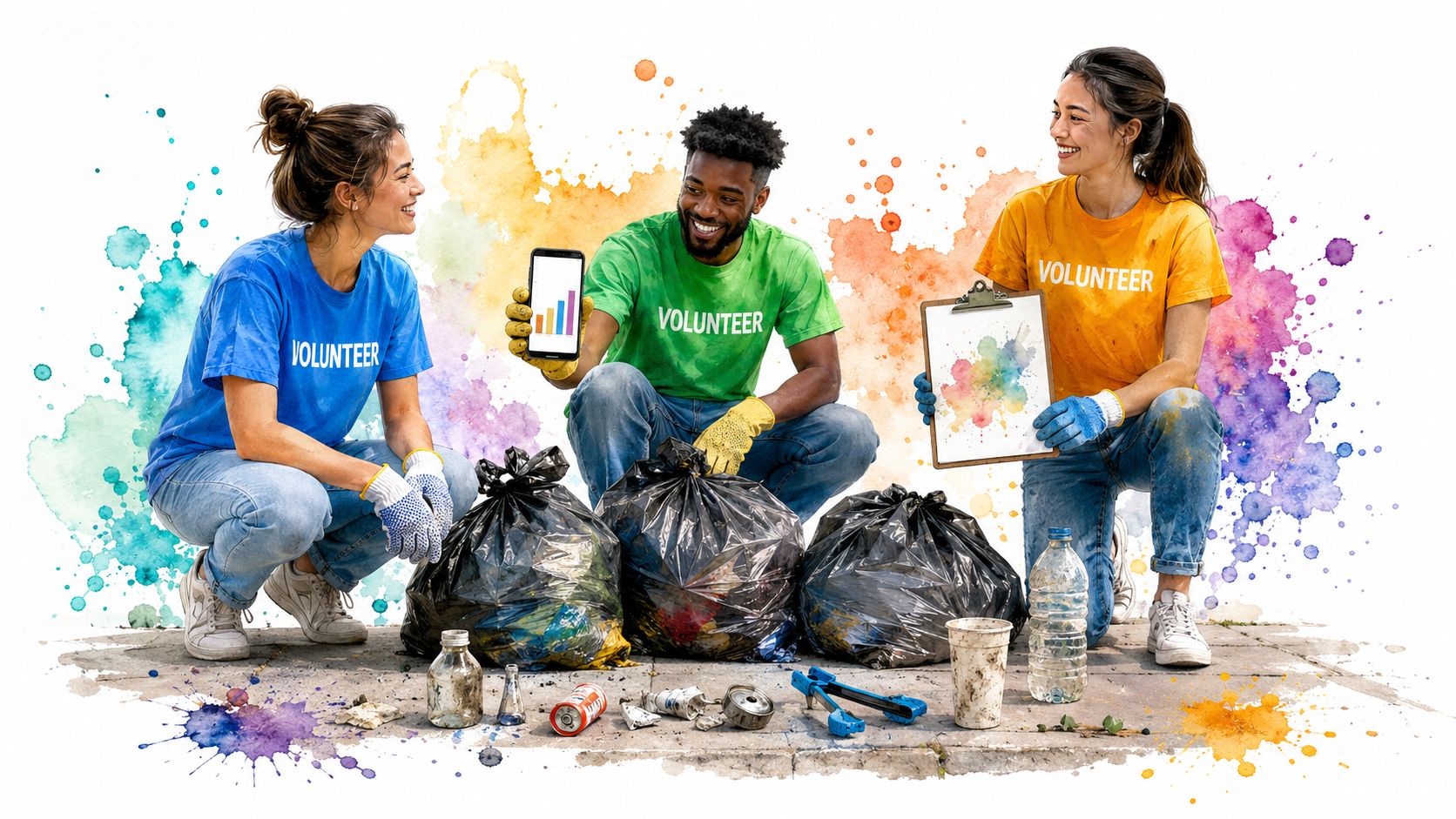
You finish a cleanup and your body knows it before your brain does. Your gloves stink. Your back is tight. Your water bottle is empty. You look down the block and see a street that looked defeated three hours ago and now looks like somebody finally cared.
Then you look at the pile.
Bags. Broken glass. Fast food cups. Rusted cans. Cigarette packs. Maybe a tire if your day got weird.
And then the question hits you. Sure, we filled bags. But what did we really change?
I know that question well. I started cleaning streets during a season when my own life felt cluttered and jammed up. Cleaning other people's messes felt easier than facing my own. Strange but true. Out on the street, with a grabber in my hand and wind in my face, things got simple. Pick it up. Keep moving. Come back next week. Somewhere in that rhythm, I changed.
That's why I care so much about measurement. Not because I love spreadsheets. I don't. I care because volunteers give you their Saturday morning, their sweat, their safety, and their hope. You owe them a real answer when they ask, “Did this matter?”
If you want to learn how to measure community impact, start there. Start with respect. Start with honesty. Start with the belief that visible work deserves visible proof.
More Than Just Bags of Trash
You already know the first trap. You clean a block, count the bags, post the photo, and call it impact. I get it. A pile of trash is satisfying. It feels like a scoreboard.
But a cleanup group isn't in the bag business. You're in the change business.
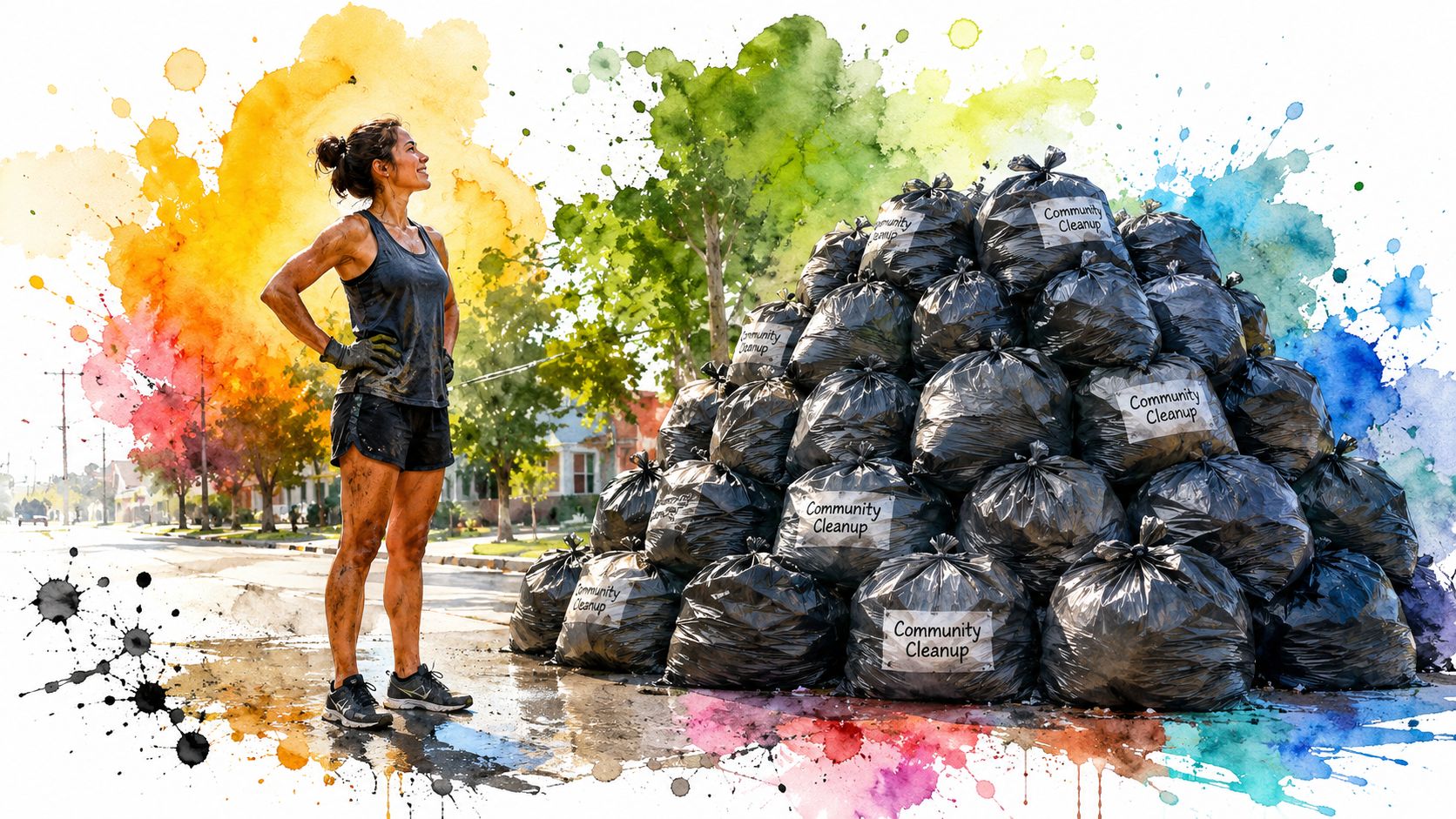
When I first got serious about neighborhood cleanup, I thought hard work would speak for itself. It doesn't. Streets change. People forget. New volunteers show up with no memory of what the block looked like before. Residents notice a difference, but if you never capture it, the story disappears.
That's why I treat measurement like cleanup's second half. The first half is doing the work. The second half is proving the work changed something.
What the pile can't tell you
A pile of bags can't tell you if the same volunteers came back because they felt connected. It can't tell you whether a resident finally stopped to say thanks after ignoring your group for months. It can't tell you if a corner that always felt abandoned now feels watched over.
That kind of proof takes intention.
Practical rule: If all you track is what you removed, you miss what you repaired.
Sometimes the strongest record of your work is simple. A before photo. An after photo. A note that says, “Two residents asked how to join.” A screenshot of the group chat after the event. A quick log of which block got cleaned and who showed up. That's how a cleanup turns into a body of evidence, not a fading memory.
If you want an example of what visible service looks like in the world, spend a minute looking at trash cleanup work in action. You can feel the difference between activity and proof.
Measurement is respect
I've seen groups burn out because they kept asking people to show up without showing them what their effort built. People need fuel. Proof is fuel.
So yes, count the bags. Then go one step further. Ask what changed on that block, in your crew, and in the people who watched you work. That's where community impact starts to come into focus.
Start with Your Story Not Your Numbers
Most volunteer groups mess this up at the beginning. They start with a spreadsheet before they start with a sentence.
That's backwards.
If you don't know your story, your numbers will drift. You'll track whatever is easy. Bags collected. Gloves handed out. Posts published. None of that means much if it isn't tied to a living reason for why your group exists.
Find the spark
My own spark was personal. I had trouble cleaning and organizing my own life. Trash felt heavier than it should have. Tiny things carried emotional weight. Service outside gave me a way to build discipline and bravery inside. That became the engine.
Your spark may be different. Maybe your block got trashed every Monday after the weekend crowds. Maybe your kids had to walk past broken glass on the way to school. Maybe you moved to a new city and needed friends who cared about more than brunch and talk.
Write that down in plain language.
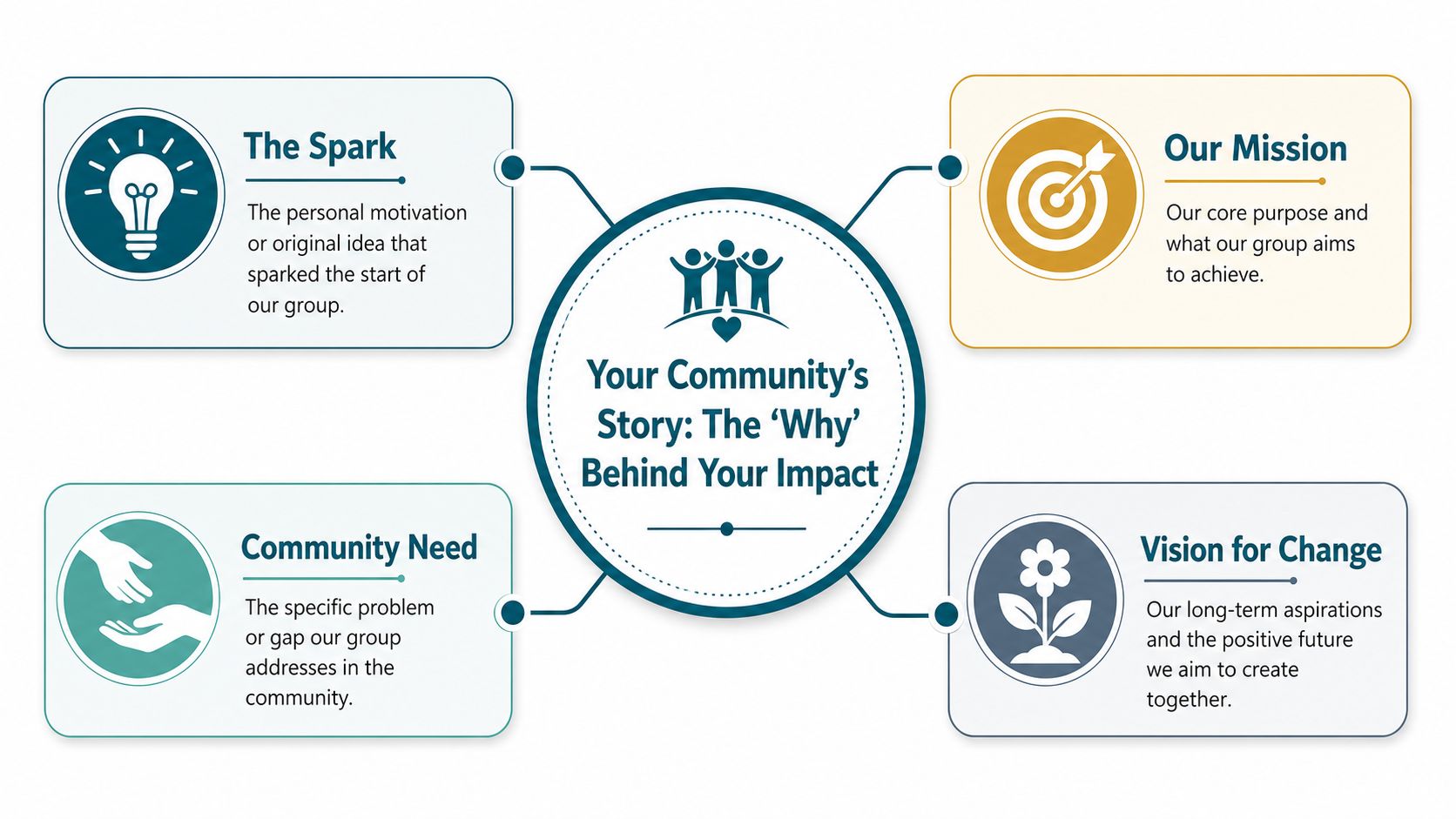
Turn the spark into a mission
A usable mission is short and human. It says who you help, what you do, and what change you expect.
Try this fill-in-the-blank:
Who we show up for
The residents, volunteers, and small businesses on neglected blocks.What we do
We clean littered areas consistently and invite people to join us.What we think will change
Streets look cared for, people build trust, and more neighbors step into service.
That's enough to guide your measurement. You don't need corporate language. You need clarity.
One good way to test your mission is this: if a new volunteer reads it in ten seconds, do they understand what they're joining?
Build goals from the mission
Once your story is clear, your goals stop being random. They become evidence of your values in motion.
The best practice is plain. You need a baseline before the work starts, clear goals tied to your mission, people affected by the work helping define the metrics, mixed methods that combine numbers with stories, and honest reporting about what went well and what didn't, as outlined in this guidance on measuring community impact effectively.
That means you should decide things like:
What your baseline is
What did the block look like before regular cleanups began? How many volunteers usually showed up? How did residents talk about the area?What “better” means
Cleaner sidewalks? Stronger volunteer retention? More conversations with neighbors? Fewer repeat problem spots?Who helps define success
Volunteers. Residents. Store owners. School staff. The people near the work usually know what progress looks like.
If your mission is personal but your metrics are generic, your proof will feel hollow.
For a good gut check, read a few volunteer testimonials from cleanup experiences. Listen for what people remember. They rarely start with numbers. They start with belonging, courage, routine, pride, and visible change. Your metrics should support that story, not replace it.
Choose What to Count and What to Ask
Here's the cleanest way I know to explain measurement. Outputs are the reps. Outcomes are the muscle.
A cleanup group can do a ton of reps. Bags filled. Blocks covered. Volunteer hours logged. Those matter. But if you stop there, you're mistaking motion for change.
Outputs tell you what you did
Outputs are the easiest things to count because they happen right in front of you. You can tally them while still wearing gloves.
Examples include:
- Volunteer participation. Who came, how often, and from which neighborhoods or backgrounds.
- Cleanup activity. Bags filled, blocks covered, sharp objects removed, graffiti reported.
- Time invested. Start time, end time, volunteer hours, repeat attendance.
These numbers help you stay organized. They also help you answer simple operational questions. Which locations need more tools? Which dates pull the best turnout? Which team leads keep events moving?
Outcomes tell you what changed
Outcomes are tougher. They ask whether your work had an effect beyond the event itself.
Maybe residents start greeting the team. Maybe a business owner asks you to come back. Maybe volunteers say they feel safer, more connected, or more rooted in the neighborhood. Maybe a stretch of sidewalk stays cleaner longer because people stop treating it like a dumping zone.
A strong warning from practice is this: many groups over-rely on outputs like trash bags collected and miss outcomes like whether residents feel safer or better about the area. To keep your measurement valid, use 3+ indicators and mix hard secondary data with qualitative input. Also, break your data apart by demographics because that kind of disaggregation reveals participation disparities in 60–70% of community projects, according to Bridgespan's discussion of impact measurement.
That one habit changes everything. If the same type of person always shows up, your group may be active but still narrow. You won't see that unless you look.
A simple table for cleanup leaders
| Metric Type | What It Measures | Example | Why It's Useful |
|---|---|---|---|
| Output | Work completed | Bags of trash removed from one corridor | Shows effort and event scale |
| Output | Participation | Number of volunteers who attended | Helps with planning and retention |
| Output | Coverage | Blocks, alleys, or lots cleaned | Shows geographic reach |
| Outcome | Resident response | Short comments about how the block feels now | Captures lived experience |
| Outcome | Volunteer experience | Group chat poll on pride, connection, or safety | Shows whether people want to return |
| Outcome | Neighborhood condition over time | Repeat photos of the same hotspot across weeks | Shows whether change sticks |
Pick fewer metrics and ask better questions
Most volunteer crews don't need a giant dashboard. They need a tight set of indicators they'll track.
Try a small stack like this:
One operational metric
Attendance by event.One visible condition metric
Repeat photo of the same corner each visit.One experience metric
A one-question volunteer poll after each cleanup.One community voice metric
A short note from a resident, worker, or passerby.
That's enough to start seeing patterns.
If you want a practical benchmark for shaping your own system, this kind of volunteer program evaluation approach is a smart model. It keeps measurement tied to real people instead of turning it into paperwork theater.
Your data should fit in your hands. If tracking it feels heavier than the cleanup itself, you built the wrong system.
Simple Ways to Gather Your Proof
You don't need fancy software to measure community impact. You need habits. Your phone already has most of the tools.
The trick is to collect proof while the day is still alive. If you wait until Sunday night to remember what happened Saturday morning, half the good stuff is gone.
Use the four-layer street version
A solid framework breaks impact into four layers: participation, experience, outcome, and return. It also treats measurement as continuous capture instead of a once-a-year survey, as described in Sopact's overview of community impact measurement. I like this because it matches how cleanup groups live. You don't work once a year. You show up again and again.
Here's the street version of those four layers:
Participation
Track who came, who led, who was new, and who returned.Experience
Ask how people felt. Safe? Proud? Included? Tired but happy?Outcome
Record what changed in the place or in the people.Return
Show the evidence back to your volunteers and neighbors, then ask if it rings true.
That last part matters. If your report says one thing and the block says another, trust the block and fix your method.
Scrappy tools that actually work
I like tools that survive dirt, rain, and low attention spans. Use what your crew will keep using.
Before-and-after phone photos
Stand in the same spot each time. Face the same direction. If you can, save them in a shared Google Drive folder labeled by date and location.Pinned Google Map
Drop a pin for each cleanup site. Add photos and a one-line note. Over time, you build a visual trail of where your crew has worked.Notes app or Google Form
One volunteer can log attendance, unusual finds, resident comments, and follow-up needs in under two minutes.Tally counter
Cheap and effective for counting needles, tires, shopping carts, or illegal dump items.Group chat poll
Ask one question after the event. “How connected did you feel today?” or “Would you return to this spot next month?”
Keep it moving while the energy is high
Your best data often comes in the first ten minutes after cleanup ends. People are still buzzing. Don't waste that window.
Ask a volunteer to record a quick voice memo. Grab one sentence from a resident. Snap the final photo before the bags get hauled away. Log the location before you drive off and forget the cross street.
This short clip captures the kind of hands-on energy that numbers alone can't carry:
Don't make data a second job
The system should feel light. If your volunteers dread the paperwork, they'll skip it. I'd rather see a group consistently gather five simple data points than attempt a giant form nobody finishes.
A clean weekly routine might look like this:
Before cleanup
Take the opening photo and note the location.During cleanup
Count a few chosen items and track who joined.Right after cleanup
Take the after photo and run one quick poll.That afternoon
Save everything in one folder and write three sentences about what stood out.
That's it. Small proof, gathered often, beats a perfect system you never use.
Turn Your Data into a Powerful Story
Raw data is like a pile of bricks. Useful, but nobody wants to live in a pile of bricks. You have to build something with it.
For cleanup groups, that “something” is an Impact Snapshot. One page. One image. One fast read. People should understand the win before they finish their coffee.
What goes in the snapshot
Your snapshot should feel like a movie trailer, not a tax return. It needs just enough structure to be credible and just enough human texture to feel alive.
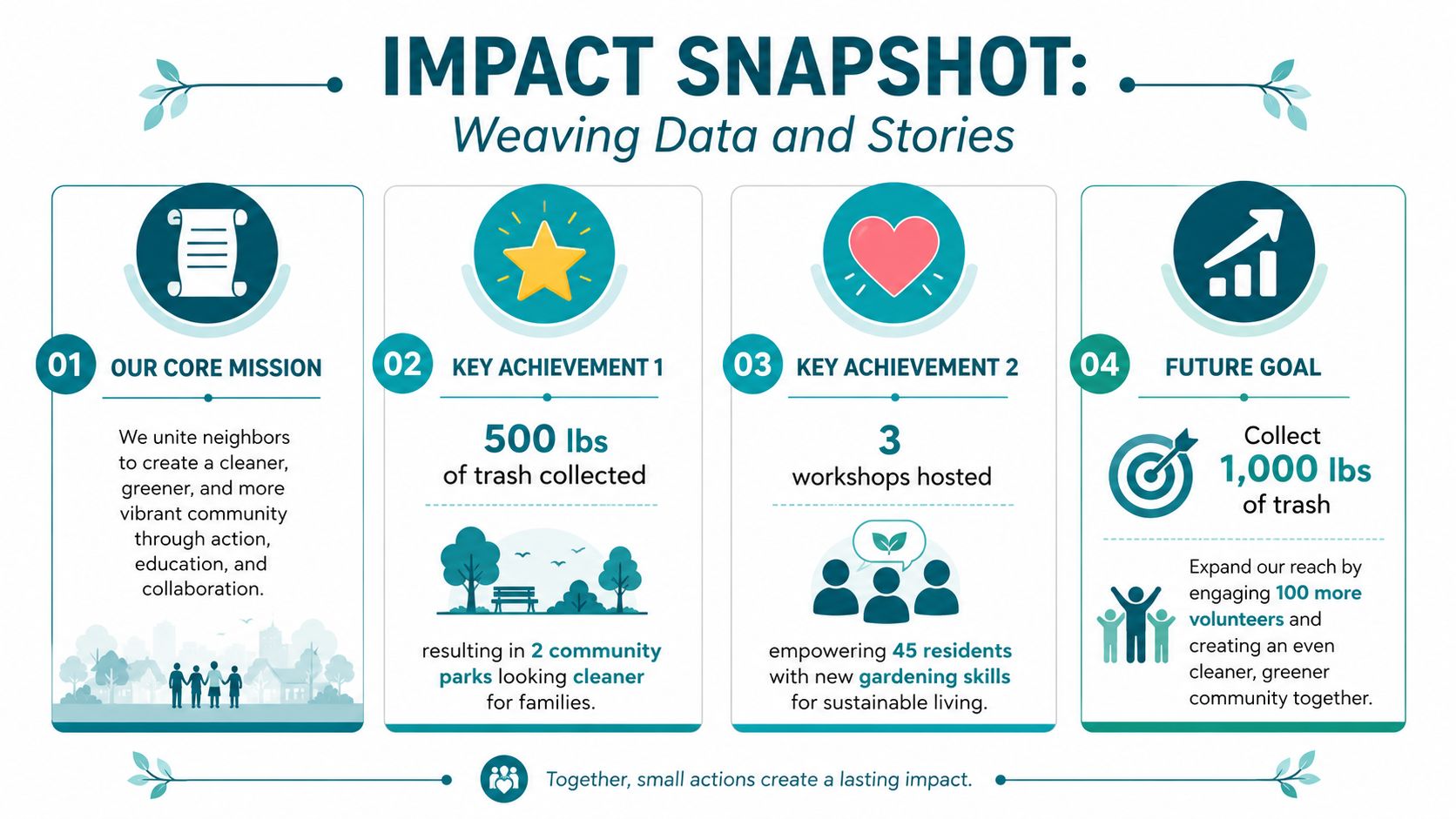
Use this template:
Top section
Your strongest before-and-after photo pair.Middle section
A few numbers from the event or the month. Keep them tied to the metrics you already decided to track.Bottom section
One short quote from a volunteer, resident, or local partner.Footer
The next action. Join us. Partner with us. Follow the next cleanup route.
Pair evidence with voice
A number proves activity. A quote proves meaning. Put them together and the story lands.
A good quote isn't polished. It's real. Something like, “I'd walked past this lot for months and felt defeated. Today it finally looked cared for.” That line gives your numbers a heartbeat.
When your numbers and your people say the same thing, trust grows fast.
If you don't have a quote every time, use a short field note. “Two residents thanked the team and asked when we'd return.” Simple works.
Keep the design rough but clean
You do not need a designer to make this. Canva is enough. Google Docs is enough. Even an Instagram carousel can work if you keep it consistent.
Stick to a repeatable layout:
- same title placement
- same photo size
- same metric order
- same closing invitation
That consistency builds memory. After a few weeks, people start recognizing your receipts on sight.
Build a public record
One snapshot is nice. Ten snapshots become proof. People stop seeing your cleanup group as a one-off burst of energy and start seeing a pattern. Patterns earn trust.
Many volunteer groups accidentally gain power through consistency. They keep showing up, keep documenting, keep reporting. Then a resident, funder, school, alderman, or store owner can scroll back and see that the work is real. No inflated claims. No fog. Just evidence stacked over time.
Use Your Proof to Grow Your Army
Proof changes how people respond to you.
Without proof, you sound hopeful. With proof, you sound solid.
That matters when you ask someone to wake up early and spend their weekend picking up litter. It matters when you ask a small business for gloves, trash bags, or water. It matters when you invite a neighbor who feels cynical and tired.
People join what they can see
Most volunteers don't join because of a mission statement alone. They join because they can picture themselves inside the work.
An Impact Snapshot gives them that picture. They see the block. They see the faces. They see the kind of change a small group made in a short stretch of time. Suddenly joining doesn't feel abstract. It feels doable.
Use your proof in a few direct ways:
Recruiting posts
Share snapshots on Instagram, Meetup, email, or group chats with one clear invite.Partner asks
Bring a printed snapshot when you talk to a hardware store, coffee shop, school, or church.Volunteer retention
Send the snapshot to everyone who joined. Let them feel the win again while it's fresh.Neighborhood trust
Post it where local residents can see what happened on their block.
Proof also keeps you honest
This part matters just as much. Measurement doesn't only help you grow. It helps you correct.
If a site keeps getting trashed again in two days, your method may need to change. If first-time volunteers come once and vanish, your experience may be weak even if the cleanup looked productive. If your demographic breakdown shows the same slice of people every week, your outreach may be narrow.
That's good news. Honest proof gives you something to fix.
Brave groups don't hide weak spots. They learn in public and keep moving.
If you want to know how to measure community impact in a way that helps your crew, this is the answer. Track what you did. Listen for what changed. Show the evidence. Invite more people in. Repeat.
That's how a cleanup turns into a movement. One block. One morning. One clear receipt at a time.
If you want to join a crew that cleans hard, builds real friendships, and shows its work, check out Litter Caterpillars. Show up on a weekend morning, grab a picker, and help turn service into something people can see and feel.