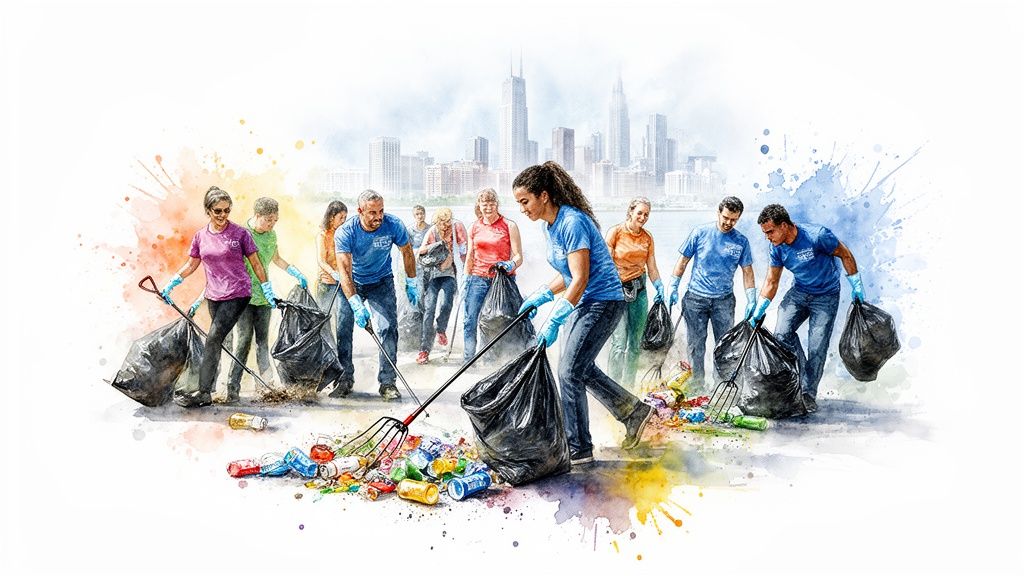
I'll tell you a secret. A volunteer trash pick up isn't just about cleaning a street. It’s a strange and powerful way to find your courage, build friendships with incredible people, and start cleaning up the chaos inside your own head.
How Picking Up Trash Can Change Your Life
I didn't start picking up trash to save the world. Not even close. I started because my own life was a complete disaster.
I was stuck. Trapped. I felt suffocated by the clutter of past failures and a chaotic relationship that had just imploded. It was like living in a house where every surface was covered in junk. That old jar of jam in the back of my fridge wasn't just jam anymore; it was a monument to a trip that felt like a lifetime ago. Every piece of trash I couldn't bring myself to throw away felt like it weighed 500 pounds.
I’d hit a breaking point. I knew something had to change, and I decided to mindfully engineer my social circle, filtering out selfishness and forcing myself to embrace things that terrified me: consistency, cleanliness, and bravery. And I learned something fast—cleaning up other people's messes is way easier than cleaning up your own.
A Hailstorm and a Beginning
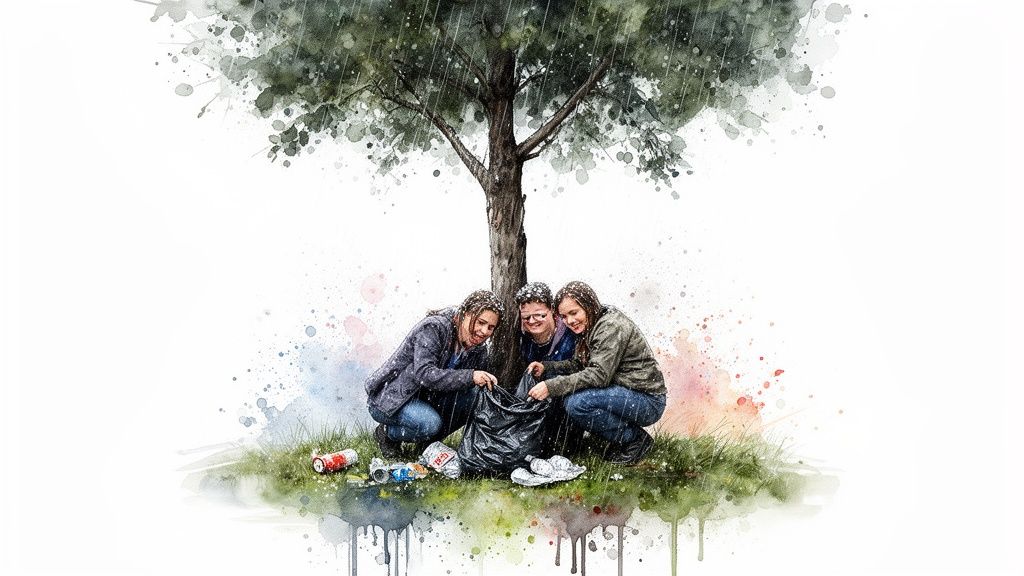
My very first cleanup? I remember it like it was yesterday. It was just me and two friends. And, of course, a freak Chicago hailstorm decided to join us. We were huddled under a tree, shivering, watching Uber after Uber cancel on us. It was cold. It was absurd. It was, honestly, pretty miserable.
But in that moment, something clicked. Shared struggle doesn't just build character; it forges unbreakable bonds. That freezing, bizarre experience taught me that facing a challenge together, no matter how small, adds a certain "flavor" to life. It moves the plot forward. It showed me that service is one of the most powerful tools for personal transformation.
I realized that picking up trash wasn't a punishment. It was an adventure. A way to turn a personal low point into a powerful mission for a cleaner city and a clearer mind.
Finding Your People and Your Purpose
This simple act connects you to something so much bigger than yourself. It's not just about what you remove from the environment; it’s about what you build in its place. Every cleanup becomes a chance to meet people who share a fundamental kindness—people who just show up.
You start to see your city not as a backdrop, but as a home you're actively tending to. It’s a journey where you find both your courage and your community.
- You prove you can be consistent. Showing up week after week, rain or shine, builds a new level of self-trust. A promise you keep to yourself.
- You find real connection. Working alongside someone toward a shared goal is one of the most natural ways to form friendships.
- You see immediate impact. An hour of work results in a visibly cleaner park. A sidewalk transformed. It’s a tangible reward that’s incredibly satisfying.
And this feeling isn't just happening in Chicago. It’s a global movement. Imagine millions of us banding together—that's the magic of World Cleanup Day. Since 2018, this initiative has rallied over 114 million volunteers across 211 countries to remove more than 708,000 tonnes of waste.
Groups like ours, the Litter Caterpillars, embody this spirit right here at home, showing up every single week to prove that small actions create huge ripples.
This guide is about helping you start that same journey. You can learn more about my philosophy on cleaning up trash in other articles. Think of this as your first step toward transforming not only your neighborhood, but yourself.
Finding Your Cleanup Crew
So, you feel that fire in your belly. The urge to get out there and actually do something. That’s the hardest part, and you've already done it. But then the big question hits: where do I find my people? It can feel like you’re trying to find a secret club, but I promise, the doors are wide open if you know where to knock.
Finding the right group for a volunteer trash pick up is more than just plugging a time into your calendar. It's like finding a good coffee shop—some are quiet and intense, others are loud and full of energy. You have to find your spot. You're looking for a vibe, a crew you actually want to hang out with.
Digital Campfires Where Communities Gather
When I was just starting out, I hit the internet to find my real-world crew. It felt a bit weird at first, but platforms like Meetup and even Instagram are basically the modern town square where we connect over things we care about. They are powerful.
I found out pretty fast that Meetup is perfect for this. Just search for "trash pickup" or "community cleanup" and you'll probably find a bunch of groups right in your city that you never knew existed. It's how a ton of people found us, the Litter Caterpillars. They saw a post, felt a connection to our mission of being brave and kind, and just showed up.
Instagram is another place that's surprisingly good for finding your people. Search hashtags like #chicagocleanup, #trashtag, or #volunteertrashpickup. You’ll see pictures and stories from groups out in the wild, which gives you a real feel for their energy before you even commit.
A great event post tells you a lot more than just the time and place. It shows you the group's heart. Look for posts that talk about community, safety, and making sure volunteers have a good time—not just getting a job done.
How to Spot a Great Group
Okay, so you’ve found a few potential crews. How do you pick one? It’s all about reading between the lines. I’ve learned that a group’s true character really comes through in how they talk about their events. A great group doesn't just want your time; they want you to have a positive, safe experience.
Here’s the mental checklist I use when I’m checking out a new group:
- Do they talk about safety? Look for mentions of them providing gloves, bags, and doing a quick safety talk. It shows they put you, the volunteer, first. Always.
- Is the vibe welcoming? Read their event descriptions. Do they sound friendly? Are they encouraging to newbies? Green flags are phrases like "first-timers welcome" or "come alone and leave with friends."
- Are they consistent? A group that meets regularly—say, every weekend—is usually more organized and has a solid community. It shows they’re in it for the long haul.
I’ll never forget one of our regulars telling me he was super nervous to come to his first event alone. He saw our photos on Instagram—just a bunch of people smiling in a blizzard, holding trash bags like they were trophies—and said he knew this was a group that found joy in the work. He showed up. He’s been with us ever since.
That's the feeling you're looking for. The journey of how to find volunteer work is really about finding that sense of belonging. Your crew is out there. Waiting.
Your First Volunteer Trash Pick Up
Showing up to your first volunteer trash pick up can feel a bit like the first day of school. You're excited, maybe a little nervous, and you definitely don't want to show up unprepared. Let’s walk through what you can expect. Think of this as your pre-game pep talk, designed to make your first cleanup so awesome you’ll be hooked.
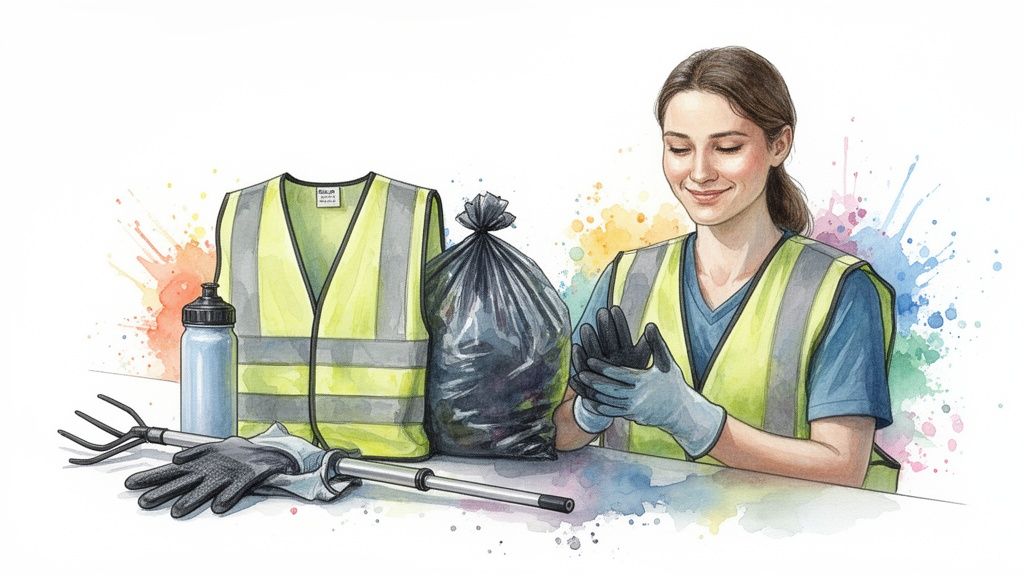
From my experience, the biggest hurdle isn't the trash itself—it's the uncertainty. You’re putting yourself out there, meeting new people, and diving into something new. That takes real courage. Give yourself credit for even considering it.
Dressing for the Adventure
Your outfit is your first line of defense. Remember that hailstorm I mentioned? It taught me a vital lesson: nature doesn’t care about your plans. Comfort and safety are everything. This isn't a fashion show; it's a mission.
- Closed-toe shoes are non-negotiable. You’ll be walking on uneven ground and encountering things you can't see. Sturdy boots or old sneakers are your best friend.
- Wear layers you can move in. The weather can turn on a dime, especially in Chicago. A t-shirt, a hoodie, and a light jacket give you options.
- Choose bright colors if you can. Especially if you're cleaning up near a road, being visible is key to staying safe. Think of yourself as a friendly, helpful traffic cone.
Think of it like dressing for a hike. Forget fashion; this is all about function. You need to be ready for anything, from a sudden downpour to a surprisingly sunny day.
What to Bring and What to Expect
A good organizer will handle the core supplies, but being personally prepared makes the whole experience smoother. It’s the difference between just getting through it and actually having a great time.
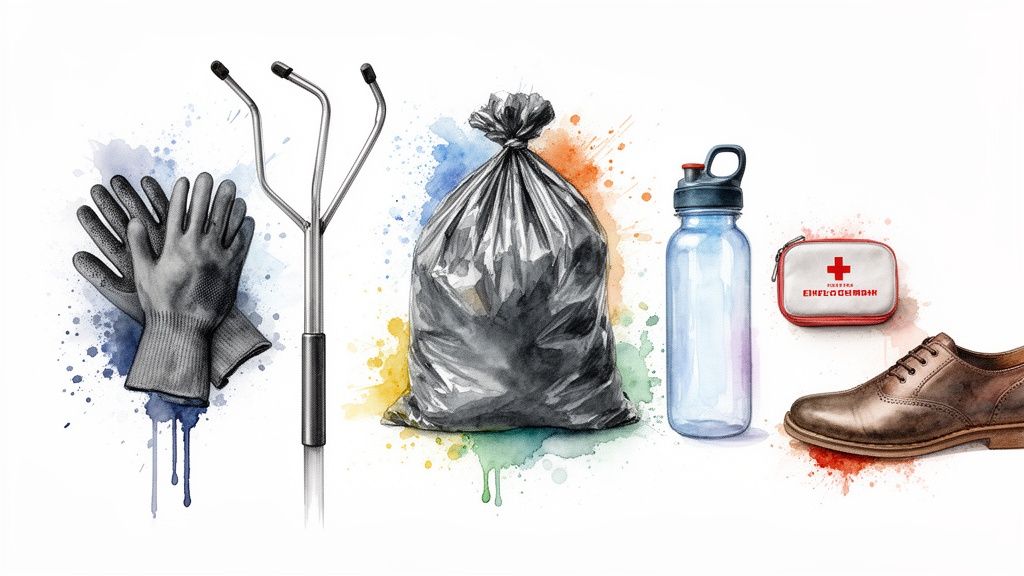
Here's a quick reference for what to bring versus what a great organizer should provide, ensuring you're prepared and safe.
Your Essential Cleanup Day Checklist
| What You Should Bring | What the Group Should Provide |
|---|---|
| A reusable water bottle to stay hydrated | Heavy-duty, puncture-resistant gloves |
| Sunscreen and a hat for sun protection | Durable trash bags |
| Your phone for photos and emergencies | Trash grabbers or "pickers" |
| An open mind and a positive attitude | Hand sanitizer and a first-aid kit |
Being prepared helps you focus on what really matters: the people and the mission.
The most important thing you can bring is a willingness to connect. This isn't just a chore; it’s a social event disguised as community service. The trash is just the icebreaker.
Embracing the Mindset
Okay, you’re dressed, you’re packed, and you've arrived. Now what? Your first instinct might be to grab a bag and furiously start picking. My advice? Slow down.
Pace yourself. This is a marathon, not a sprint. Take a moment to look around and introduce yourself to the person next to you. A simple "Hey, I'm new here" is the perfect opener. Every single person here was a first-timer once. We all remember that feeling.
You will find weird stuff. It’s part of the fun. I’ve found everything from a single high heel to a perfectly preserved (and unopened) can of peas from the 1980s. When you do, share it! It's a great way to start a conversation and get a laugh with your fellow volunteers.
Focus on the shared mission. You're all there for the same reason—you care. That common ground is a powerful foundation for friendship. By the end of the day, you’ll leave with more than just a full trash bag; you’ll leave with a sense of accomplishment and a few new friends.
Leading Your Own Community Cleanup
Do you feel that fire to start your own crew? That's a huge step. A monumental one. When I first started this, I wasn't trying to lead anyone. I was just trying to show up for myself and fix my own life. But leadership is what happens when you keep showing up. If you're feeling that pull, it means you're ready to build something real.
So, I’m opening up my personal playbook. This is how we plan and run a cleanup that's safe, effective, and honestly, a strange new form of "fun." You're not just picking a spot on a map; you're crafting an experience. Think of yourself as an event planner, but your main guests are your neighbors and the guest of honor is your community. You’re building something from scratch.
Scouting Your Mission
First thing's first: you must become a scout. Before you can lead a volunteer trash pick up, you need a location. This is more art than science. I like to just walk or bike through neighborhoods, keeping my eyes peeled for the spots that look forgotten—but are still safe for a group to work in.
Look for a place that tells a story. Is there a park that’s become an unofficial dumping ground? An underpass people just avoid? These are perfect. Why? Because the "before and after" will be so dramatic it gives your volunteers that incredible feeling of victory.
I always make sure my route has:
- Safe access: No one should be dodging fast-moving traffic or climbing over sketchy terrain. The safety of your volunteers is everything. It comes first, always.
- A clear start and end point: This keeps the group together and makes your life a million times easier. I’ve found a one-mile loop or a half-mile down a single street works perfectly.
- A "trash hotspot": You want a concentrated mess. A dragon to slay. It gives the crew a clear, satisfying challenge and a visible win at the end.
Once you think you have a spot, you have to walk the route yourself. Take notes. See some broken glass? Overgrown thorns? Make a mental note. Knowing the territory gives you the confidence to lead everyone else through it.
Scheduling for Success
Timing is everything. You might think any weekend afternoon will work, but I’ve found that weekend mornings are pure magic. We intentionally schedule our events for Saturday or Sunday mornings because it filters for a certain kind of person: the giver.
People who drag themselves out of bed early on a weekend aren't looking for a party. They are there to serve. They’re the ones who are ready to build consistent, positive habits. Kicking off your day with service just sets a powerful tone for the whole weekend.
The goal isn’t just to get people to show up once. It's to create an experience so positive and fulfilling that it becomes a cherished part of their routine. A weekend morning cleanup can be that anchor.
This one small choice says a lot about your group's identity. It signals that you're about purpose and connection, not just killing time. It’s a quiet way of saying, "We’re here to do the hard work, together."
The Unspoken Contract: The Safety Briefing
This is the most important part of your job. Before a single piece of trash gets picked up, you deliver a safety briefing. Every. Single. Time. It doesn’t need to be some long, dramatic speech, but it is absolutely non-negotiable.
Your safety talk is an unspoken contract with your volunteers. It tells them, "I see you, I value your time, and I will do everything in my power to keep you from getting hurt."
I always cover these key points:
- Point out known hazards: "Watch out for the broken glass over by that fence." I mention what I saw on my scout walk.
- Explain the "don'ts": No sharp objects (especially needles), no trying to lift heavy furniture by yourself, and no wandering off into sketchy areas alone.
- Set the boundaries: I clearly define the cleanup zone so nobody gets lost. "We're cleaning from this corner down to the blue building."
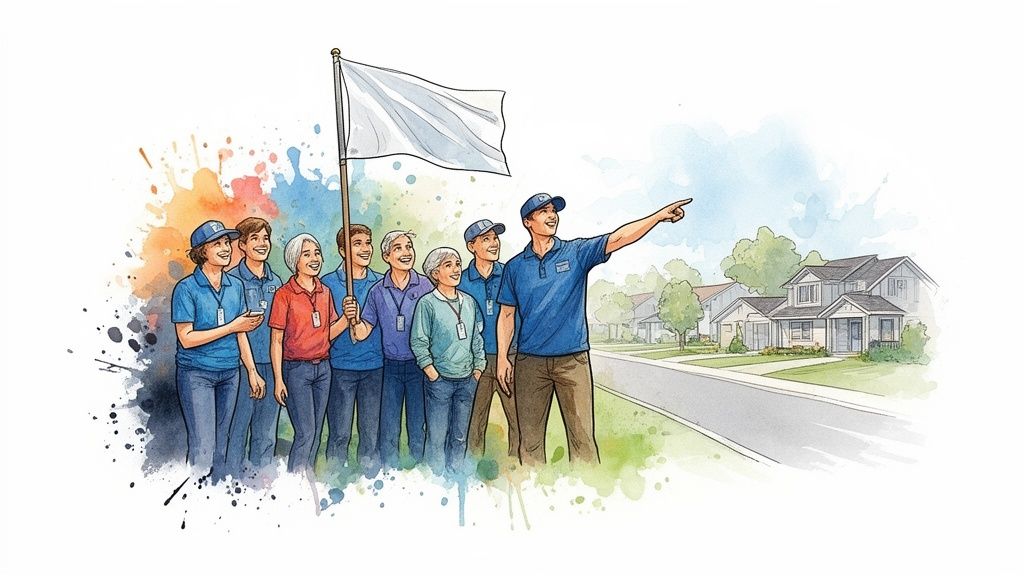
- Have a communication plan: "If you need anything, find me. I’ll be the one in the bright green hat."
This briefing does more than just keep people safe—it builds trust. It shows you’re a leader who actually cares about their team, not just the task. And that trust is the foundation of any real community. My leadership isn’t measured by how much trash we collect, but by how well I take care of the people who show up to help. You're not just cleaning a street; you are building a movement, one small, safe, and powerful event at a time.
Building a Community That Lasts
Let me tell you a secret: a volunteer trash pick up is almost never about the trash. It’s the perfect excuse. The stage we set to build friendships and community, using the shared task as the glue that brings us all together. The real victory isn't a clean street; it's the tough, supportive crew you build along the way.
But this doesn't just happen. You can't just hope a community forms; you have to intentionally build the container for it. My whole philosophy is “volunteer-first.” This means protecting the energy of the people who show up is your most sacred duty as an organizer. Their time and spirit are the fuel for this whole mission. You must guard it.
This also means you never, ever pressure people for money. Their presence is the donation.
The Volunteer-First Philosophy
When someone decides to spend their Saturday morning with you instead of sleeping in, they’re giving you something incredibly precious. Your job is to honor that gift. This isn't a transaction; it's a relationship built on mutual respect and a shared desire to do some good.
Think of your volunteer group like a garden. You can't just throw seeds on the ground and expect a harvest. You have to nurture it. This means prioritizing safety, but it also means prioritizing joy. It's about creating an environment where people feel seen, valued, and actually want to come back.
The goal isn’t just to get people to show up once. It’s to create an experience so positive and fulfilling that it becomes a cherished part of their routine. A weekend morning cleanup can be that anchor.
This volunteer-first mindset changes everything. When people feel safe and appreciated, they relax. They open up. They stop being just a group of individuals picking up litter and start becoming a team, a family. This is how you build a movement that lasts. If you want to dive deeper, you can check out my guide on effective volunteer retention strategies.
Fostering Connection Beyond the Cleanup
So, how do you actually do it? You create spaces for connection that exist outside the two hours you’re filling trash bags. The work itself is a great icebreaker, but the real bonds form when people can just be themselves.
I use a group chat, not just for event logistics, but for casual conversation. People share photos of their pets, talk about their week, or ask for recommendations. It keeps the community spirit alive long after the gloves come off.
This process chart shows the basic flow for leading a cleanup, but the real work—the community building—happens between these steps.
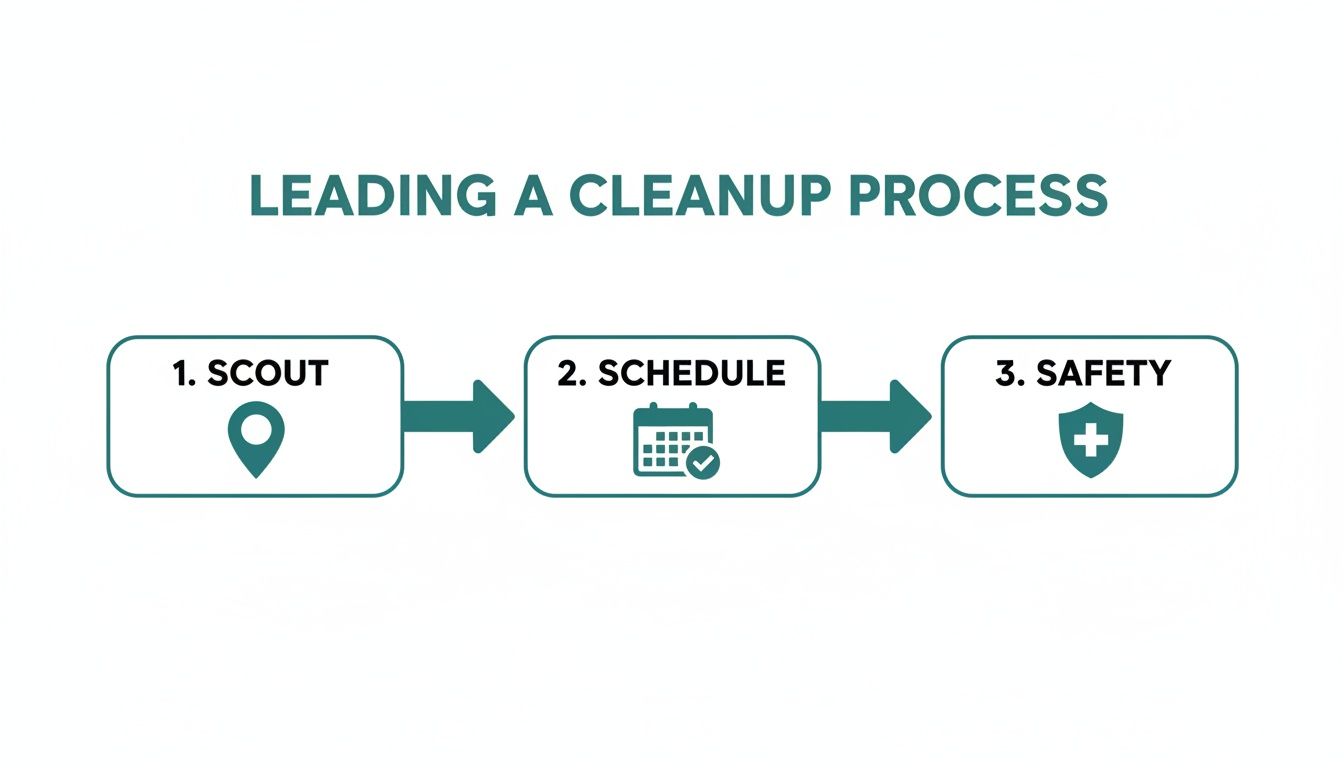
While scouting, scheduling, and safety are the skeleton of an event, the community is its heart.
We also celebrate milestones. We have badges for attending a certain number of cleanups or for braving a blizzard. It’s a simple, fun way to acknowledge dedication and create a shared identity. It’s like getting a merit badge for being a good human, and it makes people proud to be a part of something.
- Create a shared identity. We have flags and a theme song. It sounds a little goofy, I know, but it works. It gives people pride and a sense of belonging.
- Encourage casual hangouts. After a cleanup, a few of us might grab coffee. It’s not an official part of the event, but it’s where real friendships solidify.
- Tell your group's story. I share photos and celebrate our wins on social media. I want people to see the impact they’re making and the fun they’re having.
The power of this is immense. Look at beach cleanups. The Surfrider Foundation shattered records last year, removing 365,000 pounds of trash thanks to 40,000 dedicated volunteers nationwide. Those are huge numbers, but they’re driven by the same spirit we have. It all comes back to prioritizing volunteer joy and safety above everything else.
From Empty Lot to Community Park
Let me tell you a story. A few years ago, my little group of friends noticed a forgotten, trash-filled empty lot in Englewood. So we cleaned it. And then we cleaned it again. We started dreaming about what it could be.
So we did something crazy. We pooled our money, we entered a city auction, and we won. We bought that empty lot. Today, it’s no longer a dumping ground; it's on its way to becoming Caterpillar Park, a green space for the whole neighborhood.
That’s what a dedicated community can do. It starts with a few people who decide to show up, and it grows into a force that can literally reshape a city, block by block. It was never just about the trash. It was about building something that would last.
Common Questions We Get All The Time
You've got questions, and I've got answers. After years of running these cleanups every single week, in every kind of Chicago weather imaginable, I've heard them all. It's totally normal to wonder about the little details before you dive into your first volunteer trash pick up. Honestly, the fact you're even asking shows you care, and that’s what matters most.
Here are some of the things people often ask before they grab a bag and join us for the first time.
What If the Weather Is Terrible?
I’ll let you in on a little secret: we kind of love it when the weather gets weird. We go out rain or shine, in blizzards and heatwaves. Why? Because suffering and freezing together actually makes things interesting. It gives the day "flavor." It advances the plot!
Of course, your safety is my number one priority. I’ll absolutely cancel for truly dangerous conditions like lightning or extreme winds. But a little rain or snow? That just makes us feel that much more accomplished at the end. It's a badge of honor.
A good organizer will always communicate clearly about any weather plans. My advice? Just dress in layers, bring a great attitude, and be ready for an adventure. You might be surprised by how much fun you have when things get a little crazy.
Do I Have to Bring My Own Bags and Gloves?
Nope, you shouldn't have to. Any well-run cleanup will provide the essentials to keep you safe and effective. We always show up with heavy-duty trash bags, puncture-resistant gloves, and plenty of hand sanitizer for everyone.
Protecting my volunteers is the most important job I have as an organizer, and that starts with having the right gear ready to go. You’re giving me your time; the least I can do is give you the tools. That said, if you have a favorite pair of work gloves or your own trusty trash grabber, by all means, bring them along! Just check the event description, but expect the basics to be covered.
I'm Coming Alone and I'm a Little Nervous.
First off, it's incredibly brave to show up to something new by yourself. Be proud of that. Seriously. You are taking a step that most people are too afraid to take. Second, I can almost guarantee you won't be the only one. So many of our most dedicated regulars came alone their very first time.
My best advice is to just focus on the task at hand. The simple, shared act of working alongside someone is a wonderfully low-pressure way to start a conversation. You can just point to some bizarre piece of trash and ask, "Wow, have you ever seen anything like that before?"
The shared mission does all the hard work for you. You're all there for the same reason, and that creates an instant connection. Just show up. I promise, the community will find you.
At our events, I try to create a welcoming vibe from the very start. We have a theme song. We introduce new people. You've already done the hardest part by deciding to come out.
How Can I Convince My Friends to Join Me?
Don't frame it as a chore. You have to be like Tom Sawyer painting the fence—make it sound like the coolest, most exclusive club in town. Tell them it’s a weird, fun adventure, a way to explore a new neighborhood you'd never see otherwise and get some fresh air.
Talk about the deep satisfaction of seeing a tangible result—a clean street that was filthy an hour ago. And definitely highlight the social side: it's a chance to meet other cool, kind people who actually care.
Be honest about the challenge, too. Say something like, "It might be tough, and the weather might be crazy, but it'll be a story to tell." That sense of shared purpose and adventure is way more compelling than just asking, "Hey, want to pick up garbage with me?"
Ready to start your own transformation? Join Litter Caterpillars at our next cleanup and see how service, friendship, and a little bravery can change everything. Find our next event and become part of our story at https://www.littercaterpillars.com.