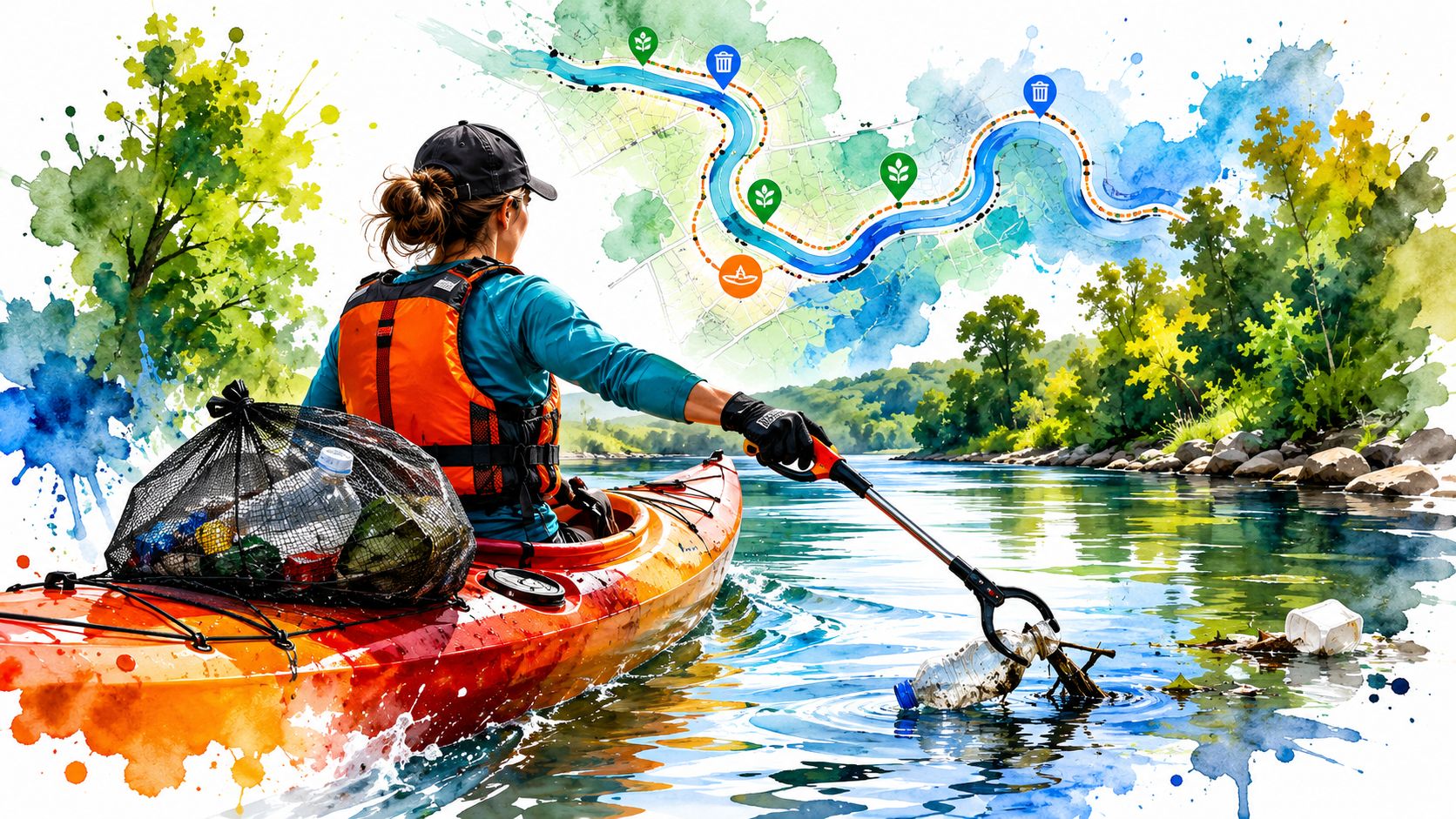
I slid my kayak into the Fox just after sunrise, and within minutes I was steering around a floating bottle pinned against a branch. I picked it up, tucked it behind my seat, and felt the whole trip change shape.
More Than Just a River Paddle
The first time I really understood the Fox River, I wasn't chasing speed or distance. I was drifting through a quiet stretch, listening to the blade drip after each stroke, when the river kept handing me small choices. Go left around the snag. Slide into the slower water. Pull one piece of trash. Keep moving.
That mix is what keeps pulling me back. A Fox River paddle can feel easy and loose, but it can also feel like a real outing with a beginning, middle, and finish. The river itself explains why. The Fox River of Illinois is 202 miles (325 km) long and flows from southeastern Wisconsin to Ottawa, Illinois, which is why one trip can pass through very different towns and moods of water as noted in this Fox River overview).
Why the Fox feels bigger than an afternoon float
Some rivers feel like park amenities. The Fox feels more like a long road with water on it.
You launch in one town, pass under bridges, drift by islands, and pull out somewhere else with wet sleeves and a better appetite than when you started. Even a short route can give you that little expedition feeling. You aren't circling a pond. You're traveling.
I also like that the river has history in its bones. People once looked at this water as a route for movement and trade, not just a pretty place to spend a Saturday. You can still feel that practical side when you plan a shuttle, read a current seam, or choose a take-out before dark.
Practical rule: A good kayak Fox River trip gets better when you treat it like a journey, not a random splash around.
Adventure gets better when it has a job
On a normal paddle, I notice birds, current, bridge shadows, and the sound of my hull touching gravel. On a cleanup paddle, I notice all that plus the stuff that doesn't belong there. A foam cup jammed into reeds. Fishing line wrapped on wood. A plastic bottle spinning in an eddy like it has nowhere else to go.
That doesn't ruin the trip for me. It deepens it.
When I paddle with a cleanup mindset, I come home with more than tired shoulders. I remember the cove I left cleaner. I remember the little puzzle of carrying litter without making my kayak unstable. I remember making a place look more like itself again.
Regarding kayak Fox River advice, that's the angle I think matters most. Go for the paddle, yes. Go for the quiet. Go for the workout. But leave room for purpose, because purpose gives the day a sharper edge. It turns a float into a story you'll retell on the drive home.
Charting Your Course on the Fox
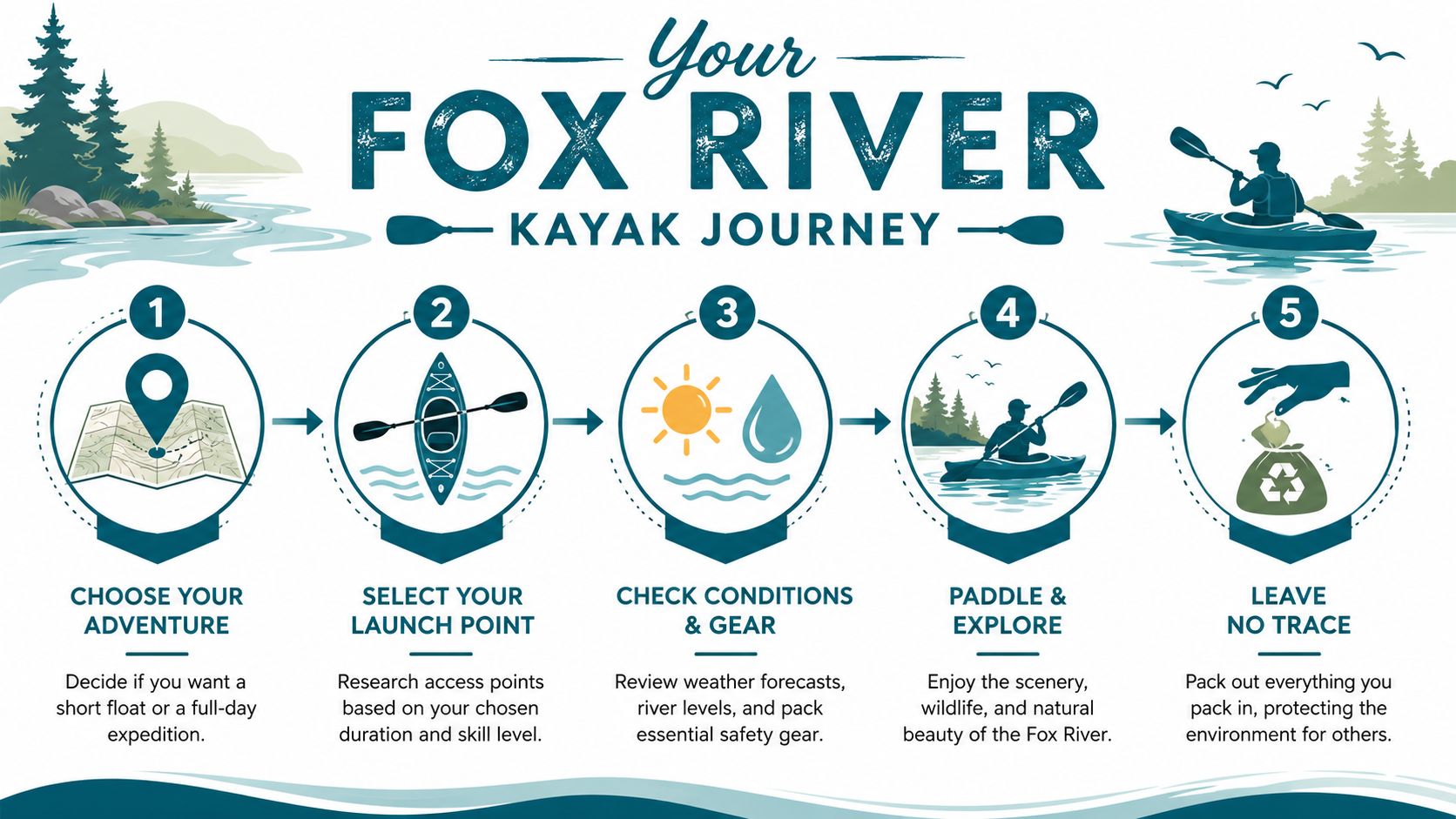
A good plan starts with honesty. Are you here to glide for a while and clear your head, or do you want a longer point-to-point outing with lunch, route decisions, and tired arms by the end?
The Fox gives you both. In the Aurora area, paddlers have organized access points, a 1,100-foot bypass chute around the Glen D. chain of barriers, shuttle-backed route options through Howling Wolfe Canoe & Kayak between Batavia, North Aurora, and Aurora, and the Marge Cline Whitewater Course in Yorkville. The same regional guide also notes that the Fabulous Fox! Water Trail is a National Park Service Water Trail, which you can see in the Aurora outdoor guide to the Fox River.
Pick the day you actually want
I like to sort Fox outings into three simple stories.
| Trip style | Best fit | What it feels like |
|---|---|---|
| Short float | Newer paddlers or relaxed mornings | Easy pace, fewer decisions, more looking around |
| Town-to-town paddle | People who want movement and variety | A real journey with a launch and a different take-out |
| Sport run | Paddlers who want technical water | More attention, more excitement, less drifting |
A short float works well when you don't want logistics to eat half the day. You launch, settle in, paddle a calm stretch, and get off the water before fatigue starts making sloppy decisions for you.
A town-to-town route is where the Fox gets fun in a different way. Batavia to Aurora, or North Aurora toward Aurora, feels like travel. Shuttle support helps because your car doesn't have to be at both ends of the story.
If you want something punchier, Yorkville changes the mood. The whitewater course asks for sharper attention and better boat control. That's not where I'd send someone on their first outing with a half-zipped life jacket and a coffee in the cup holder.
Build around logistics, not wishful thinking
I've seen plenty of paddlers make the same mistake. They choose a route because it sounds good, then try to force parking, timing, and pickup to match. Do it in the reverse order.
Start with these questions:
- Who is in your group. If one person is brand new, plan for their comfort, not the strongest paddler's ego.
- How will you finish. A one-way trip needs a shuttle or two cars.
- What will you do with cleanup bags. If you're collecting litter, your take-out matters even more.
- Where are the barriers. A bypass chute or a known portage changes the whole day.
If you want route ideas tied to community-minded paddling days, I like the local context gathered on the Fox River Valley page.
Some days, the smartest route is the one that leaves you wanting one more mile instead of begging for shore.
Match the route to your energy
Morning calm doesn't mean the whole group will stay fresh, patient, or focused for hours. I keep that in mind every time I plan a paddle. A shorter route with a clean shuttle can beat a grand plan that falls apart at the take-out.
When you search for a kayak Fox River trip, don't ask only, "Where can I launch?" Ask, "What kind of day do I want to have when I get back to the car?" That answer usually picks the route for you.
Gearing Up and Staying Safe
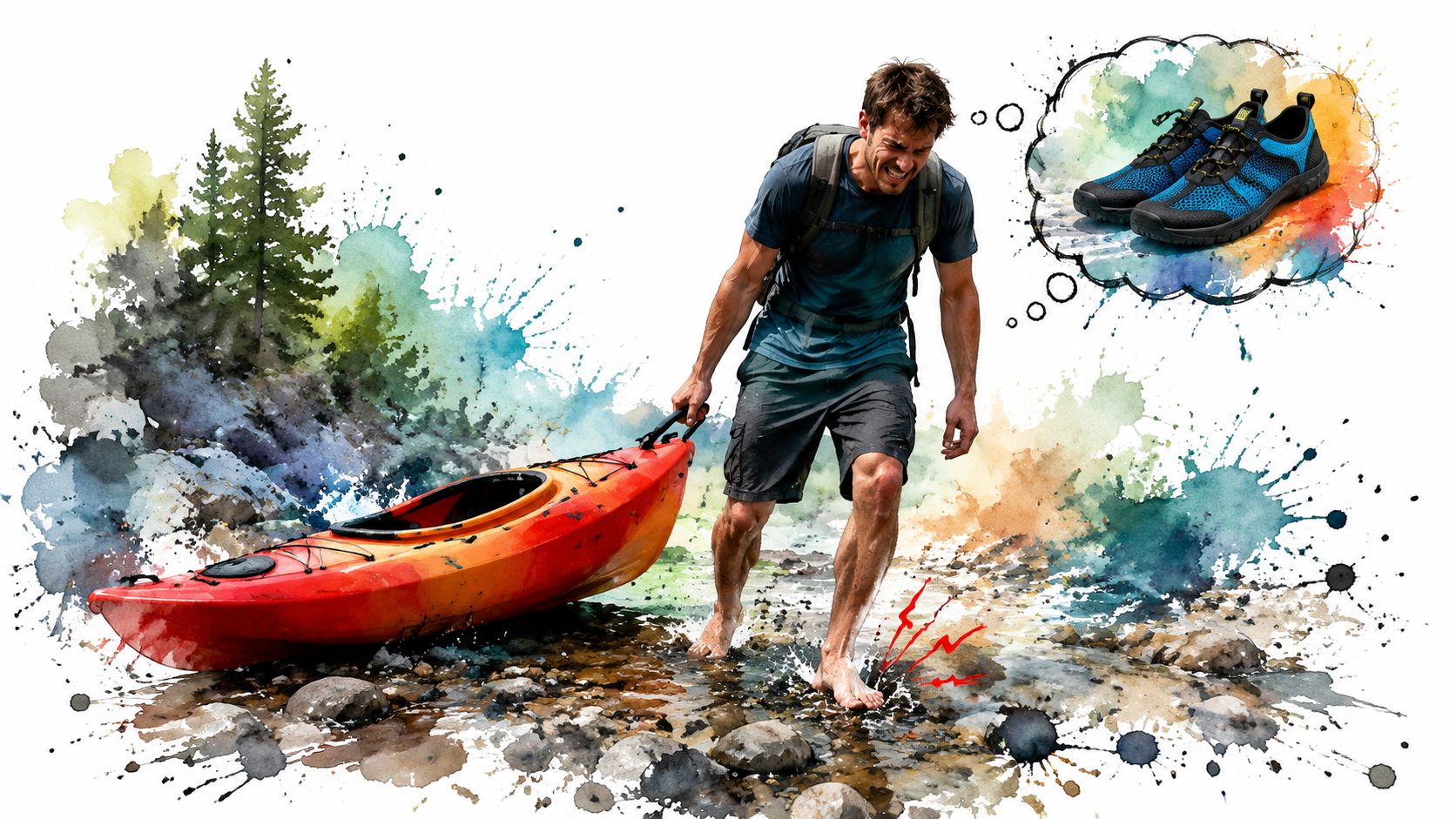
I once skipped water shoes because the river "looked deep enough." Later, I was out of the boat, ankle-deep on a rocky patch, pulling my kayak forward and trying not to think about what my bare feet were stepping on.
That was dumb. Small mistakes on a river become long, annoying lessons.
The safety habits that matter aren't glamorous. They're the boring, repeatable ones you do every time. The Fabulous Fox Water Trail safety guidance says paddlers should always wear a U.S. Coast Guard-approved life jacket, go with a companion or group, carry a spare paddle and first-aid kit, and tell a trusted person the route, launch point, take-out point, and estimated timing. That same guidance indicates a typical paddling speed of 2 to 3 river miles per hour, notes that water levels can change quickly after rain, and warns that low bridges, dams, and cold water can turn a casual plan into a bad one.
Wear the gear you brought
A life jacket strapped to the boat is decoration. Wear it.
The Fox can look forgiving right up until you hit a weird current line, a low bridge approach, or a shallow walkout where you lose footing beside the boat. If you flip, you won't have time for a neat, thoughtful equipment discussion with yourself.
My basic list stays simple:
- Life jacket on your body. Not under a bungee cord.
- Durable water shoes. You may need to walk the boat.
- Dry storage. Phone, keys, and anything you really need should stay dry.
- Drinking water and food that won't fall apart. Wet granola mush is a morale killer.
- Spare paddle and first-aid kit. The river doesn't care that you planned a short trip.
I also keep my deck clean. Loose gear slides, catches, and distracts you when you need attention most.
Float plan first, confidence second
I trust skilled paddlers who plan conservatively more than bold paddlers who wing it. A float plan isn't overkill. It's what separates a smooth day from a guessing game if somebody is late.
Tell one person where you launch, where you expect to exit, and roughly when they should hear from you. Then follow through after the paddle.
If you're building confidence on moving water before trying the Fox or adding cleanup work to the mix, I like resources that talk plainly about urban paddling habits, such as this look at urban kayaks in Chicago, IL.
Here's a useful visual break before you head out:
The little mistakes that drain a whole day
Most rough paddles don't start with drama. They start with friction.
You launch late. Someone forgot water. Somebody else assumed the bridge clearance was fine. Then the group gets tired, slower, less patient, and more likely to make a bad call. Add a muddy portage or a stretch of shallow water and the day starts chewing on everybody's mood.
Cold water can be "extremely dangerous," and the right call on some days is simply not to launch.
I think of safety as buying myself freedom. The better I pack and plan, the more mental room I have to enjoy the river. That's true whether I'm chasing a peaceful morning or trying to haul out a bag of trash with me at the end.
Reading the River Like a Pro
A river talks in hints. It doesn't hand you labels.
You learn by watching the surface the way you'd watch traffic from an overpass. Some lanes move cleanly. Some bunch up. Some look open until you get close and realize they're trouble.
Look for texture before color
When I approach a new stretch, I stop treating the river like flat water and start reading its skin. Tiny standing ripples often mean the bottom is coming up to meet you. They look playful from a distance, but they're really a warning sign.
The deeper route often looks calmer. On the Fox, a river expert notes that a practical paddling benchmark is about 1.5 to 2 mph in a good flow, and that "ripples" often indicate shallow water while the deeper thread is usually marked by calmer, dark-green water, as described in this Fox Valley paddling tip sheet.
That matches what I look for in real time:
- Ripples over a broad patch. Likely shallow. Approach carefully.
- Darker, smoother lane. Often the better channel.
- Bubble lines or a clean seam. Water is organizing itself. Follow the logic.
- Sudden fuss near wood or bridge structure. Slow down and inspect before you commit.
Stage changes matter more than your map
Mileage can fool you. The river you paddled last month is not exactly the river in front of you today.
A low stage can turn a neat little route into a drag-and-walk chore. A higher stage can speed the day up, tighten lines near obstacles, and change where you can safely peel out. That's why I check current conditions first and let the route answer to the water, not the other way around.
River lesson: Distance is only half the plan. Water level decides how that distance behaves.
Read ahead, not at your bow
New paddlers often stare too close. They react late because they're reading the water one boat length at a time.
I try to look downstream in layers. First, I scan the broad shape of the river. Then I pick the lane I want. Then I check the surface details inside that lane. It feels a lot like reading a sentence instead of sounding out one letter at a time.
That habit saves energy. It also helps when you add cleanup work, because a paddler who can read water well has more spare attention for the extra task of spotting and collecting litter without drifting into trouble.
The Caterpillars' Call Paddling with Purpose
I once slid into a side cove off the main current because the water looked quiet and inviting. It was quiet. It was also full of bottles, food wrappers, and beat-up foam pinned against branches like the river had been forced to keep a pile of everybody else's laziness.
That spot changed how I pack for a paddle. Now I leave room for cleanup.
The hard part isn't deciding to help. The hard part is doing it without making your kayak unstable, blocking your cockpit, or getting stranded with a heavy bag and nowhere legal to leave it. That's a real gap in Fox River guidance. Safety material warns about obstructions that trap litter, but there isn't a clear playbook for carrying trash on the water, and 90% of shorelands are privately owned, which means you can't just dump your bag on shore and call it a good deed.
A simple cleanup setup that actually works
I keep the system plain.
Bring work gloves, a grabber if you have one, and tough bags. I prefer securing an empty bag where I can reach it without twisting hard in the seat. Once the bag starts filling, I stop collecting bulky items before the load gets sloppy or top-heavy.
A few habits help a lot:
- Start small. Your first goal is one manageable bag, not a heroic mountain of trash.
- Favor easy grabs. Floating bottles near shore, cups caught in reeds, and loose cans are worth taking. Don't wrestle dangerous tangles.
- Keep weight low. A bag piled high behind your shoulders changes the way the kayak feels.
- Leave the danger piles alone. If litter is jammed into wood near fast current or bridge structure, your safety wins.
Carry it out without turning your kayak into a barge
A kayak loaded with trash can paddle like a shopping cart with one bad wheel. You feel every shift.
I like to think of cleanup load in three categories.
| Trash type | Best move on the water | Why |
|---|---|---|
| Small loose items | Bag them as you go | Easy to stow, low drama |
| Awkward bulky pieces | Take only if they secure flat | Big items catch wind and shift |
| Hazard-zone litter | Leave it for a safer day or bigger team | Retrieval can put you in bad water |
If I collect enough to notice the boat handling differently, I stop cleaning and start heading toward the take-out. That's discipline, not laziness.
For paddlers who want to make this kind of outing part of a bigger habit of river stewardship, I like the practical spirit behind cleaning up rivers with a volunteer mindset.
The goal isn't to clean the whole Fox in one day. The goal is to leave one stretch better and get home safely enough to come back.
Respect the shore, finish the mission
Private shorelines change the rules. You can't assume that a patch of bank is your drop zone. That means your cleanup plan starts at the end. Choose a take-out where you can legally remove and dispose of what you collected.
That one decision changes everything. It shapes how much you pick up, where you store it, and when you turn around.
I also think cleanup paddling changes your relationship with the river in a good way. You stop consuming a place and start caring for it. Your strokes still count the same. The sun still feels good on your shoulders. But the day has a cleaner finish to it, in every sense.
Your First Adventure Awaits
Tom Sawyer made fence painting sound like a prize because he understood something funny about people. A task changes when you frame it as an adventure.
A cleanup paddle works the same way. You're still out on the water. You're still reading current, choosing lines, and enjoying the motion of the boat. You just give your day one extra mission.
Why your first trip should include one small act of service
You don't need a grand plan for your first Fox outing. You need a route that fits your energy, basic safety habits that you won't negotiate with, and enough attention to read the water instead of fighting it.
Then add one more promise. Pick up one thing.
That keeps the mission human-sized. It also keeps you from drifting into the trap of treating cleanup like a dramatic performance. It's simpler than that. If a bottle is within reach and safe to grab, take it. If a can is lodged in a shallow, calm edge, bag it. If a trash pile sits in dangerous current, leave it and keep your judgment intact.
We are still making the map
One thing about the Fox is plain. There isn't a unified litter risk map that ties water changes to the places where trash piles up most, so volunteer effort is scattered and paddlers often learn those spots only by meeting them in person.
That can feel frustrating, but I think it also gives everyday paddlers a job. We notice things. We remember where wood trapped bottles after rain. We remember which access point made it easy to carry out a cleanup bag. We become better route planners because we pay attention.
Go paddle for fun. Bring back one story, one observation, and one less piece of trash than the river had before you launched.
If you're waiting for the perfect day, the perfect route, or the perfect setup, you'll wait too long. Start with a modest trip. Keep your gear simple. Respect the water. Bring curiosity with you.
The Fox is long enough for ambition, calm enough in the right places for beginners, and interesting enough that one trip usually leads to another. That's more than enough reason to get your boat wet.
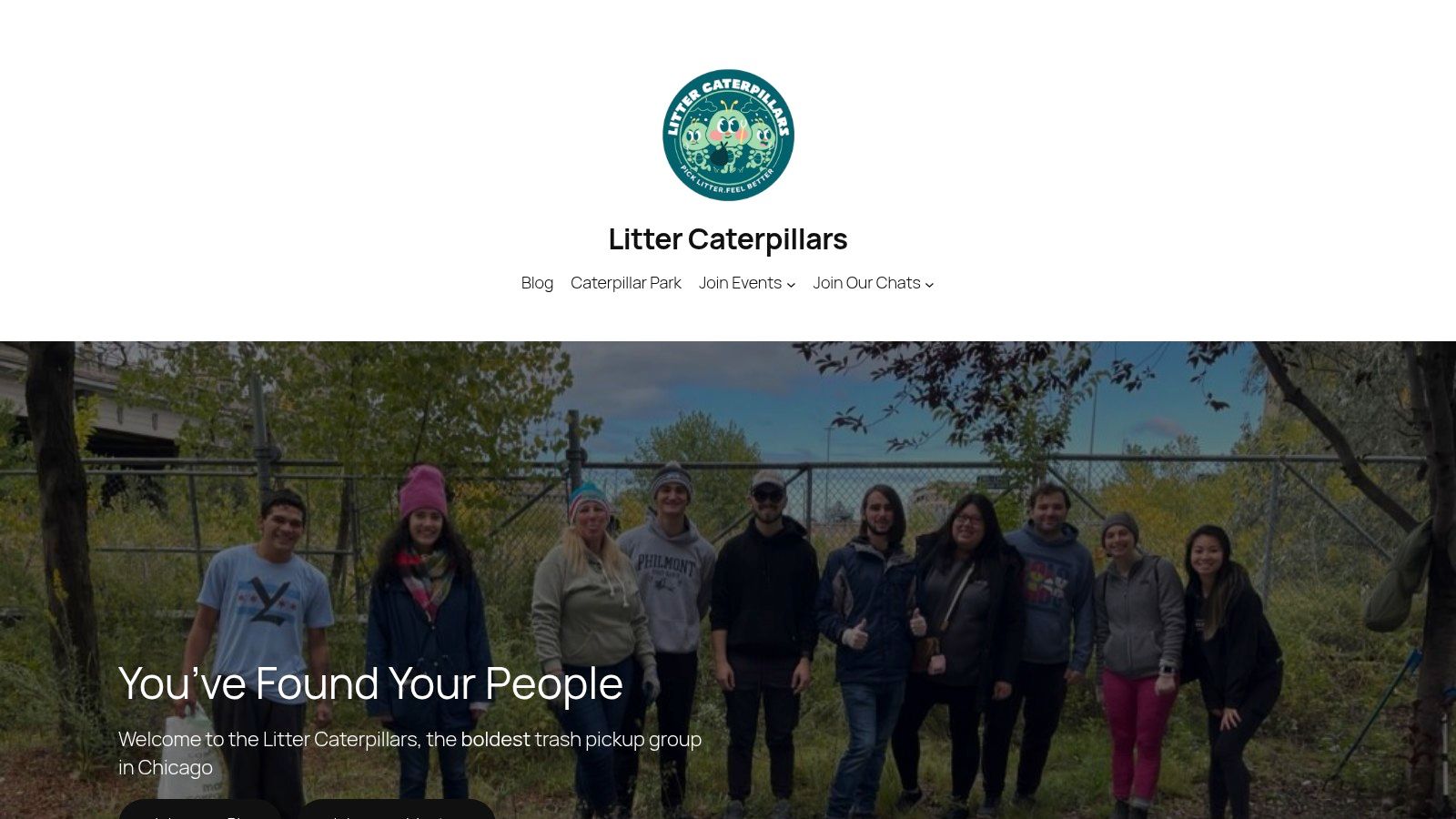
If you want a group that treats cleanup like real adventure, join Litter Caterpillars. You can show up, meet good people, and turn a simple outing into a day that leaves both you and the place in better shape.