Tag: lightning safety

  • Severe Weather Safety in the Workplace Guide

    Severe Weather Safety in the Workplace Guide

    Say you meet your crew at a vacant lot on Saturday, grabbers in hand, and the sky changes while you argue about one more block. You need one person who can end the morning before the weather ends it for you.

    The Hailstorm That Made Me Call a Stop

    I still see my first pickup clear as a photo on my phone. Three of us stand under a tree in Chicago while a spring hailstorm flips into a blizzard around us. I watch ice bounce off the sidewalk. I feel my gloves soak through. I pull my hood tight and I laugh because I do not know what else to do with my face.
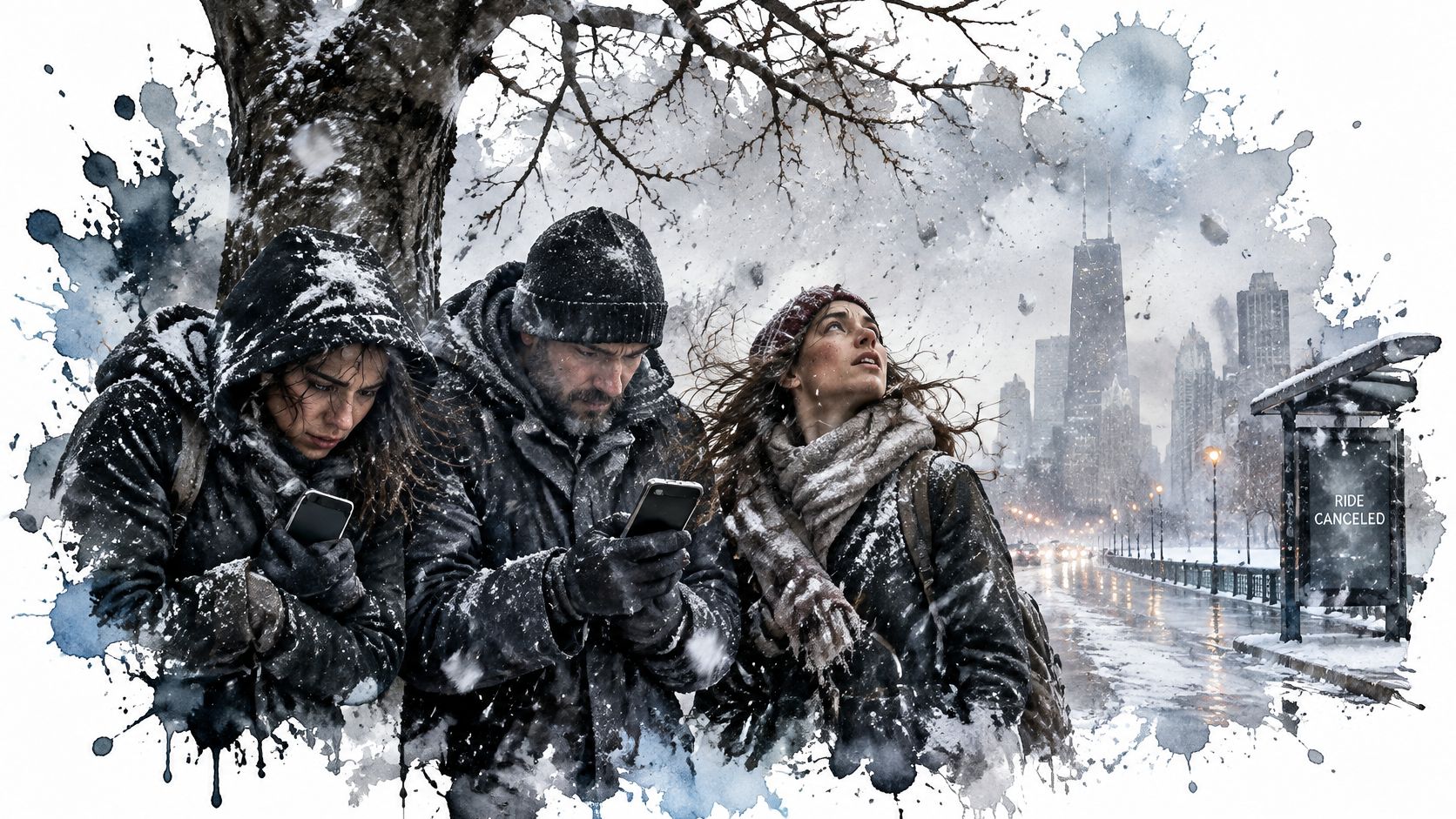
    Three people in winter clothing stand in a snowy city, looking frustrated at their smartphones while waiting.

    We call for a ride. We watch every Uber cancel on us. We call again. We watch the little car on the screen vanish again. During that first pickup, we got caught in a springtime hailstorm and blizzard while every Uber we called cancelled on us, and I learned the shape of stuck. I feel brave. I also feel dumb. Nobody owns the sky call. Nobody owns the shelter call. Nobody owns the ride home call.

    A Seatbelt You Click Before You Drive

    I treat severe weather safety in the workplace like a seatbelt for a crew that still wants to show up. You click the belt. You drive the car. You do not debate the belt after the road turns slick. You do the same thing with weather. You name your stop signs at home, in calm air, with dry socks on your feet.

    You might lead a paid jobsite crew with a trailer, a time clock, and a safety binder. You might lead six volunteers with trash bags, a group chat, and no HR office at all. I write for you both. I write for the foreman who carries a radio. I write for the neighbor who brings extra gloves in a grocery sack.

    I count a canceled block as a finished job. I brought my people home whole. I win that day.

    You get a stop table you can read tonight first. You then get heat on an ordinary noon, the lightning shelter count, cold wind through wet clothes, and a one page plan a small group can run without a lawyer in the car. I keep each part short enough for a phone screen. I keep each call plain enough for a tired person to make at 9 a.m.

    The Pride Trap I Fell Into

    I learned a twist later, after the hail day turned into a story I told at every meetup. Rain or shine builds pride. Rain or shine builds friendship fast. Rain or shine also traps a new person. She looks at your wet flag, your loud laugh, your full bag. She swallows the words, "I need to quit," because she does not want you to call her soft.

    I refuse that trade now. I tell new people the quit rule before I hand out bags. I say it loud. I say it with a smile. I say, "You can stop. I will thank you. I will walk you to the car myself."

    Pick one person before your next morning outside. Give that person full power to end the work. Put the name in the group chat tonight. You just built the first bolt in your seatbelt.

    Stop Triggers You Can Read Before You Leave

    Circle one row before your boots hit the sidewalk. I read this table at my kitchen table, coffee in hand, forecast open on my phone. You read yours the same way.

    Hazard Call it when Your move Where people go
    Heavy work, new to the heat WBGT about 23°C (73.4°F) Shorten work, add water and shade Shade or a cool vehicle; treat under 1 to 2 weeks of recent heat as unacclimatized
    Heavy work, used to the heat WBGT about 26°C (78.8°F) Keep the same rest, cut the pace Shade and water for acclimatized crews
    Moderate work, new to the heat WBGT about 25°C (77°F) More breaks and fluids Shade for walking, picking, and bag hauling
    Moderate work, used to the heat WBGT about 28°C (82.4°F) Breaks, fluids, buddy watch Shade for regulars on moderate tasks
    Lightning Thunder is heard Stop at once and count heads Enclosed building or hard top vehicle for 30 minutes after the last thunder
    Serious cold Wet clothes plus confusion or a cold injury Call 911 and rewarm Warm room or vehicle, dry clothes, blankets, no drink if the person is not alert

    The Thermometer in a Wet Sock

    I explain wet bulb globe temperature, or WBGT, with a kitchen picture. You stick a thermometer in a wet sock. You set that sock in the sun. You let wind hit it. Now one number holds air heat, humidity, sun heat, and air movement at once. Air temperature on your phone tells you one part. WBGT tells you the load your body carries.

    You and I feel the gap on a humid Chicago noon. The phone says a mild number. Your shirt sticks to your back by the second block. Your sweat sits on your skin and does no cooling work. WBGT catches that sticky trap. Your phone app misses it.

    The OSHA heat hazards guidance gives screening values for effective WBGT that split people by recent heat exposure and by workload. For heavy work, the limit sits at approximately 23°C (73.4°F) for unacclimatized workers and 26°C (78.8°F) for acclimatized workers. For moderate work, you get 25°C (77°F) and 28°C (82.4°F) in that same order.

    How I Read the Heat Rows

    Say you haul full bags to a corner dumpster, again and again, up a slight grade. I call that heavy work. Say a college kid joins you after two weeks in an air conditioned dorm. I treat him as new to the heat. His row trips first. You shorten his work bouts. You park him in shade with water. You pair him with a regular who watches his face.

    Say you walk a flat route, pick light litter, and chat while you work. I call that moderate work. Your regulars who worked outside all last week carry more heat practice in their bodies. They still hit a row. They still need breaks, fluids, and a buddy watch. Practice buys a few degrees. Practice never buys forever.

    Watch your clothing, too. A rain jacket, thick gloves, or gear that blocks sweat pushes your effective WBGT hotter than the bare number. Your body makes heat when you lift and walk. Humid air and sealed clothing block sweat cooling. Your core heat climbs. That climb makes the call for you.

    The Thunder Row and the Cold Row

    You hear thunder. You stop. I give you no debate steps for this row. You do not wait for a bolt. You do not finish the block. You move people into a full building or a hard top vehicle. You stay put for 30 minutes after the last thunder. Trees fail you. Tents fail you. Picnic roofs fail you.

    You see wet clothes plus confusion, slurred words, or a real cold injury on a winter route. You call 911. You move the person into a warm room or warm vehicle. You swap wet clothes for dry clothes. You do not send that person around one more block to warm up by walking. Walking already failed.

    My table rule: The safety lead calls the row out loud, and any person can stop at any time with no penalty and no speech.

    A normal forecast can still match a row on this table. A calm news segment can still hide a hard noon. Read the row at home. Read it again at the lot. You protect the morning when you read early.

    How Heat Sneaks Up on a Normal Shift

    Say you walk beside a mail carrier at noon on a humid Tuesday. No news host calls it a heatwave. No alert buzzes your phone. She lifts a satchel, climbs porch steps, and wipes her forehead with the back of her glove. By the tenth porch, her smile thins out. By the twentieth porch, she answers you a beat late.

    I picture your body as a small engine in a delivery truck. Work burns fuel and makes heat. Sweat works as your radiator. Thick humid air clogs that radiator. A rain jacket clogs it faster. Heat piles up inside the engine block while you smile and say you feel fine.
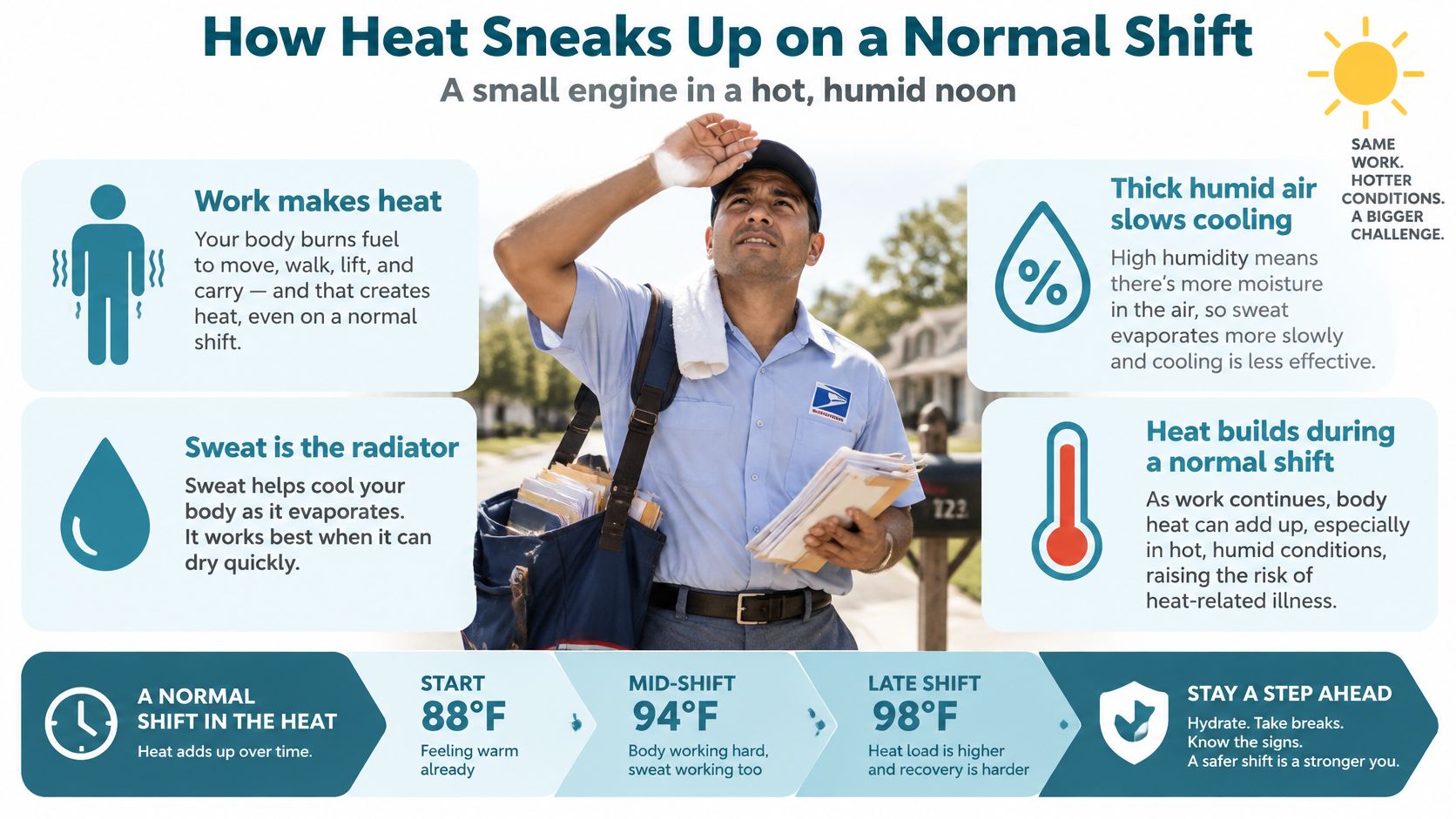
    An infographic showing how body heat accumulates for a postal worker in hot, humid weather conditions.

    The Scale You Carry Into Noon

    The International Labour Organization report estimates that at least 2.41 billion workers, about 71% of the world's working population, face exposure to excessive heat at work each year. Gardeners, construction crews, utility crews, postal workers, farm workers, and cleanup volunteers all share that load during ordinary summer days. The same report links that exposure to approximately 22.85 million occupational injuries and 18,970 work related deaths each year, and it says 90% of occupational excessive heat exposure and 80% of related injuries occur outside officially declared heatwaves.

    In the United States, the OSHA rulemaking record with Bureau of Labor Statistics data counts 1,042 worker deaths from occupational heat exposure between 1992 and 2022, an average of about 34 deaths per year. OSHA also says 50% to 70% of outdoor heat fatalities occur during the first few days in a hot environment, before workers acclimatize. I read that line and I shorten every new person's first week without apology.

    Water, Watchers, and the Two Minute Check

    Name one person who watches heat for the whole shift. The opening talk helps. The all shift watcher saves you at minute forty, when pride gets loud and water bottles run low. I point at a person. I say the name out loud. I put the name in the chat.

    The OSHA heat planning guidance tells you to offer cool drinking water at 50 to 60°F and push small drinks often, before thirst shows up. I use our heat exhaustion prevention tips the same way at a cleanup table. I fill cups. I hand cups to people who wave me off. I smile and I keep the cup in the air until hands take it.

    What you see What it may mean Your move
    Headache, dizziness, or weakness Early heat illness Shade, cool water, rest, and a buddy stays close
    Heart rate over 110 beats per minute The work bout is too long Shorten the next work period by one third and keep the same rest
    Oral temperature over 37.6°C Body heat is climbing Shorten the next work cycle by one third
    Confusion, fainting, or odd behavior Possible heat stroke Call 911, cool with water, move to shade, and stay until help arrives

    Read the table like a traffic light. Headache and dizziness mean shade, water, rest, and a buddy at the elbow. Confusion, odd behavior, or fainting means you call 911, cool the person with water or ice, move the person to shade, remove outer clothing, wet the skin, fan air across the body, and stay until help arrives. You act first. You sort out the story later.

    Tell every new person this line on day one. "I expect you to stop early this week. You earn my trust when you tell me early." You just gave that radiator room to work.

    When Thunder Means You Leave the Block

    Say you hold a metal grabber on an open lot in Englewood. Your friend works the far fence line, two blocks away, with earbuds in one ear. A low rumble rolls under the traffic noise. You almost talk yourself out of it. You tell yourself a truck hit a pothole. You look at the sky and you bargain for ten more minutes.

    Stop bargaining. Lightning gives you a sound cue, and thunder gives you your marching orders. I treat thunder like a fire alarm in a school. I do not sniff for smoke. I move my people.
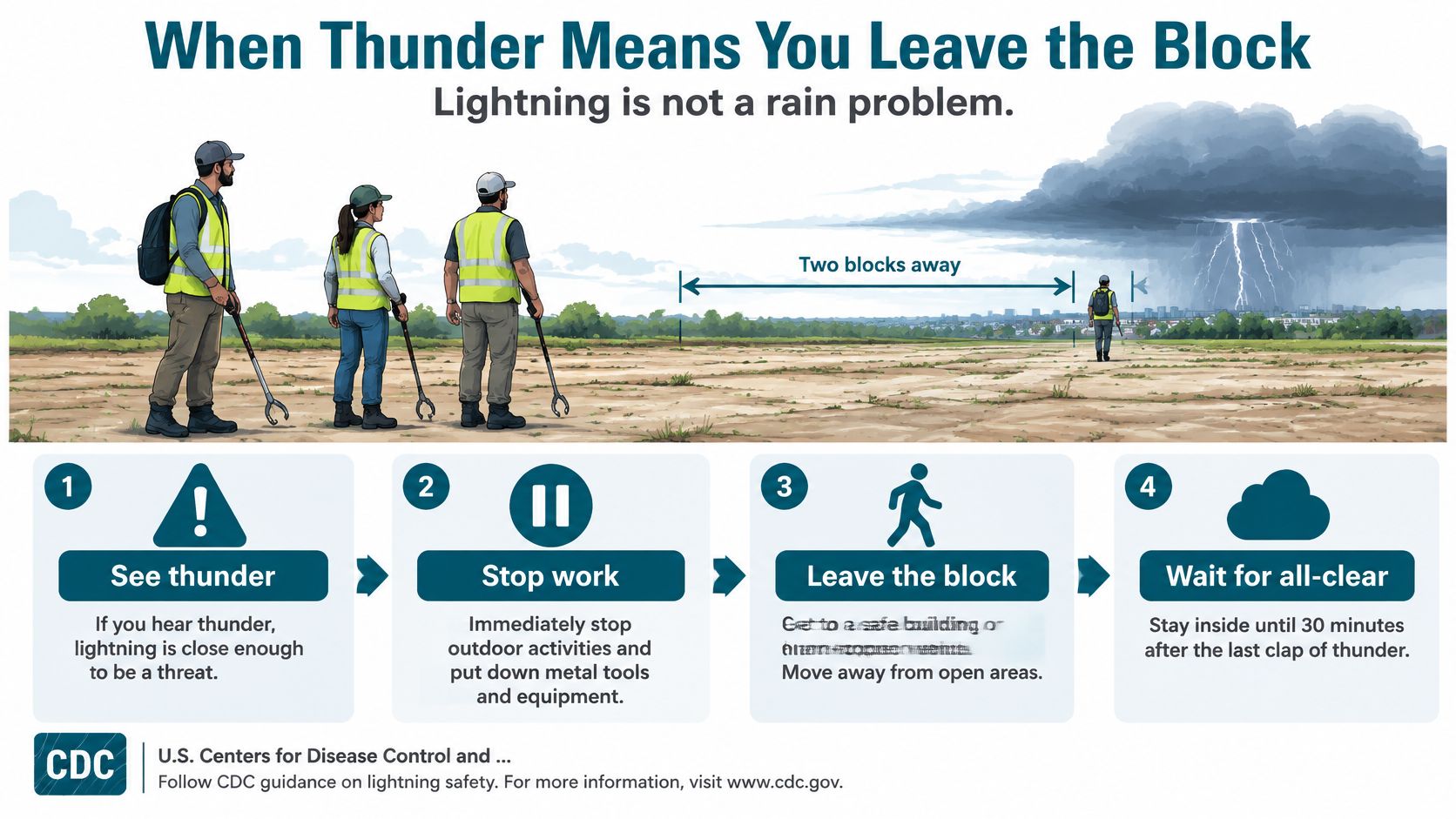
    A CDC infographic demonstrating lightning safety procedures for outdoor workers, including stopping work and seeking shelter.

    The U.S. Centers for Disease Control and Prevention lightning data page records 517 lightning related deaths from 2006 through 2025, and work related activities made up about 20% of those fatalities. Construction, farming, and ranching carry high counts in that data. Your cleanup route shares the same open sky, the same metal tools, and the same slow walk back to a car.

    Six Steps I Run Out Loud

    1. Before you start: Name the building and the hard top cars, and name one weather watcher with a charged phone.
    2. At the first thunder: The watcher calls stop by voice and in the group chat, and repeats the shelter name.
    3. Before anyone scatters: Gather a head count at the corner, names out loud, eyes on faces.
    4. Inside shelter: Go into a full building or a hard top vehicle, windows up, hands and bodies off metal surfaces.
    5. During the wait: Stay at least 30 minutes after the last thunder or lightning, and restart the clock at each new rumble.
    6. Before restart or dismissal: Count again, name by name, and only then release people to work or to home.

    I watch the short clip below with new leads before a storm week, and I make each lead say the six steps back to me without notes.

    The National Weather Service lightning rules page says you move promptly into a completely enclosed building or a hard topped vehicle when you hear thunder, and you stay sheltered for at least 30 minutes after the last thunder. Tents, picnic shelters, trees, and open sided structures give you no equal protection. A vehicle works as fallback shelter only when you stay inside with windows closed and avoid contact with metal surfaces.

    Fake Shelter Fails You Faster

    A tree gives you shade, wet bark, and a tall target. A picnic roof gives you dry hair and open sides. A pop up tent gives you a good photo and metal poles. I ban all three as lightning shelter at my meetup point. I say the ban before anyone grabs a bag, so nobody improvises under stress.

    A bright pause in the rain tricks good people. The sky lightens. The lot steams. Someone jokes about a free car wash. You still hold the clock. Lightning can strike before the worst rain and after the worst rain. Your thirty minute wait covers that sneaky edge.

    Say your route has no building within a quick walk. Your plan already failed at the kitchen table. Shrink the route next time. Move the meetup point near a library, a field house, or a row of parked hard top cars. I would rather carry wet bags to the car than explain a missing person.

    Wet Clothes and the Wind That Steals Heat

    Say you start a route at 35 degrees with a cheerful forecast and a thin sun. You bend for the first bag near a curb puddle. Splash water soaks your sweatshirt sleeve to the elbow. Wind cuts down the avenue between two brick buildings. By the third block, your teeth click when you try to joke.

    Wind chill stacks air temperature and wind speed into one bite. The forecast number tells you the air part. Wet cloth plus wind tells you the body part. The body part wins every argument. You feel fine at the car. You feel clumsy at the corner. You feel stupid slow at the alley mouth, and that slow feeling should scare you straight.

    I picture a wet, windy body as a thermos with the lid off on a bus bench. You pour hot cocoa into the thermos. Steam pours out the top at the same speed. You can drink warm liquid all morning and still lose the heat race through wet sleeves, wet socks, and a bare neck.

    The Duty Line and the Body Line

    The OSHA cold stress guidance says employers must protect workers from recognized cold stress hazards that can cause death or serious physical harm under Section 5(a)(1) of the Occupational Safety and Health Act, even without a specific cold work standard. A volunteer lead holds no employer badge. You still copy the same care. The body checks wind and wet cloth. The body never checks payroll.

    I use our own cold weather preparation habits before winter routes for the same reason. I check gloves at the meetup point. I look at shoes. I ask about spare socks with the same serious face I use for car keys.

    Six Rewarming Steps in Order

    1. Call 911: Call at once for a serious cold injury, confusion, or a person who stops shivering and goes quiet.
    2. Move the person: Move the person into a warm room or a warm vehicle, out of wind and off cold concrete.
    3. Swap the clothes: Remove wet clothing and replace it with dry clothing, socks and gloves included.
    4. Wrap the whole body: Wrap the entire body, head and neck included, in blankets, and add a tarp or garbage bag as a vapor barrier if you have one. Keep the face clear.
    5. Give a drink with care: Give a warm, sweetened drink only when the person stays alert, and never give liquid to someone who is unconscious.
    6. Place heat at the core: Place warm bottles or hot packs in the armpits, along the sides of the chest, and in the groin.

    Pack a dry layer and spare socks in the car before the witty group chat starts. Dry cloth beats brave talk at minute thirty.

    Watch hands for your early warning. Fingers fumble a knot. A zipper defeats a good glove. A volunteer drops the grabber twice in one block. I shorten the route at that sign. I turn the group toward the cars while people still laugh about it.

    You face a plain choice on wet, windy days. Gloves soak through, wind picks up, and your farthest walker still has six blocks to cover. You shorten the route now. You save the heroic loop for a dry morning. Your crew keeps fingers that work, and your crew comes back next week.

    Employers and Volunteer Groups

    You run a paid crew. You must protect your workers from recognized hazards that can kill them or cause serious physical harm under Section 5(a)(1) of the Occupational Safety and Health Act. OSHA has no separate cold work standard. That general duty still covers cold stress on your site.

    Heat guidance gives you concrete jobs. Assign one person to monitor conditions for the whole shift. Keep a reliable way to reach every worker fast. Hold the power to stop work or evacuate the site, and tell your crew who holds that power before the first task starts.

    The Gap at a Saturday Meetup

    You run a volunteer group on Saturday. You usually hold no employer role. You hold no HR office. You hold no legal authority over a neighbor who can walk away at any corner. The duty line from a jobsite maps onto your morning in a messy way.

    You still need the rule. Heat loads a volunteer heart the same way heat loads a paid heart. Lightning ignores your tax status. Wet wind pulls heat from a student in a hoodie at the same speed as a roofer in coveralls.

    Group What it owes Your move
    Paid employer Protect workers from recognized heat, cold, and lightning hazards Assign a monitor, keep a stop work rule, and run a reliable alert method
    Volunteer group Often outside OSHA employer duties, with no authority over participants Write a stop rule, name a safety lead, and use the same heat, lightning, and cold steps

    Read the table and then check your local rules. State and city laws can add requirements on top of federal guidance. Your park district permit can add rules. Your sponsor can add rules. I read permits at home, with a pen, before I promise a route to anyone.

    Use your sign up sheet as a safety tool. Ask about health limits in plain words. Ask about rides home. Ask about gloves, hats, and water bottles. You learn who needs a shorter loop before anyone lifts the first bag. You learn who needs a car seat held open during a storm wait. You learn who walks alone to a bus stop, and you pair that person with a buddy at dismissal.

    Build a One-Page Plan and Send It Tonight

    Say ten people meet you for litter pickup on Saturday at a wide open lot. Two people joined for the first time. One person arrived by bus and has no car. A regular brings a cooler. A student brings thin fashion gloves and a huge grin. We pick up trash rain or shine, including on the coldest days of winter and the hottest days of summer, and that pride puts real people in front of you in real weather.
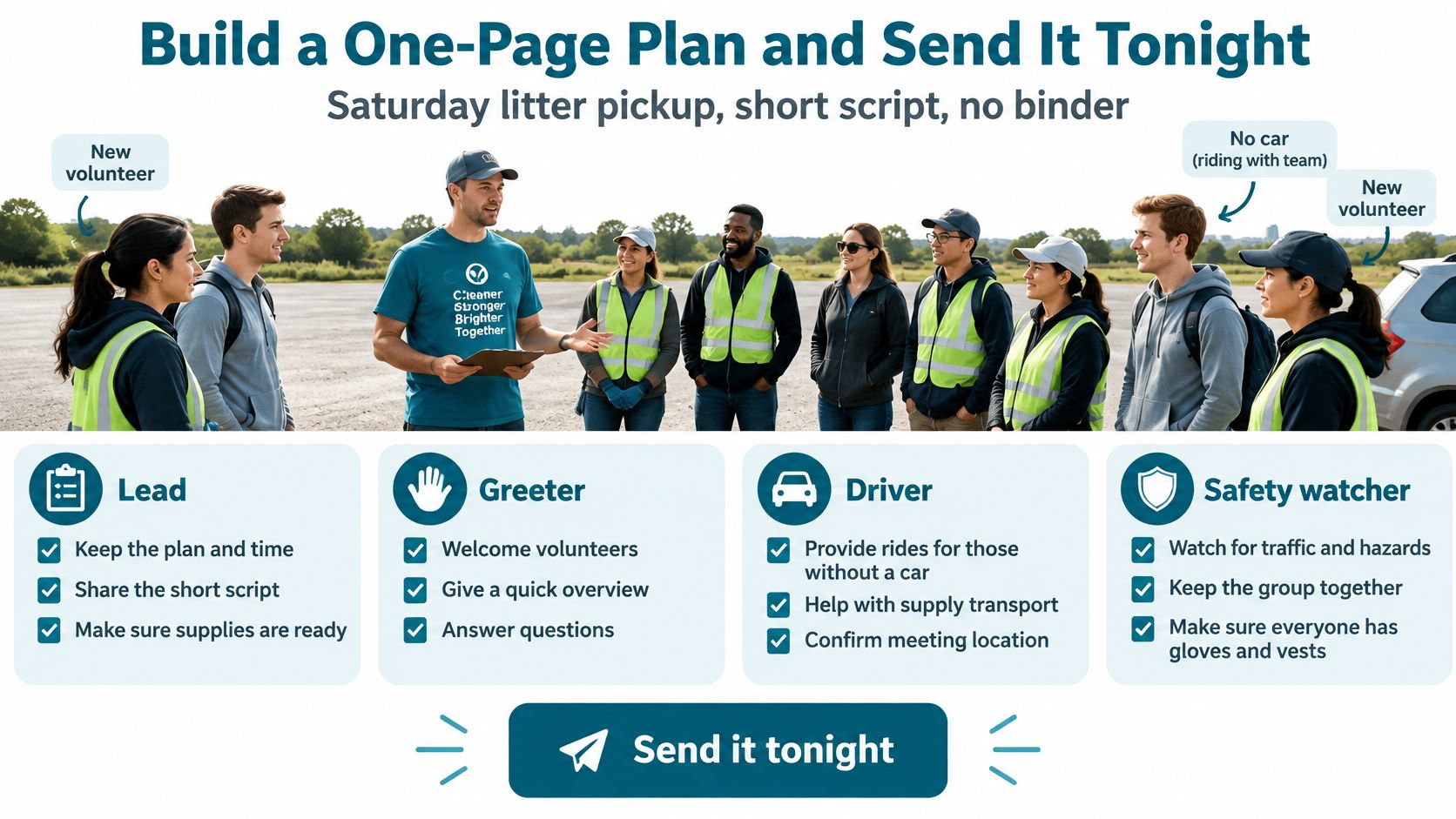
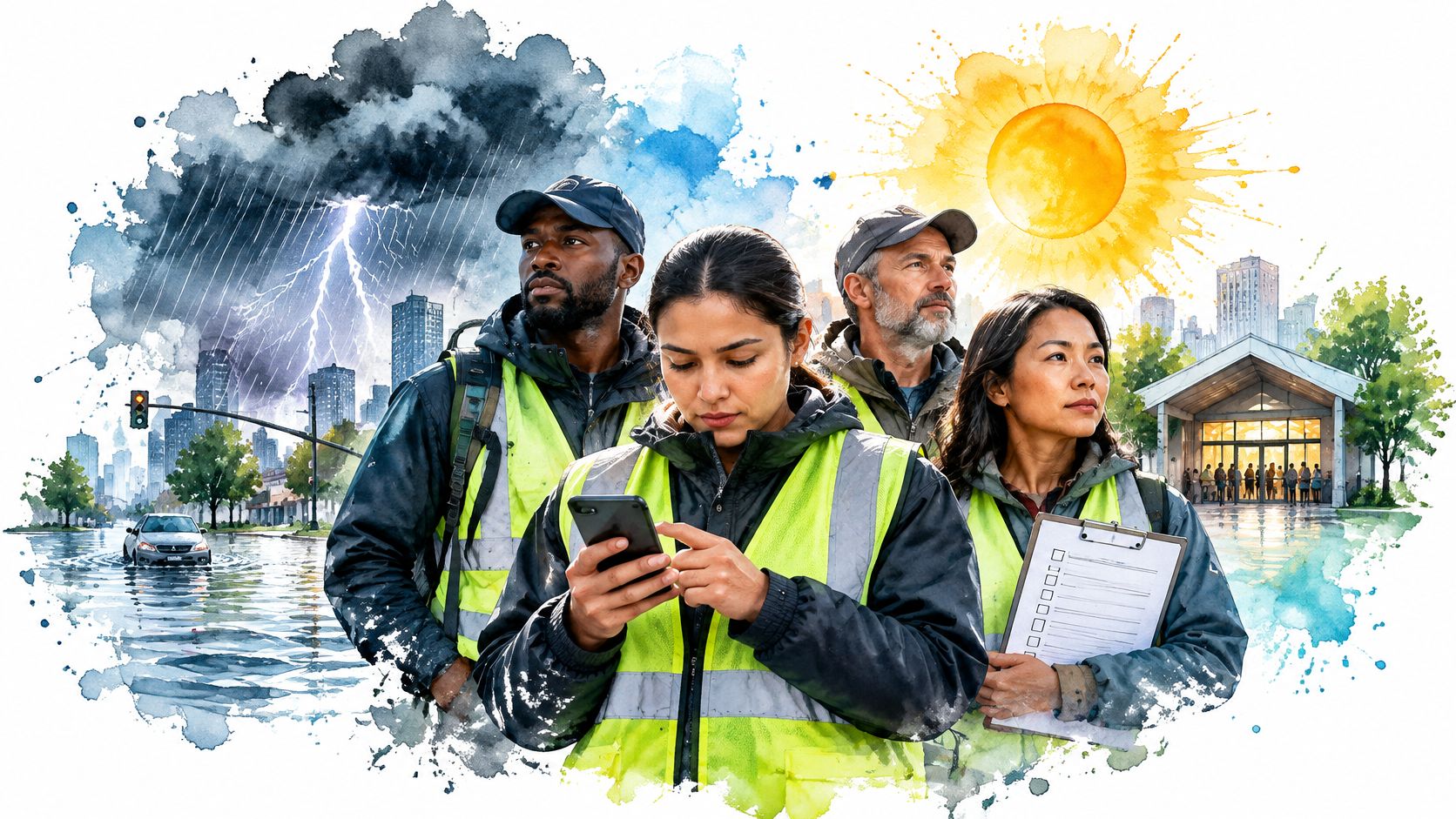
    A team of volunteers wearing high-visibility vests preparing for a community litter pickup event outdoors.

    You need a short script for that lot. A binder in your trunk helps nobody at minute twenty. A one page plan on five phones helps everybody. Safety of the volunteers always takes first priority, and happiness of the volunteers takes second priority at my meetup point, and I say that order out loud before bags open.

    Four Roles Before Anyone Spreads Out

    • Safety lead: You can end the day, shrink the route, or send one person home, and the group backs your call without a vote.
    • Weather watcher: You check the forecast and the sky every hour, watch for thunder, wind shifts, and heat load, and you call out changes loud.
    • Head count buddy: You hold the sign in list, count faces at shelter time, and count again before restart or dismissal.
    • 911 caller: You hold the site address on your phone screen, you dial without hunting for words, and you stay on the line.

    Name the shelter next. Point at the actual building with your actual arm. Name the cars that count as hard top shelter. Say how long an ambulance may take on that block, and name the cross street you will give a dispatcher. A person under stress reads a screen better than a memory.

    The OSHA winter weather preparedness guidance tells employers to monitor winter weather, maintain a reliable way to communicate with workers, and keep the ability to stop work or evacuate when conditions require it. Heat plan details on that same worksite logic tell you to state what you do at heat illness symptoms, how you contact emergency services, how long responders may take, and what first aid you give until help arrives. For high body temperature or suspected heat stroke, you call 911, cool the worker immediately with water or ice, move the person to a cooler or shaded area when possible, and stay with the worker until help arrives.

    The Symptom Line You Say Out Loud

    I gather the circle. I hold up one finger. I say, "Headache, dizziness, or odd behavior means we stop that person. Maya dials 911. Jordan grabs water and shade. I stay with the person." Names beat job titles in a loud lot. Verbs beat good intentions every time.

    Train in two minutes. Show a new person the water cooler, the shade spot, the bathroom, and the shelter door. Tell newcomers they count as new to the heat this week. Give a person with asthma, a heart condition, or thin gloves a shorter loop without a speech about toughness. You protect pride when you assign the short loop as a smart job, like guarding the supply corner and sorting bags.

    Write a check in and check out habit into the page. Each person signs in with a phone number. Each person checks out with the head count buddy before a rideshare, a bus, or a solo walk home. Nobody vanishes from your count. Nobody becomes a rumor in the group chat at noon.

    I stock the car from our severe weather safety kit list, and I cross check first aid basics against the Adventure Medical Kits preparedness guide when I restock bandages, blankets, and cold packs at home. I check dates on packs. I replace the mystery granola bar from last season. I charge the spare battery while I brush my teeth.

    Four Actions You Take Tonight

    1. Copy the stop table: Paste the table into a phone note and send a photo of it to your safety lead and weather watcher.
    2. Name names and places: Write the safety lead, the shelter building, the hard top cars, and the site address for the next outing.
    3. Pack the car: Load water, cups, a dry layer, spare socks, blankets, a first aid kit, and a printed contact list.
    4. Post the quit rule: Send one group chat message that says any person may quit at any time and the lead may cancel without debate.

    We came to take care of the block and each other, and safety comes first.

    Say that line at the lot. Say it again when thunder tests your nerve. Say it again when a new person looks at wet gloves and wonders about worth. You build a crew people trust when your actions match the line on the hard morning, in front of witnesses, with full bags still on the ground.


    Join me at Litter Caterpillars for a Chicago weekend cleanup where we name a safety lead, read the sky before we spread out, and look after each other block by block. Bring your water bottle, your spare socks, and your brave Saturday self, and I will hand you a grabber, a buddy, and a route that fits your body that day.
  • How to Build a Severe Weather Safety Plan That Works

    How to Build a Severe Weather Safety Plan That Works

    Say you're halfway through a Saturday cleanup when thunder interrupts the scrape of litter grabbers, and someone asks whether you can finish the block. Your severe weather safety plan should give you an answer before anyone asks.

    Which Hazards Your Plan Must Cover

    Start with the question your crew will ask first: Which hazards can reach this site, and where do we go for each one? Use a lookup table so volunteers can choose a destination without debating under a darkening sky.

    Say you've spread a crew across a commercial strip when the weather turns. Without clear directions, someone heads toward a tree while someone else waits beside the supply cart. Give everyone the same destination before you hand out gloves.

    Hazards, triggers and shelter choices

    Hazard Trigger to act on Safe place Not safe
    Lightning and thunderstorms Any thunder, even with clear skies nearby Substantial enclosed building or enclosed hard-topped metal vehicle Trees, tents, picnic shelters, dugouts
    Tornado Tornado warning or siren Basement or lowest floor, small interior room without windows Vehicles, tents, temporary shelters
    Extreme heat Hot forecast with humid conditions or a heat advisory Air-conditioned building, or shaded rest area with water for preventive breaks Open lot at midday with no water
    Winter cold Wind chill reaching a dangerous level Heated building or warm vehicle Exposed work with bare skin
    Flooding Flash flood warning or water over the route Higher ground away from the water Low areas and floodwater crossings

    Give heat its own row

    You may picture a tornado first, but don't leave heat in the margins. A CDC analysis counted 10,527 U.S. deaths from heat-related conditions during 2004–2018, an average of 702 annually, with approximately 90% occurring from May through September.

    That warm-season concentration matters when you organize outdoor work. Put cooling access, water and an exit route beside the storm shelters on your site sheet.

    During our first pickup, we got caught in a springtime hailstorm and blizzard while every Uber we called cancelled on us. We huddled under a tree, a choice you shouldn't copy as storm protection.

    Practical rule: Choose your refuge before you choose your cleanup boundary.

    Write every site on a single sheet, then add its hazards, nearest substantial building, entrance and walking route. Confirm access with the person who controls the door. A building you can see through a locked gate isn't a usable destination.

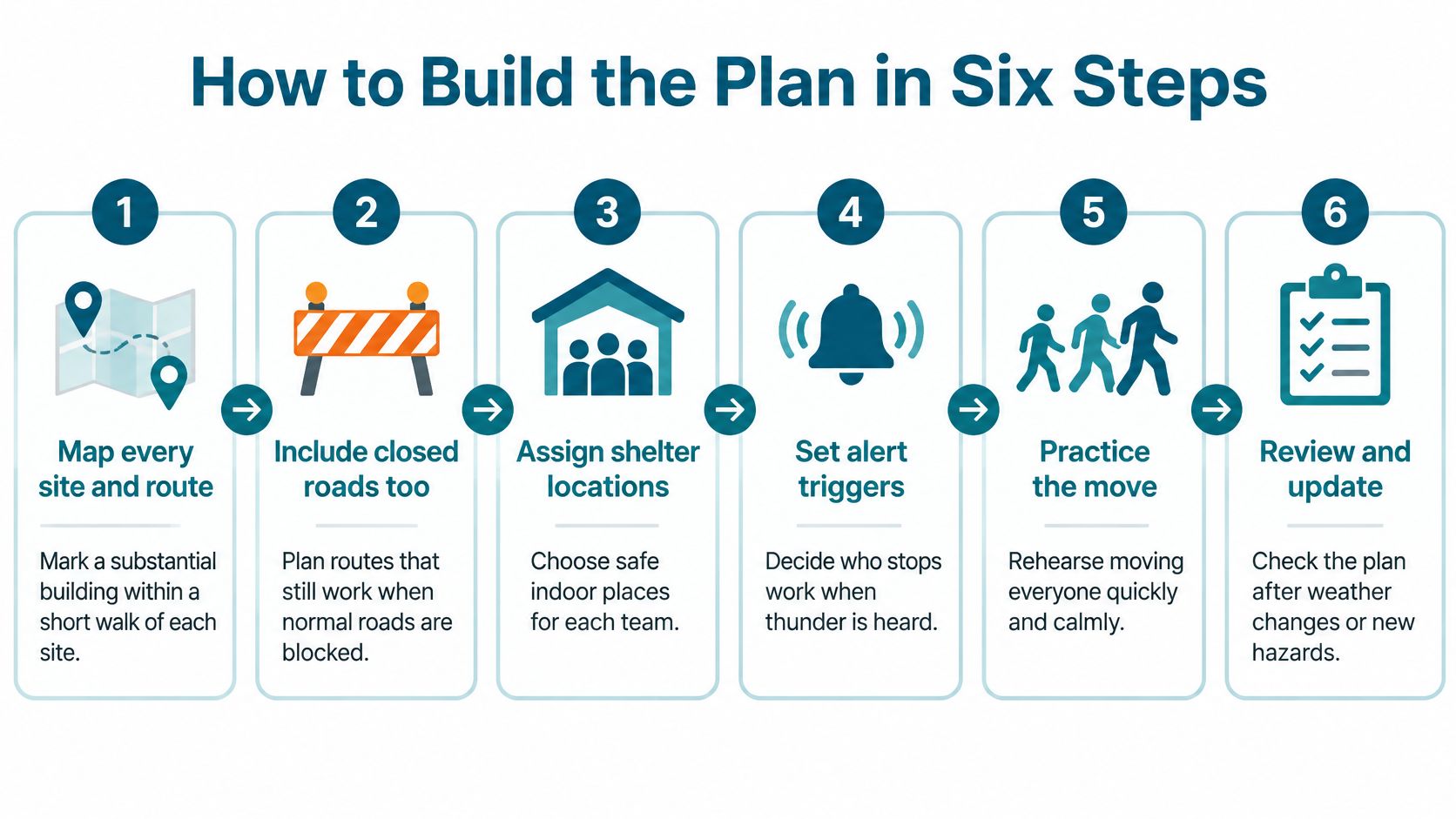
    How to Build the Plan in Six Steps

    Build your severe weather safety plan around decisions you can make with cold hands and a wet phone. At Litter Caterpillars, we always put volunteer safety first and volunteer happiness second. Use that order when you decide what to shorten, move or cancel.

    NOAA's lightning safety guidance supports preassigned stop-work decisions, suitable shelter and a wait of at least 30 minutes after the last thunder before resuming. Treat that wait as a minimum, never a promise that you'll restart.

    Put an owner beside every action

    1. Map every site and route. Mark a substantial building within a short walk, confirm the entrance, and include detours around closed roads. We've cleaned a highway during a bike riding event shutdown, so we know a traffic-free worksite still needs an exit and shelter; watch for the mistake of treating a tree or picnic pavilion as refuge.

    2. Assign a weather lead who can cancel, a route sweeper, a communications lead and a roster keeper, then give each person a backup and each volunteer a buddy. The slip to avoid: leaving all authority with an organizer who also manages supplies, welcomes arrivals and answers messages.

    3. Write your stop triggers before departure. Include thunder, tornado warnings, locally chosen heat and wind chill limits, plus an evening-before cancellation deadline when forecasts justify an early decision. Don't rely on a limit that lives only in your head, and don't make volunteers travel into dangerous weather just to hear you cancel.

    4. Test the alert chain through both a group chat and a phone tree, including a message for people already traveling. Ask everyone to acknowledge the test, because a chat invitation doesn't prove that someone joined or receives notifications.

    5. Arrange transport before you need it. Identify drivers, available seats and a safe waiting place for volunteers without cars, including anyone who needs help after an early finish. Avoid a transport plan that ends with a stranded volunteer refreshing a ride-hailing app.

    6. Write the restart conditions and next review date on the page, with space for the weather lead's decision. The slip to avoid: accepting brighter skies as permission to return while you still have unresolved weather, attendance or route hazards.

    Use this visual as a prompt when you build your route-specific version.

    A six-step infographic illustrating a safety plan for severe weather with clear, actionable instructions and icons.

    Keep the working copy short

    Fit the decision sheet on a page: map, roles, stop triggers, shelter instructions and contact details for the lead and deputy. Carry the current roster alongside it, rather than squeezing private emergency contacts into a public handout.

    Pack the equipment that supports those decisions using the severe weather safety kit checklist. You need both the written decision and the means to carry it out.

    Who Does What and How Alerts Reach People

    Roles, authority and backups

    Role Owns during a warning Can cancel? Backup
    Weather lead Forecasts, cancellation deadline and stop-work call Yes Deputy weather lead with own phone
    Route sweeper Walks the route and confirms everyone reached shelter No Second sweeper on the opposite side
    Communications lead Sends alerts through the group chat and phone tree No Co-lead who holds a copy of the templates
    Roster keeper Attendance list, check-ins and reply tracking No Any leader who holds a printed roster
    Buddy pairs Watch each other for heat, cold or confusion No Team lead assigns a new pair

    Replace role labels with actual names before departure. Anyone can raise a concern or move out of danger; the authority column assigns responsibility for the whole-event decision, not permission to protect yourself.

    We put volunteer safety first and happiness second. That means the weather lead can cancel while enthusiastic volunteers still want to finish their bags.

    Send a message people can act on

    Use this cancellation template, and treat the reply window as an accountability deadline rather than permission to delay shelter:

    [Event] is cancelled. Move to [shelter address] now. Find your buddy and count off. Reply SAFE to [roster keeper name] within 15 minutes.

    The address removes guesswork. The buddy count helps you identify anyone missing, and the roster keeper follows up on unanswered messages immediately rather than assuming silence means safety.

    For a restart message, write:

    Weather lead all-clear for [event]. Restart at [time] from [meeting point]. Check in with [roster keeper] before leaving shelter. Stay sheltered until you receive this instruction.

    Only send that message after you meet the lightning waiting period, complete the headcount and check the route. The National Weather Service's severe-weather safety guidance calls for substantial enclosed shelter or a hard-topped vehicle during lightning, so don't send people outside merely to assemble.

    Keep alerts separate from conversation

    If your workplace already uses Pebb to share photos across your company, keep cleanup pictures separate from urgent weather messages. You don't want volunteers hunting through a photo thread for the shelter address.

    Store phone numbers offline and test the chain on a Saturday morning before the season starts. A cancellation works only when you reach the last person on the route.

    Shelter Rules for Thunder, Tornadoes and Hail

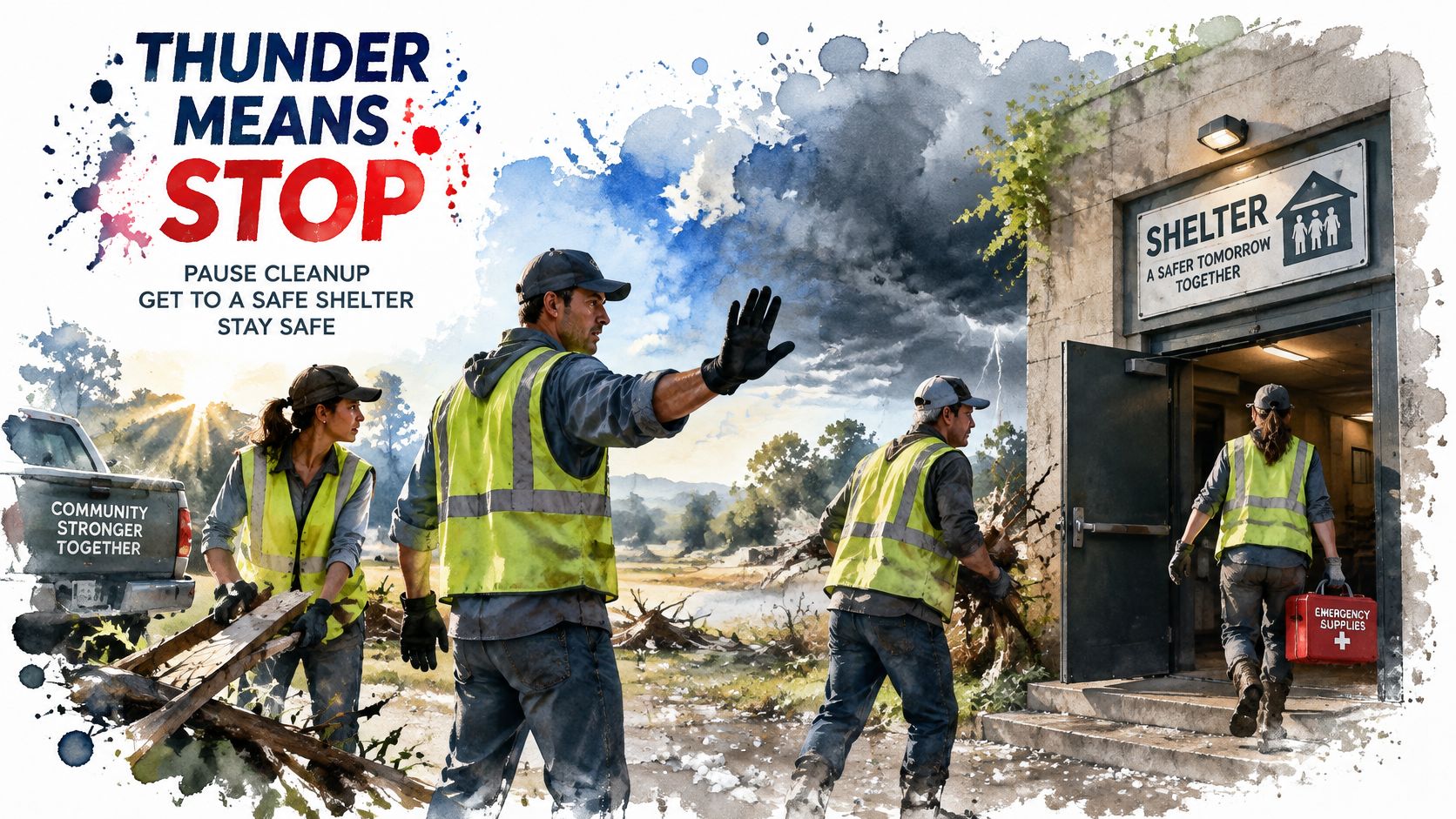
    Thunder means stop. Treat it like a smoke alarm: move when you hear it, even when you can still see blue sky.

    Use the scene below as a reminder to move together toward real shelter, rather than gathering around the equipment.

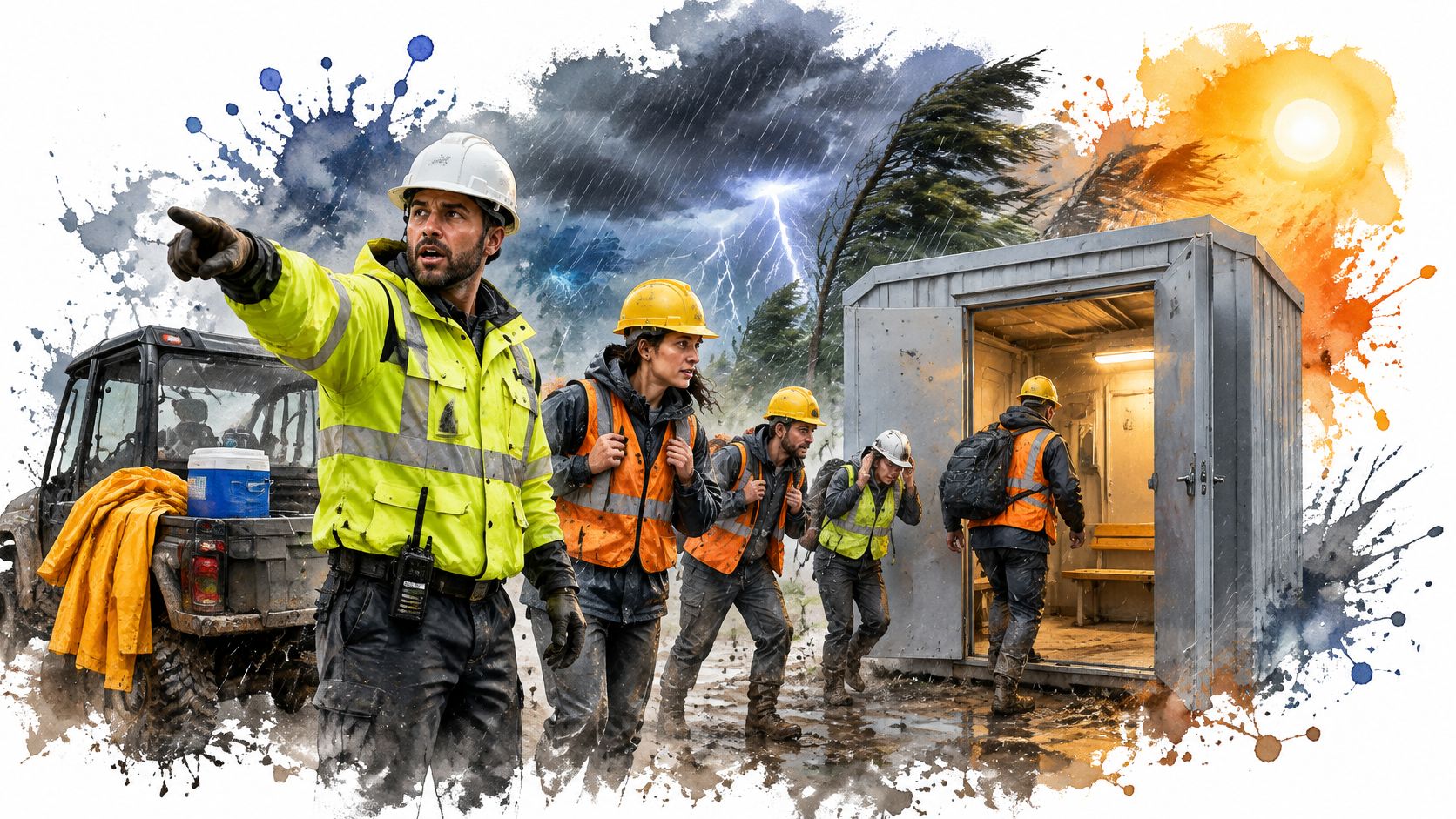
    Construction workers wearing high-visibility vests move to a safe shelter during a severe thunderstorm.

    Follow the National Weather Service's lightning guidance: enter a substantial enclosed building or enclosed metal-topped vehicle immediately, and stay sheltered for at least 30 minutes after the last thunderclap. Don't substitute a tent, shed, porch, picnic pavilion, dugout or tree.

    Start the clock again whenever you hear more thunder. Keep the crew together inside, and let the weather lead handle the decision instead of sending volunteers out to inspect the sky.

    Change your response for a tornado

    A vehicle can provide lightning shelter, but don't choose it as your main tornado refuge. Follow FEMA's shelter-in-place guidance when you choose and use a tornado shelter:

    1. Go low. Move to a basement or the lowest available floor of a sturdy building.
    2. Choose a small interior room without windows, and put as many walls as possible between you and the outside.
    3. Protect yourself. Crouch low and cover your head and neck with your hands or sturdy cover.

    Locate that building before starting near an open lot or roadway. Don't assume the lightning destination has a suitable tornado room.

    Use this video during your pre-event conversation about moving to safety.

    If you get caught outside, follow the National Weather Service's outdoor storm precautions: move away from hills, water, isolated tall trees and power poles, and protect your head from hail while seeking shelter. No outdoor position provides safe lightning shelter; avoid floodwater as you move.

    Carry a shelter card

    Write the address, walking time, entrance and indoor meeting point on each route's card. Count off at that meeting point so nobody searches neighboring rooms or walks back outside.

    Restart only after the required wait, a matching roster and headcount, and a clear route check. If you can't meet every condition, end the cleanup.

    Heat and Cold Limits for Volunteers

    A thermometer reading doesn't tell you how long you can work comfortably or safely. Wind, sun, clothing, effort and access to recovery all affect the decision you need to make.

    At 0°F with a 15-mph wind, you face a -19°F wind chill, and exposed skin can freeze in about 30 minutes, according to the National Weather Service's winter preparedness guidance. Don't use that example as a safe shift length. Shorten or cancel work before exposure becomes dangerous, cover skin and bring spare warm layers.

    We pick up trash rain or shine, including on the coldest days of winter and the hottest days of summer. You still need permission to stop, warm up or cool down without proving your toughness.

    Make recovery part of the route

    For hot-weather shifts, use these operating rules:

    • Shorten the work. Move strenuous tasks toward cooler morning conditions and reduce afternoon exposure.
    • Place supplies along the route. Put water and shade where volunteers can reach them without abandoning a buddy.
    • Keep people paired. Don't allow solo work when heat or cold could impair someone.
    • Ask directly. Check for dizziness, nausea or unusual fatigue instead of waiting for someone to admit trouble.

    Chicago's heat guidance advises staying indoors when possible during extreme heat. Shade helps with preventive breaks, but choose indoor cooling when outdoor conditions no longer allow safe recovery.

    You don't owe the route another bag when your body needs shelter.

    As a starting task-rotation rule, switch jobs every hour, and rotate sooner whenever conditions or symptoms demand it. Keep a spare hat, gloves, water and phone charger in the sweep kit.

    Plan for someone who feels unwell

    Review heat exhaustion prevention tips before a hot-weather event. Ask whether anyone feels dizzy or nauseous, but don't treat continued sweating as proof that someone is safe.

    Name a cooling location, a hospital route and someone who can help arrange a ride home or recovery space. Call emergency services for suspected heat stroke rather than treating a private ride as medical care.

    Before you approve the site, ask: Can everyone cool off or warm up within a short walk?

    Drills, Reviews and Your First Week

    Think of a weather drill like a fire drill. You don't expect trouble every Saturday, but you need to know the door before you need to use it.

    In a 2023 survey of 1,000 U.S. adults, 47% said they had created an evacuation or family preparedness plan for severe weather, according to Motorola Solutions' report based on Researchscape research. For your crew, take the next practical step: test whether you can carry out what you wrote.

    Rehearse an ordinary Saturday

    Set aside 20 minutes for a tabletop exercise. Use a hypothetical scenario: you hear thunder just after volunteers spread along the route, and a late arrival hasn't checked in.

    Ask the weather lead to announce the stop. Have the communications lead send a clearly labeled drill message, then ask the roster keeper to track replies and identify the missing arrival.

    Next, have the sweeper walk to the assigned entrance while someone checks the shelter card's walking time. If the sweeper can't make it within that time, shorten or change the route instead of stretching the promised time to fit.

    A plan you've walked once beats a perfect one you leave in a folder.

    Try a complication before you finish. Say the usual entrance is locked, the deputy's battery dies, or a volunteer needs help reaching shelter. Give each problem an owner and write the change onto the working copy.

    Drill and review cadence

    Drill or review How often What it checks Result that counts
    Contact roster check Monthly Phone numbers, group chat membership and roster accuracy Every volunteer confirms a working number
    Shelter walk-through Before each season Walking time and door access at every shelter Group reaches shelter within the stated walking time
    Tabletop storm drill Twice a year Who calls the stop and how fast the alert spreads Cancel decision and last reply within the set window
    Plan review Yearly and after any event where you use the plan Roles, sites, contacts and triggers You share the updated plan with every volunteer

    Give yourself a workable first week

    Use the severe weather safety video to open a crew discussion, then move from watching to doing. Keep your first round manageable:

    • Print the working copy. Put it in the sweep kit where the backup lead can find it.
    • Walk the route. Carry the shelter card and check the actual entrance.
    • Confirm authority. Name the weather lead and deputy who can cancel.
    • Share the messages. Let every volunteer see the cancellation and restart templates.
    • Write the next review date. Put it on the plan before you pack away the clipboard.

    After a weather interruption, ask where you hesitated, who missed a message and what transport problem remained. Thank people for naming awkward details, then change the document while everyone remembers them.

    Start with a site today. You can expand a tested routine much more confidently than an untried binder.


    We bring Chicago neighbors together for hands-on cleanups, friendship and service, with volunteer safety first and happiness second. Visit Litter Caterpillars to find a cleanup and explore our weather-safety resources before you head out with your crew.

  • Severe Weather Safety Guide for City Volunteers

    Severe Weather Safety Guide for City Volunteers

    At our first pickup, we huddled under a tree while a springtime hailstorm turned into a blizzard, and every Uber we called cancelled on us. We shivered, watched our phones, and discovered that getting home deserved as much thought as showing up.

    Why I Stop Calling Rain or Shine a Safety Plan

    I still treasure that strange beginning. I don't recommend the shelter choice. A tree gave us a place to gather, but we needed a real exit plan.

    Cold hands and cancelled rides can make a memorable story. They don't give me permission to gamble with your safety the next time we carry bags down a Chicago block.

    When I say rain or shine, I mean that I won't abandon useful work because the morning feels uncomfortable. I don't mean that you owe the crew your body when conditions turn dangerous.

    Pride can get you out the door. Your safety plan needs to get you home.

    Give the morning an exit

    Say you reach the meeting corner with gloves, a grabber, and enough enthusiasm to clean the whole avenue. You spot dark clouds beyond the train tracks. Before you open a trash bag, I want you to know where you'll go if the weather changes.

    Name the building. Check the entrance. Find the person who can stop the work without asking the whole group to vote.

    For another practical perspective on organizing outdoor work, TP Training's on-site safety for civil works is a useful companion. I bring the same planning questions to a volunteer cleanup: what can hurt you, where can you retreat, and who makes the call?

    • Before you arrive: Know whether the event can proceed safely.
    • Before you spread out: Know your shelter and your buddy.
    • Before you leave: Make sure someone knows you've reached a safe destination.

    I want this severe weather safety guide to help you make those decisions without embarrassment. You can love a hard morning and still call it off. I want you back next weekend, with dry socks and another story to tell.

    Deaths by Hazard and the First Move

    Hazard death averages and your first move

    Hazard Yearly US deaths Your first move Shelter that counts
    Flooding 88, NOAA 30-year average Get to higher ground and stay out of moving water High ground, never an underpass
    Extreme heat 180, NWS 30-year comparison Shorten the work, add water and shade, or cancel Shade, a cooled vehicle, or a building
    Tornadoes 68, NOAA 30-year average On a warning, move immediately Lowest interior room of a sturdy building
    Lightning 41, NOAA 30-year average Stop at the first thunder and complete the shelter wait Substantial building or a closed metal-topped vehicle

    For the flood, tornado, and lightning rows, I use NOAA's flood safety comparison, which gives US annual averages over 30 years of 88 flood deaths, 68 tornado deaths, and 41 lightning deaths.

    For heat, I use the National Weather Service comparison cited by NOAA's Science Council: its 30-year averages include 180 heat deaths, 94 flood deaths, and 73 tornado deaths.

    Read the table as a work order

    I don't blend those comparisons into a new average. You can see that they give different flood and tornado figures. I use each comparison as stated, and I keep heat and flooding near the front of my planning.

    Say you check your phone and see a dramatic tornado video from another state. Meanwhile, your own crew plans to haul heavy bags along a sunny route with no cool recovery spot. I want you to solve the hazard on your block, rather than organize around the most frightening video.

    The same applies to water. You might feel more nervous about an approaching cloud than a flooded alley, but you can step away from the alley now. Don't test it with your boot.

    Watch the route beneath your feet

    Flash flooding can reach your route even when you don't see rain overhead. Say you plan to return through a viaduct. On the outward walk, you see dry pavement; later, you find water across the road. You need another route, not a debate about whether you can hurry through.

    I inspect the low points before a crew spreads out:

    • Underpasses: Choose an alternate return route that stays higher.
    • Alleys and lots: Notice slopes, pooled water, and exits.
    • Shelter approaches: Check whether you can reach the door without crossing a low stretch.
    • Transit connections: Avoid a plan that leaves volunteers stranded beyond a flooded crossing.

    For winter outings, I pair that route check with our blizzard safety tips. You still need to think about visibility, footing, and the journey home when snow replaces rain.

    You don't need to memorize a death table to lead well. You need to turn each row into a decision before anyone shoulders a heavy bag.

    How You Make the Go or No Go Call

    Say the forecast looks uncertain on Friday evening. You could send a cheerful message and hope for the best. I'd rather send a clear decision, with permission to change it when we meet.

    At Litter Caterpillars, we put volunteer safety first and volunteer happiness second. I won't reverse that order to protect a turnout photo.

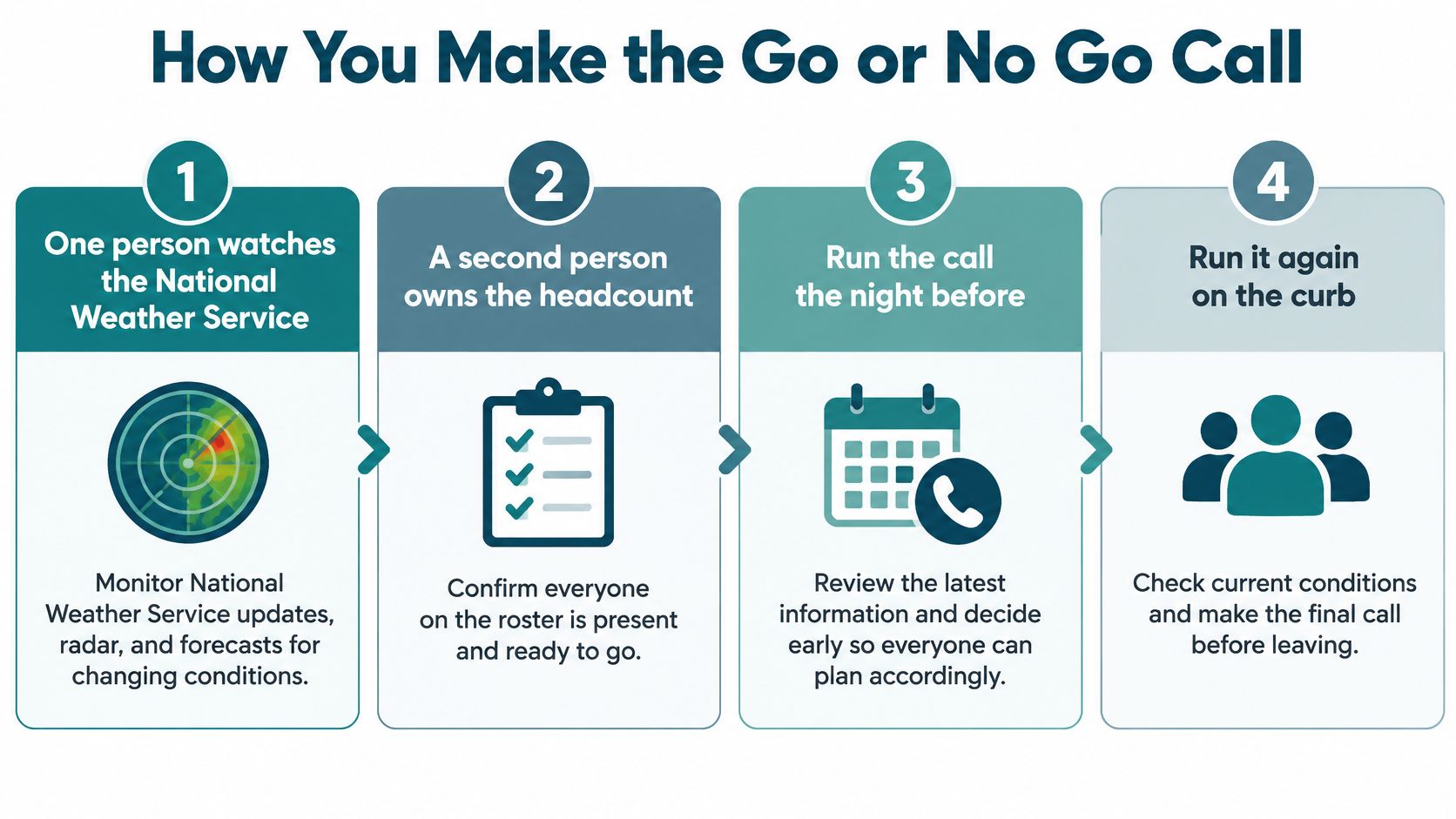
    Use this decision flow to organize the people before you organize the bags.

    A four-step infographic explaining the protocol for making a go or no-go decision during severe weather.

    Make the call before the curbside debate

    I use the National Weather Service safety guidance as the basis for a conservative stop-work protocol, including staying sheltered for at least 30 minutes after the last thunder.

    1. Assign the watcher and the headcount lead. Give someone responsibility for monitoring National Weather Service alerts for the cleanup location. Give someone else the roster, so the weather watcher doesn't have to juggle names while reading a warning.

    2. Name the shelter and its backup. Check access, opening hours, and the walking route. A locked building across a broad road won't help you just because you can see it.

    3. Cancel or relocate when you can't protect the crew. If a warning affects your work area, or you can't reach suitable shelter promptly, don't start the outdoor route. Tell volunteers before they travel whenever you can.

    4. Stop when you hear thunder. Don't let clear pavement or fading rain talk you into finishing the block. Give the stop command and move.

    5. Complete the shelter wait, then inspect the route. Let the watcher manage the thunder clock. Before restarting, check for rising water, damaged trees, blocked paths, and fresh alerts.

    6. Reject pretend shelter. Don't approve a tree, bus stop, small shed, or open vehicle because someone wants a convenient place to wait. Choose protection for the hazard you actually face.

    Give people permission to leave

    I want a first-time volunteer to hear the decision without having to challenge a confident regular. Say someone has travelled across the city and wants to keep going because they already made the trip. Thank them for coming, then hold the boundary.

    Crew rule: You don't have to earn your place here by staying outdoors when I call the work off.

    Write the decision in the group chat before departure. Include the meeting status, the responsible leader, and what volunteers should do if they miss an update.

    On the curb, check again. A forecast from home doesn't replace the conditions in front of you.

    Rain alone may allow a comfortable cleanup with suitable clothing and footing. Thunder, rising water, and inaccessible shelter call for a different decision. You don't need unanimous agreement to stop exposing volunteers to danger.

    Shelter Rules for Lightning and Tornadoes

    You hear thunder while you hold a bag open for your buddy. Put the work down and head for shelter together. Don't send someone back for a grabber or let an eager volunteer finish the opposite sidewalk.

    I want the headcount lead watching people, not equipment.

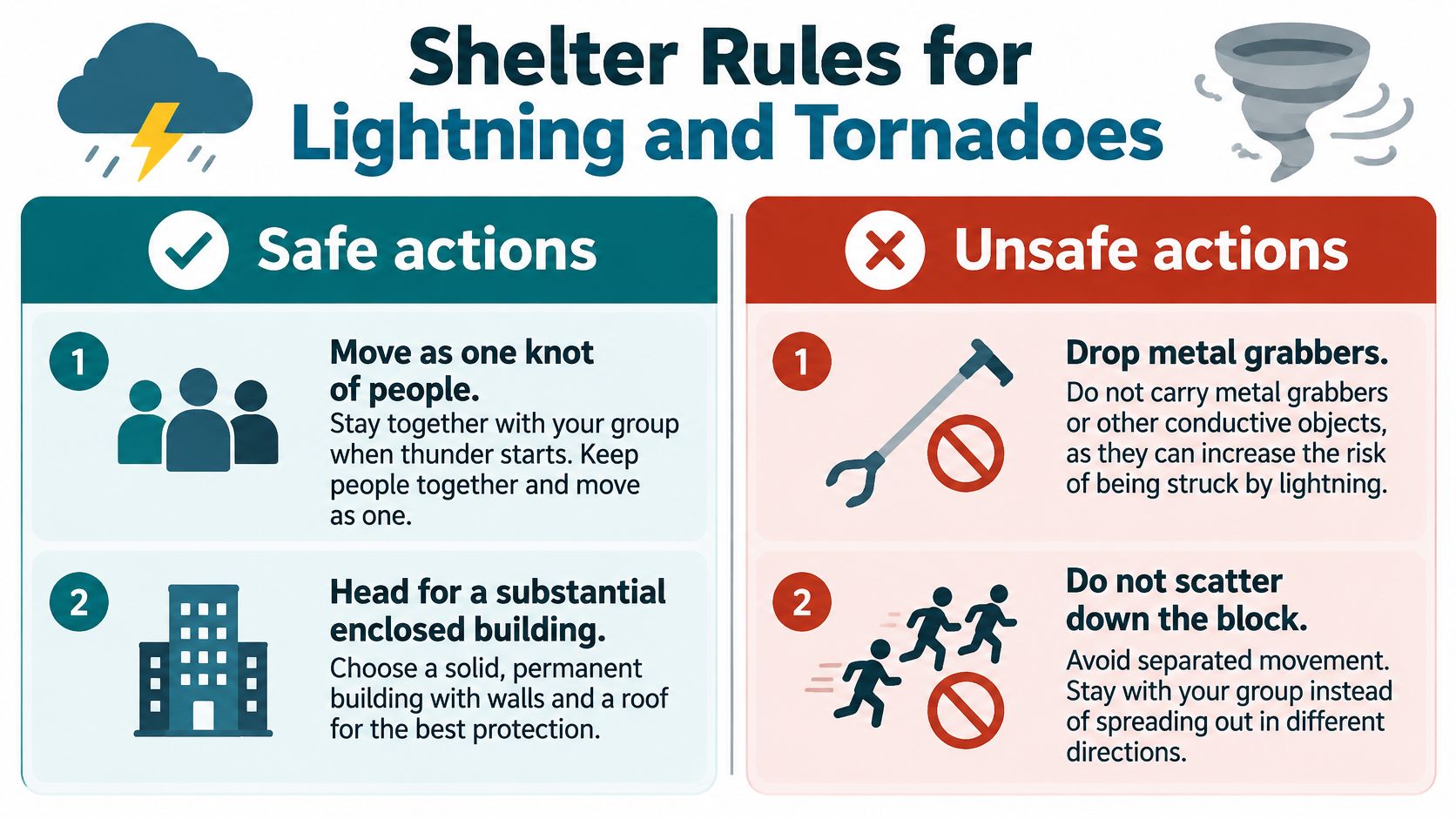
    Use the safe-action column below to plan your movement. Put conductive tools down without delaying your retreat.

    An infographic titled Shelter Rules for Lightning and Tornadoes illustrating safe and unsafe behavior during storms.

    Choose lightning shelter you can enter

    NOAA's lightning safety guidance says hearing thunder means lightning threatens you and directs you to remain sheltered for at least 30 minutes after the last thunderclap.

    Choose a substantial enclosed building or a fully enclosed, metal-topped vehicle. Close the vehicle windows. Don't mistake a pavilion, porch, open garage, tent, or tree for equivalent protection.

    Your metal grabber conducts electricity, but dropping it doesn't make an exposed sidewalk safe. Keep moving toward shelter. Don't stop outdoors to sort equipment.

    Say your planned entrance won't open. Use the backup immediately rather than crowding beneath an awning while you search for a phone number. This is why I want you to check doors before work begins.

    Choose a tornado room before the warning

    For a house, follow the National Weather Service's tornado shelter advice: move into the basement's interior area, or choose a small, windowless room on the lowest floor if you have no basement.

    Put as many walls as you can between yourself and the outdoors. Use a bathroom, closet, or central hallway. Crouch beneath a nearby sturdy table or workbench, and protect your head and body with a coat, blanket, mattress, or your arms.

    Don't spend your escape time opening windows. You won't protect the building, and you may expose yourself to broken glass.

    For a large public building, use the designated shelter area and follow the site's tornado procedure. The National Weather Service's tornado guidance directs you away from wide-span rooms, including gyms, cafeterias, auditoriums, and warehouses.

    • Inside: Choose a low interior room or hallway away from glass.
    • Outside: Enter a sturdy enclosed building immediately.
    • Without dependable shelter: Don't count on a shed, tent, storage unit, or mobile home.

    A closed metal-topped vehicle can protect you from lightning. I don't choose it as the crew's tornado shelter.

    If a tornado traps you in a vehicle with no reachable building, get low inside and cover your head, or use a nearby lower area only when you can reach it safely. Don't choose a ditch with water, and don't mistake any last-resort position for a dependable event plan.

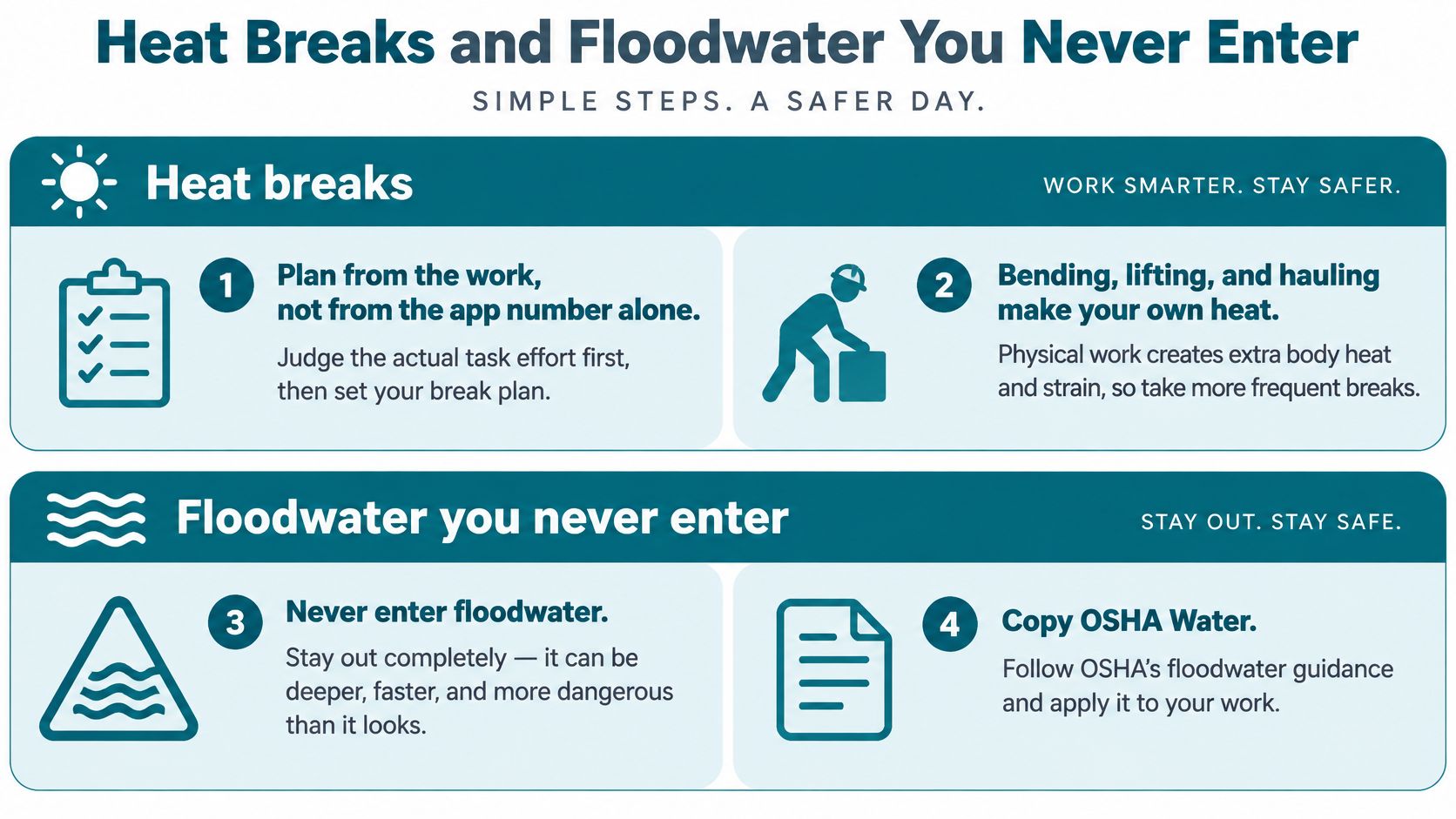
    Heat Breaks and Floodwater You Never Enter

    Say you start on a hot block with cool water beside the supplies. Then you move down the avenue, haul full bags, and leave the drinks behind. You haven't maintained a water plan if you make volunteers walk back through the heat to use it.

    We pick up trash rain or shine, including on the coldest days of winter and the hottest days of summer. I still adjust the work to the people and conditions in front of me.

    Use this checklist before you commit to a long route.

    A safety infographic titled Heat Breaks and Floodwater You Never Enter, outlining four protective work guidelines.

    Work from water, rest, and shade

    OSHA's Water.Rest.Shade guidance recommends frequent drinking rather than waiting for thirst, electrolyte-containing fluids alongside water for work lasting more than two hours, and generally hourly breaks when heat stress exceeds applicable limits.

    I don't treat that as permission to push through until a scheduled break. Shorten work intervals as strain increases. Rotate lifting and walking tasks, move drinks with the crew, and choose a genuinely cooler recovery spot.

    Your clothing, health, workload, and familiarity with hot conditions all affect what you can manage. Use our heat exhaustion prevention tips when planning your personal precautions, and tell the leader early if you feel unwell.

    Read your buddy and the block

    Heat and flood signs and what you do

    What you see What I think What you do
    Headache or dizziness while hauling Heat stress is building Stop, sip water if alert, and rest in real shade
    Unusual fatigue, nausea, or weakness Heat illness may be starting End that person's shift and cool them
    Confusion, fainting, or vomiting This is an emergency Call for emergency help, cool the person fast, and stay with them
    About six inches of moving water It can take your feet Stay out and don't walk through it
    A foot or two of water It can push a car Don't drive in
    Moving water in a street or viaduct A flood you can't out-muscle Turn the group toward higher ground

    Don't give drinks to someone who can't swallow safely. If you see confusion or collapse, get emergency help and start cooling rather than debating whether the person needs another break.

    I won't use a water-depth estimate as permission to cross. Stay out of floodwater, including water that looks shallow or still; you can't inspect the pavement beneath it from the curb.

    For clothing considerations, Refinery Work Wear Canada's guide to rain protection for oilfield workers gives you a workwear reference. Keep clothing choices separate from your go decision: a rain jacket doesn't protect you from floodwater.

    If I can't maintain drinking water and a cooler recovery place, I cancel or relocate. You can leave the bags. You can't leave your buddy struggling on the block.

    Getting Everyone Home When Phones Fail

    Say you and your buddy reach a dark viaduct after the rain stops. Your calls won't connect, and you can't tell whether the rest of the crew has returned. Don't enter the underpass to search for a shortcut.

    Check the hazards before you move through a damaged block.

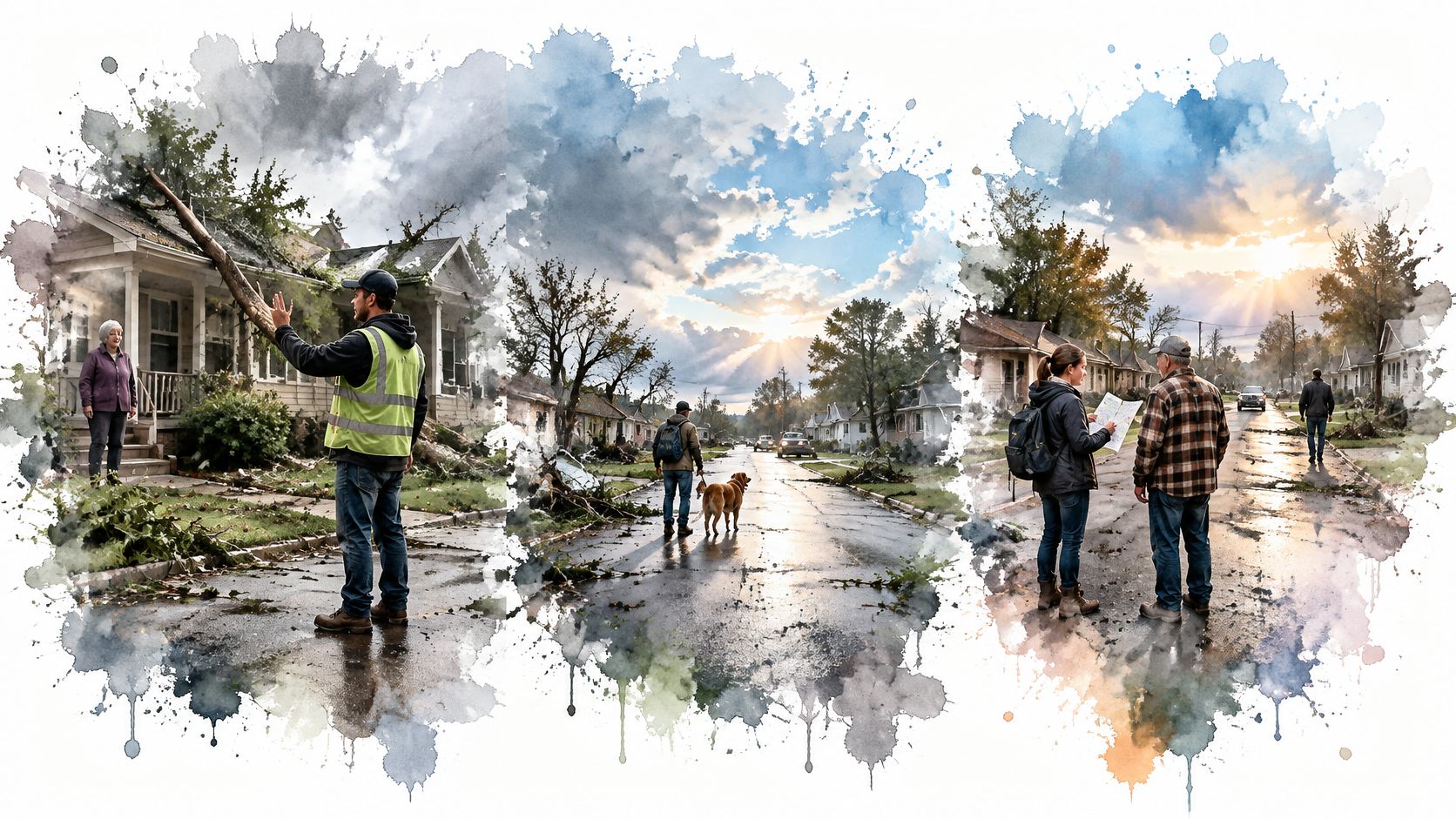
    People surveying damaged homes and streets after severe weather, focusing on safety and community recovery efforts.

    FEMA's severe-weather preparedness guidance explains that outages disrupt communications, transportation, and utilities, and warns you to avoid downed lines, indoor generator use, and driving around flood barricades.

    I want you to have a way home that doesn't depend on a working group chat. Your phone can help you coordinate, but you still need a written plan when you can't reach anyone.

    Carry the reunite plan

    Before departure, put these details on paper and share them with the crew:

    • Roster and contact: Record each volunteer's name and emergency contact, and protect that personal information.
    • Meeting place: Choose a safe location and an alternate that doesn't depend on the same building or power supply.
    • Buddy assignment: Know whom you'll return with and who'll notice if you don't arrive.
    • Return trigger: Stop work when you lose alerts or crew communication, and follow the agreed safe return route.
    • Transport: Confirm how volunteers without cars can leave, without assuming a rideshare will arrive.
    • Final check: Give a named person responsibility for confirming everyone's safe departure.

    Pack the paper copy alongside the supplies in your severe-weather safety kit. Agree on a return time before dispersing, and carry a watch or another way to track it.

    Use the video below as a pause for a crew discussion about what you'll do when normal arrangements fail.

    Close the roster before you go home

    If someone doesn't arrive, don't send volunteers into floodwater or past downed wires to search. Give emergency responders the last known location and the information you have.

    A quiet phone doesn't confirm a safe departure. Close the loop with a person.

    Plan a cooling or warming destination too. Check whether a nearby library, store, or other suitable building can accept you, and keep an alternate if it closes or loses power.

    At that dark viaduct, you and your buddy can turn toward the meeting point you already know. You don't need to improvise while wet, tired, and worried.

    Write Your Cancel Line Before Saturday

    I want you to feel proud when you show up prepared and equally proud when you make a careful cancellation. You haven't failed the neighborhood because you left a bag unfilled.

    A short plan helps you act before social pressure takes over. You can read it on the train, share it with a new volunteer, or hand it to the person taking over the crew.

    Keep a pocket card

    Write these lines in plain language:

    • Watcher: Name the person who checks official weather updates before departure and at the meeting point.
    • Headcount: Name the person who owns the roster and closes it.
    • Shelter: Record the sturdy building, entrance, and backup.
    • Water stop: Identify where you'll keep drinks and recover from heat.
    • Meeting point: Choose the reunite location and alternate.
    • Cancel sentence: Write words you can say without negotiating.

    Try this sentence aloud:

    We're calling it. Thunder, rising water, or no real shelter means we stop the outdoor work.

    You don't need an impressive speech. You need words that a volunteer can hear over traffic and understand while carrying a bag.

    Leave room for another morning

    I started Litter Caterpillars to practice cleanliness, consistency, and bravery with other people. I don't want bravery to turn into pressure to ignore your own limits.

    We meet on weekend mornings in Chicago. You can join through Meetup or our open group chat, meet people, and put your hands to useful work without proving how much discomfort you can take.

    Today, choose a shelter on your usual route. Check its entrance, then send the location to the person who would notice if you didn't come back.


    At Litter Caterpillars, we bring Chicago neighbors together for weekend trash pickups and friendship, with volunteer safety ahead of the cleanup. Visit us to find a gathering, bring closed shoes and a charged phone, and help us care for the block and each other.

  • Severe Weather Safety Video: A Guide for Volunteers

    Severe Weather Safety Video: A Guide for Volunteers

    Our very first pickup ended with three of us huddled under a tree in a spring hailstorm, watching every Uber cancel on us, and I learned that a cleanup crew needs a weather plan before anyone opens a bag. These seven severe weather safety video choices cover the threats you can meet during Chicago cleanups; I'd share the relevant clip before Saturday's shift, use Scribiz for YouTube creators to help prepare readable viewing notes, and agree on when we'll pause, reroute, or cancel.

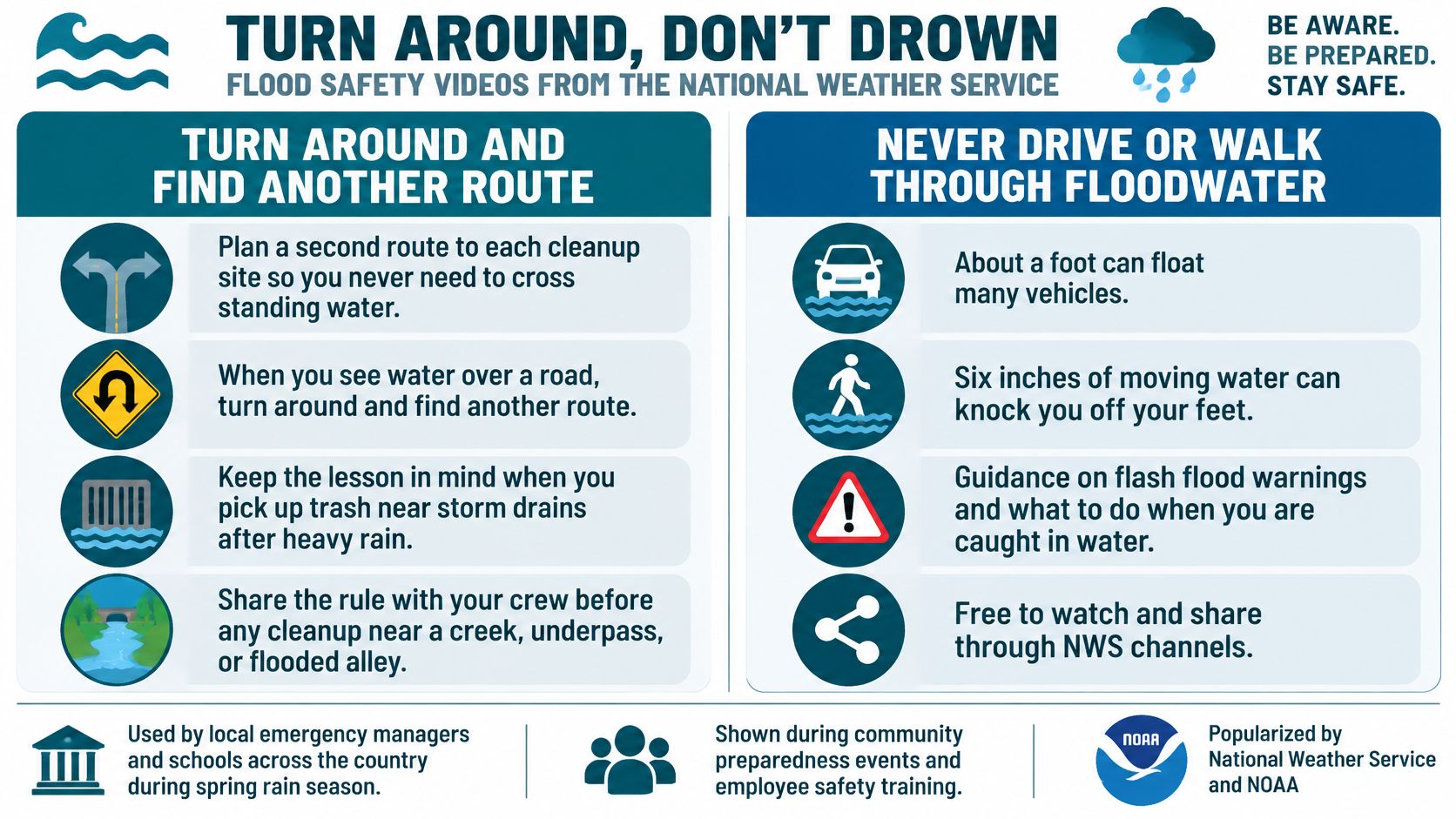
    1. Turn Around, Don't Drown (National Weather Service flood safety videos)

    You reach an underpass with your grabber and an empty trash bag. You can see the sidewalk beyond the water, and you're tempted to hurry across. I'd turn the crew around.

    That's the practical reason I'd play the National Weather Service's Turn Around, Don't Drown flood safety videos before a cleanup near a creek, low street, or underpass. Treat a flooded route like a closed gate: you find another entrance instead of testing whether you can squeeze through.

    Use this graphic to start a conversation about the route you plan to walk.

    An infographic titled Turn Around Don't Drown providing safety tips regarding floodwater and heavy rain hazards.

    Decide on the detour before you leave

    I want you to know the alternate route before rain forces a decision. You can't judge the pavement beneath muddy water, and a floating bag isn't worth a dangerous retrieval.

    • Reroute immediately. Keep everyone out of water covering your walking or driving route.
    • Skip the drain. Don't reach into moving water to pull litter from a storm drain.
    • Cancel when access fails. If you can't reach the site and shelter without crossing floodwater, choose another day.

    Play the clip, then ask everyone to point out the route they'd take back.

    If you make a neighborhood-specific explainer with Wideo for educational video production, show your actual detour. I'd rather see a clear map than dramatic flood footage.

    2. Tornado Safety (FEMA and Ready.gov video)

    Before I hand you a trash bag, I want to know which door we'll use if a tornado warning interrupts the cleanup. A building across the street won't help if we can't get inside.

    I'd watch FEMA and Ready.gov's tornado safety material before spring and summer outings, then walk the shelter route. Think of that walk like finding the emergency exit before a movie starts. You want the answer while you can still think calmly.

    Keep your attention on shelter access rather than watching the approaching storm.

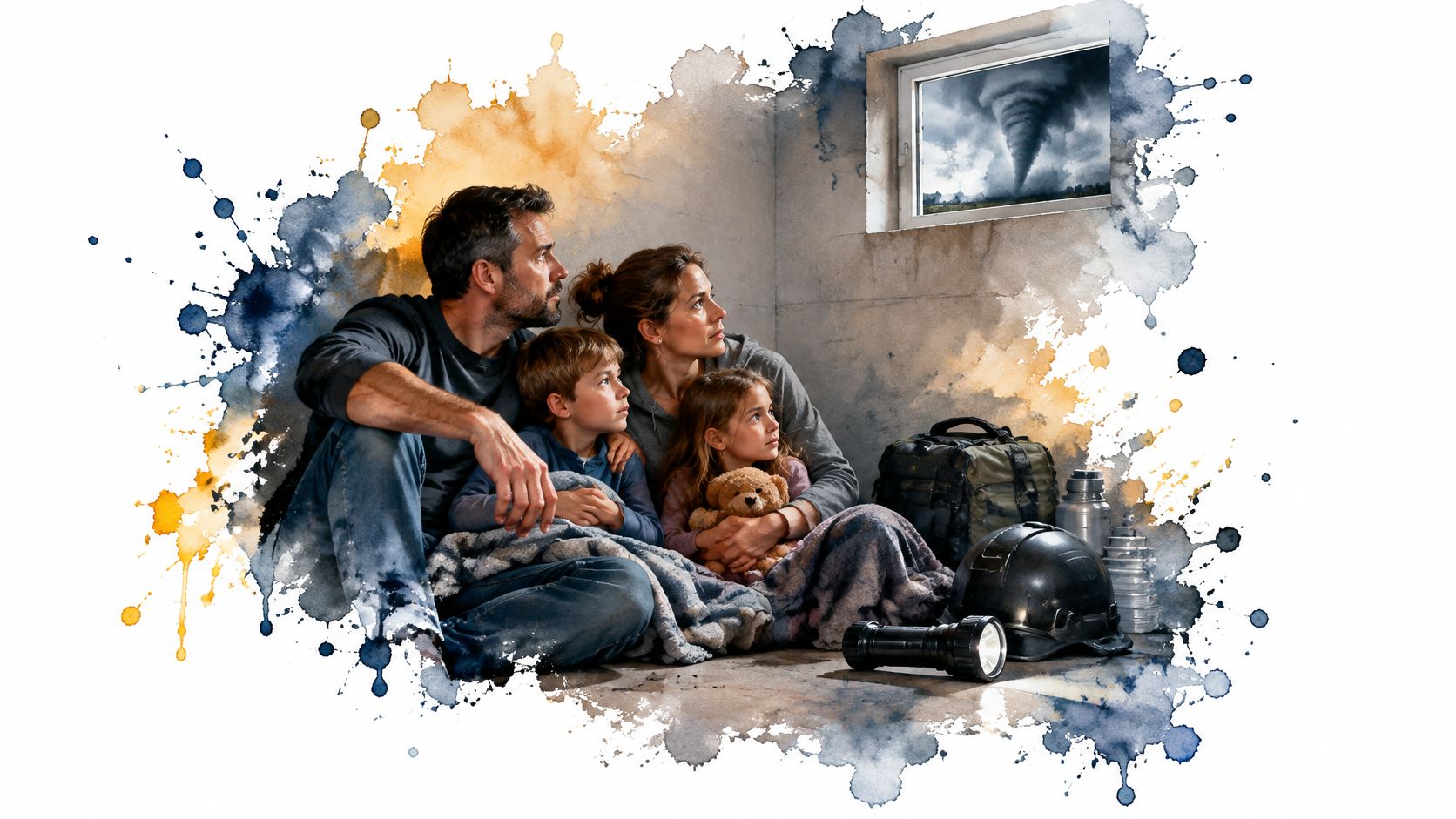
    A family huddled in a safe room looking out a window at an approaching dangerous tornado.

    Choose an interior shelter, away from windows

    Don't copy the window-watching in the illustration. Follow National Weather Service tornado shelter guidance: without a basement, move to a small interior room or hallway on the lowest level, stay away from windows and exterior doors, and protect your head.

    Say you plan to clean beside an open lot. I'd confirm access to a nearby sturdy building before starting, then make sure everyone knows the entrance.

    Shelter rule: Stop immediately when a tornado warning includes your work area. Leave the bags and tools behind if collecting them would delay shelter.

    Use our severe weather safety kit guide to prepare what you'll carry, including a flashlight and sturdy footwear. Keep head protection handy, but never delay shelter to fetch equipment.

    Cancel the outdoor shift if you can't establish a workable shelter plan.

    3. Tornado Safety (American Red Cross video series)

    Your phone buzzes while you're pulling wrappers from a fence. You've silenced notifications, your battery runs low, and your friend assumes someone else will check the weather. I'd use the American Red Cross tornado safety series to sort out those responsibilities before that moment.

    Watch the preparation material before severe-weather season, especially when you welcome new volunteers. Treat your go-bag like the spare tire in your car: prepare it before trouble, and learn how you'll use it.

    Give someone the weather job

    I'd name a weather lead and a backup, then ask both to confirm they can receive official alerts for the cleanup location. Don't rely on a single phone or expect a siren to settle every decision.

    In U.S. tornado-warning communication research, respondents in areas without tornado sirens reported hearing a warning before the tornado's first touchdown only 28.9% of the time, according to the Weather, Climate, and Society study. I take a simple lesson from that finding: prepare more than one way to receive warnings.

    • Pack for separation. Carry water, a flashlight, a radio, essential medication, and protected copies of important documents.
    • Plan beyond the cleanup. Include household members and pets in your home shelter arrangements.
    • Discuss the return. Avoid downed wires, damaged trees, and unstable structures after the storm.

    For a neighborhood cleanup, pause when you can no longer reliably monitor threatening weather. Resume only when you can confirm safe conditions and a safe route, rather than assuming quiet means clear.

    4. When Thunder Roars, Go Indoors (NWS lightning safety video)

    You hear thunder across the park. You still see sunshine, and someone wants to finish the last strip of grass. I'd stop the cleanup right there.

    Watch the NWS lightning safety video before an outing through open parks or long blocks without easy shelter access. Think of thunder like a smoke alarm: you act when you hear it instead of waiting to see the danger.

    Choose your destination before you spread out.

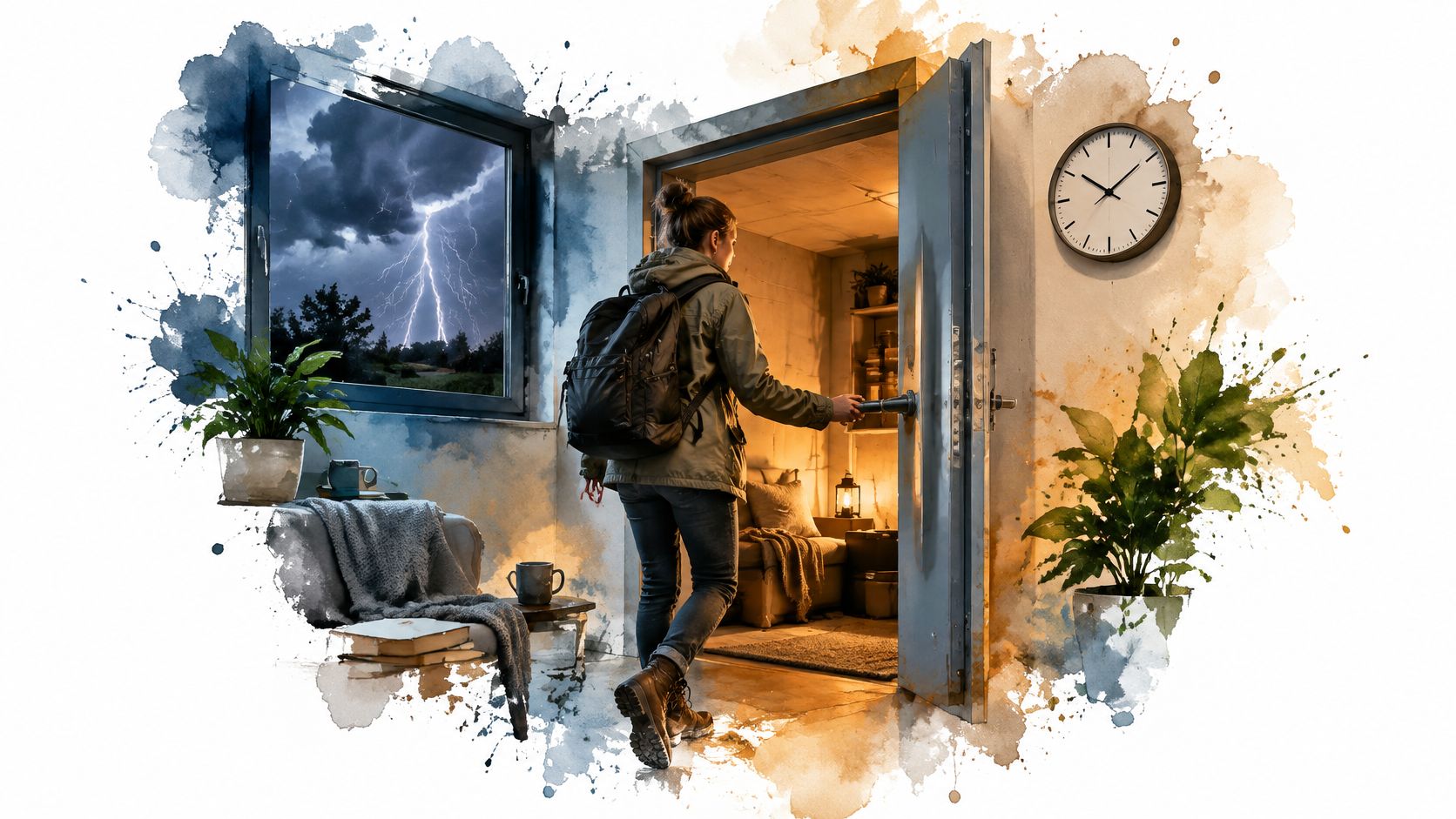
    A person with a backpack enters a safe room as a storm with lightning rages outside.

    Hear thunder, stop work

    NOAA's lightning safety guidance tells you to leave exposed areas when you hear thunder, enter a substantial building with electricity or plumbing or an enclosed metal-topped vehicle with windows closed, and wait at least 30 minutes after the last thunder before returning outside.

    You may encounter older explanations of the 30-30 rule that ask you to count between lightning and thunder. I wouldn't make that count permission to continue working. Hear thunder, head inside.

    I won't use a tree, tent, picnic shelter, or open-sided structure as our lightning shelter.

    Say you've spread volunteers along a park path. Call everyone back, account for each person, and direct the group to the shelter you chose.

    If you can't reach suitable shelter promptly, cancel before starting under a thunderstorm threat. Once inside, stay there until the waiting period passes, and cancel the remaining pickup if storms keep interrupting it.

    5. Heat Safety (NWS extreme heat safety video)

    I'd rather carry an unfinished bag home than ask you to push through dizziness. On a muggy Chicago morning, you can feel determined and still need to stop.

    Play the NWS heat safety video before hot-weather cleanups, then talk through symptoms out loud. Think of your body like an engine: when you notice overheating, you stop and cool down instead of pressing harder.

    Plan a cool recovery location, not merely a patch of shade.

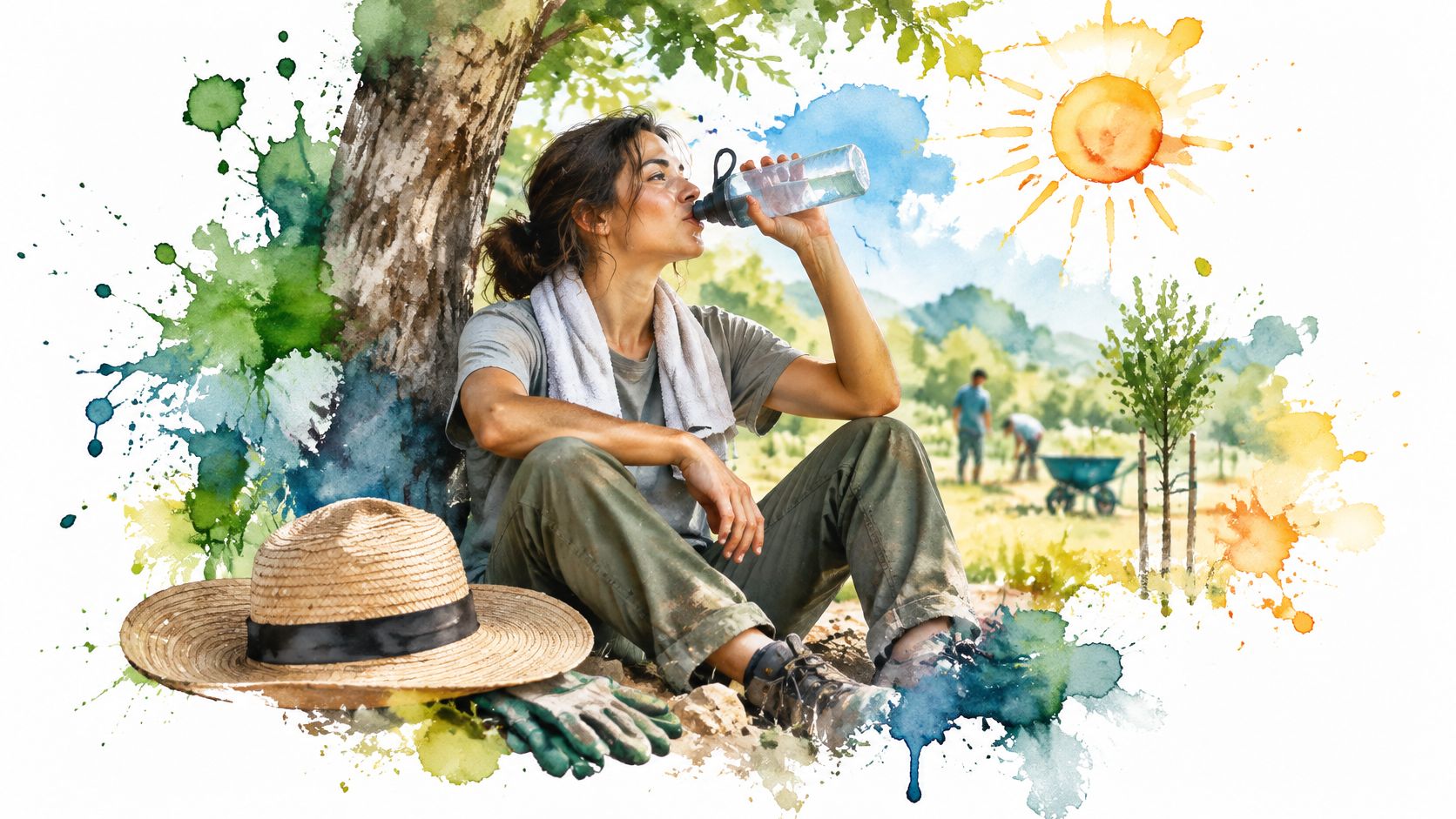
    A woman resting and drinking water in the shade under a tree during hot sunny weather

    Make stopping easy

    Say you notice your cleanup buddy slowing down and complaining of a headache. Stop together, move somewhere cooler, and check how they feel. Don't send them to rest alone while you keep working.

    The National Weather Service heat-illness guide lists weakness, heavy sweating, dizziness, headache, nausea, and fainting among heat-exhaustion symptoms; for confusion, slurred speech, or other heat-stroke warning signs, call 911 immediately and begin cooling the person.

    • Start cooler. Choose morning hours and shorten the route when heat makes the original plan unreasonable.
    • Bring extra water. Make drinking and cooling breaks part of the work.
    • Use buddies. Ask directly about dizziness, nausea, cramps, or unusual weakness.

    Use our heat exhaustion prevention tips before you pack. Set breaks before anyone struggles, and increase them as conditions demand.

    Cancel if you can't provide water and effective cooling. Pause immediately for symptoms; don't treat a short rest as automatic clearance to return.

    6. Winter Weather and Wind Chill Safety (NWS video)

    Can you still open a bag with your gloves on? Can you feel your fingers? I'd ask those questions before admiring how much litter you've collected.

    Watch NWS winter weather and wind chill safety material before a cold-weather shift. Dress like you're adjusting layers on a bed: add warmth when you need it, and remove a layer before sweat leaves you damp.

    We pick up trash rain or shine, including during winter's coldest days and summer's hottest days. Our volunteer-first priorities still come first: safety, then happiness.

    Set your cold-weather cutoff together

    I wouldn't borrow a single temperature cutoff for every crew. I'd check the forecast wind chill, official alerts, ice, clothing, shelter access, and the needs of the people joining us.

    • Keep hands dry. Pack spare gloves and replace wet ones promptly.
    • Manage effort. Take smaller loads, avoid exhausting shoveling, and pause before you sweat through your layers.
    • Check each other. Stop for numb fingers, persistent shivering, confusion, or trouble moving normally.

    Say freezing rain leaves the cleanup block slick before you arrive. Cancel the outdoor route rather than asking volunteers to balance beside traffic.

    Review our blizzard safety tips before leaving home. If you move indoors during an outage, remember Ready.gov's winter safety guidance: never heat a home with a gas range or oven, and use generators and grills only outdoors.

    For me, the restart question is practical: can everyone stay warm, dry, steady on their feet, and close to shelter? If the answer is no, we're done outside.

    7. Severe Thunderstorm and Hail Safety (NWS video)

    I remember the tree from our first pickup. We huddled beneath it during spring hail and snow while our rides kept cancelling. I wouldn't choose that shelter again.

    Watch NWS severe thunderstorm and hail safety material before a forecast with strong winds or hail. Think of the cleanup like a picnic: you can move the gathering, leave the gear, and try again another day.

    Practice the stop before you need it

    Say wind starts tossing loose trash across the block while you work near mature trees. I'd gather the crew and head to our planned shelter rather than chase bags or wait for hail.

    An experiment published in Weather, Climate, and Society found that explicit protective-action instructions improved understanding and perceived ability to respond to tornado-warning messages. I use that lesson when choosing any severe weather safety video: I want clear actions I can repeat outside.

    My stop-work call: Leave the litter, move indoors, stay away from windows, and account for everyone.

    Check the forecast before you ask volunteers to travel. Reschedule when you can't fit the cleanup safely around the expected storms.

    Afterward, don't rush back because the rain stops. Check official updates and inspect your route from a safe position.

    Stay well away from downed wires and anything they touch, report them to the utility, and use emergency services for immediate danger. Skip damaged trees and hanging branches until qualified crews address them. Cancel the remaining work if you can't establish a safe return.

    How the seven severe weather safety video picks compare

    Item Hazard Covered Best Used For Source
    Turn Around, Don't Drown (National Weather Service flood safety videos) Floodwater and flash floods Learning to avoid flooded roads and routes National Weather Service, NOAA
    Tornado Safety (FEMA and Ready.gov video) Tornadoes Practicing shelter steps and planning a safe shelter spot FEMA, Ready.gov
    Tornado Safety (American Red Cross video series) Tornadoes Preparing emergency kits, alerts, and household plans American Red Cross
    When Thunder Roars, Go Indoors (NWS lightning safety video) Lightning Setting clear outdoor activity pause and shelter rules National Weather Service, NOAA
    Heat Safety (NWS extreme heat safety video) Extreme heat and heat illness Protecting outdoor workers and volunteers during hot weather National Weather Service, Centers for Disease Control and Prevention
    Winter Weather and Wind Chill Safety (NWS video) Cold, wind chill, frostbite, and hypothermia Preparing for cold-weather work and recognizing cold-related illness National Weather Service, NOAA
    Severe Thunderstorm and Hail Safety (NWS video) Severe thunderstorms, hail, strong winds, and storm damage Preparing for storms and avoiding hazards during and after them National Weather Service, NOAA

    Pick One Clip and Play It Before Your Next Shift

    Choose a video and play it before anyone grabs a bag this week. I'd start with the lightning rule because you can explain it quickly and immediately agree on where you'll go. Then check the forecast together and decide who will call the pause.

    You don't need a long presentation beside the supply bin. You need a clear destination, a person watching official alerts, and permission to stop without embarrassment. I want you to feel comfortable saying you're dizzy, your gloves are wet, or you don't understand the shelter route.

    Ask someone to explain the plan back

    After watching, ask a volunteer what they'd do if thunder interrupts the pickup. Ask another person to point toward shelter and explain how you'll account for everyone. If you hear different answers, settle them before spreading out.

    • Name the trigger. Agree on what makes you stop, reroute, or cancel.
    • Name the destination. Confirm that you can enter the shelter.
    • Name the restart condition. Use official guidance and check the route before returning.

    If you prepare briefings for a school, nonprofit, or neighborhood team, you can explore mixed-media presentation tools to combine a clip with a shelter map and readable captions. Keep the practical decision easy to find. You should leave the briefing knowing what to do, even if you forget every weather term.

    I still love the feeling of showing up for Chicago with a grabber and a willing crew. I also know we can leave a block unfinished and come back with fresh energy.

    You don't owe a trash bag your health. You owe yourself and your cleanup buddies an honest check on the conditions. When we stop early, we protect the chance to keep doing this together.

    For a weekend morning crew to join, visit the Litter Caterpillars website and plug in. Bring your curiosity, ask about the weather plan, and help us make the next pickup safer.


    We bring Chicago neighbors together for weekend morning trash pickups, friendship, and hands-on neighborhood care. We put volunteer safety first and happiness second, so bring your willingness to help without feeling pressure to push through dangerous weather. Visit Litter Caterpillars to join the crew and make a difference block by block.