
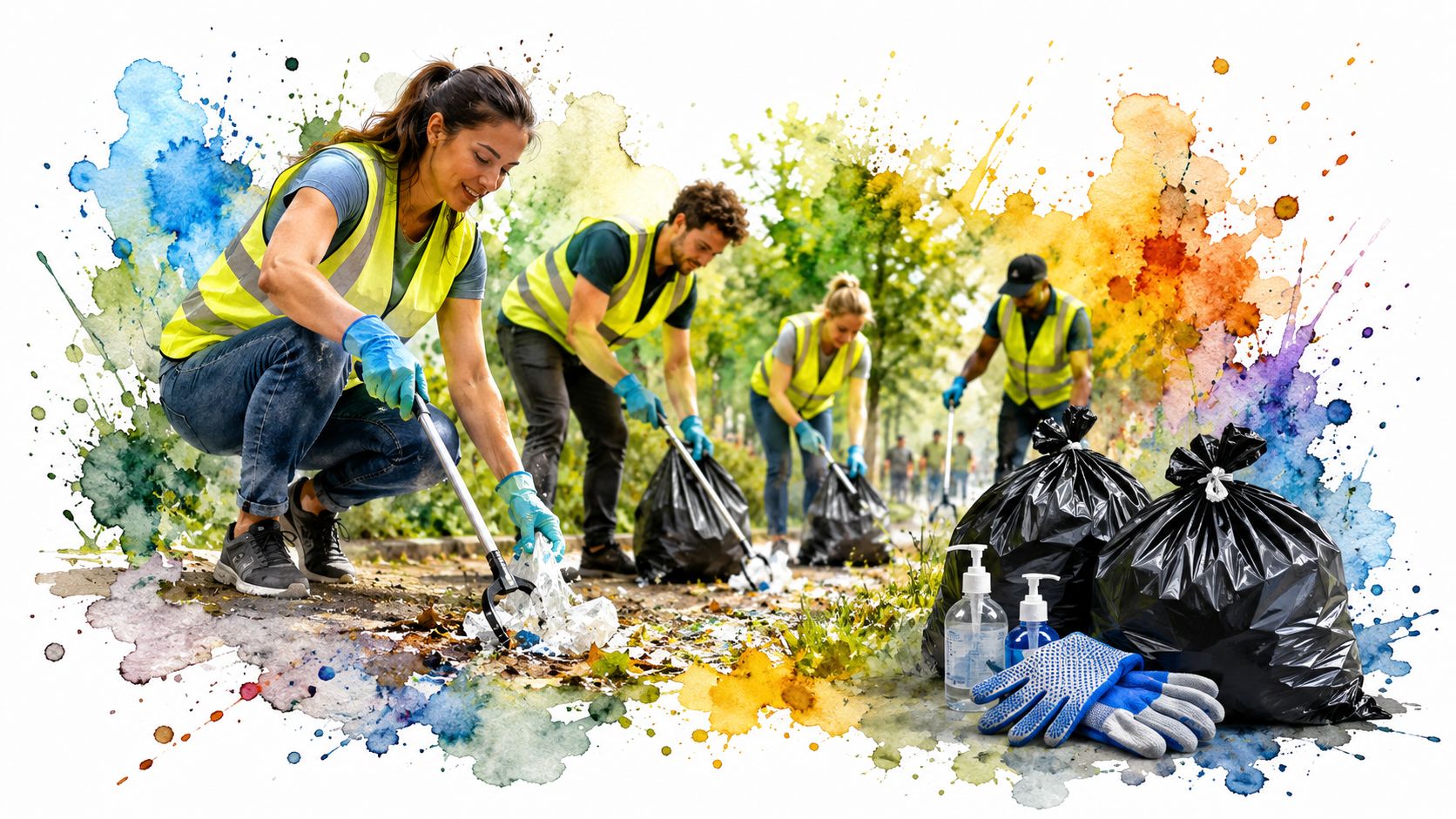
In one October storm, twelve of us worked along the Lake Michigan shoreline with plastic grocery bags. Rain soaked the paper-thin gloves we had, wind pushed debris through our feet, and nobody had a real grabber. We finished the route, but the gear rescued us less often than we rescued the gear.
After three years of weekly cleanups across Chicago, I judge trash pickup equipment by a simple test. Can a mixed group use it in rain, snow, cold wind, and summer heat without slowing down or getting hurt? The right tools don't need to look impressive. They need to keep working when cardboard turns to sludge, a bag catches on a thorn, or a volunteer finds broken glass under wet leaves.
Why Equipment Choices Matter More Than You Think
The first failures usually happen in predictable places: the grabber jaw stops closing, the glove seam splits, or the bag handle tears. A cheap kit can look fine on a store shelf and fall apart halfway through a cleanup. Then someone ties two grocery bags together, bends over every few steps, and starts handling litter with exposed fingers.
That pattern creates a slow, frustrating morning. Volunteers wait for replacement tools, carry leaking bags, or leave a route unfinished because the equipment no longer matches the work. A new organizer often thinks the main job involves choosing a meeting point and sending reminders. Those tasks matter, but the equipment list decides whether people can finish the route comfortably.
I've watched a group lose momentum because the only usable grabber belonged to the organizer. Everyone else stood around while one person picked up the small pieces. I've also seen a sturdy cart turn an awkward pile of wet bags into a clean handoff. The difference wasn't dramatic on paper. It came from choosing tools around real movement, real debris, and real weather.
Start with the volunteer, not the catalog
A volunteer may have long arms, short arms, a stiff back, small hands, or a wrist that tires quickly. One person may work on flat sidewalk, while another crosses muddy grass and a curb gutter. A single universal kit usually fits nobody especially well.
Before buying, ask three questions:
- What will people touch indirectly? Broken glass, wet food containers, needles, and sharp metal require reach tools and protective gloves.
- Where will people carry the load? A long route needs better bags and a way to move full ones.
- What happens when something fails? Bring spare grabbers, tape, gloves, and bags instead of hoping every item survives.
The world generates about 11.2 billion tonnes of solid waste each year, and as of 2021, global collection covered 77% of solid waste while 33% was openly dumped, according to Waste360's account of refuse-truck evolution and collection conditions. That context doesn't tell you which grabber to buy, but it does explain why collection work demands equipment built for repeated handling and uneven conditions.
Your job as a leader isn't to buy the most expensive pile of gear. It's to remove the small failures that make volunteers cold, tired, invisible, or unwilling to return. For liability planning alongside gear planning, review volunteer liability insurance considerations.
The Core Kit Every Volunteer Should Carry
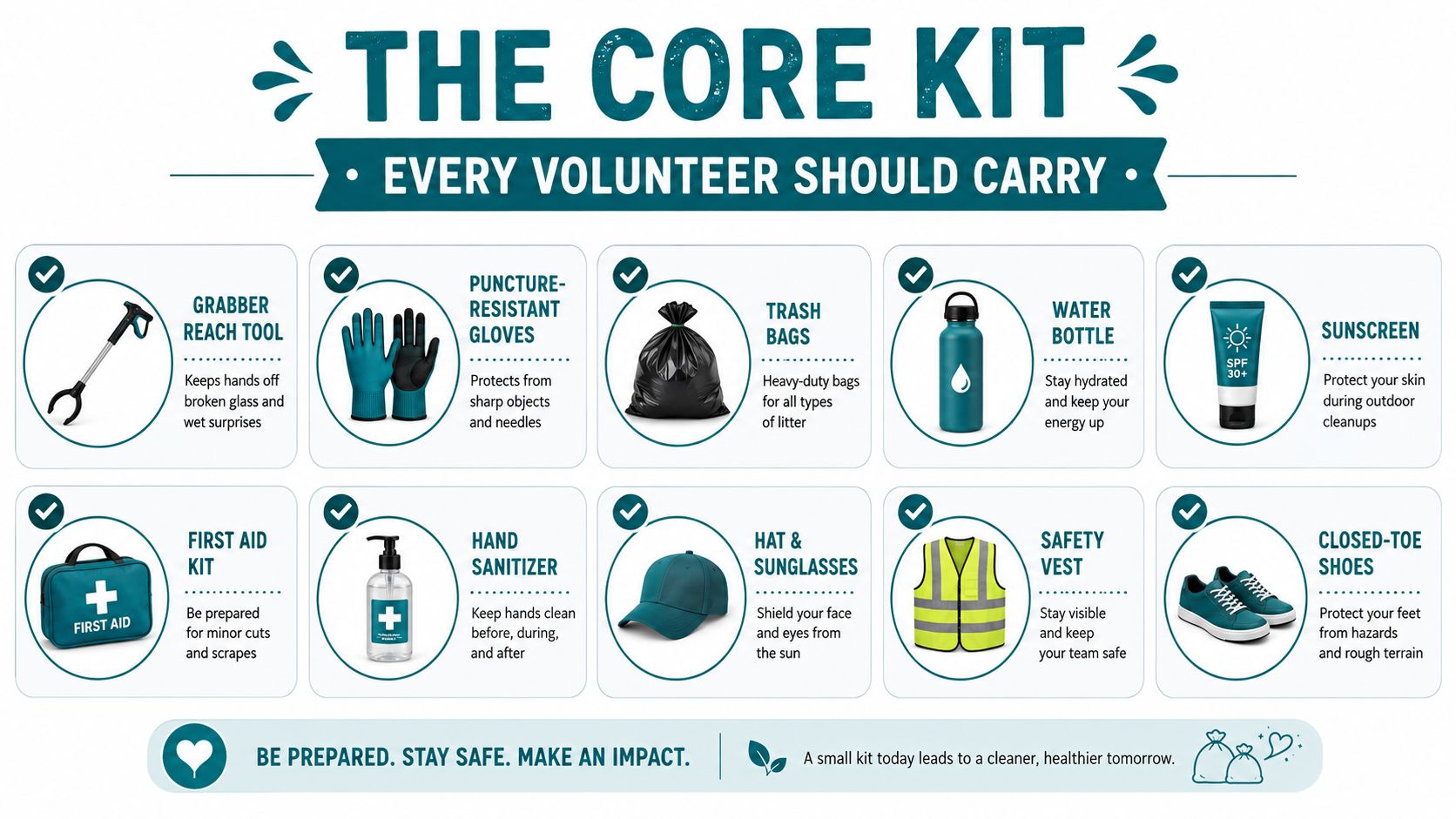
A basic kit should let a volunteer reach litter, protect their hands, close a bag, and clean up afterward. I don't send people out with one tool and a cheerful warning to “be careful.” The pieces work together.
The grabber does the reaching
Choose a grabber with a jaw that closes firmly and a handle that feels natural in a gloved hand. The tool should pick up cans, wrappers, food containers, and small pieces of litter without forcing the volunteer to squeeze hard every time. A rotating jaw helps in some tight spaces, but simplicity often wins when several people share equipment.
Test the trigger before an event. If it sticks, wobbles, or opens only halfway, put it aside. A grabber keeps hands away from broken glass and wet surprises, but it doesn't turn an unsafe object into a safe one. Volunteers still need permission to leave suspicious or dangerous items alone.
Gloves need a real fit
Use puncture-resistant gloves in several sizes. One oversized pair slips when someone grips a can, while a tight pair leaves fingertips sore. I keep nitrile-coated work gloves for wet gutter muck and cut-resistant gloves for broken glass or sharp metal.
Gloves don't replace a grabber. They add a second layer between skin and the mess, especially when a volunteer holds a bag open or moves a harmless-looking object that shifts unexpectedly.
Bags carry more than trash
Heavy-duty contractor bags handle wet cardboard and rough pavement better than thin grocery bags. Use a bag hoop or have a second person hold the opening so the picker can work without wrestling the plastic. Tie full bags before they become too heavy to move.
Closed-toe boots or sturdy sneakers belong in the kit conversation too. Sandals leave feet exposed to glass, nails, mud, and cold water. Add hand sanitizer and a basic first-aid item, then keep both with the route leader rather than burying them in a supply bin.
Practical rule: Every item should prevent a specific failure. If you can't name the failure, reconsider the purchase.
A high-visibility vest helps drivers and cyclists see volunteers along parkways and street edges. It also gives the group a visual identity, which makes it easier to spot someone who has wandered too far from the route. The vest doesn't control traffic, so keep people away from moving vehicles and use a separate traffic plan when the route demands it.
Safety Gear That Protects Your Crew on the Route
I run the safety briefing before anyone opens a bag. It takes a few minutes, and it changes how new volunteers read the route. I point out broken pavement, fast-moving traffic, steep banks, suspicious containers, and places where a vehicle might reverse.
Build the check before the route
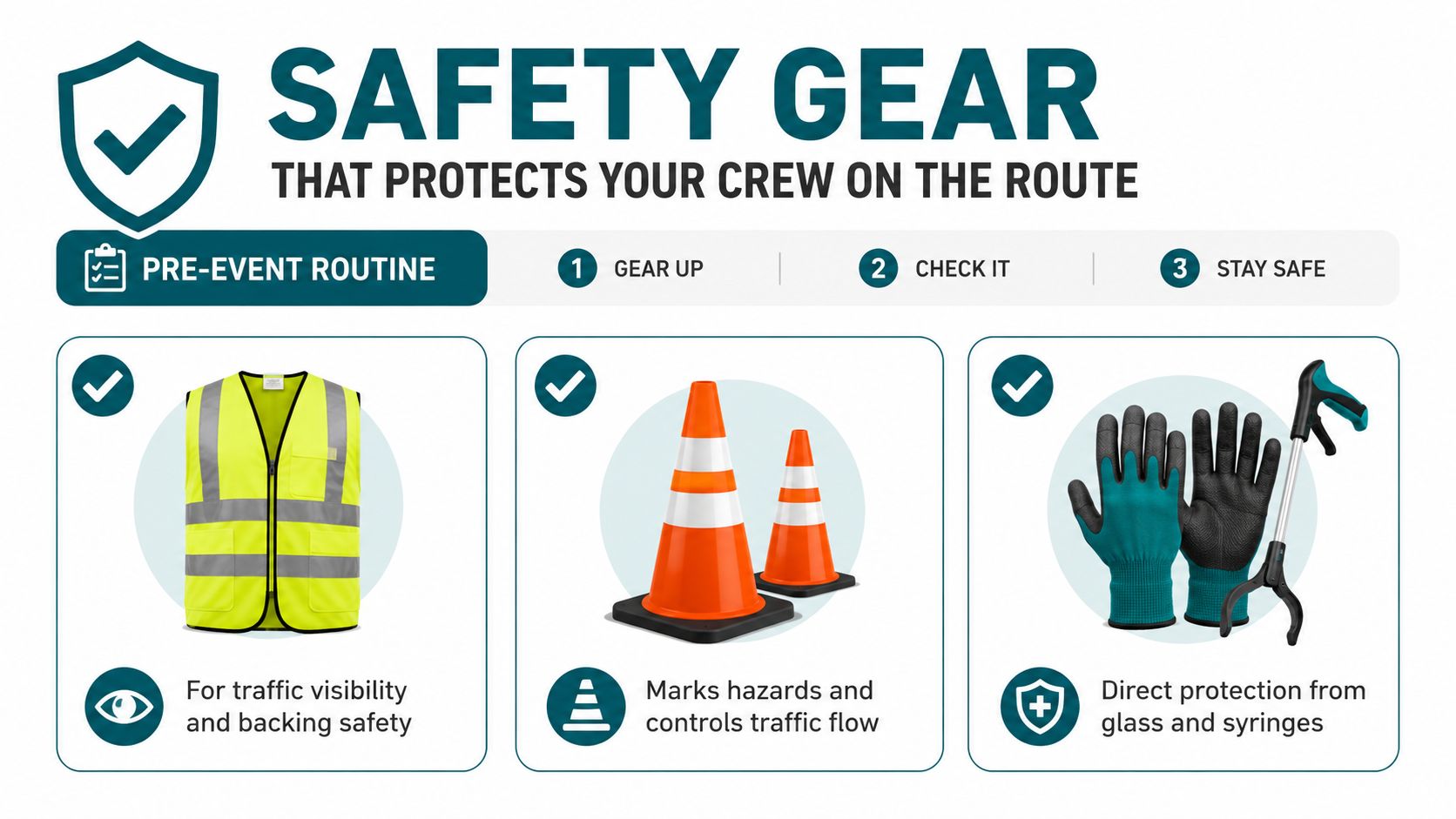
Hand out gloves and grabbers first. Ask volunteers to show that their grabber closes and that their gloves fit. Then distribute high-visibility vests or tabards, check footwear, and point out the boundaries of the route.
In summer, add hats, sunscreen, and water. In spring, pack extra layers because wind beside the lake can cut through a warm afternoon. In rain or snow, give people a clear stopping point. A volunteer who gets soaked early may lose warmth long before the event ends.
Official guidance for volunteer litter picking calls for protective gloves and high-visibility clothing, with reflective clothing suited to roads where speed limits reach 30 mph or less, or up to 50 mph in one district guide, depending on the local guidance. Read the South Oxfordshire group litter-picking guidance before placing a crew near traffic. If the road runs faster than the guidance allows, choose another site or use stronger controls.
Control movement around vehicles
Cones help mark a boundary, but they don't give volunteers permission to stand in traffic. Larger crews may need flags, a spotter, or a route that keeps people away from the road edge. Small groups can sometimes work with vests and a tight boundary, but every group needs a rule about vehicles and backing.
NIOSH recorded 450 refuse-collection worker deaths from 1980 to 1992, with 303, or 67%, vehicle-related. Among those vehicle-related deaths, 110 involved slipping, falling, being struck, or being run over by the refuse vehicle, and 20 happened during backing maneuvers, according to NIOSH guidance on preventing refuse-collection worker injuries. Your volunteers may collect litter rather than operate refuse trucks, but the lesson carries over: never assume a driver sees a person near a vehicle.
Show volunteers how to use the grabber. No waving it around, no poking at people, and no running. A UK council briefing also recommends working in pairs, with one person holding the bag while the other picks, a simple relay that keeps hands and feet organized. Wash hands thoroughly after the cleanup, even if gloves stayed intact.
Play the safety video before the first route if your group benefits from a visual briefing.
If a volunteer reaches for a suspicious bucket, stop them. If someone finds a needle, aerosol container, chemical bottle, animal remains, or heavy object, they should mark the location and call the leader. No piece of trash deserves a hospital visit.
Choosing Grabbers, Bags, and Gloves for Real Terrain
Chicago routes change every few blocks. Parkway grass hides bottle caps and wire. Curb gutters hold oily grit and wet leaves. Wooded lots catch bags on thorny branches. Alleys punish weak wheels and thin plastic.
A longer grabber gives more reach, but longer isn't always better. A 40-inch tool can feel useful beside a hedge and awkward in a tight creek bed. The extra shaft can reduce wrist control and make repeated pickups tiring. For most volunteers, a moderate-length grabber with a comfortable trigger works better than the longest model on the rack.
Jaw style matters too. Wide rubber tips suit cans and paper. Narrow serrated jaws can hold small objects, but they may snag fabric or require more hand force. Test several tools with gloves on, because a trigger that feels easy barehanded can feel stiff after a morning of use.
Match the kit to the ground
| Terrain | Grabber Length | Glove Type | Bag Choice |
|---|---|---|---|
| Parkway grass | Medium reach, firm wide jaw | General work glove with puncture resistance | Heavy contractor bag |
| Curb gutter | Short to medium reach for control | Nitrile-dipped glove | Heavy contractor bag |
| Wooded lots | Medium reach with narrow jaw | Cut-resistant glove | Thick contractor bag, plus tape |
| Alley pavement | Medium reach, durable trigger | Cut-resistant or coated work glove | Contractor bag with strong tie handles |
Glove material should follow the debris. Nitrile-dipped gloves handle wet grime well. Cut-resistant gloves make more sense around broken glass. Leather can help with rough demolition lumber, but it isn't a reason to lift an object that feels unstable or too heavy.
Bag choice creates its own trade-off. Contractor bags stretch and hold wet material, but wire can tear them. Leaf bags cost less for light, clean litter, yet sharp edges can split them quickly. For weekly mixed debris, 42-gallon contractor bags usually give me the most practical balance between capacity and handling.
For a closer look at sack construction and load choices, use this MSP Packaging heavy duty sacks guide. I also keep one roll of strong tape in the route bin. A strip over a small tear can save a bag long enough to reach the drop point.
The guide to picking up trash safely helps new volunteers connect the tool choice with the movement that follows. Equipment works best when people keep the grabber low, avoid twisting, and stop before a small object turns into a strained wrist.
Budget-Friendly Equipment Plans for Any Group Size
Your first purchase should match the group you have, not the group you hope to build. I'd rather equip five people properly than buy a large pile of weak tools for an imagined crowd.
The amounts below are planning targets, not market quotes. Prices change by store, brand, and order size, so use the tiers to organize priorities rather than treat them as fixed invoices.
| Tier | Group Size | Total Budget | Per-Volunteer Cost | Key Gear |
|---|---|---|---|---|
| Starter | Five people | Under $150 | Under $30 | Basic grabbers, bulk nitrile gloves, contractor bags |
| Mid-range | Ten to twenty people | Not fixed | Not fixed | Hi-vis vests, first-aid kit, foldable cart |
| Sustained | Twenty or more people | Not fixed | Not fixed | Bulk bags, rigid sharps containers, replacement grabbers |
The starter plan should spend first on reliable grabbers and gloves. Those items touch the work repeatedly, and failure there slows every person on the route. Buy contractor bags in a size that volunteers can carry when full, then add a small repair supply with tape and spare gloves.
For occasional use, three items can stay simple: basic bag hoops, plain high-visibility vests, and a folding bucket for loose supplies. They don't need elaborate construction if the group uses them lightly and stores them indoors.
A group of ten to twenty people benefits from a real first-aid kit and a foldable cart. Those additions reduce the amount of time the leader spends carrying supplies and give you a place to stage gloves, water, extra bags, and route maps. Keep replacement grabbers in reserve because a shared tool takes more abuse than a personal one.
Plan for repeated mornings
A sustained group of twenty or more should buy bags in bulk when storage allows, keep rigid containers for sharps, and set aside money for replacement grabbers. The equipment budget should include wear, not only the first purchase. A broken trigger on event day is a small expense that becomes a large coordination problem.
I also label bins by function: personal kit, route safety, bag transport, and end-of-day handoff. That system costs almost nothing and lets a new leader find the supplies without emptying the entire trunk.
Storage and Transport That Keep Cleanup Day Moving
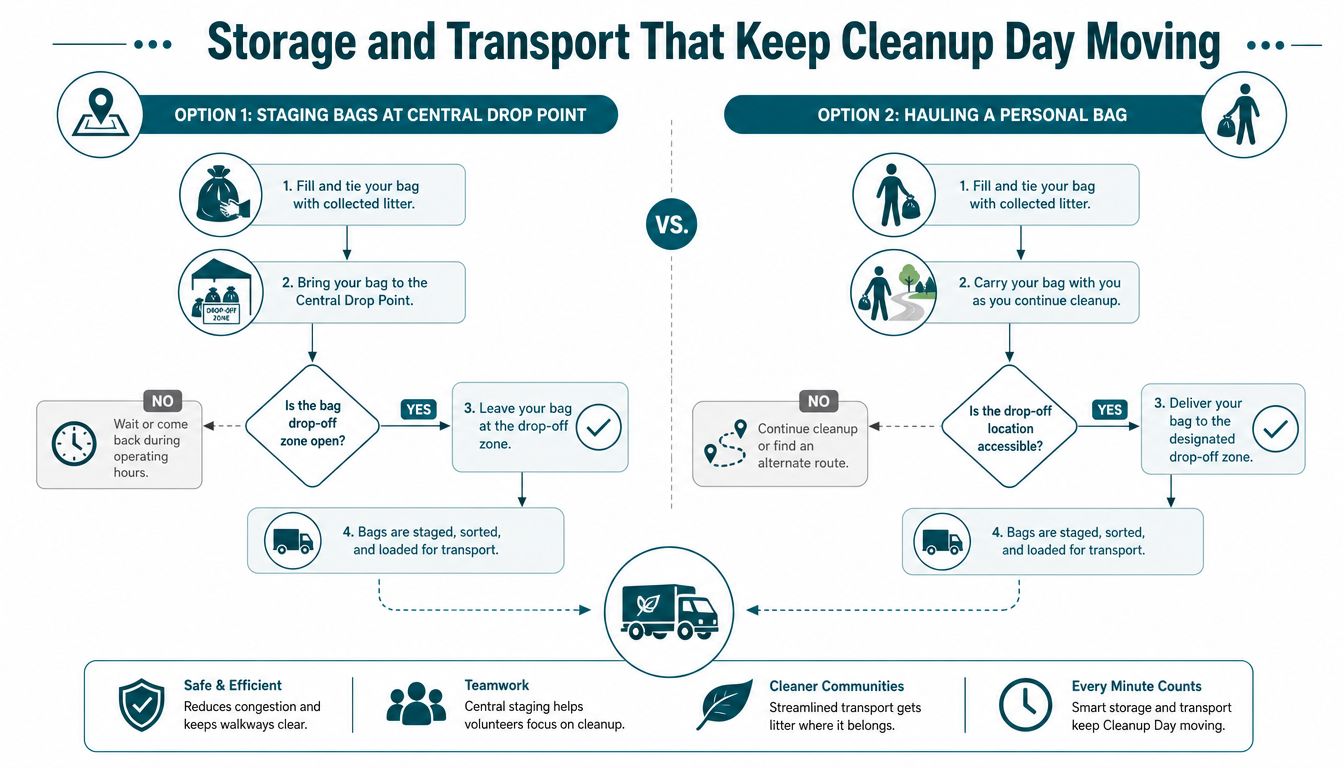
A cleanup can run smoothly on the route and fall apart at the drop point. Full bags become awkward fast, especially after rain. Volunteers carry one too far, set it on a sidewalk, and then someone has to retrace the route to collect it.
Choose one of two systems. With a central drop point, volunteers carry smaller loads and return to the same place. That works well in parks, compact neighborhoods, and routes where a leader can watch the staging area. With personal carry bags, each person owns the load from pickup to handoff. That works better on spread-out routes where a central point would interrupt the walk.
A foldable wagon handles several bags and supplies, but small wheels struggle with curbs. A two-wheel garden cart climbs a curb more cleanly when you tilt it, though it gives you less room for loose items. Test the wheels over the actual route before event day. A cheap cart that catches on every curb becomes another tool people avoid.
Protect the vehicle
Line a sedan trunk, SUV cargo area, or pickup bed before loading anything. A contractor bag works as a liner for smaller bins, while a rigid tote gives wet bags a stable wall. Keep full bags upright and separate recycling from general waste before the pile grows.
For larger recurring cleanups, a trailer may make sense when the group moves carts, bins, or other heavy equipment. This guide to finding the right equipment hauling trailers can help you compare hauling setups without treating a personal car as a permanent utility vehicle.
At the end, label bags for city pickup or the agreed disposal point. Separate recycling only when your local arrangement accepts it, and place sharps in a rigid container. Never toss a needle into a flexible plastic bag.
Use free recycle bins for cleanup supplies when you need a simple way to separate recoverable material. Tape a checklist inside the trunk lid:
- Load: Bags, cart, grabbers, gloves, vests, first aid.
- Route: Map, meeting point, boundaries, emergency contact.
- Handoff: General waste, recycling, rigid sharps container.
- Reset: Dry tools, replace used gloves, restock bags.
The next leader should be able to open the vehicle and understand the whole system in a minute.
A Volunteer-First Way to Think About Every Purchase
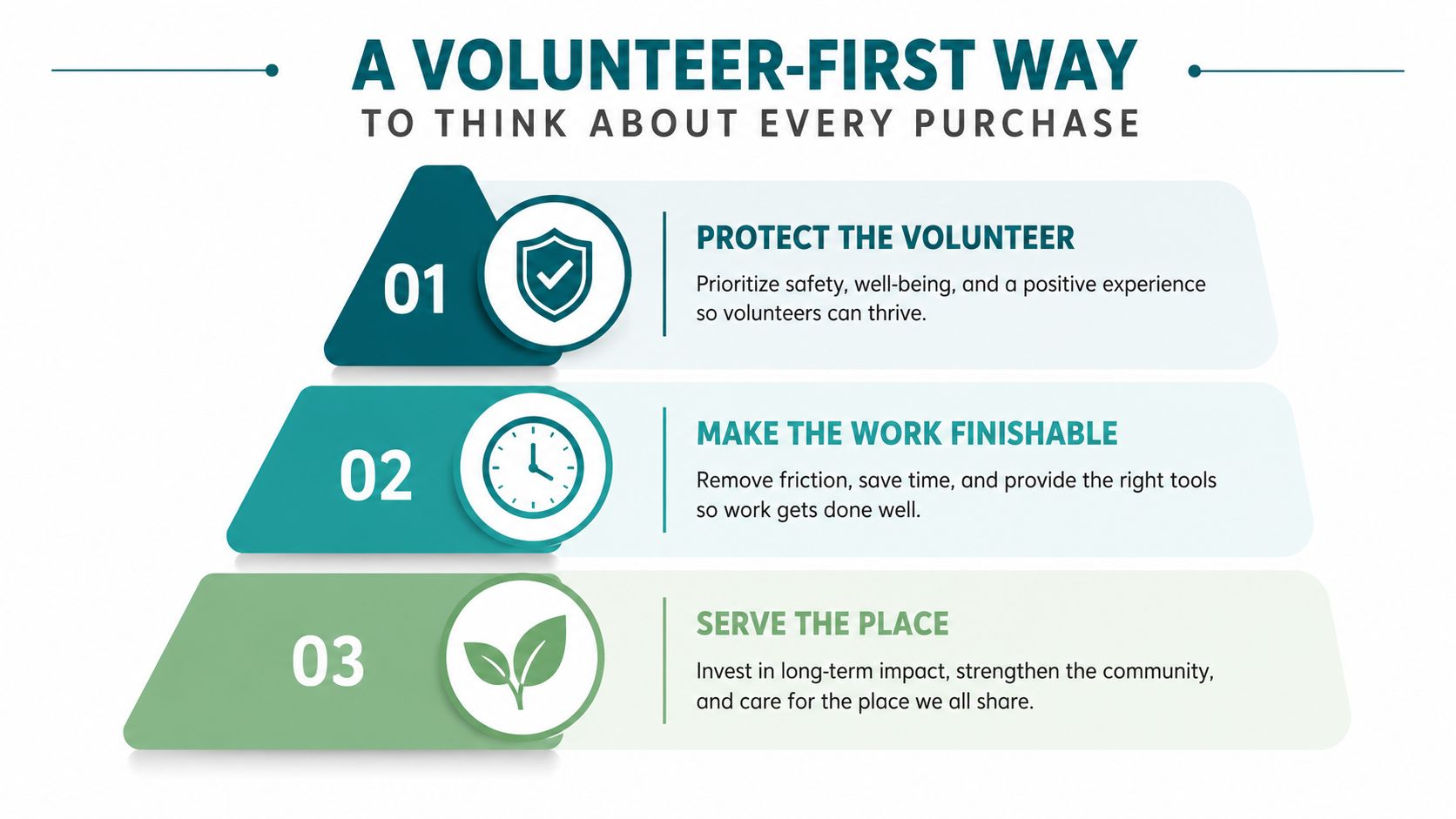
I make every equipment decision in this order:
- Does it protect the volunteer?
- Does it make the work finishable in a normal morning?
- Does it serve the place we're cleaning?
That order changes small purchases. I'll choose cut-resistant gloves over the cheapest gloves when broken glass appears on a route, even if the stronger pair costs $4 more. I'll use high-visibility vests in a low-traffic park because cyclists, delivery workers, and other volunteers still need to see the group.
I won't hand a rusty dollar-store grabber to a teenager on a highway-adjacent route. The tool may technically pick up a wrapper, but it sends the wrong message about what we expect people to risk. A volunteer sees the equipment before they see the route. That first impression tells them whether the organizer planned for their safety.
Safety comes before the tally
A group I worked with changed its kit after a close call with broken glass. One volunteer reached through leaves, the grabber slipped, and the glass cracked against the pavement beside their shoe. Nobody needed medical care, but we stopped the route, replaced the weak tools, added better gloves, and changed the briefing.
We never went back to the old setup. The upgrade didn't make volunteers reckless. It made them more willing to work carefully because they knew the group would not trade their safety for a fuller bag.
The same thinking applies to larger waste operations. A worker safety asset management approach can help teams track equipment condition, inspections, and replacement needs. For a volunteer group, that may be as simple as a labeled checklist and a monthly tool check. The principle stays the same: a tool that fails repeatedly belongs on a replacement list, not in someone's hand.
Finishable work keeps people returning
I don't measure a cleanup only by bag count. I watch whether volunteers can walk, reach, lift, and pause without fighting the equipment. A cart that reduces long carries can matter more than another box of bags. A bag hoop can matter more than a larger bag if it keeps one person from holding plastic open all morning.
The waste management equipment market was estimated at USD 19.93 billion in 2026 and projected to reach USD 25.64 billion by 2031, with a projected 5.17% CAGR from 2026 through 2031, according to Mordor Intelligence's waste management equipment market data. Volunteer leaders don't need industrial machinery for a neighborhood route, but the same practical question applies at every scale: does the equipment fit the work?
Protect the volunteer first. Make the work finishable second. Serve the parkway, alley, shoreline, or vacant lot third. Volunteers who feel protected come back. Volunteers who feel used don't, and the equipment list is where that promise becomes real.
Litter Caterpillars uses practical trash pickup equipment, including grabbers and heavy-duty contractor bags, for weekly Chicago cleanups across every ward and every season. Visit Litter Caterpillars to find an upcoming cleanup, meet the group, and bring your energy to a route where safety and friendship come first.