Tag: litter pickup

  • Cleanup Volunteer Work: A Beginner’s Guide for 2026

    Cleanup Volunteer Work: A Beginner’s Guide for 2026

    The hail hit the Chicago Riverwalk sideways. I had one glove, a half-filled bag of dog waste and plastic shards, and frozen rain biting my bare hand while traffic roared along Wacker Drive. Five minutes later, three strangers were laughing, sharing grabbers, and working like teammates.

    You may want to find cleanup volunteer work, join a crew without feeling awkward, or organize your own event. I've done all three, and I've run the same weekly crew for three years through rain, heat, blizzards, wind chills, and hail. This guide covers the practical parts, including finding events in Chicago and other cities, showing up prepared, staying safe, building a crew, and solving the harder problem. How do you get people to return after the second week?

    The Day I Got Caught in a Hailstorm Picking Up Trash

    The sky over the Chicago Riverwalk turned the color of old steel. The river smelled like wet stone, diesel, and something sour hiding under the docks. Hail rattled against the railings and bounced off the pavement, leaving tiny white beads around my boots.

    My gloves filled with grit. Frozen rain stung the skin between my fingers. At my feet sat a bag that still needed room for a torn food wrapper, two plastic shards, and a leaking pouch of dog waste. I wanted to finish the block. I also wanted to crawl into a warm car.

    Then someone handed me a spare glove.

    A woman from the next group grabbed a litter picker. A man moved the bag away from the walking path. Another volunteer pointed toward a dry patch under the bridge. We didn't know each other, but cleanup work gives strangers a job before it gives them a conversation. Within five flat minutes, we had a plan.

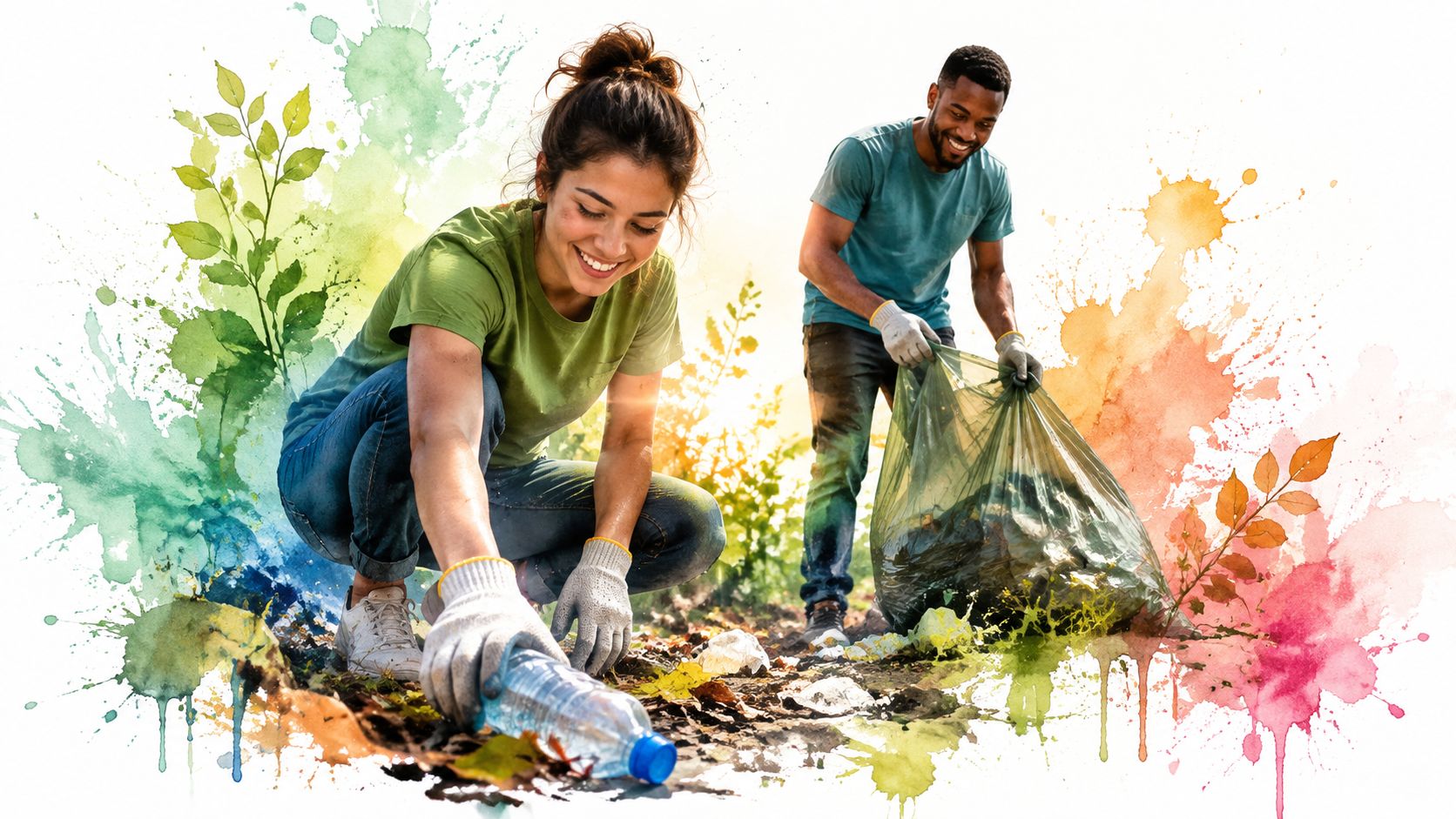
    A dedicated volunteer cleaning up litter along the snowy Chicago Riverwalk during a cold winter day.

    That's why I keep returning. The work can feel grimy, cold, repetitive, and occasionally ridiculous. It can also turn a silent morning into a shared story.

    If you're looking for cleanup volunteer work in Chicago, start with the Chicago Park District volunteer page, the Friends of the Chicago River calendar, alderperson-led neighborhood cleanups, or the city's Adopt-a-Portion program for street and alley segments. Other cities usually have similar routes through parks departments, watershed groups, conservancies, and neighborhood offices.

    I'll also show you how to join without standing alone beside the sign-in table, what to wear, what to leave untouched, and how to organize a safe event from scratch. Most of all, I'll focus on keeping people around after the first event, because a full sign-up sheet means little if the same people never return.

    Where to Find Cleanup Volunteer Work Near You

    I usually start local, then widen the search. In Chicago, the Chicago Park District volunteer page is useful for park projects, while Friends of the Chicago River lists river-related events. Alderperson offices often announce ward cleanups in newsletters and social posts. The city's Adopt-a-Portion program can connect volunteers with a street or alley segment that needs regular attention.

    Search by the place, not only by the activity. “Cleanup volunteer work Chicago” can return polished pages with no current event. “Litter pickup Logan Square,” “river cleanup near me,” “beach sweep South Shore,” or “trail cleanup Cook County” usually gets closer to an actual gathering.

    Search paths that usually work

    • VolunteerMatch: Filter by your ZIP code and search for litter, parks, rivers, or environmental volunteering.
    • All for Good: Search your city and nearby suburbs, then check the event date carefully.
    • Meetup: Filter by “environment” and “cleanup.” Some groups post recurring events there.
    • Eventbrite: Search local nonprofit listings, then confirm that the organizer still has supplies and permission.
    • Alliance for the Great Lakes: Look for shoreline cleanup events around the Great Lakes.
    • Forest preserve districts: Search for trail days, habitat workdays, and preserve volunteer calendars.

    Neighborhood Facebook groups and Nextdoor can surface small cleanups that never reach larger platforms. I also check Instagram accounts for local conservancies, park friends groups, and river organizations. A photo from last month may point you toward a recurring crew even when the group's website looks quiet.
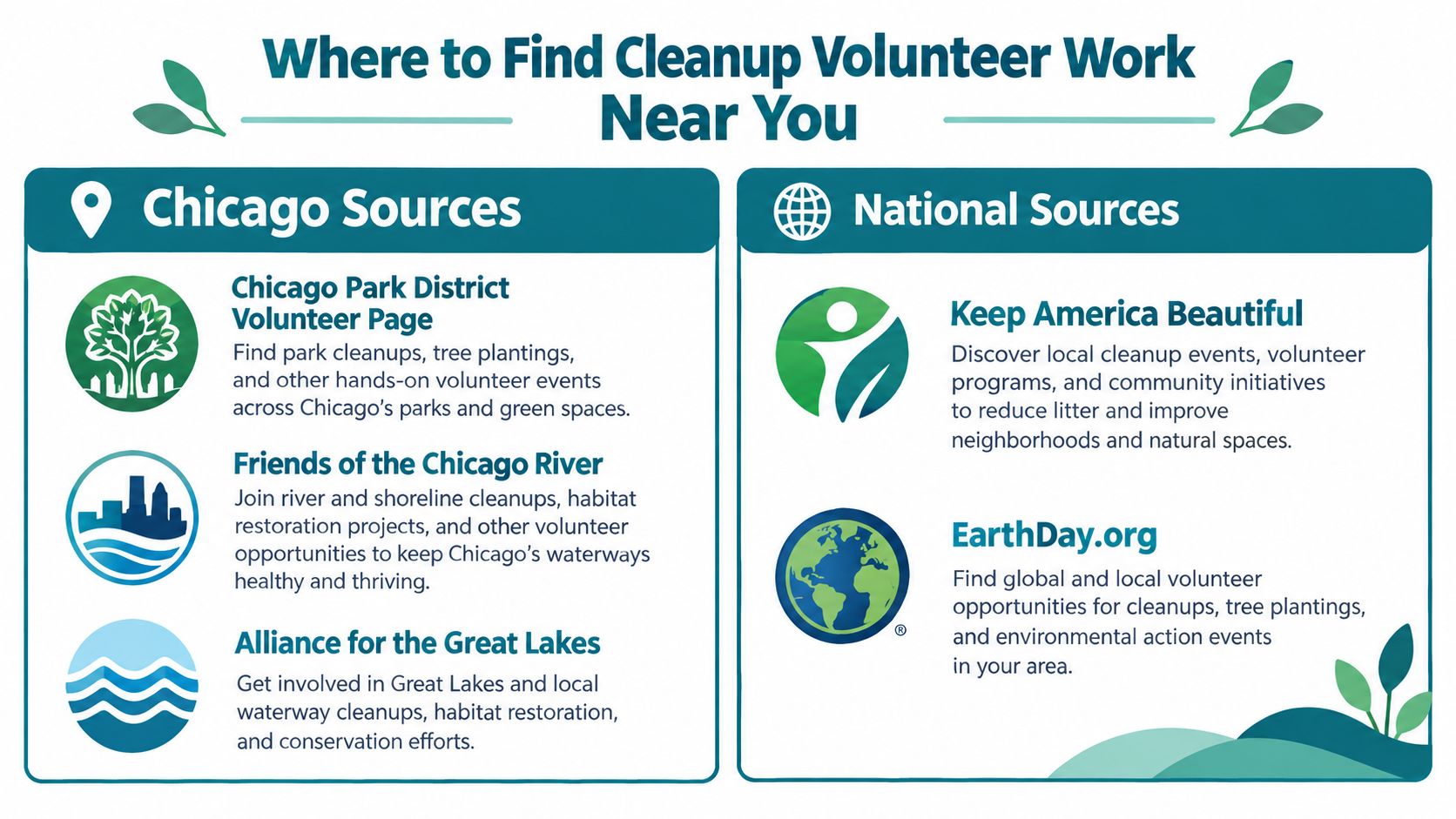
    An infographic titled Where to Find Cleanup Volunteer Work Near You listing Chicago and National sources.

    You can also browse this guide to environmental volunteering near you for additional search ideas.

    Try calling. The best event may live in an organizer's phone, not on a webpage. Ask three questions: where do volunteers meet, what equipment does the group provide, and what happens when the weather turns bad?

    How to Join Your First Cleanup Without Feeling Lost

    Your first event feels easier once you know the sequence. Register through the event link, then read the confirmation email all the way through. It should tell you the meeting point, parking options, start time, and what the organizer provides.

    Arrive ten minutes early. Find the person with the gloves and clipboard. That person usually knows where newcomers should sign in, where the bags sit, and which section needs the most help.

    Bring less than you think

    Wear closed-toe shoes, layers, a hat, work gloves, and sunscreen. Carry water and a small backpack for your phone, keys, and anything you don't want inside a trash bag.

    Most organized crews lend grabbers, bags, and safety vests. Take a grabber even if you think you can work faster with your hands. You'll protect your back, avoid mystery residue, and reach beneath benches without kneeling in wet litter.

    Pair up with someone who has attended before. You don't need to make conversation right away. I've worked beside people for an hour before learning their names. The silence usually breaks at the bag pile, when someone pulls out a bicycle wheel, a bowling ball, or a tire and everyone wants to know the story.

    A typical event starts with a short safety talk and a route assignment. Then you pick for sixty to ninety minutes, bring the bags back, weigh or count the results, and take a group photo. Some crews finish with coffee. Others find a nearby bar or café. The post-cleanup gathering often creates the friendships that make the next event feel less like an appointment.

    First-timer rule: Nobody expects you to perform. Pick up what you can handle, ask when you're unsure, and stay near the route.

    Before you leave, thank the organizer and join the email list or group chat. Mark the next date while the memory still feels fresh. This litter cleanup volunteer guide can help you compare different ways to get involved.

    Safety Rules Every Volunteer Crew Actually Uses

    I've watched a clean street turn dangerous in seconds. A car cuts too close. A volunteer reaches for something sharp. Heat builds under a dark shirt. Good crews prevent those moments before the first bag opens.

    Start with clothing. Wear closed-toe shoes, puncture-resistant gloves, long sleeves, and layers that match the weather. Use a high-visibility vest near streets. Bring water, sunscreen, and a small first-aid kit.

    Seattle guidance tells volunteers to stay out of roadways, medians, and roundabouts. It also warns against bridges, steep slopes, guardrails, construction areas, utility sites, headphones, alcohol, and mind-altering substances. Work in daylight only, and use a litter grabber instead of bare hands. You can review the Seattle Adopt-a-Street safety guide before planning roadside work.

    Treat unknown objects as unknown

    Use the stick-before-touch rule. Tap or move ordinary-looking material with a grabber or stick before you lift it. Annapolis guidance recommends using a rake or stick to identify an item, and sweeping dangerous litter with a broom and dustpan. Its cleanup checklist also tells volunteers to obey traffic signals and wear gloves.

    Leave needles, syringes, chemicals, weapons, medical waste, dead animals, and anything poisonous for trained handlers. Don't squeeze, kick, open, or carry an object just because it fits in your bag. Report illegal dumping through the city's 311 system when that route applies, and ask the organizer how the crew handles hazardous material.

    Jacksonville guidance says crews should park off the roadway, work on one side at a time, wear bright clothing, safety vests, gloves, and protective footwear, and carry plenty of water. It also says volunteers shouldn't enter the roadway or shoulder or work on bridges, tunnels, or overpasses. The Jacksonville cleanup safety guidance gives a clear model for leaders.

    North Carolina rules set a minimum age of 12, and volunteers aged 12 to 17 need supervision from adults aged 21 or older. The rules also require daylight work, a distance of at least five feet from the pavement edge, small groups, facing oncoming traffic, and stopping during bad weather. Read the North Carolina DOT safety rules before taking a crew beside a road.

    Before anyone starts, I run a quick check:

    • Route: Are we away from traffic, steep edges, unstable ground, and water hazards?
    • Gear: Does everyone have gloves, a grabber, a bag, and visible clothing where needed?
    • Buddy: Does every volunteer have a partner or a clear group?
    • Weather: Do we have water, shade, warm layers, and a stop plan?
    • Hazards: Does everyone know what stays on the ground?
    • Emergency: Does the leader have a phone, first-aid supplies, and emergency contacts?

    This volunteer safety checklist gives you a compact version to use before your next event.

    Why People Stop Showing Up and How to Keep Them

    The first Saturday can draw a crowd. The third Saturday tells you whether you built a crew.

    I've seen volunteers disappear after one cold morning, one confusing meeting point, or one event where nobody remembered their name. Cleanup programs often focus on sign-ups because sign-ups look good. I care more about the person who returns, learns the route, and starts bringing a friend.

    Make the event easy to remember

    Pick the same day, time, and meeting place whenever you can. People can build a cleanup into a weekly routine when they don't have to solve a new puzzle every time.

    Weather causes obvious trouble. Chicago can give you heat, rain, snow, wind, and hail in the same broad season. I use rain dates when possible, move seasonal events to more comfortable times, and keep an indoor backup task ready, like sorting recyclables or preparing supplies.

    Social connection matters, but you don't need forced games or loud introductions. A crew that grabs coffee afterward gives people a natural place to talk. Volunteers often connect while washing muddy tools, comparing strange finds, or arguing over whether a soaked sofa cushion counts as one item or two.

    People return when they know where to go, who will be there, and what their work changed.

    Show the work without turning it into a sales pitch

    Post bag counts, before-and-after photos, and short notes about the route. Keep a simple attendance record. The Durham Adopt-a-Street program tracked 10,914 pounds of litter over one year, with an average of 7.75 cleanup events and 893 pounds per month, then estimated the removed material at $21,037 using a public removal cost of $1.93 per pound. Its cost-benefit analysis shows why weight records tell a clearer story than bag counts alone.

    Give returning volunteers ownership. Ask one person to manage supplies. Ask another to lead a route. Celebrate milestones at five and twenty events, and use name tags so people don't have to rebuild the group from scratch each week.

    A retention benchmark cited in the provided volunteer-sector coverage places nonprofit volunteer retention at around 65%, meaning roughly one-third may not return year over year. The volunteer retention discussion makes the practical gap plain. Recruitment fills a calendar. Predictability, friendship, and visible results help fill the next one.

    How to Organize Your Own Cleanup From Scratch

    Choose a site you can finish or revisit. A four-to-six-block stretch, one park, or a half-mile riverbank gives a new organizer a manageable boundary. Walk it first. Look for traffic, water, construction, broken glass, dumping, restrooms, shade, and a place to stage full bags.

    Get permission before you advertise. In Chicago, contact the Chicago Park District for park work, ask an alderperson's office about ward coordination, or approach Friends of the Parks for a park partnership. A short email should name the site, proposed date, cleanup limits, disposal plan, and safety approach.

    Build the smallest useful kit

    • Bags: Use 50-gallon contractor bags for bulky litter.
    • Tools: Gather grabbers, rakes, and dustpans.
    • Protection: Provide gloves, hand sanitizer, and a first-aid kit.
    • Water: Bring a cooler or water station.
    • Hazard control: Use sharps containers only through a trained disposal process.

    Recruit in places where people already gather. Post in neighborhood Facebook groups and Nextdoor. Contact LISC Chicago networks, university service boards, local businesses, and corporate volunteer coordinators. Ask a nearby café if it wants to host a post-cleanup stop.

    Set one route captain at each boundary. Give everyone a meeting point and a stop time. Weigh the bags before disposal, record the date and site, and photograph the same view before and after the work. Ocean Conservancy's International Coastal Cleanup guidance also encourages item data and cleanup cards, so organizers can track what volunteers remove instead of relying on a vague pile of bags.

    Send a thank-you message soon after the event. Include the route photo, weight, next date, and one clear way to help. A person who returns quickly can become a route captain before the group loses momentum.

    Your First Saturday Morning and What Comes After

    I arrive before the crew. I check the meeting point, set out gloves and grabbers, and walk the first section for new hazards. Then people appear in twos and threes. We sign in, run the safety talk, pair up, and start at the first bend in the river or the first block of the park.

    The first ten minutes feel quiet. Then somebody finds a shopping cart. Somebody else pulls a tire from the weeds. A new volunteer asks where to put a cracked bottle, and suddenly they're part of the crew.

    After the bags go to the weigh-in spot, we take a photo and get coffee. That small ritual often matters more than a speech. On the second visit, people recognize the meeting place. On the third, they recognize each other.

    Over the next six months, you might join a smaller core group, take ownership of a parkway, or mentor the next newcomer. You don't need to plan six months today. You need to make the next Saturday easy.

    This week, RSVP to a Chicago cleanup through the Park District, Friends of the Chicago River, an alderperson's office, or a local group, then add the next event to your calendar before you leave. The second time you show up is where cleanup volunteer work starts becoming a habit.


    Litter Caterpillars organizes Chicago trash pickup events where volunteers gather, pair up, and clean neighborhood areas with supplies such as grabbers, bags, gloves, and hand sanitizer. Visit Litter Caterpillars to find a crew, join an upcoming pickup, and take your next Saturday morning outside.
  • Volunteer Health Benefits: How Trash Picking Boosts Wellness

    Volunteer Health Benefits: How Trash Picking Boosts Wellness

    On a cold Chicago morning, I stood with three volunteers under a tree while hail slapped the sidewalk and every ride share canceled one after another. We laughed anyway, grabbed the last bag of trash, and kept going, because the mess on the block felt easier to carry than the mess some of us had been carrying inside.

    The Day Everything Changed in a Hail Storm

    I still remember that first cleanup like it had weather stuck to it. The sky turned mean, the wind cut through our gloves, and we huddled under a bare tree while our phones lit up with more canceled rides. Nobody called it heroic. We were just cold, muddy, and stubborn.

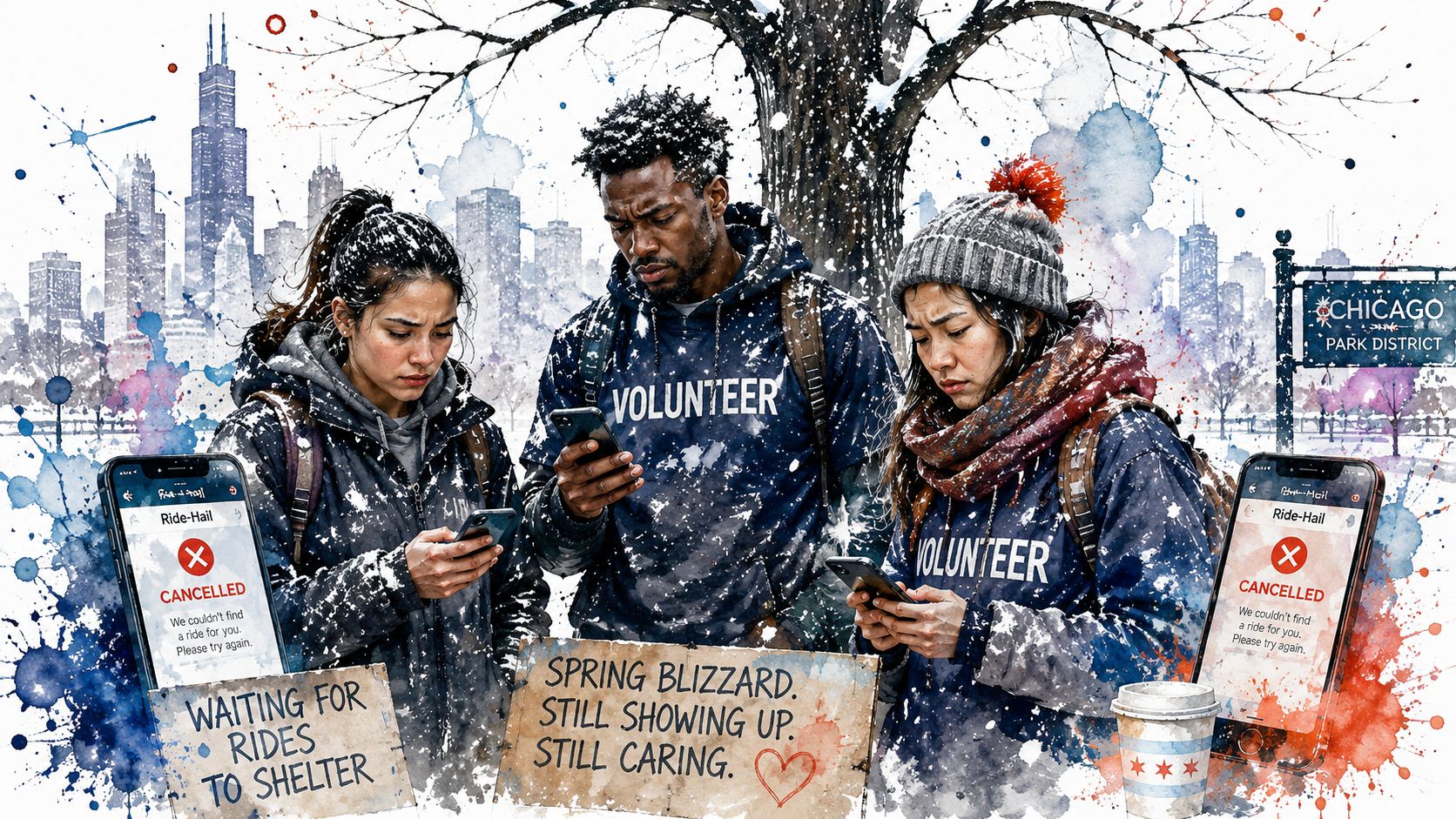
    Three volunteers standing in a snowy Chicago blizzard looking at cancelled ride-share apps on their smartphones.

    What surprised me wasn't the trash. It was how fast the cleanup turned into something we wanted to keep doing. The founder of Litter Caterpillars talks about that same moment as the first time he felt cleaning other people's messes could feel easier than cleaning his own. I understand that now. When your hands are busy, the same painful thoughts lose some of their grip for a while.

    Movement makes the day feel different

    Outdoor service changes the texture of a day. You bend, lift, walk, look up, and scan the curb, and all that motion gives your mind somewhere to go. That is part of why volunteers keep showing up even when the weather gets ugly, because the work has a pulse to it.

    I have watched people arrive tense and leave lighter, not because the block got perfect, but because they made something cleaner with their own hands. That visible change matters. You can point to the bag, the sidewalk, the cleared patch of grass, and say, “I helped that happen.”

    Practical rule: If the work leaves you smiling while your hands are dirty and your legs are tired, you are probably feeling the kind of strain that can still be good for you.

    The health piece does not live only in feelings. A major 2020 study of U.S. adults age 50+ found that people who volunteered at least 100 hours per year, about 2 hours per week, had a 44% lower risk of mortality and a 17% lower risk of physical functioning limitations over 4 years compared with people who volunteered 0 hours per year. That is not a vague mood boost. That is a real, concrete dose tied to health outcomes in a longitudinal study of older adults.

    The same kind of steady service is part of what people look for in service learning benefits, because the work reaches beyond the curb and into how people carry themselves afterward.

    What the Research Shows About Volunteer Longevity

    I think about the men I've seen show up for cleanup after a long week on the South Side, gloves on, coffee in hand, quiet at first. By the time the bags start filling and the block looks different under their feet, they are standing a little taller. That kind of change is hard to fake, and the research points in the same direction, steady service seems to matter more than a single burst of effort.

    The health effect is not built around one heroic day. It comes from showing up often enough that volunteering starts to feel like part of ordinary life, the way walking to the train or making dinner does.

    The minimum dose looks smaller than people expect

    A source cited by the American Heart Association says about 2 hours a week may be the point where health benefits start to appear, and Carnegie Mellon research in that same report found that older adults who volunteered at least 200 hours per year cut their risk of high blood pressure by 40% AHA-cited report. That gives people something practical to work with. You do not need a perfect schedule. You need a repeatable one.

    Other reviews point in the same direction. A systematic review and meta-analysis of volunteering outcomes found that volunteers had a 22% lower mortality risk than non-volunteers after adjustment, with a risk ratio of 0.78 and 95% CI 0.66-0.90. Another review of older-adult volunteering found a 24% adjusted mortality reduction and a 47% reduction in unadjusted analyses meta-analysis. The pattern is clearer than any single number. Service seems to help most when it becomes part of the week, not a rare event.

    A practical way to see it is through routine. If volunteering fits beside walking, cooking, or church, the body appears to notice. If you want a place to build that habit around cleanup work, the routines described in service-learning benefits from group volunteer work offer a useful starting point.

    Why Cleaning Other People's Messes Heals Your Own

    I've watched people show up to a cleanup carrying more than gloves and grabbers. A man in Pilsen once worked a whole stretch of sidewalk after losing a job, saying almost nothing until the bag at his feet started filling up. A mother from the South Side told me she came for the litter pickup after a rough week at home, then admitted the first hour of picking up bottles gave her enough distance to breathe again. The trash did not erase what they were carrying, but the work gave their minds a smaller, concrete problem to hold.

    Emotional weight feels lighter when your hands move

    That is the part people miss. A candy wrapper on the curb is simple to grab, even when the rest of life feels stuck in place. You bend, reach, bag, and keep moving. That sequence gives your brain proof that at least one thing can change right now.

    Research supports that feeling without flattening it into a slogan. The major 2020 study reported better self-rated health and higher physical activity among volunteers. A systematic review of volunteering and mental health also found favorable effects on depression, life satisfaction, and wellbeing.

    Clean a block for an hour, and your mind gets a moving target instead of a closed loop.

    Sunlight matters when you are outside instead of stuck in a room with your own thoughts. Movement matters because your body has something to do besides sit in worry. Visible progress matters because you can watch a curb shift from ugly to usable right in front of you.

    Purpose grows from visible repair

    Outdoor cleanup feels different from a lot of other good deeds because the change is right there in your hands. The bag gets heavier, the sidewalk gets clearer, and the work leaves a mark you can point to before you go home.

    That visible repair changes the inner rhythm too. When you spend an hour sorting through bottles, wrappers, and fast-food boxes, your attention has to stay with the next grab, the next step, the next bag tie. A review on volunteering and physical health outcomes says the strongest gains show up when service increases physical activity, functioning, and social support. That matches what I have seen on Chicago streets, where the body stays busy, the group keeps pace together, and the mind gets a break from its usual replay mode.

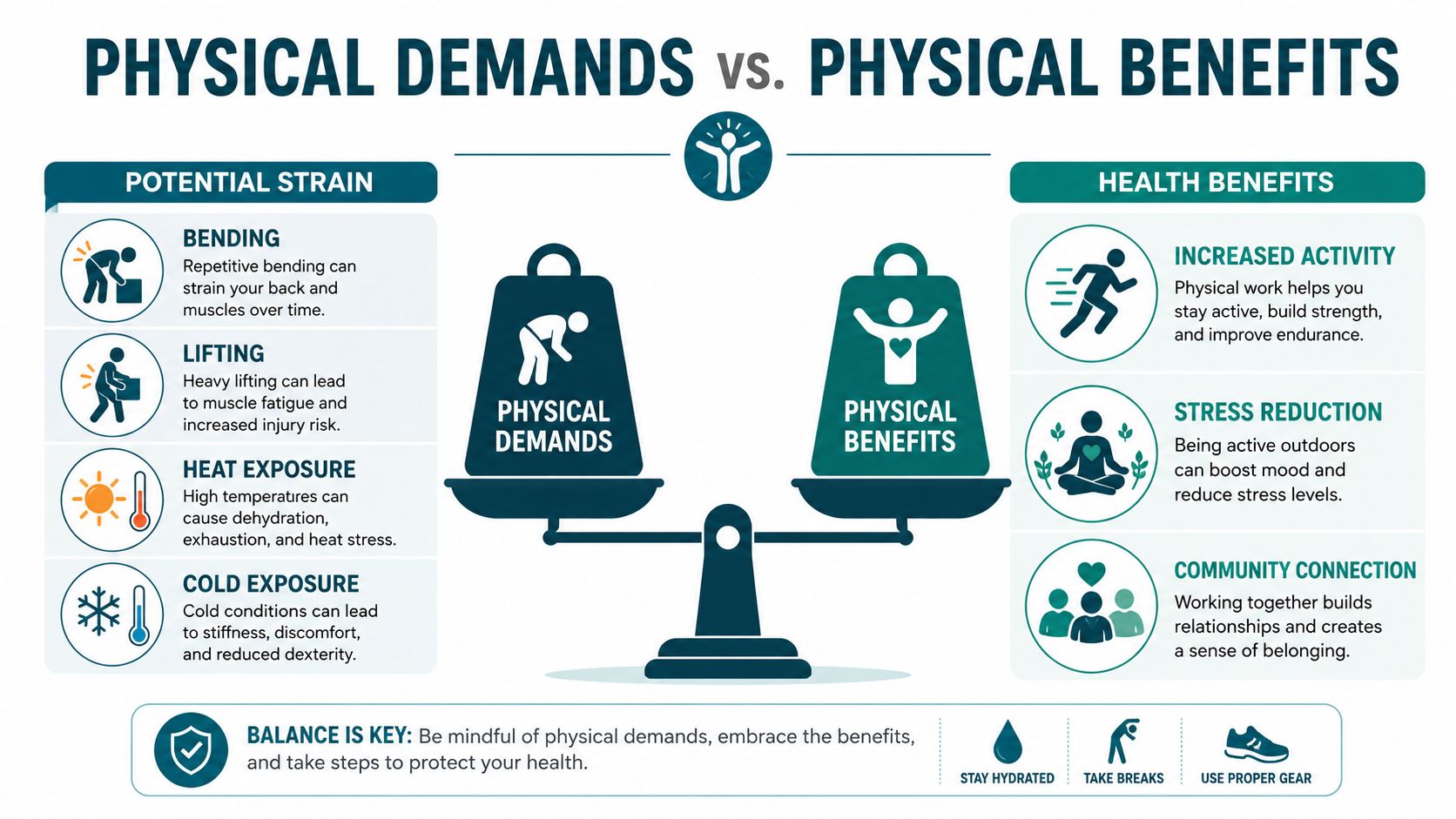
    Physical Demands Versus Physical Benefits

    I still remember a cleanup crew on a windy Chicago morning, each person working a little differently because each body brought something different to the block. One volunteer bent to grab cans from the curb, another filled bags and tied them off, and a third took the slower path along the alley because a sore knee made fast steps a bad idea. Outdoor cleanup can be rough on the body, and I do not want to gloss over that part.

    An infographic comparing physical demands like strain with health benefits from physical activity and community work.

    The benefit grows when the task fits the body

    A volunteer shift pays off most when the work matches what people can safely do that day. Lifting bags, gripping grabbers, walking blocks, and standing in the sun all ask something real of the body, so the gain comes from good task design, not from pushing everyone through the same pace. A review on volunteering and multidimensional health outcomes found benefits across mental, physical, and social health, which fits the fact that outdoor service works best when the movement, the role, and the group rhythm all line up.

    I have seen crews get that right on the street. One person handled the heavier bags, one stayed on a shorter route, and another rotated in after a rest break so nobody had to fight through pain just to stay useful. That kind of setup keeps the work moving without asking a volunteer with joint pain, high blood pressure, or mobility limits to carry a load that does not belong to them.

    A cleanup can also help the body in a quieter way. It gets people bending, walking, reaching, and carrying, but it should never turn into a strain contest. When the route is too long, the bags are too heavy, or the heat and cold are ignored, the body stops getting the upside and starts paying the cost.

    Good service design keeps the work humane

    The body notices details that a flyer never mentions. Uneven sidewalks, wet grass, broken glass, icy curbs, and long stretches without a break all change what a volunteer can do safely, so the event plan should account for those conditions before anyone starts. Park restoration, street cleanup, and alley pickups each ask for different kinds of effort, and role rotation helps crews keep going without wearing one person down.

    I've watched a small crew split a litter pickup into pieces that made sense. One volunteer packed bags, one used tongs near traffic, and one handled the slow lane for anyone who needed less bending or less walking. That is the sort of planning that lets service stay active without turning into punishment.

    The volunteer event planning guide is useful here because it keeps the focus on roles, pacing, and the kind of setup that lets people contribute without overreaching. When the task matches the body, the work feels steady instead of punishing, and people leave with enough strength to come back again.

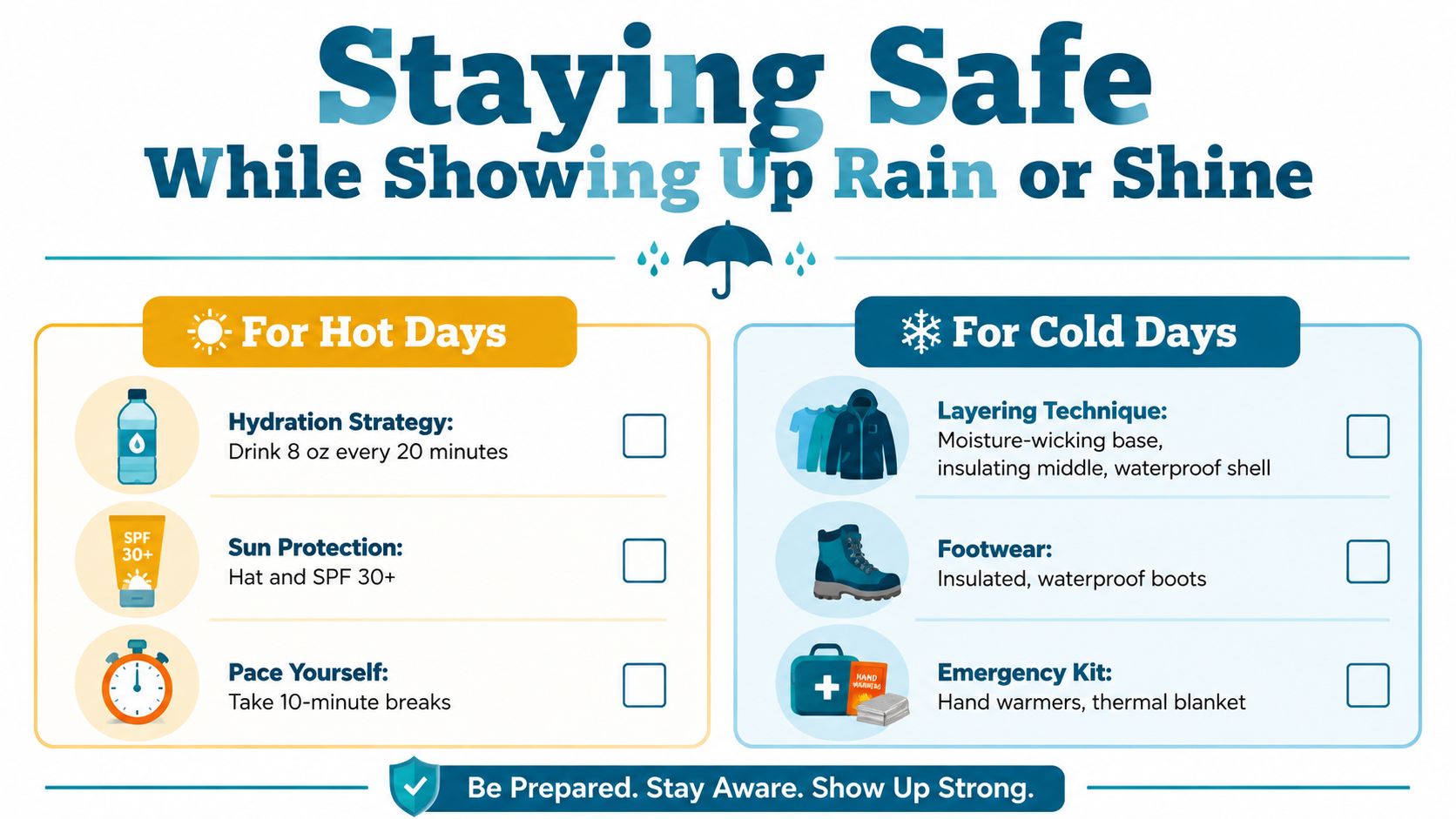
    Staying Safe While Showing Up Rain or Shine

    Chicago weather doesn't care about your good intentions. Hot pavement will drain you, cold wind will cut through a wet hoodie, and a long cleanup can go bad if nobody pays attention to simple signals. I treat safety like part of the volunteer kit, right next to the grabber and gloves.

    A safety infographic outlining hydration, sun protection, and cold weather clothing tips for volunteers working outdoors.

    Hot days need pacing, water, and shade

    Drink before you feel thirsty, and keep water close enough that you use it. On scorching days, I want volunteers to slow down early, not after they've already gotten shaky. If someone looks confused, stops sweating, or gets a pounding headache, I stop the work and move them to shade.

    • Hydration strategy: Carry water and sip regularly.
    • Sun protection: Wear a hat and SPF 30+.
    • Pace yourself: Take short breaks before you feel wiped out.

    Cold days need layers and a backup plan

    Cold cleanup can feel fine for ten minutes and then turn sharp fast. I tell people to dress in layers that pull moisture away from the skin, then trap warmth, then block wind and rain. Insulated, waterproof boots matter more than style, and hand warmers or a thermal blanket belong in the car or event bag.

    If you want help planning an event that doesn't push people past their limits, the volunteer planning guide at Litter Caterpillars' event planning page is a practical place to start. The point is simple. You can still show up in rough weather, just don't pretend rough weather is free.

    Building Friendships That Keep You Coming Back

    The best cleanup crews feel less like errands and more like a team you want to see again. I've watched people arrive alone, take a flag, learn a theme song, earn a badge, and leave with a group chat full of new names. That social glue matters because people don't keep doing hard things just for abstract goodwill. They return for the people.

    Belonging turns service into habit

    Litter Caterpillars leans into that on purpose. The group schedules events on weekend mornings, which helps attract people who want to give their time with a clear head and a steady rhythm. It also filters out the kind of chaos that can turn a volunteer event into a drain.

    That idea lines up with what we already know from the health data. Volunteers show better mental and physical health, lower depression and anxiety, and lower mortality in older adults even after researchers control for age, gender, and physical health Mayo Clinic Health System summary. Social connection is part of why that happens. When you keep seeing the same faces, you build trust before the work even starts.

    Small rituals make people stay

    Flags, songs, and badges may sound playful, but they do serious work. They give people a shared identity, and that identity helps them show up again when the weather is bad or the street looks worse than expected. I've seen the same thing in sports and neighborhood groups. People want to feel like they belong to something that knows their name.

    Open group chats and consistent meetups help too. They make it easy to say yes on a random Thursday and still feel like part of the circle on Saturday morning. That's how friendship grows in real life, through repeated contact, shared strain, and a little bit of joy after the trash bags are tied off.

    If you want the health benefits to stick, keep the people close, keep the schedule predictable, and keep the work human.

    That's the part I trust most. Not the hype. Not the speeches. Just the simple truth that when people clean a block together, they often leave with stronger legs, clearer minds, and friends they didn't have before.


    If you want a volunteer crew that treats safety, friendship, and visible neighborhood change as part of the same job, join Litter Caterpillars. You'll find Chicago cleanup events that make it easy to show up, move your body, and build a habit that feels good on the street and in your own head.

  • Fun Community Service Ideas to Connect & Grow

    Fun Community Service Ideas to Connect & Grow

    Cleaning up other people’s mess is easier than your own. I know because my own life was a mess, and I mean the kind of mess where an old jar in the fridge feels emotionally heavier than a dumbbell. I started picking up litter because I needed a way to practice bravery and consistency when I couldn't seem to do either at home.

    The weird part is that it became fun.

    The first time my group got caught in a spring hailstorm, we stood under a tree, freezing, while ride after ride canceled on us. I should’ve hated it. Instead, I felt more alive than I had in months. Doing something hard with other people gave the day flavor. It turned suffering into a story, and the story made me want to come back.

    That’s how I learned something I wish more people would say out loud. Community service can help other people, sure. It can also help you. It can pull you out of your head, get you into your body, and put you next to the kind of people who show up on cold mornings and mean it. A lot of fun community service ideas sound cute on paper but feel stiff in real life. These are different. I’ve seen them work on blocks, in parks, in ugly weather, and in neighborhoods people usually avoid.

    If you want friendship, courage, structure, and a cleaner city, start here.

    1. Neighborhood Block Cleanups with Team Identity

    The first block I cleaned with the Litter Caterpillars looked ordinary from a car window. On foot, it felt different. Crushed cups in the gutter. A wet sweatshirt caught in a chain-link fence. Cigarette packs tucked into the grass like the street had given up on itself. I almost turned around that morning because my own apartment was a mess and I felt like a hypocrite. Instead, I grabbed a neon bag, followed a woman in a yellow beanie, and started picking up one stupid wrapper at a time.

    By the end of the hour, the sidewalk looked better, but that was not the part that got me. It was hearing people yell, "Caterpillars over here," like we were an actual crew. Same color hoodies. Same playlist. Same meeting spot every week. I had shown up to clean a block. I left feeling less alone.

    That is why team identity matters.

    Pick one block. Or three. Bring gloves, bags, and grabbers. Give your crew a name people will remember. Carry a flag if you want to be a little ridiculous. Ridiculous helps. Wear the same color. Put one person in charge of the speaker. Suddenly the cleanup stops feeling like a chore you should do and starts feeling like something you belong to.

    A good block cleanup has a shape people can trust. Ours got stronger when we stopped improvising every detail and kept a few things the same each time.

    • Meet at the same corner so nobody has to guess where the group is
    • Use the same crew name and colors so neighbors recognize you fast
    • Walk a simple route so energy goes into the work, not into debating
    • End with coffee, snacks, or a park bench debrief so strangers become friends
    • Take one group photo so people have proof they were part of something real

    Practical rule: If a new volunteer cannot find you in 30 seconds or explain your group to a friend in one sentence, make the cleanup simpler and more visible.

    I love block cleanups because they are small enough to start now and hard enough to change you. You do not need permits for a giant event or a polished nonprofit vibe. You need a time, a place, a few tools, and the nerve to look a little silly in public. That last part matters more than people admit. Wearing the same color shirt and carrying a grabber down a busy street can feel strangely vulnerable. Then a neighbor waves, a kid asks to help, somebody thanks you from a porch, and your embarrassment shrinks.

    Some Saturdays we rotate to a block nobody in the group has touched before. The mood changes every time. One street gives you friendly hecklers and grandmas cheering from stoops. Another gives you silence, broken bottles, and wind that cuts through your gloves. Both count. Both teach the same lesson. Cleaning up a mess outside can help you face the mess inside, especially when you are doing it beside people who keep showing up.

    2. Park and Green Space Restoration Projects

    The first time our Litter Caterpillars crew restored a park, it was cold enough that my fingers hurt through my gloves. The place looked tired. Crushed cans in the grass. Fast-food wrappers pinned under wet leaves. A bench half-hidden by weeds. I remember thinking, this park looks like how I felt that winter.

    So we started there.

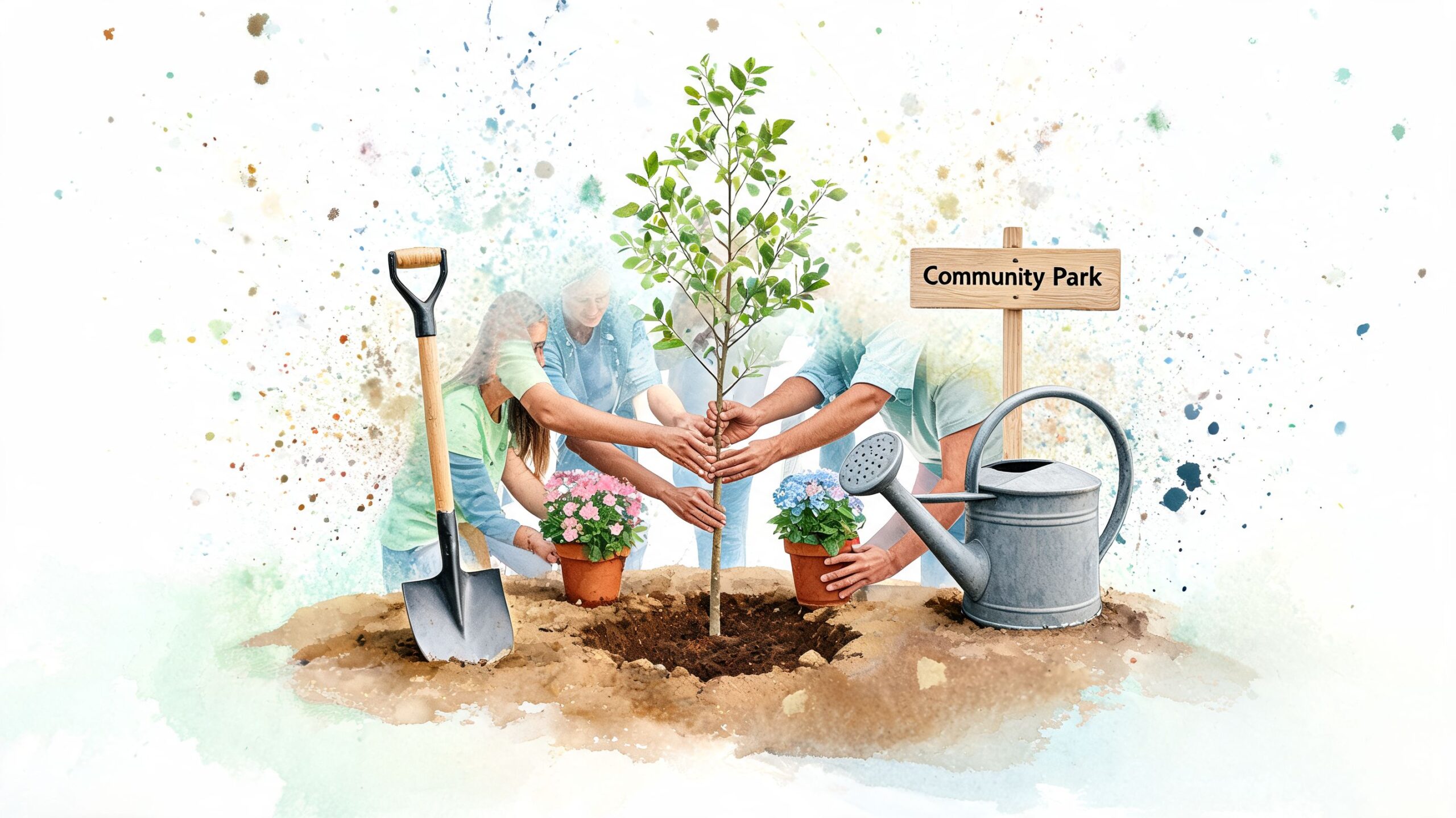
    A park project changes you because you stay in one place long enough to watch it come back to life. On a block cleanup, you move through the mess. In a park, you kneel in it. You pull trash out of bushes, rake dead stuff away, and notice the ground under your feet again. Then something strange happens. As the space looks less abandoned, you do too.

    A diverse group of volunteers planting a young tree together in a vibrant community park garden.

    Start with cleanup. End with care.

    The mistake is trying to make it beautiful on day one. What works better is a simple first pass that gives people a quick win, then a reason to return.

    Here’s the version that has worked for us:

    • Clear litter and obvious hazards first so the change is visible within the first hour
    • Take before photos because you will forget how rough it looked
    • Talk to nearby residents or regular park users because they know which corners get ignored
    • Pick one small add-on for the same day or the next visit like mulch, bulbs, or a planter bed
    • Return often enough to make the space feel claimed because one cleanup helps, but repeated care changes the reputation of the place

    I like these projects because they have a second act. After the bags are full, hope gets practical. You can plant a tree, spread mulch around a bare patch, repaint a sign, or set a bench area right again. Kids start cutting across the grass instead of around it. Dog walkers slow down. Someone who never spoke to you before asks when you’re coming back.

    That part matters more than people think. Plenty of volunteers want service that fits real life, feels social, and lets them see the result with their own eyes, as noted earlier. Park restoration does that well. You can show up for a morning, work hard beside other people, and leave with proof that your effort mattered.

    One of my favorite Litter Caterpillars days ended with muddy boots, six trash bags, two new planters, and a conversation with a guy who said he had avoided that park for months. A week later, he came back and helped. That is how these projects grow. Not through polished speeches. Through visible care.

    Here’s a good visual for what this kind of work can feel like in motion.

    3. Highway and Major Corridor Cleanup Events

    Some service projects feel gentle. This one feels epic.

    If your city lets you partner on a cleanup near a highway, major corridor, or event route, do it. These are the places where litter gathers in a way that feels almost offensive. Cups tumble into fences. Plastic bags snag on brush like sad flags. You fill bags fast, and that speed gives the day momentum.

    I still think about cleaning a highway during a bike-event shutdown. It felt like being allowed backstage in the city.

    Respect the danger

    This kind of project has more edge, so you need more discipline. Bright vests. Safety briefing. Clear boundaries. A meeting point. A trash-drop plan. Somebody in charge who is calm.

    Big corridors make volunteers feel the scale of a city. They also remind you that service is physical work, not an abstract opinion.

    I wouldn’t make this your first volunteer event if your group is brand new. I would make it your third or fourth. By then people know how to move together, listen, and take care of each other.

    There’s also a practical upside. Main roads are visible. When drivers see real humans out there cleaning, the work stops being invisible. That can pull in future volunteers, business partners, and the curious friend who always says, “You should invite me sometime,” and finally means it.

    4. Volunteer-Led Neighborhood Walking Tours and Cleanup

    This one is half service, half field trip, and I love it for newcomers.

    If you’ve ever moved to a city and felt lonely in that weird floating way, a walking tour cleanup is medicine. You’re not just standing around making small talk in a coffee shop. You’re moving. You’re listening. You’re learning where you live while you make it better.

    Ask one volunteer to lead the walk and share stories about the neighborhood. Nothing fancy. A favorite mural, a local bakery, a church that anchors the block, a vacant lot that deserves better. Then clean as you go.

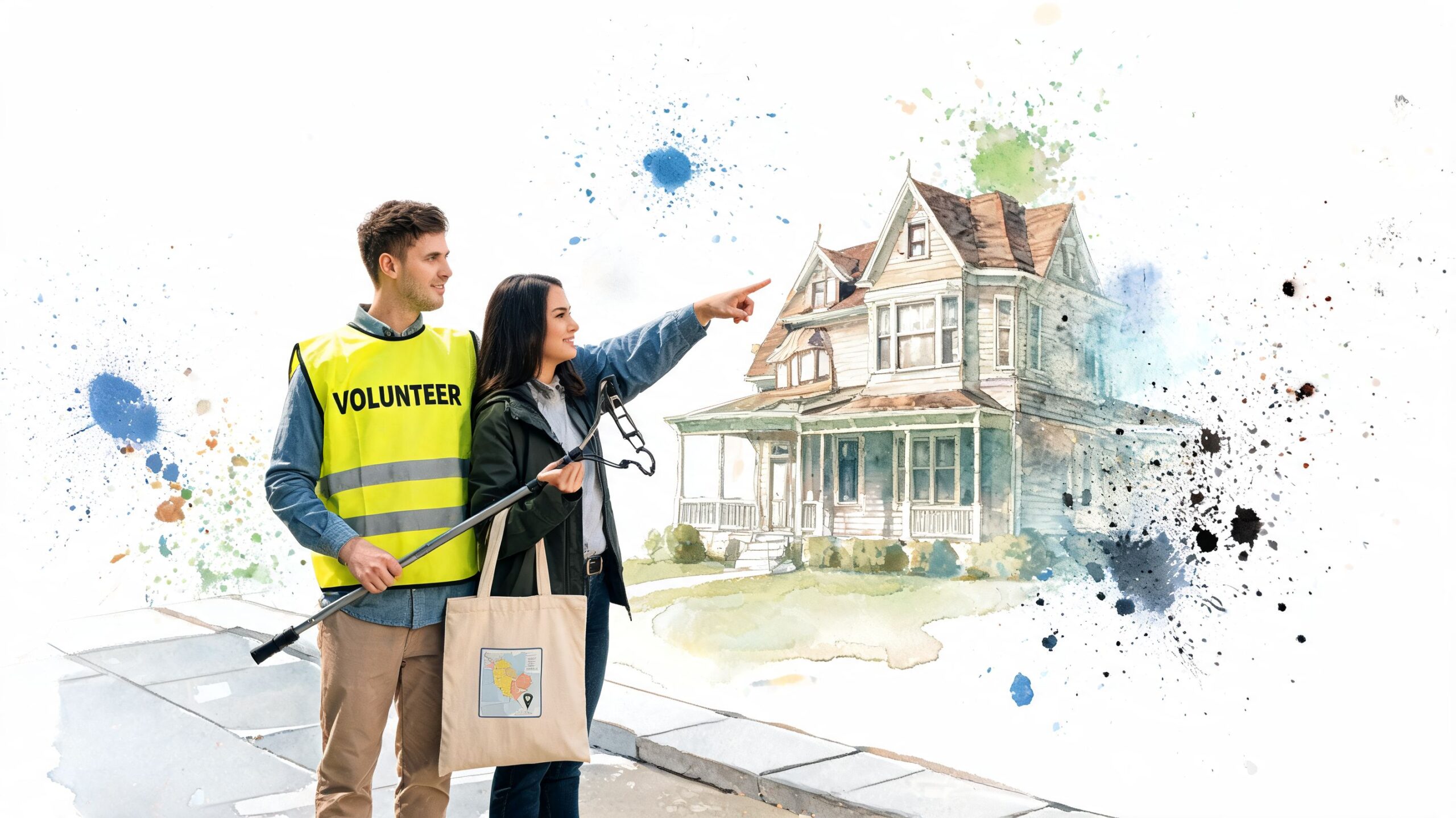
    A male volunteer and a female companion pointing towards a sketch of a house for community planning

    Let curiosity do some of the work

    The social magic here is simple. You don’t need to force connection when the route gives you things to react to. A broken sign. A beautiful courtyard. A bus stop full of trash. A tiny community garden someone clearly fought for.

    I’d keep the group small enough that people can hear each other and cross the street without chaos. Then end somewhere easy, like coffee, tacos, or a park bench if the weather is kind.

    Some of the best fun community service ideas work because they lower the social pressure. Walking side by side is easier than staring across a table. Picking up litter gives your hands something to do while your guard drops.

    5. Youth and Student Leadership Service Corps

    The first time I handed a teen volunteer the clipboard, I could see the panic rise in her face. It was cold, her friends were watching, and our Litter Caterpillars crew was about to head out under a gray sky with wind cutting through every layer. I almost took the job back. I’m glad I didn’t.

    Ten minutes later, she was checking people in, matching first-timers with returning volunteers, and calling out who still needed gloves. By the end of the cleanup, she was the one answering questions from adults.

    That shift matters.

    Young people often show up with more courage than they realize. They just need a real job, not a symbolic one. If you want to build a youth or student service corps, give them work that would inconvenience the group if they dropped it.

    Let students carry the day

    In our group, the fastest way to help someone grow is to trust them in public. A student can lead the safety talk. A high school senior can map the route. A college volunteer can handle the after-photos and write the recap while the details are still fresh. If they mess up a little, good. That’s part of how they get steadier.

    I’ve watched this happen over and over. A quiet kid starts by holding extra bags. Then they greet one new volunteer. Then they explain the plan to the whole group. A month later, they’re the person keeping everyone focused when the weather turns ugly and people want to quit. Cleaning up a block sounds small. Sometimes it’s where a young person finds out, very plainly, that they can stay calm, be useful, and help other people feel safe.

    A student service corps works best with clear roles and one or two adults who know how to stay supportive without taking over.

    Try roles like these:

    • Route captain who learns the area and keeps the team moving
    • Supply lead who tracks gloves, grabbers, and bags
    • Photo lead who documents the work and the people behind it
    • Welcome buddy who stays near first-timers and helps them settle in

    I like youth crews because they bring urgency. They haven’t made peace with broken things yet. They see a trashed lot, an alley full of bottles, a sidewalk that tells everyone nobody cares, and they want to do something now. Being around that changed me. I used to think I was helping young volunteers build confidence. Sometimes they were the ones helping me remember how to stop standing on the sidelines of my own life.

    6. Corporate Team Building Service Days

    The first time the Litter Caterpillars hosted a company cleanup, I expected forced smiles and name tags nobody could read. Instead, I watched a project manager in office shoes crouch beside a storm drain with a guy from accounting, pulling out a wet pile of cups and receipts with two grabbers and a lot of laughter. Twenty minutes in, they had stopped talking about work. By the end, they were arguing about who had found the strangest piece of trash and whether they should come back next month without the company banner.

    That day changed my mind about team building.

    A service day works because the job is honest. You start with a messy block, a parking lot edge full of wrappers, or a fence line everyone has ignored for months. Then you work until the place looks cared for again. If your team has been stuck in meetings, politics, or polite distance, that kind of visible progress cuts through a lot of nonsense. I’ve felt it in myself too. When my head was crowded and my life felt sloppy, picking up trash with other people gave me one clean thing I could finish.

    Corporate groups do best when the day feels grounded in a real place, not staged for a photo.

    What I’ve seen work:

    • Pick a route with an obvious problem so nobody has to wonder why they’re there
    • Keep teams small so people talk, notice things, and stay useful
    • Give one short local briefing about the street, park edge, or corridor they’re serving
    • End with coffee, lunch, or pizza so the conversation keeps going after the bags are tied
    • Share a simple recap with photos and volume collected instead of a long internal presentation

    One more thing matters. Let people get uncomfortable.

    I don’t mean unsafe. I mean real. Wind in your face. Mud on your gloves. That moment when you realize the alley behind the office park is worse than you thought, and you still keep going. Hard things done together have a way of introducing people properly. I’ve seen quiet employees take over bag runs, skeptical managers carry full loads back to the truck, and coworkers who barely spoke in the office start moving like a practiced crew.

    The best company service days leave people a little tired, a little less guarded, and proud in a way happy hour rarely touches. If a few of them come back later on their own, you did more than fill a volunteer slot. You helped them find a sturdier version of themselves outside, and sometimes inside too.

    7. Environmental Education and Cleanup Workshops

    One winter, our Litter Caterpillars crew met in a church basement while sleet tapped the windows hard enough to make a few people question their life choices. A teenager asked why trash always seemed to collect near the same fence line. An older neighbor pointed at the storm drain map on the wall and said, “Because this whole block tilts that way.” Twenty minutes later we were outside, cold, wet, and suddenly seeing the street for what it was. Not random. A system.

    That kind of workshop changed me more than I expected. I used to look at a dirty block and just feel overwhelmed. Learning how litter moves gave the mess edges. It made the problem smaller, clearer, and strangely easier to face. Sometimes that is what you need when your inner life feels scattered too. You pick one thing up, then another, and your brain stops spinning long enough to breathe.

    A good cleanup workshop starts indoors, but only briefly. Use a library room, school cafeteria, field house, or church basement. Show people a few real things they can spot outside: how debris collects near bus stops, how wind pins cups against fences, how neglected corners turn into permission slips for more dumping, how storm drains carry a block’s bad habits downhill.

    Then get outside before the room gets sleepy.

    I’ve found this format works especially well for people who want a reason before they want a grabber. They are curious, a little cautious, and often one good explanation away from joining in. Once they can connect the bottle in the bushes to runoff, foot traffic, or absentee maintenance, the cleanup stops feeling like random labor. It becomes attention. It becomes care.

    The best part is what happens to people’s eyes. After one short lesson, they stop walking past the same old mess half-blind. They notice patterns. They ask better questions. They start saying things like, “This corner needs a can,” or “That alley is feeding this whole curb line.”

    That’s a different kind of service. You are not only clearing trash for an hour. You are teaching people how to read their own neighborhood, and sometimes how to read themselves a little better too.

    8. Social Media Campaign and Volunteer Ambassador Program

    The first post that brought new people into the Litter Caterpillars was not clever. It was a photo of my frozen glove holding a bent license plate we found half-buried in slush. My face looked rough. The sky looked mean. A friend reposted it, wrote, “They were out here in this?” and two strangers showed up at the next cleanup.

    That taught me something fast. People respond to proof.

    A good volunteer ambassador program starts with a few regulars who already tell the truth online. Not the polished person. The honest one. The one who will post the muddy curb, the overloaded bag, the laugh after somebody finds a toy dinosaur in a storm drain, and the coffee stop when everybody finally warms up.

    Let real people carry the message

    Give a handful of volunteers a simple job. Share what happened. Show the meeting spot, one ugly corner, one small win, and one reason you came back.

    That is enough.

    I would also put a QR code on a handout or sign if you have one. It gives passing neighbors an easy way to join before courage fades and life fills the space back in. No pitch. Just a clean path from “I saw you out here” to “I’ll come next time.”

    You do not need perfect branding. You need a voice that sounds like a person with cold hands and a full trash bag.

    Prompts help, especially for people who want to post but freeze up:

    • Why I came today
    • What this block looked like before
    • The weirdest thing I found
    • Who I met
    • Why I’m coming back

    The ambassador part matters because service can feel lonely until you see your people. A post says, “I was here.” Another post says, “You can be here too.” For me, that changed more than turnout. When I started sharing cleanup days openly, I stopped hiding in my own head so much. Picking up a mess outside gave me a way to face my mess inside, and saying that out loud gave other people permission to do the same.

    That is how a cleanup group becomes a magnet. One real story at a time.

    9. Adopt-A-Ward Community Stewardship Program

    One winter, the Litter Caterpillars kept returning to the same ward even after a blizzard packed trash into hedges, chain-link fences, and frozen gutters. The first day, it felt like we were losing. The second week, we knew which alley would be the worst, which bus stop needed extra bags, and which neighbor would wave from the porch and ask if we wanted hot tea.

    That changed me more than any one-off cleanup ever did.

    Adopt-a-ward work is what you do when you stop chasing the easy photo and start building a relationship with a place. You pick a neighborhood zone, corridor, or cluster of blocks, then you keep showing up. Same area. New weather. New mess. New chances to prove to yourself that you can come back even when the excitement is gone.

    Stay long enough to know the route

    Repetition turns cleanup into stewardship. After a few weeks, you stop saying “that part of town” and start saying “our ward.” You know the lot that catches windblown cups, the corner where broken glass keeps coming back, and the stretch of sidewalk that looks better now because your group refused to give up on it.

    I would give each area a captain and a simple group chat. Nothing fancy. Just a person who notices when turnout dips, remembers where supplies are stored, and says, “We’re still on for Saturday.”

    Tracking helps, too, but it does not need to feel corporate. Keep a short log of which blocks you covered, what kinds of trash showed up, who came, and what looked different from last time. A shared note and a few before-and-after photos are enough to help people feel progress in their hands.

    That mattered for me more than I expected. When my own head was a mess, returning to the same streets gave me proof that ugly things can change slowly. You clear one fence line. You come back. It is still better than it was. Sometimes that is the exact reminder you need about your own life.

    A ward program works because it asks for commitment, not novelty. And commitment is where bravery usually starts.

    10. Friendship and Social Connection Facilitation Events

    The first time I felt this click, our Litter Caterpillars crew had finished a cold, miserable cleanup and nobody rushed to their cars. Gloves were off. Trash bags were stacked. Somebody passed around gas station coffee and stale donuts, and we stood there talking like we had known each other longer than two hours. I went home with frozen hands and a quieter mind.

    That surprised me.

    I had shown up for the obvious reason. The block was a mess, and I was a mess too. What I got was a roomless kind of friendship. Side by side, looking outward, doing something useful. For a lot of adults, that is easier than trying to make friends across a dinner table.

    If you want this kind of event to work, build for connection on purpose. Friendship does not always appear just because people wore the same gloves for an hour. Shy people drift. New people hover near the edge. Good intentions are not enough.

    A few things helped our group:

    • Match new volunteers with regulars so nobody spends the first ten minutes pretending to check their phone
    • Ask simple opening questions like what street they grew up on or what weird thing they found during a cleanup
    • Leave time after the work ends for coffee, fruit, soup, or whatever gives people a reason to stay
    • Mark the small stuff like a first event, a birthday, or someone finally getting brave enough to invite a friend

    Four joyful friends laughing during a picnic celebration with a small cake and drinks outdoors

    I stopped caring whether people came only for the cause. Some came because they wanted company. Good. That is honest. A cleanup can give you a job to do with your hands while your guard slowly drops.

    That inner part matters to me more than I expected. Picking up litter with kind people helped me practice being seen without performing. It helped me keep promises to myself. You show up on a windy Saturday, do one hard thing, laugh with somebody near a dumpster, and the knot inside you loosens a little. Cleaning up a mess outside will not fix your whole life, but it can prove you are still capable of change, and sometimes that is how the actual cleanup begins.

    Top 10 Fun Community Service Ideas Comparison

    Program / Model Implementation Complexity 🔄 Resource Requirements ⚡ Expected Outcomes 📊 Effectiveness / Quality ⭐ Key Advantages 💡
    Neighborhood Block Cleanups with Team Identity Moderate, recurring scheduling; occasional permits Low–Moderate, volunteers, basic supplies, branded gear Regular litter reduction; visible neighborhood presence; habit formation High, sustained engagement and local pride Builds camaraderie; flexible participation; strong social component
    Park and Green Space Restoration Projects High, multi‑phase planning, permitting, partnerships High, materials, specialists, funding, equipment Permanent site improvements; improved safety and property perceptions Very High, tangible long‑term transformation Lasting legacy; attracts media/business partners; educational benefits
    Highway and Major Corridor Cleanup Events High, extensive safety/traffic coordination and permits High, many volunteers, traffic control, PPE, insurance Dramatic visual improvement; media attention; volunteer recruitment spikes High, large scale visibility but less frequent Media buzz; attracts new volunteers; often qualifies for city support
    Volunteer‑Led Neighborhood Walking Tours and Cleanup Moderate, guide recruitment and training; scheduling Low–Moderate, trained guides, small supplies Deeper neighborhood knowledge; engaged participants; modest litter removal Moderate, strong for engagement/education, lower volume efficiency Combines tourism + service; appeals to newcomers and explorers
    Youth and Student Leadership Service Corps High, curriculum, mentorship structures, coordination Moderate, staff oversight, training materials, tracking systems Leadership development; sustained volunteer pipeline; documented service hours High, builds long‑term capacity and peer recruitment Scales volunteer base; supports retention; educational credentials
    Corporate Team Building Service Days Moderate, customized logistics and client coordination High, corporate volunteers, coordinators, supplies; funding Large short‑term impact; sponsorships; media/photo opportunities Moderate, strong short‑term results; variable long‑term engagement Generates funding/partnerships; efficient large‑group work; PR value
    Environmental Education and Cleanup Workshops Moderate, curriculum and expert coordination Moderate, speakers, materials, venue More informed volunteers; potential behavior change beyond cleanups High for education impact; moderate for immediate cleanup volume Builds credibility; attracts sustainability advocates; enables deeper impact
    Social Media Campaign and Volunteer Ambassador Program Moderate, content strategy and ambassador training Low, phones, small incentives, management time Increased awareness; youth recruitment; organic reach and storytelling Moderate, strong reach potential; conversion to active volunteers varies Low‑cost marketing; peer‑driven growth; scalable storytelling
    Adopt‑A‑Ward Community Stewardship Program High, coordination across many wards; leadership network Moderate, many volunteers, training, tracking tools Year‑round stewardship; scalable city coverage; measurable progress Very High, sustained local ownership and accountability Deep community relationships; localized identity; scalable model
    Friendship and Social Connection Facilitation Events Moderate, plan social elements and mentorship pairings Low–Moderate, refreshments, spaces, coordinators Higher retention; stronger volunteer networks; improved well‑being High for retention and community health; indirect on immediate metrics Increases retention; fosters belonging; transforms volunteers into advocates

    Go Find Your Fence to Paint

    Tom Sawyer got stuck painting a fence and somehow made other boys want in on it. I love that story because it gets at something simple and honest. Hard work becomes magnetic when you wrap it in pride, friendship, and a little play.

    That’s what these fun community service ideas do. They take dirty, ordinary work and turn it into a challenge you want to accept. A block cleanup becomes a team ritual. A park restoration becomes a place you care about. A walking tour becomes a map into your new city. A post-cleanup coffee becomes the start of a real friendship.

    I didn’t start doing this because I had my life together. I started because I didn’t. My own mess felt impossible. Picking up trash outside gave me a smaller, clearer battle. Bag by bag, block by block, I learned that action can come before feeling ready. That’s true for cleaning a street. It’s true for rebuilding yourself too.

    You don’t need a perfect nonprofit plan or a giant volunteer roster. You need a date, a place, a few supplies, and the nerve to invite somebody. Start with one block. Start with one park edge. Start with one weird little route under the train tracks that everyone ignores. If you keep showing up, the work gets lighter because the story gets stronger.

    There’s plenty of service out there that feels dry and dutiful. I think people are hungry for something more alive. They want structure, but they also want laughter. They want to help, but they also want belonging. They want to do good without pretending they have no needs of their own. I respect that. I think it’s honest.

    If you’re in Chicago, Litter Caterpillars is one real option for this kind of work. The group meets weekly, often on weekend mornings, and builds cleanup around bravery, kindness, and friendship. If you’re somewhere else, steal the spirit and build your own version.

    Go find your fence to paint. Go pick the block everybody skips. Go clean a mess outside and see what happens inside. The point isn’t to fix your whole life in one Saturday. The point is to show up for your city and for yourself, then do it again next week.


    If you want a place to start, Litter Caterpillars has weekly Chicago cleanup events, group identity, and a volunteer-first approach that makes it easy to join, make friends, and do the work.