
Tag: litter removal

  • How to Clean Up Parks with Volunteers

    How to Clean Up Parks with Volunteers

    You walk your dog past the same park bench every morning, and you see the same wrappers under it. You pick up one cup on Monday. You find three more on Friday. You want to clean up parks with neighbors, but you don't want chaos, injuries, or a one-time burst that fades. I run cleanups like small field operations. You set a boundary, you give people clear jobs, and you record what you find so your next visit works better.

    Start With the Park You Can Use

    You arrive, and I watch bags pop open before anyone agrees on a plan. One volunteer races toward the playground. Another volunteer drifts toward the parking lot. A third volunteer reaches into a hedge because she spots a bottle. I stop the group, smile, and ask everyone to keep bags closed for two minutes.
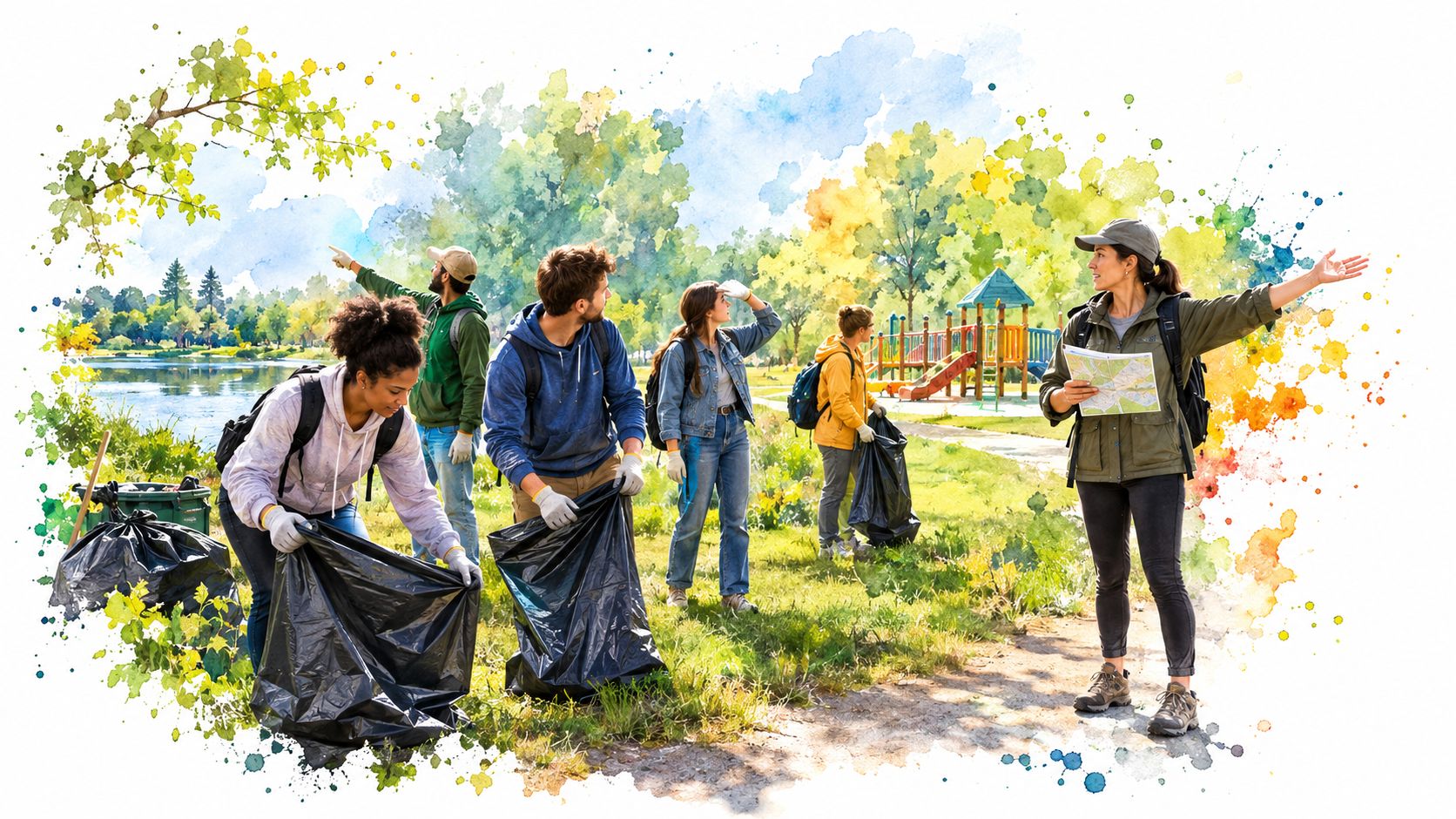
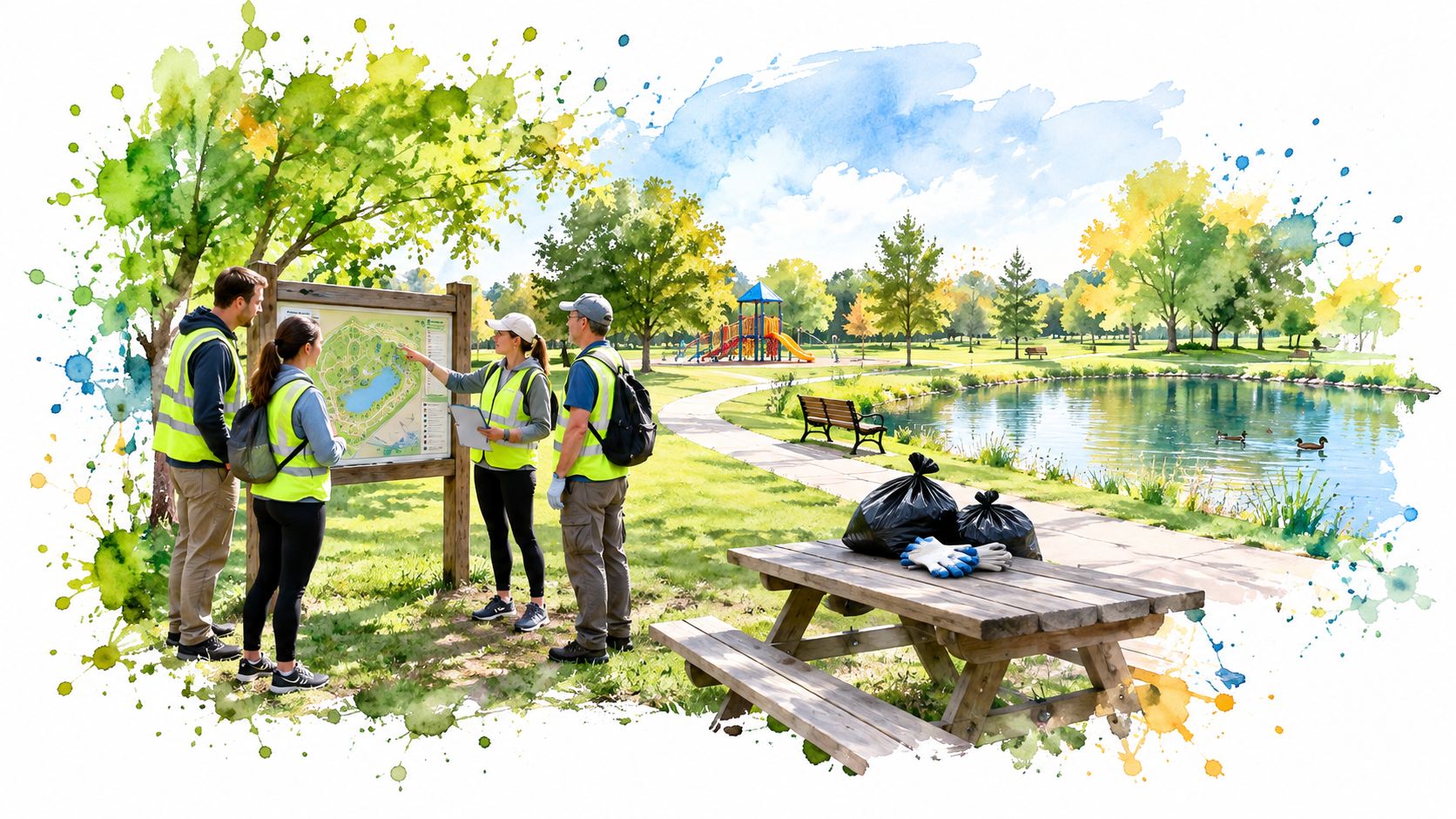
    A diverse group of volunteers cleaning up trash in a scenic park with a playground and lake

    I point to the meeting point first, usually a bench or sign you can see from the paths. I walk your eyes around the boundary next, from one corner to the next, and I name places you won't enter. Think of the park like a kitchen before you cook. You check the counters, you find the sink, and you put knives where kids can't grab them.

    Make a New Volunteer Useful Fast

    I hand a first-timer a grabber, gloves, and one simple job. I say, you walk the path edge with your buddy, and you call me if you see anything sharp or sealed. You feel useful in minutes because you know your lane, your partner, and your stop point.

    • Bring: You bring closed-toe shoes, water, weather layers, and a phone with charge.
    • Leave behind: You leave headphones, loose sandals, and any urge to reach into brush you can't see through.
    • Check local options: You can compare Chicago parks and cleanup locations before you pick a site your crew can finish well.

    You don't need a huge park to learn this rhythm. If you travel and want ideas for smaller, well-marked sites, you can browse Texas state parks and study how clear trailheads and meeting points help groups start calmly. I choose a park you can cover completely, because a finished small park teaches you more than a half-finished big one.

    Start slow for two minutes, and you save twenty minutes of confusion later.

    When you slow the start, you make coverage even and you keep people close enough to help each other. You also protect scarce nearby space, because UN-Habitat counts streets and open public spaces at about 16% of urban land in its sample of 911 cities across 114 countries. You can't swap your neighborhood park for another one down the road if yours looks neglected.

    Plan the Cleanup Before Bags Come Out

    The curb is the worst place to make decisions. Volunteers stand around waiting, bags stay in the trunk, and the one person with answers is still circling for parking. I make every call on paper days earlier, and the whole plan fits on a single page you can tape to a cooler.
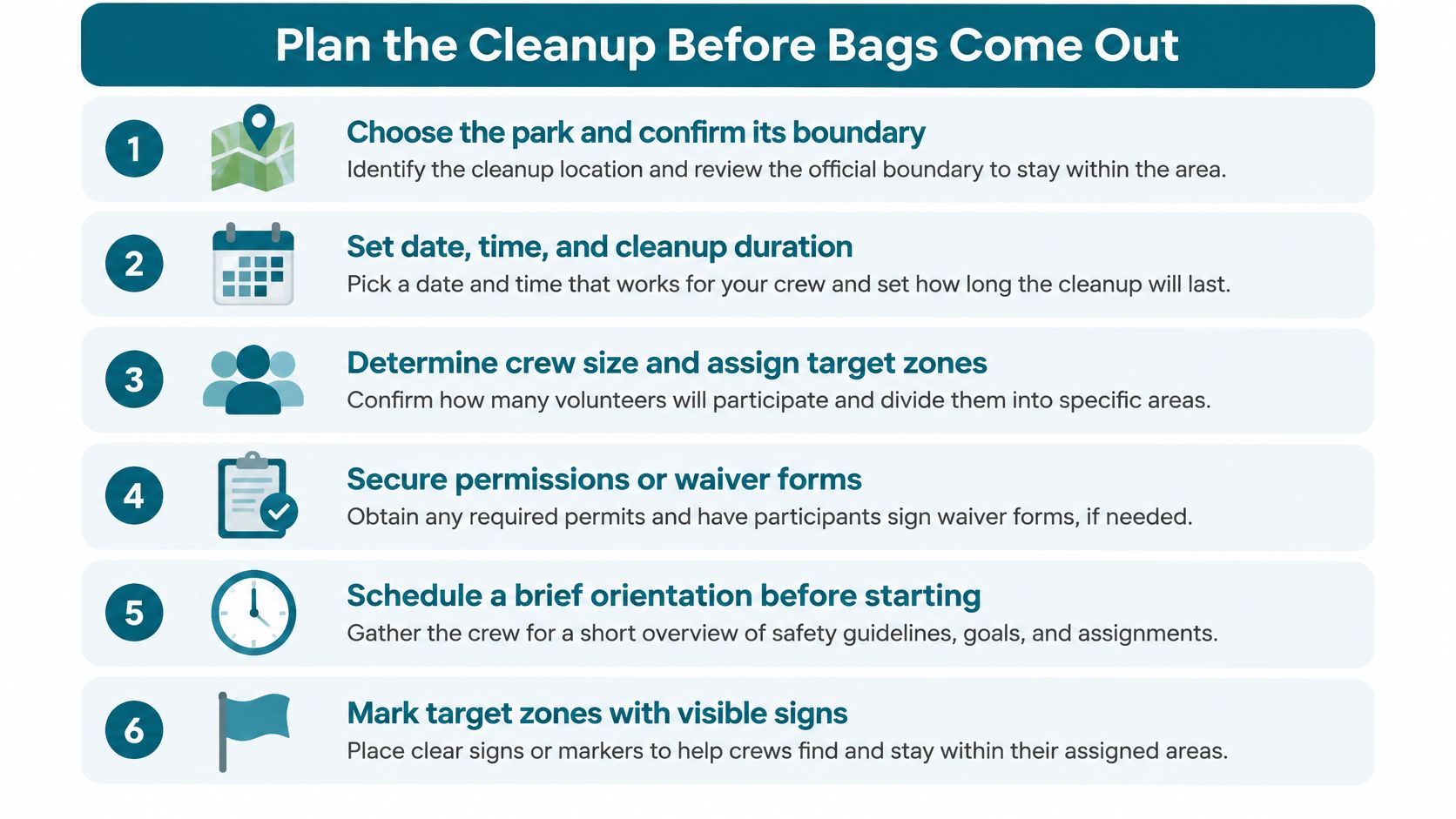
    A checklist infographic outlining six essential steps for organizing and planning a community park cleanup event.

    That page holds the date, start time, end time, meeting point, and a zone map drawn from paths, fences, and landmarks. Zones let me send small teams out and bring them back without shouting across the grass. Next to each zone I pencil an empty count column, because planning is where I decide the sweep will produce a litter tally. A tally improvised at the curb never survives the first hour.

    Paperwork comes before the day itself. In Chicago, the Park District requires every one-day volunteer to complete an online waiver before work starts, and long-term volunteers follow a different process with a background check. Confirm RSVPs and site limits at the same time, since some programs cap how many people a host can place.

    Roles go on the page too, matched to what people want to do:

    Role What the person handles
    Team leader and backup Zone assignments, headcounts, timing calls
    Route walkers Litter pickup with grabbers inside a set zone
    Recorder Item counts, before and after photos
    Supply carrier Spare gloves, bags, water, first aid kit
    Greeter Late arrivals, waivers, parking and bathroom notes

    I ask the supply carrier to keep everything in one packed tote, and if your group wants matching supply totes you can buy custom cotton tote bag options and keep one ready as a grab-and-go kit.

    Two small decisions finish the plan. I set a weather call the night before and again at dawn, and I tell people exactly when the go or no-go message arrives so parents, older volunteers, and anyone managing transit or medication can plan around it. I cap the event at a focused one to two hours rather than a vague all-morning promise, because full attention is easier to ask for when people know they will still have energy for lunch. Then I write a short orientation script and deliver the same lines every single time.

    Engineer Safety Into Every Sweep

    A narrow path beside a road can look like an easy pickup zone until a volunteer steps into traffic to reach a bottle. Set boundaries before anyone starts. Pair volunteers, assign each pair a defined area, and give one named lead authority to pause or end the sweep.
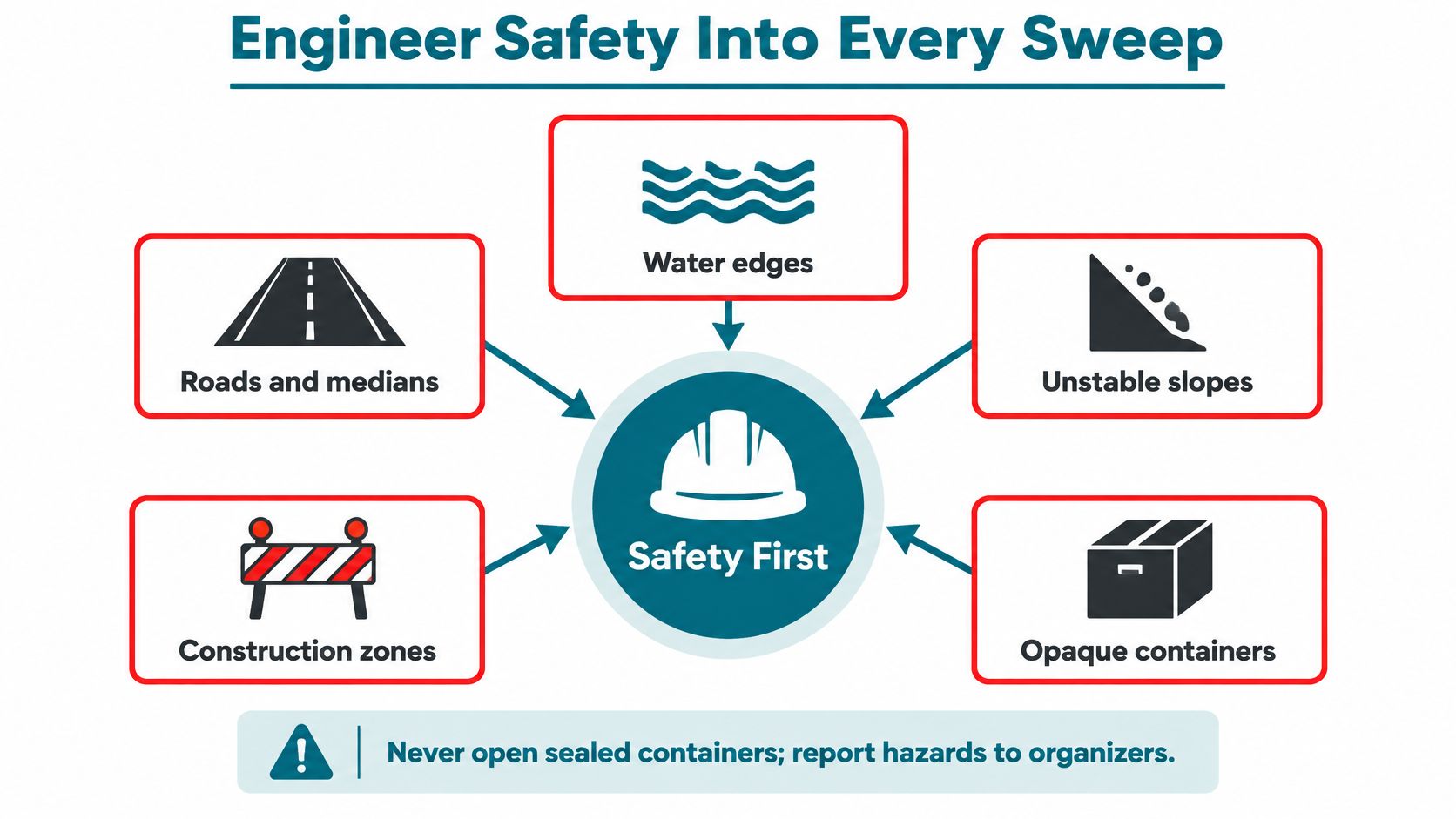
    An infographic titled Engineer Safety Into Every Sweep, illustrating safety hazards like roads, water, slopes, and containers.

    Walk the site first and mark roads and medians, water edges, unstable slopes, and construction zones as off-limits. Volunteers should not open opaque containers or reach into places they cannot see. Pittsburgh's volunteer safety guidance advises leaders to identify safe and unsafe pickup areas and exclude hazards such as syringes and car batteries. Put those boundaries on the route map and repeat them at the start.

    Give One Person Stop-Work Authority

    Name the stop-work lead during the huddle, and make sure every volunteer knows they can report a concern without being asked to prove it is dangerous. Take a headcount before and after the sweep. Schedule work in daylight, identify a shaded rest point, and make water available.

    Before the event, review a volunteer cleanup safety checklist with the lead team. For a second reference on spotting and responding to hazards, share this hazard awareness guide.

    Pause for lightning, flooding, poor visibility, or signs of heat illness such as dizziness or confusion. If someone finds a syringe, chemicals, a battery, an unknown powder, or an object too heavy to lift safely, stop nearby work and report its location rather than approaching it. Mapping, photography, supply coordination, and recording observations give people lower-risk ways to contribute.

    Practical rule: If you cannot identify an object, do not touch it.

    Safety also shapes who feels welcome. A 2025 national cleanup campaign report found that 90% of Americans believed their communities had too much litter, while 44% said they regularly acted to remove it. Clear boundaries, flexible roles, and an ordinary, no-blame cancellation process make it easier for people to take part without pressure to prove their commitment.

    Collect Litter Without Making New Risks

    A wrapper on open grass and a sharp object half-hidden beside a bench call for different responses. Build that judgment into the sweep: inspect each item before reaching, use a grabber for ordinary litter, and leave anything uncertain for the cleanup lead to assess.

    For routine pickups, work in a steady sequence: scan the ground, grasp the item with a tool, then place it in the bag. Keep the tool between your hand and anything dirty, torn, or partly buried. Bag ordinary litter by zone so the crew can track where it came from.

    Near a fence or planting bed, slow down and watch where you place your feet. On open grass, volunteers can move in steady lines. Adjust the pace to the footing and visibility rather than trying to keep every person moving at the same speed.

    A torn glove means stop and replace it before continuing. If lifting an item strains your back or wrist, leave it and record its location for follow-up. At the end of each zone, turn around and scan the area from another angle. Bench legs and signposts can hide small pieces on the first pass.

    Turn the Sweep Into a Litter Audit

    I love a full bag, but I don't trust bag counts alone. A bag can hide wet leaves, loose packing, or a few heavy items, and you learn almost nothing about what keeps coming back. When you clean up parks and record what you find, you turn service into civic intelligence you can use next week.

    You start with a fixed boundary and repeatable zones, and you keep both stable across visits. You record date, weather, crew size, volunteer-hours, and starting conditions, and you photograph the same points each time. If you change the boundary or the counting rules, you can't tell real improvement from a new ruler.

    Count Categories, and Normalize Your Numbers

    During the sweep, you collect with grabbers and gloves, and you log hazardous and bulky items separately. After the sweep, you count or categorize representative items by zone, and you weigh bags where you can do it safely. The EPA Wichita litter study used defined assessment for items larger than four inches and logged items by category. You can borrow that discipline at park scale without turning your morning into a lab.

    Measure Example recording Why it helps
    Pieces per volunteer-hour Zone and item count divided by crew time You compare visits with different crew sizes
    Pounds per volunteer-hour Bag weight by zone divided by crew time You track effort when you can weigh safely
    Pieces per 100 square meters Item count for a mapped zone You compare small and large areas fairly
    Recurrence by category Category check after 7, 14, and 30 days You spot habits and sources that return

    Small litter tells a story that weight can bury. Connecticut and New York cleanups recorded cigarette butts, bottle caps, food wrappers, and small plastic pieces among the most common debris, with leading categories persisting for nine years. One coastal cleanup in that release reported 18,321 cigarette butts and 12,718 bottle caps. You see why I ask you to count pieces, because a light item can show up again and again.

    I keep the audit short enough that you'll repeat it. You use one page, one photo set, and the same zone names, and you review the page before you leave the park. You write what surprised you while the park still sits in front of you.

    Use Data to Improve the Next Visit

    At the picnic table, last visit's map shows the same small litter concentrated near the entrance. That pattern gives the crew a practical choice: repeat the same sweep, or test a change and see whether the litter returns.
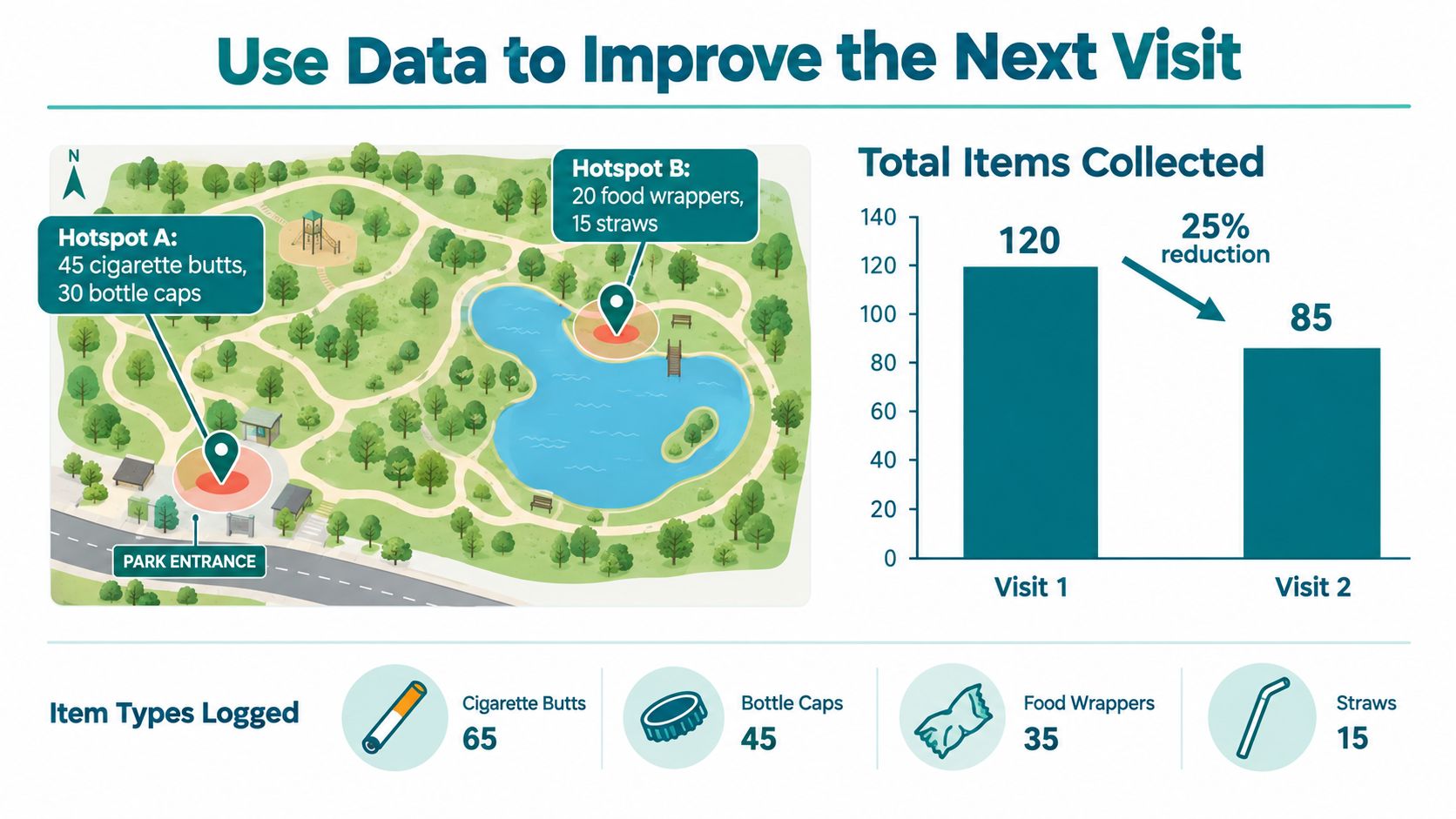
    An infographic showing park trash collection statistics with a map of hotspots and item count charts.

    Mark hotspots by zone and litter category, then record visible conditions nearby. Note overflowing bins, missing receptacles, broken lids, wind-exposed corners, bus stops, and entrances where people pause. Separate a one-time party mess from litter that returns week after week. The likely cause, and the response, may differ.

    Pick One Test You Can Finish

    For the next few visits, request a bin repair, ask whether a bin can be moved, or focus on cigarette litter near one entrance. Keep zone boundaries and counting rules steady so the crew can compare results after the change. The guide to measuring community cleanup impact can help you keep that comparison consistent.

    You can also route findings to the right city office. Chicago has 50 legislative wards, and each ward elects one alderperson to a four-year term. Record which wards the crew has covered, then contact the relevant office about a bin, vacant lot, or dumping spot that needs city action.

    Clean the park, track what returns, address one cause, and measure again.

    Your bags help care for the park people can reach today. Cities still need to invest in parks, bins, pickup, and repairs. Both truths belong in the plan.

    Build a Recurring Park Care Routine

    I measure success by whether you come back with energy two weeks later. A single heroic morning feels good, but a calm routine changes a park and changes your habits. You publish the next date before you leave, and you confirm the site, waiver, supplies, and lead while the group still stands together.

    History backs up that small, steady rhythm. The National Park Service began its Volunteers-in-Parks program in December 1970, and in 2023 more than 123,000 volunteers donated over 3.7 million hours. You don't need that scale to borrow the lesson. You need consistency, clear roles, and a schedule people can trust.

    In Chicago, the Chicago Parks Foundation lets groups organize independent cleanups at more than 600 parks and supplies bags, gloves, and promotional signs at no charge during its June 1 through October 31 season. You choose the park, date, and time, and you lead a simple pickup. On other weeks, Park District stewardship days welcome people of any age, background, or experience for work that includes litter pickup, mulching, planting, and habitat monitoring. You RSVP with the steward because capacity can fill and schedules can change.

    • Before you leave: You share photos, zone notes, and the next date.
    • Between visits: You rotate supply duty and send one reminder with waiver and weather details.
    • At the next visit: You greet returners by name and pair each newcomer with a buddy.

    I keep the invitation simple. You showed up, you learned the park, and you left it cleaner and safer. Come back, bring one friend, and let's see what the audit tells us next time.


    If you're ready to clean up parks across Chicago with a weekly, volunteer-led crew that brings supplies and gives you a clear role on day one, visit Litter Caterpillars and pick your next weekend morning with us. You bring your shoes and your curiosity, and we'll help you turn a single sweep into a habit you can keep.

  • How to Start Cleaning Up the Park Safely

    How to Start Cleaning Up the Park Safely

    You arrive at the park on a sunny morning, ready to help. Cups sit beside a bench, wrappers cling to the grass near the playground, and a line of litter follows the path toward the parking area. It's tempting to grab a bag and start walking. Take a moment first. A calm plan helps you protect the crew, cover the right ground, and leave the park ready for the next visit.

    Cleaning up the park works best as a small field operation. You don't need complicated equipment, but you do need clear boundaries, safe roles, a collection method, and a plan for what happens to the waste afterward.

    Start With a Calm Park Cleanup Plan

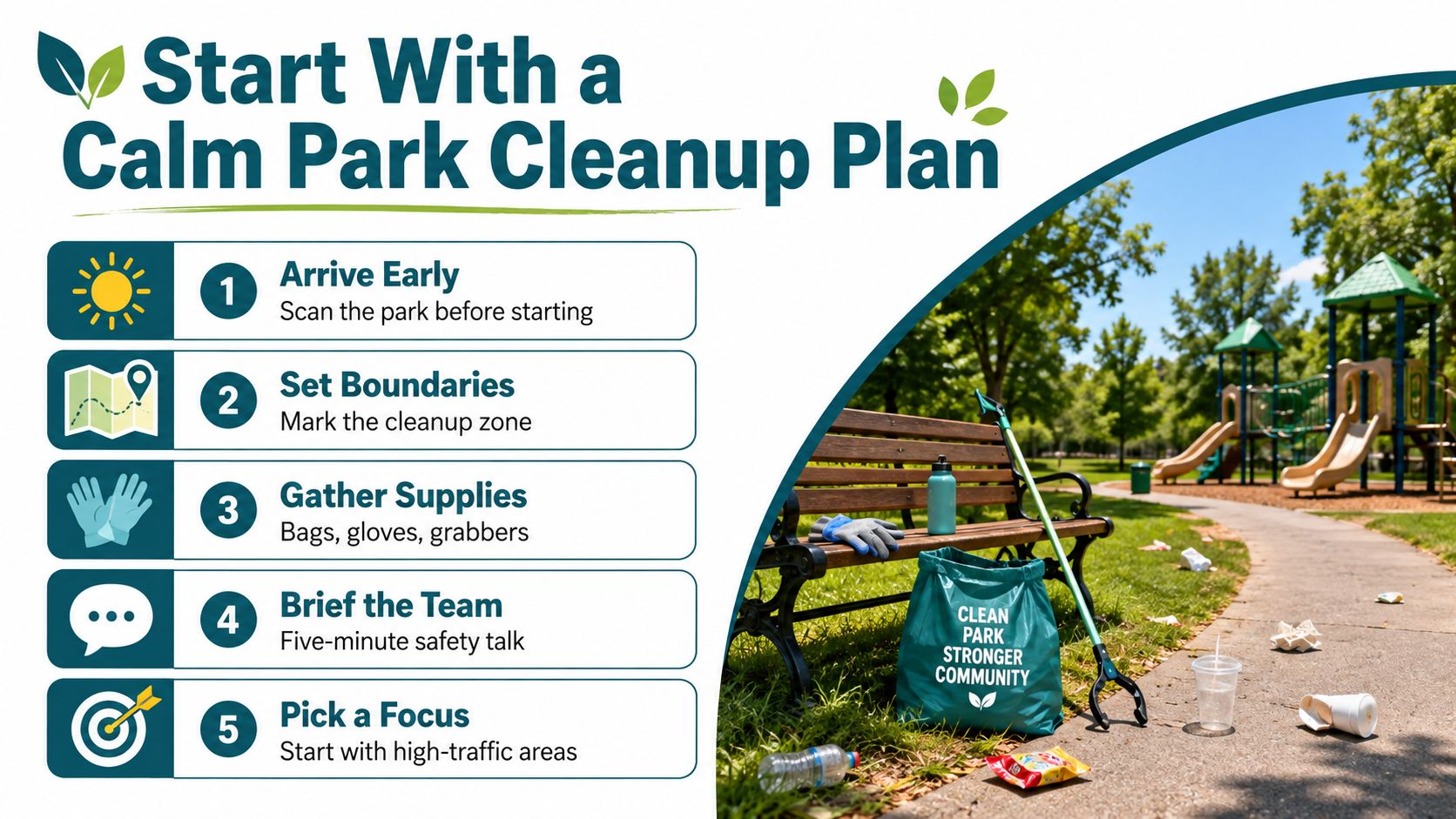
    I would walk the site before I ask anyone to pick up anything. The first few minutes should settle the basics: where the group meets, what area you'll cover, who watches for hazards, and what nobody should touch. Treat it like setting up a campsite. You choose a safe place to gather, mark the edges, assign simple jobs, and make sure everyone knows where to go for help.

    A five-step instructional guide for planning a park cleanup, displayed next to a park bench with litter.

    Bring sturdy bags or buckets, grabbers, gloves, drinking water, a first-aid kit, and a phone or other way to contact the right local service. Before you invite beginners, check that the route avoids unsafe slopes, active traffic, and areas where you can't see what lies underfoot. If the site includes hazards that need trained handling, change the route or wait for the proper response. A cleanup isn't a race, and nobody needs to prove their dedication by taking a risk.

    For seasonal property work, Prestonwood Commercial Services has Prestonwood's 2026 landscape cleanup advice, which can help you think about how a cleanup fits alongside broader outdoor maintenance. For a volunteer event, keep your own scope modest and specific.

    Before-You-Start Cleanup Checklist

    Planning item What to confirm Why it matters
    Meeting point Choose a visible, easy-to-find spot The group can gather without blocking paths
    Cleanup boundary Name the path, lawn, or park segment Volunteers know where to work and when to stop
    Crew roles Assign a lead, hazard watcher, and note-taker People can ask the right person for help
    Supplies Check bags, gloves, grabbers, water, and first aid The crew can work without sharing unsuitable gear
    Stop-work rule Agree that anyone can call a pause Volunteers can step back from a hazard without debate

    Use one simple mental model from the start: inspect, brief, collect, sort, dispose, and check. That sequence keeps the morning steady, even when the park is busy.

    Prepare the Site and the Crew

    An open park can feel straightforward until volunteers spread out in different directions. Walk the perimeter first, then choose a route that keeps the crew together and away from risky edges. Note entrances, benches, playground edges, parking interfaces, picnic areas, waterways, and any spot where trash gathers. A quick sketch or written boundary is enough. Mark the place where everyone can rest and regroup.

    A diverse group of volunteers in safety vests planning a park cleanup near a scenic pond.

    Give each volunteer a job that fits the work and the person. One person can collect ordinary litter, another can watch for hazards, and a sorting lead can keep the drop-off point organized. A first-aid contact should know where the kit is and how to reach the event lead. Ask someone to record the route, weather, crew size, and anything the group needs to report.

    Cleanup Role Map

    Role Main responsibility Example decision
    Crew lead Keep the group on the planned route Pause work when volunteers drift toward a risky edge
    Collector Pick up ordinary litter with tools or suitable gloves Leave an unknown bag untouched
    Hazard watcher Scan ahead and alert the crew Ask everyone to avoid a suspicious pile
    Sorting lead Separate ordinary waste from items needing another route Keep clean recyclables apart if local rules allow
    First-aid contact Carry or locate the kit and help coordinate a response Call for help if someone feels unwell
    Note-taker Record conditions, work, and follow-up needs Photograph a recurring dumping spot

    Keep the briefing short and practical. Point out traffic, water, uneven ground, sharp objects, private property, and the rest area. Tell the crew how to contact local services and say plainly that anyone can stop work if something feels unsafe.

    Pack puncture-resistant gloves, closed-toe shoes, grabbers, buckets, liners, water, shade, and a first-aid kit. Near roads or bike paths, add high-visibility clothing. Check the forecast and the ground conditions before volunteers arrive. Rain, heat, cold, or strong wind may call for a shorter route or a postponement. Nobody should feel pressured to keep working through conditions they can't manage.

    Collect Litter Without Spreading the Mess

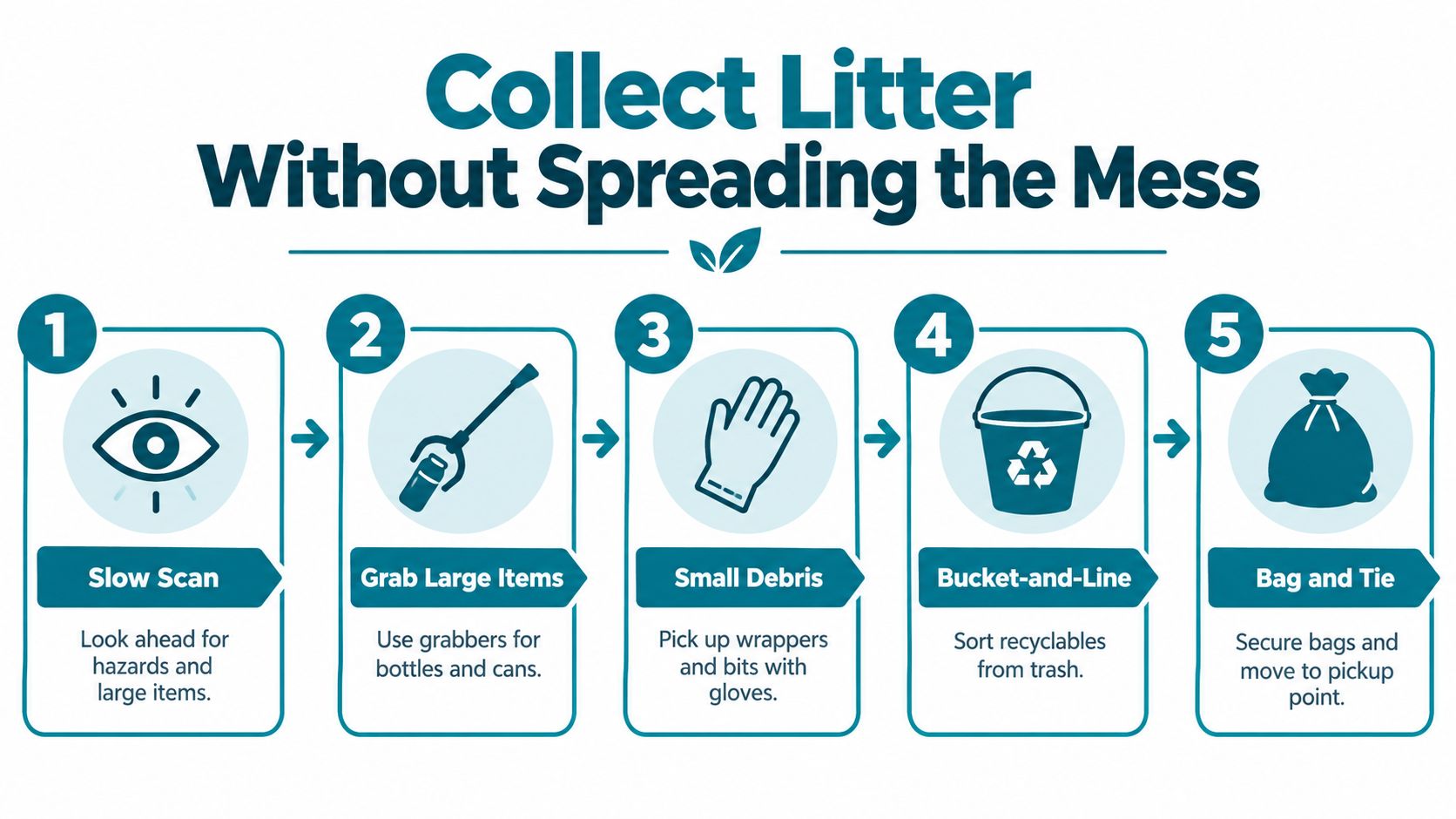
    Start with a slow scan. Look ahead for sharp objects, unknown containers, traffic, and places where litter has gathered. Pick up ordinary items with grabbers, gloves, or a bucket-and-line setup. Keep your hands away from debris when a tool can do the job, and leave sealed or opaque bags alone.

    A step-by-step infographic titled Collect Litter Without Spreading the Mess, showing five numbered cleanup procedures for volunteers.

    Work in pairs when you approach a roadside edge or a water boundary. One person can collect from the safe side while the other keeps an eye on passing bikes, cars, and changing conditions. Don't cross into traffic or unstable ground to reach a stray bottle. If you can't retrieve it safely, mark its location and pass the information to the right service.

    Make Two Passes

    Use the same route twice when the site and crew can support it. On the first pass, collect larger visible items such as bottles, cans, and food containers. On the second, look for wrappers and fragments that blend into grass, mulch, and drainage edges. A second pass helps, but it doesn't make a risky spot safe to enter.

    Keep the sorting simple. Separate ordinary litter from bulky objects and anything that needs special handling. Never hand-sort an opaque bag, compress waste, or squeeze a container to make it fit. If a sharp, chemical, biological, or unknown item appears, stop nearby work, mark the location from a safe distance, and contact the appropriate local service.

    Take short work periods and pause for water and shade. A rest point gives volunteers a place to regroup, check their condition, and hand off full bags without wandering across the park. Let people switch tasks if they're tired. A steady crew can work safely without asking everyone to do the same job.

    The flow below gives first-time volunteers a clear sequence to follow.

    Field Collection Sequence

    Stage What the crew does Safety check
    Slow scan Look ahead and note hazards or hotspots Stay on the agreed route
    Large items Use grabbers for bottles, cans, and other ordinary litter Don't reach into hidden spaces
    Small debris Pick up suitable wrappers and bits Use gloves and avoid sharp fragments
    Sort Separate ordinary waste from items needing another response Don't open unknown bags or containers
    Handoff Secure ordinary waste and move it to the agreed collection point Keep the route clear and bags uncompressed

    Protect Volunteers and Leave Hazardous Waste Alone

    A volunteer doesn't need to collect every object to help the cleanup. Some materials need trained handling, and refusing to touch them is part of a safe field plan. Before work starts, hold a short briefing on boundaries, buddy assignments, traffic and water hazards, sharps, emergency contacts, hand hygiene, and everyone's authority to stop work.

    A safety inspector holding a checklist with workers surveying a park area near a hazard warning sign.

    Wear puncture-resistant gloves and closed-toe footwear. Use high-visibility clothing near roads or bike paths, and choose grabbers or other tools that keep hands away from debris. Don't hand-sort opaque bags, press down on waste, or squeeze containers. Pressure can shift or release contents you can't see.

    Do Not Collect by Hand

    Material or situation Volunteer action Reporting or disposal route
    Needles or suspected sharps Keep the group back and mark the location Contact the municipality or an approved trained responder
    Unknown chemicals or leaking containers Don't move or open them Report the location for professional guidance
    Propane cylinders or batteries Leave them in place Ask the municipality which approved route applies
    Human waste or dead animals Don't handle or bag them Contact the appropriate municipal service
    Suspected asbestos-like materials Keep people away Request professional assessment and handling
    Traffic, water, or unstable ground Stop collection in that area Redirect the crew or ask the responsible authority for help

    If a questionable item appears, step back and hand off the location. A clear report helps the trained responder find the problem without sending volunteers into it. Chicago volunteers can review the city hazardous-waste disposal guidance when they need to understand how to route materials that don't belong in an ordinary cleanup bag.

    Plan for the weather as carefully as you plan for equipment. Schedule strenuous work during cooler morning hours when possible, provide water and shade, and check on one another. Heat, cold, dizziness, or confusion are reasons to pause and get help. A volunteer who says “I'm stopping” should never have to argue their case.

    Field rule: If you can't identify it, don't handle it. Mark the location, keep others away, and call the proper service.

    Handle Bulky Waste and Recyclables Correctly

    Different waste needs different handoffs. A clean beverage container may fit a local recycling route, while a container with liquid can leak through a collection bag. Broken glass needs careful handling, and tangled cords, wet waste, oversized furniture, or a bag with unknown contents may fall outside an ordinary volunteer pickup.

    Keep clean, dry recyclables separate only when local rules accept them. Identify what you've found, record where it is, and confirm the receiving route before moving anything unusual. Volunteers can sort and report. The municipality or approved facility decides how to handle the material after handoff.

    Waste Handoff Decision Guide

    Waste type What volunteers should do What happens next
    Ordinary litter Collect with tools or suitable gloves Dispose through the agreed park or municipal route
    Clean recyclables Keep separate if local rules allow Follow local recycling instructions
    Broken glass Don't reach in by hand Use an approved method or report it
    Bulky furniture Record the location and identify the item Request an appropriate pickup
    Unknown or hazardous material Leave it untouched and mark the area Contact a municipal or professional responder
    Potential donation Ask before moving or transporting it Confirm the organization accepts the item

    For Chicago reporting, document illegal dumping or recurring vacant-lot conditions with a location and clear description. The city says owners of vacant and unimproved lots must remove litter, debris, and abandoned vehicles, and weeds can't grow higher than 10 inches. Garbage-container lids must stay tightly closed, and raw garbage can't sit outside containers. Volunteers can use Chicago's alderman and ward lookup to identify where a report belongs.

    If you need background on equipment used for moving or spreading bulk material, this truck manure spreaders guide provides a point of comparison for specialized hauling equipment. For ordinary community cleanup, keep the practical handoff simple. Check Chicago recycling center information before directing collected materials to a facility.

    Measure the Cleanup and Plan the Return

    When the bags leave, walk the same route again. Check the places where litter gathered, look for items the crew missed, and record what remains. A cleanup needs a clear finish, but it also needs a way to see whether litter comes back.

    The EPA's Wichita project gives a useful reason to measure small debris as well as larger items: citizen scientists collected and categorized 1,765 pieces larger than four inches across park cleanup events, along with an additional 30 gallons of smaller material. Plastic made up 47% of the recorded litter, and 75% of that plastic came from food and beverage wrappers or containers. The study also found that litter clustered around places people gather, including picnic areas, pavilions, and parking lots, even when bins were present. You can read the EPA Wichita litter study for its standardized approach to collecting, classifying, and documenting litter.

    Before and After Cleanup Audit

    Measurement Record it as Use it to decide
    Site boundary A fixed path segment or mapped area Keep future surveys comparable
    Starting and ending litter Counts by category and survey route See what the crew removed and what remains
    Work performed Crew size and volunteer-hours Understand the effort behind the result
    Waste removed Bags or kilograms, when you can measure them Plan disposal capacity
    Hotspots Notes, map marks, and photographs Decide where to focus the next visit
    Follow-up Repeat checks at 7-, 30-, and 90-day intervals when practical See whether litter returns and where

    Record the date, weather, starting conditions, and route. Take photographs from fixed points so the next crew can compare the same locations instead of relying on memory. If litter counts rise later, look for a practical cause: a busy weekend, bins that can't keep up, rain moving debris toward drains, or a nearby source that keeps adding wrappers. The measure is useful only if it helps you decide what to change.

    Chicago's Pitch In for the Parks program shows how repeated cleanup events can involve people across many sites. The Chicago Parks Foundation reported that its 2021 season engaged over 4,000 volunteers in more than 600 cleanup events between June and October, with participants collecting more than 6,400 trash bags; its volunteer program history also describes later seasons and work through host groups and Green Teams. Use that example to support a repeatable method, not to rank crews by bags collected.

    Ask nearby residents which spots trouble them and invite them to choose the next route. A map can help a Chicago group track visits across the city's 50 wards, using official boundaries and lookup tools described on the City of Chicago facts page. If your group tracks waste costs or handoffs, this chart of accounts for waste firms can help explain how waste-related categories get organized. For a simple community record, a guide to measuring community impact can help you decide what to track. End the visit with a safer route, a documented result, and a date to return.

    Run an Inclusive and Repeatable Cleanup

    A cleanup reaches more people when it gives them more than one way to take part. Offer short shifts, clear transit and accessibility information, and instructions in the languages neighbors use. A volunteer who can't lift a full bag can map the route, take photographs, translate, coordinate sorting, speak with residents, or monitor the rest area.

    Ask local residents and neighborhood leaders what needs attention before the crew arrives. Then invite feedback after the cleanup and during follow-up visits. A group that works across Chicago's wards should pair geographic reach with neighborhood input, so residents help set priorities rather than just receiving visitors.

    Ways to Make the Cleanup More Welcoming

    Barrier Practical adjustment Who can help
    Limited time Offer a short shift or a defined route Event lead
    Lifting or mobility needs Provide mapping, photography, or rest-area roles Role coordinator
    Unclear travel plans Publish transit and accessibility details Resident liaison
    Language barriers Share translated instructions and a briefing Translator or local partner
    First-time nerves Explain the route, tools, and stop-work rule Experienced volunteer

    I would make the first event small enough that newcomers can see the whole process and still feel useful. Track who returns and what residents say alongside the waste collected. Choose one park boundary, one safe morning, one documented route, and one return date. Then invite a neighbor to help decide what the crew should tackle next.


    Litter Caterpillars organizes volunteer-led trash pickups in Chicago parks and public spaces, with supplies such as bags, gloves, and grabbers for participants. If you want a practical, volunteer-driven example of cleaning up the park and building a repeatable neighborhood routine, visit Litter Caterpillars to learn about its cleanups.

  • Best Trash Pickup Options in Chicago: 7 Top Choices

    Best Trash Pickup Options in Chicago: 7 Top Choices

    I started Litter Caterpillars after trash in my own life felt impossible to move. A scrap could weigh less than a pound and still feel like it weighed 500. In Chicago, you may need a hands-on cleanup, regular city collection, or a private hauler for a building, business, or major clear-out. This roundup compares meeting logistics, service fit, strengths, limits, and the easiest way to begin. For one-off junk removal, Reworx Recycling junk removal services can fit a different need than recurring collection.

    Choose the option that matches the mess, the address, and the help you have available.

    1. Litter Caterpillars

    The first Litter Caterpillars cleanup had three people, bad Chicago weather, and a string of cancelled Ubers. We huddled under a tree during a spring hailstorm and learned something strange. Cleaning someone else's mess felt easier than cleaning our own.

    That feeling still drives the group. Kevin Tao founded Litter Caterpillars around consistency, bravery, kindness, and the belief that service can help people trust themselves again. Volunteers meet on weekend mornings, rain or shine, and clean neighborhoods across all 50 Chicago wards, including places other groups may avoid.

    The group keeps participation simple. You don't need to donate, buy equipment, or prove anything before joining. You show up, take safety seriously, and work beside people who want a cleaner block and a better Sunday.

    Litter Caterpillars

    Why this choice feels different

    Litter Caterpillars brings a social rhythm to trash pickup. Flags, badges, a theme song, Meetup events, Instagram updates, Pie, and group chats give newcomers several ways to find the next event and stay connected. The group also puts volunteer safety and happiness first.

    The work can feel physical and unpredictable. Weekend mornings won't fit every schedule, and outdoor cleanup won't suit everyone. A volunteer group also won't replace household collection, dumpster service, or a private hauler for a large building.

    Still, the results reach beyond a filled bag. Volunteers cleaned a highway during a bike-event shutdown, and the group won an empty lot at auction and turned it into Caterpillar Park in Englewood. Those projects show what can happen when people keep showing up.

    Best fit: Choose Litter Caterpillars when you want to remove litter with your own hands, meet people, and build a weekly habit.

    Start with the Litter Caterpillars volunteer trash pickup page, check the next Sunday morning event, and wear gloves and sturdy shoes. If you find a sharp, don't touch it by hand. Use a grabber or tongs, keep the sharp point away from you, and report it for proper collection through Litter Networks safety guidance.

    2. City of Chicago Department of Streets & Sanitation

    For an eligible Chicago home, the Department of Streets & Sanitation, or DSS, usually gives you the cleanest first answer. The city handles weekly garbage collection and Blue Cart recycling for single-family homes and buildings with four or fewer dwelling units.

    You get a city-managed route, a low and transparent refuse fee, and 311 support for common service problems. If your cart breaks, disappears, or needs replacement, you can use the city's service channels. You can also report missed pickups and sanitation concerns.

    Bulk items can often go out on regular garbage days, though you still need to follow the city's placement and material rules. Before putting anything outside, confirm what DSS accepts and where you should place it.

    City of Chicago Department of Streets & Sanitation

    The address decides

    DSS works best when your building falls inside the city's eligibility rules. Buildings with five or more units generally need a private hauler, so a property manager shouldn't assume city service covers every Chicago address.

    A missed pickup can disrupt an alley quickly. Use 311 when the cart, route, or sanitation condition needs city attention, then keep the request details. City response times can vary by ward and workload, especially when many residents report problems at once.

    You can confirm your route and service details through the Chicago trash pickup schedule before moving carts or planning a cleanup.

    Best fit: Pick DSS when you live at an eligible Chicago address and want routine collection with city support instead of shopping for a hauler.

    3. LRS

    A five-unit building has a different problem from a single-family home. You need enough container capacity, an alley plan, a collection schedule, and a way to handle recycling, organics, bulky items, or construction debris without calling several companies.

    LRS, formerly Lakeshore Recycling Systems, covers that wider job. The Chicago-based hauler works with residential and commercial customers and provides recurring trash pickup, recycling, organics and yard-waste service, roll-off dumpsters, and construction recycling options.

    Where LRS fits

    LRS can make sense for multi-unit buildings, HOAs, property managers, and businesses that want one vendor for several waste streams. Its municipal service footprint across Chicagoland and the Midwest also means availability may depend on the community or contract involved.

    You'll need a quote rather than a simple posted household price. Ask for the service frequency, container size, extra-pickup terms, contamination rules, and the full contract length. Rates can rise during a contract term, so read the renewal and adjustment language before signing.

    The practical advantage is coordination. One vendor can handle recurring collection, a roll-off for a renovation, organics, and event service. The trade-off is that scale brings paperwork. A quote that looks simple can hide container limits, delivery charges, fuel adjustments, or pickup conditions.

    Use the LRS website to check the service path for your municipality, then request a written quote tied to your exact address.

    4. Groot Industries

    Groot works well when your service depends on a particular suburb, municipality, or property setup. The company serves Chicagoland with residential carts and dumpsters, recycling, yard waste, bulk pickup, roll-off rentals, compactors, and commercial service.

    A property manager might use Groot for regular alley pickup while a contractor orders a roll-off for a construction project. An HOA may need a municipality-specific schedule, while a business may need a compactor and a tighter collection plan.

    Check the local terms first

    Groot's service menu looks broad, but your community determines what you can order. Municipal franchise agreements can control service terms, routes, materials, and pricing. Residential rates often require a quote, and the same company can present different options in different towns.

    Start with the Groot Industries service-area tools. Enter the community before you compare prices. Then ask whether the quote includes cart delivery, extra pickups, bulk items, yard waste, and seasonal changes.

    Groot's strength is local route knowledge paired with a broad equipment menu. Its limit is the same local variation. You can't judge the final deal from a general service page alone.

    Best fit: Choose Groot when municipality-specific coverage matters and you want one provider for household, HOA, commercial, or project waste.

    5. Flood Brothers Disposal

    A condo board often needs a responsive answer more than a giant service catalog. The board has to manage dumpsters, recycling, yard waste, bulky items, access, invoices, and resident complaints without turning every missed pickup into a long dispute.

    Flood Brothers Disposal serves Chicago-area homes, multifamily properties, businesses, and events. It provides cart service, multifamily dumpsters, recycling, yard waste, bulk-item service, and roll-off rentals. The company operates across more than 150 Chicago-area communities, according to its service description at Flood Brothers Disposal.

    A practical choice for smaller managed properties

    Flood Brothers can suit small-to-mid-sized HOA and condo buildings that want flexible container sizes and pickup frequencies. Local customer service may also appeal to boards that prefer a direct relationship with the provider handling their property.

    The address still controls the deal. Availability, collection terms, and exact pricing can vary by neighborhood and municipality. Request a quote that states the dumpster size, pickup frequency, overflow policy, recycling service, delivery terms, and cancellation rules.

    For an event, ask who handles setup and removal. For a building, ask how the company handles blocked access or an overfilled container. Those details matter more than a low starting quote when residents depend on the route every week.

    Flood Brothers is a strong candidate when you manage a neighborhood property and want local service with options for both regular pickup and occasional cleanup.

    6. WM

    WM fits the customer who wants a large provider with digital account tools and a wide service menu. The company handles residential, multifamily, and commercial work, including garbage, recycling, carts, dumpsters, roll-offs, bulk pickup, and specialty programs.

    A property manager with several buildings may value one account structure and a provider that can coordinate recurring routes with larger containers. A business may want online service requests, billing access, and notifications instead of relying on phone calls for every change.

    Scale helps, but read the bill

    WM's size can help with routing depth and equipment access. It can also create a more formal contract. Residential pricing depends on the municipality or service agreement, and fees or surcharges can change the total bill.

    Open the WM Chicago service page and ask for a complete cost breakdown. Separate the base charge from fuel, recovery, environmental, delivery, overage, and extra-pickup charges. Ask what happens after the initial term.

    For recycling questions, use where you can recycle to think through the material before you add a service. The city or hauler may accept different items, and mixing the wrong materials can create extra work.

    Best fit: Choose WM when your building or business needs a broad service menu, digital account management, and the capacity of a large hauler.

    For practical waste-management ideas, WipesBlog.com cleaning insights can also help you organize internal rules before you sign a collection contract.

    7. Republic Services

    Republic Services gives multifamily and commercial customers another large-hauler option, with carts, dumpsters, recycling, organics in some municipalities, bulky-item programs, and app-based account management. Many suburbs also have residential service through local arrangements, so your address needs a direct availability check.

    The app can simplify billing, service requests, and account updates. Some service areas also publish fee-methodology information, which gives you a place to start when you compare quotes.

    Compare the whole price

    Republic may work well for a multi-site customer or a property that wants a larger provider across several locations. The difficult part comes during quote review. Fuel and recovery components, surcharges, annual adjustments, and variable fees can change the final amount.

    Use the Republic Services Chicago trash pickup and recycling page, then ask for a written service summary. Confirm the container, pickup frequency, accepted materials, bulky-item rules, on-call limits, billing cycle, and cancellation terms.

    Republic is less useful when you need a free, social cleanup or a city service for an eligible small residential building. It becomes more practical when you manage recurring waste across a larger property, business, or group of locations.

    Best fit: Choose Republic when app access, commercial capacity, and a multi-property contract matter more than a simple household arrangement.

    Top 7 Trash Pickup Services Comparison

    Service Implementation Complexity 🔄 Resource Requirements ⚡ Expected Outcomes 📊/⭐ Ideal Use Cases 💡 Key Advantages ⭐
    Litter Caterpillars 🔄 Low, volunteer-run coordination, simple weekly schedule ⚡ Low money, moderate volunteer/time commitment, basic supplies (bags, gloves) 📊 Visible neighborhood cleanup, high community engagement, tangible wins (e.g., park) ⭐ Community-driven street/park cleanups, outreach, volunteer engagement ⭐ Strong volunteer retention and identity; low barrier to join
    City of Chicago – DSS 🔄 Moderate, city processes, fixed routes and rules ⚡ Low resident cost (refuse fee); high municipal infrastructure (trucks, staff) 📊 Predictable weekly collection for eligible 1–4 unit homes; reliable but scope-limited ⭐ Single-family and small multi-unit residences within city eligibility ⭐ Cost-controlled service with 311 support and transparent fees
    LRS (Lakeshore) 🔄 Moderate, contract/quote-based, municipal partnerships ⚡ Medium–high budget for contracts, roll-offs, organics services 📊 Comprehensive services for multi-unit/commercial customers; scalable impact ⭐ 5+ unit buildings, HOAs, businesses, construction sites ⭐ Local expertise and bundled service offerings across Chicagoland
    Groot Industries 🔄 Moderate, municipality-specific franchises and scheduling ⚡ Medium–high; quote-dependent pricing and franchise terms 📊 Reliable alley pickup and broad service menu; municipality-tailored operations ⭐ HOAs, property managers, municipalities with Groot service ⭐ Deep local coverage and varied service options (dumpsters, roll-offs)
    Flood Brothers Disposal 🔄 Low–Moderate, local operations, flexible service setup ⚡ Medium; competitive quote-based pricing and flexible container options 📊 Responsive local service for small–mid buildings; cost-competitive outcomes ⭐ Small-to-mid HOAs/condos and neighborhoods in service area ⭐ Strong local reputation and responsive customer care
    WM (Waste Management) 🔄 Moderate–High, large-scale systems, digital account management ⚡ High resources and scalability; digital tools for self-serve accounts 📊 Enterprise-grade reliability and program breadth (recycling, roll-offs) ⭐ Large multifamily, commercial accounts, municipalities needing scale ⭐ Scale, routing depth, and robust digital/self-serve tools
    Republic Services 🔄 Moderate, app-based management, contract complexity ⚡ Medium–high; contract/fee structures and app infrastructure 📊 Competitive for multi-site and long-term contracts; program flexibility ⭐ Multi-site portfolios, commercial contracts, municipalities ⭐ Strong Midwest presence, app for account management and fee transparency

    Turn the Shortlist Into a Cleanup Plan

    Start with the mess in front of you. A bag of street litter, a missed household cart, an overflowing apartment dumpster, and construction debris each need a different response. The best trash pickup option isn't always the company with the biggest truck. It's the option that can reach the address, accept the material, and recover when something goes wrong.

    Choose Litter Caterpillars when you want hands-on service and weekend community. You'll pick up litter yourself, meet volunteers, and help clean Chicago block by block. The group suits residents who want action and connection rather than a bill for someone else to do the work.

    Choose DSS when your eligible Chicago address needs regular city collection. Confirm that your home or building falls within the city's service rules, then check garbage, Blue Cart, cart repair, missed-pickup, and bulk-item information. Keep your 311 request details if the route misses you.

    Choose a private hauler when you manage a larger building, business, dumpster, recurring commercial need, or project with more waste than a normal cart can handle. LRS, Groot, Flood Brothers, WM, and Republic each bring different combinations of local coverage, containers, digital tools, contracts, and service streams.

    Before you commit, confirm:

    • Address eligibility: Ask who can serve the exact property and whether a municipal agreement controls the route.
    • Pickup frequency: Put the collection days and extra-pickup terms in writing.
    • Container size: Match the cart, dumpster, roll-off, or compactor to your actual volume.
    • Bulk-item rules: Confirm accepted items, notice requirements, placement, and charges.
    • Contract terms: Read the initial term, renewal language, adjustment clauses, and cancellation process.
    • Surcharges: Request the full bill, including fuel, recovery, delivery, overage, and environmental fees.

    Sort what you collect before disposal. New York City's disposal guidance says to separate recyclables from trash and sort materials before putting them out. For needles and syringes, use a separate hazard process. Seattle's cleanup guidance says to use tongs or a grabber, avoid breaking the needle tip, pick up the item by the plunger or barrel, and place it in a sharps container for approved disposal.

    If you plan a large cleanup with a shared parking lot or gathering spot, ask the property owner for permission first, as advised by the University of Kansas neighborhood cleanup guide.

    Take one small action this week. Join a cleanup, check your DSS eligibility, or request a written private-hauler quote. A clear next step turns a pile of trash into a plan you can finish.


    Litter Caterpillars organizes free, volunteer-led trash pickups across Chicago, with weekend events for people who want to clean streets while meeting neighbors. Visit Litter Caterpillars to find your next cleanup and bring your time, energy, and willingness to help.