
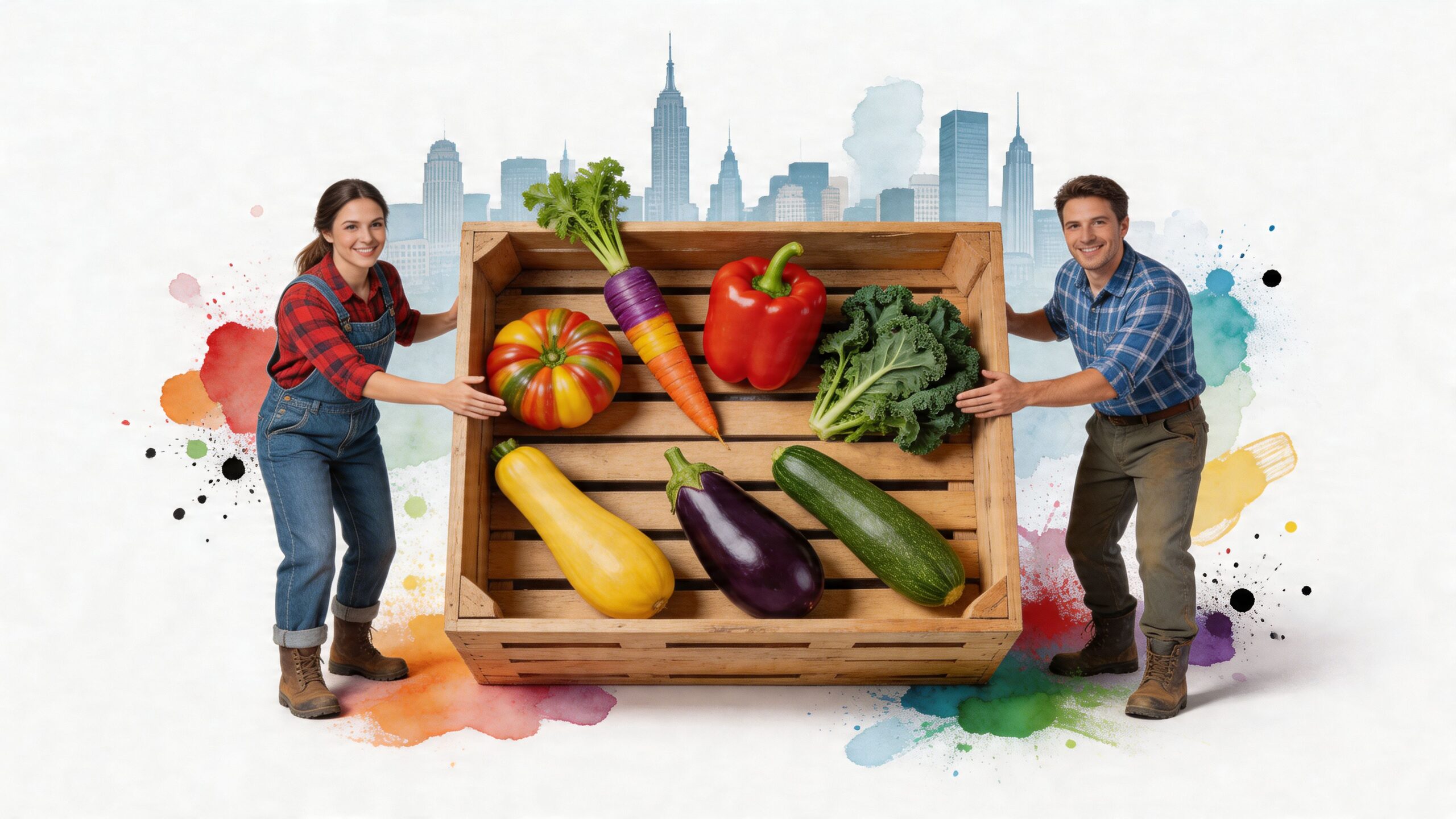
One Friday night, I stood in the produce aisle holding a wet bag of spinach that already looked tired. I’d had a week that scraped me raw, and there I was under grocery store lights, choosing between vegetables shipped from who knows where and still leaving with food that felt dead before I cooked it. The whole thing reminded me of cleaning out an overstuffed apartment. Too much stuff, too many decisions, not much that nourished you.
A friend heard me complain and said, almost casually, that I should try a CSA. She didn’t pitch it like a grocery hack. She pitched it as a way out of that exact numb routine. Pick a farm. Accept the season. Let someone who knows the soil decide what’s ready. That idea got me.
That’s why I care about csa chicago il options. Joining one changes more than dinner. You trade fluorescent wandering for a real relationship. You start recognizing neighborhoods through what they grow, who delivers your box, which farmers keep showing up, and what your own kitchen can become when you stop treating food like an errand.
In a city this big, that choice has weight. Chicago can scatter your attention in a hundred directions before lunch. A CSA pulls some of it back. It gives you one steady thread to hold onto, one practical habit that says you want to live here on purpose, not just pass through it.
I keep thinking about the people who make cities better through repeated small acts. Pick up one piece of trash. Plant one row. Pack one box. Feed one family. The spirit is the same as the folks who show up block by block and do the unglamorous work anyway. If you’re looking for a CSA near you in Chicago, you’re not just shopping for produce. You’re practicing belonging.
Chicago has always been shaped by people who built community through daily ritual and stubborn local commitment. North Lawndale’s old “Czech California” is one example, with settlement and homeownership helping turn a neighborhood into a place people claimed together, as documented by the Czech & Slovak American Genealogy Society of Illinois. A CSA is smaller than that, sure. But it rhymes. You join something local. You keep showing up. Over time, the city stops feeling abstract and starts feeling like yours.
1. The Urban Canopy – LUCSA
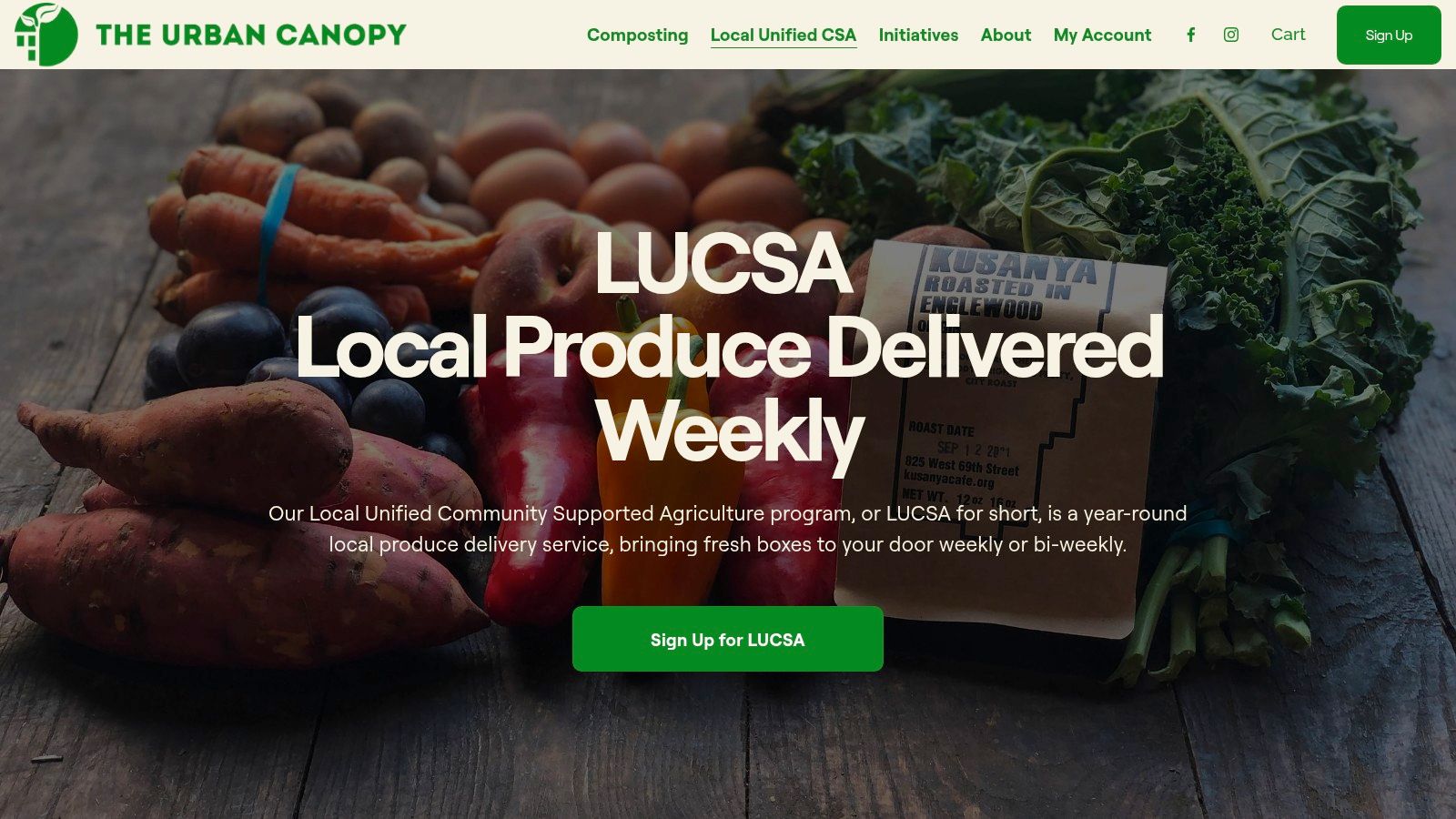
If your life is busy, messy, or held together by calendar alerts and late-night optimism, I’d start with The Urban Canopy LUCSA. This one feels built for real Chicago life, not some fantasy where you remember every pickup window and always have a clean tote bag in the trunk.
They run a year-round, multi-farm model with home delivery across many neighborhoods. You can choose weekly or bi-weekly service, work with a pay-as-you-go setup that renews every four weeks, and pause or cancel when life gets weird. I like that. A CSA should ask you to be committed, not perfect.
Why it works in the real world
LUCSA also gives you more than a pile of vegetables. You can add bread, eggs, mushrooms, drinks, and pantry items, which makes the box feel closer to a usable weekly food system than a side quest.
That flexibility matters because a lot of people want local food, but they don’t want another complicated ritual to manage. If you’re new to finding a CSA near you in Chicago, this is one of the easiest entry points.
Practical rule: If you’ve quit a CSA before because pickup became one more thing to fail at, choose delivery first. Make the habit easy before you make it romantic.
A few things stand out fast:
- Best for broad delivery coverage: LUCSA reaches many Chicago neighborhoods, including parts of the South and West Sides.
- Best for flexible households: You can pause, cancel, and manage service through an online portal.
- Best for fuller boxes: Add-ons help you build a more complete weekly order.
There’s also an equity angle I respect. The broader Chicago CSA conversation still has real gaps around access, affordability, pickup logistics, and clear information for low-income residents, as noted by Urban Growers Collective’s Chicago Local CSA page. LUCSA’s acceptance of LINK/EBT and its LINK Match discount give people a more practical path in.
The tradeoff is simple. This isn’t a single-farm purist box. If you want food from one exact patch of soil and nowhere else, look elsewhere. But if you want a csa chicago il option that meets you where you live and doesn’t punish you for having a full life, LUCSA is tough to beat.
2. Nichols Farm & Orchard
One August pickup, I bit into a Nichols peach in my car before I even turned the key. Juice on my wrist, tote bag sliding off the seat, city traffic all around me. For a minute, Chicago felt smaller and more human. That is what a good CSA can do. It interrupts the grind with something real.
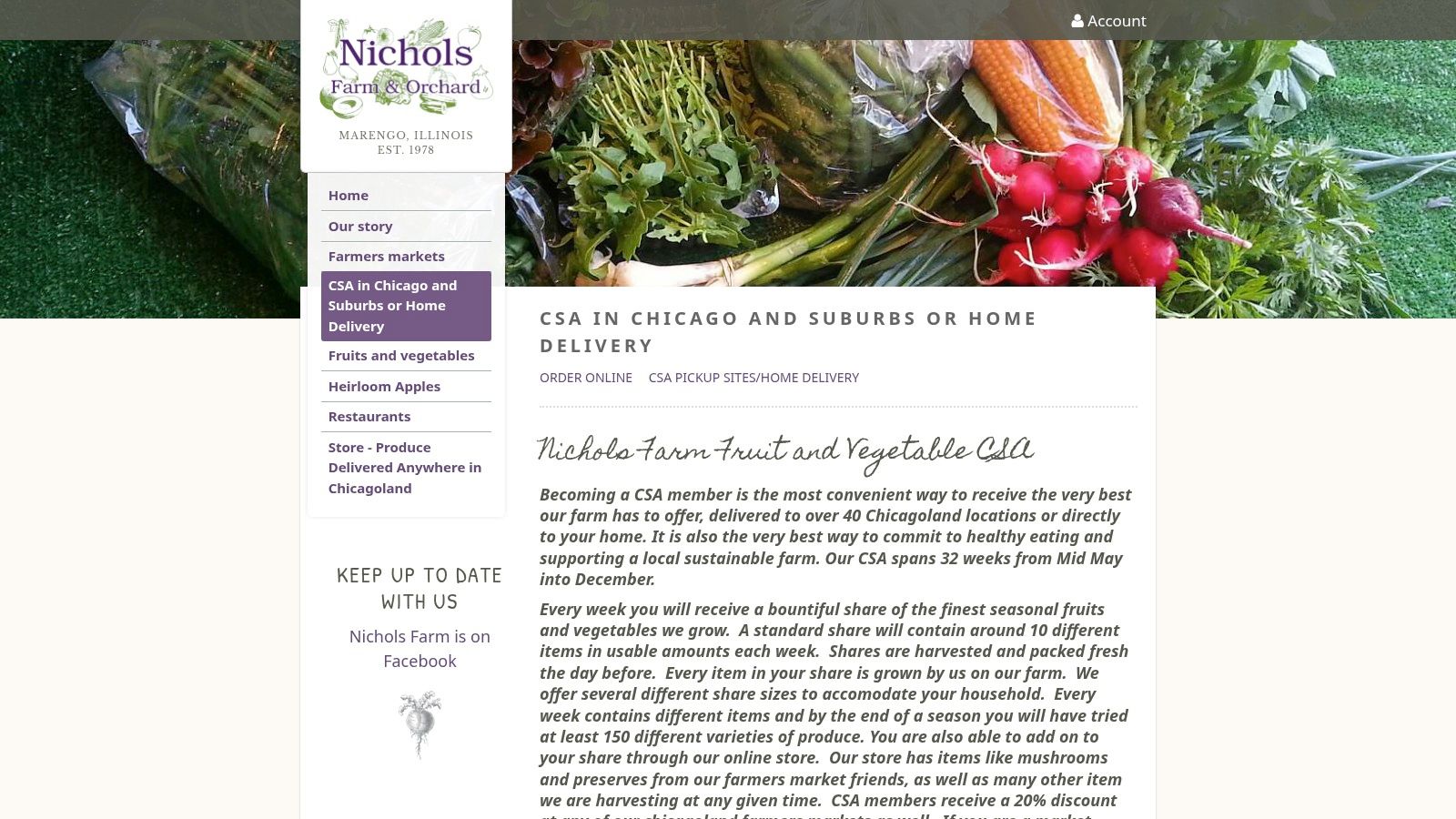
Nichols Farm & Orchard has that effect because they do the classic CSA format with confidence. You get a 24 week main season, optional fall and winter shares, multiple share sizes, and fruit in most weeks. If LUCSA is the practical friend who helps you build the habit, Nichols is the steady old hand who reminds you why the habit matters.
The old-school CSA done right
This one works best for people who want a season to shape them a little. You sign up, keep showing up, and let the farm decide what is ready. Some weeks that means your meals get better. Some weeks it means you finally figure out what to do with beets because they keep arriving and life is clearly trying to teach you something.
I like that.
There is a quiet courage in accepting a fixed box. You stop acting like food is supposed to obey you. You start noticing weather, timing, and the fact that farming is a relationship, not a vending machine. It is the same muscle community groups build when they show up to clean a block or tend a shared garden. Small acts, repeated. A different city takes shape.
A few reasons Nichols stands out:
- Best for a full-season commitment: The main share carries you through a long stretch of the Illinois growing season.
- Best for people who want fruit, not just vegetables: Fruit shows up in most weeks, which changes the mood of the box fast.
- Best for widespread pickup options: Nichols has many pickup locations across Chicago and the suburbs, plus home delivery in some areas.
- Best extra perk: Members get a discount at Nichols farmers market stands, which is handy when you want to add sweet corn, extra berries, or more peaches than any reasonable person needs.
The tradeoff is clear. You are not building a custom cart every week. You are trusting the farm and receiving the harvest they have.
That old-school structure is part of the appeal. Local food does not need a trendy pitch to matter. A farm that keeps growing, packing, and feeding households week after week does something bigger than fill a fridge. It ties city people back to nearby land and asks them to keep their word. In a place as spread out and busy as Chicago, that kind of steady commitment still feels brave.
If you want the recognizable csa chicago il experience, with less fuss and more seasonal character, Nichols is one of the strongest picks on this list.
3. Tomato Mountain Farm
I have a friend who once told me, “I want to support a farm, but I refuse to get bullied by kohlrabi.” That’s the spirit of Tomato Mountain Farm.
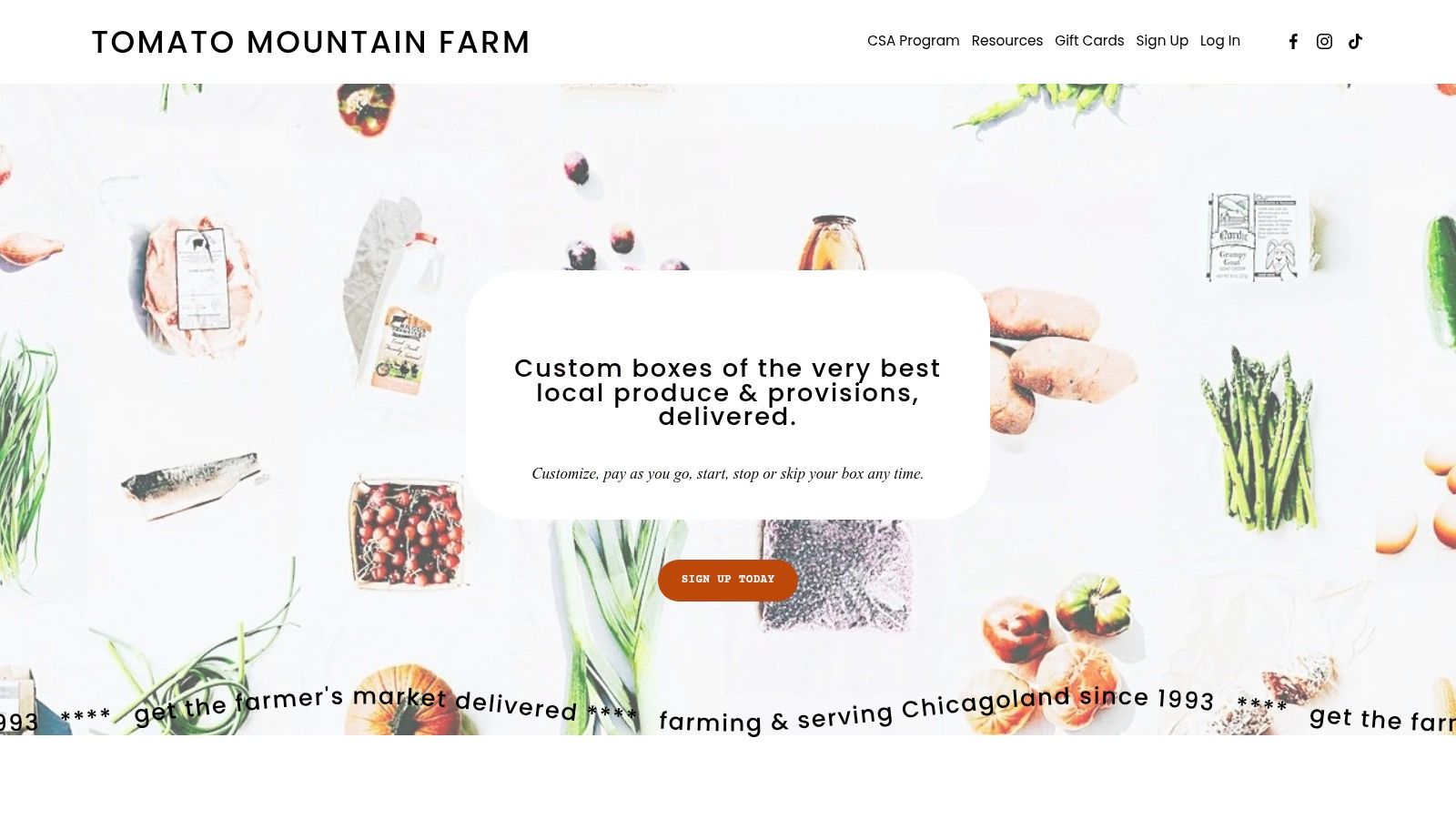
This one is for people who like the values of a CSA but want the mechanics of a well-run online grocery. You choose a box value level, then fill your cart with exactly what you want from their certified organic farm and add-on catalog. It’s a strong answer for picky eaters, careful meal planners, and families with actual preferences.
For people who want control without losing the mission
Tomato Mountain runs year-round and gives you a lot of weekly flexibility. You’re not staring into a box wondering what to do with vegetables you didn’t ask for. You’re shaping your own order.
That makes this one feel modern in the best way. It still supports local agriculture. It still ties you to a farm. But it doesn’t ask you to pretend surprise is always delightful.
A few reasons people stick with it:
- Best for customization: You choose contents each week instead of accepting a fixed box.
- Best for organic shoppers: The farm is certified organic through MOSA.
- Best for year-round routine: Delivery runs through most of the year, so the habit doesn’t vanish when the weather turns.
There is a catch. The more customizable a CSA becomes, the less it feels like the old shared-risk farm model. Some people won’t care. Some will. I think it depends on what you need right now.
Chicago’s food and farm ecosystems have also been moving toward hybrid models for a while. In a Midwest survey of 55 CSA farms, Illinois farmers reported CSA operations accounting for about 50% of total farm income while using 37% of farmed land on average. That tells me flexibility and direct relationships aren’t side features anymore. They’re part of how farms stay viable.
If you’ve wanted csa chicago il options but kept bouncing off the unpredictability, Tomato Mountain may finally click.
4. Chicago Patchwork Farms
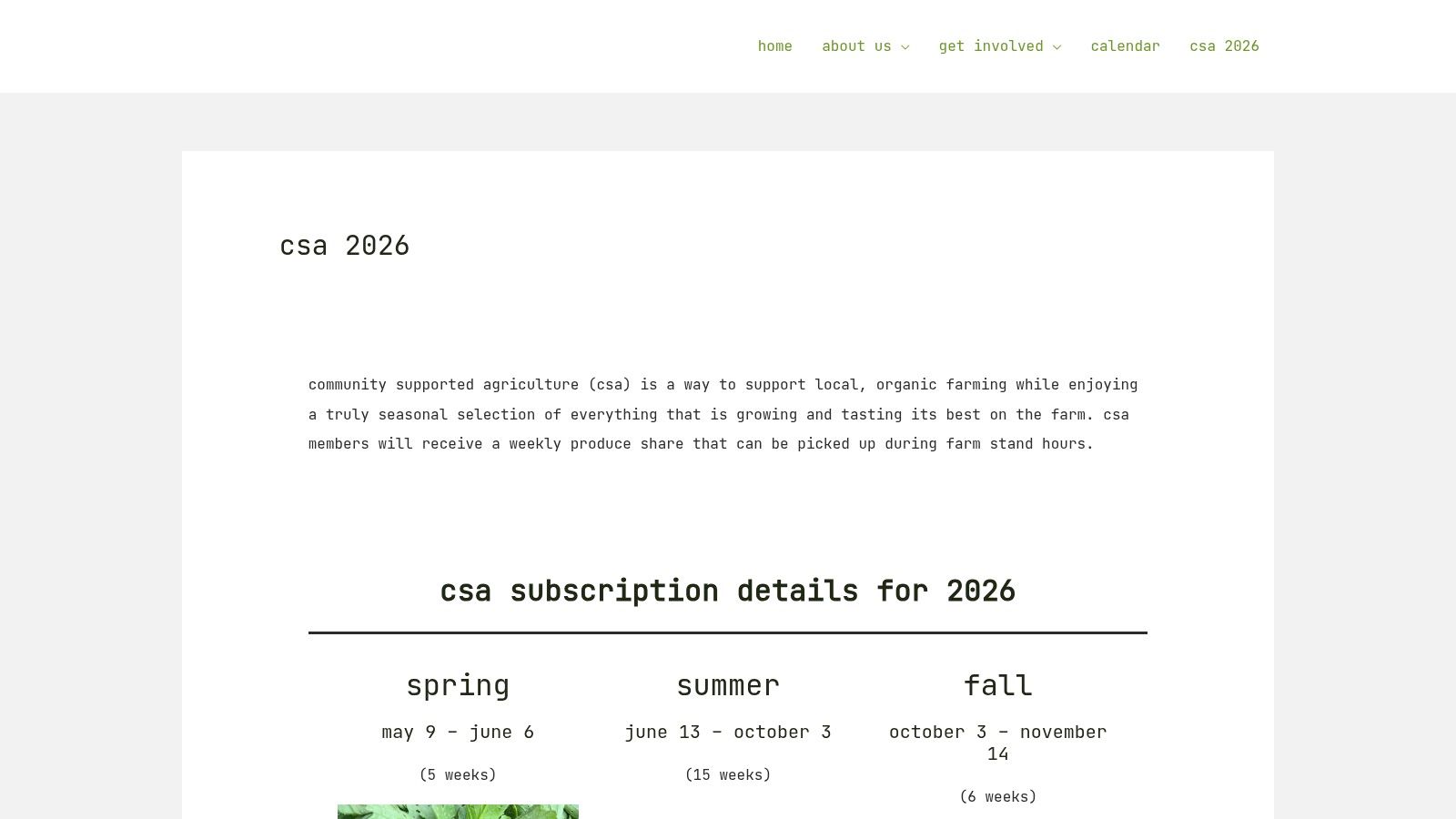
Chicago Patchwork Farms feels intimate in a way most food systems don’t. You pick up at the farm stand on West Chicago Avenue, and the whole thing has that rare quality of being small enough to feel human.
I love that. When food gets too abstract, I drift. I start treating meals like fuel and neighborhoods like backdrops. A hyper-local farm interrupts that numbness.
The neighborly option
Patchwork grows in Chicago and asks you to meet the food where it lives. That changes the tone. You aren’t outsourcing everything to a truck and an app. You’re stepping into a place, maybe chatting for a minute, maybe learning the names of what’s in season.
Their sliding-scale pricing and SNAP/LINK access also tell you what kind of farm this is. Accessibility isn’t a decorative line on the website. It’s part of the structure.
Here’s where Patchwork shines:
- Best for West Town and nearby residents: Pickup is simple if you live or work near the farm stand.
- Best for direct connection: You support an in-city farm and pick up where the produce is grown.
- Best for values-driven buying: Sliding-scale pricing lowers some of the friction that keeps people out of local food systems.
The tradeoff is convenience. There’s no home delivery. Variety can feel smaller than what you’d get from a larger multi-farm operation. You’re choosing closeness over abundance.
I think that’s a fair trade if what you want is relationship. A lot of change starts that way. Not with scale. With familiarity. With showing up enough times that a place stops feeling anonymous.
Chicago has a deep history of neighborhoods becoming cultural anchors because people invested in them consistently. Patchwork taps that same instinct. It says your block matters, your soil matters, and your money can stay close to home. If you want csa chicago il to feel personal instead of transactional, this is one of the strongest choices around.
5. Urban Growers Collective
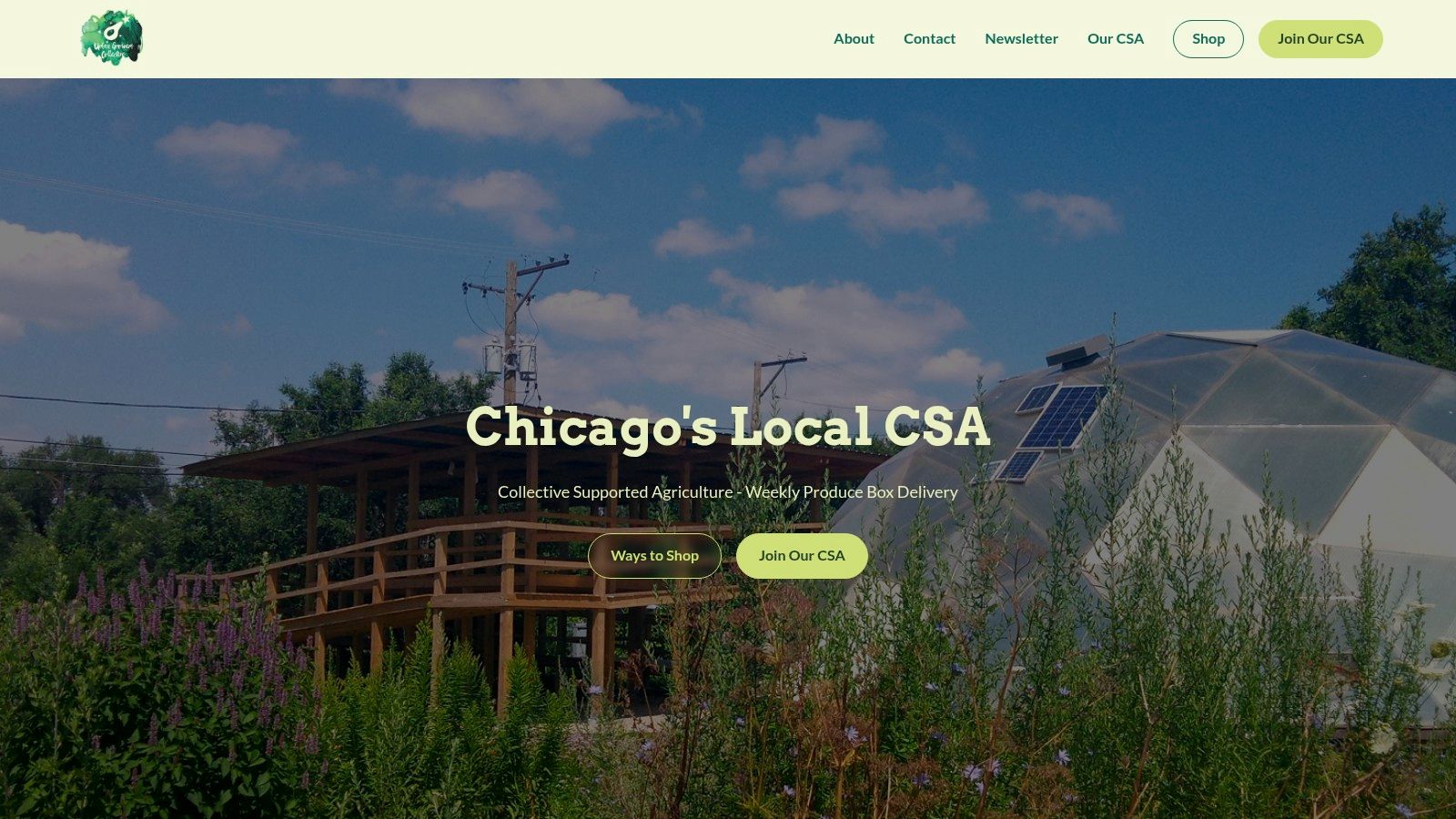
Urban Growers Collective is the box I’d choose if I wanted my food money to carry a sharper moral edge. Their Collective Supported Agriculture model is tied to urban farming, education, community programming, and a more just food system on the South Side.
That mission matters to me because food can either isolate you or connect you. UGC chooses connection on purpose.
Your vegetables do more than feed you
UGC offers weekly half or full shares, plus pickup and delivery options. You can pick up at places like Floriole Bakery or at their South Chicago farm, which gives the whole program a lived-in, city-rooted feeling.
This isn’t just produce for produce’s sake. It’s produce tied to training, teaching, neighborhood presence, and long-term community health. If that sounds a little bigger than dinner, good. It is.
A grounded way to choose: If you want every dollar to do at least two jobs, buy from the farm that feeds people and builds local capacity at the same time.
A few strong reasons to pick UGC:
- Best for mission-first buyers: Your purchase supports broader community and education work.
- Best for South Side solidarity: The farm’s identity is closely connected to Chicago neighborhoods.
- Best for people who want some flexibility: Pickup and delivery both exist, even if the pickup network is smaller than the biggest players.
There’s also a useful overlap here with composting and waste reduction. A lot of Chicago CSA coverage still misses that loop, even as people look for more complete sustainability habits. If that side of the story matters to you, this guide to composting in Chicago pairs well with a farm membership because food systems make more sense when you think about scraps, soil, and return.
The main drawback is that pricing details aren’t front-and-center on the landing page, and the pickup network is more limited than giant programs. But if you want a csa chicago il choice that feels like joining a local movement instead of placing an order, UGC stands tall.
6. Star Farm Chicago
There’s something tough and hopeful about Star Farm Chicago. It’s rooted in Back of the Yards, and you can feel that neighborhood focus in the way the farm talks about access, jobs, markets, and community presence.
I’m drawn to farms like this because they don’t act like food exists in a vacuum. Fresh produce is great. A stronger neighborhood is better.
A South Side choice with backbone
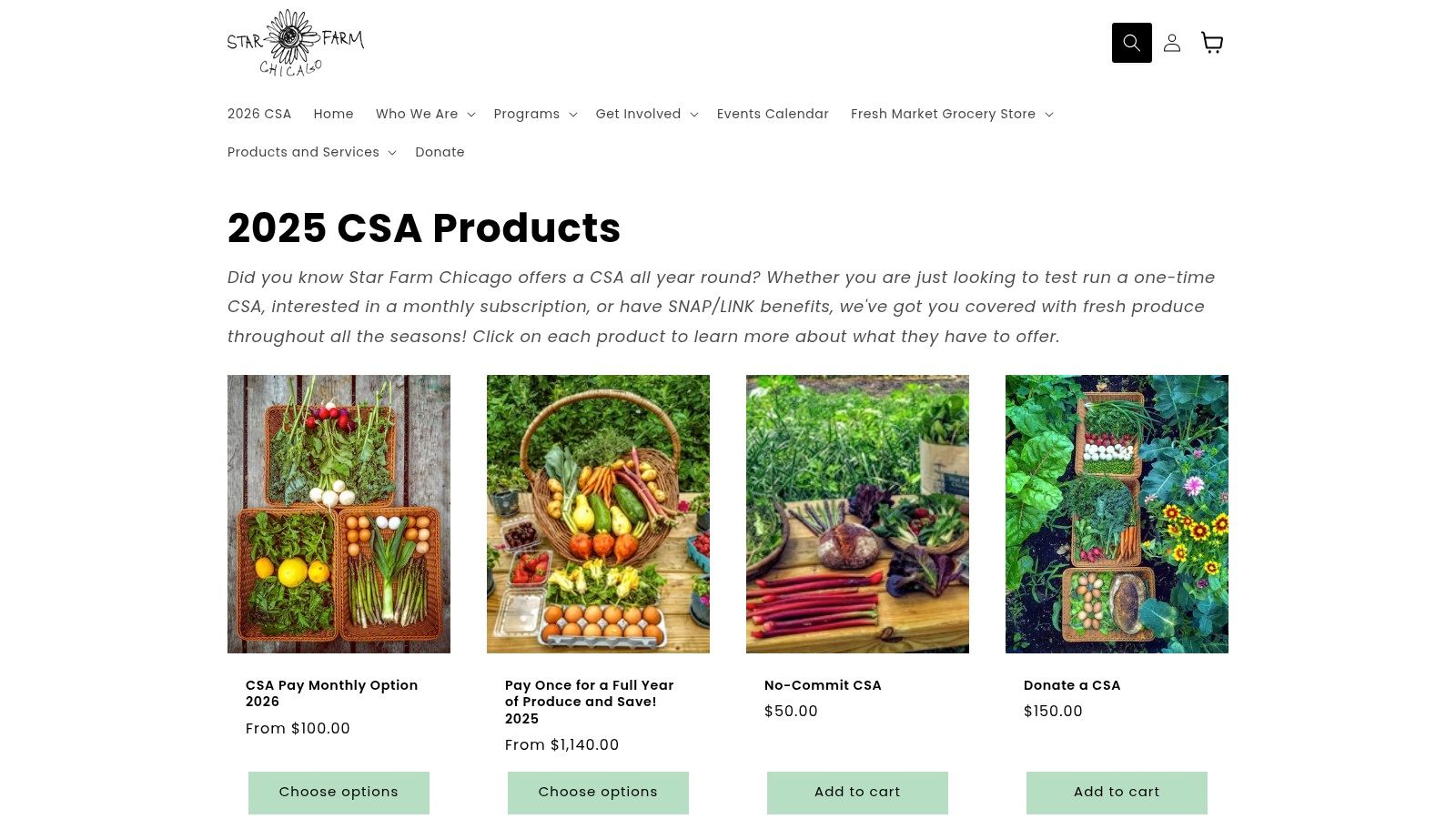
Star Farm offers a year-round CSA with weekly or bi-weekly delivery and monthly billing. They also run mobile markets and other community-facing food access work, which gives the farm a practical, on-the-ground seriousness.
This one makes sense for households on the South or Southwest Side that want delivery from a farm that’s rooted nearby. It’s less about polished branding and more about staying useful.
A few notes that matter:
- Best for South and Southwest Side households: The neighborhood connection is a real part of the value.
- Best for monthly-budget people: Monthly billing can feel easier to manage than a big seasonal upfront payment.
- Best for community-minded members: Mobile markets and related programming widen the farm’s local impact.
The public-facing details are a little less tidy than some other services. Item counts aren’t always spelled out clearly, and monthly billing can make comparison shopping more annoying. Still, I’d rather have a farm doing meaningful local work than a perfect website with no soul.
I also like Star Farm because it fits a bigger Chicago truth. This city gets better when people invest in the same neighborhoods they serve. If that resonates with you, you’ll probably also care about Chicago community gardens that build local connection, because the impulse is the same. Show up close to home. Help something grow. Let the neighborhood become less abstract.
For csa chicago il shoppers who want a South Side option with grit and purpose, Star Farm deserves a serious look.
7. Global Gardens Refugee Training Farm
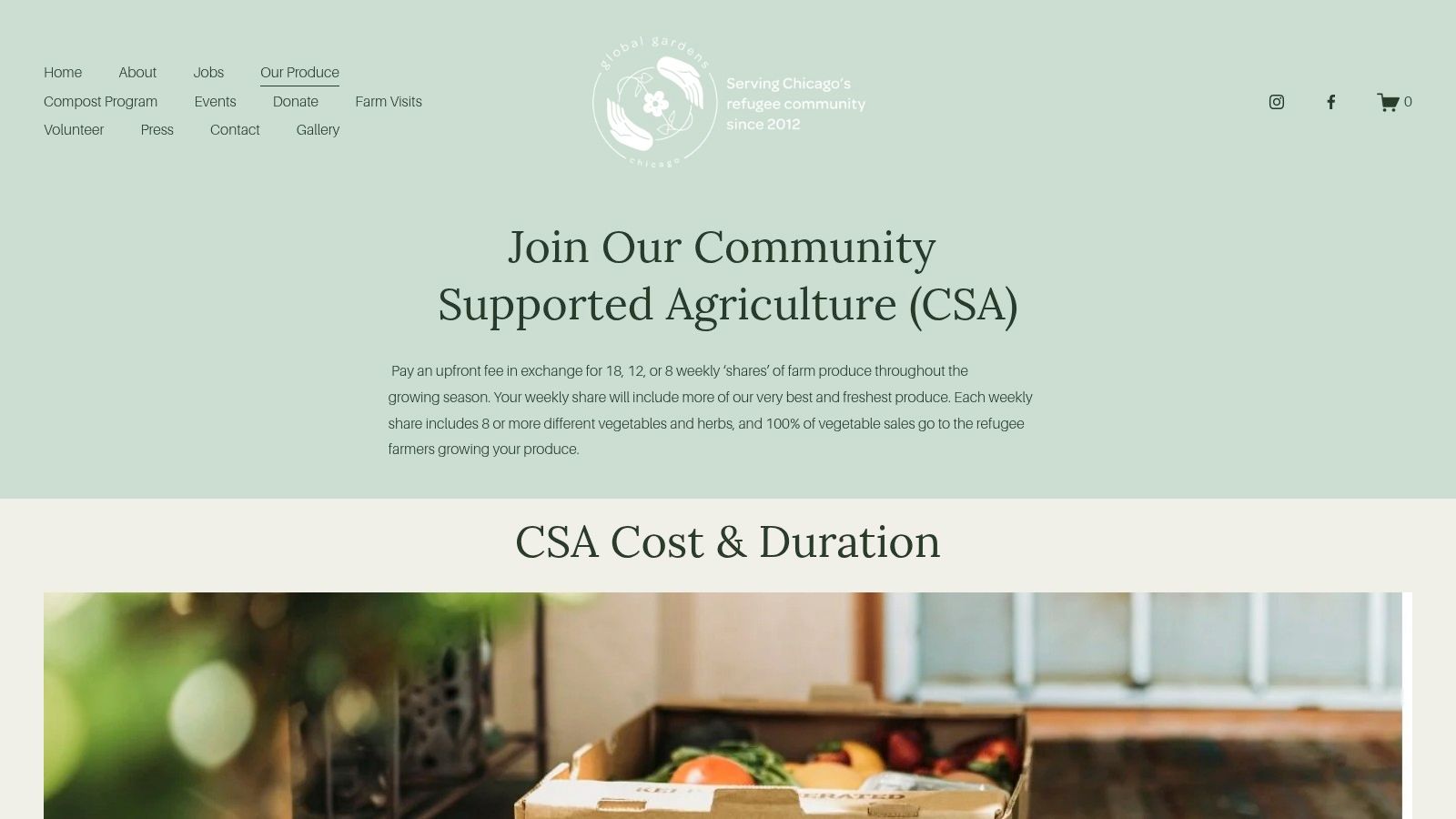
Global Gardens Refugee Training Farm has one of the clearest human stories behind it. In Albany Park, refugee growers use the farm as a place to build skills, grow food, and create stability. When you buy a share, you help keep that chain intact.
I like farms where the purpose is easy to explain to a tired friend over coffee. This is one of them. You buy vegetables. Refugee farmers get a stronger path forward. The city becomes a little more welcoming in practice, not just in slogan form.
Food with a face and a place
The setup is simple. Weekly shares. Farm pickup at 4815 N Sacramento Ave. Seasonal produce that changes as the growing season changes.
That simplicity is part of the appeal. You go to the farm. You pick up your share. You know where your money went.
Buy from the farm whose story you’d be proud to repeat to someone else.
Global Gardens is especially good for:
- Best for North Side members who want direct pickup: Albany Park pickup is straightforward and transparent.
- Best for social-impact buyers: Your purchase supports refugee farmer training.
- Best for people who want a grounded CSA experience: The scale stays small and personal.
The limits are obvious too. No home delivery. Less week-to-week variety than a larger network farm. If convenience rules everything for you, this might not fit.
But if you want csa chicago il to feel like a real relationship instead of a subscription, Global Gardens lands differently. You don’t just receive produce. You participate in somebody else’s beginning, and that’s a powerful thing to put on your plate.
Chicago CSA: 7-Farm Comparison
| Item | Implementation complexity 🔄 | Resource requirements ⚡ | Expected outcomes 📊 | Ideal use cases 💡 | Key advantages ⭐ |
|---|---|---|---|---|---|
| The Urban Canopy – LUCSA | Moderate, multi‑farm sourcing and citywide delivery logistics | Moderate, delivery network, partner growers, billing portal | Consistent year‑round boxes with flexible add‑ons; higher weekly price point | Urban residents needing flexible, delivered CSA and EBT/LINK access | Wide delivery coverage, pay‑as‑you‑go, LINK Match and add‑ons |
| Nichols Farm & Orchard | Low, traditional fixed weekly shares and seasonal schedule | Moderate, large crop diversity, many pickup sites, market stands | High seasonal variety including fruit; predictable 24‑week core season | Members who want classic seasonal CSA with fruit and pickup options | Long season, fruit focus, many pickup locations, market discount |
| Tomato Mountain Farm | Moderate, value‑based credit model with weekly online selection | Moderate, certified organic production, e‑commerce and delivery logistics | Highly customizable weekly boxes; year‑round organic availability | Households wanting control over weekly contents and organic produce | Full customization, MOSA certified organic, dependable delivery |
| Chicago Patchwork Farms | Low, on‑farm pickup and straightforward enrollment | Low, small urban farm operations, sliding‑scale admin for SNAP | Hyper‑local, community‑oriented shares with limited weekly variety | Neighbors seeking direct farm connection, affordability, SNAP access | Strong community mission, sliding‑scale pricing, farm pickup |
| Urban Growers Collective (UGC) | Moderate, collective model with education and partner coordination | Moderate, partner farms, training programs, pickup/delivery coordination | Fresh produce plus measurable community and training impact | Supporters of equity‑focused food systems and community programs | Mission‑driven impact, pickup or delivery options, farmer training |
| Star Farm Chicago | Moderate, year‑round subscription with mobile markets and deliveries | Moderate, delivery ops, community programming, monthly billing | Consistent year‑round access; neighborhood food access and job support | South/Southwest Side households wanting delivery and local investment | Local job creation, mobile markets, delivery-focused service |
| Global Gardens Refugee Training Farm | Low, single‑farm pickup with simple weekly share system | Low, training farm infrastructure, coordination for pickups | Direct support for refugee farmer training and fresh seasonal produce | North Side residents who want to support refugee farmers and visit farm | High social impact, transparent pickup logistics, training focus |
Your Turn to Dig In
A friend of mine joined a CSA after one bad Tuesday in March. She was tired, hungry, and standing under fluorescent lights with a plastic clamshell of berries that tasted like wet paper. Two weeks later, she was at a pickup table in Chicago, holding a muddy bunch of carrots and asking a farmer what to do with turnips. By June, she knew the volunteer who checked her in, had traded soup recipes with another member, and had started planning her week around what the soil gave her instead of what a sale circular pushed at her.
That shift matters more than it looks.
Joining a CSA is one of those small brave acts that changes the shape of your life from the edges inward. You choose one farm. You show up. You bring the box home. You wash the greens even when you're tired. Then you do it again the next week. It is the same muscle people build when they spend a Saturday morning picking trash off a block that is not magically fixed by noon. You show up anyway, because repeated care changes places, and it changes the people doing the caring.
Chicago can make you feel scattered. A CSA pulls the city back into reach. Suddenly food has a face, a season, and a neighborhood. You stop acting like produce appears by accident. You start seeing the hands, weather, and grit behind dinner.
If fairness matters to you, ask blunt questions before you join. The wider Illinois conversation around savings access shows a useful pattern here. An NBER analysis of more than 900,000 Illinois 529 accounts from 2000 to 2023 found that adoption reached every ZIP code by 2023, but participation still concentrated among higher-income and more educated families. Different system, same lesson. Access on paper does not always mean access in practice. Ask about pickup, SNAP or LINK, delivery, and what support looks like for people with demanding schedules.
Then choose.
Pick the farm that fits the life you have, not the one that matches some fantasy version of you. LUCSA works for people who need flexibility. Nichols can fit if you want the old-school rhythm of a farm season. Patchwork and Global Gardens bring you closer to the ground and the people growing your food. UGC and Star Farm let you put your grocery money behind a mission you want more of in this city.
You do not need a perfect system.
You need a farm you will stay with long enough for the relationship to get roots.
That is how a city gets stitched back together. One cleanup. One pickup. One bag of trash. One box of peppers and kale. Nothing glamorous. Just neighbors deciding, over and over, to take responsibility for the place they live.
If this piece lit something up in you, don’t stop at your dinner table. Join Litter Caterpillars and put that same energy to work on Chicago’s streets. A veggie box can reconnect you to the land. A Saturday cleanup can reconnect you to your city, your nerve, and a crew of people who believe small, gritty acts of service can change a life.