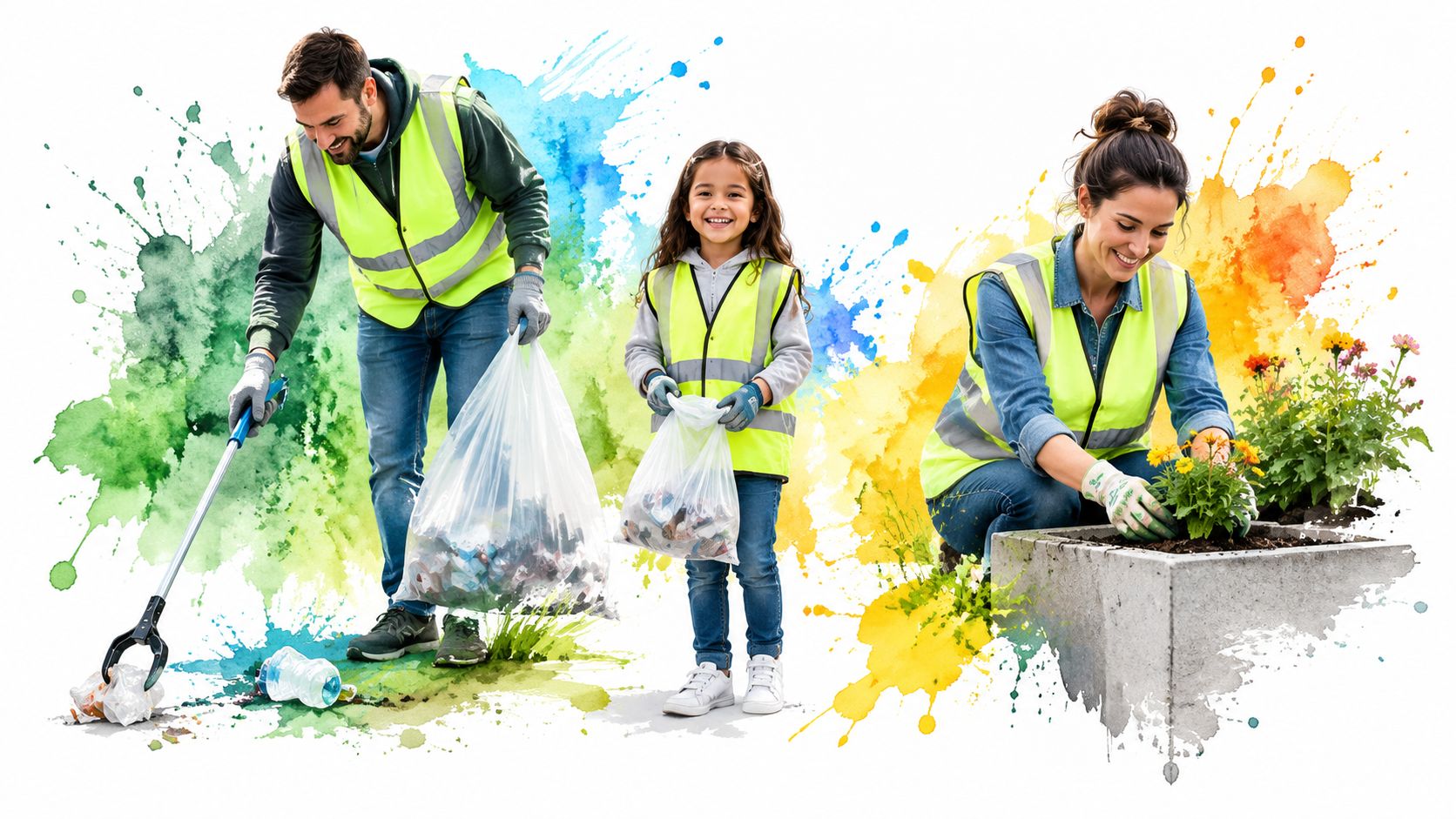
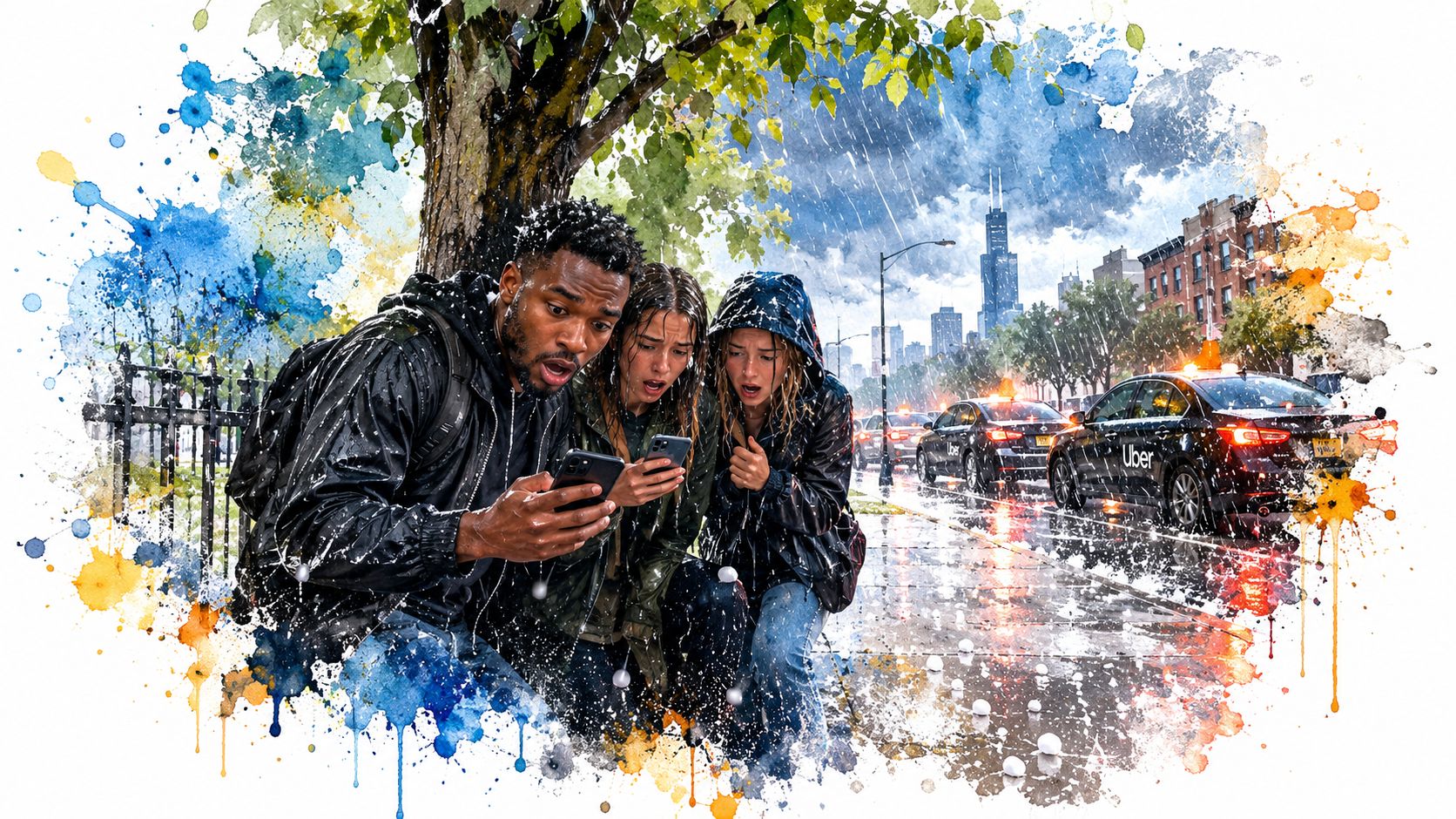
The hail hit so hard that Kevin, two volunteers, and I could barely hear each other under a West Side street tree. We watched ice bounce off our phones while one Uber after another canceled, then laughed, pulled our wet jackets tight, and kept walking.
The Night Three People Got Caught in a Chicago Hailstorm
The leaves rattled above us. Water ran down my sleeves. Kevin checked his phone again, shook his head, and showed us another canceled ride. Nobody had planned to become friends under a tree during a Chicago storm, but there we were, three tired people holding grabbers and trash bags while hail knocked against the sidewalk.
We could've called it a night. Instead, we waited for the worst of it to pass, then finished the route. We picked up what we could, talked between gusts, and learned each other's names. That small choice still explains community engagement better than any poster I've read.
Community engagement looks like people who show up, do something together, and return after the weather changes. It can happen in a cleanup, a neighborhood meeting, a school project, or a group checking on neighbors after a storm. The activity matters, but the repeated contact matters more. You begin as strangers. Then you recognize the same face. Later, you know who to call.
That is why I keep thinking about that hailstorm when someone asks, why is community engagement important? The answer starts with a simple scene. Three people showed up anyway, stayed connected when the easy option disappeared, and left the block a little more cared for than they found it.
What that storm taught me
A community doesn't form because people share an address. It forms when people share time, work, attention, and small acts of trust. The story of the vacant lot follows that same pattern. A place changes after people decide to keep returning to it.
England's 2025/26 Community and Engagement Survey found that 46% of people aged 16 and older took part in civic participation, consultation, or activism during the prior 12 months, compared with 41% in 2024/25. Civic participation alone reached 38%, up from 34% the year before, according to the Community and Engagement Survey report.
Those figures give a name to what I saw under that tree. When people have a clear local issue and an easy way to act, participation can rise quickly. The rest of the answer lives in the ordinary details, who returns, who feels safe, who gets heard, and what changes on the ground.
What Community Engagement Really Means in Plain Words
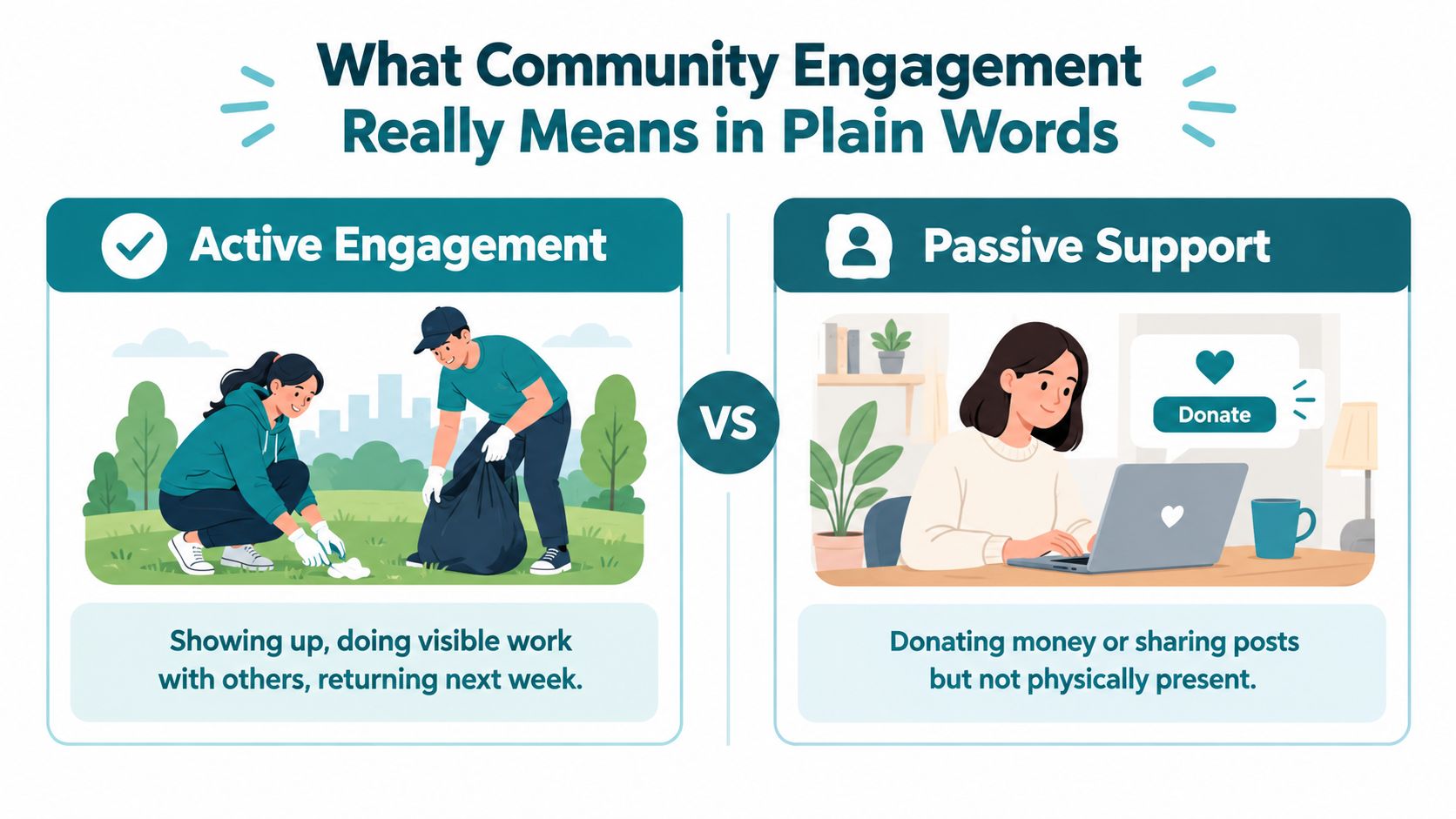
I explain community engagement this way: show up, do visible work with other people, and come back next week. You don't need a perfect plan, a loud personality, or a special title. You need a reason to step outside and a task that other people can see.
Living on a block doesn't automatically create a community. You can pass the same apartment doors for years without learning a neighbor's name. You can sign a petition, share a post, or send a donation and still never meet the people facing the same problem.
I think of it as a block potluck. Every household brings one dish, even if the dish comes from a grocery store. People stand around comparing recipes, asking who lives upstairs, and learning who has a ladder or a spare shovel. A locked apartment door and a takeout menu may feed one person, but they don't help neighbors find one another.
Five levels of showing up
A public participation model from the International Association for Public Participation describes five levels:
- Inform: Give people clear facts and updates.
- Consult: Ask for views before making a choice.
- Involve: Keep residents part of the process.
- Collaborate: Make decisions with the people affected.
- Enable: Give the community real authority over the result.
I see those levels on Chicago sidewalks. A group chat can inform volunteers about a cleanup. A neighbor can suggest a dangerous alley, which creates consultation. A regular crew can plan the route together. Residents can collaborate on what happens to a vacant lot. In the strongest version, neighbors help decide how that space will operate.
People can also turn community into sponsorships when a shared effort grows into a clear local project. The point remains simple. Engagement asks people to take part in a relationship with their neighborhood, not merely react to a message.
A practical test: If people can see what they did, meet someone new, and find a reason to return, you have created an opening for engagement.
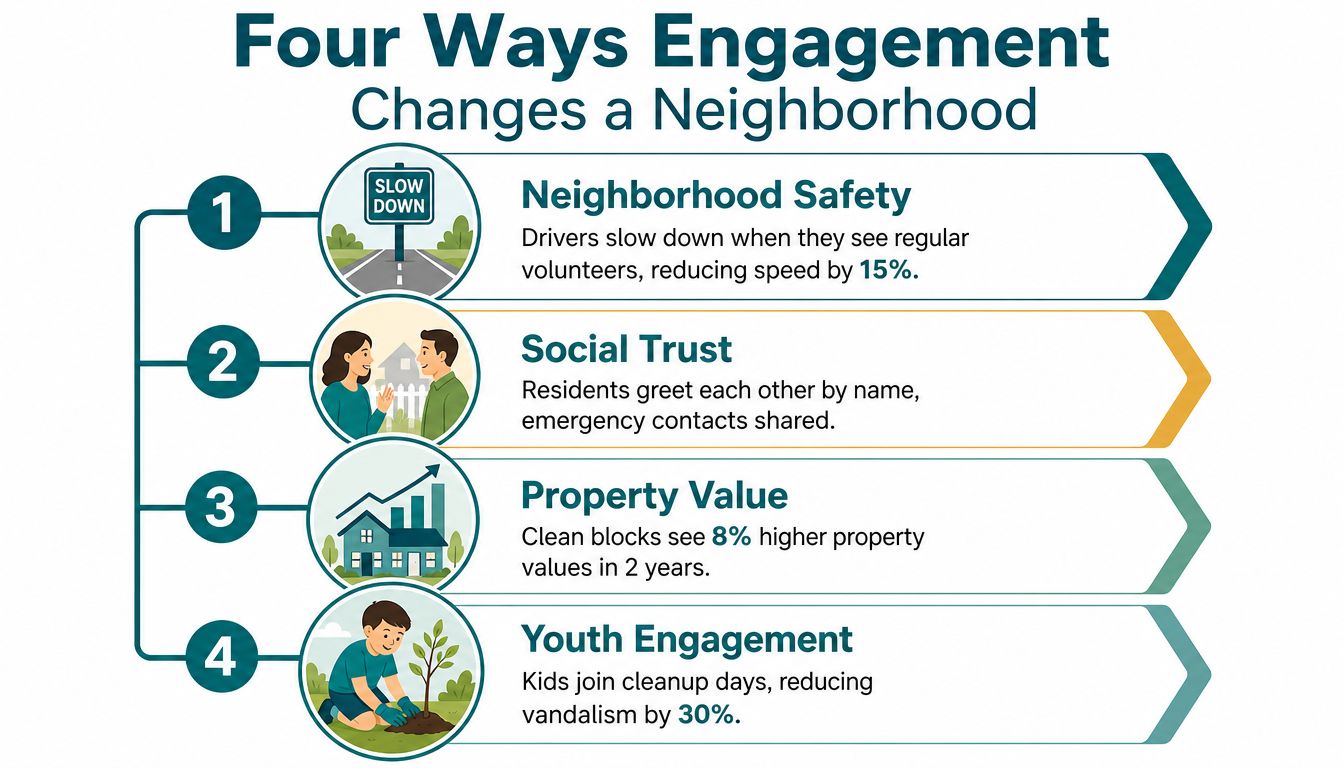
Four Ways Engagement Changes a Neighborhood
I've watched one Saturday cleanup produce several results at once. We arrive with bags and grabbers, but we leave with more information, more familiar faces, and a better sense of what the block needs.
Safety begins with familiar faces
Kevin can name the block where drivers began slowing down after seeing the same yellow vests each Saturday. The vests didn't replace signs or traffic rules. They made people notice that residents and volunteers watched the street and cared about what happened there.
That visibility changes the feel of a corner. A person walking home sees faces they recognize. A child sees adults working together. A driver sees people who may speak up when something looks dangerous.
Resilience grows before the emergency
The crew that picks up bottles can also notice a blocked drain, a fallen branch, or an older neighbor who needs help carrying something. After a storm, those relationships reduce the time people spend figuring out who can respond.
We don't need to know everything. We need enough trust to knock on a door, send a message, or ask another volunteer to check a nearby house. A cleanup group can become a small network before anyone calls it one.
Social ties form during ordinary work
Two volunteers who met over grabbers in 2022 are now godparents. I've also watched new arrivals to Chicago find a friendly face on their first cleanup. Nobody had to force a bonding exercise. People talked while sorting bottles from cans, carried full bags together, and shared snacks afterward.
The Census Bureau and AmeriCorps reported that 75.7 million Americans aged 16 and older, or 28.3% of the population, formally volunteered through an organization between September 2022 and September 2023. The Census Bureau account of civic engagement and volunteerism shows how many people already turn concern into action.
Organized voices reach services more clearly
Aldermen and city crews can respond more easily when a group sends dated photos, a location, a short description, and one named contact. Scattered complaints can disappear across separate channels. A group can collect the same problem in one place and follow up with a person who knows the details.
That structure also gives residents a way to ask what happened after they reported an issue. A 2025 survey found that 94% of residents want local governments to report how their input was used, according to the State of Community Engagement survey. People want a response they can see, not only a form they can complete.
These outcomes stack. The same Saturday morning can make a street feel watched, give neighbors a contact during a storm, create friendships, and produce a cleaner report for city staff.
The video below gives another way to see how shared action can bring residents into the same work.
What Real Impact Looks Like Block by Block
The first scene happened beside a highway. A mattress sat near the ramp. Shattered glass glittered in the dirt, and fast-food wrappers had collected where the wind pushed them. Volunteers worked through the mess until the asphalt edge looked open again.
Neighbors watched from nearby. Their surprise said plenty. A road can feel different when people remove the objects that make everyone expect neglect. We didn't need a speech to explain the change. Anyone passing could see the clean stretch.
Caterpillar Park gave children somewhere to run
In Englewood, an empty lot once held the usual mix of trash, weeds, and things nobody wanted to touch. The group won the lot at auction and began working on it. People painted murals, planted flowers, and built benches.
Later, children ran toward the space instead of around it. Neighbors sat on the benches they helped build. The work didn't end when the first bags left the lot. People kept returning because they could see their own hands in the place.
A warning didn't decide the future
People told us to stay away from one ward. We listened to the safety concerns, planned carefully, and returned on Saturday mornings with a clear buddy system. At first, strangers watched from windows and doorways. Over time, faces became familiar.
The trash bags grew smaller. Conversations grew longer. Someone waved from a porch. Someone else asked when we'd return. That kind of change takes repetition, because one cleanup can remove debris while regular visits can change expectations.
The three scenes share a pattern. People pointed to the result, a cleared ramp, a usable lot, and a cleaner route. Then they pointed to the people who made it happen. That is what impact looks like to me. You can smell the difference near the highway, sit on the bench in Englewood, and recognize the neighbor at the end of the block.
How to Build Participation Where You Live
Start with a rhythm people can remember. Litter Caterpillars meets on weekend mornings, often at 9 a.m., so someone can learn the time once and return without searching through a new announcement every week.
Choose one meeting corner and one small first task. One hour on one block feels possible. A volunteer who thinks, “I can try this once,” may stay when the work ends with a visible result.
Make the first visit easy
Bring the gear. Grabbers, gloves, bags, and water remove the awkward question of whether a new person owns the right supplies. Pair a first-timer with someone who knows the route, the safety rules, and what to do with sharp objects.
Use bright vests and a buddy system. Keep people away from traffic, explain which items require special handling, and stop when the conditions become unsafe. Volunteer safety comes before a full bag.
Reach people through ordinary places
Post in a local Facebook group, but don't stop there. Tell people at church, near school pickup, and in the barbershop. A neighbor may ignore a general announcement and respond when someone they recognize invites them directly.
Finish with a group photo and a shared snack. That small ending gives people a moment to talk after the work, and it helps the event feel like a gathering rather than an unpaid chore.
A good first event has three parts: a clear meeting place, a short task, and a warm ending.
Repeat the pattern before changing it. New organizers can also read community engagement strategies from Litter Caterpillars for more practical ideas. If your group relies on a campaign or a fundraising push, planning for post-campaign backer retention can help you keep people connected after the first action ends.
Measuring Whether Your Effort Is Working
I don't need fancy software to tell whether a cleanup has momentum. I keep a shared note with the basics, who came, who came for the first time, and who returned later.
The return matters more than a crowded first event. A person who comes back has learned the route, met someone, and decided the time feels worth protecting. That choice tells me more about trust than a large one-day turnout.
I also photograph the same alley or sidewalk from the same angle. The picture helps a skeptical neighbor see the change, and it gives a new volunteer a clear reason to join. We count bags or debris, but we read that number carefully. Smaller totals can mean the block needs less cleanup because residents have started treating it with care.
A simple tracking table
| Metric | How to Track | Healthy Sign |
|---|---|---|
| Weekly attendance | Record names or a headcount after each cleanup | Familiar faces return while new people still find the group |
| First-time volunteers | Mark first visits in the shared note | Outreach reaches people beyond the regular crew |
| Repeat participation | Check who returns during later cleanups | More people build the habit of coming back |
| Visible condition | Photograph the same spot each time | The route stays cleaner between visits |
| Neighbor response | Note waves, conversations, and offers of help | Residents approach the crew without an invitation |
| Local support | Record water, snacks, gear, or space offered by businesses | Nearby businesses begin helping with the work |
The community impact measurement guide from Litter Caterpillars can help you turn those notes into a simple routine. Keep the record public enough for volunteers to understand, while protecting private information.
Engagement can also touch health and confidence. A meta-analysis of 131 studies found statistically meaningful improvements in health behavior, health outcomes, self-efficacy, and perceived social support in programs that included community engagement, with reported effect sizes of δ = 0.16 for health consequences, δ = 0.41 for health behavior self-efficacy, and δ = 0.41 for perceived social support in the review of community engagement interventions. I see the street version when a quiet volunteer takes a harder route because a friend is walking beside them.
Start Small and Keep Showing Up
Kevin started by grabbing trash alone on weekends. He didn't wait for a large crew, a perfect budget, or a citywide plan. He picked up what he could, then invited people into a routine that kept going.
That routine matters because community engagement grows through repetition. A one-time heroic cleanup can fill bags. A weekly habit can teach neighbors who you are, what you do, and when they can find you.
Pick one action this week:
- Pick up five pieces of litter on your block and dispose of them safely.
- Attend one local meeting and introduce yourself to a person sitting nearby.
- Say hello to two neighbors and ask what they want to improve on the block.
Then repeat the same action. Walk the same route. Attend the next meeting. Greet those neighbors again. The work may feel small, but repetition gives people a chance to trust the pattern.
In Chicago parking lots, our weekly meetups at 9 a.m. make that pattern visible. People know where to go, what to bring, and who might be waiting. Rain changes the jackets. Snow changes the pace. The habit remains.
The answer to why is community engagement important lives there. A lonely street becomes a cared-for place when people keep bringing their names, hands, and attention back to it. Choose one action today, put it on your calendar, and return before the first burst of excitement fades.
Litter Caterpillars hosts weekly Chicago trash pickups where you can bring friends, meet neighbors, and work safely with shared gear. Visit Litter Caterpillars to find an upcoming cleanup and choose the Saturday when you'll show up.