I once stared at a jar of old jam in my fridge like it was a boulder. Then I walked outside, picked up one crushed bottle on the sidewalk, and felt lighter than I had in months.
That’s why the mrbeast ocean cleanup story hits me so hard. A giant mess can freeze you. One small action can unfreeze you.
That One Mess You Can't Clean
I didn’t start by caring about ocean policy or plastic systems. I started because my own mess beat me.
A bag of stale nuts from some failed health kick. A container from a trip I didn’t want to forget. That old jam jar in the back of the fridge. None of it weighed much, but to me each item felt welded in place. I’d look at it, feel shame, close the door, and tell myself I’d deal with it tomorrow.
Tomorrow kept losing.

When a tiny mess feels huge
That feeling is why people freeze when they hear about plastic in the ocean. The problem sounds too big, too far away, too ugly. You hear about trash in rivers, on beaches, tangled in weeds, lodged under docks, and your brain does what mine did with that jam jar.
It says, “Nope. Too much.”
I get that. I really do.
Because paralysis doesn’t care about scale. A messy room can break your spirit the same way a polluted shoreline can break your hope. Different size, same feeling. You don’t move because you think your effort won’t matter.
Sometimes the hardest trash to pick up is the first piece.
What changed me wasn’t some grand plan. It was one outing, one bag, one miserable stretch of weather, one moment where I realized cleaning other people’s mess felt easier than facing my own. Strange, right? But that’s how a lot of us start. We borrow momentum from service.
Why this story matters to regular people
That’s what makes the mrbeast ocean cleanup story useful. I don’t mean useful as internet entertainment. I mean useful in your body, in your Saturday morning, in that stuck part of your life that needs a shove.
MrBeast looked at an absurdly large mess and started anyway. He didn’t wait for the perfect emotional state. He didn’t solve the whole thing alone. He picked a direction and moved.
That’s the part I want you to keep.
If your room is a wreck, wash one cup. If your block is filthy, fill one bag. If the ocean problem makes you feel powerless, remember this. Every giant cleanup begins with somebody willing to look silly for doing something small.
We love the dramatic before-and-after photos. But the miracle itself is more boring than that. Somebody bends down. Somebody gets their hands dirty. Somebody starts.
What Was the MrBeast Ocean Cleanup
The simplest way to explain #TeamSeas is this. Two creators asked the internet to help pay for trash removal, and they made the math easy enough for anyone to understand.
MrBeast and Mark Rober launched #TeamSeas in October 2021. They set a goal to raise $30 million to remove 30 million pounds of trash. The campaign raised $30 million in 65 days from over 400,000 donors, and by July 2024 it had removed 34,080,191 pounds of trash from oceans, beaches, and rivers worldwide, according to Ocean Conservancy’s campaign wrap-up.
The genius was the simplicity
A lot of environmental messaging gets muddy fast. You hear a dozen terms, five organizations, three conflicting solutions, and your brain checks out.
This campaign cut through that.
- One dollar, one pound: You didn’t need a lecture to understand what your money did.
- A clear finish line: People could see the target and rally around it.
- Familiar faces: MrBeast and Mark Rober made a heavy topic feel approachable.
It worked like a neighborhood potluck. One person doesn’t bring the whole meal. One person brings chips, another brings fruit, another brings a tray of pasta. Suddenly the table is full. That’s what happened here, except the table was global and the shared dish was cleanup.
Why people joined so fast
I think people responded because the ask felt clean.
No maze. No vague promise. No “support awareness.” You give a dollar, a pound of trash gets removed. That kind of clarity is rare, and people trust clarity.
Practical rule: If you want people to act, give them a mission they can repeat in one sentence.
That’s true online, and it’s true on your block. If your cleanup pitch needs five minutes of explanation, people drift. If your pitch is “come help us fill bags and leave this place better than we found it,” people get it right away.
The mrbeast ocean cleanup campaign was huge, but the engine was simple. That’s why it traveled.
The Two-Pronged Attack on Trash
A good cleanup plan doesn’t swing blindly. It picks targets.
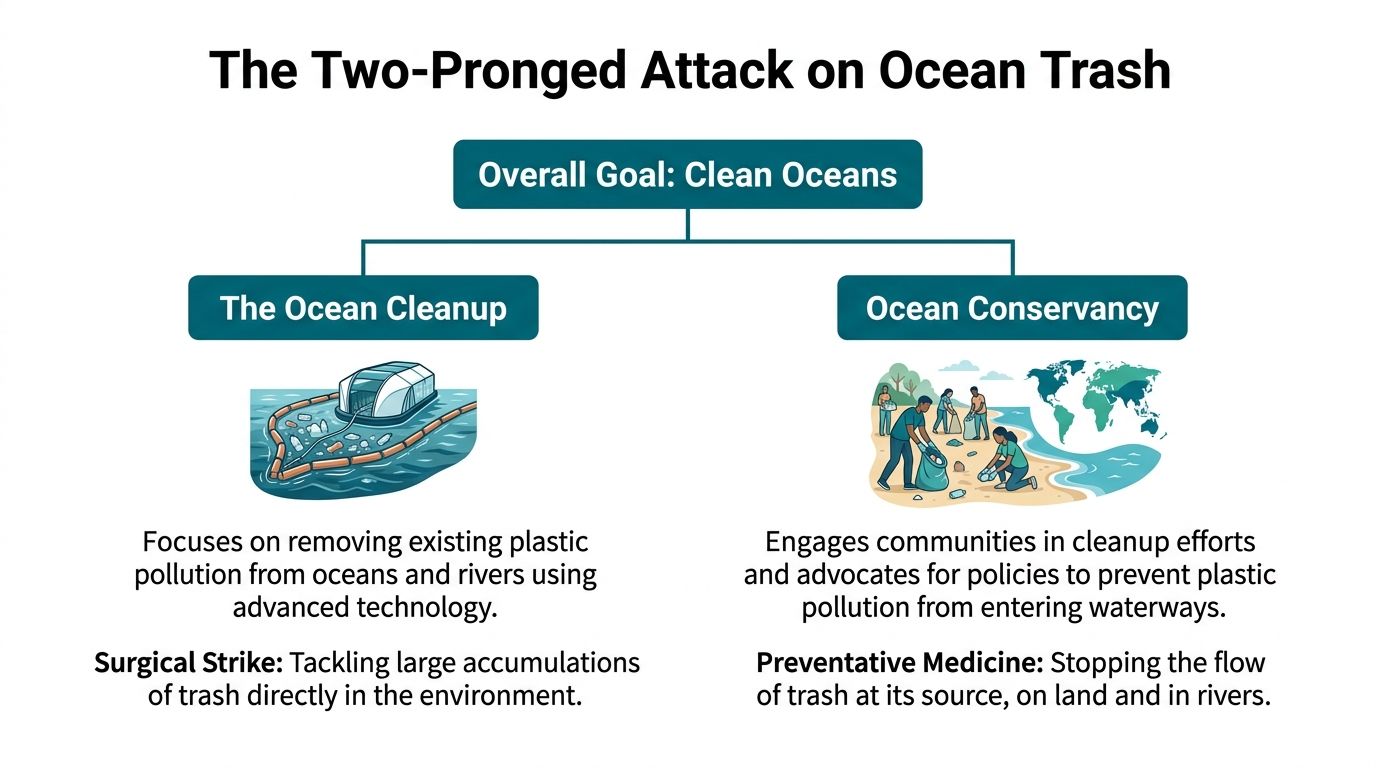
#TeamSeas used two very different tools for the same problem. I think of it like a two-front fight. One front tried to stop trash before it drifted farther downstream. The other front sent people out to remove what was already choking beaches and coastal areas.
The engineering side
Part of the campaign’s money went to The Ocean Cleanup. Their job focused on rivers.
The Ocean Cleanup deployed its Interceptor technology, autonomous and solar-powered river barriers with conveyor systems, in high-pollution rivers of the Dominican Republic, Guatemala, Jamaica, and Malaysia. The technology is designed to remove plastic from rivers before it can enter the ocean, as described in The Ocean Cleanup’s #TeamSeas partnership update.
That matters because rivers are like conveyor belts for litter. If you’ve ever watched trash slide along a curb during hard rain, you already understand the logic. Water carries our laziness farther than we think. A bottle dropped inland doesn’t stay “local” for long.
So this side of the mrbeast ocean cleanup effort acted like a gatekeeper. Catch the stuff while it’s still moving through a narrower channel. Don’t wait for it to scatter into a much larger body of water.
The human side
The other half went to Ocean Conservancy, which worked in a very different way. Less machine, more boots, gloves, grit.
They organized volunteers for cleanups on beaches and in marine environments. They also went after ghost gear, which means abandoned or lost fishing gear that keeps causing harm long after people leave it behind.
Here’s the cleanest way to see the difference:
| Partner | Main approach | What it looked like |
|---|---|---|
| The Ocean Cleanup | River interception with technology | Interceptor systems catching plastic before it reaches the ocean |
| Ocean Conservancy | Volunteer-led removal in coastal and marine areas | Organized cleanups, gear recovery, direct hands-on work |
I like this split because it mirrors real life. When we clean our homes, we need both. We need a trash can by the door so wrappers don’t pile up again. We also need one painful afternoon to clear the junk already covering the floor.
Why both approaches mattered
A lot of people want one perfect answer. There usually isn’t one.
You need systems that prevent future buildup. You also need people willing to deal with the mess that already exists. If you only build machines, you miss the human labor. If you only send volunteers, you miss the value of intercepting trash upstream.
A cleanup gets stronger when it combines prevention with removal.
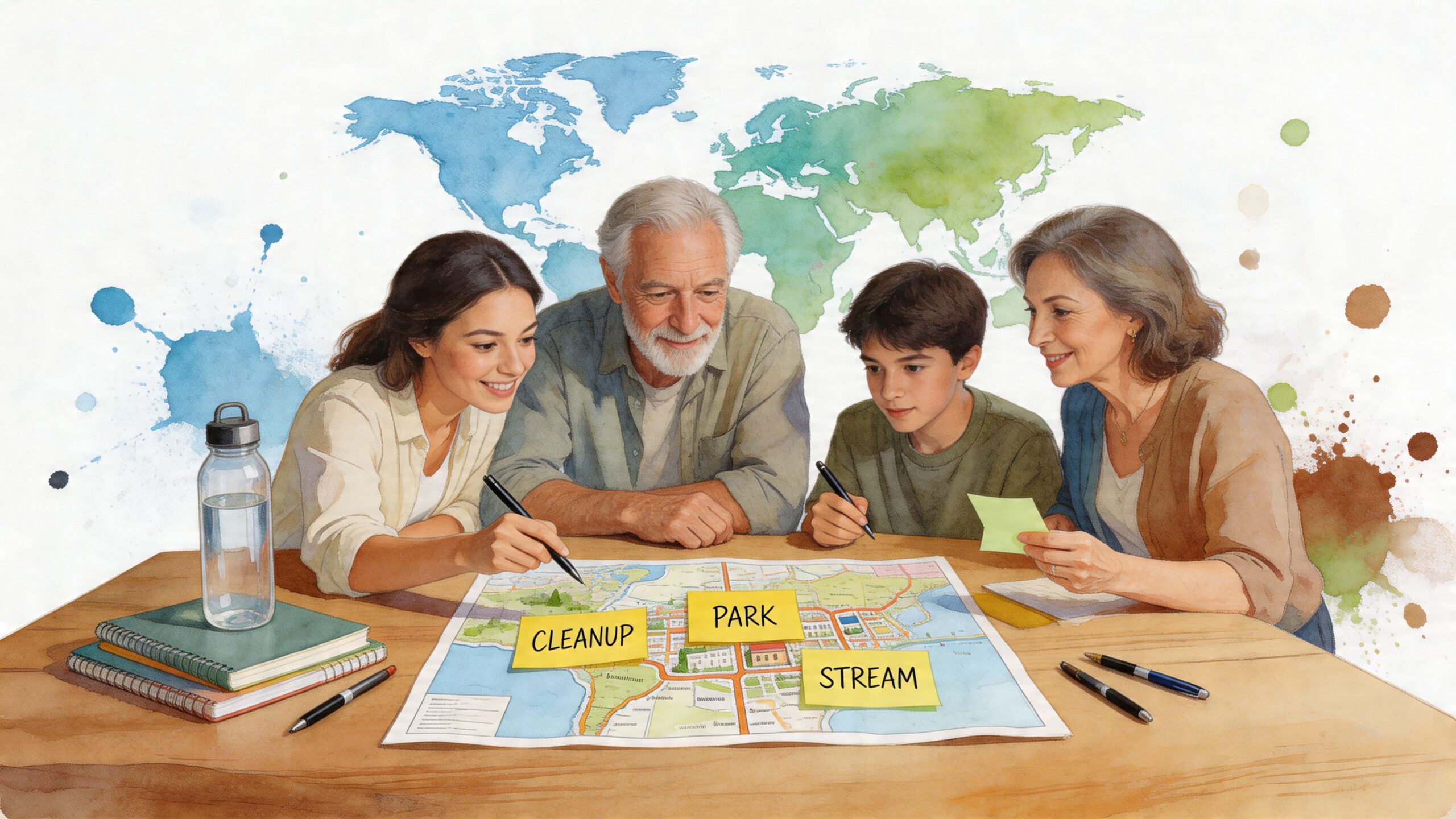
That’s a lesson you can steal for your own group. Don’t just host pickups. Learn the path trash travels in your area. Which alley dumps into which gutter? Which storm drain carries bottles into the river? Which corner keeps trapping cups and wrappers because the wind circles there?
The smartest cleanup isn’t always the biggest one. It’s the one that understands the map.
Lessons for Your Local Cleanup Crew
The best thing about the mrbeast ocean cleanup isn’t that most of us can copy its scale. We can’t.
The best thing is that we can copy its design.
When I’ve seen local cleanup groups stall out, it usually isn’t because people are lazy. It’s because the mission feels fuzzy. Nobody knows where to go, what to bring, or whether the work mattered after it ended. Energy leaks out.
A strong group fixes that with three moves.
Make the mission stupid simple
#TeamSeas had one sentence people could remember. Your group needs one too.
Don’t say, “We are cultivating civic responsibility through sustainable environmental stewardship.” Nobody talks like that. Say, “We meet, we pick up trash, we leave with full bags.”
That’s it.
If you want volunteers, make joining feel light. A page like this guide to volunteer trash pickup events works because it answers the basic human questions fast. Where do I go? What do I bring? Will I feel awkward if I show up alone?
Those are the actual barriers.
Give people pride they can wear
People return to groups that make them feel brave, useful, and seen.
That doesn’t require celebrity. It requires texture. A group photo. A goofy tradition. A flag. A running joke. A nickname for the route. A ritual coffee stop after the work. These things sound small, but they keep people coming back when the weather turns bad and the novelty wears off.
Here’s a simple comparison:
- Weak cleanup group: “Please assist with litter abatement.”
- Strong cleanup group: “Meet us Saturday. Gloves on at 9. We’re taking this block back.”
The second one has pulse.
Field note: Celebration is not fluff. It is how a cleanup becomes a habit.
Show proof fast
People need to see what changed.
Post the bag pile. Take the before shot and the after shot. Keep a simple running log. If somebody spent their morning pulling soggy wrappers from weeds, don’t make them guess whether that effort mattered.
A short video can help more than a long explanation, especially when people can watch the work happen in real time.
You don’t need a viral campaign. You need repeatable trust. When people can see a place get cleaner, they start believing they can change other places too.
And once they believe that, your crew stops feeling like a random volunteer event. It starts feeling like a team.
Beyond the Stunt The Real Impact
Some people hear “MrBeast” and roll their eyes. I understand why. Big internet campaigns can feel loud, polished, and a little unreal.
But if you strip away the thumbnails and chatter, you still have to answer one plain question. Did trash get removed or not?
In this case, yes.
Results are stubborn things
Ocean Conservancy, as #TeamSeas’ beaches and ocean partner, mobilized more than 172,000 volunteers across 73 countries for about 2,000 cleanups targeting ghost gear and other debris, according to The Ocean Cleanup’s #TeamSeas overview.
That’s not abstract. That’s people waking up, traveling to a cleanup point, bending down, hauling waste, and going home tired.
And if you care about ocean trash in practical terms, this kind of work is easy to connect to daily life. Fewer nets left drifting. Less debris sitting in coastal habitats. Fewer piles of plastic riding currents and tides.
Don’t get trapped in motive debates
I’ve wasted too much of my life waiting for perfect motives, mine and everyone else’s.
Perfect motives are slippery. Results are easier to inspect.
If somebody films a cleanup and the place is cleaner after, I care about the cleaner place. If your neighbor thinks your Saturday trash pickup is weird, but the corner stops looking like a dumpster, the corner wins the argument for you.
That’s one reason I like practical guides on solutions for pollution in the oceans. They pull you away from online sniping and back toward the thing in front of you. Trash has mass. Bags have weight. A cleaner shoreline is visible.
People can debate style all day. A filled trash bag is hard to argue with.
The local lesson is simple. Don’t wait for everyone to admire your method. Work first. Let the cleaned space speak.
Bringing It Home to Chicago
Chicago will test your sincerity fast.
You’ll get wind off the lake, slush in your shoes, broken glass near curbs, weird smells in the alleys, and that special kind of cold that makes your fingers feel like borrowed objects. If you still want to show up after that, you’re ready.
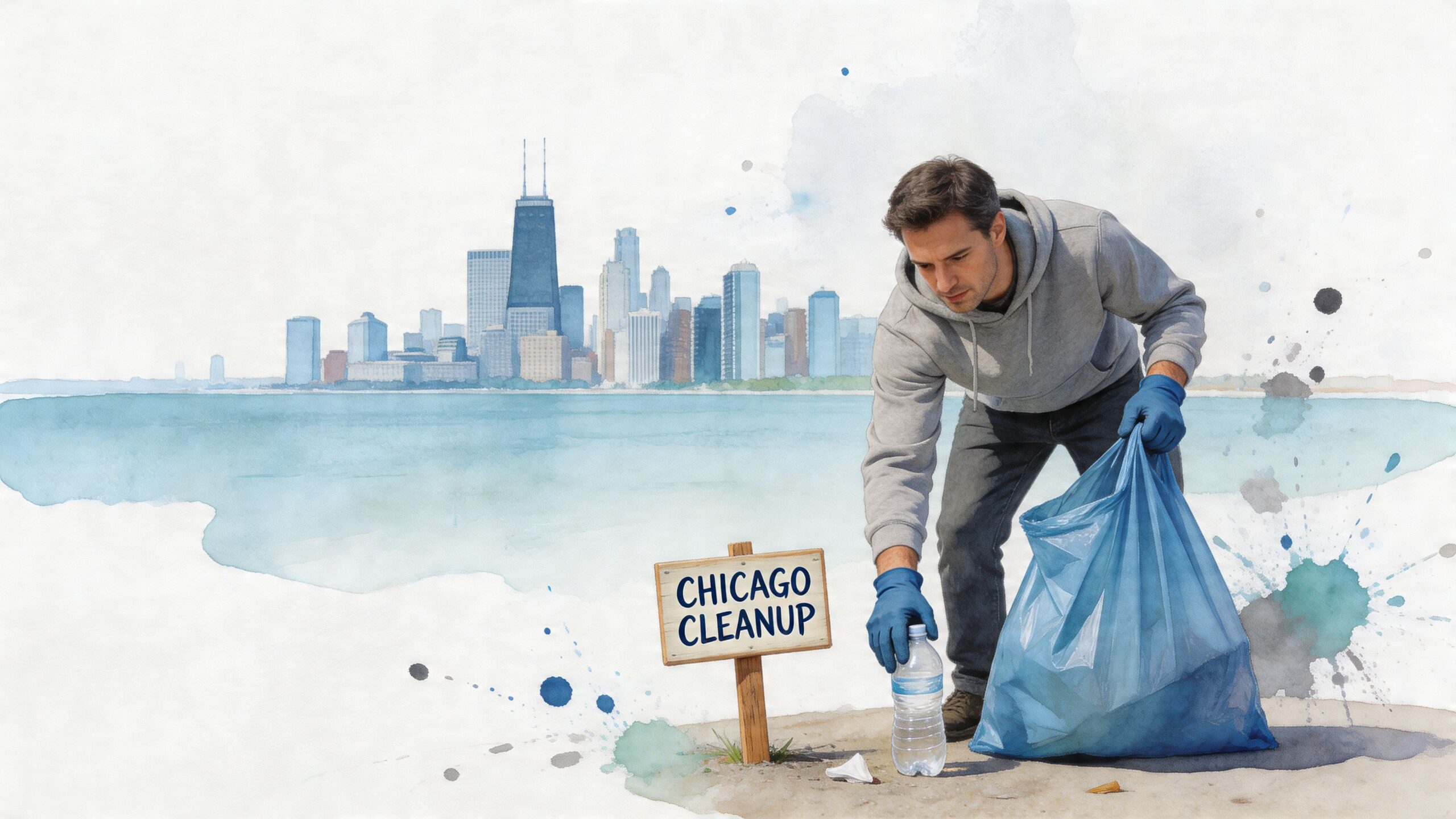
Start safe and stay boring about it
I mean “boring” as a compliment. Safe cleanup habits should feel repetitive.
- Wear gloves: Don’t raw-dog street trash. Use sturdy gloves every time.
- Dress for layers: Chicago weather lies. Start with layers you can remove.
- Use a grabber if you have one: It saves your back and keeps your hands farther from sharp junk.
- Work with a buddy: Streets move fast. So do bikes, scooters, and distracted drivers.
- Skip dangerous items: If you find needles, leaking containers, or anything that feels off, leave it and report it through the right city channel.
You don’t get extra points for being reckless. You just get hurt.
Pick a route that sets you up to win
Don’t begin with the nastiest stretch you can find. That sounds brave, but it often burns people out.
Start with a route you can realistically finish. A park edge. One commercial block. A bus stop corridor. The strip near a school fence. You want a visible before-and-after. You want volunteers to leave feeling, “We did that.”
That’s how people build appetite.
A simple local education page on ocean plastic pollution and connected waterways can also help people see why inland litter matters. Chicago trash doesn’t stay neatly where it started. Wind and rain move it.
What to bring on your first morning
I like a short list better than a giant checklist.
| Bring this | Why it matters |
|---|---|
| Gloves | Protects your hands from grime and sharp edges |
| Trash bags | Gives the outing a clear finish line |
| Water | You’ll feel better and stay out longer |
| Closed-toe shoes | Streets and shorelines both bite |
| A friend | Keeps things safer and less awkward |
If you can, go early. Weekend mornings are underrated. The city feels softer then. You can hear birds between traffic bursts. You can talk while you work.
And when you finish, don’t rush off. Stand there for a second. Look at the ground you just changed. That moment matters more than people think.
Start With Your Own Fence
I keep coming back to Tom Sawyer and that fence.
He got handed a chore and turned it into something other people wanted to join. That story sticks because it reveals a strange truth. A burden can change shape when you carry it with pride.
That’s how I see the mrbeast ocean cleanup. A giant ugly task became a shared mission people wanted to take part in. Not because trash is glamorous. It isn’t. Because action feels better than helplessness.
Your fence might not be an ocean. It might be the alley behind your building. It might be the block where bottles collect by the bus bench. It might be the pile in your own room that you’ve avoided for months because each object feels heavy with memory.
Start there.
A small brave act changes the mood
You do not need a huge platform to begin. You need one bag, one hour, one friend, one route. That’s enough to change the temperature of a day.
And often that’s enough to change you, too.
Find the mess that keeps staring at you. Then make it your project, your ritual, your weird little badge of honor.
That’s the whole thing. Clean your fence. Then invite somebody else to help paint.
If you want a real-world place to start, join Litter Caterpillars. We pick up trash in Chicago, make room for friendship, and turn ordinary weekend mornings into something you can feel proud of. If you’ve been waiting to become the kind of person who shows up, this is a good place to begin.