Tag: neighborhood cleanup

  • How to Build a Community Litter Cleanup Program That Works

    How to Build a Community Litter Cleanup Program That Works

    At 7:30 on a Chicago Saturday morning, I hand an orange bucket to a new volunteer, point toward the alley, and watch the group split into pairs. By 10, the pop-up tent holds full bags, dusty grabbers, and a crew already asking where we're cleaning next.

    What a Weekly Cleanup Looks Like Before You Build One

    The first arrivals gather at a familiar corner. Someone brings coffee. Someone else checks the weather and counts gloves. I pass out orange buckets, grabbers, bags, and safety vests while people trade quick introductions.

    Then we move.

    Two volunteers take the alley on the east side of the block. Two head west. The grabbers make a light scraping sound against the pavement as they catch bottle caps, wrappers, food containers, and scraps of plastic tucked beneath parked cars. The work has a rhythm. Bend, pinch, lift, bag. Talk, laugh, point, keep moving.

    A homeowner opens the front door and offers lemonade. One volunteer switches to a smaller bag because the large one keeps dragging through the narrow passage. A child watches us sort the pile and asks why we leave recyclables on the curb. I explain that our disposal plan depends on the city and the site, so we separate what we can and never make promises we can't keep.

    At 10, we meet beneath the pop-up tent. We count bags, record the route, photograph the pile, and check that nobody has a cut, sore back, or overheated face. The numbers matter, though they never tell the whole story. The same corner looks different when people see us return every week.

    Our Chicago group cleans across all 50 wards every week, and we've learned that consistency carries more weight than a dramatic one-day push. The International Coastal Cleanup shows how far volunteer action can reach. In its 2023 report, nearly 470,000 volunteers across 97 countries collected more than 4,000 tons of trash and plastics, recording 15,519,392 items across 15,508 miles of coastline and waterways (Ocean Conservancy report).
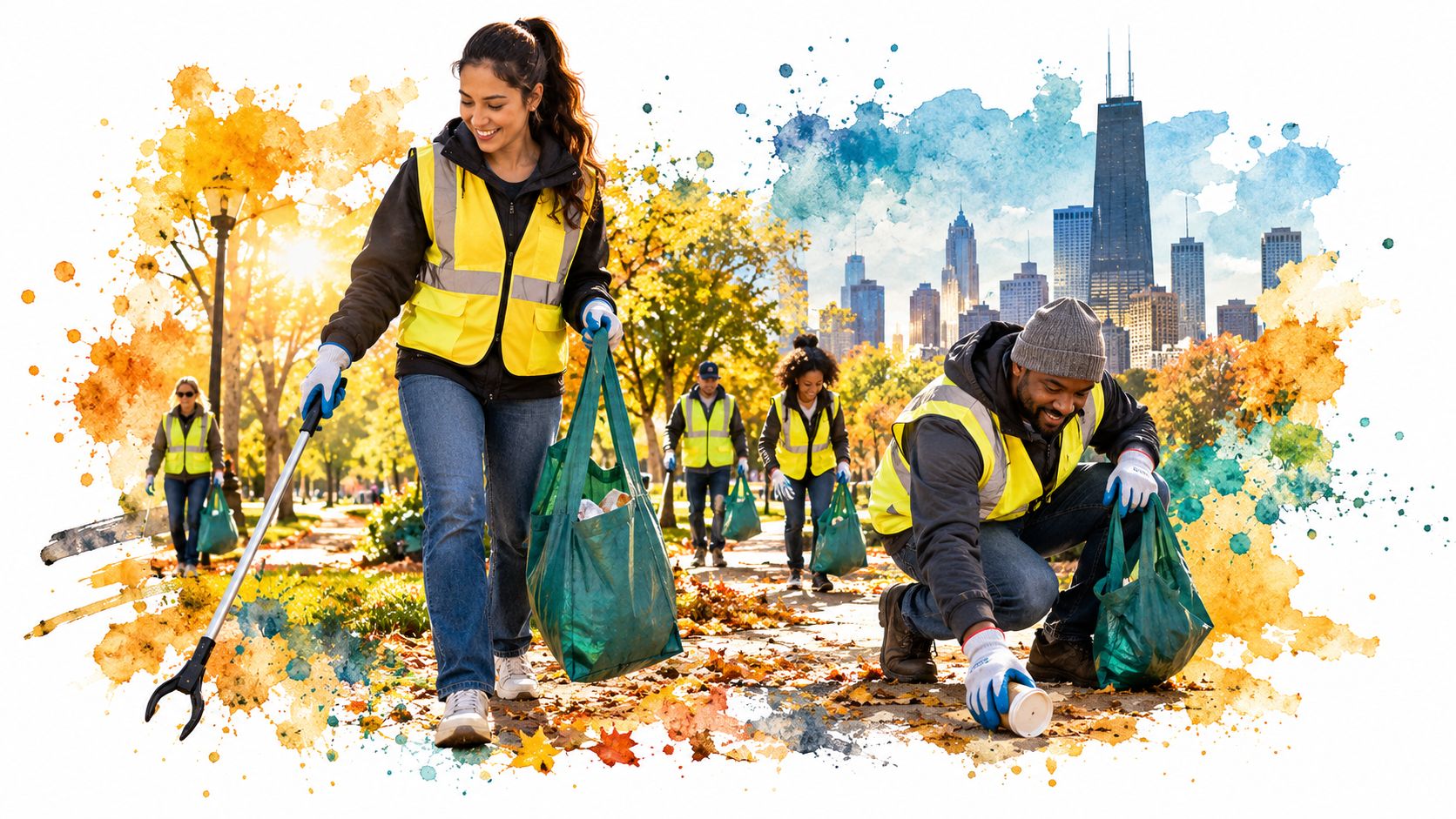
    A diverse group of volunteers cleaning up litter in a park with a city skyline backdrop.

    That scene contains the whole machine in miniature: a meeting point, supplies, routes, captains, safety rules, records, and a reason to return. The rest of this guide breaks down the choices behind it.

    What a Community Litter Cleanup Program Actually Is

    A community litter cleanup program is a recurring volunteer group that removes litter from defined neighborhoods on a fixed schedule. The schedule matters because a one-time event can clear a place, while a recurring crew can notice what returns, who needs help, and which routes demand attention.

    I think of the program as a kitchen.

    The captains are the head chefs. They choose the site, brief the crew, assign routes, and stop work when conditions turn unsafe. Volunteers are the line cooks. They arrive ready to work, follow the site plan, and tell the captain when a task or object creates a problem. Routes are the menu, because they tell everyone where to go and what the crew can finish during that morning.

    Supplies are the pantry staples. Keep gloves, closed-toe shoes guidance, grabbers, bags, water, first aid supplies, and high-visibility vests ready before people arrive. A shared group chat is the open kitchen line. Volunteers use it to find the meeting point, report a blocked route, ask about disposal, and invite a friend.

    The basic operating pieces

    A small group can begin with a notebook and a phone. I'd still build these parts from the start:

    • Recurring time: Pick a day and hour people can remember.
    • Defined zone: Use a block, park edge, alley network, shoreline, or ward route.
    • Sign-in process: Record names, emergency contacts, and waivers where required.
    • Supply kit: Store gear in labeled bins so setup doesn't depend on one person's memory.
    • Data log: Track bags, weight when available, hours, location, and unusual hazards.
    • Newcomer path: Give people one simple page or group-chat message that shows the next event.

    Wollongong's Rise and Shine program began in 1986 and recorded 99 community volunteer events, 1,436 participants, and 44.58 tonnes of waste in 2025 (Mirage News). A program can start with three people on one block and grow into a citywide operation when every new site uses the same basic recipe.
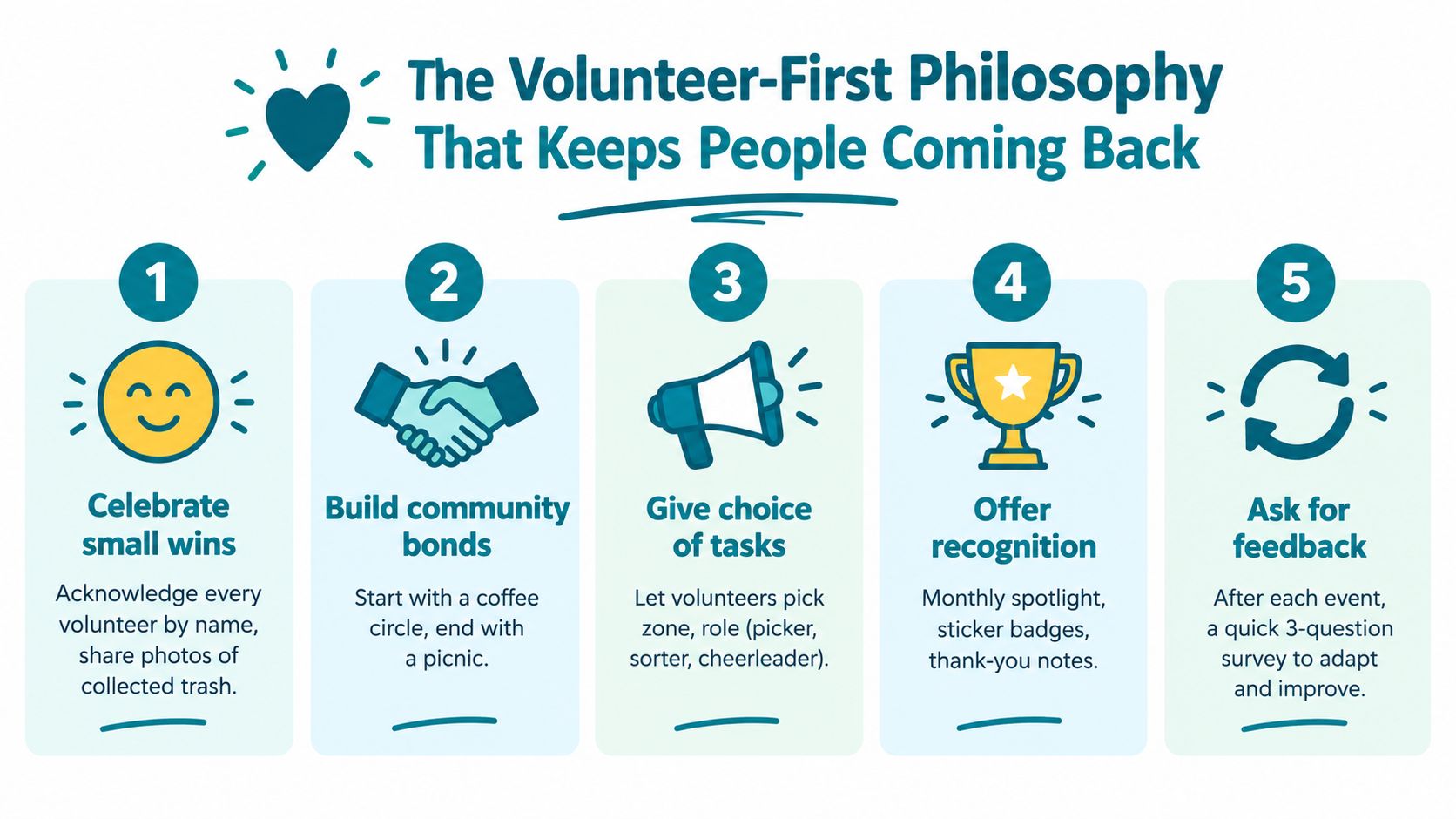
    A five-step guide on the volunteer-first philosophy to encourage community litter cleanup program participation and retention.

    The Volunteer-First Philosophy That Keeps People Coming Back

    I keep our values in the group chat because volunteers need to know what kind of room they're walking into. We talk about bravery, kindness, unity, and service. Those words only matter when they guide an uncomfortable decision.

    We schedule pickups on weekend mornings because working people need a real chance to attend. A volunteer shouldn't have to choose between earning a living and helping clean a block. Weekend timing also gives newcomers a predictable habit. They can bring a friend, learn the route, and return without asking when the next event will happen.

    Safety outranks donations. Happiness outranks publicity. We never pressure volunteers for money, and we won't ask anyone to touch a sharp object to make a photo look better.

    What the rule looks like on the pavement

    A new volunteer shadows a captain during the first session. The captain demonstrates how to use a grabber, where to place a bag, and when to step away. If someone finds glass, a needle, a suspicious container, or anything they can't identify, they call the captain instead of reaching in.

    Captains can cancel a site or change the route when weather, traffic, harassment, flooding, or unstable ground creates too much risk. That authority protects the crew from the quiet pressure to finish a route at any cost.

    Our working rule: A full bag never matters more than a volunteer going home safe and willing to return.

    Groups that chase sponsorship money before they protect volunteer energy often create the wrong bargain. They add meetings, branding demands, reporting tasks, or public appearances until the people doing the cleanup feel like unpaid marketing staff. Money can buy bags. It can't replace trust after a volunteer feels ignored or pushed into danger.

    We've used volunteer retention strategies to keep the focus on belonging, clear roles, and a reason to come back. If you're planning a cleanup with activities, polls, or team challenges, designing an interactive event can help you shape participation without turning the morning into a performance.

    The discipline compounds. First-timers learn the route. Regulars learn to lead. Captains learn to train someone else. That chain gives a community litter cleanup program a future beyond its founder.
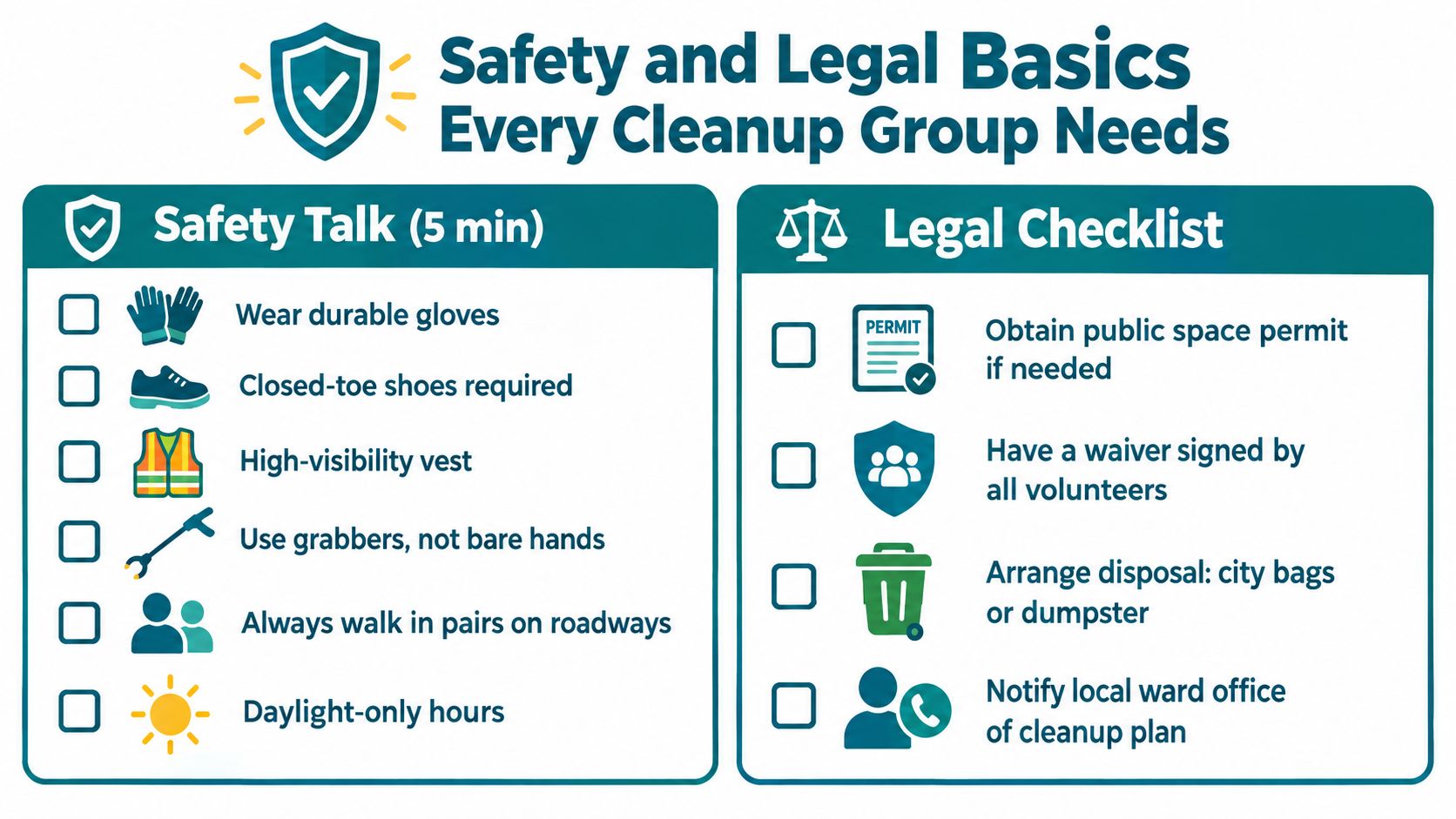
    An infographic titled Safety and Legal Basics for cleanup groups listing safety gear and legal requirements.

    Safety and Legal Basics Every Cleanup Group Needs

    I start with a five-minute safety talk, even when half the crew has attended before. Repetition catches the person who arrived late, the volunteer who forgot gloves, and the captain who assumes everyone understands roadside risk.

    Everyone needs durable gloves and closed-toe shoes. Give volunteers grabbers so they can keep bare hands away from the ground. Use high-visibility vests near traffic, keep work in daylight, and have people walk in pairs or groups of three instead of working alone. A volunteer safety briefing also warns against direct contact with broken glass, fish hooks, and hypodermic needles (Litter Free Dorset safety briefing).

    Match the plan to the site

    Parks need attention around play areas, benches, drainage points, and brush. Keep volunteers away from unstable branches, wildlife, steep slopes, and areas where children could encounter hidden sharps.

    Alleys require careful footing and awareness of vehicles, gates, dogs, and private property. Stay on approved public space, leave blocked or unsafe sections alone, and never enter a yard or building to reach litter.

    Roadways create the highest exposure to moving traffic. Stay off medians, bridges, roundabouts, rail tracks, construction zones, steep slopes, and high-traffic edges. One city guide limits adopt-a-street work to public property, daylight hours, and lower-risk locations (Seattle Public Utilities safety guidance).

    Waterways add slippery banks, hooks, changing water levels, and wildlife. Wear suitable footwear, keep a safe distance from the waterline, and stop when the bank becomes unstable.

    Never pick up needles, weapons, ammunition, car batteries, chemicals, dead wildlife, or unknown containers. Put distance between the item and the crew, keep children away, photograph the location if you can do so safely, and contact the responsible city department or trained responder. Public guidance draws this boundary clearly for hazardous litter (Cobb County volunteer guide).

    Handle the paperwork before people arrive

    Ask the parks, sanitation, transportation, or ward office whether your route needs a permit. Use a waiver suited to your location and group. Set an age policy, require adult supervision where appropriate, and keep emergency contacts with the captain.

    Bring water, a light snack, sunscreen, and a first aid kit. Hardware stores, municipal solid-waste departments, and neighborhood businesses may donate gloves, bags, vests, or grabbers. One cleanup guide lists garden gloves, closed-toe shoes, water, snacks, and grabbers as basic preparation (North Central Texas Council of Governments guidelines).

    If something goes wrong, the captain stops the route, moves volunteers away from danger, calls emergency services when needed, contacts the program lead, and records the time, place, object, weather, witnesses, and action taken. Keep the report factual. Don't hide a minor injury because you fear paperwork.
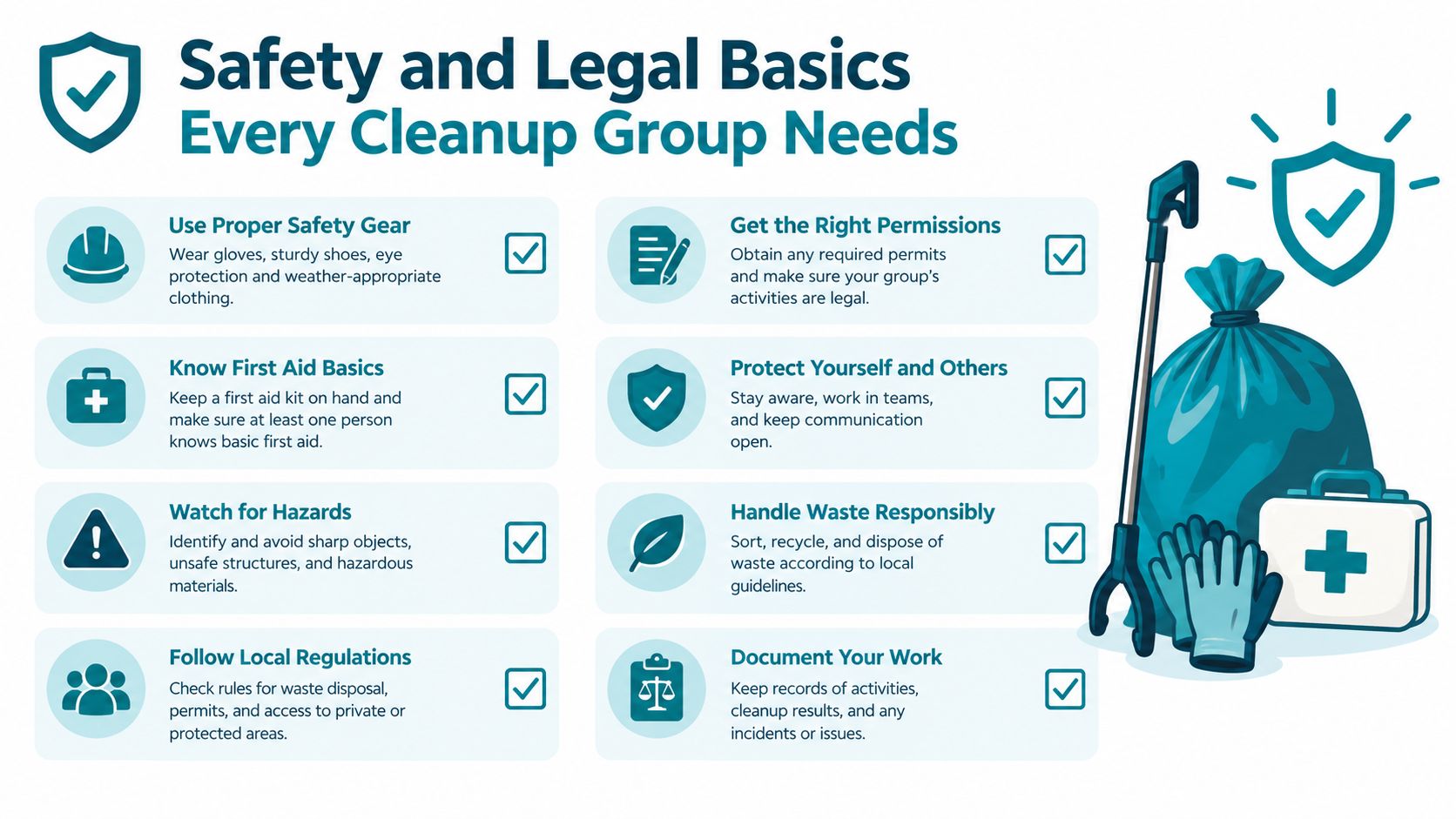
    An infographic titled Safety and Legal Basics for cleanup groups highlighting eight essential safety and compliance tips.

    For a printable preparation list, use this volunteer safety checklist.

    Partnerships and Funding Without Losing Your Independence

    I divide outside support into three lanes: in-kind donations, local sponsorships, and grants. Each lane can help, and each can change how your Saturday works.

    In-kind support usually creates the least paperwork. A hardware store might provide gloves, bags, or grabbers. A cafĂŠ might provide water. The trade is simple, though you still need to track what you receive and avoid promising public promotion you can't maintain.

    Local sponsorships can pay for shirts, storage, printing, or disposal. They also can bring logo requests, exclusive access demands, or pressure to post branded content. A sponsor should make the route easier. If the sponsor wants to approve every photo or claim ownership of a public space, the cost exceeds the check.

    Grants can support planning, equipment, and larger site work. They usually demand a clear proposal, a budget, progress records, and a final report. When I prepare a short inquiry, I explain the route, the volunteer need, the safety plan, the disposal plan, and the records we already keep. A resource on using Grantlas for grant letters can help organize that first written ask.

    Funding Type What You Get What It Costs You Best Fit For
    In-kind donations Bags, gloves, water, grabbers, printing Pickup coordination and basic thanks New groups and regular routes
    Local sponsorships Supplies, shirts, storage, disposal support Branding requests and relationship management Established neighborhood crews
    Grants Project funding and equipment Applications, budgets, reports, and deadlines Programs with records and a defined project

    Write a one-page ask

    Use a named location instead of a broad promise. Show a route photo, your schedule, the number of regular volunteers qualitatively, your safety controls, and the exact item or expense you need covered. Sponsors and funders want to see that their help will reach the pavement.

    I also avoid exclusive cleanup rights, mandatory logos on every shirt, and social-post quotas. Those terms can turn volunteers into a promotional channel.

    My partnership test: If the deal creates more Saturday work than it removes, I decline it.

    The International Coastal Cleanup tracks individual items as well as collected trash, which shows why a simple data log can make a volunteer program easier to explain to partners (Ocean Conservancy annual report). Your partner doesn't need a glossy presentation. They need a clear request, a safe plan, and honest evidence.

    Measuring Impact and Turning Cleanup Into a Park

    For years, I watched people count bags and stop there. Bags are easy to see, but they can hide the difference between a light route and a heavy one. They also say nothing about whether the same corner stays cleaner after the crew leaves.

    Our sheet now records the location, date, volunteer hours, bag count, weight when available, unusual litter categories, and a quick cleanliness score for repeat sites. We take a photo from the same position whenever possible. That turns a vague memory into a comparison.

    The five-minute field sheet

    At the end of each pickup, one person records:

    • Where: Street, alley, park edge, or waterway section.
    • Who: Volunteer count and total hours.
    • What: Bags, weight, and notable items.
    • Condition: A simple clean-to-heavy-litter rating.
    • Follow-up: Disposal completed, hazard reported, or return visit needed.

    The monthly summary should fit on one screen. List the locations, show the photos, name the volunteers who led routes, and explain what changed. People read records when the records help them see their own street.

    The data also gives you a way to ask harder questions. A route that produces fewer bags may have improved. A route with repeated heavy litter may need a bin, enforcement, better collection, or a conversation with the property owner. Cleanup removes the symptom. Source control and waste infrastructure still determine what returns.

    A major Australian litter report counted plastics at 80.8% of litter items in its reported litter stream (Clean Up Australia litter report). That kind of category record helps a group discuss prevention rather than treating every pickup as an isolated chore.

    From an empty lot to Caterpillar Park

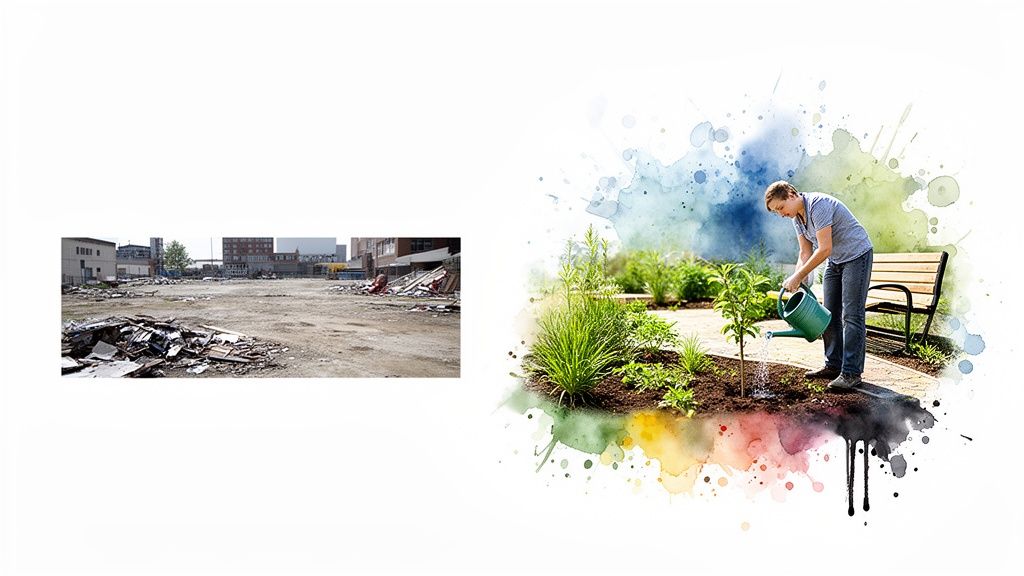
    We photographed the same empty lot in Englewood during weekly pickups. The images showed the broken glass, wrappers, dumped material, and weeds, but they also showed people returning with a plan. Neighbors could point to a named place instead of describing a general problem.

    Those photos and route records helped us speak with the alderman, neighbors, and a land-bank partner. We won the empty lot at auction and turned it into Caterpillar Park. The park didn't appear because we had one heroic cleanup. It grew from repeated visits, visible care, and records that made the request concrete.

    The strongest measure remains simple: does the place we cleaned last month still look clean this month? This community impact measurement guide can help you build a record that people can understand and use.

    Your First 30 Days of Running a Cleanup Program

    Start small enough that you can keep your promise. Choose one neighborhood block and one recurring time slot. Don't begin by claiming an entire city if you haven't tested your supplies, route, waiver, disposal plan, and captain coverage.

    Week one, choose the ground

    Walk the block during daylight. Note traffic, alleys, vacant lots, drainage areas, steep sections, private property, and places where volunteers could step into danger. Contact the local parks or sanitation department and ask about permits, bags, disposal, and public-space rules.

    Pick a meeting point that people can find without guessing. Write the address, time, route boundary, weather policy, and contact person in one short message.

    Week two, recruit a small regular crew

    Print a flyer for the block. Publish one social post with the same details. Ask directly for five regulars, and give each person a role. One person can manage supplies, another can lead the route, another can record data, and another can welcome newcomers.

    Keep the invitation honest. Tell people how long the pickup lasts, what gear they need, what the group won't handle, and where the bags will go. People trust a clear boundary more than a grand promise.

    Week three, run the first cleanup

    Bring printed waivers, gloves, closed-toe footwear reminders, grabbers, bags, water, first aid supplies, and a phone with emergency contacts. Start with the safety talk. Keep people in pairs where traffic creates risk, stay in daylight, and stop for heat, cold, broken glass, needles, wildlife, harassment, or unsafe footing.

    Take a before photo. Record the route, volunteer hours, bags, weight if available, and unusual litter. Take an after photo from the same position. Dispose of the bags through the arrangement you confirmed before the event.

    Week four, return and review

    Repeat the same route at the same time. Ask each volunteer what felt smooth, what felt confusing, and what would make the next pickup easier. Store the answers with the field sheet instead of letting them vanish in conversation.

    At day 30, success looks modest and real:

    • A returning crew: People came back without needing a new sales pitch.
    • A shared calendar link: Everyone can find the next event.
    • A safer route: You removed or changed tasks that created risk.
    • A before-and-after pair: You can show one named place and what changed.
    • A usable record: You know what to repeat, revise, or stop.

    On Monday, walk one block and choose the first Saturday time. Then invite five people before you buy anything fancy. A community litter cleanup program becomes durable when the first promise stays small enough to keep.


    Litter Caterpillars organizes weekly volunteer trash pickups across Chicago, with supplies such as grabbers, bags, and gloves available for participants. Visit Litter Caterpillars to find a cleanup, meet the group, and turn your first route into a steady community practice.

  • How to Organize a Neighborhood Cleanup: The Giver’s Guide

    How to Organize a Neighborhood Cleanup: The Giver’s Guide

    I remember standing on a sidewalk with two trash bags, frozen fingers, and no idea if anyone else would come back next week. By the end of that morning, the block looked better, but the stranger thing was this. I did too.

    The Mess That Started It All

    I didn't start cleaning streets because I had my life together. I started because I didn't.

    My apartment was a disaster. Not movie-disaster. Real disaster. The kind where every object had a little emotional hook in it. An old jar of blueberry jam in the back of the fridge from a trip years ago. A stale bag of almonds from the month I tried to become a healthy person. A shirt on the chair that belonged to some version of me I didn't even like anymore.

    A man looking distressed while sitting in a very cluttered, messy, and disorganized apartment living room.

    Why someone else's trash feels lighter

    Here's the weird part. I could barely throw out my own junk, but I could pick up a stranger's burger wrapper all day.

    That wrapper didn't come with memory. It didn't come with guilt. It didn't whisper, “Remember who you were when you bought me?” It was just trash. Easy. Clean decision. In the same way cleaning an old fridge at home can feel like opening a time capsule of your own mistakes, cleaning a sidewalk feels like mercy. You see the problem, you remove it, you move on.

    That's why I tell people this isn't really about trash. Trash is just the handle.

    A cleanup gives you a simple win when the rest of life feels tangled. You bend down. You pick something up. The block changes. You change a little with it.

    Cleaning a public space can feel easier than cleaning your own room because the emotional weight is different. You're not sorting your past. You're practicing action.

    I learned that during a rough stretch after a chaotic relationship ended. I looked around and realized I had let too many selfish patterns into my life. Mess in my home. Mess in my habits. Mess in my relationships. So I made a stubborn decision. I'd start building a life around cleanliness, consistency, and brave acts.

    A neighborhood cleanup is perfect for that. It asks for your body before it asks for your biography. You don't need a polished origin story. You need gloves, a bag, and the willingness to show up.

    The real reason to start a cleanup group

    If you're learning how to organize a neighborhood cleanup, start with the part most guides skip. Ask yourself why you want this.

    Maybe you're angry that your block gets ignored. Maybe you want to meet people who keep their word. Maybe you need a ritual that gets you out of the apartment and back into your body. All of those reasons are good.

    I've found that cleanup groups become a filter. The people who show up to do hard, unglamorous work on a weekend morning tend to bring a certain energy. They're usually generous. They're usually game. They know how to laugh while carrying gross things to a pile.

    That's the weird magic. The bags matter. The friendships matter more.

    • A cleanup gives you motion: When life feels stuck, physical work breaks the spell.
    • A cleanup reveals character: You find out fast who complains, who helps, and who sticks around.
    • A cleanup builds trust: People believe what they can see. A cleaner block is visible proof.

    It's akin to clearing a path through overgrowth. You start by removing litter from a curb. Then you notice you're also removing excuses, stale habits, and a few people who never planned to grow with you anyway.

    Your First Four Weeks The Cleanup Playbook

    The first cleanup I ever ran taught me this fast. Good intentions are cheap. Saturday at 9 a.m. is where the truth lives.

    I had a volunteer named Denise show up early with coffee and work gloves from her garage. I had another guy text me at 8:47 asking if we were still on because it looked “a little cloudy.” By 11, Denise had recruited two neighbors on the spot, and Cloudy Guy never appeared. That morning gave me a better blueprint than any tidy checklist ever could. A cleanup group lasts when you build for real humans, real weather, and real follow-through.

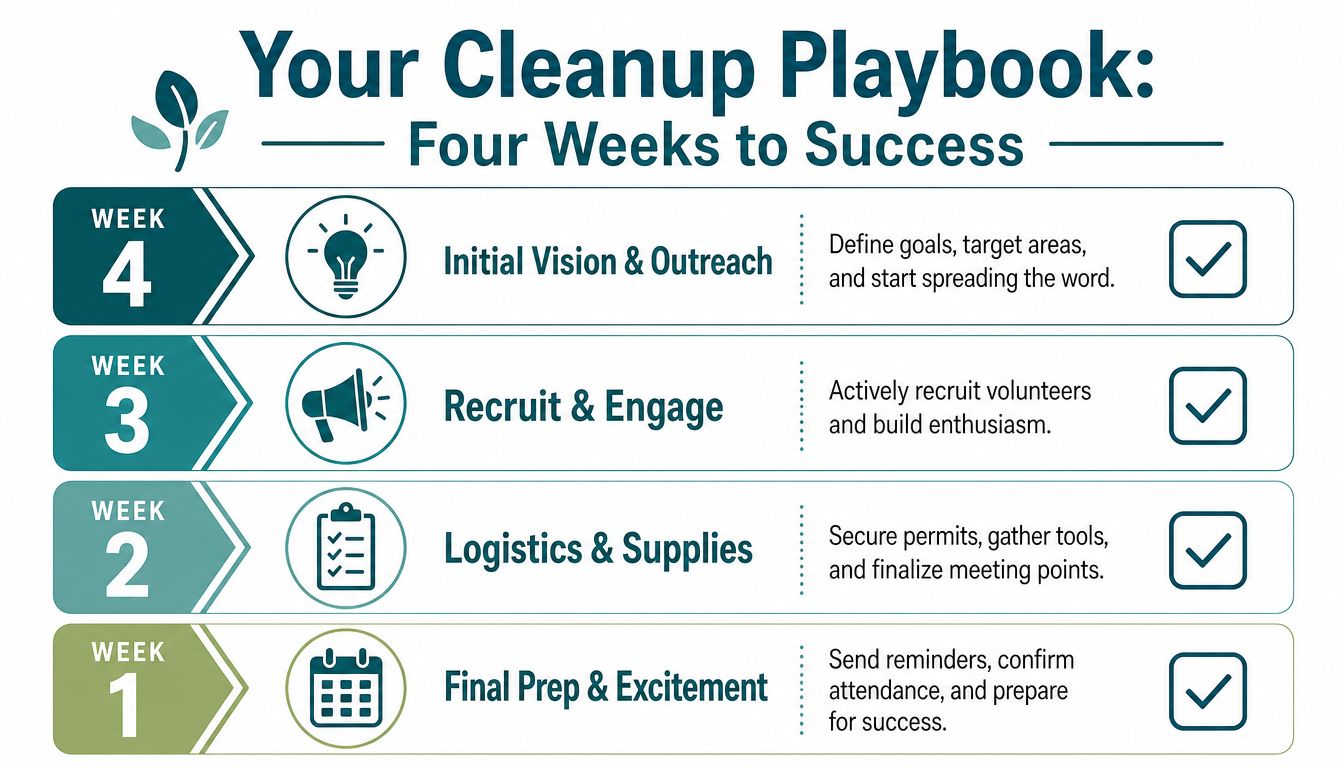
    A four-week roadmap infographic for organizing a successful community cleanup event, from vision to final preparation.

    Week four, walk the ground until the block starts talking

    Do not plan your route from a couch.

    Walk the area at the same time of day you want to clean it. A block can look calm on Tuesday afternoon and turn into a traffic mess on Saturday morning. I learned that after choosing a “perfect” meetup corner that became a parking circus the minute a youth game let out nearby.

    Bring your phone, take notes, and get specific. “The park is dirty” is useless. “South fence line has bottles and chip bags, alley behind the deli has dumped furniture, bus stop has broken glass” gives you something you can act on.

    I break the route into plain chunks:

    • Corner one: cups, wrappers, loose paper
    • Alley stretch: dumped bags, bulky trash
    • Fence line: cans, bottles, food containers
    • Busy curb: experienced volunteers only, bright clothing only

    That walk does more than help you estimate supplies. It starts a relationship with the place. You stop seeing “the neighborhood” as an abstract cause and start seeing Mrs. Alvarez's stoop, the corner kids' snack wrappers, the lot everybody complains about but nobody claims. That shift matters. People return for places they feel connected to.

    Week three, make the city useful and make your plan smaller

    This is phone call week.

    Call sanitation. Call the council office. Call the neighborhood association. Call whoever answers and ask for one clear thing. Bag pickup. Trash collection. A dumpster. Extra gloves. You are giving them a chance to say yes to something concrete, not sending a vague plea into the void.

    Keep your message simple. Date. Rain date. Target area. Estimated turnout. What you need. Then write down the name of the person you spoke with, because nothing tests your patience like hearing, “We never got that request.”

    Also pick your meetup point now, not three days before. Choose a spot people can find without twenty text messages. If there's shade, parking, or a bathroom nearby, even better. Small comforts change the mood. A confused volunteer drifts. A grounded volunteer stays and helps stack bags at the end.

    Week two, gather gear that earns its place

    People get seduced by nonsense.

    You do not need custom banners before you have enough gloves. You do not need branded merch before you have water. A cleanup group gets stronger when people trust that the basics will be there every time.

    Bring what gets the job done:

    Item Worth bringing Why
    Trash bags Yes You always need more than you guessed
    Gloves Yes New people forget, or bring the wrong kind
    Grabbers Yes They help with sharp or gross litter
    Folding table Yes Check-in feels calmer and more organized
    Fancy branded gear No Basics beat aesthetics every time

    Assign a few simple roles before the day arrives. One person handles check-in. One person carries backup supplies. One person tracks full bags and bulky items. One person takes photos if you want them. Order lowers stress, and lower stress makes people kinder to each other.

    If you need a practical guide for finding reliable cleanup volunteers, use it here, before you start sending frantic messages the night before.

    Week one, invite people into a ritual, not just an event

    This week is about tone.

    A flat post that says “community cleanup this Saturday, all welcome” gets casual interest. A better message tells people who this is for and why it matters. I've had stronger turnout from a plain text message that said, “We're cleaning the three blocks around the elementary school because kids deserve better than broken glass on the walk in,” than from polished graphics that looked like they came from a marketing team.

    Put the date, time, rain date, meetup point, and what to bring in every message. Then repeat yourself. Send a reminder a few days before. Send one the night before. Confirm your key helpers directly, one by one. People are busy. Good groups survive because somebody cared enough to follow up.

    By this point, the cleanup is already bigger than trash bags and grabbers. You are building a tiny culture. People are learning whether this group is flaky or steady, warm or cold, all talk or all hands. Four good weeks set that tone. Then Saturday shows you who's ready to build something real.

    Finding Your People Who Shows Up on a Saturday Morning

    A cleanup can get bodies pretty easily. A free Saturday event, a few nice graphics, some feel-good copy, and people click “interested.”

    That's not enough.

    You don't need a crowd that vanishes after one sweaty hour. You need people who like giving more than performing. I'm picky about that now. I'd rather have eight steady volunteers than thirty tourists collecting content for their stories.

    Screenshot from https://www.littercaterpillars.com

    Why Saturday morning works

    There's a reason I like weekend mornings. They act like a filter.

    The NYLCVEF community cleanup guide says the most effective volunteer recruitment strategy is scheduling events on weekend mornings, which yields 45 to 50% higher turnout than other time slots. The same guide says social media with before-and-after photos can boost repeat participation by about 38%.

    That matches real life. Morning volunteers arrive clearer, kinder, and more ready to work. The event starts before the day gets crowded with excuses. You also get the tiny secret reward of being done by lunch, which makes people feel weirdly heroic.

    Recruit for identity, not attendance

    Most volunteer posts read like dentist reminders.

    “Join us this Saturday to beautify the neighborhood.” Fine. Dead. Nobody feels anything.

    Instead, write like you're inviting people into a crew. People return when they feel they belong to something. If you want more ideas on that side of outreach, I like this guide on how to find volunteers who actually stick.

    Here are two templates I'd use.

    Instagram caption

    • Opening line: Saturday morning. Gloves on. We're cleaning this block because someone should, and that someone is us.
    • Details: Meet at 9:00 AM. Wear closed-toe shoes. We'll bring bags and gloves.
    • Tone: Come if you're tired of complaining and ready to help.
    • Closer: Bring a friend who likes doing hard things with kind people.

    Meetup description

    • First sentence: This is for people who want a cleaner neighborhood and better friends.
    • Middle: We'll split into teams, clean a defined route, and take before-and-after photos.
    • Expectation: Show up on time, ready to work, and ready to talk to strangers.
    • Finish: Rain date is listed. If the weather turns, we adapt.

    You're not recruiting “volunteers.” You're recruiting future regulars, future captains, future friends.

    How to ask local businesses for help

    Ask like a partner, not a charity case.

    Walk into the coffee shop, hardware store, or corner market and say: “We're organizing a neighborhood cleanup nearby. We're bringing people to this block. Would you be up for donating water, gloves, or a meetup space?”

    Keep the ask narrow. One business might give bottled water. Another might let you post a flyer. Another might chip in contractor bags. Make it easy to say yes.

    Three things matter here:

    • Specific ask: “Can you donate cases of water for Saturday morning?”
    • Visible connection: “We're cleaning the blocks around your business.”
    • Low drama: “No long sponsorship deck. Just direct neighborhood help.”

    The right people will respond to that. And those right people are the whole game.

    Bravery with a Plan Safety and Handling the Unexpected

    The day I learned this for real, one of our volunteers held up a trash bag with one hand and pointed at a syringe with the other. Nobody panicked. Nobody tried to play hero. We backed the group up, marked the spot, texted the safety lead, and kept moving on the rest of the block. Ten minutes later, people were laughing again and hauling out bottles from the weeds.

    That is what good safety feels like. Calm, clear, a little boring. Boring keeps your group coming back.

    That matters most on the rougher sites. Busy roads. Dumped lots. Broken glass in the grass where kids cut through after school. Those places can pull people into proving something. I'd rather build a crew that knows when to stop, ask for help, and protect each other.

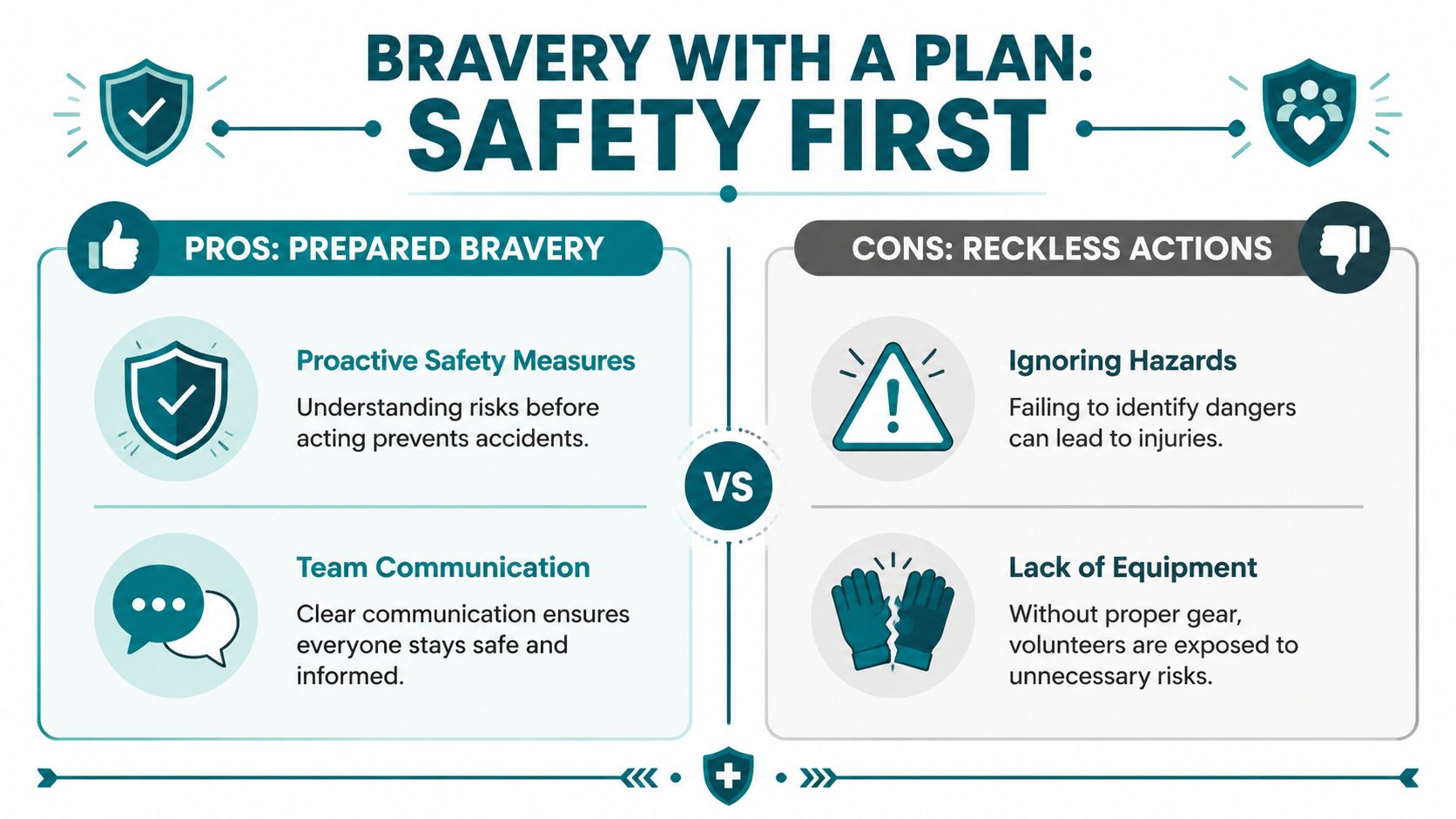
    An infographic comparing prepared bravery through safety measures against the dangers of reckless, unplanned volunteer actions.

    Scout first, assign second

    The strongest safety decision happens before anybody puts on gloves.

    I walk the route ahead of time and make notes like a slightly paranoid neighbor. Where does traffic move fast. Which alley has illegal dumping. Which corner floods. Which lot has thorny brush, busted furniture, or the kind of debris that needs city pickup instead of volunteer enthusiasm.

    Analysts cited on Litter Caterpillars found volunteer injuries rise when organizers skip hazard scouting and clear team assignments. That matches what I've seen on the ground. If people arrive to a vague plan, they start making their own. That is when somebody wanders too close to traffic or grabs something they should have left alone.

    So I sort the route before the event. General litter goes to newer volunteers. Road edges go to trusted people in high-visibility gear. Dump sites get a separate plan, or they wait for the city if the risk is wrong for our crew.

    If you want the insurance side spelled out in plain English, this guide on volunteer liability insurance is worth reading before your first big event.

    The small command center

    A cleanup does better with a tiny core team than with a crowd of half-leaders.

    The Community Tool Box guidance on neighborhood cleanup programs recommends clear coordination roles, and I'm with them. On our best days, three people hold the whole thing steady. One person owns route changes and city calls. One person handles safety questions. One person floats, bringing supplies, helping late arrivals, and solving the weird little problems that pop up every hour.

    Three calm people can settle fifty excited ones.

    If a volunteer has to guess what to do with a hazard, the organizer failed them.

    What volunteers should never touch

    Some finds are trash. Some are a report.

    You need that line clear before the day starts. Needles, suspicious containers, heavy debris, unstable piles, dead animals, and anything that could cut, poke, leak, or trap somebody stays where it is until the right service handles it. I have watched good-hearted people drift toward bad decisions because they wanted to be useful. That instinct needs guardrails.

    Our field rule is short and easy to remember:

    1. Mark the spot.
    2. Take a photo if it helps.
    3. Contact the safety lead.
    4. Keep everybody back.
    5. Report it to the city, property owner, or sanitation contact.

    A group lasts when people feel safe enough to return next month. That is the deeper win here. Cleaning the block matters. Building trust matters more. Every time you protect a volunteer from a dumb injury or an avoidable scare, you are teaching the group something bigger than litter pickup. You are teaching them that this community takes care of its own.

    Running the Big Day From Chaos to Clean

    At our third cleanup, a guy named Marcus showed up in church shoes, holding a gas station coffee and asking, “So what exactly do I do?”

    Ten minutes later he was tying full bags like he'd done it for years, joking with a teenager from two blocks over, and pointing newcomers toward the right team before I could even open my mouth. That is how these mornings usually go. They start scattered. Then, if you run them well, the whole thing clicks and the block starts feeling like a crew instead of a crowd.

    The job on cleanup day is not to control every person. The job is to create enough structure that people can relax, work, and surprise you.

    Check-in should feel like a welcome, not a clipboard ambush

    Your sign-in table sets the tone fast.

    If people walk up and nobody looks at them, they turn into free-floating confusion. If somebody greets them by name, hands them gloves, and says, “Glad you made it, you're with the alley team,” they settle down right away. They stop feeling like extras in somebody else's project.

    I keep the setup plain and easy:

    • Sign-in sheet: name, phone, email
    • Team sheet: captain name and cleanup zone
    • Supply spot: gloves, bags, grabbers, vests
    • One warm human: the person who answers the obvious questions without making anybody feel stupid

    That last part matters more than organizers admit. A lot of people arrive alone. They are wondering whether they belong there. Your check-in table answers that question before the cleanup even starts.

    Give a tight briefing, then get people moving

    Nobody came for a lecture at 9:15 on a Saturday.

    I gather everyone in a half-circle, thank them for showing up, point to the team captains, explain where the full bags go, and remind them what gets reported instead of picked up. Then I send them out while the energy is still high.

    My version usually sounds like this:

    Good morning. We're cleaning this stretch, these alleys, and the park edge. Stay with your team. If you find something sharp, leaking, heavy, or sketchy, call your captain and leave it alone. Full bags go to the pickup point by the table. Take photos if you see a wild before shot. We'll meet back here at the end for the count and a group picture.

    That is enough.

    People remember short instructions. They forget the fancy stuff the second somebody cracks a joke or spots the first tire in the bushes.

    Give each team a piece of the map and a clear win

    A cleanup falls apart when everybody drifts toward the same visible corner and nobody touches the awkward spots.

    Split the area before the start. Put one team on the commercial strip, one on the fence line, one in the alley cluster, one in the park edges. I like captains to have their zone written down on paper or in a text thread, because spoken directions evaporate fast in a parking lot.

    You also need a home base that people can find without thinking. Extra bags, water, first aid, and the growing mountain of filled trash should all land in one obvious place. If someone has to wander three blocks for supplies, you lose momentum and people start peeling off early.

    A simple run sheet keeps the whole morning steady:

    Time What happens
    8:30 AM Setup table, supplies, signs
    9:00 AM Volunteer check-in
    9:15 AM Briefing and team launch
    Mid-event Captain check-in by phone or in person
    End Bag count, group photo, final sweep

    Keep the story of the day, not just the trash count

    I learned this the hard way. If you forget the before photos, people clean half the block and later swear it “wasn't even that bad.”

    Take the photos early, from the exact spots you can return to later. Count the bags. Snap the funny moments too. The kid holding a grabber like a knight's sword. The neighbor who came out “just to say hi” and ended up filling two bags. The retired guy who suddenly becomes your unofficial tire expert.

    Those details do real work for you. They help with future recruiting, they give the city or property owner a clear record, and they remind volunteers that they changed something visible. If your crew pulls recyclable material aside, make sure it goes to the right place. If people ask where they can keep that habit going after the event, send them to local options like these Chicago recycling centers for drop-off and reuse.

    End with a strong finish, not a slow fade

    The last half hour matters more than organizers think.

    This is when people get tired, routes blur, and half-full bags start appearing in random places. I bring captains back in, confirm each zone got covered, stack bags in the pickup area, and do one final pass for the weird leftovers. Then we count what came out of the neighborhood and get the group photo before people disappear.

    A good ending gives the morning a shape. People leave seeing the pile they conquered, the street they changed, and the faces of the strangers who did it with them.

    That is how chaos turns clean. More important, it is how a cleanup starts turning into a community people want to come back to.

    After the Cleanup. Building a Lasting Crew

    Two hours after one of our early cleanups, my phone buzzed with a photo from a volunteer named Marcus. He had dragged an old chair frame out of an alley that morning, laughed about it with three strangers, then gone home and started a group text with them. A week later, they were back out together with coffee, gloves, and one extra friend each.

    That is the part people miss.

    The bags matter. The cleaner block matters. But if everyone heads home with nothing except sore backs and a nice photo, the energy leaks out by Monday. What keeps a cleanup alive is the follow-up, the small rituals, and the feeling that people just joined something bigger than a trash pickup.

    Send proof before the spell breaks

    I send a message the same day, while people still have dirty shoes by the door.

    It is simple. Thank everybody by name if you can. Share the before-and-after shots. Show the pile of bags. Toss in the candid photo where somebody is grinning like they just won a prize fight. People want to see that their morning changed something they can point to.

    Then give them one next move. One. Too many options and the whole thing goes soft. Invite them to the next cleanup, a post-event coffee, or point them toward practical ways to keep going between meetups, like these Chicago recycling centers for drop-off and reuse.

    Give the group a pulse

    I learned this the slow way.

    At first, I thought good organizing meant clipboards, routes, and enough grabbers for everybody. That stuff matters, sure. It just does not make people come back. People return because they remember who teased them for finding a traffic cone in a bush, who handed them water at the right moment, who cheered when the worst corner on the block finally looked human again.

    So build that on purpose.

    • Name the crew: even if it is a little ridiculous
    • Repeat a few rituals: same photo pose, same snack stop, same victory shout
    • Notice people out loud: who hauled the strangest item, who brought a nervous friend, who kept the mood up when everyone got tired
    • Make introductions normal: help the shy person meet someone before they drift out

    The cleanup is the excuse. The community is the thing you're building.

    Turn turnout into habit

    The best sign that your group is working has nothing to do with bag counts.

    It is when somebody starts shaping their week around showing up. They go to bed earlier on Friday. They text a neighbor to come with them. They start recognizing the guy from three buildings down and the teenager who always finds bottle caps under parked cars. A public space gets cleaner, yes. A person gets steadier too.

    That is how a Saturday event becomes part of the neighborhood's rhythm.

    So close the loop. Send the photos. Tell the stories. Keep the jokes alive. Give people a reason to return that goes deeper than civic duty. A clean street feels good for a day. A crew that keeps showing up for one another can change a block for years.

  • 10 Group Service Project Ideas to Transform Your City

    10 Group Service Project Ideas to Transform Your City

    I started Litter Caterpillars when my own life felt impossible to clean. My apartment had turned into a museum of stuck memories. An old jar of jam from a trip years earlier, a bag of nuts from a health kick I never kept, and all of it felt like it weighed 500 pounds even though it barely weighed anything.

    After a chaotic relationship ended, I hit a wall. I decided I had to train three muscles I'd avoided for years: cleanliness, consistency, and bravery. I also decided I wanted a social circle made of givers, not takers.

    Then I learned something funny. Cleaning up someone else's mess is way easier than cleaning up your own, and somehow it's more fun too. On our first cleanup, there were only three of us, and we got trapped in a spring hailstorm, hiding under a tree while rides kept canceling. I remember shivering and thinking, this is awful, and also, this is a great story.

    That's still how I think about service. Hardship adds flavor. It advances the plot. You show up, do something simple with other people, and suddenly your Saturday has meaning. You stop circling your own problems for a minute. You move your body. You laugh. You help.

    If you're looking for group service project ideas, I don't want to hand you a sterile list. I want to give you ideas that feel alive. Ideas you can start with friends, coworkers, classmates, or neighbors. Ideas that can grow into ritual, pride, and real community. These are the kinds of projects that taught me how to build something outside myself, and in the process, rebuild myself too.

    1. Neighborhood Cleanup Blitzes with Geographic Rotation

    For instant clarity in a project, I would begin here. Pick one neighborhood this week. Pick a different one next week. Keep rotating.

    That rhythm kept me interested because every area had its own personality. One block had fast-food wrappers everywhere. Another had dumped furniture. Another looked clean at first until you checked the curbs, alleys, and fence lines. Rotating keeps your eyes fresh, and it keeps the city from feeling like a blur.

    A cleanup format like this also fits a model people already understand. Key Club International says its members give more than 13.5 million hours of service each year, and its own project ideas include recurring group formats like park cleanups, roadway adoption, tutoring, drives, and car washes in its service project flyer.

    How I'd run it

    Weekend mornings work. People are calmer, more generous, and less distracted. Post the location in advance, keep the meeting point simple, and give everyone a small zone so nobody wanders around confused.

    If you want a real example of what that looks like, our Chicago litter cleanup events follow that basic logic. You don't need a giant operation to copy the pattern. You need consistency more than complexity.

    Practical rule: Give every event a clear start point, a clear route, and a clear ending photo.

    A few things make this stick:

    • Use a map people can follow: Mark where you've already cleaned so volunteers can feel progress.
    • Keep supplies boring and reliable: Gloves, bags, grabbers, water, done.
    • Name the day clearly: “West Side Sweep” is easier to remember than “Saturday volunteer event.”
    • Celebrate small wins: Finishing one block well beats vaguely “helping the city.”

    The best part is the visible before-and-after. People love seeing the proof. You can talk about service all day, but a clean sidewalk speaks faster.

    2. Vacant Lot Transformation Projects

    A vacant lot hits different. A sidewalk cleanup feels like a haircut. A lot transformation feels like surgery.

    I've stood in neglected spaces where the grass was wild, trash was tangled into the weeds, and the whole place felt like the city had given up on it. Then a few people show up with gloves, shovels, and stubbornness, and the story starts to change.

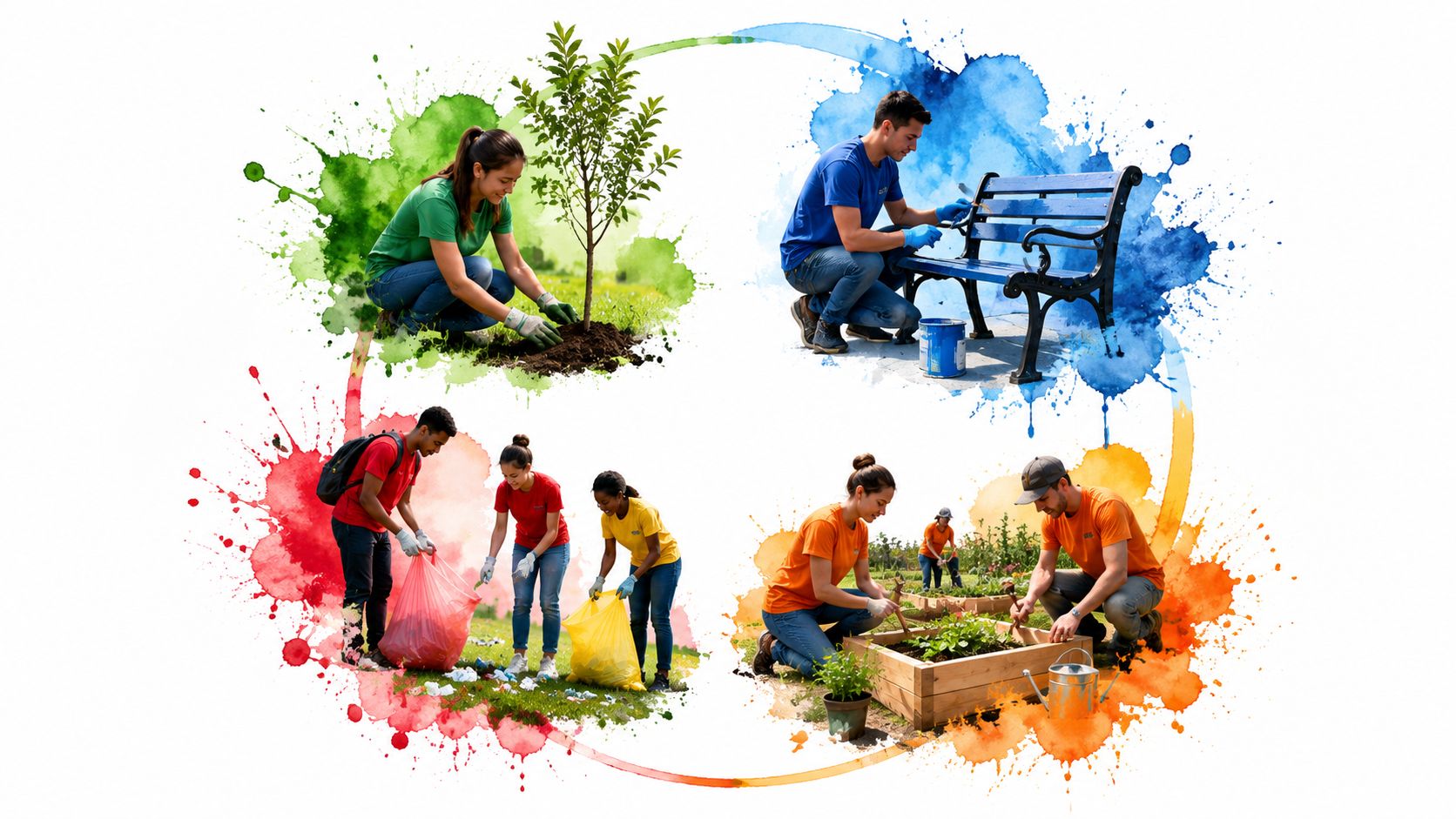
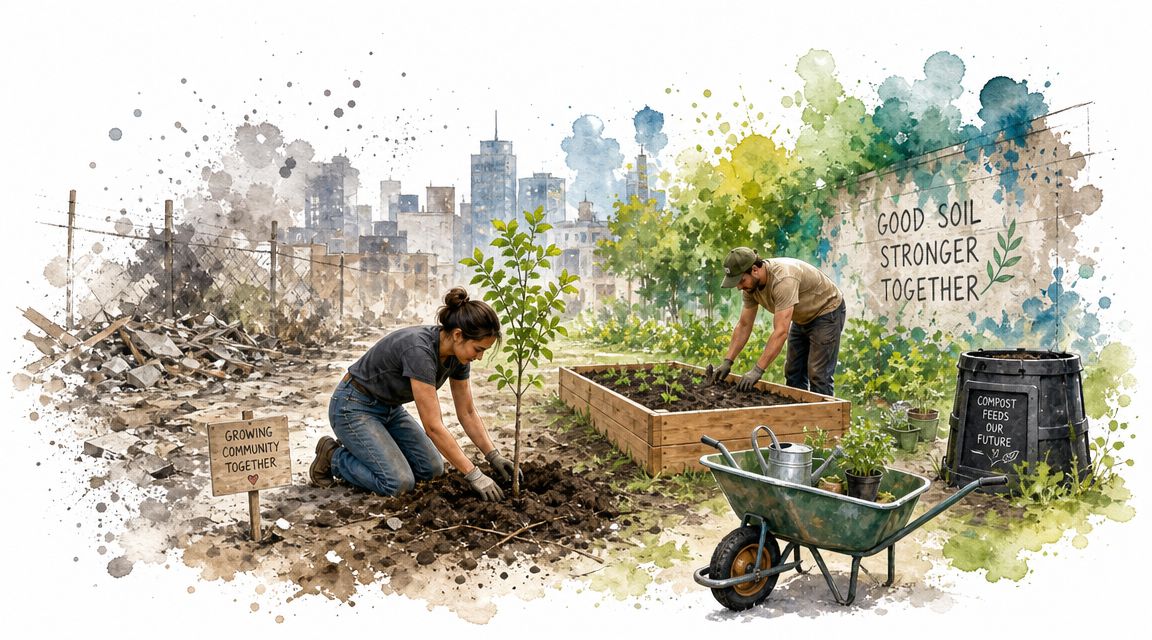
    A diverse group of volunteers planting a tree and gardening in an urban community vegetable garden.

    That's why this is one of my favorite group service project ideas. It asks more from you, but it gives more back. People don't just bag trash and leave. They imagine. They argue. They make plans. They come back.

    Start with the ugly stage

    The desire often is to skip to the garden sketch. Don't. First, learn to love the ugly stage. Take photos. Walk the perimeter. Ask neighbors what they want there. One person wants flowers. Another wants seating. Another wants a place where kids won't step on broken glass.

    That early listening matters. If you want a volunteer group to keep showing up, they need to feel that the place belongs to them.

    My own experience with lot work is part of why I think this way. If you want to see how a rough space can become something else, our story about transforming a vacant lot into Caterpillar Park gives the flavor of that journey.

    A simple phase plan helps:

    • Clear first: Remove litter, sharp debris, and obvious hazards.
    • Define edges: Paths, borders, or simple zones make a space feel intentional fast.
    • Add one visible living thing: A tree, flowers, or raised beds tell people this place has a future.

    Later, when the work starts to feel real, I like to show people examples of what steady outdoor labor can lead to.

    A vacant lot project is slower than a cleanup blitz. Good. Slow projects teach loyalty.

    3. Corporate-Community Partnership Cleanup Days

    I used to be suspicious of corporate volunteer days. Sometimes they feel too polished, like everyone showed up for a photo and a branded T-shirt. But I changed my mind when I saw what happens if you set the culture first.

    A business team can bring serious energy. You get people who might never join a neighborhood cleanup on their own, but once they're there, sweating and laughing and filling bags, a few of them catch the bug. Some come back without their company. That's when you know it was real.

    Keep the community in charge

    The biggest mistake is letting the company become the star. The block is the star. The residents are the star. The cleanup is the star.

    So I'd keep the structure simple. Give the company a defined task, a short briefing on how your group works, and a way to plug into the same rules as everyone else. If they want to help, great. They don't need to reinvent your process.

    If you want a practical model for that kind of collaboration, our page on corporate social responsibility cleanup partnerships shows the kind of local fit I like.

    The best company volunteer day feels less like a marketing activation and more like a neighbor showing up with extra hands.

    Try a few guardrails:

    • Set expectations early: Tell them what to wear, what the work is, and what respect looks like.
    • Choose visible routes: A park edge, business corridor, or commuter path gives quick proof of effort.
    • End with conversation: Don't let people scatter the second the bags are tied. Let them meet residents or regular volunteers.

    This kind of project works because it lowers the barrier for busy people. Someone says yes to one work-sponsored cleanup, then maybe yes to a second one on their own time. That's how a one-day event can turn into a habit.

    4. Environmental Education and Youth Engagement Programs

    Young people don't need another lecture about caring for the planet. They need gloves, a bag, a weird story, and a reason to feel proud.

    I've watched students show up shy and detached, then completely change once the task becomes concrete. Hand them a grabber and tell them, “Your team has this stretch of fence line.” Suddenly they're scanning the ground like detectives.

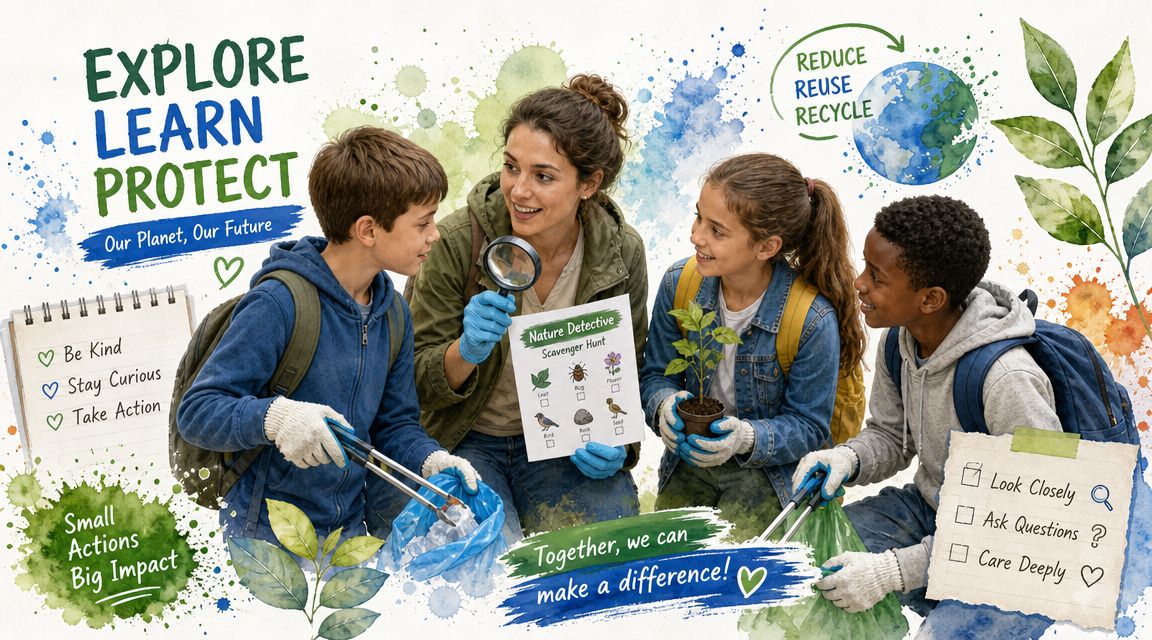
    A diverse group of children and a teacher participating in an outdoor nature cleanup service project.

    That's why youth programs work best when the education rides inside the action. Talk for a minute, work for an hour, reflect for ten minutes. Kids remember the dead batteries they found in the grass more than they remember a slideshow.

    Give them a ladder to climb

    A lot of youth volunteering feels flat. You show up once, get a service form signed, and disappear. I think that's a waste.

    Build a small ladder instead. First cleanup. Then team helper. Then route leader. Then the person who welcomes new students. People stay when they can grow.

    Rosterfy's roundup of community service project ideas for groups lists 99 ideas, and many of the repeat categories are the same ones that work well with young volunteers, including school supply collection, park cleanups, food drives, elder support, and thank-you card projects. I take that as proof that simple, team-based projects travel well.

    A youth service day gets stronger when you add a few pieces:

    • Give service-hour documentation: Students care about that, and that's fine.
    • Pair teens with adults who respect them: Nobody likes being talked down to.
    • Use group identity: A badge, a color, a team name, a chant. It sounds silly until it works.

    When a student starts saying “our block” or “our park,” something has clicked. That's the moment I look for.

    5. Themed Seasonal Cleanup Events with Community Celebration

    Some people join for the cause. Some join because their friend invited them. A lot of people join because the event sounds fun.

    I learned early that service needs some theater. Not fake theater. Human theater. A flag. A playlist. Matching shirts. A goofy tradition. Something that tells people, “You're part of this now.”

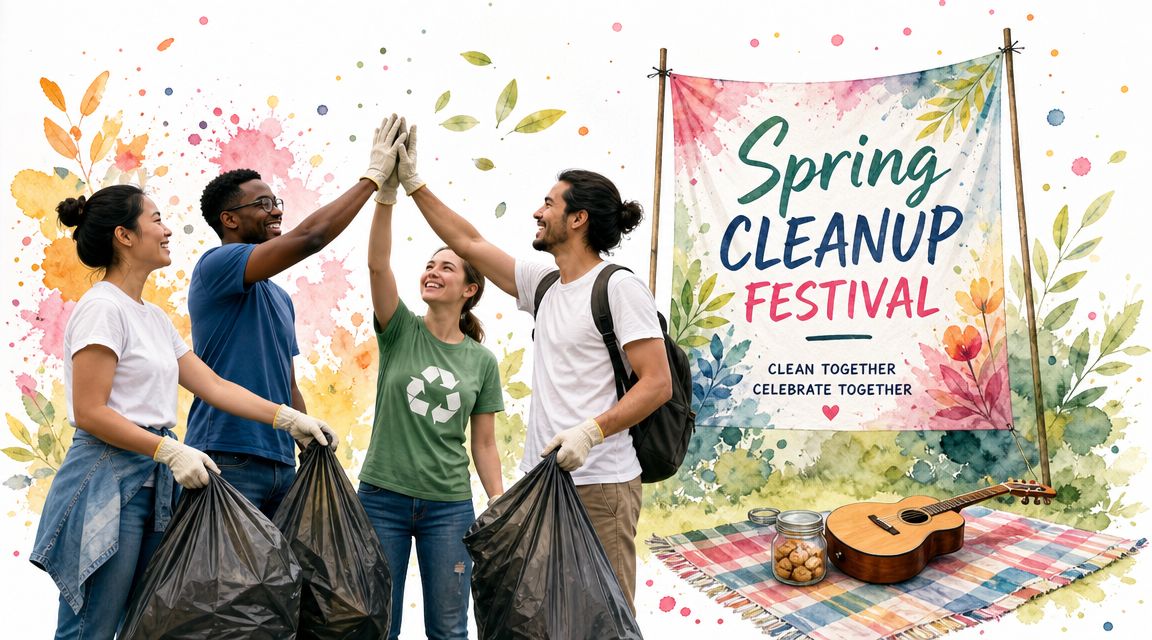
    A diverse group of volunteers celebrating after a community service spring cleaning event with trash bags.

    That's why seasonal events are so strong. Spring cleanup. Summer alley sweep. Fall neighborhood beautification day. Holiday donation and litter pickup combo. People like recurring rituals. They give the year shape.

    Make the hard work feel memorable

    Tom Sawyer understood something real. If you can frame hard work as a thing worth being proud of, people lean in. They stop acting like they're sacrificing. They start acting like they belong to a team.

    I'd build a seasonal event around one simple cleanup plus one social moment after. Maybe hot coffee before the route. Maybe music and snacks after. Maybe a group photo with a handmade sign and a ridiculous award for “strangest item found.”

    One thing I've noticed is that most lists of volunteer ideas stop at the activity itself. They don't say much about how to turn that activity into repeat participation. A group volunteer ideas article from Visions Service Adventures points to that gap by focusing on options more than retention. In real life, people come back for rhythm, identity, and friendship.

    One sentence test: If your event would still make sense without the cleanup, you've made a party. If it would still work without the people, you've made a chore. You need both.

    Try themes that fit the season and the neighborhood. Keep them light. Pride grows from repetition, not from grand speeches.

    6. Adopt-a-Neighborhood Program with Long-term Stewardship

    A rotating cleanup is great for exploration. An adopt-a-neighborhood setup is better for loyalty.

    When you return to the same area again and again, people start recognizing you. A store owner waves. A resident points out a dumping spot behind the alley. A kid asks if you're coming back next week. That changes the feeling of the work. You stop being random volunteers and start being familiar faces.

    Stay long enough to be known

    This kind of service is less exciting at first. It doesn't have the novelty of a new part of town every Saturday. But it has depth.

    If I were starting this from scratch, I'd assign small teams to a park, a corridor, or a few connected blocks. Let them learn the rhythm of the place. Which corner always collects windblown trash. Which bus stop needs attention. Which lot spills debris after storms.

    The nice thing about this model is that it matches patterns that keep showing up across service catalogs. Group project lists often circle back to neighborhood cleanups, food distribution, youth support, elder care, and advocacy because those are easy to repeat and easy to explain in a team setting. That repeatability matters more than novelty.

    You can strengthen stewardship with a few habits:

    • Name a neighborhood captain: One person who knows the route and says hello first.
    • Keep resident feedback informal: Short sidewalk conversations beat complicated surveys.
    • Track visible change by place: Before-and-after photos by block tell a story people remember.

    I love this format because it turns strangers into regulars. And regulars become the bones of your community.

    7. Innovative Technology and Documentation Tools

    Technology can help a volunteer group. It can also subtly kill one.

    I've seen people build systems so complicated that the project starts feeling like office work. Nobody wants to attend a cleanup that requires a training seminar just to sign a waiver and find the meeting point.

    Use tools that disappear into the background

    For volunteer groups, the best tech is almost invisible. A mobile sign-up page. A simple map. A reminder message. An easy place to post photos after the event.

    That matters because adoption problems often start with usability. In a BI and analytics benchmark, only about 25% of employees actively use analytics tools on average, and the barriers named most often were lack of proper training at 50%, lack of quality data at 41%, budget issues at 36%, and ease of use at 33% in BARC's adoption infographic. Different field, same lesson. If your tool is annoying, people stop using it.

    For a cleanup group, I'd keep the stack lean:

    • Use Meetup for event scheduling: People already know how to RSVP there.
    • Use Instagram for before-and-after storytelling: Visual proof recruits better than jargon.
    • Use Google My Maps for route planning: A volunteer should know where to stand within seconds.

    You do not need a dashboard that feels like an air traffic control room. You need a system your least technical volunteer can use while standing on a windy sidewalk.

    Documentation matters, but I'd always put the human layer first. A warm welcome does more for retention than a perfect app ever will.

    8. Skill-Building and Professional Development Workshops

    A lot of adults want to help, but they also want their time to shape them. I get that. Service can clean a block and still teach you something.

    That's why I like pairing practical workshops with hands-on events. After a cleanup, you can host a short session on community organizing, public speaking, environmental careers, safety basics, or even how to lead a volunteer team without sounding bossy.

    Let people leave stronger than they arrived

    The workshop doesn't need to feel corporate. In fact, please don't make it feel corporate. Keep it grounded in what the group does.

    If someone just spent the morning cleaning an alley, a short talk on route planning or community outreach suddenly matters. It isn't abstract anymore. It plugs into something they felt in their body.

    I'd keep the workshop cadence light. Quarterly is enough for most groups. Bring in a nonprofit organizer, a local gardener, a teacher, a city worker, or a volunteer who's grown into leadership.

    A strong workshop track might include:

    • Leadership basics: How to greet, guide, and encourage a group.
    • Neighborhood communication: How to talk with residents with respect and confidence.
    • Environmental pathways: Jobs and volunteer roles tied to parks, waste, or public space.

    This idea works well because it rewards commitment without turning volunteering into homework. A person comes for service and leaves with skills, confidence, and maybe a new direction.

    9. Accessibility and Inclusive Volunteer Pathways

    If your service project only works for athletic people with free weekends, cars, and endless energy, you've built a very small door.

    I care about this one a lot because group service gets better when more kinds of people can join. Some people can walk long routes. Some can sort supplies, take photos, check people in, translate, welcome newcomers, or manage snacks and water. That still counts. It all counts.

    Build more than one way to help

    The easiest mistake is assuming inclusion without designing for it. You have to say what the route is like. Is there seating? Is there parking nearby? How long will people stand? Is there a bathroom? Can someone join for just part of the event?

    When you answer those questions clearly, more people trust you enough to show up.

    I'd create multiple volunteer lanes from the start:

    • Low-mobility roles: Check-in table, photo documentation, sorting, data entry.
    • Short-shift roles: Thirty-minute or one-hour options for busy people.
    • Buddy roles: Pair first-timers with regulars so nobody feels lost.

    This kind of openness matters for culture too. When people feel welcomed for what they can do, not judged for what they can't do, they stay. They invite others. The group becomes less brittle and more human.

    A cleanup crew with mixed abilities can still run beautifully. Sometimes it runs better, because people communicate more and take care of each other.

    10. Restorative Justice and Community Healing Initiatives

    This one is the closest to my heart.

    I didn't start cleaning because I had some polished theory about civic engagement. I started because I was hurting and needed a way to move that pain through my body without drowning in it. Picking up litter gave me a simple job. See mess. Lift mess. Bag mess. Keep walking.

    That sequence calmed me down. It also gave me other people to stand beside.

    Let service hold the feelings without pretending to be therapy

    A group can become a place where people heal, but only if you're honest about what it is and what it isn't. A cleanup isn't therapy. It is a steady, practical act that can make room for connection, trust, and self-respect.

    That's why I like building in small rituals. A welcome circle. A quick safety talk. A moment after the route where people can share one thing they noticed. Those tiny repeated actions create safety.

    Some service catalogs keep the focus on the task itself. Bonterra's project library lists 63 community service ideas in its community service roundup, and that variety is useful, but the deeper challenge is cultural. How do you turn a one-time volunteer activity into a place where people feel known enough to come back?

    I think the answer is simple, even if it isn't easy:

    • Tell the truth: Say the work can be hard, awkward, and worth it.
    • Honor vulnerability: Let people be beginners.
    • Protect the group: Safety first, then joy, then growth.

    There's something comforting about fixing a visible problem with your hands while standing near other people who are trying too. That's more than cleanup. That's repair.

    10-Point Comparison of Group Service Project Ideas

    Initiative 🔄 Implementation Complexity ⚡ Resource Requirements & Speed 📊 Expected Outcomes 💡 Ideal Use Cases ⭐ Key Advantages
    Neighborhood Cleanup Blitzes with Geographic Rotation Moderate, weekly coordination and route planning Low–moderate (supplies, volunteer coordination; travel slows pace) Regular city-wide visible trash removal, broad coverage metrics City-wide equity efforts, short-time volunteers, consistent presence Ensures equitable coverage, predictable schedule, wide reach
    Vacant Lot Transformation Projects High, legal, remediation, phased development High (capital, specialists, permits, long-term maintenance) Permanent community assets, increased property values, lasting neighborhood change Long-term revitalization, grant-funded legacy projects Creates lasting impact, attracts investment, builds neighborhood pride
    Corporate-Community Partnership Cleanup Days Moderate, corporate contracts and scheduling Low (companies often fund supplies) but needs detailed coordination Large volunteer turnout, media exposure, measurable PR-ready metrics Team-building, corporate CSR, high-visibility campaigns Access to funding, equipment, and expanded volunteer pool
    Environmental Education and Youth Engagement Programs Moderate, curriculum design and school coordination Moderate (materials, staff time, supervision) Long-term behavior change, youth leadership pipeline, service-hour fulfillment Schools, after-school programs, youth recruitment initiatives Builds future volunteers, develops leadership and environmental literacy
    Themed Seasonal Cleanup Events with Community Celebration Moderate–high, event planning, permits, entertainment logistics Moderate (food, entertainment, permits; higher one-off costs) Spike participation, social cohesion, strong social-media content Family-friendly outreach, cultural festivals, awareness days Makes service festive, draws casual volunteers, builds traditions
    Adopt-a-Neighborhood Program with Long-term Stewardship Low–moderate, sustained coordination and resident engagement Low (supplies, coordinator time) with emphasis on retention Deep community trust, consistent visible improvement, neighborhood accountability Hyper-local stewardship, trust-building, focused problem-solving Fosters ownership, efficient logistics, strong resident relationships
    Innovative Technology and Documentation Tools Moderate, setup, integration, data governance Low–moderate (software subscriptions, content time) Improved coordination, data-driven decisions, compelling impact storytelling Scaling operations, funder reporting, tech-savvy volunteer bases Reduces admin burden, enhances visibility, enables scaling
    Skill-Building and Professional Development Workshops Moderate, curriculum and facilitator management Low–moderate (facilitators, venues, materials) Higher retention, trained volunteers, pathways to leadership Young professionals, capacity-building, volunteer development programs Attracts career-minded volunteers, builds internal capacity
    Accessibility and Inclusive Volunteer Pathways Moderate–high, accommodations, training, varied roles Moderate (transport, childcare, translation, accessibility) Broader, more diverse volunteer base, equitable participation Organizations prioritizing equity, family-friendly or disability-inclusive programs Expands reach, fosters inclusion, brings diverse skills and perspectives
    Restorative Justice and Community Healing Initiatives High, trauma-informed facilitation and ongoing support Low–moderate (training, professional consultation, facilitation time) Deep relational bonds, community healing, transformative volunteer experiences Communities with trauma histories, relationship-focused engagement Creates meaningful, trust-based relationships and mutual transformation

    Now, It's Your Turn to Build Something

    Remember Tom Sawyer painting the fence. He got punished, got handed an annoying job, and somehow turned it into the most desirable activity in town. His friends wanted in. They even paid for the privilege. I've always loved that story because it gets at something real. Bravery isn't always loud. Sometimes bravery is learning how to enjoy hard work enough that other people want to join you.

    That idea changed my life. When I started Litter Caterpillars, I wasn't trying to build some perfect organization. I was trying to survive my own mess by doing something useful with other people. I wanted a cleaner city, sure. But I also wanted better friends, stronger habits, and proof that I could keep showing up for something.

    That's why I care so much about these group service project ideas. They aren't random activities to me. They're doors. One door leads to a Saturday cleanup. Another leads to a neighborhood team. Another leads to a garden, a corporate partnership, a youth crew, a new friend, a new version of yourself.

    If you're stuck, start with the simplest version. Pick one block. Pick one park edge. Pick one neglected corner that annoys you every time you walk by. Bring two people. Bring trash bags. Start there. If it's awkward, good. If the weather is bad, fine. If only a few people come, that's still a beginning.

    The world runs on volunteer energy more than is commonly understood. It's fragile. You have to protect it. Keep the work easy to understand. Keep the culture kind. Keep the invitations open. Give people pride in showing up. A flag, a badge, a team name, a recurring time slot. Those things matter because they help people feel that they belong to something.

    And please don't wait until you feel fully prepared. I didn't. It's common not to. You learn by doing the work badly at first, then a little better, then better again. You learn by walking in the cold, getting rained on, laughing at the wrong moment, and coming back next week anyway.

    If you're in Chicago, Litter Caterpillars is one real option for that kind of rhythm. If you're somewhere else, build your own version. Find your own fence to paint. Find the hard thing that becomes fun when you do it together. Start small, stay consistent, and be brave enough to let service change you while you're trying to change your block.


    If you want a place to start, join Litter Caterpillars and come clean up Chicago with us. You'll meet people, do real work, and see what happens when a simple Saturday habit turns into a shared story.

  • You Don’t Need Permission to Fix Your Neighborhood

    You Don’t Need Permission to Fix Your Neighborhood

    I used to think cleaning up my own life was impossible. Every old jar, every dusty bag, it all felt like it weighed 500 pounds. My apartment was a mess, and so was my life. Then, a funny thing happened during a freak Chicago hailstorm with two friends. Huddled under a tree, freezing and trying to pick up trash, I realized something profound: cleaning up someone else’s mess is way easier than cleaning our own.

    And suffering together? It's not just bearable; it’s fun. It advances the plot.

    That moment of clarity, cold and soaking wet, is the real heart of this article. This isn't a list of generic tips. It’s a battle plan born from that storm, built for people who are tired of waiting for permission to make a difference. We’re going to share 10 powerful community engagement strategies that turn fear into fuel, strangers into friends, and neglected spaces into something beautiful and cared for. These are the exact methods we used to build Litter Caterpillars from a wild idea into a city-wide movement.

    This guide is for anyone who believes, deep down, that making an impact should be an adventure. Forget what you’ve been told about how hard it is to change things. It's time to be brave, get a little weird, and prove that real change is easier and more joyful than you ever imagined.

    1. Volunteer-First Community Mobilization

    Imagine you're building a fire. You could spend all day looking for a fancy lighter and a pile of perfect, dry logs. Or, you could find two good sticks and a spark. A Volunteer-First strategy is about finding that spark—the raw human energy that starts every great movement. It flips the old model on its head. Instead of chasing grants and donors, you obsess over creating an incredible, empowering, and fun experience for your people.

    This isn't about money; it’s about connection. An hour of someone's time is a far more precious gift than a few dollars. When people see their own sweat and smiles transforming a space, they become its fiercest protectors. They become the fire itself. The focus shifts from financial transactions to human relationships, which fosters deep ownership and pride.

    When to Use This Strategy

    This is the brave way to begin. If you have more heart than cash, this is your blueprint. It’s perfect for initiatives that thrive on hands-on participation, like a weekly cleanup or a community garden. You're not building an institution; you're building a tribe.

    Key Insight: Protecting your volunteers' energy is your most sacred duty. This means learning to say 'no' to opportunities that might bring in money but would burn out your people. A happy, motivated volunteer base is your greatest asset.

    How to Implement It

    • Create Zero-Pressure Participation: Make it clear that your time is the only donation you'll ever ask for. At Litter Caterpillars, we say, "Your presence is the only present we need."
    • Build a Simple Rhythm: Pick a time and stick to it, like "every Saturday at 10 AM." This removes the guesswork and makes showing up a joyful habit.
    • Celebrate the Humans: Take a group photo. Give a shout-out. Acknowledge the effort. Make people feel seen and cherished.
    • Let Leaders Emerge: Encourage experienced volunteers to welcome newcomers. This builds a self-sustaining culture of kindness.

    This is one of the most powerful community engagement strategies because it’s built on trust, not transactions. It creates a movement that can weather any storm. Ready to see it in action? You can find volunteer work that fits your passion and feel the difference.

    2. Scheduled Weekend Morning Events for Values Alignment

    What if your schedule could be a secret handshake? A quiet signal that calls out to your kind of people? Scheduling events on weekend mornings is one of the most powerful, unspoken community engagement strategies for building a dedicated team. It’s a filter for the soul.

    Think about it. Who shows up at 10 AM on a Saturday? Not the person nursing a hangover. It's the person who finds joy in starting their day with purpose, who would rather build community than sleep in. It’s a magnet for the givers, the doers, and the believers. This isn't about excluding anyone; it's about intentionally creating a culture of brave, kind people who show up.

    When to Use This Strategy

    This is for organizers who value deep engagement over sheer numbers. If you want to build a reliable core crew—the kind of people who show up even when it rains—this is your method. It’s how Litter Caterpillars built its unwavering Saturday and Sunday morning rhythm.

    Key Insight: Your schedule is a statement of your values. By claiming weekend mornings for community action, you are saying, "We prioritize building a better world together, and we start our day with that purpose."

    How to Implement It

    • Make the Schedule Sacred: Cement your weekend morning slot. Consistency turns an event into a community ritual.
    • Embrace the Weather: Get ponchos. Get sunscreen. Showing up in "bad" weather becomes a badge of honor. It’s part of the adventure.
    • Create a Post-Event Ritual: Grab coffee. Go for brunch. Turn a morning of service into a full-fledged social connection.
    • Frame the Commitment with Pride: Use language like, "While others sleep in, we're building the neighborhood we want to see." This reinforces a shared identity.

    This strategy is one of the most effective community engagement strategies because it builds your foundation with people who are already on your wavelength. It's not just scheduling an event; it's curating a community of the willing.

    3. Identity and Pride Building Through Symbols

    Humans are wired for belonging. We rally behind flags and wear team colors with passion. This strategy taps into that deep need by creating a visual identity for your tribe. It’s the difference between showing up for a workout and putting on the jersey for game day. It turns the simple act of volunteering into a role, a membership, and a source of personal pride.

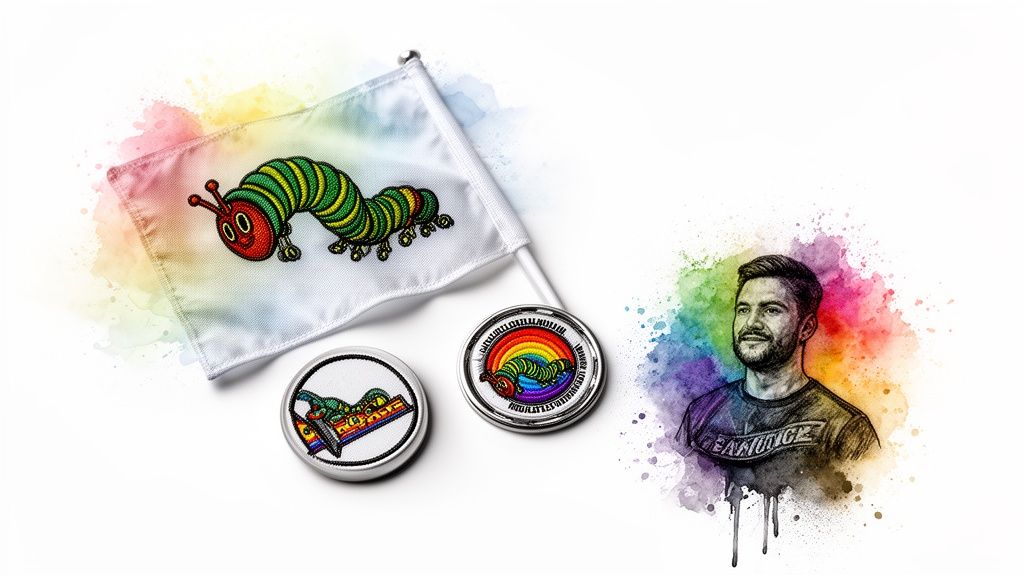
    A white flag with a green caterpillar, two pins, and a man's sketch with colorful watercolor splashes.

    A logo, a pin, or a flag gives your people a shared language and a tangible piece of the mission. When someone wears a Litter Caterpillars pin, they aren't just a person who picks up trash; they are a visible ambassador for a cleaner, kinder city. The symbol holds the story of every laugh, every rainstorm, every bag of trash collected together.

    When to Use This Strategy

    Use this once your group has a beating heart—a consistent core of people. It’s time to give that heart a face. This is how you shift from a loose collection of individuals to a cohesive, motivated team that feels like they are a part of something bigger than themselves.

    Key Insight: A symbol isn't just a design; it's a container for every shared memory, laugh, and moment of triumph your group has ever had. It becomes more powerful with every story it represents.

    How to Implement It

    • Create it Together: Involve your core volunteers in designing the logo or flag. When they have a hand in creating the symbol, their sense of ownership deepens immensely.
    • Tell the Story: Every symbol needs a story. Explain why you chose a caterpillar, what the colors on your flag mean. This transforms a simple image into a meaningful emblem.
    • Make it Real: Print it on flags. Create enamel pins. Make stickers. Tangible things people can see, hold, and wear make the identity feel real.
    • Celebrate with Ceremony: Make a little moment out of earning a badge or receiving a pin for the first time. This public recognition reinforces the value of showing up.

    By building a strong symbolic identity, you are implementing one of the most profound community engagement strategies available. You give people something to belong to, turning their service into a story they are proud to tell and wear.

    4. All-Neighborhood Equity and Geographic Saturation

    True community care doesn't play favorites. It doesn't just clean the "nice" streets. This strategy is a bold promise to show up for everyone, everywhere. It’s like drawing a map of your entire city and promising to color it in, one cleanup at a time. It ensures that no community is overlooked, especially those that other organizations might ignore.

    This method turns volunteering into an urban expedition of empathy. By intentionally going to unfamiliar areas, volunteers break down invisible barriers and witness the shared humanity connecting every corner of the city. This strategy proves that when we say we care about our city, we mean all of it.

    When to Use This Strategy

    This is for established groups ready to scale their mission beyond their own backyard. If your goal is to make a city-wide statement about equity, this is your path. It’s perfect for organizations like Litter Caterpillars, which is committed to hosting cleanups in all 50 of Chicago's wards.

    Key Insight: Bravery isn’t the absence of fear; it's showing up with kindness where it's needed most. Tackling a "difficult" neighborhood isn't a burden, it's an honor and a powerful act of solidarity.

    How to Implement It

    • Create a Public Rota: Develop and share a schedule that shows when you'll be in each neighborhood. This builds anticipation and shows a transparent commitment to fairness.
    • Find Local Allies: Partner with local leaders, block clubs, or passionate residents. Their insight is gold for building trust and being truly helpful.
    • Celebrate Every Community: Frame every cleanup as a victory. Use stories and photos to highlight the beauty and resilience you find in every corner of the city.
    • Address Safety with Honesty: Acknowledge any concerns transparently. Provide clear guidelines and work with local contacts to ensure a positive experience.
    • Don't Be a Tourist: Plan to return. Don't make your visit a one-time event. Build trust and show long-term commitment.

    This is one of the most profound community engagement strategies because it actively dismantles inequality. When you commit to every map dot, you inspire volunteers to see the city not as separate parts, but as one shared, beautiful home.

    5. Digital Hub Integration (Multi-Platform Accessibility)

    Your community doesn't live in one place; it lives across a dozen different apps. A Digital Hub strategy meets people where they already are. Some people discover events on Instagram, others live on Meetup, and many build friendships in a group chat. This approach makes it incredibly easy for anyone to find you and take that first brave step to join in.

    Think of it like building several bridges to the same beautiful island. Each platform has a job: Instagram tells the emotional, visual story; Meetup handles the official schedule; and a group chat fosters the inside jokes that turn strangers into friends. By weaving them together, you create a seamless and welcoming experience that feels effortless.

    When to Use This Strategy

    This is a powerful growth strategy when you're ready to expand beyond your immediate circle. If you want to attract different kinds of people, creating a multi-platform presence is your next move. It's especially effective for groups like Litter Caterpillars that thrive on a steady stream of new friends.

    Key Insight: Don’t try to make every platform do everything. Assign a clear 'job' to each channel. This clarity prevents confusion for your members and burnout for you. One platform is for logistics, another is for inspiration, and a third is for community chatter.

    How to Implement It

    • Establish a 'Source of Truth': Designate one platform, like Meetup, as the official hub for all event details. All other platforms should point back to this central source.
    • Use Channels for Their Strengths: Use Instagram for telling brave stories. Use a group chat for informal updates and community building. Use Facebook Groups for hyperlocal outreach.
    • Create One-Click Pathways: A post on Instagram should have a direct, easy link to sign up. Make it so simple a person can't say no.
    • Be a Broken Record: Post your weekly schedule and reminders across all channels. Repetition builds habit and ensures no one misses out.

    By implementing these community engagement strategies, you lower the barrier to entry so significantly that joining becomes an easy and exciting decision. You show people you respect their time, making your movement accessible to all.

    6. Reframing Hardship and Challenge as Growth Opportunity

    True community isn't forged in comfort; it's welded in the fire of shared struggle. This strategy is about deliberately embracing the hard stuff—the rain, the heat, the overwhelming mess—and reframing it as an opportunity for adventure, courage, and bonding.

    Think of your favorite movie. The hero doesn't become a hero when everything is easy. They become a hero when they face the storm. When a group endures a challenge together, they don't just clean a street; they build a shared story of triumph. The hardship becomes a badge of honor. This is how you transform a casual gathering into a legendary crew.

    When to Use This Strategy

    This mindset is essential for any group that operates in the real world, where things get messy. It’s perfect for organizations like Litter Caterpillars that pride themselves on consistency, rain or shine. Use this to cultivate a culture of grit, attracting members who are seeking a genuine adventure.

    Key Insight: The story you tell about the struggle is more important than the struggle itself. Frame every challenge not as a setback, but as the next chapter in your community's epic saga of courage and impact.

    How to Implement It

    • Lead with a Smile: As a leader, your enthusiasm in the pouring rain sets the tone. Show up with joy, demonstrating that the mission is bigger than your comfort.
    • Tell the Story: Celebrate the "worst" days. Our origin story is literally a hailstorm. We talk about it constantly because it reminds us that we can handle anything together.
    • Prepare, Don't Prevent: Offer ponchos, hand warmers, or extra water. The goal isn't to eliminate hardship, but to equip your team to face it bravely.
    • Use the Language of Courage: Talk about bravery, resilience, and strength. Frame showing up in tough conditions as a heroic act, because it is.
    • Make It Optional but Celebrated: Always stress that showing up in extreme weather is not required, but give extra love to those who do.

    Reframing hardship is one of the most potent community engagement strategies because it builds an unbreakable culture. You create a team that doesn't just show up when it's convenient; they show up for each other, no matter what.

    7. Environmental Intervention and Visible Impact Creation

    Picking up litter is where the journey begins, but it doesn't have to end there. This strategy is about graduating from maintenance to creation. It’s about looking at a trash-filled vacant lot and seeing a future park. It’s about turning your community’s sweat equity into a lasting legacy.

    Two panels contrasting a desolate, rubble-filled lot with a man watering a new plant in a vibrant garden.

    This approach transforms your group from a cleanup crew into neighborhood builders. It's one thing to say you cleaned a street; it's another to stand in a beautiful garden and say, "We built this." This creates a profound sense of ownership and pride that inspires even deeper commitment from everyone. It's undeniable proof that you have the power to make real, lasting change.

    When to Use This Strategy

    This is for established groups ready to take a brave leap. Once you have a consistent crew, you can channel that energy into a bigger project. It’s perfect when you’ve identified a specific eyesore and have the community support to dream bigger. You're shifting from reacting to problems to proactively building solutions.

    Key Insight: The story of transformation is your most powerful recruitment tool. Documenting the journey from a desolate space to a vibrant community hub proves that real change is possible and inspires others to join the cause.

    How to Implement It

    • Start Small, Win Big: Begin with a manageable project, like installing a few planters, to build confidence before tackling a full park.
    • Document Everything: Take "before" photos. Film the process. Interview your people. This visual story becomes a cornerstone of your outreach.
    • Build with the Community: Involve neighbors in the design. This ensures the project truly serves their needs and fosters deep ownership.
    • Make Friends at City Hall: Start conversations with city officials early. Understand the process for permits and land use to avoid roadblocks. Our own Caterpillar Park in Englewood started this way.
    • Throw a Party: Host a grand opening when the project is done. This rewards your volunteers and signals a new chapter for the entire neighborhood.

    This is one of the most rewarding community engagement strategies because it leaves a physical legacy of your group's love. If you’re ready to move from cleaning up to building up, you can learn more about the impact of targeted cleaning projects and start planning your transformation.

    8. Friendship and Relationship Building as Primary Outcome

    What if the amount of trash you collect is just the excuse? This strategy redefines success by treating friendships as the main goal, not just a happy accident. We aren’t just cleaning a street; we are building a family. The real magic happens when people stop showing up for the cause and start showing up for each other.

    Three laughing men toasting with mugs on a bench, surrounded by colorful watercolor splashes.

    This approach recognizes a fundamental human truth: people stay where they feel they belong. When your group becomes a source of genuine social connection, participation becomes sustainable and deeply meaningful. The work of cleaning up becomes the joyful reason for the community to gather, creating a resilient movement powered by authentic human bonds.

    When to Use This Strategy

    This is one of the most vital community engagement strategies for long-term survival. If you want to build a lasting presence rather than just hosting one-off events, this is your guiding star. It’s about creating a culture where people feel seen, valued, and connected beyond the task at hand.

    Key Insight: The strongest communities are not built on shared tasks, but on shared lives. When you create a space where people can bring their whole selves, celebrate milestones, and support each other, the work becomes secondary to the relationships.

    How to Implement It

    • Design for Social Time: Intentionally schedule time for non-work socializing. A pre-cleanup coffee circle or a post-event gathering at a local cafe works wonders.
    • Create Post-Event Rituals: Establish a fun, optional tradition after every event, like grabbing breakfast together. This is where friendships deepen.
    • Bridge the Gaps: Use a group chat to maintain connections between events. Share photos, celebrate personal wins, and keep the conversation flowing.
    • Make Warm Introductions: When a new person joins, don't just point them to the supplies. Introduce them warmly to a few regulars by name.
    • Celebrate the People: Acknowledge birthdays and new jobs. This shows you care about your members as whole people, not just as volunteers.

    9. Values-Driven Recruitment and Participant Selection

    A strong community isn't just a random collection of people; it's a tapestry woven together by shared beliefs. This strategy is about being so clear and loud about your values—like bravery and kindness—that the right people feel an undeniable pull to join. It isn't about exclusion; it's about creating a powerful gravity field around your mission.

    When your group is filled with people who embody bravery and kindness, those values become the air you breathe. Newcomers either thrive in that environment or realize it's not for them. This approach prioritizes the health of your culture over sheer numbers, knowing that a small, committed group is infinitely more powerful than a large, disconnected crowd.

    When to Use This Strategy

    This is essential when how you do the work matters as much as what you do. If you're building a long-term movement founded on trust, this is non-negotiable. It's how groups like Litter Caterpillars ensure the experience of cleaning together is always positive and supportive.

    Key Insight: Your community's culture is your most precious creation. Protecting it means being unapologetically clear about who you are and what you stand for. The people meant for your mission will find you.

    How to Implement It

    • Broadcast Your Values Boldly: Weave your core values (bravery, kindness, unity) into every piece of communication. Don't just list them; tell stories that show them in action.
    • Let Your Structure Do the Filtering: Our Saturday morning cleanups and volunteer-only model aren't accidental. They naturally select for people who are committed and generous.
    • Celebrate Value-Aligned Behavior: When you see a volunteer help a newcomer or tackle a tough spot with a smile, celebrate it publicly. This reinforces what your community cherishes.
    • Share Your "Why": When a new person joins, tell them your origin story. Talk about the heart behind the work. This connects them to the mission from day one.

    Building a team based on shared beliefs is one of the most sustainable community engagement strategies you can employ. If you're looking for practical ways to attract the right people, our guide on how to find volunteers offers deeper insights.

    10. Personal Transformation Narrative and Self-Development Positioning

    Sometimes, picking up a piece of trash isn't just about cleaning a street. It’s about picking up a piece of yourself. This strategy reframes community service not just as giving back, but as a brave journey of personal growth. It positions showing up as a way to build discipline, self-trust, and resilience.

    This approach connects the external work of improving a neighborhood with the internal work of becoming a stronger version of oneself. It taps into a deep human desire for meaning. When people see that showing up for their community is also a way to show up for themselves, their motivation becomes incredibly powerful. This is one of the most resonant community engagement strategies because it honors the whole person, not just their helping hands.

    When to Use This Strategy

    This is perfect for leaders with an authentic story rooted in personal change. If your group's "why" is tied to overcoming your own struggles, this approach will feel true. It’s also highly effective for attracting individuals who are seeking meaning, connection, and a way to believe in themselves again.

    Key Insight: Your story of struggle is your superpower. Being open about your own journey-the doubts, the fears, the small wins-gives others permission to be on their own journey without shame. Transformation isn’t about perfection; it's about progress.

    How to Implement It

    • Share Your Origin Story Authentically: Tell the real story of why your group started. My own journey with Litter Caterpillars began as a way to find discipline when I felt lost. This truth connects with others on a human level.
    • Use Transformational Language: We call ourselves "Litter Caterpillars" for a reason. Frame participation as a metamorphosis. Use words that evoke growth and becoming.
    • Connect Service to Inner Strength: Explicitly link showing up consistently to building personal discipline. Frame cleaning a neglected space as an act of forgiveness—for the community and for oneself.
    • Create Space for Reflection: End your events with a brief moment for volunteers to share what the experience meant to them. This helps cement the connection between the outer work and their inner world.
    • Celebrate Personal Journeys: Invite volunteers to share their own stories of transformation, creating a culture where personal growth is seen and honored.

    10-Point Community Engagement Strategies Comparison

    Approach 🔄 Implementation Complexity ⚡ Resource Requirements 📊 Expected Outcomes 💡 Ideal Use Cases ⭐ Key Advantages
    Volunteer-First Community Mobilization 🔄 Medium — decentralized coordination; volunteer care systems ⚡ Low $; high volunteer-management time 📊 Deep trust & sustained participation; slower scale 💡 Grassroots cleanups; community-led programs ⭐ High retention, authentic engagement, low overhead
    Scheduled Weekend Morning Events for Values Alignment 🔄 Low — fixed schedule, simple logistics ⚡ Low–Moderate; consistent volunteer commitment 📊 Reliable, aligned volunteer base; habit formation 💡 Values-filtering recruitment; family-friendly events ⭐ Consistency, reduced flakiness, ritual culture
    Identity and Pride Building Through Symbols 🔄 Medium — design + ongoing reinforcement ⚡ Moderate $ for creative resources & merch 📊 Increased pride, visibility, and social sharing 💡 Brand-building; retention-focused groups ⭐ Strong belonging and shareable identity
    All-Neighborhood Equity and Geographic Saturation 🔄 High — complex routing, safety & partnerships ⚡ High time/travel costs; liaison roles required 📊 Citywide visible impact; equitable coverage 💡 Citywide programs; equity-driven missions ⭐ Broad reach, prevents service gaps, builds city unity
    Digital Hub Integration (Multi-Platform Accessibility) 🔄 Medium — multi-channel upkeep & consistency ⚡ Moderate time for content; low platform costs 📊 Greater discovery, multiple engagement touchpoints 💡 Outreach to diverse digital audiences; scalable signups ⭐ Low barrier entry; flexible, real-time communication
    Reframing Hardship as Growth Opportunity 🔄 Medium — cultural framing plus safety protocols ⚡ Low–Moderate; training and protective gear 📊 Strong bonding; attracts resilient, growth-minded volunteers 💡 Challenge-oriented communities; resilience-building ⭐ Deep cohesion and memorable experiences
    Environmental Intervention and Visible Impact Creation 🔄 High — permits, project management, partnerships ⚡ High $ and diverse skills; long timelines 📊 Lasting, tangible legacy; media and public recognition 💡 Long-term transformation projects; fundraising goals ⭐ Tangible legacy, increased pride, recruitment draw
    Friendship & Relationship Building as Primary Outcome 🔄 Medium — intentional facilitation and social design ⚡ Low $; time for social programming and follow-up 📊 High retention; resilient social networks beyond events 💡 Community cohesion; mental-health and social support ⭐ Sustained engagement through friendships and belonging
    Values-Driven Recruitment and Participant Selection 🔄 Medium — messaging, modeling, and onboarding ⚡ Low–Moderate; leadership time for consistent messaging 📊 Cohesive culture; self-selecting, mission-aligned participants 💡 Mission-focused groups seeking cultural alignment ⭐ Reduced conflict; clearer decision-making and culture fit
    Personal Transformation Narrative & Self-Development 🔄 Medium — storytelling, reflection practices ⚡ Low–Moderate; needs programmatic reflection time 📊 Attracts growth-minded volunteers; deeper meaning & retention 💡 Personal-development seekers; retention strategy ⭐ Deep intrinsic motivation and long-term commitment

    Your Turn to Advance the Plot

    You’ve just been handed a toolkit full of community engagement strategies. But a toolkit is useless until you pick up a tool and start building. The real secret isn't mastering all ten of these at once. It’s understanding the simple, brave truth that connects them all: turning work into play, and turning strangers into friends.

    The Tom Sawyer Secret

    Remember Tom Sawyer, stuck with the dreadful chore of whitewashing a fence? He didn't complain. He reframed it. With a spark of genius, he convinced his friends that painting a fence wasn't work at all—it was a rare and exclusive privilege. Soon, they were trading their treasures just for a chance to help.

    This is the secret sauce. The best community engagement strategies don’t delegate tasks; they invite people into an adventure. They turn the "hard stuff"—the challenges we’d normally avoid—into the very thing that makes the story worth telling. The hardship isn’t the obstacle; it’s the plot twist. It’s what makes the experience meaningful.

    From Strategy to Action

    Looking back at these strategies, you can see this principle everywhere:

    • Volunteer-First Mobilization and Friendship as the Primary Outcome are about building a crew for your adventure.
    • Identity Building Through Symbols and Values-Driven Recruitment create the feeling of being part of an exclusive club, just like Tom’s fence-painting crew.
    • Reframing Hardship as Growth is the ultimate Tom Sawyer move. It takes the "chore" and turns it into a powerful opportunity for personal transformation.

    You don't need a perfectly polished plan or a 501(c)(3) to begin. You don’t need permission. All you need is the courage to show up, the kindness to welcome others, and the willingness to face a little discomfort. We are all caterpillars, a little messy and imperfect, inching our way forward. But through simple acts of service and friendship, we build the cocoon for our collective transformation.

    So, here is your call to adventure. Don’t get overwhelmed. Just pick one.

    Which strategy sparked something in you? Was it creating a symbol for your neighborhood? Or the simple act of scheduling a consistent weekend event? Whatever it is, choose that one thing.

    Commit to trying it this weekend. Send that text. Make that social media post. Show up at the park with a trash bag and a smile. You’ll be amazed at how quickly others join when they see someone leading with bravery and kindness. Because if you want to go fast, you can go alone. But if you want to go far, we must go together.

    Let’s go far.


    Here in Chicago, Litter Caterpillars puts these community engagement strategies into practice every single weekend, transforming neighborhood cleanups into joyful adventures in friendship and self-discovery. If you’re ready to see these ideas in action and advance your own plot, we invite you to join us. Find your next cleanup and see for yourself at Litter Caterpillars.