
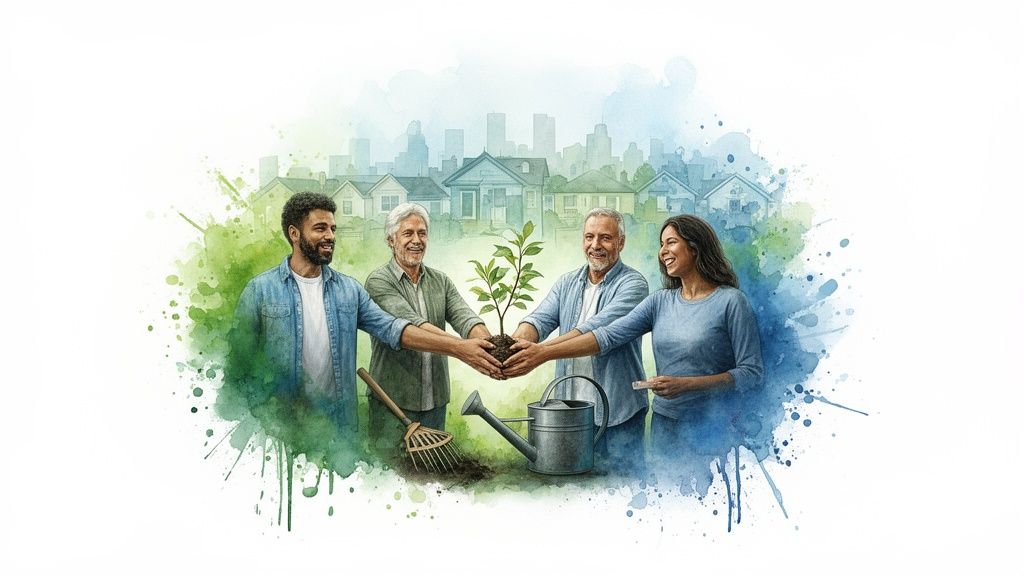
Here’s a secret: building a resilient community doesn't start with a five-year strategic plan or some massive grant. It starts with a simple, brave decision to just do something. Often, it comes when you realize it's way easier to tackle the chaos "out there" than the quiet chaos in your own life.
The best part? Making a real, visible impact is much simpler—and a lot more fun—than you've been led to believe.
The Real Starting Point for Building Resilient Communities
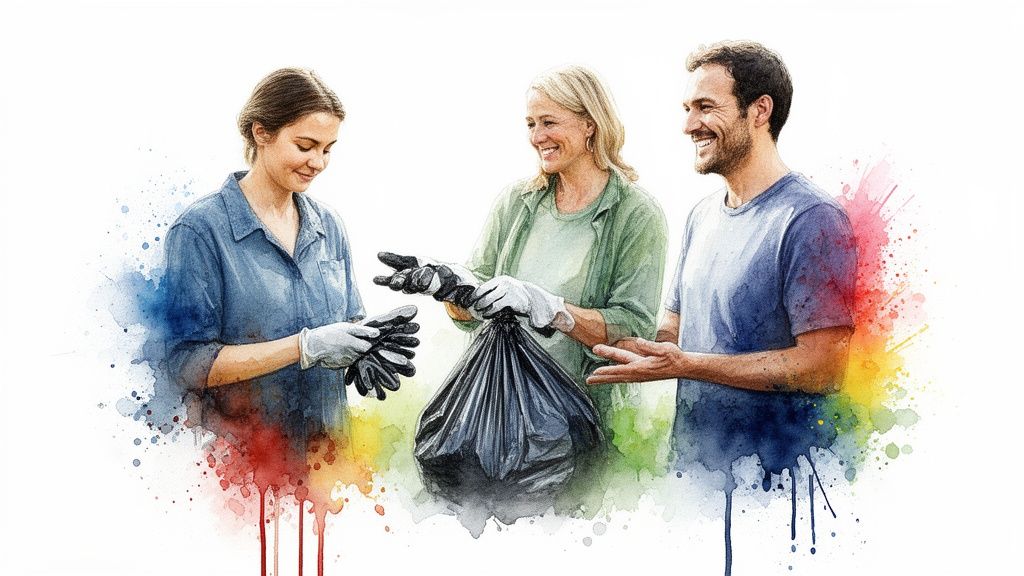
Let me tell you how Litter Caterpillars got started. It was born from a personal breaking point. My apartment was a disaster, my life felt just as messy, and I was failing hard at being consistent and brave. Every old jar of food in the back of my fridge felt like it weighed 500 pounds—each one a monument to some past failure or a faded memory I couldn't bring myself to toss.
Cleaning my own room felt impossible. But cleaning a public park with other people? That actually sounded like an adventure.
This whole playbook is built on that one powerful truth. It turns out, fixing the world can feel a heck of a lot easier than fixing yourself. And in a funny twist, when you start fixing things together, you accidentally start healing yourself, too. This isn't just a nice idea; it's a guide forged in Chicago's wild weather and fueled by pure, stubborn kindness.
From Personal Chaos to Collective Action
The very first Litter Caterpillars cleanup had just three people. And, because it's Chicago, a classic springtime hailstorm decided to crash our party. As the three of us huddled under a tree, shivering and watching Ubers cancel on us one by one, a huge lesson became crystal clear.
- Shared struggle forges real bonds. Suffering together, even just from a little hail, creates a story. It advances the plot and turns a few strangers into a real team.
- Action is its own permission slip. We didn't have a strategy. We didn't have funding. We just showed up. That single, small act of bravery was the only permission we ever needed.
That day taught us that real resilience isn't just about weathering the big disasters like hurricanes or pandemics. It's built in the small, consistent habits of showing up for your city and for each other, long before any major storm hits.
We figured out that cleaning up other people's messes is way easier than cleaning up our own. It creates this strange, new kind of "fun," and freezing in the hail? That just makes for a better story. It adds flavor.
Why Small, Consistent Actions Matter Most
Think of your community like a muscle. You don't get strong by hitting the gym for eight hours once a year. You build strength with regular, consistent workouts. Building resilient neighborhoods works the exact same way.
Weekly trash pickups, no matter the weather, do more than just clean the streets. They create a rhythm of reliability. Neighbors see you out there in the sweltering heat and in the snow, and they start to believe. They see a group of people who care, consistently. That kind of visible dedication is contagious.
This playbook isn't about waiting for perfect conditions or getting a green light from some official. We believe you don’t need permission to fix your neighborhood. It’s about taking that first brave step and trusting that the right people will show up to join you.
It's about finding the fun in the struggle and proving, week after week, that kindness and bravery can reshape a city, one block at a time. That’s where real strength begins.
Your Playbook for Uniting a Neighborhood
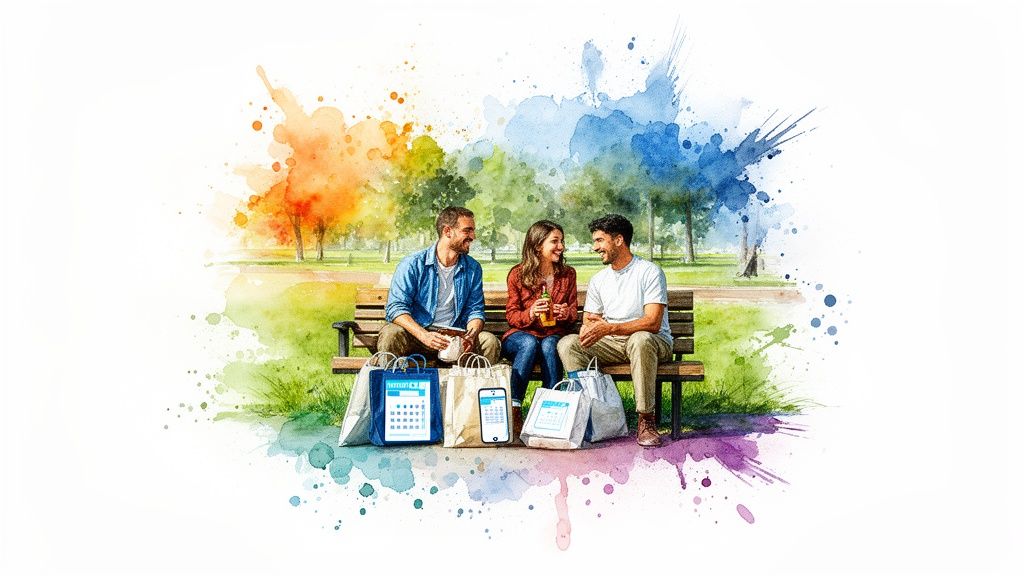
Alright, you're fired up and ready to make a difference. That’s the hardest part, and you've already done it. Forget the complicated five-year plans and strategic outlines for a second. The real secret to building a strong neighborhood is starting small, keeping it simple, and leading with your heart.
Think of it like starting a campfire. You don't just light a huge log on fire. You start with a tiny spark and some tinder—the small stuff that catches easily. Your first community event is that spark. This guide is your tinder.
Find Your Rhythm and Stick To It
Consistency is everything. It’s what builds trust and turns a one-off event into a neighborhood institution. When we started Litter Caterpillars, we picked weekend mornings for a reason. That's when you find the "givers"—the kind of people willing to wake up early and do something for their city before the weekend madness kicks in.
You need to pick a time and place that becomes your group’s heartbeat. Maybe it’s 10 AM every Saturday, right at the entrance to the park. Make it a ritual.
- Be utterly predictable: People should be able to set their clocks by your event. That reliability creates a powerful sense of stability and trust.
- Show up, no matter what: We’ve cleaned up in blizzards and brutal heatwaves. When you show up even when it's tough, you're sending a message that this isn't just a hobby. It's an unbreakable promise to your community.
That kind of unwavering commitment is what turns a few volunteers into a force to be reckoned with.
Keep It Simple and Open
Next, make it ridiculously easy for people to join you. Your mission is to tear down every single barrier between someone's good intention and them actually showing up. Complicated sign-up forms, mandatory orientations, and long email chains? They're total enthusiasm killers.
Just open the door. We use a simple Meetup page and an open group chat. Anyone can see what we’re up to, where we’ll be, and jump into the conversation right away. It feels less like a formal commitment and more like joining some friends for a walk.
The easier you make it for someone to show up that first time, the more likely they are to become a regular. Your job isn't to build a complicated organization; it's to build a welcoming space for action.
When people feel like they can just drop in without any pressure, they're far more likely to take that first step. If you want more ideas on this, check out our guide on how to find volunteers.
Adopt a Volunteer-First Philosophy
This is the most important rule in the entire playbook: the safety and happiness of your volunteers come first. Always. Their energy is the fuel for this whole thing. It’s a precious resource, and you have to protect it fiercely.
This means you never, ever pressure anyone for money. It means you go out of your way to make people feel safe, seen, and valued. When a new person shows up, treat them like a hero. When someone has to leave early, thank them for the time they gave. This culture of kindness is what keeps people coming back.
We started with just three people. We didn't need a huge crowd to make an impact. All we needed was a shared purpose and a commitment to showing up for each other.
This framework is simple, but it's powerful. To get you started, here's a little launchpad to organize your thoughts.
The Community Action Launchpad
A simple framework to kickstart your own local volunteer initiative, focusing on core principles for sustainable engagement.
| Principle | Why It Matters | Your First Action Step |
|---|---|---|
| Simple Start | Big plans can be paralyzing. A small, successful first event builds momentum. | Pick one specific, achievable task. (e.g., "Clean up the block around the library.") |
| Radical Consistency | Predictability builds trust and turns your group into a reliable community fixture. | Choose a non-negotiable time and day. Announce it and stick to it for a month. |
| Zero Barriers | The easier it is to join, the more people will. Remove all friction. | Set up a single, public way to communicate, like a Facebook group or WhatsApp chat. |
| Volunteer-First Culture | Happy, respected volunteers are your most valuable asset. Their energy is everything. | Verbally thank every single person who shows up, and make a point to learn their names. |
These small, repeated actions, grounded in kindness, are what truly start building resilient communities. They create the strong social fabric needed to face any challenge that comes our way.
And this isn't just some feel-good theory; it's a practical necessity. From 2015 to 2023, disasters damaged or destroyed an average of 92,199 infrastructure units every year across the globe, leading to over 1.6 million annual service disruptions. The strongest defense against this is a connected community. Your small group, built on trust and consistency, is a vital part of this global movement.
How to Embrace Bravery and Find Fun in the Struggle
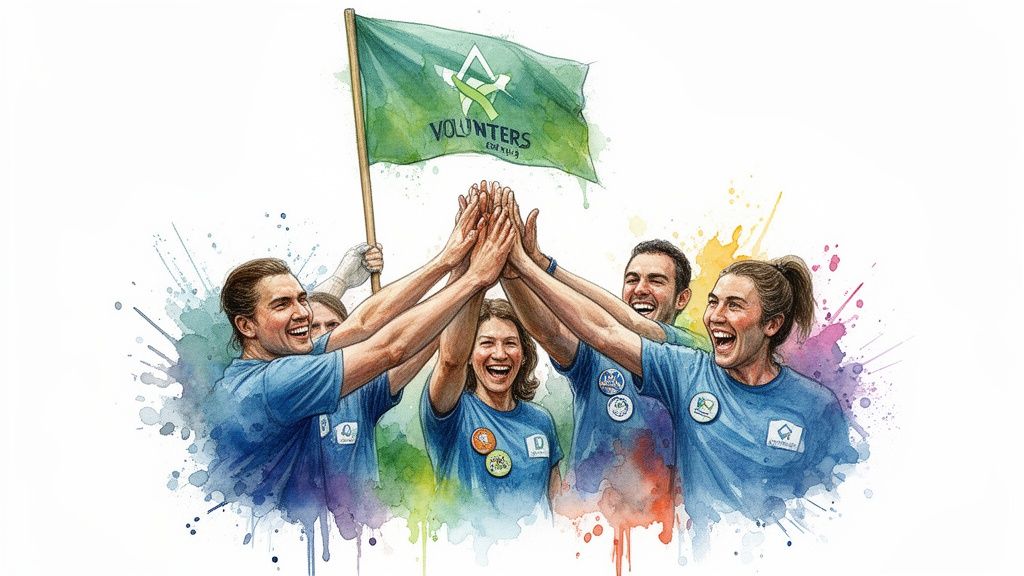
Let me tell you a secret most people won’t: fear is good. Failure is good. And yeah, even a little bit of shared suffering is incredibly good. It’s the secret ingredient that turns a bunch of strangers into a real team, and a chore into an adventure.
Think about Tom Sawyer. His aunt punishes him by making him paint a fence, and what does he do? He could have sulked. Instead, he flips the script and convinces his friends that painting the fence is an exclusive, must-do activity. He made the struggle fun.
That’s exactly what we do. We turn the hard work of cleaning our city into a game we get to play together.
The Magic of Shared Identity
Volunteering should never feel like a punishment or an obligation. It should feel like you just got an invitation to the coolest club in town. The real magic happens when you create a powerful sense of pride and shared identity—when you transform a cleanup crew into a team with a mission.
And you don't need a big budget for this. You just need a little creativity and a lot of heart.
- Fly Your Flag: A simple group flag planted in the ground at your meetup spot instantly creates a rallying point. It says, "We are here. We belong to this. And we are proud."
- Sing Your Song: We have a theme song. Sounds silly, right? But when you hear it, you feel like you're part of something bigger. It’s an anthem for kindness.
- Earn Your Badge: We give out custom badges for hitting milestones or surviving extra-tough cleanups. They turn sweat into achievement and become symbols of a shared story.
These little things create a deep sense of belonging that keeps people coming back, week after week. They’re not just picking up trash anymore; they're repping their team.
Leaning into the Storm Together
Some of our most legendary moments happened during our toughest cleanups. I remember one day with a -15°F wind chill, where our gloves felt useless and every piece of trash was frozen solid to the ground. Another time, we were out in 95°F heat, sweat literally pouring off us as we hauled bag after bag.
Those days were hard. But something amazing happened.
We told more jokes. We checked on each other constantly. We shared water, hand warmers, and stories about how ridiculous the whole situation was. Those moments of shared struggle didn't break us; they fused us together.
When you lean into discomfort with other people, you don't just clean a street; you forge character, courage, and an unbreakable bond. You build a community that isn’t afraid of a little hail.
The stories from those days—"Hey, remember the blizzard cleanup?"—become our mythology. They're the memories that prove we can handle anything the world throws at us, together. This is the very heart of building resilient communities. It's not about avoiding hardship; it's about facing it with a team you trust.
Resilience Is a Measurable Superpower
This idea of bouncing back isn't just a feeling; it's a measurable outcome. Take the FM Global Resilience Index, for example. It shows that countries with strong resilience frameworks—built on things like proactive planning and strong social connections—recover over 30% faster from property losses after a disaster.
What that proves is that the work you're doing—building trust and forging connections in your neighborhood—has real, tangible benefits. You are actively increasing your community's ability to bounce back from any shock, whether it’s a storm, an economic downturn, or a local crisis.
Every time you show up in the cold, you're not just picking up litter. You're building the muscle memory of resilience. You're making your entire community stronger and more prepared for whatever comes next.
The Art of Radical Kindness and Inclusivity
Bravery gets you out the door, but it's kindness that convinces people to stay. It's our second pillar, and it’s way more than just being polite. It’s about mindfully engineering a culture of unity so strong it can weather any storm.
For us, kindness is a strategy. It’s the glue that turns a bunch of well-meaning strangers into a real community, and that community is the bedrock of resilience.
Building a Culture of Unity
Think of your volunteer group like a garden. You can just toss some seeds on the ground and hope for the best, but you'll probably get a lot of weeds. To grow something that truly flourishes, you have to intentionally prepare the soil—making it safe, welcoming, and full of everything people need to thrive.
This is what our "volunteer-first" ethos is all about. It means the physical and psychological safety of every single person is our absolute top priority. No exceptions. It means creating a space where real friendships can actually bloom, without any pressure or weirdness.
This is why we schedule our events on weekend mornings. It's not an accident. We're mindfully engineering a social circle rooted in service, not selfishness. This simple choice naturally attracts the "givers"—the kind of people who want to start their day by putting something good into the world.
Your Welcome Wagon Strategy
How you greet a newcomer is everything. Seriously. That first impression is the difference between them coming back next week or ghosting you forever. Your job is to make them feel like they belong from the second they arrive.
It’s scary showing up to a new group! So, you have to be fearless for them.
- Be the First to Say Hello: Don’t stand there and wait for them to find you. The moment you see a new face, walk right up, flash a huge smile, introduce yourself, and thank them for being brave enough to show up.
- Give Them a Mission (and a Buddy): Immediately give them a simple job. Saying something like, "Hey, can you help Sarah with this section? She's awesome," instantly breaks the ice and gives them a sense of purpose.
- Celebrate Every Single Contribution: Acknowledge their effort. I don't care if someone stays for ten minutes or three hours—their contribution matters. A simple, "You did an amazing job today, thank you so much for coming," makes them feel seen. And feeling seen is everything.
This isn't rocket science. It’s just radical, intentional kindness. You're showing people with your actions, not just your words, that they are the most important part of this whole thing.
Kindness isn't a soft skill; it's the structural steel of a resilient community. It’s the framework that holds everyone together when things get tough.
Unity Means Showing Up for Everyone
True inclusivity means showing up in neighborhoods that other people drive past. It means proving with your presence—with your boots on the ground—that every block matters and every single resident deserves to live in a clean, safe place.
This commitment to showing up for everyone, everywhere is how you build deep, authentic trust. It sends a powerful message: your group is here for the city, not just for the photo ops in the "nice" parts of town.
We live this out with a few non-negotiable rules:
- Total Transparency: Our group chats are completely open. Anyone can join, ask whatever they want, and see exactly how we operate. No secrets.
- No Financial Pressure. Ever. We have a rock-solid policy of never asking our volunteers for money. Their time and energy are the most valuable gifts they can give, and we protect that resource fiercely.
- Go Where We're Needed: We make a point to clean up in all 50 wards of Chicago, especially in areas that don't always get the same love and attention.
This approach transforms your group from a simple cleanup crew into a symbol of city-wide unity. You're not just picking up litter; you're actively building bridges and erasing the invisible lines that divide us.
This is how you build a community so kind and strong that it becomes a force of nature in its own right—ready to face any challenge, together.
From Clean Streets to a Community Park
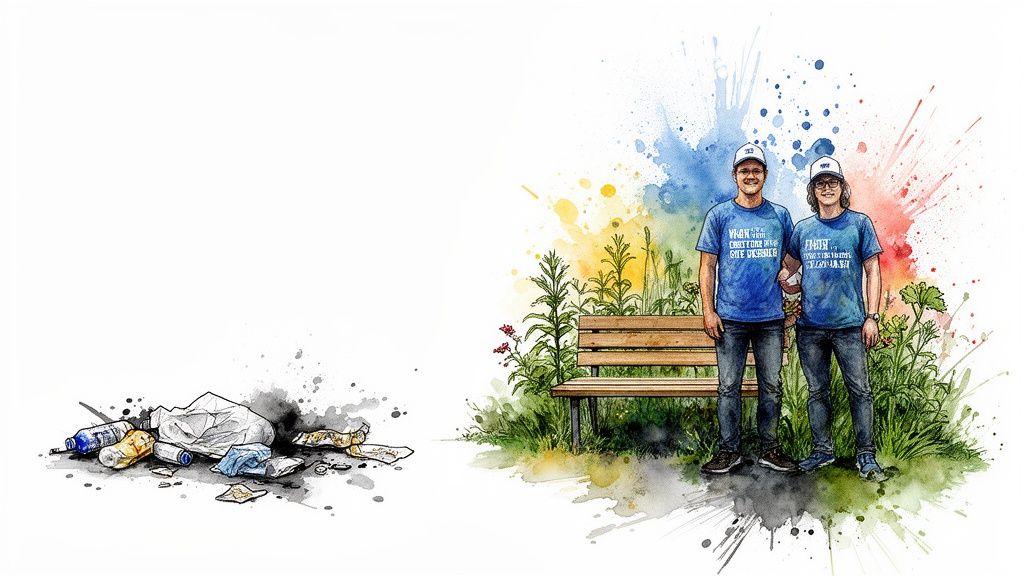
So, what happens when you show up every single week, through hail and blistering heat, just to pick up trash? At first, you just get clean streets. But after a while, something much more powerful emerges: you get a reputation. You build trust.
Think of it like this: every cleanup is a small deposit into a community trust fund. For three years, we made those deposits faithfully. We weren’t trying to build a resume or impress anyone; we were just being brave and kind, week after week. That consistency, that public record of showing up, became our greatest asset.
It’s the secret to making a bigger impact without losing your soul.
Turning Social Capital into Concrete Change
After years of just doing the work, an opportunity popped up. A forgotten, litter-strewn empty lot in the Englewood neighborhood went up for auction. For us, it wasn't just an abandoned piece of land. It was a canvas. We saw a park.
This is where the magic of consistency really pays off. We weren't just some random group with a bright idea. We were the Litter Caterpillars, the people who always showed up. That reputation opened doors.
We started talking to local business owners, city officials, and potential partners. We didn’t just show them a plan; we showed them our track record. We had hundreds of photos on our Instagram, thousands of hours of volunteer work logged, and a whole community of people who believed in what we were doing.
You don't get support by talking about your vision. You get support by showing your work. Your past actions are the most convincing proposal you'll ever write.
This is the heart of building resilient communities—turning the social capital you’ve earned through service into tangible, lasting assets for everyone.
How to Build Your Alliance of Allies
Winning that lot at auction and creating Caterpillar Park wasn't a solo mission. It was a symphony of kindness and collaboration. Here’s how you can start building your own network of supporters:
- Document Everything: Use a platform like Instagram not as a marketing tool, but as a public journal. Post authentic photos and stories from every single event. This creates an undeniable, visual record of your impact and your reliability.
- Engage Local Businesses Bravely: Just walk into local coffee shops, hardware stores, and restaurants. Don't ask for money. Instead, tell them your story and ask, "How can we help you?" This flips the script and builds partnerships based on mutual support, not just transactions.
- Connect with City Officials Honestly: When you talk to your local alderperson or city departments, be direct and kind. Show them the work you're already doing. We didn’t say, “You should fix this.” We said, “We’re already fixing this. Want to help?”
This fearless, kind approach is disarming. It turns potential bureaucrats into allies because you’re making their job easier and their districts better. If you need a playbook on how to get started, you can also check out our guide on how to clean up a park.
Why This Work Is More Urgent Than Ever
Transforming an empty lot into a vibrant park does more than just beautify a block. It builds economic and social strength. This kind of proactive community building is a powerful defense against future shocks.
Globally, disasters now impose an economic burden of over $2.3 trillion a year when you factor in all the hidden costs. Building resilient communities isn't just a nice idea; it's an urgent economic necessity that reduces humanitarian needs and fosters stability. You can discover more insights about these global resilience findings from the UN.
Our journey from weekly cleanups to creating Caterpillar Park is proof that a small, dedicated group can achieve monumental things. It shows that true resilience isn't just about withstanding shocks—it's about having the courage to actively shape a better, kinder, and more beautiful future, together.
Your Questions on Starting a Community Movement
So you've got that spark. That little voice in your head saying, "Someone should do something about this," and realizing that someone could be you. It's a brave feeling, but it usually comes with a million questions. We get it. Here are the real, honest answers to the things people ask us all the time.
How Do I Get People to Show Up for the First Event?
Don't overthink it. You don't need a marketing plan or fancy flyers. Your most powerful tool is your own fearless, genuine invitation. Seriously.
Just tell your friends. Post it on your personal social media. Throw it up on a simple, open platform like Meetup. Your authentic excitement is way more magnetic than any paid ad.
Frame it like an adventure, not a chore. Our very first event had exactly three people show up, and we got ambushed by a hailstorm. That chaotic, hilarious moment became our origin story.
Don't aim for a massive crowd right away. Your real goal is to give that first, small group an unforgettable experience. Make them feel like the brave co-founders they are.
The incredible energy from that first handful of pioneers is what will pull in the next wave of people. Just be brave enough to pick a date. The right people will find their way to you.
What If We Have No Money for Supplies or Projects?
You don't need a big bank account. You need bravery and a little bit of scrappiness.
Start simple. For cleanups, just ask volunteers to bring their own work gloves and a couple of household trash bags. You’d be amazed how many local hardware stores or even city departments are happy to donate supplies if you just walk in, tell your story, and ask nicely.
Our guiding principle is "volunteer-first." This means we will never, ever hound our community for money. Your job isn't to be a fundraiser; it's to build social capital.
When you show up consistently and people see the difference you're making, support starts to appear out of nowhere. A local business might offer free coffee for your crew. A neighborhood association might drop off a box of trash bags. We had three years of proven, documented impact before we even thought about taking on something as big as Caterpillar Park.
Build your reputation first. The resources will follow.
How Do You Keep Volunteers Motivated Week After Week?
Long-term motivation isn't about hype. It's about connection, purpose, and having a damn good time. It’s about building a community so strong that showing up becomes the highlight of someone's week.
Here’s our secret sauce:
- Be a reliable habit. We meet at the same time, same place, every single week—rain, shine, or blizzard. That consistency builds a powerful rhythm of trust. People know we'll be there.
- Build real friendships. Our group chats and social meetups are just as vital as the cleanups. People come back for the community as much as they do for the cause.
- Create a powerful identity. Our flags, our theme song, our special badges—these things give people a deep sense of pride. Facing down a blizzard together isn't a failure; it’s a bonding moment that turns into a legendary story.
When people feel like they're part of a brave, kind team on a shared mission, motivation stops being an issue. They're not just "volunteering" anymore. They're showing up for their friends and changing their city.
Ready to take that first brave step? Litter Caterpillars is living proof that small, consistent acts of kindness can create massive change. Join our movement and see for yourself how easy—and fun—it is to make a real impact. Find our next event at https://www.littercaterpillars.com.