Three of us stood under a tree in a Chicago hailstorm, holding trash bags and laughing because every Uber kept canceling. We were cold, soaked, and weirdly happy. That day taught me more about social media for volunteer recruitment than any polished marketing advice ever could.
Your Cause Is a Campfire Not a Help Wanted Ad
I started cleaning the city because I couldn't clean my own life.
My apartment had turned into a museum of stalled intentions. Old food in the fridge. Forgotten bags from abandoned health kicks. Random junk with too much emotional weight attached to it. A piece of trash can weigh almost nothing in your hand and still feel impossible to move.
Then I picked up litter on a sidewalk, and it felt easy.
That shocked me. Cleaning my own mess felt loaded with shame, memory, and self-judgment. Cleaning the city's mess felt clear. It felt useful. It even felt playful. I wasn't trying to become some perfect person. I was just outside, doing one good thing with other people.
That's the first lesson I want to hand you. People don't join a volunteer group because your flyer says you need help. They join because your cause gives them a way to become someone they want to be.
Stop posting jobs and start telling a story
A lot of volunteer posts sound like this:
- Need-focused: We need ten people Saturday
- Task-focused: Bring gloves, arrive at nine, cleanup is two hours
- Organization-focused: Our group is doing important work
That isn't wrong. It's just thin.
If I had posted only that, I would've attracted people looking for an errand, not people looking for belonging. And errands are easy to skip.
A campfire works differently. A campfire gives people warmth, light, and a circle to step into. Your social media has to feel like that. It has to say, "Come stand with us. This is what kind of people we are when things get hard."
Practical rule: Show your mission through a human moment. Wet shoes. Muddy gloves. A new friend. A before-and-after curb. That's what people remember.
People want transformation more than instructions
I care about bags, grabbers, timing, and logistics. You should too. But none of that is the true draw.
This is the draw: service lets people bring order to chaos. It gives shape to a drifting week. It lets someone who feels stuck do one brave thing before noon.
That matters right now because the old ways of recruiting aren't enough. Formal volunteering in the U.S. fell from 30% in 2019 to 23.2% in 2021, and almost half of nonprofits say finding enough volunteers is a big problem, according to the Council of Nonprofits volunteer data summary.
So yes, use social media. Use it hard. That's where people already are.
But don't use it like a digital bulletin board. Use it like a fire signal.
The post I'd write now
If I wanted strangers to feel what we are about, I wouldn't start with "seeking volunteers."
I'd post a photo of a small group in bad weather, smiling anyway. Then I'd write something like this:
We got pelted by hail, our rides bailed, and the street still got cleaner. If your week has felt heavy, come help us carry something simple. One bag at a time.
That's different from recruitment copy. It has a pulse.
Your cause isn't a help wanted ad. It's a place where people come to practice courage, friendship, and usefulness. If your social media doesn't show that, you'll keep attracting weak interest from people who were never going to stay.
Find Your People Before You Post Anything
Weekend mornings tell the truth.
If you schedule your events for a sleepy Sunday morning, you're saying something about the kind of culture you want. You're choosing people who wake up and give. You're filtering for steadiness. You're telling the world, without saying a word, "This group is for builders."
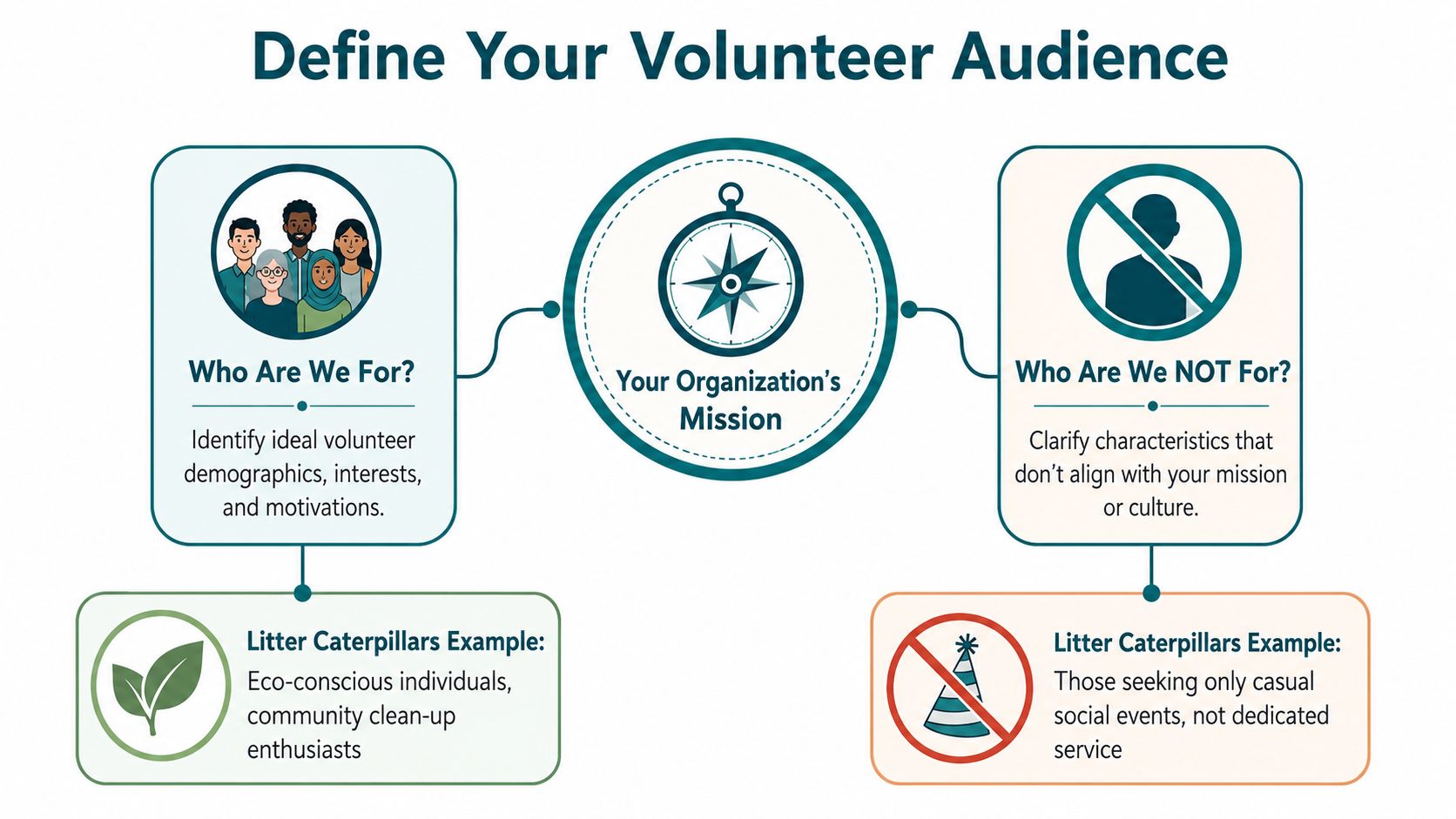
That's how I think about volunteer recruitment. Before captions, hashtags, or platform choice, I ask one harder question. Who are you trying to call in, and who are you willing to leave out?
Your audience is a values decision
Most groups define volunteers by age, neighborhood, or free time. That helps a little. It doesn't go deep enough.
I want to know what someone is hungry for.
Do they want fresh air? Structure? New friends? A reason to put their phone away? A chance to be useful? A safer way to meet kind people than a loud bar or a random networking event?
When you know that, your social media changes. Your words sharpen. Your photos get better. Your event format gets cleaner.
Here is the filter I like:
- People I want more of: generous, curious, a little adventurous, willing to wake up, willing to help
- People who probably won't fit yet: people looking only for entertainment, clout, or a casual drop-in with no real interest in service
- People on the edge: shy followers, new residents, students, young professionals, people who want community but need a gentle door in
That last group matters. They may never respond to a cold "volunteer now" post. But they may watch your Stories for weeks. They may like every group photo. They may send one small reply like, "This looks fun." That's not nothing. That's the beginning.
Social media warms the room
A lot of people treat social media for volunteer recruitment like a vending machine. Insert post, receive volunteer.
That isn't how it usually works.
One piece of guidance I keep coming back to says the true power of social media may be in trust-building before the ask, and asks a better question: which content sequence turns passive followers into dedicated community members? You can read that framing in this VolunteerHub piece on recruiting volunteers on social media.
That matches what I've felt on the ground. Individuals rarely become volunteers because one graphic told them to sign up. They become volunteers because your account keeps showing them a world they want to enter.
Your page should feel like a front porch. People linger there before they walk inside.
Make your message volunteer-first
Volunteer-first means I don't treat people as labor inventory. I treat them as the mission's living core.
That changes the message.
Instead of saying, "We need people to fill spots," say:
- Identity-driven: We clean together every week, rain or shine
- Feeling-driven: You'll meet grounded people and leave with your head clearer
- Safety-driven: We make it easy to join, ask questions, and know what to expect
If you need help shaping that kind of message, this guide on how to find volunteers is a useful place to compare your own approach against a volunteer-first frame.
A sharp audience creates sharp content
If your group is for brave, kind, service-minded people, your content should repel the wrong fit a little.
That's healthy.
You do not need everyone. You need your people. The ones who feel relief when they see a Saturday morning cleanup instead of another empty invitation to consume, scroll, and disappear.
A Social Media Playbook for Finding Volunteers
If you try to post everywhere, you'll burn out and your pages will feel hollow.
I would rather see one strong Instagram account and one reliable event home than five neglected platforms. For most volunteer groups, Instagram and Facebook are the power players, and guidance recommends focusing on one or two platforms well, with short-form video and volunteer-created visuals beating text-only posts. That advice appears in this VolunteerHub article on high-impact marketing channels for recruiting volunteers.
For a local group, I like this setup:
- Instagram: emotion, proof, group personality
- Meetup or your event page: logistics, dates, sign-up path
- Facebook: local reach, resharing, community visibility
Build your content around values
At Litter Caterpillars, the strongest posts aren't random updates. They're expressions of values. Bravery. Kindness. Unity.
That gives you a simple system.
Bravery posts
These are your rain posts, cold posts, awkward-first-time posts, and "we showed up anyway" posts.
Examples:
- A Reel of volunteers cleaning in ugly weather
- A photo of a tough block before cleanup with a caption about courage
- A short clip from the walk to the site, with someone saying they almost didn't come
These posts work because they show that service has texture. It isn't sterile. It asks something of you.
Kindness posts
These are quieter. A newcomer being welcomed. Shared snacks after the event. Someone lending gloves. A caption about how a volunteer had a rough week and felt better after being outside with the crew.
Kindness content tells shy people, "You will be safe here."
Unity posts
Use these when the group itself is the story.
Try a big post-cleanup photo. Try a carousel where each slide introduces one volunteer. Try a clip of everyone hauling filled bags together. If you work across neighborhoods, show that too. Different blocks, same spirit.
Field note: The more your content centers volunteers instead of the organization, the easier it is for a stranger to imagine joining.
What to post on Instagram versus your event page
Instagram is where people feel your vibe.
Meetup or your event listing is where they answer practical questions without stress.
Don't mix those jobs too much.
| Day | Content Pillar | Post Idea (Instagram) | Platform |
|---|---|---|---|
| Monday | Bravery | Reel from a tough-weather cleanup with a caption about showing up | |
| Tuesday | Kindness | Volunteer photo and short story about a first-timer feeling welcome | Instagram Stories |
| Wednesday | Unity | Group photo with faces, names, and a simple invite for the weekend | |
| Thursday | Logistics | Event post with meeting point, what to bring, and what to expect | Meetup |
| Friday | Credibility | Volunteer-generated photo repost with their own caption | Instagram Stories |
| Saturday | Live energy | Short clips from the cleanup, bags filled, smiles, neighborhood scenes | Instagram Stories |
| Sunday | Reflection | Before-and-after carousel and next event reminder | Instagram and Facebook |
On Instagram, use the feed for identity and memory. Use Stories for immediacy. Stories can answer common questions, repost volunteer tags, run a poll, or show weather conditions on the morning of the event.
On your event page, write like a calm host. Tell people where to meet, what they'll do, what gear is provided, how long it lasts, and what the social vibe is like. If the event has a little adventure in it, say so. If beginners are welcome, say so plainly.
If you want more ideas for structuring the whole system, this roundup of volunteer recruitment strategies gives a broader menu of approaches beyond social content alone.
Use volunteer-made content whenever you can
Your own posts matter. Posts from volunteers matter more.
Ask people to send one photo, one quick reaction, or one clip after each event. Repost them. That's the social proof that doesn't smell like marketing.
A volunteer saying, "I came alone and left with friends" beats ten polished graphics.
Keep the call to action light and clear
Every post doesn't need a hard ask.
Some posts should build trust. Others should point to the next step. When you do ask, make it simple:
- Soft ask: Want to come next time? Reply and I'll send details.
- Direct ask: Join us Saturday morning. Sign up in the event page.
- Friend ask: Bring one friend who needs fresh air and a reset.
That mix matters. If every post shouts, people tune out. If no post invites action, people stay spectators.
Turning a Like into a Lifelong Volunteer
The first time someone from Litter Caterpillars showed up after weeks of observing our posts, she told me something I never forgot.
"I liked three photos, opened the event page twice, and almost talked myself out of coming."
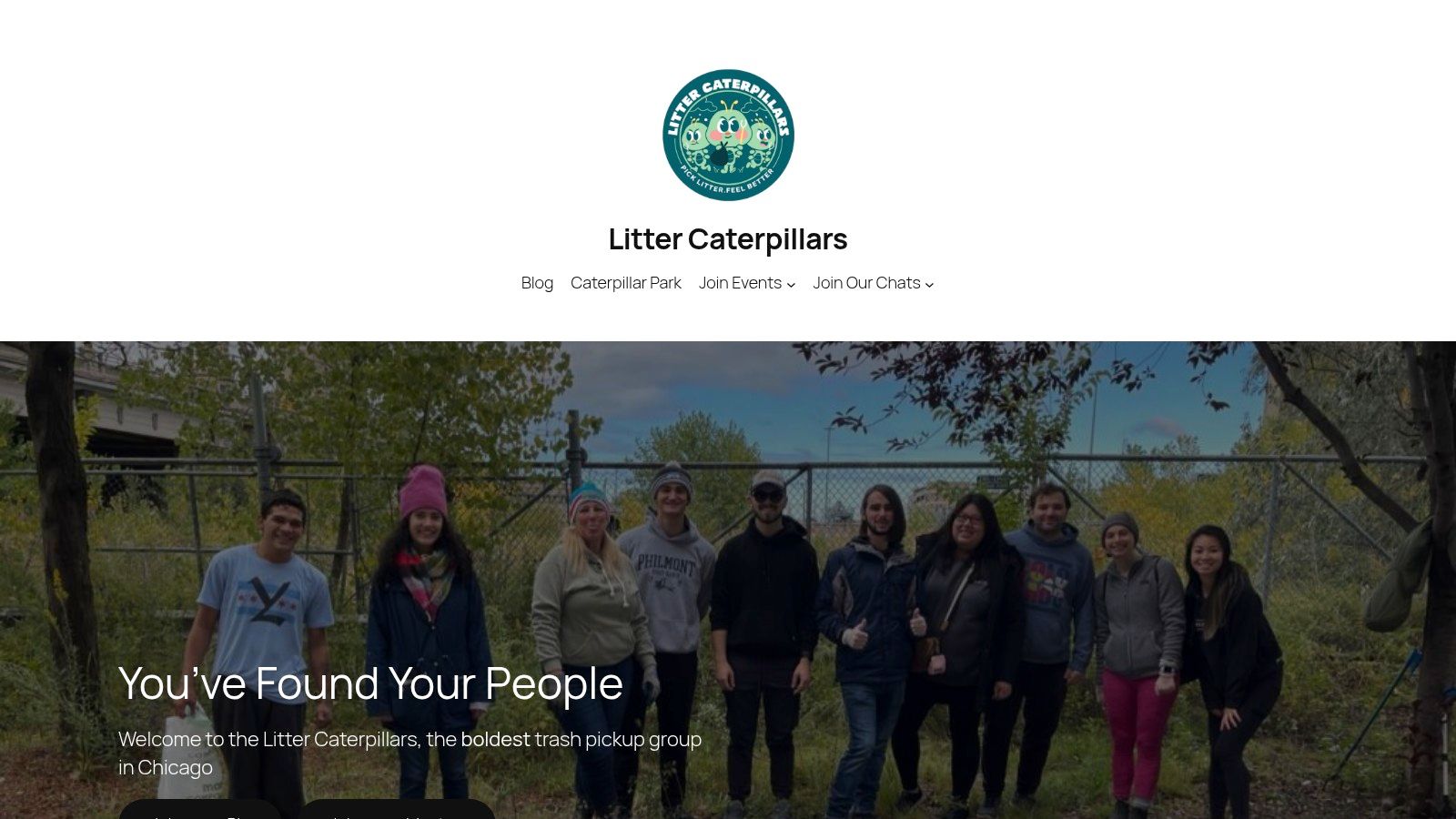
She did come. She arrived early, stood near the edge of the group, and kept looking like she might bolt. One of our regulars handed her a grabber, asked what part of town she was from, and stayed with her for the first ten minutes. By the end of the cleanup, she was laughing over coffee with people she had met that morning. A month later, she brought her brother. A season later, she was welcoming new people herself.
That is what social media is for. It is not just a billboard. It is a trailhead.
Start with a real conversation
A like is small, but it is still a signal. Someone is leaning closer.
Treat that moment with respect. If a person replies to a Story with "this looks awesome," answer the way a good host answers at the front door. Warm, clear, and relaxed.
I usually send something like this:
"Glad it caught your eye. We meet on weekend mornings, and first-timers are common. If you want, I'll send the next event details and tell you what the morning usually feels like."
That works because it answers the question under the question. People are rarely asking only about time and place. They are asking if they will feel stupid, alone, underprepared, or out of place.
So answer that part too.
Give nervous people a quieter way in
Public commitment scares people off. A comment on a post can feel exposed. Showing up alone can feel bigger than the task itself.
A message thread, an Instagram chat, or a small event group gives people a place to test the waters before they dive in. That is where significant conversion often happens. Someone asks if they need gloves. Someone else asks whether it is okay to come late. Another person admits they have never done anything like this before.
Good. Those questions mean they are picturing themselves there.
If a person has to choose between mild embarrassment and staying home, staying home usually wins.
Remove friction from the handoff
A lot of groups lose people in the gap between interest and attendance. The post works. The follow-up fails.
At Litter Caterpillars, we learned to keep the handoff boring in the best possible way. No maze of forms. No five-paragraph reply. No mystery about what the day will feel like. The job is to carry the spark from the screen to the sidewalk before life interrupts.
Keep that path clean:
- Reply while the interest is fresh
- Send one clear next step
- Say what first-timers should expect
- Tell them a real person will greet them
- Send a short reminder the day before
Short beats impressive here. Clarity beats polish.
The first shift is the real recruitment moment
Signing up does not make someone part of your community. Their first experience does.
I have watched this go right, and I have watched it go wrong. When a new volunteer arrives and nobody notices for five minutes, you can almost see the door closing in their mind. When someone greets them by name, introduces them to two steady people, gives them an easy first win, and checks in halfway through, their shoulders drop. They start acting like they belong because, for that morning, they do.
That first shift needs shape. Greet them fast. Pair them with someone kind. Give them a task that lets them succeed early. Thank them before they leave. If your group hangs around afterward for coffee or a chat on the curb, invite them into that too. A lot of people decide whether to return during the informal twenty minutes after the official work ends.
This is the volunteer-first philosophy in practice. You are not filling a slot. You are helping a person cross from observer to participant, from participant to regular, from regular to someone who brings others along.
That is how a movement grows. One human welcome at a time.
Create a Tribe People Want to Join
Tom Sawyer got other kids excited about painting a fence because he turned a chore into identity.
That's not manipulation when the thing is good. That's leadership. If service feels dead, people avoid it. If service feels alive, people wear it proudly.
Symbols matter because people matter
Flags. Badges. Group photos. Running jokes. A theme song. Shared phrases. These are not fluff.
They give people a way to say, "I belong here."
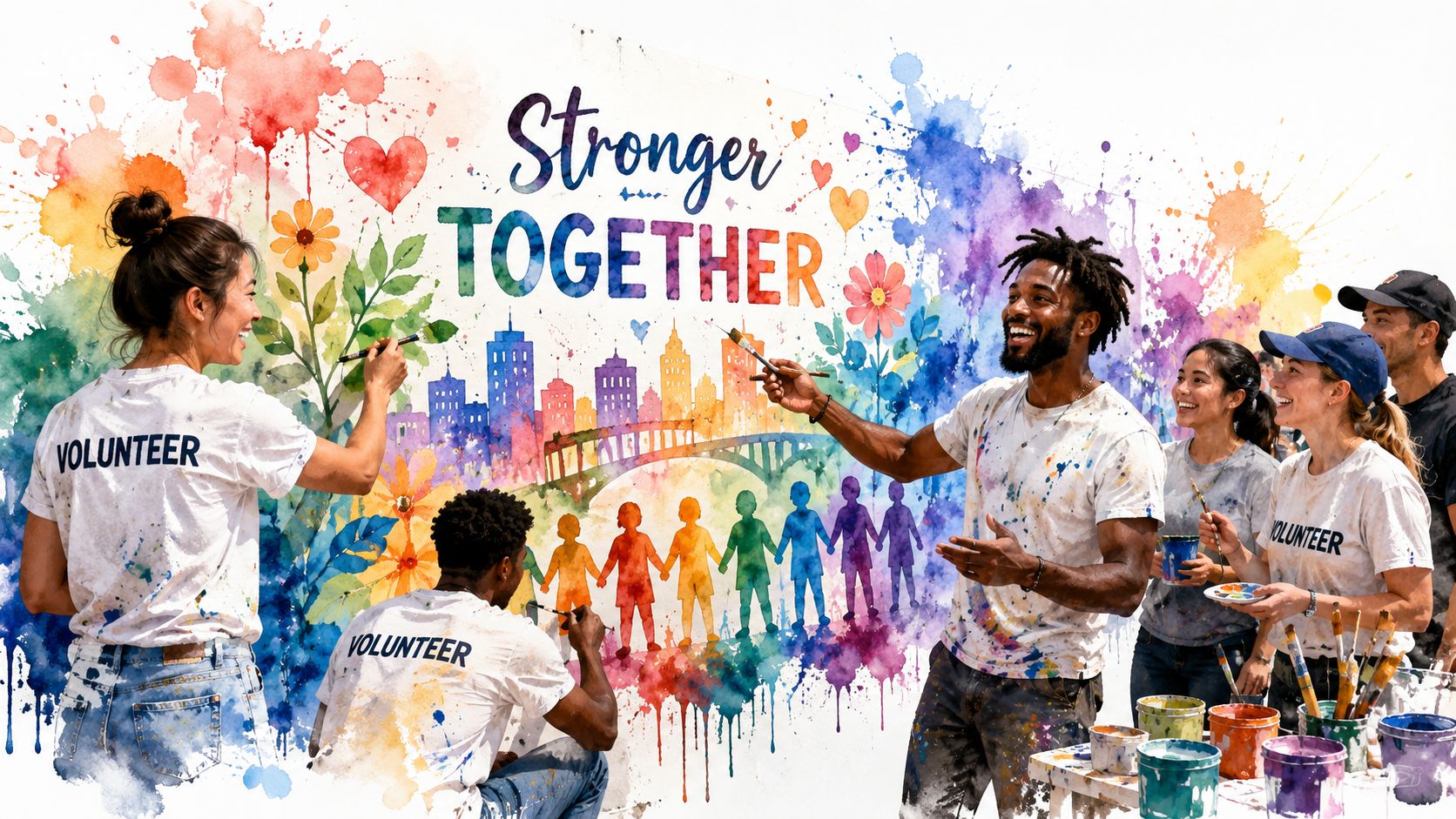
When a volunteer posts a photo holding your flag or wearing something tied to the group, they're doing more than sharing an event. They're trying on an identity. That identity spreads faster on social media than any formal recruitment message.
A tribe has signs of life. You should build them on purpose.
- Visible symbols: shirts, stickers, badges, flags, repeated visual motifs
- Shared rituals: same meetup rhythm, group photo, coffee after, a recurring sign-off phrase
- Retellable stories: the freezing cleanup, the muddy shoes, the impossible block that looked different by noon
Partnership posts widen the circle
A tribe gets stronger when the city can see it.
Tag the coffee shop near your cleanup. Thank the alderman's office if they supported access. Repost local businesses that share your event. Invite neighborhood groups into the frame. Social media for volunteer recruitment gets more believable when people see your group woven into real streets and real relationships.
That kind of outreach doesn't need corporate polish. It needs sincerity and consistency.
If you want a broader framework for keeping people involved after they show up, this guide on volunteer engagement strategies is worth a look.
A simple video can help push that identity further:
Pride isn't vanity
A lot of good-hearted groups are afraid of pride. I think that's a mistake.
Pride is what makes people invite friends. Pride is what makes someone post after a long morning with sore hands and say, "I did this." Pride is what turns a volunteer from an occasional helper into a carrier of the culture.
If you want people to join, build something worth identifying with.
Measure What Matters Growth and Guts
One Saturday, a cleanup photo from Litter Caterpillars took off.
Comments poured in. Shares climbed. A dozen people sent heart emojis and wrote, "Love this." It felt like the page had caught fire. Then Sunday came, and only two new volunteers showed up.
That was a useful bruise.
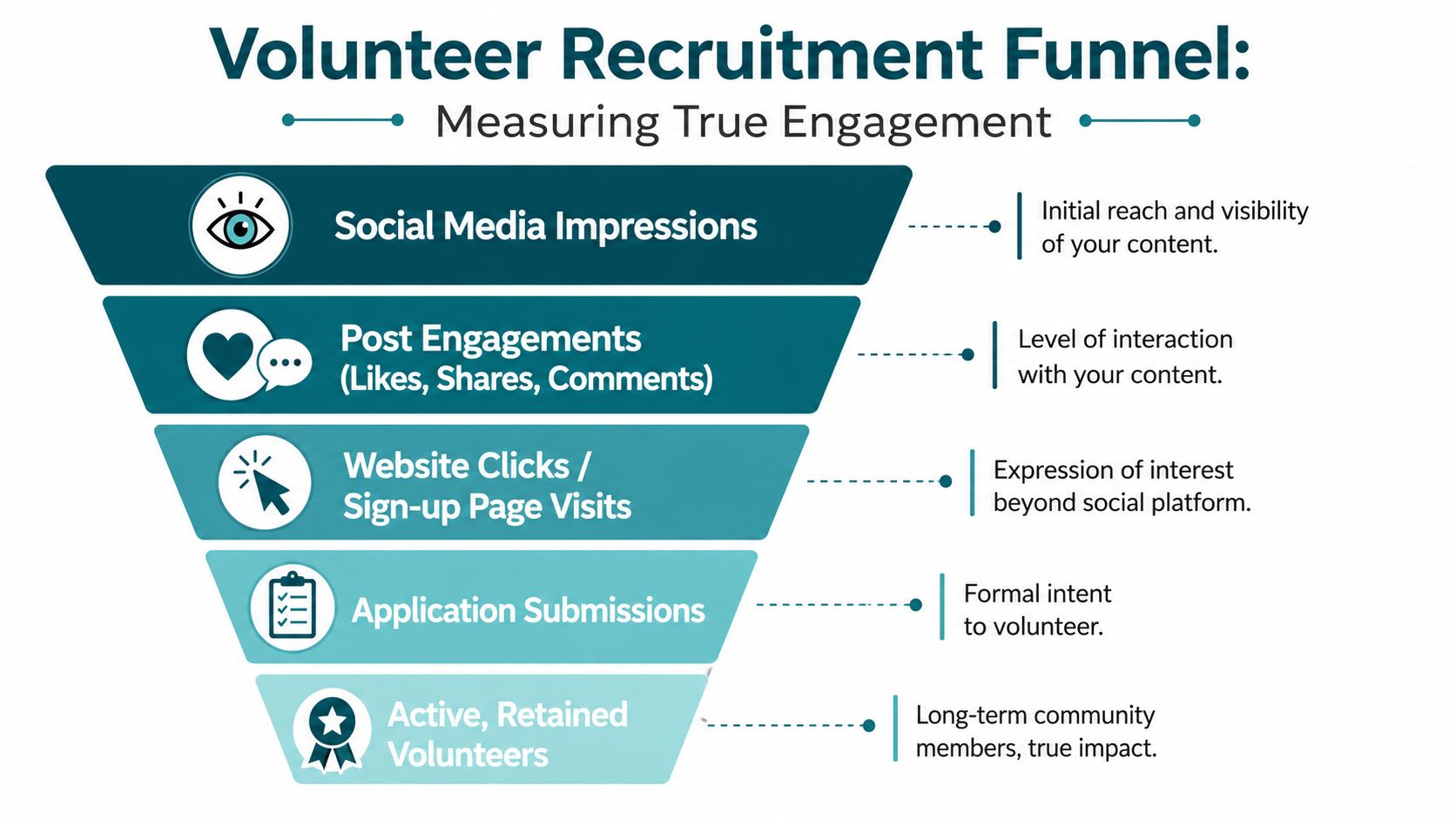
Social media can make noise feel like progress. Movements grow on something harder. People who register. People who arrive. People who come back with a friend.
Track the full journey
A post is only the first footstep.
What matters is the path after that. Did someone click the event page? Did they sign up? Did they stand on the corner at 9 a.m. in old shoes, wondering if they knew anyone yet? Did they leave feeling more like a stranger, or more like they had found their people?
You do not need a fancy dashboard to see the truth. Start with one plain measure: the share of applicants who show up. As noted earlier, volunteer programs often compare that conversion point because it exposes where the drop happens.
Then go one step further and follow the full chain.
If plenty of people view the event but few sign up, the invitation is weak or unclear. If people sign up but disappear before the event, the follow-up is weak. If they attend once and vanish, the problem is not your captions. The experience itself did not give them a reason to return.
The scoreboard I care about
I keep coming back to four numbers.
| Metric | Why it matters |
|---|---|
| First-time volunteers | Shows whether your stories and invites are bringing in new people |
| Showed up for first shift | Shows whether registration, reminders, and logistics are clear |
| Returned again | Shows whether the experience felt meaningful enough to repeat |
| Brought a friend | Shows whether the culture is strong enough to spread |
The last two matter most.
A volunteer list can grow and still stay fragile. A tribe gets stronger when people return without being chased, then pull someone else into the circle. That is how a neighborhood group starts to feel less like an event calendar and more like a living thing.
Count the people who came back. Count the people who invited someone. That is where the guts of your community live.
Face the hard answer
Sometimes your social media is not the problem.
Sometimes the meeting point is confusing. Sometimes new people arrive and nobody greets them. Sometimes the work feels so transactional that people leave with a full trash bag and an empty heart. I have seen all three. None of them get fixed by posting more often.
That is the hard part of measurement. It asks for courage, not vanity.
Use whatever event hub you already have, whether that is Meetup, Facebook Events, or another community platform. Then check whether a first-timer can find three things in seconds: what this is, how to join, and what to expect when they arrive.
Growth matters. Guts matter more.
Follower counts can impress outsiders for a minute. Return volunteers build the culture, carry the story, and keep the campfire burning when the algorithm moves on.