

I watched a woman at a library computer open three tabs for Open Arms Ministry, then close two of them with a tired sigh. She wasn't confused because she wasn't trying hard enough. She was confused because the name is real, welcoming, and used by many different groups.
Your Search for Open Arms Ministry Starts Here
If you've ever typed Open Arms Ministry into your phone while your stomach was tight and your battery was low, I get it. You might need groceries. You might need a place where your teenager can stay safe after school. You might be trying to help a brother, son, or friend come home after jail and start over. Then the search results start piling up, and suddenly one name points in several directions.

Imagine walking down a block where three doors all say “welcome,” but each one leads to a different room. One room has pantry shelves. One room has youth staff and a Wi-Fi password on the wall. One room has church volunteers talking about reentry and second chances. The sign over the door sounds the same. The help inside does not.
Why the name feels confusing
A lot of people search for one thing and land on another. A parent may hope for counseling for a teen and find pantry hours instead. A person coming home from incarceration may hope for job help and find a soup kitchen listing. A neighbor who wants to donate may assume there's one national office when there often isn't.
You're not lost because you missed something. The map is messy.
That's why I'm writing this in a plain way. I want you to find the right door faster.
What you'll want to pin down first
Before you call or visit, ask yourself one simple question: What kind of help do I need today?
- Food for this week: look for pantry hours, meal times, and address details.
- Youth support: look for age range, drop-in hours, classes, or mentoring.
- Reentry help: look for language about jail ministry, church welcome teams, housing, or community support.
- A place to give help: look for volunteer contacts, donation needs, and local service schedules.
Once you know your need, the search gets easier. The name “Open Arms Ministry” is warm. Your next step is making it specific.
What Exactly Is an Open Arms Ministry
Think about a place called Corner Cafe. You could find a Corner Cafe in one city that sells pancakes, another that sells tacos, and another that closes before lunch. Same name. Different owners, different habits, different purpose. Open Arms Ministry works a lot like that.
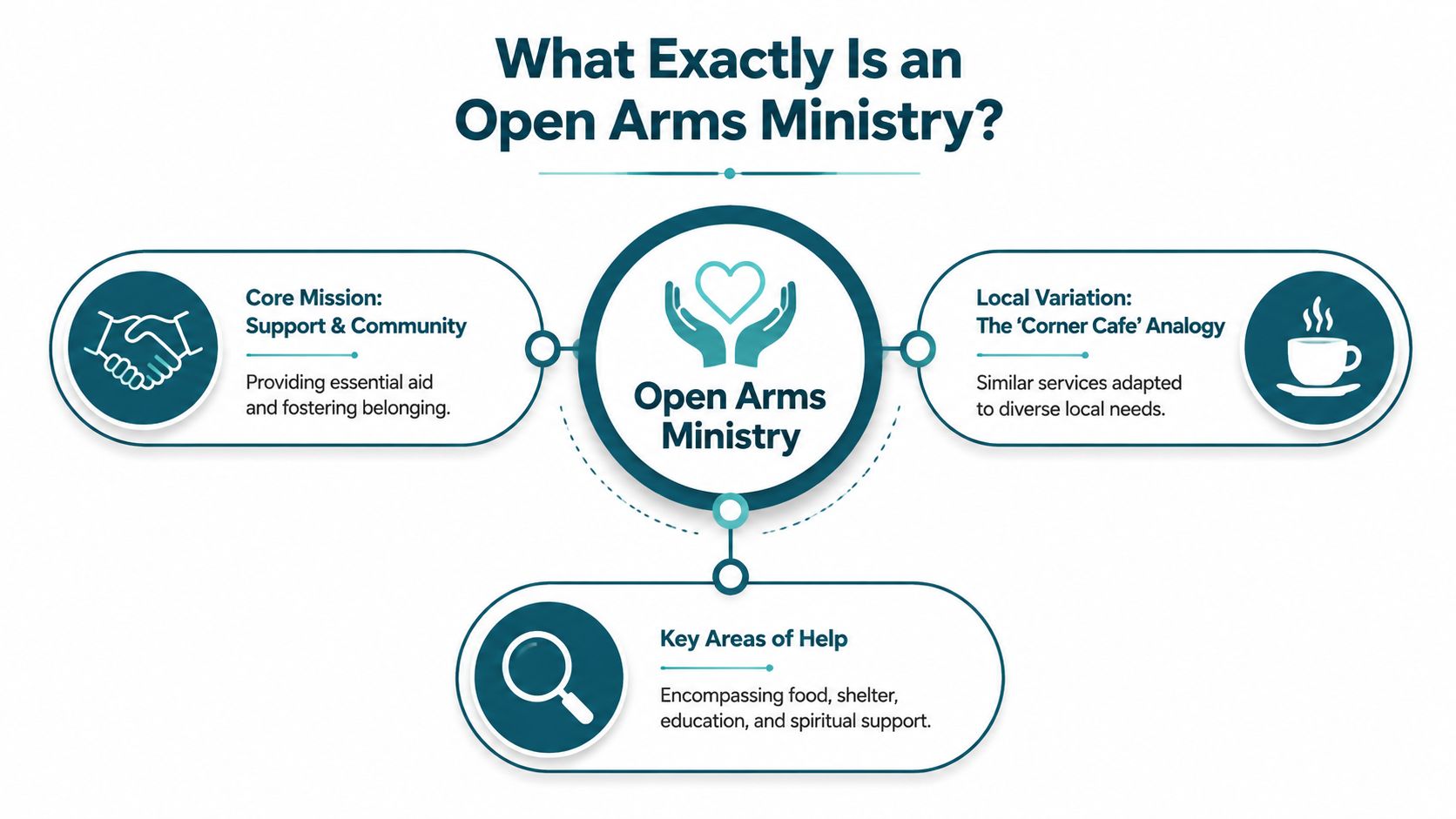
When I say Open Arms Ministry, I'm usually talking about a local faith-based group using that name to welcome people and meet needs in its own way. That's the common thread. The structure, programs, and daily work can change a lot from one city to another.
Same spirit, different missions
Some groups using this name focus on the basics first. Food. Clothing. A hot meal. A short conversation that helps a person breathe again.
Others build their whole identity around children and family care. For example, Open Arms Christian Ministries has worked for over 40 years on child welfare by providing safe homes and a structured community to help minors recover from trauma, as described on the Open Arms Christian Ministries website. That's very different from a pantry model, even though the name feels familiar.
Here's the simplest way I sort it out:
| Type of group | What you may find |
|---|---|
| Pantry-based ministry | Grocery pickup, meal service, basic needs |
| Youth-centered ministry | Drop-in support, snacks, classes, trusted adults |
| Family or child welfare ministry | Safe homes, structured care, long-term support |
| Reentry-focused ministry | Church connection, support after release, community welcome |
What the name does and doesn't tell you
The name tells you something about tone. It tells you the group likely wants to receive people warmly. It does not tell you exactly what services exist, what hours they keep, or who they serve.
That's where people get tripped up.
Practical rule: Treat “Open Arms Ministry” as a starting clue, not a full description.
If you're searching online, don't stop at the homepage name. Look for these details right away:
Street address
That helps you tell one ministry from another.Service type
Pantry, youth center, housing, church ministry, or another model.Hours and days
A kind mission statement won't help if you arrive on the wrong day.Who they serve
Families, teens, adults, returning citizens, or children in care.
Once you start looking at the name this way, the confusion eases. You stop asking, “What is Open Arms Ministry?” and start asking, “Which Open Arms Ministry is this?”
Finding Food and Immediate Help
The first time I walked into a pantry years ago, I kept rehearsing what I'd say. I thought I needed the right words. I thought I had to explain myself. Then a volunteer looked up, smiled, and asked if I needed a bag.
That's what immediate help often feels like at its best. Simple. Human. No speech required.
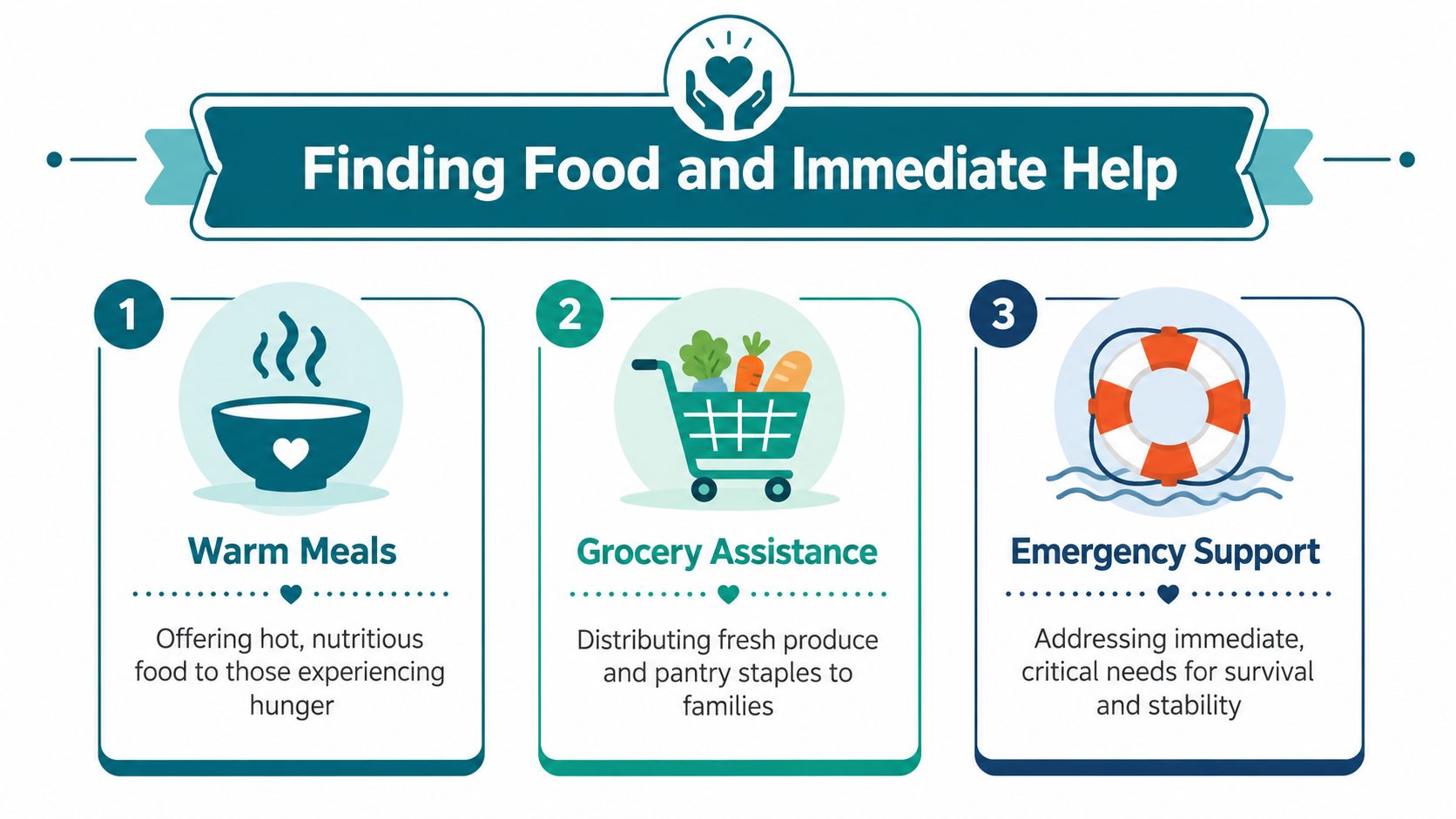
Many ministries using the Open Arms name are closest to this model. They deal with the need that can't wait. Empty cupboards. Thin paychecks. A week that went off the rails.
A real Chicago example
In Chicago, Open Arms Ministry at 2649 N Francisco Ave is a verified food pantry in the Greater Chicago Food Depository network, and it serves residents every Wednesday from 4:00 PM to 6:00 PM, according to the Greater Chicago Food Depository location listing for Open Arms Ministry.
That kind of detail matters. Address. Day. Time. Those are the facts that turn a vague search into an actual trip.
A lot of people need that kind of certainty. If you're juggling work, the bus, kids, or plain exhaustion, “Wednesday from 4:00 PM to 6:00 PM” is better than a paragraph full of warm words.
Here's a short visual that may help if you're trying to picture what food support can look like:
What a first visit usually feels like
A parent heading into a pantry for the first time often carries two bags. One is for food. The other is invisible. Shame, nerves, pride, fear of being judged.
Most of the time, the room gets lighter once the first hello happens.
You may see folding tables, canned goods, produce boxes, or volunteers directing people into a line. You may need to sign in. You may be asked basic questions. Every pantry runs a little differently, so call first if you can.
Here's a practical checklist:
- Bring basic documents if you have them: some sites may ask for ID or proof of address, and some may not.
- Bring a cart or sturdy bags: food gets heavy fast.
- Arrive early if possible: lines can form before opening time.
- Ask what else they know nearby: pantry volunteers often know meal sites, clothing closets, and other neighborhood help.
If you're in Chicago and comparing options, this local guide to the Casa Catalina Food Pantry in Chicago can also help you think through what to expect from a neighborhood pantry visit.
What to look for in search results
Don't trust the name alone. Look for signs that a listing is current.
- A clear address
- Current pantry hours
- Connection to a food network or local directory
- Phone contact or location notes
If your need is food tonight or groceries this week, search for hours before mission statements.
That one habit saves time, gas, and heartache.
Support and Safe Spaces for Youth
A teen doesn't always say, “I need help.” Sometimes it comes out as hanging around too late, skipping home, or asking where the Wi-Fi is and pretending that's the only reason they came.
That's why youth support matters so much when it exists. A safe room can change the shape of an afternoon.
When an Open Arms name means youth support
Some ministries using the Open Arms name are built for young people. One example is the San Bernardino Open Arms drop-in center, which caters to youth ages 14 to 24, while many ministry websites still don't make youth services clear, as described on the Open Arms youth center page from Family Assistance Program.
That contrast is what makes searching hard. One site may plainly describe youth ages, snacks, classes, and hygiene support. Another may say almost nothing beyond a name and a church address.
So if you're a parent, aunt, uncle, teacher, or teen, don't assume. Ask.
What youth help can look like on the ground
I think of a teenager walking in after school with a dead phone and a face that says, “I'm fine,” when they aren't. In a good youth space, nobody rushes them. Someone points to snacks. Someone knows their name by the second visit. Homework happens at one table. Quiet conversation happens at another.
That kind of place has rhythm. A fridge humming in the corner. A charger basket. A staff person who notices when a kid gets quieter than usual. It may not look dramatic from the outside. But inside, it can feel like a railing on a steep staircase.
If you're trying to locate youth-friendly community support in Chicago, this page about the Friendship Center in Chicago may help you compare what a service-oriented neighborhood resource can look like.
Questions I'd ask before showing up
Call or message first and keep it simple. You don't need to perform. You just need answers.
- What ages do you serve
- Do teens need a parent with them
- Do you have after-school hours
- Do you provide snacks, hygiene items, or help with schoolwork
- Is there someone my child can talk to one-on-one
Ask direct questions. A vague website usually means you need a real conversation.
If the person answering sounds unsure, that tells you something too.
If the website says almost nothing
That doesn't always mean the ministry is uncaring. Sometimes small groups are busy doing the work and bad at explaining it online. But if you're in a moment of need, missing details still create a real barrier.
So trust clarity. If one ministry says who it serves and when, and another gives only a logo and a verse, start with the place that gives you usable information.
A young person looking for safety shouldn't have to solve a puzzle first.
A New Start After Being Behind Bars
When someone comes home from jail or prison, people around them often say, “Just stay out of trouble.” That line is cheap. It asks for a new life without naming what a new life needs.
A new life needs people. It needs a place to land. It needs someone who doesn't flinch at your past and then leave you alone with your paperwork, fear, and empty pockets.
Why many searches hit the wrong kind of help
A lot of people assume an Open Arms Ministry will have reentry support built in. That would make sense. The name sounds like the place you'd go when the world has shut its doors.
But the situation is more uneven. A major gap exists because most public-facing Open Arms Ministry locations focus on food, not the specialized reentry support needed by the 640,000 people released from state prisons annually, and specialized jail ministry programs are not always integrated with local food pantries, according to the Open Arms jail ministry page.
That means a person may search for one kind of welcome and find another. Pantry help matters. It just isn't the same as reentry support.
What reentry help usually needs
If I were helping someone home after incarceration, I wouldn't stop at “Do they give out food?” I'd ask deeper questions.
| Need | What to ask |
|---|---|
| Community | Do you have a mentor, church contact, or welcome team? |
| Stability | Can you point me toward housing or practical support? |
| Next steps | Do you help people reconnect with work, family, or local services? |
A reentry ministry often works more like a bridge than a pantry shelf. It may connect churches to people coming home. It may build relationship first and services second. It may involve listening, consistency, and lots of small steps.
What I'd say to someone searching tonight
If you or someone you love is coming home, don't assume every local ministry with a warm name is prepared for reentry. Call and ask plainly:
- Do you have specific support for people returning from jail or prison?
- Is this a pantry ministry, or do you also help with reentry needs?
- Do you partner with a jail ministry or church reentry team?
Food support can steady a week. Reentry support helps steady a life.
That difference matters. You're not asking for too much by wanting the right kind of help. You're asking the right question.
How You Can Be the Open Arms for Someone Else
Sometimes the person reading this isn't looking for food, youth help, or reentry support. Sometimes you're reading because you feel that tug in your chest that says, “I need to do something.”
Good. Hold onto that.
Local ministries with names like Open Arms often need help that is humble and specific. Not grand speeches. Not rescue fantasies. They need the kind of help that shows up on time and asks what's useful.
Start local and stay practical
Because these ministries are often independent, the best move is direct contact. Find the one in your town. Call. Send a short email. Ask what they need this month, not what you assume they need.
Here are the questions I'd use:
- Where are you short right now
- Do you need volunteers, donated goods, or both
- What days are hardest to staff
- What should I avoid dropping off
- Who should I talk to before I show up
That last question matters. Good intentions can still create extra work if you arrive with the wrong items or at the wrong time.
Ways to help that people often overlook
Some ministries need cash. Some need canned food. But many also need plain, unglamorous labor.
One person sorting donations for two hours can save staff energy. One driver with room in a car can move supplies. One calm adult who greets guests kindly can change how a room feels.
If you're new to service work, this guide on how to start volunteering is a useful way to think through consistency, attitude, and showing up in a way that helps.
The best volunteer is often the one who asks, listens, and comes back.
Give in a way that fits the place
A pantry may need grocery staples and sturdy bags. A youth space may need snacks, hygiene items, chargers, or art supplies. A reentry ministry may need mentors, rides, and people willing to build trust slowly.
That's why I don't like one-size-fits-all advice here. The name may be shared. The need is local.
If you have money, give locally and ask what fills a real gap. If you have time, offer a small repeatable block instead of one dramatic burst. If you don't have much of either, be the person who spreads accurate information. That counts too.
People find help faster when one neighbor says, “I called them. Here's what they do.”
Your Questions About Local Ministries Answered
A lot of last-minute questions come up right before someone makes the call or walks through the door. I hear that hesitation all the time. It usually sounds practical on the surface, but underneath it is fear of being turned away.
Do I have to be religious to receive help
Usually, people look for help because they need help. If a ministry has food, youth support, or other aid open to the public, start by calling and asking about eligibility and hours. You don't need to sound polished. Just say what you need and ask if they can help.
If you're thinking about volunteering, ask what their expectations are for volunteers. Some ministries are church-based and some roles may fit their faith setting more directly than others.
Will I need an ID or paperwork
Sometimes yes, sometimes no. Pantry rules, sign-in practices, and intake steps vary by location. That's why I always tell people to call before going if they can, and ask, “What should I bring with me?”
If you don't have documents handy, still call. Don't disqualify yourself in your head before a real person answers.
How do I know I found the right Open Arms Ministry
Match the name with the details. Check the address, days, service type, and who they serve. If the listing is vague, call and ask direct questions like, “Are you a food pantry?” or “Do you work with youth?” or “Do you help people after incarceration?”
You are allowed to be specific. In fact, being specific is the fastest path to actual help.
If one place can't meet your need, ask them if they know a nearby group that can. People doing community work often know each other better than websites do.
If reading about open hands and local help makes you want to step outside and do some good close to home, take a look at Litter Caterpillars. It's a Chicago volunteer group that meets weekly and has cleaned all 50 wards of the city over about three years, including through the 50 Ward Challenge and in hard-hit places that need steady care, as their Meetup page describes. If you want a human way to help your city, meet people, and build a habit of service, it's a good place to start.