
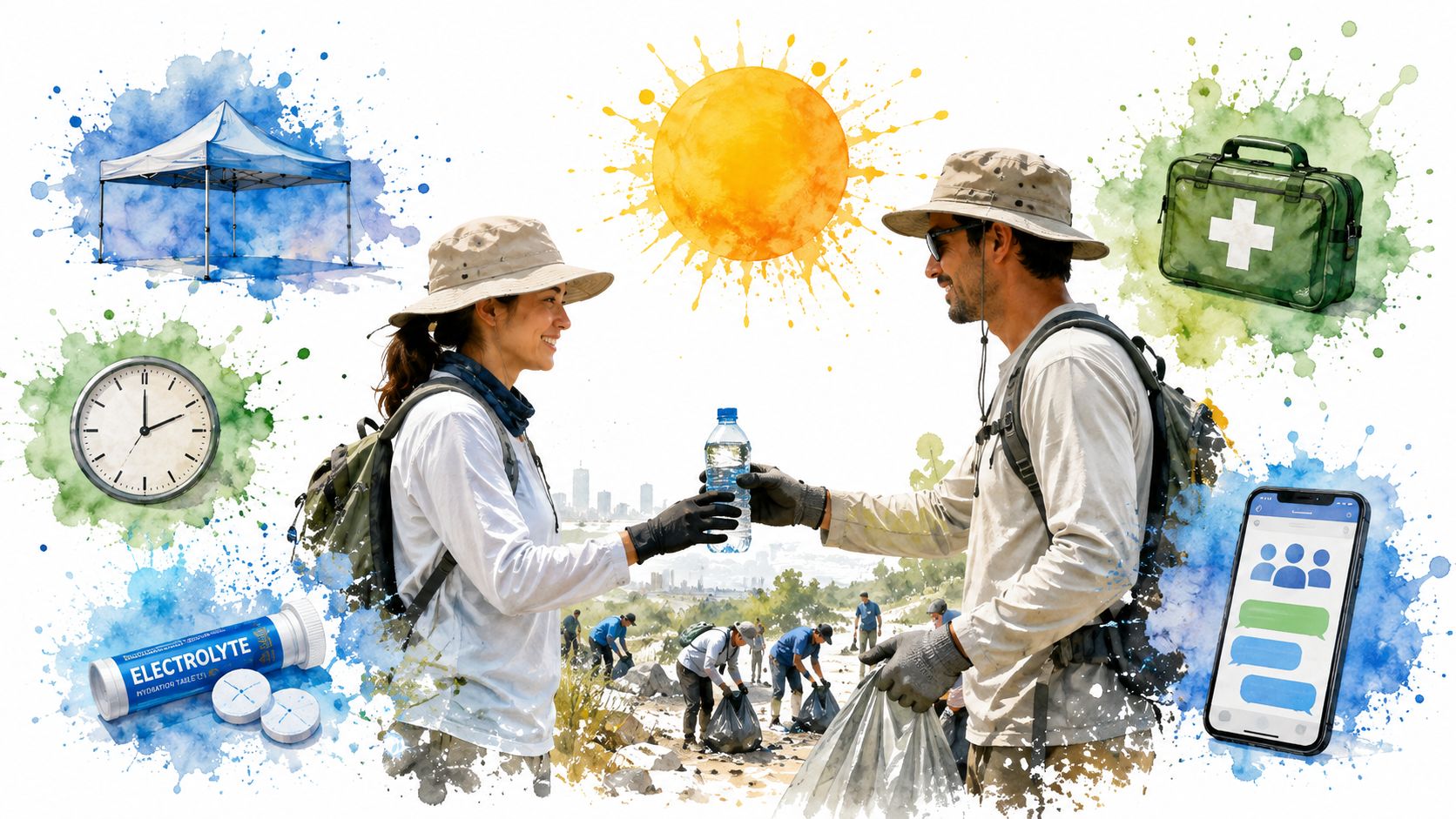
Drink water every 15 to 20 minutes in the heat, move the hardest work to cooler hours, and start cooling down long before thirst hits. A good cleanup crew protects itself with shade breaks, loose light clothing, sunscreen, and a clear stop signal when someone starts feeling off.
It always starts the same way on a Saturday morning. The Litter Caterpillars show up for a weekend cleanup, the air still feels easy, and the trash bags look lighter than the day ahead. Then the sun climbs, the pavement heats up, and the same people who felt fresh at 9 a.m. start moving like they're carrying bricks instead of litter.
That's where a cleanup turns from “let's get it done” into “let's get it done safely.” I'd rather lose a few bags than lose a volunteer to heat exhaustion. The right move is to plan the shift before anyone grabs a picker, so the crew runs like a small field team instead of a bunch of people guessing in the sun.
I think about heat safety as a group cleanup system. Water, shade, timing, clothing, and buddy checks all work together. If one piece fails, the rest have to carry too much weight. If the whole crew treats the day like a paced route, everybody gets home tired, sweaty, and fine.
A weekend-morning group like Litter Caterpillars already has the right instinct, because the work feels social and practical at the same time. The trick is keeping that energy steady when the heat starts pushing back. Here are eight heat exhaustion prevention tips I use when I want the bags collected and the people still smiling.
1. Drink Water Before, During, and After Your Cleanup Shift
I learned fast that thirst is a late signal. By the time I feel thirsty on a hot cleanup day, my body has already started losing ground, so I treat water like gear, not like a backup plan. OSHA guidance and workplace safety sources say to drink about 8 ounces every 15 to 20 minutes in hot conditions, Texas safety guidance says workers should drink at least one pint every hour, and the World Health Organization advises 1 cup per hour and 2 to 3 liters per day while avoiding alcohol and limiting caffeine and sugar, because hydration should start before thirst does, not after it OSHA and related workplace heat guidance.
Make water part of the rhythm
I tell volunteers to sip on a timer, the same way they'd check their phone or scan the street for litter. That little habit keeps people from entering the red zone without noticing. It also helps if you're moving fast and not thinking about yourself, which happens all the time during a good cleanup.
Bring a big bottle, then keep a second bottle cold at the site if you can. If plain water feels boring, a slice of lemon or lime helps people drink more without turning the cooler into a science project. I've found that the key win is consistency, because a crew that drinks early usually stays calmer, lighter, and easier to guide.
Practical rule: if someone says they're “fine” but hasn't had a sip in a while, hand them water anyway.
The same logic helps after the shift. Sweat doesn't stop just because the last bag is tied off, so I keep people drinking on the ride home and at the post-cleanup hangout. If you want the body to recover well, you can't treat the work window like the only time hydration matters.
2. Wear Light-Colored, Loose-Fitting Clothing
Clothes matter more than most first-time volunteers expect. Dark, tight clothing soaks up heat and traps it close to the body, while light colors and looser cuts help the body dump heat more easily. I've worn both on the same kind of morning, and the difference shows up fast once the sun gets serious.
Dress like you plan to be outside for hours
I usually reach for a white or light gray shirt on cleanup days, then pair it with loose shorts when the weather allows. If I know I'm going to be out for a long stretch, I'll pick breathable fabric instead of something thick and heavy. The point is simple, sweat has to evaporate if you want to cool down, and tight clothes fight that process.
A wide-brimmed hat helps too, especially one with enough brim to shade the face, ears, and neck. If you want to go further, UV-blocking clothes make sense for long exposure days. I don't love seeing volunteers in dark jeans on hot pavement, because they usually regret that choice by the time the first water break arrives.
- Choose light colors: White, light gray, and other pale shades reflect more sun than dark fabric.
- Pick looser cuts: Air needs room to move around your skin.
- Use breathable fabric: Cotton works well for many people, and moisture-wicking fabric helps when sweat runs heavy.
- Add head coverage: A wide brim reduces direct sun on your face and neck.
- Skip heavy denim: Dark jeans turn a cleanup into a slow bake.
The trade-off is obvious. You may not look like you're headed to a photo shoot, but you'll feel better, move easier, and last longer. That's the goal when the work is trash pickup, not a runway.
3. Take Regular Breaks in Shaded Areas
I build breaks into every hot cleanup I run, because nobody earns points for pretending they're invincible. Shade is where a crew resets, drinks, and comes back with a body temperature that's closer to normal. OSHA's heat guidance and related public-health advice both push regular rest in shade, and the CDC archive says to limit exercise in hot environments and rest frequently in shade CDC heat safety archive.
Treat the break like part of the route
Every 30 to 45 minutes, I call for a stop. Ten or 15 minutes in the shade gives people time to sit, drink, talk, and notice if they're starting to wobble. That pause also changes the mood in a good way, because people breathe again and remember they're a team, not just a line of arms with trash grabbers.
I scout for shade before a cleanup starts. A tree works, a building overhang works, and even a parked truck can work if it's the only option. If a site has almost no shade, I bring a pop-up tent or a large umbrella, because I'd rather carry one extra item than gamble with a volunteer's health.
Shade is not a luxury on a hot day. It is part of the plan.
Use break time to check faces, not just bags. If somebody looks flushed, sluggish, or unusually quiet, that's a cue to slow down. I want volunteers sitting fully down, too, because standing around in the heat isn't the same thing as resting.
4. Recognize Early Heat Exhaustion Symptoms in Yourself and Others
Heat exhaustion usually shows up in the middle of a cleanup, not at the start. A volunteer can keep bending, lifting, and walking for a while after judgment has already slipped, so the crew has to catch the warning signs early. I've seen people try to keep pace because they didn't want to slow the group down. That is how a small problem turns into a group problem.

Learn the warning signs before the heat hits
The signs I watch for are heavy sweating, weakness, dizziness, nausea, headache, and muscle cramps. If someone starts moving slowly, looks pale, or stops answering in their usual way, I ask them to sit down right away. If I feel dizzy, I do not try to push through and prove anything, I stop, tell the crew, and get out of the sun.
Buddy checks make this work better than a solo mindset. Pairing newer volunteers with experienced ones gives the group two sets of eyes on the same workload, and a quick verbal check-in can catch trouble before it gets worse. I like asking, “How are you really feeling?” because that question is direct enough to get a real answer. A volunteer who says they are fine but sounds off still needs attention.
Crew culture matters here too. the health benefits of volunteering in a crew go beyond social connection, because people who know each other's pace notice when someone falls behind. That makes it easier to speak up without turning a safety check into a personal slight. Heat safety gets stronger when the group treats slowdown as normal information, not a weakness.
When someone shows symptoms, I move them to shade, give them water if they can drink, and keep one person with them while the rest of the crew keeps working or stops with them. That response is simple, but it keeps the whole cleanup from drifting into confusion. A calm call, a shaded seat, and a buddy who stays alert can stop an emergency before it starts.
5. Apply Sunscreen and Reapply Regularly
Sunburn and overheating often show up together, and I don't treat them like separate problems. Your skin takes a hit from UV exposure, and burned skin has a harder time helping your body manage heat well. I apply sunscreen before I leave, then I reapply during the cleanup if sweat starts wiping it off.
Use sunscreen like part of your uniform
I put it on about 15 minutes before I head out, so it has time to set. For longer outdoor time, I use SPF 30 minimum, and SPF 50 makes sense when I know I'll be outside for hours. A full-body application takes more than a quick dab on the nose, so I don't rush it.
Reapply after heavy sweating or after about two hours, and keep a small bottle in the cleanup kit so nobody has to improvise. Spray sunscreen can help when a group needs fast touch-ups without a mess. Cloudy weather doesn't give you a pass either, because UV rays still get through.
I think of sunscreen as a shield, not a force field. It cuts down damage, but it only works when you actually use it.
I've seen volunteers ignore sunscreen because the morning feels mild, then spend the afternoon rubbing their shoulders and necks because the sun won anyway. That kind of burn makes the rest of the day harder. If your skin starts to cook, your whole cleanup feels heavier.
6. Adjust Your Work Intensity Based on Heat Index, Not Just Temperature
Temperature alone can fool you. A humid day can make a moderate number feel much worse because sweat does not evaporate well, and your body loses one of its main cooling tools. That is why I check the heat index before a hot-weather cleanup, not just the temperature on my phone.
Let the forecast shape the job
If the heat index looks rough, I change the work plan before volunteers arrive. Heavy hauling turns into lighter sorting, sweeping, or bag staging. Shorter shifts make more sense too, because I would rather get a smaller area cleaned well than push people into a bad afternoon.
Use the forecast like a traffic light. If the heat index is above 103°F, I treat that as dangerous and think hard about rescheduling or doing only minimal work. If it lands between 90 and 103°F, I expect frequent breaks and lighter tasks, not full-speed hauling. That call feels conservative at first, then smart when the crew finishes steady instead of fried.
I tell volunteers the plan before they show up, because nobody likes discovering a heat-downshift after they have already committed their day. If I know the afternoon is going to be ugly, I also keep an indoor backup option or an early dismissal plan ready. How I organize a neighborhood cleanup in extreme heat starts with that kind of honest timing call.
The trade-off is simple. You may collect less trash in one session, but you keep the crew healthy enough to come back next week. That matters more than trying to squeeze every last block into one hot push.
7. Eat a Light Meal and Avoid Alcohol Before and During Heat Activity
Hot work takes fuel, but heavy fuel can backfire. I eat something light before cleanup, usually carbs with a bit of protein, because I want energy without a stomach that feels like it's working a second shift. Heavy, fatty meals slow people down, and alcohol makes the whole situation worse by dehydrating the body.
Keep the stomach calm and the energy steady
A banana, toast, or yogurt usually sits better than a big greasy breakfast. If I know the cleanup starts late enough that people may show up hungry, I bring light snacks so nobody tries to work on fumes. Nuts, fruit, and energy bars are easy to hand out and easy to eat in the shade.
Timing matters here too. Eating 2 to 3 hours before you start gives the body a chance to settle before you're moving in the heat. That spacing makes a volunteer feel less stuffed and less sluggish when the work starts.
- Choose simple fuel: Carbs and light protein usually sit better than fatty food.
- Bring backup snacks: Fruit, nuts, and energy bars help late arrivals.
- Avoid alcohol before and during heat work: It dries you out when you need fluids most.
- Wait on celebratory drinks: If you're still hot and sweaty, give your body time first.
I've seen post-cleanup beers turn into a bad idea fast when people are still overheated. Wait until evening if you want one. Your body will thank you for not asking it to cool down while you're handing it alcohol at the same time.
8. Avoid Peak Heat Hours by Scheduling Cleanups for Morning or Early Evening
This is the move I trust most. I schedule weekend cleanups in the morning because it gives us cooler air, fresher people, and less friction before the day gets mean. The sun tends to hit hardest between 10 a.m. and 4 p.m., with the worst stretch usually between noon and 3 p.m., so I want the hard work done before that window bites down Litter Caterpillars cleanup timing.
Start early and the whole day gets easier
For summer cleanups, I like a start time of 9 a.m. or earlier. If we absolutely have to work later, I'd rather wait until 4 to 5 p.m. than drag people through midday heat. Morning cleanups also give me more control over pacing, because I can plan a longer route when the temperature is still kind.
Clear timing helps volunteers, too. If they know the event starts early, they can drink water before leaving home, eat properly, and show up already prepared. That makes the whole group easier to manage, because nobody arrives late and overheated before the work even starts.
Early scheduling is the cheapest heat tool I know. It doesn't cost more gear, it just costs a little discipline.
I like weekend mornings for another reason. The people who show up early usually want to be there, and that energy helps the crew move with purpose without rushing. It's a cleaner rhythm, and it gives us a better shot at finishing strong without anyone getting cooked.
8-Point Heat Exhaustion Prevention Comparison
| Item | 🔄 Implementation | ⚡ Resources | ⭐ Expected effectiveness | 📊 Ideal use case | 💡 Key tip |
|---|---|---|---|---|---|
| Drink Water Before, During, and After Your Cleanup Shift | Low, habit + reminders | Minimal, bottle, cooler | ⭐⭐⭐⭐ | Any outdoor cleanup, especially hot/long shifts | Pre-hydrate 2–3 hrs; sip every 15–20 min; bring ≥32 oz |
| Wear Light-Colored, Loose-Fitting Clothing | Low, choose clothing | Minimal, light breathable fabrics, hat | ⭐⭐⭐⭐ | Sunny hot days, prolonged exposure | Use breathable fabrics and a wide‑brim hat |
| Take Regular Breaks in Shaded Areas | Medium, schedule and enforce breaks | Low, shade, umbrella or pop‑up if needed | ⭐⭐⭐⭐ | Strenuous or long cleanups in heat | Break every 30–45 min for 10–15 min; sit and hydrate |
| Recognize Early Heat Exhaustion Symptoms in Yourself and Others | Medium, training + buddy checks | Low, training time, monitoring | ⭐⭐⭐⭐⭐ | All group activities; critical for volunteer safety | Learn symptoms; check volunteers every 30 min; act early |
| Apply Sunscreen and Reapply Regularly | Low, routine application | Low, SPF30+ sunscreen, carry spare | ⭐⭐⭐ | Sunny days, long exposure | Apply 15 min before; reapply every 2 hours or after heavy sweating |
| Adjust Your Work Intensity Based on Heat Index, Not Just Temperature | Medium–High, monitoring and planning | Low, heat index data, alternative tasks | ⭐⭐⭐⭐ | Humid climates or high heat-index days | Check heat index morning; lighten tasks or reschedule >103°F |
| Eat a Light Meal and Avoid Alcohol Before and During Heat Activity | Low, meal timing planning | Minimal, light snacks | ⭐⭐⭐ | Volunteers who come straight from home or long shifts | Eat 2–3 hrs before; choose light carbs/protein; skip alcohol |
| Avoid Peak Heat Hours by Scheduling Cleanups for Morning or Early Evening | Low–Medium, schedule coordination | Minimal, timing adjustments | ⭐⭐⭐⭐⭐ | Summer cleanups; high daytime temperatures | Start before 10 a.m. (ideally ~9 a.m.) or after 4 p.m.; communicate time clearly |
Leave the Cleanup for Another Day
When I run a hot-weather cleanup, I keep the routine simple. I check the heat index the night before and again in the morning, then I move the start time if the forecast turns ugly. I pack water, shade, sunscreen, and snacks, then I brief the buddy system so every volunteer has someone watching out for them.
I also set break times before anyone starts grabbing bags. That way, the rest stops feel normal instead of like punishment. If the day gets hotter than expected, I cut the workload, switch people to lighter tasks, or end early. A good cleanup plan bends before people do.
The emergency response should stay just as plain. If someone shows heat exhaustion signs, I move them to shade, cool them, and give water when they can drink. Then I keep monitoring them, and I get help if symptoms don't improve or if they turn severe. I'd rather make that call early than gamble on somebody's pride.
That's the volunteer-first way I like to run a crew. The bags can wait, the block can wait, and the next stretch of litter can wait too. A safe, happy volunteer comes back next week, and that gives you more cleanups, more trust, and a crew that lasts.
If you want to clean Chicago without burning out your people, join Litter Caterpillars. We run volunteer-first cleanups that keep safety, timing, and teamwork at the front of the day, so you can help your neighborhood and still feel good when you head home.