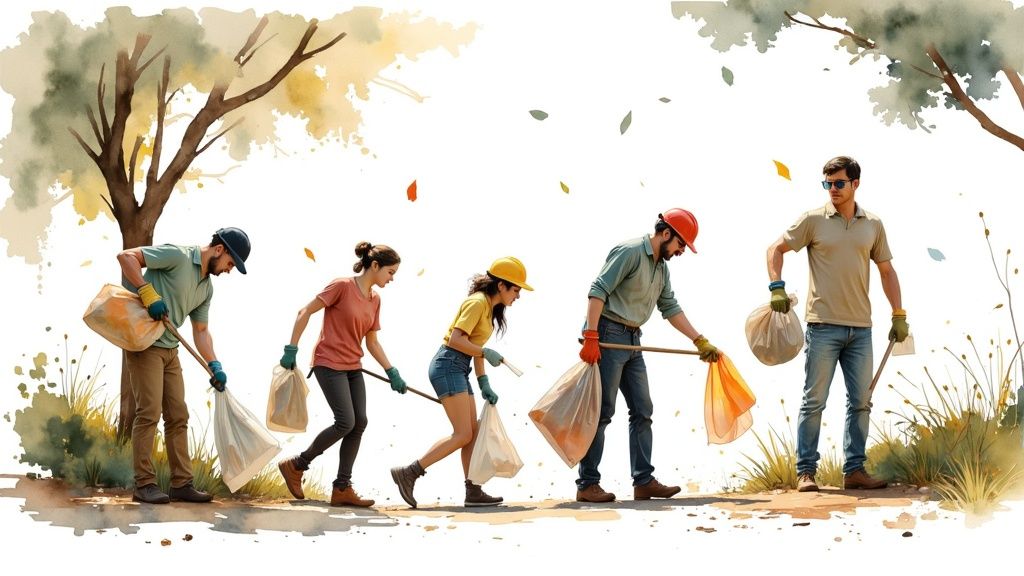
You don't need a master plan. You don't need a city permit. To clean up a park, all you need is a garbage bag, a pair of gloves, and the guts to start.
Seriously. That’s it.
This whole thing is a lot easier than you think. Grab a bag, ask a friend to come along, and just begin. This one small, brave act is a stone tossed into a still pond. The ripples will surprise you.
The Moment You Decide to Be the Change
It always starts with a walk. You're in your favorite park, maybe cutting through on your way to work, and you see it. A crumpled chip bag. A plastic bottle hiding in the grass. That familiar annoyance creeps in, and you think, "Someone really ought to clean this up."
That's the moment. That's the spark.
Most people just keep walking. But you're reading this, which means that thought stuck with you. You started asking yourself, "What if I'm that someone?"
This isn't about being a superhero. It's about having the quiet courage to bend over and pick up a piece of trash. It's realizing you don't need anyone's permission to care for a place that brings you peace.
From Frustration to Action
That feeling of frustration? It's a superpower. It’s a sign that you give a damn. The trick is to aim that fire at the problem instead of letting it burn you out.
Think of that annoyance as a seed. On its own, it’s nothing. But with a little action, it can grow into something incredible.
This mental shift is everything. It's the difference between feeling helpless and feeling powerful. You stop waiting for someone else to fix the problem and realize you already have everything you need to start.
The biggest community movements don’t start in boardrooms. They start with one person who decides to show up. Your decision to clean up a park is a brave act of kindness that will ripple out in ways you can't even imagine.
This journey is also one of massive personal growth. When you decide to pick up that first piece of litter, you’re not just cleaning a physical space; you’re cleaning out a corner of your own mind. You're proving to yourself that you can face a problem head-on, that you can be consistent, and that your actions count.
This isn't about being perfect. It's about showing up. It’s a joyful rebellion against apathy, and it's proof that one person’s initiative is the foundation of every great community movement.
If you want to connect with others who feel the same way, you can even check out resources on how to find volunteer work.
You are that someone. Let's get started.
Your Blueprint for a Successful Cleanup Day
That spark you feel? The one that says, "Someone should do something about this"? That's powerful. You’ve decided to be that someone, and now it’s time to turn that feeling into a real-world impact. This isn't about getting bogged down in spreadsheets; it's about drawing a simple map so you can focus on the mission, not the minutiae.
Think of it like planning a surprise party for a friend. You scout the location, get the supplies, and invite the guests. A park cleanup is the same thing—it's a party with a purpose. A little bit of planning upfront ensures everyone has a fantastic, impactful time.
This is the journey you're on right now. That moment of frustration leads to an idea, which leads to the brave action you're about to take.
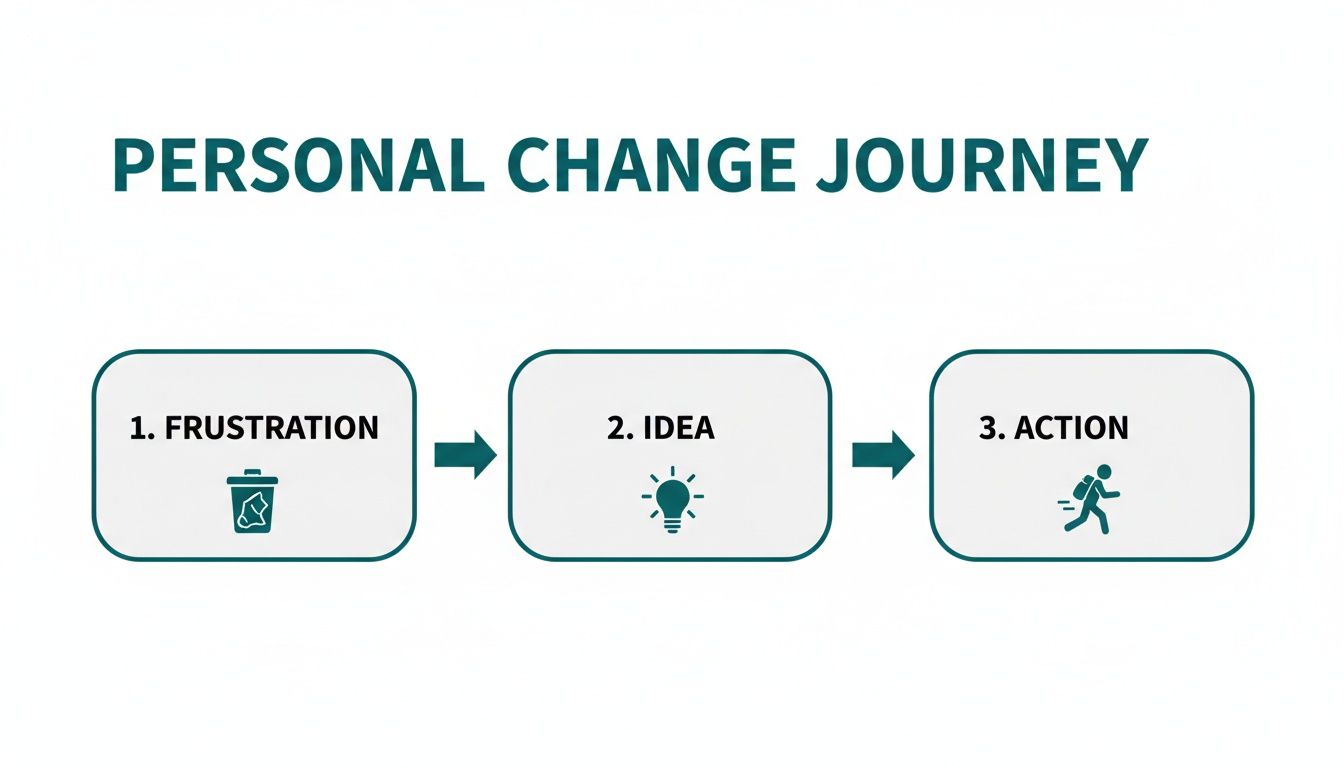
This simple progression is the heart of all community improvement. It’s how one person's vision becomes a win for everyone.
Scout Your Park With Purpose
Before you do anything else, go back to the park. But this time, look at it with new eyes—not just as a spot you enjoy, but as a project you're about to lead. Walk the entire perimeter and take notes.
Where does the litter pile up the most? Is it near the picnic tables, along a fence line, or tucked into the bushes? These are your litter hotspots.
Then, think logistics. Where will your volunteers meet up? Is there easy parking? What's the best spot to set up a home base with water and supplies? Nailing these details now will make the actual day feel smooth and effortless. This little recon mission is your first real act of leadership.
Navigating Permits The Fearless Way
The word "permit" can scare people off. Don't let it. Honestly, for a small cleanup with a few friends, you probably don't need one. But if you plan on inviting the public, getting a permit is your best friend.
It's not red tape; it's a partnership. A permit lets the Parks and Rec department know you’ll be there, so they can arrange for trash collection and make sure you don’t clash with another event. Most city websites have a simple "volunteer event" or "special use" form. Fill it out with confidence—you're doing them a favor!
You are not asking for permission to do good. You are coordinating with the city to make your act of kindness as effective as possible. Frame it that way in your mind, and any fear of paperwork melts away.
Build Your Master Supply List
The right tools make all the difference. Going beyond just bags and gloves shows your volunteers that you care about their safety and comfort. A well-stocked supply station is an act of kindness.
You never know what you'll find out there. I've pulled everything from old tires to a single, sad baby shoe out of the bushes. The Global Ocean Cleanup initiative found 47.4 tons of waste across 25 countries, from fishing nets to medical syringes. Being prepared for anything is key to a safe and effective cleanup.
Here’s a checklist to get you started.
Essential Cleanup Supply Checklist
A solid supply list is the backbone of a smooth event. Covering these bases ensures your crew is safe, effective, and comfortable from start to finish.
| Category | Essential Items | Pro-Tip (Nice to Have) |
|---|---|---|
| Gear | Thick, puncture-resistant work gloves and heavy-duty trash bags (for both recycling and landfill). | Litter grabbers (a back-saver and great for thorny areas) and a few buckets for sharp objects like glass. |
| Safety | A fully stocked first-aid kit, hand sanitizer, and a designated sharps container (a hard plastic jug works great). | Sunscreen, bug spray, and bright safety vests, especially if you're working near a road. |
| Organization | A foldable table for your check-in station, a clear sign so people can find you, and a clipboard with a sign-in sheet. | Name tags to help people connect and a portable speaker to play some music and set a fun vibe. |
| Hydration | Large water coolers (ask volunteers to bring reusable bottles!) and some simple snacks like granola bars or fruit. | A thermos of hot coffee on a chilly morning—it's a small gesture that goes a long way. |
Having these items ready to go will make you look like a seasoned pro, even if it's your first time.
Create Your Simple Timeline
Don't let the planning drag on. Momentum is everything. A clear, simple timeline keeps you on track and helps build excitement without the stress.
- Four Weeks Out: Scout your park and submit your permit application.
- Three Weeks Out: Start spreading the word to friends, family, and on social media.
- Two Weeks Out: Finalize your supply list and start gathering your gear.
- One Week Out: Send a reminder email to everyone who has shown interest.
- Event Day: Arrive early, set up your station, and greet your fellow champions with a huge smile.
This blueprint isn’t about being perfect. It’s about taking brave, clear steps forward. You’ve got this.
Building Your Team of Park Champions
A park cleanup is really just a party with a purpose. You’ve scouted the location and figured out the supplies, and now it's time to invite your guests. But this isn't about sending a generic invite and hoping for the best; it's about starting a small, brave fire that others will want to gather around.
You don't need a marketing degree to do this. You just need to be real.
Think about why you started this in the first place. Was it a specific memory in that park? A feeling of frustration that turned into hope? That’s your story. That’s the magic you need to share.
Crafting an Invitation from the Heart
Forget corporate jargon. Your invitation—whether it’s a social media post, an email, or a flyer you tack onto a telephone pole—should sound like you. Speak from the heart.
I remember standing in my local park, watching the wind blow a plastic bag across the field where my friends and I used to play. I felt that familiar sting of annoyance, but then I thought about the kindness of this place, how it had given me a space to breathe on tough days.
So when I first asked for help, I didn't say, "Join my environmental initiative." I said, "This park means a lot to me, and it’s hurting. Let’s spend a couple of hours on Saturday showing it some love."
That’s it. That’s the secret. People don't show up for a task; they show up for a feeling. They show up for a story they can see themselves in.
Your vulnerability is your greatest recruitment tool. When you share why you care, you give others permission to care, too. You make it personal, and that’s what inspires brave action.
Start by telling your story. It doesn’t have to be dramatic. It just has to be true. This authenticity is the magnet that will draw your first champions to your side.
Building Your Community Crew
Once you have your story, it’s time to find your people. Your goal is to make it incredibly easy for others to say "yes!" You aren't just looking for bodies to fill bags; you're building a team.
- Start with Your Inner Circle: Your friends, family, and coworkers are your first believers. A personal text or call is way more powerful than a hundred social media posts.
- Connect with Local Hubs: Think about where people in your neighborhood gather. That local coffee shop with the community bulletin board? That's your stage. Ask the owner if you can put up a flyer. They’re often excited to support local efforts.
- Partner with Like-Minded Groups: Local schools, running clubs, and faith groups are often looking for meaningful service projects. A single email to the right person can bring a whole team of enthusiastic helpers.
Don't be afraid to ask for help. When a massive illegal dumpsite with over 4,000 tires was discovered in a Philadelphia park, the city didn't go it alone. They partnered with multiple local green organizations to rally the community, turning a daunting task into a unified, high-impact event.
For an even deeper dive into this topic, you can explore our full guide on how to find volunteers for your cause.
A Welcome Worth Showing Up For
The first five minutes of the event set the tone for everything. Your check-in process shouldn’t feel like a chore; it should feel like the welcome mat to your party.
Keep it simple. A foldable table with a sign-in sheet is all you need. Greet every single person with a genuine smile and thank them for being there. This small act of kindness is huge. It tells them, "You are seen. You are valued. I’m so glad you came."
Have a stack of gloves and bags ready to go. Point them to the water and snacks. Introduce them to someone else who just arrived. These tiny connections are what turn a group of strangers into a team. You're not just organizing a cleanup; you're building a community, one brave and kind person at a time.
Leading the Event with Confidence and Joy
The big day is here. After all the planning and dreaming, this is the moment it all comes together. Your most important job right now isn't to pick up the most trash—it's to be the calm, confident host who makes everyone feel welcome, safe, and ready to make a difference.
You're the conductor of this awesome orchestra of kindness. Your energy is the music.
This isn't about being a boss; it's about being the heart of the event. Greet every single person with a genuine smile. Thank them for showing up. Your warmth is the fuel that will power everything.
The Energizing Huddle
Ditch the boring safety briefing. This is your kickoff, your pre-game huddle. Get everyone in a circle, look them in the eye, and connect. This is where you turn a list of rules into a shared mission.
Start with a quick, punchy kickoff. Remind everyone why you're all here. It's not just to clean up a park—it's about reclaiming a space for the entire community.
Keep the safety talk simple and direct.
- Gloves stay on. This one's non-negotiable.
- Watch where you step. Keep an eye out for uneven ground or hidden junk.
- If you don't know what it is, don't touch it. Just point it out to a team lead. We'll handle weird stuff like broken glass or mysterious containers separately.
- Stay hydrated. Point out the water station and tell people to take breaks.
This huddle isn't just about safety; it's about unity. It's the moment you transform a group of individuals into a team ready to make a visible, tangible difference together.
Orchestrating the Cleanup Effort
Once everyone is fired up, it’s time to unleash the kindness. The key is to organize the effort so people feel effective, not overwhelmed.
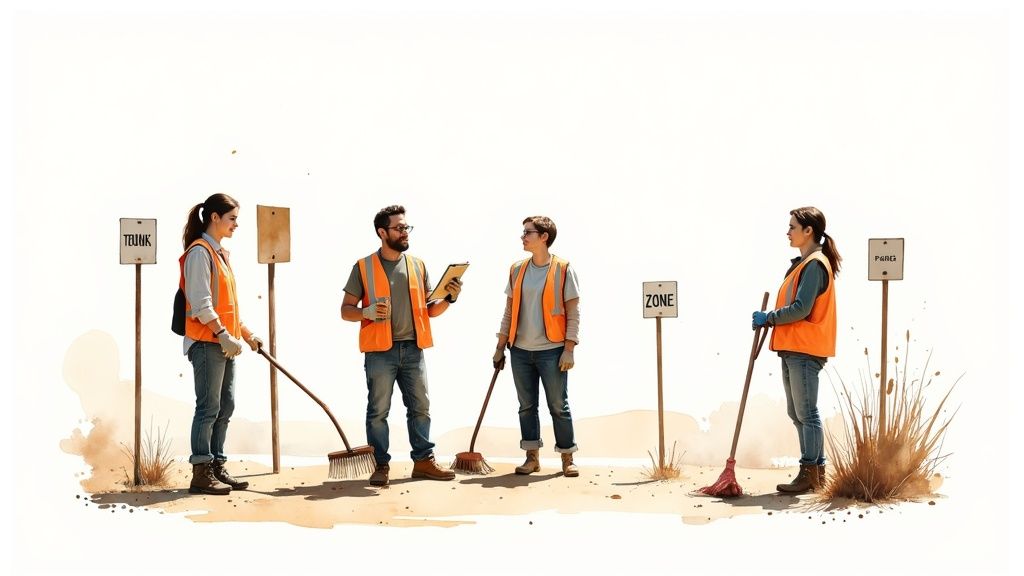
Remember that scouting mission you did? Now's the time to use that knowledge. Break the park up into zones and assign small groups to different areas—the playground, the walking path, the tree line. This "divide and conquer" approach makes the task feel manageable and gives teams a clear win as they see their zone transform.
Set up a central station for waste sorting. This is your command center. Have clearly labeled areas for three main categories:
- Recycling: For plastic bottles, aluminum cans, and clean cardboard.
- Landfill: For non-recyclable items like chip bags, foam containers, and other general waste.
- Hazardous/Bulky Items: A separate, safe spot for things like broken glass, sharp metal, or anything that needs special handling.
Your job is to make doing the right thing easy. Clear signage and a quick explanation empower every volunteer to sort waste correctly, multiplying your environmental impact far beyond just collecting litter.
This system turns a potentially chaotic process into a smooth, efficient operation. It respects your volunteers' time and maximizes the good you're all doing.
Keeping Morale High and Handling the Unexpected
As the leader, you're also the head cheerleader. Walk around, check in with your teams, and celebrate the small wins. Crack a joke about the weirdest piece of trash someone found. Take photos. High-five people. Your positive energy is infectious.
Of course, not everything will go perfectly. The weather might turn, or you might find a bigger mess than you anticipated. This is where you shine. If it starts to drizzle, smile and say, "A little rain won't stop us!" Your can-do attitude is the antidote to any setback.
Remember, you’re part of a massive global family. On World Cleanup Day, over 114 million people came together across 190 countries, showing the incredible power of organized community action. Your local effort channels that same spirit. To see the incredible impact, check out the global movement at World Cleanup Day.
Celebrating and Sustaining Your Impact
The work isn't finished when the last bag of trash is tied. That’s just the end of chapter one. The real magic happens now, turning the energy of one great day into a lasting movement.
Think of your cleanup as a campfire. You gathered everyone, you built something warm and bright, and it lit up the darkness. Your job now is to keep those embers glowing long after everyone has gone home.

This next part is where you show the world—and your volunteers—that their effort created real, measurable change. It’s the proof that their bravery mattered.
From Trash Bags to Powerful Stories
Numbers are powerful, but they don't tell the whole story. Saying "we collected 50 bags" is fine, but it lacks heart. The real impact comes from translating that effort into a narrative that resonates.
Instead of just counting bags, get a cheap luggage scale and weigh them. Suddenly, "50 bags" becomes "we removed 300 pounds of waste from our shared home" or "we diverted over 100 pounds of plastic and aluminum from the landfill." Now that's a story people can feel proud of.
This data is your most powerful tool for advocacy. The Surfrider Foundation, for example, discovered that a staggering 83% of all items collected during their cleanups were single-use plastics. That one stat transformed their work from simple beach cleaning into a powerful argument for policy change. You can see more about their impact on PR Newswire.
When you measure your impact, you're not just doing math. You’re writing the next chapter of your park's story—one where data becomes the voice for change, proving that a cleaner future is possible.
Share these victories! Post the numbers, the photos, and the stories on social media. Tag your volunteers and partners. Make the celebration public and joyful, so everyone who participated feels like the hero they are.
Keeping the Momentum Going
After the celebration, the most common question is, "What's next?" Your goal is to make the answer easy and exciting. You’ve created a spark of community; now, you need to fan the flames.
Don’t let that amazing energy fade away.
- Send Heartfelt Gratitude: Within 48 hours, shoot a personal thank-you email to every volunteer. Share the final impact numbers and a link to photos from the day.
- Gauge Interest for Round Two: In that same email, ask a simple question: "We had such an amazing time, and we're thinking of doing this again next season. Would you be interested?" A simple poll can capture that enthusiasm immediately.
- Create a Community Hub: Start a simple social media group or email list for your "Park Champions." This gives people a space to connect beyond the events and build real friendships.
This follow-up is an act of kindness. It shows you see your volunteers as people, not just a pair of hands for a day. It honors their contribution and invites them to be part of an ongoing story.
From One-Time Event to Lasting Legacy
The ultimate goal is to make your effort sustainable. One person can start a movement, but a community is what keeps it alive.
Look for those passionate volunteers who showed leadership during the cleanup. Could one of them co-organize the next event with you? Empowering others is the most fearless act of a leader. It ensures the mission is bigger than any single person.
By sharing the story, celebrating the wins, and creating a community, you do more than just clean up a park. You build a network of brave, kind people who are ready to show up for their neighborhood again and again. For more ideas and inspiration, check out our deeper guide to the nuts and bolts of cleaning up trash effectively. This is how you build a legacy of care that will last for years.
Questions That Might Be Holding You Back
That little voice of doubt whispering in your ear? It asks questions that feel like giant roadblocks, but I promise you, they're just small hurdles. Let's tackle them head-on.
Think of these questions not as stop signs, but as trail markers. Every single person who has ever organized a cleanup has asked them. Answering them is part of the journey.
Do I Really Need a Permit to Clean Up a Park?
This one causes so much unnecessary fear. Let me clear it up: if you're just grabbing a few friends for a casual cleanup, you almost certainly don't need one. Just show up and do good.
But if you’re planning a bigger event and promoting it publicly, the answer is usually yes. Please don't see this as red tape! A permit is basically a high-five from the city. It lets them know you're coming so they can support you, and often they'll even arrange to pick up all the trash bags you collect. It's a tool for teamwork, not a barrier.
What's the Most Important Thing to Bring?
Beyond a good attitude, a well-stocked first-aid kit is non-negotiable. Safety is the ultimate act of kindness to your volunteers.
After that, water is key. But from a gear standpoint, the real game-changer is thick, sturdy work gloves. Seriously. Those thin latex ones will tear on the first piece of broken glass. Investing in durable gloves shows you care about keeping everyone's hands safe.
The most crucial tool isn't a litter grabber or a fancy bag—it's preparation. Thinking ahead about safety and comfort is what transforms a good idea into a great and memorable experience for everyone.
How Do I Handle Hazardous Stuff We Find?
The fact you're even asking this question shows you're already a great leader. Your number one rule, which you need to state clearly in your safety briefing, should be: "If you don't know what it is, don't touch it!"
For things like syringes or sketchy-looking chemical containers, they cannot go into the regular trash. Here’s the protocol:
- Designate a Container: Before the event starts, have a specific, sturdy, sealed container ready—like a sharps container from a pharmacy, or even just a hard plastic bucket with a secure lid.
- Create a Protocol: Tell your volunteers to flag you or another designated leader down if they find something hazardous. Never let a volunteer handle it themselves.
- Plan for Disposal: Check your local sanitation department’s website ahead of time. They’ll have clear instructions on how to dispose of hazardous waste.
What If Only a Few People Show Up?
Then you celebrate them! A small, passionate crew isn't a failure; it’s the founding chapter of your movement. I'm serious. Two or three dedicated people can make a massive dent in a park's litter problem.
Think of it like this: your small group is the spark. You'll forge stronger connections, take amazing photos, and share a story of dedication that will inspire more people to join next time. Your impact isn't measured by headcount; it's measured by the courage you showed in starting something that matters.
The journey to clean up a park is really a journey of self-transformation. At Litter Caterpillars, we believe that serving our community is how we grow stronger, kinder, and braver together. If you're ready to find your crew and make a real difference, we're here waiting for you. Come join us at https://www.littercaterpillars.com.