

Pilsen Wellness Center runs multiple Chicago-area sites, including a 24/7 mental health walk-in at 2259 South Damen Avenue. If you need help today, the right first step depends on whether you need crisis support, therapy, substance use treatment, or food assistance.
I've walked that stretch of Damen, and I know how easy it is to get turned around by a name like “wellness center.” You might expect one front desk, one waiting room, one simple answer. That's not what you get here. You get a multi-site network, and if you walk into the wrong door, you can lose time you didn't have.
The good news is simple. Pilsen Wellness Center is built for more than one kind of need, and that matters when you're tired, anxious, short on money, or trying to help somebody else. The trick is to stop thinking of it like a single clinic and start thinking of it like a set of doors, each one built for a different job.
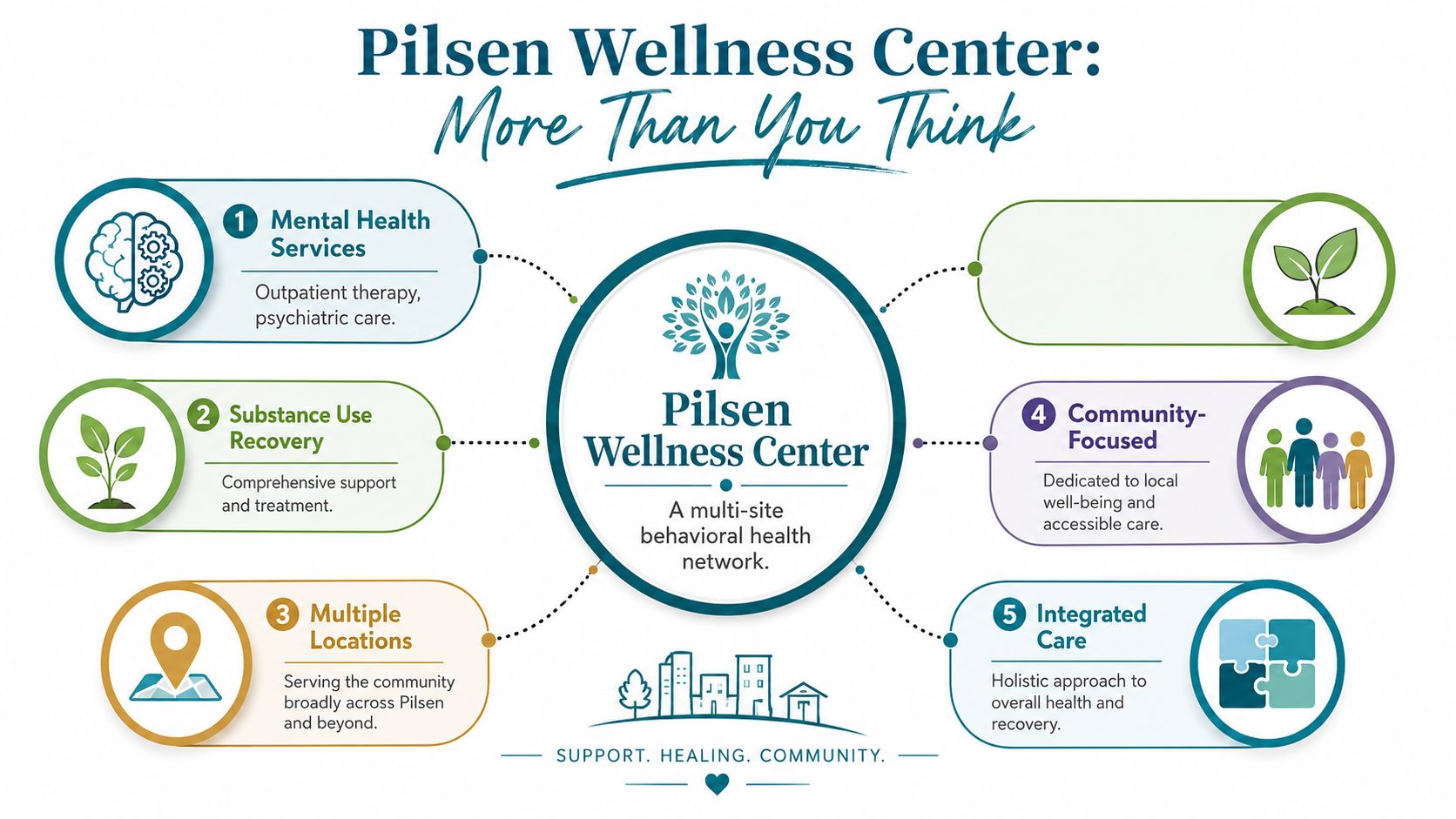
What Pilsen Wellness Center Actually Is
Pilsen Wellness Center is not a tiny storefront clinic with one waiting room and one kind of appointment. It is a multi-site behavioral health network with locations across Chicago and nearby suburbs, and the organization's own site frames its work around “education and prevention to treatment and recovery” (Pilsen Wellness Center). That phrase matters. It tells you this place thinks in terms of a full care path, not a one-shot visit.
The name can fool people
If you hear “wellness center,” you might picture yoga mats, smoothie counters, or light-touch support. That's not the model here. This organization deals with mental health care, substance use recovery, crisis access, pantry support, and residential and community services across several sites, so the name is softer than the work.
The practical takeaway is blunt. Don't call only to ask for “the wellness center.” Call with a real problem in hand. Say whether you need a therapist, a psychiatric walk-in, substance use help, or food support. That cuts through a lot of confusion.
Practical rule: if your need is urgent, start with the service that matches the problem, not the closest address.
I'd think about it like a neighborhood transit map. The station name is useful, but only if you know which line you're trying to catch. If you mix up the line, you waste time standing on the platform.
Pilsen Wellness Center's own location pages list sites in Pilsen, Little Village, Gage Park, South Chicago, Berwyn, Melrose Park, and Stone Park (locations). That spread tells you the center is set up to reduce travel friction for families who can't spare half a day for one appointment.
Why that matters for you
A lot of people quit before they ever get help because they guess wrong about the first step. They call one line for everything, or they show up at a site that doesn't handle their issue. This network works better when you treat it like a system with different entrances.
If you want a mental picture of the area around the main Damen corridor, I'd also look at Harrison Park in Pilsen while you're mapping the neighborhood. That kind of local reference helps when you're trying to judge whether a site is doable on foot, by bus, or after work.
The Services You'll Actually Find Inside
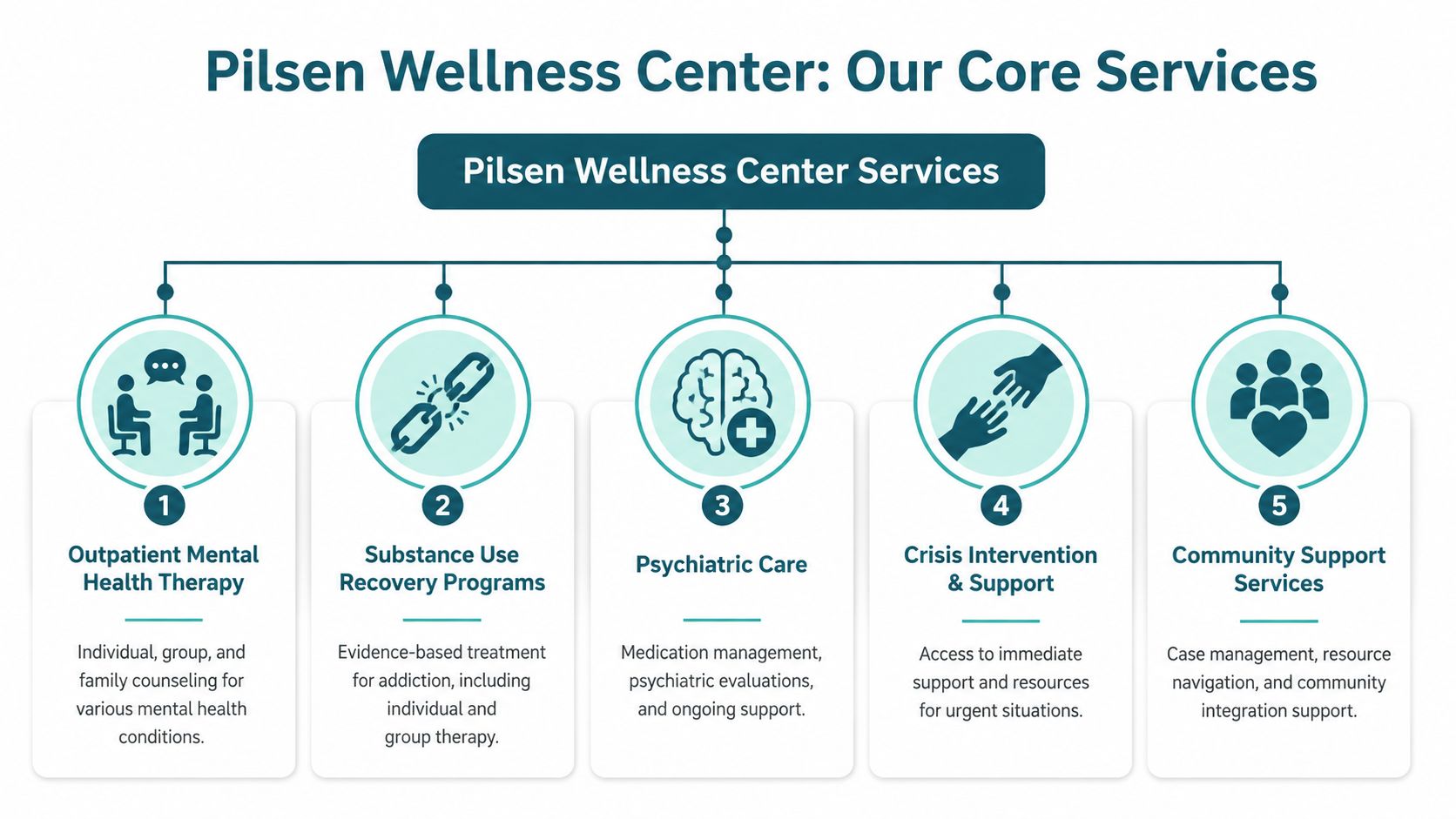
The service list is broader than many expect, but it's not random. It's a stepped-care setup, which means you can come in through a low-barrier door and move toward more structured support if you need it. That is the right way to build behavioral health care.
Mental health care and crisis access
The most important site to know is the 24/7 walk-in “Red Door” at 2259 South Damen Avenue (mental health services). If you need help today and you can't wait for an appointment, that is the door I'd use first. Continuous access like that is rare in community behavioral health, and it gives you a place to go when the rest of life is loud.
The center also has site-based mental health services across the city and nearby suburbs. That matters if you need follow-up after a crisis visit or if you want ongoing therapy after the first call goes through.
Recovery programs and therapy styles
Pilsen Wellness Center's substance-use program lists outpatient and regular outpatient treatment, and it names the kinds of therapy it uses: cognitive behavioral therapy, contingency management and motivational incentives, motivational interviewing, relapse prevention, and 12-step facilitation (substance use recovery). That mix tells me they are not guessing. They are using tools that match different stages of recovery.
If you've never heard those terms before, don't get stuck on the labels. Ask which one fits your situation today.
There's also a dedicated DUI phone line and multiple recovery-site phone lines, which gives justice-involved people and substance-use patients a separate intake path. That's the kind of detail that saves you from getting bounced around.
Pantry support and community care
The pantry at 2319 South Damen Avenue runs every Friday from 10 a.m. to 12 p.m. and, according to the school page, it has provided fresh fruits, vegetables, dry goods, and canned products to hundreds of low-income residents each month since 2008 (Orozco school page). That's not a side note. If food insecurity is part of the picture, it is part of care.
If you're sorting out school-age family support at the same time, I'd also keep WIC Chicago Illinois on your list of community resources to check alongside clinic care.
Picking the Right Location for Your Situation
The wrong location wastes time. The right one gets you moving. Pilsen Wellness Center's sites are spread across Chicago and nearby suburbs, and the hours tell you a lot about who each site is built for.
Use the site that matches your day
The Stone Park site runs 6:00 AM to 8:00 PM on weekdays (locations). That's the one I'd point to if you work early, work late, or spend your day juggling kids and buses. Several Chicago sites and the administration office also stay open until 8:00 PM on weekdays and on Saturdays, which tells me they built the schedule for working adults, not just for people who can slip away at 10 a.m.
The 24/7 walk-in at 2259 South Damen Avenue is for crisis support and urgent mental health access (mental health services). If your question is, “Where do I go if I need help right now?” that is the answer.
The pantry is simpler. Go to 2319 South Damen Avenue on Friday from 10 a.m. to 12 p.m. If you mix up pantry hours with therapy hours, you'll make a useless trip, and nobody needs that.
Matching your need to the right site
| Your Situation | Best Location | How to Access |
|---|---|---|
| You need urgent mental health help today | 2259 South Damen Avenue | Walk in, day or night |
| You work long hours and need a later appointment | Stone Park or another late-hour site | Call ahead for scheduling |
| You need food support | 2319 South Damen Avenue | Go on Friday morning |
| You want ongoing therapy after an intake | A site-based mental health location | Call the site and ask for intake |
| You need substance use help or DUI-related intake | Recovery line or recovery site | Call the correct recovery number first |
I like a simple rule here. If the need is acute, walk in. If the need is scheduled, call. If the need is tied to food, go to the pantry window. That keeps you from wandering through a system that already asks too much from people.
How I'd think about transportation
Chicago punishes lazy planning. If you can avoid a second trip, do it. Check the site hours, bring what you need, and use the location that matches your bus route, shift, or family schedule. The center's scattered footprint helps, but only if you choose the right door the first time.
How to Actually Get Care, Step by Step
Call the right line first. That sounds basic, but it's where people slip. Pilsen Wellness Center has separate pathways for mental health, substance use, and DUI-related help, so don't use one number for everything and hope for the best.
Start with the reason you need help
If you need mental health crisis support, go to the 24/7 walk-in at 2259 South Damen Avenue (mental health services). If you need substance use treatment, call the recovery line tied to that program. If you're dealing with DUI-related issues, use the dedicated DUI line. The right line gets you the right intake process.
When you call, be ready to say three things clearly. What you need, how urgent it feels, and whether you already have Medicaid or another insurance plan. That gets the conversation moving faster than a long explanation about everything that's gone wrong this month.
Bring the basics with you
I'd pack a small folder before any visit. Put your photo ID, your insurance card or Medicaid number, a pen and paper, the name and phone number of any current prescriber, and a rough note about what you want to change in the next few months. That's enough to make the first conversation useful.
Practical rule: don't wait to feel organized before you go. Bring the messy truth, and let the intake staff sort from there.
If you need help understanding public benefits or family support while you're figuring out care, I'd look at building resilient communities too. I'm not saying a cleanup crew replaces clinical care. I am saying real support often starts with more than one kind of help.
What to expect at intake
Your first appointment is usually about information, goals, and next steps. You'll talk about symptoms, your schedule, your insurance, and what feels hardest right now. If you're already on medication, bring the names and doses. If you want sliding-scale help, bring whatever income information they ask for.
If you're nervous, say that out loud. People at the front desk hear nervous all day. They're not there to grade you on your wording.
Cost, Insurance, and What You Might Actually Pay
Money is where people get scared off, so I'm going to be plain. Pilsen Wellness Center is a nonprofit behavioral health network, so you should expect billing, insurance questions, and program-specific intake rules rather than one flat price for everything.
What usually costs what
Crisis walk-in care is the first thing I'd use if you need immediate mental health help, because delay can cost more than money. Scheduled therapy and psychiatric care usually depend on insurance or enrollment status. Substance use treatment can also depend on the program path you enter and whether they need Medicaid or another payer on file.
The pantry is the clearest low-cost option in the whole system. If food is the immediate problem, use the pantry first and keep your energy for the medical or counseling questions later.
Questions to ask before you sit down
Ask these before the visit ends, not after you get a bill:
- What insurance do you accept for this site and this service?
- Do I need a referral, a Medicaid number, or an enrollment step before therapy starts?
- Is this visit tied to a walk-in crisis service or a scheduled intake?
- If I'm uninsured, what paperwork do you want for sliding-scale review?
- Is this location the right one for follow-up appointments?
I'd rather hear a hard answer at the desk than find out later that I picked the wrong service line. That frustration is avoidable.
Straight answer: the cheapest visit is the one you don't have to repeat because you went to the correct door first.
If you're comparing options, use this simple filter. Crisis care gets priority, scheduled therapy needs a plan, recovery programs need the right intake line, and pantry support needs the right Friday morning. That ordering saves time and keeps the decision clean.
Community Wellness Beyond the Clinic Walls
I don't buy the idea that healing happens only in a waiting room. In Pilsen, people also get through hard weeks by showing up for each other in the street, at parks, and at cleanup meetups. That matters because some of the best support is ordinary, visible, and shared.
Why a Saturday morning matters
A volunteer cleanup changes your headspace fast. You show up with gloves, a bag, and a little skepticism. Then you spend an hour picking up what other people tossed, talking to strangers, and seeing a block look better when you leave. That kind of work can give you a clean break from the loop in your head.
Litter Caterpillars runs that kind of volunteer-first trash pickup across Chicago, and if you want one example of how community care can sit next to clinic care, their community-building page makes the point clearly. I'm mentioning it because some people need a counseling office, and some people need a Saturday route where they can breathe and be useful at the same time.
How I'd use both kinds of support
If you're in crisis, go to Pilsen Wellness Center first. If you're steady enough to build routine, add a neighborhood volunteer habit to your week. A cleanup is not therapy, but it can help you keep a promise to yourself when the days feel slippery.
That mix works because it gives you two different kinds of structure. One is clinical. One is communal. Together, they keep life from narrowing down to the problem of the day.
If you want a simple next move, look for a group where you can show up without needing to perform. That's the kind of room where real habits get built.
Your First-Visit Checklist
Before you call or walk in, keep the list short. The more you try to remember in your head, the more likely you are to leave something behind.
Pack this first
- Photo ID. Bring a state ID, driver's license, or passport.
- Insurance card or Medicaid number. Bring a clear photo of both sides if that's easier.
- Pen and paper. Write down the questions that pop up while you wait.
- Medication list. Include current prescriptions and doses.
- Emergency contact info. Put a trusted name and phone number on paper.
- Questions about your goal. Write down what “better” looks like in your own words.
If you rely on transit, leave earlier than you think you need to. Chicago buses and weather don't care that your appointment is important. If you need language support, ask for it when you call. If child care is the barrier, say that too. The staff can't fix what they don't hear.
Use the checklist like a map
The goal is not to arrive polished. The goal is to arrive ready enough to start. That means your documents are in your hand, your questions are written down, and you know which service you're trying to reach before you leave the house.
If you want a simple litmus test, ask yourself this. “If they asked me three direct questions at the front desk, could I answer them?” If the answer is yes, you're ready.
Where to Go From Here
If you need help today, go straight to the 24/7 walk-in at 2259 South Damen Avenue and use the crisis door instead of trying to sort everything out alone. If you're planning ahead for therapy or substance use treatment, call the correct intake line, bring your ID and insurance info, and pick the site whose hours fit your life.
If food support is part of the problem, go to 2319 South Damen Avenue on Friday from 10 a.m. to 12 p.m. and take that pressure off the week. If you want a steady community habit outside the clinic, plug into a volunteer cleanup and let your body do something useful for a change.
Litter Caterpillars organizes volunteer trash pickups across Chicago, and that kind of work gives you a real place to show up when you want structure, friendship, and a cleaner block. Visit Litter Caterpillars if you want one more way to build a routine that helps you keep going while you sort out the rest.