
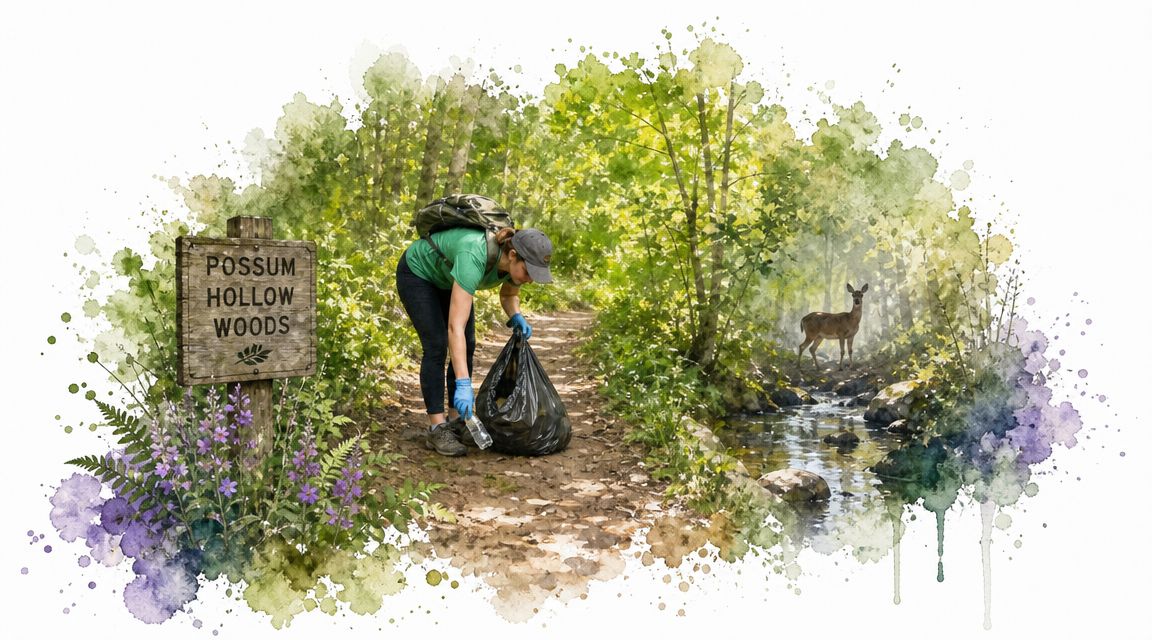
The first time I went to possum hollow woods, I was trying to escape my phone for an hour. I parked, started walking, and within a few minutes the noise in my head dropped from a shout to a murmur.
My First Walk in Possum Hollow Woods
I didn't go there chasing some grand outdoor breakthrough. I just needed a place where my thoughts could stop bumping into traffic, screens, and unfinished tasks. Possum hollow woods gave me that almost right away.
The feeling reminded me of our first cleanup in a hailstorm. Three of us stood under a tree, freezing, while ride after ride got canceled. It was miserable in the normal sense, but it was also weirdly clarifying. Real weather does that. Real places do that. They strip away the fake urgency and leave you with something simple. You're cold. You're alive. You're doing something that matters to you.
That first walk in the woods hit me in the same way, just quieter. Leaves moved. Gravel crunched. A bird called from somewhere I couldn't see. Nothing dramatic happened, and that was the point. Sometimes growth doesn't arrive like a movie scene. Sometimes it comes like a trail that keeps going when your mind finally stops racing.
Why this place got under my skin
I've spent a lot of time in Chicago parks and preserves. Some places are good for exercise. Some are good for meeting friends. Some are good for proving to yourself that you can get out the door on a hard day. Possum hollow woods is one of those places that lets you do all three without demanding a lot from you first.
If you've ever walked into a preserve and felt like you needed special gear, special knowledge, or a big plan, this isn't that kind of place. It feels approachable. Human-sized. You can show up carrying stress and leave carrying less of it.
Practical rule: If a place makes it easy to start, you'll come back more often.
That matters more than people admit. A perfect outdoor plan that never happens is useless. A simple walk you take can change the whole tone of your week.
I've felt that same kind of reset at other preserves too, including MacArthur Woods Forest Preserve, but possum hollow woods has a certain steadiness to it. It doesn't try too hard. It just lets you arrive.
And if you let it, it'll tell you a small truth that has helped me a lot. Showing up is half the battle. The trail handles the rest.
Finding Your Way to the Woods
The best arrivals are the ones that lower your heart rate instead of raising it. Possum Hollow Woods has that kind of entry. You are not fighting downtown traffic patterns or guessing which lot belongs to the preserve. You head toward West 31st Street, watch for the entrance west of South La Grange Road near La Grange Park, and start your day with your attention still intact.
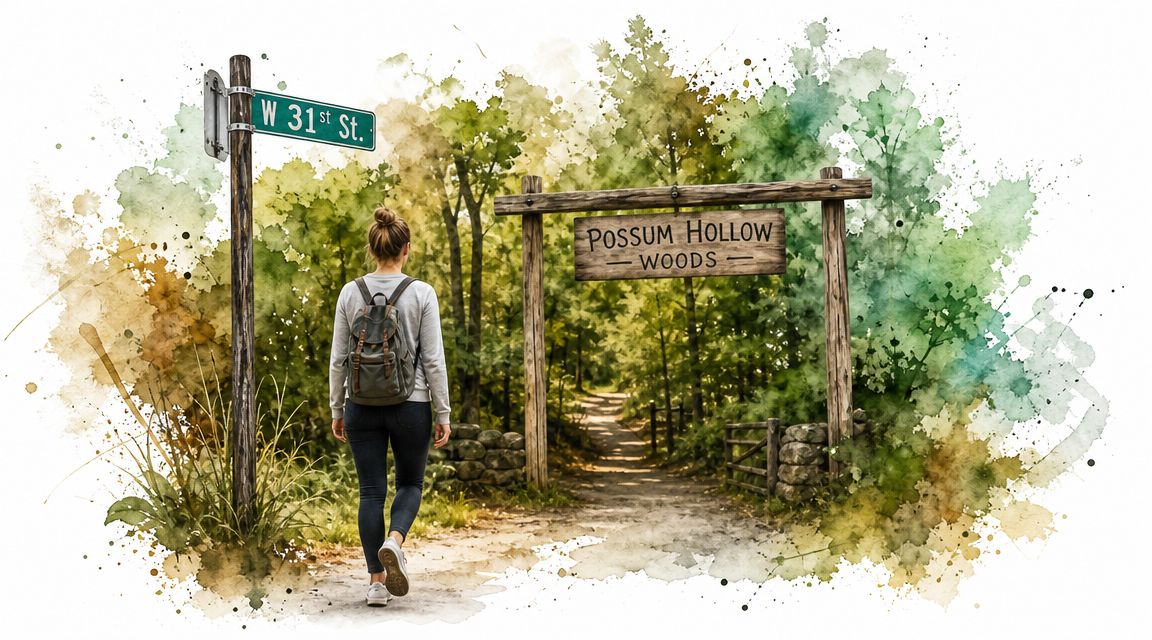
I care about that more than people expect. A preserve can be beautiful and still lose you at the parking lot if the approach feels confusing. Places that are easy to reach get revisited. Places that ask too much before the first step usually do not.
If you're driving, set your route before you leave and pay attention as you get close to 31st Street. The roads around the preserve are manageable, which makes this a good pick for first-time visitors, families, or anyone bringing a friend who wants a calm start. The trade-off is predictable. Easy access attracts people, especially on good-weather weekends, so earlier arrivals usually make the whole outing smoother.
Transit takes a little more effort here. That does not make the trip unrealistic. It just means the visit rewards a quick check of your route, your timing, and your walk from the nearest stop before you head out.
Group plans need a bit more structure. Grove #1 gives you a clear home base with a shelter, and seasonal restroom access can make a real difference if you're organizing a cleanup, picnic, or community walk. I've learned this through Litter Caterpillars events across Chicago. People relax when they know exactly where to meet, where to return, and who is carrying the extra bags or water.
Use this setup if you want the day to run cleanly:
- Solo visit: Bring water, wear shoes you do not mind getting dusty, and keep your plan loose.
- Meeting a friend: Pick one specific meeting point before anyone leaves home.
- Bringing a group: Start at Grove #1, set a regroup time, and say it out loud twice.
That last part sounds basic. It saves headaches.
For people building a regular outdoor habit, I keep coming back to the same rule. Choose places that are easy enough to visit on an ordinary day, not just on your most organized day. If you want more ideas in that category, this guide to forest preserve spots around Chicago is a useful place to start.
Possum Hollow Woods is good at meeting you where you are. Show up tired, curious, alone, or with a few neighbors. The place gives you a fair shot at settling in, and that is often what turns one visit into a relationship with the land.
Exploring the Trails and Sights
The part I like most about Possum Hollow Woods is that it does not force a single kind of day on you. You can treat it like a quick walk, a longer ride, or the kind of place where you stop more than you move because something in the trees keeps pulling your attention.
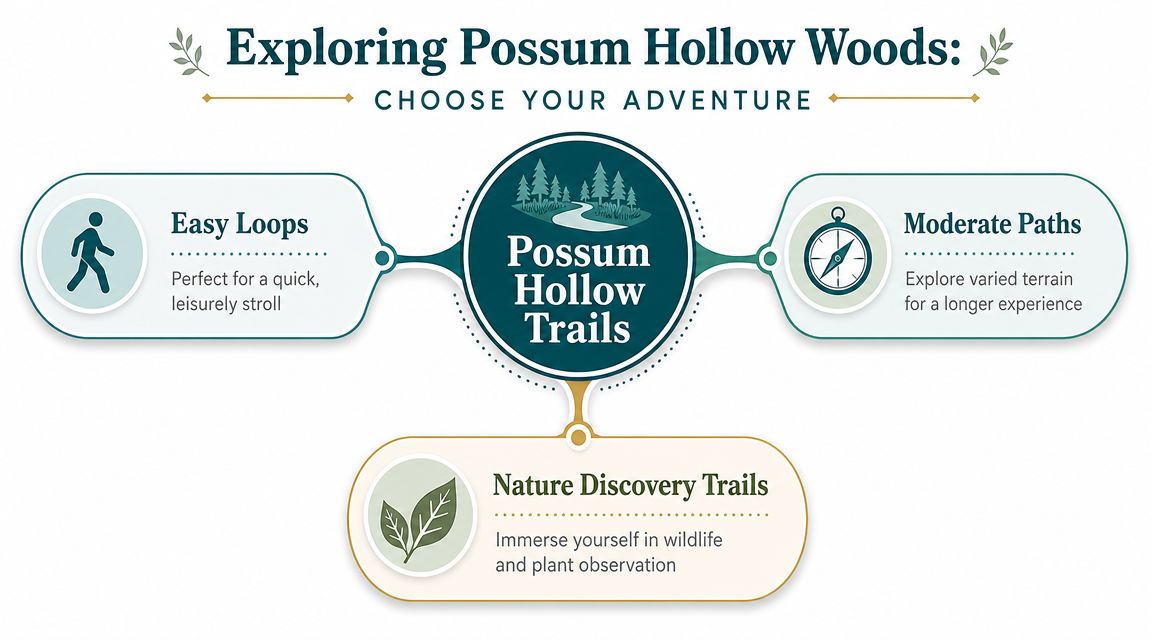
That flexibility matters.
A lot of green spaces are enjoyable only if you arrive with a plan, the right gear, and enough time to make the trip feel justified. This one is more forgiving. I have a soft spot for places like that because they help people build a real relationship with nature instead of turning every visit into a production.
The first stretch helps you settle
The opening part of a walk here feels approachable right away. The paths let you find your pace without much fuss, which is good for new walkers, families, and anyone whose brain is still running on city speed.
I do not mean "calm" in some vague wellness way. I mean you stop checking your phone every thirty seconds. Your breathing evens out. You start noticing the shape of the canopy, the light on the path, the sound of your own steps.
That shift is small, but it is the whole point.
I have seen the same pattern during cleanup days with Litter Caterpillars. People arrive carrying stress, schedules, and a little skepticism. Ten minutes into steady outdoor work, they are more present. A trail can do that too, if you let it.
The trails give you options without overcomplicating things
Possum Hollow Woods connects to the Salt Creek Greenway Trail system, so a simple walk does not have to stay small. You can keep the outing local and easy, or you can stretch it into a longer trip on foot or by bike if the day opens up.
That is a real advantage. Some preserves are best for one clear purpose. Possum Hollow Woods gives you range.
Here is how I would size up the experience:
| Trail mood | Best for | What it feels like |
|---|---|---|
| Short and easy | Clearing your head without committing half a day | A reset that asks very little from you |
| Unhurried wandering | Walking with a friend or walking alone to think | Enough structure to keep moving, enough room to notice things |
| Longer connected movement | Biking or extending the day on foot | A neighborhood walk that turns into a real outing |
That middle option is where the place shines for me. You are not marching toward a destination. You are letting the woods set the pace for a while, and that is rarer than it should be.
Some walks help you cover distance. Some help you pay attention.
If you like building a regular outdoor routine, this roundup of Chicago-area trails for walking, riding, and repeat visits is a useful next list to keep on hand.
The main trade-off here is simple. If you rush through, you will get exercise but miss the place. Possum Hollow Woods gives more to people who slow down, look around, and treat the visit like the start of a relationship, not a box to check.
The Wildlife and Natural World You'll Meet
The woods aren't silent. They only seem silent when you're still carrying city noise inside your head.
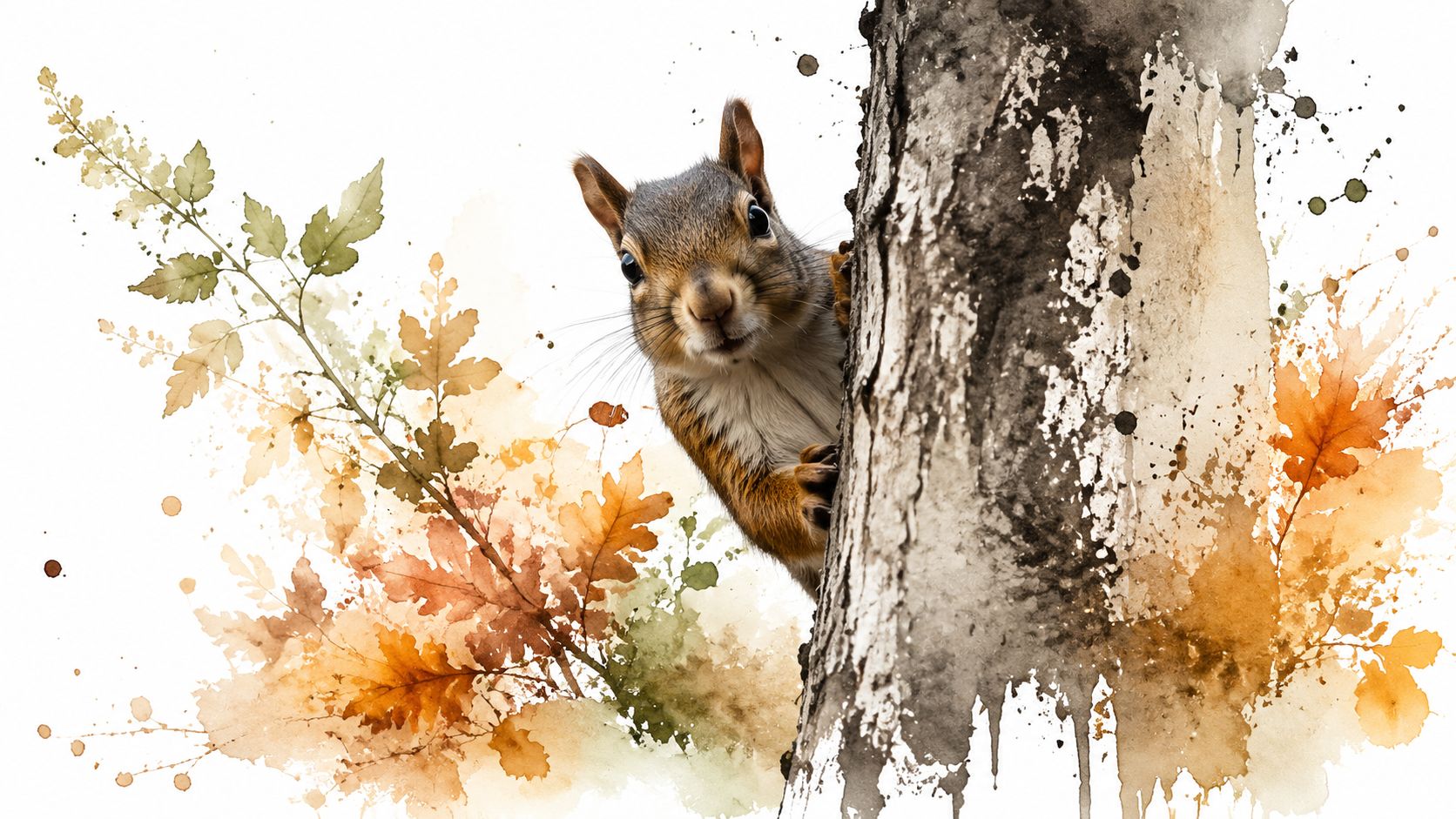
Give yourself a few minutes, and the cast of characters starts showing up. Squirrels act like tiny managers checking whether you're authorized to be there. Blue jays sound like they own the building. Cardinals cut through the background with bright flashes and sharp calls. If you slow down enough, the place stops looking like "trees" and starts feeling like a neighborhood.
I love that shift. It humbles you fast. You realize you're not entering an empty space built for your convenience. You're visiting a place where life was already happening before you got there.
The animals teach you how to move
I've had mornings where a deer appeared almost by accident, stepping through the trees with the kind of calm that makes you lower your own volume. Deer don't stomp around demanding attention. They move like they know the world doesn't owe them a spotlight.
That's a useful lesson. When we do cleanups, the best volunteers often work the same way. Steady. Alert. No drama. Just care in motion.
You probably won't see an opossum in broad daylight, and that fits. They're the night-shift cleanup crew. I respect that. They do their work offstage.
Here are the things I tell people to notice first:
- Listen before you scan: Birds usually announce themselves before you spot them.
- Watch the edges: Wildlife often appears where trail, brush, and open space meet.
- Pause near water or damp ground: Frogs and other small life often reveal themselves by sound before sight.
What patience gives you
A woodpecker tapping on a trunk can change the whole tempo of a walk. Spring frogs can turn a quiet patch into a chorus. Even the ordinary creatures matter. A squirrel freezing mid-climb can be as memorable as a rare sighting if you are paying attention.
Here's a short look at the mood of the place in motion:
You're a guest here. Act like one.
That rule covers almost everything. Stay on the path when you can. Don't chase animals for a photo. Keep your snacks to yourself. Pack out what you bring in.
What works in possum hollow woods is patience. What doesn't work is trying to force a perfect nature moment. The woods don't perform on command. They reveal themselves to people who are willing to be quiet enough to notice.
A Story of People and the Land
On my first few walks through Possum Hollow Woods, I paid attention to the usual things first. The curve of the trail. The wet patches that hold sound. The way the trees create a little distance from the road and the week you just had.
Then I started noticing the human fingerprints.
A preserve like this does not stay usable, quiet, and alive on good intentions alone. Someone planned access. Someone maintained trails. Someone showed up after storms, after busy weekends, after the small careless choices that pile up in public places. That part matters to me because I spend a lot of my life picking litter out of parks and streets around Chicago. Clean ground is rarely an accident.
Possum Hollow Woods sits within a larger corridor of paths and preserved land, part of a system that links neighborhoods to nature in a practical way. That connection changes who gets to build a relationship with a place like this. A preserve hidden behind complexity serves fewer people. A preserve you can reach, walk, return to, and care for becomes part of community life.
Care shows up in visible ways
You can read stewardship on the ground.
A trail that is still passable after a wet stretch. A spot that feels visited but not trashed. Signs that people use the place without grinding it down. Those are results. They come from agencies doing maintenance, volunteers doing unglamorous work, and regular visitors deciding not to act like the woods are someone else's problem.
That last group matters more than people think.
Public land holds up best when visitors treat it like a shared responsibility. That can mean joining a workday. It can also mean taking the simple jobs seriously, carrying out your bottle, keeping to the trail, picking up the snack wrapper that is not yours. None of that is flashy. It works.
Your story belongs here too
I do not see Possum Hollow Woods as a backdrop for a quick photo and a coffee walk. I see it as the kind of place that asks something from you. Attention first. Respect next. Action if you are ready for it.
Here is the trade-off. If you move through a preserve like a consumer, you get a short visit. If you move through it like a steward, you get a relationship.
That relationship can start small:
- Leave with more than you brought in: If you spot litter and can remove it safely, do it.
- Learn one recurring feature: A bend in the trail, a stand of trees, a wet area that changes by season. Familiarity builds care.
- Show up more than once: The second and third visit are when a place starts becoming part of your life.
Public land stays healthy when regular people treat it like a trust, not a service.
That is the story here. The land shapes people who spend time with it, and people return the favor by protecting what they have learned to value. I have seen that pattern in cleanup work across Chicago, and I feel it in Possum Hollow Woods too. Visit for the walk if you want. Come back if you want a deeper reason.
Organize Your Own Cleanup A Step-by-Step Guide
If possum hollow woods wakes something up in you, don't ignore it. Use it.
Cleaning up a park sounds small until you've done it. Then you realize it's one of the fastest ways to turn vague care into visible action. A bag fills up. A path looks better. Your group starts joking around. The whole thing becomes more fun than it has any right to be.
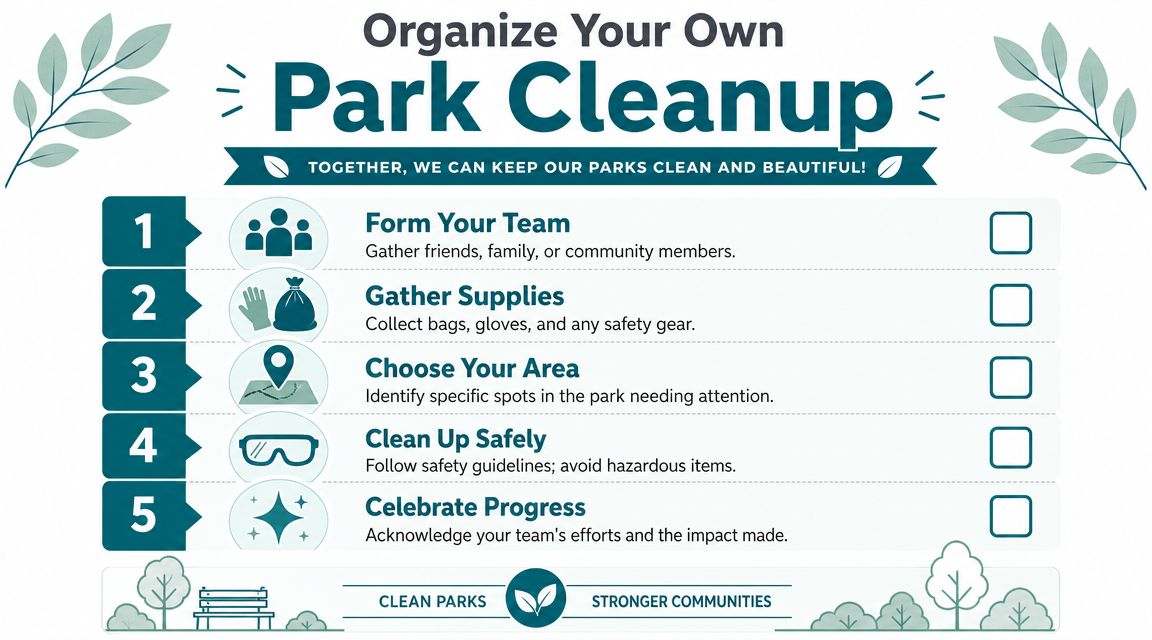
I've learned that the biggest mistake people make is overcomplicating the plan. They act like they need a committee, matching shirts, and a month of preparation. You don't. You need a date, some people, and enough structure to keep everyone safe.
Step one and step two
Pick a date you can defend
Weekend mornings work well because they attract people who are ready to give real effort. Choose a start time that's clear and realistic. Early enough to feel fresh. Not so early that everyone bails.Invite a small crew first
Start with friends who answer texts. Don't build your plan around flaky enthusiasm. A cleanup with three committed people beats a cleanup with fifteen maybes.
A sample text works fine:
"I'm doing a cleanup at possum hollow woods on Saturday morning. Gloves, bags, and good energy. Want in?"
Short beats fancy. People decide faster when the ask is simple.
Step three and step four
Get basic supplies
You can start with work gloves and trash bags. That's enough for many casual cleanups. Bring water. Wear closed-toe shoes. If you're the organizer, keep a few extra supplies because somebody always forgets something.Choose your zone before anyone starts
Don't let a group scatter with no plan. Pick a meeting point and give people a rough area to cover. Trails, edges near parking, and spots where litter gathers are easier to manage when everyone knows the boundaries.
This is also a good time to decide how you'll handle trash collection at the end. Don't save that question for the last minute.
Step five and the safety talk
- Give a quick safety briefing
The safety briefing determines whether many volunteer events feel solid or sloppy. Keep it direct.
- Watch your footing: Uneven ground and hidden roots trip people up.
- Skip hazardous items: If something looks sharp, leaking, or unsafe, don't play hero.
- Stay aware of each other: Buddy energy beats lone-wolf energy.
- Know the regroup time: People relax when they know the plan.
Safety isn't boring. Safety is what makes the event feel trustworthy. If you're organizing repeatedly, that trust is everything.
Step six and step seven
Clean first, optimize later
Start moving. Momentum matters more than perfection in the first few minutes. Once people get into rhythm, they'll naturally spread out and find their flow.End with proof and gratitude
Take a group photo. Look at the filled bags. Thank people by name if the group is small enough. Celebration locks the experience into memory.
Here's the trade-off I see all the time:
| Approach | What happens |
|---|---|
| Too much planning | The cleanup never happens |
| Too little structure | People feel confused or unsafe |
| Simple plan, clear roles | People enjoy themselves and come back |
If you want an existing volunteer option instead of organizing from scratch, groups like Litter Caterpillars run Chicago-area trash pickups and make it easy to join a cleanup with a set meeting plan.
The deeper reason to do this is personal. Cleaning someone else's mess can unearth something within you. It sounds odd, but it's true. The act is concrete. The result is visible. Your mind likes that. Your spirit does too.
Tom Sawyer got people excited about painting a fence because he made effort feel meaningful. A cleanup works the same way, except this time the trick is honest. Picking up litter with friends is satisfying. It builds trust. It gives the day shape.
And if you're nervous about leading, remember this. Leadership at a cleanup isn't a speech. It's showing up ten minutes early with extra gloves and a calm tone.
Your Adventure Is Waiting
Possum hollow woods isn't asking you to become a different person before you arrive. That's one reason I keep thinking about it. You can come tired, distracted, restless, or unsure. The place still meets you where you are.
I think that's part of why outdoor service works so well for me. A trail doesn't care about your image. A cleanup doesn't care whether you had a perfect week. You show up, take a few steps, do one useful thing, and suddenly the day has traction.
If you're craving a reset, go walk there. If you're feeling brave, bring a friend. If you see a piece of trash on the trail and pick it up, good. That's a start. Most changes worth making begin that way. Small, visible, real.
Bravery isn't always dramatic. Sometimes it's driving to a preserve on a cold morning. Sometimes it's putting your phone away. Sometimes it's being the person who says, "Let's clean this up," and meaning it.
Your story at possum hollow woods doesn't need to look like mine. That's the whole point. You get to find your own version of quiet, your own pace, your own reason to come back.
If you want a practical way to turn that spark into action, check out Litter Caterpillars. We organize volunteer cleanups around Chicago, and it's an easy place to start if you want fresh air, real community, and a reason to leave a place better than you found it.