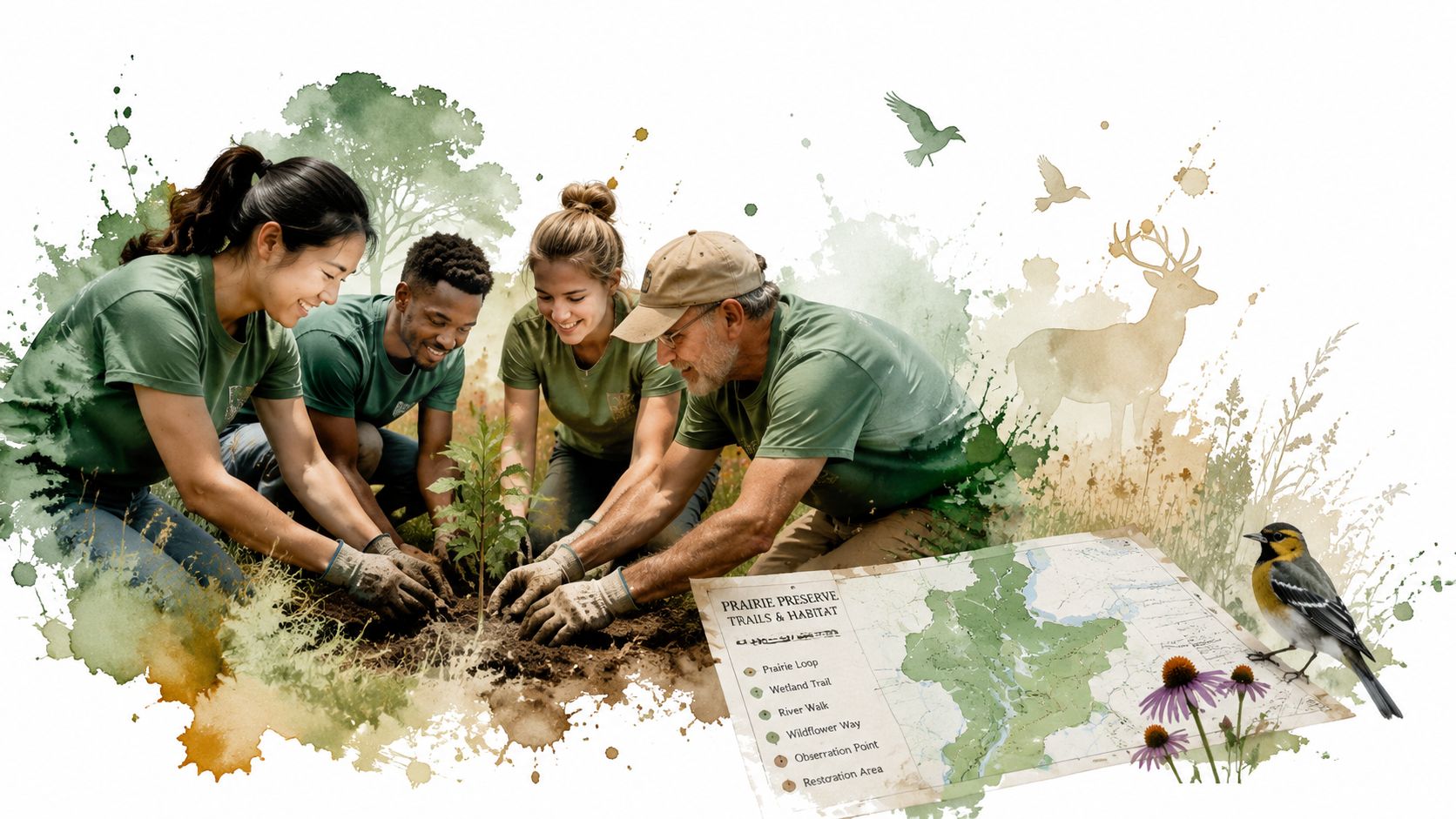
You might walk past a small patch of prairie or a tree-lined lot and wonder who keeps it from slipping back into weeds, trash, or pavement. I think that question opens the door to Natural Land Institute, because its work sits right at that meeting point between land, people, and long-term care. When you look closely, you start to see that conservation is not a single act. It is a series of choices about what to buy, what to protect, what to restore, and what to leave quiet.
Introduction to Natural Land Institute
A protected place can look simple from the trail. You see grasses bending in the wind, a wet pocket tucked below the trees, or a quiet edge of woodland, and it is easy to miss the careful work that keeps those features intact. The real question is who makes those decisions, and how they keep the land from being altered too quickly.
Natural Land Institute works in northern Illinois as a private, member-supported 501(c)(3) land trust founded in 1958, with a focus on preserving land and natural diversity in 12 counties in northern Illinois. That matters because NLI is not structured like a park district. A park system is usually built for broad public use. A land trust has a different task, protecting land first and then deciding, case by case, how much access the site can support.
That difference causes a lot of confusion. People often hear “protected land” and assume “public park,” yet those terms do not always mean the same thing. Conservation work often depends on restraint, because habitat may need rest, repair, or limited foot traffic before it can handle more use.
Practical rule: when you see a protected property, ask two questions, who owns it, and how do people use it?
That simple habit helps you read NLI's work more clearly. Once those two questions are in place, the rest of the picture becomes easier to follow.
Natural Land Institute history and mission
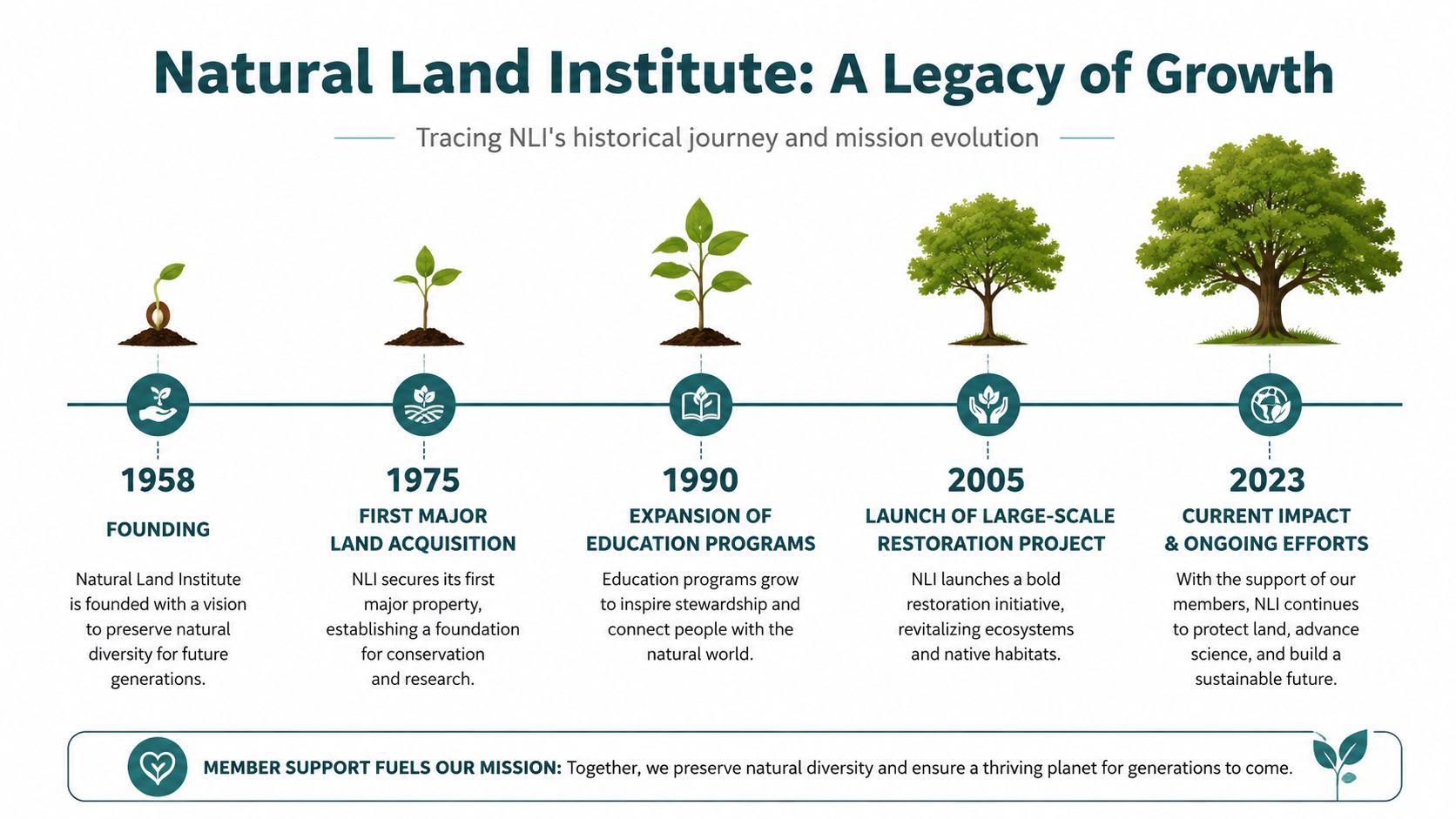
NLI began with a simple conservation decision: protect land so it can keep doing its work long after the first season ends. In 1958, a small group started what became Natural Land Institute, and that early choice still shapes the organization's direction today. Over time, member support helped the group grow into a land trust focused on preserving land and natural diversity across 12 counties in northern Illinois.
What member support changes
Member-supported groups work differently from places that depend on one large funding source. When people join, donate, volunteer, or renew, they help keep the work moving from one season to the next. That matters for a land trust because protection does not end when a property is acquired. The ongoing work continues through monitoring, repair, and patient care, the kind of steady attention that keeps a trail from eroding and a wetland from being pushed past its limits.
NLI's own materials show how broad that effort has become. The organization says it has protected more than 18,000 acres in Illinois since 1958 (2021 Annual Report). Another profile lists more than 16,000 acres protected, which means the number can vary depending on the source and the year being cited (Project World Impact profile). I treat that variation as a reminder to check the date on any conservation claim before assuming it is the final count.
Why the mission stays narrow
NLI focuses on one mission, protecting land and natural diversity. That may sound narrow, but the focus matters. A land trust works best when it knows exactly what it is guarding, the same way a forest path stays clear when each marker points in one direction instead of many.
That clarity also helps explain why local groups and volunteers can fit into the work in different ways. Some help with stewardship. Some help with monitoring or events. Others support public understanding of why access rules exist in the first place. The mission stays centered on land protection, while the people around it form the network that keeps the work grounded.
Explore Natural Land Institute preserves
Some protected places welcome your boots. Others ask you to look from the edge and leave the ground alone. That difference is one of the first things I want you to notice when you visit land protected by Natural Land Institute. A preserve is not always a park in the everyday sense, and that's where many visitors get confused.
How to choose a place to visit
Start with the access rule, then look at the site size, then decide what kind of outing you want. If you want a walking destination, look for public access language. If you want to learn how restoration works, a site with limited access may still be the right fit for an organized event or a guided workday.
| Preserve | Location | Access | Size |
|---|---|---|---|
| Des Plaines Dolomite Prairies Land and Water Reserve | Northern Illinois | Check current access details before going | Preserved natural area |
| Nygren Wetland Preserve | Rockton area | Event-based and preserve-specific access | Wetland preserve |
| Silver Creek Woods Preserve | Northern Illinois | Sometimes open through organized programs | Private protected natural area |
For the most up-to-date visitor guidance on one site, I'd start with the Des Plaines Dolomite Prairies Land and Water Reserve page.
Why access rules vary
A reserve can protect birds, plants, soil, or water quality by limiting where people walk. That can feel odd if you expect every protected acre to act like a neighborhood park. But conservation often needs quiet zones, especially where restoration is still underway or where rare habitat could suffer from too much traffic.
I like to think of preserve access like opening doors in a house with delicate furniture. You don't swing every door wide open. You choose the rooms where guests can move freely, and you keep other rooms closed so nothing gets damaged. That's the same kind of judgment land trusts use when they decide how a preserve should work for visitors.
Understand conservation programs at NLI
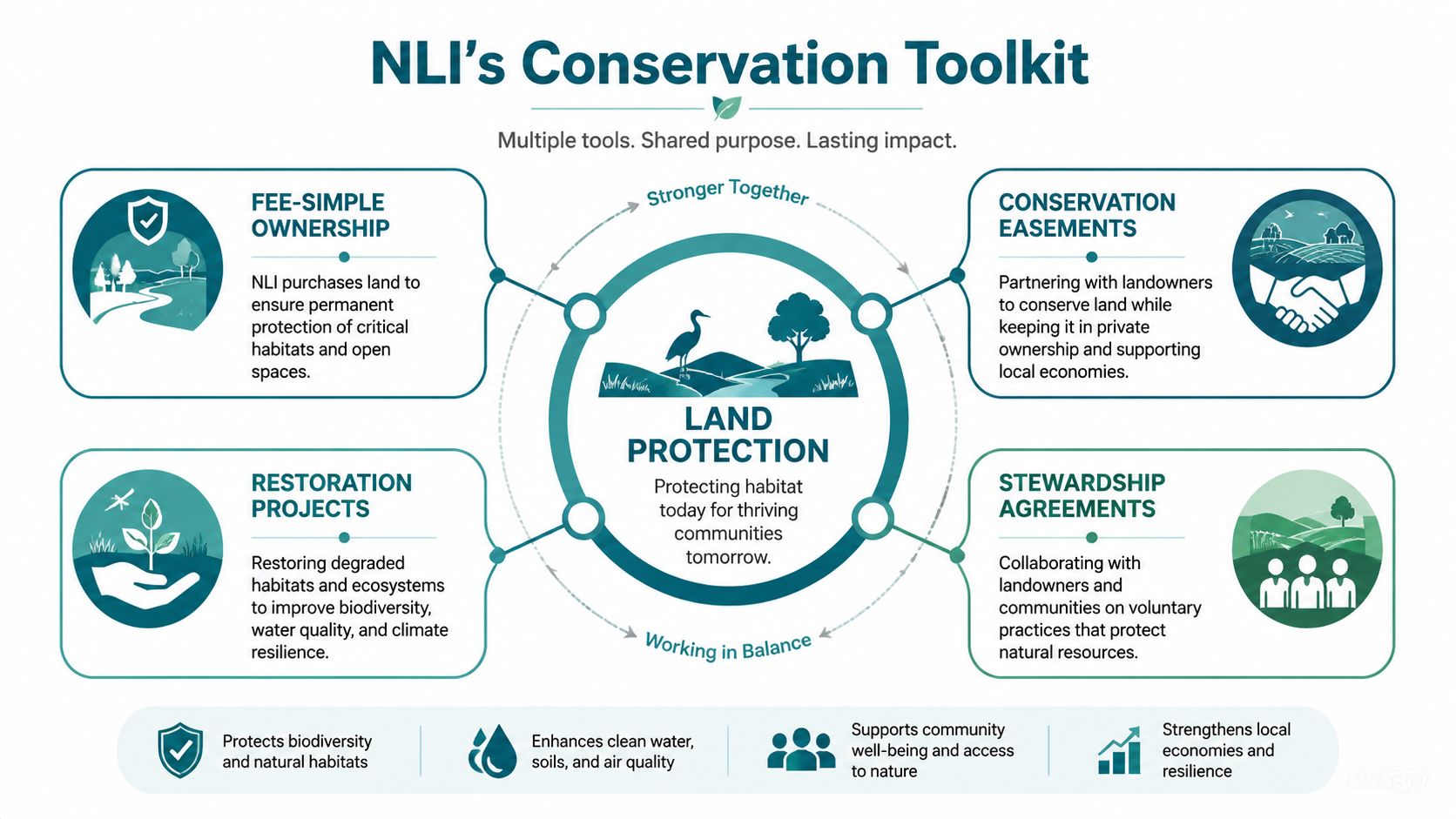
A protected parcel can start as one kind of project and grow into several. NLI uses a range of conservation tools, and each one fits a different situation, like choosing the right path through a wet meadow instead of forcing every visitor onto the same trail.
The hidden mechanics of protection
NLI's public materials say the organization has protected more than 18,000 acres since 1958, but the work behind that total is spread across different methods, including easements, stewardship, and restoration. That matters because “protected” does not always mean the same thing. In one case, NLI may own the land outright. In another, it may work with a landowner who keeps the property while agreeing to protect specific natural features. In a third, the focus may be on bringing a damaged site back to health after acquisition.
Why the tools work together
The tools function like different sections of a field pack, each carrying a separate job.
- Fee-simple ownership means the land trust owns the property and can direct how it is managed.
- Conservation easements let a landowner keep the land while limiting actions that would harm habitat.
- Restoration projects help a site recover from invasive species, erosion, or neglect.
- Stewardship agreements set ongoing care expectations so the work does not stop after the first season.
That mix shows why land protection and public access are related, but not the same thing. A place can be protected for habitat and still have limited public use, which matters to neighbors, donors, and volunteers who want a clearer picture of what “saving land” involves.
The brief video below offers another way to understand how habitat work and land care show up on the ground.
One practical way to support this work is through environmental stewardship programs, because stewardship is where protection becomes real maintenance, the steady care that keeps a site healthy after the initial conservation decision.
Volunteer and partnership opportunities with NLI
A lot of people hear “volunteer” and think about picking up trash by themselves. NLI makes room for something broader than that. When a land trust needs help, the work can include stewardship days, citizen science, and group-based support that fits better with a crew than with a solo schedule.
Where a cleanup group fits
If you already work with a team that likes outdoor service, you can bring those habits into conservation without forcing them into a parking-lot cleanup mold. Habitat work often needs hands that can pull invasives, clear light debris, watch for site issues, and follow instructions from staff. That is a natural fit for groups that already know how to show up, listen, and work safely.
How groups can help without crowding the site
I'd treat partnership like trail etiquette. Move with the purpose the site needs, not the purpose you arrived with. That means asking where help is useful, what tools staff want you to bring, and whether the land can handle foot traffic on a given day.
- Stewardship days work well when you want supervised field work.
- Citizen science works well when you can observe carefully and record what you see.
- Easement monitoring walks work well when the site needs a check-in rather than a cleanup.
If you want a starting point for group service ideas, the environmental volunteer opportunities page gives a helpful model for how volunteer crews can organize around outdoor work.
A good partnership does not ask a preserve to change for your group. It asks your group to fit the preserve's needs.
That mindset keeps people useful and keeps the land from taking more pressure than it can handle.
Events membership and donation options
If you want to help NLI, start with the path that fits your life right now. Some people give money. Some give time. Some do both. The practical choice is to pick one starting point first, then build from there.
A simple way to join in
Membership is the most direct first step if you want an ongoing connection to the organization. It works like joining a trail crew that keeps returning to clear the path, not just showing up once and leaving. Member support helps a land trust plan beyond a single season, and the group's long-running work has depended on that steady kind of backing.
Donations work the same way in a different form. They give the organization room to keep caring for land that is already protected, which is a job that continues long after a preserve is acquired.
If you would rather give time than money, watch for events tied to field work, outings, and seasonal gatherings. NLI's event listings include nature-focused fundraisers and on-site activities, so you can enter the work through a visit, a volunteer day, or a community gathering (NLI event listing). That path helps people see conservation up close, instead of treating it like something distant and abstract.
What to do first
- Choose your role. Decide whether you want to visit, volunteer, donate, or join as a member.
- Check the event calendar. Look for field days and gatherings that match your schedule.
- Read the site notes. Some preserves need special access or event registration.
- Set a donation habit if you can. A recurring gift is often easier to keep than a one-time decision.
- Bring a friend or group. Shared plans are easier to keep.
A simple next step is often enough. You do not need to know every land trust term on day one. You only need one clear way to begin, then let your involvement grow from there.
Impact metrics and stewardship challenges
A preserve may look quiet from the trailhead, but the work behind it is constant. Natural Land Institute's footprint in Illinois is measured in protected acres, and public reporting shows the organization has secured a large amount of land since its founding. That scale matters because each tract carries its own needs, from prairie burns to wetland care, and the work does not stop once land is acquired.
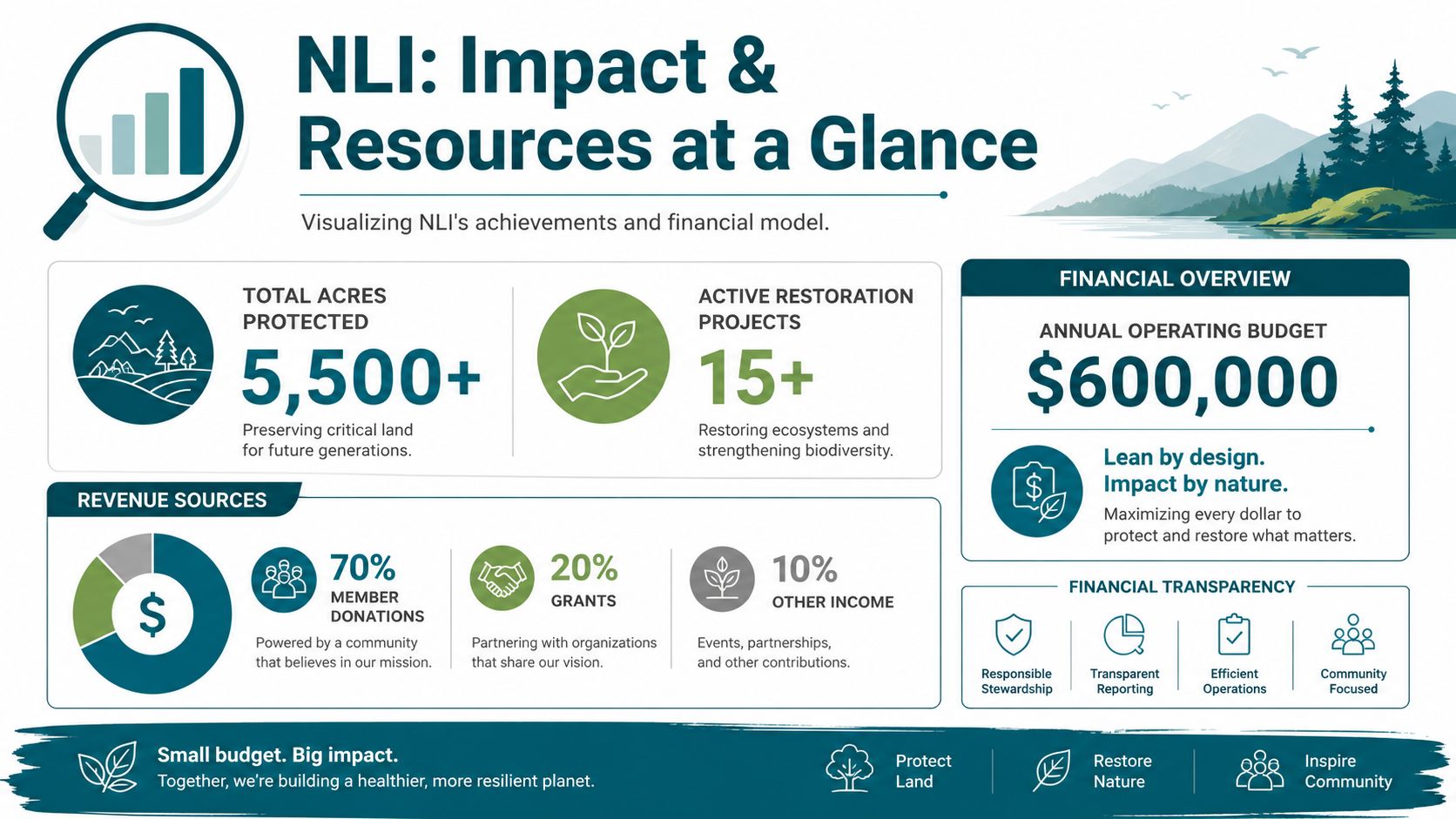
The financial side looks modest compared with the size of the conservation job. Public reporting shows a lean operating budget and a revenue mix that does not rely on a single source, which suggests the group has to plan carefully and keep many parts of its work moving at once. That is common in land protection. Protecting a place is one task, but keeping it healthy is a longer one.
What the money has to cover
Protected land does not pause for budget cycles. Invasive species keep spreading, trails wear down under use, and native plant communities need repeated care to recover and stay stable. Staff time, equipment, and field visits all cost money, and those costs continue after a preserve is secured.
That is the part many people miss when they celebrate a land purchase.
Why maintenance is the harder question
The harder question is care over time. Climate stress, restoration work, and long-term monitoring all call for steady funding and patient labor, much like tending a garden that keeps changing with the seasons. The preserve may already be protected, but protection is not the same as hands-off management.
That is why donors, volunteers, and neighbors matter in practical ways. Some people help by giving money, which supports ongoing stewardship. Others help by showing up for workdays, field tasks, or events that keep a preserve functioning as a living place instead of a frozen one. The question is simple to ask and harder to answer, who keeps paying attention after the public spotlight moves on?
Practical rule: if you want a preserve to stay healthy, ask how it gets cared for after the ribbon-cutting ends.
I think that is the clearest place for local support to matter. It keeps the focus on the ground truth of conservation, the work continues.
Practical steps to visit and get involved
Start with one preserve and one action. Check access rules before you drive out, because some protected places need event registration or limited use. Then choose one next move, visit, volunteer, join, or donate, and put it on your calendar today.
- Plan a visit. Pick a preserve and read its current access notes.
- Sign up for a volunteer day. Choose a stewardship event that matches your comfort level.
- Bring your group. Ask staff where a crew can help without disrupting habitat.
- Join as a member or donor. Pick a giving level you can keep up.
- Follow future events. Field trips and seasonal gatherings make it easier to stay involved.
If you want to turn a single walk into a real habit of conservation, start now. A first visit teaches you how land trusts think, and the next step is yours to take.
A CTA for Litter Caterpillars.