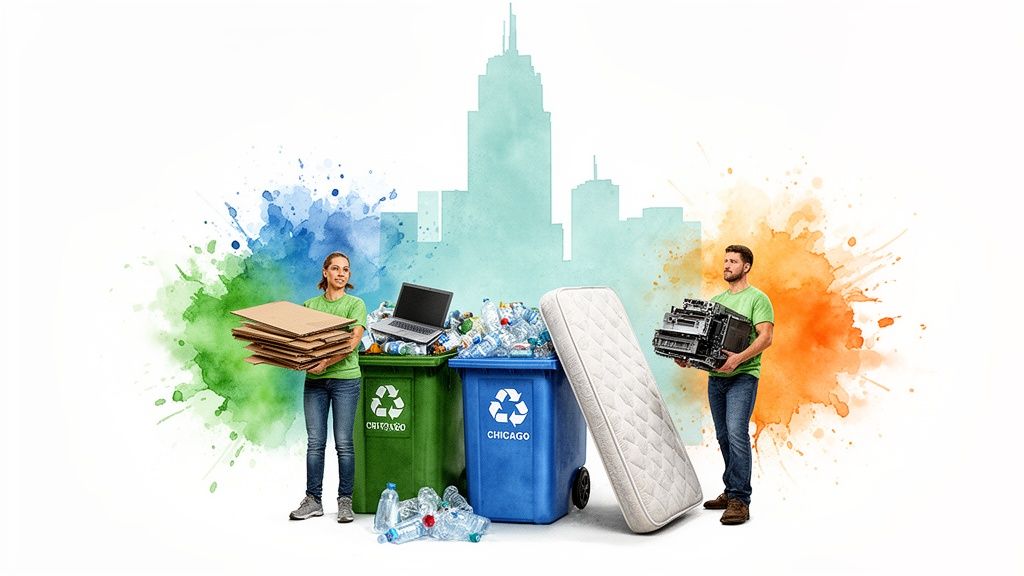
Let's be real for a second. Figuring out how to recycle in Chicago can feel like you're trying to solve a puzzle with half the pieces missing. You think you’re doing the right thing, but the rules seem to change with every block. I’m here to cut through that noise and give you a simple, straightforward guide to finally mastering that blue cart.
Mastering the Blue Cart: Chicago Recycling Basics
I get it. You’re standing in your kitchen, holding an empty yogurt container, and you just… pause. Blue cart or trash? It’s a tiny moment, but it’s a moment we all face.
Imagine it this way: every bottle you rinse, every box you flatten, is a small victory for our neighborhoods. It feels insignificant, but those little actions create a ripple. The good news is, you really only need to focus on five main things: paper, plastics, glass, metal, and cartons. That’s it.
Keeping It Clean and Simple
The biggest hurdle we face isn't just knowing what to recycle, but how. Contamination is the single greatest villain in this story. It’s like trying to bake a cake and accidentally spilling salt in the sugar bowl; one mistake ruins the whole batch. One greasy pizza box can contaminate an entire bin of otherwise perfect recyclables, sending it all straight to a landfill.
So, how do you make sure your stuff actually gets a second life? It boils down to a simple rhythm.
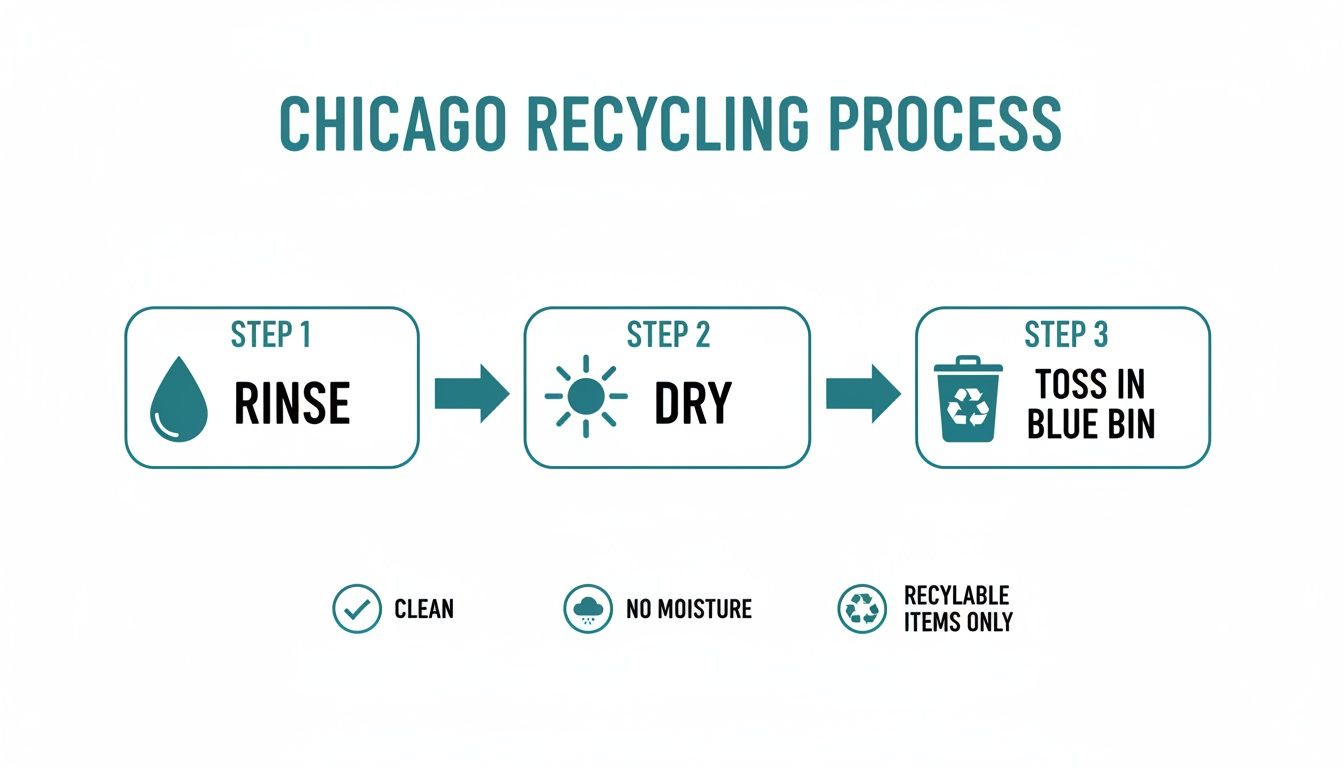
This simple flow—Rinse, Dry, Toss—is the absolute key. A quick rinse to get food residue off and a shake to dry is usually all it takes to make your efforts count.
Here’s a quick-and-dirty guide to help you sort like a pro.
Your Quick Chicago Recycling Cheat Sheet
This table breaks down what goes in your blue cart and what definitely needs to stay out to avoid contaminating the whole load.
| Recyclable Category | Yes Please (Clean & Dry) | No Thank You (Keep These Out) |
|---|---|---|
| Plastics | Bottles, jugs, tubs & jars (#1, #2, #5) | Plastic bags, film, bubble wrap, Styrofoam |
| Glass | Bottles & jars (all colors) | Drinking glasses, mirrors, light bulbs |
| Paper | Newspapers, junk mail, magazines, cardboard | Greasy pizza boxes, used paper towels, receipts |
| Metal | Aluminum cans, tin cans, empty aerosol cans | Pots & pans, electronics, batteries, hangers |
| Cartons | Milk, juice, and soup cartons | "Tetra Pak" pouches, waxy paper cups |
Keep this list handy, and you'll be well on your way to becoming a recycling expert.
The Reality of Our Recycling Efforts
Making this small effort is more important than you might think. Chicago's recycling rates have been stubbornly low for years, clocking in at a mere 9.4% waste diversion rate recently. It’s a sad story compared to cities like San Francisco, which pushes toward 50% or more.
A huge culprit is contamination, with some studies finding that up to 30% of items in our blue bins are just plain wrong. You can explore the full data behind Chicago's recycling challenges to get a deeper sense of why our city struggles.
This isn't just about sorting trash; it's about reclaiming our neighborhoods, one clean container at a time. It’s a mindful act that ripples outward, creating a cleaner, more vibrant city for all of us.
When you nail the basics of the blue cart, you’re not just following rules. You're taking an active role in a larger story and building a habit of mindfulness that extends beyond your doorstep. And if you're looking to take it a step further, you might be interested in my guide on how you can reduce plastic use in your daily life.
Why Our Recycling Past Still Matters
Ever wonder why recycling in Chicago feels so… complicated? It’s not just you. There’s a history here, a ghost story that explains a lot of the confusion and, frankly, the skepticism that many of us feel. It all traces back to the city’s infamous 'Blue Bag' program that kicked off in 1995 and left a pretty deep scar on our collective trust.
Picture this: You spend years carefully sorting your recyclables, stuffing them into those special blue bags, and putting them out with the trash, just like the city told you to. You think you’re doing your part. We all did.
A Tale of Two Realities
The whole idea behind the Blue Bag program was simple. Toss everything in together, and they'd sort it out later. City officials even threw out some huge numbers, claiming the program diverted 2 million tons of material from landfills by 2006. Sounds amazing, right?
Except it was a fairy tale. An independent study blew the lid off the whole thing, revealing the actual recycling rate was a pathetic 13.3%. That’s less than a third of what they were telling us. Most of those blue bags we all so diligently filled? They were just getting dumped in a landfill right alongside the regular trash. You can read the full, frustrating story behind the Blue Bag program's numbers to see just how bad it was.
This wasn't just a policy failure; it was a betrayal. It’s like tending a garden for months only to find out the seeds were duds. That kind of thing sticks with you. It created a lingering doubt about recycling in Chicago that we’re still fighting today.
This history isn't about pointing fingers. It's about understanding why our own hands-on efforts are so ridiculously important. When the big systems fail us, the best way to make a real change is to just grab a bag and clean up our own block.
Rebuilding Trust from the Ground Up
This history is exactly why I started Litter Caterpillars. I saw firsthand how big, top-down systems could fail the very people they were supposed to serve. But I also saw the undeniable power of just doing the work yourself.
When you get together with a few neighbors to clean up a park or a stretch of sidewalk, you completely bypass the bureaucracy. The change you make is immediate. It’s visible. No one can spin the story or fudge the numbers.
You see the bags of trash you collected with your own eyes. You feel that sense of pride from looking at a clean street. This is how we start to fix that broken trust—not by waiting for a perfect system, but by building our own momentum, one cleanup at a time. We’re proving to ourselves, and to our city, that what we do matters. We're writing a new story.
Beyond the Blue Cart: Where to Recycle Everything Else
Okay, so you've mastered the blue cart. Your cardboard is flat, your plastics are rinsed, you're a curbside recycling champion. But then you look around your home… and see the other stuff.
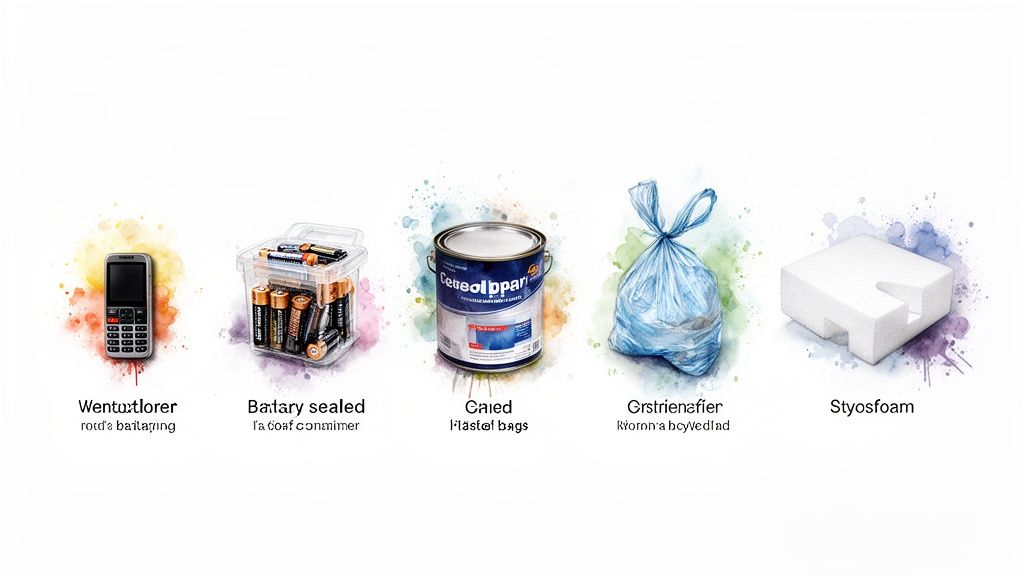
That old laptop gathering dust in the closet. The bag of dead batteries shoved in a junk drawer. That half-can of paint from a project you finished three years ago. These are the ghosts of projects past, and they can't just be tossed in with your bottles and cans. These tricky items need their own game plan.
Think of it as finding the right home for everything, even at the end of its life. We’re just trying to make sure we don't move a problem from our garage into the environment.
Tackling E-Waste and Hazardous Materials
Your old electronics—phones, computers, TVs—are a double-edged sword. They're packed with valuable stuff like gold and copper, but they also contain toxic materials like lead and mercury. Trashing them is a huge waste and a real environmental hazard.
Even huge companies are getting in on this. Microsoft, for instance, has a Circular Center right here in Chicago to reuse and recycle server parts from their massive data centers. We can apply that same thinking to our own gadgets.
- Electronics: Many big-box electronics stores have take-back programs. The city also hosts collection events for this "e-waste" every so often. Don't let that old tech haunt your drawers!
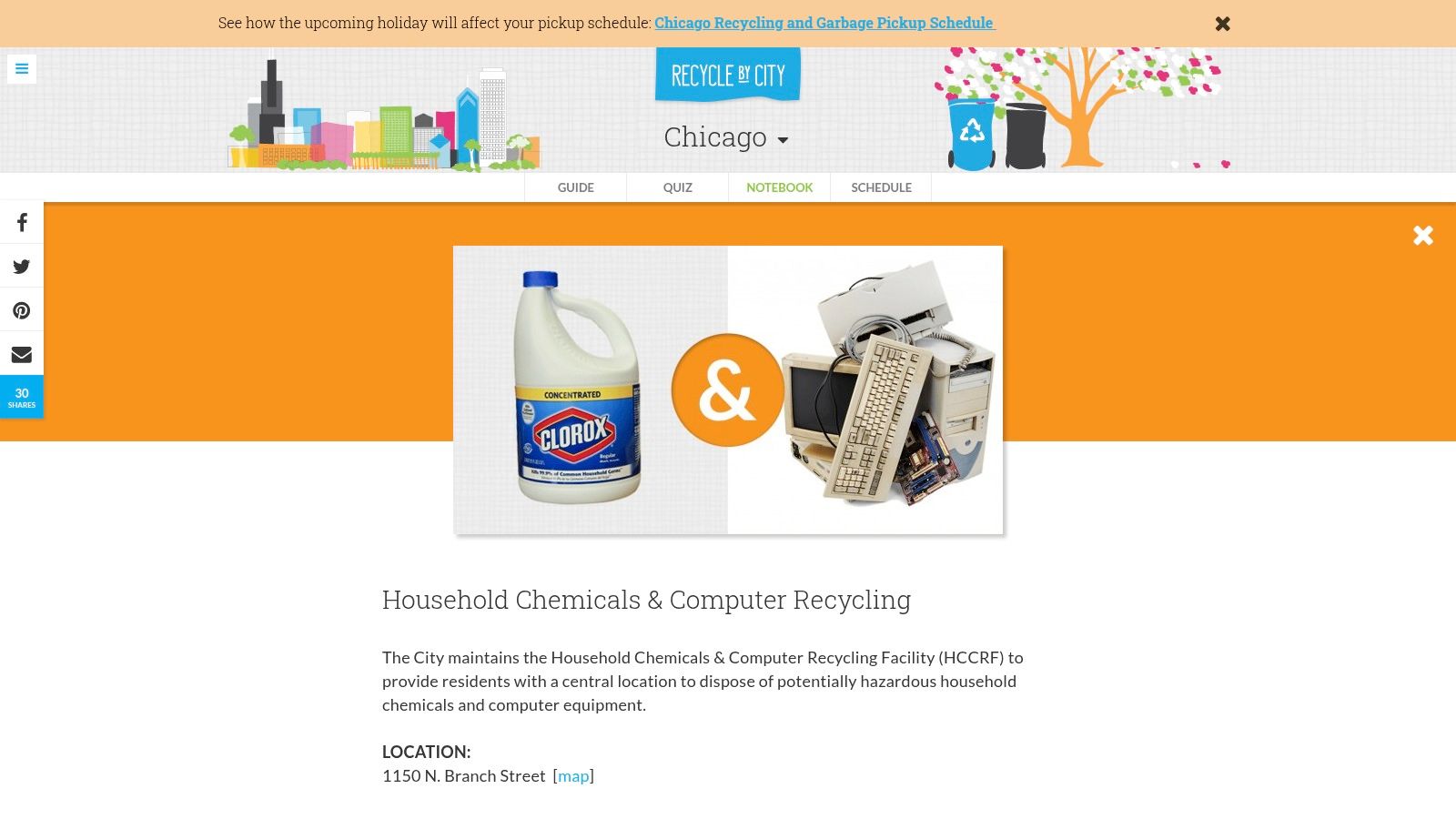
- Household Chemicals: Things like paint, harsh cleaning products, and automotive fluids are considered Household Hazardous Waste (HHW). They require special handling and absolutely must be taken to a designated facility.
It all comes down to taking responsibility for the full life of our stuff. Just because something is out of sight doesn't mean it magically disappears. Finding the right drop-off spot is the final, crucial step in this whole journey.
Beyond the Usual Suspects
What about all those other awkward items? Plastic bags are a big one. They are notorious for tangling up the machinery at recycling plants like a python strangling its prey, and should never go in your blue cart. Seriously.
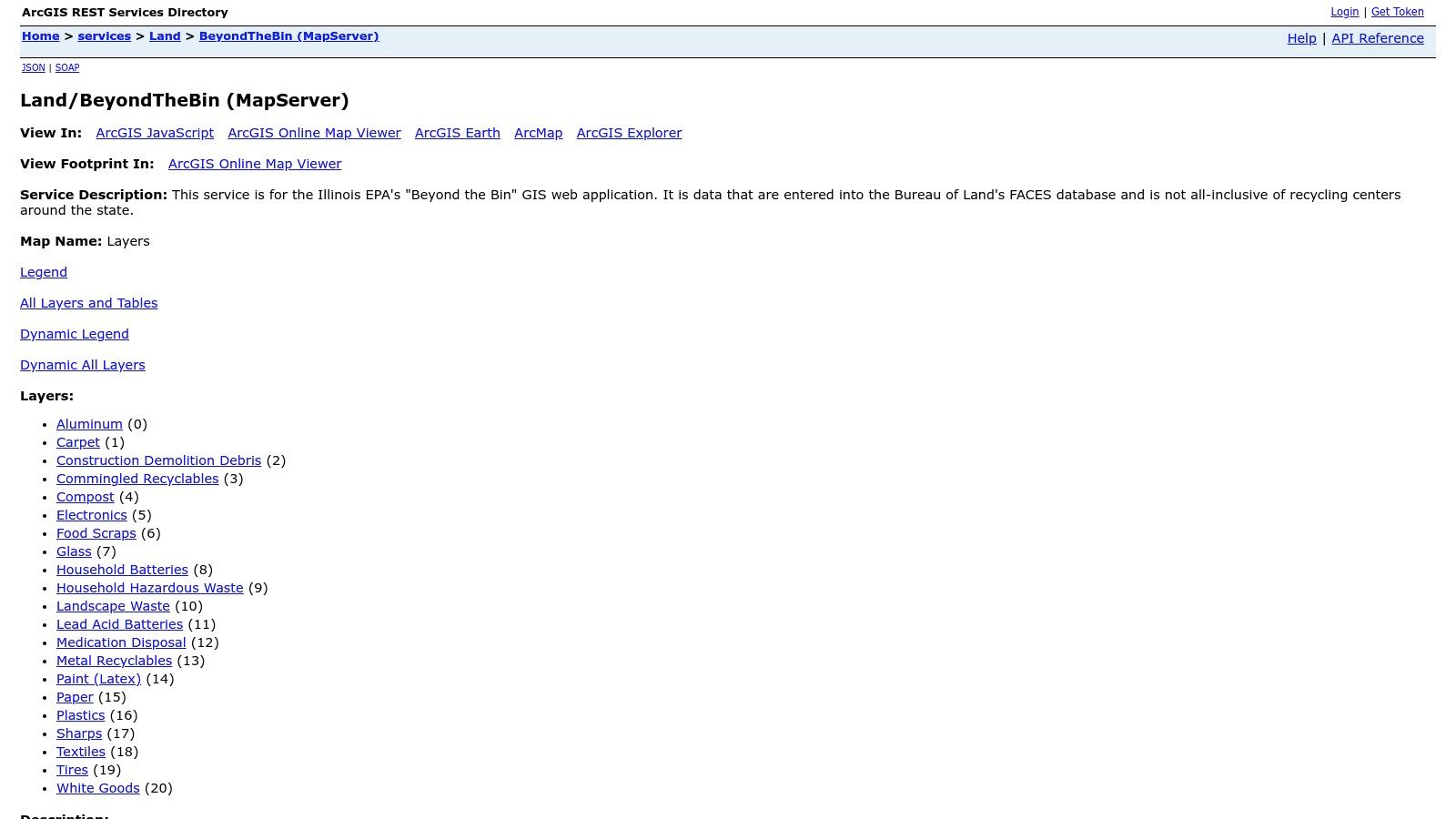
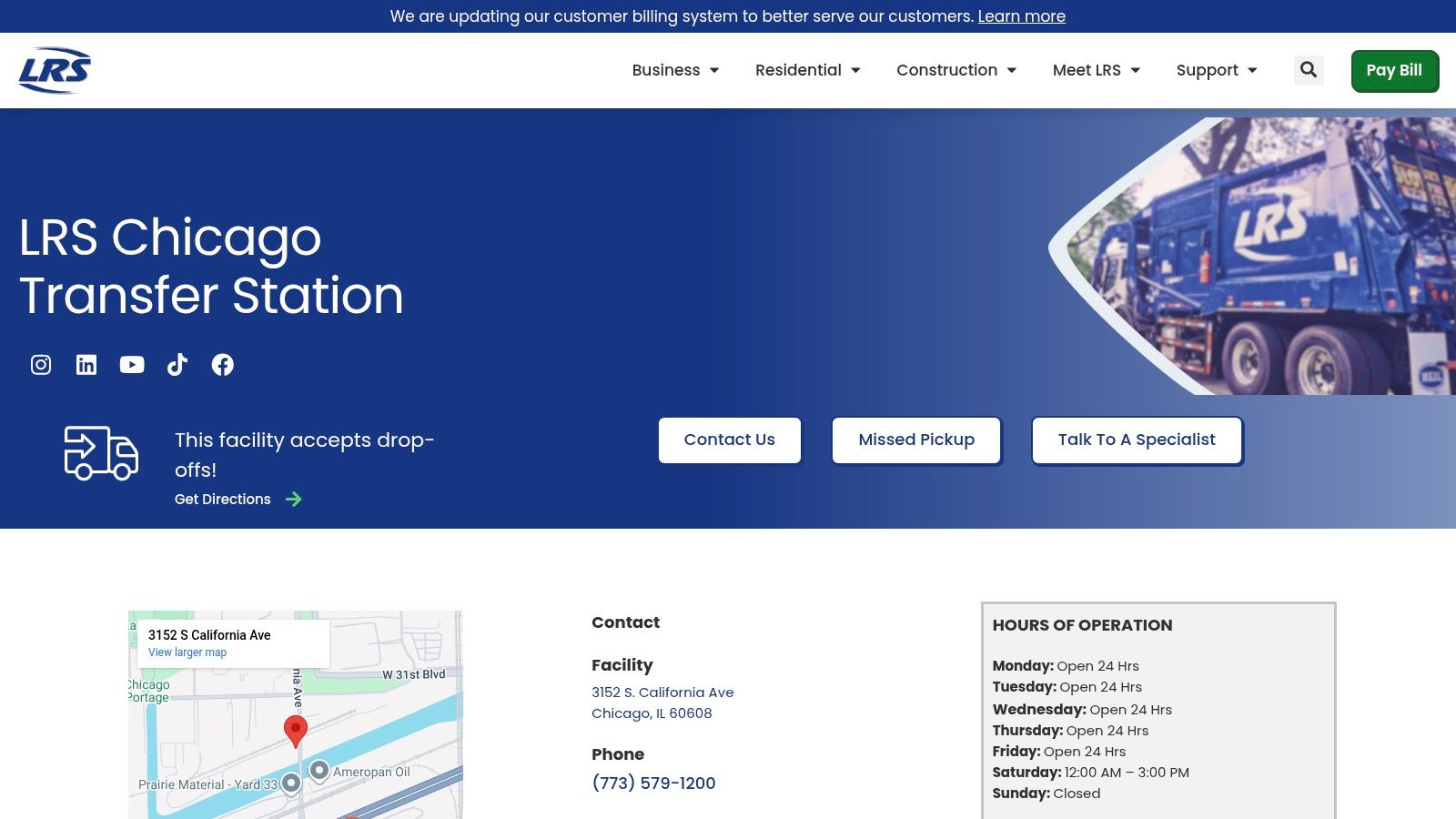
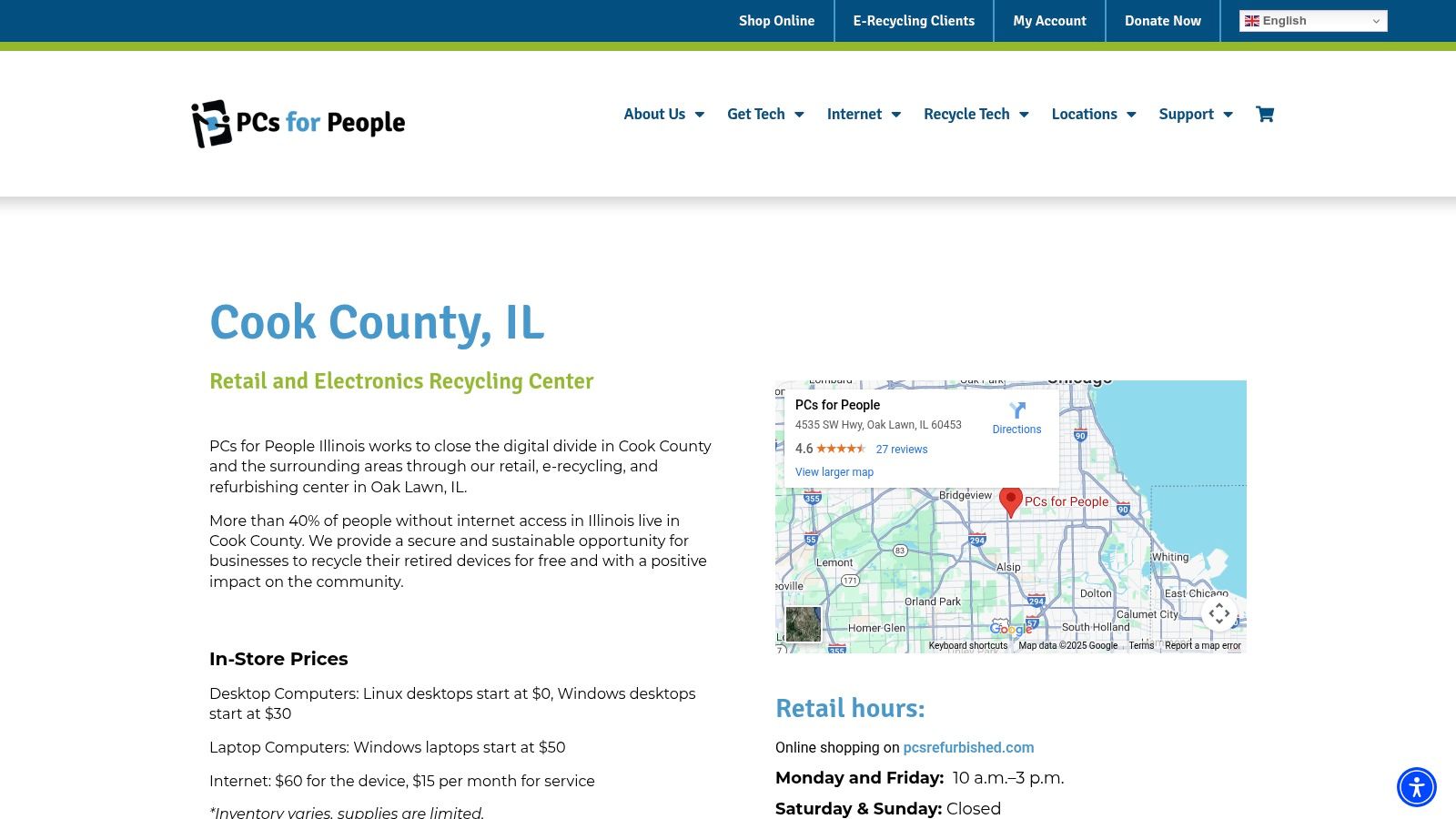
The good news is, most grocery stores have collection bins for plastic bags and film wrap right by the entrance. Just make it a habit to bring them with you on your next shopping trip. For a complete list of where to take these harder-to-recycle items, check out my detailed guide on Chicago recycling centers and drop-off points.
Even your food scraps have a better destiny than the landfill. Composting is an amazing way to turn kitchen waste into "black gold" for gardens. The city now has 33 free food scrap drop-off sites, making it way easier to keep organic waste out of landfills where it just sits and produces harmful methane gas. It’s a beautiful way to complete the circle—turning yesterday’s leftovers into tomorrow’s soil.
From Bystander to Changemaker: How to Join the Movement
Sorting your recycling is a great first step. Seriously. But what happens when you want to do more? When you want to feel that connection to the city in a bigger, more tangible way?
That's where the real fun begins. It's the difference between tidying your own room and helping repaint a community center. One is just maintenance; the other is about creating something new. That's exactly the feeling that led me to start Litter Caterpillars. I was drowning in my own personal mess, and funny enough, the easiest way for me to start cleaning it up was to go clean up someone else's.
It turned out to be a lot more interesting, especially when things got a little rough. I’ll never forget the time three of us got caught in a freak hailstorm. As we huddled under a tree, totally soaked and shivering, something clicked. Shared struggle is an incredible glue.
Finding Your Crew
That day taught me that real change is built on three things: service, friendship, and a little shared suffering to build resilience. You don't have to start your own group to find that. Dozens of awesome organizations are already out there making a difference every single day.
Here are a few ways for you to jump in:
- Join a Community Cleanup: Groups like Litter Caterpillars meet every single week, rain or shine, to clean up neighborhoods across all 50 wards. You just show up, grab a bag, and start making friends.
- Adopt a Park: The Chicago Park District has programs where you can help take care of your local green space, from planting gardens to yanking out invasive species.
- Transform Vacant Lots: Some organizations focus on turning neglected empty lots into community gardens or beautiful little parks. They’re creating green oases where there was once just concrete and weeds.
It’s not just about picking up trash. It’s about taking ownership of your corner of the world.
It’s About More Than Just Cleanup
When you join a movement to recycle in Chicago and make its streets cleaner, you’re doing something much bigger than just picking up litter. You are weaving yourself into the very fabric of the city. You are building relationships with people you might never have met otherwise, all united by a common goal.
It’s the incredible feeling of seeing a street transform because you and a team of new friends showed up. You’re not just removing litter; you’re injecting hope and care back into the community.
You start to see the city differently. An overflowing bin isn’t just an eyesore anymore; it’s a call to action. An empty lot isn’t a blight; it’s potential. You become an active character in Chicago’s story, not just a bystander watching it happen.
And the best part? It changes you, too. You become more resilient, more connected, and more hopeful. You prove to yourself, one bag of trash at a time, that you have the power to create the city you want to live in. And that feeling is something you can’t put in a blue cart.
Meet the People Who Paved the Way
Change doesn't just happen overnight. Long before blue carts lined our alleys, a bunch of passionate Chicagoans were fighting tooth and nail for a cleaner city. When you and I choose to recycle, we’re walking a path they blazed for us through pure stubbornness and will. That's a powerful legacy.
It’s easy for me to feel like my own small actions don't add up to much, but their story is proof that they do. Groups like the Chicago Recycling Coalition were laying the groundwork for decades, brick by brick.
The Fight for a Better System
This wasn't just a few meetings here and there; this was a real fight. Kicking off in 1985 as the Coalition for Appropriate Waste Disposal, they actually rallied neighborhoods to shut down the city's last municipal waste incinerator. Think about that. These weren't politicians; they were people like you and me.
Later, they were the ones who held the city’s feet to the fire over the failed Blue Bag program. They used studies and relentless pressure to get it phased out and pushed for the system we have today. You can actually read the full history of their activist roots and see how much they shaped our city.
Their story is an incredible lesson in persistence. They refused to accept a broken system and organized until something finally changed.
This reminds me that our collective voice matters. When we join together, we become part of a legacy of people who refuse to accept the status quo. We are the next chapter in that story.
We Are the Next Chapter
When I started Litter Caterpillars, I didn't think of myself as an activist. Honestly, I just wanted to clean up my own life by cleaning up the city around me. But every time we gather for a cleanup, we’re doing more than just picking up trash—we’re honoring that same spirit.
We are literally continuing their work. We’re the next wave of people who believe in a cleaner Chicago and are willing to show up and do something about it.
Whether you’re meticulously sorting recyclables in your kitchen or joining us on a Saturday morning with a trash grabber in hand, you're part of this. The people who came before us gave us a foundation to build on. They proved a small group of determined citizens can change the direction of a major city. Now it's our turn to take that legacy and run with it.
Common Questions About Chicago Recycling
Look, if you have questions, that's a fantastic sign. It means you’re actually thinking about this and want to get it right. Let's tackle some of the most common things people ask me about trying to recycle in Chicago.
What Is the Biggest Recycling Mistake People Make
Hands down, the single biggest mistake I see is "wish-cycling." It’s that moment you stand over the blue cart with something in your hand, not totally sure if it's recyclable, and you toss it in anyway hoping for the best. We've all been there. I have. But that good intention can seriously mess things up.
Things like plastic bags, greasy food containers, and old electronics are huge contaminants. Plastic bags are the absolute worst—they get tangled in the giant sorting machines, forcing the entire facility to shut down for hours just to cut them out. Even one greasy pizza box can ruin an entire bale of otherwise clean paper.
It feels totally wrong, I know, but when in doubt, it’s actually better for you to throw the item in the trash. Focusing on recycling the "big five" categories correctly makes a way bigger positive impact than trying to recycle everything and contaminating the whole stream.
And if you're wrestling with something that feels like it might be hazardous, you should probably check out my guide on how to handle hazardous waste disposal in Chicago.
My Blue Cart Was Missed What Should I Do
It’s so frustrating to see your cart is still full long after the truck should have come. The very first thing you should do is walk out there and look for a bright orange "Contamination" sticker. If you see one, it means they spotted something non-recyclable. You'll have to pull it out before your next scheduled pickup.
No sticker? Then it was probably just a missed pickup. Don't just let it sit there! The best thing you can do is report it right away.
- Call 311 and tell them about the missed pickup.
- Use the 311 CHI app on your phone to submit a service request.
Have your address ready when you report it. Being proactive is the only way to get them to send a truck back out. Your persistence helps keep our alleys clean and holds the system accountable.
How Can I Recycle in an Apartment Building
This is a massive challenge for so many of us. The good news is that large apartment buildings are actually required by city ordinance to provide recycling through a private company. The not-so-good news? Many of them just… don't.
If your building is one of them, your first move should be to talk directly with your landlord or property management. A polite conversation mentioning the city ordinance can sometimes be the nudge they need to get the ball rolling.
If they blow you off, you can report the building to 311 for non-compliance. In the meantime, you aren't totally stuck. You can find public recycling drop-off centers to take your materials to. It’s definitely an extra effort, but that kind of commitment is what actually inspires change in our communities.
At Litter Caterpillars, we believe every small act adds up to a city we can all be proud of. Join one of our weekly cleanups to meet some amazing people and make a real, visible difference. Find your next event at https://www.littercaterpillars.com.