
Three people huddled under a tree while hail struck the street around us. The cold kept building, Ubers kept canceling, and we faced a simple choice: leave or stay together until it became safe.
That first cleanup taught me that resilience grows through repeatable action, not a performance of toughness. You practice it when you pick up one piece of trash, make one difficult call, return after missing a week, or ask someone to walk beside you.
The eight resilience building activities below move from short cleanup walks to neighborhood projects, shared challenges, personal barriers, and volunteer care. Choose by your age, available time, energy, access needs, and comfort with groups. You can do several alone. You can also invite one person and make the task lighter.
You build trust in yourself one doable action at a time.
1. Group Cleanup Walks
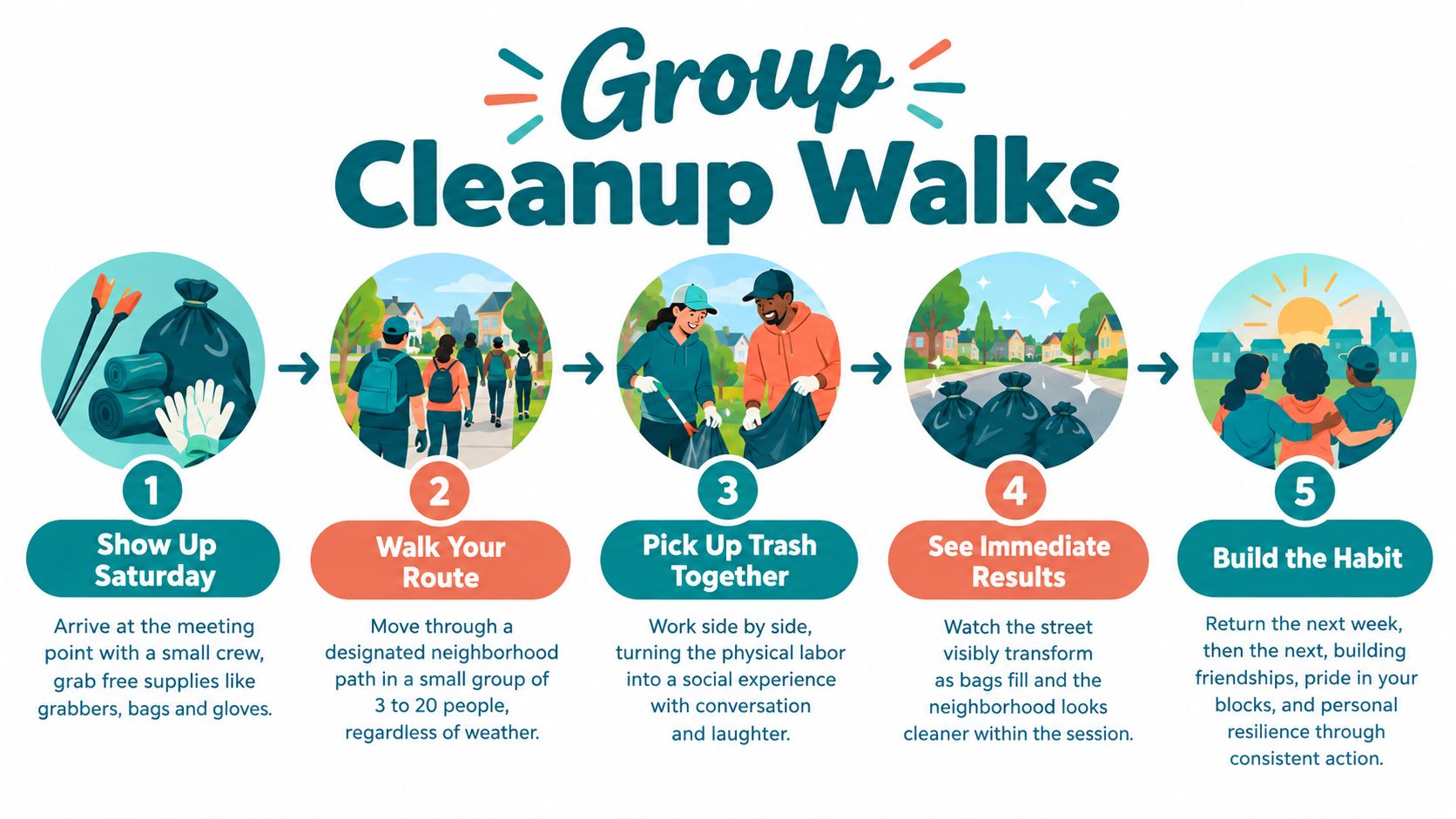
On a Saturday morning, I grab a trash picker, a bag, and a few people who want to move. We walk. The trash disappears as we go, and the work gives our attention somewhere concrete to land.
Cleaning someone else's mess can feel easier than cleaning your own. You don't have to sort through the memories attached to a gum wrapper or an old food container. You pick it up, place it in the bag, and move on. That small motion can teach you to release what doesn't deserve a permanent place in your mind.
Litter Caterpillars has used this format during a highway cleanup after a bike-event shutdown and through weekly rotations in Englewood, South Shore, Pilsen, and other Chicago neighborhoods. Over time, groups create their own jokes, routines, and small traditions. The cleanup becomes a walk with a shared purpose.
Make the walk easy to repeat
Wear clothes you can dirty. Bring water and a snack, especially during hot weather. Talk while you walk, because conversation gives the task a social pulse. Notice which blocks need more attention instead of staring only at the bag.
- Keep the first route manageable: Choose one block, one path, or one visible problem area.
- Invite different formats: A solo walker can use the same practice with music or quiet observation.
- Return at a regular time: Repetition helps turn a good intention into a habit.
For a first group session, use this volunteer trash pickup guide to prepare. Come for strange fun, not to fix an entire city in one morning.
2. Neighborhood Transformation Projects
A cleanup removes a problem. A transformation asks you to stay long enough to create something new.
Litter Caterpillars won an empty lot at auction in Englewood and turned it into Caterpillar Park. That work required volunteers to move dirt, plant, paint, and return across many weekends. A block transformation with murals and benches follows the same pattern. You begin with a neglected space, then give people a reason to picture its next life.
When I return to a project months later, I notice more than the physical change. I remember the awkward first meeting, the dirt under my fingernails, and the moment someone finally saw the plan. Each visit gives the group proof that patient work can produce a place people recognize as theirs.
Build the project in small pieces
Start with one corner, one lot, or one block face. Get local permission before work begins. Break the project into tasks that fit across multiple weekends, then photograph each stage so volunteers and residents can see what changed.
Invite nearby residents early. They know the space, its history, and the people who use it. Let them help decide what belongs there.
Watch this community cleanup video before you plan a workday. Celebrate the first cleared patch, the first planted area, and the first repaired bench. You don't have to wait for a finished park to recognize progress.
3. Consistent Weekly Commitment
A volunteer checks the calendar, sees Saturday morning, and laces up before motivation arrives. That small act, repeated through changing moods and weather, gives resilience a practical shape.
For about three years, I've watched Litter Caterpillars meet weekly through rain, blizzards, negative wind chills, and scorching heat. People join, leave, return, and gradually accept more responsibility. Some volunteers have attended for more than 40 consecutive weeks and grown into team leaders. The meeting remains steady even as the people change.
Your self-image shifts with that rhythm. You stop waiting to feel ready. You check the calendar, put on your shoes, and go. Courage becomes a door you keep opening.
Make the promise fit your life
Choose a recurring time you can protect. A solo cleanup, a neighborhood walk, or a group service hour can all count. Tell one person, add it to your calendar, and use a weekend cleaning schedule to find a regular service window.
Keep these rules visible:
- Return the next week: One missed session does not erase the habit.
- Break the slide: After two missed weeks, restart with a shorter, easier task.
- Use a backup person: Ask a friend to text when motivation fades.
- Change the format: Work alone, bring a group, or choose an age-appropriate task for children and older adults.
- Respect conditions: Wear winter gear, carry water in summer, shorten the route, and stop when safety requires it.
A steady commitment should stretch you without trapping you. The goal is a practice you can repeat, adjust, and trust.
4. Shared Suffering and Bonding
Cold weather changes a conversation. So does heat, rain, a heavy bag, or a long walk back to the meeting point.
During the first spring hailstorm, three of us huddled under a tree and watched every Uber cancel. We shivered, laughed, and waited until we could move safely. The hardship became part of our shared story. Later, winter cleanups and summer runs in 95-degree heat created more stories that people remembered because everyone had felt the same discomfort.
Shared challenge can bring people closer, but you need to handle it with care. A freezing cleanup shouldn't become a test of loyalty. Someone who leaves because the conditions feel unsafe hasn't failed. They made a sound decision.

Let safety set the limit
Check weather conditions before you meet. Bring seasonal gear, plan a warm place to go afterward in winter, and carry water during hot sessions. Choose a shorter route when the group runs low on energy.
Hardship can become a good story when everyone has permission to stop.
Name the discomfort instead of pretending it's easy. Then add a small reward, such as coffee after hail or ice cream after heat. A solo version might involve a brisk walk in manageable weather, followed by a warm drink and a short note about what you noticed. A group version can include children or older adults when the route, pace, and conditions fit them.
5. Identity and Pride Building
After a cleanup, Ella Duke's volunteer-made theme song can stay in your head. Litter Caterpillars also uses a logo, flags, and badges. These details give a practical task a recognizable shape. You arrive to collect trash and leave with a clearer identity: I'm someone who shows up for my city.
That feeling can begin with a playful choice. Name the group, give the route a nickname, sew a patch, or take the same closing photo after each session. A solo volunteer might draw the route in a notebook or mark each visit with a personal symbol. Children can design cards, while older adults can choose a quieter tradition that feels comfortable and safe.
Pride should point back to conduct. A group that values kindness greets newcomers and shares equipment. A group that values bravery makes room for beginners who feel awkward. A group that values unity treats badges as reminders, not rankings.
Try a small marker, such as a sticker, pin, scarf, or handmade card. Celebrate concrete actions: returning, helping someone new, or making a route safer. Let volunteers add traditions instead of receiving a finished script.
Keep the ritual human. A photo, a short story, or a sentence about the day can make participation feel real. In a group, share that moment aloud. Alone, write it down before heading home.
Choose symbols that match the work. A badge cannot replace care, and a slogan cannot create belonging by itself. Identity grows when the marker reminds you what you did, including the ordinary sessions when showing up took effort. That practice can fit a short solo walk, a neighborhood team, or a service project adapted for age, time, and mobility.
6. Cross-Ward Exploration and Neighborhood Knowledge
Chicago has 50 wards, yet many residents spend most of their time in only a few familiar areas. Cleanup work can turn the city from an abstract map into a collection of streets, neighbors, storefronts, parks, and stories.
Through ongoing work in Englewood, volunteers can learn the routes, recurring trouble spots, and people who care for the area. A visit to South Shore can reveal a safer walking path, a friendly neighbor, or a quiet block you hadn't noticed before. You begin to understand a place through contact, not assumption.
Exploration also asks for humility. You're a guest when you volunteer in a neighborhood you don't know well. The litter tells you one part of the story. Residents can tell you what needs attention, what already works, and what outsiders often misunderstand.
Turn a route into a learning practice
Before you arrive, read a little about the ward's history. Talk with residents and listen without treating the conversation like research you need to collect. Look for beauty, ordinary care, and useful local knowledge alongside the trash.
Keep a map or list of all 50 wards if tracking routes motivates you. Bring photographs back to other volunteers, while respecting people's privacy and asking before you photograph them. A solo version can include a short observation note after each walk. A group version can end with everyone sharing one thing they learned.
This activity builds courage through unfamiliarity. You practice entering a new place with attention, respect, and a willingness to revise your first impression.
7. Overcoming Personal Barriers Through Action
I started Litter Caterpillars because I couldn't clean my own apartment. Each object carried a story. An old jar of blueberry jam could connect to a trip, a failed healthy-eating plan, or a relationship I didn't know how to release. A piece of trash weighed very little, yet moving it felt impossible.
Cleaning someone else's space gave me a way in. The street didn't carry my memories, so I could pick something up and place it in a bag. Repeating that action taught me that I could begin before I felt ready. Eventually, I could use the same lesson at home.
Shrink the barrier until you can move
Start with the smallest action you can complete. You might attend for 20 minutes, greet one person, carry supplies instead of using a picker, or clean one surface at home after a group session. Track whether you showed up and tried. Those answers tell you more than a dramatic promise.
A social-anxiety barrier may need a gradual plan. You can read this guide on how to overcome social anxiety and choose one low-pressure interaction before attempting a large group event.
Tell one person what feels hard. Ask them to check in after the session. You don't need to explain every detail to everyone. A short sentence can work: “I'm practicing being around people, so I may stay quiet today.”
Give the process time. Two weeks won't rewrite every habit. The trash is the task in front of you. The deeper practice is learning that you can act while resistance speaks.
8. Community Partnership and Volunteer Stewardship
A cleanup reaches farther when a corner shop, nonprofit, city agency, alderman, and residents each add something useful. One partner may supply gloves. Another may clarify permissions or suggest a neglected route. A shop might offer coffee after the walk. Before the event, agree on the contribution and the volunteer need. That simple exchange prevents confusion.
Litter Caterpillars works with partners across all 50 wards and uses sponsorships to keep events free for volunteers. Meetup, Instagram, and open group chats help people find events and stay connected. A clear date, location, contact, task, and time commitment can turn good intentions into attendance.
Volunteer care shapes whether people return. Give a group a short safety briefing, suitable equipment, water or breaks, and tasks that match different ages, abilities, energy levels, and comfort with social contact. A solo volunteer can sort supplies or document a route. A group can divide welcoming, cleanup, and follow-up roles. For extreme weather, unsafe areas, or limited mobility, offer an indoor, shorter, or remote task instead.
After the event, ask what felt easy, tiring, or unclear. Make it simple to leave early without embarrassment. Thank the person who prepared materials as warmly as the person who filled a bag. Partners need the same reliable communication.
A workable partnership follows four habits:
- Start close to home: Choose a nearby partner whose values fit the project.
- Name the exchange: State what you need and what you can return.
- Keep events accessible: Offer varied tasks, formats, and time commitments.
- Recognize real help: Thank people for preparation, welcoming, cleanup, and follow-up.
NCVO's 2023 Time Well Spent survey found that 92% of recent formal volunteers in England were very or fairly satisfied, while 69% would recommend or had already recommended their volunteering. The survey connected satisfaction with enjoyment, appreciation, visible difference, and safety, according to NCVO's survey summary. Build those conditions into each event, whether you volunteer alone or with a team.
8-Point Resilience Activities Comparison
| Initiative | Implementation Complexity 🔄 | Resource Requirements ⚡ | Expected Outcomes ⭐📊 | Ideal Use Cases 💡 | Key Advantages ⭐ |
|---|---|---|---|---|---|
| Group Cleanup Walks | Low 🔄, simple routes, minimal planning | Low ⚡, basic supplies provided | Immediate visible cleanliness; short-term pride ⭐⭐ 📊 | Onboarding volunteers; regular neighborhood upkeep | Accessible, social, low barrier ⭐ |
| Neighborhood Transformation Projects | High 🔄🔄, permits, multi-week coordination | High ⚡⚡, funding, skilled labor, materials | Permanent physical change; media and donor attention ⭐⭐⭐ 📊 | Long-term site rehab, park/lot conversions | Lasting impact; skill-building and partnerships ⭐ |
| Consistent Weekly Commitment | Moderate 🔄, schedule management and rotation | Low–Moderate ⚡, recurring volunteer time | Habit formation; steady volunteer retention ⭐⭐ 📊 | Behavior change, leadership development | Predictability fosters reliability and identity ⭐ |
| Shared Suffering and Bonding | Low–Moderate 🔄, event safety planning needed | Low ⚡, weather gear and contingency plans | Rapid, durable friendships; strong cohesion ⭐⭐ 📊 | Team-building; deepening volunteer commitment | Fast trust-building; memorable shared stories ⭐ |
| Identity and Pride Building | Moderate 🔄, branding and recognition systems | Moderate ⚡, merch, media, milestone tracking | Strong volunteer identity and sustained engagement ⭐⭐⭐ 📊 | Retention strategies; culture- and brand-building | Genuine belonging and internal motivation ⭐ |
| Cross-Ward Exploration & Knowledge | Moderate 🔄, logistics for rotating locations | Moderate ⚡, transport, maps, time | Broader city knowledge; improved advocacy ⭐⭐ 📊 | Outreach, education, recruiting diverse volunteers | Citywide awareness; cross-neighborhood connections ⭐ |
| Overcoming Personal Barriers Through Action | Low 🔄, individual support within group setting | Low ⚡, consistent attendance and peer support | Incremental personal growth; better habits ⭐⭐ 📊 | Supporting isolated individuals; confidence-building | Practical empowerment; compounding small wins ⭐ |
| Community Partnership & Volunteer Stewardship | High 🔄🔄, stakeholder coordination, communications | Moderate–High ⚡⚡, partnership management, staff time | Sustainable model; institutional trust and resources ⭐⭐⭐ 📊 | Scaling, fundraising, institutional collaboration | Protects volunteer energy; durable partnerships ⭐ |
Choose Your Next Brave Step
You don't need to choose the hardest activity. Choose the one you can repeat.
If your energy feels low, take a short solo reset. Walk one block, collect a few safe items with suitable equipment, or write about what made starting difficult. Expressive writing can use a direct 20-minute exercise, where you write continuously about an issue and push toward your deepest thoughts and feelings, as described in this resilience writing practice. Stop if the exercise overwhelms you, and choose a gentler activity instead.
If you want contact without a large commitment, join a one-hour group session. A cleanup walk gives you a task to hold while you meet people. You won't need to invent conversation from nothing. You can point out a full bag, a difficult corner, or a block that needs another visit.
If you want a habit, choose a weekly commitment. Pick a realistic weekend morning, tell one person, and put it on your calendar. England's 2023/24 volunteering survey found that 28% of adults, about 12.9 million people, took part in formal volunteering at least once during the previous year, while 16% volunteered at least monthly, according to NCVO's volunteering data. A recurring service time can give your week a reliable point of contact.
For a longer project, choose one corner, lot, or block face. Get permission, invite residents, divide the work, and photograph the changes. Community resilience planning can include stakeholder engagement, social networks, health-promoting opportunities, plans for at-risk people such as children, and response and rebuilding plans that can activate after a disaster, as outlined in this community resilience framework.
Your action plan can stay simple:
- Choose a format: Solo reset, group hour, weekly service, or neighborhood project.
- Set a small date: Put a specific day and time on your calendar.
- Invite one person: Ask a friend to join, or join Litter Caterpillars through its website.
- Record the result: Write what you did, what felt difficult, and what helped.
- Return once more: Let the second attempt teach you more than the first.
Challenge needs room for rest, consent, access needs, weather changes, and changing plans. Resilience doesn't require you to ignore pain or prove toughness. It grows when you take a manageable step, care for yourself and others, then decide to continue.
Turn one Saturday morning into the start of a steadier habit. Choose the route, pack water, invite someone, and show up at a pace you can safely repeat.
Litter Caterpillars gives Chicago volunteers a weekly way to clean neighborhoods, meet people, and practice courage through hands-on service. Visit Litter Caterpillars to find a cleanup and take your next small step with the group.