
Figuring out Chicago hazardous waste disposal is about way more than just making room under the sink. It's about taking care of our neighborhoods, our city. I'm here to turn that dreaded cleaning task into something you can actually feel good about, showing you exactly how to get rid of that stuff safely. You've got the power to protect our city, one old bottle of cleaner at a time.
Confronting the Hazardous Waste Hiding in Your Home
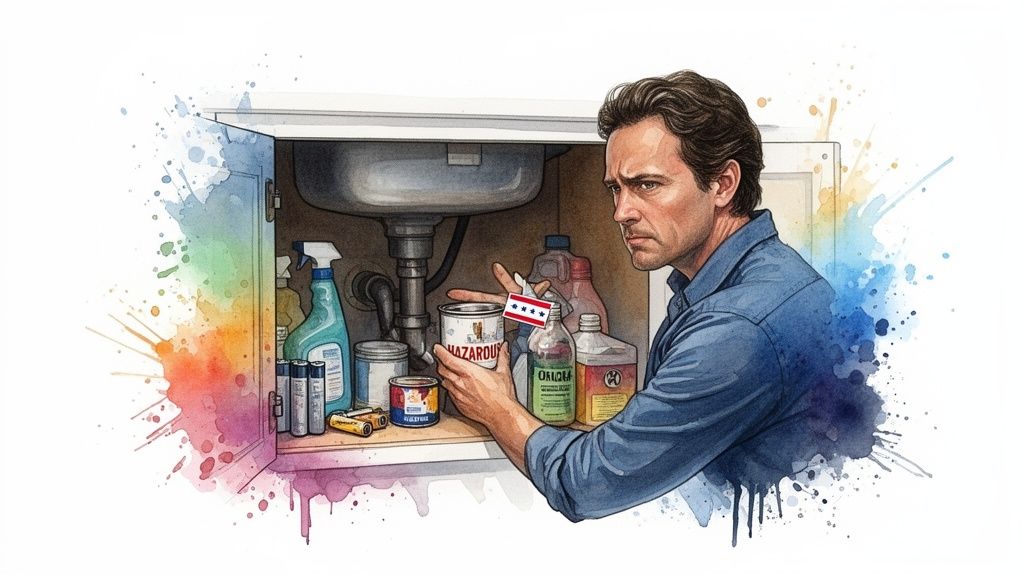
I get it. That cabinet crammed with old paint cans, half-used batteries, and mystery chemicals feels like a problem for another day. It’s like those nagging tasks we all put off. For me, as the founder of Litter Caterpillars, that feeling of being swamped by a mess became a turning point.
My own apartment felt impossible to keep clean. But I learned something profound while picking up trash in Chicago's wildest weather: cleaning up a shared space is far more empowering than staring down your own clutter alone. It gives you a story.
This guide is the start of your story. I'll walk you through exactly how to handle that hazardous waste—not as a burden, but as an act of personal responsibility and community care.
A Legacy We Can Change
This isn't a new problem for our city. In fact, what you and I are dealing with now is a small echo of a much bigger issue from our past. Picture this: back in the early 20th century, Chicago was literally drowning in its own trash, and hazardous waste was just part of the massive, stinking pileup.
By 1905, the city was churning out a staggering 1,614 tons of refuse every single day, much of it hazardous from industrial runoff and household ashes. Fast forward to the year 2000, and the Chicago area had over 240 Superfund sites, with about one-third right here in the city—hotspots of buried toxins from decades of lazy disposal. You can dig deeper into Chicago's waste history and see how it’s scarred our neighborhoods.
That history lives beneath our feet. Every battery I recycle, every can of paint you take to a collection site, is a deliberate choice to write a different future for Chicago—one where our water is cleaner and our communities are safer.
Your Role in a Cleaner Chicago
So, what does that mean for you and that cabinet of chemicals? It means your small actions are connected to a much bigger mission. You’re not just decluttering; you’re actively participating in reversing a century-old problem.
Think of it like this:
- You become a guardian of our water: Preventing a single container of motor oil from going down a storm drain protects Lake Michigan from contamination. Simple.
- You protect sanitation workers: When you properly dispose of sharps or corrosive chemicals, you're keeping the people who handle our city’s waste safe from injury. It’s about looking out for each other.
- You inspire others: When you take the time to do things right, it creates a ripple effect. You’re setting a standard for your family, friends, and neighbors.
Together, we’ll demystify what's 'hazardous,' I’ll show you where to take it, and explain how to do it safely. This isn’t just about following rules. It’s about building a better, healthier city, one responsible choice at a time.
Identifying Common Household Hazardous Materials
Okay, let's talk about what’s lurking under your sink or in the back of your garage. I know it can feel overwhelming when you see all those bottles with crazy warning labels and chemical names you can't pronounce. Forget all that for a minute.
Think of it like sorting your recycling—you just need a few simple categories to make sense of it all. At our cleanups across Chicago, we see everything, and I promise you, almost all of it falls into one of four groups. This is about knowing what you’re dealing with so you can handle it safely.
The Big Four Categories of Hazardous Waste
Just remember these four words: Ignitable, Corrosive, Reactive, and Toxic. That’s it. These are the "Big Four," and they cover pretty much every hazardous thing you'll find in your home. I'll break down what they actually mean.
-
Ignitable Items
This one's simple: these are things that can easily catch fire. You’ve got the obvious stuff like lighter fluid and gasoline, but don't forget about rubbing alcohol, nail polish remover, and a ton of aerosol cans. I remember one cleanup we did near an old garage in West Pullman. We found this rusted can of what looked like old paint. The fumes were so strong and flammable that we had to clear the area immediately. It’s a powerful reminder that even old, forgotten stuff can still be dangerous. -
Corrosive Substances
These are the materials that can literally eat through other things, including metal and even your skin. The most common examples are drain cleaners, oven cleaners, and car battery acid. This stuff is powerful, which is exactly why you can't just pour it down the drain or toss it in the regular trash. -
Reactive Chemicals
This category is a little trickier. These are chemicals that are fine on their own but become dangerous when they touch something else—like air, water, or other chemicals. The classic example I always use is bleach. Mix it with an ammonia-based cleaner, and suddenly you’ve created toxic chloramine gas. It’s a chemical monster. Many pool chemicals also fall into this group. -
Toxic Substances
This is the catch-all category for anything poisonous if you breathe it in, swallow it, or get it on your skin. We're talking pesticides, antifreeze, rat poison, and old paints that might contain lead. These chemicals are designed to be harmful to pests, but they're just as bad for us, our pets, and the local environment.
You don’t need a chemistry degree to get this right. Just be a detective. Look for signal words on the label like “Danger,” “Warning,” “Poison,” or “Caution.” Those are your clues that an item needs special handling for Chicago hazardous waste disposal.
A Quick Guide for Spotting These Items
To make it even easier, I put together a simple reference table. Use this to quickly spot some of the most common things around your house that need a special trip to a disposal facility here in Chicago.
Your Quick Guide to Identifying Hazardous Waste
| Hazardous Waste Category | What It Means | Common Household Examples |
|---|---|---|
| Ignitable | Can easily catch fire or explode. | Lighter fluid, aerosol cans, rubbing alcohol, gasoline, paint thinners. |
| Corrosive | Can "eat" or burn through materials. | Drain cleaners, oven cleaners, car batteries, strong household acids. |
| Reactive | Can cause explosions or toxic fumes if mixed. | Bleach (when mixed with ammonia), pool chemicals, certain fertilizers. |
| Toxic | Poisonous to people, pets, and the environment. | Pesticides, antifreeze, mercury thermometers, lead-based paints. |
Looking at this list, it’s pretty clear why proper Chicago hazardous waste disposal is so important. These aren't just regular trash items; they’re potent materials that you have to manage with care. By taking a few minutes to identify them, you're doing a huge part to protect our city.
Your Action Plan for Safe Disposal in Chicago
Okay, you've gone through the garage, the basement, and under the sink. You’ve identified the culprits—the old paint, the mystery cleaners, the dead batteries. Now for the most critical part: getting it out of your house safely and responsibly. This is where we turn that pile of "what-do-I-do-with-this?" into a solid game plan for chicago hazardous waste disposal.
For us regular Chicago residents, the city has thankfully given us a couple of solid lifelines. You’ve got a permanent drop-off spot and a series of mobile collection events that pop up around town. These are your two best friends in this mission.
But it’s not as simple as just tossing everything in the trunk and hoping for the best. A little prep work is key. Think of it like packing for a road trip—you want everything sealed up and secure so the journey is safe for you and everyone else.
Getting Your Hazardous Waste Ready for the Trip
Before you even think about loading up the car, you need to get everything prepped and ready to go. I've seen some sketchy situations at collection events—leaky bottles, weird chemical cocktails—and it’s all so easily avoided. Let’s not be that person.
First things first: keep everything in its original container if you can. Those labels have important info. If you have something leaking, don't panic. Just pop the whole container into a bigger, sturdier, leak-proof one. A plastic tub with a lid works perfectly.
Here's my quick checklist of absolute must-dos:
- Never, ever mix chemicals. This is the number one rule, and I can't say it enough. Mixing the wrong stuff—like that bleach and ammonia combo we talked about—can create toxic fumes or even start a fire. It’s no joke.
- Seal it up tight. Double-check that all the lids are screwed on securely. If you’ve got open bags of things like old fertilizer, seal them inside another plastic bag to be safe.
- Label anything that’s been re-homed. If you put old motor oil in a milk jug (we've all seen it), please grab a permanent marker and label it clearly. It helps the pros at the facility know exactly what they're dealing with.
This little decision tree can help you visualize the process and figure out what needs special treatment versus what can go in your regular bins.
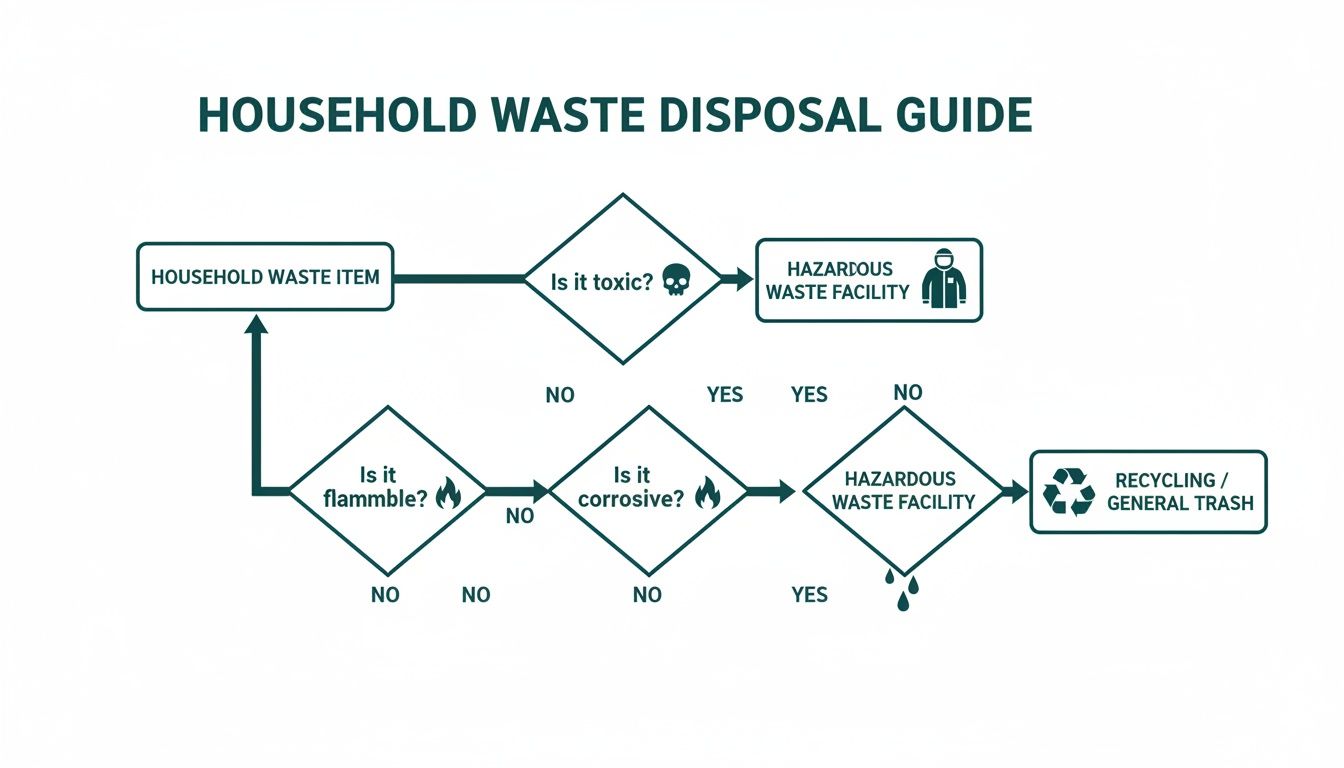
As the chart shows, once you flag something as toxic, flammable, or corrosive, it's on a one-way trip to a specialized facility, far away from your everyday trash and recycling.
Navigating Chicago's Disposal Options for Residents
For household hazardous waste, you've got two main choices here in the city. The big one is the permanent Household Chemicals & Computer Recycling Facility. It's an incredible resource and takes a massive range of stuff.
Then there are the mobile collection events. The city sets these up in different neighborhoods throughout the year, which is a lifesaver if you can't easily trek to the permanent site. Just keep an eye on the city's schedule to see when one is coming your way.
My Personal Tip: Get there early! These events can get swamped. I always pack my car the night before so I can just get up and go. A little planning can save you a ton of time sitting in line.
Let's walk through a real-life scenario. Say you just finished a bathroom reno. You're left with two half-empty cans of paint thinner, some old corrosive tile cleaner, and a few cans of spray paint. Your plan is simple:
- Check that every container is sealed up tight.
- Stick them upright in a cardboard box in your trunk so they won't tip over.
- Look up the hours for the permanent facility or find the date for the next mobile event.
- Drive over, and the experts will take it from there.
It’s really that easy. Of course, not everything is considered hazardous waste. For all your normal plastics, paper, and glass, you'll need to know your local recycling rules.
A Different Path for Local Businesses
Now, if you’re a business owner, listen up, because the rules are completely different for you. The city's residential programs are strictly for residents. Any commercial business, even a tiny one, has to follow a separate set of regulations.
Why the split? It all comes down to volume and liability. Businesses tend to produce way more waste, and federal laws like the Resource Conservation and Recovery Act (RCRA) demand a strict "cradle-to-grave" tracking system for any commercial hazardous materials.
This means you can't just drop your shop's old chemicals off at a community collection day. You’ll need to hire a permitted hazardous waste hauler. These are state-licensed companies that specialize in safely transporting and disposing of this stuff. A quick search for "Illinois permitted hazardous waste haulers" will point you to the right people who can help you stay compliant. It’s an extra step, but it’s a crucial one for keeping our city safe and clean.
Handling Electronics, Paint, and Medications
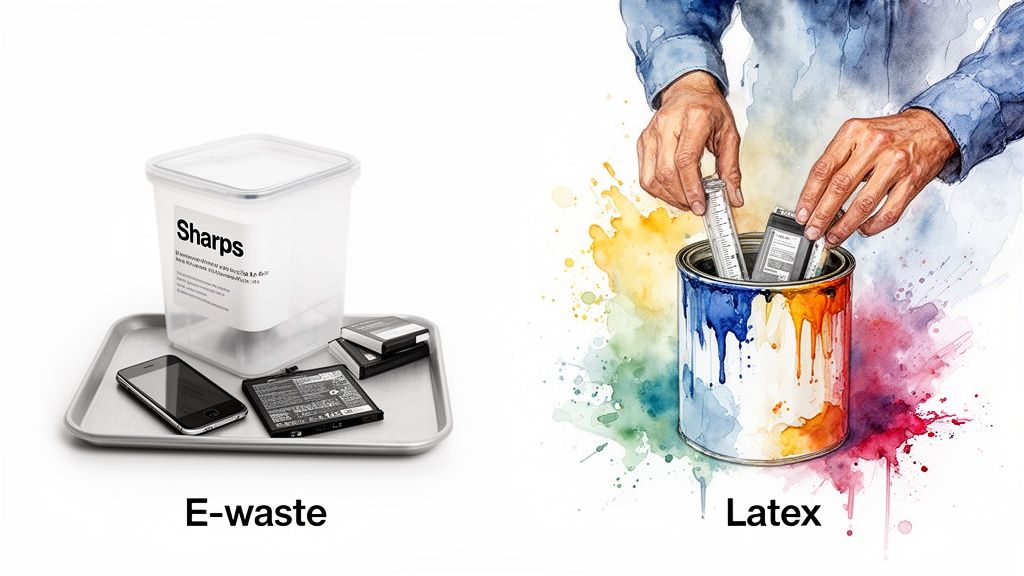
Some stuff just doesn't fit the normal recycling bin or trash can. I'm talking about the junk drawer full of old phones, the half-used paint cans in the garage, or the expired prescriptions in your medicine cabinet. These things need their own special game plan because they carry unique risks if you just toss them.
This is your guide for those tricky items. I'll get into why the heavy metals in your old electronics (e-waste) are so nasty for landfills. I'll also clear up the confusion around latex paint and why you often have to dry it out first.
Most importantly, we’ll cover the safest ways to get rid of sharps and unused prescription drugs. This isn't just about following rules; it's about being mindful. Proper disposal prevents unseen harm and makes sure our trash doesn't become someone else's problem down the line.
The Problem with E-Waste and Batteries
Think about that old laptop or phone you’ve got stashed away. It's not just plastic and glass—it’s a tiny vault of valuable materials mixed with some seriously toxic stuff. I'm talking lead, mercury, and cadmium, heavy metals you absolutely do not want seeping into our soil and groundwater.
When e-waste gets dumped in a landfill, those metals can leach out, creating a long-term pollution headache that's a nightmare to clean up. This is exactly why Illinois law bans electronics from landfills. It’s on all of us to keep this stuff out of the regular trash.
So, what’s the right move for you?
- City Recycling Programs: The Household Chemicals & Computer Recycling Facility is your best bet for most e-waste, from old computers and TVs to printers and mice.
- Retailer Take-Back Programs: Big stores like Best Buy and Staples often have their own recycling programs. They’ll usually take a wide range of electronics, even if you didn't buy them there.
- Specialized Recyclers: For things like batteries, you need to find specific drop-off spots. Lucky for you, we’ve already done the legwork. You can find everything you need in our guide on how to recycle batteries in Chicago.
Navigating Paint Disposal
Paint is one of the things people ask me about most. For Chicago hazardous waste disposal, the rules are different depending on what kind of paint you have, so I'll break it down.
Oil-based paints (also called alkyd) are always hazardous waste. They're full of flammable and toxic solvents, so they must go to a hazardous waste collection site. No exceptions.
Latex (water-based) paint is a different animal. Because it’s not technically hazardous, you have another option. If the can is less than a quarter full, you can just dry it out and toss it in your regular trash. Just pop the lid off and leave it in a well-ventilated spot away from kids and pets. Pro-tip: add some kitty litter or shredded newspaper to speed things up.
My personal rule of thumb is simple: If you can't or don't want to deal with drying it out, just take it to the hazardous waste facility. It's the safest, most foolproof way to handle any kind of paint, and you'll know you did the right thing.
Safely Handling Medications and Sharps
This is where our personal responsibility really hits home, directly impacting public health and the safety of sanitation workers. Flushing old pills seems easy, but it pumps pharmaceuticals into our water supply—stuff that treatment plants aren't designed to filter out.
For any unused or expired meds (prescription or over-the-counter), your best bet is a designated drop-box. You can find them at many police stations and pharmacies around Chicago. This keeps them secure and ensures they’re destroyed properly.
Sharps—needles, syringes, and lancets—are a serious physical threat. They can puncture sanitation workers, spreading disease. Never, ever throw loose sharps in the trash.
Here’s how you do it right:
- Put used sharps in a strong, puncture-proof plastic container with a secure lid. An old laundry detergent bottle or coffee can works great.
- Clearly label the container: "SHARPS – DO NOT RECYCLE."
- Once the container is about three-quarters full, seal it up with heavy-duty tape.
- You can then take this sealed container to a designated sharps collection site, often found at hospitals, clinics, or some fire stations.
Cutting corners on waste disposal has a dark history in Chicago. The old Northwest Waste-to-Energy plant, for example, failed toxicity tests 29 out of 32 times, yet the city still dumped its ash in regular landfills. That 23,000 tons of potentially toxic ash would have cost an extra $4.6 million a year to handle correctly—a decision that sparked a landmark lawsuit. You can learn more about Chicago's long battle with its trash by reading this historical overview. By taking these extra steps, you're choosing a better, safer path for our city.
From Personal Action to Community Transformation
You actually did it. You stared down that messy cabinet, wrangled all those mystery chemicals, and got that hazardous waste out of your life for good.
Take a second and hold onto that feeling. That shift from having a problem you didn’t know how to solve to feeling empowered and in control? That’s exactly what drives us at Litter Caterpillars.
Your personal act of cleaning up a single space is the spark. It's the same fire that transforms an entire neighborhood.
The Power of Showing Up
When you show up for your neighborhood, week after week, rain or shine, you build more than just clean streets. You build consistency. You build bravery. You build real connections with people who care just as much as you do.
It’s one thing to handle your own mess. It's something else entirely to reclaim a shared space that everyone had given up on.
Think about the feeling you got solving your own chicago hazardous waste disposal problem. Now, imagine multiplying that by a dozen neighbors, all working together on a neglected block. That’s where the real magic happens.
From Empty Lot to Caterpillar Park
Let me tell you a story. There was this forgotten, empty lot in Englewood. You know the type—a place people just walk past without a second glance, another sad symbol of neglect. We saw something different. We saw potential.
So we did something a little crazy. As a group of volunteers armed with trash grabbers and a shared vision, we decided to buy it. We pooled our efforts, figured out the city auction process, and we won. We actually bought an empty lot.
Today, we're turning that patch of dirt into Caterpillar Park. This isn't just about planting flowers. It’s living proof that small, dedicated actions, repeated over and over, lead to incredible, tangible change. A park is literally growing from the same spirit it took for you to clean out your garage.
This is our invitation to you. If you felt good taking care of your own space, just imagine what you can accomplish with a team. Imagine the pride in looking at a vibrant community park and knowing you helped build it from the ground up.
Cleaning with a Deeper Purpose
Our mission to clean every corner of Chicago is also about confronting a hard truth. Hazardous waste in our city has always carried a heavy legacy of racial and social inequity. An analysis from the University of Chicago showed that non-White majority zip codes have shouldered a disproportionate burden of toxic releases since 1990.
This history was fueled by hazardous landfills crammed onto the Southeast Side. We counter this by showing up for all 50 wards, cleaning every neighborhood with a three-year track record of weekly consistency—building unity among all Chicagoans. You can read more about the research into Chicago's environmental justice challenges.
This is why our work matters so damn much. We don't just pick up litter; we work to heal divides and bring care to the places that need it most. We show every community that they are seen, valued, and that we are all in this together.
Each cleanup is a statement. It says that every block deserves to be clean and safe, and that we, the residents, have the power to make it happen. You can see the impact for yourself and learn more about our approach to cleaning up trash throughout Chicago.
Your journey started with a single decision to handle your waste responsibly. Now, you have a choice. Take that incredible momentum and join a larger movement. Turn your personal victory into a shared triumph for our entire city. We’re out there every weekend, and I'd love for you to be a part of it.
Your Chicago Hazardous Waste Disposal Questions Answered
Got questions? Good. It means you’re taking this seriously. I see it every week at our cleanups—people start picking up litter, then they get curious about the really nasty stuff and how to handle it right. These are the details that matter.
Based on all the questions I get, I've put together the ones that come up most often about chicago hazardous waste disposal. My goal is simple: give you straight answers so you can handle this stuff with total confidence.
Can I Put Small Amounts of Hazardous Waste in My Regular Trash?
I get this one a lot. It’s so tempting to think, "It's just a few old batteries," or "This bottle of drain cleaner is almost empty, what's the harm?" But let me put it this way: it’s like adding one drop of poison to a huge glass of water.
One drop doesn't seem like much, but when thousands of us add our own "one drop," it becomes a massive problem. That toxic sludge builds up in our landfills and seeps into the groundwater we all depend on. It’s a group effort; every single battery and bottle you keep out of the regular trash makes a real difference.
What Happens If I Get Caught Disposing Waste Improperly?
Honestly? The chances of the trash police knocking on your door for tossing a bottle of bleach are pretty slim. But that’s not the point. The real consequence isn't some fine you have to pay.
The real cost is the damage we don't see. It's the sanitation worker who gets a chemical burn, the fluorescent bulb that shatters and releases mercury vapor, or the slow poisoning of Lake Michigan.
The true cost is paid by our environment and our community. Following the rules for Chicago hazardous waste disposal isn’t about avoiding a slap on the wrist; it’s about actively protecting the city we all call home.
Why Can’t Businesses Use Residential Drop-Off Sites?
This is a huge point of confusion. The city's free drop-off sites are funded and built to handle the kind of waste a family produces, not the volume that comes from even a small business. The laws for businesses, like the Resource Conservation and Recovery Act (RCRA), are way stricter.
Businesses have to follow what's called a "cradle-to-grave" system. Think of it like a chain of custody for evidence in a crime scene. It tracks that hazardous material from the moment it leaves your shop to its final, safe disposal. This process is tough for a reason—it prevents illegal dumping and makes sure everyone is accountable.
What Is the Single Most Dangerous Item I Might Have?
If I had to pick just one thing that gives me the chills, it’s mercury. You find it in old-school thermometers, some thermostats, and those curly fluorescent light bulbs. Just one gram of mercury—about the amount in an old thermometer—can contaminate a 20-acre lake and make the fish toxic to eat.
This stuff is a powerful neurotoxin. It’s so dangerous that if you break something with mercury in it, the EPA has a whole emergency protocol for cleanup. You have to air out the room, and you can never use a vacuum. If you find anything with mercury, treat it like the poison it is and get it to a proper facility. It’s that serious.
How Can I Stay Updated on Mobile Collection Events?
The most reliable source is the official City of Chicago website. They post the schedule for mobile drop-off days there first.
But here are a couple of other tricks I use to stay in the loop:
- Follow local community pages: Neighborhood Facebook groups are gold for this. People are always sharing reminders. Our group does, too!
- Sign up for your alderperson's newsletter: This is the best way to get super local info, including ward-specific cleanup days and events.
A little bit of planning makes it so much easier to do the right thing. Your effort is what builds a cleaner, safer Chicago for everyone.
Ready to turn that personal effort into something bigger? Join Litter Caterpillars this weekend. We're out there every single week, making a real difference one block at a time. It’s the best way I know to meet people who actually care and feel the power of what we can do together. Find our next event and sign up at https://www.littercaterpillars.com.