
When I was 17, I felt like my life was a messy room I couldn't clean. Every choice felt huge, and finding friends who cared about the same things I did seemed impossible. I just wanted to do something real.
It turned out that cleaning up someone else's mess was way easier than cleaning up my own. That was my back door into purpose. I showed up, grabbed a trash bag, and met the kind of people who didn't just talk about caring. They woke up early and proved it.
If you're looking for volunteer opportunities for 17 year olds, I want to make this simple. You do not need a perfect résumé, a polished speech, or some grand life mission. You need one place to start.
The good news is that teens already show strong interest in volunteering. In the American Red Cross State of Gen Z Volunteerism Study, 13 to 17 year olds were substantially more likely to be actively volunteering than 18 to 25 year olds, and 62% reported weekly or monthly participation.
That tracks with what I've seen. Seventeen is an age where you're old enough to care strongly and young enough to still jump in before cynicism hardens. So let's skip the school-counselor pamphlet voice and get to what's important.
1. Litter Caterpillars
One Sunday morning, I watched a teenager in work gloves drag a bag of cans and fast-food wrappers to the curb, step back, and grin at a sidewalk that looked human again. Nobody handed out a certificate. Nobody made a speech. The reward was right there on the ground. A block people had given up on looked cared for again.
That feeling is why Litter Caterpillars stands out for 17-year-olds. You do the work yourself, you see the difference right away, and you meet people who would rather show up than posture online.
Why this one feels different
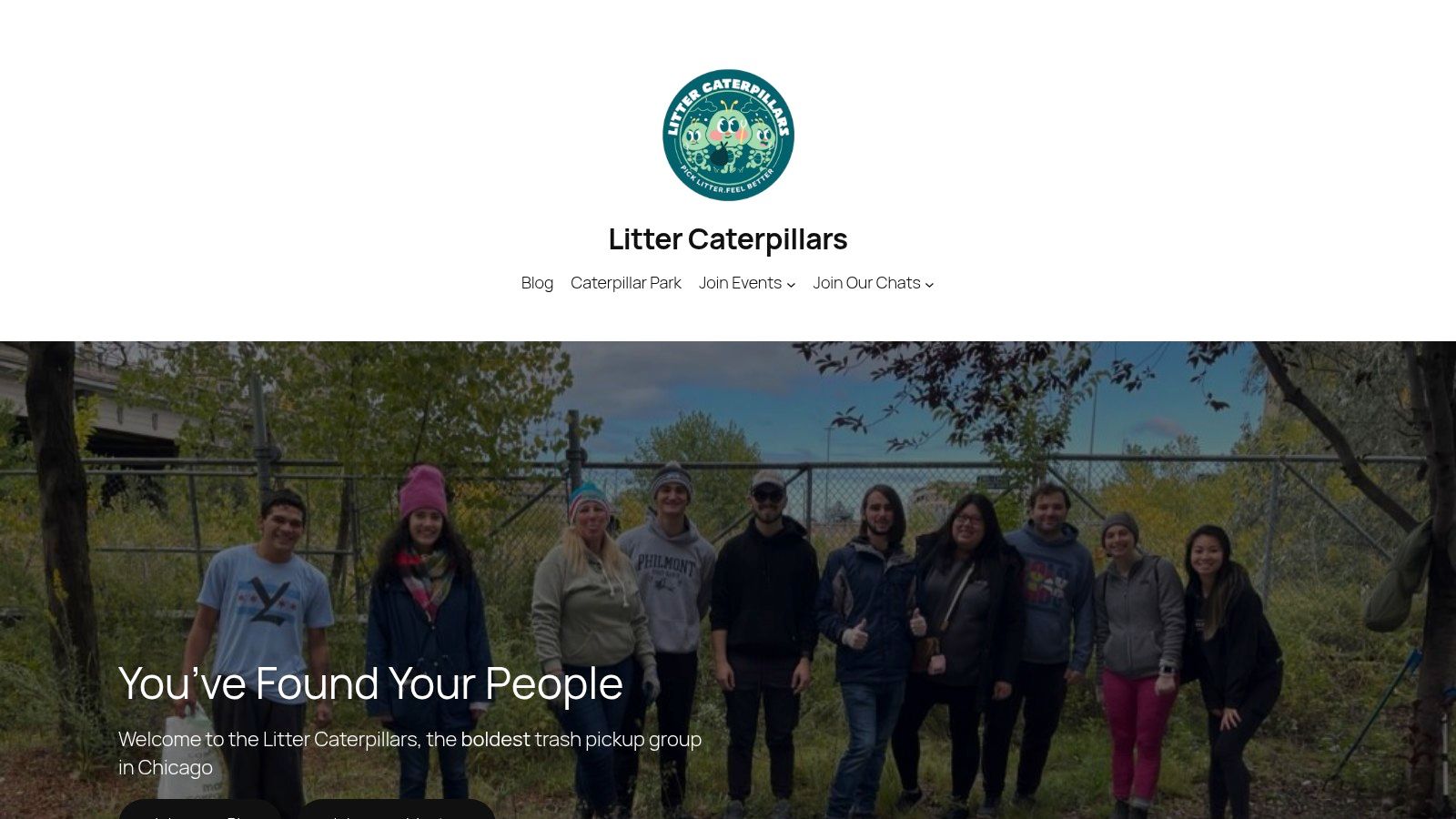
Litter Caterpillars is a volunteer trash pickup group in Chicago. Kevin Tao started it from a personal low point and turned that energy into weekly cleanup work across all 50 wards. Weekend after weekend, the group goes into places many people pass by without seeing, or see and avoid.
A lot of teen volunteering keeps you close to the edges. You check people in, stack papers, or help from a safe distance. Here, you are on the block holding the bag, picking up the bottle, and leaving a place better than you found it. That changes how service feels. It stops being a résumé line and starts feeling like ownership.
Such a great way to kick off a Sunday!
The group also has a personality, and that matters more than adults sometimes admit. Flags, badges, meetup posts, group chats, even a theme song. On paper, that can sound silly. In real life, it gives people something to belong to. You are not just doing a task. You are joining a crew.
What you get from showing up
The barrier to entry is low. You do not need experience. You do not need to be the loudest person there. You just need to come ready to work.
For a 17-year-old, a few things stand out:
- You can see the result: One hour of effort can change a sidewalk, alley, lot, or bus stop in a way you can point to.
- The routine helps: Weekend morning cleanups make volunteering part of your life instead of a one-off thing you forget by Tuesday.
- Friendships form faster: Walking, hauling, and joking around over a gross pile of trash is a more natural way to connect than forced icebreakers.
- You build grit: Cold mornings, wet gloves, heavy bags. You learn you can do harder things than you thought.
They have also pulled off projects that feel bigger than a typical service club outing. The group cleaned a highway during a bike-event shutdown. It also won an empty lot at auction, which became Caterpillar Park in Englewood. That is what I mean by real civic action. You are not helping from far away. You are changing the shape of a place.
If you want a fuller picture of how service work can affect school, confidence, and direction, this guide on the benefits of volunteering for students is worth reading.
Practical rule: Pick volunteer work with a clear before and after. It is easier to stay committed when you can see what your effort did.
The tradeoff is pretty simple. This is outdoor, physical volunteering, and the schedule is built around weekend mornings. Litter Caterpillars is also not a formal 501(c)(3), so that may matter if you need a very traditional setup for paperwork. If you want service that feels real in your body, your neighborhood, and your friend group, this one is hard to forget.
2. American Red Cross Youth and Young Adult Volunteers
Some people want a clear system. Sign up, train, get placed, learn the ropes. If that sounds like you, American Red Cross Youth Opportunities is a strong fit.
I think of Red Cross as the friend who's always early and always brings a plan. You know where to go, what to do, and who you're helping.
Best for teens who like structure
At 17, you can get involved through local chapters, school-based Red Cross Clubs, and youth leadership tracks. A lot of teen-friendly roles revolve around blood drive support, preparedness education, and chapter projects.
That structure can feel good when life already has enough chaos. You log into the volunteer portal, see openings, and move forward without guessing what the next step is.
Here are the parts I like most:
- Training is built in: You don't have to fake confidence on day one.
- Leadership paths are real: Clubs and youth councils can keep you involved longer than one event.
- School-friendly credibility: Service hours from a familiar organization are usually easy to document.
Some roles do have age limits. Field disaster roles and some positions with extra screening often begin at 18, and minors usually need parent or guardian consent. So if your dream is jumping straight into emergency deployment, this probably won't scratch that itch yet.
If you're nervous about starting, a structured volunteer system can be a gift. You don't need to invent your own path on day one.
This is a good choice for a 17-year-old who wants people skills, consistency, and a recognizable organization without having to build everything from scratch.
3. Habitat for Humanity local affiliates
I still remember the first time I helped carry supplies on a workday like this. I wasn't some natural builder. I mostly worried I'd hold the wrong thing, stand in the wrong place, or look clueless. Then someone handed me a task, showed me how to do it, and five minutes later I felt useful.
That's the magic of Habitat for Humanity volunteer opportunities. You walk onto a site unsure of yourself, and by the end of the shift you're talking like part of the crew.
If you like team projects and tangible work
Local Habitat affiliates often let teens ages 16 and 17 volunteer on build sites with safety restrictions. If the construction side isn't open to you at your location, many affiliates also have ReStore, garden, or office support roles. Parent or guardian waivers are usually part of the process.
I like Habitat because the work has weight to it. You're not guessing whether your time mattered. Walls go up. Spaces get cleaned. Materials get sorted. Something physical moves forward because people showed up.
A few things make this one especially good:
- Hands-on learning: You can build practical confidence even if you've never touched a jobsite before.
- Strong teamwork: It's hard to stay shy when you're solving small problems together.
- Different entry points: ReStore and support roles help if your local site has stricter age rules.
If you're still looking around and comparing options, this guide on how to find volunteer work is useful. It helps you think beyond whatever your school happened to mention.
The tradeoff
Age restrictions are real here. Teens usually can't do every task. Roofing, some ladder heights, and power tools may be off-limits. Build schedules also vary by affiliate, and some shifts may land on school days.
That said, if you want your volunteer work to feel like joining a jobsite with a purpose, Habitat is one of the strongest picks on this list.
4. Feeding America food banks and pantries network
Food bank volunteering has a rhythm to it. Open box. Sort cans. Pack produce. Slide the next crate over. Talk while your hands keep moving. I love that kind of work because awkwardness burns off fast when everyone is focused on the same simple task.
That's why Feeding America volunteer options are great for teens who want a straightforward way in.
Good for busy schedules
Feeding America's network connects you with local food banks and pantries. A lot of sites run short shifts that fit around school, sports, or a part-time job. Common roles include sorting food, repacking items, assembling boxes, and helping with distribution.
This one is especially useful if your week already feels packed. You can often find shorter volunteer blocks instead of making a huge commitment right away.
What I like:
- Easy to learn: Most shifts don't need much training.
- Quick sense of momentum: You can process a lot of food in one session.
- Group friendly: This is an easy one to do with classmates, siblings, or teammates.
The main catch is local variation. Some food banks let 16 and 17 year olds volunteer independently, while others have different rules. Mobile distributions and special events may also have stricter age requirements.
My advice: Call or check the local calendar before you get attached to a shift. National networks are helpful, but local rules decide your actual experience.
If you want volunteer opportunities for 17 year olds that are practical, steady, and easy to start, food banks are hard to argue with.
5. Special Olympics event and season support
This one has heart in a very direct way. You don't need to make a speech about inclusion to feel it. You feel it when you hand someone a medal, keep score, cheer from the sideline, or help an event run smoothly so athletes can have their moment.
Special Olympics volunteer roles are great if you like sports, high-energy events, and being around people who are there to support each other.
A social option that doesn't feel fake
Depending on the state program, teens can often help with scorekeeping, escorting, awards, health support, and season roles. Unified Champion Schools can also give high school students a way to volunteer and participate alongside athletes.
I like this option for teens who want people-centered service without having to force conversation. The event gives you a job. The job gives you a reason to connect. That makes everything easier.
A few reasons this one works well:
- You can start small: One-day events are perfect if you're testing the waters.
- You can stay longer: Season support can turn a one-time experience into a real commitment.
- The energy is high: If you hate quiet, formal volunteer settings, this is a breath of fresh air.
What to watch for
Some roles and major events require volunteers to be 18 or older, and some teen volunteers need an adult chaperone depending on the event. Always check the state chapter page before signing up.
If you're the kind of person who comes alive around games, teamwork, and loud encouragement, this one can feel less like volunteering and more like joining a community event that needs you.
6. National Park Service Volunteers in Parks
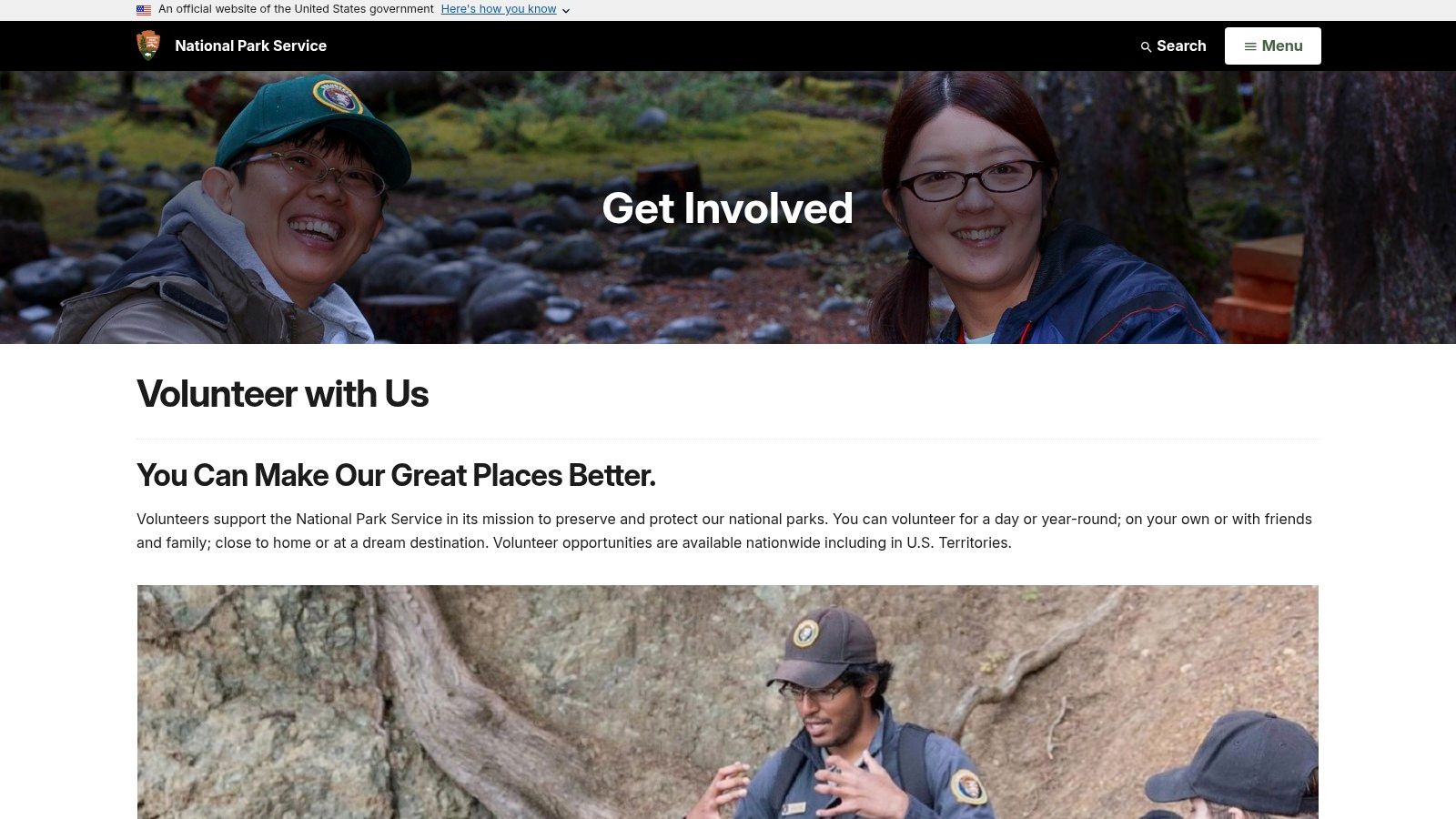
Some volunteer work happens under fluorescent lights. Some happens with dirt on your shoes and sap on your hands. If you need air, sunlight, and a reason to get off your phone for a few hours, look at the National Park Service volunteer program.
I think outdoor service has a special kind of honesty. A trail either got cleared or it didn't. The weeds either came out or they didn't. You don't leave wondering if you helped.
For teens who want outside work
The National Park Service places volunteers across more than 400 parks and sites. Roles can include trail work, habitat restoration, visitor services, and historic site support. Many parks accept minors with written parent or guardian consent, though age rules change by park and project.
That variety is the big draw here. Maybe you want to restore habitat. Maybe you want to help visitors at a historic site. Maybe you just want to spend a Saturday doing physical work somewhere beautiful and quiet.
Why I like it:
- You get outside: That alone can reset your whole mood.
- The work sticks in your memory: Trail and restoration days usually feel more vivid than indoor paperwork.
- There are different commitment levels: Some projects are one-day cleanups, while others are ongoing.
The downside is inconsistency. Each park has its own rules, forms, and task limits for volunteers under 18. Some equipment and duties are restricted.
If your ideal volunteer day includes gloves, fresh air, and coming home pleasantly tired, this belongs high on your list.
7. DoSomething.org online and local teen campaigns

Sometimes you want to help, but transportation is messy, your schedule is weird, or you're not ready to walk into a room full of strangers yet. I get that. Starting small still counts.
That's where DoSomething.org comes in. It builds campaigns for young people ages 13 to 25 that you can do from home, at school, or in your local area.
Best when you need flexibility
DoSomething.org runs mobile-friendly campaigns around issues like climate action, mental health, civic engagement, and cleanup work. You can complete actions on your own or with friends, then document your work through the platform. Some campaigns also come with scholarship opportunities for participants who complete the required submissions.
I like this option because it lowers the pressure. You don't need a ride across town. You don't need to commit to every Saturday morning. You can begin where you are.
Here are the upsides:
- Very easy to start: Great for shy teens or overloaded schedules.
- Self-paced: You work around school, sports, or family obligations.
- Good as a bridge: Online action can build confidence before you join in-person volunteering.
If you're trying to move from intention to action, this guide on how to start volunteering is a good companion. It helps if you've been stuck in the "I should do something" phase.
Where it falls short
This usually won't replace the feeling of showing up in person with a crew and doing physical work side by side. A lot depends on your own follow-through and whether you complete the documentation process.
Still, for volunteer opportunities for 17 year olds, this is one of the easiest entry points on the internet. Sometimes the smallest open door is the one you walk through.
7 Volunteer Opportunities for 17-Year-Olds, Quick Comparison
| Program | Implementation complexity 🔄 | Resource requirements ⚡ | Expected outcomes 📊 | Ideal use cases 💡 | Key advantages ⭐ |
|---|---|---|---|---|---|
| Litter Caterpillars | Low formal complexity; ongoing volunteer coordination (weekly) 🔄 | Minimal funding; volunteer time, basic cleanup supplies ⚡ | Visible neighborhood cleanup, community projects like parks 📊 | Hands-on local cleanup, community-building in Chicago | Strong volunteer culture, consistent grassroots impact ⭐ |
| American Red Cross, Youth & Young Adult Volunteers | Moderate; structured onboarding, training, and policies 🔄 | Chapter staff, training materials, background checks for some roles ⚡ | Skill development, recognized service hours, leadership pathways 📊 | Teens seeking structured roles, resumes, school service credit | Nationwide network, standardized curricula, high credibility ⭐ |
| Habitat for Humanity (local affiliates) | Moderate; site safety protocols, waivers, supervised builds 🔄 | Tools, safety gear, affiliate staff; non-construction roles require less equipment ⚡ | Tangible housing contributions, practical skills, service hours 📊 | Group builds, students wanting hands-on construction experience | Hands-on builds with lasting community impact ⭐ |
| Feeding America, Food Banks and Pantries Network | Low; short shifts with brief orientation 🔄 | Minimal equipment; space for sorting/packing and volunteer coordination ⚡ | High-throughput food distribution; measurable meals/boxes processed 📊 | Flexible, short shifts for students and families | Low barrier to entry, frequent opportunities, clear impact ⭐ |
| Special Olympics, Event and Season Support, Unified Sports | Low–moderate; role-specific briefings and occasional clearances 🔄 | Event materials, volunteer training, possible chaperones for teens ⚡ | Inclusive sports support, social inclusion, event success metrics 📊 | Sport-minded volunteers, one-day events or season commitments | Inclusive environment, mix of one-off and recurring roles ⭐ |
| National Park Service, Volunteers-In-Parks (VIP) | Moderate; park-specific rules, permits, and consent forms 🔄 | Outdoor tools, supervision, travel/logistics to park sites ⚡ | Environmental stewardship, hands-on conservation learning 📊 | Trail work, habitat restoration, visitor services, family days | Wide variety of roles across many parks; strong stewardship focus ⭐ |
| DoSomething.org, Online and Local Teen Campaigns | Low; online campaigns and self-directed actions 🔄 | Minimal, internet access and participant time; optional materials ⚡ | Youth engagement, awareness campaigns, possible scholarship recognition 📊 | Remote or flexible volunteering, campaign-based activism | Very low barrier, youth-focused, scalable digital reach ⭐ |
Your First Step Is the Best Step
Look, fear and failure are good. They push you forward. Showing up to a new place with new people is scary, and I don't want to pretend otherwise. I still feel that weird flutter before I join anything new.
But that's where the best stories begin. You step onto a sidewalk with a trash grabber. You walk into a food bank warehouse and don't know anyone. You arrive at a build site, a park project, or a sports event, and for the first ten minutes you wonder if you made a mistake. Then someone hands you a task. Then you help. Then the day starts moving.
The Bureau of Labor Statistics data discussed in Tobi Johnson's write-up on recruiting young volunteers noted that 16 to 19 year olds had a 26.4% volunteer rate in 2015, compared with 18.4% for ages 20 to 24. That feels believable to me. At 17, you're at this strange, powerful age where you're still open enough to jump in and old enough to matter right away.
I also like one point from that same write-up. It notes that 44% of adult volunteers began in adolescence, and they were twice as likely to continue if they started young. I wouldn't use that as pressure. I'd use it as permission. You do not need to have your whole life figured out. You just need to start practicing being the kind of person who shows up.
Tom Sawyer got punished and had to paint a fence. He could've sulked. Instead, he made it look fun enough that other people wanted in. That's closer to real volunteering than is often acknowledged. The trick is finding pride in the work and fun in the effort.
So pick one. Join the cleanup. Pack the boxes. Show up for the athletes. Clear the trail. Build the wall. Run the campaign. Send the email today, not next week.
Your story is waiting for the next page. Are you bold enough?
If you want the kind of volunteering that gets you outside, gets you moving, and helps you find your people fast, join Litter Caterpillars. Show up on a weekend morning, grab a bag, and watch how quickly a stranger can become a teammate.