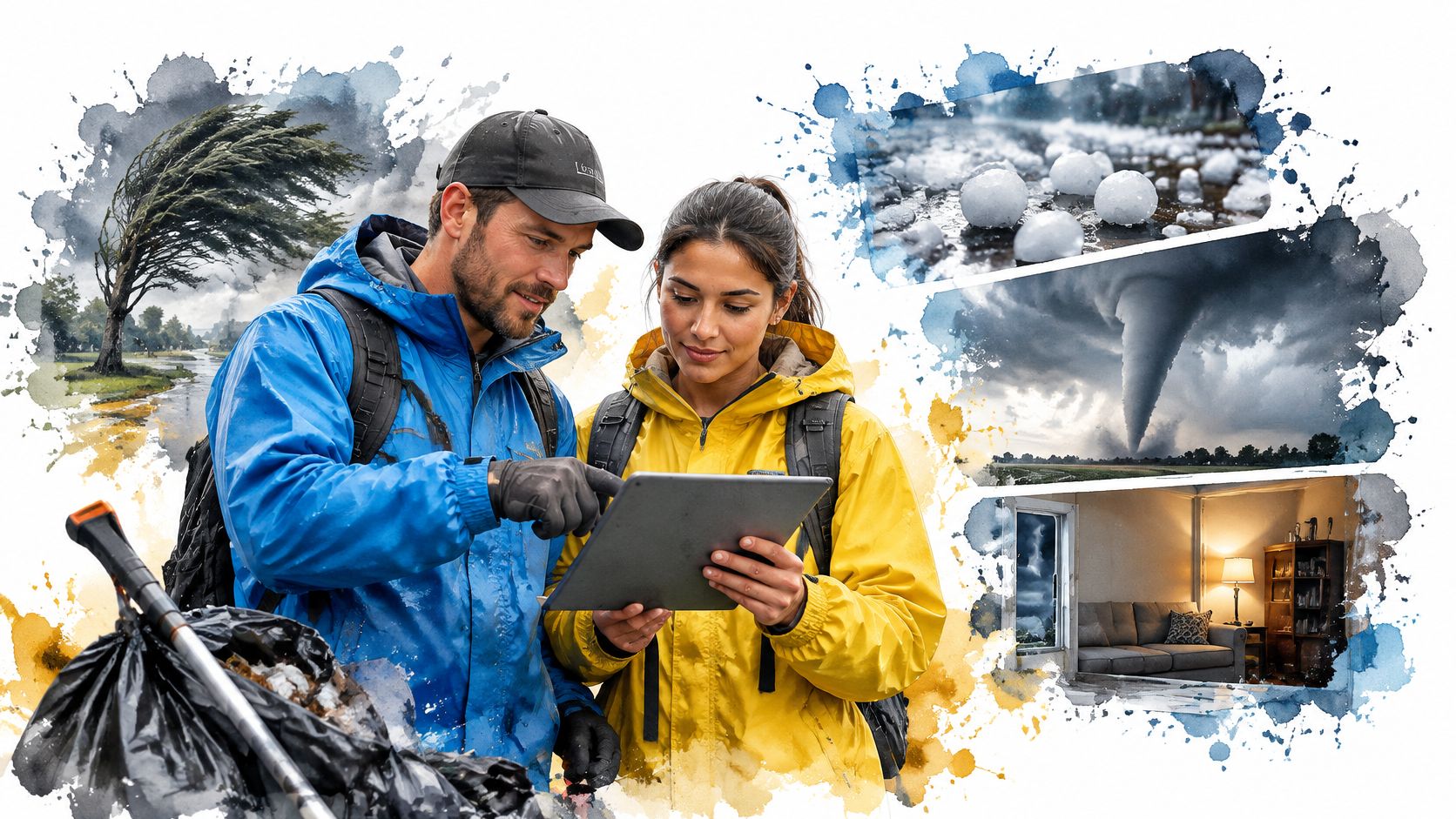
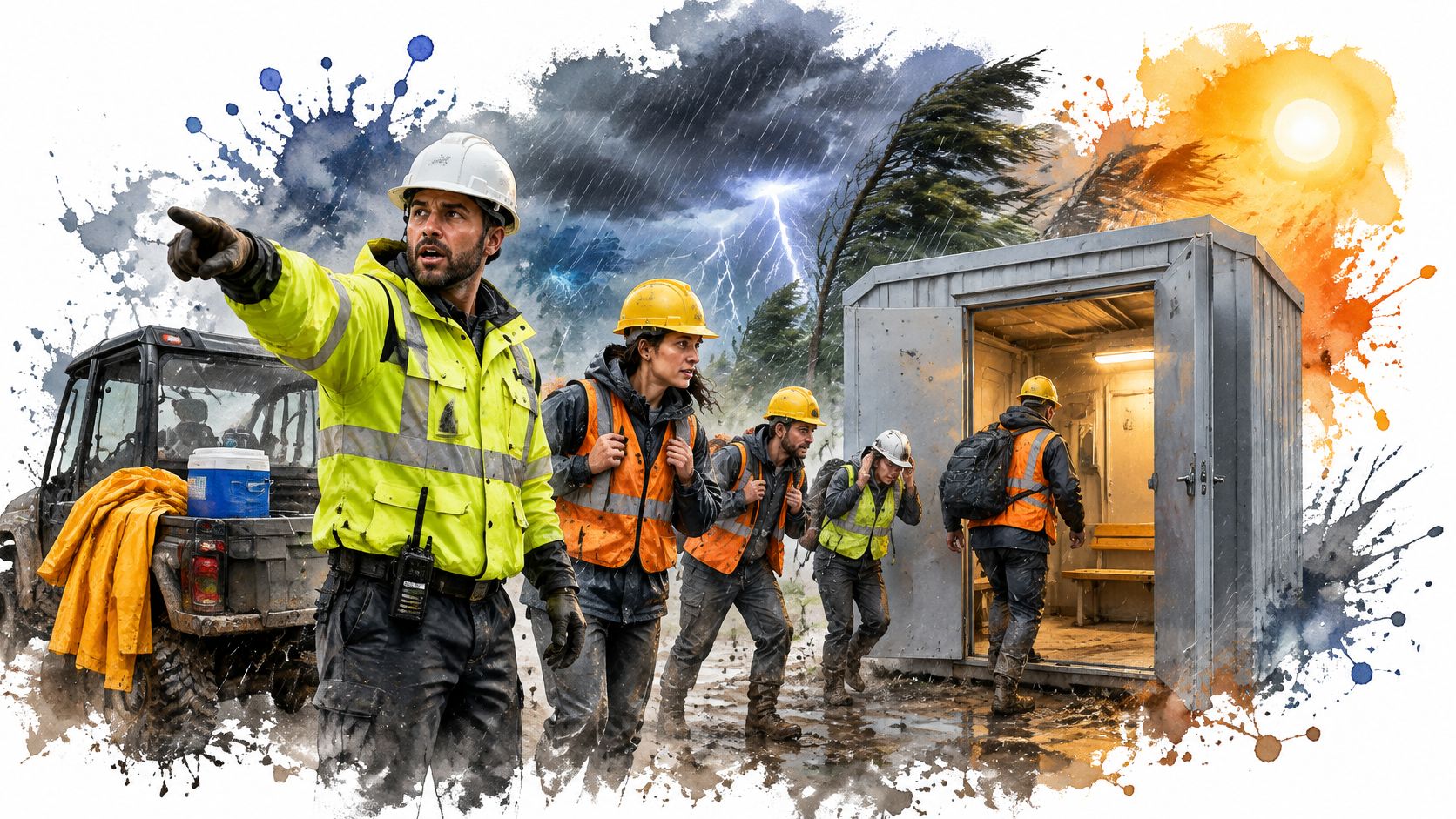
Say you meet your crew at a vacant lot on Saturday, grabbers in hand, and the sky changes while you argue about one more block. You need one person who can end the morning before the weather ends it for you.
The Hailstorm That Made Me Call a Stop
I still see my first pickup clear as a photo on my phone. Three of us stand under a tree in Chicago while a spring hailstorm flips into a blizzard around us. I watch ice bounce off the sidewalk. I feel my gloves soak through. I pull my hood tight and I laugh because I do not know what else to do with my face.

We call for a ride. We watch every Uber cancel on us. We call again. We watch the little car on the screen vanish again. During that first pickup, we got caught in a springtime hailstorm and blizzard while every Uber we called cancelled on us, and I learned the shape of stuck. I feel brave. I also feel dumb. Nobody owns the sky call. Nobody owns the shelter call. Nobody owns the ride home call.
A Seatbelt You Click Before You Drive
I treat severe weather safety in the workplace like a seatbelt for a crew that still wants to show up. You click the belt. You drive the car. You do not debate the belt after the road turns slick. You do the same thing with weather. You name your stop signs at home, in calm air, with dry socks on your feet.
You might lead a paid jobsite crew with a trailer, a time clock, and a safety binder. You might lead six volunteers with trash bags, a group chat, and no HR office at all. I write for you both. I write for the foreman who carries a radio. I write for the neighbor who brings extra gloves in a grocery sack.
I count a canceled block as a finished job. I brought my people home whole. I win that day.
You get a stop table you can read tonight first. You then get heat on an ordinary noon, the lightning shelter count, cold wind through wet clothes, and a one page plan a small group can run without a lawyer in the car. I keep each part short enough for a phone screen. I keep each call plain enough for a tired person to make at 9 a.m.
The Pride Trap I Fell Into
I learned a twist later, after the hail day turned into a story I told at every meetup. Rain or shine builds pride. Rain or shine builds friendship fast. Rain or shine also traps a new person. She looks at your wet flag, your loud laugh, your full bag. She swallows the words, "I need to quit," because she does not want you to call her soft.
I refuse that trade now. I tell new people the quit rule before I hand out bags. I say it loud. I say it with a smile. I say, "You can stop. I will thank you. I will walk you to the car myself."
Pick one person before your next morning outside. Give that person full power to end the work. Put the name in the group chat tonight. You just built the first bolt in your seatbelt.
Stop Triggers You Can Read Before You Leave
Circle one row before your boots hit the sidewalk. I read this table at my kitchen table, coffee in hand, forecast open on my phone. You read yours the same way.
| Hazard | Call it when | Your move | Where people go |
|---|---|---|---|
| Heavy work, new to the heat | WBGT about 23°C (73.4°F) | Shorten work, add water and shade | Shade or a cool vehicle; treat under 1 to 2 weeks of recent heat as unacclimatized |
| Heavy work, used to the heat | WBGT about 26°C (78.8°F) | Keep the same rest, cut the pace | Shade and water for acclimatized crews |
| Moderate work, new to the heat | WBGT about 25°C (77°F) | More breaks and fluids | Shade for walking, picking, and bag hauling |
| Moderate work, used to the heat | WBGT about 28°C (82.4°F) | Breaks, fluids, buddy watch | Shade for regulars on moderate tasks |
| Lightning | Thunder is heard | Stop at once and count heads | Enclosed building or hard top vehicle for 30 minutes after the last thunder |
| Serious cold | Wet clothes plus confusion or a cold injury | Call 911 and rewarm | Warm room or vehicle, dry clothes, blankets, no drink if the person is not alert |
The Thermometer in a Wet Sock
I explain wet bulb globe temperature, or WBGT, with a kitchen picture. You stick a thermometer in a wet sock. You set that sock in the sun. You let wind hit it. Now one number holds air heat, humidity, sun heat, and air movement at once. Air temperature on your phone tells you one part. WBGT tells you the load your body carries.
You and I feel the gap on a humid Chicago noon. The phone says a mild number. Your shirt sticks to your back by the second block. Your sweat sits on your skin and does no cooling work. WBGT catches that sticky trap. Your phone app misses it.
The OSHA heat hazards guidance gives screening values for effective WBGT that split people by recent heat exposure and by workload. For heavy work, the limit sits at approximately 23°C (73.4°F) for unacclimatized workers and 26°C (78.8°F) for acclimatized workers. For moderate work, you get 25°C (77°F) and 28°C (82.4°F) in that same order.
How I Read the Heat Rows
Say you haul full bags to a corner dumpster, again and again, up a slight grade. I call that heavy work. Say a college kid joins you after two weeks in an air conditioned dorm. I treat him as new to the heat. His row trips first. You shorten his work bouts. You park him in shade with water. You pair him with a regular who watches his face.
Say you walk a flat route, pick light litter, and chat while you work. I call that moderate work. Your regulars who worked outside all last week carry more heat practice in their bodies. They still hit a row. They still need breaks, fluids, and a buddy watch. Practice buys a few degrees. Practice never buys forever.
Watch your clothing, too. A rain jacket, thick gloves, or gear that blocks sweat pushes your effective WBGT hotter than the bare number. Your body makes heat when you lift and walk. Humid air and sealed clothing block sweat cooling. Your core heat climbs. That climb makes the call for you.
The Thunder Row and the Cold Row
You hear thunder. You stop. I give you no debate steps for this row. You do not wait for a bolt. You do not finish the block. You move people into a full building or a hard top vehicle. You stay put for 30 minutes after the last thunder. Trees fail you. Tents fail you. Picnic roofs fail you.
You see wet clothes plus confusion, slurred words, or a real cold injury on a winter route. You call 911. You move the person into a warm room or warm vehicle. You swap wet clothes for dry clothes. You do not send that person around one more block to warm up by walking. Walking already failed.
My table rule: The safety lead calls the row out loud, and any person can stop at any time with no penalty and no speech.
A normal forecast can still match a row on this table. A calm news segment can still hide a hard noon. Read the row at home. Read it again at the lot. You protect the morning when you read early.
How Heat Sneaks Up on a Normal Shift
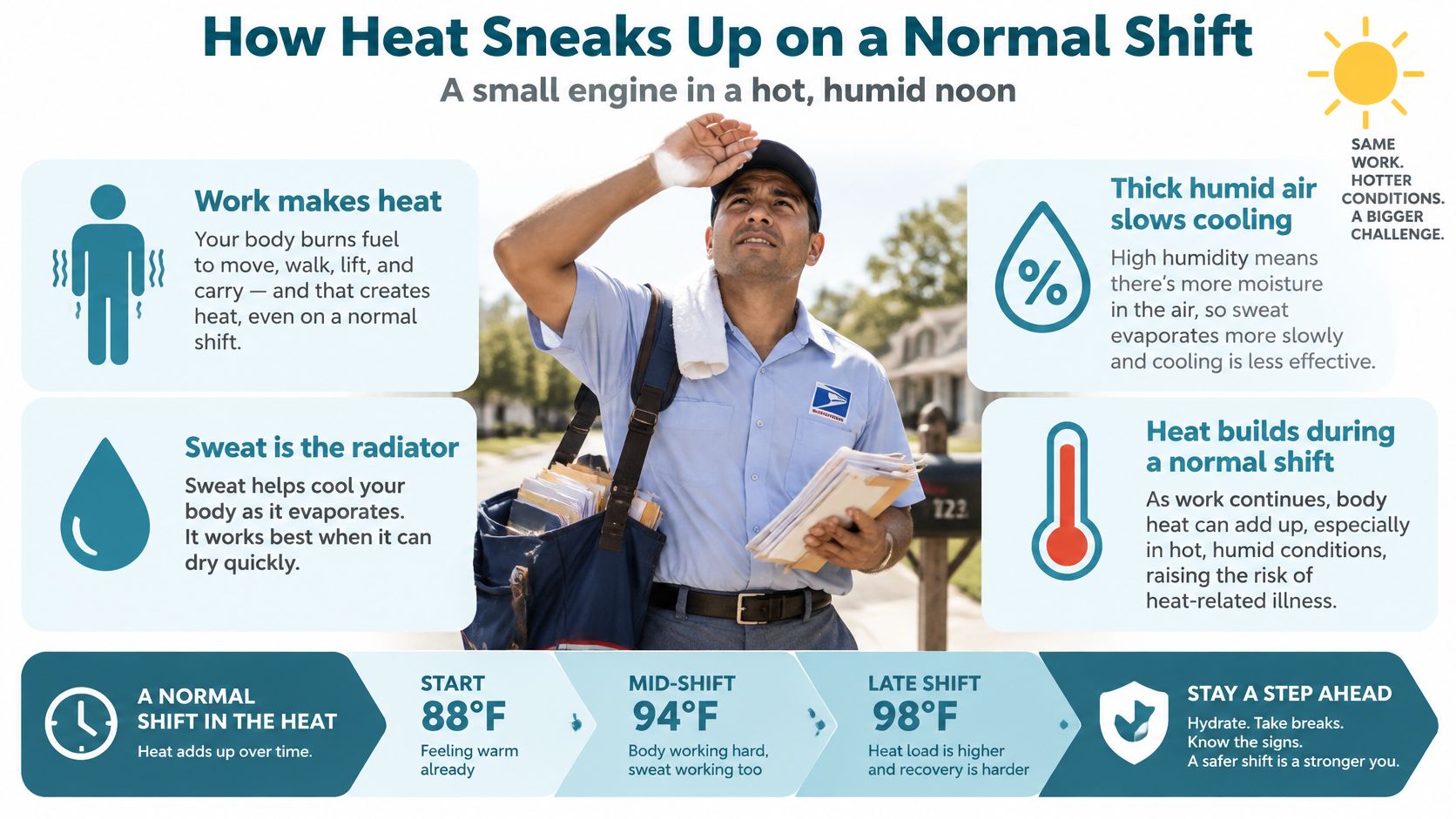
Say you walk beside a mail carrier at noon on a humid Tuesday. No news host calls it a heatwave. No alert buzzes your phone. She lifts a satchel, climbs porch steps, and wipes her forehead with the back of her glove. By the tenth porch, her smile thins out. By the twentieth porch, she answers you a beat late.
I picture your body as a small engine in a delivery truck. Work burns fuel and makes heat. Sweat works as your radiator. Thick humid air clogs that radiator. A rain jacket clogs it faster. Heat piles up inside the engine block while you smile and say you feel fine.
The Scale You Carry Into Noon
The International Labour Organization report estimates that at least 2.41 billion workers, about 71% of the world's working population, face exposure to excessive heat at work each year. Gardeners, construction crews, utility crews, postal workers, farm workers, and cleanup volunteers all share that load during ordinary summer days. The same report links that exposure to approximately 22.85 million occupational injuries and 18,970 work related deaths each year, and it says 90% of occupational excessive heat exposure and 80% of related injuries occur outside officially declared heatwaves.
In the United States, the OSHA rulemaking record with Bureau of Labor Statistics data counts 1,042 worker deaths from occupational heat exposure between 1992 and 2022, an average of about 34 deaths per year. OSHA also says 50% to 70% of outdoor heat fatalities occur during the first few days in a hot environment, before workers acclimatize. I read that line and I shorten every new person's first week without apology.
Water, Watchers, and the Two Minute Check
Name one person who watches heat for the whole shift. The opening talk helps. The all shift watcher saves you at minute forty, when pride gets loud and water bottles run low. I point at a person. I say the name out loud. I put the name in the chat.
The OSHA heat planning guidance tells you to offer cool drinking water at 50 to 60°F and push small drinks often, before thirst shows up. I use our heat exhaustion prevention tips the same way at a cleanup table. I fill cups. I hand cups to people who wave me off. I smile and I keep the cup in the air until hands take it.
| What you see | What it may mean | Your move |
|---|---|---|
| Headache, dizziness, or weakness | Early heat illness | Shade, cool water, rest, and a buddy stays close |
| Heart rate over 110 beats per minute | The work bout is too long | Shorten the next work period by one third and keep the same rest |
| Oral temperature over 37.6°C | Body heat is climbing | Shorten the next work cycle by one third |
| Confusion, fainting, or odd behavior | Possible heat stroke | Call 911, cool with water, move to shade, and stay until help arrives |
Read the table like a traffic light. Headache and dizziness mean shade, water, rest, and a buddy at the elbow. Confusion, odd behavior, or fainting means you call 911, cool the person with water or ice, move the person to shade, remove outer clothing, wet the skin, fan air across the body, and stay until help arrives. You act first. You sort out the story later.
Tell every new person this line on day one. "I expect you to stop early this week. You earn my trust when you tell me early." You just gave that radiator room to work.
When Thunder Means You Leave the Block
Say you hold a metal grabber on an open lot in Englewood. Your friend works the far fence line, two blocks away, with earbuds in one ear. A low rumble rolls under the traffic noise. You almost talk yourself out of it. You tell yourself a truck hit a pothole. You look at the sky and you bargain for ten more minutes.
Stop bargaining. Lightning gives you a sound cue, and thunder gives you your marching orders. I treat thunder like a fire alarm in a school. I do not sniff for smoke. I move my people.
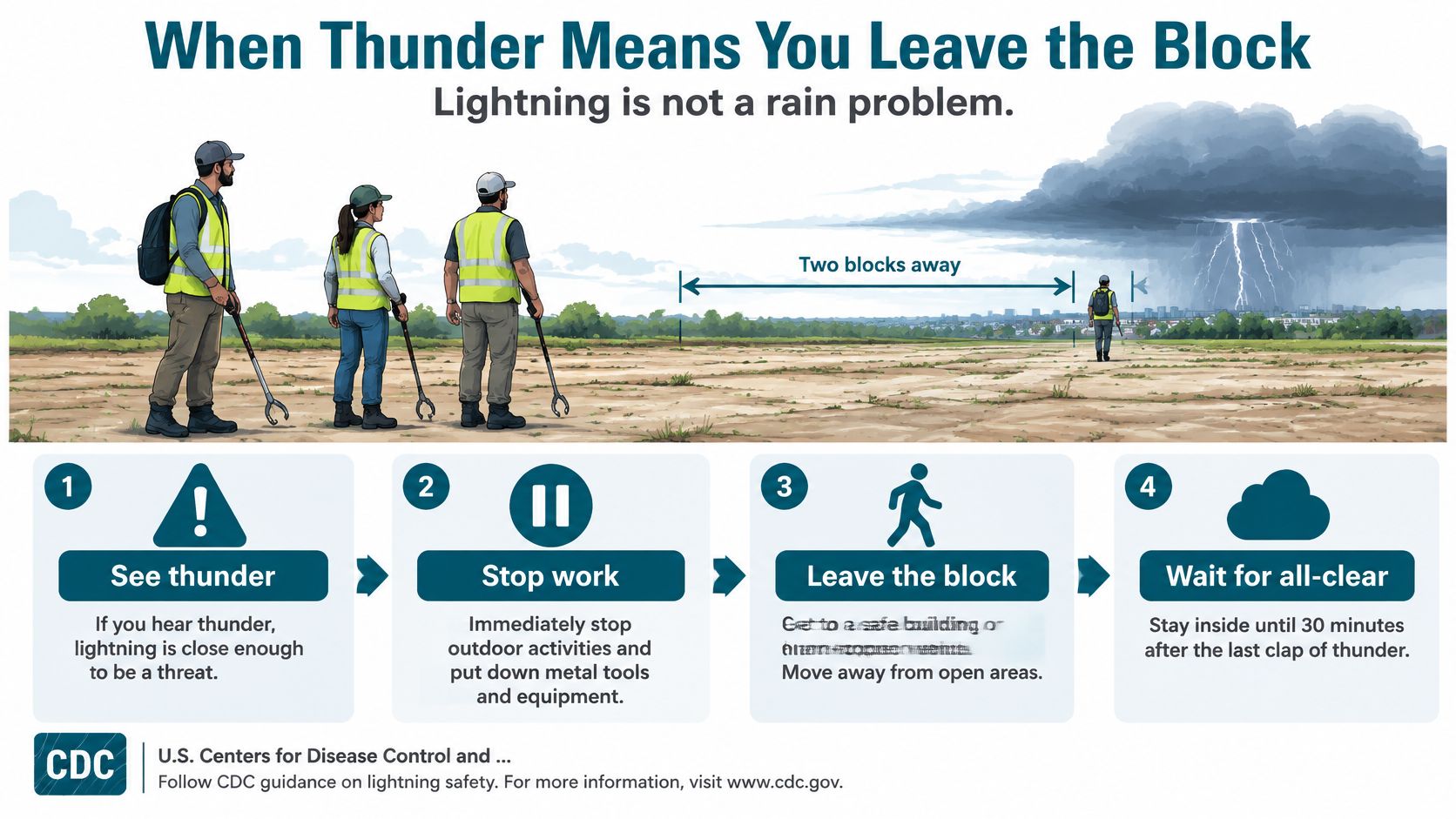
The U.S. Centers for Disease Control and Prevention lightning data page records 517 lightning related deaths from 2006 through 2025, and work related activities made up about 20% of those fatalities. Construction, farming, and ranching carry high counts in that data. Your cleanup route shares the same open sky, the same metal tools, and the same slow walk back to a car.
Six Steps I Run Out Loud
- Before you start: Name the building and the hard top cars, and name one weather watcher with a charged phone.
- At the first thunder: The watcher calls stop by voice and in the group chat, and repeats the shelter name.
- Before anyone scatters: Gather a head count at the corner, names out loud, eyes on faces.
- Inside shelter: Go into a full building or a hard top vehicle, windows up, hands and bodies off metal surfaces.
- During the wait: Stay at least 30 minutes after the last thunder or lightning, and restart the clock at each new rumble.
- Before restart or dismissal: Count again, name by name, and only then release people to work or to home.
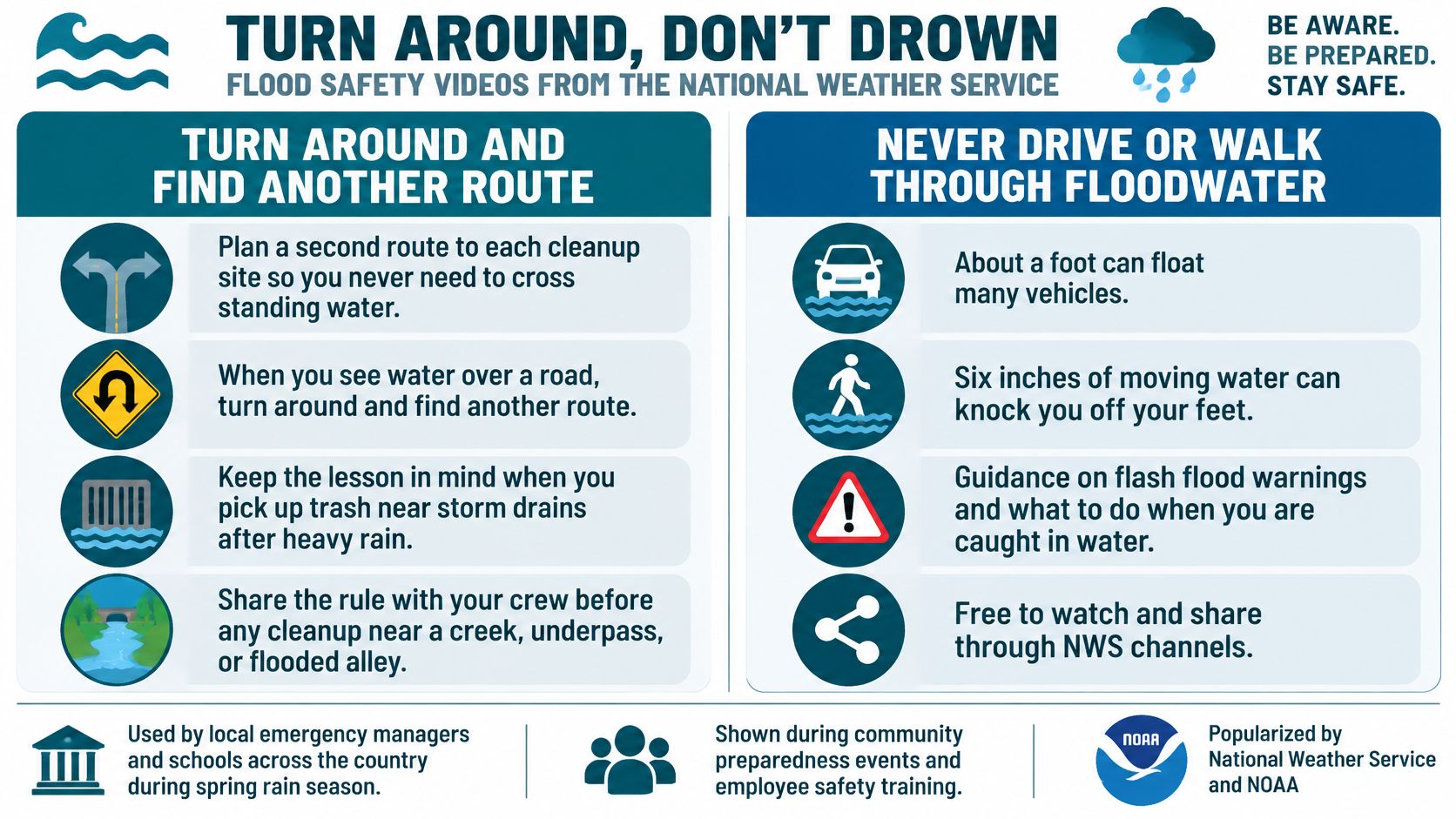
I watch the short clip below with new leads before a storm week, and I make each lead say the six steps back to me without notes.
The National Weather Service lightning rules page says you move promptly into a completely enclosed building or a hard topped vehicle when you hear thunder, and you stay sheltered for at least 30 minutes after the last thunder. Tents, picnic shelters, trees, and open sided structures give you no equal protection. A vehicle works as fallback shelter only when you stay inside with windows closed and avoid contact with metal surfaces.
Fake Shelter Fails You Faster
A tree gives you shade, wet bark, and a tall target. A picnic roof gives you dry hair and open sides. A pop up tent gives you a good photo and metal poles. I ban all three as lightning shelter at my meetup point. I say the ban before anyone grabs a bag, so nobody improvises under stress.
A bright pause in the rain tricks good people. The sky lightens. The lot steams. Someone jokes about a free car wash. You still hold the clock. Lightning can strike before the worst rain and after the worst rain. Your thirty minute wait covers that sneaky edge.
Say your route has no building within a quick walk. Your plan already failed at the kitchen table. Shrink the route next time. Move the meetup point near a library, a field house, or a row of parked hard top cars. I would rather carry wet bags to the car than explain a missing person.
Wet Clothes and the Wind That Steals Heat
Say you start a route at 35 degrees with a cheerful forecast and a thin sun. You bend for the first bag near a curb puddle. Splash water soaks your sweatshirt sleeve to the elbow. Wind cuts down the avenue between two brick buildings. By the third block, your teeth click when you try to joke.
Wind chill stacks air temperature and wind speed into one bite. The forecast number tells you the air part. Wet cloth plus wind tells you the body part. The body part wins every argument. You feel fine at the car. You feel clumsy at the corner. You feel stupid slow at the alley mouth, and that slow feeling should scare you straight.
I picture a wet, windy body as a thermos with the lid off on a bus bench. You pour hot cocoa into the thermos. Steam pours out the top at the same speed. You can drink warm liquid all morning and still lose the heat race through wet sleeves, wet socks, and a bare neck.
The Duty Line and the Body Line
The OSHA cold stress guidance says employers must protect workers from recognized cold stress hazards that can cause death or serious physical harm under Section 5(a)(1) of the Occupational Safety and Health Act, even without a specific cold work standard. A volunteer lead holds no employer badge. You still copy the same care. The body checks wind and wet cloth. The body never checks payroll.
I use our own cold weather preparation habits before winter routes for the same reason. I check gloves at the meetup point. I look at shoes. I ask about spare socks with the same serious face I use for car keys.
Six Rewarming Steps in Order
- Call 911: Call at once for a serious cold injury, confusion, or a person who stops shivering and goes quiet.
- Move the person: Move the person into a warm room or a warm vehicle, out of wind and off cold concrete.
- Swap the clothes: Remove wet clothing and replace it with dry clothing, socks and gloves included.
- Wrap the whole body: Wrap the entire body, head and neck included, in blankets, and add a tarp or garbage bag as a vapor barrier if you have one. Keep the face clear.
- Give a drink with care: Give a warm, sweetened drink only when the person stays alert, and never give liquid to someone who is unconscious.
- Place heat at the core: Place warm bottles or hot packs in the armpits, along the sides of the chest, and in the groin.
Pack a dry layer and spare socks in the car before the witty group chat starts. Dry cloth beats brave talk at minute thirty.
Watch hands for your early warning. Fingers fumble a knot. A zipper defeats a good glove. A volunteer drops the grabber twice in one block. I shorten the route at that sign. I turn the group toward the cars while people still laugh about it.
You face a plain choice on wet, windy days. Gloves soak through, wind picks up, and your farthest walker still has six blocks to cover. You shorten the route now. You save the heroic loop for a dry morning. Your crew keeps fingers that work, and your crew comes back next week.
Employers and Volunteer Groups
You run a paid crew. You must protect your workers from recognized hazards that can kill them or cause serious physical harm under Section 5(a)(1) of the Occupational Safety and Health Act. OSHA has no separate cold work standard. That general duty still covers cold stress on your site.
Heat guidance gives you concrete jobs. Assign one person to monitor conditions for the whole shift. Keep a reliable way to reach every worker fast. Hold the power to stop work or evacuate the site, and tell your crew who holds that power before the first task starts.
The Gap at a Saturday Meetup
You run a volunteer group on Saturday. You usually hold no employer role. You hold no HR office. You hold no legal authority over a neighbor who can walk away at any corner. The duty line from a jobsite maps onto your morning in a messy way.
You still need the rule. Heat loads a volunteer heart the same way heat loads a paid heart. Lightning ignores your tax status. Wet wind pulls heat from a student in a hoodie at the same speed as a roofer in coveralls.
| Group | What it owes | Your move |
|---|---|---|
| Paid employer | Protect workers from recognized heat, cold, and lightning hazards | Assign a monitor, keep a stop work rule, and run a reliable alert method |
| Volunteer group | Often outside OSHA employer duties, with no authority over participants | Write a stop rule, name a safety lead, and use the same heat, lightning, and cold steps |
Read the table and then check your local rules. State and city laws can add requirements on top of federal guidance. Your park district permit can add rules. Your sponsor can add rules. I read permits at home, with a pen, before I promise a route to anyone.
Use your sign up sheet as a safety tool. Ask about health limits in plain words. Ask about rides home. Ask about gloves, hats, and water bottles. You learn who needs a shorter loop before anyone lifts the first bag. You learn who needs a car seat held open during a storm wait. You learn who walks alone to a bus stop, and you pair that person with a buddy at dismissal.
Build a One-Page Plan and Send It Tonight
Say ten people meet you for litter pickup on Saturday at a wide open lot. Two people joined for the first time. One person arrived by bus and has no car. A regular brings a cooler. A student brings thin fashion gloves and a huge grin. We pick up trash rain or shine, including on the coldest days of winter and the hottest days of summer, and that pride puts real people in front of you in real weather.
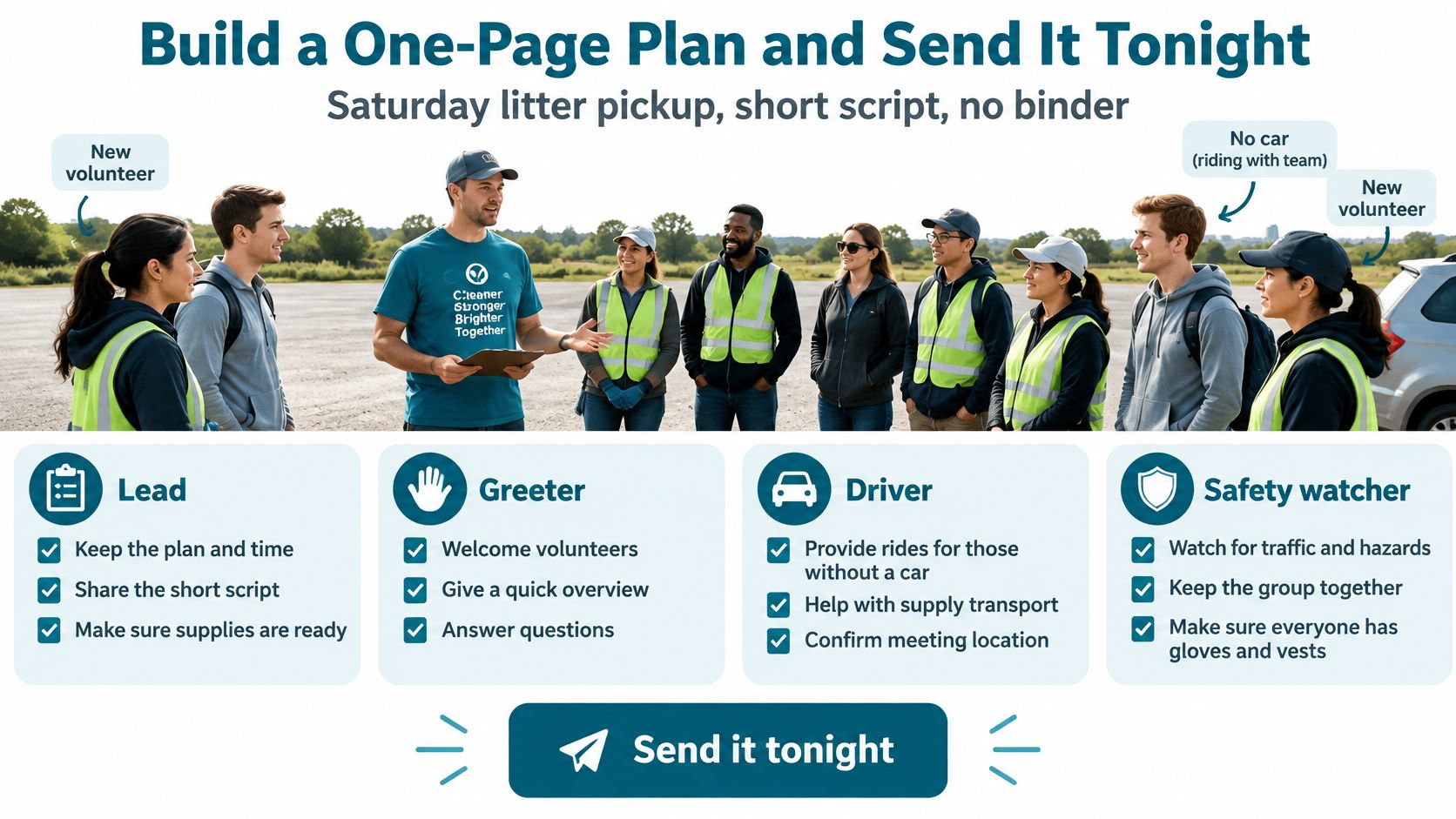
You need a short script for that lot. A binder in your trunk helps nobody at minute twenty. A one page plan on five phones helps everybody. Safety of the volunteers always takes first priority, and happiness of the volunteers takes second priority at my meetup point, and I say that order out loud before bags open.
Four Roles Before Anyone Spreads Out
- Safety lead: You can end the day, shrink the route, or send one person home, and the group backs your call without a vote.
- Weather watcher: You check the forecast and the sky every hour, watch for thunder, wind shifts, and heat load, and you call out changes loud.
- Head count buddy: You hold the sign in list, count faces at shelter time, and count again before restart or dismissal.
- 911 caller: You hold the site address on your phone screen, you dial without hunting for words, and you stay on the line.
Name the shelter next. Point at the actual building with your actual arm. Name the cars that count as hard top shelter. Say how long an ambulance may take on that block, and name the cross street you will give a dispatcher. A person under stress reads a screen better than a memory.
The OSHA winter weather preparedness guidance tells employers to monitor winter weather, maintain a reliable way to communicate with workers, and keep the ability to stop work or evacuate when conditions require it. Heat plan details on that same worksite logic tell you to state what you do at heat illness symptoms, how you contact emergency services, how long responders may take, and what first aid you give until help arrives. For high body temperature or suspected heat stroke, you call 911, cool the worker immediately with water or ice, move the person to a cooler or shaded area when possible, and stay with the worker until help arrives.
The Symptom Line You Say Out Loud
I gather the circle. I hold up one finger. I say, "Headache, dizziness, or odd behavior means we stop that person. Maya dials 911. Jordan grabs water and shade. I stay with the person." Names beat job titles in a loud lot. Verbs beat good intentions every time.
Train in two minutes. Show a new person the water cooler, the shade spot, the bathroom, and the shelter door. Tell newcomers they count as new to the heat this week. Give a person with asthma, a heart condition, or thin gloves a shorter loop without a speech about toughness. You protect pride when you assign the short loop as a smart job, like guarding the supply corner and sorting bags.
Write a check in and check out habit into the page. Each person signs in with a phone number. Each person checks out with the head count buddy before a rideshare, a bus, or a solo walk home. Nobody vanishes from your count. Nobody becomes a rumor in the group chat at noon.
I stock the car from our severe weather safety kit list, and I cross check first aid basics against the Adventure Medical Kits preparedness guide when I restock bandages, blankets, and cold packs at home. I check dates on packs. I replace the mystery granola bar from last season. I charge the spare battery while I brush my teeth.
Four Actions You Take Tonight
- Copy the stop table: Paste the table into a phone note and send a photo of it to your safety lead and weather watcher.
- Name names and places: Write the safety lead, the shelter building, the hard top cars, and the site address for the next outing.
- Pack the car: Load water, cups, a dry layer, spare socks, blankets, a first aid kit, and a printed contact list.
- Post the quit rule: Send one group chat message that says any person may quit at any time and the lead may cancel without debate.
We came to take care of the block and each other, and safety comes first.
Say that line at the lot. Say it again when thunder tests your nerve. Say it again when a new person looks at wet gloves and wonders about worth. You build a crew people trust when your actions match the line on the hard morning, in front of witnesses, with full bags still on the ground.
Join me at Litter Caterpillars for a Chicago weekend cleanup where we name a safety lead, read the sky before we spread out, and look after each other block by block. Bring your water bottle, your spare socks, and your brave Saturday self, and I will hand you a grabber, a buddy, and a route that fits your body that day.