

Let me tell you something about learning how to find corporate sponsors: it's not about groveling for cash. You're not passing a hat around. You're inviting someone—a real, breathing company—into an adventure. A story. It’s a narrative of pure grit, of neighbors banding together, of making a tangible difference—a story they can’t just buy off a shelf or cook up in some sterile boardroom. The sponsorships that last? They're forged in the fire of a shared mission, not in the cold, hard calculus of metrics.
Your Sponsorship Journey Begins With Your Story
Before you dare to dream about sponsorship tiers or see their logo splashed across a banner, you have to excavate your "why." Why did you even begin this crazy thing? What was that single, crystallizing moment when everything shifted? Corporate partners aren't swayed by your immaculate spreadsheets. They're moved by your fire. They need to feel the heat.
I didn’t kick off Litter Caterpillars with some grand, laminated business plan. I started it because I was suffocating in my own mess, both literally and metaphorically. My apartment was a disaster zone, my life felt like it was stuck in park. A sudden, sharp realization hit me: I couldn't possibly clean up my own life until I started cleaning up for others. That was my escape hatch.
Unearthing Your Origin Story
Every truly great group has an origin story. It’s that singular moment, that one vivid memory that perfectly encapsulates the soul of what you do. It’s the anecdote that makes someone stop their mindless scrolling, lean in closer to the screen, and actually listen.
For me and my crew, it wasn't some polished, strategic summit. It was just three of us, shivering violently under a lone tree during a freak Chicago hailstorm on our very first cleanup. Every. Single. Uber. Canceled. We were drenched, freezing our tails off, and frankly, it was miserable. But right there, in that moment of shared suffering, I had an epiphany. Cleaning up someone else’s mess was profoundly easier than confronting my own, and the struggle, shared, transformed into an adventure.
That hailstorm didn't crush us; it forged us. It became the beating heart of our story. It’s the raw, unfiltered evidence of our commitment. Your story doesn’t need a Hollywood polish; it just needs to be brutally true.
Think about your own defining moment. Was it:
- A specific, electric conversation that ignited the entire idea?
- A gnawing, frustrating problem that you just knew you were the one to solve?
- A moment of pure, unexpected euphoria during your very first event?
This is the nucleus of your pitch. It’s the emotional grappling hook that makes a potential sponsor see you not as just another nonprofit with its hand out, but as a tribe of passionate humans they desperately want to join.
Translating Your 'Why' Into a Mission
Once you’ve gripped that core story, you need to sculpt it into a mission and a set of values a company can actually understand and support. Your story forges the emotional bond; your mission shows them the destination.
Our values—bravery, kindness, and unity—bloomed directly from that hailstorm and all the grueling weekend cleanups that followed.
- Bravery: Showing up in a blizzard to pick up someone else's trash? That’s bravery.
- Kindness: Helping to heal a neighborhood that isn't even yours is an act of profound kindness.
- Unity: Huddling together under a tree, united against the elements, creates a bond that no corporate trust-fall exercise ever could.
Your mission isn't just a slick sentence you slap on your website header. It's your North Star. And it’s the real thing you’re offering a sponsor: a chance to become part of something that stands for real, admirable ideals. When you build powerful community engagement strategies, you give them a clear, illuminated path to participate in that mission.
You’re not just seeking funds. You are offering a company the chance to become the hero in a real, unfolding story. And that, my friend, is the bedrock for finding partners who won't just write you a check once, but will march alongside you for the long haul.
Finding the Right Corporate Partners—Not Just Any Sponsor

Okay, you've got your story locked and loaded. Now you need to find the right audience for it.
Forget the shotgun approach—blasting your pitch into the void and praying something hits. Learning how to find corporate sponsors is more like spearfishing in a clear lagoon than casting a giant, indiscriminate net. You're not looking for a hundred tepid "maybes"; you are hunting for that one perfect partner.
This is a game of intelligent, focused searching to find companies whose very soul resonates with yours. It’s exactly like trying to make a new friend—you don’t just accost random strangers on the street. You look for people who share your weird hobbies and see the world through a similar lens. It's the same principle.
Start Your Search in Your Own Backyard
The most potent partnerships almost always bubble up from local soil. These are the companies that witness the direct shockwaves of your work every single day. They’re your neighbors.
I started my hunt by zeroing in on businesses right in the Chicago neighborhoods where we were doing the most work. Who was already investing their money and, more importantly, their time into these communities? Who had a real, tangible stake in seeing places like Englewood or Pilsen not just survive, but thrive? That’s ground zero.
Here's how you can assemble your initial hit list:
- Local Business Journals: Publications like Crain's Chicago Business are absolute treasure troves. They are constantly profiling companies making community investments, launching new local initiatives, or celebrating homegrown leaders.
- Chamber of Commerce Websites: These directories are a fantastic way to identify the key economic players in your area who are already actively engaged in civic life.
- Event Sponsorship Lists: Go look at the sponsor pages for local festivals, charity 5Ks, or community block parties. This is literally a list of companies that are already saying "yes" to community involvement.
Your first list doesn't need to be some epic tome. Just aim for a "dream list" of 10 to 15 companies that feel like a natural, intuitive fit. Quality over quantity is everything.
Digging Deeper for True Alignment
A list is just a starting point. Now, the real detective work begins. You must peer beyond the glossy marketing slogans and find concrete, irrefutable proof that a company actually walks its talk.
This is my exact research ritual. I dedicate about 30 minutes to each potential partner, plunging into their digital footprint to really get a feel for their soul. I’m not just looking for a "Corporate Social Responsibility" (CSR) page—any intern can write one of those. I'm hunting for evidence.
You are searching for the company's story. Does their story rhyme with yours? You want a partner who doesn't just see a logo placement, but sees a chance to be part of an adventure that truly matters.
I use a simple mental checklist. Do they speak openly and often about their core values? Can I find actual photos or blog posts about their employee volunteer days? Does their CEO post about community service on LinkedIn? These are the breadcrumbs that tell you their commitment is real.
Using Digital Tools for Smart Prospecting
LinkedIn is your absolute best friend during this phase. It’s so much more than a digital Rolodex for job hunters; it’s an incredibly potent intelligence-gathering weapon.
Here’s a specific tactic I use constantly:
- Navigate to the LinkedIn page of a company you’re targeting.
- Click on the "People" tab.
- In the employee search bar, type in keywords like "Community," "Social Impact," or "Foundation."
Boom. This instantly reveals the exact people whose job it is to build these very kinds of partnerships. These are your people. You’re not trying to breach the fortress of the general marketing inbox or the CEO’s executive assistant. You're looking for the person who gets a genuine jolt of excitement from the kind of work you do.
This focused approach is how you transmute a cold email into a warm introduction—because you’re speaking directly to the person who already shares your sacred mission.
Crafting Sponsorship Packages That Offer Real Value
Your sponsorship proposal is not a collection plate you're passing around. Think of it more like an invitation to an exclusive, unforgettable party—one where everyone leaves feeling profoundly inspired. This is your moment to show a company how they can step into the hero role of your story.
You’re not just asking for money. You are offering a partnership that feels like a powerful, resonant investment in something you both deeply believe in.
So, let's just toss those tired, generic "Bronze, Silver, Gold" tiers right into the garbage. They’re offensively boring. They make the whole exchange feel like you're just hawking ad space on a bus stop bench. We're going to build packages that offer tangible, thrilling benefits that connect directly to your mission and their strategic goals.
Beyond Logos To Real, Tangible Benefits
A logo on a banner is fine, I suppose. But it’s utterly forgettable.
What a company truly craves is to create a memory. They want their employees to feel a surge of pride and their customers to see them as a genuine force for good. That's the electrifying value you bring to the table.
When I first started creating packages for Litter Caterpillars, I fixated on experiences. Instead of just offering a logo, I offered them a story they could tell.
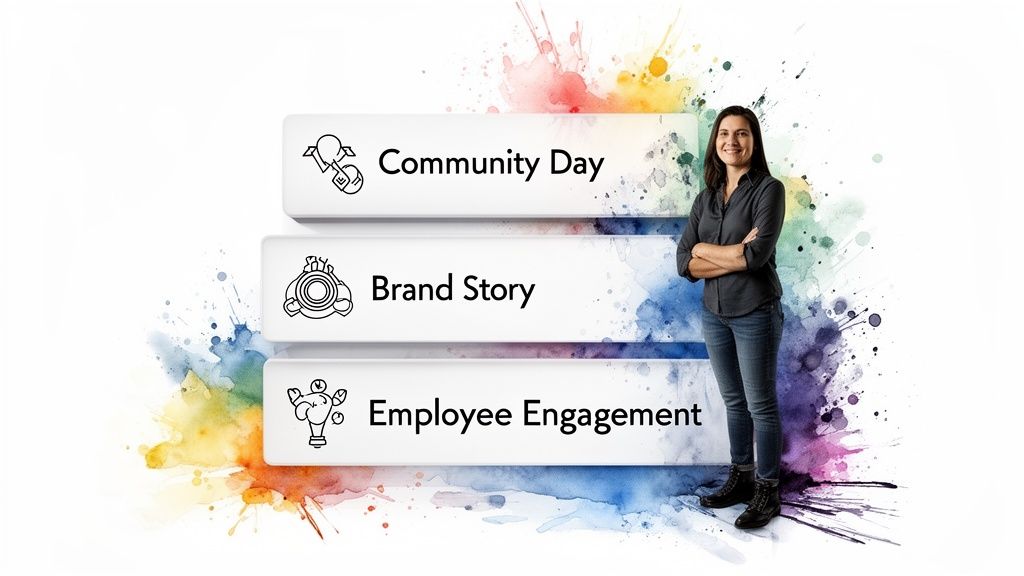
- Brand Visibility with Heart: We don’t offer a generic ad. Instead, we offer them logo placement on our cleanup flags—the very ones our volunteers proudly carry through Chicago's neighborhoods every single weekend.
- Employee Engagement That Matters: We create dedicated volunteer days where their team can get their hands dirty right alongside us. This isn't some stuffy, awkward corporate retreat; it's a genuine team-building crucible that boosts morale and forges real bonds.
- Authentic Social Media Content: We capture their team in action—sweating, laughing, winning—and share those powerful, unscripted moments on our Instagram, telling the story of their impact to our deeply engaged community.
You're giving them something their own marketing department can't manufacture on its own: authenticity. This approach transforms a simple sponsorship into a vibrant, living partnership. To see what this looks like in the wild, check out these powerful corporate social responsibility examples.
The Psychology Of A Great Ask
Now, let's talk about the competition. Globally, corporate philanthropic funding swelled to about $71 billion in 2022, yet less than a paltry 5% of that found its way to climate and nature initiatives.
This means you must be a signal in the noise. You do that by framing your work as a transformative service that builds community resilience and deep, lasting friendships.
In the U.S., a staggering 65% of Fortune 500 companies offer matching gift programs and 40% provide grants for volunteering. This is enormous. It makes it incredibly smart to pitch sponsorships that directly involve their employees joining your events.
Your sponsorship packages must tell a crystal-clear story of value. Think of it like a menu at a Michelin-star restaurant. Each dish—or tier—should sound absolutely delicious and promise a unique, unforgettable experience.
You're not just selling a meal; you're selling the feeling of a perfect night out. Frame your sponsorship ROI not in clicks or impressions, but in brand love, employee pride, and genuine community connection—which is priceless.
A great way to structure this is with a simple, elegant table that clearly lays out the value at each level. It helps potential sponsors immediately grasp what they get and how they can jump in.
Sample Sponsorship Tiers
Here's a template you can adapt. Notice the relentless focus on engagement and storytelling, not just logos.
| Tier Level | Contribution | Brand Recognition Benefits | Employee Engagement Opportunity |
|---|---|---|---|
| Neighborhood Guardian | $2,500 | Logo on cleanup flags for one month; social media shoutout with team photos. | One sponsored volunteer day for up to 20 employees. |
| Community Champion | $5,000 | Logo on all event materials for a quarter; featured story on our blog. | Two sponsored volunteer days; priority scheduling. |
| City-Wide Hero | $10,000 | Premier logo placement on our website for a year; co-branded social media campaign. | Four sponsored volunteer days; custom team-building activities. |
Giving your tiers evocative names that reflect your mission—like "Neighborhood Guardian" or "Community Champion"—transforms the entire conversation from a cold transaction into a thrilling collaboration.
Remember, you’re inviting them to join an adventure. Your sponsorship package is the treasure map that shows them exactly how they can become part of something truly special. It’s an invitation to share in the grit, the joy, and the victory of making your community better, one piece of trash at a time.
Mastering the Outreach and First Connection
Okay, you’ve got your story, your dream list of companies, and your killer sponsorship packages. Now for the part that requires a deep, centering breath and a little bit of raw courage.
I get it. Hitting "send" on that first email feels like stepping off a cliff. I’ve been there, stomach in knots.
But I need you to completely reframe this moment. You aren't bothering anyone. You're not a salesperson or some charity case begging for a handout. You are offering a golden ticket—an invitation for a company to become a main character in a real, unfolding story of impact. This is your moment to be brave.
Finding the Right Person to Email
Before you even dream of writing a single word, you have to find the right inbox. Sending your beautiful, heartfelt proposal to a generic [email protected] address is like throwing a message in a bottle into Lake Michigan. Good luck with that.
And forget the CEO. They’re swimming in a sea of emails. You need to find the person whose actual job it is to care about what you're doing.
Like I said before, LinkedIn is your secret weapon here. You're hunting for titles that include words like:
- Community Relations
- Social Impact
- Corporate Citizenship
- Foundation Manager
These people are the gatekeepers, but more importantly, they are the champions. Their entire professional life revolves around finding inspiring stories just like yours and connecting their company to them. When you email them, you're not interrupting their day; you're actually helping them do their job.
Crafting an Email That Actually Gets Read
The perfect first email is short, deeply personal, and hits them right in the heart. It needs to sound like a human being wrote it, not some soulless copy-and-paste bot. Remember, the goal isn't to close the deal in one email; it's just to start a conversation.
I use a simple, three-part structure for every single outreach email I send.
- The Personal Hook: Start with a genuine, specific compliment about their company. Did you see a recent article about their volunteer work? Do you actually use and love one of their products? Show them you’ve done your homework and aren't just spamming a random list.
- The Story: In just two or three powerful sentences, share the beating heart of your mission. Don't you dare talk about sponsorship levels or benefits yet. Talk about that hailstorm, or whatever your defining moment is. Make them feel something.
- The Easy Ask: End with one simple, low-pressure question. "Would you be open to a quick 15-minute chat next week to hear more about how we're bringing communities together in Chicago?" That's it.
This isn't about memorizing a script. It's about being devastatingly genuine. Your passion is your superpower. Let it blaze through in your words.
This approach respects their time and piques their curiosity. You're not overwhelming them with attachments or a daunting wall of text. You're just gently opening a door.
Nailing the First Meeting
When you get that "yes" for a meeting—celebrate! Then, it's showtime. But "showtime" doesn't mean you put on some slick performance. It just means showing up as your real, passionate, slightly messy self.
Forget a memorized 20-page slide deck. I never use one. Instead, I bring our story to life. I show them photos from our cleanups—real people, smiling, covered in a little bit of honest dirt. I tell them about the improbable friendships that have formed during our weekend events.
The most crucial part of this first meeting is to listen more than you talk. I am dead serious. Kick off the conversation by asking them questions:
- "What are some of your company's big community goals for this year?"
- "From your perspective, what does a really successful, knock-your-socks-off partnership look like?"
- "What kind of stories or projects get your team the most fired up?"
Their answers are your roadmap. They will literally tell you how to frame your proposal as the perfect, tailor-made solution to their needs.
You’re not just trying to get a check; you're trying to build a real relationship. And the best way to do that is by showing you care about their world as much as you want them to care about yours. This is how you find the kind of corporate sponsors who stick around for the long haul.
Turning a Yes into a Lasting Partnership

That handshake, that signed agreement, that first check—it feels like the finish line, doesn't it? I remember that euphoric feeling. But I learned very quickly that getting a "yes" isn't the end of the race. It's the starting gun.
The real magic, the part that separates a one-time donation from a true, lasting, soul-deep partnership, happens after the deal is signed. This next phase is all about stewardship. It's about making your sponsors feel like the heroes they are, every single step of the way.
Beyond the Logo A New Kind of Recognition
Anyone can slap a logo on a website. It's easy, it's expected, and if I'm being honest, it's a little bit boring. Your partners deserve more. They deserve recognition that feels as real and heartfelt as the work you do together.
Think of it like giving a gift. You could give someone a generic gift card, or you could give them something thoughtful and specific that shows you truly see them. Stewardship is the thoughtful gift.
For Litter Caterpillars, we brainstormed ways to make our partners feel like they were truly part of the crew.
- Custom Badges: We designed a special "Litter Caterpillars Hero" digital badge for their entire team, something they could proudly share internally to celebrate their collective impact. It’s a small gesture, but it builds immense pride.
- Instagram Story Takeovers: We’ll feature a heartfelt, emotional story on our Instagram, not just about the company, but about their people who showed up for a volunteer day. We share pictures of them smiling, working hard, and making a visible difference.
- Personalized Impact Videos: I'll sometimes record a quick, raw video on my phone right from a cleanup site and send it directly to our contact. "Hey, just wanted to show you the huge, undeniable impact your support is having in Englewood today. The team is absolutely buzzing."
These things don't cost a lot of money, but they are incredibly rich in meaning. They show that you see your sponsors as human beings, not just as a line item in your budget.
Keeping Them in the Loop with Impact Stories
Nobody likes feeling like an ATM. A sponsor gives you money, and then they hear nothing but radio silence for a year until it's time to ask again. That’s a terrible feeling, and it’s a surefire way to lose a fantastic partner.
Communication is the very lifeblood of your partnership. It doesn't have to be some complicated, 20-page impact report filled with mind-numbing charts and graphs. In fact, it's better if it isn't.
Your updates should be simple, wildly inspiring, and direct. They should tell a story, not just list data. You're not just reporting on metrics; you're sharing the adventure.
I send our partners short, regular updates that get straight to the heart of the matter. Something like, "Quick update! Your support this month helped us clear 50 bags of trash and two abandoned mattresses from the streets around Caterpillar Park. Here’s a photo of the team celebrating."
It’s simple. It’s visual. It connects their investment directly to a tangible, feel-good result. This consistent storytelling keeps them emotionally invested in your mission, making the renewal conversation at the end of the year feel like a natural, obvious next step.
Building a Partnership That Renews Itself
When you treat your sponsors like true, indispensable partners, you’re not just securing funding for one year. You’re laying the foundation for years to come. The goal is to make their decision to renew a complete and utter no-brainer.
And this matters now more than ever. A game-changing fact is that 94% of major U.S. corporations plan to maintain or even increase their charitable giving. With 76% of U.S. employees preferring to work for companies that positively impact the world, corporate partnerships are a top strategy for sustained revenue. This reveals a growing, fertile pipeline for those who know how to find corporate sponsors and nurture those precious relationships.
By the end of the year, your sponsor shouldn't just have a folder of your impact reports. They should have a collection of vivid memories.
They should remember the feeling of their team laughing together on a cold volunteer day. They should remember the surge of pride they felt seeing their company’s name on your cleanup flags, marching through a neighborhood they helped heal. They should remember the personal, unscripted thank-you video you sent them. Our guide to volunteer management best practices can help you craft those unforgettable experiences.
When you deliver this kind of profound value, you transform the relationship. You're no longer just an organization they support. You become a part of their story, a key player in how they demonstrate their commitment to the community. You become an indispensable part of their mission, just as they have become a part of yours.
This is how you turn a one-time sponsor into a lifelong champion.
Common Questions on Finding Sponsors
When you're just starting out, the questions can feel like a tangled, chaotic mess. It’s like staring at a giant, knotted ball of yarn and having no idea where to even start pulling. I get it. Here are some of the most common questions people throw at me about getting sponsors, with straight-up, honest answers forged in the fires of building Litter Caterpillars from absolutely nothing.
How Much Should I Ask For From a First-Time Sponsor?
Start smaller than you think. I'm serious. Your goal with that first ask isn't to hit a grand slam out of the park; it's just to get on base. You want a confident, easy "yes," not a drawn-out, hesitant "maybe" that eventually withers into a no.
For a first-time local partner, a range of $500 to $2,500 is a perfect, unintimidating starting point. Think of it as a low-risk trial run for them. It’s an amount they can often approve without needing ten layers of management to sign off on it.
Once you deliver an absolutely amazing experience, show them their tangible impact, and build that real human connection, you can confidently and boldly ask for more next year. The first ask is all about getting them onto your team.
Don't let your ambition get in the way of building a solid foundation. That first sponsorship is a seed. Your job is just to get it planted; then you can worry about helping it grow into a mighty oak.
What if a Company Does Not Respond or Says No?
Rejection is not a judgment on your mission. It is just data. I cannot possibly tell you how many times I've poured my entire soul into a pitch only to be met with deafening silence or a polite, sterile "not at this time." It stings for a second, but then you have to shake it off and remember why you started this whole crazy thing in the first place.
A "no" could mean a million different things that have absolutely nothing to do with you. Awful timing. Sudden budget freezes. A recent, chaotic change in who's in charge. It’s rarely, if ever, personal.
My process is brutally simple:
- Thank them for their time. Always, always be gracious.
- Ask if it's okay to keep them in the loop on your progress. This leaves the door cracked open for the future.
- Move on. Your energy is your most precious and finite asset. Spend it on the prospects who are genuinely, electrically excited about what you're building.
Remember our Litter Caterpillars value of bravery. Getting a "no" just means you're in the arena, swinging the bat. That, in itself, is something to be incredibly proud of.
Do I Need to Be a Formal 501c3 Nonprofit?
This is a big one, and it paralyzes so many people with fear. While being a registered 501(c)(3) is definitely helpful because it makes their contribution tax-deductible, it is absolutely not a deal-breaker.
Many companies have separate, distinct budgets for marketing or community outreach that don't require that 501(c)(3) status. This is especially true if you can offer them incredible brand visibility and a meaningful way for their employees to get involved. You're not just a charity case; you're a marketing opportunity with a soul.
You can also explore working with a fiscal sponsor—an established nonprofit that can receive the funds on your behalf for a small administrative fee. Don't let paperwork paralyze you before you even start. Focus on building a powerful story and strong, authentic relationships first. The formal structure can and will follow the momentum you create.
At Litter Caterpillars, we believe in the raw power of showing up and taking that first brave step. If our story of transforming ourselves and our city inspires you, come join us for a weekend cleanup. Learn more and find your next event at https://www.littercaterpillars.com.