
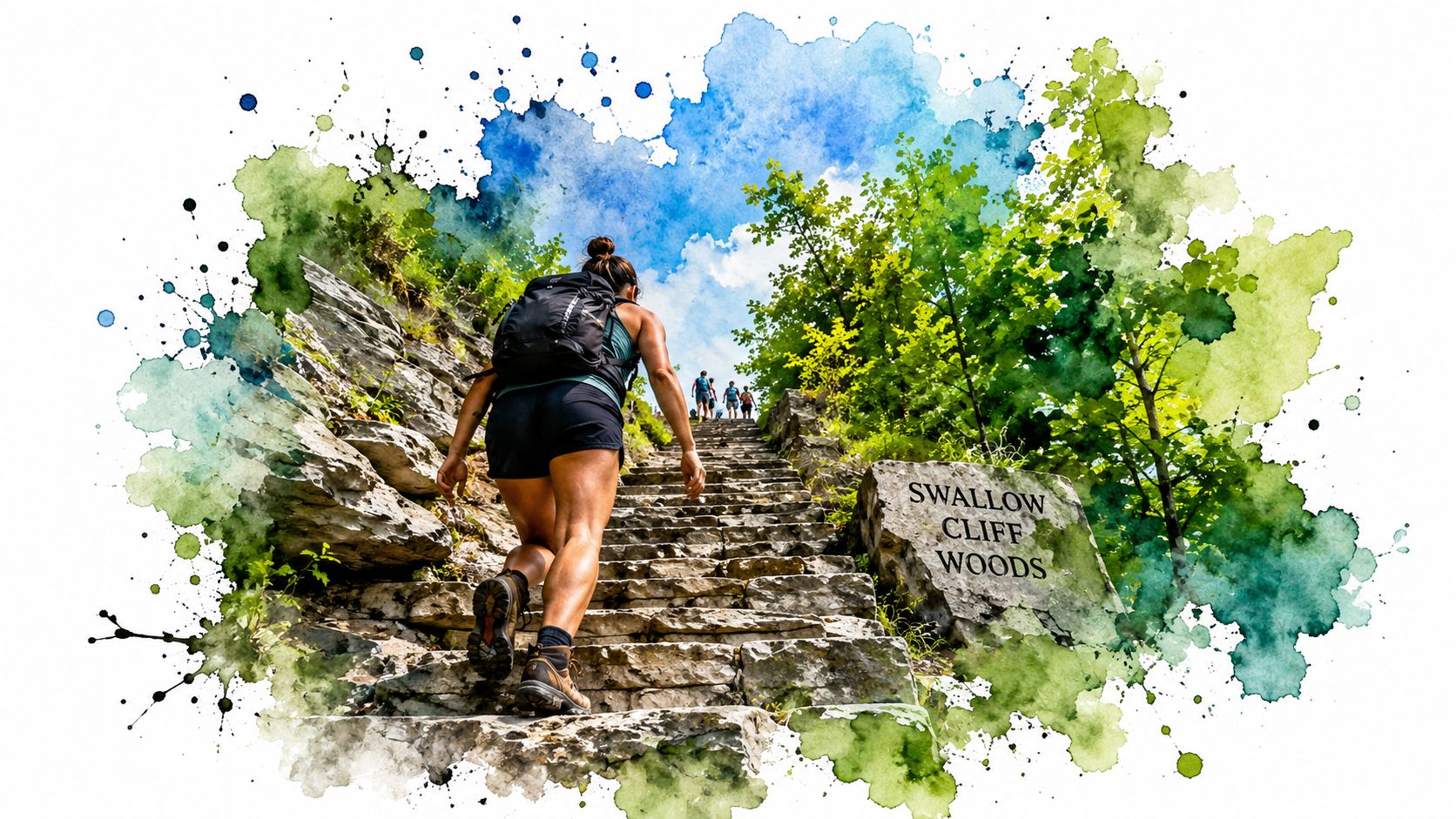
I stopped at the bottom of the stairs and laughed, mostly because the other option was turning around. My legs felt ready for a normal walk, not a stone ladder climbing up a bluff like it had a personal grudge against me.
My First Time Facing the Climb
The first thing that hit me at Swallow Cliff Woods wasn't peace. It was doubt.
I looked up, saw the staircase, and had that private little argument you only have with yourself. You know the one. Maybe later. Maybe after coffee. Maybe I'll just “do the trails” and save the stairs for some stronger version of me.
Then I saw other people climbing. Some moved fast. Some stopped halfway. Some had the same face I probably had, half determined, half offended. That helped. The stairs didn't feel like a stage for perfect athletes. They felt like a place where regular people came to wrestle with themselves in public.
The place behind the challenge
Swallow Cliff Woods is bigger than the staircase that gets all the attention. It is an 800-acre nature preserve near Palos Park, Illinois, in the Palos Forest Preserves, and the best-known climb rises up a 100-foot bluff by way of 125 limestone stairs built in 1930 by the Civilian Conservation Corps. Those stairs were first built so people could reach a toboggan slide, and the preserve now has about 8 miles of trails for year-round recreation, as noted in the Swallow Cliff Woods history summary.
That bit of history changed the mood for me. I wasn't staring at some random fitness gimmick. I was standing in front of something old, practical, and a little stubborn. Stone steps. Big hill. People climbing them decade after decade.
Practical rule: Don't look at the whole staircase at once. Pick a small section and earn that first.
What that first climb did to me
I took the first section too fast. Bad idea. By the middle, my breathing got loud enough that I started pretending I was “just taking in the view.” By the top, my calves burned, my pride had taken a hit, and I felt weirdly happy.
That surprised me.
I didn't feel happy because it was easy. I felt happy because it wasn't. The climb had no interest in my excuses. It only cared whether I kept going. Swallow Cliff Woods gave me a simple trade. Effort in, clarity out.
After that day, I started seeing other hard things the same way. A messy week at work. A conversation I was avoiding. A habit I kept postponing fixing. Each one felt less like a wall and more like those stairs. Too much if I stared at the whole thing. Manageable if I took the next step.
Here's how I'd describe the place to a friend:
- If you want a challenge, the stairs will give you one right away.
- If you want history, you can feel it under your shoes.
- If you want room to roam, the preserve stretches far past the staircase.
- If you want a reset, this is one of those places where your mind gets quieter because your body is busy.
I came for a climb. I left with a better way to handle resistance.
Conquering the Stairs One Step at a Time
The trick with the stairs is simple. Respect them, but don't dramatize them.
People sometimes treat the climb like a test you either pass or fail. I think that's the wrong frame. Swallow Cliff Woods works better when you treat it like a conversation between your lungs, your legs, and your ego. Your ego usually loses first.
How I pace the climb
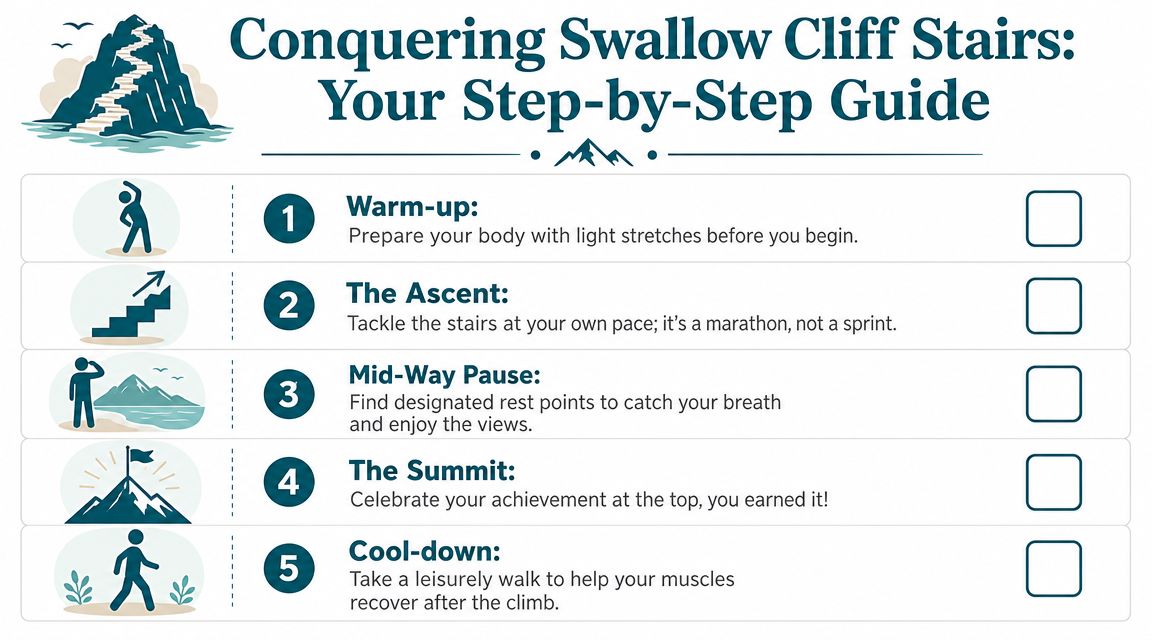
The main stair route is a 2.5-mile out-and-back with about 226 feet of elevation gain, and the area's trails range from 200 to 436 feet of gain. A second set of 168 steps was added in 2016, which lets you turn the visit into a full circuit and adjust the effort to match your day, according to this published Swallow Cliff route overview.
That matters because you don't have to do one giant all-or-nothing effort. You can build your own version of hard.
Some days, I go up once and wander. Other days, I loop the stairs and tack on trail miles. If I'm stressed, I climb slower. If I'm restless, I make the route sting a little.
Here's the pacing system that works for me:
- Start slower than your pride wants. The stairs punish show-offs fast.
- Use the landings well. A short pause beats a dramatic collapse.
- Keep your eyes close. Looking ten steps ahead is better than looking at the top.
- Let your breathing set the rhythm. If you can't settle it, back off a little.
- Leave one good climb in the tank. You want to finish strong, not crawl to your car in silence.
Going slow on the first climb isn't weakness. It's strategy.
Two staircases, two moods
The original limestone steps feel old-school. They're the part people talk about most. The newer staircase changes the flow of the visit. Instead of one hard burst and done, you can move through a fuller loop and keep the effort going.
That's why I like Swallow Cliff Woods more than a treadmill or a gym stair machine. A machine gives you repetition. This place gives you context. Trees, weather, dirt, wind, your own thoughts.
The climb also changes with the season. In cool air, the stairs feel sharp and clean. In summer, they feel like a negotiation with sweat. In winter, the hill taps into its old sledding identity and the whole place gets louder, looser, more playful.
The hill has two personalities
One day I came for a focused workout and left after a few climbs, feeling like I'd wrung stress out of my body. Another day I came in winter and watched families hauling sleds uphill, kids wiping out, adults pretending they weren't just as excited.
That contrast is part of the charm. The same bluff can feel like a trial or a playground depending on the day.
If you go, don't chase someone else's version of success. Set your own target.
| Goal | Good approach |
|---|---|
| First visit | Climb once, then walk and recover |
| Steady workout | Alternate stairs and trail segments |
| Head-clearing day | Climb at a talking pace and stay relaxed |
| Stronger effort | Use repeated climbs and the full circuit |
The stairs build you the same way carrying groceries up too many apartment steps builds you. No applause. No shortcut. Just repeated proof that you can do hard things without making a speech about it.
What You Will Find Beyond the Crowds
The best turn I ever made at Swallow Cliff Woods was the one away from the stairs.
I had already finished a few climbs and felt that twitchy urge to leave once the “main event” was over. Instead, I kept walking. The noise thinned out. Footsteps got softer on dirt. My breathing settled. The whole place changed character.
The quiet part most people miss
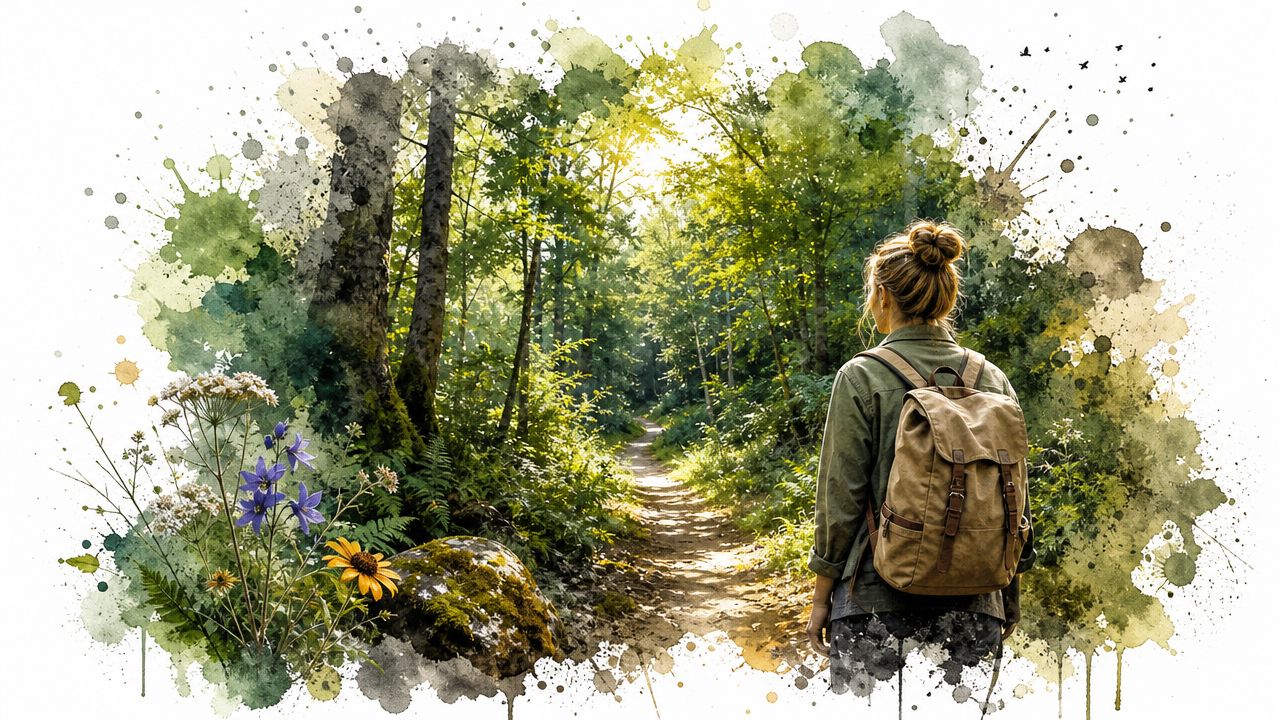
Beyond the stairs, the preserve has unpaved trails in the Sag Valley system, woodlands with lots of bird activity, marshes, and sedge meadows. It's also especially good for spring and fall migration viewing, as noted in this Swallow Cliff trail guide.
That shift matters. Near the staircase, your attention narrows. Out on the trails, it widens again.
I remember one walk when the climb had left my legs shaky and my mind loud. Ten minutes into the woods, everything slowed down. I could hear separate bird calls instead of one fuzzy wall of sound. I started noticing wet ground near the marshy patches, the darker shade under thicker tree cover, the way the trail asked for more attention than the stairs did.
If you want to stretch your day, I like using nearby trail planning ideas from the Palos Trail System guide before I go. It helps if you're the kind of person who climbs first and then suddenly decides you're not done yet.
How the place changes when you stay longer
Most first-timers treat Swallow Cliff Woods like a challenge course. Get there. Climb. Snap a photo. Leave. I get it. The stairs are magnetic.
But the preserve feels more honest when you keep moving past the obvious attraction. The trails let your body come down from the effort while your attention wakes up in a different way. It's like finishing a hard conversation and then taking a long walk home.
The woods reward patience more than speed.
A spring visit feels alert. Birds are active, the ground feels restless, and the trails seem to pull you forward. Fall has a steadier mood. It feels like the preserve is exhaling.
Later in the route, this video gives a feel for the atmosphere people come for when they look past the stair count and just move through the place.
My favorite way to do the day
I like splitting a visit into two acts:
- Act one is effort. I take on the stairs while my legs are fresh.
- Act two is attention. I head onto the quieter trails and let the preserve change the pace.
- The payoff is mental. The climb burns off noise. The walk lets me hear what's left.
- The memory lasts longer. I never remember only the staircase. I remember the hush after it.
That's the version of Swallow Cliff Woods I return for. The place where strain and calm live close together.
How to Plan Your Trip Like a Local
If I'm meeting you there, I'm texting you one thing first. Don't make your first visit harder than it needs to be.
Swallow Cliff Woods is more fun when you arrive with a tiny bit of strategy. Nothing fancy. Just the kind of planning that keeps you from showing up in bad shoes, circling for parking too long, or realizing halfway up the stairs that you brought almost no water.
What I bring every time
I've made enough dumb mistakes here to keep this list simple.
- Shoes with grip: The stairs and unpaved trails both feel better when your footing feels solid.
- Water you'll drink: Bring enough for the climb and the walk after. Don't count on “toughing it out.”
- A light layer: The woods can feel different once you stop moving hard.
- A small snack: It helps if you turn a quick climb into a longer outing.
- Your phone charged: Mostly for navigation, photos, or checking in with a friend.
If you don't have a car, I'd still consider going. Before I plan a transit-heavy outing, I usually check ideas like the eco-friendly transport guide and then compare them with my starting point. The exact route depends on where you live, so I won't pretend there's one perfect answer for everyone.
Best times to go
I like mornings. The place feels cleaner in every sense. Your legs are fresher, the light is softer, and the whole visit starts with less friction.
Weekends can get busy, especially when the weather is great. If crowds drain you, try an earlier arrival. If you like more energy around the stairs, go when the place is lively and then drift onto the quieter trails after.
Here's the quick local version:
| When you go | What it feels like |
|---|---|
| Early morning | Cooler, calmer, easier to settle in |
| Midday | More social, more movement, more parking stress |
| Late afternoon | Nice light, but timing matters if you want a longer hike |
A few friend-to-friend tips
I wouldn't eat a heavy meal right before the stairs. I've done it. Regret has a heartbeat.
I also wouldn't make the mistake of treating the preserve like only one thing. If you come only for a quick climb, great. If you leave room for a longer walk, even better. Swallow Cliff Woods gets more generous the less rushed you are.
Wear the shoes for dirt, not for photos. You'll thank yourself on the first uneven stretch.
And if you're going alone, tell one person where you're headed. That's just good outdoor habit. Quiet places feel better when you've handled the basics.
How to Visit with Respect and Care
A place can toughen you up and still ask you to be gentle.
That's the part of Swallow Cliff Woods that I think people need to hear more often. The preserve can handle your sweat, your heavy breathing, and your sore legs. It can't handle thousands of people deciding that marked paths are only suggestions.
Why staying on trail matters
Unofficial trails were damaging rare ecosystems at the preserve. After the Forest Preserve District installed barriers and signs, researcher data showed an 80% reduction in users on those rogue routes, and wildlife began reclaiming territory, according to this report on the Swallow Cliff trail protection effort.
I love that because it turns “stay on the trail” from a boring rule into a real story. People changed their behavior. The land responded.
That's a clean bargain.
Bravery can look quiet
I think a lot about how easy it is to mistake boundary-breaking for freedom. You see a little side path, trampled enough to look usable, and part of your brain says, why not? Shorter route. Better photo angle. Less crowded.
But a preserve isn't a blank space for our impulses. It has marshes, woods, meadows, and living things trying to hold their ground. Respect means letting the place stay itself.
Here's what I do now without overthinking it:
- I stay on marked trails. If a path looks unofficial, I treat that as my answer.
- I keep my pace under control. Speed makes people cut corners and drift off route.
- I watch where I stop. Resting is fine. Spreading into sensitive edges isn't.
- I treat barriers like information, not a challenge. They're there because the land needed help.
The strong move isn't taking more space. It's knowing when not to.
What respect feels like on the ground
This doesn't have to turn your visit into homework. It's simple.
You climb hard. You breathe deep. You enjoy the trails. You leave the place better off because you didn't treat it like a personal obstacle course. That's it.
I've noticed something funny. The more I care for a place, the better it feels to return to it. I don't mean that in some grand philosophical way. I mean in a practical way. Cleaner route. Healthier habitat. Better walk. Better mood.
Swallow Cliff Woods asks something useful from you. Push yourself, yes. But keep your feet where they belong.
Join Us and Help Keep Our Parks Clean
After a hard climb, I always feel more open to doing one small good thing. Maybe that's because effort strips away a lot of nonsense. Your body worked. Your mind cleared. You stop looking for the perfect gesture and start respecting simple action.
That's how park cleanup makes sense to me.
I started seeing trash differently after days at places like Swallow Cliff Woods. A bottle near the trail isn't just ugly. It breaks the spell. It reminds you how easy it is for people to take from a place without giving anything back. Picking it up is small, but small actions have a way of changing your posture toward the world.
Why cleanup feels like the same kind of challenge
Climbing stairs and picking up litter don't look related at first. To me, they are.
Both ask you to do a thing that's easy to postpone. Both feel better once you start. Both chip away at that sluggish part of you that always wants comfort first and meaning later.
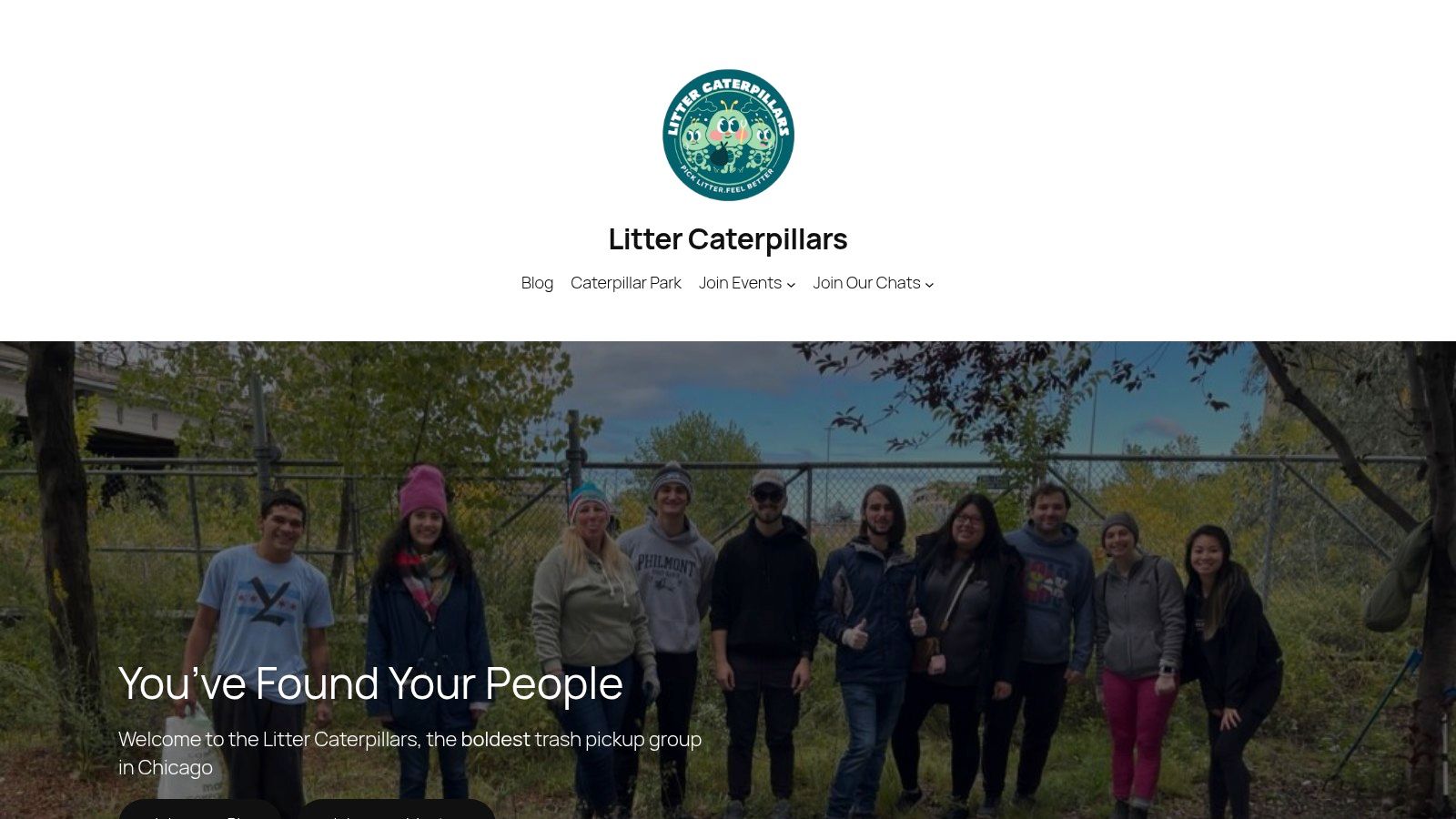
If you ever leave the preserve thinking, I want to do more than just visit places like this, one easy next step is to join a park cleanup with Litter Caterpillars. It's a practical way to turn that post-hike energy into something useful.
What you can expect
The good thing about service is that it doesn't require a dramatic personality. You don't have to show up as an expert, an organizer, or some flawless outdoors person.
You just have to show up ready to help.
- You'll meet people who like action more than excuses
- You'll see visible results fast
- You'll leave with the same earned tiredness that a good climb gives you
- You'll probably have more fun than you expected
That's the sneaky part. Work done with other people often feels lighter than work done alone. The same way a staircase gets easier when you stop making it a performance and start making it a practice.
Your Quick Questions Answered
Are there bathrooms
Sometimes, yes, but I wouldn't build my whole plan around that. I always try to handle that before I arrive, especially if I'm planning a longer hike.
Can I bring my dog
In general, people do bring dogs to forest preserves, but I'd keep it simple. Use a leash, stay on marked trails, and be honest about whether your dog likes crowds, stairs, and other dogs.
Is there a cost to enter
I'm not aware of an entry fee for a basic visit, but check current official preserve information before you go if that matters for your planning.
Is it safe to go alone
I've gone solo and felt fine, especially when I stayed aware and kept to normal, active areas. I still think the smartest move is to tell a friend where you're going and when you expect to head home.
What should I wear
Shoes with grip, clothes you can move in, and a layer you can add or remove. Dress for dirt and weather, not for some imaginary perfect photo.
Is the place only worth visiting for the stairs
No. The stairs may pull you in, but the trails are what make the visit feel complete.
What if I'm out of shape
Then this is still for you. Start slower. Climb less. Walk more. Build from there.
If this piece made you want to do more than just visit parks, take a look at Litter Caterpillars. It's a Chicago group built around cleaning up neighborhoods, building friendships, and becoming the kind of person who shows up.