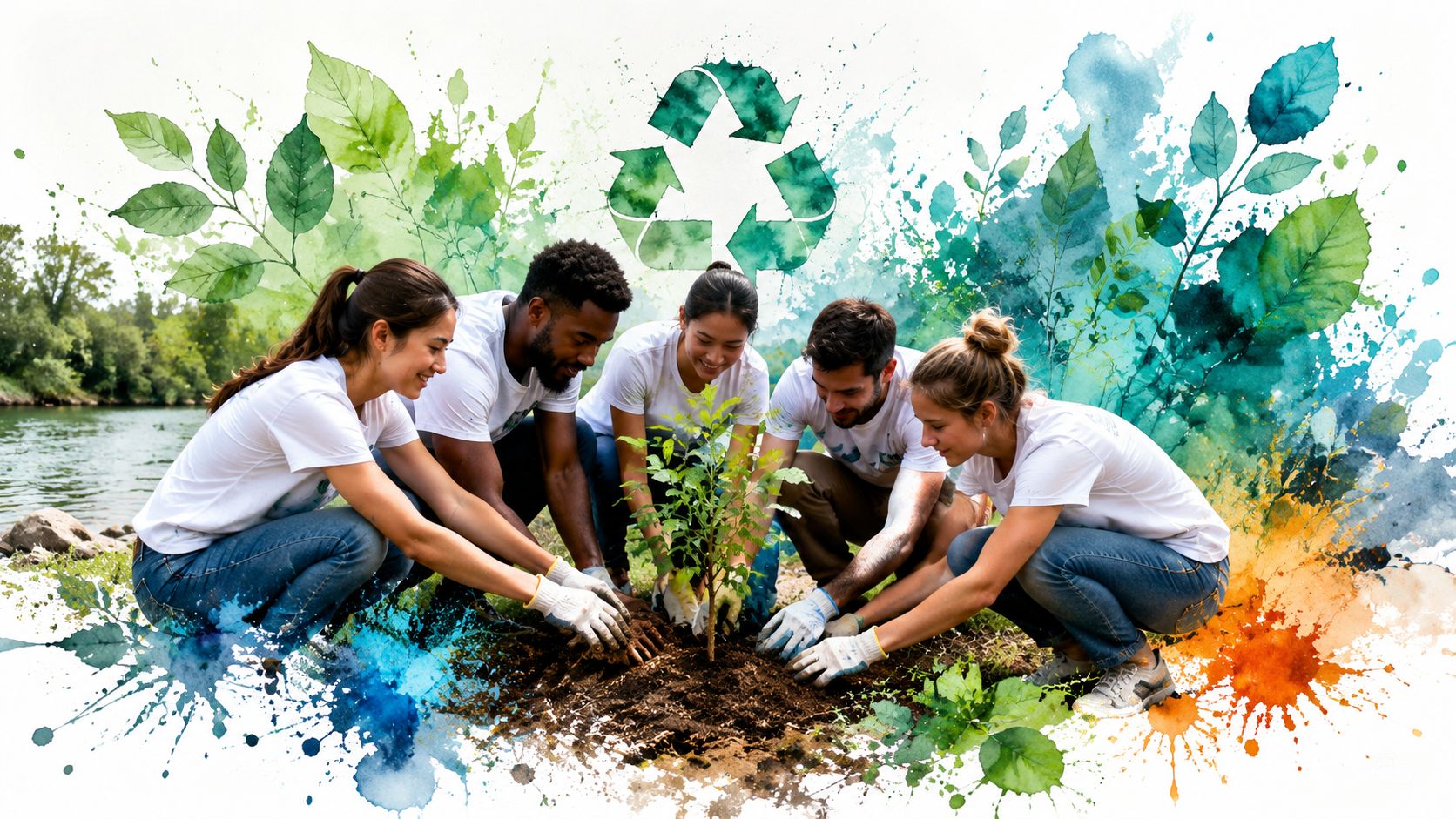
Three of us stood under a tree in Chicago, getting pelted by spring hail with trash grabbers in our hands and no ride home. Every Uber canceled. I was freezing, miserable, and weirdly happy, because for the first time in a long time, I was doing something that made my life feel cleaner.
Your Mess Is Your Message
For years, my room looked like a losing fight.
An old jar in the fridge. A ripped bag in the corner. Random objects I kept because each one came with a memory I couldn't let go of. If you've ever stared at your own mess and felt your chest tighten, you know what I mean. The stuff isn't heavy in your hands. It's heavy in your mind.
I hit a point where I knew I had to change something. I had just gotten out of a chaotic relationship. My routines were shot. My space looked like proof that I couldn't get it together. I kept trying to fix my own life head-on, and I kept stalling.
Then I learned a strange trick. It was easier to clean up someone else's mess than my own.
That sounds backward, but it's true. When I bent down to pick up a bottle on the sidewalk, there was no sentimental story attached to it. No guilt. No old identity. It was just trash. I could act. I could move. I could finish one small thing.
Cleaning one block gave me a kind of courage that cleaning my room never gave me.
That was the doorway into environmental education programs for me. Not the polished version with clipboards and matching shirts. The rough version. The one where you show up on a cold morning with gloves, bags, and a little shame, and somehow leave with pride.
Why public mess can wake you up
Street trash is honest. It doesn't pretend.
A block tells you what people ignore. An alley tells you what systems miss. A vacant lot tells you where care has gone missing for a long time. When you clean those places, you learn fast. You learn where water pools. You learn which businesses sweep and which don't. You learn where people dump because they think nobody's watching.
You also learn about yourself.
I started seeing that bravery isn't a personality trait. It's a habit. You build it by doing slightly uncomfortable things on purpose. Going outside early. Meeting strangers. Picking up gross stuff. Coming back next week.
A different kind of self-help
A lot of self-improvement advice tells you to fix your inner life first. I think service can lead.
When you spend a morning making a street better, your mind gets quieter. You stop circling your own problems for a while. Your body moves. You get sun. You talk to people. You do one clear, useful thing. That matters.
If your life feels cluttered, start there. Don't wait until you feel organized enough, confident enough, or qualified enough. Your mess might be the very thing that makes you good at this. You know what overwhelm feels like. That means you'll recognize it in a neighborhood too.
What These Programs Are Really About
The first time a teenager at one of our cleanups stopped mid-grab and asked, "Why is all the trash stuck on this side of the fence?" I knew we had the right kind of program.
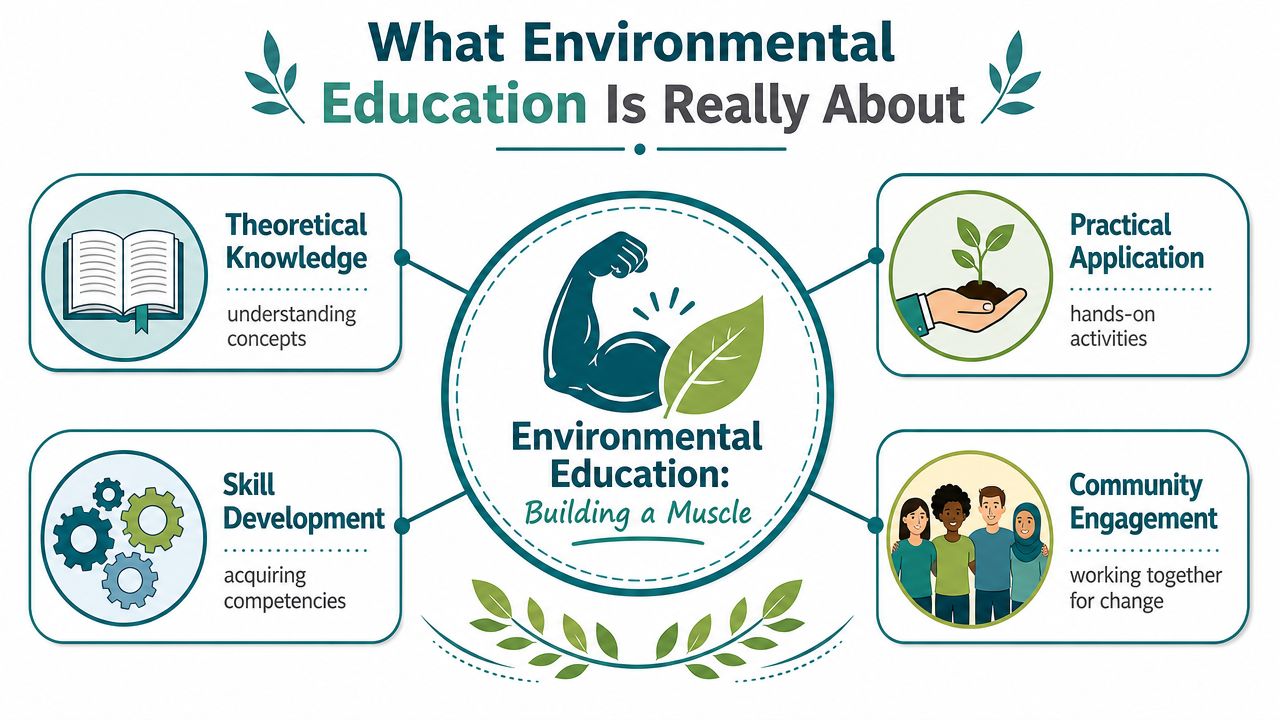
Nobody had handed him a worksheet. Nobody had opened with definitions. He had spent twenty minutes pulling plastic cups out of wet grass, noticed a pattern, and gotten curious. That is the heartbeat of environmental education. Repeated action that trains people to see what they used to walk past.
Action gives the lesson weight
The strongest programs I have seen start with a job that matters to a real place. Pick up litter along a storm drain. Test creek water after rain. Pull invasive vines off a trail sign. Walk an alley and mark where illegal dumping keeps returning. Plant a tree, then come back in August and see what survived the heat.
People learn faster when their hands are busy.
A volunteer who spends an hour clearing bottles from a curb starts noticing slope, wind, foot traffic, and which businesses keep their sidewalks clean. A parent helping a child water seedlings starts asking better questions about soil, shade, and neglect. The lesson has weight because it is attached to effort.
I learned my city that way. Bent over, gloves dirty, eyes open. One block taught me how wrappers collect where the curb dips. Another taught me that a bus stop without a trash can becomes a dumping zone by Friday. You remember what your body had to work for.
Questions rise out of the work
Good programs do not force curiosity. They give it something solid to grab onto.
Once people have done the task, the questions come on their own. Why does this corner flood every time it rains? Why do cigarette butts collect outside one storefront and not the next? Why did the tomatoes in the school garden fail on one side of the bed? Why does one street get care and the next one get excuses?
That is the kind of learning that sticks. It belongs to a place. It has a smell, a texture, and usually a little frustration in it too.
The programs that keep people coming back usually include three parts:
- A real task people can finish and feel in their shoulders afterward
- A useful explanation tied to what they just saw
- A group experience that makes the work feel shared, not lonely
You do not need a fancy curriculum to create that. Litter Caterpillars grew because we kept putting people in front of honest work, then talking about what the work revealed.
Community changes people too
One wet cleanup taught me more about program design than a stack of planning notes ever did. Half the volunteers showed up late because the weather looked miserable. The ones who came stayed longer than usual. By the end, a retired neighbor was trading stories with a college student, and a kid who barely spoke at the start was calling out every recyclables mistake the adults made.
Shared effort speeds up trust.
Cold hands, heavy bags, muddy shoes. Those things strip away performance fast. People stop worrying about sounding smart and start helping each other. That is part of the education too. Environmental care becomes a lived experience instead of an opinion.
Practical rule: If your program feels forgettable, add more real work and cut some talking.
A strong cleanup, garden shift, or creek walk teaches more than facts about waste or habitat. It teaches attention. It teaches follow-through. It teaches people that they can face a worn-down place and leave it better than they found it.
That is what these programs are really about. They help ordinary people practice care until care becomes part of who they are.
Four Paths You Can Take
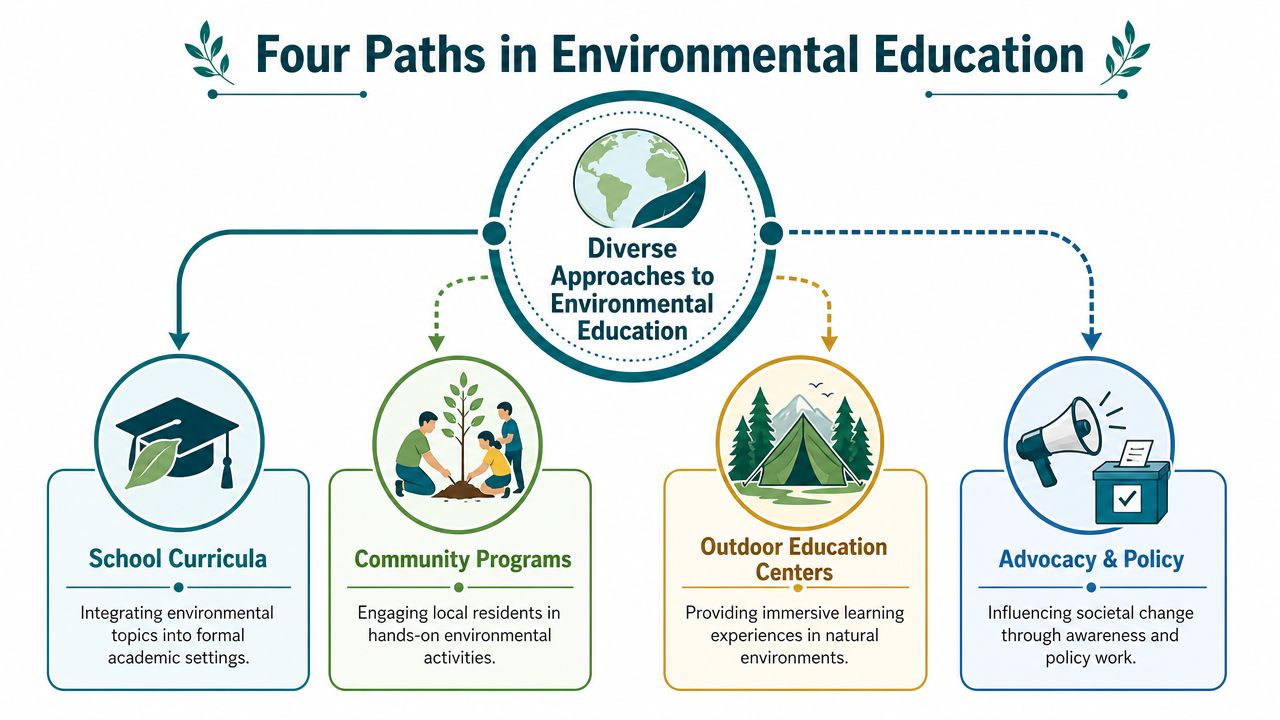
When people hear environmental education programs, they often imagine one model. A teacher in front of a room. A nature center trail. A workshop with a handout. Those are real paths, but they aren't the only ones.
I think of this work like four roads that all head toward the same town.
A quick look side by side
| Path | What it feels like | Best for | Hard part |
|---|---|---|---|
| School curricula | Structured and repeatable | Reaching students consistently | Slow approvals |
| Community workshops | Flexible and local | Adults, families, neighbors | Attendance can swing |
| Outdoor centers and field experiences | Immersive and memorable | Deep place-based learning | Access and transport |
| Stewardship cleanups | Direct and visible | Starting fast with little money | Weather, morale, consistency |
School and workshop paths
School-based work has reach. It can put environmental ideas into a student's week again and again. Community workshops have a different energy. They're looser, more conversational, and often easier to tailor to one neighborhood problem.
I respect both. There's real institutional support behind this field too. Since 1992, the EPA has awarded 3,960 environmental education grants nationwide for a cumulative $95,104,287, according to EPA environmental education grant statistics. That tells you organized programs have had backing for a long time.
But a lot of people reading this don't need a grant history lesson. You need a path you can start before your courage cools off.
Outdoor centers and advocacy
Outdoor education centers can change a person fast because they remove people from routine. Trails, farms, rivers, and forests have a way of making lessons stick. Advocacy and policy work matter too. Some people are built for public comment, coalition building, and pushing systems to change.
If that's you, go there.
But if you want the fastest route from intention to impact, I still come back to stewardship.
Why I love the stewardship path
Stewardship is simple. You see a mess. You bring people. You clean it.
I spent the most time there because it gives beginners a clean starting line. You don't need a formal curriculum on day one. The curb is the curriculum. The alley is the lesson plan. The conversation happens while you work.
With a volunteer-first cleanup, people learn by contact. They handle the problem. They notice patterns. They talk to residents. They see before and after with their own eyes. That visible change matters. It keeps people from drifting into abstract guilt.
If you want a program that teaches fast, start with a place where the result is visible by noon.
That's why our group kept returning to this path. Bags, gloves, grabbers, a meeting spot, and a brave mood. That's enough to begin. You can always layer in workshops, youth training, or advocacy later. First, give people a win they can carry home.
The Core Ingredients of Your Program
One Saturday, a new volunteer showed up in clean white sneakers. By the end of the morning, they were muddy, scuffed, and streaked with something from the gutter none of us could identify. She looked down, laughed, and said, "I get it now."
That sentence has stayed with me. A good program gives people a moment like that. Something shifts. The work stops being a nice idea and becomes part of their body.
I learned to build around three questions. Who are you calling in. What change are you trying to grow. What will people practice together. Get those right, and your program can survive bad weather, low turnout, and the thousand small problems that kill fragile projects.
Ingredient one is your audience
I do not mean a tidy profile in a grant application. I mean the actual people who will stand with you on a curb at 9 a.m.
For us, the time of day did a lot of the sorting. Weekend mornings brought people who wanted structure, service, and a reason to get out of bed. That shaped everything. The pace was steadier. Parents brought kids for an hour. Students came looking for purpose. Neighbors came because they were tired of seeing the same corner trashed every week.
Choose with that level of honesty.
- Families need short wins, clear boundaries, and a rhythm children can follow.
- Students often want a role they can grow into, not just a bag to hold.
- Neighbors usually care about one place they pass every day.
- Hardy volunteers will come back for rough weather, awkward jobs, and repeat effort.
The wrong audience fit can wear a group out fast. I learned that the hard way. If people arrive wanting a festival and you built a work crew, everyone leaves a little disappointed.
Ingredient two is your goal
Trash bags are not a goal. They are evidence.
The central question is what kind of person your program is helping to form. In our case, I cared about courage, reliability, and fellowship. I wanted people to become the sort of neighbors who do useful things without being begged, praised, or paid.
That changed how I led. A rainy cleanup was no longer a failed sunny event. It was training. A shy volunteer giving the welcome talk was no longer filler. It was growth happening in public.
Aim wider than facts. A cleanup can teach attention. A garden can teach patience. A creek walk can teach reverence. If all people take home is information, they may nod and forget it. If they leave with a stronger spine, they come back different.
Ingredient three is your curriculum
The word scares people because it sounds expensive. Ours was built from habits.
We greeted each person by name. We started on time. We noticed what kept showing up on the ground. We compared one street to the next. We let different volunteers speak. We ended with a short circle so people could say what surprised them. Over time, those repeated actions became a culture people could feel.
That people side matters as much as the litter side. If you want a practical model for running a steady crew, these volunteer management best practices are useful.
A small-budget curriculum can include:
- Observation practice by asking what people notice first and what they missed at the start
- Pattern reading by comparing litter hotspots, foot traffic, and neglect from block to block
- Leadership reps by rotating the welcome, safety talk, or photo check-in
- Reflection through one closing question that helps people connect the work to their own lives
Keep it plain. Keep it repeatable. The best programs are built from actions volunteers can do again next week.
How to Start When You Have Nothing
We started with almost nothing.
No office. No fancy setup. No giant budget. Just three people, a rough patch of weather, and enough stubbornness to go outside anyway.
That first cleanup still lives in my body. I remember the sting of the hail. I remember us huddling under a tree. I remember thinking, this is ridiculous, and then realizing I wanted to do it again. There was a sharp kind of joy in it. We were doing something useful, and the hard conditions made the story better.
If you're waiting for perfect conditions, you'll wait forever.
Pick one place and one time
Don't launch with a citywide vision. Launch with one block.
Choose a place that bothers you. Maybe it's the bus stop with bottles in the weeds. Maybe it's the dead-end street everyone ignores. Maybe it's the edge of a park where the wrappers collect after every weekend. The place should create an emotional reaction in you. That's what will get you out of bed.
Then choose a time that fits the kind of culture you want. I like weekend mornings because they pull in steady people. Early hours create a certain seriousness.
Start with this short checklist:
- Choose a compact zone you can improve in one session.
- Set a simple meeting point like a corner, gate, or storefront.
- Bring basic gear such as gloves, bags, and grabbers if you have them.
- Tell people how long you'll stay so the event feels manageable.
- End on time so volunteers trust you.
Go where the need is obvious
A lot of new organizers think they should begin in the most polished, visible place. I don't.
I think there's power in starting where care has gone thin. Research on access to informal learning found 48 U.S. counties with no informal learning institutions at all, leaving more than 327,000 people without adequate access, according to Colorado State University reporting on underserved communities and STEM access. I read that as a practical challenge. Don't only build programs where people already have easy options.
The same principle works at the block level. Go where people assume nobody will bother.
That choice tells volunteers something. It says this isn't about performing goodness in a pretty place. It's about showing up where help is thin.
Make your first event easy to join
Your early problem isn't scale. It's friction.
People need a clear invitation. Tell them what to wear. Tell them whether you'll supply bags. Tell them whether they can arrive late. Tell them what kind of work they'll do. Ambiguity scares people more than hard labor.
A simple format works best:
- Short welcome
- Safety note
- Work in pairs or trios
- Quick group photo if people want it
- Close with thanks and a casual hangout option
If you want a real example of a hands-on local model, the Green City Project shows how a place-based cleanup effort can be framed around visible neighborhood care.
Here is a glimpse of the kind of energy that keeps a volunteer cleanup alive over time.
Protect the mood at all costs
People come back because of how the event feels.
That doesn't mean fake cheerfulness. It means you take volunteer energy seriously. Keep people safe. Don't guilt them. Don't spring surprise obligations on them. Thank them like you mean it. If someone only stays a short time, treat that as a win.
A volunteer who leaves feeling proud is more useful than a volunteer who leaves exhausted and resentful.
That's one reason I care so much about culture. A trash bag is cheap. A good volunteer is not. If your group creates friendship, courage, and a little bit of adventure, people will start inviting other people.
And then your tiny thing isn't tiny anymore.
Knowing if You Are Making a Difference
A lot of people measure success by the bag count. I get it. Bags are visible. You can stack them up, take a photo, and feel that the morning meant something.
But if that's your only scorecard, you'll miss half the story.
What I look for first
I watch for human signs.
Do people come back in bad weather? Do they start bringing friends? Do they talk more easily with strangers by the end of the event than at the start? Does someone who looked nervous begin leading a small group a month later? Those are serious indicators. They tell you the program is changing behavior and identity, not just removing debris.
One simple way to track that is with a notebook or shared sheet after each event. Write down who came, who returned, who took initiative, what conversations kept coming up, and whether the group energy rose or sagged.
On-the-ground test: If people start acting like caretakers between events, your program is working.
If you want cleaner data
You don't need a giant evaluation system, but you do need honesty.
Penn State Extension recommends collecting data from at least half of participants when the total population is under 500, notes that a 50% sample rate is often estimated to yield a 95% confidence interval with a 5% margin of error, and advises at least 30 observations for each key subgroup so your claims aren't skewed toward the easiest volunteers to reach, according to Penn State Extension guidance on measuring impact in environmental education and outreach.
That's useful because grassroots groups often overread a few enthusiastic voices. If you want to say your program changed people, ask enough people, and ask consistently.
A simple post-event form can ask:
- What did you notice about the site today
- What did you learn that you didn't know before
- Would you return and why
- Do you feel more confident doing this work again
Tangible change still matters
I also believe in physical proof.
An empty lot can become a community space. A neglected corner can become a spot people respect again. Those bigger wins usually grow out of boring consistency. One cleanup, then another, then another. People start trusting that you're serious. The neighborhood notices. Doors open.
That kind of change is easier to believe when you've already seen small victories stack up.
And don't ignore wellbeing. A study of nature-based environmental education with low-income Black and Hispanic youth found significantly higher scores in health-related quality-of-life and STEM capacity after the intervention, as reported by Children and Nature Network's research summary. I think that's a big clue. Sometimes the deepest impact is that people feel better, stronger, and more capable after spending time outdoors doing purposeful work.
If you want a grounded way to think about those outcomes in service settings, this page on community service impact is worth reading.
The World Is Changed by Your Example
I don't think individuals need more guilt. I think they need a first brave act.
That's why I care about environmental education programs that start with service. You don't have to wait until you're polished. You don't have to become an expert first. You can grab a bag, walk outside, and let the work teach you who you are.
I've seen what happens when people do that. They become steadier. They laugh more. They trust themselves more. A street gets cleaner, yes, but a person also gets less afraid of effort, weather, awkwardness, and failure.
That's a good trade.
Start smaller than your fear
You do not need to save the whole city.
Clean one block. Invite one friend. Show up one morning when you'd rather stay in bed. If the event is messy, good. If only a few people come, good. If it rains, that might become the part of the story you remember most.
Your example gives other people permission to begin before they feel ready.
I like the caterpillar idea because it keeps me humble. We aren't finished creatures. We are trying. We are changing through repeated acts of service, sunlight, and friendship. That's enough.
If you feel the pull to begin, trust it. Don't wait for a grant, a logo, a committee, or the perfect plan. Start with a place that hurts your heart a little. Clean it. Come back. Teach by doing.
The world changes that way. Subtly at first. Then all at once, because people saw you go first.
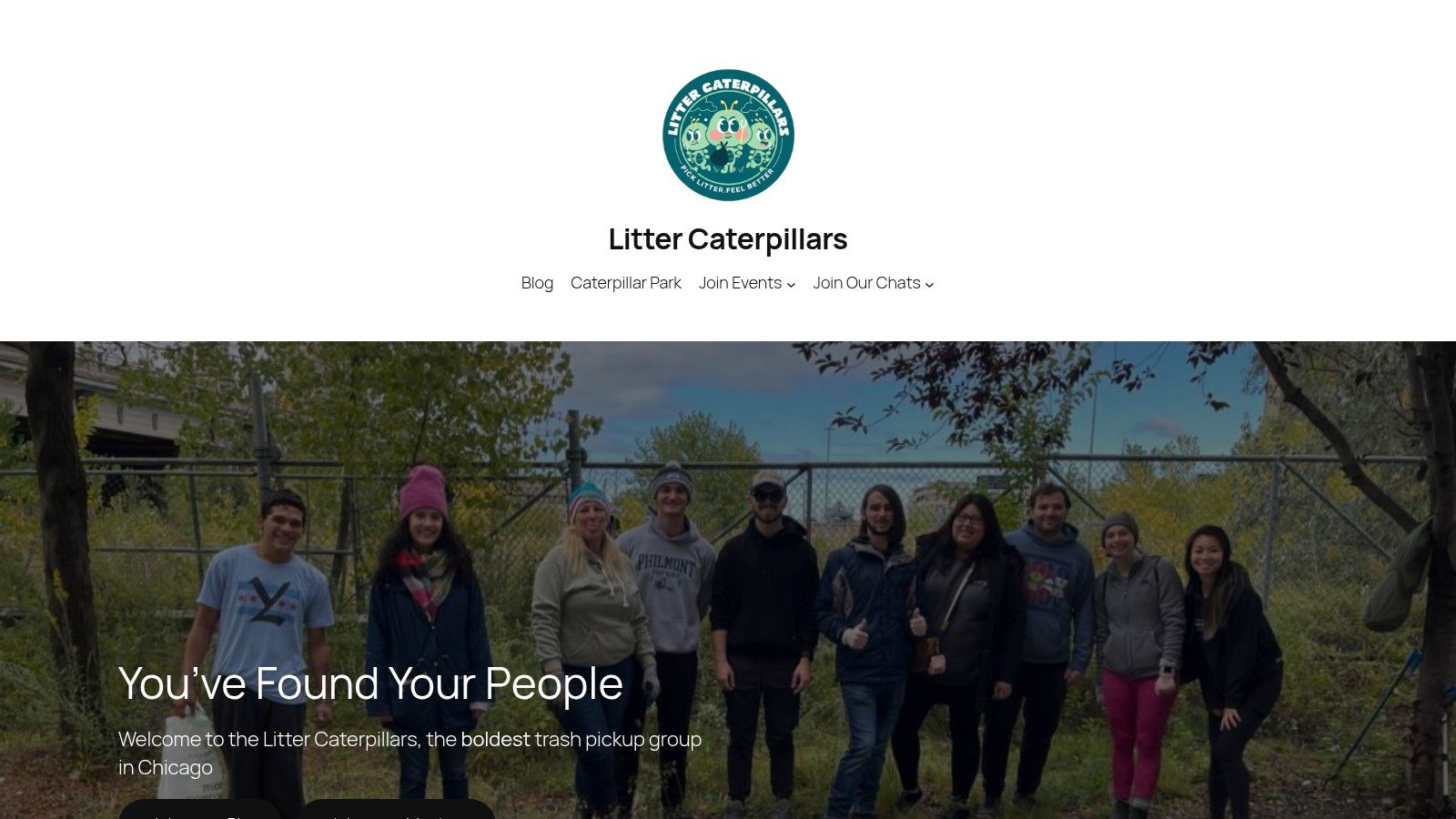
If you want a real-world example of a volunteer-first cleanup group in motion, take a look at Litter Caterpillars. You can use their model to study how consistent neighborhood service, simple rituals, and low-budget organizing turn ordinary weekend mornings into environmental education in action.